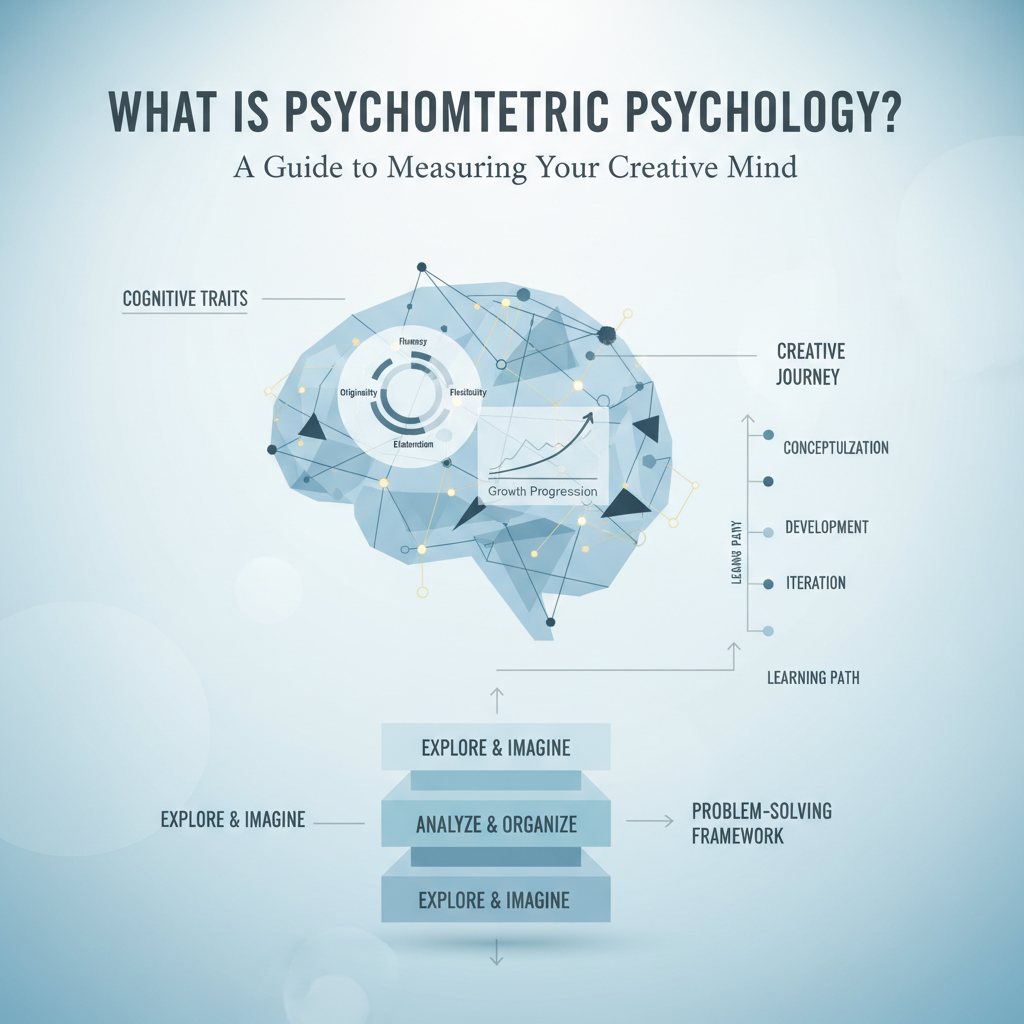
Psychometric psychology is a scientific field focused on the theory and techniques of psychological measurement. It involves creating and using standardized tests to objectively measure an individual’s mental attributes, such as knowledge, abilities, personality traits, and creative potential, ensuring the results are both reliable and valid.
Have you ever wondered how your mind works? Perhaps you’ve thought about your unique approach to solving problems or how you come up with new ideas. Understanding how you think, especially creatively, can lead to powerful personal and professional growth. This is where psychometric psychology comes in. It is the scientific field focused on measuring these very mental traits and aptitudes.
Psychometric psychology uses tools to measure qualities like creativity, Cognitive Flexibility, and openness to new experiences. Through carefully designed psychological test and measurement, it provides a clear look at your unique strengths and thinking styles. This guide will explain psychometric tests in psychology, showing how this science can help you understand your creative potential and offer practical ideas for self-improvement.
Join us as we explore the core ideas of psychometric psychology. We’ll uncover how its scientific approach can highlight your creative profile and guide you on a journey of self-discovery.
What Is Psychometric Psychology? (A Beginner’s Guide)
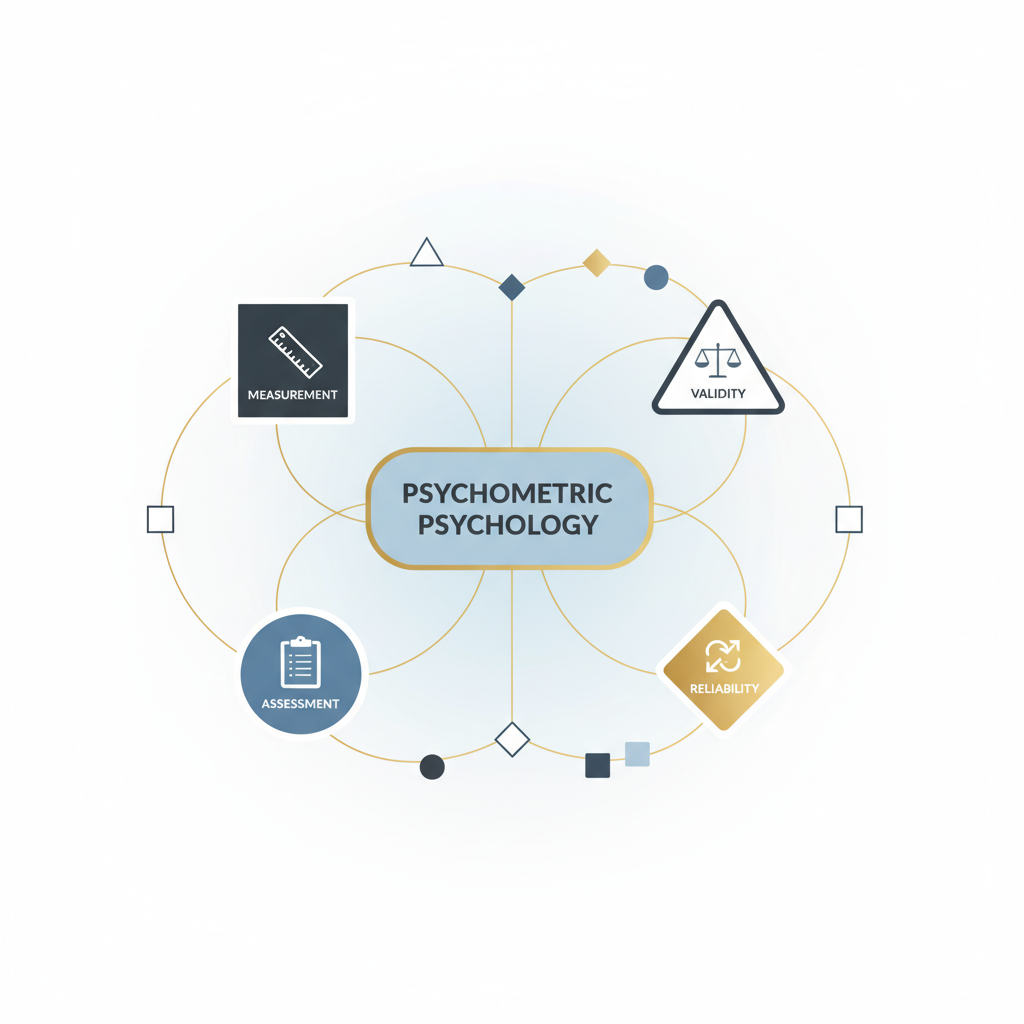
The Science of Measuring the Mind
Psychometric psychology might sound complex, but its core idea is simple: it’s the science of measuring our minds. This field focuses on measuring mental abilities, personality traits, and other psychological processes. Think of it as creating tools to understand the invisible world of human thought and emotion.
So, why does this matter for creativity? Because measuring your creative potential shouldn’t be guesswork. Psychometrics provides a scientific framework, allowing us to move past subjective opinions. Instead, we can use proven methods to assess your unique creative strengths and thinking styles.
This scientific approach helps you understand yourself better. It pinpoints your specific creative strengths and shows how you solve problems or come up with new ideas. The result is clear, useful self-awareness.
The Creative Ability Test is built on these principles. It’s a 30-question assessment designed to give you reliable insights. You’ll learn about your cognitive flexibility, problem-solving skills, and openness to new experiences. This turns uncertainty about your creative potential into clear, actionable self-awareness.
Key Concepts You Should Know: Reliability and Validity
When measuring something as complex as the mind, two ideas are very important: reliability and validity. They make sure any test, including one for creativity, is actually meaningful and useful.
Reliability: Consistent Results
Think about stepping on a bathroom scale. If it shows a different weight every few minutes, it isn’t reliable. In the same way, a reliable test gives you consistent results if you take it multiple times under similar conditions. This consistency is key.
For instance, a reliable creativity test should give you a similar score if you take it again soon after the first time. This means you can trust that the score is a good measure of your abilities. High reliability means the results are stable and dependable [1].
Validity: Measuring What Matters
Validity is all about accuracy. It answers the question: “Does this test really measure what it says it does?” A good creativity test must measure creativity, not just general intelligence or vocabulary. For example, a math quiz that calls itself a creativity test is not valid.
Validity is key to your creative journey because:
- It ensures the feedback you get is about your creative strengths.
- It confirms that the suggested strategies will truly improve your creative thinking.
- It gives you confidence that the results match your unique creative profile.
A test needs to have both reliability and validity to be useful. The Creative Ability Test is built on these two foundations. That’s why our platform provides personalized, practical insights you can trust. This helps you apply your creativity to real-world challenges and new ideas.
Why Is Psychometrics Important to Psychology?
From Abstract Theories to Practical Insights
Psychometrics connects complex ideas about the mind with real-world situations. Think of creativity, for instance. Psychologists have long studied what makes people creative. They made theories about how new ideas form.
But without psychometrics, these theories are just ideas. This field gives us the tools to measure creativity. It lets us put a number on different parts of creative thinking.
As a result, we get useful information. We can go from talking about “what creativity is” to knowing “how creative you are.” This information is key for personal growth. It helps us use our creative strengths in daily life.
The Creative Ability Test, for example, turns complex psychology into clear results you can act on. It helps you understand your own cognitive flexibility and divergent thinking styles.
Understanding and Quantifying Human Differences
Everyone thinks in their own way. We all have different strengths and thinking styles. Psychometrics is important because it helps us understand these personal differences.
When it comes to creativity, this means finding specific traits. It measures things like your openness to new things. It also checks your ability to come up with many different ideas [2]. These are key parts of creativity.
By measuring these traits, psychometrics gives you a personal map of your mind. It shows your creative strengths. It also points out areas where you can improve. This clear measurement is more than just guesswork.
It provides clear data. This means you get information that fits your personal creative style. This knowledge helps you use your natural talents. It also helps you improve specific creative skills.
Here are some creative dimensions psychometrics can help you understand:
- Cognitive Flexibility: Your ability to switch between different concepts or ideas.
- Divergent Thinking: How many unique solutions you can generate for a problem.
- Originality: The uniqueness and novelty of your ideas.
- Elaboration: Your capacity to develop and refine ideas further.
- Problem-Solving Skills: How effectively you approach and resolve challenges creatively.
The Role of Objective Measurement in Personal Growth
Using psychometrics for clear measurement gives you a path to self-improvement. It provides a scientific starting point. This baseline shows your creative abilities right now.
This is the first step to getting better. When you know your creative strengths, you can make them stronger. When you see areas for improvement, you can work on them.
For example, a test might show you have strong divergent thinking. You could then focus on making those ideas even better. If your cognitive flexibility is lower, you can try exercises like mind-mapping. These methods help you keep growing.
The Creative Ability Test gives you this type of clear feedback. It replaces guesswork with real self-knowledge and next steps. You go from wondering about your skills to having a clear plan for improvement.
This process builds your confidence. It helps you use creativity in your daily life. You get to know your own mind better. In the end, this leads to real personal and professional growth.
How Do Psychological Test and Measurement Work?
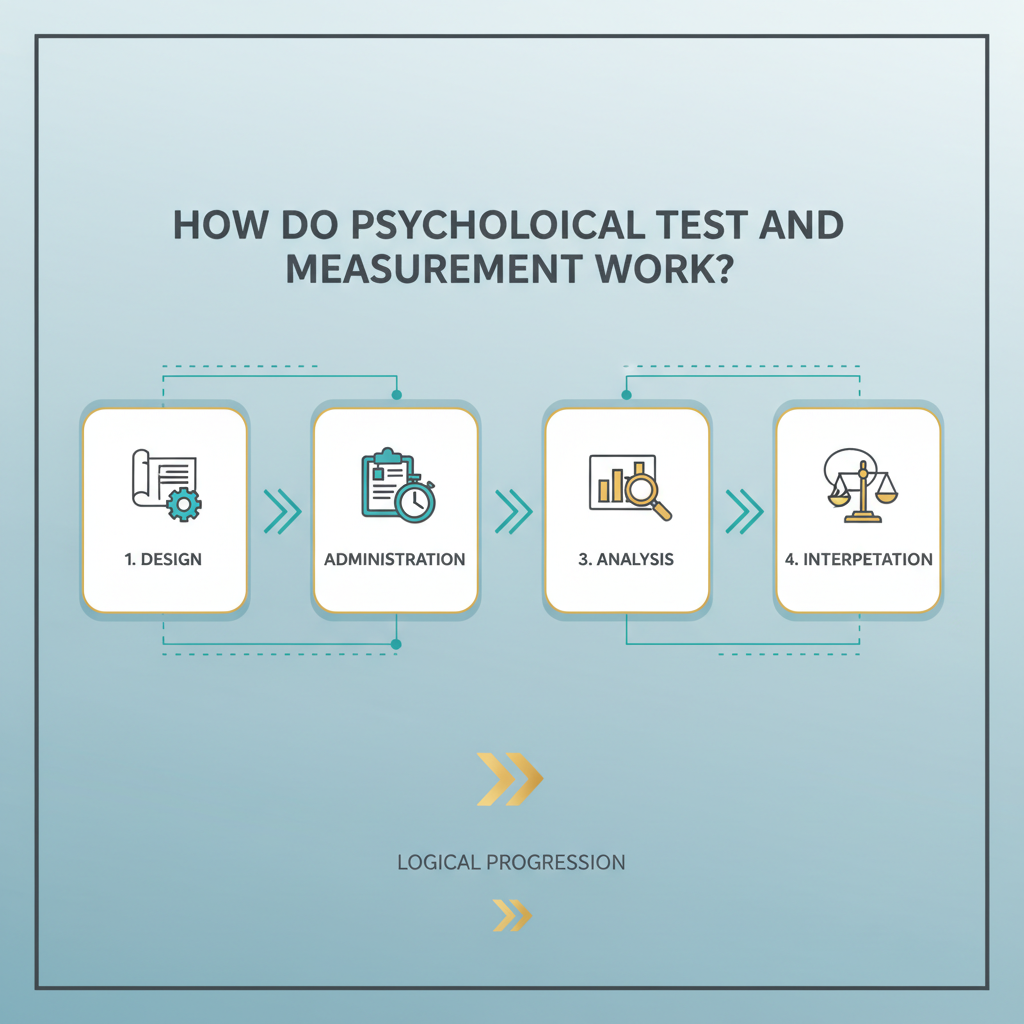
The Process of Creating a Standardized Test
Psychological tests are powerful tools that offer deep insights into our minds. However, making a reliable test is a careful and detailed process. It goes far beyond simply writing questions. Instead, it requires a careful, scientific approach. This ensures the test is accurate and fair for everyone.
Creating a standardized test, like our Creative Ability Test, involves several key steps:
- Deep Research: First, experts do in-depth research on the specific trait they want to measure. For creativity, this means understanding concepts like divergent thinking, cognitive flexibility, and problem-solving. This first step defines what creativity really is [3].
- Creating Questions: Next, experts create a large set of possible questions or tasks. These items are designed to test different parts of the trait. For a creativity test, questions might ask for unusual uses for an object or for new solutions to problems.
- Expert Review: Other experts in the field review these first questions. They check if the questions are clear, on-topic, and fair for everyone. This step helps improve the questions.
- Trial Run: The draft test is then given to a diverse group of people. This trial run helps find any confusing questions and shows which ones are not working as expected.
- Data Analysis: Data from the trial run is carefully analyzed with statistics. Experts analyze the data for each question to see how well it measures the target trait. They also make sure the test is consistent and fair across different groups.
- Setting Standards: The final version of the test is given to a large group that represents the general population. This sets the “norms,” or standards. Norms are the average scores for different groups, and they give us a baseline to compare individual results against.
- Final Checks: Finally, the test goes through many checks to prove it works. This means showing that it actually measures what it claims to measure. These checks ensure the test is useful and the results are meaningful. They confirm that test scores relate to real-world creativity [4].
This careful process ensures our Creative Ability Test is based on solid science. It gives you accurate and reliable insights into your creative skills. You can trust its findings.
Interpreting Your Scores: What the Numbers Mean
Getting a score on a psychological test can feel confusing. However, these numbers are not grades. Instead, they are valuable insights to help you understand your unique profile. Our Creative Ability Test provides much more than a single number. It gives you a complete picture of your creative mind.
Here’s how to understand your results:
- More Than Right or Wrong: Creativity tests rarely have “right” or “wrong” answers. Instead, they measure the *quality* and *quantity* of your creative ideas. For instance, a divergent thinking task looks for many different and unique ideas.
- How You Compare: Your score is compared to the scores of a large group. This shows how your creative skills stack up against others and helps put your strengths into perspective.
- Personalized Feedback: We don’t just give you raw numbers. Our test provides personalized feedback that turns complex data into simple, useful advice. This explains what your scores mean for you.
- Breaking Down Creativity: The Creative Ability Test measures different parts of creativity, such as cognitive flexibility and openness to experience. Your report shows how you did in each area.
- Cognitive Flexibility: This is your ability to shift perspectives and adapt to new ideas. A high score means you’re good at looking at problems in many ways.
- Divergent Thinking: This is the skill of coming up with many different ideas. It measures how many ideas you have and how original they are. Strong divergent thinking helps you brainstorm unique solutions.
- Innovation Skills: This area measures your knack for finding new solutions and applying creativity to real-world challenges.
- Tips for Growth: Your scores show you where you can improve. We provide practical tips to help you build these skills, moving you from knowing to doing. Our goal is to support your creative journey.
Your Creative Ability Test results are a starting point. They offer a personalized map you can use to explore and grow your creative skills. They are tools for self-discovery and growth.
Examples of Psychometric Measures in Daily Life
Psychological tests are not just for academics; they are part of many areas of our daily lives. These tests offer useful information in many fields and help us make smarter decisions.
Here are some common examples:
- In Education: Standardized tests like the SAT or ACT are common in schools. They measure what students have learned and help show if a student is ready for college [5].
- Career Guidance: Many people take tests to discover their skills and interests. These tests help match you with jobs that fit your personality and guide you toward a rewarding career.
- In the Workplace: Companies often use these tests when hiring. They assess a person’s personality, thinking skills, and job-related abilities to help find the best person for the job. They also support team building.
- For Mental Health: Therapists and doctors use assessments to help diagnose conditions like depression or anxiety. They also use them to track how well treatment is working.
- For Personal Growth: Tests like personality quizzes can help you learn about yourself. They help you understand your preferences and behaviors, which supports personal growth.
- Creativity Tests (Like Ours): Our test is a great example. It is designed to measure your creative strengths by looking at how you think and solve problems. You get to see your own unique creative skills, which helps you be more innovative in all parts of your life.
These examples show how useful these tests are. They provide unbiased, data-driven information that helps both people and companies. This leads to better understanding and smarter choices. By using these tools, you can unlock your full potential.
How Can a Psychometric Test Reveal Your Creative Potential?
Beyond IQ: Measuring Creative Abilities
IQ tests usually measure your ability to find one correct answer to a problem. But creativity is much more than that. It uses a different set of thinking skills.
Specialized tests for creativity go further. They look at how you come up with new ideas and think in original ways. They also reveal your unique approach to solving problems.
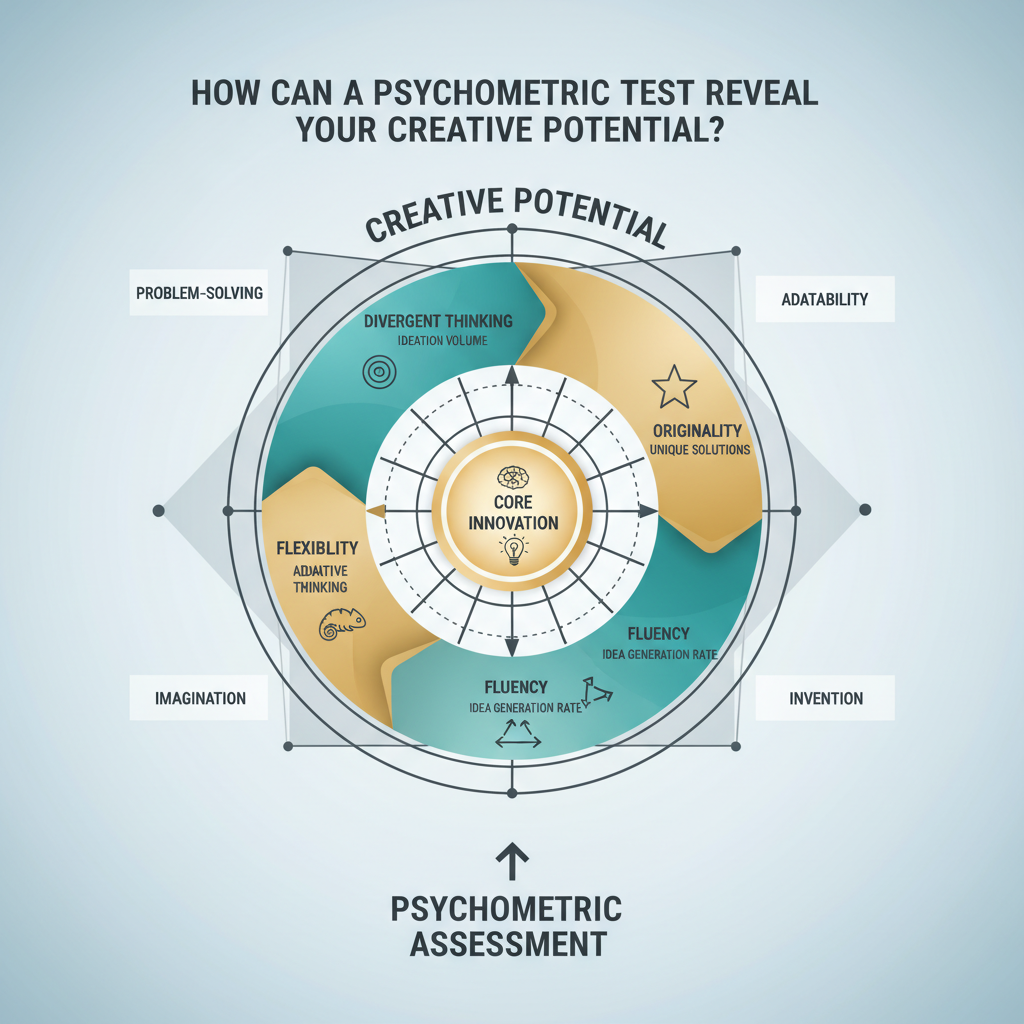
One key skill these tests measure is divergent thinking. This is the ability to come up with many different ideas from a single prompt [6]. It shows how flexible your thinking is and how open you are to new possibilities—both are essential for creativity.
Identifying Your Unique Cognitive Strengths
Creativity isn’t just one skill. It’s a mix of different mental strengths. Our assessments help you pinpoint your specific strengths and understand your unique creative style.
Our tests look at several key areas:
- Fluency: How easily you generate many ideas.
- Originality: The uniqueness and novelty of your ideas.
- Elaboration: Your ability to develop and detail those ideas.
- Flexibility: How easily you shift between different categories of thought.
For example, you might be great at coming up with lots of ideas (fluency) or thinking of unusual concepts (originality). When you understand your strengths, you can use them more effectively at work and in your daily life.
Research shows that everyone is creative in their own way [7]. Our tests simply help you see where your unique creative talents lie.
Using Your Results to Foster Innovation and Growth
Understanding your creative strengths is the first step. The real power comes from putting that knowledge to use. Your test results provide practical advice to help you grow.
Your feedback will show you where you can improve. For example, if you have many ideas (fluency) but struggle to develop them (elaboration), you can practice turning your starting points into more detailed solutions.
Simple strategies can help you build your creative skills. You could try:
- Engaging in brainstorming sessions regularly.
- Practicing mind mapping to connect diverse concepts.
- Seeking out new experiences to broaden your perspective.
- Applying design thinking principles to everyday challenges [8].
Using these strategies will help you think of new ideas and improve your problem-solving skills. This opens up new opportunities for personal and professional growth, leading to a more creative and fulfilling life.
Discover Your Creative Profile with the Creative Ability Test
Ready to discover your creative side? The Creative Ability Test can guide you. Our test is backed by science and designed to help you uncover your unique creative talents.
Our 30-question test measures different aspects of creativity. You’ll get a clear look at your thinking flexibility, your ability to generate new ideas, and your knack for innovation.
We give you personalized feedback that highlights your strengths and shows you where you can improve. You’ll also get practical tips designed to boost your creative thinking.
The Creative Ability Test helps you move from wondering about your creativity to understanding it. Start your journey of creative growth and learn how to use your skills for better problem-solving and new ideas today.
Frequently Asked Questions About Psychometric Psychology
What is a psychometric psychology example?
Psychometric psychology is the science of measuring mental abilities. It uses proven methods to understand parts of the human mind, like creativity, personality, or intelligence.
A great example is our Creative Ability Test. This test uses psychometric principles to measure your creative potential. It looks at how you come up with ideas, solve problems, and adapt to new challenges.
The test gives you clear results. You learn about your unique creative strengths and thinking style. This knowledge helps you grow, both personally and at work.
What are the 4 types of psychological tests?
Psychological tests are tools that help us understand the mind. They usually fall into four main categories:
- Ability/Aptitude Tests: These tests measure your skills or potential. They predict how well you might do a certain task. Our Creative Ability Test fits here perfectly. It measures your ability to think differently, be flexible, and solve problems in new ways. This helps you see your own creative strengths.
- Personality Tests: These tests look at your usual behaviors and personality traits. They show how you interact with the world. They can measure traits like how organized or outgoing you are, giving you a better sense of who you are.
- Intelligence Tests: These tests measure your overall thinking skills. They often check your ability to reason, solve problems, and think about ideas. Standard IQ tests are a common example, providing a broad look at intellectual skill.
- Neuropsychological Tests: These tests check specific brain functions, often related to brain health. They measure things like memory, attention, and language skills. These tests can help identify certain impairments [source: https://www.apa.org/topics/neuropsychology/tests].
Each type offers different, useful information. Our test focuses on your creative skills to help you understand and improve your ability to innovate.
What is a psychometric ability?
A psychometric ability is a mental skill that can be measured. These abilities help predict how well you might handle certain mental tasks and show your natural mental strengths.
These abilities are not just about “book smarts” or IQ. They cover a wide range of thinking skills, such as how you reason with words or numbers.
Creativity is a key psychometric ability we focus on. It includes several skills, like thinking of many different ideas (divergent thinking) and being able to see things from new angles (cognitive flexibility). These skills help you tackle problems in your own unique way and come up with new solutions.
Our Creative Ability Test measures these exact skills. It shows you how your mind creates new ideas, which can boost your confidence and help you grow.
What is an example of a psychometric assessment?
Our Creative Ability Test is a great example of a science-based psychometric test.
This 30-question test measures different sides of your creativity. It looks at how flexible your thinking is, how many ideas you can generate, how open you are to new things, and how you solve problems.
When you finish, you get a personalized report. This report shows your unique creative strengths and points out areas where you can improve. You get practical tips to boost your creativity that are simple and easy to use.
These tips help you be more creative every day and improve your innovation skills at work. This test gives you clear self-knowledge and a plan to grow your creative skills.
Sources
- https://www.apa.org/education-career/guide/science-psychology
- https://www.psychologytoday.com/us/basics/creativity
- https://psycnet.apa.org/record/1987-03316-001
- https://www.apa.org/pubs/books/validity
- https://www.collegeboard.org/
- https://psycnet.apa.org/record/1968-07159-001
- https://journals.sagepub.com/doi/abs/10.1177/0013164416666107
- https://www.interaction-design.org/literature/topics/design-thinking
Leave a Reply