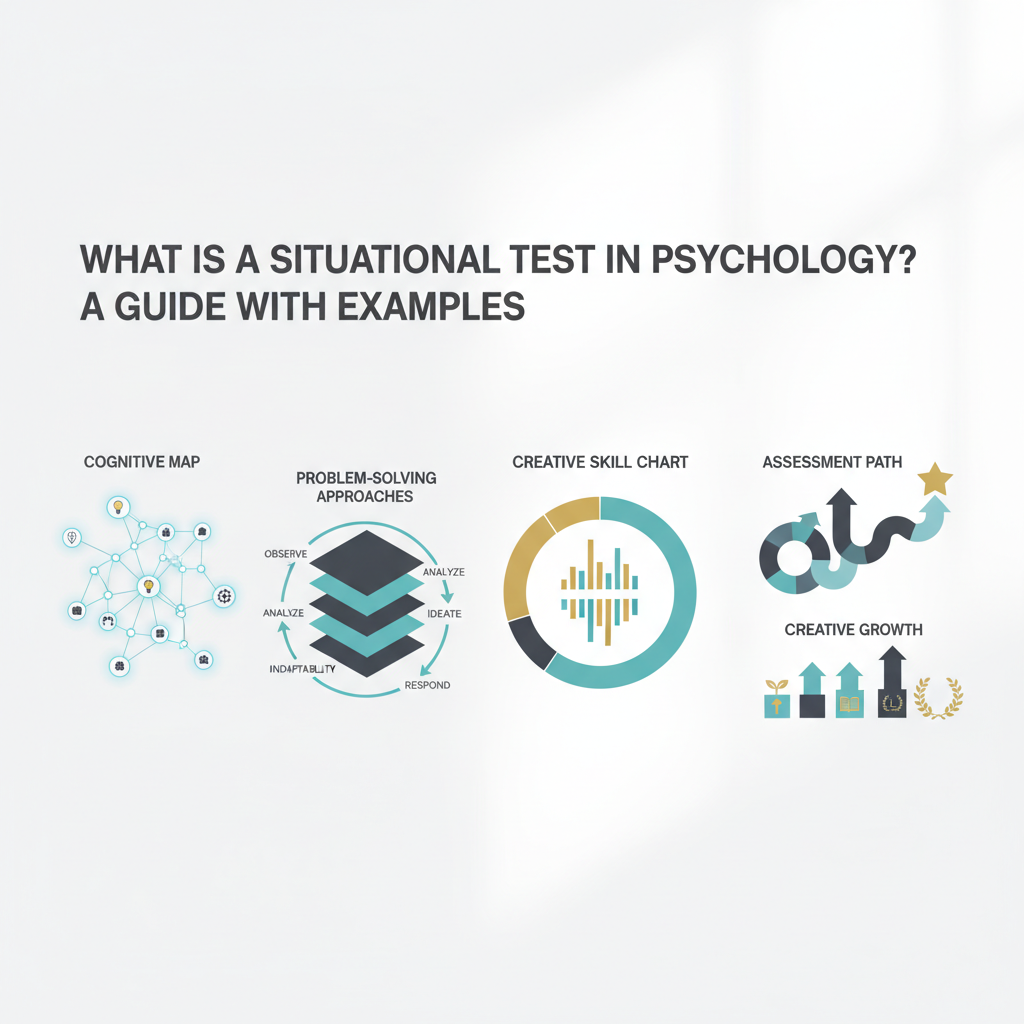
A situational test in psychology, also known as a Situational Judgement Test (SJT), is an assessment tool used to evaluate behavioral and cognitive abilities in hypothetical, work-relevant scenarios. It measures how an individual might react to a situation by asking them to choose the most and least effective responses from a set of options, providing insight into their problem-solving, decision-making, and interpersonal skills.
Have you ever wondered how you react to tricky problems or make decisions under pressure? Understanding your natural instincts is key to unlocking your creative potential. A powerful tool in psychological assessment for this is the situational test. These scientific tests offer a unique look into your problem-solving style, showing how you handle real-world challenges when it matters most.
This guide explains what situational tests are, how they work, and what they can reveal about your creative and decision-making skills. We’ll explore how these tests measure more than just textbook knowledge. They evaluate your cognitive flexibility, divergent thinking, and practical innovation skills in everyday situations. By using clear explanations and relatable examples, we aim to help you better understand your own problem-solving abilities and offer useful tips for personal and professional growth.
What Is a Situational Test in Psychology?
Understanding Situational Judgement Tests (SJTs)
A Situational Judgement Test (SJT) is a powerful assessment tool used in psychology. It gives you realistic, work-related scenarios and asks you to choose the best way to respond. These tests don’t check what you’ve memorized. Instead, they look at your judgment, decision-making, and Problem-Solving Skills in specific situations. [1] They show how you naturally react and apply your thinking to complex challenges.
For example, SJTs reveal how you handle challenges and think creatively under pressure. They also show how flexible you are when looking for different solutions. Because these tests are designed to feel like real-world problems, they offer a practical look at your behavior and potential.
SJTs can reveal key parts of how you handle problems, including:
- Cognitive Flexibility: Your willingness to adapt and consider new ideas.
- Problem-Solving Skills: How you analyze issues and develop effective solutions.
- Decision-Making: The logic and values guiding your choices.
- Creative Thinking: Your ability to come up with new and useful ideas.
- Interpersonal Skills: How you interact and work with others.
Understanding these areas can help you become more creative. It helps you clearly see your own strengths and weaknesses.
The Goal: Assessing Real-World Behavior
The main goal of a situational test is simple: to see how you would behave in real-world situations. While traditional tests measure knowledge, SJTs focus on how you use your skills. They show your judgment in tough situations, offering a more complete picture of your abilities.
This type of test is very useful for understanding creativity. Creativity is not just about having ideas; it’s about using them well. SJTs can show how you use your creative strengths, like finding new ways to solve problems or dealing with ambiguous problems. Studies show that SJTs can be good predictors of job performance and success [2].
By copying real-life challenges, these tests give you personal feedback about your natural reactions. This self-awareness is key to your growth. It helps you see where your creative thinking is strongest and where you can improve your problem-solving skills. The goal is to help you move from just understanding creativity to actively using it for your personal and professional development.
How Do Situational Tests Assess Your Thinking Style?
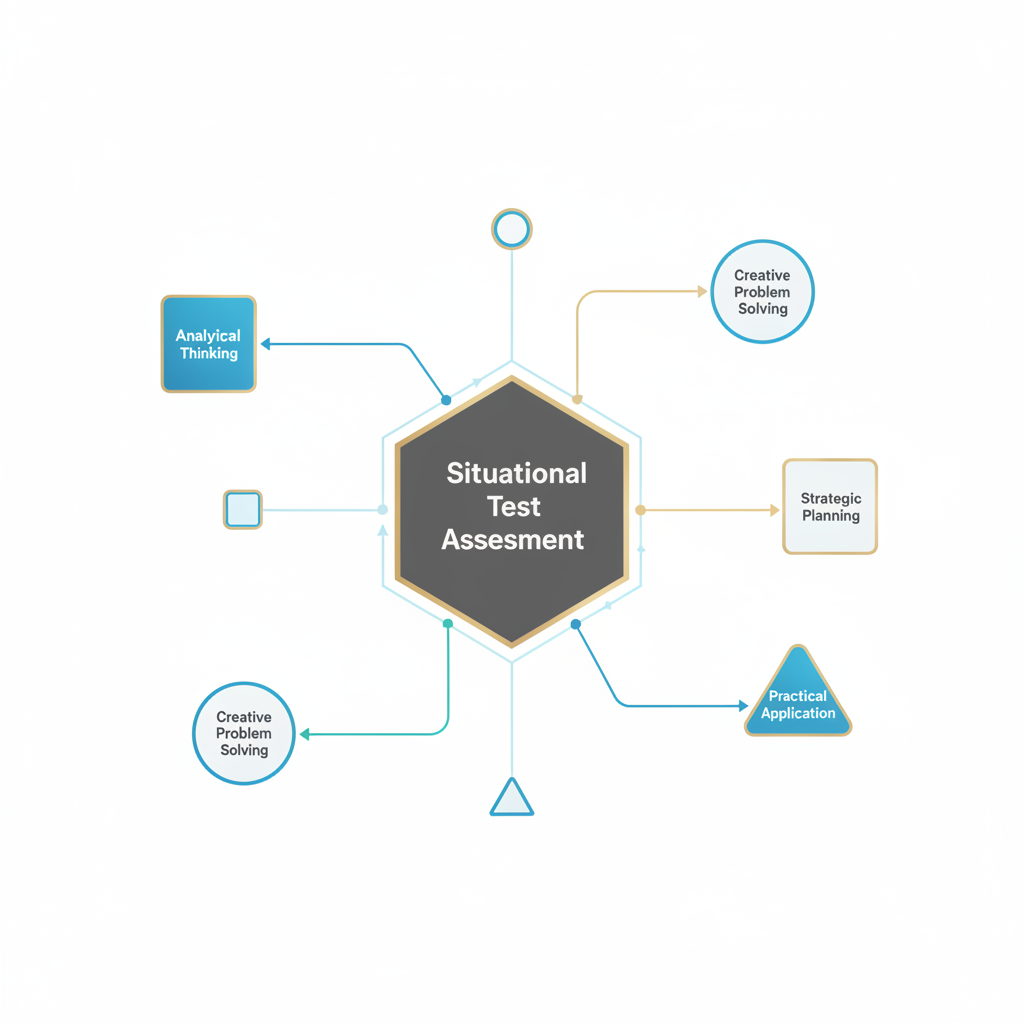
Presenting Realistic Scenarios
Situational tests put you in realistic, hypothetical situations. These scenarios are like challenges you might face in real life or at professional settings. The goal is to see how you naturally think and act in different circumstances.
Unlike tests that measure memorized facts, situational tests look at your practical judgment. There isn’t a single “right” answer. Instead, they want to see your unique way of solving complex problems.
For example, you might face a team conflict or a surprise project delay. How you handle these situations shows your core thinking style. Do you focus on teamwork? Do you look for new solutions? Your choices offer valuable insights.
This method helps show your creative problem-solving skills. It shows if you can come up with new ideas when things are unclear. You also see how you adjust your thinking based on new information. [3]
Evaluating Your Judgment and Problem-Solving
When you take a situational test, you get a scenario with several options for what to do. Each option shows a different way of thinking or making a decision. Your choice, and your reasons for it, help measure your judgment.
Evaluators look for several key things:
- Critical Thinking: How well do you understand the problem? Can you spot the root causes?
- Decision-Making: Can you make good choices under pressure? Do you consider the pros and cons?
- Problem-Solving Approach: Do you follow a clear process? Or do you try creative and new solutions?
- Strategic Thinking: Do you think about the long-term results? How do your actions affect other people?
Your answers show your mental flexibility. This is your ability to switch between different ways of thinking. It’s a key part of creativity. For example, The Creative Ability Test explores how you use this flexibility for innovation.
Understanding how you tend to solve problems is powerful. It helps you see where your creative thinking is strongest. It also shows you where you can develop new skills for growth.
Measuring Key Competencies
Situational tests are great tools for measuring key skills. These are the skills and behaviors you need to succeed in many areas of life. They go beyond technical knowledge.
Common skills they measure include:
- Communication: How well you share ideas and listen to others.
- Teamwork: How you work with others and help the group succeed.
- Leadership: Your ability to lead, motivate, and inspire people.
- Adaptability: How well you adjust to new situations and challenges.
- Initiative: Being willing to take action and get things done.
- Emotional Intelligence: Understanding your emotions and the emotions of others.
Many of these skills are closely linked to creativity. For example, adaptability is key for exploring many different solutions freely. Good communication also helps you share and improve your creative ideas.
The Creative Ability Test gives a complete assessment. It measures specific parts of creativity, like mental flexibility and being open to new experiences. By understanding these traits, you get insights tailored to you. You learn how to use your unique thinking style for problem-solving and innovation.
This self-awareness turns uncertainty about your skills into useful knowledge. You go from guessing about your creative potential to truly understanding it. This leads to clear strategies for growth. Our science-based approach ensures these insights are both reliable and practical.
What Can Situational Tests Reveal About Your Creativity?
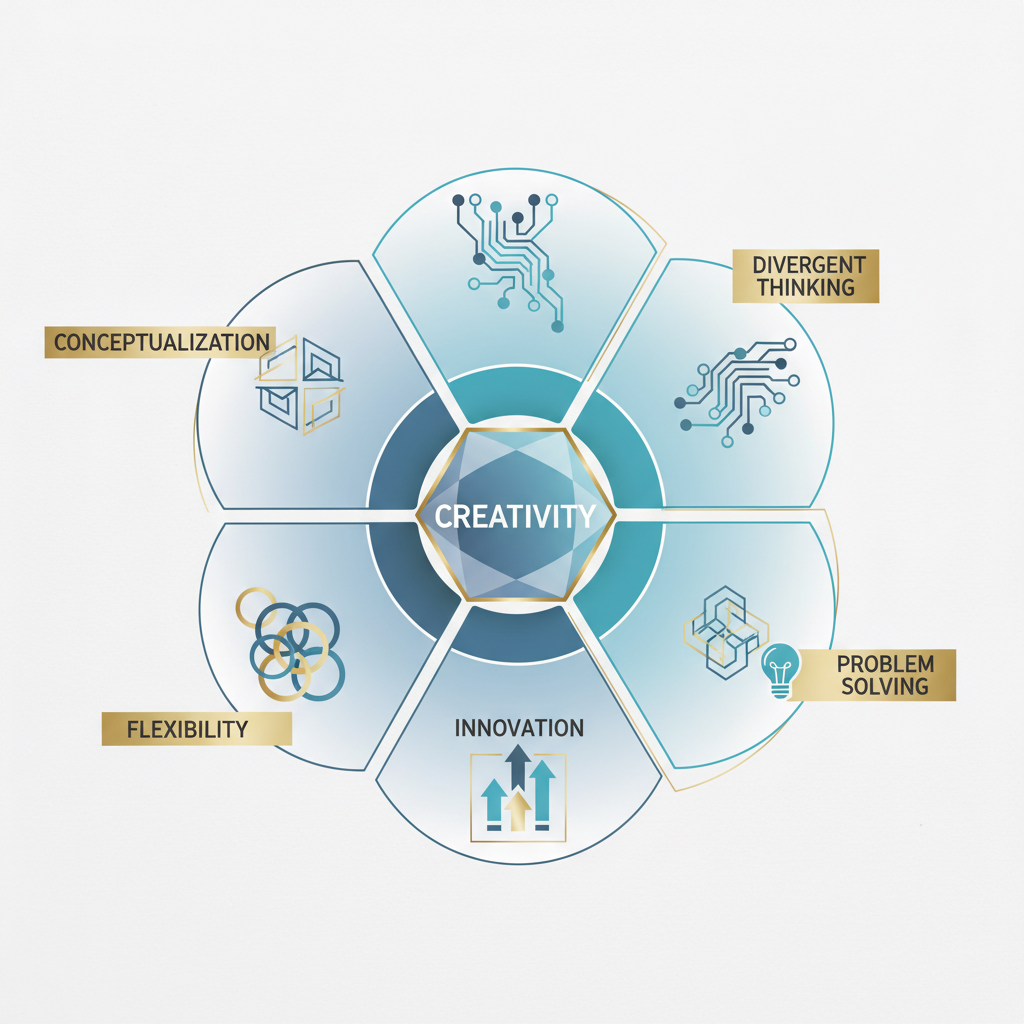
Assessing Your Approach to Vague Problems
Situational tests often give you problems without a single, clear solution. These are called ambiguous problems. How you respond to these open-ended challenges reveals a lot about your creative thinking. When faced with uncertainty, do you search for new solutions, or do you stick to familiar paths?
Creativity thrives in these situations. It encourages you to look beyond standard answers and consider multiple viewpoints to generate fresh ideas. This ability to explore new possibilities is a key part of thinking outside the box.
For example, imagine a project deadline is suddenly moved up. A standard approach might be to simply work longer hours. A creative approach, however, could involve rethinking the project’s goals, using resources in a new way, or finding a completely different method to get the job done faster.
Our assessment helps you understand how you handle these kinds of problems. It highlights your natural desire to be creative when clear answers are hard to find.
Identifying Your Problem-Solving Style
Everyone solves problems differently. Some prefer a step-by-step approach, while others rely on intuition. Situational tests are great at showing these natural tendencies. They reveal whether you typically use familiar solutions or search for completely new ones.
Creative people often share certain traits. These include a willingness to experiment and a desire to connect ideas that seem unrelated. They might be good at brainstorming freely, thinking of many possibilities, or turning simple concepts into well-developed solutions.
Understanding your natural style is powerful because it allows you to use your strengths. For example, if you’re good at combining different ideas, you can find roles that reward that skill. If you tend to be more analytical, you can practice techniques to boost your creative thinking.
Our 30-question assessment offers insights into these habits. It helps you see how you use creativity in real-life situations. Knowing yourself is the first step to improving your creative skills.
Highlighting Your Mental Flexibility
Mental flexibility is a key part of creativity. It’s the ability to switch between different ideas or tasks. It also involves thinking about several concepts at once. This skill is essential for adapting to new information and changing situations [4].
In a situational test, your flexibility shows when you face an unexpected twist. Do you rigidly stick to your first plan? Or do you quickly adjust and consider new solutions? People with high flexibility can easily change direction. They can look at problems from different angles and explore new paths.
This trait helps you overcome mental blocks and break free from old thinking habits. For instance, if one approach fails, mental flexibility lets you quickly shift to a new one, sparking innovation.
Our platform helps you measure your cognitive flexibility. We explain how this skill builds your creative potential and offer practical tips to develop it. This can greatly improve how you solve problems and come up with new ideas.
Situational Test in Psychology Examples
Example 1: The Team Project Dilemma
Imagine you’re leading an important team project. Suddenly, a team member suggests a big change. This idea goes against the original plan everyone agreed on. Some team members are frustrated, feeling their work is being wasted. The deadline is also getting close.
What would be your immediate response? Would you:
- Dismiss the new idea quickly to keep things moving?
- Listen carefully and encourage the team to explore its good points?
- Call a meeting to discuss the new idea, even if it causes a small delay?
- Find a way to use parts of the new idea without major changes?
This scenario tests your leadership, problem-solving, and flexibility. A creative leader doesn’t just stick to the plan; they know when to change course. This means weighing new information and including different viewpoints. Your reaction shows how you handle new ideas in a team. It shows if you welcome or resist change for a better result.
Example 2: The Unexpected Client Request
You’re almost finished with a project for a key client, and everything is on track. Then, the client asks for a major, last-minute feature. This wasn’t in the original plan. Adding it would take more resources and could delay the project. But, doing it could also make your relationship with the client much stronger.
How would you handle this situation? Consider these options:
- Politely say no, pointing to the original agreement?
- Agree right away, without checking the impact?
- Talk openly with the client about the costs in time and money?
- Brainstorm creative, alternative ideas that partly meet the request?
This example tests how well you adapt and solve problems under pressure. It also checks your ability to find clever solutions. Your response shows how well you can think outside the box. Can you come up with several solutions to a surprise problem? This includes finding outcomes where everyone wins. It also shows how comfortable you are with unclear situations. Great creative thinkers turn challenges into chances to innovate.
Example 3: The Resource Shortage Challenge
Your team is working on an exciting new project. Halfway through, a sudden budget cut means you lose 30% of your money [5]. On top of that, a key supplier can’t provide a part you need. You have to continue the project with much less money and a missing part.
What is your strategic approach? Would you:
- Scale back the project to focus only on the most important parts?
- Look for other funding or new suppliers right away?
- Redesign the whole project to work with what you have?
- Ask your team to brainstorm creative new ways to meet the goals?
This scenario tests your resilience, creative problem-solving, and ability to succeed with limitations. Creativity often grows when resources are tight, forcing you to think in new ways. This encourages ‘scrappy innovation.’ Your choices show how well you can reuse what you already have. They also show your ability to come up with new solutions. This helps you make progress even with major setbacks. Our Creative Ability Test can show if you naturally welcome these challenges and use them to spark new ideas.
How Can You Prepare for a Situational Test?
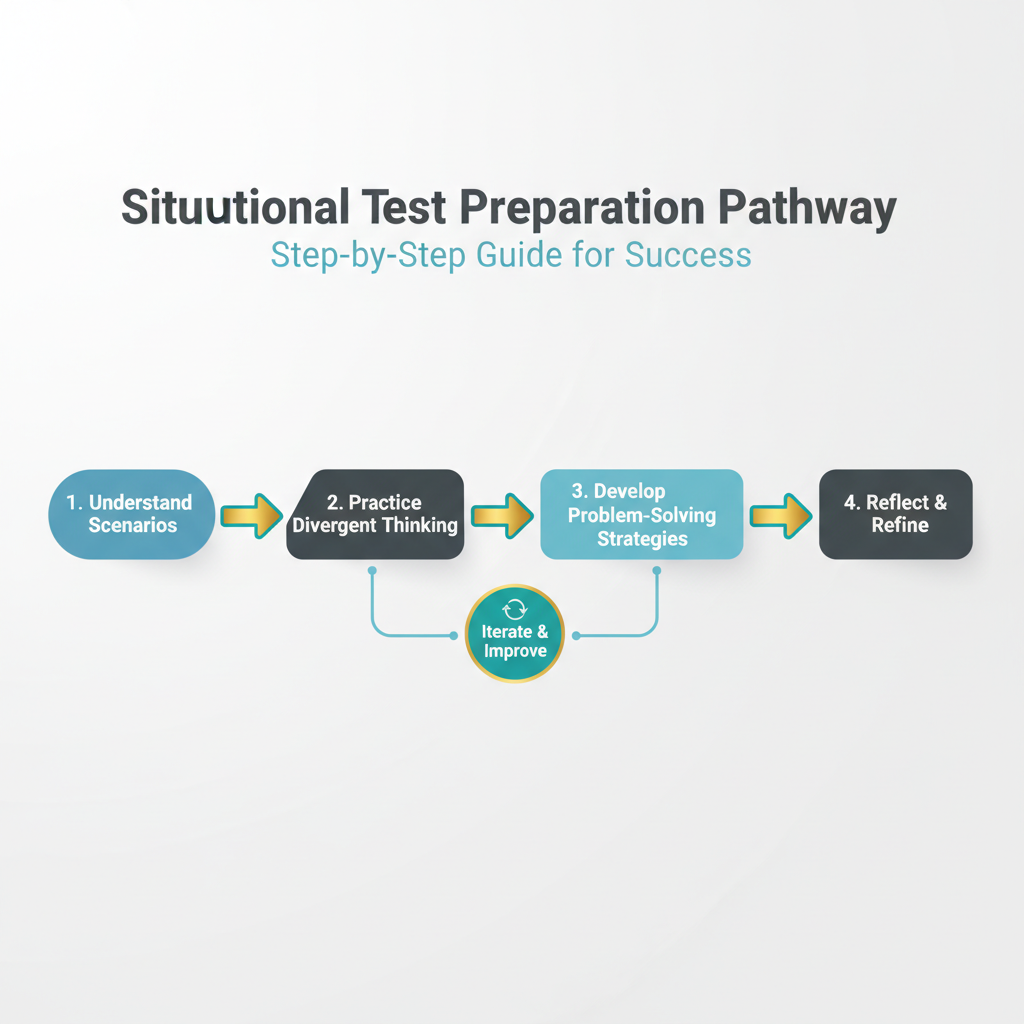
Understand the Core Competencies Being Assessed
To prepare for a situational test, you first need to understand its goal. These tests don’t use trick questions. They measure skills and behaviors that are key to success in a specific role. Companies look for people with strong problem-solving, communication, teamwork, and ethical skills. They also test your creativity, like how you handle new or unclear problems.
Think about what the job requires and how you already show those qualities. For example, a test might see how you create new ideas under pressure or handle competing tasks.
Key skills often tested include:
- Problem-solving: How you analyze a situation and find good solutions.
- Adaptability: How well you adjust to new information or changing situations.
- Communication: Your ability to share ideas clearly and listen well.
- Teamwork: How you work with others and contribute to a group.
- Leadership: Your ability to take charge and guide others.
- Resilience: How you deal with setbacks and stay positive.
- Ethical Judgment: Your commitment to doing the right thing.
Knowing what skills are being tested helps you shape your answers. You can show your strengths and creative thinking more easily. Our Creative Ability Test can help you find your unique creative style, which gives you a new way to understand these skills.
Practice with Example Questions
Practice is a key part of preparing. Working through sample questions helps you get used to the format and common situations. You can find practice tests on career websites and other online platforms.
But just answering questions isn’t enough. You should also focus on why you chose an answer. Think about what makes one action better than another in a situation. This helps build your judgment.
When you practice, follow these steps:
- Read carefully: Make sure you understand the situation and the challenge.
- Identify key people: Who is involved and what do they need?
- Brainstorm solutions: Think of all the possible ways to handle the situation.
- Consider the results: Think about the short-term and long-term effects of each option.
- Choose the best option: Pick the answer that best shows the skills and ethics the company wants.
- Explain your choice: Know the reasons for your answer. This will help you learn.
This kind of practice makes you more flexible in your thinking. It gets you ready to think on your feet and solve real-world problems.
Reflect on Your Own Experiences
Your own experiences are a great way to learn. Think about times you faced a challenge or had to make a big decision. How did you handle it? What happened? Thinking about this shows you your natural way of solving problems.
Think about specific times when you:
- Resolved a conflict on a team.
- Adapted to an unexpected change.
- Created a new solution for a tough problem.
- Communicated a complex idea clearly.
- Took initiative or led a project.
Look closely at these moments. What did you learn? How did you use your unique way of thinking? Knowing your patterns will help you face new situations with more confidence. This self-awareness, which tools like the Creative Ability Test can help build, is key to growing your career. It helps you talk about your strengths and show what you can do in a test.
Frequently Asked Questions
What is the difference between a situational test and a situational judgement test?
People often use these terms to mean the same thing, but there’s a small difference. A situational test is a broad term. It gives you a realistic work scenario and asks how you would respond. This shows how you solve problems and use your judgment.
A situational judgement test (SJT) is a specific type of situational test. In an SJT, you get a list of possible actions for each scenario. Your task is to evaluate these options. You might rank them from best to worst, or pick the most and least effective choices [6]. Both test types show how you naturally handle challenges and make decisions.
These tests help us see how you think and apply creativity to real-world problems. The Creative Ability Test, for instance, looks closely at the thinking behind your choices to reveal your creative strengths.
What skills do situational tests measure?
Situational tests measure a wide range of skills that are important for success. They show how you use practical intelligence and creative thinking in different situations.
Key skills measured often include:
- Problem-Solving: How you analyze tough situations and find good solutions. Creative thinkers often bring a unique perspective to this.
- Decision-Making: How you consider different options and make choices, especially when it’s stressful. This shows your judgment and ability to think ahead.
- Communication: How you share information and listen to others. Good communication is essential for putting creative ideas into action.
- Teamwork and Collaboration: How you work with other people to reach a common goal. Working together creatively often leads to new ideas.
- Leadership Potential: Your ability to guide, motivate, and take the first step. Leaders often encourage creative problem-solving.
- Adaptability and Flexibility: How you handle new situations or unexpected problems. This is a key part of cognitive flexibility.
- Resilience: How you bounce back from setbacks and keep going. Creative people often see challenges as chances to learn.
- Ethics and Integrity: How you stick to your principles and values when making difficult choices.
By looking at these skills, situational tests give a full picture of your abilities. They show how you use your creative strengths in practice. Our Creative Ability Test helps you see these connections more clearly and improve your problem-solving skills.
Are there right or wrong answers on a situational test?
Most situational tests, especially Situational Judgement Tests, don’t have one single “right” or “wrong” answer. Instead, responses are scored on how effective they are and how well they match the key skills needed for a role [7].
Some answers are better than others, and some are clearly not ideal. Your choices show your judgment and how you prefer to handle things. This gives us a good look at your thinking style and how you use your creativity.
The goal is to understand how you naturally solve problems and make decisions. It’s not about getting a perfect score, but about self-awareness and growth. The Creative Ability Test provides personalized feedback to help you see your creative patterns. This allows you to improve your approach for better results.
Sources
- https://www.shl.com/shl-products/situational-judgment-test/
- https://psycnet.apa.org/record/2012-09419-001
- https://onlinelibrary.wiley.com/doi/abs/10.1111/peps.12269
- https://hbr.org/2020/09/cognitive-flexibility-is-a-superpower-in-an-uncertain-world
- https://hbr.org/2014/10/how-to-do-more-with-less-money
- https://www.siop.org/Business-Resources/Assessment-Tools/Situational-Judgment-Tests
- https://www.emerald.com/insight/content/doi/10.1108/02683940210453715/full/html
Leave a Reply