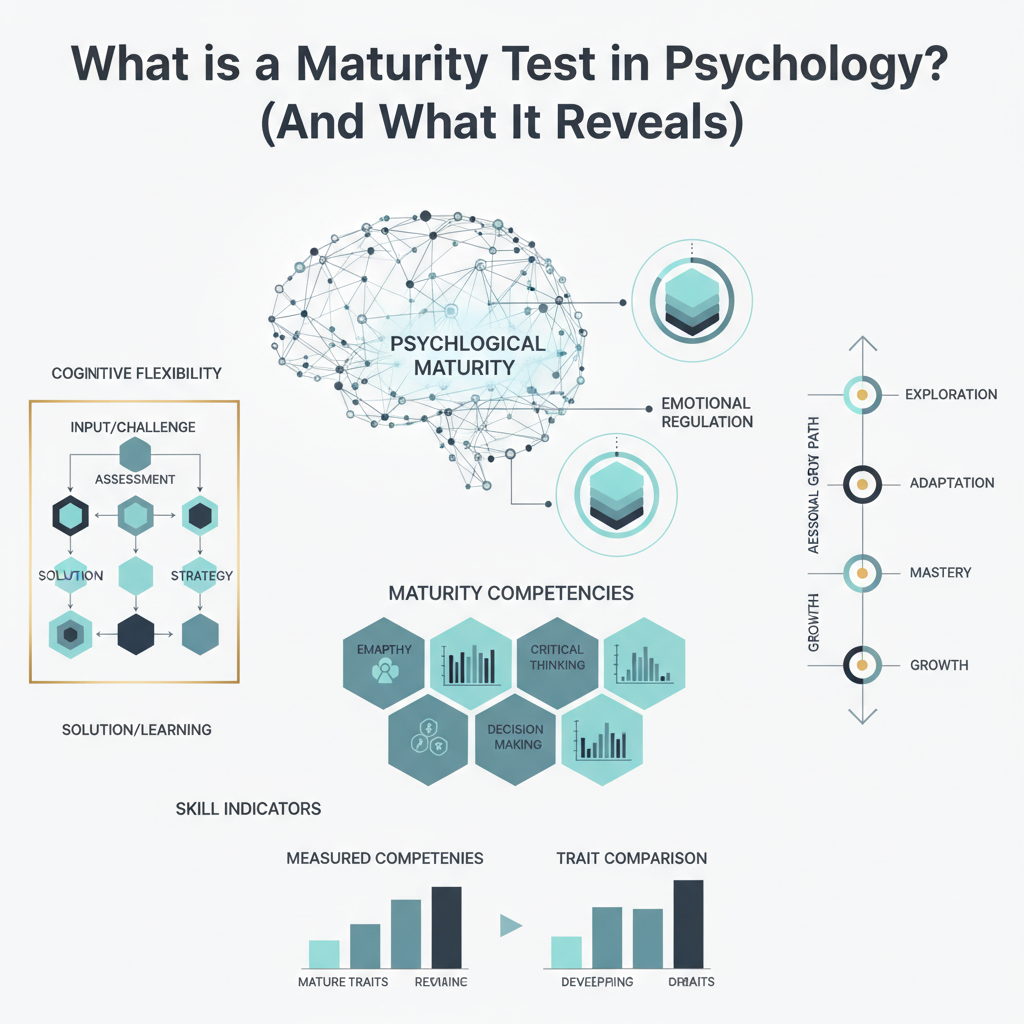
A maturity test in psychology is an assessment designed to evaluate an individual’s emotional, social, and cognitive development, independent of their chronological age. It measures traits like emotional regulation, empathy, responsibility, and complex problem-solving to provide insight into a person’s overall psychological growth and readiness.
Many of us think maturity is just about getting older or reaching a certain age. But in psychology, true maturity goes much deeper. It involves your emotional intelligence, social skills, and cognitive development. It’s not about becoming a “grown-up” and stopping there. Instead, it’s an ongoing process of building key skills that help you grow and solve problems. Understanding this is the first step to learning more about who you are and who you can be.
So, what does a psychological maturity test measure? It can reveal your unique strengths. These science-based tests are designed to show your thinking styles, emotional resilience, and creative potential. By looking at things like emotional regulation, cognitive flexibility, and openness to new experiences, these tests clarify how you handle challenges and relate to others. They also show how you find new ideas and overcome creative blocks. This article will guide you through these fascinating psychological tests, showing how they offer practical ways to improve your Self-Awareness and boost your creativity.
What Does ‘Maturity’ Really Mean in Psychology?
Moving Beyond Chronological Age
What is maturity? Many people think it’s just about age. But it’s more than that. True maturity isn’t just about getting older. It’s not about the number of years you’ve lived [1]. Instead, maturity is about your personal growth. It’s how you handle life’s challenges and understand yourself and others.
People mature at different speeds. Some seem mature from a young age, while others take more time. Our creative journeys are all different, too. Understanding maturity helps us appreciate these differences. It helps us see a person’s true potential. This is a key part of personal growth.
The Role of Emotional, Social, and Cognitive Development
True maturity has a few key parts. You develop them throughout your life. They are essential for happiness and success. Let’s look at what they are:
- Emotional Maturity: This is about knowing yourself. You understand your feelings and can manage them well. It means you can handle stress and setbacks in a healthy way. You can also understand how others feel and handle disagreements calmly.
- Social Maturity: This part is about how you interact with others. It means you can read social situations and build healthy relationships. You also take responsibility for your actions. Socially mature people work well with others and make a positive impact on their communities.
- Cognitive Maturity: This is about your thinking skills. It includes how you think critically and solve problems. If you are cognitively mature, you can see issues from different sides. You are also good at adapting to new information. This is called cognitive flexibility [2]. Being flexible in this way is key for creative thinking.
These three areas of maturity are connected. For example, managing your emotions helps you push through creative blocks. Understanding other people helps you improve your creative work. Thinking carefully about ideas leads to new ones. The Creative Ability Test looks at your cognitive skills. It helps you see how you solve problems. It also shows how open you are to new experiences. These are all important for growing your creative potential. Our science-backed test gives you personal insights. It helps you unlock these parts of yourself.
How Does a Psychological Maturity Test Work?
Key Areas of Assessment
To understand psychological maturity, we look at several key areas of your development. These tests do more than check your age; they show how you handle life’s challenges. For our Creative Ability Test users, this helps you see how well you can use your creative potential in the real world.
A full psychological maturity test looks at areas that greatly affect creative thinking and problem-solving. Here are some of the most important ones:
- Emotional Regulation: This is your ability to handle feelings in a healthy way. Mature people can manage stress, frustration, and failure without getting overwhelmed. This skill is key for creative work, which often means facing challenges and not giving up [3].
- Cognitive Flexibility: This measures how easily you can change your point of view or adapt your thinking. It’s a key part of solving problems creatively, helping you come up with different ideas and see solutions from new angles.
- Social Understanding (Empathy): Your ability to understand and share the feelings of others. Empathy boosts creativity by helping you see what people need, create solutions that work for them, and tell powerful stories.
- Problem-Solving Skills: This looks at how you face challenges. A mature person often uses organized yet creative ways to solve problems. They look past easy answers to find better, more lasting solutions.
- Self-Awareness: Understanding your own strengths, weaknesses, and what drives you. This insight is important for personal growth and for using your creative energy well.
- Responsibility and Initiative: Your willingness to take charge of tasks and move projects forward. In creative projects, this means seeing an idea through from start to finish.
- Resilience: Your ability to bounce back from setbacks. Creative work often includes rejection or failure, so resilience is needed to keep making progress and learning.
What These Tests Aim to Uncover
Psychological maturity tests are made to give you a better understanding of your inner world. They show patterns in how you think, feel, and act. If you’re interested in creativity, these insights are very helpful. They show how your level of maturity can either help or hurt your creative work.
Specifically, these tests can show you:
- Your Unique Thinking Styles: The tests clarify how you handle information and new situations. This includes seeing if you tend to use divergent thinking (coming up with many ideas) or convergent thinking (finding the one best solution).
- Areas for Creative Growth: By showing specific areas of maturity, these tests point out where you can build skills to help your creativity. For example, if you need to work on emotional regulation, improving it can lead to a more consistent creative flow.
- The Connection Between Emotional Intelligence and Innovation: You will see how managing emotions, understanding others, and being self-aware directly help you to innovate and solve tough problems creatively.
- Practical Insights for Personal and Professional Development: The results give you practical advice. They show you how to use a more mature approach to improve your creative work, whether for personal projects, school, or your job.
- How to Apply Mature Approaches to Complex Problems: When you understand your maturity level, you can face challenges with a more balanced view. This leads to more thoughtful, effective, and creative solutions.
Ultimately, a psychological maturity test is a tool for self-discovery, especially when it comes to creativity. It helps you understand your current skills and find ways to unlock your full creative potential.
What is an Emotional Maturity Test in Psychology?
Emotional maturity is your ability to understand and handle your emotions. It means you can react to situations in a calm and balanced way. This isn’t about your age in years. Instead, it’s about your inner growth. Developing emotional maturity can improve many parts of your life, including relationships, work, and creativity.
A psychology test for maturity often looks at these emotional skills. It checks how well you handle difficult feelings. It also measures your ability to get along with others. Understanding your emotional maturity can be very helpful. It shows you areas where you can grow and improve as a person.
Signs of Emotional Maturity
You can see emotional maturity in key actions and ways of thinking. These signs lead to better self-awareness and decision-making. They also help you become more resilient. Knowing these signs helps you see how you’re doing. They also show you areas where you can grow.
- Self-Awareness: You understand your own emotions and how they affect your thoughts and actions. This is key to personal growth.
- Impulse Control: You can manage your reactions. You think before you speak or act, even in stressful moments [4]. This stops you from making hasty choices.
- Empathy: You can understand and share what others are feeling. This helps you form deeper connections and solve problems with kindness.
- Responsibility: You accept responsibility for your actions and don’t blame others for your mistakes. This shows you are accountable.
- Adaptability: You can handle change and new situations well. You face unexpected problems with a flexible attitude. This is important for dealing with life’s surprises.
- Resilience: You bounce back from hard times. You learn from your mistakes instead of letting them bring you down. This strength helps build character.
- Conflict Resolution: You handle arguments in a positive way. You look for solutions instead of making things worse. This helps you get along better with people.
- Boundary Setting: You set healthy limits in your relationships. You respect your needs and the needs of others. This builds mutual respect.
These traits are not set in stone. You can work on and improve them over time. Understanding them is the first step to having better control over yourself.
How Emotional Regulation Connects to Creativity
Emotional regulation, or managing your feelings, is a key part of emotional maturity. It’s also closely connected to creativity. This important skill lets you handle and react to your feelings. It helps create a good mindset for new ideas. This can help you reach your full creative potential.
Here is how managing your emotions improves creativity:
- Managing Creative Frustration: Being creative can be challenging. You might face creative blocks or other problems. Good emotional regulation helps you keep going. You can handle frustration without giving up.
- Openness to New Ideas: When your emotions are in check, you are more open to different points of view. This helps you think outside the box and come up with many new ideas.
- Handling Critique: Creative work often gets feedback from others. Emotional maturity helps you take helpful criticism. You can use it to improve your work without getting upset.
- Risk-Taking and Exploration: New ideas often involve taking risks and trying new things. Good emotional control makes you less afraid to fail. It helps you try bigger, bolder ideas.
- Sustaining Focus: Creative projects require a lot of focus. Emotional control helps you stay focused. It reduces distractions from your own feelings, letting you dive deeper into your work.
Studies show a clear link between managing emotions and creative work [5]. When you can manage your emotions, your mind is clearer. This clear state of mind is perfect for new ideas to grow. The Creative Ability Test can help you understand your ability to think in different ways. This works together with emotional regulation. Both are key to building a strong creative mindset. By controlling your emotions, you boost your ability to create and solve problems in new ways.
How Is Maturity Linked to Creative Problem-Solving?
Cognitive Flexibility and Seeing New Perspectives
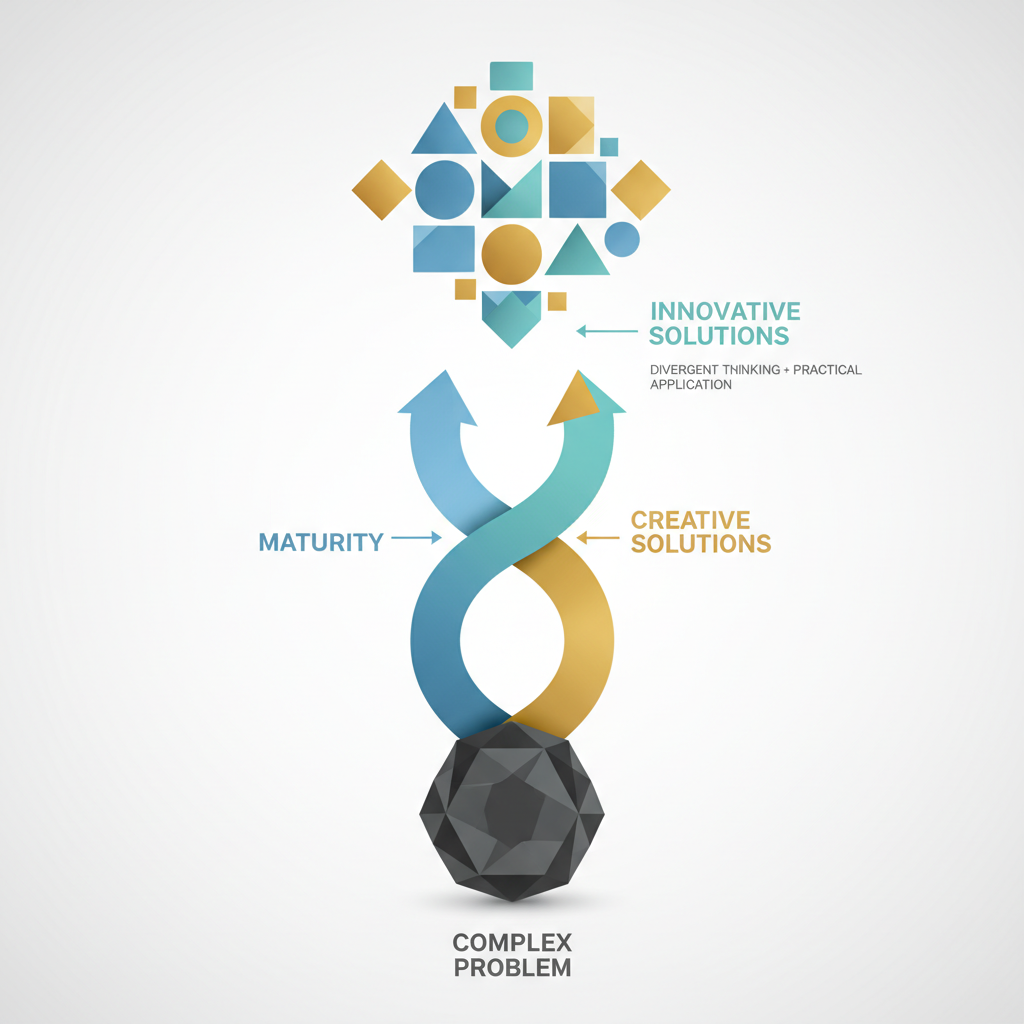
Maturity improves your cognitive flexibility. This is your brain’s ability to adapt its thinking. You can easily switch between different ideas or tasks. When you’re mature, you often see problems from many sides. You aren’t stuck on just one approach.
This flexible mindset is key for creative problem-solving. It helps you explore new ideas and change direction when a solution isn’t working. This ability helps you find truly creative answers.
Think of a designer with a tough client project. A flexible designer won’t just stick to old habits. Instead, they will look at many different solutions. They might mix different styles or tools. This leads to new and surprising results.
To build cognitive flexibility, you need to question your assumptions. It also means seeking out new information and being open to different points of view.
- Practice divergent thinking: Brainstorm many uses for a common object.
- Learn new skills: Step outside your comfort zone regularly.
- Seek diverse opinions: Talk to people who think differently.
- Reflect on setbacks: Understand what went wrong and how to adjust.
Understanding your own cognitive flexibility is an important step. Our Creative Ability Test can help you find these strengths and see how you think. This knowledge can help you improve your creative problem-solving skills.
Using Experience to Fuel Innovation
Maturity brings a lot of experience, from both successes and failures. These past lessons are more than just memories—they are powerful tools for innovation. Mature people can use this knowledge to solve current problems in new ways.
Experience teaches you useful patterns and shows you what to avoid. This helps you stop repeating mistakes. More importantly, it helps you connect ideas that don’t seem related. These connections often lead to breakthrough ideas.
For example, an experienced chef doesn’t just follow recipes. They understand how ingredients work and remember past flavor combinations. This deep knowledge lets them invent unique dishes. Their experience fuels their creativity in the kitchen.
Using your experience creatively is a skill. It’s more than just remembering things. It requires you to think about your past and connect the dots.
- Keep a reflection journal: Write down key lessons from your projects.
- Review past work: Look for patterns and see what worked well.
- Mentor others: Teaching others strengthens your own understanding.
- Seek feedback actively: Get other people’s views on your experiences.
The Creative Ability Test looks at how you handle information and use your past experiences. It can show your potential for new ideas. Our personalized feedback gives you strategies to make the most of your unique insights.
Resilience in the Face of Creative Blocks
Creative problem-solving is not always a smooth process. It’s common to face blocks, setbacks, and frustration. This is where maturity helps. Mature people can manage their emotions and have the ability to keep going source: https://greatergood.berkeley.edu/topic/resilience/definition. This resilience is key for creative success.
When you face a creative block, it’s easy to give up. But a mature mindset sees it as a temporary challenge and a chance to think more deeply. Instead of just pushing harder, mature people might step back, re-think their approach, or look for new inspiration. They know that patience and persistence are key.
Imagine a software developer who finds a tricky bug. A less mature person might feel overwhelmed, get frustrated, and give up. A mature developer, however, will work through the problem step-by-step. They will ask for help or try different ways to fix it. Their resilience keeps the project moving forward.
Building creative resilience involves a few key habits.
- Embrace a growth mindset: See challenges as learning opportunities.
- Practice self-compassion: Be kind to yourself during struggles.
- Develop coping strategies: Take breaks, exercise, or meditate.
- Seek supportive communities: Share challenges and get encouragement.
- Celebrate small wins: Acknowledge your progress to keep going.
Our assessment does more than find your creative traits. It also gives you insights into your resilience and helps you understand how you react to challenges. This self-awareness helps you build stronger coping skills. You can learn to turn creative blocks into opportunities for growth.
How Can You Develop Your Psychological Maturity?
Practical Steps for Self-Awareness
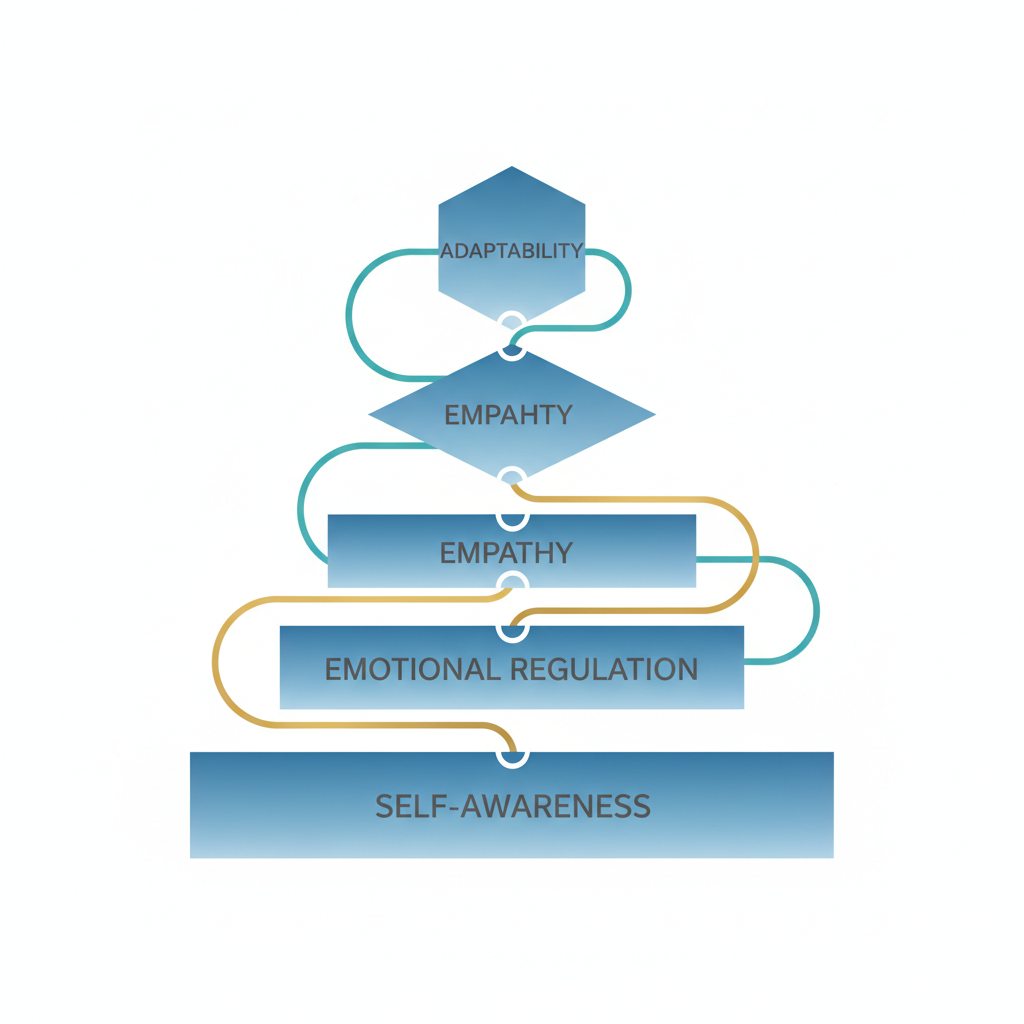
Psychological maturity starts with knowing yourself. Self-awareness is key. This means understanding your emotions, thoughts, strengths, and weaknesses.
It also helps you see how these things affect your creative process. When you know yourself, you can use your unique thinking style more effectively.
Here are practical steps to improve your self-awareness:
- Reflect Regularly: Set aside time each day to think. Ask yourself what caused your emotions or how you handled a challenge.
- Keep a Journal: Writing down your thoughts and feelings can show you patterns. It helps you understand your reactions and creative ideas.
- Seek Feedback: Ask trusted friends or coworkers for their honest thoughts. Learn how others see your work style and creative input.
- Identify Your Creative Triggers: Notice which places, tasks, or moods spark your best ideas. Also, learn what blocks your creativity.
- Engage in Mindfulness: Practice being in the moment. Mindfulness helps you notice your thoughts without judging them. This can improve your focus and creative thinking [6].
- Use Self-Assessment Tools: Science-backed tests, like those on the Creative Ability Test platform, offer unbiased feedback. They can show you your skills in flexible thinking, coming up with new ideas, and solving problems.
By doing this, you build a strong foundation of self-awareness. You become more in tune with your creative potential. This leads to more focused and effective personal growth.
Building Empathy and Responsibility
Psychological maturity is more than just self-awareness. It’s also about understanding the world around you. Empathy and responsibility are key parts of this.
Empathy is understanding how others feel and think. Responsibility is taking ownership of your actions and promises. Both are important for working well with others and solving problems in new ways.
Consider these ways to build empathy and responsibility:
- Practice Active Listening: Pay close attention when others speak. Try to understand their point of view, even if it’s different from yours. This gives you new perspectives for creative solutions.
- Seek Diverse Perspectives: Talk with people from different backgrounds. Their unique experiences can spark new ideas and creative thinking [7].
- Put Yourself in Others’ Shoes: Before you react, try to see the situation from their perspective. This helps you understand and respond more thoughtfully.
- Take Ownership: Accept the results of your decisions, good or bad. Learning from mistakes is a great way to grow.
- Follow Through on Commitments: Be someone others can count on at work and in your personal life. This builds trust and shows you are mature.
- Volunteer or Mentor: Helping others can teach you about different challenges. It also builds your sense of social responsibility.
When you build empathy and responsibility, you become better at teamwork. It also helps you create solutions for the wider community. This is what drives real innovation.
Enhancing Your Problem-Solving Skills
A key sign of psychological maturity is handling tough problems well. This is tied to your creative problem-solving skills. A mature approach means being flexible, resilient, and strategic when facing challenges.
The Creative Ability Test focuses on skills like flexible and original thinking. These are key to becoming a better problem-solver.
Here’s how to improve these key skills:
- Break Down Complex Problems: Big problems can feel like too much. Break them into smaller, easier pieces. This makes it easier to find creative solutions.
- Try Different Ideas: Come up with many possible solutions without judging them right away. Brainstorm freely and explore unusual ideas. This gives you more creative tools to work with.
- Be More Flexible: Be willing to change your approach. If one solution doesn’t work, try another. Being able to adapt is key to innovation.
- Learn from Failure: View mistakes as chances to learn. Figure out what went wrong and change your plan. This helps you become more resilient, which is a big part of maturity.
- Ask for Feedback: Be open to helpful feedback on your solutions. Different opinions can show you what you missed or lead to better ideas.
- Practice Lateral Thinking: Look for solutions that aren’t obvious. Connect ideas that seem unrelated to find new ways to solve problems [8]. This expands your creative thinking.
- Use Proven Methods: Learn and use problem-solving methods. Frameworks like design thinking can help you work through hard problems.
By working on these skills, you’ll develop a stronger, more mature way to handle challenges. You’ll go from feeling uncertain to using clear strategies for growth. This changes how you innovate and find success.
How Can Understanding Maturity Unlock Your Creative Potential?

Understanding psychological maturity is key to unlocking your creative potential. This isn’t about age, but how you handle challenges, learn from experience, and connect with the world. As you mature, your creativity naturally grows. You become a more effective and innovative thinker.
Maturity and creativity are closely linked. A mature mindset helps creativity grow. It helps you handle the ups and downs of any creative process. It also gives you the mental and emotional tools you need to innovate. Our Creative Ability Test shows you this connection in your own thinking. It offers personal insights into how your maturity affects your creative work.
Embrace Cognitive Flexibility and New Perspectives
Mental maturity improves your creative problem-solving. It allows you to see beyond the obvious solution. Instead of sticking to what you know, you look for new ways of thinking. This skill is known as cognitive flexibility. Mature thinkers can easily switch perspectives. They combine different ideas to find unique solutions. For example, a mature person can see a problem from many angles. They aren’t tied to strict assumptions. This openness is key to creative thinking.
- Broaden Your View: Maturity helps you escape fixed mindsets. You become more open to new solutions.
- Connect Unrelated Ideas: It allows you to find links between ideas that seem unconnected. This leads to new insights.
- Challenge Assumptions: You question the way things are normally done. This is vital for true innovation [9].
Our assessment helps you understand your own cognitive flexibility. It shows you how well you come up with different ideas. You can use this knowledge to practice new ways of thinking on purpose.
Cultivate Emotional Resilience for Creative Persistence
Creativity is rarely a smooth journey. It often involves setbacks, criticism, and frustration. Emotional maturity gives you the resilience to keep going. You learn to manage these negative feelings, so you don’t give up when an idea fails. Instead, you see it as a chance to learn. This persistence is vital for any creative project. A mature person knows that mistakes are part of the process. They don’t let the fear of failure stop their imagination.
- Navigate Setbacks: You build the strength to push through creative blocks and bounce back from criticism.
- Manage Frustration: Controlling your emotions keeps frustration from stopping your progress, so you can stay focused.
- Embrace Experimentation: You become more willing to take risks and try new things without worrying about being perfect.
The Creative Ability Test highlights your creative traits. It shows where more emotional maturity can help you stick with your creative work. This leads to more consistent and powerful creative results.
Drive Innovation Through Experience and Reflection
Maturity brings experience, and the wisdom to learn from it. This combination drives innovation. Mature people don’t just gather knowledge; they think about it deeply. They learn from past wins and losses. This reflection helps them see patterns and predict future needs. As a result, they create solutions that are original, relevant, and effective.
Think about a product designer. A less mature designer might jump on a trendy solution. But a mature designer thinks about user feedback and past trends. They combine different insights to create a more thoughtful and successful product. Using your past experiences well is a sign of creative maturity. It helps you go from just having ideas to creating real innovation.
Actionable Growth with the Creative Ability Test
The Creative Ability Test is a unique way to understand this link. Our 30-question test is based on science and measures different sides of your creativity. It provides personal feedback. You will learn about your creative strengths and thinking styles. More importantly, it shows where a more mature outlook can boost your creative work. We give you practical strategies to grow your creativity for personal and professional success.
Seeing your maturity through a creative lens turns confusion into self-awareness. It helps you move from inconsistent results to steady creative growth. You get a clear path to using your creativity to solve real-world problems and innovate. Start your journey today. Discover how unlocking your psychological maturity can unleash your full creative potential.
Frequently Asked Questions
What questions are asked in a maturity test?
Maturity tests don’t ask simple “yes” or “no” questions. Instead, they look at how you think, feel, and make decisions. They aim to see how you handle different life situations and challenges.
These tests look at several key areas of personal growth. For example, you might be given an imaginary situation. You would then describe how you would likely act or feel.
Common themes explored in maturity tests include:
- Emotional Regulation: How you handle stress, anger, and disappointment. Can you think before you act?
- Perspective-Taking: Your ability to see things from another person’s point of view. This shows empathy and flexible thinking.
- Problem-Solving: How you break down problems and find solutions. Do you think about future results?
- Self-Awareness: Your understanding of your own strengths, weaknesses, and motivations. Do you reflect on your personal growth?
- Responsibility and Accountability: How you take ownership of your actions. Can you learn from mistakes and fulfill commitments?
These questions help create a picture of your emotional and mental state [10]. Knowing these things is key for personal growth. It also connects to your creative potential. Creative people are often good at thinking in different ways and handling stress. These are signs of maturity. In the same way, our Creative Ability Test shows your unique thinking strengths. It helps you understand how you solve problems and come up with new ideas.
Is there a maturity test for kids?
Yes, there are many types of tests for children. They are often called developmental or readiness tests. They are very different from maturity tests for adults.
Their main goal is to check a child’s progress for their age. These checks, or milestones, cover a few key areas [11]. Experts use these tests to make sure children are developing as expected.
Key areas assessed in children’s maturity tests include:
- Social Development: How a child interacts with peers and adults. Can they share or take turns?
- Emotional Readiness: Their ability to express feelings appropriately. Do they manage minor frustrations?
- Cognitive Skills: Problem-solving, memory, and logical thinking for their age. Can they follow simple instructions?
- Language Skills: How well they understand and use words. Can they communicate their needs?
- Motor Skills: Both fine motor (e.g., drawing) and gross motor (e.g., running) abilities.
These tests are usually given by doctors, psychologists, or teachers. They help find any possible delays in development. Finding these early allows for quick support and help. Encouraging a child’s natural curiosity and flexible thinking from a young age is key to growing their future creativity.
How is a relationship maturity test different?
A relationship maturity test looks at how people act in a partnership. It checks if someone is ready for a healthy, long-term relationship. This is different from a general maturity test, which looks at overall personal growth.
These tests look at how you act in a relationship. They explore your ability to make and keep strong bonds with others. They also look at how you handle conflict and closeness. The goal is to predict how successful and happy a relationship might be [12].
Key qualities assessed in a relationship maturity test include:
- Effective Communication: Your ability to express needs clearly and listen actively.
- Empathy and Understanding: Can you genuinely consider your partner’s feelings and perspective?
- Conflict Resolution: How you handle disagreements in a positive way. Can you find solutions that work for both of you?
- Trust and Commitment: Your capacity for loyalty and long-term dedication.
- Emotional Support: Providing comfort and encouragement to your partner.
- Shared Responsibility: Contributing fairly to the partnership.
Our Creative Ability Test focuses on your personal creative skills, but these skills are useful in other areas, too. For example, empathy and problem-solving are key for mature relationships. They also help you be more creative when you work with others. These traits help you create new things with a team and build an environment where different ideas are welcome.
Sources
- https://www.psychologytoday.com/us/blog/finding-strength/201905/emotional-maturity
- https://hbr.org/2022/04/the-power-of-cognitive-flexibility
- https://www.apa.org/topics/emotion/regulation
- https://www.apa.org/topics/impulsivity
- https://psycnet.apa.org/record/2012-30043-001
- https://www.apa.org/topics/mindfulness/meditation
- https://hbr.org/2016/11/why-diverse-teams-are-smarter
- https://www.edwdebono.com/lateral-thinking
- https://hbr.org/2016/01/how-to-increase-your-cognitive-flexibility
- https://www.simplypsychology.org/personality-tests.html
- https://www.cdc.gov/ncbddd/actearly/milestones/index.html
- https://www.gottman.com/blog/what-is-relationship-maturity/
Leave a Reply