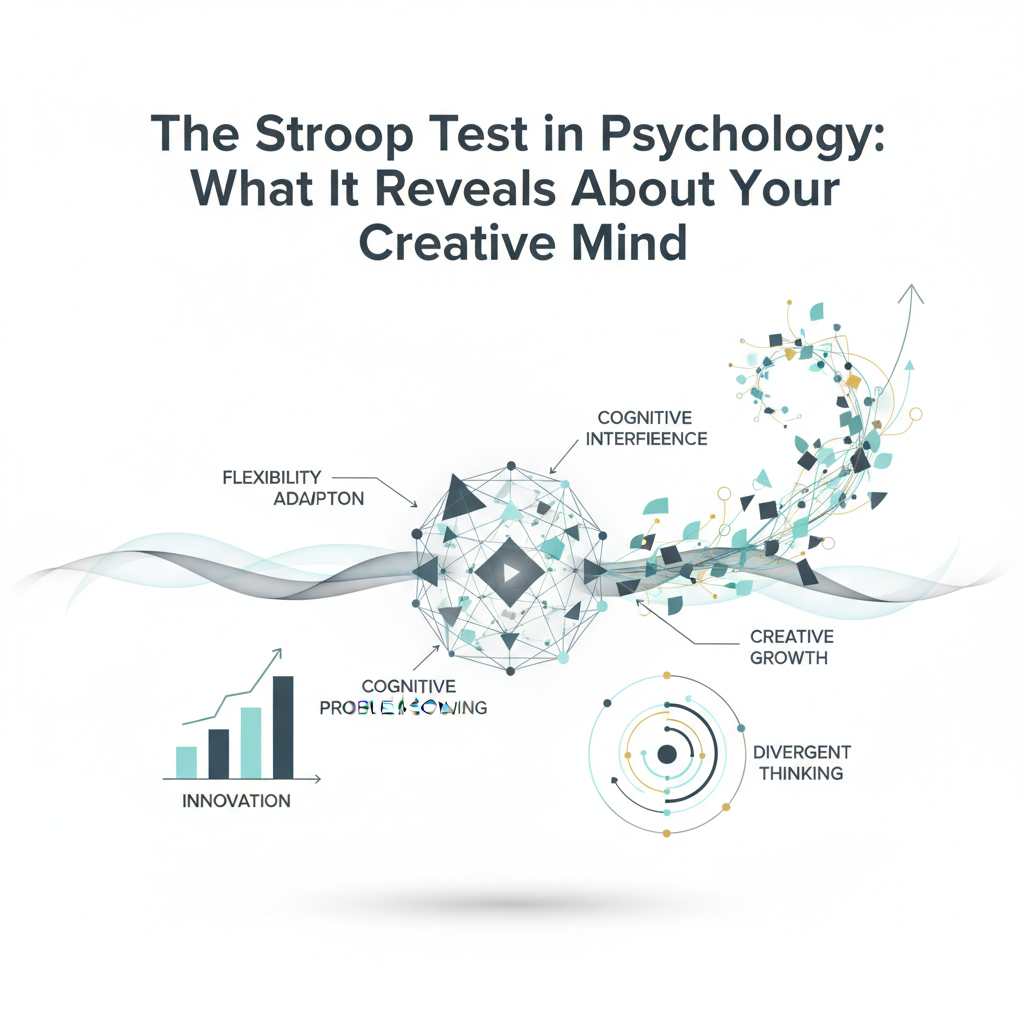
The Stroop test in psychology is a classic experiment demonstrating interference in a person’s reaction time. Participants are shown a word for a color that is printed in a different color’s ink (e.g., the word ‘blue’ printed in red) and must name the ink color, not the word. It is primarily used to measure cognitive functions like selective attention, processing speed, and cognitive flexibility.
Have you ever felt mentally “stuck,” trying to focus on one task while another thought keeps pulling your attention away? Our minds are constantly balancing information, especially when we’re trying to solve a hard problem or have a creative idea. The “Stroop test in psychology” is a simple experiment that offers a clear look into these cognitive abilities. It’s more than a quick brain teaser; it’s a scientific tool for understanding how your attention, mental control, and creative potential work.
This article will explain the Stroop effect—what it is, how it works, and what it measures. We’ll explore how this fundamental assessment reveals your mental flexibility, processing speed, and ability to tune out distractions. These skills are key parts of a creative mind. You’ll discover how understanding these areas can improve your problem-solving skills and boost your creative thinking. This gives you practical insights into your own strengths, helping you grow personally and professionally.
Our goal is to make complex psychological ideas easy to understand and give you useful takeaways. We want you to have a deeper appreciation for how your mind works. Let’s start by looking at what the Stroop Effect is.
What is the Stroop Effect in Psychology?
A Simple Explanation of the Classic Test
The Stroop Effect is a surprising effect in psychology. It shows what happens when your brain gets mixed signals. At its heart, the test measures your focus and attention.
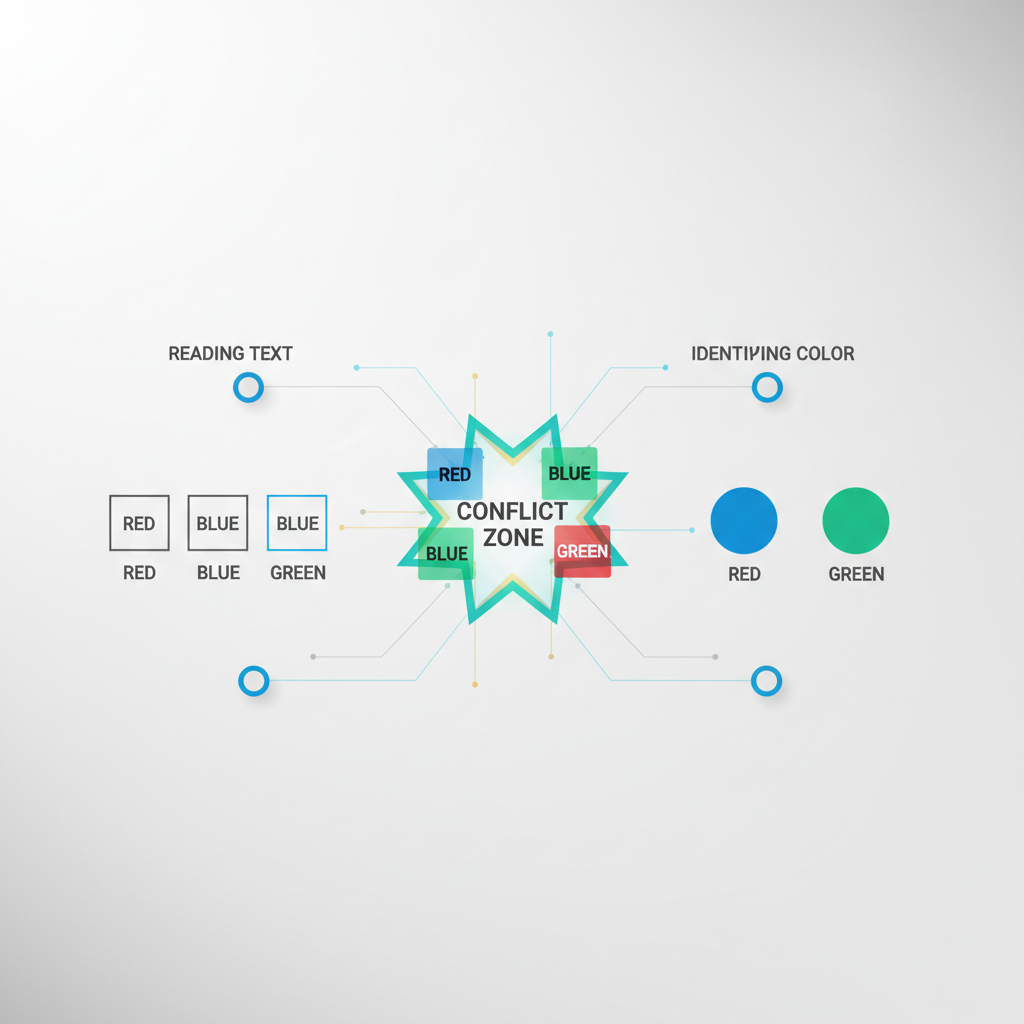
Imagine seeing a list of color words. The catch is that the ink color of each word is often different from the word itself.
- For example, you might see the word “RED” printed in blue ink.
- Or the word “BLUE” printed in yellow ink.
- Your job is to say the ink color, not read the word.
Most people find this task much harder than it sounds. That’s the Stroop Effect. It shows that some brain processes, like reading, are automatic. Understanding this helps us see how our minds work. It also gives us a peek into our mental flexibility, which is a big part of being creative.
Why Your Brain Gets Confused: The Psychology of Interference
Your brain gets mixed up during the Stroop test because of something called interference. Our minds work very fast, but some tasks are harder to control than others. For most adults, reading is a skill we’ve practiced so much that it’s become automatic [source: https://www.simplypsychology.org/stroop-effect.html].
Naming a color, however, takes more deliberate focus. When you see the word “RED” in blue ink, your brain automatically wants to read the word. But the task is to name the color. This creates a conflict in your brain.
This inner struggle highlights a few key ideas:
- Automatic vs. Controlled Processing: Automatic tasks are things we do without thinking, like reading. Controlled tasks, like naming the ink color, need our full attention.
- Selective Attention: The test shows how hard it is to focus on one thing (the ink color) while ignoring a distraction (the word). Your brain struggles to filter out the word.
- Processing Speed: The hesitation before you name the ink color shows how long it takes your brain to sort out the confusion.
Struggling with this test isn’t a weakness. It just gives us a peek at how your brain is wired. It shows how your mind juggles competing information. For creative people, understanding this is useful. It can help you manage complex problems without feeling overwhelmed. This knowledge can build your focus and mental flexibility—both essential for creative thinking.
What does the Stroop test measure?
Measuring Selective Attention and Focus
The Stroop test is a great way to see how well you manage your attention. It measures selective attention—your brain’s ability to focus on what matters while ignoring distractions. Think of it as a mental filter.
During the test, your brain automatically tries to read the word. But your goal is to ignore the word and focus only on the ink color. This mental conflict reveals how well your brain can direct its focus. Good selective attention is key for deep creative work, helping you stay on track by filtering out distracting thoughts as you brainstorm or develop ideas.
By understanding this skill, you can improve your creative process. For example, you can train yourself to focus better while solving problems. This can lead to more creative solutions and better use of your mental energy [1].
Assessing Cognitive Flexibility and Task-Switching
The Stroop test also reveals your cognitive flexibility. This is your brain’s ability to adapt your thinking, switch between different tasks, and see things from new angles. It’s a key part of creative thinking.
In a Stroop task, your brain has to fight the urge to read the word. Then, it has to switch to the harder task of naming the color. This mental workout is a direct test of your task-switching skills. Strong cognitive flexibility allows you to:
- Approach problems from multiple angles.
- Generate diverse ideas without getting stuck.
- Adapt your plans when new information emerges.
The Creative Ability Test explores these skills further. It helps you understand how you shift gears in your mind, which is key for finding new perspectives and breakthrough ideas [2].
Evaluating Your Brain’s Processing Speed
The Stroop test also measures your brain’s processing speed. This is how quickly your brain can take in, understand, and react to information.
In the test, a faster processing speed usually means you can answer more quickly, especially when the word and color don’t match. While it doesn’t directly measure creativity, fast processing is a basic skill that supports many creative tasks.
Think about how quickly you connect ideas or remember information. A quick processing speed frees up mental energy. This gives your brain more room for deep creative thinking and complex problem-solving [3]. By improving your processing speed, you can make your creative process smoother and boost your overall thinking skills.
The Link Between the Stroop Effect and Creative Problem-Solving
Understanding the Stroop effect can help you become a better creative problem-solver. The test shows how core brain functions like these affect your ability to be creative.
Your selective attention, cognitive flexibility, and processing speed are all essential for creativity. For example, strong inhibitory control—the ability to block out distractions—is key. It helps you focus on one part of a problem, which can lead to deeper insights. Likewise, strong cognitive flexibility helps you to:
- Break free from conventional thinking patterns.
- Explore unusual associations.
- Discover novel solutions.
The Creative Ability Test measures these skills and other parts of creativity. It gives you personalized feedback to help you use your unique mental strengths. This helps you apply your creativity in the real world, from everyday challenges to major new ideas.
How Does the Stroop Test Work?
Congruent vs. Incongruent: A Step-by-Step Example
The Stroop test is a simple way to see how your brain handles information. It shows the conflict between what you do automatically and what you do on purpose. Understanding how it works can teach you about mental focus and flexibility, which are important skills for creative thinking.
Here’s how the classic Stroop test typically works:
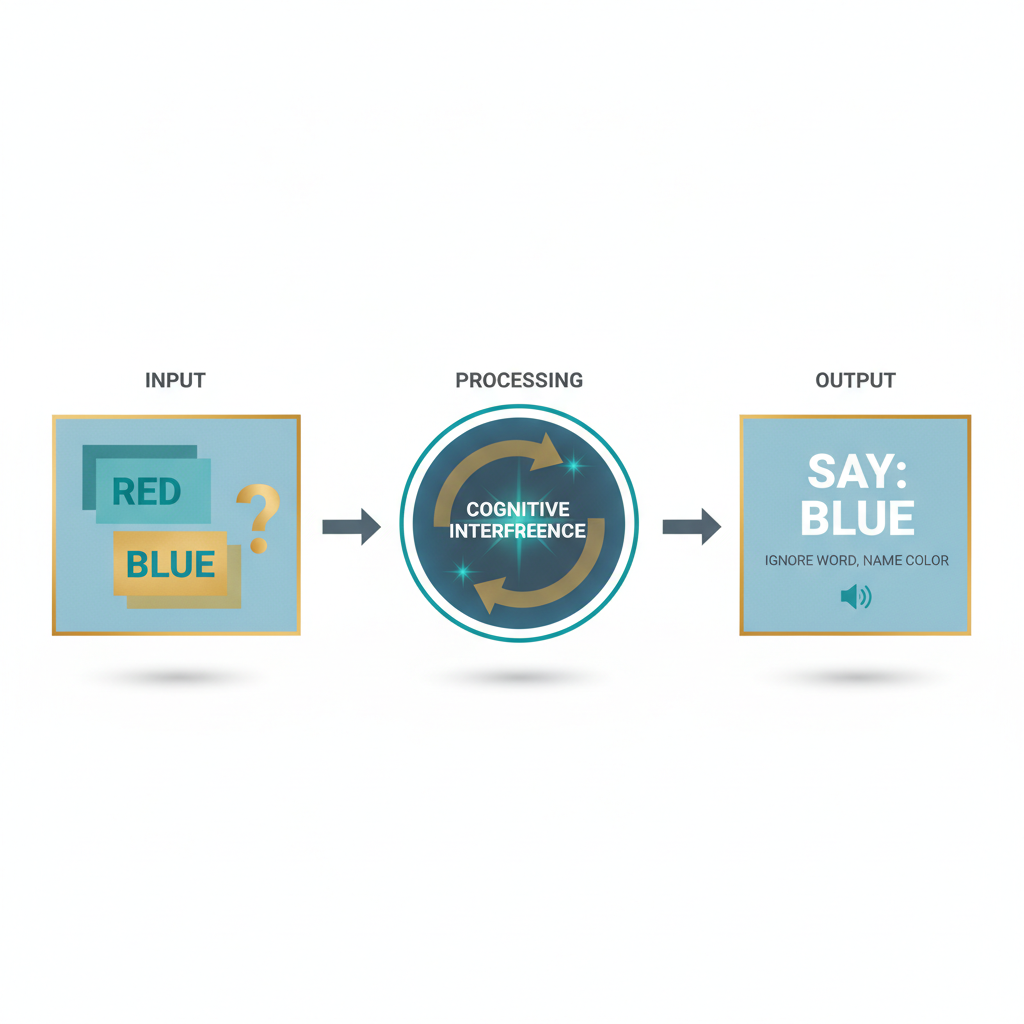
- The Setup: You will see a series of words. Your task is simple: say the color of the ink the word is written in. Try to be as fast and accurate as you can.
- The Congruent Condition: Imagine the word “RED” is printed in red ink. This is a congruent trial because the word and the color match. Your brain processes this easily. There’s no conflict, so you can say “Red” right away. This shows how your brain works well when information lines up.
- The Incongruent Condition: Now, imagine the word “RED” is printed in blue ink. This is an incongruent trial. Your brain now has a conflict. Your automatic reaction is to read the word “RED,” but your task is to name the ink color, “Blue.”
- The Stroop Effect in Action: This conflict slows you down and makes you more likely to make a mistake. Your automatic habit of reading gets in the way of your goal to name the color. Your brain has to work harder to ignore the word. This extra effort uses your selective attention and cognitive control. Most people take longer to name the color in incongruent trials than in congruent ones [4].
This struggle to ignore an automatic habit and focus on a task is a key part of cognitive control. The ability to direct your attention and manage distractions is very useful for creative problem-solving. It helps you find new ideas instead of getting stuck in old ways of thinking.
Try a Quick Stroop Effect Game Online
The best way to understand the Stroop effect is to try it yourself. You can find online versions of the test on many psychology and educational websites. Playing it for a few minutes will give you a real look at how your own brain works.
When you play a quick Stroop game, pay attention to:
- Your Reaction Time: Notice how much longer it takes to respond when the word and color don’t match. This shows how strong your automatic reading habit is.
- Your Error Rate: See if you make more mistakes when the word and color clash. This shows moments where your brain’s control slips a little.
- Your Mental Effort: Feel the mental “push” it takes to name the ink color instead of reading the word. This is your brain working to ignore the conflicting message.
Trying the game gives you a clear example of your mental focus and flexibility in action. It’s a small workout for your brain that shows you how it handles competing information. You can use this skill to become more creative. For example, it helps you look at problems in new ways or ignore the usual ideas when you need a fresh solution. You can try a version of the test here [5].
Are There Different Versions of the Stroop Test?
The Emotional Stroop Test
The classic Stroop test uses color words, but some versions add a twist. One is the Emotional Stroop Test. Here, you see words that trigger strong feelings instead of words like “red” or “blue.”
For example, you might see words like “fear,” “sadness,” “joy,” or “success.” Your task is the same: say the ink color of each word as fast as you can. But the feeling behind the word can slow you down.
This slowdown is called emotional interference. It happens because our brains naturally pay more attention to emotional words [6]. You get drawn into the word’s meaning, even when you’re trying to focus on its color.
Understanding this effect can help you be more creative:
- Manage Emotions: Creative work requires focus. This test shows how easily emotions can distract you. When you learn to manage these feelings, you can concentrate better on creative tasks.
- Think Flexibly: Strong emotions can make you feel stuck in one way of thinking. When you notice this happening, you can learn to shift your focus. This helps you think more flexibly and move past emotional blocks.
- Know Yourself: Noticing which words slow you down can show you what you’re sensitive to. This self-awareness is key for personal growth and finding new ways to be creative.
At Creative Ability Test, we focus on understanding these mental patterns. When you see how emotions affect your focus, you get tools to improve your creative process. This helps you grow steadily and perform your best.
Numerical and Spatial Variations
The Stroop test is very flexible. Psychologists have created other versions to study different mental skills. Two examples are the numerical and spatial tests.
Numerical Stroop Test
This version uses numbers. Imagine seeing the number ‘3’ shown on the screen several times. Your job is to count how many times it appears. The challenge is that the number’s value (‘three’) can interfere with your count [7].
For example, if the number ‘3’ appears four times, your brain wants to think “three” even though you need to count “four.” This conflict shows how automatic reading numbers is for us. The test measures how well you can ignore the wrong information.
This test reveals how flexible your thinking is. Creative work often requires you to look past the obvious and focus on a specific detail. This skill is essential for coming up with new ideas.
Spatial Stroop Test
The Spatial Stroop Test uses location and direction. You might see a word like “UP” or “DOWN” on a screen. But the word’s position might not match its meaning. For example, the word “UP” could show up at the bottom of the screen.
Your task is to say where the word is (top or bottom), not read what it says. Just like the other tests, the word’s meaning can slow you down. This shows how your brain handles confusing signals about location.
These variations show a lot about your creative thinking:
- Be More Flexible: These tests challenge your brain to adapt by switching rules. This mental flexibility is key for brainstorming and discovering new possibilities.
- Solve Problems Better: Learning to ignore these distractions is great practice for problem-solving. It trains your brain to filter out noise and focus on what’s important, helping you find creative solutions.
- Focus on Details: The tests show how hard it can be to pay attention to one thing and ignore another. Getting better at this skill helps you analyze things more deeply and produce more thoughtful creative work.
These different Stroop tests show that mental focus has many parts. At Creative Ability Test, our assessments explore these areas. We give you personalized feedback on your mental strengths to help you use your creativity in practical, everyday situations.
How Can Understanding the Stroop Effect Boost Your Creativity?
Improving Your Focus for Deeper Work
The Stroop Effect shows how our brains work. Some tasks, like reading, are automatic. But other tasks, like naming a color while ignoring the word itself, require deliberate focus.
This struggle shows why managing distractions is so important for creative work. Staying focused helps you explore complex ideas without losing your train of thought.
Deep focus means concentrating on one task without getting distracted. It’s how you come up with truly new solutions and insights. Research shows that being focused can make you more creative [8].
Here are a few ways to improve your focus for creative work:
- Minimize Distractions: Create a quiet workspace. Turn off notifications. Avoid multitasking.
- Practice Single-Tasking: Focus on one creative task at a time. Finish it before starting the next one.
- Engage in Mindfulness: Short meditation exercises can improve your ability to focus. This helps you stay present.
- Schedule Focused Blocks: Set aside specific times for uninterrupted creative work. Protect this time from interruptions.
Understanding how your mind works, including your ability to focus, is a key benefit of the Creative Ability Test. Our test measures your ability to pay attention and offers strategies to improve this vital skill. Better focus leads to stronger creative output and problem-solving.
Enhancing Cognitive Flexibility for Innovative Thinking
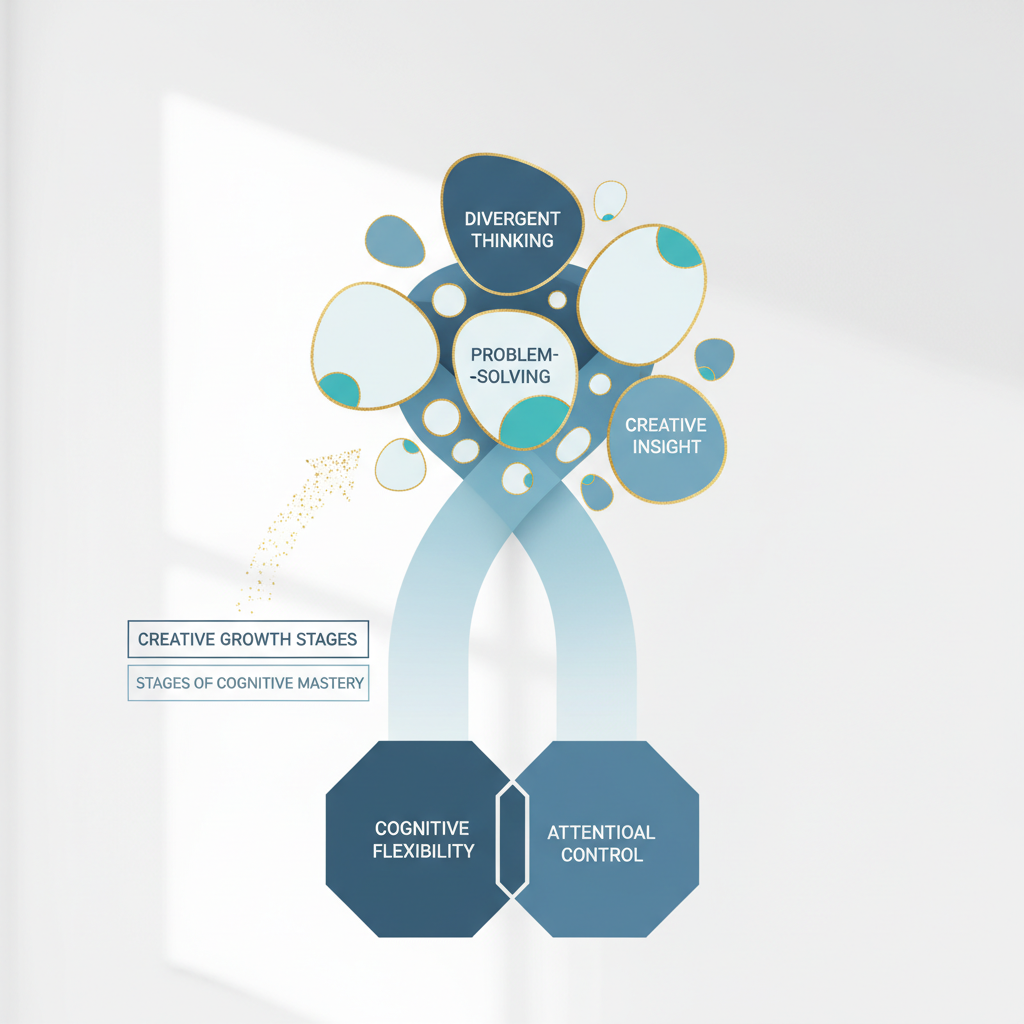
To beat the Stroop Effect, you need cognitive flexibility. This is your brain’s ability to switch tasks or adapt to new rules. You have to ignore your automatic urge to read the word and instead focus on naming the color.
This mental flexibility is key to innovation. Creative people are great at looking at problems from different angles. They connect ideas that don’t seem related and try a new approach when the first one doesn’t work.
Cognitive flexibility helps you see things in new ways. It encourages “divergent thinking”—the skill of coming up with many different ideas. Studies show a strong link between this flexibility and creative problem-solving [9].
To build your cognitive flexibility and be more innovative, try these tips:
- Embrace Novelty: Try new activities regularly. Learn a new skill or take up a new hobby. Explore subjects that are new to you.
- Solve Puzzles and Brain Teasers: Do activities that challenge you to think differently, like riddles or logic games.
- Challenge Assumptions: When you face a problem, question your first instincts. Look for other ways to see it.
- Practice Brainstorming: Come up with as many ideas as you can without judging them. Allow for wild or unusual connections.
The Creative Ability Test measures your cognitive flexibility. Our test gives you a full picture of this key creative skill, and our personalized feedback offers practical tips to improve it. These strategies will help you adapt, innovate, and think outside the box. Unlock your creative potential by understanding how your mind works.
Frequently Asked Questions
How is a Stroop test interpreted?
A Stroop test shows how well your brain handles conflicting information. It measures your cognitive control, which includes your attention and how efficiently you process things.
When you take a Stroop test, experts look at a few key measurements:
- Reaction Time: This is how fast you respond. A quicker response means your brain is working efficiently.
- Accuracy: This is how many answers you get right. A high score shows good focus.
- The Interference Effect: This is the most important measurement. It compares your reaction time in easy trials (where the word and color match) to your time in hard trials (where they conflict). A big difference in your times suggests a stronger “Stroop effect” [4].
A smaller interference effect is a good sign. It means you have strong selective attention and cognitive flexibility. In other words, you’re good at focusing on a task and ignoring distractions. These skills are key for creative thinking, exploring new ideas, and solving problems.
Understanding your results gives you a peek into how your brain works. You can see how you deal with mental conflict. This knowledge can help you improve your focus and adaptability, which are essential for boosting your creativity.
Can I take a real Stroop test online?
Yes, you can find many versions of the Stroop test online. They’re a fun way to see the effect for yourself and a great introduction to the concept. But it’s important to know the difference between online tests and clinical ones.
For an official psychological assessment, you need a standardized test given by a qualified professional [10]. These formal tests guarantee accurate conditions and interpretation, and they are used for clinical diagnosis or research.
Still, online versions are great for learning more about yourself. They help you understand the concept by seeing it in action. While our Creative Ability Test does not have a Stroop test, our comprehensive 30-question platform measures similar core skills. These include cognitive flexibility, divergent thinking, and problem-solving. We give you personalized insights into your creative strengths and offer clear strategies to help you grow.
If you take an online Stroop test, try to find one from a trusted source, like a university or a psychology website. They usually explain the results in a simple way. Remember, even a basic online test can spark curiosity about your brain’s amazing abilities.
What are some real-world Stroop effect examples?
The Stroop effect happens all around us, not just in a lab. It shows up in our daily lives in small ways. These examples help show how your brain works and why it’s important to avoid mental overload.
Here are a few common scenarios:
- Reading Traffic Signs: Imagine a “STOP” sign painted green. Your brain automatically reads the word “STOP” but sees the color green, which usually means “GO.” This conflict slows down your reaction time.
- Following a Recipe: You’re following a recipe that says to add “white sugar,” but the sugar is in a red container. For a split second, the red color might distract you from the word “sugar,” making you hesitate.
- Brand Logos and Advertising: Some ads use colors that clash with a brand name to get your attention. This can create a small Stroop effect, making the brand name a little harder to read at first glance.
- Multitasking in a Noisy Environment: You’re trying to have a conversation in a noisy room. Your brain has to work hard to focus on the voice you want to hear and ignore all the other sounds. This is like the Stroop test, where you have to ignore the word and focus on the color.
- Using Digital Interfaces: You see a button that says “Submit” but is colored red. Since we usually associate red with “Cancel” or “Stop,” this mismatch can make you pause or even click the wrong thing.
These examples show that our brains use extra energy to sort through conflicting information. When you notice the Stroop effect in your life, you can change your environment to reduce distractions and improve your focus. This awareness can free up mental space, making it easier to be creative and find new solutions.
Sources
- https://www.ncbi.nlm.nih.gov/pmc/articles/PMC3372274/
- https://www.frontiersin.org/articles/10.3389/fpsyg.2014.00451/full
- https://www.ncbi.nlm.nih.gov/pmc/articles/PMC2856407/
- https://www.simplypsychology.org/stroop-effect.html
- https://faculty.washington.edu/chudler/java/words.html
- https://pubmed.ncbi.nlm.nih.gov/11794711/
- https://psycnet.apa.org/record/2012-07406-001
- https://www.scientificamerican.com/article/how-focusing-can-boost-creativity/
- https://positivepsychology.com/cognitive-flexibility/
- https://www.ncbi.nlm.nih.gov/pmc/articles/PMC8900010/
Leave a Reply