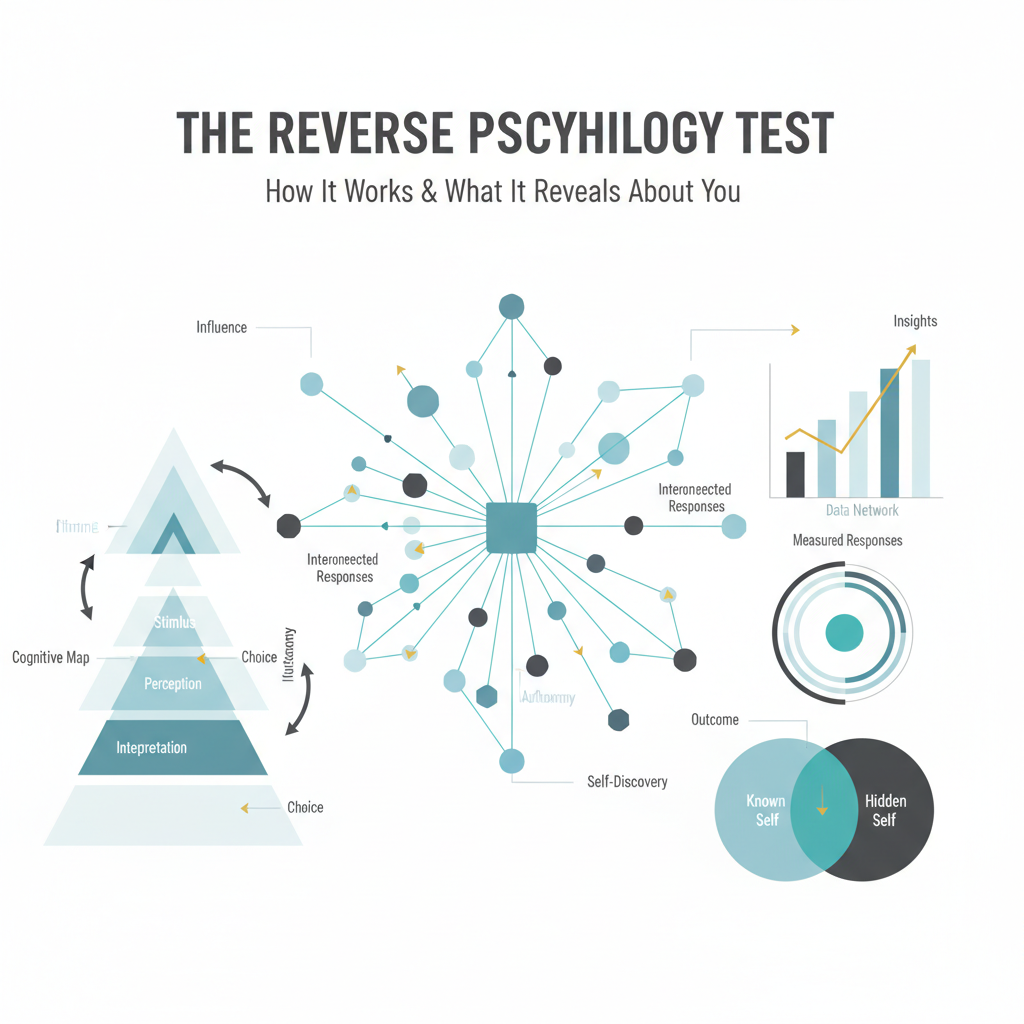
A reverse psychology test is typically a quiz or a set of scenarios designed to measure your tendency towards psychological reactance, which is the impulse to do the opposite of what you are told. It evaluates how you respond to direct suggestions, prohibitions, or persuasion attempts to reveal insights into your decision-making style, level of independence, and resistance to influence.
Have you ever done the exact opposite of what someone told you to do? This common reaction is the idea behind reverse psychology. It’s a subtle form of influence that plays on our natural desire for freedom and control. It’s more than just a clever trick. By understanding this psychological phenomenon, we can learn a lot about how we react to persuasion and how our own thinking styles guide our choices.
Here at CreativeAbilityTest.com, we explore the cognitive processes behind creativity, problem-solving, and decision-making. Reverse psychology may seem like a simple tactic, but it shows basic truths about what motivates us and our deep need to make our own decisions. In this article, we’ll look at the science of this interesting method. We’ll explore how it works, when to use it, and what it says about your own desire for independence. By understanding how influence works, we can better see our own creative potential and cognitive flexibility.
Exploring reverse psychology offers a new perspective, whether you’re curious about why people do what they do, want to improve your problem-solving, or hope to understand communication better. You will learn about the key ideas of psychological reactance. You’ll also see how gently guiding expectations can create surprising results and even open up new ways of thinking.
What Is a Reverse Psychology Test?
A “reverse psychology test” isn’t a formal tool like a psychological assessment or a personality test. It’s more of an exercise. It uses common scenarios to show you how reverse psychology works.
These exercises show you situations where you might use or see reverse psychology. They also reveal how our natural desire for freedom shapes our decisions. Working through these scenarios helps you understand why people act the way they do.
Understanding this can boost your creative problem-solving skills. It also shows you how the way we communicate affects results. This knowledge is useful for both your personal and professional life.
What Is Psychological Reactance?
Reverse psychology works because of a powerful idea called reactance. Reactance is our natural urge to push back when we feel our freedom is threatened. When someone tells you what to do, that feeling of wanting to do the opposite is reactance.
For example, a sign that says “DO NOT walk on the grass” can make some people want to do just that. This happens because they feel their freedom to choose is being taken away. We all want to feel in control of our own decisions [1].
Reactance is more than just being stubborn. It’s a key part of what motivates us. It’s our drive to be independent, and it affects how we react when people try to persuade us.
Think about how this idea can help your creative thinking. When you know what drives people, you can find new ways to solve problems. It also helps you create messages that people truly connect with. This is a key skill for using creativity in the real world.
The Creative Ability Test, for instance, can help you understand your own way of thinking. Just as reactance reveals how others think, our assessment offers you a personal look at your creative strengths. You’ll learn about your openness to new things and how you solve problems. Knowing this helps you handle tough social and creative situations with more confidence.
How Does Reverse Psychology Work in Practice?
The Science of Persuasion and Autonomy
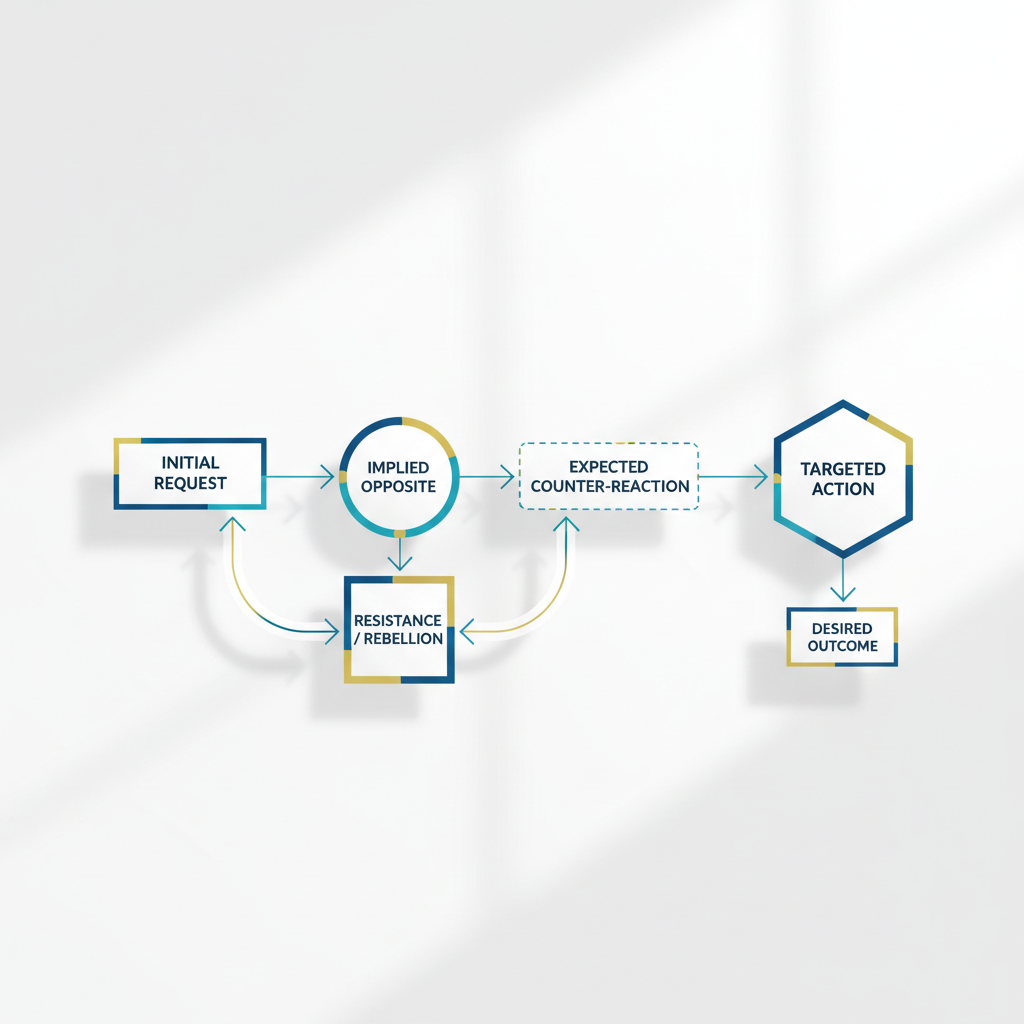
Reverse psychology works because of a basic human need: the need for autonomy. This is our deep desire to make our own choices. We want to feel in control of what we do and think.
When someone tries to persuade you directly, it can backfire. This reaction is called psychological reactance. It’s a strong feeling of resistance when you feel your freedom is threatened. For example, if you feel pressured to do something, your first instinct might be to do the opposite.
Understanding this idea is important. It explains why telling people what to do often doesn’t work. Instead of being direct, reverse psychology gently challenges your freedom. It suggests you do one thing, which makes you want to take the “forbidden” path to prove your independence.
In creative work, this can be a powerful tool. It can help you get past your own mental blocks. For instance, telling yourself you “can’t” solve a creative problem might spark the desire to prove yourself wrong, unlocking new ideas.
Here’s an example of how it works:
- Direct Command: “You must brainstorm new ideas now.” This can feel limiting.
- Reverse Psychology: “Perhaps this problem is too complex for new ideas today. Maybe we should just stick to the old methods.” This challenges your creative side, making you more motivated to come up with fresh solutions.
This shows how much we value our independence. It also shows how guiding this desire in a subtle way can lead to surprising results.
Who is Most Susceptible to Reverse Psychology?
Certain personality types are more likely to react to reverse psychology. These people often share a few key traits. They value their independence and don’t like being controlled by others.
Here are some characteristics of people who respond most to this approach:
- Independent Thinkers: People who like to form their own opinions often resist being told what to think. They prefer to reach their own conclusions. Suggesting the opposite of what you want can appeal to their desire to be self-reliant.
- Individuals with Strong Opinions: People who are very sure of their beliefs may react strongly when challenged. If you tell them they’re wrong, they might just dig in their heels. This can lead them to choose the “forbidden” option you originally wanted them to take.
- Rebellious or Defiant Personalities: Some people naturally like to challenge authority and avoid fitting in. For them, reverse psychology is very effective because it taps into their desire to go against the grain.
- Those Prone to Psychological Reactance: As we covered, anyone who feels their freedom is at risk will likely push back. This reaction is stronger in some people than others. It often shows up as doing the exact opposite of what’s asked of them.
Knowing these personality types is helpful. It shows how different people think and why it’s important to change how you communicate. This is especially true when working on creative projects with a team. For instance, if a teammate values their freedom, framing a task as a unique challenge they can solve might work better than giving a direct order.
On our platform, we look into different thinking styles to help you understand your own creative process. You can learn if you have a natural tendency to defy expectations. This knowledge can help you motivate yourself and others to find new and better solutions.
Is reverse psychology effective?
When It Can Be a Powerful Tool for Influence
Reverse psychology works by using a basic part of human nature: we don’t like being told what to do. This is called psychological reactance [2]. People want to feel in control of their choices. When we feel our freedom is threatened, we often push back to assert our independence. This natural drive is what can make reverse psychology so effective.
It works best in certain situations. Success depends on being subtle and understanding the person you’re dealing with. When used thoughtfully, it can guide someone toward a specific action. This approach can be a powerful way to influence people.
Consider these key factors for its effectiveness:
- Subtle Application: The tactic must not be obvious. People will resist if they feel you are trying to trick them.
- Target Personality: It works best on people who are independent or rebellious. Those who dislike being told what to do are more likely to respond.
- Specific, Non-Critical Goals: Use it for small things, not major decisions. Avoid using it in high-stakes situations.
- Contextual Fit: It works well when asking directly has already failed. It offers another way to approach the situation.
For instance, think of a child who won’t eat vegetables. A parent might say, “These peas are so good, you probably won’t like them.” This can make the child curious and encourage them to try the “forbidden” food. Similarly, in a creative team, suggesting an idea is “too complex” might inspire a resistant teammate to prove you wrong. They might then take ownership of the idea. Understanding these dynamics can improve your problem-solving skills and help your team collaborate better.
Common Scenarios Where It Is Likely to Backfire
While reverse psychology can work, it’s also a risky tool. If you misuse it, it can easily backfire. This can lead to mistrust and resentment, and ultimately get in the way of your goals.
This tactic is risky in a few common scenarios. Success depends heavily on your relationship with the person and the situation. It usually fails when the other person feels manipulated. This breaks down trust, which is necessary for any good interaction.
Here are common situations where reverse psychology tends to fail:
- Lack of Trust: If you don’t already have a trusting relationship, this tactic will seem manipulative. As a result, open communication will suffer.
- Misunderstanding the Individual: Not everyone pushes back against suggestions. Some people are more agreeable and might simply agree with what you say.
- High-Stakes Decisions: For important choices, clear and honest communication is always best. Using indirect tactics can lead to serious negative results.
- Transparent Intentions: If it’s too obvious what you’re trying to do, the tactic loses its power. People will feel like you’re talking down to them.
- Erosion of Relationships: If you use it too often, you can damage relationships at work or at home. This makes it harder for people to cooperate with you in the future. Trust is the foundation of any effective relationship [3].
For example, telling a team member a project is “too simple” for them might cause them to lose interest. They may think the work is beneath their skills and put in less effort. In close personal relationships, using indirect tactics can create suspicion. It can get in the way of genuine connection and problem-solving. Real creative teamwork relies on honesty and clear communication. This helps build an environment where ideas are shared freely and trust is maintained. Assessments like the Creative Ability Test help you become more self-aware. They encourage you to use your creative strengths directly. This allows you to develop honest problem-solving skills instead of relying on manipulation.
Reverse psychology is manipulation: Is This Statement True?
The Key Difference Between Influence and Deception
To understand reverse psychology, you need to know the difference between influence and deception. People often confuse these two ideas, but they have very different ethical meanings.
Influence is about guiding someone’s thoughts or actions while respecting their freedom to choose. The goal is often to help them make a decision that is good for them. For example, a mentor might influence a student to try a challenging creative project. This type of influence helps them grow.
Deception, on the other hand, means misleading someone. It hides the truth or presents false information. The goal is usually to gain an advantage. This breaks trust and takes away a person’s freedom to choose. When reverse psychology is used to deceive, it becomes manipulation.
Reverse psychology itself uses a psychological principle called reactance. This is the natural urge people have to resist being told what to do. They want to assert their freedom [4]. This resistance can be guided in a subtle way. The reason for guiding it is what makes it either influence or manipulation.
Think about how this applies to creative thinking. If you want your team to brainstorm fresh ideas, you might playfully “forbid” them from thinking outside the box. This is a positive use of reverse psychology. It influences them to find more creative solutions without being dishonest. It unlocks their creative potential instead of exploiting it.
Ethical Rules to Keep in Mind
Knowing the line between ethical influence and unethical manipulation is key. When using psychological techniques, especially for creativity and problem-solving, ethics are very important. Our goal at Creative Ability Test is to empower you, not to control you.
Reverse psychology becomes manipulative when it:
- Breaks Trust: If someone feels tricked, trust is lost. This can harm both personal and professional relationships.
- Is Not Open: True influence is often open and honest. Manipulation relies on hidden goals and secret intentions.
- Ignores Well-being: Ethical influence always puts the other person’s best interests first. Manipulation serves the manipulator’s own goals, which can harm the other person.
- Removes Choice: When people are not truly free to choose, or are subtly forced into a decision, their independence is undermined.
For example, using reverse psychology to get a child to eat vegetables could be seen as fine. The goal is to improve their health. But using it to trick a coworker into doing your work is unethical. The difference is the intent and the potential for harm.
As you explore your own creativity with the Creative Ability Test, remember these ideas. Understanding how influence works can make you a better communicator and help you manage group projects in a positive way. It also makes you more aware of when others might be trying to manipulate you.
Our platform helps you understand cognitive flexibility. This skill improves your ability to adapt your thinking. It also helps you make ethical decisions in different situations, including how you influence others or solve problems creatively.
What is reverse psychology in a relationship?
Examples of Reverse Psychology in Relationships
Reverse psychology is common in relationships. It works because we all want to feel in control. This tactic gently pushes someone to do something by suggesting they do the opposite. But using it can be tricky and needs to be done with care.
Here’s a common example: a partner might hint they don’t care if you join them for an event. They might say, “Oh, don’t worry about coming to the art exhibition if you’re busy.” The goal is to make you want to go. It uses your desire to make your own choice, or even to prove them wrong. It can also feel like a challenge to your independence.
Another example uses small challenges. A partner might say, “I doubt you can finish that creative project by Saturday.” This is a direct challenge to your skills. Because of this, you might feel a stronger need to finish it. You want to show you are capable and determined. This works because of something called psychological reactance. This is when people push back against anything they feel is limiting their freedom [5].
Parents often use this technique, too. A parent might tell a teenager, “You absolutely cannot stay up late tonight.” But the teenager often feels a stronger urge to do just that. This shows how trying to be too controlling can have the opposite effect. Understanding how this works gives us a better sense of human behavior. This knowledge is helpful for creative problem-solving and better communication.
Potential Risks to Trust and Communication
While it may seem clever, using reverse psychology in relationships has serious risks. Over time, it can break down trust. Healthy relationships are built on open and honest talk. But reverse psychology adds a layer of manipulation.
Here are some of the main risks:
- Erosion of Trust: If you use it a lot, your partner won’t know what you really mean. They may start to question your honesty and wonder if you’re being truthful. Trust is the foundation of any strong relationship.
- Breakdown in Communication: It stops you from saying what you need and want directly. Instead, partners have to guess at hidden meanings. This can cause misunderstandings and hurt feelings. Clear talk is key to feeling connected.
- Increased Resentment: If your partner figures out what you’re doing, they can feel disrespected or foolish. The person being manipulated may feel controlled. This can create bad feelings and distance between you. It also hurts your ability to work together as a team.
- Unintended Outcomes: It might not work. Your partner could take you at your word and choose the very thing you didn’t want them to. This can leave you frustrated with a wasted effort. You can’t predict the result.
- Damaged Authenticity: It discourages people from being themselves. Both partners might start playing mind games instead of being honest. Being genuine is essential for a deep connection. This tactic can make your time together feel fake.
If you care about creativity and personal growth, it’s important to understand these risks. Open communication helps creativity grow in a relationship. It lets you share ideas and support each other. On the other hand, manipulation hurts a real connection. Our Creative Ability Test focuses on genuine self-awareness. This helps you build stronger and more honest relationships. It also helps you think clearly about your personal challenges.
Take Our Reverse Psychology Scenario ‘Test’
Scenario 1: The Forbidden Project
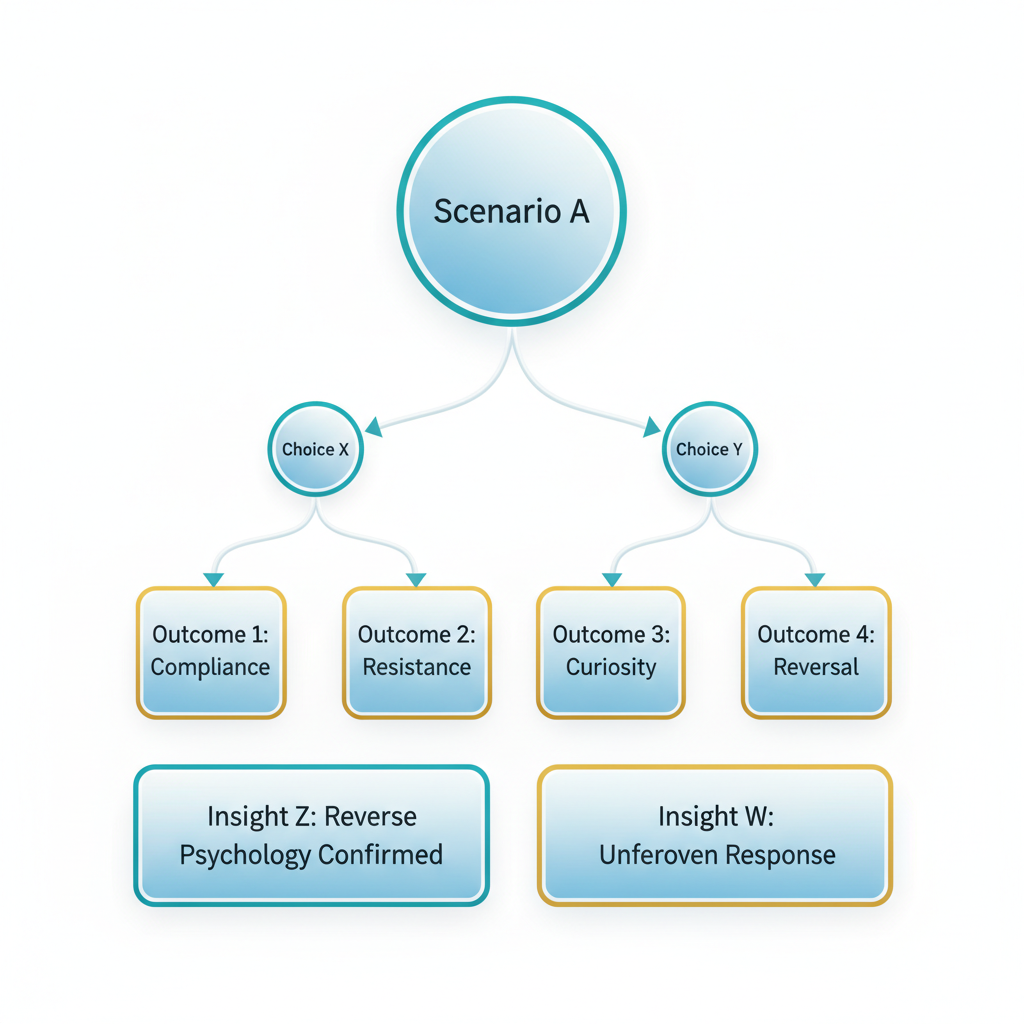
Imagine you are part of a team. Your manager says, “That new AI marketing project is too experimental for us right now. Do not pursue it.” However, you see it has huge potential and is a perfect fit for a gap in the market.
What is your immediate reaction?
- A. You completely drop the idea. You trust your manager’s judgment and move on.
- B. You quietly begin researching it. You gather more data to build a stronger case without openly going against the order.
- C. You immediately challenge the manager. You argue for why the project should proceed, pushing back directly.
This situation touches on a psychological principle called psychological reactance [6]. When we are told not to do something, we often feel a strong urge to do the opposite. This “forbidden fruit” effect can have a big impact on your creative process.
What Your Response Reveals About Your Creativity:
- Response A: This shows you prefer to follow the rules. While that’s great for getting things done, it may mean you’re less likely to think outside the box when you hit a roadblock.
- Response B: This suggests you are both creative and flexible. You know how to work around rules to find new solutions. This resourceful approach shows you are great at proactive problem-solving.
- Response C: This shows you have strong creative beliefs and are willing to challenge authority. You’re an independent thinker, which is key for real innovation. To succeed, you also need to get good at convincing others to see your point of view.
Understanding your first impulse helps you use your creative drive well. Our Creative Ability Test can give you a deeper look at how you handle challenges and adapt your thinking.
Scenario 2: The ‘Unpopular’ Idea
During a brainstorming session, you propose a truly unique solution. It is bold and different. A colleague quickly shoots it down, saying, “That’s too ‘out there.’ No one will go for a weird idea like that.”
How do you react to this criticism?
- A. You immediately discard your idea. You figure it was too strange and you drop it.
- B. You defend your idea vigorously. You explain why it’s a good idea, ready to argue your case.
- C. You ask clarifying questions. You try to understand their concerns, then think about how to adjust your idea or present it better.
This scenario tests your creative resilience—how you handle negative feedback. This kind of criticism can feel like reverse psychology, pushing you to either give up on your idea or defend it even more strongly.
What Your Response Reveals About Your Creativity:
- Response A: This may suggest you are sensitive to criticism, which can stop new ideas in their tracks. Building confidence is key to helping your creative ideas survive and grow.
- Response B: This shows you strongly believe in your ideas and don’t like being doubted. While that belief is important, being too defensive can stop you from improving your idea based on useful feedback.
- Response C: This shows you are flexible and open to feedback. You can look at your own ideas critically, then adapt them to make them better. This process of improving ideas is at the heart of great innovation.
Using feedback to grow is a powerful creative skill. Our platform can help you build this resilience and learn how to turn your ideas into successes.
Scenario 3: The Overly Simple Solution
Your team is stuck on a complex, long-standing problem. You come up with a simple, smart solution that solves it. A skeptical colleague says, “It can’t be that easy; it must be more complicated.”
How do you respond to this challenge?
- A. You start looking for ways to add complexity. You assume your solution is too simple and needs more details.
- B. You confidently reiterate your simple solution. You explain its clarity and power without making it more complicated.
- C. You offer to demonstrate or test your simple solution. You focus on proving it works with actions or data.
This situation can be a subtle form of reverse psychology. Your colleague’s doubt might make you feel that a simple idea isn’t good enough. This can lead you to overcomplicate things, which often makes a solution less effective.
What Your Response Reveals About Your Creativity:
- Response A: This might mean you think complex ideas are more valuable. But great problem-solving is often about finding the simplest, smartest answer, not adding needless details.
- Response B: This shows you believe in the power of simple solutions. You have clear thoughts and are confident in your ideas. In fact, simplicity is often a sign of a truly great idea.
- Response C: This shows you are a practical, results-focused thinker. You know that the best way to prove an idea is to show that it works. This mix of creativity and real-world testing is a key skill for any innovator.
Our assessment tools can help you get better at creating clear, effective solutions. We give you personal feedback to improve your problem-solving skills and help you express your ideas with confidence.
How Can Understanding These Principles Boost Your Creativity?
Using Psychology for Better Problem-Solving
Understanding psychology isn’t just about influencing people. It gives you a deep look into human behavior. This knowledge is a powerful tool for improving your problem-solving skills. When you know how people react to feeling controlled, you can approach challenges in a new way.
Think about psychological reactance. It’s our natural urge to resist when we feel our freedom is threatened [7]. Smart problem-solvers use this insight. They present problems and solutions in ways that don’t make people feel pushed. They can also predict why someone might object. This leads to better and more creative outcomes.
Here’s how these insights improve your problem-solving:
- Reframing Challenges: Instead of tackling a problem head-on, see it as a new opportunity. Look for a different angle.
- Anticipating Resistance: Figure out why a solution might be rejected. Then, create an approach that gives people a sense of choice.
- Becoming More Flexible: Knowing what makes people tick helps you shift your perspective. You can explore more options. This is a key skill measured by your Creative Ability Test results.
- Divergent Thinking: When you see things from another person’s view, you come up with more ideas. You start to think beyond the obvious.
Using these principles builds your confidence. You’ll learn to design solutions that are not only new but also more likely to be accepted.
Connecting Persuasion to Creative Thinking
Creative thinking is more than just having new ideas. It’s also about sharing them in a way that works. Knowing how persuasion works—and how it can go wrong—is a big advantage. It helps you present your ideas in a way that gets people excited.
When you understand what truly motivates people, your creative work has a bigger impact. This knowledge helps you create messages and solutions that connect with them. You can use your creativity to make a real difference in the world.
Boost your creative thinking by:
- Telling Better Stories: Use what you know about people to tell stories. This makes your ideas easier to understand and remember.
- Designing for Acceptance: Think ahead about what people need and why they might resist. Build solutions that people will welcome from the start.
- Finding New Angles: If one idea gets pushback, psychology helps you quickly change direction. You can develop fresh, creative approaches.
- Building Confidence: Understanding these ideas gives you confidence. You can share your creative vision with conviction, which helps you grow both personally and professionally.
The Creative Ability Test measures how open you are to new things. It also tests your problem-solving skills. Understanding psychology builds on these strengths. It gives you practical ways to improve your creative thinking and make your best ideas shine.
Frequently Asked Questions
What is a common example of reverse psychology?
A classic example of reverse psychology is telling someone not to do something to encourage them to do that very thing. This works because we all have a natural desire to be in control.
For example, imagine a child who won’t eat their vegetables. A parent might say, “Don’t eat those delicious carrots! They’re for grown-ups only.” This often makes the child curious and more likely to try the carrots. They want to prove they can do what adults do. This is driven by a feeling called “reactance,” which is our response when we feel our freedom to choose is threatened [8].
Understanding these human tendencies is a key part of creative problem-solving. It helps us see the real motivations behind people’s actions.
Is it bad to use reverse psychology in a relationship?
Using reverse psychology in a relationship can be risky. While it might work in the short term, it can damage trust and open communication over time.
Healthy relationships are built on honesty. Reverse psychology can feel like a trick, which may lead your partner to question what you really mean. This creates suspicion instead of trust.
Instead, focus on clear and kind communication. Say what you need and feel directly. This builds a stronger, more secure connection. Developing good communication skills is a key part of emotional intelligence that helps with personal growth and creative teamwork.
Where can I find a reverse psychology test for free?
Real psychological tests are complex and are usually developed by experts. Most “reverse psychology tests” you find online are just informal quizzes. They don’t offer scientifically proven insights into how you think or act.
If you’re curious about how you think, consider exploring your creativity. The Creative Ability Test is a 30-question assessment based on science. It helps you understand your approach to problems and decisions. You’ll get insights into things like:
- Your cognitive flexibility
- Problem-solving strategies
- Openness to new experiences
- Divergent thinking abilities
Our personalized feedback gives you clear steps to improve your creative skills for personal growth and new ideas. While it isn’t a reverse psychology test, it reveals a lot about what drives you and how you interact with the world.
Is reverse psychology a form of manipulation?
People often debate whether reverse psychology is influence or manipulation. The answer depends on your intention and the result. Influence is about guiding someone toward a good outcome. Manipulation is about controlling someone for your own benefit, often without caring about their best interests.
Consider these points:
- Ethical Use: When used in a positive way, like encouraging a child to try something new for their own good, it can be a form of playful influence.
- Unethical Use: If used to trick someone into doing something that only helps you, it crosses the line into manipulation. It can be seen as a dishonest tactic [9].
Understanding this difference is a useful skill. It helps you handle social situations better and solve problems in a fair, creative way. Knowing how influence works helps you make better and more ethical choices in your life.
Sources
- https://psycnet.apa.org/record/1966-07978-001
- https://www.psychologytoday.com/us/basics/psychological-reactance
- https://www.apa.org/pubs/journals/releases/psp-92-3-376.pdf
- https://journals.sagepub.com/doi/abs/10.1177/014616728915100108
- https://psychology.iresearchnet.com/social-psychology/social-influence/psychological-reactance/
- https://psycnet.apa.org/record/1989-98188-000
- https://www.simplypsychology.org/reactance-theory.html
- https://dictionary.apa.org/reactance
- https://ethics.org/what-is-manipulation/
Leave a Reply