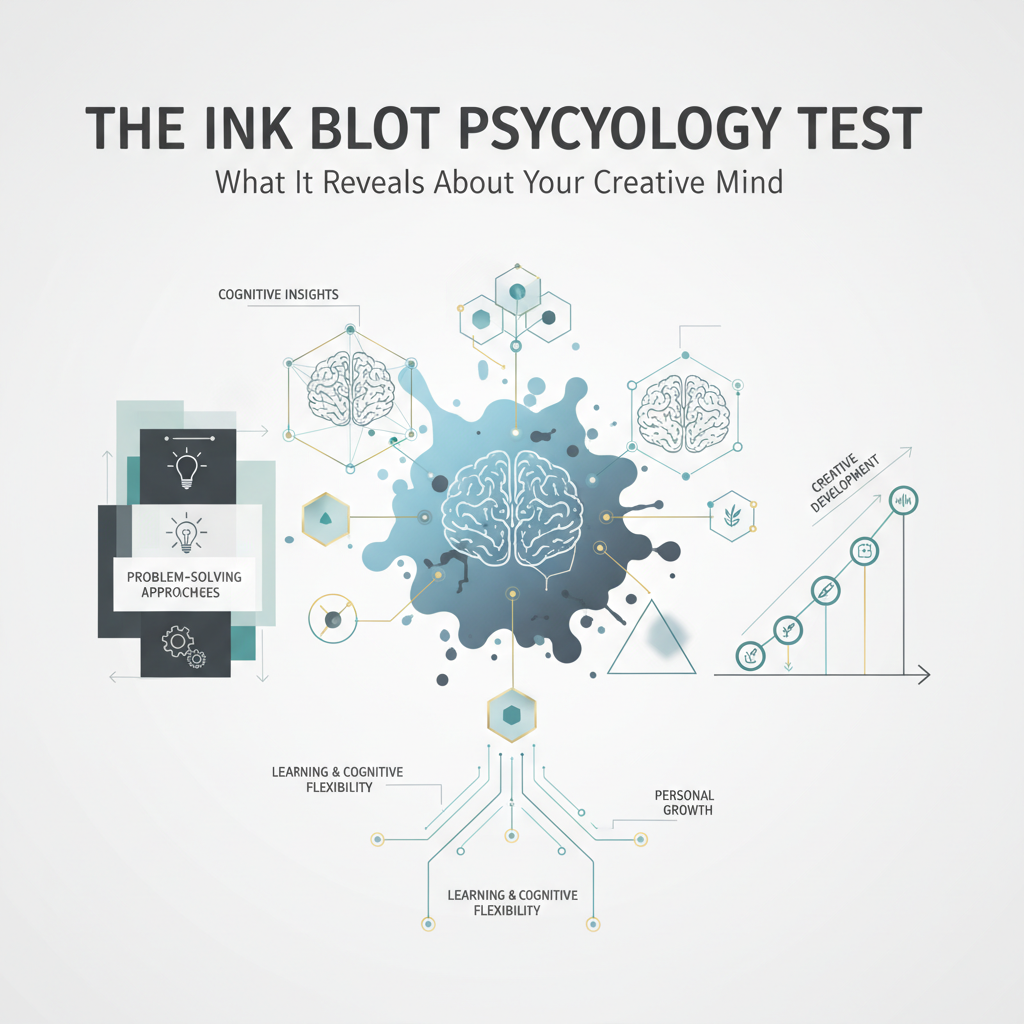
An ink blot psychology test, such as the famous Rorschach test, is a projective assessment used to examine personality characteristics and emotional functioning. It works by asking individuals to interpret ambiguous inkblots, and their responses are analyzed to reveal underlying thought processes, creative tendencies, and problem-solving styles.
The classic inkblot is a mysterious yet instantly recognizable image. For decades, these abstract patterns have fascinated psychologists and the public by offering a window into the human mind. But beyond revealing personality traits, what if these visual puzzles could also shed light on your creative genius? inkblot tests offer surprising insights into how you perceive, interpret, and create, speaking volumes about your creative potential.
This article explores the history of inkblot tests, from their origins with Hermann Rorschach to their relevance for understanding creativity today. We’ll examine what these tests truly measure and how they uncover your unique way of seeing the world and thinking differently. We’ll also ask whether you can get real creative insights from a free online inkblot test. Prepare to discover how embracing ambiguity—a key part of these tests—can be a powerful spark for innovation and personal growth, leading to a deeper understanding of your creative mind.
What Is an Ink Blot Psychology Test?
From Rorschach to Modern Interpretations
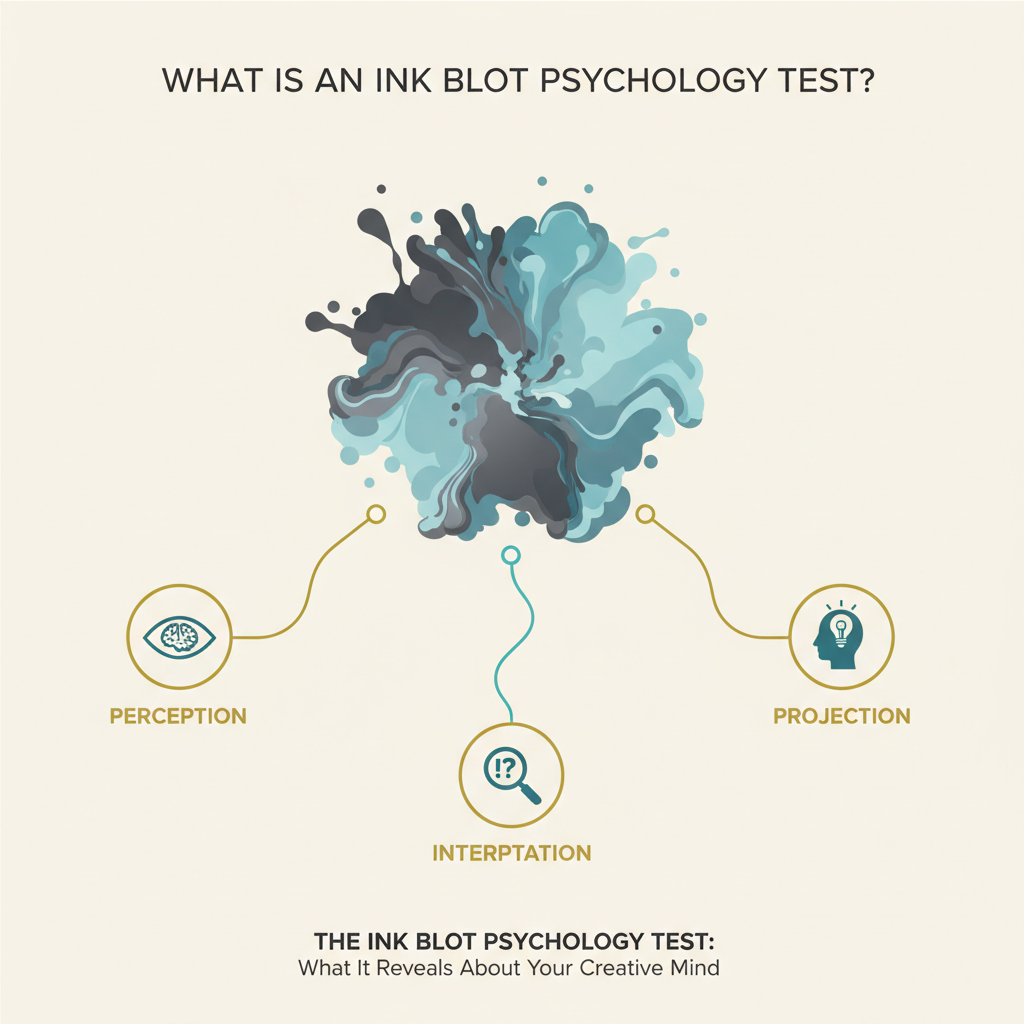
The inkblot psychology test is a famous method for understanding the mind. It uses unclear images to reveal a person’s inner thoughts and feelings. This type of tool is called a “projective test,” because people project their own thoughts onto the vague shapes.
The test was created by Swiss psychiatrist Hermann Rorschach in the early 1900s [1]. He first used the inkblots to study personality and identify mental health conditions. Rorschach watched how people saw the blots, what details they noticed, and the meanings they gave them.
Over time, the way inkblot tests were understood changed a lot. Early methods were often based on opinion. Later, psychologists created standard scoring systems to make the results more fair and consistent. For example, the Exner Comprehensive System became a popular way to score the Rorschach test [2].
Today, inkblot tests are used in many ways. They offer helpful clues about how people see things, think, and feel. While experts debate their use for diagnosis, they remain an interesting tool. Many professionals use them to learn how differently people think and solve problems. This can also include exploring a person’s creative side.
How a Simple Inkblot Uncovers Complex Insights
A simple inkblot is surprisingly powerful. It’s like a blank canvas for your mind. When you look at an inkblot, your brain works to find meaning in the shapeless image. This process reveals your personal cognitive style. There are no right or wrong answers. Instead, what you see offers a glimpse into how you view the world.
This method works by reaching your unconscious mind. Unlike direct questions, inkblots get past your conscious thoughts. This leads to more honest and natural responses. As a result, the insights can be very personal and revealing.
What specific insights can these tests uncover?
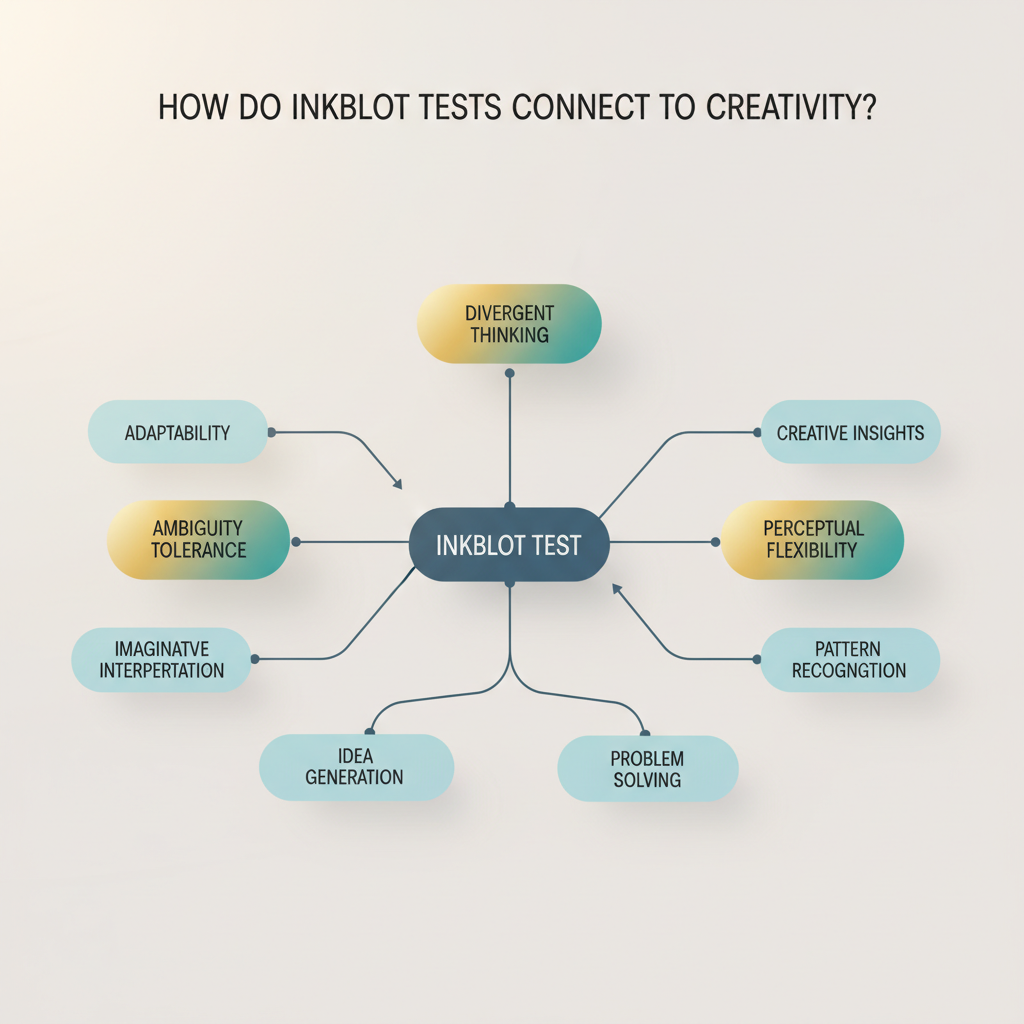
- Perceptual Flexibility: How well you can see different things in one image. This is a key part of flexible thinking.
- Cognitive Processing Style: Whether you focus on details or the big picture. This affects how you take on complex tasks.
- Emotional Responses: How you feel when faced with unclear situations. This can affect your willingness to take creative risks.
- Problem-Solving Approaches: How your mind makes sense of messy information. This is key for new ideas.
- Divergent Thinking: Your ability to come up with many different ideas from one starting point. This is a key sign of creativity.
At Creative Ability Test, we understand the importance of finding hidden potential. Our science-based 30-question assessment offers a clear way to explore your creative strengths. Like an inkblot test, our platform helps you identify your own creative thinking styles. We then give you personal feedback and practical tips. This helps you go from just knowing your potential to actively improving your creative skills for personal and professional growth.
What does the Rorschach inkblot test measure?
Assessing Personality and Emotional Functioning
The Rorschach inkblot test helps understand the deeper parts of your personality. It explores how you see the world and reveals your emotional responses.
When you describe what you see in a vague inkblot, you reveal your inner thoughts and feelings. This process can show your core personality traits, like your emotional stability and general nature [3].
Understanding these parts of yourself gives you deep insight into your creativity. Highly creative people often share certain personality traits. Here are some examples:
- Openness to Experience: This is a key trait for creativity. It’s about being willing to explore new ideas, feelings, and different points of view [4]. Your answers on the Rorschach can suggest how open you are.
- Emotional Depth: How you react to the inkblot can show the range of your emotions and your ability to understand others. These qualities are important for connecting with your creative work and your audience.
- Internal vs. External Focus: Do you find meaning mostly in your own feelings, or do you focus more on outside details? This difference can shape your artistic style and how you solve problems.
By looking at your personality, you can better understand what drives your creativity. It helps explain how your emotions shape your unique artistic vision.
Identifying underlying thought patterns
The Rorschach test goes beyond personality to look at your basic ways of thinking. It shows how you organize information and make sense of complex, messy data.
The test looks at your logical reasoning and how you group what you see. It checks your ability to sort and connect different ideas. This helps identify your natural thinking style.
These thinking styles are very important for creativity. Your unique thought patterns are the foundation for new ideas. Here’s how:
- Divergent Thinking: This is a key part of creativity. It’s your ability to come up with many different ideas from one starting point [5]. Seeing many possibilities in one inkblot is a good example of this skill.
- Cognitive Flexibility: Being able to change your viewpoint is key. It helps you see beyond your first idea. This flexibility is essential for overcoming creative blocks.
- Associative Thinking: Creative people are good at connecting things that don’t seem related. The Rorschach can show if you naturally make these new connections.
- Pattern Recognition and Redefinition: You might first see a pattern and then see it in a completely new way. The ability to find and then creatively rethink patterns is a good sign of inventive thought.
Understanding these thought patterns helps you. It makes it clear how your mind naturally handles challenges. You can use this knowledge to improve your creative problem-solving skills.
Gauging Problem-Solving Approaches
The Rorschach test can also show how you prefer to solve problems. When you see a vague inkblot, you have to figure out what it is. This is similar to how you handle problems in real life.
How you explain the blots says a lot. Do you see the big picture or focus on small details? Do you jump to a conclusion, or do you think about many options first?
Your answers give clues about your problem-solving style. They also connect to how effective your creativity is:
- Ambiguity Tolerance: Creative people often do well when things are unclear. They are comfortable when they don’t have all the facts. The Rorschach can show how comfortable you are with uncertainty [6]. This trait is vital for innovation.
- Big-Picture vs. Detail-Oriented Thinking: Some people see the whole forest, while others focus on the individual trees. Both ways of thinking are valuable for creativity. Big-picture thinkers might be great at creating a broad vision. Detail-oriented people may be skilled at improving and perfecting the work.
- Strategic Organization: The way you organize your answers can show how well you handle complex information. This skill is key for planning and carrying out creative projects.
- Resourcefulness: Finding meaning in abstract shapes shows you are resourceful. It shows that you can create solutions even when you have limited or unclear information.
By understanding your natural approach, you learn more about yourself. You can then work on improving your methods. This helps you become a better and more creative problem-solver in all parts of your life.
How Do Inkblot Tests Connect to Creativity?
Uncovering Your Divergent Thinking Skills
The heart of creativity is often divergent thinking. This is your skill for coming up with many different ideas from a single starting point. An inkblot test is a great way to see this skill in action.
When you see an unclear inkblot, your mind looks for different meanings. You might see an animal, then a landscape, or even a mythical creature. This is your divergent thinking at work.
The number and variety of your answers also show how flexible your thinking is. It reveals how easily you can switch viewpoints and make new connections. This skill is key to new ideas in any field.
Our Creative Ability Test helps you understand your divergent thinking strengths. It gives you personal feedback, helping you use this powerful part of your creativity.
To enhance your divergent thinking:
- Practice brainstorming without judgment.
- Challenge yourself to find ten different uses for everyday objects.
- Do activities that use your imagination.
Revealing Your Unique Perceptual Style
No two people see an inkblot in the exact same way. How you see it is personal. It shows your unique way of seeing things and how your brain puts information together.
This unique way of seeing is a key part of being creative. It lets you spot patterns and ideas that others might miss. For instance, some people focus on small details. Others see the big picture right away. Both ways of seeing are valuable for creativity.
Understanding your personal style helps you see your mental strengths. It shows your natural way of solving problems and coming up with ideas. This knowledge helps you use your natural strengths more effectively.
The Creative Ability Test offers a clear way to understand these unique parts of your mind. It goes beyond standard tests to give you useful tips about your personal creative style. For example, research suggests that unique perceptual styles are linked to higher creativity [7].
Connecting Ambiguity to Innovation
Life, like an inkblot, is often unclear. Creative people are good at dealing with this uncertainty. They turn it into a chance for new ideas.
Inkblot tests challenge you to find meaning in what is undefined. This process makes you more comfortable when things are unclear. It also helps you find structure in things that seem messy. These are key skills for creating something new.
Being comfortable with unclear situations helps you explore new ground. It helps you find new answers to difficult problems. It also keeps you from getting stuck in old ways of thinking.
Our platform helps you build this valuable skill. The Creative Ability Test shows how well you handle unclear situations and offers strategies to improve. These tips will help you use uncertainty to spark new ideas in your life and work. Unlock your potential to turn the unknown into your next big idea.
Does the inkblot test really work?
The Science Behind Projective Testing
Projective tests, like the famous inkblot test, offer a glimpse into your subconscious mind. Instead of direct questions, they use vague images. How you interpret these inkblots can reveal your unique ways of thinking.
Basically, you project your inner thoughts and feelings onto the image. This process can show parts of your personality, how you handle emotions, and your creative style. It offers a window into how you see and understand the world.
Many psychologists believe these tests help explore what makes each person different. They can highlight unique ways people solve problems and think outside the box. This is key to understanding creative strengths.
Validity and Reliability in Modern Psychology
The question of whether the inkblot test “works” is complicated. In modern psychology, tools are carefully checked for validity and reliability. Validity means the test measures what it’s supposed to. Reliability means the results are consistent.
In the past, inkblot tests were criticized because scoring was too subjective. However, the methods have improved a lot. Standardized scoring systems, like the Exner Comprehensive System, made the tests more scientific and consistent [source: https://www.apa.org/pubs/journals/features/prs-a0033062]. These systems provide clearer guidelines for interpretation.
While these tests aren’t used for every diagnosis, they do show promise in certain areas. For example, studies suggest they can be useful for assessing personality and certain thought patterns [source: https://www.frontiersin.org/articles/10.3389/fpsyg.2013.00767/full]. When used by a trained professional, they can offer valuable insights.
For anyone exploring their creativity, these tests can highlight a unique way of thinking. They are less about a final diagnosis and more about understanding your personal approach. They offer a starting point for deeper self-reflection.
Using It as a Tool for Self-Discovery
Outside of a clinic, inkblot tests are also powerful tools for self-discovery. They encourage you to explore how you see things. This process can be a big boost for your creative potential.
Consider these benefits:
- Understanding How You See Things: How do you handle unclear information? Do you focus on the big picture or the small details? Knowing this can help your creative work.
- Boosting Original Ideas: Since there’s no “right” answer, you’re free to come up with many different ideas. This practice is the heart of divergent thinking, a key creative skill.
- Becoming More Mentally Flexible: Looking at abstract shapes helps your mind become more adaptable. You learn to see things from new angles, which is key for new ideas.
- Sparking Self-Reflection: Your answers can show you hidden biases or unique points of view. Reflecting on these can lead to deep personal growth.
- Finding Your Creative Strengths: Do you tend to see movement, people, or abstract ideas? These patterns can point to your natural creative talents.
The Creative Ability Test is built on these same ideas of self-discovery. We offer a 30-question assessment based on science. This test helps you understand your creative strengths, mental flexibility, and problem-solving skills. Our platform gives you personalized feedback and real steps you can take. You can use these insights to boost your creativity, both for personal growth and in your career.
What is the controversy with the inkblot test?
Debates Over Scoring and Interpretation
The famous Rorschach inkblot test causes a lot of debate. A key disagreement is about how to score and understand the results. Unlike tests with clear right or wrong answers, the inkblot test is open-ended. Because of this, there are no “correct” responses. But this flexibility also makes it hard to analyze results consistently.
Different psychologists might interpret the same response in different ways. This makes it hard for experts to score the test in the same way. As a result, many have questioned how reliable the test’s results are. Critics say the lack of clear rules can lead to different outcomes for the same person [8].
For anyone looking for clear answers, this uncertainty can be frustrating. Our platform, Creative Ability Test, offers a different path. We use a 30-question test based on science. This method provides a clear and reliable way to measure your creative skills. You get dependable data that leads to useful self-awareness and simple steps for growth.
The Importance of a Trained Professional
Giving and understanding the Rorschach inkblot test requires a lot of training. It is not a simple quiz you can take yourself. A deep knowledge of psychology is needed to use it correctly. A trained professional knows the complex scoring rules. They can also read small clues in what people say and do during the test. This expert skill is key to getting useful psychological information from the test.
Without a qualified expert, the results can be very misleading or just plain wrong. Trying to analyze the inkblots without training often gives a false picture of a person. That’s why a skilled and experienced psychologist is needed for an accurate review. We believe in this same high standard. Creative Ability Test gives you insights based on solid scientific methods. We offer clear, practical steps you can trust, based on proven research, not guesswork.
Modern Perspectives on Its Use
Even with the debates, the inkblot test still has a place in psychology today. Its main use is to gather descriptive information. It helps show how a person thinks and sees the world. Professionals use it to form ideas about a person’s inner life. It can also be a starting point for deeper conversations in therapy. It provides a look into how someone deals with unclear information.
However, its role has changed a lot. Psychologists now use it less for making final diagnoses. Instead, it is used as a tool to explore difficult cases. It is often used alongside, or replaced by, other tests with proven results. To understand your creative mind, newer tools offer a clearer path. Creative Ability Test offers a test based on science. Our platform focuses on parts of creativity that can be measured. You get personal feedback and useful tips. This helps you improve your creative skills with confidence and clarity. We help you go from feeling unsure to having clear insights you can use for personal and professional growth.
Are There Other Inkblot Tests Besides the Rorschach?
An Introduction to the Holtzman Inkblot Test (HIT)
Most people have heard of the Rorschach test, but it’s not the only one. Another important inkblot test is the Holtzman Inkblot Test (HIT).
Psychologist Wayne H. Holtzman and his team created the HIT in the 1950s. Their goal was to improve upon the Rorschach test [9]. They designed the HIT to be more scientific, which led to more reliable scoring and clearer results.
The HIT uses many more inkblots than the Rorschach. People look at 45 inkblots instead of just ten. A key rule is that you give only one response per card. This structured method makes the scoring process much clearer.
When it comes to creativity, the HIT offers a unique view. It can show how consistently you see uncommon shapes. It also shows your skill for finding meaning in vague images. This points to your ability to think flexibly and come up with new ideas, which are key parts of creativity.
Learning about tests like these gives you a bigger picture of psychological assessment. It helps you see the different ways we can explore the human mind and its creative side.
Comparing the Rorschach and Holtzman Methods
Both the Rorschach and Holtzman tests use unclear inkblots. However, they are structured very differently. These differences affect what each test can reveal, particularly about a person’s creativity.
Here’s a look at their key differences:
| Feature | Rorschach Inkblot Test | Holtzman Inkblot Test (HIT) |
|---|---|---|
| Number of Cards | 10 symmetrical inkblots. | 45 inkblots, often varying in color and form. |
| Response Style | You can give many answers for each card. This allows for more free-flowing and creative thoughts. | You can only give one answer for each card. This makes the information collected more focused and consistent. |
| Scoring System | Scoring is complex and can be interpreted in several ways (like Exner’s system). It looks at what you see, where you see it, and why. | Scoring is more straightforward and based on 22 set factors. This makes it easier to analyze with statistics. |
| Focus for Creativity | Shows how your imagination works on the spot. It highlights how you make sense of unclear images and your unique ideas. | Measures steady patterns in how you see things, your originality, and your skill at connecting different details. It checks how consistently you come up with new ideas. |
| Research & Reliability | Its scientific accuracy is often debated because scoring can be subjective. | Designed to be a more scientific measurement. It has more reliable scoring and is more consistent in studies [9]. |
Because the tests are built differently, they show different sides of your thinking. The Rorschach can reveal your free-flowing imagination. In contrast, the HIT can identify more consistent creative habits by testing your originality in a structured way.
Knowing these differences helps you understand how various tests measure creativity. At Creative Ability Test, we use methods backed by science. We want to give you clear, useful insights into your own creative strengths. Our 30-question test is made to give you personal feedback. It can support you on your journey to discover and grow your creative skills.
How to Approach an Online Inkblot Test for Creative Insights
Setting the Right Mindset for Exploration
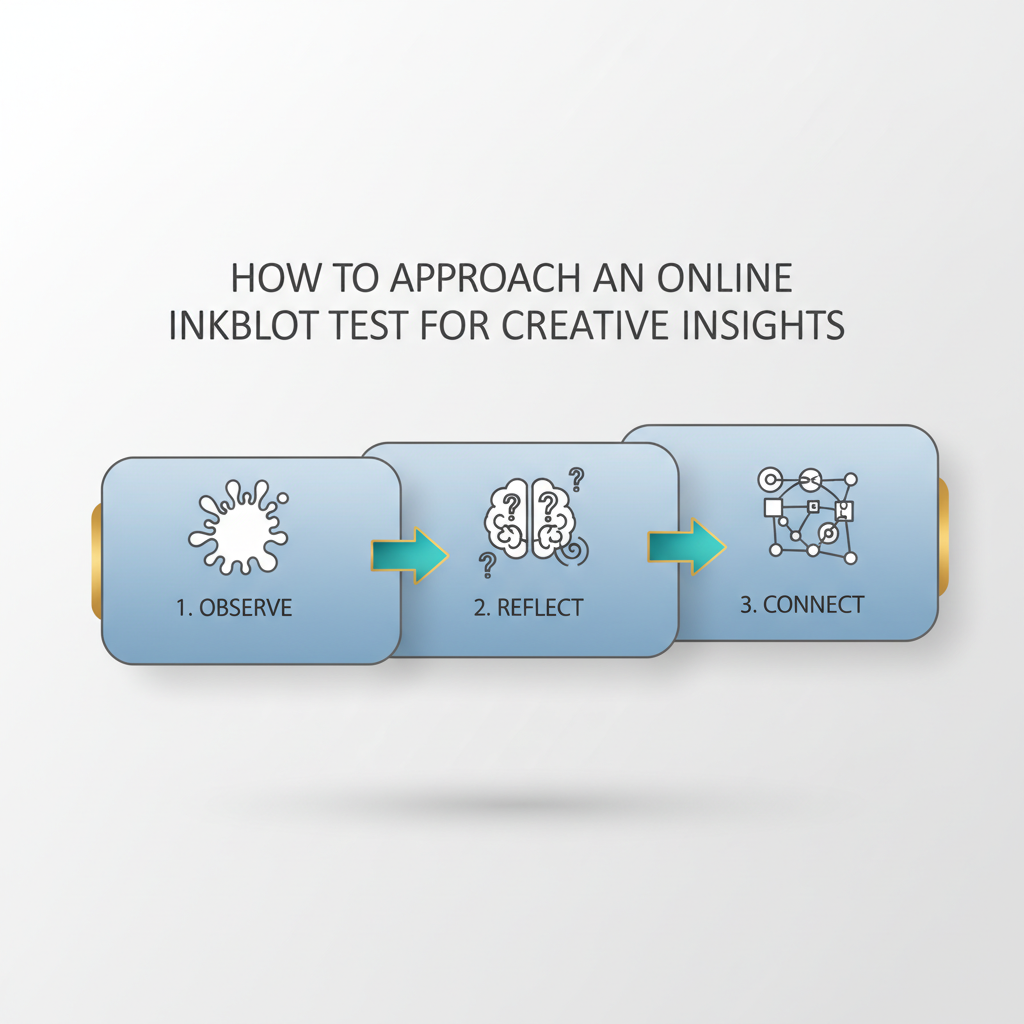
Taking an online inkblot test is a fun way to discover more about yourself. It’s important to start with the right mindset. Remember, these are not clinical diagnostic tools. Instead, think of them as a unique way to view your own perceptions.
Be open and curious. There are no “right” or “wrong” answers. Your unique interpretations are what matter most. They show your personal thinking style and creative potential.
Welcome the ambiguity in the images. When you explore many possibilities, you build mental flexibility. This skill is key for creative problem-solving and innovation. Think of it as a fun exercise to see how your mind makes sense of abstract shapes.
This curious attitude is your first step. It helps you find your unique ways of thinking. It also prepares you for greater self-awareness. This foundation will help build your overall creativity.
Focusing on Patterns, Not Right or Wrong Answers
When you take an inkblot test, focus on exploring, not on getting it right. The goal isn’t to “pass” or “fail.” It’s to see how your mind works. Look for different things within each inkblot.
Look at the whole image and also its smaller details. What does the entire blot look like? What about specific parts? Try to find several meanings for each image. This practice boosts divergent thinking [10]. Divergent thinking is a key part of creativity that helps you come up with many new ideas.
As you answer, pay attention to:
- Form and Shape: What objects, beings, or landscapes do you see?
- Movement and Interaction: Do you perceive any action, drama, or relationships between elements?
- Color and Texture: How do colors or perceived textures influence your interpretations?
- Emotional Response: What feelings or associations do the images evoke within you?
Your different answers show your unique way of seeing things. They highlight how you process information creatively and make connections others might miss. This self-observation gives you deep insights into your creative strengths.
Using Results to Spark Creative Growth
The “results” from an online inkblot test are really just personal insights, not a formal diagnosis. They act as a mirror, helping you reflect. Ask yourself some key questions about what you saw:
- Did you see many different things, or only a few?
- Were your interpretations imaginative, or more literal?
- Did you focus on human forms, animals, nature, or abstract concepts?
- Did you tend to see the whole image, or break it down into smaller parts?
Thinking about these questions is powerful. It helps you understand your natural creative habits and your main thinking styles. For example, you might be great at seeing the big picture. Or maybe you’re skilled at coming up with brand-new ideas.
Use these insights as a starting point. Play to your creative strengths in daily life and at work. You can also spot areas where you want to grow. If you saw only a few things, try exercises that help you think more broadly. If you focused on details, practice seeing the bigger picture. These are simple ways to boost your creativity.
At Creative Ability Test, we understand this journey. Our science-backed, 30-question test gives you a fuller picture of your creativity. We help you turn self-reflection into real action. Our personal feedback and growth plans help you improve your creative thinking. You can then use these skills with confidence to solve problems and innovate.
Frequently Asked Questions About the Ink Blot Psychology Test
What is the Holtzman inkblot test used for?
The Holtzman Inkblot Test (HIT) is a psychological tool that helps professionals understand personality in a structured way. It also measures how you think and process information. Unlike the Rorschach test, the HIT uses more inkblots, and each one has specific, standard questions. This makes the scoring more objective and helps reduce bias from the person giving the test [11].
Professionals use the HIT to assess several areas, including:
- Seeing Details: How well you notice small, specific things. This shows your observation skills.
- Thinking Style: It shows how you think. For example, if you focus on the big picture or small details.
- Emotional Responses: The test can show how you react to things emotionally and manage your feelings.
- Creativity and Imagination: Your unique answers can show your imagination. It reveals if you can find many solutions to a problem or are open to new ideas. This is important for creative problem-solving.
Understanding your HIT results can give you useful insights. It can help you understand your unique way of seeing the world. This can be valuable for personal growth and building on your creative strengths. For example, knowing how you perceive things can help you be more innovative.
Can you take an inkblot personality test online for free?
Many websites offer free online inkblot tests. While they can be fun and spark curiosity about psychology, it’s important to know they are not the same as professional tools. These online tests are not usually scientific and are not as thorough as tests given by a professional.
Here’s why free online tests have limits:
- Not Standardized: The inkblots might not be the real ones used by professionals. How they are shown can also change, which affects your results.
- No Expert Analysis: Real inkblot tests need a trained psychologist to interpret the results with clinical expertise [12]. A computer can’t provide this level of detailed analysis.
- Generic Feedback: Online quizzes give general feedback that isn’t tailored to you. Real tests focus on your unique personality.
- Not Scientific: Most free online tests are not based on science. They don’t meet the standards for a valid psychology test.
To truly understand your creative potential, consider using a test backed by science. The Creative Ability Test offers comprehensive insights. It provides personalized strategies to help you develop your creative strengths. It moves beyond casual quizzes to real self-discovery.
What kind of visual psychology test is the Rorschach?
The Rorschach is a well-known visual psychology test, also called the Rorschach Inkblot Test. It is a projective test, which means it is designed to reveal thoughts, feelings, and motivations you might not be aware of. It works by asking you what you see in unclear images, or inkblots [13].
When you look at a Rorschach inkblot, you are asked: “What might this be?” There is no “right” answer. Instead, your response shows your unique way of seeing things and how you organize information. This process offers a glimpse into your inner world.
The Rorschach can reveal:
- Personality Traits: It offers clues about your typical ways of behaving.
- Emotional Style: It can show how you handle and process your emotions.
- Ways of Thinking: The test can identify your thinking style, such as whether you focus on the big picture or on details.
- Creativity: Your ability to see many different things in an unclear image is a key part of the test. This is linked to creativity and shows how imaginative you are.
Giving and interpreting the Rorschach test requires a lot of training. A skilled professional is needed to get accurate results and help you understand what your unique views of the inkblots mean. This deeper understanding can help you unlock your creativity.
Sources
- https://www.britannica.com/science/Rorschach-Test
- https://rorschach.org/resources/
- https://www.simplypsychology.org/rorschach-inkblot-test.html
- https://www.psychologytoday.com/us/basics/openness-experience
- https://www.simplypsychology.org/divergent-thinking.html
- https://www.researchgate.net/publication/232491176_Tolerance_for_Ambiguity_and_Creativity
- https://psycnet.apa.org/record/2012-09419-001
- https://www.apa.org/monitor/2013/05/rorschach
- https://psycnet.apa.org/record/1961-00277-001
- https://www.apa.org/education-career/guide/science-education/understanding-psychology/divergent-thinking
- https://dictionary.apa.org/holtzman-inkblot-technique
- https://www.psychologytoday.com/us/blog/head-games/201211/online-psychological-tests-helpful-or-harmful
- https://www.simplypsychology.org/rorschach-test.html
Leave a Reply