A color psychology test is a non-verbal assessment designed to reveal aspects of your personality, emotional state, and underlying motivations by analyzing your preferences for different colors. Based on the work of psychologists like Dr. Max Luscher, these tests suggest that our color choices can reflect objective psychological traits and highlight areas for personal growth.
Colors are more than just something to look at. They can reflect your moods, decisions, and even your deepest psychological traits. Have you ever thought about what your favorite colors might reveal about your creative mind? The colors you are drawn to can offer clues about your personality, your thinking style, and how you approach solving problems.
This article explores the color psychology test, a scientific tool that helps you understand these hidden messages and unlock your creative potential. We’ll look at how these tests, including the well-known Max Lüscher Color Test, can highlight your creative strengths and guide your personal growth. Whether you want to find a Lüscher color test online for free or are seeking practical ways to be more creative, you’ll find useful insights here to improve your self-awareness and spark new ideas.
What Can a Color Psychology Test Reveal About You?
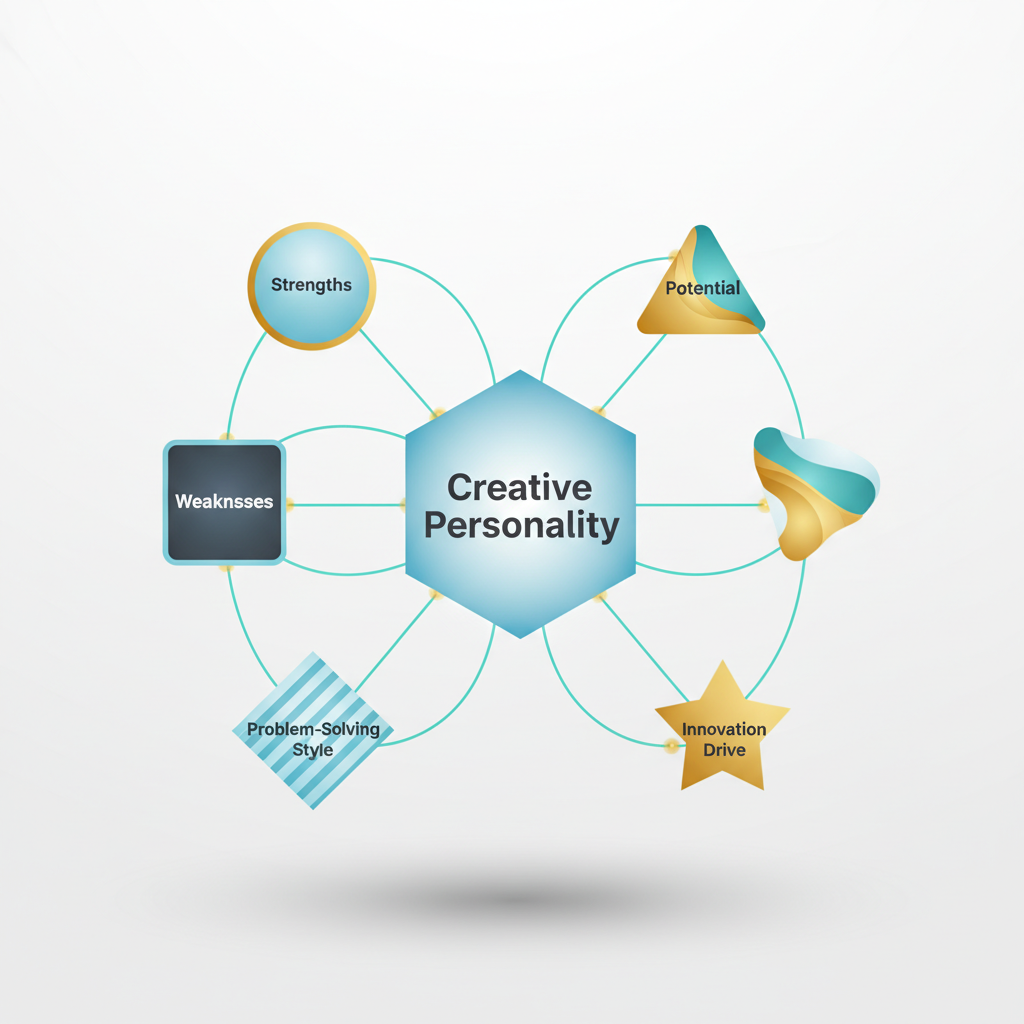
Understanding Your Personality Through Color
Colors have a strong effect on our emotions and how we see the world. The colors you like can reveal a lot about your personality. A color psychology test, like the Max Lüscher Color Test, looks at these preferences to help you understand your personality traits and emotional state.
Each color has a specific psychological meaning. For example, a strong liking for blue often points to a need for peace and calm. A preference for red can show passion or a desire to take action. These tests suggest that the colors we unconsciously choose can show our current needs or challenges [1].
By exploring how you feel about different colors, you can learn more about yourself. This helps you uncover parts of your personality that you might not normally see. This journey into color psychology is like a mirror, reflecting who you are.
Connecting Color Choices to Creative Strengths
Your color choices do more than just show your personality. They can also hint at your creative strengths and thinking style. Different colors may line up with different types of creativity, offering you useful insights.
For example:
- Bold Colors (e.g., Red, Orange): If you like these colors, you might be a divergent thinker. These individuals are often open to taking risks and trying new ideas. They may have a strong desire to innovate and question the status quo.
- Calm Colors (e.g., Blue, Green): A preference for these colors could mean you have a more structured approach to creativity. You might be good at solving problems that need careful planning and organization. Your creative process may focus on balance and depth.
- Vibrant and Mixed Colors (e.g., Yellow, Purple): Being drawn to a wide range of colors often points to cognitive flexibility. This is a key skill for adapting ideas and seeing things from different angles. It helps you connect ideas that seem unrelated [2].
Understanding these links helps you use your natural creative style. You can then focus your creative energy more effectively. This knowledge empowers you to improve your innovative work.
How These Tests Help with Personal Growth
Color psychology tests are great tools for personal growth and self-discovery. By revealing your natural preferences, these tests help you build a deeper understanding of yourself.
Here are some ways these tests support your development:
- Enhanced Self-Awareness: You get a clearer picture of your emotional needs and motivations. This helps you understand what truly drives you.
- Identifying Creative Pathways: Learning your creative strengths through color can guide your efforts. You can focus on areas where you are naturally strong, like out-of-the-box thinking or structured problem-solving.
- Personalized Growth Strategies: The results from a color test can give you clear steps for self-improvement. For example, if you learn you need more structure, you can look for creative methods that provide it.
- Boosting Confidence: Recognizing your natural talents builds self-confidence. This encourages you to take on new creative challenges with more certainty.
- Applying Insights: This knowledge isn’t just theory. It helps you use your unique creative style to solve real-world problems, leading to better solutions in your personal and professional life.
Platforms like Creative Ability Test use a science-backed approach. They turn self-assessment into clear, actionable insights. Our comprehensive 30-question assessment offers you personalized feedback and strategies to help you understand and grow your creative potential. This journey takes you from uncertainty to structured growth, helping you develop continuously.
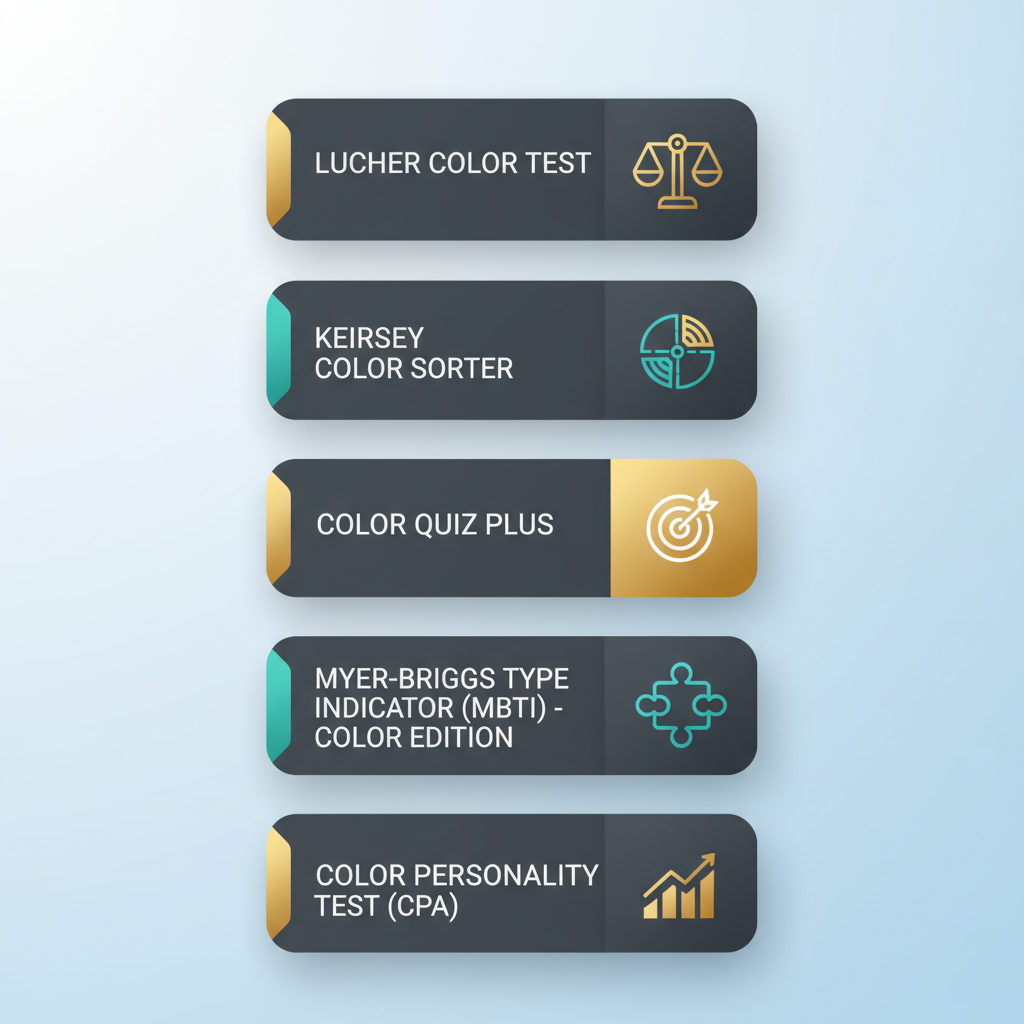
The Top 5 Color Psychology Tests Available Online
1. The Lüscher Color Test (Max Lüscher Color Test)
The Lüscher Color Test is a well-known projective personality test developed by Swiss psychotherapist Max Lüscher. He believed that our color choices reveal our current psychological state and emotional balance.
How does it work? You arrange eight colored cards from most to least favorite. Analyzing your choices is said to uncover hidden needs and sources of stress [3].
For creativity, the test can be valuable by highlighting energy blocks or areas of stress that might be hindering your creative flow. For instance, liking certain colors might show a need for self-expression, while avoiding others could point to suppressed emotions.
Although its scientific accuracy is debated, the test offers a quick and interesting way to reflect on yourself. It can be a starting point for exploring your creativity more deeply.
2. The Color Personality Test (4 Colors)
Many online platforms offer simple “4-color” personality tests. They group people into four colors, like Red, Blue, Green, or Yellow. Each color is linked to specific personality traits and communication styles.
You answer a series of questions to find your dominant color. For example, a “Red” personality might be seen as driven and decisive, while a “Blue” may be detail-oriented and analytical.
How does this relate to creativity? Your dominant color can point to your natural creative style. A “Yellow” may be a spontaneous idea generator, while a “Green” might be great at solving problems step-by-step. This simple insight can help you appreciate your unique way of thinking and use your strengths in creative projects.
3. The True Colors Personality Test
Developed by Don Lowry, the True Colors Personality Test sorts people into four colors: Orange, Gold, Green, and Blue. It aims to identify the core values and motives that drive your actions [4].
You respond to statements and situations to find your primary color. Each color is tied to different preferences for communication, learning, and work. For instance, a “Gold” individual values structure and responsibility, while a “Blue” values relationships and harmony.
Understanding your True Color can greatly improve your creative process. It shows your natural way of facing challenges and working with others. An “Orange” might be a hands-on, adventurous creator, while a “Green” could be an innovative problem-solver. This knowledge helps you develop more effective creative strategies.
4. The Color Code Personality Profile
The Color Code Personality Profile, developed by Taylor Hartman, uses four colors: Red, Blue, White, and Yellow. The test aims to identify your natural temperament and what truly motivates you. For example, “Red” is motivated by power, and “Blue” is motivated by intimacy [5].
The assessment helps you see your strengths, limitations, and how you react to stress. These are all crucial insights for self-awareness.
In terms of creativity, the Color Code offers deep insights. A “Yellow” (motivated by fun) might bring a playful energy to projects, while a “White” (motivated by peace) could encourage smooth teamwork. Knowing what drives you helps you connect with your true creative energy and feel more confident about what you bring to the table.
5. Creative Ability Test’s Color & Creativity Assessment
At Creative Ability Test, we know self-discovery is powerful. Our unique approach combines ideas from color psychology with proven, science-based creative assessments. We go beyond simple personality labels.
Our 30-question assessment measures key parts of creativity, like flexible thinking, idea generation, and problem-solving skills. While color tests offer a quick look at your current mood, our assessment gives you a deeper, evidence-based look at your creative potential.
You get personalized feedback that points out your unique creative strengths and areas for growth. We also give you practical steps to improve your creative thinking and use your innovative ideas in real life.
Our approach turns confusion into clear self-awareness. Instead of a generic label, you get practical insights and a personal growth plan. This helps you build your creative skills with confidence. Discover how your mind really works and learn how to be more innovative with our expert help.
Is the Lüscher color test accurate?
The Psychological Science Behind the Test
The Lüscher Color Test, created by Swiss psychotherapist Max Lüscher in the 1940s, suggests a link between your color choices and your psychological state. Lüscher believed our unconscious color choices could reveal hidden feelings, needs, and motivations. He argued that colors themselves have universal meanings [6].
However, the scientific community has mixed opinions on its accuracy. Mainstream psychology often sees the Lüscher test as a “projective test,” similar to the Rorschach inkblot test. These tests rely on personal interpretation. While they can be interesting for self-reflection, they lack the solid proof and scientific testing of other assessments.
For example, its reliability (if it gives consistent results) and validity (if it measures what it claims to) are often questioned. Many critics note a lack of independent, peer-reviewed research supporting its claims [7]. While the idea that color affects psychology is accepted, linking specific color choices to complex personality traits is largely unproven by scientific standards.
Understanding your creative potential is best done with reliable, evidence-based methods. This ensures you get insights you can actually use. Our platform focuses on such scientifically proven approaches to truly unlock your creative strengths.
How to Interpret Your Lüscher Test Results
When you take a Lüscher Color Test, you rank colors in your order of preference. The results then connect your choices to various psychological traits. Each of the eight standard Lüscher colors has a specific meaning. The order you choose them in reveals both conscious and unconscious tendencies.
Here is a general overview of what some key Lüscher colors mean:
- Dark Blue: Often linked to calm, contentment, and a need for inner peace. It suggests a desire to belong and feel stable.
- Yellow: Represents spontaneity, optimism, and a desire for freedom. It can point to hopes for personal growth and new opportunities.
- Green: Associated with determination, persistence, and self-respect. It often shows a need for recognition and a stable self-image.
- Red: Symbolizes willpower, energy, and action. It signifies a strong desire for success, excitement, and a full life.
- Violet: Often seen as a mix of red and blue. It represents sensitivity, charm, and intuition.
- Brown: Relates to the body, security, and a need for physical comfort.
- Grey: Suggests neutrality, distance, and a desire to stay uninvolved or unnoticed.
- Black: Represents nothingness, giving up, or an ending. It can indicate strong opposition or a feeling of major change.
The interpretation is about more than single colors. It also analyzes color pairs and sequences, which can suggest hidden needs, anxieties, or creative urges. For instance, picking yellow early might indicate a strong desire for personal growth or new creative projects. On the other hand, choosing black early could signal resistance to your current situation. Remember, these interpretations are a starting point for self-reflection, not a definitive psychological diagnosis.
Common Uses and Modern Perspectives
In the past, the Lüscher Color Test was used in different fields. Psychologists and coaches sometimes used it as a tool to start conversations and help clients talk about their feelings. It was also used in self-help contexts to offer a new way to gain personal insight.
Today, the Lüscher Color Test is generally seen more as a psychological exercise than a diagnostic tool. Many people still find it interesting and appreciate its unique approach to self-discovery. It can spark good conversations about personal preferences and emotional states.
From a modern scientific view, the focus has shifted, especially for understanding creativity. We now prefer assessments with strong scientific proof. For example, tests that measure cognitive flexibility, divergent thinking, and problem-solving skills give more reliable insights into creative potential. These tests provide clear, actionable steps for growth. They are not based on personal opinion and instead offer feedback grounded in science.
While it can be interesting to explore tools like the Lüscher Color Test, it’s important to balance curiosity with scientific facts. For those serious about improving their creative skills, platforms like Creative Ability Test offer a complete, evidence-based path. We provide clear understanding, practical tips, and insights to build your confidence. This helps you apply your creativity in real-world situations and grow as a person.
How Can You Take a Color Psychology Test Online?
Finding a Luscher Color Test Online Free
Want to learn about your creative side? Simple tools can help. The Lüscher Color Test is one of them. It uses your color choices to explore your personality. You can find many versions of this test online, and some are free. These free tests are a great way to start.
When you search for a “Lüscher Color Test online free,” choose websites you can trust. Look for sites that explain how the test works and what it can show you. They should also have clear instructions. Keep in mind that free tests are usually just an introduction. They give you a peek into color psychology.
Learning about your natural color choices can show you how you think. It can also reveal how you handle challenges. This is helpful for personal growth and can improve your creative problem-solving skills.
What to Expect During the Assessment
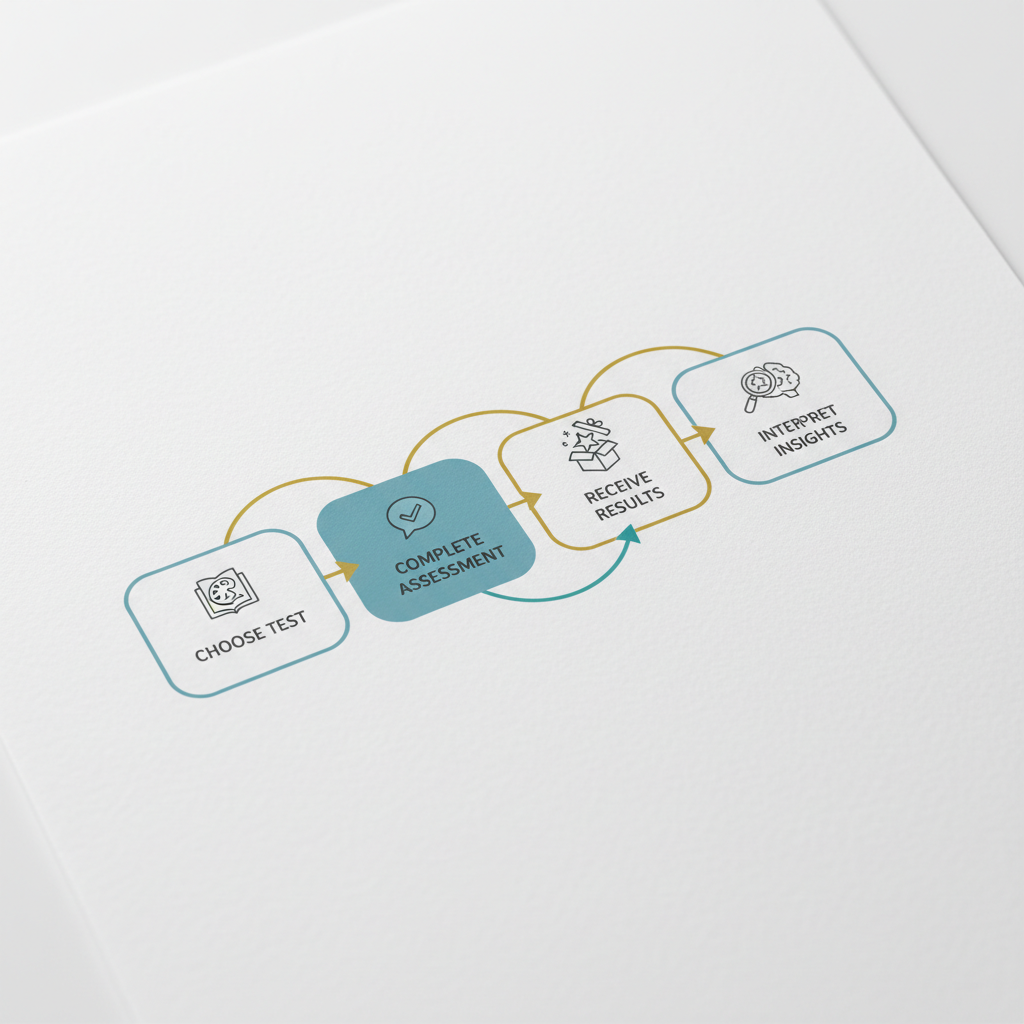
Taking a color psychology test online is usually easy. The Lüscher Color Test, for example, is quick. You’ll simply pick colors based on how you feel. There are no right or wrong answers. Your first emotional reaction is what counts.
Here is what you can generally expect:
- Color Selection: You’ll see a few color cards, often shown in a certain order.
- Ranking Colors: You will rank the colors from your most favorite to your least favorite. Base your choices on how you feel right now.
- Repeating the Process: You might have to repeat the selection. This helps show your deeper, unconscious feelings.
- Short Questions: Some tests might ask a few simple questions to understand your current mood or situation.
The test is designed to tap into your subconscious by looking at your gut reactions. This helps reveal parts of your personality and your creative tendencies. For example, liking certain colors might suggest you need structure, while liking others might show a desire for freedom. These feelings are important parts of how you express yourself creatively.
Tips for an Authentic and Insightful Result
To get the most from a color psychology test, it helps to be focused. Your honest answers are key to getting useful results. Here are some tips for an honest and helpful result:
- Be Relaxed and Focused: Find a quiet, distraction-free moment. This helps you connect with your true feelings.
- Trust Your Gut Feeling: Do not overthink your choices. Select the colors that immediately appeal to you. Go with your first instinct.
- Avoid Outside Influences: Don’t let other things affect your choice, like what colors mean in your culture or what you think you should like. Focus only on how you feel about the color in this moment.
- Consider Your Mood: Be aware that your mood can influence results. The Lüscher Test measures your psychological state at that moment [8].
- Take it Again Later: Feel free to take the test again after some time has passed. See if your choices change. This could show shifts in your mood or creative focus.
Remember, color psychology tests are tools to help you learn about yourself. They offer a new way to understand your emotions and find your creative strengths. For a more complete picture, you can combine what you learn with other tools, like the Creative Ability Test. This approach helps turn uncertainty into useful self-knowledge. You’ll get practical tips to improve your creative thinking and problem-solving skills.
Frequently Asked Questions
What Is the Lüscher Color Test?
The Lüscher Color Test is a psychological tool developed by Swiss psychotherapist Dr. Max Lüscher in the 1940s [9]. This test helps reveal your current state of mind. It also shows hidden needs and personality traits.
The test is simple. Instead of answering questions, you just pick colors you like. This method is designed to go beyond conscious thought and tap into your subconscious feelings. Dr. Lüscher believed your color choices reflect your inner state, showing things like stress, anxiety, or personal motivations.
Understanding your results has many benefits:
- Better Self-Awareness: Gain insight into your current emotional state.
- Identify Stress: Pinpoint the sources of your psychological stress.
- Clarify Motivation: See what truly drives you and what you desire.
- Boost Creativity: Understand how your inner world affects your creative and problem-solving skills.
This color psychology test is a powerful tool for self-discovery. It helps you grow by showing where you can make positive changes in your life. This can lead to a more balanced mindset and new ideas.
What Is the 4-Color Personality Test?
The 4-Color Personality Test is a popular type of assessment that sorts people into four main personality types. Each type is linked to a color. These tests offer a simple way to understand behavior by breaking down complex personality traits.
Common examples are the True Colors test and the Color Code profile. While the colors can vary, they often represent these traits:
- Red (or Gold): Stands for leadership, drive, and action. These people are typically focused and goal-oriented.
- Blue: Represents harmony, empathy, and connection. These personalities are often caring and relationship-focused.
- Green: Linked to logic, curiosity, and analysis. People with this type are often strategic problem-solvers.
- Yellow (or Orange): Means optimism, enthusiasm, and spontaneity. These individuals are typically social and enjoy new ideas.
These tests help you understand your creative style and how you relate to others. With this knowledge, you can improve communication, teamwork, and problem-solving. Knowing your core “color” helps you use your natural strengths and adapt your approach in different situations, leading to better collaboration.
How Does the Lüscher Color Test Interpretation Work?
Interpreting the Lüscher Color Test is about more than just your favorite colors. It looks closely at the order in which you pick and reject colors. This sequence is key. Dr. Lüscher gave each color a specific psychological meaning and also studied the relationships between the colors you choose.
Here’s a simple look at how it works:
- Selection Order: The order you rank the colors, from most to least favorite, reveals your current desires and emotional state.
- Color Pairs: The test looks at which colors you group together. Certain pairings can point to a need for stability or a desire for change.
- Rejected Colors: The colors you dislike are just as important. They often point to sources of stress or hidden needs you are pushing away.
- Overall Picture: All your choices together create a snapshot of your personality. This shows your emotional balance, stress levels, and coping skills [10].
The final interpretation reveals your inner state by showing both conscious and hidden needs. For instance, liking blue may show a need for peace, while disliking yellow could suggest worry about the future. These insights help you understand what drives you and why you make the decisions you do.
At Creative Ability Test, we give you clear, easy-to-understand explanations. Our reports help you make sense of these ideas and offer practical tips for personal growth. This knowledge can help you improve your creative problem-solving skills and support your overall well-being.
Sources
- https://luscher-color.com/the-theory/
- https://www.apa.org/pubs/journals/features/xge-xge0000880
- https://luscher-color.com/
- https://truecolorsintl.com/
- https://www.colorcode.com/
- https://pubmed.ncbi.nlm.nih.gov/3592398/
- https://psycnet.apa.org/record/1987-17255-001
- https://pubmed.ncbi.nlm.nih.gov/3067885/
- https://luscher-color-diagnostics.com/max-luscher/
- https://luscher-color-diagnostics.com/the-test/