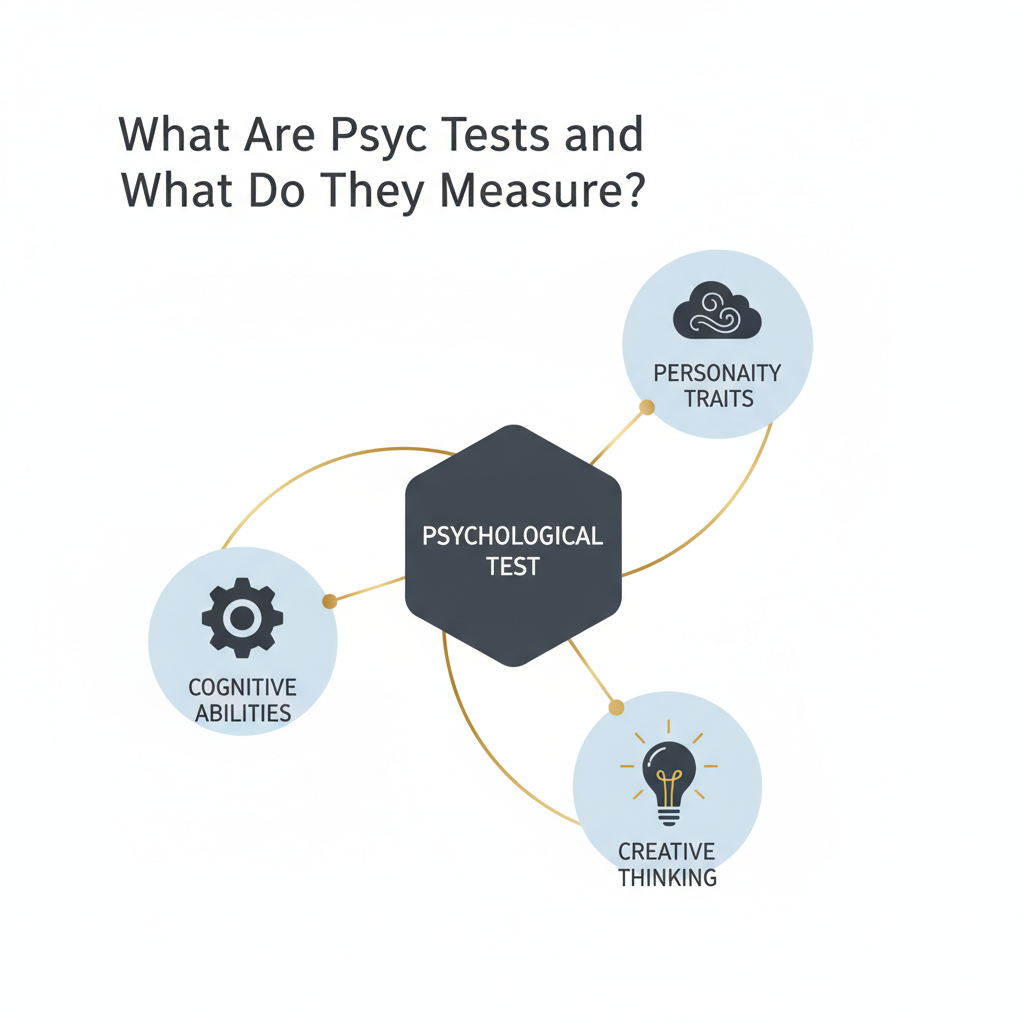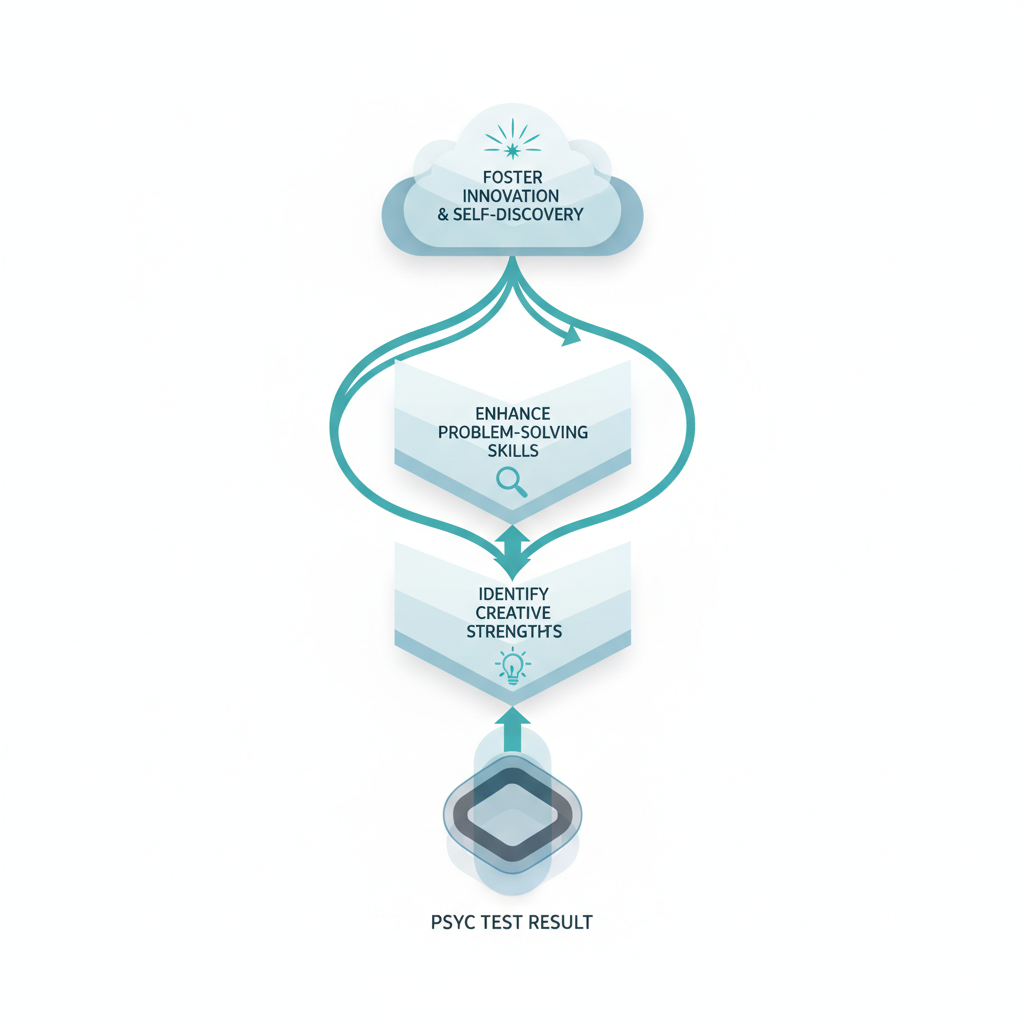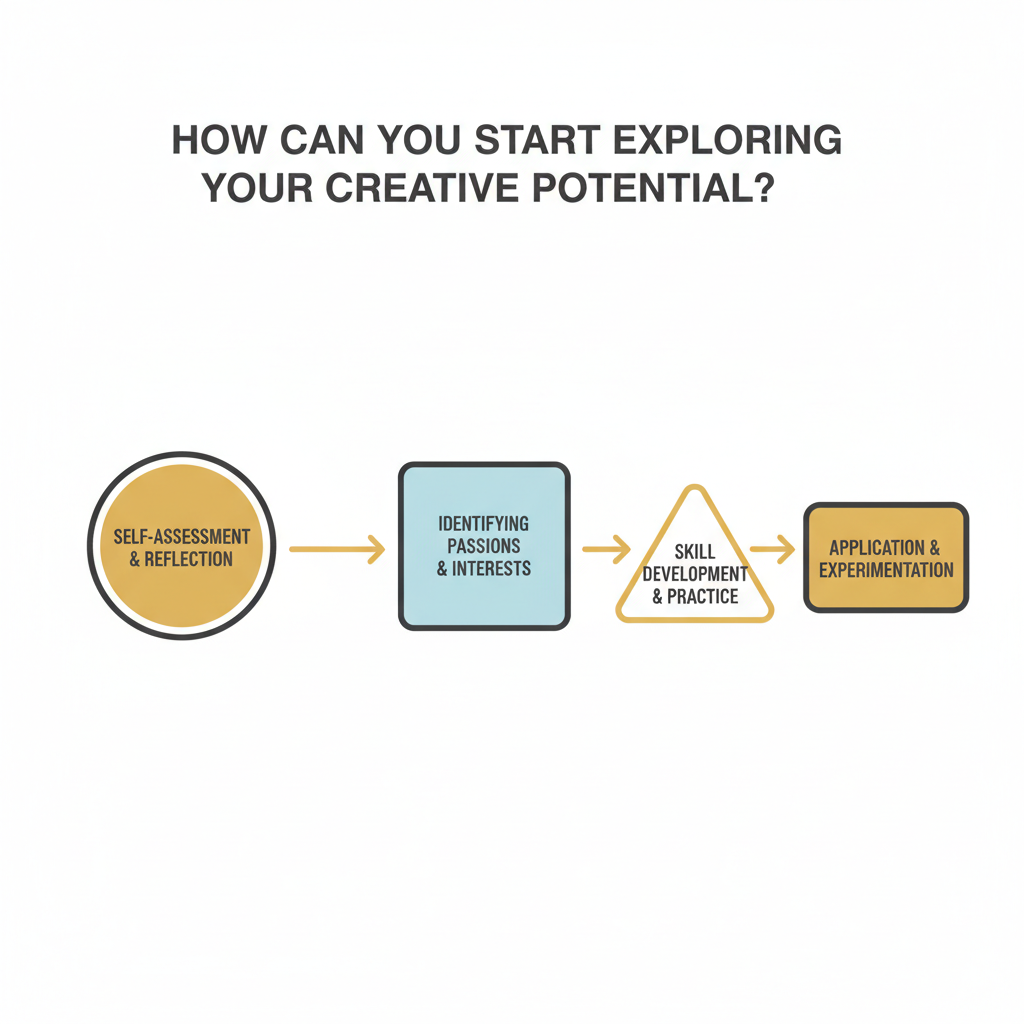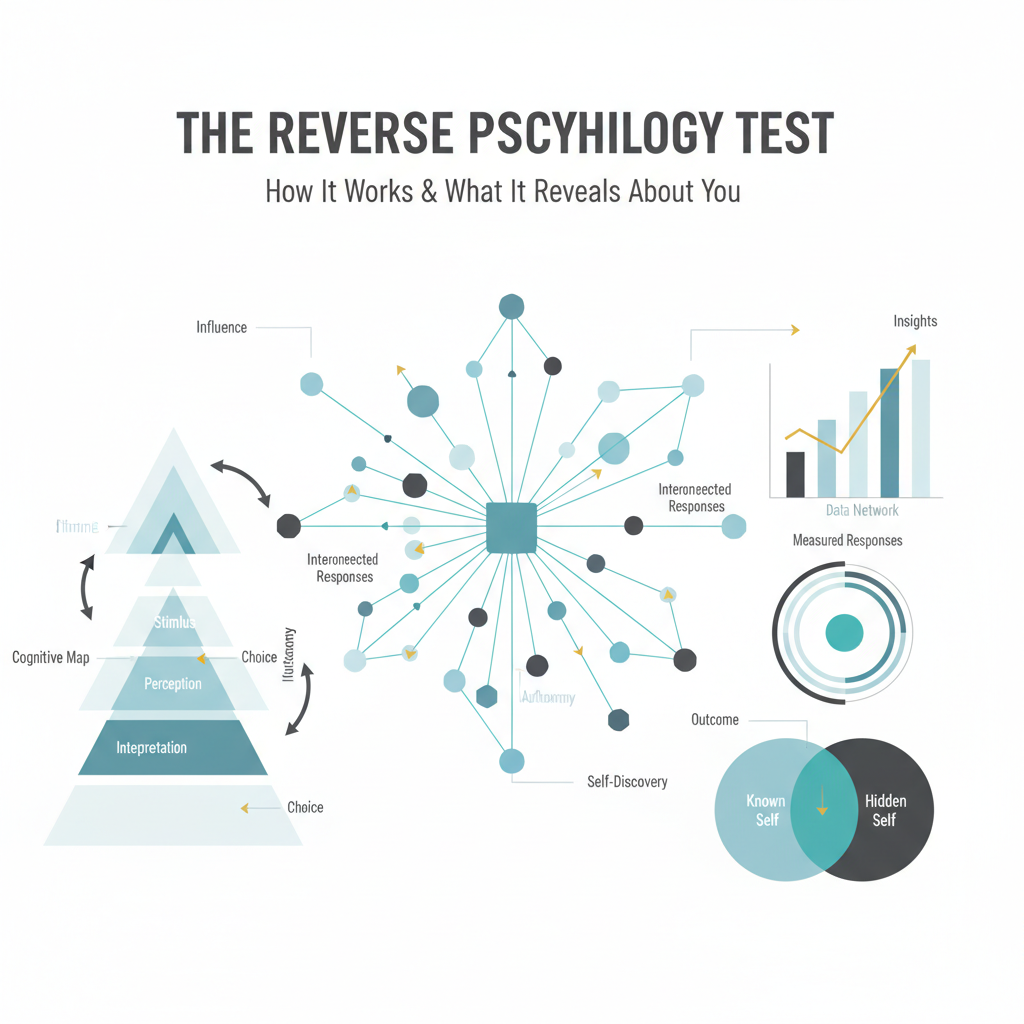
Tag: Psychological tests

  • The Reverse Psychology Test: How It Works & What It Reveals About You

    The Reverse Psychology Test: How It Works & What It Reveals About You

    A reverse psychology test is typically a quiz or a set of scenarios designed to measure your tendency towards psychological reactance, which is the impulse to do the opposite of what you are told. It evaluates how you respond to direct suggestions, prohibitions, or persuasion attempts to reveal insights into your decision-making style, level of independence, and resistance to influence.

    Have you ever done the exact opposite of what someone told you to do? This common reaction is the idea behind reverse psychology. It’s a subtle form of influence that plays on our natural desire for freedom and control. It’s more than just a clever trick. By understanding this psychological phenomenon, we can learn a lot about how we react to persuasion and how our own thinking styles guide our choices.

    Here at CreativeAbilityTest.com, we explore the cognitive processes behind creativity, problem-solving, and decision-making. Reverse psychology may seem like a simple tactic, but it shows basic truths about what motivates us and our deep need to make our own decisions. In this article, we’ll look at the science of this interesting method. We’ll explore how it works, when to use it, and what it says about your own desire for independence. By understanding how influence works, we can better see our own creative potential and cognitive flexibility.

    Exploring reverse psychology offers a new perspective, whether you’re curious about why people do what they do, want to improve your problem-solving, or hope to understand communication better. You will learn about the key ideas of psychological reactance. You’ll also see how gently guiding expectations can create surprising results and even open up new ways of thinking.

    What Is a Reverse Psychology Test?

    A “reverse psychology test” isn’t a formal tool like a psychological assessment or a personality test. It’s more of an exercise. It uses common scenarios to show you how reverse psychology works.

    These exercises show you situations where you might use or see reverse psychology. They also reveal how our natural desire for freedom shapes our decisions. Working through these scenarios helps you understand why people act the way they do.

    Understanding this can boost your creative problem-solving skills. It also shows you how the way we communicate affects results. This knowledge is useful for both your personal and professional life.

    What Is Psychological Reactance?

    Reverse psychology works because of a powerful idea called reactance. Reactance is our natural urge to push back when we feel our freedom is threatened. When someone tells you what to do, that feeling of wanting to do the opposite is reactance.

    For example, a sign that says “DO NOT walk on the grass” can make some people want to do just that. This happens because they feel their freedom to choose is being taken away. We all want to feel in control of our own decisions [1].

    Reactance is more than just being stubborn. It’s a key part of what motivates us. It’s our drive to be independent, and it affects how we react when people try to persuade us.

    Think about how this idea can help your creative thinking. When you know what drives people, you can find new ways to solve problems. It also helps you create messages that people truly connect with. This is a key skill for using creativity in the real world.

    The Creative Ability Test, for instance, can help you understand your own way of thinking. Just as reactance reveals how others think, our assessment offers you a personal look at your creative strengths. You’ll learn about your openness to new things and how you solve problems. Knowing this helps you handle tough social and creative situations with more confidence.

    How Does Reverse Psychology Work in Practice?
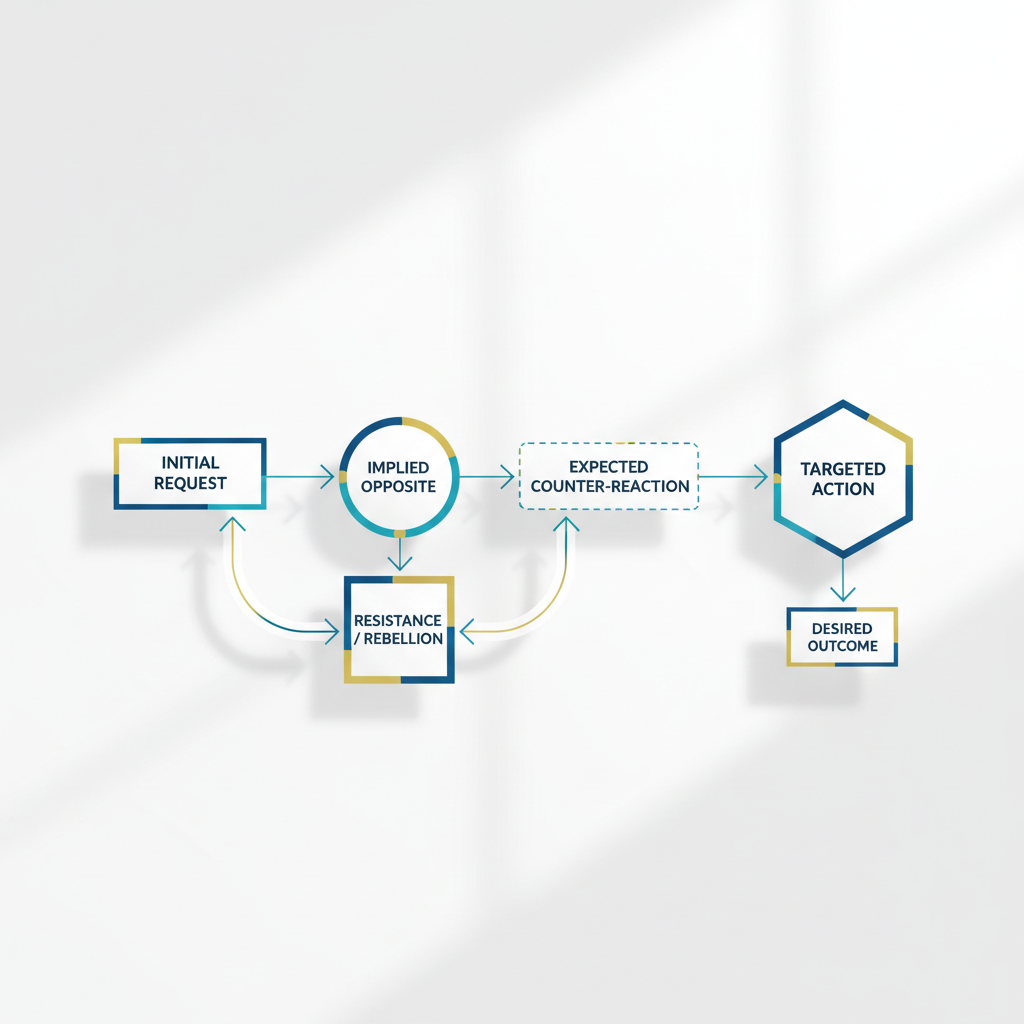
    An infographic showing a multi-step flow diagram of how reverse psychology works in practice, with labeled geometric shapes and directional arrows.
    A minimalist, vector-based infographic illustrating the process of reverse psychology in practice. Use a clear, multi-step flow diagram with interconnected nodes and directional arrows. Each step should be represented by a clean geometric shape with subtle blue and white gradients, accented with gold or teal highlights. The diagram shows an initial statement, a counter-reaction path, and a desired outcome, with short labels indicating each phase like “Initial Request,” “Implied Opposite,” “Targeted Action.” Ample negative space ensures clarity. No humans, no photos, no cartoons. Professional, educational, and approachable style suitable for students and professionals.

    The Science of Persuasion and Autonomy

    Reverse psychology works because of a basic human need: the need for autonomy. This is our deep desire to make our own choices. We want to feel in control of what we do and think.

    When someone tries to persuade you directly, it can backfire. This reaction is called psychological reactance. It’s a strong feeling of resistance when you feel your freedom is threatened. For example, if you feel pressured to do something, your first instinct might be to do the opposite.

    Understanding this idea is important. It explains why telling people what to do often doesn’t work. Instead of being direct, reverse psychology gently challenges your freedom. It suggests you do one thing, which makes you want to take the “forbidden” path to prove your independence.

    In creative work, this can be a powerful tool. It can help you get past your own mental blocks. For instance, telling yourself you “can’t” solve a creative problem might spark the desire to prove yourself wrong, unlocking new ideas.

    Here’s an example of how it works:

    • Direct Command: “You must brainstorm new ideas now.” This can feel limiting.
    • Reverse Psychology: “Perhaps this problem is too complex for new ideas today. Maybe we should just stick to the old methods.” This challenges your creative side, making you more motivated to come up with fresh solutions.

    This shows how much we value our independence. It also shows how guiding this desire in a subtle way can lead to surprising results.

    Who is Most Susceptible to Reverse Psychology?

    Certain personality types are more likely to react to reverse psychology. These people often share a few key traits. They value their independence and don’t like being controlled by others.

    Here are some characteristics of people who respond most to this approach:

    • Independent Thinkers: People who like to form their own opinions often resist being told what to think. They prefer to reach their own conclusions. Suggesting the opposite of what you want can appeal to their desire to be self-reliant.
    • Individuals with Strong Opinions: People who are very sure of their beliefs may react strongly when challenged. If you tell them they’re wrong, they might just dig in their heels. This can lead them to choose the “forbidden” option you originally wanted them to take.
    • Rebellious or Defiant Personalities: Some people naturally like to challenge authority and avoid fitting in. For them, reverse psychology is very effective because it taps into their desire to go against the grain.
    • Those Prone to Psychological Reactance: As we covered, anyone who feels their freedom is at risk will likely push back. This reaction is stronger in some people than others. It often shows up as doing the exact opposite of what’s asked of them.

    Knowing these personality types is helpful. It shows how different people think and why it’s important to change how you communicate. This is especially true when working on creative projects with a team. For instance, if a teammate values their freedom, framing a task as a unique challenge they can solve might work better than giving a direct order.

    On our platform, we look into different thinking styles to help you understand your own creative process. You can learn if you have a natural tendency to defy expectations. This knowledge can help you motivate yourself and others to find new and better solutions.

    Is reverse psychology effective?

    When It Can Be a Powerful Tool for Influence

    Reverse psychology works by using a basic part of human nature: we don’t like being told what to do. This is called psychological reactance [2]. People want to feel in control of their choices. When we feel our freedom is threatened, we often push back to assert our independence. This natural drive is what can make reverse psychology so effective.

    It works best in certain situations. Success depends on being subtle and understanding the person you’re dealing with. When used thoughtfully, it can guide someone toward a specific action. This approach can be a powerful way to influence people.

    Consider these key factors for its effectiveness:

    • Subtle Application: The tactic must not be obvious. People will resist if they feel you are trying to trick them.
    • Target Personality: It works best on people who are independent or rebellious. Those who dislike being told what to do are more likely to respond.
    • Specific, Non-Critical Goals: Use it for small things, not major decisions. Avoid using it in high-stakes situations.
    • Contextual Fit: It works well when asking directly has already failed. It offers another way to approach the situation.

    For instance, think of a child who won’t eat vegetables. A parent might say, “These peas are so good, you probably won’t like them.” This can make the child curious and encourage them to try the “forbidden” food. Similarly, in a creative team, suggesting an idea is “too complex” might inspire a resistant teammate to prove you wrong. They might then take ownership of the idea. Understanding these dynamics can improve your problem-solving skills and help your team collaborate better.

    Common Scenarios Where It Is Likely to Backfire

    While reverse psychology can work, it’s also a risky tool. If you misuse it, it can easily backfire. This can lead to mistrust and resentment, and ultimately get in the way of your goals.

    This tactic is risky in a few common scenarios. Success depends heavily on your relationship with the person and the situation. It usually fails when the other person feels manipulated. This breaks down trust, which is necessary for any good interaction.

    Here are common situations where reverse psychology tends to fail:

    • Lack of Trust: If you don’t already have a trusting relationship, this tactic will seem manipulative. As a result, open communication will suffer.
    • Misunderstanding the Individual: Not everyone pushes back against suggestions. Some people are more agreeable and might simply agree with what you say.
    • High-Stakes Decisions: For important choices, clear and honest communication is always best. Using indirect tactics can lead to serious negative results.
    • Transparent Intentions: If it’s too obvious what you’re trying to do, the tactic loses its power. People will feel like you’re talking down to them.
    • Erosion of Relationships: If you use it too often, you can damage relationships at work or at home. This makes it harder for people to cooperate with you in the future. Trust is the foundation of any effective relationship [3].

    For example, telling a team member a project is “too simple” for them might cause them to lose interest. They may think the work is beneath their skills and put in less effort. In close personal relationships, using indirect tactics can create suspicion. It can get in the way of genuine connection and problem-solving. Real creative teamwork relies on honesty and clear communication. This helps build an environment where ideas are shared freely and trust is maintained. Assessments like the Creative Ability Test help you become more self-aware. They encourage you to use your creative strengths directly. This allows you to develop honest problem-solving skills instead of relying on manipulation.

    Reverse psychology is manipulation: Is This Statement True?

    The Key Difference Between Influence and Deception

    To understand reverse psychology, you need to know the difference between influence and deception. People often confuse these two ideas, but they have very different ethical meanings.

    Influence is about guiding someone’s thoughts or actions while respecting their freedom to choose. The goal is often to help them make a decision that is good for them. For example, a mentor might influence a student to try a challenging creative project. This type of influence helps them grow.

    Deception, on the other hand, means misleading someone. It hides the truth or presents false information. The goal is usually to gain an advantage. This breaks trust and takes away a person’s freedom to choose. When reverse psychology is used to deceive, it becomes manipulation.

    Reverse psychology itself uses a psychological principle called reactance. This is the natural urge people have to resist being told what to do. They want to assert their freedom [4]. This resistance can be guided in a subtle way. The reason for guiding it is what makes it either influence or manipulation.

    Think about how this applies to creative thinking. If you want your team to brainstorm fresh ideas, you might playfully “forbid” them from thinking outside the box. This is a positive use of reverse psychology. It influences them to find more creative solutions without being dishonest. It unlocks their creative potential instead of exploiting it.

    Ethical Rules to Keep in Mind

    Knowing the line between ethical influence and unethical manipulation is key. When using psychological techniques, especially for creativity and problem-solving, ethics are very important. Our goal at Creative Ability Test is to empower you, not to control you.

    Reverse psychology becomes manipulative when it:

    • Breaks Trust: If someone feels tricked, trust is lost. This can harm both personal and professional relationships.
    • Is Not Open: True influence is often open and honest. Manipulation relies on hidden goals and secret intentions.
    • Ignores Well-being: Ethical influence always puts the other person’s best interests first. Manipulation serves the manipulator’s own goals, which can harm the other person.
    • Removes Choice: When people are not truly free to choose, or are subtly forced into a decision, their independence is undermined.

    For example, using reverse psychology to get a child to eat vegetables could be seen as fine. The goal is to improve their health. But using it to trick a coworker into doing your work is unethical. The difference is the intent and the potential for harm.

    As you explore your own creativity with the Creative Ability Test, remember these ideas. Understanding how influence works can make you a better communicator and help you manage group projects in a positive way. It also makes you more aware of when others might be trying to manipulate you.

    Our platform helps you understand cognitive flexibility. This skill improves your ability to adapt your thinking. It also helps you make ethical decisions in different situations, including how you influence others or solve problems creatively.

    What is reverse psychology in a relationship?

    Examples of Reverse Psychology in Relationships

    Reverse psychology is common in relationships. It works because we all want to feel in control. This tactic gently pushes someone to do something by suggesting they do the opposite. But using it can be tricky and needs to be done with care.

    Here’s a common example: a partner might hint they don’t care if you join them for an event. They might say, “Oh, don’t worry about coming to the art exhibition if you’re busy.” The goal is to make you want to go. It uses your desire to make your own choice, or even to prove them wrong. It can also feel like a challenge to your independence.

    Another example uses small challenges. A partner might say, “I doubt you can finish that creative project by Saturday.” This is a direct challenge to your skills. Because of this, you might feel a stronger need to finish it. You want to show you are capable and determined. This works because of something called psychological reactance. This is when people push back against anything they feel is limiting their freedom [5].

    Parents often use this technique, too. A parent might tell a teenager, “You absolutely cannot stay up late tonight.” But the teenager often feels a stronger urge to do just that. This shows how trying to be too controlling can have the opposite effect. Understanding how this works gives us a better sense of human behavior. This knowledge is helpful for creative problem-solving and better communication.

    Potential Risks to Trust and Communication

    While it may seem clever, using reverse psychology in relationships has serious risks. Over time, it can break down trust. Healthy relationships are built on open and honest talk. But reverse psychology adds a layer of manipulation.

    Here are some of the main risks:

    • Erosion of Trust: If you use it a lot, your partner won’t know what you really mean. They may start to question your honesty and wonder if you’re being truthful. Trust is the foundation of any strong relationship.
    • Breakdown in Communication: It stops you from saying what you need and want directly. Instead, partners have to guess at hidden meanings. This can cause misunderstandings and hurt feelings. Clear talk is key to feeling connected.
    • Increased Resentment: If your partner figures out what you’re doing, they can feel disrespected or foolish. The person being manipulated may feel controlled. This can create bad feelings and distance between you. It also hurts your ability to work together as a team.
    • Unintended Outcomes: It might not work. Your partner could take you at your word and choose the very thing you didn’t want them to. This can leave you frustrated with a wasted effort. You can’t predict the result.
    • Damaged Authenticity: It discourages people from being themselves. Both partners might start playing mind games instead of being honest. Being genuine is essential for a deep connection. This tactic can make your time together feel fake.

    If you care about creativity and personal growth, it’s important to understand these risks. Open communication helps creativity grow in a relationship. It lets you share ideas and support each other. On the other hand, manipulation hurts a real connection. Our Creative Ability Test focuses on genuine self-awareness. This helps you build stronger and more honest relationships. It also helps you think clearly about your personal challenges.

    Take Our Reverse Psychology Scenario ‘Test’
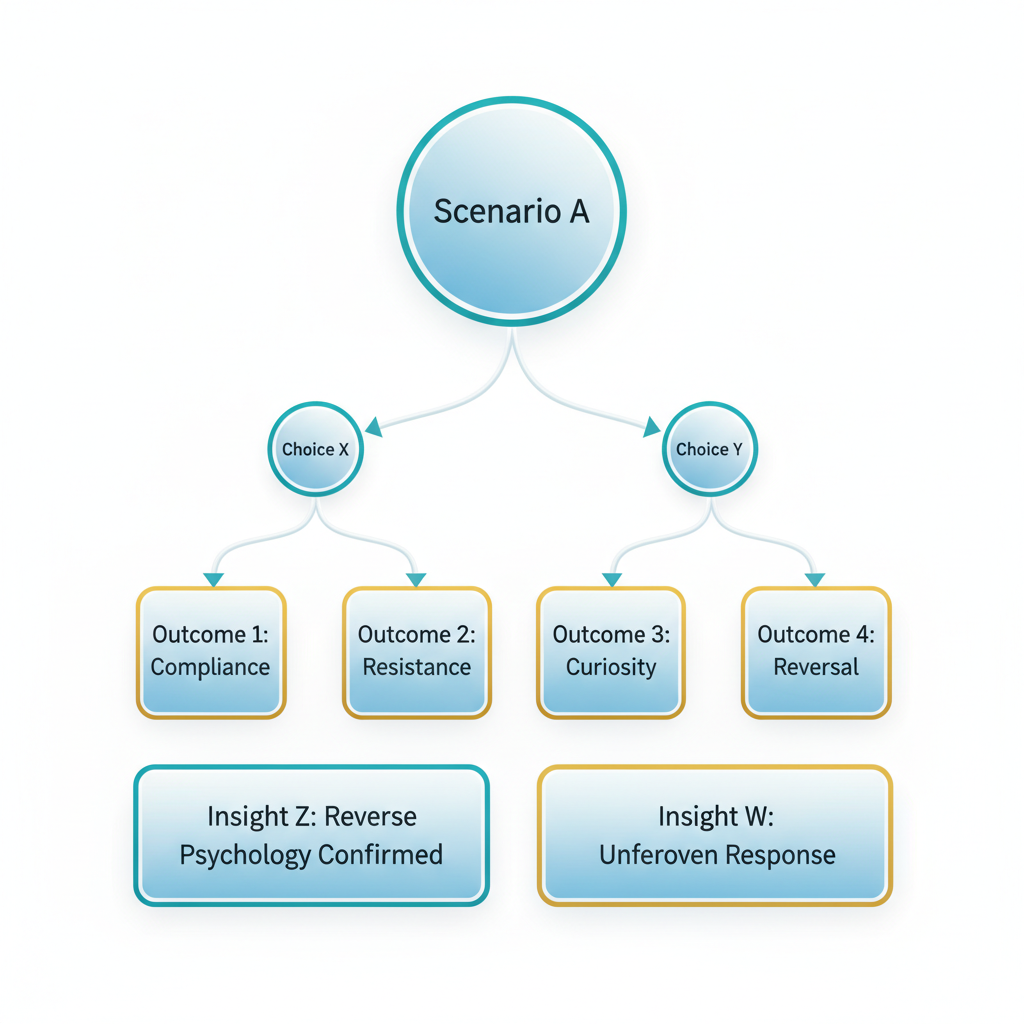
    An infographic showing a branching decision tree diagram representing a reverse psychology scenario test, with labeled paths and outcomes.
    A clean, minimalist, vector-based infographic representing a scenario-based test using reverse psychology principles. Visualize it as a branching pathway or decision tree diagram, with initial decision points leading to different outcomes. Each decision node and outcome should be a distinct geometric shape (e.g., circles for questions, squares for results) with soft blue and white gradients, highlighted with teal or gold. Short labels like “Scenario A,” “Choice X,” “Insight Y” should be present. The layout should be structured and easy to follow, with ample negative space. No humans, no photos, no cartoons. Professional, educational, and approachable.

    Scenario 1: The Forbidden Project

    Imagine you are part of a team. Your manager says, “That new AI marketing project is too experimental for us right now. Do not pursue it.” However, you see it has huge potential and is a perfect fit for a gap in the market.

    What is your immediate reaction?

    • A. You completely drop the idea. You trust your manager’s judgment and move on.
    • B. You quietly begin researching it. You gather more data to build a stronger case without openly going against the order.
    • C. You immediately challenge the manager. You argue for why the project should proceed, pushing back directly.

    This situation touches on a psychological principle called psychological reactance [6]. When we are told not to do something, we often feel a strong urge to do the opposite. This “forbidden fruit” effect can have a big impact on your creative process.

    What Your Response Reveals About Your Creativity:

    • Response A: This shows you prefer to follow the rules. While that’s great for getting things done, it may mean you’re less likely to think outside the box when you hit a roadblock.
    • Response B: This suggests you are both creative and flexible. You know how to work around rules to find new solutions. This resourceful approach shows you are great at proactive problem-solving.
    • Response C: This shows you have strong creative beliefs and are willing to challenge authority. You’re an independent thinker, which is key for real innovation. To succeed, you also need to get good at convincing others to see your point of view.

    Understanding your first impulse helps you use your creative drive well. Our Creative Ability Test can give you a deeper look at how you handle challenges and adapt your thinking.

    Scenario 2: The ‘Unpopular’ Idea

    During a brainstorming session, you propose a truly unique solution. It is bold and different. A colleague quickly shoots it down, saying, “That’s too ‘out there.’ No one will go for a weird idea like that.”

    How do you react to this criticism?

    • A. You immediately discard your idea. You figure it was too strange and you drop it.
    • B. You defend your idea vigorously. You explain why it’s a good idea, ready to argue your case.
    • C. You ask clarifying questions. You try to understand their concerns, then think about how to adjust your idea or present it better.

    This scenario tests your creative resilience—how you handle negative feedback. This kind of criticism can feel like reverse psychology, pushing you to either give up on your idea or defend it even more strongly.

    What Your Response Reveals About Your Creativity:

    • Response A: This may suggest you are sensitive to criticism, which can stop new ideas in their tracks. Building confidence is key to helping your creative ideas survive and grow.
    • Response B: This shows you strongly believe in your ideas and don’t like being doubted. While that belief is important, being too defensive can stop you from improving your idea based on useful feedback.
    • Response C: This shows you are flexible and open to feedback. You can look at your own ideas critically, then adapt them to make them better. This process of improving ideas is at the heart of great innovation.

    Using feedback to grow is a powerful creative skill. Our platform can help you build this resilience and learn how to turn your ideas into successes.

    Scenario 3: The Overly Simple Solution

    Your team is stuck on a complex, long-standing problem. You come up with a simple, smart solution that solves it. A skeptical colleague says, “It can’t be that easy; it must be more complicated.”

    How do you respond to this challenge?

    • A. You start looking for ways to add complexity. You assume your solution is too simple and needs more details.
    • B. You confidently reiterate your simple solution. You explain its clarity and power without making it more complicated.
    • C. You offer to demonstrate or test your simple solution. You focus on proving it works with actions or data.

    This situation can be a subtle form of reverse psychology. Your colleague’s doubt might make you feel that a simple idea isn’t good enough. This can lead you to overcomplicate things, which often makes a solution less effective.

    What Your Response Reveals About Your Creativity:

    • Response A: This might mean you think complex ideas are more valuable. But great problem-solving is often about finding the simplest, smartest answer, not adding needless details.
    • Response B: This shows you believe in the power of simple solutions. You have clear thoughts and are confident in your ideas. In fact, simplicity is often a sign of a truly great idea.
    • Response C: This shows you are a practical, results-focused thinker. You know that the best way to prove an idea is to show that it works. This mix of creativity and real-world testing is a key skill for any innovator.

    Our assessment tools can help you get better at creating clear, effective solutions. We give you personal feedback to improve your problem-solving skills and help you express your ideas with confidence.

    How Can Understanding These Principles Boost Your Creativity?

    Using Psychology for Better Problem-Solving

    Understanding psychology isn’t just about influencing people. It gives you a deep look into human behavior. This knowledge is a powerful tool for improving your problem-solving skills. When you know how people react to feeling controlled, you can approach challenges in a new way.

    Think about psychological reactance. It’s our natural urge to resist when we feel our freedom is threatened [7]. Smart problem-solvers use this insight. They present problems and solutions in ways that don’t make people feel pushed. They can also predict why someone might object. This leads to better and more creative outcomes.

    Here’s how these insights improve your problem-solving:

    • Reframing Challenges: Instead of tackling a problem head-on, see it as a new opportunity. Look for a different angle.
    • Anticipating Resistance: Figure out why a solution might be rejected. Then, create an approach that gives people a sense of choice.
    • Becoming More Flexible: Knowing what makes people tick helps you shift your perspective. You can explore more options. This is a key skill measured by your Creative Ability Test results.
    • Divergent Thinking: When you see things from another person’s view, you come up with more ideas. You start to think beyond the obvious.

    Using these principles builds your confidence. You’ll learn to design solutions that are not only new but also more likely to be accepted.

    Connecting Persuasion to Creative Thinking

    Creative thinking is more than just having new ideas. It’s also about sharing them in a way that works. Knowing how persuasion works—and how it can go wrong—is a big advantage. It helps you present your ideas in a way that gets people excited.

    When you understand what truly motivates people, your creative work has a bigger impact. This knowledge helps you create messages and solutions that connect with them. You can use your creativity to make a real difference in the world.

    Boost your creative thinking by:

    • Telling Better Stories: Use what you know about people to tell stories. This makes your ideas easier to understand and remember.
    • Designing for Acceptance: Think ahead about what people need and why they might resist. Build solutions that people will welcome from the start.
    • Finding New Angles: If one idea gets pushback, psychology helps you quickly change direction. You can develop fresh, creative approaches.
    • Building Confidence: Understanding these ideas gives you confidence. You can share your creative vision with conviction, which helps you grow both personally and professionally.

    The Creative Ability Test measures how open you are to new things. It also tests your problem-solving skills. Understanding psychology builds on these strengths. It gives you practical ways to improve your creative thinking and make your best ideas shine.

    Frequently Asked Questions

    What is a common example of reverse psychology?

    A classic example of reverse psychology is telling someone not to do something to encourage them to do that very thing. This works because we all have a natural desire to be in control.

    For example, imagine a child who won’t eat their vegetables. A parent might say, “Don’t eat those delicious carrots! They’re for grown-ups only.” This often makes the child curious and more likely to try the carrots. They want to prove they can do what adults do. This is driven by a feeling called “reactance,” which is our response when we feel our freedom to choose is threatened [8].

    Understanding these human tendencies is a key part of creative problem-solving. It helps us see the real motivations behind people’s actions.

    Is it bad to use reverse psychology in a relationship?

    Using reverse psychology in a relationship can be risky. While it might work in the short term, it can damage trust and open communication over time.

    Healthy relationships are built on honesty. Reverse psychology can feel like a trick, which may lead your partner to question what you really mean. This creates suspicion instead of trust.

    Instead, focus on clear and kind communication. Say what you need and feel directly. This builds a stronger, more secure connection. Developing good communication skills is a key part of emotional intelligence that helps with personal growth and creative teamwork.

    Where can I find a reverse psychology test for free?

    Real psychological tests are complex and are usually developed by experts. Most “reverse psychology tests” you find online are just informal quizzes. They don’t offer scientifically proven insights into how you think or act.

    If you’re curious about how you think, consider exploring your creativity. The Creative Ability Test is a 30-question assessment based on science. It helps you understand your approach to problems and decisions. You’ll get insights into things like:

    • Your cognitive flexibility
    • Problem-solving strategies
    • Openness to new experiences
    • Divergent thinking abilities

    Our personalized feedback gives you clear steps to improve your creative skills for personal growth and new ideas. While it isn’t a reverse psychology test, it reveals a lot about what drives you and how you interact with the world.

    Is reverse psychology a form of manipulation?

    People often debate whether reverse psychology is influence or manipulation. The answer depends on your intention and the result. Influence is about guiding someone toward a good outcome. Manipulation is about controlling someone for your own benefit, often without caring about their best interests.

    Consider these points:

    • Ethical Use: When used in a positive way, like encouraging a child to try something new for their own good, it can be a form of playful influence.
    • Unethical Use: If used to trick someone into doing something that only helps you, it crosses the line into manipulation. It can be seen as a dishonest tactic [9].

    Understanding this difference is a useful skill. It helps you handle social situations better and solve problems in a fair, creative way. Knowing how influence works helps you make better and more ethical choices in your life.


    Sources

    1. https://psycnet.apa.org/record/1966-07978-001
    2. https://www.psychologytoday.com/us/basics/psychological-reactance
    3. https://www.apa.org/pubs/journals/releases/psp-92-3-376.pdf
    4. https://journals.sagepub.com/doi/abs/10.1177/014616728915100108
    5. https://psychology.iresearchnet.com/social-psychology/social-influence/psychological-reactance/
    6. https://psycnet.apa.org/record/1989-98188-000
    7. https://www.simplypsychology.org/reactance-theory.html
    8. https://dictionary.apa.org/reactance
    9. https://ethics.org/what-is-manipulation/
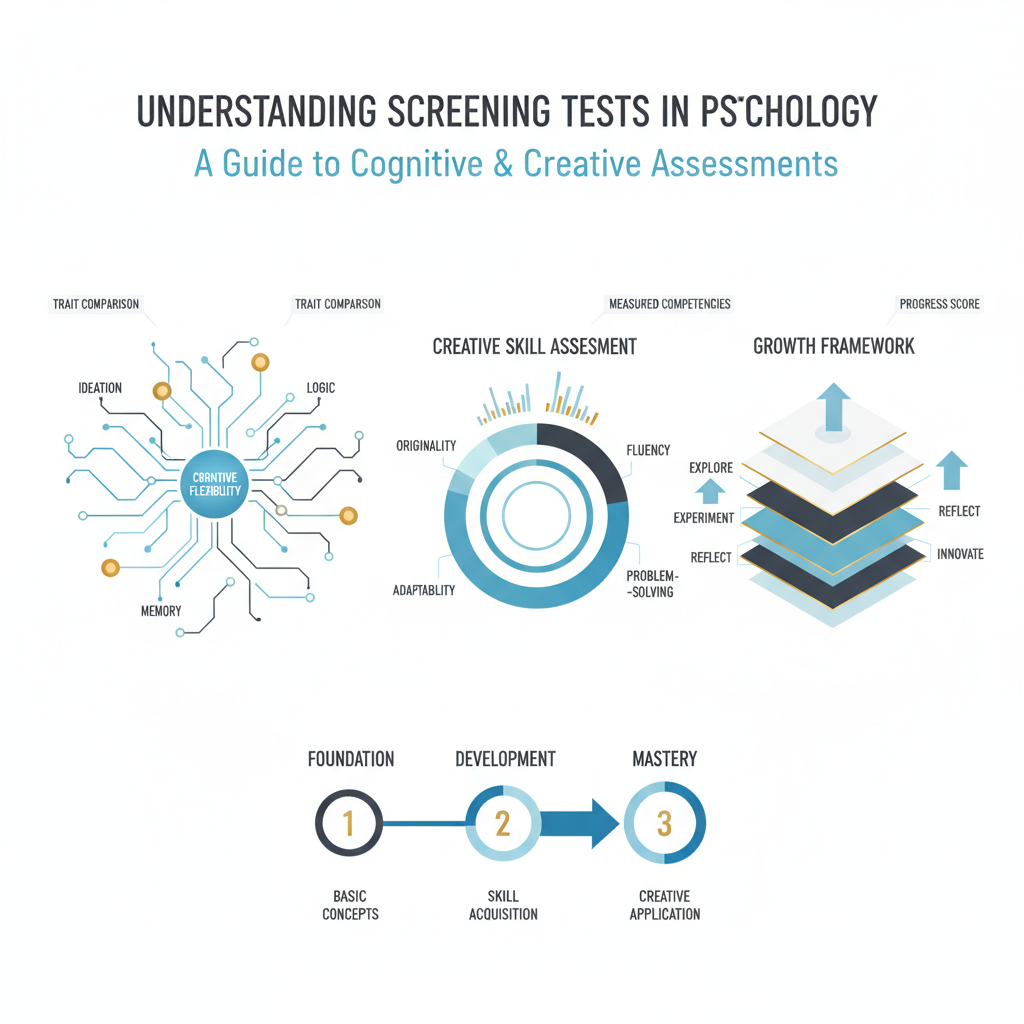
  • Understanding Screening Tests in Psychology: A Guide to Cognitive & Creative Assessments

    Understanding Screening Tests in Psychology: A Guide to Cognitive & Creative Assessments

    A screening test in psychology is a brief assessment tool designed to quickly identify potential characteristics, cognitive strengths, or risks for certain conditions. Its purpose is not to provide a diagnosis but to determine if a more in-depth evaluation is warranted, whether for clinical insight or for understanding personal traits like creativity.

    Have you ever wondered about your unique way of thinking and solving problems? Understanding your natural abilities is the first step to unlocking your full potential. Psychology offers many tools to help, and screening tests are one of the most accessible. These initial assessments offer a glimpse into your cognitive processes and creativity, revealing strengths you might not know you have.

    This article is your guide to psychological screening tests. We’ll explain what these tests are, how they differ from diagnostic tools, and the many areas they cover—from memory and reasoning to your creative potential. You’ll learn how a reliable screening test can highlight your unique thinking styles, offering practical ideas for personal growth and problem-solving in your daily life and at work.

    Whether you’re curious about your cognitive flexibility, want to boost your creative thinking, or simply wish to understand the psychology behind innovation, a well-designed screening test is a clear, objective starting point. It’s a great step towards self-discovery, giving you the knowledge to build on your natural talents. Let’s begin by defining what a psychological screening test is.

    What Is a Screening Test in Psychology?

    The Purpose of a Preliminary Assessment

    A psychological screening test is a helpful first step. It’s a quick way to get a glimpse into how a person thinks. Think of it as a flashlight that shines a light on specific areas for a closer look.

    These tests help find your strengths and areas that need more focus. They give you a general overview without requiring a full, in-depth evaluation. For example, in schools, a screening can identify different learning styles [1]. For Professional Development, it might show leadership skills or how you prefer to work in a team.

    When it comes to creativity, screening tests like our Creative Ability Test are very powerful. They help you discover your unique creative skills and thinking styles. Our science-based test looks at different parts of your creativity, such as your mental flexibility, how you solve problems, and your openness to new ideas. This gives you useful insights into how your mind creates new solutions and thoughts.

    The main goal is to give you more self-awareness. This awareness helps you grow both personally and professionally. It helps you:

    • Identify your natural creative talents.
    • Understand your favorite ways to solve problems.
    • Pinpoint areas where you can grow your creativity.
    • Use your strengths effectively in everyday situations.

    In the end, a preliminary assessment gives you a clear starting point. It takes you from being unsure about your abilities to having a clear awareness you can act on.

    Screening vs. Diagnosis: Knowing the Difference

    It’s important to know the difference between a screening test and a diagnosis. While both are types of assessments, their goals and detail are very different. A screening test gives you a first look. On the other hand, a diagnosis is a final, in-depth evaluation.

    A screening test is designed to give a general picture. It suggests you might have certain traits or points out areas of interest. For example, a creativity screening shows your thinking styles. It doesn’t label you “creative” or “uncreative.” Instead, it shows how you handle challenges and come up with ideas.

    In contrast, a diagnosis is a complete process done by a qualified professional. It includes detailed assessments, interviews, and information from several sources. A diagnosis results in a specific clinical label or the identification of a condition [2]. It is used to guide treatment plans or other interventions.

    Here’s an analogy: A screening test is like a general health check-up. It might show that certain areas need more attention. A diagnosis, however, is like seeing a specialist after that check-up. The specialist confirms a condition and recommends a specific treatment. Our Creative Ability Test is only a screening tool. It offers valuable insights into your creative potential but does not provide any kind of psychological diagnosis.

    Knowing this difference is key. It helps you use these tools in the right way. Our platform offers a powerful, science-backed screening for creativity. It’s a guide to help you understand and improve your skills. It gives you personal insights and tips for growth, helping you develop your creative thinking without any clinical meaning.

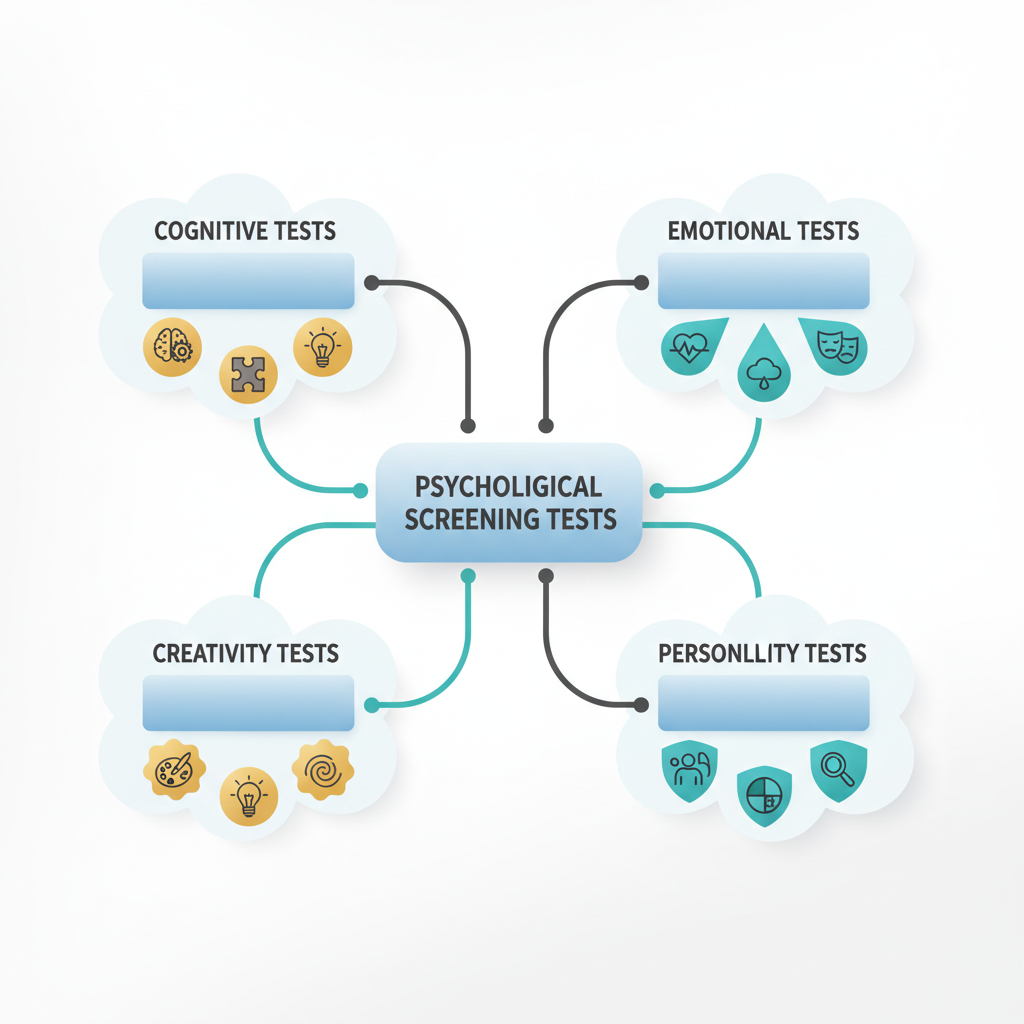
    What Are the Different Types of Psychological Screening Tests?

    Infographic displaying a mind map of different psychological screening test types, branching from a central concept into various categories like cognitive, emotional, and creativity tests.
    A minimalist, vector-based infographic showcasing the different types of psychological screening tests. Use clean geometric shapes, soft blues, whites, charcoal, with gold or teal accents. The visual should be a clear mind map or an idea cluster diagram, with a central node representing ‘Psychological Screening Tests’ branching out into distinct categories (e.g., Cognitive, Emotional, Creativity, Personality). Each category should have illustrative sub-nodes or simple, abstract icons. Use subtle gradients for clarity and engagement. Leave open areas for short category headers or labels. No humans, no cartoon elements. Focus on clarity, conceptual representation, and professional, educational branding.

    Clinical Screening for Mental Health

    Screening tests have many important uses. A common type is the mental health screening. These tests are early detection tools that help identify possible signs of a mental health condition.

    These screenings often look for common issues like depression, anxiety, stress, or substance use. They are usually quick, self-report questionnaires. People use them to get a basic idea of their emotional well-being.

    It’s important to know that a screening is not a diagnosis. It simply suggests if you should see a mental health professional for a full evaluation. This helps people get support sooner [3], which can lead to better outcomes.

    cognitive screening for Abilities like Memory and Reasoning

    Cognitive screening is another key type of test. These tests measure mental skills like memory, attention, problem-solving, and processing speed. They help us understand how our brains function.

    People use these screenings for many reasons. They can spot changes in thinking skills over time or find a person’s learning strengths and weaknesses. For example, a test might show someone is good at verbal reasoning but has slower processing speed.

    These tests often use standard tasks, like puzzles or special memory exercises. The results give you a helpful look at your cognitive profile. Knowing your cognitive abilities is important, as it helps you manage school, work, and daily life. Plus, cognitive flexibility is a key part of creative thinking.

    Creativity Screening for Innovative Potential

    Creativity tests are a fascinating and growing field. They are designed to understand your potential for innovation. They measure the different parts of creative thinking and problem-solving.

    These tests look at how you come up with new ideas. They check your ability for divergent thinking, which means finding many unique solutions to one problem. They also measure your openness to new experiences, along with your curiosity and imagination.

    A good creativity test gives you a detailed look at your unique thinking style. It helps you find your true creative strengths. For example, our Creative Ability Test is a 30-question assessment based on science. It reveals several sides of your creativity. Our approach is based on proven methods.

    The results are practical. They give you clear self-awareness and next steps. You get personalized feedback with strategies that match your creative profile. This helps you build your creative skills consistently.

    Here are key benefits of understanding your creative potential:

    • Better Problem-Solving: Learn to see challenges in new ways. This helps you find creative solutions at home and at work.
    • Personal Growth: Finding your creative strengths builds confidence. It also encourages you to keep learning and improving.
    • Career Growth: Creativity is a valuable skill at work. Understanding and growing it can open up new career opportunities and help you bring new ideas to your job.
    • More Cognitive Flexibility: You get better at adapting your thinking. This makes it easier to switch between different ideas and points of view.

    We use clear explanations and simple examples to make creativity easy to understand. Our platform helps you take what you learn about your creativity and use it in your daily life. This turns a basic understanding into real-world innovation.

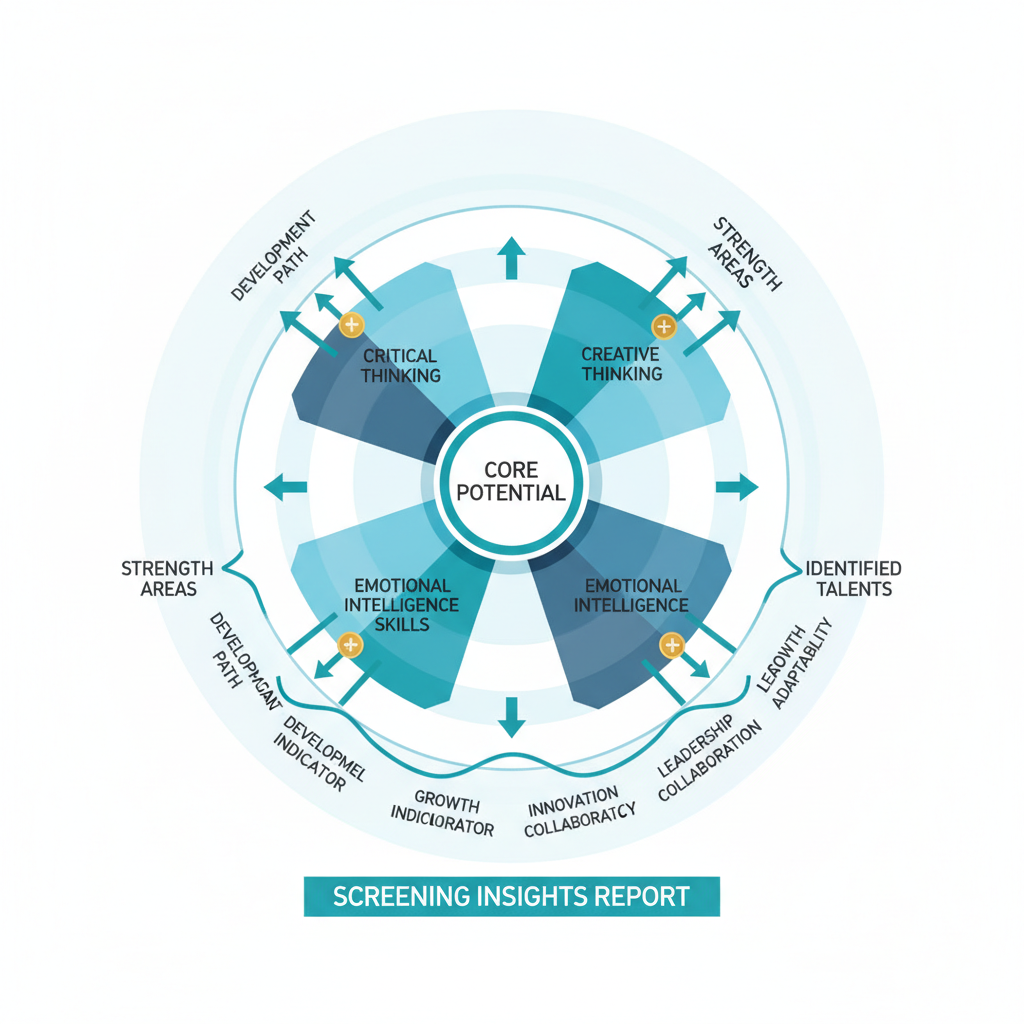
    How Can a Screening Test Help You Understand Your Strengths?

    Infographic visualizing how a screening test helps identify individual strengths, depicted as a competency graph with radiating segments indicating different skill areas and growth potential.
    A minimalist, vector-based infographic illustrating how a screening test helps individuals understand their strengths. Use clean geometric shapes, soft blues, whites, charcoal, with gold or teal accents. The visual should be a competency graph or a layered system showing growth and skill identification. Represent different areas of strength radiating from a central point or as stacked, interconnected layers, with indicators for development and potential. Maintain visual hierarchy and structured grouping. No humans, no cartoon elements. Focus on clarity, conceptual representation, and professional, educational branding.

    Find Your Thinking and Creative Skills

    Knowing your unique skills is a powerful first step. A good screening test helps you find your natural thinking and creative strengths. Think of it as a compass that points you toward what you do best.

    For example, the Creative Ability Test is a 30-question test based on science. It helps show the different parts of your creative ability. It looks at more than just simple answers to see how your mind works.

    You might discover talents in several key areas:

    • Divergent Thinking: This is how you come up with many different ideas. It’s key for brainstorming and finding more than one solution.
    • Cognitive Flexibility: This is how easily you can change the way you think. It helps you adjust to new situations.
    • Problem Sensitivity: This is a skill for seeing problems others might miss. It’s often the first step to solving a problem well.
    • Originality: The test can show your skill for creating new and unique ideas. These ideas are often different from what’s common.
    • Openness to Experience: This shows how open you are to new ideas and concepts. It’s a key part of creative thinking [4].

    Finding these talents gives you a clear picture. It turns unclear feelings about yourself into solid facts about your skills.

    Get Real Advice for Personal Growth

    Knowing your strengths is just the first step. A good screening test gives you advice you can actually use. You get more than just scores; you get real guidance for improving yourself.

    The Creative Ability Test gives you feedback just for you. It explains what your results mean. It also suggests specific ways to improve, based on your profile. This helps you go from just knowing your skills to actually building them.

    Consider these benefits:

    • Better Self-Awareness: You get to know your own creative thinking style better. This is the foundation for personal growth.
    • Focused Improvement: You get specific tips for your creative skills, not just general advice. For example, if you’re good at divergent thinking, you might get advice on how to choose your best ideas.
    • Build Confidence: Understanding your natural talents can boost your confidence. This makes it easier to take on new challenges.
    • A Clear Path to Grow: The results give you a roadmap to improve your creative skills. It helps turn your creativity into a skill you can count on.

    In the end, these insights are your guide. They help you develop your own creative style and lead to real personal growth.

    Use Your Strengths to Solve Problems

    Your creative strengths are more than just ideas. They are real tools you can use to solve problems and create new things. A screening test shows you how to use them in your daily life.

    For example, say you find out you’re highly original. You can use this skill at work on purpose. You could suggest new solutions to your team or help create new products.

    Here are a few ways to use your strengths:

    • At Work: Use your divergent thinking to brainstorm new ideas in meetings. Use your cognitive flexibility to adjust when a project changes.
    • In Your Personal Life: If you’re good at spotting problems, you can find the real cause of your own challenges. Then, you can use your creative skills to find new solutions.
    • For School: Students can use their imagination to come up with great essay ideas. They can also use creative thinking to handle tough research questions.
    • For Business Owners: Entrepreneurs can use their openness to new things to find gaps in the market. This helps them create new and exciting business ideas.

    The Creative Ability Test helps you connect the dots. It links your natural creative talent with real-world use. This allows you to handle challenges better. It also helps you bring a fresh approach to your personal and professional life.

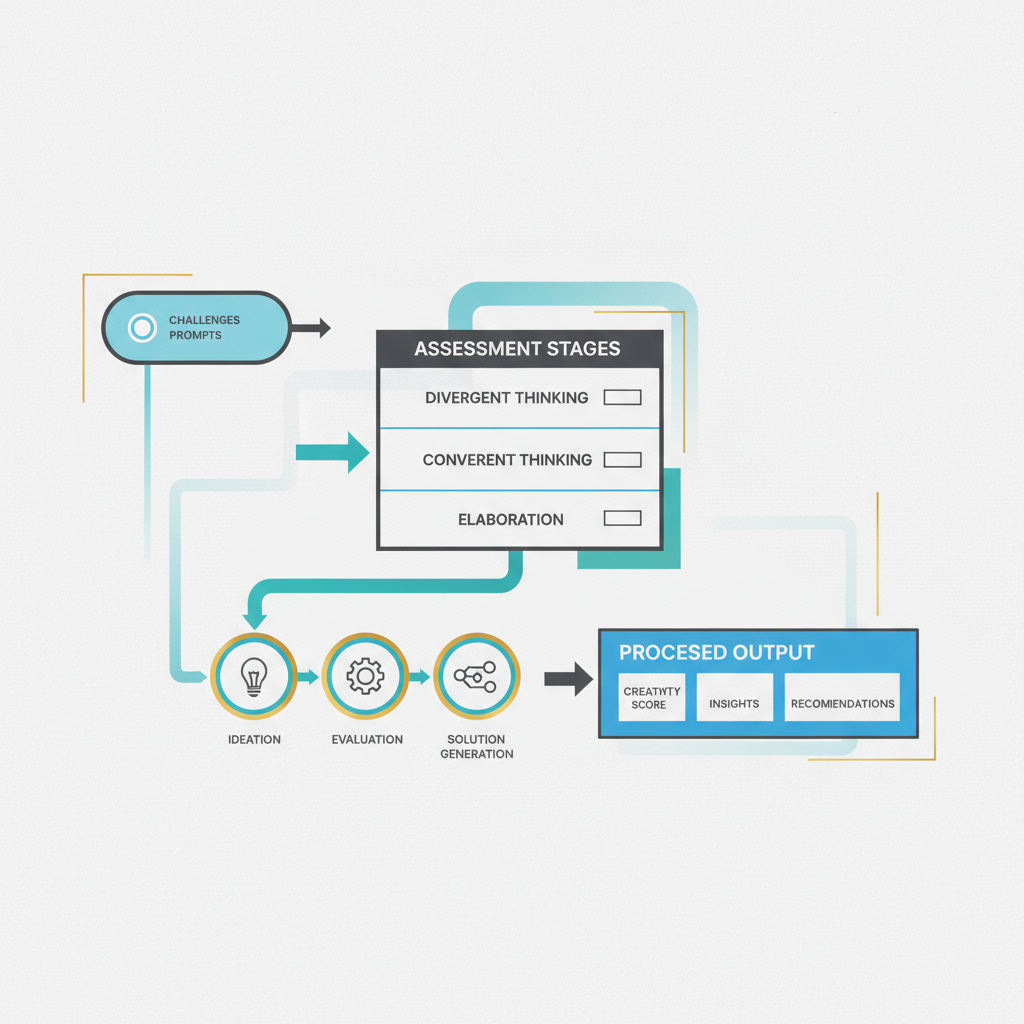
    How Does a Creativity Screening Test Work?

    Infographic showing the structured process of a creativity screening test, from initial input to evaluated insights, using abstract geometric shapes and a competency map layout.
    A minimalist, vector-based infographic illustrating the process of a creativity screening test. Use clean geometric shapes, soft blues, whites, charcoal, with gold or teal accents. The visual should depict a structured assessment chart or competency map, showing various stages of evaluation from initial input (e.g., challenges, prompts) to processed output (e.g., scores, insights). Use subtle gradients or accent highlights for clarity and engagement. Leave open areas for short infographic labels or competency indicators. No humans, no cartoon elements. Focus on clarity, conceptual representation, and professional, educational branding.

    Measuring Key Dimensions like Divergent Thinking

    Creativity is a mix of different skills. Our Creative Ability Test is a science-based, 30-question test that helps measure them. It is designed to show your unique creative strengths.

    One key skill is divergent thinking. This is the ability to come up with many ideas from a single starting point [5]. For example, “How many uses can you think of for a brick?” Someone with strong divergent thinking will list many different and original answers.

    Other key skills include:

    • Fluency: This is the total number of ideas you can generate. More ideas often lead to better ones.
    • Originality: This measures how unique your ideas are. We look for new and surprising connections.
    • Elaboration: This is your ability to add details to an idea. Rich details make your concepts stronger and more complete.
    • Cognitive Flexibility: This is your ability to look at things in new ways. It helps you find fresh solutions to problems.
    • Openness to Experience: This personality trait is closely linked to creativity [6]. It’s about being open to new experiences and unusual ideas.

    Our test questions are designed to make you think broadly and explore many solutions. This approach gives a clear picture of your creative strengths.

    Interpreting Your Results for Practical Use

    When you finish the Creative Ability Test, you get a personal report. This report is more than just a score. It gives you details about your creative style and how you think.

    Your results show your strengths clearly. For example, you might be great at divergent thinking, which means you can easily brainstorm lots of ideas. Or, a high originality score suggests you often come up with new and unique concepts.

    The feedback also explains how you think. Can you connect ideas that seem unrelated? Do you spot patterns others miss? Knowing this helps you use your natural strengths better.

    The report also shows areas where you can improve. This isn’t about weakness. It’s about potential. For example, you could work on your elaboration skills by learning to add more detail to your ideas.

    We explain each point with clear examples. This makes it easy to understand how your creative skills work in real life. Knowing this helps you use your creativity with more confidence.

    Using Feedback to Enhance Your Creative Skills

    The best part of a creativity test is the feedback you can use. It’s not just about knowing your score. It’s about using that knowledge to grow your skills.

    Your Creative Ability Test report includes helpful tips. These tips are designed to improve your creative thinking. They help you use what you’ve learned to solve real problems.

    Here are a few ways to use your feedback:

    • Targeted Practice: If you want to improve cognitive flexibility, practice looking at problems from different angles. This helps train your brain to think in new ways.
    • Boost Brainstorming: To improve fluency, try quick brainstorming sessions. Write down every idea that comes to mind. More ideas can lead to better ideas.
    • Cultivate Originality: Read about different topics, travel, and explore new cultures. New experiences are great for sparking original ideas.
    • Refine Ideas: To get better at elaboration, take a simple idea and add to it. Ask yourself, “How can I add more detail?” or “What if…?”
    • Problem-Solving Application: Use your strengths to solve problems. If you’re good at divergent thinking, start by listing many possible solutions before choosing the best one.

    These tips are based on your personal results. They turn knowledge into simple, clear actions. Studies show that creativity can be improved with practice [7].

    By using these techniques regularly, you can improve your creative skills. This helps with both personal and professional growth. You will get better at solving problems and creating new things. Our test is a guide on your journey to becoming more creative.

    What Should You Look for in an Online Screening Test?

    The Importance of Scientific Grounding

    When exploring your creative potential, it’s important to choose an online screening test carefully. The most critical factor is its scientific basis. This means the test is built on established psychological research and uses proven methods.

    A test with a scientific basis offers reliable and valid results. Reliability means the test consistently measures what it’s supposed to. Validity means it accurately measures creativity, not another trait. Think of it like a trusted tool—you want it to work correctly every time [8].

    Without this foundation, test results can be misleading. They might be entertaining but won’t offer real value for personal growth. Furthermore, these tests can’t truly help you understand your unique creative style.

    The Creative Ability Test, for example, is evidence-based. Our 30-question assessment is based on deep research in cognitive psychology and creativity. This commitment to science gives you accurate, trustworthy insights into your creative strengths.

    Look for clear information about how the test was made. Does it mention specific research or psychological theories? This transparency builds trust. It assures you that your results are based on solid science.

    Ensuring Clarity and Actionable Feedback

    A good online screening test should do more than just give you a “score.” It should provide feedback that is both clear and practical. You need to understand what your results mean in everyday life. Vague statements don’t help you improve.

    Good feedback makes complex ideas simple. It breaks down your creative profile into easy-to-understand parts. For example, it might explain your skill in coming up with new ideas. It could also highlight your mental flexibility or openness to new experiences.

    Beyond explanations, the feedback should offer practical tips. These tips help you build your creative skills. They turn abstract ideas into real steps you can take for personal and professional growth [9].

    The Creative Ability Test excels in this area. We provide personalized feedback that outlines your specific strengths. It also identifies areas where you can grow your creativity. Our aim is to move you from feeling unsure to having a clear, useful understanding of yourself.

    When looking at a test, ask yourself:

    • Are the results easy for a beginner to understand?
    • Does the feedback offer specific examples or scenarios?
    • Are there practical tips for applying these insights daily?
    • Does it inspire confidence and a clear path for improvement?

    Choosing a test with clear, practical feedback helps you use your creativity to solve real-world problems and innovate.

    Understanding the Scope: What the Test Can and Can’t Tell You

    It’s important to have realistic expectations for any screening test. An online test offers useful information, but it is not a final diagnosis or a full life assessment. Its purpose is to give you a first look at specific parts of your thinking and creative skills [10].

    A creativity test, like the Creative Ability Test, identifies your current creative potential and thinking styles. It measures things like your ability to generate new ideas. It also looks at how you approach problems creatively. This is a snapshot of your skills at this moment in time.

    What a test *can* tell you:

    • Your main creative thinking styles.
    • Your creative strengths, such as original thinking.
    • Potential ways you can grow your creativity.
    • How to use your creativity in different situations.
    • A starting point for creating your own growth plan.

    What a test *cannot* tell you:

    • If you are “creative” or “not creative.” Creativity changes and grows.
    • A full psychological diagnosis. This is not a clinical tool.
    • If you will succeed in a creative field. It shows potential, not your destiny.
    • Every detail of your personality. It focuses on creativity and thinking skills.

    Our platform is designed to empower you. We help you understand your creative strengths and unique skills. The Creative Ability Test offers a starting point for self-discovery. It guides you toward improving your creative thinking. This allows you to embrace personal growth and find new ways to solve problems.

    Frequently Asked Questions

    What are some psychological testing examples?

    Psychological tests give us helpful insights into how people think and behave. They help us understand ourselves better. They come in many different forms, and each one has a special purpose.

    Here are some common examples:

    • Cognitive Ability Tests: These tests check your mental skills. They measure areas like memory, problem-solving, and reasoning. Our Creative Ability Test, for example, looks at how flexible your thinking is. That’s a big part of being creative.
    • Personality Assessments: These tests show your unique personality traits. They can show how you connect with the world around you. For example, some measure your openness to experience. This trait is closely linked to creativity.
    • Creativity Screening Tests: These tests measure your potential for new ideas. They look at your imagination and ability to brainstorm. The Creative Ability Test is a prime example. It helps you find your unique creative strengths and thinking styles.
    • Clinical Diagnostic Tests: Experts use these to check for mental health conditions. They help diagnose conditions like anxiety or depression. They are very important for creating treatment plans.
    • Neuropsychological Tests: These tests check how your brain is working. They can find issues with specific brain skills. For example, they might test attention or language skills.

    Each type of test gives you a different way to learn about yourself. Knowing these types helps you pick the right tool for your own growth. [11]

    Can you take a psych evaluation test online for free?

    Yes, you can find many free psychological quizzes and screeners online. They cover a wide range of topics, like personality or creative style.

    But, it’s important to know the difference between them:

    • Informal Quizzes: Most free tests are just for fun or curiosity. They often aren’t backed by science. This means the results may not be accurate. They only give you a basic look.
    • Scientifically Validated Assessments: Professional tests, like the Creative Ability Test, are based on real research. Our 30-question test is backed by science. It gives you feedback you can trust and use. We use methods that are proven to work.

    Free tests are a good place to start if you’re curious. But they usually don’t offer the deep insights needed to truly grow. Using a trusted, science-backed test has real benefits. You get personal insights and useful tips. This helps you boost your creativity and grow as a person.

    What is a mental health test online?

    An online mental health test is a screening tool. It helps people check for symptoms of common conditions. These often include anxiety, depression, or stress.

    Here’s what you should know about them:

    • Purpose: Their goal is to help you become more self-aware. They help you see if you might have certain symptoms. This can be the first step to getting help.
    • Not Diagnostic: It’s important to remember these tests can’t give you a diagnosis. Only a qualified mental health professional can do that. An online test isn’t a substitute for a full evaluation by an expert.
    • Guidance to Support: If a screening shows you might have an issue, it will usually suggest you see a professional. This advice is key to getting help when you need it.
    • Focus Difference: Mental health tests focus on your well-being. Creative tests focus on your strengths. Our Creative Ability Test, for example, helps you understand and improve your creative thinking. This helps you grow personally and professionally.

    These online tools are a helpful first step. Always talk to a mental health professional if you have concerns. They can give you expert guidance and support. [12]


    Sources

    1. https://www.niu.edu/citl/resources/guides/instructional-guide/learning-styles/index.shtml
    2. https://www.apa.org/topics/psychological-assessment
    3. https://www.nimh.nih.gov/health/topics/mental-health-screenings
    4. https://psycnet.apa.org/record/2012-07502-001
    5. https://en.wikipedia.org/wiki/Divergent_thinking
    6. https://www.psychologytoday.com/us/blog/the-wide-open-world/201908/the-link-between-openness-and-creativity
    7. https://psycnet.apa.org/record/2017-06283-001
    8. https://www.apa.org/education-career/guide/assessment-research
    9. https://cft.vanderbilt.edu/guides-sub-pages/writing-good-feedback/
    10. https://www.ncbi.nlm.nih.gov/pmc/articles/PMC8900010/
    11. https://www.apa.org/education-career/guide/testing
    12. https://www.nami.org/About-Mental-Illness/Diagnosing-Mental-Illness/Online-Screenings

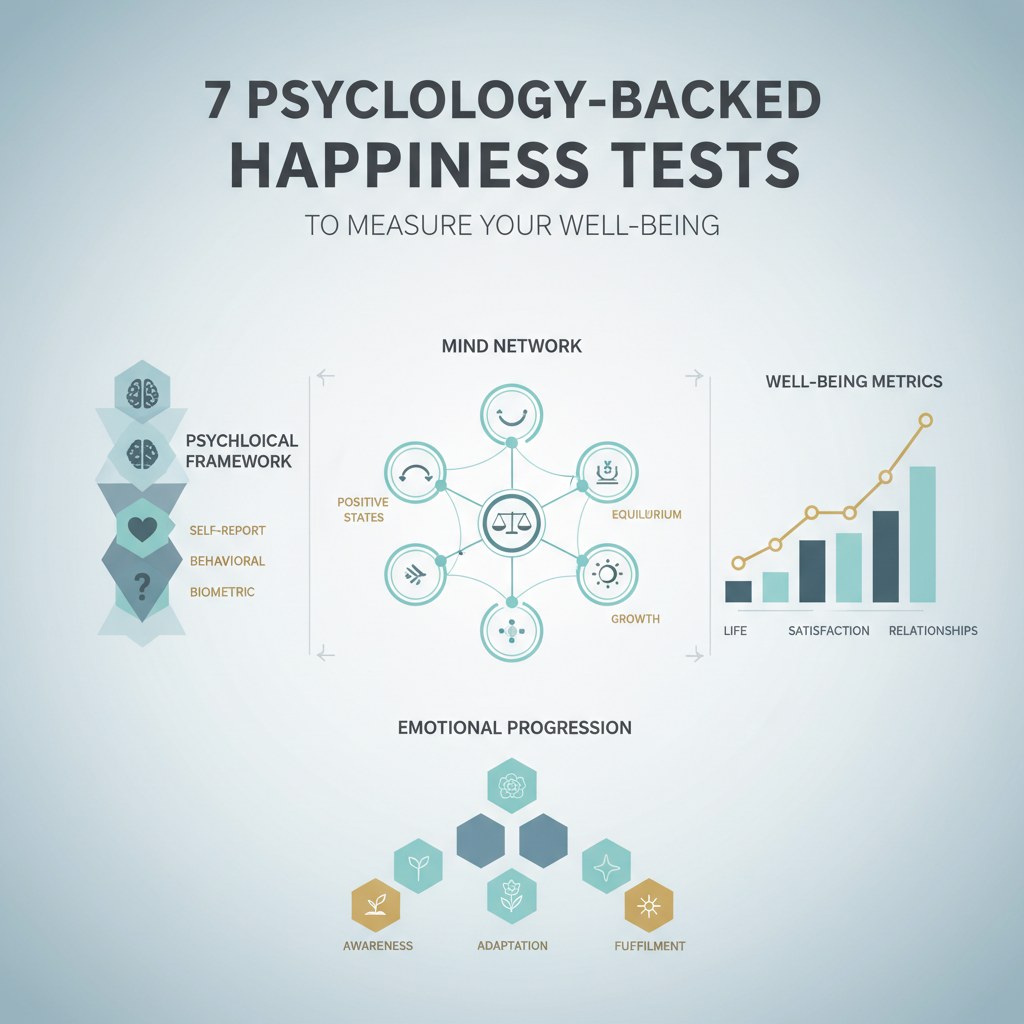
  • 7 Psychology-Backed Happiness Tests to Measure Your Well-Being

    7 Psychology-Backed Happiness Tests to Measure Your Well-Being

    A happiness test in psychology is a scientifically designed questionnaire used to measure an individual’s subjective well-being, life satisfaction, and emotional state. These assessments provide structured, quantifiable insights into personal happiness based on established psychological theories and research, helping individuals understand their emotional landscape for personal growth.

    Have you ever wished for a clear way to understand how happy you are with your life? In our busy world, it’s easy to focus on achievements and forget to check in on how we feel. But just like we track physical health, psychology offers proven tools to measure happiness. This isn’t about chasing quick moments of joy, but about gaining real, useful insights into your well-being.

    This article will guide you through 7 respected, science-backed happiness tests. But why is this useful for creative people? Because a strong sense of happiness can unlock your creative potential. Well-being helps you stay open-minded, improves your cognitive flexibility, and builds the resilience you need for innovative thinking and problem-solving. Understanding your happiness is a direct path to personal growth and creativity.

    Join us as we explore these illuminating assessments. We’ll provide clear explanations and show you how to interpret your results. You’ll see how understanding your happiness can improve your daily life and boost your ability to create and discover. Let’s begin by defining what a happiness test is and why its insights are so important for your growth.

    What is a Happiness Test in Psychology and Why Does It Matter?

    In psychology, a happiness test is more than a quick quiz. It’s a scientifically-backed assessment. These tools measure different parts of a person’s well-being. Psychologists use them to understand how people experience life. They help us see a person’s overall satisfaction, feelings, and sense of purpose [1].

    Understanding your happiness is about more than just feeling good. It involves looking at how you think and feel about your life. These tests offer a clear way to measure those feelings. They also help you see patterns in your well-being, showing you where you are strong and where you might need support.

    What Do Happiness Tests Measure?

    These tests look at several parts of a fulfilling life. They give you a complete picture of your mental well-being. Specifically, they often explore:

    • Life Satisfaction: Your general evaluation of your life as a whole.
    • Positive Emotions: The frequency and intensity of joy, contentment, and gratitude.
    • Negative Emotions: How often you experience sadness, anger, or anxiety.
    • Sense of Purpose: Your feeling of meaning and direction in life.
    • Engagement: How absorbed you are in activities you enjoy.
    • Relationships: The quality of your social connections and support networks.
    • Accomplishment: Your sense of achievement and mastery.

    So, why measure happiness? These tests give you powerful self-awareness. They show you where your well-being is right now. This insight is a key first step toward personal growth, as it helps you see your strengths and areas for improvement. Much like knowing your creative strengths, understanding your happiness empowers you.

    Understanding your happiness also helps your mind thrive. Positive well-being supports various cognitive functions, including those needed for creativity. When you feel good, your mind is often more open and flexible. This leads to better problem-solving and new ideas. In short, working on your happiness can also boost your creative potential.

    These psychological tools are not about giving you a simple “happy” or “unhappy” label. Instead, they provide useful information. This data helps you think about your inner world. With these insights, you can take steps to improve your well-being. This journey is similar to the Creative Ability Test experience. Our platform offers clear, practical steps to help you move from assessment to better creative thinking and personal growth.

    How Does Understanding Your Happiness Connect to Creativity?

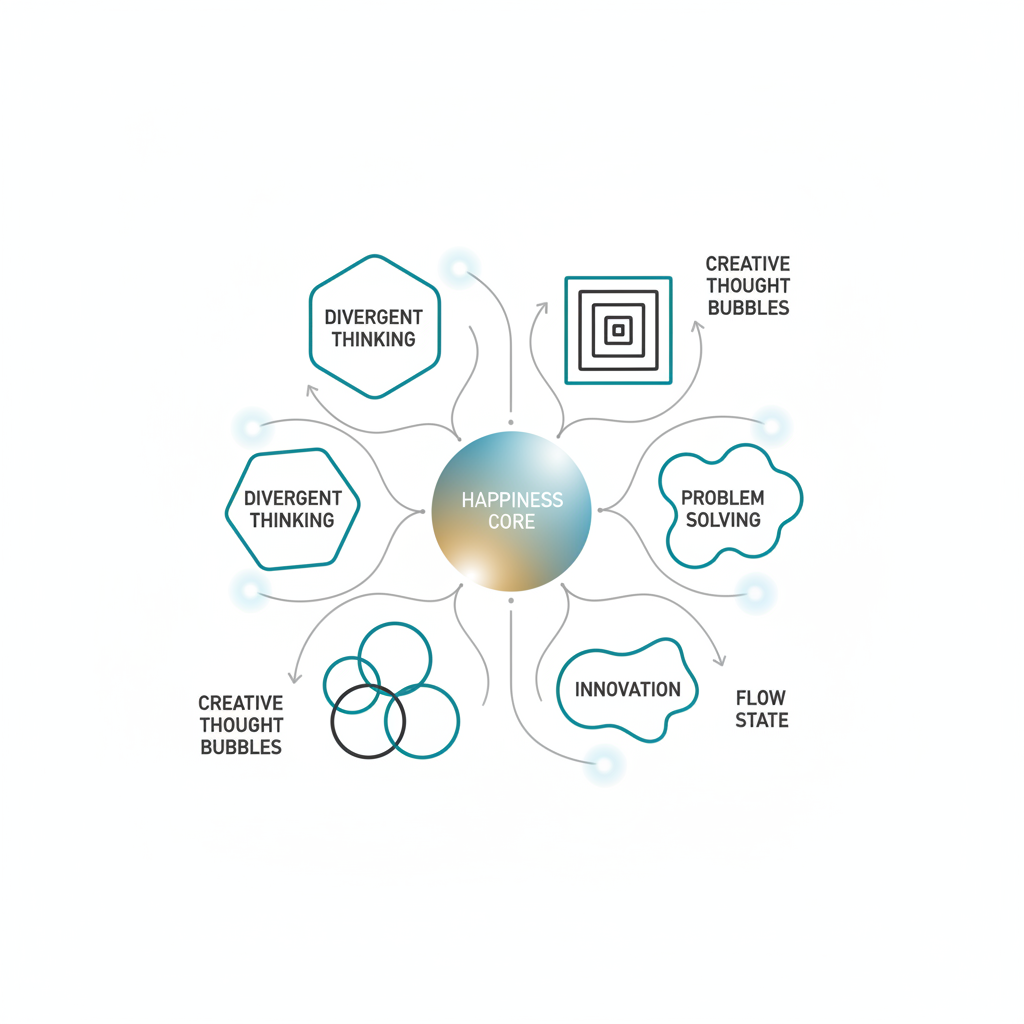
    An abstract infographic illustrating the interconnectedness of happiness and creative thought, showing a central happiness core radiating connections to different creative idea clusters.
    Minimalist, vector-based infographic illustrating the connection between happiness and creativity. A central abstract ‘Happiness Core’ (soft blue/gold gradient sphere) radiates lines connecting to various ‘Creative Thought Bubbles’ or ‘Idea Clusters’ (charcoal/white geometric shapes with teal accents). These clusters represent different aspects of creativity like ‘Divergent Thinking’, ‘Problem Solving’, ‘Innovation’, and ‘Flow State’. The connections are shown as smooth, flowing lines, some with subtle arrows indicating influence or feedback loops. Negative space is used to highlight the core concepts, with small, abstract glow effects around connections to symbolize inspiration and positive influence. The overall layout is an educational visualization showing a dynamic cognitive network.

    Many people think happiness and creativity are separate. But they are closely linked. Being in a good mood can boost your creativity. When you know what makes you happy, you tap into a powerful tool. This knowledge changes how you think and create. It also helps you get past creative hurdles. The connection is surprisingly clear.

    Reducing Creative Blocks

    Creative blocks can be very frustrating. They often come from stress or self-doubt. Knowing what makes you happy is a great way to fight them. When you feel happy, your brain works differently. It feels freer. This helps ideas flow more easily. A good mood reduces the fear of being judged. It also reduces performance anxiety.

    Studies show that good feelings widen your focus [2]. This means you see more possibilities. You are less likely to get stuck on a single approach. As a result, it’s easier to find creative solutions. Finding what makes you happy helps create the right mindset. It gets your mind ready for creative work.

    Here’s how happiness helps reduce creative blocks:

    • Lowers Stress: A happy mind is a less stressed mind. This frees up your mental energy.
    • Boosts Confidence: Feeling good about yourself reduces self-doubt. This makes it easier to take risks with your ideas.
    • Increases Mental Flexibility: Good moods help you see things from different angles. This is key for creative thinking.
    • Enhances Idea Flow: With fewer mental blocks, new ideas come more naturally.

    Fostering an Open Mindset

    An open mind is key to creativity. It means being curious and willing to explore. Happiness helps you stay in this state. When you’re happy, you’re more open to new things. You seek out new information and experiences. This adds to what you know and can do. You become more comfortable with uncertainty.

    This openness helps you think more flexibly. This is the ability to change how you think about things. It also helps you see things from many points of view. People with higher well-being tend to be more open to new ideas [3]. They are more likely to question assumptions. This is a key part of new and creative thinking.

    An open mindset, fueled by happiness, helps you to:

    • Embrace Novelty: You are more willing to try new things, including new ways to solve problems.
    • Connect Diverse Concepts: Happiness helps you see links between ideas that seem unrelated. This is key for creating something new.
    • Learn Continuously: A happy state of mind encourages you to keep learning. New knowledge gives you more to be creative with.
    • Accept Feedback: You are more open to helpful feedback. This helps you improve your creative work.

    Building Resilience for Innovation

    Innovation rarely happens on the first try. It takes persistence and the ability to bounce back. Creative work often has setbacks. There are failures and rejections. Your emotional health plays a big part in how well you bounce back. Happiness helps protect you from disappointment. It fuels your determination.

    When you have a solid base of happiness, challenges feel less scary. You view them as learning opportunities. This viewpoint is key for long-term creative work. Studies show that good feelings build mental resources [4]. This includes resilience. As a result, you are more likely to stick with tough creative projects. You stay motivated even when you hit roadblocks.

    Here’s how happiness builds resilience for your creative journey:

    • Strengthens Coping Skills: A happier person is often better at handling stress.
    • Maintains Motivation: Good feelings help you stay driven to finish projects and remain engaged.
    • Encourages Risk-Taking: You feel more willing to experiment and take smart creative risks.
    • Promotes Learning from Failure: You see setbacks as chances to grow, not reasons to quit.

    Understanding and looking after your happiness is a powerful step. It doesn’t just make you feel better. It also directly boosts your ability to think in new ways and do creative problem-solving. This link gives you power. It gives you real ways to boost your creative potential. Discover your creative strengths with the Creative Ability Test. It offers personal insights to help you use these ideas in your own life.

    The 7 Best Psychology-Based Happiness Tests You Should Know

    Knowing how happy you are is a great tool for self-improvement. It helps you see your emotional and mental state more clearly. This isn’t just about feeling good—it’s key to unlocking your creativity. People who are happy tend to be more flexible thinkers and are more open to new ideas.

    Here are seven key happiness tests based on psychology. Each one gives you a different way to look at your well-being. By using these tests, you can find areas where you can grow. They help you build a mindset that encourages new ideas and creative solutions.

    The Satisfaction with Life Scale (SWLS)

    The Satisfaction with Life Scale (SWLS) is a short, five-item test. It asks you to rate how much you agree with statements about your life satisfaction. This test helps you quickly measure how you judge your own life [5]. A higher score means you generally feel content with your life.

    • What it measures: Your overall judgment of how satisfied you are with your life.
    • Why it matters for creativity: A steady feeling of life satisfaction gives you a strong base. This frees up mental space, so you can focus on new ideas and creative thoughts.
    • How it helps: When you know how content you are, you can find what adds to or takes away from your happiness. This is key to creating a good environment for your creative work.

    The Scale of Positive and Negative Experience (SPANE)

    The Scale of Positive and Negative Experience (SPANE) measures your emotional well-being. It looks at the balance of your positive and negative feelings over the last few weeks. This test gives you a more current view of your happiness [5]. It helps you understand your emotional patterns.

    • What it measures: How often you experience different positive and negative feelings.
    • Why it matters for creativity: A good balance of positive emotions helps you stay open to new things. This is important for thinking outside the box and finding creative ways to solve problems.
    • How it helps: By watching your emotional balance, you can spot patterns. You can learn what boosts your good feelings and what helps you handle bad ones. This skill supports your creative flow and helps you bounce back from setbacks.

    The Oxford Happiness Questionnaire (OHQ)

    The Oxford Happiness Questionnaire (OHQ) measures happiness in a broad way. It looks at more than just satisfaction, including things like cheerfulness, contentment, and self-worth [6]. The OHQ gives you a fuller picture of your happiness.

    • What it measures: Many sides of happiness, such as optimism, energy, and social life.
    • Why it matters for creativity: A deep sense of happiness can make you more curious and motivated. It helps you take on tough problems with a good attitude, which is great for new ideas.
    • How it helps: This test shows you which parts of your well-being you can improve. Making these areas stronger can help you focus better and solve problems in more creative ways.

    The Authentic Happiness Inventory (AHI)

    Dr. Martin Seligman, a leader in positive psychology, created the Authentic Happiness Inventory (AHI). This test looks at different sides of happiness, exploring things like pleasure, engagement, and meaning [7]. It helps you learn what truly makes you happy.

    • What it measures: Your overall happiness, based on factors like joy, gratitude, and optimism.
    • Why it matters for creativity: Knowing what truly makes you happy helps you make better choices. You can do more things that match your core values. When your actions match your values, you’re more likely to stay engaged and creative over the long run.
    • How it helps: The AHI gives you a roadmap for a more fulfilling life. It encourages you to add activities that create engagement and meaning. These are powerful motivators for creative work.

    The PERMA Profiler

    The PERMA Profiler is another helpful tool from Dr. Seligman’s work. PERMA stands for Positive Emotion, Engagement, Relationships, Meaning, and Accomplishment. This test gives a complete picture of what it means to thrive [8]. It looks beyond simple happiness to measure your overall well-being.

    • What it measures: Five core elements of well-being and a thriving life.
    • Why it matters for creativity: Every part of PERMA supports a strong creative life. Positive emotions keep you open. Engagement helps you get in the zone. Good relationships offer support. Meaning gives you purpose. Accomplishment builds confidence. All are key for creating things consistently.
    • How it helps: By seeing your strengths and weaknesses in each PERMA area, you can build a more balanced life. This well-rounded approach greatly improves your ability to think creatively.

    The Subjective Happiness Scale (SHS)

    The Subjective Happiness Scale (SHS) is a short, four-question test. It asks you to rate how happy you feel in general and compared to other people [9]. The SHS gives a general, personal measure of your own happiness. It’s simple and easy to use.

    • What it measures: Your general, personal sense of being a happy person.
    • Why it matters for creativity: A strong, natural sense of happiness can boost your creative confidence. It makes you less afraid of failure, which frees you up to experiment and try bold new ideas.
    • How it helps: A high score suggests you have a naturally positive outlook. If your score is lower, it shows you a chance to look at what affects your basic level of happiness. Knowing this can be a powerful start to personal growth.

    Ryff’s Psychological Well-Being Scales

    Carol Ryff’s Psychological Well-Being Scales offer a view of happiness from many angles. These scales look at six key areas of living well [10]. They go beyond basic contentment to look at deeper parts of your mental health.

    • What it measures:
      • Self-Acceptance: Feeling positive about yourself and your past.
      • Personal Growth: A sense of always developing and reaching your potential.
      • Purpose in Life: Having goals and a sense of direction.
      • Environmental Mastery: Feeling capable of managing your life and the world around you.
      • Autonomy: Being independent and making your own choices.
      • Positive Relations with Others: Having warm and trusting friendships.
    • Why it matters for creativity: Each of these areas helps build a strong creative self. Self-acceptance lets you take risks. Personal growth pushes you to learn. Purpose guides you. Mastery helps with problem-solving. Autonomy encourages original ideas. Good relationships offer support.
    • How it helps: This complete guide helps you build up specific strengths. This directly supports your ability to find creative solutions and lead a fulfilling, innovative life.

    How Can You Use Your Happiness Test Results for Personal Growth?

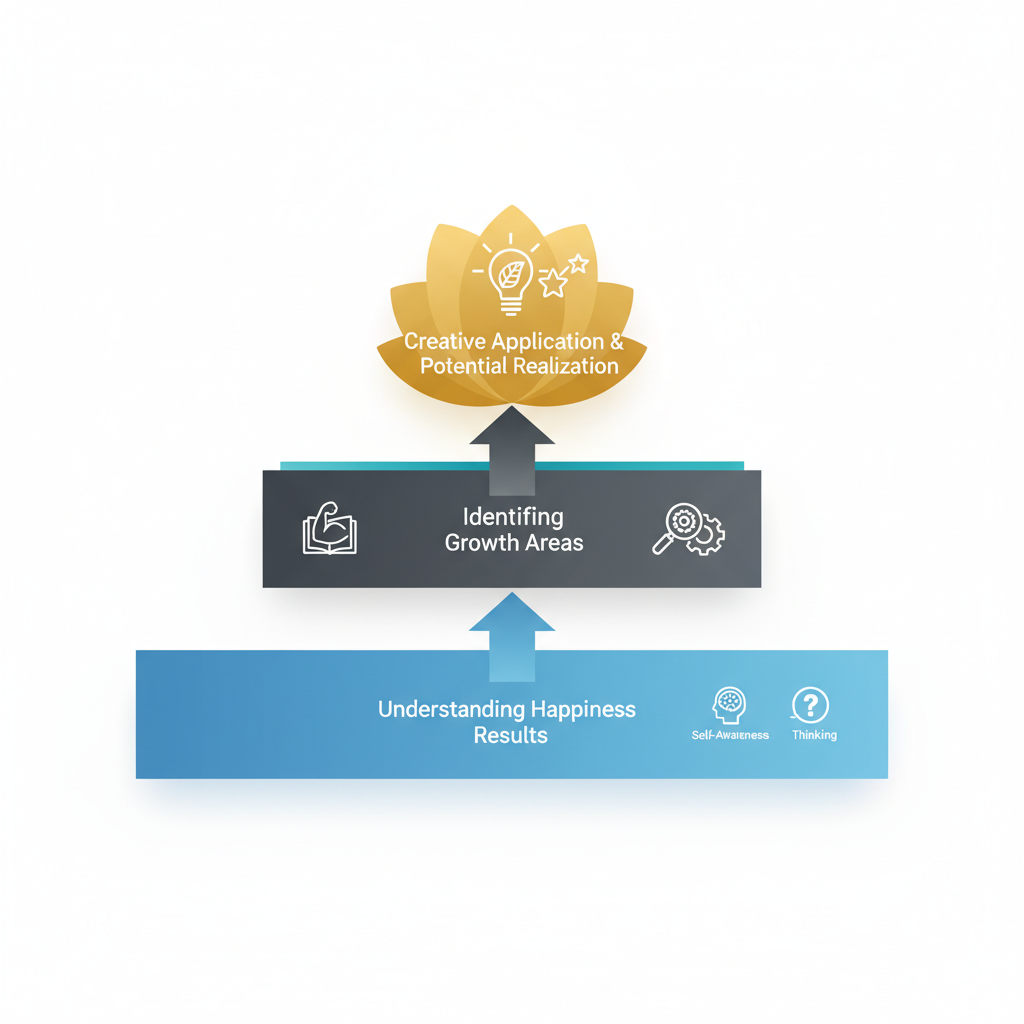
    A layered infographic showing a progression from understanding happiness test results to identifying growth areas and finally to creative application and potential realization.
    Minimalist, vector-based infographic representing personal growth through insights from happiness tests, applied to creativity. The visual is a layered, stepwise progression. The base layer, ‘Understanding Happiness Results’ (soft blue gradient), leads to a middle layer, ‘Identifying Growth Areas’ (charcoal, with subtle teal highlights), and culminates in a top layer, ‘Creative Application & Potential Realization’ (gold accent, depicting an abstract blooming or expanding shape). Each layer is connected by clean, upward-pointing arrows or subtle gradient shifts, symbolizing advancement. Small, abstract icons or geometric shapes within each layer represent concepts like ‘Self-Awareness’, ‘Skill Development’, and ‘Innovative Thinking’. The overall layout uses negative space to emphasize the upward journey and the professional, encouraging tone of self-discovery and practical application of insights for creative growth.

    Understanding your happiness test results helps you grow as a person. You can move from just feeling emotions to taking charge of your well-being. This awareness also boosts your creativity and problem-solving skills.

    Your scores give you a quick look at your emotional balance right now. This helps you see where you can improve. As you work on these areas, you can build lasting happiness and become more creative.

    Understand Your Emotional Landscape

    First, look at your scores from tests like the Satisfaction with Life Scale or the PERMA Profiler. These results show how satisfied you are with your life. They also point to different parts of your well-being. For example, a low “Engagement” score might mean you need more activities that you can get lost in. These kinds of activities are often a great source of creative ideas.

    • Identify Strengths: See what parts of your life are making you happy.
    • Pinpoint Weaknesses: Find areas where you might be struggling, like with relationships or finding purpose.
    • Track Progress: Use your scores as a starting point. Check them again later to see how your hard work is paying off.

    Fuel Your Creative Mindset

    Happiness and creativity are closely linked. When you feel positive, your mind becomes more flexible. This helps you think in new ways. So, boosting your happiness is a great way to support your creative work.

    When you feel good, your brain is more open to new ideas. You’re more willing to take risks and face challenges with a positive attitude. This mindset is key for new ideas and solving problems. Research shows a strong link between a positive mood and being more creative [11].

    Actionable Steps for Growth

    Your happiness test results are more than just numbers. They are a guide for what to do next. Use them to create a personal plan to improve your well-being and boost your creativity.

    • Try Mindfulness: If your results show a lot of negative emotions, try mindfulness. It can calm your mind and make room for new ideas. Being mindful also makes you more open to new experiences, which is a key part of creativity [12].
    • Build Positive Relationships: If you have a low “Relationships” score, try to connect with others more. Strong relationships give you support and offer new points of view that can spark creative ideas.
    • Set Meaningful Goals: If your “Meaning” or “Achievement” scores are low, set small goals you can reach. Make sure they line up with your values. Reaching these goals builds confidence and helps you stick with your creative projects.
    • Find Your Flow: Look for activities that you get completely lost in. This is often called a “flow state.” It feels great and improves your focus, which is essential for deep creative work. Try things like sketching, writing, or playing music.
    • Practice Self-Compassion: Being hard on yourself can hurt your happiness and creativity. Learn to be kind to yourself. This helps you become more resilient and bounce back faster from creative challenges.
    • Try New Things: Make a habit of trying new things and exploring your interests. This keeps your brain active and gives you more knowledge to draw from for creative ideas.

    Connect Happiness and Creativity

    As you start working on your happiness, you’ll notice changes. You might feel more confident or find yourself thinking in new ways. This is a great time to use a tool like the Creative Ability Test.

    The Creative Ability Test can help you understand your creative strengths. It measures how flexible your thinking is, your problem-solving skills, and your openness to new ideas. When you combine the results from your happiness and creative tests, you get a complete picture. You can see how your emotional well-being helps your creativity. This approach gives you clear steps to unlock your full potential, both for personal happiness and better creative work.

    Ready to Discover Your Full Potential? Try the Creative Ability Test

    A minimalist infographic displaying a creative ability assessment chart with indicators for originality, fluency, flexibility, and elaboration.
    Minimalist, vector-based infographic: a structured creative skill assessment chart or competency map. The chart features a central, multi-faceted geometric shape (charcoal/white) representing ‘Creative Potential’. Branching out from this central shape are several ‘skill indicators’ – stylized bar graphs or radial segments – each with a subtle gold or teal accent, labeled with abstract icons for ‘Originality’, ‘Fluency’, ‘Flexibility’, and ‘Elaboration’. These indicators are embedded within a clean, soft blue background. The chart uses negative space to clearly delineate each skill dimension, with small percentage markers or level indicators using a simple font. The overall visual is professional, educational, and encourages self-assessment of creative strengths.

    Knowing what makes you happy is a great start to a fulfilling life. But true self-discovery goes deeper. It means unlocking your mind’s unique abilities, and your creative potential is a big part of that journey.

    Creativity is not just for artists. It’s how you approach challenges and solve problems. These skills are key for personal growth and success at work. In fact, a strong sense of well-being is often linked with being more open to new ideas and creative thinking [13].

    Go Beyond Well-Being: Explore Your Creative Mind

    You’ve taken steps to understand your happiness. Now, consider measuring your natural creative strengths. The Creative Ability Test is designed for exactly that. It helps you see the specific ways your mind creates and innovates.

    This 30-question, science-backed test gives you a complete look at your creative profile. It explores different sides of your creativity so you can get a clear picture of your thinking styles. This test highlights your natural talents.

    Specifically, the Creative Ability Test measures key areas:

    • Cognitive Flexibility: How easily you switch between different ideas and adapt to new information.
    • Divergent Thinking: Your skill for coming up with many unique ideas. This is key for brainstorming and innovation.
    • Problem-Solving Skills: How well you handle tough problems and find new solutions.
    • Openness to New Experiences: How willing you are to explore new ideas and concepts, which fuels curiosity.
    • Originality: How unique and new your ideas are, showing your ability to see things differently.

    Unlock Actionable Insights for Growth

    The test gives you personal feedback with clear explanations of your creative traits. You’ll understand your strengths and see where you can improve.

    You will receive practical tips tailored to boost your creative thinking. Learn how to use your creativity in everyday life. These insights can help you grow personally and speed up your progress at work.

    Our platform offers more than a score. It gives you a guide to growing your creative talent. We make complex psychological ideas easy to understand. This empowers you to use your natural abilities and reach your full potential.

    Ready to Embrace Your Creative Journey?

    Understanding your creativity helps you know yourself better. It builds confidence and gives you powerful tools to innovate. Take the next step in your personal and professional growth. Discover the unique ways you can make a difference in the world.

    Start your creative journey today. Try the Creative Ability Test. Turn uncertainty into useful self-knowledge and get the insights you need to thrive.

    Frequently Asked Questions

    What questions are on a happiness test in psychology?

    Happiness tests in psychology are often questionnaires you fill out yourself. They ask about your feelings, thoughts, and how satisfied you are with your life. The questions measure different parts of your well-being.

    Common themes include:

    • Satisfaction with Life: Questions like, “In most ways my life is close to my ideal.” or “The conditions of my life are excellent.”
    • Emotional Balance: You might be asked how often you feel positive emotions (like joy or peace) compared to negative ones (like sadness or anger).
    • Purpose and Meaning: Some tests ask if you feel your life has a purpose or direction.
    • Engagement: This covers how absorbed you feel in activities you enjoy.
    • Relationships: Questions may ask about the quality of your friendships and social support.

    Learning about these areas helps you understand yourself. This is key for having an open mind, which helps with creative thinking. For example, the Satisfaction with Life Scale (SWLS) has five statements that you rate [14].

    Where can I find a free happiness test online?

    You can find many free happiness tests online from trusted sources. Universities, research centers, and wellness sites often have them. These tools are a great way to start thinking about your own happiness.

    Some free tests are backed by science, while others are less reliable. It’s best to use them with a curious mind. Focus on what you can learn, not on getting a final diagnosis. They can make you more curious about yourself. This curiosity is great for creative thinking.

    Try looking for tests from universities or colleges. They are often easy to use and backed by research.

    What is the Happiness Scale Questionnaire?

    The “Happiness Scale Questionnaire” is a general term for tools that measure happiness. It can also refer to specific tests, like the Subjective Happiness Scale (SHS). The SHS is a common test used in psychology.

    This scale asks you to rate your happiness using numbers. It looks at how happy you feel overall and how you compare to others. For example, you might rate your general happiness. You might also rate how happy you are compared to other people. It’s a quick and useful way to check your happiness.

    Your score can give you a starting point for personal growth. A positive outlook is often tied to higher happiness scores. This can help you solve problems creatively and bounce back from challenges.

    Is there a simple happiness test?

    Yes, there are many simple happiness tests. They are made for a quick check-in with yourself. They usually have a few simple questions or rating scales. The goal is to give you fast feedback on how you’re feeling.

    For example, a simple test might ask you to rate your happiness from 1 to 10. Another might give you a few statements about joy or satisfaction. You then say how much you agree or disagree.

    These shorter tests are great for a quick check-in. They can be a good first step to learning about yourself. Just thinking about your happiness can help you see how your mood affects your daily life and creative work. Knowing yourself is key to boosting your creativity.


    Sources

    1. https://positivepsychology.com/happiness-tests-scales-questionnaires/
    2. https://psycnet.apa.org/record/2000-03833-001
    3. https://journals.sagepub.com/doi/abs/10.1177/0146167208320013
    4. https://psycnet.apa.org/doiLanding?doi=10.1037%2F0003-066X.56.3.218
    5. https://eddiener.com/scales/7
    6. https://www.authentichappiness.sas.upenn.edu/questionnaires/oxford-happiness-questionnaire
    7. https://www.authentichappiness.sas.upenn.edu/questionnaires/authentic-happiness-inventory
    8. https://www.authentichappiness.sas.upenn.edu/questionnaires/perma-profiler
    9. https://sonjalyubomirsky.com/wp-content/themes/sonjalyubomirsky/pdfs/shs.pdf
    10. https://www.midus.wisc.edu/pages/datasheets/ryff.pdf
    11. https://psycnet.apa.org/record/2007-06899-007
    12. https://greatergood.berkeley.edu/topic/mindfulness/definition
    13. https://psycnet.apa.org/record/2012-07755-001
    14. https://psychology.okstate.edu/faculty/pmikol/swls.html

  • 10 Popular Psychological Tests and What They Reveal About Your Mind

    10 Popular Psychological Tests and What They Reveal About Your Mind

    Popular psychological tests are standardized assessments designed to measure abstract concepts like personality, intelligence, aptitude, and cognitive abilities. Famous examples include personality inventories like the Myers-Briggs Type Indicator (MBTI), intelligence scales like the Stanford-Binet, and projective tests like the Rorschach Inkblot Test, all used to gain deeper insights into the human mind.

    Have you ever wondered how your mind works? What drives your choices, shapes your personality, or sparks your best ideas? This curiosity is why popular psychological tests have been used for decades. They offer a look into how we think, feel, and what we’re capable of.

    Psychological tests are a structured way to learn more about yourself. They can help you discover your personality traits or measure your cognitive abilities. But these tools can also show your creative strengths, how you think, and your approach to solving problems. Understanding these parts of yourself is key for personal and professional growth.

    In this article, we will look at 10 well-known psychological assessments. We’ll explain their purpose and what they can reveal about you. These science-based tests shed light on everything from your personality to your creative potential, giving you useful insights to better understand and build on your strengths.

    Why Are We So Curious About Psychological Tests?

    From Self-Discovery to Professional Growth

    We are all curious about ourselves. We want to understand what makes us tick. Psychological tests can help us on this journey by giving us a clear look into how our minds work.

    These tests can reveal hidden talents and show us how we think. For example, you might learn you are good at divergent thinking, which means you can come up with many new ideas easily. Knowing this about yourself helps you grow.

    Here’s how these insights can help you:

    • Better Self-Awareness: Understand your strengths, like your creative skills and how you solve problems.
    • Personal Growth: Knowing how you think builds confidence. It helps you make better choices for your future by using your natural talents.
    • Career Growth: Learning about your mental flexibility is a big advantage. It helps you adapt to new challenges and become a better innovator at work.

    Knowing your creative style helps you succeed. For instance, if you are open to new things, you’ll be more willing to embrace change—a key skill for innovation. The Creative Ability Test offers these personal insights. It turns confusion into clear, useful knowledge about yourself.

    Understanding the Science Behind the Questions

    You might wonder how psychological tests work. They are not just for fun. Good tests are based on solid science and are designed to give you information you can trust.

    So, what does that mean?

    • Reliability: A reliable test gives you the same results over and over. Think of a good scale—it shows the same weight every time you step on it.
    • Validity: A valid test measures what it’s supposed to measure. So, a creativity test should actually measure your creativity, not something else [1].

    Experts carefully design these questions using deep research on how people think and act. Specialists build and improve these tests to make sure the questions accurately measure specific skills.

    Our Creative Ability Test meets these high standards. It is a 30-question test based on science. It measures several parts of creativity, including mental flexibility, how you generate new ideas, and your openness to new experiences. Our methods are based on proven creativity research, so you get feedback that is both accurate and helpful. This scientific approach ensures your personalized tips for growth really work. You can trust the insights from your results.

    10 Famous Psychological Tests Explained

    Infographic presenting a structured grid or chart with ten distinct, minimalist geometric icons. Each icon visually represents one of the ten famous psychological tests, offering a clean, abstract overview of their conceptual focus in a vector art style.
    Produce a minimalist, vector-based infographic structured as a competency chart or a grid overview. The color palette should be soft blues, whites, charcoal, and gold accents. The infographic needs to visually represent ten distinct ‘slots’ or sections, each corresponding to one famous psychological test. Each slot should contain a unique, abstract geometric icon or a small, distinct shape to symbolize the nature or focus of that test, without explicitly naming it. The arrangement should be clean, organized, and professional, using subtle gradients and ample negative space to ensure clarity and easy comprehension, suitable for an educational overview without direct text explanation.

    The Rorschach Inkblot Test

    The Rorschach Inkblot Test is one of the most famous psychological tests. Hermann Rorschach created it in 1921. The test is known for its unique visual approach.

    In this test, you look at ten ambiguous inkblots. Some are black and white, while others have color. Your task is to describe what you see in each one.

    What It Reveals:

    • It helps reveal your personality characteristics.
    • It also looks at your emotional functioning.
    • How you see these shapes can hint at your underlying thought patterns.

    If you’re curious about creative thinking, interpreting abstract forms can be very insightful. This test shows how you find meaning in vague images. This skill is key for creative thinking and solving problems in new ways.

    The Thematic Apperception Test (TAT)

    The Thematic Apperception Test (TAT) asks you to be a storyteller. It was created in the 1930s by Henry Murray and Christiana Morgan. The test uses a set of pictures that are both interesting and unclear.

    For each picture, you create a story. You’ll describe what’s happening, what led to the scene, and what the characters are thinking and feeling. Finally, you explain how the story ends.

    What It Reveals:

    • It helps psychologists understand your hidden needs and motivations.
    • It also reveals how you view the social world.
    • Your stories can show common themes in your thinking.

    Storytelling is a core creative skill. The TAT shows your ability to use imagination and build a story. These skills are key for creating new ideas and sharing them well.

    The Myers-Briggs Type Indicator (MBTI)

    The Myers-Briggs Type Indicator (MBTI) is a popular questionnaire you fill out yourself. Isabel Myers and Katharine Briggs created it based on Carl Jung’s theory of psychological types. The test helps people learn about their own personality preferences.

    It sorts people into one of 16 different personality types. These types are based on your preferences in four areas:

    • Extraversion (E) or Introversion (I): How you focus your energy.
    • Sensing (S) or Intuition (N): How you perceive information.
    • Thinking (T) or Feeling (F): How you make decisions.
    • Judging (J) or Perceiving (P): How you prefer to live your outer life.

    What It Reveals:

    • It offers insight into how you make decisions.
    • It helps you understand how you interact with others.
    • It can show what kind of learning and work environments you prefer.

    Knowing your MBTI type can give you helpful clues about your creative style. For instance, people with a strong “Intuition” preference often show great creative potential [2]. Knowing your type can help you use your natural strengths for creative projects and personal growth.

    The Big Five Personality Traits (OCEAN Model)

    The Big Five, also known as the OCEAN model, is a common framework for personality. It describes personality using five main traits. This model is backed by a lot of research and offers a simple way to talk about personality.

    These five traits are:

    • Openness to Experience: How much you enjoy art, adventure, new ideas, and new experiences.
    • Conscientiousness: How organized, disciplined, and responsible you are.
    • Extraversion: How energetic, positive, and sociable you are.
    • Agreeableness: How compassionate and cooperative you tend to be.
    • Neuroticism (Emotional Stability): How easily you feel negative emotions.

    What It Reveals:

    • It gives a broad overview of your core personality.
    • It helps predict how you might act in different situations.
    • It’s a reliable way to understand why people are different.

    When it comes to creativity, “Openness to Experience” is the most important trait. It is consistently linked to creative thinking and innovation [3]. Becoming more open can boost your creative potential. Our Creative Ability Test helps you explore how your unique traits support your creative journey.

    The Minnesota Multiphasic Personality Inventory (MMPI)

    The Minnesota Multiphasic Personality Inventory (MMPI) is a detailed psychological test. It is mainly used to assess mental health issues, but it also explores personality traits. This test is widely used in clinical settings to help professionals understand a person’s mental health.

    The MMPI is a long questionnaire with hundreds of true/false questions. These questions cover a wide range of topics, including health, attitudes, and unusual experiences.

    What It Reveals:

    • It helps diagnose mental health conditions.
    • It points out specific personality traits.
    • It offers insights into emotional and behavioral patterns.

    While this is not a direct measure of creativity, mental well-being is crucial. A healthy mind helps you think flexibly and solve problems. These skills are essential for being creative. Understanding your mental health can help your creativity grow.

    The Stanford-Binet Intelligence Scale

    The Stanford-Binet Intelligence Scale is one of the oldest intelligence tests, first developed in the early 20th century. This test measures thinking skills in people of all ages and looks at different types of intelligence.

    The test has several parts, or subtests. These tasks measure skills like verbal and math reasoning, as well as visual-spatial skills. It also tests your working memory and problem-solving abilities.

    What It Reveals:

    • It gives you an IQ score, which shows your general thinking ability.
    • It helps find your specific mental strengths and weaknesses.
    • It can be used for educational and developmental planning.

    High intelligence can help with solving complex problems, which is often part of creative work. But creativity is more than just a traditional IQ score. Our Creative Ability Test focuses on the unique aspects of creative potential. This helps you understand how you come up with new ideas.

    The Wechsler Adult Intelligence Scale (WAIS)

    The Wechsler Adult Intelligence Scale (WAIS) is another leading intelligence test. David Wechsler created it specifically for adults. The test measures different parts of a person’s thinking ability.

    The WAIS is broken down into several main scores, including Verbal Comprehension, Perceptual Reasoning, Working Memory, and Processing Speed. Each main score is made up of several subtests that measure different thinking skills.

    What It Reveals:

    • It provides a full-scale IQ score.
    • It offers detailed insight into your thinking strengths and weaknesses.
    • It helps in clinical diagnosis and educational assessments.

    Your thinking abilities are the foundation for creative thought. Creative people often use these mental tools in flexible and unusual ways. The WAIS shows how your mind processes information. Our platform helps you apply these cognitive strengths to creative challenges.

    Projective Tests (e.g., Draw-A-Person)

    Projective tests are a type of psychological test where people respond to unclear prompts or images. These tests are designed to reveal hidden thoughts, feelings, and conflicts. They offer a less structured way to look at personality.

    Examples include the Draw-A-Person Test, where you simply draw a person. Other tests might ask you to complete sentences or tell stories about pictures. The lack of specific instructions allows for free expression.

    What They Reveal:

    • They can highlight unique expressive styles.
    • They offer clues about how a person sees themselves.
    • They may reveal hidden emotions or worries.

    The freedom in these tests taps into your imagination. Your unique interpretations and artistic choices reflect your creative expression. These tests hint at how you see the world from your own unique point of view.

    Tests for Specific Conditions (e.g., Beck Depression Inventory)

    Many psychological tests focus on specific conditions. These tests help find or diagnose different mental health issues. They are key tools in clinical psychology that help guide treatment and support.

    The Beck Depression Inventory (BDI) is a common example that helps measure the severity of depression. Other tests might screen for anxiety, ADHD, or trauma-related symptoms. These are usually questionnaires you fill out yourself.

    What They Reveal:

    • They offer a standard way to measure how severe symptoms are.
    • They help with diagnosing specific mental health disorders.
    • They track how well treatment is working over time.

    Your mental health has a direct impact on your creative potential. Taking care of any mental health issues can free up your mind, which allows for greater focus and flexibility. A healthy mind helps your creative ideas flow better. Putting your mental health first is a big step toward personal growth and more creativity.

    Creativity Assessments (e.g., Torrance Tests of Creative Thinking)

    Creativity assessments are designed to directly measure creative thinking. They move beyond traditional intelligence tests to focus on how you come up with new ideas. They also look at how you solve problems in new ways.

    The Torrance Tests of Creative Thinking (TTCT) are a leading example. Developed by E. Paul Torrance, they use different tasks that often involve divergent thinking. They ask you to come up with many ideas from one starting point.

    What They Reveal:

    • Fluency: How many ideas you can come up with.
    • Originality: How unique your ideas are.
    • Flexibility: How many different types of ideas you have.
    • Elaboration: How detailed your ideas are.

    These tests prove that creativity can be measured scientifically. They show that creativity has many different parts and is a skill that can be understood and developed. Our Creative Ability Test builds on this foundation. It offers a science-based test of your unique creative strengths. You get personal insights and real steps you can take to boost your creative potential.

    How Do General Psychology Tests Relate to Creativity?

    Infographic showing a network diagram connecting abstract representations of general psychological foundations with creative dimensions, highlighting their interconnectedness and influence through subtle lines and an overlapping central area, in a minimalist vector style.
    Create a minimalist, vector-based infographic with soft blues, whites, charcoal, and gold accents. The infographic should depict a cognitive network diagram or an idea cluster illustrating the relationship between general psychological traits and creativity. Use clean geometric shapes, lines, and subtle gradients. Show a central overlapping area or interconnected nodes. One cluster represents ‘Psychological Foundations’ with abstract shapes, and another represents ‘Creative Dimensions’ also with abstract shapes. Connecting lines or subtle flows indicate their interrelation and influence. The layout should have ample negative space for implied labels or conceptual indicators, maintaining a professional and educational aesthetic suitable for understanding complex ideas.

    Uncovering Thinking Styles and Cognitive Flexibility

    While many popular psychological tests don’t measure creativity directly, they can give you useful hints. These tests show key parts of how you think. Understanding them is the first step to unlocking your creative potential.

    General psychology tests often show your thinking styles. They reveal how you process information and solve problems. Creative thinking depends on certain mental strengths.

    One key strength is cognitive flexibility. This is your ability to switch between different ways of thinking. It helps you see things from many angles. Flexible thinkers can adapt easily to new challenges. This skill is vital for coming up with new ideas.

    Tests can also hint at your divergent thinking skills. This is the ability to come up with many different ideas. For example, some tests show how well you connect ideas. Problem-solving tasks show if you look for creative solutions. This gives you a starting point.

    Key mental traits linked to creativity include:

    • Cognitive Flexibility: Easily switching between different ideas.
    • Problem-Solving Skills: Finding new solutions to problems.
    • Pattern Recognition: Seeing connections others might miss.
    • Idea Generation: Coming up with many different ideas.

    These general tests help you understand your basic mental skills. But a special test, like the Creative Ability Test, goes deeper. It measures how your thinking style leads to creative results. It also gives you personal tips to use your mental strengths for innovation.

    Connecting Personality Traits to Creative Potential

    Your personality plays a big part in your creative journey. Many psychological tests, especially for personality, can show this connection. They reveal natural tendencies that can help or hurt your creativity.

    The “Big Five” personality traits are very helpful. Among them, “Openness to Experience” is a great sign of creativity [4]. People high in openness are often:

    • Curious about the world.
    • Imaginative and artistic.
    • Intellectually adventurous.
    • Willing to try new things.
    • Open to unconventional ideas.

    These traits are the building blocks of creative thinking. They encourage you to explore and create. But other traits help, too. For example, being conscientious helps people finish projects and turn ideas into reality. Introversion can lead to deep, focused thought, while extraversion can help with group brainstorming. Both paths can lead to creativity.

    Knowing this helps you understand yourself better. It shows how your natural tendencies can help you be more creative. For instance, if you are a highly open person, you likely enjoy new experiences. This knowledge can help you.

    However, personality tests give a general picture. The Creative Ability Test builds on this by turning these ideas into useful advice. It helps you use your personal traits to improve your creative problem-solving and grow as a person. Your personality becomes a guide to creating new things.

    Ready to Explore Your Own Creative Potential?

    Infographic illustrating a layered growth framework or a progressive pathway using geometric shapes. Each layer or step has an abstract icon representing stages like 'Assess,' 'Understand,' 'Develop,' and 'Apply,' symbolizing the journey to enhancing creative potential in a minimalist vector style.
    Design a clean, instructional infographic using a minimalist, vector-based style with soft blues, whites, charcoal, and teal accents. The visual should represent a clear progression or a layered framework for exploring and enhancing creative potential. Use a series of ascending or branching geometric shapes, like a staircase or a flow diagram with distinct steps. Each step or layer should have an abstract icon or a unique shape representing stages such as ‘Assess,’ ‘Understand,’ ‘Develop,’ and ‘Apply.’ The overall layout should convey growth and practical application, with clear visual hierarchy and ample negative space to guide the viewer, avoiding any human figures or cartoon elements.

    Introducing the Creative Ability Test

    You may have tried other personality tests. Now, it’s time to discover your creative side. The Creative Ability Test is a clear path to understanding yourself better. It’s a powerful, science-based test made just for you.

    Our test helps you measure, understand, and improve your creative skills. We believe everyone has a creative spark. The first step to using it is to understand it.

    This 30-question test is more than a simple quiz. It looks at the key parts of creativity, like your ability to think in new ways, solve problems, and stay open to new ideas. Our method is based on proven research, so you get reliable and useful advice [5].

    The Creative Ability Test is a personal journey. It helps you go from being unsure about your creative talents to knowing them clearly. This knowledge gives you clear steps for improvement. It’s a great tool for students, professionals, or anyone who wants to think more creatively.

    What Your Results Can Teach You

    Taking the Creative Ability Test gives you more than just a score. It’s like a map of your creative mind. Your personal report will highlight these key areas:

    • Your Creative Strengths: Find out where you shine. Are you great at brainstorming lots of ideas, or are you better at finding one-of-a-kind solutions?
    • Unique Thinking Styles: See how you naturally solve problems. Learn if you use divergent thinking (coming up with many options) or convergent thinking (finding the single best answer).
    • Cognitive Flexibility: Learn how easily you can change your point of view and adapt your thinking. This is key for handling tricky problems and sparking new ideas.
    • Problem-Solving Abilities: Get a clear picture of how you solve problems. You’ll learn to use creative thinking for challenges at work and in your daily life.
    • Openness to Experience: See how open you are to new ideas, experiences, and different ways of doing things. This is a big part of being creative.

    Your results give you practical steps you can take. For example, if you’re good at divergent thinking, you’ll get tips on how to brainstorm better. If you need to work on cognitive flexibility, you’ll get exercises to help you think in new ways.

    This process turns a vague idea of creativity into clear, useful advice just for you. You’ll go from feeling creative only some of the time to having a clear plan to improve. Our goal is to help you use your creative skills with confidence in all parts of your life, helping you grow personally and professionally.

    Frequently Asked Questions

    What are popular psychological tests for students?

    Students often take psychological tests to learn more about themselves, their learning styles, and possible career paths. These tests offer helpful insights for personal growth and success in school.

    Here are some popular types of tests that can help students:

    • Personality Inventories: Tools like the Big Five Personality Traits (often called OCEAN for Openness, Conscientiousness, Extraversion, Agreeableness, Neuroticism) help students understand their main personality traits. For example, being open to new experiences is closely tied to creative thinking and a desire to explore new ideas [6].
    • Career Aptitude Tests: These tests look at a student’s interests and skills to suggest good career options. They can show where a student’s natural talents, like creative problem-solving, could shine.
    • Learning Style Assessments: While the science behind some of these is debated, they aim to help students figure out how they learn best. Knowing your learning style can lead to better study habits and keep you more engaged.
    • Creativity Assessments: For students who want to be more innovative, tests like the Torrance Tests of Creative Thinking measure brainstorming skills. Understanding your creative strengths, like originality, helps you use them in your studies and future job. Our Creative Ability Test gives you specific details on these skills, helping you grow your creative talent.

    These tools give students specific, useful information about themselves. They offer a clear picture of their strengths and areas where they can improve.

    What are the 4 types of psychological tests?

    Psychological tests are grouped into types based on what they measure and how they work. Understanding these types helps to see what they are for and how they can be used.

    Here are four main types of psychological tests:

    • Personality Tests: These measure a person’s typical patterns of thinking, feeling, and acting. Examples include the Myers-Briggs Type Indicator (MBTI) and the Big Five Personality Traits. They help show how a person interacts with the world. Traits like openness to experience are good signs of creative talent.
    • Intelligence/Ability Tests: These are made to measure thinking skills and intellectual potential. The Wechsler Adult Intelligence Scale (WAIS) is a famous example. These tests can show how well someone can think flexibly and solve problems, which are key parts of creativity.
    • Aptitude Tests: These tests predict how well a person might learn a new skill in the future. They measure natural talents for certain tasks. For instance, a test might show a natural strength in language or spatial skills, which can both support creativity.
    • Projective Tests: Unlike tests with clear right or wrong answers, these use vague images, like inkblots (Rorschach Test) or pictures (Thematic Apperception Test). The idea is that people reveal their hidden thoughts and feelings in their answers. While experts often debate how reliable they are, these tests aim to uncover deeper emotions.

    Each type gives you a different way to look at your mind. If you’re interested in creativity, seeing these different tests shows how many parts of your mind work together to make you innovative.

    Are there fun psychological tests to do on friends?

    Absolutely! There are many fun and casual “psychological” quizzes you can do with friends. They are great for starting conversations and helping you think about yourselves in a relaxed way.

    Here are a few ideas for fun, informal activities:

    • Personality Quizzes: Many online quizzes based on pop culture or simple psychology ideas can be a lot of fun. They might tell you “Which Disney character are you?” or “What’s your spirit animal?” These are great icebreakers.
    • “Would You Rather” Scenarios: Giving friends tough choices can show what they value, what’s important to them, and how they solve problems.
    • Quick Creative Challenges: Ask friends to draw something from a simple idea, or brainstorm as many uses for a common object as they can. This gives you a peek at how creative they are on the spot.
    • Simplified “Lie Detector” Games: Asking basic questions and watching reactions can be a fun way to interact. Just remember, these games are only for entertainment.

    While these activities are great for bonding, it’s important to know they aren’t scientific. They don’t offer the reliable, deep insights that come from real, validated assessments. For true self-discovery and real steps to boost your creativity, platforms like Creative Ability Test offer a trusted approach based on science. We help you use your creativity to solve problems and create new things.


    Sources

    1. https://www.apa.org/pubs/glossary/validity
    2. https://www.myersbriggs.org/my-mbti-personality-type/mbti-basics/
    3. https://psycnet.apa.org/record/2013-09415-001
    4. https://psycnet.apa.org/record/2009-08246-003
    5. https://www.frontiersin.org/articles/10.3389/fpsyg.2017.02100/full
    6. https://psycnet.apa.org/record/2012-07302-001
  • Psyc Tests Explained: A Guide to Understanding Your Mind & Creativity

    Psyc Tests Explained: A Guide to Understanding Your Mind & Creativity

    Psychological tests, or ‘psyc tests,’ are standardized methods designed to measure and understand aspects of human behavior, abilities, and personal traits. They range from clinical assessments for mental health to evaluations for cognitive skills like creative thinking. These tests provide structured, evidence-based insights into how individuals think, feel, and solve problems.

    Have you ever wondered how your mind works or how you come up with new ideas? Many of us want to understand ourselves better to improve and reach our full potential. This search often leads us to psychological assessments, also known as psyc tests. These science-based tools are a great way to discover more about yourself and find ways to boost your creativity.

    This article will explain psyc tests in simple terms, showing how they can highlight your creative strengths, thinking styles, and problem-solving skills. We’ll look at how these assessments are more than just quizzes. They offer insight into areas like cognitive flexibility, divergent thinking, and your openness to new experiences. Understanding these parts of your mind can change how you face challenges, spark new ideas in your career, and support your personal growth.

    Join us as we explore what psyc tests are, how they work, and how they can help you unlock your full creative potential. We’ll also cover how to apply your new insights to real-world situations. First, let’s start with a basic understanding of these tests and what they measure.

    What Are Psyc Tests and What Do They Measure?

    An infographic showing a central psychological test branching out to measure cognitive abilities, personality traits, and creative thinking, represented by geometric shapes and simple icons.
    Create a minimalist, vector-based infographic illustrating ‘What Are Psyc Tests and What Do They Measure?’. The visual should feature a central, abstract representation of a ‘Psychological Test’ as a foundational cube or sphere. From this central element, branch out with clean, geometric lines to various conceptual nodes or segments, each representing a key measurement area: ‘Cognitive Abilities’, ‘Personality Traits’, and ‘Creative Thinking’. Each measurement area should have a distinct, simple icon (e.g., a gear for cognition, a cloud for personality, a lightbulb for creativity) within a circular or square container. Use a color palette of soft blues and charcoal for primary elements, with subtle gold accents for clarity and emphasis on connections. Ensure ample negative space, clear visual hierarchy, and only short, professional labels for the central test and each measurement area. No humans or cartoon elements. The style should be professional, educational, and approachable, suitable for students and professionals.

    Beyond the Clinic: Using Tests for Personal Growth

    When you think of psychological tests, you might picture a doctor’s office or a mental health evaluation. But they can be used for much more than that. In fact, they are powerful tools for self-discovery and personal growth.

    Imagine understanding your mind in new ways. Psychological tests can highlight your mental strengths, uncover hidden talents, and clarify how you like to think. This knowledge helps you make better decisions about your learning, career, and personal life.

    For instance, understanding your creative profile helps you:

    • Identify your unique problem-solving approaches.
    • Recognize areas where your creative thinking shines.
    • Discover practical ways to enhance your innovation skills.
    • Apply creativity to daily challenges and opportunities.

    These tests act like a mirror to your inner world. They offer a look into your skills, motivations, and potential. This self-awareness is the first step toward meaningful growth and unlocking your full creative potential.

    The Creative Ability Test, for example, focuses specifically on creativity. It helps you find your strengths in areas like cognitive flexibility and divergent thinking. This test guides you from being unsure to having clear, useful insights about yourself.

    You move from wondering about your creative potential to actively developing it. This personal journey helps you build confidence and keep improving.

    The Science Behind Psychological Assessments

    Good psychological tests are based on solid science. They are not just fun quizzes—they are carefully designed tools. Experts create them to accurately measure specific mental traits.

    Two key ideas support any reliable psychological test:

    • Reliability: This means the test is consistent. A reliable test gives similar results if you take it multiple times under similar conditions. Think of it like a consistent measuring tape.
    • Validity: This means the test is accurate. A valid test measures what it says it will. For example, a creativity test must truly measure creativity, not just general intelligence [1].

    Creating these tests takes a lot of research. This includes statistical analysis and studies to prove they work. Researchers collect data from many different people to help improve the questions and scoring. As a result, the tests provide useful and correct information.

    For Creativity assessments, scientists study different aspects of creativity. These include divergent thinking (the ability to come up with many ideas) and cognitive flexibility (the skill of switching perspectives). Innovation and being open to new experiences are also key parts.

    The Creative Ability Test is built on this science. It uses a proven, evidence-based method. Its 30 questions are designed to give you strong, reliable insights. This scientific backing means your personal feedback is trustworthy and useful.

    Understanding the science makes these tests more valuable. You can trust that the insights you receive are not random. They are backed by years of psychological research. This scientific strength makes your journey of personal development and creative growth even more powerful.

    What Are the Main Types of Psychology Tests?

    Personality tests

    Personality tests help you understand your unique traits and preferences. They show how you tend to think, feel, and behave. These tests reveal key parts of your character, like how you interact with others and face challenges.

    There are many types of personality tests. Two popular examples are the Myers-Briggs Type Indicator (MBTI) and the Big Five personality traits.

    • Myers-Briggs Type Indicator (MBTI): This test sorts your preferences into four pairs of opposites: extraversion/introversion, sensing/intuition, thinking/feeling, and judging/perceiving. The MBTI suggests a personality ‘type’ with unique strengths and areas for growth [2].
    • Big Five Personality Traits: This model measures five key areas of personality: Openness to Experience, Conscientiousness, Extraversion, Agreeableness, and Neuroticism (OCEAN). This model is widely used in scientific research and provides a solid way to understand individual differences.

    Understanding your personality can affect your creativity. For example, people high in “Openness to Experience” are often more creative because they welcome new ideas. This self-awareness helps you grow and use your natural strengths.

    Cognitive ability tests

    Cognitive ability tests measure mental skills for learning, reasoning, and problem-solving. They don’t test what you know, but how you process information. These tests show your ability to learn and adapt.

    Key areas measured by cognitive ability tests include:

    • IQ (Intelligence Quotient) Tests: These evaluate general intelligence, including your reasoning, logic, and problem-solving skills.
    • Memory Tests: These assess how well you recall information, both in the short term and long term.
    • Problem-Solving Assessments: These measure how well you analyze complex situations and find good solutions.

    Strong cognitive skills are important for creative thinking. They help you connect different ideas and overcome mental blocks. For example, a good memory helps you recall past solutions, while strong problem-solving skills can lead to new ideas. These tests help you find your mental strengths so you can learn to think more flexibly.

    Mental Health Screenings and Assessments

    Mental health screenings are important tools used by professionals to identify potential mental health concerns. They help diagnose conditions like anxiety or depression and guide treatment plans.

    These assessments often use questionnaires or interviews to explore symptoms and emotional wellness. Their main goal is different from a creativity test. They are clinical tools for supporting mental health, not for creative self-improvement. Instead, they support your overall well-being, which is the foundation for any personal growth.

    Aptitude and Career Tests

    Aptitude tests measure your potential to do well in certain areas. They show your natural talents and can suggest good career paths. Instead of testing what you already know, they focus on what you could be good at. This helps you find where your natural strengths lie.

    Examples of aptitudes include:

    • Verbal Reasoning: The ability to understand and use language well.
    • Numerical Reasoning: Skill with numbers and math concepts.
    • Spatial Reasoning: The ability to imagine and move objects in your mind. This is crucial for design and engineering.
    • Mechanical Reasoning: Understanding how physical objects and forces work.

    These tests can guide your creative journey by helping you choose fields where you are likely to succeed. For example, strong spatial reasoning might mean you’d be good at creative design. High verbal skills could point to a talent for writing. These insights help you match your career to your natural strengths, making your work feel more meaningful.

    Creativity Assessments

    Creativity assessments are designed to measure your creative potential. They explore different sides of your imagination. Unlike traditional intelligence tests, they focus on how you come up with new ideas and solve problems in new ways.

    Key aspects measured by creativity assessments include:

    • Divergent Thinking: The ability to generate many different ideas or solutions for a single problem.
    • Cognitive Flexibility: How easily you can switch your point of view and adapt to new information.
    • Problem-Solving Skills: How well you handle and solve new problems using creative thinking.
    • Openness to New Experiences: Being willing to try new things and consider unusual ideas.

    Our Creative Ability Test is a 30-question assessment based on science. It gives you personalized insights into your creative strengths and thinking styles. For example, you might find you’re great at brainstorming or connecting different ideas. You’ll get practical tips you can use to improve your creative thinking every day. This helps you approach challenges with more confidence and new ideas.

    Understanding your creative profile builds self-awareness, which leads to personal and professional growth. You’ll learn how to use your creativity for problem-solving and bringing new ideas to life. The Creative Ability Test gives clear explanations, making complex ideas easy to understand. It’s designed to help you unlock your full creative potential.

    How Can a Psyc Test Help You Understand Your Creativity?

    An infographic illustrating how psychological test results can lead to understanding creative strengths, identifying growth areas, enhancing problem-solving, and fostering innovation, shown as a layered progression.
    Design a clean, vector-based infographic detailing ‘How Can a Psyc Test Help You Understand Your Creativity?’. The visualization should depict a structured pathway or layered system. Start with an abstract representation of a ‘Psyc Test Result’ at the base, leading upwards through a series of interconnected, transparent layers or milestone steps. The first layer should represent ‘Identify Creative Strengths’, followed by ‘Pinpoint Growth Areas’, then ‘Enhance Problem-Solving Skills’, and finally ‘Foster Innovation & Self-Discovery’. Each layer or step should be a distinct, clean geometric shape (e.g., a rectangle or chevron) with subtle gradients, linked by upward-pointing arrows. Utilize a palette of soft blues, whites, and charcoal, with teal accents highlighting the progression and benefits. Incorporate ample negative space for legibility and include only short, concise labels for each stage. The aesthetic must be professional, educational, and free of any human figures or cartoon elements, focusing purely on conceptual representation.

    Measuring Divergent vs. Convergent Thinking

    Creativity can seem like a mysterious quality. But special tests can offer clear insights. These tests show how you come up with and improve ideas. They shed light on your unique way of thinking.

    A key part of creativity is using two different ways of thinking. First is divergent thinking. This is your ability to come up with many different ideas for a single problem. Think of a brainstorming session where you aim for lots of new ideas. For example, imagining all the possible uses for a brick is a great example of divergent thinking.

    The second style is convergent thinking. This is how you narrow down your options to find the single best solution. After brainstorming, you analyze and evaluate your ideas. You logically choose the one that works best. Both divergent and convergent thinking are essential for solving problems creatively [3].

    Tests like the Creative Ability Test are designed to measure these skills. They use specific tasks to see how you handle both types of thinking. As a result, you get a better sense of your natural style. You’ll find out if you’re better at coming up with new ideas or making existing ones better. Knowing this helps you use your strengths more effectively.

    Identifying Your Unique Problem-Solving Style

    Creativity isn’t just for art. It’s a powerful tool for facing any challenge. It’s important to know your own problem-solving style. Everyone approaches problems differently. Some people like a structured, logical approach. Others follow their gut and try new things. A creativity test can show you which approach you use most.

    For example, you might be very analytical. You like to break problems down and look at each piece logically. On the other hand, you could be an intuitive thinker. You get solutions from sudden flashes of insight. Others are more experimental. They like to test different solutions to learn as they go. Each style has its own strengths.

    A good assessment will show you these preferences. It highlights how you usually handle difficult problems. This insight is incredibly valuable. Knowing your unique style helps you in several ways:

    • Use your strengths: You can apply your natural approach more effectively.
    • See your blind spots: You become aware of areas where you might get stuck.
    • Improve collaboration: You understand how your style works with others.
    • Adjust your approach: You can consciously change your strategy for different problems.

    In the end, knowing yourself better helps you solve problems with more confidence and success. It also helps you grow personally and professionally.

    Gaining Actionable Insights for Innovation and Growth

    Understanding your creative strengths is just the beginning. The real power comes from using what you learn. A well-designed creativity test does more than just put you in a box. It gives you practical advice you can use right away. These are real steps you can take to be more innovative and grow as a person.

    Your report from the Creative Ability Test turns what you learn about yourself into real-world advice. It shows you how to use your unique creative style in everyday life. For example, if you are great at creating ideas but struggle to narrow them down, the report will offer specific tips. This could include new ways to evaluate ideas or make decisions. On the other hand, if you’re good at choosing the best option, you might get tips on how to brainstorm or think outside the box.

    This personalized advice helps you to:

    • Boost your creative output: Learn ways to come up with new ideas more often.
    • Improve your ideas effectively: Build skills to judge and improve your ideas.
    • Overcome creative blocks: Know what holds you back and learn how to get past it.
    • Apply creativity to daily life: Use your creative thinking to solve everyday challenges.
    • Be more innovative at work: Learn how to bring new ideas to your job and projects.

    The Creative Ability Test provides more than just a score. It gives you a clear plan to build on your creative skills. It helps you go from knowing your strengths to actively growing them. This leads to ongoing growth, both at work and in your personal life.

    Is a ‘Psych Evaluation Test Online Free’ Reliable?

    Understanding the Limits of Free Quizzes

    You’ve probably seen many free “psych evaluation tests” or quizzes online. While they promise quick insights, it’s best to be careful. Most of these quizzes are not based on real science.

    Often, free quizzes are just for entertainment. They give you generic or very simple results. For example, they might tell you if you are “left-brained” or “right-brained.” However, this idea is a common myth about the brain [4]. Quizzes like these rarely offer real psychological insights.

    Here’s why you should be wary of free online quizzes:

    • Lack of Validation: Psychology experts don’t make or test them. So, the questions don’t really measure what they say they do.
    • No Standardization: A good test gives everyone the same experience. Free quizzes don’t do this.
    • Superficial Results: The feedback is too broad and general. It has little personal value and doesn’t offer useful advice.
    • Entertainment Over Insight: Their main goal is to be fun, not to be an accurate psychological test. As a result, they can’t help you grow as a person.
    • Potential for Misinformation: They can spread old or wrong ideas about psychology.

    If you want to understand your own creativity, these quizzes are not very helpful. They can’t identify your unique creative strengths or show you how to improve. To get real insights, you need a better tool.

    The Value of Scientifically Grounded Assessments

    If you want real insights about your mind, choose a test built on science. Experts develop these tests. They go through careful testing to make sure they are reliable and accurate.

    A good creativity test gives you more than just a score. It gives you a detailed map of how you think creatively. This map shows your unique thinking styles and your strengths in solving problems.

    Key benefits of choosing a science-based assessment include:

    • Accurate Measurement: These tests accurately measure different parts of creativity, like your ability to brainstorm ideas, think flexibly, and be open to new experiences.
    • Personalized Insights: You get feedback that is specific to you, not just a general description.
    • Actionable Strategies: The results include practical advice. These tips help you improve your creative skills in your daily life.
    • Evidence-Based Foundation: These tests are based on solid psychological research. This means you can trust the results [1].
    • Structured Growth: They help you understand your creative potential and turn that knowledge into action. This allows you to grow in a structured way, both personally and professionally.

    The Creative Ability Test is a good example of this approach. Our 30-question test is based on science. It measures different parts of your creativity. You’ll get personal insights into your creative strengths. We also give you practical tips to help you use your creativity for new ideas and personal growth. This complete approach guides you on a path of self-discovery.

    How Can You Start Exploring Your Creative Potential?

    An infographic displaying a step-by-step pathway to explore creative potential, including self-assessment, identifying passions, skill development, and application, using geometric shapes and connecting lines.
    Create a minimalist, vector-based infographic outlining ‘How Can You Start Exploring Your Creative Potential?’. The visual should be a clear, step-by-step process represented as a series of connected, distinct geometric shapes forming a pathway. Begin with ‘Self-Assessment & Reflection’, leading to ‘Identifying Passions & Interests’, then ‘Skill Development & Practice’, and finally ‘Application & Experimentation’. Each step should be represented by a unique, clean geometric shape (e.g., a circle, square, triangle), interconnected by directional lines or arrows. Use a color scheme of soft blues, whites, and charcoal, with vibrant gold accents to highlight the active process and encourage engagement. Ensure the layout includes generous negative space and structured grouping for clarity. Only short, professional labels should mark each step. The overall style should be highly professional, educational, and approachable, with no human figures or cartoon elements, focusing entirely on conceptual guidance.

    Discover the Creative Ability Test

    Want to unlock your full creative potential? Many people wonder how to explore their creative skills. The Creative Ability Test offers a clear, science-based path to do just that. This unique test helps you find and understand your creative strengths.

    It’s more than a basic quiz. Our platform gives you a detailed 30-question test. This test looks at different parts of your creativity. It measures your flexible thinking, problem-solving skills, and openness to new experiences. It also helps pinpoint your unique thinking styles.

    Taking the Creative Ability Test is a big step in learning about yourself. It’s like a personal guide. You’ll get practical insights into how your mind creates new ideas. For example, you might find you’re good at divergent thinking—the skill of creating many ideas from a single point. Research shows that creativity is a key skill for success in today’s fast-changing world [5].

    This test is perfect for anyone who wants to grow personally or improve at work. Start your journey today and understand the full range of your creative mind.

    What You’ll Learn from Your Personalized Report

    After you finish the test, you get a detailed personal report. This report is your guide to understanding your creative style. It helps you move from being unsure to clearly understanding yourself and how you create.

    Your personal insights are more than just scores. They give clear explanations of your creative skills. You will understand your main thinking styles and how you handle new ideas and solve problems. For example, you might learn if you’re better at coming up with brand-new ideas or improving on existing ones.

    The report focuses on how to use your creativity in the real world. It gives you tips to grow your creative skills and improve your creative thinking. It also offers advice for everyday situations, like solving problems at work or in your personal life.

    Here’s what your personal report will help you do:

    • Identify Your Creative Strengths: Discover your natural creative talents and build confidence in your abilities.
    • Understand Your Thinking Style: Learn if you prefer divergent or convergent thinking, and how to use both well.
    • Get Practical Tips: Receive tips matched to your profile that are designed to improve your creative skills.
    • Solve Problems Creatively: Learn how to use your unique creative style to handle challenges at work or home.
    • Grow Your Creativity: Get a clear plan for creative growth to help you be more consistently creative.
    • Get Easy Explanations: Complex psychology ideas are made easy to understand, so your report is accessible to everyone.

    This detailed report helps you grow. It turns a basic understanding of creativity into useful, personal insights. Start exploring and begin your creative journey today.

    Frequently Asked Questions About Psyc Tests

    What are some psychological testing examples?

    Psychological tests are powerful tools that help us understand how people think, feel, and act. These tests are not just for clinical use; they also offer insights that can help you grow as a person.

    Here are some common examples of psychological tests:

    • Personality Assessments: These tests explore your patterns of thinking, feeling, and behaving. The Big Five Inventory, for example, measures traits like openness, conscientiousness, extraversion, agreeableness, and neuroticism [6]. Knowing your personality can show you how you handle challenges or work with others.
    • Cognitive Ability Tests: These evaluate your mental skills, such as IQ, memory, attention, and problem-solving. They can highlight your core strengths, which are often the foundation for creative thinking.
    • Aptitude and Career Tests: These help you find your natural talents and interests to guide you toward fitting school or work paths. Knowing what you’re good at helps you use your strengths.
    • Mental Health Screenings: These tools help spot signs of mental health issues, which is important for your overall well-being. A healthy mind is key to being your most creative self.
    • Creativity Assessments: Special tests are designed to measure different parts of creativity. Our Creative Ability Test is one example. It looks at your mental flexibility, ability to brainstorm, and openness to new things—all key parts of thinking in new ways.

    Each type of test offers a unique way to look at yourself. This self-knowledge is the first step to improving and reaching your full potential.

    What is the difference between a psychology test and a quiz?

    People often use the words “test” and “quiz” to mean the same thing. But in psychology, they are very different. Knowing the difference helps you choose a tool that gives you trustworthy results.

    A real psychological test is a scientific tool that has been carefully created and proven to work. A casual quiz, on the other hand, is usually just for fun. Here’s a comparison:

    Feature Psychology Test Casual Quiz
    Purpose To measure something specific, make a diagnosis, or provide insights for growth. Entertainment, light self-reflection, or general interest.
    Scientific Basis Based on research, developed by experts, with standard rules for taking and scoring. Often made without a scientific background; based on popular ideas.
    Reliability Gives consistent results over time, no matter who gives the test [7]. Results can be inconsistent and are often based on opinion.
    Validity Accurately measures what it says it will measure [8]. Often has no proof of accuracy; may not measure anything real.
    Actionable Insights Provides feedback based on data and real steps you can take to improve. Offers general comments that are not specific to you or easy to act on.

    The Creative Ability Test is a true psychological assessment. It uses a proven, scientific method. This means you get accurate, personal, and useful results to help you understand and grow your creative skills.

    Are there specific psychology tests for students?

    Yes! Psychology tests are very helpful for students. They offer guidance for school and personal growth by helping them understand their strengths, learning styles, and possible career paths.

    Here are ways psychology tests support students:

    • Learning Style Assessments: These help students find their best way to learn, whether they are visual, auditory, or hands-on learners. Knowing this can improve study habits.
    • Career Aptitude and Interest Tests: These tests match a student’s skills and passions with different jobs. This helps them choose a major and plan for a future career.
    • Cognitive Skills Evaluation: Tests can find specific mental strengths or areas that need work. This helps students adjust how they learn and build confidence in tough subjects.
    • Creativity Assessments: Creative thinking is a very important skill for students. Our Creative Ability Test helps students:
      • Discover their unique creative strengths.
      • Improve their problem-solving skills.
      • Bring new ideas to their school projects.
      • Prepare for future careers that require fresh ideas and the ability to adapt.
    • Emotional Intelligence Tests: Understanding and managing emotions is a key life skill. These tests help students build better relationships and handle stress.

    By using scientific tests like the Creative Ability Test, students get a clear picture of their abilities. They can create a real plan for improvement. This helps turn confusion into confidence and prepares them for a future where new ideas are important.


    Sources

    1. https://www.apa.org/education-career/guide/science-psychology
    2. https://www.myersbriggs.org/
    3. https://psycnet.apa.org/record/1971-00827-001
    4. https://www.health.harvard.edu/blog/right-brainleft-brain-right-2017082512222
    5. https://hbr.org/2019/08/how-to-build-a-culture-of-creativity
    6. https://bigfivepersonalitytest.com/
    7. https://www.simplypsychology.org/reliability.html
    8. https://www.simplypsychology.org/validity.html