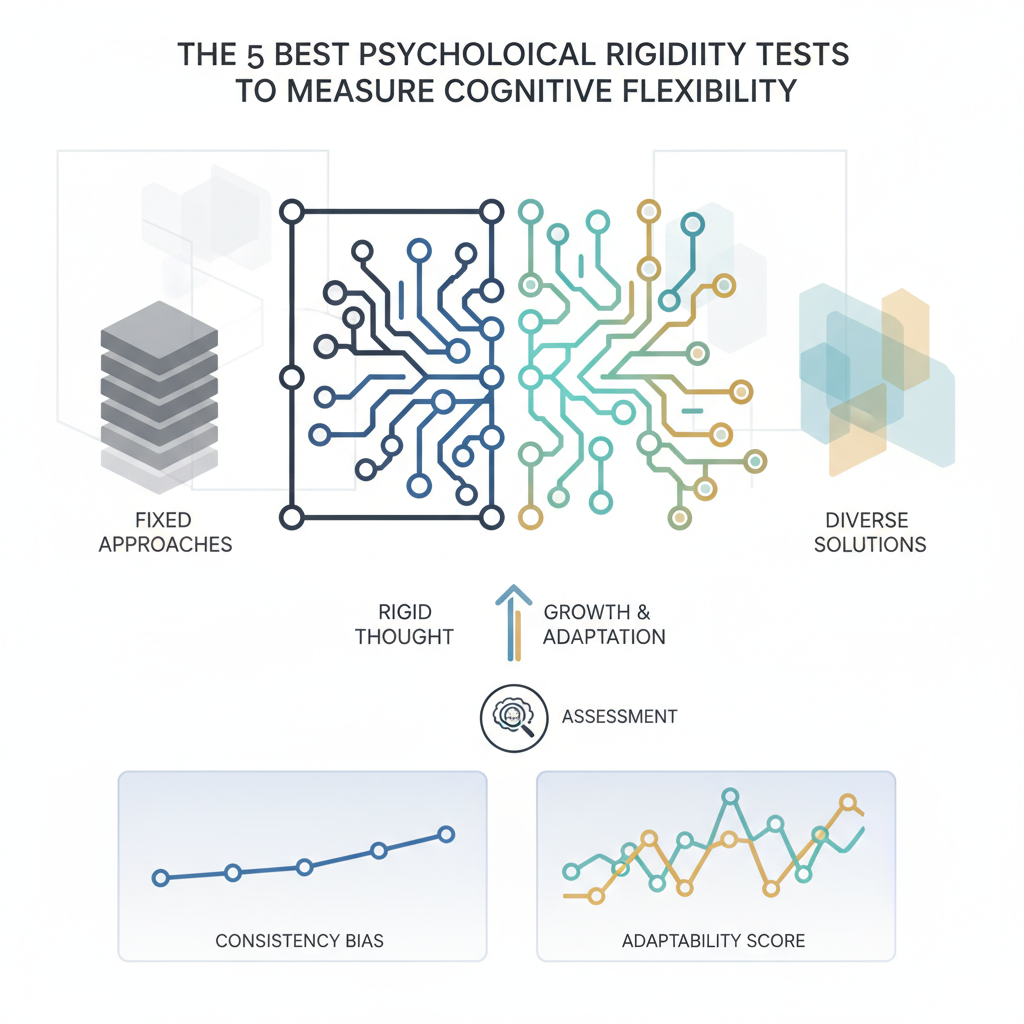
A psychological rigidity test is an assessment designed to measure a person’s cognitive flexibility and resistance to change. It evaluates how easily an individual can adapt their thinking, consider new perspectives, and move away from familiar patterns or beliefs, which is a key component of creative problem-solving.
Do you ever get stuck in a certain way of thinking? Maybe you keep trying the same solution for a problem, even when it’s not working. This is often called psychological rigidity, which is a tendency to resist new ideas or methods. For creativity and innovation, these rigid thought patterns can hold you back. The first step to unlocking your potential is to understand your own thinking style and how flexible your mind is.
In this article, we’ll explore psychological rigidity and its opposite: cognitive flexibility. This is the mental skill that helps you solve problems in new ways. We believe self-awareness is empowering, and tools like psychological rigidity tests can help you better understand how your mind works. This knowledge isn’t just interesting—it provides practical ways to improve how you face challenges, learn, and become more creative.
Are you ready to see how flexible your mind is? We will explore the best psychological rigidity tests and assessments out there. We’ll explain each one clearly and show you what it can reveal about your thinking. From well-known inventories to in-depth tools like The Creative Ability Test, you’ll find a path to self-discovery that can boost your personal and professional growth.
What is Psychological Rigidity (and Why Does It Matter for Creativity)?
Understanding Cognitive Flexibility vs. Rigidity
Our minds are great at solving problems. But we don’t all approach challenges the same way. This is often due to two different thinking styles: cognitive flexibility and psychological rigidity.
Psychological rigidity is when you get stuck in your usual ways of thinking. People with high psychological rigidity find it hard to change their point of view. They may struggle with new situations or different ideas. This can block new thinking.
On the other hand, cognitive flexibility is like a mental superpower. It’s the skill of easily switching how you think about things. Flexible thinkers adapt quickly to change. They can see a problem from many sides and come up with different solutions. This skill is key to handling our complex world.
To make this clearer, here are the main traits of each:
- Psychological Rigidity
- Likes set routines and methods.
- Resists new or conflicting information.
- Struggles to find other solutions.
- Finds it hard to change plans.
- Often feels comfortable with “how things have always been done.”
- Cognitive Flexibility
- Welcomes new ideas and experiences.
- Easily shifts focus between tasks.
- Looks at problems from different angles.
- Adapts quickly to unexpected changes.
- Seeks out new learning opportunities.
Here’s an easy way to think about it: A rigid mind is like a train on a single track. It can only follow one path. A flexible mind is like an off-road truck. It can change its route to get around barriers and explore new places. Knowing your own thinking style is the first step to becoming more creative.
The Link Between Flexible Thinking and Innovation
So, why is this important for creativity? The link is very strong. Creative ideas don’t come from rigid thinking. They grow when you are open-minded and can adapt.
Innovation is all about finding new ways to see things. It means connecting ideas that don’t seem related. It also means going beyond the usual solutions. This is where cognitive flexibility really helps.
- Coming Up with More Ideas: Flexible thinkers are great at brainstorming. They can think of many different options. This opens the door to new and original ideas.
- Better Problem-Solving: When facing a challenge, a flexible mind doesn’t quit. It tries a new approach. It might even restate the problem. This ability to adapt often leads to big breakthroughs.
- Welcoming Change: Innovation often shakes things up. Rigid thinking fights change, which stops progress. Flexible thinking welcomes change and sees it as an opportunity. For example, successful business owners are often very flexible. They change their plans as the market changes [source: https://hbr.org/2014/10/the-secret-to-becoming-a-good-decision-maker].
- Learning and Growing: A flexible mind is always learning. It easily soaks up new information. It connects different pieces of knowledge to create better ideas. This constant growth boosts creativity over time.
If you want to be more innovative, learn new skills, or just get better at solving daily problems, building cognitive flexibility is key. It helps you move from just understanding a problem to actively creating a solution. The Creative Ability Test can show you your current thinking style. It offers personal tips to help you become more mentally agile. This process can help you unlock your full creative potential.
The Top 5 Tools to Test Your Psychological Rigidity
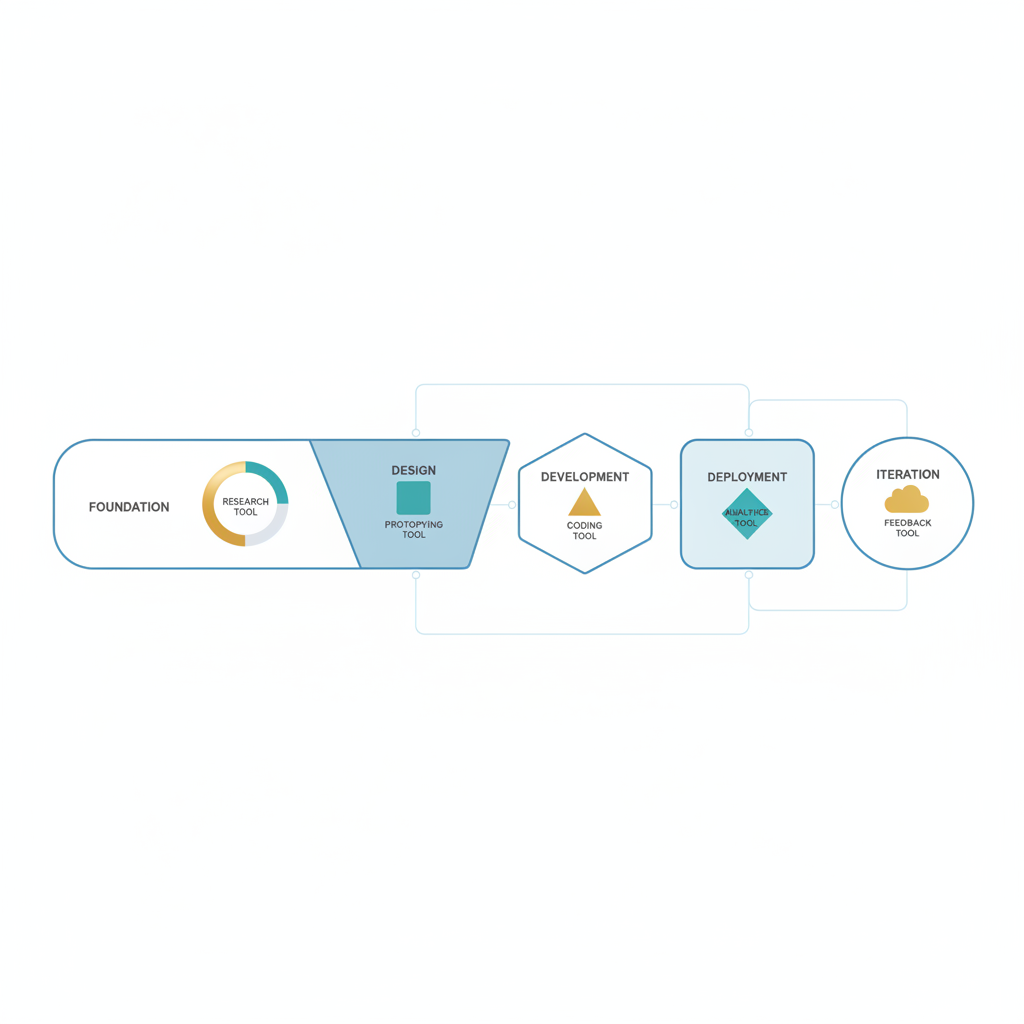
1. The Creative Ability Test (For Actionable Insights)
To unlock your creative potential, you need to think flexibly. The Creative Ability Test is a unique, science-based tool that can help. It does more than just give you a score. It provides practical advice about your creative strengths and thinking patterns.
Our comprehensive 30-question assessment looks at different parts of your creativity. This includes how you come up with new ideas, solve problems, and approach new experiences. You will get personalized feedback that helps you understand your creative style and gives you real steps to improve.
Many traditional tests just point out where your thinking is rigid. In contrast, the Creative Ability Test helps you move forward. It guides you toward greater self-awareness with clear, practical steps. You will get a clear picture of your creative talents and learn how to use them for personal and professional growth.
This platform gives you the tools to think more innovatively. It offers a clear path to improving your creative abilities. For example, you might find you are a natural brainstormer, and we will give you tips to get even better. This makes complex ideas about creativity simple and easy to use.
2. Classic Cognitive Flexibility Inventories
Besides our test, there are other classic inventories used in psychological research. These tools measure how well you adapt your thinking. They check how easily you can switch between tasks or handle unexpected changes. [1]
These tests usually present you with specific situations and ask how you would respond. Your answers show patterns in the way you think. For instance, a test might ask you to list many uses for a common object. While useful for research, they often don’t provide the personalized advice for growth that our Creative Ability Test does.
3. Online Brain Games and Puzzles
Brain games are a fun way to exercise your mind. Puzzles like Sudoku, crosswords, and logic problems challenge your thinking. If you get stuck on a puzzle, it might show you where your problem-solving approach is a bit rigid. These activities encourage you to look at problems differently and try new solutions. [2]
While fun, these games are not formal psychological tests. They offer a casual look at your mental flexibility and are great for daily practice. However, to truly understand your creative potential, a structured assessment is more effective. The Creative Ability Test provides this deeper look, with personalized feedback on your strengths and weaknesses.
4. The Stroop Test
The Stroop Test is a famous experiment in psychology. It measures how well you can control your impulses and ignore distractions. In the test, you see color words printed in the wrong ink color. For instance, the word “red” might be printed in blue. Your task is to say the color of the ink, not read the word. This creates a mental challenge. [3]
Finding the Stroop Test difficult may suggest your thinking is less flexible because you have trouble handling conflicting information. The test is a good way to measure your focus and self-control, revealing how well your brain handles interference. However, it only looks at one specific mental skill, not your overall creativity.
5. Self-Reflection Questionnaires
Self-reflection is a great place to start. Questionnaires can help you look at your own thinking habits. These informal tools ask how you react to change or how comfortable you are with the unknown. They make you think about your problem-solving style. For example, do you look for many solutions or stick with the first one that comes to mind? Answering these questions can help you become more self-aware.
These questionnaires are not scientific, and their value depends on your honesty. Still, they are a good first step for noticing patterns in how you think. For a more accurate picture, it is best to use a science-backed tool. The Creative Ability Test provides that scientific foundation and offers a clear path to boosting your creativity.
What Do Psychological Rigidity Test Questions Look Like?
Examples of Problem-Solving Scenarios
Tests for mental flexibility often use unique puzzles. These questions are designed to see how you adapt your thinking. They show if you can move beyond typical solutions and come up with many different ideas.
Consider a common test: you are given an object and asked to list as many *other* uses for it as possible. This type of question measures divergent thinking, which is a key part of creativity [4]. For example, a question could be: “Imagine a brick. List ten different ways you could use it, besides building.”
Another approach involves breaking your assumptions. You might see a puzzle that seems to have only one logical answer. However, the real solution often requires you to question the starting rules. For instance, a classic riddle might challenge you to connect nine dots with four straight lines without lifting your pen. This problem tests your mental flexibility and encourages “thinking outside the box.”
Such questions are not about finding the “right” answer. Instead, they check how willing you are to explore many options. They show how you handle unclear situations. Your Creative Ability Test includes similar puzzles. It helps you understand your natural tendency for flexible problem-solving. This insight can then guide you toward becoming more creative.
Assessing Your Openness to New Ideas
Beyond puzzles, tests for mental flexibility also check your openness to new ideas. This trait is crucial for creativity. It shows how comfortable you are with new things and with change. It also shows how open you are to different viewpoints.
You might find questions that present unusual situations. These questions ask for your immediate reaction or what you would do. For example, “A new technology completely changes how people communicate. Describe your feelings and what you would do first.” Your response shows how willing you are to embrace the unknown and how well you adapt.
Other questions check your attitude toward unconventional solutions. They might ask you to rate statements like: “I prefer to stick with methods that have worked in the past.” Or, “I enjoy exploring ideas that challenge common beliefs.” Your agreement or disagreement provides insight into your comfort level with new ideas. Research shows that openness to experience is a strong sign of creative achievement [5].
These types of questions help you recognize your current thinking patterns. They are not about judging you. Instead, they offer a mirror to your mind. Understanding your own openness is key for personal growth. The Creative Ability Test provides personal feedback on this area. It offers strategies to build a more open and flexible mindset, which helps boost your creative potential.
How Can You Improve Your Cognitive Flexibility?
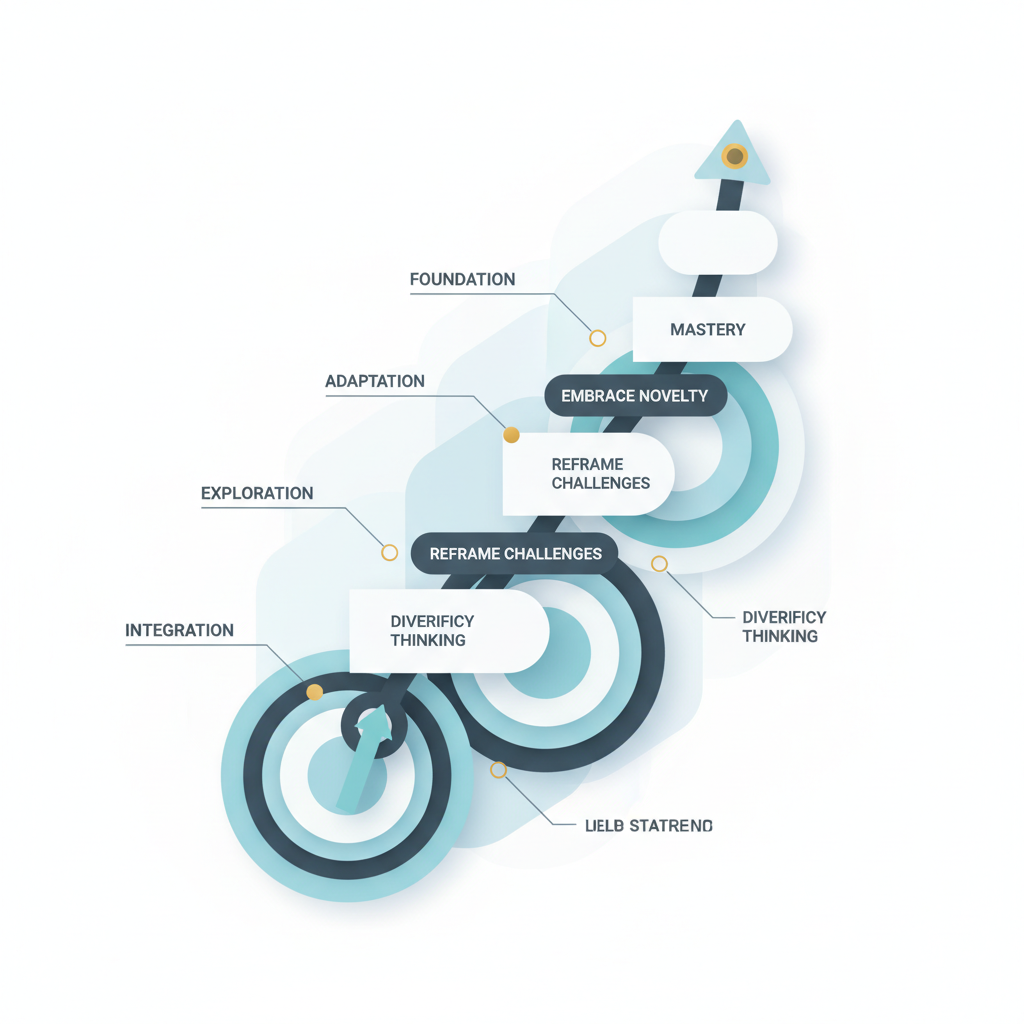
Practical Steps to Break Rigid Thinking Patterns
Becoming more flexible in your thinking is a journey. It takes conscious effort and regular practice. Think of your brain as a muscle. It gets stronger and more adaptable with the right kind of exercise.
Here are practical steps to help you think in more flexible and creative ways:
- Embrace Novelty Daily: Look for new experiences. Try a different route to work. Cook a new recipe for dinner. Read a book from a genre you usually avoid. New experiences challenge your brain’s usual thought patterns and build flexibility.
- Practice Divergent Thinking: When you face a problem, brainstorm as many solutions as you can. Do not judge your ideas at first. Focus on quantity. This practice helps you think more broadly.
- Challenge Your Assumptions: Regularly ask yourself “why” and “what if.” Question your core beliefs and consider different points of view. This helps you see situations from new angles.
- Try Mind-Expanding Activities: Learn a new skill, like playing an instrument or speaking a foreign language. Research shows that learning a second language can greatly improve mental flexibility [6]. These activities build new brain pathways and make you more adaptable.
- Seek Different Perspectives: Talk with people from different backgrounds. Listen carefully to their ideas and experiences. Understanding their viewpoints can broaden your own thinking and make it less rigid.
- Play Brain Games and Puzzles: Games like Sudoku, chess, crosswords, and logic puzzles are excellent for your brain. They challenge you to solve problems creatively and train your mind to explore different strategies.
- Practice Mindfulness and Meditation: Regular mindfulness can greatly improve your attention and control over your emotions [7]. This helps create a calmer, more open mindset, which is key to flexible thinking.
- Change Your Routine: Even small changes can help. Eat lunch at a different time. Rearrange your desk. Breaking your routine forces your brain to adapt and find new solutions.
These habits help your brain form new pathways. They make your thinking more adaptable. As a result, your thinking becomes more flexible, responsive, and creative.
Using Your Test Insights for Personal Growth
Understanding your own mental flexibility is a great first step. The Creative Ability Test gives you science-backed insights into how you think. It shows your creative strengths and points out areas where your thinking might be rigid.
Your personal report is a roadmap for growth. It helps you move from being unsure to having clear, practical self-awareness. Here’s how to get the most from your test results:
- Find Your Specific Rigid Areas: Your test results show you exactly where your thinking might be less flexible. For example, you might be great at coming up with many ideas but find it harder to switch your approach to a problem.
- Tailor Your Practice: Use this specific feedback to focus your efforts. If your report highlights “fixation” as an area for growth, make a point to challenge your assumptions more often. If “task switching” is difficult, try doing different activities in short bursts.
- Track Your Progress: Checking in with yourself is key. Notice when you fall back into rigid thinking patterns. Acknowledge and celebrate small wins when you successfully adapt your thinking.
- Set Achievable Goals: Avoid trying to change everything at once. Select one or two specific areas from your Creative Ability Test results. Focus your practice on these areas for a few weeks to build momentum.
- Unlock Your Creative Potential: As you practice these strategies, you will see real improvements in your problem-solving skills. You’ll find yourself coming up with more varied and creative ideas. This boosts your overall creative potential and builds a mindset of continuous growth.
The Creative Ability Test helps you on your creative journey. It turns abstract psychological ideas into practical, personal strategies. This leads to real personal and professional growth. You move from simply understanding creativity to actively using it to innovate in all parts of your life.
Frequently Asked Questions
Can I find a psychological rigidity test online for free?
Yes, you can find free online quizzes that look at psychological rigidity, also known as cognitive flexibility. They offer a quick, informal look at how you think.
However, it’s important to know their limits. Many free tests are not backed by solid science. They may not give you an accurate or deep look into how your mind works.
For real self-discovery and practical tips, a science-backed test is best. For example, the Creative Ability Test is thorough and based on evidence. It gives you personalized feedback that’s more than just a score, helping you grow.
Think about what you want to learn. If you’re looking for real understanding and ways to boost your creativity, a proven test offers far more value.
What is a cognitive flexibility test online?
An online cognitive flexibility test measures how well your brain adapts to change. It looks at how easily you switch between different thoughts or tasks. It also shows how you adjust to new situations.
These tests give you problems that make you change your point of view. You might do tasks where the rules change, or you have to think of many solutions. For example, a test might ask you to list unusual uses for an everyday object. This is a classic way to measure divergent thinking, which is a key part of flexibility [8].
Our Creative Ability Test, for example, looks at different parts of your creativity, including cognitive flexibility. It helps you understand your own thinking style. The results show your problem-solving strengths and give you personal tips to become more adaptable and creative in your daily life.
Taking a test like this helps you understand yourself better. It gives you the tools to use your creativity in new and powerful ways.
Are there specific psychological rigidity tests for adults?
Yes, many tests for psychological rigidity and cognitive flexibility are made just for adults. They are designed to fit adult ways of thinking and life experiences.
Adults often take these tests for a few key reasons:
- Career Growth: Knowing how flexible your thinking is can spark new ideas at work. It also helps you adapt to changes in your field.
- Personal Growth: Understanding your thought patterns can improve your problem-solving skills. It also makes it easier to handle everyday challenges.
- Self-Awareness: These tests show you how open you are to new ideas and how you react to change.
- Boosting Creativity: By finding where your thinking is rigid, you can work on building more flexible and creative habits.
The Creative Ability Test is designed for adults who want to measure and improve their creativity. It gives you practical steps to apply creative thinking to real-life situations, which helps you become more cognitively flexible.
Where can I find a psychological rigidity test PDF?
You can often find psychological rigidity test PDFs in academic journals or clinical psychology databases. They might be part of published research papers or tools used by therapists. These PDFs usually contain standard questions for studies or diagnoses.
But just finding a PDF has its own problems. It won’t score itself or give you an expert analysis. You often need special training to understand the results.
For a better experience, an online platform like the Creative Ability Test has clear benefits. Our platform gives you:
- Instant Scoring: Your answers are checked against scientific data right away.
- Personal Feedback: You get custom feedback on your strengths and where you can improve.
- Practical Tips: We give you real steps you can take to improve your flexibility and creativity.
- Clear Explanations: Your results are explained in simple, easy-to-understand language.
A PDF can give you a peek, but a complete online test provides the self-awareness and practical advice you need to truly grow.
Sources
- https://psycnet.apa.org/record/2010-18408-001
- https://www.ncbi.nlm.nih.gov/pmc/articles/PMC8900010/
- https://www.ncbi.nlm.nih.gov/pmc/articles/PMC3969542/
- https://www.sciencedirect.com/topics/psychology/divergent-thinking
- https://www.ncbi.nlm.nih.gov/pmc/articles/PMC8945763/
- https://www.ncbi.nlm.nih.gov/pmc/articles/PMC6647464/
- https://www.ncbi.nlm.nih.gov/pmc/articles/PMC7600742/
- https://psycnet.apa.org/record/1968-07208-001