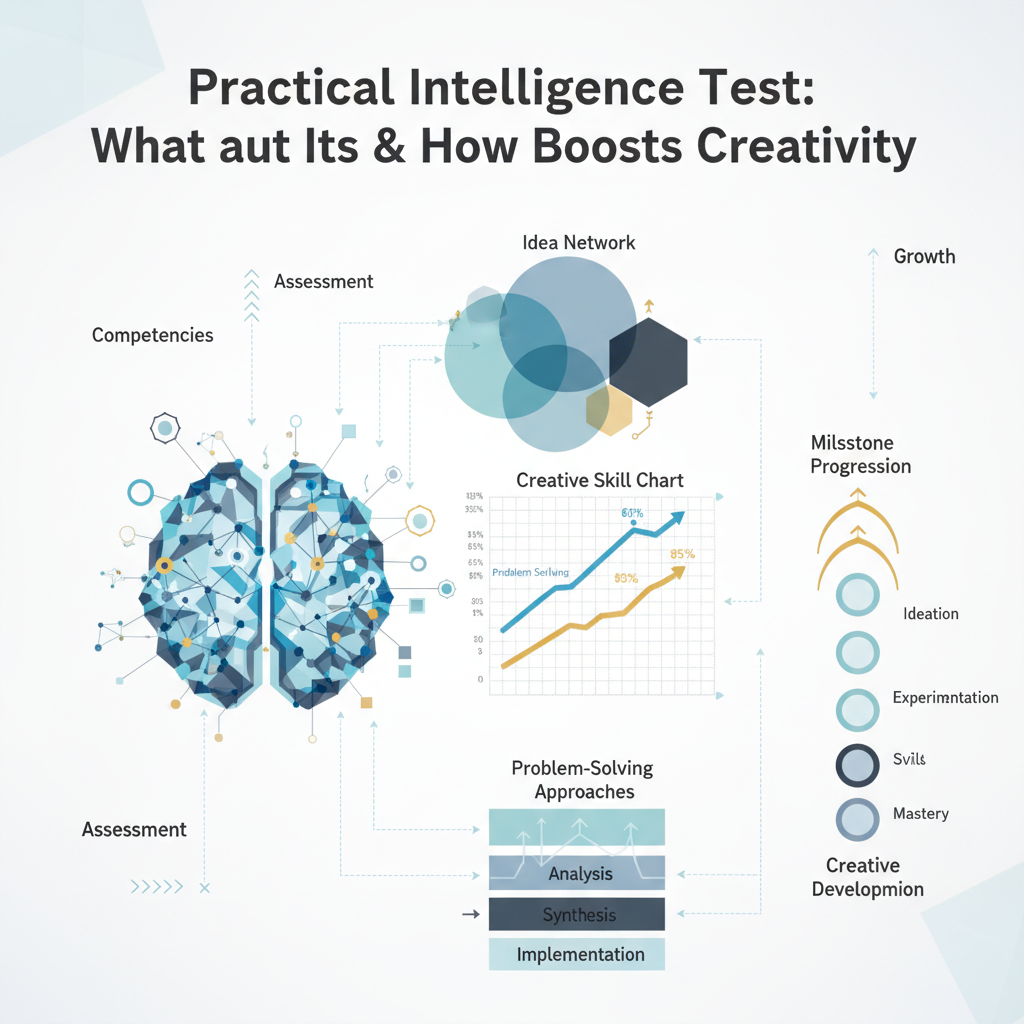
A practical intelligence test assesses your ability to solve everyday, real-world problems using experience and context, often called ‘street smarts.’ It measures how effectively you adapt to, shape, and select environments to achieve your goals, differing from traditional IQ tests that focus on academic knowledge.
Do you know someone who handles tricky social situations well, finds clever solutions to everyday problems, or just knows how to get things done? This isn’t luck. It’s a sign of practical intelligence—an important skill that standard academic tests don’t measure. While “book smarts” are valuable, real-world success and creative thinking often depend on this overlooked form of intelligence. It’s the ability to adapt to your environment to achieve your goals.
Understanding practical intelligence is important because it’s a key driver of creativity. It’s the skill that helps you turn ideas into actionable plans and solve real-world problems in your personal and professional life. In this article, we’ll look at what a practical intelligence test measures, how it differs from a traditional IQ test, and how these problem-solving skills are linked to your creative potential. Learn how using your “street smarts” can unlock new ways of thinking and help you grow.
What Exactly Is a Practical Intelligence Test?
Moving Beyond ‘Book Smarts’ to ‘Street Smarts’
Many of us grew up valuing “book smarts.” That meant doing well in school or on traditional IQ tests. But real life requires more than textbook knowledge. That’s where practical intelligence, or “street smarts,” comes in. It’s the common sense you use every day.
A practical intelligence test doesn’t use abstract problems. Instead, it measures how well you solve everyday challenges. It also looks at how you handle social situations. This skill is about using what you know in the real world to reach your goals.
Understanding your practical intelligence helps you grow. It shows your innate problem-solving abilities, which are key for new ideas. Our Creative Ability Test can help you find these strengths. It offers a look at how you use creativity in your daily life.
You’ll learn to turn challenges into opportunities. This helps you make better decisions and approach problems with more confidence.
The Three Core Skills: Adapting, Shaping, and Selecting
Practical intelligence isn’t just one skill. Psychologist Robert Sternberg, a top expert, broke it down into three parts. These skills work together to help you succeed in different situations [1]. When you understand them, you can see how you think and improve your creative problem-solving.
Here are the three essential abilities:
- Adapting: This is when you change to fit your surroundings. For example, learning new software for a project or changing how you talk to a different audience. Being adaptable is key to handling new situations well.
- Shaping: This is when you change your environment to work better for you. You might reorganize your desk to focus or suggest a new, better process at work. Shaping means taking action to improve things.
- Selecting: Sometimes, the best choice is to leave a situation that isn’t working. This means finding a new place where you can thrive. For example, looking for a job that you’re passionate about. Selecting helps you find a better fit.
Our assessment looks at these parts of your practical thinking. It shows how you naturally interact with the world. By understanding these skills, you can spot your creative strengths. It also gives you clear steps for growth, helping you use your creativity more effectively in real life.
How Is Practical Intelligence Different from IQ?
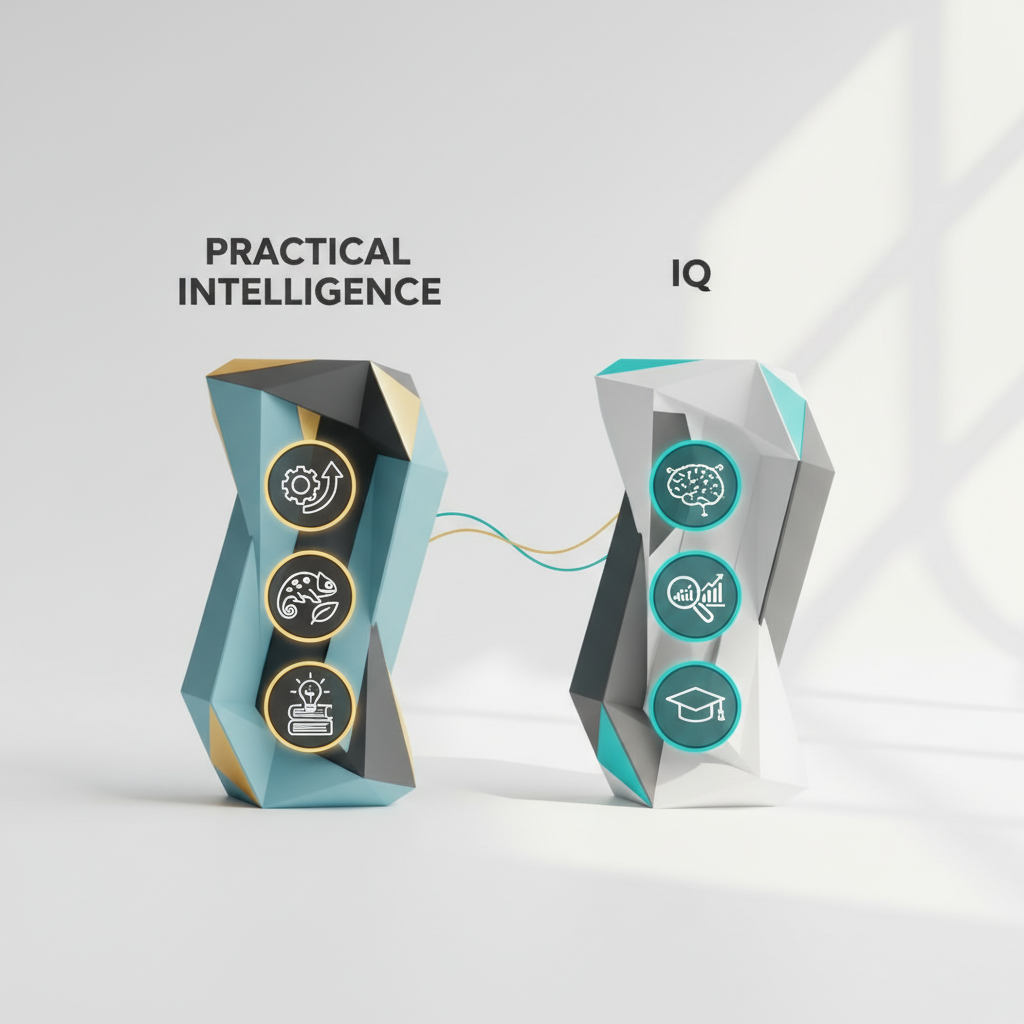
Academic Problems vs. Real-World Challenges
Many people link intelligence to IQ scores. But practical intelligence offers a different view. It focuses on a different set of skills. Think of it as the difference between “book smarts” and “street smarts.”
IQ tests usually measure academic intelligence. They focus on problems that have clear answers. These problems often use abstract thinking and logic. For example, an IQ test might ask you to solve a tough math problem. It could also give you a pattern-matching puzzle. These tests are good at predicting success in school [2].
Practical intelligence, on the other hand, is about dealing with the messy problems of real life. It involves solving problems that are not clearly defined. These challenges often don’t have a single “right” answer. Instead, they require creativity, flexibility, and good judgment. Imagine you need to fix something with only a few tools. Or maybe you have to handle a tricky social situation. These are great examples of practical intelligence. This type of intelligence helps you manage your environment and change it to fit your needs.
The Creative Ability Test values both types of intelligence. But it focuses on how practical thinking fuels your creativity. Real-world problems often need new solutions. This pushes you to think beyond just memory or logic. It encourages you to think flexibly and come up with fresh ideas. This process is key for personal growth and solving problems.
What Each Type of Test Reveals About You
Both IQ tests and practical intelligence assessments give you useful information. They just measure different parts of your overall cognitive abilities. Understanding these differences helps you see your own unique strengths. It also shows how they contribute to your creative talent.
An IQ test mainly shows how well you use analysis and logic. It can suggest how quickly you can learn new things. It also shows your ability to think about abstract ideas. This is great for schoolwork. However, it might not show how you apply that knowledge in the real world. It also may not reveal how you come up with new solutions to complex problems.
A practical intelligence test gives a different picture. It reveals how well you adapt to new situations. It shows your ability to solve everyday problems. It also highlights your skill in managing tasks and getting along with others. This test uses your life experience. It also measures your talent for finding creative solutions in real-world situations. It’s about how you succeed outside of a classroom.
To see these differences clearly, look at the table below:
| Feature | IQ Test (Academic Intelligence) | Practical Intelligence Test |
|---|---|---|
| Focus | Abstract problems, logical reasoning, memory | Real-world challenges, adaptability, problem-solving |
| Problems | Well-defined, often with one correct answer | Unclear problems with many possible answers |
| Skills Measured | Analysis, language, and math skills | Good judgment, people skills, learning from experience |
| Context | School, theories, and organized settings | Daily life, work, and changing situations |
| Relationship to Creativity | Provides the basic thinking skills for creativity | Shows how you use creative solutions in real life |
The Creative Ability Test connects these two ideas. It helps you understand your practical thinking style. This test shows how you use your intelligence in creative ways. It helps you face real-world challenges with new strategies. As a result, you get useful insights you can act on. These insights help you improve your problem-solving skills and boost your creativity. This leads to personal and professional growth.
How Does Practical Intelligence Fuel Your Creativity?
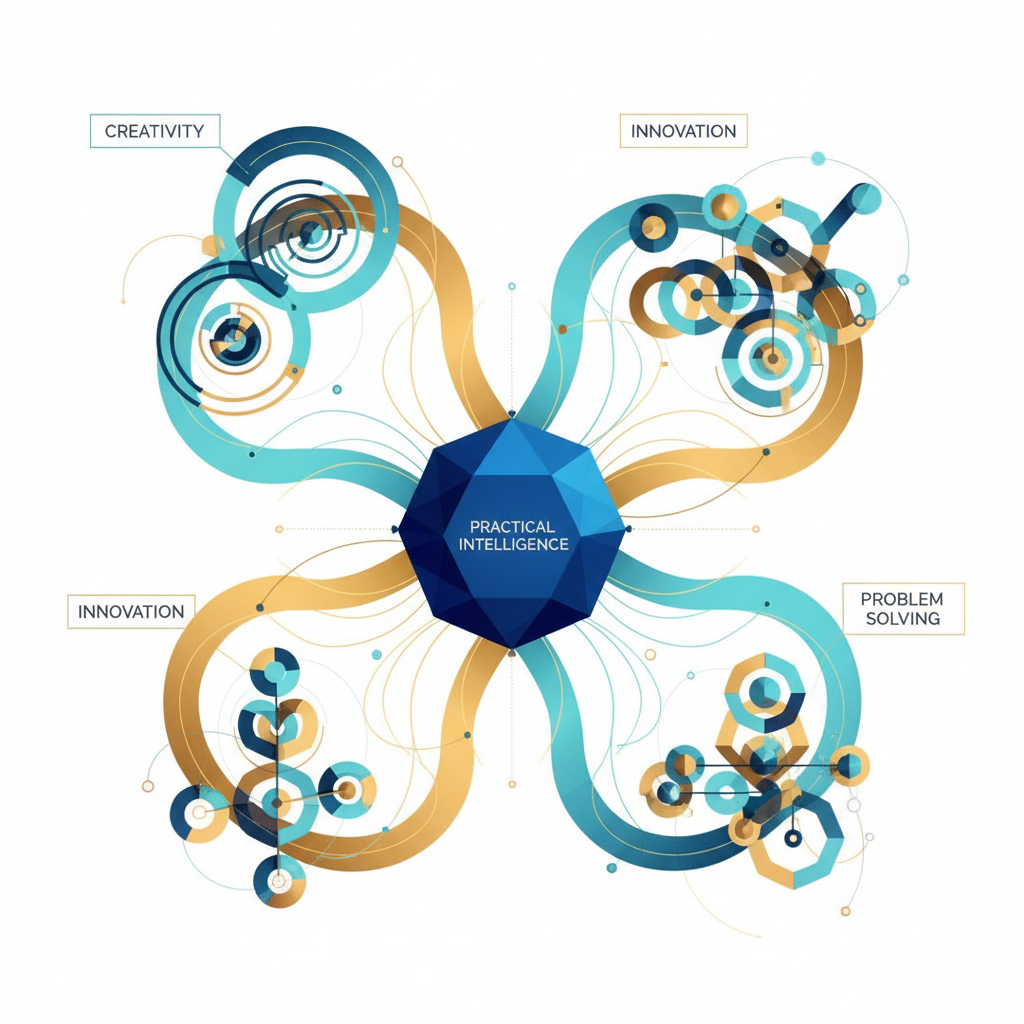
The Link Between Everyday Problem-Solving and Innovation
Creativity is often misunderstood. Many people think it is just for artists, but it is much more than that. It is about finding smart solutions to everyday problems. This is where practical intelligence comes in.
Practical intelligence is often called “street smarts.” It is your ability to solve real-world problems, something you use every day. This skill helps you adapt to new situations. It also helps you change your surroundings for the better and choose the best way to move forward [3].
Consider how these everyday skills lead to real innovation:
- Adapting: You face an unexpected problem at work. Your practical intelligence helps you adjust your plan quickly. This flexibility is a key part of creative problem-solving.
- Shaping: You notice a process that isn’t working well. Instead of accepting it, you think of ways to improve it. This desire to make things better is a form of creativity.
- Selecting: When you have several options, you weigh the pros and cons to pick the best one. This type of decision-making is key to finding new and better solutions.
So, practical intelligence is not separate from creativity. It is a powerful engine that drives it. It helps you turn ideas into action. You find new ways to handle tasks and invent new strategies.
When you get better at practical problem-solving, you also boost your creativity. It helps you brainstorm many unique ideas and then pick the very best one to put into action.
How Our Test Uncovers Your Practical Thinking Style
The Creative Ability Test helps you understand your creative potential. It uses a 30-question assessment based on scientific research. While it doesn’t only measure practical intelligence, it shows important parts of how you think in real-world situations.
Our test looks at several areas of creativity. These areas are closely connected to practical intelligence. They include:
- Cognitive Flexibility: This measures how easily you can switch between different viewpoints and adapt your thinking. This skill is essential for solving problems when things are changing.
- Problem-Solving Skills: The test looks at how you handle challenges. It sees how you create and judge solutions, showing your ability to use “street smarts” in new situations.
- Openness to New Experiences: This trait shows how willing you are to explore new ideas. Practical intelligence encourages you to try new approaches and learn from your surroundings.
Our detailed assessment gives you personalized feedback. You will get a clear picture of your creative strengths and also see areas where you can grow. This is more than a score; it is a practical guide to help you understand yourself better. For example, if you have high cognitive flexibility, you adapt well and can use this strength to create innovative solutions.
The Creative Ability Test offers useful strategies to help you improve your creative thinking. These tips are valuable for both personal and professional growth. Discover how your everyday problem-solving skills can make you a creative powerhouse and unlock your potential for innovation.
What Do Practical Intelligence Test Questions Look Like?
Examples of Situational Judgment Scenarios
Practical intelligence tests often use situational judgment scenarios. They present you with real-world problems and ask you to choose the best course of action. This format helps show how well you apply your knowledge and skills in daily life.
These questions don’t have “textbook” answers. Instead, they focus on your judgment and decision-making skills. They show how you handle tricky social or professional situations and use creative thinking to solve problems.
Here are some examples of what these scenarios might look like:
- Workplace Conflict: Imagine two team members constantly disagree. Their conflict impacts productivity. You are their team leader. How would you address this situation most effectively?
- Resource Scarcity: Your project has an unexpected budget cut. You need to deliver the same results with fewer resources. What is your first step to adapt and ensure project success?
- Customer Complaint: A loyal customer is very upset about a service failure. The mistake was not yours. How do you best handle their complaint to retain their business and trust?
- Implementing New Ideas: You have a novel idea to improve a long-standing company process. However, some colleagues are resistant to change. How would you convince them to adopt your innovative approach?
Many companies use Situational Judgment Tests (SJTs) to see how well people will perform in jobs that require good social and problem-solving skills [4]. Our platform uses a similar approach to help you discover your own problem-solving strengths.
How These Questions Reveal Your Problem-Solving Approach
Your answer to each scenario shows how you think. There are no simple right or wrong answers. Instead, your choices reveal your personal problem-solving style and your ability to find the right solution for a situation. This is the core of practical intelligence.
Here’s what your choices can reveal about your skills:
- Adaptability: How quickly do you adjust to new information or changing plans? Finding flexible solutions is a key part of creative thinking.
- Strategic Thinking: Do you think about the long-term results of your actions? Do you focus on what’s most important? This shows you can plan ahead and see where your choices might lead.
- Emotional Intelligence: Do you think about the feelings and goals of others? Can you handle social situations well? Good people skills are essential for working creatively with a team.
- Resourcefulness: Can you do a lot with a little? Do you find creative ways to meet goals, even with limits on your time or budget? This shows you know how to improvise.
Our Creative Ability Test can help you see your strengths in these areas. When you understand your practical intelligence, you gain confidence in your creative abilities. You’ll learn how to use your skills to solve problems and come up with new ideas. Practical intelligence is useful everywhere, from personal hobbies to your career. It helps you turn confusing situations into moments of clarity and provides a clear path to grow as a creative thinker.
How Can You Improve Your Practical Intelligence?
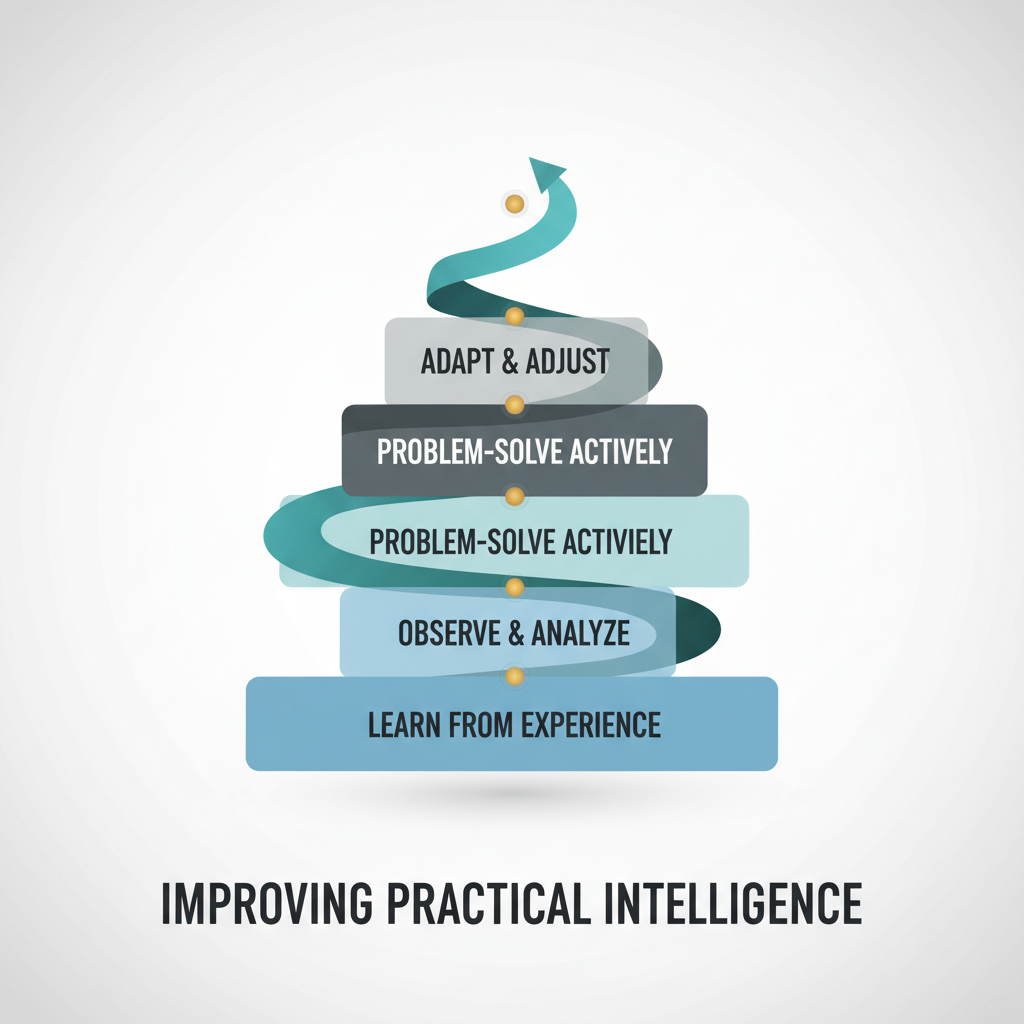
Actionable Tips for Sharpening Your Real-World Skills
Boosting your practical intelligence is a journey. It means engaging with your environment and learning from every interaction. This ability fuels your creativity and problem-solving skills.
Here are actionable steps to sharpen your practical intelligence:
- Observe and Analyze Actively: Pay close attention to how people handle situations. Notice what works and what doesn’t. This helps you build a mental library of solutions.
- Seek New Experiences: Step outside your comfort zone. Try a new hobby or visit an unfamiliar place. New environments challenge your thinking. They also boost your cognitive flexibility, a key part of creativity [5].
- Practice Problem-Solving: Don’t avoid complex issues. Instead, break them into smaller parts and look at them from different angles. This approach sharpens your ability to find practical solutions.
- Build Empathy: Try to see things from other people’s viewpoints. Understand their motivations and challenges. This skill is key for teamwork and resolving conflict. It also improves your social intelligence.
- Learn from Mistakes: Every setback is a lesson. Think about what went wrong and what you could do differently next time. This helps you become more resilient and better understand how things work.
- Be Adaptable: Life is unpredictable. Be ready to change your plans when new information comes along. This flexibility is a key sign of practical intelligence.
- Ask “Why?” Often: Look past the surface of a problem. Ask about the underlying causes and reasons. This critical thinking helps you find and fix the root cause, not just the symptoms.
By using these tips regularly, you’ll get better at handling real-world challenges and strengthen your creative problem-solving skills. Our Creative Ability Test can help you understand your thinking style. It then gives you personalized tips for growth.
Learning from Experience and Seeking Feedback
Practical intelligence grows when you reflect on your experiences and get feedback from others. It’s not enough to just go through something; you have to think about what happened. Learning from the past is crucial.
Reflect on Your Experiences
After facing a challenge, take time to think about it. Ask yourself these questions:
- What was the problem?
- What actions did I take?
- What were the immediate and long-term outcomes?
- What would I do differently next time?
- What new insights did I gain about myself or the situation?
This kind of reflection turns your experiences into useful lessons. Over time, you’ll start to see patterns. This helps you prepare for future challenges and use successful strategies in new situations.
Actively Seek and Utilize Feedback
Your point of view is only one piece of the puzzle. Getting feedback gives you new ideas and helps you see your blind spots. It can also show you solutions you hadn’t thought of.
Here’s how to make feedback a powerful tool:
- Ask Specific Questions: Instead of asking “How did I do?”, try “What could I have done better in that negotiation?” Specific questions lead to specific, helpful advice.
- Seek Different Perspectives: Talk to colleagues, mentors, or friends. Different people have unique points of view. This helps you understand the full picture.
- Listen Without Getting Defensive: It can be tough to hear feedback. Focus on understanding the message instead of making excuses. Remember, the goal is to learn and grow.
- Try New Approaches: After you get feedback, try to put some of the suggestions into action. See what happens. This process of trial and error sharpens your practical skills and builds your confidence.
Our Creative Ability Test gives you structured, science-backed feedback on your creative strengths and thinking style. The personalized report helps you understand your unique profile. This empowers you to use your creativity more effectively in the real world. This journey of self-discovery helps you turn uncertainty into useful self-awareness.
Frequently Asked Questions
Where can I find a practical intelligence test online free?
Many websites offer free “practical intelligence” or “street smarts” quizzes. However, their scientific accuracy can vary a lot. While these casual tests can be fun and offer a quick overview, they may not be reliable.
For more meaningful results, look for tests based on psychological research. Trustworthy platforms use proven theories to build their assessments.
At Creative Ability Test, our assessments are backed by science. Our platform helps you understand your creative potential, which is a key part of practical intelligence. We measure how you solve problems and come up with new ideas.
We provide personalized feedback and useful strategies. These tips help you improve your cognitive flexibility and divergent thinking. Both skills are key to succeeding in the real world.
What is the Triarchic intelligence theory test?
Psychologist Robert Sternberg developed the Triarchic Theory of Intelligence. His theory says that intelligence isn’t just one thing [6]. Instead, it’s made up of three different but related types. A test based on this theory measures all three areas.
These three intelligences are:
- Analytical Intelligence: This is “book smarts.” It involves problem-solving, evaluation, and analysis. It is often measured by traditional IQ tests.
- Creative Intelligence: This is about dealing with new situations. It involves using existing knowledge and skills in new ways. This helps you generate new ideas and imagine possibilities.
- Practical Intelligence: This is “street smarts.” It involves adapting to, shaping, or selecting a new environment to succeed in everyday life.
Our Creative Ability Test focuses on the creative and practical sides of intelligence. We offer insights into your thinking styles and show you how to apply your creativity to real-world problems. This helps you build innovative thinking for personal and professional growth.
What kind of questions are on a practical intelligence test?
Practical intelligence tests use real-world scenarios, not abstract puzzles. They ask how you would respond to everyday situations to see how you handle different challenges.
These questions are often called Situational Judgment Tests (SJTs). They assess your ability to:
- Adapt to New Circumstances: How do you adjust when plans change?
- Solve Everyday Problems: What steps would you take to resolve a conflict at work?
- Understand Social Cues: How do you interpret non-verbal communication?
- Make Effective Decisions: What is the best course of action given incomplete information?
For example, a question might describe a common workplace dilemma, like needing to prioritize tasks or manage difficult team members. The choices you make reveal your practical thinking style.
At Creative Ability Test, our questions also challenge your problem-solving skills. We focus on how you create original ideas and approach open-ended tasks. This helps you discover your natural ability to innovate and find creative solutions.
Sources
- https://www.apa.org/news/press/releases/2007/04/sternberg
- https://www.apa.org/education-career/guide/science-psychology/intelligence
- https://www.simplypsychology.org/sternberg.html
- https://psycnet.apa.org/record/2012-07086-001
- https://hbr.org/2021/04/the-power-of-cognitive-flexibility
- https://www.simplypsychology.org/triarchic-theory-of-intelligence.html