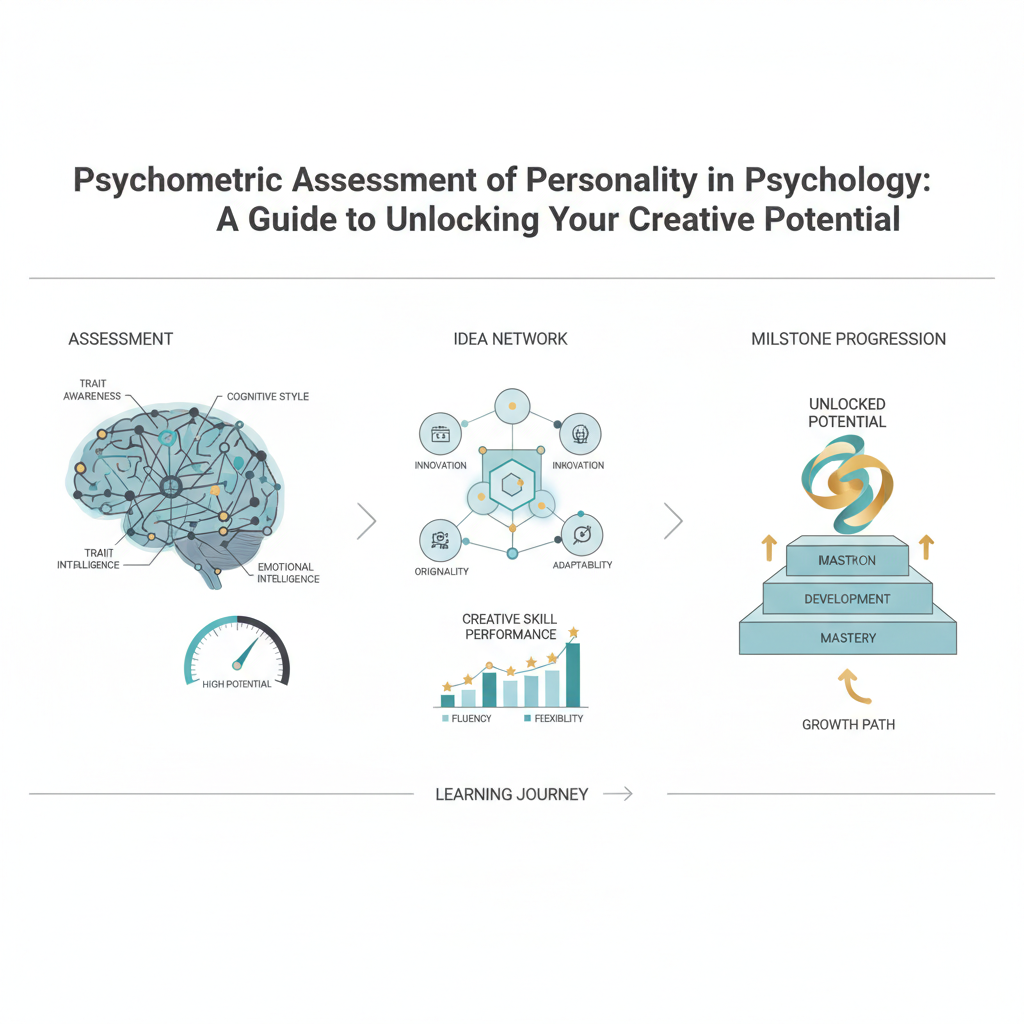
A psychometric assessment of personality in psychology is a standardized, scientific method used to measure an individual’s mental capabilities and behavioral style. These tests are designed to be objective and are used to evaluate traits like openness, cognitive flexibility, and problem-solving skills, providing reliable insights into a person’s character and creative potential.
Many of us are curious about our own creativity. We might wonder how our way of thinking helps us innovate, solve problems, or express ourselves. What if there was a scientific way to understand how your creative mind works? This article explores psychometric assessment of personality in psychology, showing how these tools offer real insight into who you are and how you create.
Unlike online quizzes, these tests go deeper. They provide a reliable, evidence-based way to explore the personality traits and thinking styles that drive your creativity. By understanding these parts of yourself—from your mental flexibility to your openness to experience—you can gain practical self-awareness. This knowledge helps you identify your creative strengths, find areas for growth, and build a strategy to boost your innovative thinking in all parts of your life.
In this guide, we will explain how these assessments work, which key personality traits link to creativity, and how you can use this information to unlock your full potential. Get ready to understand your thinking style better and discover how to nurture your natural ability to innovate and inspire.
What is a Psychometric Assessment of Personality in Psychology?
Going Beyond Simple Labels: A Scientific Approach
Understanding yourself is a powerful journey. A scientific personality assessment can help you explore who you are. It goes beyond simple labels to give you deep, evidence-based insights into your traits and thinking styles. This scientific approach helps you understand the “why” behind your behavior and your true potential.
Psychometrics is the science behind psychological measurement [1]. When used for personality, it relies on carefully designed tools to objectively measure parts of who you are. The goal is to give you a reliable and accurate picture of your personality. This is key to understanding human potential, including creativity.
For creativity, Psychometric assessments are very useful. They help spot the personality traits linked to new ideas, like openness and curiosity. These tests look at how you solve problems and think flexibly. They also measure your ability to brainstorm many unique ideas at once.
The Creative Ability Test is built on this scientific approach. It shows your creative strengths and thinking patterns, helping you understand your natural talent for innovation. It also points out areas where you can improve. We explain complex ideas in a simple way, so you can build confidence and grow your creative skills.
How Is This Different From a Standard Personality Quiz?
You’ve probably taken many online personality quizzes that tell you which animal you are or your creative color. While fun, these are very different from a scientific assessment. Knowing the difference is important if you want to truly understand yourself.
Here’s how a scientific assessment is different from a standard personality quiz:
- Scientific Foundation: Scientific assessments are based on deep psychological research and theories. They are developed by experts. Standard quizzes are usually just for entertainment and aren’t backed by science.
- Rigorous Development: Our assessments are thoroughly tested to ensure they are accurate (they measure what they claim to) and reliable (they provide consistent results). Casual quizzes don’t go through this process.
- standardized questions: Scientific tests use carefully worded questions that are the same for everyone. This allows for fair, unbiased comparisons. Online quizzes often use questions that are unclear or can be interpreted in different ways.
- Actionable Insights: The results from a scientific assessment give you useful advice. You get clear, personal feedback with steps you can take to grow. Standard quizzes usually offer vague or fun results with no real guidance.
- Focus on Potential: Our scientific approach highlights your cognitive flexibility and problem-solving skills. It identifies your unique ways of thinking creatively. A typical quiz gives you a simple label but no clear path for personal growth.
The Creative Ability Test gives you insights backed by science. Our 30-question assessment explores different aspects of your creativity. We provide personal feedback that shows how your personality affects your creative skills. This helps you turn uncertainty into self-awareness and move from inconsistent results to a clear plan for growth. You get more than a score; you get a roadmap for your creative journey.
How Do These Assessments Measure Personality and Creativity?

What Makes a Creativity Test Accurate?
To understand how creativity tests work, we need to look at two key ideas: validity and reliability. These principles make sure a test gives you results you can trust. Without them, a test is just guessing.
Validity asks a simple question: Does this test actually measure creativity? A valid creativity test measures your creative skills, not just something related like your vocabulary. For example, a valid test for “divergent thinking” will accurately show how well you can come up with many different ideas [2].
Reliability is all about consistency. If you take the same test a few times, will you get similar results? A reliable test gives you a steady score, building your trust in the feedback you receive.
Our Creative Ability Test is built on this scientific foundation. We’ve designed it to be both valid and reliable, so you can be confident that your results and personalized feedback are accurate.
Key Personality Traits for Creativity
Creativity isn’t one single thing. It’s a mix of different personality traits. Our assessment explores these traits to show how your personality can help or hinder your creative side. Research shows a clear link between certain personality traits and creative potential [3].
Here are some of the key personality traits linked to creativity:
- Openness to Experience: This is one of the strongest signs of creativity. People high in openness are curious, imaginative, and welcome new ideas. They enjoy exploring unusual concepts and trying new things.
- Conscientiousness (in moderation): Being organized and disciplined can be helpful, but not to an extreme. A balanced approach helps you follow through on ideas without becoming too rigid to think freely.
- Extraversion and Introversion: Both personality types can be creative in their own ways. Extraverts often come up with ideas by talking with others. Introverts may find their best ideas through quiet, deep thinking.
- Emotional Stability: People who are calm and less prone to worry can focus better and push through creative blocks. This steady mindset is important for doing innovative work.
Knowing where you stand on these traits gives you a starting point. It helps you understand your natural creative tendencies. Our 30-question assessment explores these areas to reveal how your unique personality shapes your creative skills.
From Personality Insights to Creative Strengths
Knowing your personality traits is the first step. The real power of our assessment is turning those insights into real-world creative strengths. We don’t just label you. We show you how you create and how you can get even better.
Your test results are like a personal guide to your creativity. They show your natural ways of thinking and solving problems. This goes beyond guesswork and gives you practical knowledge. For instance, if you score high on openness, you are probably great at thinking in new directions and coming up with a lot of original ideas.
The Creative Ability Test helps you:
- Understand Your Creative Thinking Style: Learn if you’re a natural idea generator, a careful planner, or a flexible problem-solver. Every style has its own benefits.
- Identify Specific Strengths: Discover what you’re best at, whether it’s curiosity, imagination, or the ability to switch between different ideas. You can use these skills at work and in your personal life.
- Pinpoint Areas for Growth: Everyone has room to improve their creative skills. Our assessment points you toward the best opportunities to grow.
- Apply Creativity to Real-World Challenges: See how your unique creative profile helps you solve problems, from small daily tasks to big new projects.
This process turns confusion about your creative skills into clear self-awareness. You’ll understand your strengths and get practical tips for improvement. This helps you use your creativity in every part of your life.
What Are the Benefits of a Psychometric Approach to Self-Discovery?

What Are the Benefits of a Psychometric Approach to Self-Discovery?
A journey of self-discovery is life-changing, and a psychometric approach makes that journey even better. It replaces guesswork with a clear, science-backed map of your inner world. This method gives you deep insights into how you think and create, helping you understand your true creative potential.
Our Creative Ability Test uses this approach to help you find your unique strengths. The practical knowledge you gain can empower you in your personal life and at work.
Gaining Actionable Self-Awareness
To grow, you first need to understand yourself. A psychometric assessment gives you this key insight by shining a light on your natural creative abilities. You learn about your mental flexibility and your openness to new experiences, both of which are essential for creativity.
This is more than just self-reflection; it’s feedback based on data. You get a clear picture of your creative thinking styles, which builds confidence and shows you where you can improve.
Here’s what you get with actionable self-awareness:
- Uncovering Hidden Strengths: Find creative talents you didn’t know you had. Many people underestimate their natural ability to be creative [4].
- Clarifying Your Thinking: Learn if you lean towards divergent thinking (coming up with many ideas) or convergent thinking (narrowing down to the best solution).
- Understanding Your Motivations: Discover what truly inspires you to be creative. This helps you use your natural drive more effectively.
- Personalized Feedback: Get specific insights based on your unique results. This feedback helps you understand *why* you think the way you do.
This deep self-awareness is a powerful tool. It helps turn vague goals into clear plans so you can actively support your creative mind.
Identifying Your Unique Problem-Solving Style
Creativity is often about solving problems in new ways. A psychometric test helps you find your natural approach. Everyone has a unique problem-solving style, and learning yours is empowering because it lets you use your strengths effectively.
Do you love tackling big, new ideas? Or are you better at improving what’s already there? The Creative Ability Test helps you see your patterns. Knowing this is important for your own growth and for working better with a team.
Knowing your problem-solving style offers several advantages:
- Optimizing Your Approach: You can pick tasks and projects that match your natural strengths, leading to more success and happiness.
- Improving Collaboration: Learn how your style fits with others on your team. This helps everyone work together better and come up with new ideas.
- Adapting to Challenges: When you face a new problem, you’ll know how to adjust your approach and use the best strategy for the situation.
- Enhancing Innovation: When you know what you bring to the table, you can look for more chances to be creative, whether in small daily tasks or on big projects.
Knowing your own style also helps you appreciate how others think. You learn to value different points of view, which makes you a more flexible and effective problem-solver.
Building a Strategy for Personal and Professional Growth
An assessment is more than just a snapshot of where you are now—it’s a starting point for growth. A psychometric approach gives you practical strategies to improve your creative skills. It helps you move from simply understanding yourself to actively getting better.
The results from your test act as a personal guide. You can focus on specific areas you want to improve, like thinking more flexibly or getting better at brainstorming new ideas. This clear plan helps you grow faster.
A clear growth strategy empowers you in many ways:
- Targeted Skill Development: Get practical tips to build specific creative skills, so you can be sure your effort is well spent.
- Overcoming Creative Blocks: Figure out what’s causing you to feel stuck and use the right strategies to get past it.
- Career Advancement: Use creative problem-solving at work to open up new opportunities and feel more satisfied in your job.
- Personal Enrichment: Bring more creativity into your hobbies and daily life for a richer, more enjoyable experience.
- Sustained Learning: Build a habit of always improving. The assessment gives you a plan for your ongoing creative journey.
Ultimately, a psychometric assessment like the Creative Ability Test gives you power. It replaces uncertainty with clear self-awareness and helps you grow in a structured way. You get the tools you need to use your creativity well in all parts of your life.
How Can You Use Your Assessment Results to Enhance Creativity?

Understanding Your Cognitive Flexibility and Openness
Your Creative Ability Test results give you a deep look into your unique mental strengths. Two key areas it measures are cognitive flexibility and openness to experience. Understanding these traits helps you unlock your creative potential.
Cognitive flexibility is your brain’s ability to switch easily between different ideas. It’s also about how well you adapt to new situations, change your point of view, and come up with different solutions. If you have high cognitive flexibility, you can explore many options instead of getting stuck on one.
Openness to experience is a key part of your personality. It shows how willing you are to try new things. It includes being curious and wanting variety. People with high openness enjoy mental challenges and are more open to new ways of thinking. This can greatly boost their creative work [source: https://psycnet.apa.org/record/1997-04022-014].
Your test results show you where you stand in these areas. For example, a high score in cognitive flexibility means you likely adapt easily and come up with many solutions. A lower score isn’t a weakness—it just shows you an area where you can grow. Think of it as a clear path for improvement. Your results give you a personal starting point to build these important creative skills.
Practical Tips to Nurture Your Creative Abilities
Understanding your results is the first step. The real progress begins when you use what you’ve learned. Here are practical tips to boost your creativity. These ideas can help you grow, no matter your current scores.
- Embrace New Experiences: Actively seek out new situations. Visit a new place or try a different hobby. This broadens your perspective and feeds your openness to experience.
- Practice Divergent Thinking: Set aside time for brainstorming. Focus on quantity over quality at first. For any problem, generate as many ideas as you can. This strengthens your cognitive flexibility.
- Challenge Your Assumptions: When you face a problem, question the obvious. Ask “What if…?” or “Why not…?” This helps you break free from your usual way of thinking.
- Engage in Mindful Observation: Pay closer attention to your surroundings. Notice details you normally miss. This practice sharpens your observation skills and helps you make new connections.
- Learn Something New Daily: Read articles outside your usual interests. Watch documentaries on different topics. Always learning gives you more ideas to work with.
- Seek Diverse Perspectives: Talk about ideas with people from different backgrounds. Their unique views can challenge your thinking and lead to new, creative solutions.
- Allocate “Thinking Time”: Set aside time to let your mind wander without a specific goal. This often leads to unexpected breakthroughs.
- Experiment and Play: Don’t be afraid to fail. Treat creative projects as experiments. Being playful takes the pressure off and encourages new ideas.
By adding these tips to your daily routine, you will strengthen your creative mind. You’ll go from knowing your potential to making it a reality. Your journey of personal growth starts now.
The Creative Ability Test: A Path to Actionable Insights
The Creative Ability Test is more than just a score—it’s a roadmap for your growth. Our science-backed, 30-question test looks at many sides of your creativity. It gives you a full picture of your unique strengths.
You get feedback that is tailored to you. It highlights your specific creative talents and points out areas for growth. We turn complex ideas into simple, practical advice. Our goal is to help you on your path of self-discovery.
The test helps you replace uncertainty with self-awareness. It guides you from feeling creatively inconsistent to growing in a focused way. You’ll learn how to apply your creativity to solve real-world problems and bring new ideas to your personal and professional life.
By using these personal insights, you can create a clear plan for growth. You will learn to apply creative thinking to any challenge with confidence. The Creative Ability Test is your trusted partner in unlocking and improving your creative potential. Start your journey to continuous improvement and new ways of thinking today.
Frequently Asked Questions
What is a psychometric assessment in psychology?
A psychometric assessment is a scientific way to measure parts of your mind. It fairly measures things like your abilities, personality traits, and creative potential. These tests are carefully made and based on proven ideas in psychology.
Think of it as a map of your mind. It helps us understand how you think and solve problems. Unlike simple quizzes, these assessments offer results you can trust [5].
At Creative Ability Test, we use these scientific methods to measure your creative strengths. We check how easily you can think in new ways. We also look at your openness to new experiences. This approach gives you real information to help you understand your creative side.
What are some psychometric personality test questions and answers?
Psychometric tests don’t have “right” or “wrong” answers. Instead, they learn about your preferences and how you tend to act. They use different types of questions to build a picture of your personality. For instance, you might see a statement and be asked how much you agree with it.
Here are common types of statements you might see:
- Likert Scale Questions: You rate how much you agree with a statement. For example, “I enjoy exploring new ideas, even unusual ones.” Your options might be “Strongly Disagree” to “Strongly Agree.”
- Situational Judgment Tests: You’re given a situation and asked to choose the best response. This shows your practical problem-solving style.
- Forced-Choice Questions: You have to choose one statement from a pair. Both options might seem positive. This helps show what you value most.
Your “answers” don’t create a score. Instead, the pattern of your choices builds a profile. This profile highlights specific traits linked to creativity, such as your:
- Openness to Experience: Are you curious and open to new things?
- Cognitive Flexibility: Can you look at things from different angles?
- Divergent Thinking: Can you come up with many different ideas?
Our Creative Ability Test reads these patterns to give you clear feedback you can use. This feedback helps you understand your creative mind and shows you where you can grow. This is a journey to learn about yourself, not a pass-or-fail exam.
What is in a psychometric assessment of personality assignment?
Taking a test like our Creative Ability Test is more than just answering questions. It’s a guided way to understand yourself better. Think of it as a personal plan to boost your creativity.
Your assessment includes a few key parts:
- The Assessment Itself: This is a 30-question, scientifically based test that measures different parts of your creativity.
- Personalized Feedback: You get a detailed report that explains your unique creative strengths and points out areas for growth.
- Actionable Strategies: We give you useful tips based on your results to help you develop your creative thinking.
- Insights into Creative Psychology: You’ll learn more about the science of creativity and how it applies to you.
- Real-World Application Guidance: We show you how to use what you learn in your daily life, at work, or for personal projects.
This process helps you move from feeling unsure to having a clear awareness of your skills. It guides you toward focused creative growth. The Creative Ability Test gives you the tools you need to unlock and use your full creative potential.