Memory tests in psychology are assessments designed to measure various aspects of an individual’s memory, such as short-term, long-term, working, and episodic memory. Psychologists use these tests, which can involve recalling lists, patterns, or stories, to evaluate cognitive function and understand a person’s cognitive strengths and weaknesses.
Your memory is more than just a place to store past events. It’s also a powerful tool for creating new ideas and making connections. Think about it: your ability to remember details, spot patterns, and hold multiple thoughts at once is what fuels your creativity and problem-solving skills. The connection between what you remember and what you create is key to reaching your full potential.
To see this link more clearly, it helps to first explore how memory works. This guide looks into memory tests in psychology and offers simple explanations of different types of assessments. We cover everything from tests for short-term recall to tasks that measure complex working memory. We will explain the science behind these tests in an easy-to-understand way, using relatable examples to help you understand your unique cognitive strengths.
By learning how your memory functions, you can better appreciate its role in your creative process. This article will show you different memory tests and the types of questions they ask. More importantly, it will show how improving your memory can boost your creativity, build cognitive flexibility, and help you solve everyday problems. Let’s explore how a better understanding of your memory can lead to personal growth and new ways of thinking.
What Are Memory Tests in Psychology and Why Do They Matter?
The Link Between Memory and Creativity
Memory is more than just recalling names or dates. It’s a key part of being creative. Think of your memory as a huge personal library.
Creativity is often about making new connections between ideas that seem unrelated. These ideas are stored in your memory. A strong memory helps you access this internal library quickly.
Consider divergent thinking. This creative process helps you come up with many different ideas from one starting point. It depends on your ability to pull information, experiences, and ideas from all over your memory [1].
Cognitive flexibility is another key skill for innovation. It lets you shift your point of view and combine information in new ways. This process is tied to how well you can access and use your stored memories.
For example:
- A chef remembers different flavors and combines them to create a unique new dish.
- A writer uses life experiences and observations to build interesting stories.
- An engineer recalls principles from different fields to solve a tough design problem.
Understanding this link between memory and creativity can unlock your potential. Our Creative Ability Test helps you explore how your mind works to shape your creative style. It shows you how you connect ideas and solve problems.
Understanding Your Cognitive Strengths
Memory tests aren’t just for finding weaknesses. They are about understanding your unique mental strengths. Everyone’s mind works differently. When you know your strengths, you can use them more effectively.
Different kinds of memory help creativity in different ways:
- Short-term memory helps you hold information for a short time to work with it.
- Long-term memory stores your knowledge and experiences for you to use later.
- Working memory lets you actively use and organize information. This is key for solving complex problems.
When you know where you excel, you understand yourself better. For example, you might have a great visual memory. This can make you good at tasks that use mental pictures or spatial reasoning. Or, you might have a strong verbal memory. This can make it easier to explain complex ideas or come up with word-based solutions.
This knowledge gives you clear insights you can act on. It helps guide your personal growth and shows you how your memory works best. This can directly improve how you solve problems and innovate.
Our platform helps you understand your complete cognitive profile. We provide personalized feedback and strategies to build on your natural strengths. You can use these insights to boost your creative thinking [2].
Types of memory tests Psychology
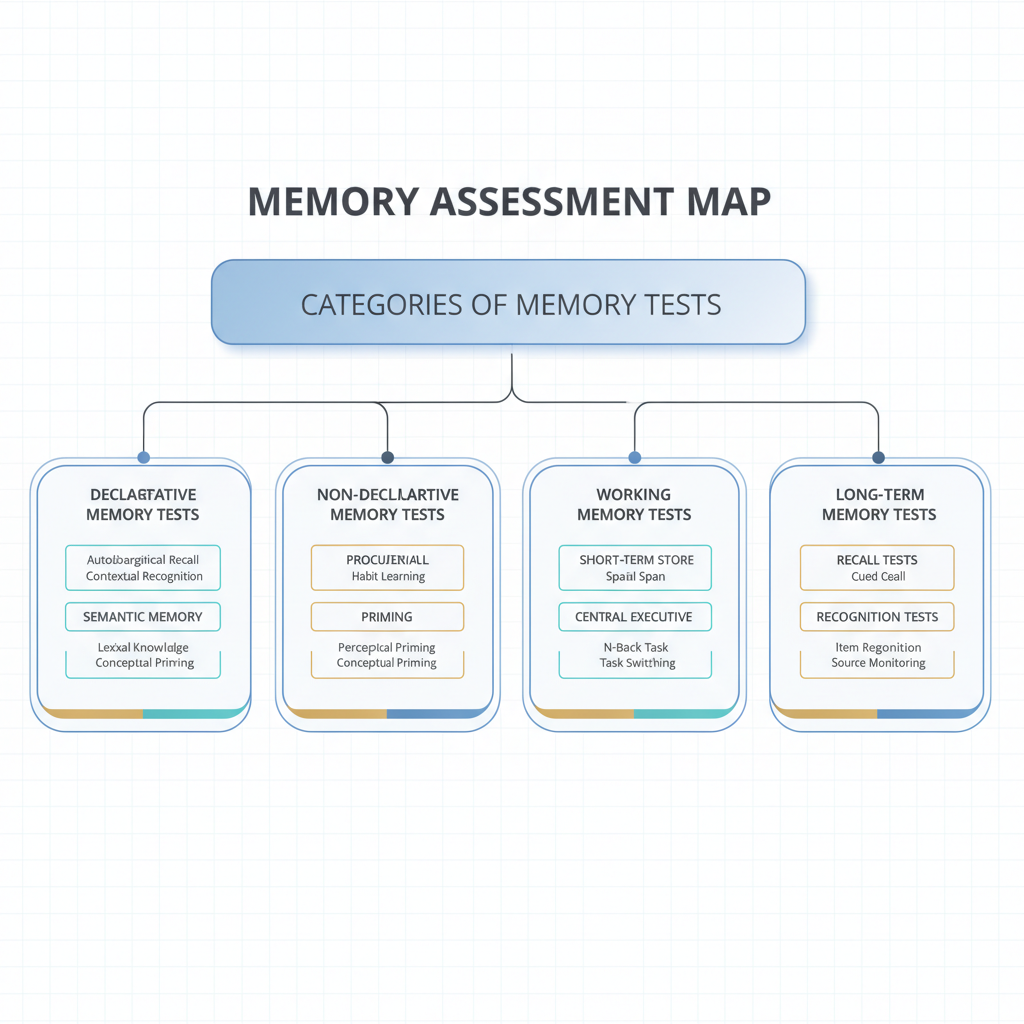
Types of Memory Tests in Psychology
Learning about different types of memory tests helps us understand how our minds work. These tests show our specific mental strengths. They also offer a look into how we process and store information. For those curious about creativity, memory is a great place to start. It plays a big role in coming up with new ideas and solving problems.
For example, The Creative Ability Test looks at how mental skills like memory support creative thinking. It helps you find your unique strengths and gives you practical steps to improve.
Tests for Short-Term Memory (e.g., Digit Span)
Short-term memory holds a small amount of information for a brief time. Think of it as a mental scratchpad for immediate tasks, like remembering a phone number you just heard.
A classic test is the Digit Span task. In this test, you listen to a sequence of numbers and repeat them back in order. It measures how much you can remember right away. Most adults can recall about seven items [source: https://www.verywellmind.com/what-is-short-term-memory-2795393].
How does this link to creativity? A strong short-term memory helps you:
- Hold multiple ideas: You can juggle several concepts at once during brainstorming.
- Follow complex instructions: This is vital for creative projects.
- Maintain focus: It keeps your mind on the task, even with distractions.
Improving your short-term memory can boost the first stage of brainstorming. It makes it easier to hold onto quick ideas. Our assessments can show you how your mental skills fuel these creative moments.
Tests for Long-Term Memory (e.g., Story Recall)
Long-term memory is our mind’s vast storage system. It holds information for long periods, from hours to a lifetime. This is where we keep facts, experiences, and skills. Long-term memory is essential for understanding the world around us.
The Story Recall test is a common way to measure this. Participants listen to a story and are later asked to remember as many details as they can. This shows how well you can store and pull up detailed information.
Long-term memory has a big impact on creativity:
- Drawing on experiences: Your past knowledge provides fuel for new ideas.
- Connecting distant concepts: Creative ideas often come from linking unrelated memories.
- Building expertise: A deep well of knowledge gives you the tools to innovate.
By understanding your long-term memory strengths, you can better use what you know. This knowledge can inspire and shape your creative process. The Creative Ability Test helps you see how your stored knowledge can be a powerful creative tool.
Assessing Working Memory (e.g., N-Back Task)
Working memory is different from short-term memory. It’s not just about holding information, but actively using and working with it in real time. This mental skill is key for complex thinking.
The N-Back Task is a popular test for working memory. In it, you see or hear a series of items. Your job is to say if the current item matches the one from ‘N’ steps back. For example, in a 2-back task, you respond if the current item is the same as the one you saw two items ago.
Working memory is key for creative problem-solving:
- Cognitive flexibility: It lets you switch your point of view and adapt your ideas.
- Problem re-framing: You can hold and compare different parts of a problem in your mind.
- Mental simulation: It helps you imagine how an idea might work before you act.
- Synthesizing information: You can combine different facts to create new concepts.
A stronger working memory makes it easier to innovate and come up with clever solutions. Our platform can help you understand this link and offers ways to improve your mental flexibility.
Visual vs. Verbal Memory Assessments
Memory isn’t just one thing. Our minds process different kinds of information. Visual memory is for images, patterns, and spaces. Verbal memory is for words, language, and things we hear.
Visual memory tests might ask you to recall shapes, faces, or the layout of a map. Verbal memory tests might use word lists or ask you to remember spoken sentences.
Both types of memory are vital for creativity:
- Visual Memory:
- Crucial for artists, designers, and architects.
- Helps you imagine new designs or picture solutions.
- Supports your ability to see patterns and understand spaces.
- Verbal Memory:
- Key for writers, poets, and public speakers.
- Helps with brainstorming words, metaphors, and story ideas.
- Aids in understanding complex spoken or written instructions.
Knowing if you are more of a visual or verbal thinker is powerful. It helps you shape your creative process and use your strengths more effectively. The Creative Ability Test provides insights into your personal thinking style, allowing you to be creative in a way that feels natural to you.
What do memory tests psychology questions look like?
Learning about memory tests can show you your mental strengths. These tests aren’t just about facts; they also show how you think. Knowing this can help you be more creative. For instance, understanding how you recall information makes it easier to brainstorm new ideas. Likewise, spotting patterns can improve your problem-solving skills.
Psychology memory tests use different kinds of questions. Each kind tests a different way your brain handles information. Let’s look at some common types.
Examples of Recall Questions
Recall questions ask you to pull information straight from your memory. You get no hints. You have to remember it on your own. This kind of practice builds up your mental storage. It helps you find different ideas when you need them.
Here’s what recall questions often look like:
- Free Recall: You might hear a list of words or see a series of images. After a short pause, you are asked to remember and list as many as you can. The order usually does not matter.
- Serial Recall: This is like free recall, but you must remember the items in the exact order they were given. This tests your ability to process things in a sequence.
- Cued Recall: You are given a specific hint or “cue” to help you remember something. For example, if you heard “apple,” a cue might be “fruit.” This can help trigger related memories.
Think about how this relates to creativity. Brainstorming is a form of free recall. You pull every related idea you can think of from your mind. Getting better at this leads to more and better ideas. Creative people are often great at pulling together lots of different information to make new connections [3].
Examples of Recognition Questions
Recognition tasks are different from recall. Instead of pulling information out of thin air, you just have to spot something you’ve seen before. You pick it out from a list of choices. This usually feels easier than recall. Your brain only has to find a match. It uses a different memory skill.
Common recognition question formats include:
- Multiple-Choice: You read a question or see an image, then pick the correct answer from several choices. One of the options is the right one.
- Yes/No Recognition: You are shown a series of items one by one. For each one, you say whether you have seen it before.
- Matching: You draw lines to connect items from one list to the matching items in another list. This requires finding pairs.
How does this connect to creativity? It’s key for judging and improving your ideas. After you’ve come up with many ideas, you need to spot the best ones. You choose the solutions that seem most likely to work. This skill helps you find what’s most valuable. It turns rough ideas into real plans.
Pattern and Sequence Memorization Tasks
These tasks test how well you find and remember patterns. They check if you can see the structure behind things. This is about more than just remembering; it’s about thinking in a big-picture way. You have to find the rules that connect the information. Spotting patterns is a key part of solving problems and coming up with new ideas.
Here are some typical examples:
- Number Sequences: You see a series of numbers like “2, 4, 6, 8, __.” You must find the pattern and then fill in the blank.
- Visual Patterns: You might be shown a sequence of shapes or colors. Your job is to guess the next item in the series. This could involve things like rotation, size changes, or color shifts.
- Auditory Sequences: You listen to a series of tones or words. You then repeat the sequence or figure out which part is missing.
These memory exercises are directly linked to how flexible your thinking is. They help you get better at seeing connections and guessing what will happen next. Being good at spotting patterns is a common trait of creative people. It helps you find new solutions to problems. You can take an idea from one area and use it in another. This skill is key for creating new plans and ideas.
How Do Online Memory Tests Work?
Benefits of Taking a Memory Test Quiz Online
Learning about your thinking skills is easier than ever. Online memory tests are a simple first step to learn about yourself. They give you instant feedback, which helps you understand how your memory works. These easy-to-use tools are often fun and made for anyone who is curious.
Taking an online memory test quiz offers several advantages:
- Accessibility: You can take these quizzes anytime, anywhere. All you need is an internet connection. This makes them easier to access than traditional tests.
- Immediate Feedback: Most online tests give you scores or basic results right away. This gives you a quick look at how you did.
- Self-Awareness: They help you find your strengths and areas where you can improve. This knowledge can help you grow as a person.
- Connection to Creativity: These tests focus on memory, but they also connect to creativity. For example, a good working memory helps you play with ideas. It allows you to combine information in new ways to solve problems.
- A Starting Point: An online quiz can make you curious about how the mind works. It might lead you to explore more detailed tools like the Creative Ability Test. Our science-backed tests look at how memory supports your unique creative skills.
Also, knowing more about your memory can help boost your creative thinking. For example, being able to recall things easily can help you come up with more ideas when you brainstorm.
Interpreting Your Results for Personal Growth
Getting your memory test results is just the first step. The real value is in using them to grow. Remember, these scores are a snapshot, not a final judgment. They show general patterns in how your brain works. This information helps you decide on the best ways to improve.
Consider the following when reviewing your results:
- Understand the “Why”: Think about what kind of memory the test looked at. Did it focus on short-term recall, working memory, or visual memory? Different quizzes test different skills.
- Link to Creativity: How well your memory works affects your creativity. For example, a strong working memory helps you hold and work with complex ideas. This is key for creative problem-solving [4]. A good long-term memory also helps you come up with more ideas. It lets you pull up different concepts and mix them in new ways.
- Find Ways to Grow: If you find some memory tasks hard, see it as a chance to improve. You can try strategies to get better in those areas. This could include memory exercises or mindfulness.
- Build Mental Flexibility: A better memory helps you be more mentally flexible. This is the skill of switching between different ideas and adapting your thinking. It’s a key part of creative problem-solving. Your results can show you how to improve this skill.
- Find Practical Steps: Use what you learn to find helpful tips. For example, if your visual memory is strong, use images or charts when you create. If you want to improve verbal memory, try storytelling or writing in a journal.
In the end, understanding your results helps you know yourself better. It gives you clear steps to build your creative skills.
What an Online Test Can (and Can’t) Tell You
Online memory tests are great tools to start learning about yourself. They can give you a general idea of how your brain works. But it’s important to know their limits. Knowing what to expect helps you get the most out of them.
What an Online Memory Test CAN Tell You:
- General Strengths and Weaknesses: They can show you where your memory is strong. They can also point to types of memory you could practice to improve.
- A Starting Point to Track Progress: These tests give you a baseline. You can take them again later to see if your performance has changed. This helps you track your growth.
- An Intro to Memory Concepts: They explain complex ideas in a simple way. You can learn about things like working memory, long-term memory, and recall.
- How Memory Helps Creativity: Understanding your memory helps you understand your thinking style. This can show you the best way to handle creative tasks. For example, if you are good at seeing patterns, you can use that skill in design projects.
- Engagement and Curiosity: Online tests are often fun. They can make you curious about how your brain works and how you can improve.
What an Online Memory Test CANNOT Tell You:
- A Medical Diagnosis: Online quizzes are not medical tools. They cannot diagnose conditions like dementia or other memory problems [5]. Only a doctor or other qualified professional can do that.
- A Complete Profile of Your Mind: While helpful, these tests give you a limited view. They don’t cover all of your thinking skills. A full evaluation from a professional would include many different types of tests.
- The Full Picture of Your Creativity: Memory is just one part of creativity. Creativity also involves skills like flexible thinking and being open to new things. To get a complete view of your creative strengths, you need a test like the Creative Ability Test. Our platform measures many parts of creativity, not just memory.
- Personalized Advice from an Expert: These tests are automated and can’t replace an expert. They cannot give you professional advice that is tailored to your specific concerns.
So, think of online memory tests as a good first step. They are great for learning more about yourself and sparking your curiosity. For a deeper look at your creative skills and for practical growth strategies, consider a science-backed platform like the Creative Ability Test. We give you personalized feedback to help you improve your creative thinking.
How Does Memory Influence Your Creative Potential?
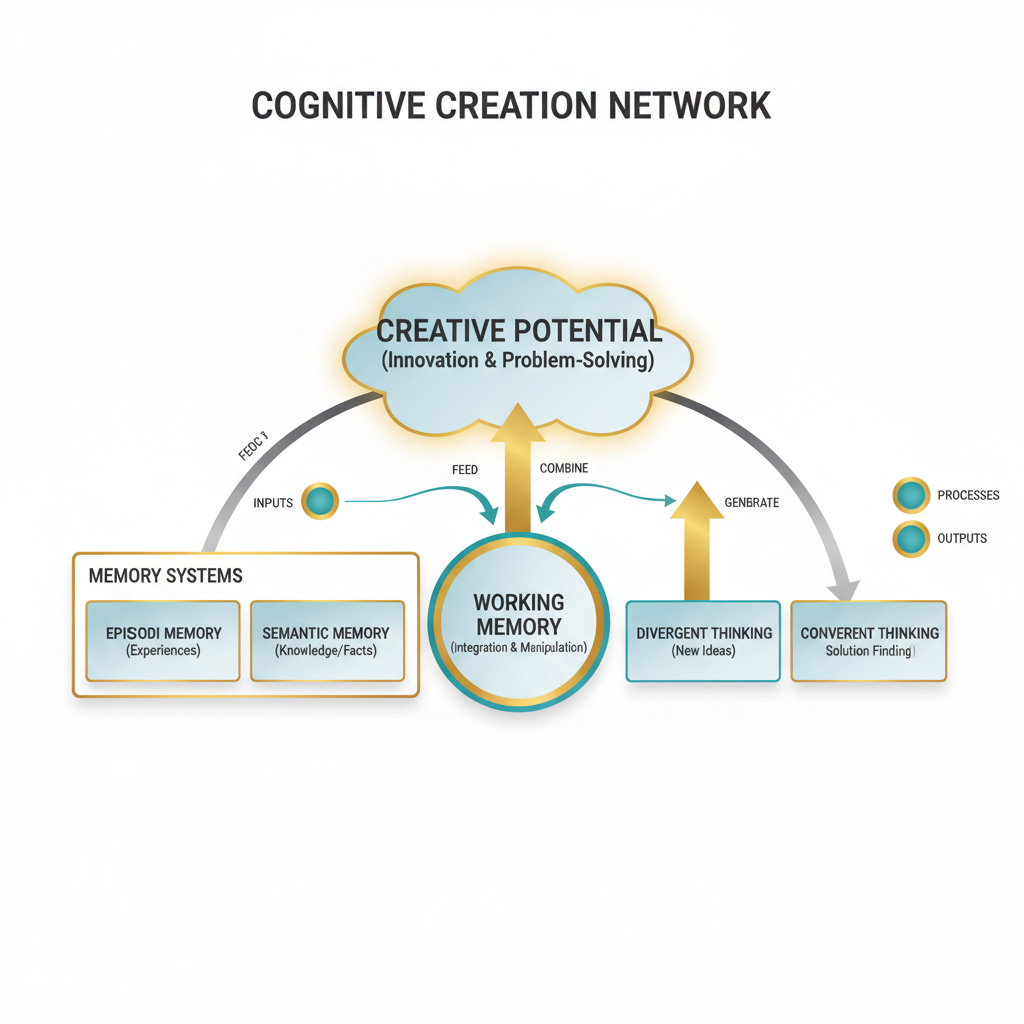
Using Your Memory to Generate New Ideas
Your memory is a powerful tool for creativity. Think of it as a huge personal library. It stores every experience, fact, and piece of knowledge you’ve ever collected. New ideas often come from mixing old information in new ways.
Think of it this way: your brain pulls out different pieces of information. Then, it fits them together like a puzzle. This process can lead to truly original ideas.
Here is how memory helps you create new ideas:
- Accessing Diverse Knowledge: A strong memory lets you pull from many different topics. This helps you make surprising connections.
- Recalling Past Solutions: You can remember how you solved similar problems in the past. This helps you use old strategies for new challenges.
- Building Unique Associations: Your memory helps your brain link ideas that seem unrelated. This is a key part of creative thinking. Research shows a strong link between memory recall and creative performance [6].
To build this skill, try to remember different kinds of information. Challenge yourself to connect unrelated ideas. Our Creative Ability Test helps you see how your mind finds and connects information. Understanding this is key to coming up with more ideas.
Cognitive Flexibility: Connecting Distant Memories
Cognitive flexibility is a key part of creative thinking. It’s your brain’s ability to switch easily between different ideas. It also helps you see things from different points of view. This skill is key to making “mental leaps” between separate memories.
Think of a painter who uses different techniques or a writer who explores new genres. They are using cognitive flexibility. This skill lets them see problems from new angles. As a result, they can find breakthrough solutions.
Memory is a big part of this flexibility:
- Making Distant Connections: Your memory helps you connect ideas that seem far apart. This is often how new solutions are born.
- Overcoming Mental Blocks: If one idea isn’t working, your memory can suggest other options. This helps you try a new approach.
- Adapting to New Information: As you learn, your memory mixes new information with old. This keeps your thinking fresh and flexible.
To improve your cognitive flexibility, you can practice divergent thinking exercises. These exercises ask you to come up with many solutions for a single problem. Our Creative Ability Test measures parts of your cognitive flexibility. It gives you personal feedback on how you make these important connections.
Strengthening Memory to Enhance Problem-Solving Skills
A strong memory is more than just remembering facts. It is a key part of good problem-solving. Your memory acts like a database of past experiences, solutions, and knowledge. This helps you clearly understand the problems you face.
Imagine you have a tough problem. A strong memory helps you quickly recall similar situations from the past. You can remember what worked and what didn’t. This saves time and points you toward better solutions.
Here’s how memory directly affects your problem-solving skills:
- Remembering Strategies: You can recall successful ways you solved problems before. This lets you apply tactics that you know work.
- Accessing Key Facts: Your memory gives you the specific facts needed for a solution. For example, a programmer needs to remember coding rules.
- Finding Patterns: A good memory helps you notice patterns. This is key for predicting results and creating solutions.
- Learning from Mistakes: Remembering past errors helps you avoid making them again. This learning process improves your approach over time.
To improve your problem-solving with memory, try focused practice. Thinking about past challenges is also helpful. Psychology tests for memory often check your ability to recall and use information. These tests show how well your memory supports your thinking skills [7]. The Creative Ability Test can help you find your unique problem-solving style. It shows how memory and other brain functions play a role. We offer simple tips to improve these key skills for your personal and professional life.
Frequently Asked Questions
Where can I find a free memory test for adults?
You can find many free memory tests online, but their quality and scientific backing can differ. When looking for a free test, try to find one from a trusted source, like a university or research group. These usually offer better insights into different parts of your memory.
Keep in mind that free tests only give a general overview. They don’t provide the same detailed, personal analysis as a full, scientifically-backed assessment. For example, a quick quiz might tell you that your short-term memory is good. But it won’t explain how your memory works with your creative thinking or problem-solving skills.
For a deeper look at your mental skills and how they relate to your creativity, a more structured test is often better. Understanding your mental strengths can help you unlock new creative abilities.
What are some common memory test psychology questions?
Memory tests use different types of questions to check various memory systems. Here are a few common examples:
- Digit Span Tasks: You hear a string of numbers and have to repeat them in order, or sometimes backward. This measures your short-term memory. For example, recalling “3-8-1-5” or “9-2-7-4-6”.
- Word List Recall: You listen to a list of words, and after a short pause, you’re asked to remember as many as you can. This tests how well you recall spoken information. An example is remembering “apple, desk, river, star, book.”
- Story Recall: You listen to a short story and then retell the details. This tests your ability to remember stories and events.
- Visual Reproduction: You are shown a complex drawing for a few seconds and then asked to draw it from memory. This checks your visual and spatial memory.
- Pattern Recognition: You might see a series of shapes and later have to pick them out from a larger group. This tests your ability to recognize things you’ve seen before.
These questions help psychologists see how well you learn, store, and retrieve information. This directly affects how you connect ideas and come up with new solutions when you’re being creative.
How does a neurologist test for memory loss?
A neurologist’s approach to testing for memory loss is far more detailed than a simple online quiz. They perform a full medical evaluation to find the root cause of the problem. Here’s what that usually includes:
- Detailed Medical History: The neurologist will ask about your symptoms, when they started, other medical conditions, medications, and your family’s health history.
- Physical and Neurological Exam: This exam checks your reflexes, balance, vision, and senses. It can find physical clues related to brain issues.
- Cognitive Assessments: These are formal, standard tests that look at more than just memory. They also check attention, language, and problem-solving skills [8]. Examples include the Mini-Mental State Exam (MMSE) or the Montreal Cognitive Assessment (MoCA).
- Laboratory Tests: Blood tests can check for issues that affect memory, like thyroid problems, vitamin deficiencies, or infections.
- Brain Imaging: An MRI or CT scan can be used to look for tumors, strokes, or other physical changes in the brain.
This complete evaluation helps doctors pinpoint the exact type of memory issue and its likely cause. It is a vital step for making a diagnosis and creating a treatment plan.
What does a memory test quiz with answers show?
A memory quiz that gives you answers provides instant feedback on how you did. It’s a great way to learn more about yourself. Here’s what the results can show you:
- Your Memory Strengths: You might find you’re great at remembering images but have a harder time with word lists. Or, you might be a natural at remembering what you hear.
- Areas for Improvement: The results can show you which types of memory are weaker. This tells you exactly what you can work on.
- Clues About Your Thinking Style: Learning about your memory can offer hints about how you think overall. For example, a strong ability to hold information in your mind often connects to good problem-solving skills.
- A Confidence Boost: Getting clear results can be motivating. It can help you feel more confident in your mental skills and encourage you to keep improving.
An online memory quiz is a good starting point. By combining these insights with an assessment focused on creativity, like the Creative Ability Test, you get a more complete picture. Our platform shows you how your memory and other mental skills shape your unique creative style. We give you personal feedback and practical tips to help you use your memory to be more innovative and achieve personal growth.
Sources
- https://psycnet.apa.org/record/2012-07524-001
- https://hbr.org/2019/04/the-power-of-cognitive-diversity
- https://psycnet.apa.org/record/2012-04533-001
- https://pubmed.ncbi.nlm.nih.gov/22420942/
- https://www.nia.nih.gov/health/alzheimers/memory-lapses-what-normal-what-not
- https://www.pnas.org/doi/10.1073/pnas.1718884115
- https://www.apa.org/topics/memory/assessment
- https://www.nia.nih.gov/health/alzheimers-and-dementia/assessing-cognitive-impairment-older-patients