An occupational test in psychology is a standardized assessment designed to measure an individual’s cognitive abilities, personality traits, skills, and interests for a specific job or career field. These tests provide objective data to help guide individuals toward suitable career paths and assist employers in making informed hiring decisions.
Do you want to find your unique strengths and a clearer career path? Many people want to learn what drives them and where their talents truly shine. This pursuit of self-awareness often leads them to a powerful, science-based tool: an occupational test in psychology.
This is more than just another quiz. Occupational testing in psychology uses a proven method to show your cognitive flexibility, problem-solving skills, and even your Creative thinking styles. These tests don’t just give you a quick look; they go deep into your personal profile. They show where you naturally do well and how you think through problems. When you understand these key parts of yourself, you can make better decisions for your career and personal life.
In this guide, we will explain what an occupational test in psychology is all about. We’ll look at its main purpose, how it’s different from simple quizzes, and why it’s so helpful for your career and personal growth. Get ready to discover your strengths and learn how to use them better.
What is an Occupational Test in Psychology?
Understanding the Core Purpose
A psychological occupational test is a special tool designed to understand what makes you unique. It looks at your abilities, personality traits, and specific skills. Its main purpose is to see your potential at work. But it’s more than just for job-hunting. It’s also a powerful way to learn about yourself and grow as a person.
For you, this kind of test provides a clear picture of your natural strengths and ways of thinking, especially when it comes to creativity. We use these results to show you your unique way of solving problems. You’ll get a better sense of what truly motivates you.
Think of it as a personal guide for your growth. This test helps you see where your creative talents are strongest. It also shows you where you can build new skills. The result isn’t just knowing more about yourself—it’s knowing what to do with that knowledge. You learn how to use your creative skills every day, both at home and at work. This helps you turn doubt into confident action.
- Uncover Your Strengths: Find your natural creative talents.
- Understand Thinking Styles: Learn how you solve problems and come up with ideas.
- Guide Personal Growth: Get a clear plan to improve your skills.
- Boost Professional Development: Use your results for career growth and new ideas.
- Enhance Self-Awareness: Get a full picture of what you can do.
How It Differs from a Standard Quiz
Online quizzes can be fun, but a psychological occupational test is very different. It is a serious, science-based assessment. Psychologists carefully create these tests using proven methods. This makes sure the results are accurate and meaningful [1].
A typical quiz gives you general or fun results, not deep, personal insights. In contrast, occupational tests are built to be reliable, so your results stay consistent over time. They are also valid, which means they accurately measure what they’re supposed to. This precision makes the information they provide very useful.
Our Creative Ability Test is a great example of this. It’s much more than a simple quiz. We don’t just give you a score. We provide personal feedback and useful tips that are specific to you. This changes how you see your own creativity.
A simple quiz might just give you a label. A real occupational test gives you knowledge. It helps you understand the psychology behind your creative process. You learn how to use this knowledge to truly grow and think in new ways.
- Scientific Rigor: Developed by experts using psychological principles.
- Evidence-Based: Backed by research to ensure accuracy.
- Actionable Insights: Gives you practical tips to improve.
- Personalized Feedback: Offers tailored results, not generic labels.
- Predictive Power: Shows how you might perform in real-world situations.
- Focus on Growth: Helps you improve your creative skills on purpose.
Why is Occupational Testing in Psychology Important for Your Career?
Benefits for Personal Growth and Self-Discovery
Career tests act like a mirror. They help you see past your basic skills to better understand who you are and how you think.
Take creativity, for example. Tests like the Creative Ability Test can show your unique creative strengths. They point out your cognitive flexibility and divergent thinking abilities. Learning this about yourself is very valuable.
Here’s how these tests help you grow:
- Uncover Hidden Talents: You might find a natural talent for creative problem-solving or learn that you’re great at coming up with new ideas.
- Understand Your Thinking Style: Learn if you’re a big-picture thinker or a hands-on innovator. This helps you find the best way to approach challenges.
- Identify Growth Opportunities: By seeing where you can improve, you can focus on developing new creative skills.
- Boost Confidence: Knowing your strengths makes you more self-assured. You learn to trust your unique skills.
- Shape Your Personal Development: This insight guides what you choose to learn. You can focus on skills that will make you even more creative.
These tests turn confusion about your skills into clear self-knowledge. This gives you a path forward, helping you use your creativity every day.
How Employers Use These Assessments
More and more employers are using these tests. They want to find people who are a good fit for the company culture and the job. In fact, many companies use psychometric assessments as a normal part of hiring [2].
These tests help employers in several key ways:
- Identify Best-Fit Candidates: They match a person’s skills and personality to what the job requires, leading to better hires.
- Predict Job Performance: These tests can help predict how well someone will perform in a job. They show potential for new ideas and teamwork.
- Build Stronger Teams: By understanding everyone’s strengths, companies can build teams with a good mix of skills. This helps the group solve problems more effectively.
- Assess Soft Skills: Besides technical skills, these tests measure things like critical thinking, communication, and adaptability. Creativity is a very valuable soft skill.
Knowing your own creative style gives you a big advantage. You can clearly explain how you approach challenges and show off your problem-solving skills. This helps you stand out in a competitive job market.
Aligning Your Skills with the Right Role
Understanding your professional strengths, especially in creativity, is very important. It helps you find a career that is a great fit for you. This leads to more job satisfaction and success.
Here’s how to match your unique skills with the right career:
- Identify Compatible Industries: If you’re good at thinking of many different ideas, jobs that require constant innovation could be a great fit. Think about roles in R&D, design, or marketing.
- Tailor Your Job Search: Look for jobs that need your specific creative skills. This makes your search more focused and effective.
- Enhance Interview Performance: In interviews, confidently explain how your creative style helps solve real-world problems. Give examples that show off your strengths.
- Strategize Career Advancement: Use what you learn from the test to find roles that use your best skills. This will help guide your career growth.
- Boost Workplace Engagement: When your job matches your natural talents, you’ll feel more involved and motivated. This leads to better work and greater personal satisfaction.
This knowledge can change your career path. It helps you go from guessing about your skills to using your creativity with confidence in all parts of your job.
What are the Main Types of Occupational Testing in Psychology?
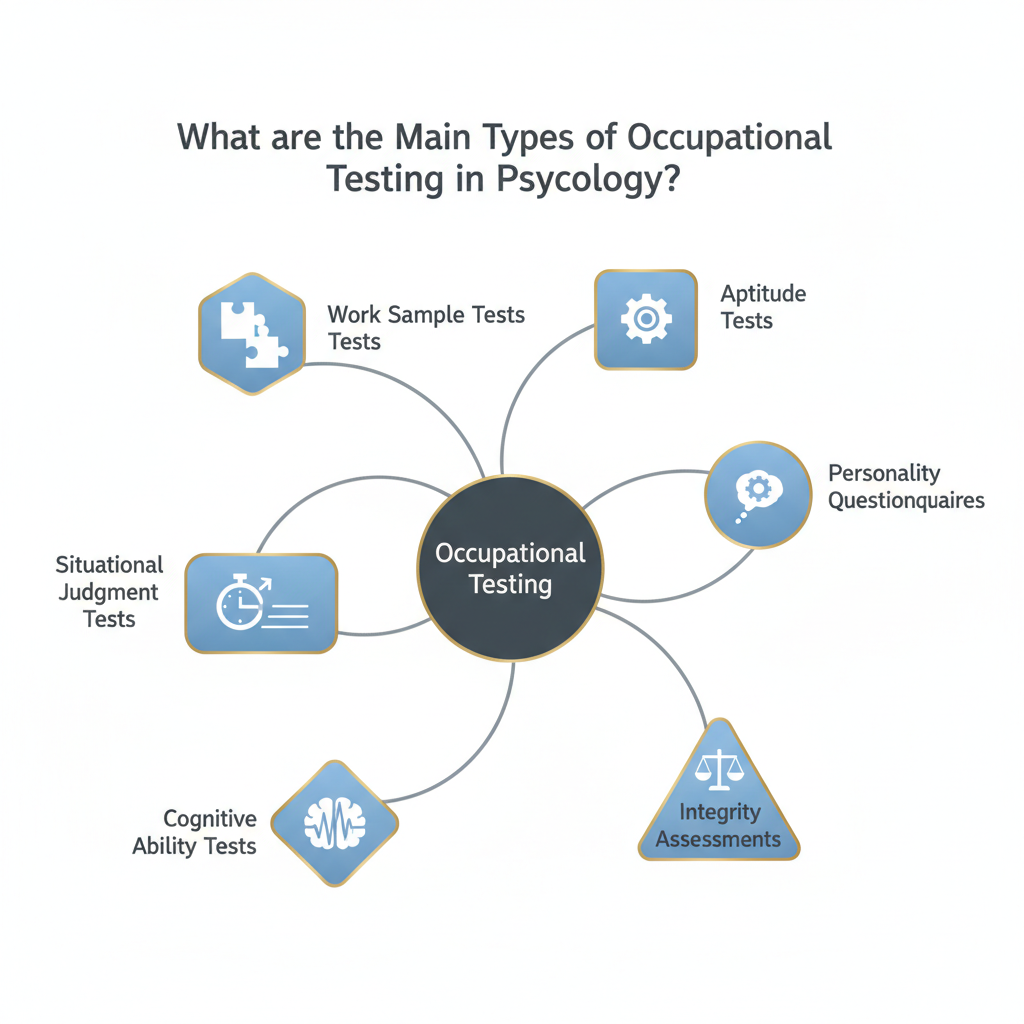
Work-related tests are an important tool for understanding yourself and what you can do. These tests help you find your unique strengths and ways of thinking. They give you useful information for both personal growth and your career.
There are many kinds of work-related tests. Each one offers a different way to look at your skills and preferences. Learning about them can help you see what makes people successful and creative at work.
Aptitude and Ability Tests
Aptitude and ability tests measure your thinking skills. They check your potential to learn new things or do well in certain tasks. These tests focus on your natural ability, not what you have already learned.
Common examples include:
- Verbal Reasoning: This measures your ability to understand and use written information.
- Numerical Reasoning: This tests your ability to work with numbers, data, and solve math problems.
- Abstract Reasoning: This tests your ability to see patterns and solve problems without using words or numbers. It is often linked to fluid intelligence, which helps with new and unfamiliar problems [3].
Knowing your mental strengths can show you where you naturally do well. This includes skills like logical thinking and learning quickly. These are key for solving problems in new ways and adjusting to change.
Personality Questionnaires (e.g., OPQ)
Personality questionnaires explore your typical behaviors, preferences, and traits. They do not have right or wrong answers. Instead, they provide a profile of your unique working style.
The Occupational Personality Questionnaire (OPQ) is a well-known example. It helps you see how your personality might affect how you work with others and make decisions. Another popular model is the Big Five personality traits. These are:
- Openness to Experience: This measures curiosity and a willingness to try new things.
- Conscientiousness: This reflects organization and a focus on goals.
- Extraversion: This indicates how sociable and energetic you are.
- Agreeableness: This shows how cooperative and kind you are.
- Neuroticism (or Emotional Stability): This assesses how you react to stress.
Traits like openness to experience are closely tied to creativity. People who score high in openness are often imaginative and curious [4]. Understanding your personality helps you see how you solve problems and work with others. Our Creative Ability Test gives you a closer look at these creative traits. It helps you find your natural style for creative thinking and learning about yourself.
Situational Judgement Tests
Situational Judgement Tests (SJTs) show you realistic work situations. You are asked to pick the best way to handle them from a list of options. These tests check your practical judgment and problem-solving skills in real-life settings.
SJTs look at how you would deal with common problems at work. They check your decision-making, people skills, and sense of right and wrong. For example, you might be given a situation where a team project runs into a problem. How you answer shows your approach to solving it.
These tests are a good way to see how you use your skills in the real world. They show if you can think on your feet and come up with creative solutions. This is very useful when you face new or unclear problems.
Creativity and Problem-Solving Assessments
These specific tests focus on your ability to think in new ways. They measure different parts of your creativity and how you handle difficult problems. This includes how well you can come up with new ideas and find unique answers.
Key elements often assessed include:
- Divergent Thinking: This is the ability to generate many different ideas from a single starting point. It’s about brainstorming and exploring multiple possibilities.
- Cognitive Flexibility: This is your ability to switch between different ideas or ways of thinking. It helps you adjust when your first plan doesn’t work.
- Originality: This assesses how unique and new your ideas are.
- Problem-Solving Styles: This identifies your preferred ways of breaking down and solving challenges.
The Creative Ability Test is a great example of this type of test. It is a 30-question test based on science, made for individuals, students, and professionals. It gives you a full picture of your creative strengths and potential. You will get practical tips to improve your thinking for personal and career growth.
This kind of test helps you move from being unsure about your creative skills to truly understanding them. It offers feedback just for you. You learn how to use your creativity better in real life. You will also discover your unique problem-solving style and how to use it to create new things.
What is an Example of an Occupational Test in Psychology?
Real-World Scenarios
Occupational tests in psychology help reveal your skills. They show how your unique talents fit certain jobs. For example, a large tech company might use these tests to find people for a new product team.
This team needs creative thinkers who can come up with new ideas and solve tough problems. A test that measures creativity would be perfect for this.
This kind of test looks for candidates who are strong in:
- Divergent thinking abilities
- Cognitive flexibility
- Problem-solving skills
- Openness to new experiences
These skills are key for innovation jobs. This gives the company more insight than a resume alone. They see how a person handles challenges with creativity.
For you, taking a test like this is a great way to learn about yourself. You discover your creative strengths. This helps you find a job where you can really succeed. It helps guide your career path. You can find a career you’re passionate about, not just a job.
Understanding how you think creatively is empowering. It turns uncertainty into clear self-awareness. You get a clear plan for using your unique skills in the real world.
Sample Questions and What They Measure
Creativity tests aren’t about right or wrong answers. Instead, they look at how you think. They show your unique way of solving problems. Let’s look at a few examples of what you might see.
Divergent Thinking Questions
These questions test your ability to come up with many different ideas. They measure fluency, flexibility, and originality.
Sample Question: “List as many uses as you can for a common brick.”
What it measures:
- Fluency: The total number of ideas you list.
- Flexibility: The number of different categories your ideas fit into (e.g., building material, weapon, paperweight, art supply).
- Originality: How unique or unusual your ideas are compared to others.
A high score here means you’re a great brainstormer. You are good at thinking of many options when you face a problem. This skill is essential for creating new things and finding solutions.
Problem-Solving and Cognitive Flexibility Questions
These scenarios test how well you can adapt your thinking. They see how you handle new problems. You need to think about them from different angles.
Sample Question: “Imagine you are stuck in a remote cabin with no power. You need to keep food from spoiling without a refrigerator. What are three unconventional methods you could use?”
What it measures:
- Cognitive Flexibility: Your ability to switch your way of thinking.
- Adaptive Reasoning: How well you use what you already know in new situations.
- Practical Innovation: Your ability to come up with clever solutions with limited resources.
Success in these areas shows you have a flexible mind. You can switch gears and adapt easily. You find creative ways to get around challenges. This helps you apply creativity to solve tough problems in any field.
Figural and Elaboration Tasks
Some tests use images to check your creative thinking. They explore your imagination and attention to detail.
Sample Question: “Complete this abstract drawing in any way you choose, making it as interesting or meaningful as possible.” (A partially drawn, abstract shape is provided.)
What it measures:
- Originality of Elaboration: How unique and detailed your additions are.
- Imaginative Interpretation: How you see and build on the starting shape.
- Detail Orientation: Your ability to add details and develop ideas visually.
These tasks show how you turn simple ideas into detailed creations. They highlight your skill for artistic expression and developing concepts. Research shows these tests are good at predicting creative success [5].
Our Creative Ability Test uses similar science-based methods. We give you personalized results about how you think creatively. You will get a clear picture of your strengths. Our platform then gives you practical tips to improve your creative thinking and problem-solving skills.
How Can Understanding Your Profile Enhance Your Creativity?
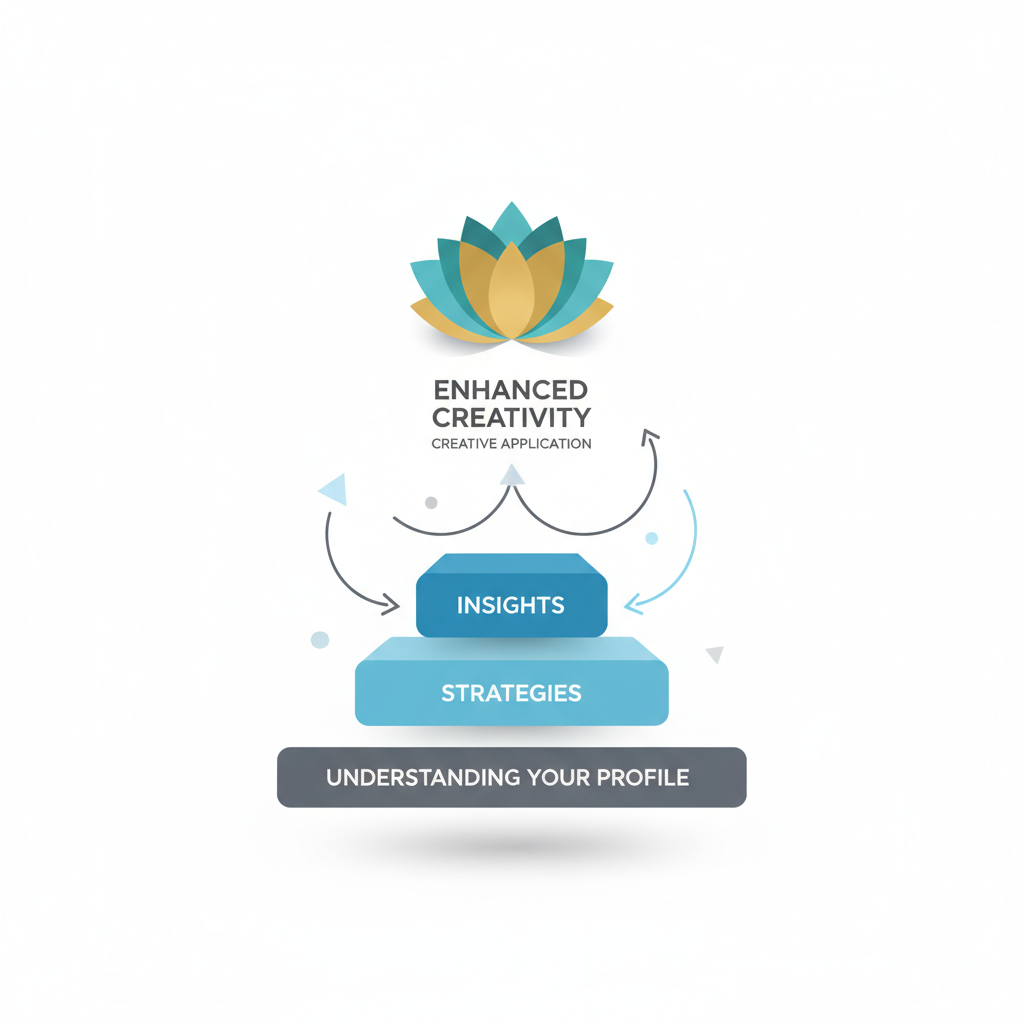
Connecting Personality Traits to Creative Strengths
To understand your creative profile, you first need to know your personality. Tests like our Creative Ability Test show how your personal traits affect your creative thinking. Some personality traits are strongly linked to your ability to innovate.
For example, people who are high in “Openness to Experience” are often more curious. They look for new ideas and welcome different solutions [6]. This trait is a key part of creative thinking.
Your results explain these connections clearly. They turn complex psychological ideas into simple, helpful tips. You will learn which of your natural qualities help you be more creative.
Here’s how your personality traits can fuel your creative strengths:
- Openness to Experience: You are probably imaginative and like exploring new ideas. This trait helps you come up with many unique solutions.
- Conscientiousness: This is often about being organized, but it also helps you stick with creative tasks. You work on ideas until they are just right.
- Extraversion: You may get ideas from being around others. Working together often sparks new concepts for you.
- Agreeableness: You work well in teams. This helps different ideas to be shared and grow without causing problems.
- Neuroticism (Emotional Stability): Even this trait can help. If you are very sensitive, you may have deep emotional insights that make your creative work better. Learning to manage this can unlock amazing creativity.
When you know these links, you can feel more confident. You can use your natural tendencies to your advantage. Our personalized feedback gives you specific tips to help you use your natural strengths to be more creative.
Using Test Insights for Professional Development
Your Creative Ability Test results are a great tool for your career. They give you practical knowledge about your creative skills, so you don’t have to guess. This knowledge helps you succeed in today’s changing workplace.
Many jobs now require new ways of thinking. Companies want people who can adapt and create new solutions. When you know your creative profile, you can work on improving these important skills.
Here’s how these insights can help you grow in your career:
- Focus on Skill Building: Identify areas where you can improve. For example, you might need to practice thinking more flexibly. The test shows you what to work on.
- Solve Problems Better: Use your unique creative strengths to solve problems at work. This helps you find new and better solutions.
- Find the Right Career: Discover jobs that fit your creative style. You can look for roles where you can really use your talents.
- Improve Leadership and Teamwork: Lead your team with creative methods. You can inspire others by showing them different ways to think.
- Contribute to Innovation: Be the person your team turns to for new ideas. Your insights can help your company grow and innovate.
The Creative Ability Test gives you practical tips that are tailored to you. They help you use creative thinking in your everyday work. You will learn how to use your creativity to solve problems and create new things with confidence.
This turns occasional creative moments into steady growth. As a result, your work will have a bigger impact.
Discovering Your Unique Problem-Solving Style
Everyone has a different way of facing challenges. Your Creative Ability Test shows your unique problem-solving style. This knowledge is very helpful. It helps you see how you naturally handle information and come up with solutions.
Do you like to brainstorm lots of ideas first? That means you have a divergent thinking style. Or do you find the most logical answer quickly? That points to a convergent style.
Our test explains these creative traits in a simple way. Your results are easy to understand, even if you’re new to these concepts. This makes complex ideas from psychology easy to learn.
Here are common creative problem-solving styles:
- Divergent Thinker: You are good at generating many different ideas. You explore lots of possibilities without judging them right away.
- Convergent Thinker: You are good at reviewing options and picking the best one. You focus on what is practical and will actually work.
- Analytical Solver: You break down big problems into smaller pieces. You use logic and clear steps to find a solution.
- Intuitive Solver: You trust your gut feelings and sudden ideas. Solutions often come to you in a flash.
- Collaborative Creator: You do your best work with other people. You use group brainstorming to build on everyone’s ideas.
Understanding your style has big benefits. You can pick methods that work best for you. This makes solving problems easier and more effective.
For example, if you are a divergent thinker, give yourself time to freely brainstorm ideas. If you are more of a convergent thinker, focus on weighing your options early. Our personalized tips give you guidance to build your confidence.
By using your unique style, you improve your creative skills. You change how you approach challenges. This leads to better and more creative results in everything you do.
Frequently Asked Questions
What are the 4 types of psychological tests?
Psychological tests are useful tools. They provide insights into how people think and act. These tests can help you understand your skills, personality, and even your creative side.
Professionals usually group these tests into four main types. Each one offers a different way to learn about yourself:
- Intelligence Tests: These tests measure your thinking skills. They look at how you reason, solve problems, and think critically. Knowing your mental strengths can help you tackle tough creative tasks [7].
- Aptitude Tests: Aptitude tests don’t measure what you know. Instead, they predict your ability to learn new skills. They show where you have potential to succeed. For example, a skill for abstract thinking can help with creative problem-solving.
- Personality Tests: These tests explore your personal traits and habits. They show how you connect with the world and other people. Many creativity tests, like the Creative Ability Test, look at personality traits like openness, curiosity, and how well you adapt to change.
- Achievement Tests: These tests measure what you already know or can do. They check your knowledge in a specific area. For example, a graphic designer might take a test on design principles.
Understanding these types is helpful. It helps you make sense of what tests like the Creative Ability Test show you. You can use this knowledge to build on your strengths at work and in your personal life.
What is an Occupational Personality Questionnaire?
An Occupational Personality Questionnaire (OPQ) is a test for the workplace. It’s designed to see how your personality traits show up at work. The results help people and companies understand how personality affects job performance.
The OPQ measures many different traits, including:
- Interpersonal Style: How you work with others and build relationships.
- Thinking Style: How you prefer to solve problems and make decisions. This also includes how flexible your thinking is.
- Coping Strategies: How you manage stress, challenges, and feelings at work.
Your OPQ results can teach you a lot about yourself. For example, you might find you’re good at creative problem-solving. You could also learn that you’re comfortable with unclear situations, which is common for creative people [8]. This information is very useful.
An OPQ can guide your career. It helps you find jobs that fit your natural strengths. It can also point out traits like openness and a willingness to try new things. These skills are key for creativity and new ideas in any job. This helps you grow personally and professionally.
Can I find a free psychology career test?
Yes, many free psychology career tests are available online. They often promise quick answers about your best career or personality type. These can be a fun way to start thinking about yourself.
However, it’s important to know their limits. Most free quizzes are just for fun. They aren’t designed with the same care as professional tests. This means you can’t always trust their results for serious career advice.
For real growth and useful advice, look for tests based on science. Assessments like the Creative Ability Test are made by experts and are carefully tested for accuracy. They offer:
- Evidence-Based Insights: Trustworthy information about your creative skills and flexible thinking.
- Personalized Feedback: Advice that is specific to your personal results.
- Actionable Strategies: Practical steps to improve your creative and problem-solving skills.
Choosing a science-backed test makes a real difference. It takes you from simply being curious to truly understanding yourself. You get clear steps for how to grow. This helps you use your creativity well in your job and personal life. Investing in a quality test is an investment in your future.
Sources
- https://www.apa.org/topics/psychological-testing
- https://www.shrm.org/resources-and-tools/hr-topics/talent-acquisition/pages/psychometric-assessments-hiring-success.aspx
- https://www.simplypsychology.org/fluid-and-crystallized-intelligence.html
- https://www.frontiersin.org/articles/10.3389/fpsyg.2017.00980/full
- https://journals.sagepub.com/doi/abs/10.1177/0013164406288390
- https://psycnet.apa.org/record/2012-23740-001
- https://www.apa.org/topics/intelligence
- https://www.shl.com/assessments/personality/opq/