Tag: Creativity tests

  • 12 Fun Tests to Take to Uncover Your Personality & Creativity

    12 Fun Tests to Take to Uncover Your Personality & Creativity

    Fun tests to take include a wide range of personality assessments, psychology quizzes, and creativity challenges. The best ones, like the Creative Ability Test, are scientifically grounded and provide valuable insights into your unique strengths, cognitive flexibility, and problem-solving skills in an engaging format.

    Have you ever found yourself scrolling through online quizzes, hoping to learn something new about yourself? We all want to understand who we are, how we think, and what makes us special. From quick questionnaires to deeper assessments, these fun tools can help you on your journey of self-discovery.

    This article shares a collection of fun tests designed for both entertainment and personal growth. We’ll explore various Psychology quizzes for fun that can highlight your personality type, measure your creative skills, and reveal more about your flexibility and problem-solving abilities. These aren’t just random tests to take when you’re bored; they are often based on psychological principles and can help you see your strengths and areas for improvement.

    Whether you want to understand your creative thinking, identify your unique talents, or simply see yourself differently, your results can be empowering. So, why are we so drawn to these tests? Let’s look at the psychology behind our love for fun quizzes.

    Why Are We So Drawn to Fun Tests and Quizzes?

    Infographic showing a cognitive network diagram illustrating the psychological reasons people are drawn to fun tests and quizzes, highlighting self-discovery, validation, and entertainment.
    An abstract, educational, minimalist vector infographic. The visual represents a ‘cognitive network diagram’ or ‘idea cluster’ explaining the appeal of fun tests. A central node symbolizes ‘Fun Tests & Quizzes,’ from which interconnected nodes or bubbles radiate. These radiating nodes represent key psychological drivers and benefits, such as ‘Self-Discovery,’ ‘Validation,’ ‘Entertainment,’ ‘Social Connection,’ and ‘Curiosity.’ The connections between these nodes illustrate their interdependencies. Use clean geometric shapes, subtle gradients, and a color palette of soft blues, whites, charcoal, with gold or teal accents. Negative space is used for clear labeling of each concept. No humans, no cartoons. Professional and approachable for students and professionals.

    We’re all curious about ourselves. Fun tests and quizzes give us a peek into how we think. They offer quick insights into our personality and thinking styles. This desire to understand ourselves is a powerful part of who we are.

    The Search for Who We Are

    People love learning about themselves. Tests and quizzes help us understand our inner world. They put a name to our feelings and actions. This helps us see where we fit in.

    • Understanding Personality: We want to know our core traits. Quizzes can confirm what we think about ourselves or show us something new.
    • Exploring Thinking Styles: How do we handle information? What are our habits for solving problems? These questions keep us interested.
    • Seeking Validation: Sometimes, the results just confirm what we already believe. This can be very comforting [1].
    • Growth and Improvement: Many tests also point out areas where we can grow. We’re always looking for ways to improve.

    Unlocking Creative Potential

    We’re also fascinated by our creative side. We wonder how creative we really are. Quizzes can give us clues about our unique creative strengths.

    Tests based on science, like the Creative Ability Test, go deeper. They measure specific mental skills. These skills are tied to creativity and new ideas. This gives you a clear picture of your potential.

    • Divergent Thinking: This is the ability to come up with many ideas. Quizzes can help measure this skill.
    • Cognitive Flexibility: How easily can you switch your point of view? Tests help spot this key creative trait.
    • Problem-Solving Approaches: We learn our natural ways of handling challenges. This can help us use our creativity in real life.
    • Openness to Experience: This personality trait is closely linked to creativity. Many quizzes give a hint about this quality.

    Fun, Growth, and a Good Challenge

    Besides self-discovery, tests and quizzes are just plain fun. They challenge our brains in a pleasant way. This makes learning about yourself both enjoyable and useful.

    Also, good tests give you clear next steps. They do more than just give you a label. You get practical tips to improve your creative skills. This helps you gain confidence and grow as a person.

    • Fun and Novelty: Quizzes are fun and interesting. They offer a nice break from the everyday.
    • Mental Stimulation: They make you think about yourself. This keeps your mind active and sharp.
    • Actionable Insights: The best tests give you more than a score. They offer advice on how to use what you’ve learned.
    • Confidence Building: Knowing your strengths can make you feel more powerful. This boosts your drive to create and try new things.

    In short, we like these tools for many reasons. They tap into our natural curiosity and our desire to grow. Platforms like the Creative Ability Test use this interest. They offer a trusted, science-backed way to understand and boost your creative potential.

    The Best Fun Tests to Take for Insight and Entertainment

    Infographic visualizing a competency map of various creative skill assessment tests, categorizing different dimensions of creativity for insight and entertainment.
    A clean, educational, minimalist vector infographic. The visual depicts an abstract ‘creative skill assessment chart’ or ‘competency map.’ It features a central hub representing ‘Creativity Assessment’ from which multiple radiating or clustered segments emerge, each representing a different type of ‘fun test’ or ‘creative dimension’ (e.g., divergent thinking, problem-solving, personality insights). Each segment uses clean geometric shapes, distinct colors from the palette (soft blues, whites, charcoal, with gold or teal accents), and subtle gradients. The design emphasizes structured grouping and visual hierarchy. Leave negative space for short labels indicating different test categories or creative skills. No humans, no cartoons. Professional and approachable for students and professionals.

    Tests to Uncover Your Personality Type

    Personality tests are a great way to understand yourself better. They show you your core traits and preferences, and many people find them both fun and helpful.

    These tests look at different parts of your personality. For example, a test might show if you’re an introvert or an extrovert. Others might explore how you make decisions or see the world. Learning these things about yourself can be very useful.

    When you know your personality type, you can use it to your advantage. You’ll better understand your strengths and challenges, which can help improve your relationships and guide your career choices. This self-awareness also shapes your creative process and helps you make better decisions for personal growth [2].

    Your personality is also linked to your creativity. It affects how you come up with ideas and work with others. For example, an introvert might do their best creative work alone, while an extrovert might enjoy group brainstorming. Knowing this helps you create the best environment for your own creative work.

    Tests to Measure Your Creative Potential

    Want to know how creative you are? Tests that measure creative potential can give you real answers. They are more than just simple quizzes and can show you how you think outside the box or adapt to new ideas. These skills are key parts of creativity.

    Many of these tests are based on science. They measure different parts of your creative thinking, like how original your ideas are and how many you can come up with. For instance, the Creative Ability Test is a 30-question assessment that carefully reviews your creative strengths and shows you where you can improve [3].

    The results can be a game-changer. Instead of just guessing about your creative skills, you’ll get clear, personal feedback. This includes tips that fit your specific profile, helping you improve your creative thinking and problem-solving. You’ll learn how to use your creativity in everyday life, overcome creative blocks, and grow in a more focused way.

    Taking a test to measure your creativity is a great step. It can change how you view your abilities and give you practical ways to be more innovative. This can help you reach your full creative potential.

    Psychology Quizzes to Explore How You Think

    Psychology quizzes are a fun way to learn about how your mind works. They can show you how you process information, make decisions, and even reveal your hidden biases. Exploring these things can teach you a lot about yourself.

    Many of these quizzes focus on one specific topic. For example, you might find a quiz about your learning style, your emotional intelligence, or common thinking traps. Understanding these areas is a great first step toward self-improvement and can help you handle difficult situations better.

    The way you think is directly tied to your creativity. For example, do you solve problems with logic, or do you rely more on intuition? Knowing your style helps you adapt your approach when needed. This mental flexibility is a common trait in very creative people [4].

    By taking these quizzes, you get useful tips you can actually use. You learn how to make the most of your strengths and work on areas where you might struggle. This helps you tackle creative challenges with a better understanding of how your mind works.

    Random Tests to Take When You’re Bored

    Sometimes you just need a fun distraction, and random quizzes are perfect for that. They’re usually lighthearted and entertaining, with topics ranging from “What type of pizza are you?” to “Which fictional character is your soulmate?”.

    Even though they’re just for fun, these quizzes can be surprisingly thought-provoking. A silly question might reveal a new preference or make you think about yourself in a different way. At the very least, it’s a pleasant way to pass the time.

    Think of these quizzes as a simple way to spark your curiosity about yourself. This kind of casual self-discovery can be fun and might even make you want to try a more serious test later on. It’s no surprise that millions of people take online quizzes every day [5].

    Overall, these quizzes are a great way to unwind with a quick bit of fun. They can be a low-stress first step on a bigger journey of learning more about who you are.

    How Can You Use Quiz Results for Personal Growth?

    Infographic illustrating a multi-step process for using creative quiz results to achieve personal growth, showing how insights lead to action and skill enhancement.
    An educational, minimalist vector infographic. The visual represents a growth pathway or layered system for personal development using quiz results. It features a central abstract icon symbolizing ‘quiz results’ (e.g., a stylized brain or lightbulb with multiple data points), branching into distinct layers or steps that represent ‘Self-Awareness,’ ‘Targeted Practice,’ ‘Skill Enhancement,’ and ‘Application.’ Each layer/step is depicted with clean geometric shapes, subtle gradients, and connecting lines, showing progression and integration. Use a color palette of soft blues, whites, charcoal, with gold or teal accents. Incorporate negative space for potential short labels like ‘Insights,’ ‘Action,’ ‘Growth.’ No humans, no cartoons. Professional and approachable for students and professionals.

    Beyond Entertainment: The Power of Self-Discovery

    Taking fun quizzes is more than just a way to pass the time. These tests offer a look into how you think and feel. They can reveal things about your personality, thought process, and creative talent.

    Using these results can help you grow as a person. It takes you from being curious to having self-awareness you can use. In the end, understanding yourself better is a powerful tool for life.

    Decoding Your Creative Insights

    When you take a science-backed test, like the Creative Ability Test, you get to know your creative side better. These tests look at different parts of creativity, not just one. For example, some measure your ability to generate many ideas. Others check how well you can shift your point of view.

    Your results give you clear explanations of these creative skills and thinking styles. They help you see your specific strengths. They also highlight areas where you can improve. This personal feedback is key to unlocking your full potential [6].

    Actionable Steps for Personal Growth

    Understanding your quiz results is just the first step. The real change happens when you use these insights in your daily life. Here’s how you can use your test results to help you grow:

    • Enhance Self-Awareness: Results show your natural preferences and talents. For example, you might learn you are great at creative problem-solving. Use this knowledge to pick tasks that fit your natural style.
    • Target Skill Development: Find specific creative areas you want to work on. If a test shows you could be more flexible in your thinking, look for exercises that challenge your perspective. For example, try to brainstorm new uses for everyday objects.
    • Improve Problem-Solving: Use your unique creative strengths to solve real-world problems. If you are good at seeing the “big picture,” start with that view when facing a challenge. Then, you can focus on the details. This approach can help you find better solutions.
    • Boost Confidence: Recognize and accept your creative strengths. Seeing your skills confirmed by a test builds confidence. This belief can encourage you to try creative projects you might have avoided before.
    • Guide Career and Hobby Choices: Your creative profile can help you make decisions. If you have a talent for art, think about taking up painting or writing. Knowing your creative strengths at work can also help you choose a job where you will do well.
    • Foster Personal Innovation: Always look for ways to improve. Check in with your creative insights regularly. Ask how you can use them to create new ideas or make things better in your life. Many successful people practice self-reflection [7].

    The Creative Ability Test gives you more than just a score. It offers you personal strategies that fit your unique profile. These tips help you move from simply knowing your creative potential to actively making it stronger. This journey turns doubt into useful self-knowledge, leading to better creative work and personal growth.

    What Are Some Fun Tests to Take with Friends?

    Doing things with friends is more fun, and taking quizzes together is a great example. It turns self-discovery into a group adventure. You’ll see yourself and your friends in a new light. This can lead to great conversations and help you understand how everyone thinks.

    Exploring Together: Fun Tests for Friends

    Next time you get together with friends, try these fun tests. They’re a great way to laugh, learn, and connect.

    • Personality-Style Quizzes: These fun quizzes are all about your likes and personality traits. For example, you could try “Which Type of Creative Innovator Are You?” or “What’s Your Communication Superpower?”. They are a fun way to start talking about what makes each of you unique.
    • Creative Brain Teasers & Challenges: Try playful challenges that get you thinking outside the box. Give everyone a simple problem and ask them to come up with creative solutions. An example is “Find ten new uses for a paperclip.” This shows how differently people can solve problems. You’ll see all kinds of clever and surprising answers.
    • Hypothetical Dilemmas: These tests use “what if” questions or fun puzzles. Everyone talks about what they would choose and why. For example, “Would you rather have unlimited knowledge or unlimited creativity?”. These chats show what’s important to each person and how they make decisions.
    • “Guess the Trait” Games: In this game, one person describes a situation. Everyone else guesses how each friend would react based on what they know about them. It’s a fun way to build empathy and understand each other’s habits.

    The Benefits of Shared Insights

    Doing these activities together has many benefits. It’s more than just entertainment—you also learn a lot about yourselves and each other.

    • Enhanced Empathy: When you understand how your friends think, you feel closer to them. You learn to appreciate different points of view.
    • Improved Communication: Talking about quiz results helps you have open conversations. You get better at sharing your own thoughts and listening to what others have to say.
    • Stimulating Creativity: Solving problems together can spark new ideas. Different points of view can lead to fresh solutions. A study showed that working in a group can make people more creative [8].
    • Self-Discovery: Comparing your answers with your friends’ helps you learn about yourself. You might discover something new about your own personality.
    • Pure Fun: Most importantly, these activities are about having fun. You’ll share a lot of laughs and make great memories, which helps strengthen friendships and lower stress.

    Making the Most of Your Group Testing Session

    To get the most out of your group quiz session, try these simple tips. They’ll help make sure everyone has a great time.

    • Encourage Open Discussion: After each quiz, talk about the results. Ask your friends why they picked their answers. Dig into the thinking behind their creative ideas.
    • Practice Non-Judgment: Remember that everyone thinks in their own way. There’s no “right” or “wrong” way to be creative. Celebrate what makes each person different.
    • Focus on Learning and Growth: Use what you learn to understand each other better. Think about how your different strengths can work well together in life and at work.
    • Keep it Playful: The main goal is to have fun and connect, not to get a serious score. Keep the mood light. Laugh and enjoy any surprises along the way.

    Learning about your own creativity is a rewarding journey. The Creative Ability Test gives you reliable insights into your unique strengths. When you share this experience with friends, it becomes even better. You’ll appreciate how creative your friends are in their own ways. This leads to better conversations and new ideas when you think together.

    Frequently Asked Questions

    What are some fun quizzes to take about yourself?

    Taking quizzes about yourself is a great way to learn something new. They act like a mirror, showing you parts of your personality, how you think, and even your hidden talents. Plus, they can be fun and surprisingly helpful.

    Consider quizzes that look at different parts of you:

    • Personality Type Quizzes: These quizzes help you understand your main personality traits. They show how you connect with the world and other people. For example, learning if you are an introvert or extrovert can explain where you get your energy [9]. Knowing this helps you grow as a person.
    • Cognitive Style Assessments: Find out how you prefer to learn and think. Are you a visual learner? Do you prefer using logic? Understanding this helps you learn better and solve problems more easily.
    • Creativity & Innovation Tests: Our Creative Ability Test is a perfect example. It measures how well you come up with new ideas, solve problems, and stay open to new things. The 30-question quiz gives you personal feedback. This feedback helps you see your creative strengths, and you also get useful tips to improve.
    • Interests and Values Quizzes: These tests help you figure out what drives you. They can point out your passions and what’s most important to you. This is key to making sure your actions match your beliefs.

    Each quiz is a helpful step toward understanding yourself better. Use them to find ways to grow and to celebrate what makes you unique.

    What are fun tests to take when bored?

    When you’re bored, a good test can turn that free time into a chance for self-discovery. Instead of just passing time, you can learn something useful about yourself. This can be both fun and rewarding.

    Here are some great options that are both fun and helpful:

    • Quick Personality Snapshots: Many online quizzes give you a quick look at one of your traits. They might look at how you communicate or make decisions. These are usually entertaining and give you fast, fun results.
    • Creative Thinking Challenges: Challenge your brain with tests that ask you to brainstorm. You might be asked to think of unusual uses for everyday objects. These challenges get your imagination going and are a fun way to practice thinking in new ways. Our Creative Ability Test gives you a closer look at these skills.
    • Problem-Solving Puzzles: Brain teasers and logic games sharpen your thinking skills. They are a great workout for your brain and can show you how you like to solve problems.
    • Emotional Intelligence Quizzes: See how well you understand your emotions and those of others. These quizzes can be very insightful. They can help you improve your relationships and how you manage your feelings. Research shows that high emotional intelligence is linked to success in many areas of life [10].

    These tests are more than just fun. They give you a chance to see what you’re capable of and build confidence. Every result is an opportunity to think about yourself and grow.

    What are good psychology quizzes for fun?

    Psychology quizzes are a great way to look into the human mind. They are made to explore how we think, our personalities, and why we do things. Taking them can be really fun and help you understand yourself better. They help you figure out why you think, feel, and act the way you do.

    Good psychology quizzes help you:

    • Learn about Cognitive Biases: Discover the common mental shortcuts your brain uses. Understanding these can improve your decision-making and help you think more clearly.
    • Explore Thinking Styles: Find out if you are more of a convergent or divergent thinker. Convergent thinking is about finding one correct answer. Divergent thinking is about creating many different ideas. Our test measures these sides of your creative thinking.
    • Understand Emotional Regulation: These quizzes show how you handle your feelings. They can point out your strengths in dealing with stress and show you where you can grow emotionally.
    • Assess Personality Traits: Beyond simple “type” quizzes, science-based tests look at the “Big Five” traits [11]. These are openness, conscientiousness, extraversion, agreeableness, and neuroticism. This gives you a solid way to understand yourself.
    • Take Creative Psychology Assessments: The Creative Ability Test, for example, is based on psychology research. It measures your creative potential in several different areas. You get personal feedback with useful tips for growing your creative skills. It turns big ideas into real-world advice.

    Good psychology quizzes are not just for fun. They can build your confidence. They help you use what you learn to grow personally and at work. They make tricky ideas easy to understand and use.


    Sources

    1. https://www.psychologytoday.com/us/blog/head-games/201402/why-are-we-so-obsessed-personality-quizzes
    2. https://www.psychologytoday.com/us/basics/personality
    3. https://www.apa.org/education-career/guide/science-creativity
    4. https://hbr.org/2015/07/why-some-people-are-more-creative-than-others
    5. https://www.pewresearch.org/journalism/2014/10/23/news-use-across-social-media-platforms/
    6. https://hbr.org/2012/10/how-to-unleash-your-inner-creative
    7. https://www.forbes.com/sites/forbescoachescouncil/2021/04/09/five-ways-to-tap-into-your-innovative-mindset/
    8. https://psycnet.apa.org/record/2012-07527-001
    9. https://www.simplypsychology.org/introvert-extrovert.html
    10. https://www.psychologytoday.com/us/basics/emotional-intelligence
    11. https://www.ncbi.nlm.nih.gov/pmc/articles/PMC8900010/
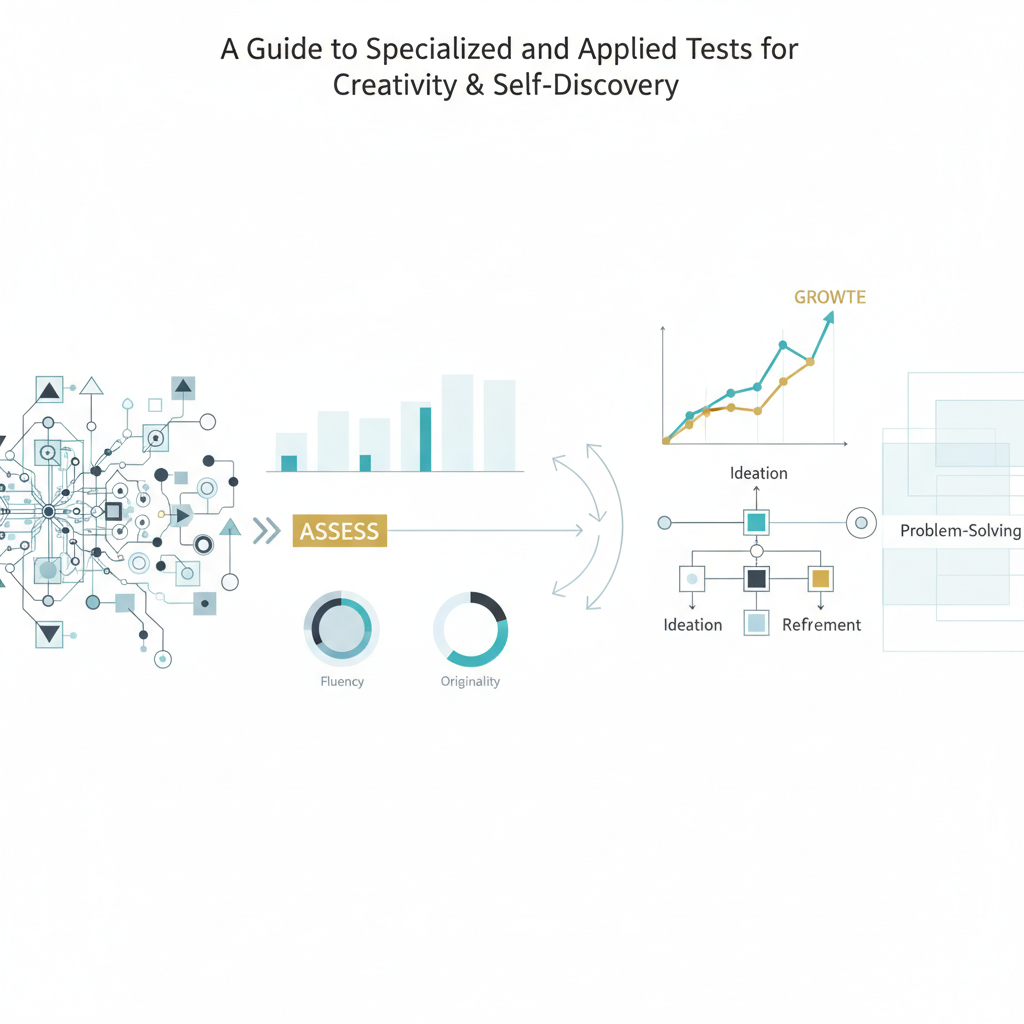
  • A Guide to Specialized and Applied Tests for Creativity & Self-Discovery

    A Guide to Specialized and Applied Tests for Creativity & Self-Discovery

    Specialized and applied tests are assessments designed to measure specific psychological traits, cognitive abilities, or behavioral patterns. These can range from creativity tests that evaluate divergent thinking to color psychology tests that explore personality, offering structured insights for personal development, professional growth, and self-discovery.

    Do you ever wonder how your mind works? Or how you approach challenges and come up with new ideas? Learning about yourself is a powerful journey that often starts with being curious about your own potential, especially your creative skills. Understanding your creative strengths isn’t just about art. It’s about discovering how you solve problems, your cognitive flexibility, and your ability to innovate in everyday life.

    This guide introduces specialized and applied tests designed to give you these insights. From color psychology tests that reveal personality traits, like the Lüscher color test online, to assessments of your divergent thinking and Creative intelligence, these tools offer more than just scores. They provide a clear path to seeing your natural talents, understanding your thinking styles, and finding practical ways to grow personally and professionally. We believe that knowing your creative ability is the first step toward improving it, turning uncertainty into useful self-awareness.

    What Are Specialized and Applied Tests for Self-Understanding?

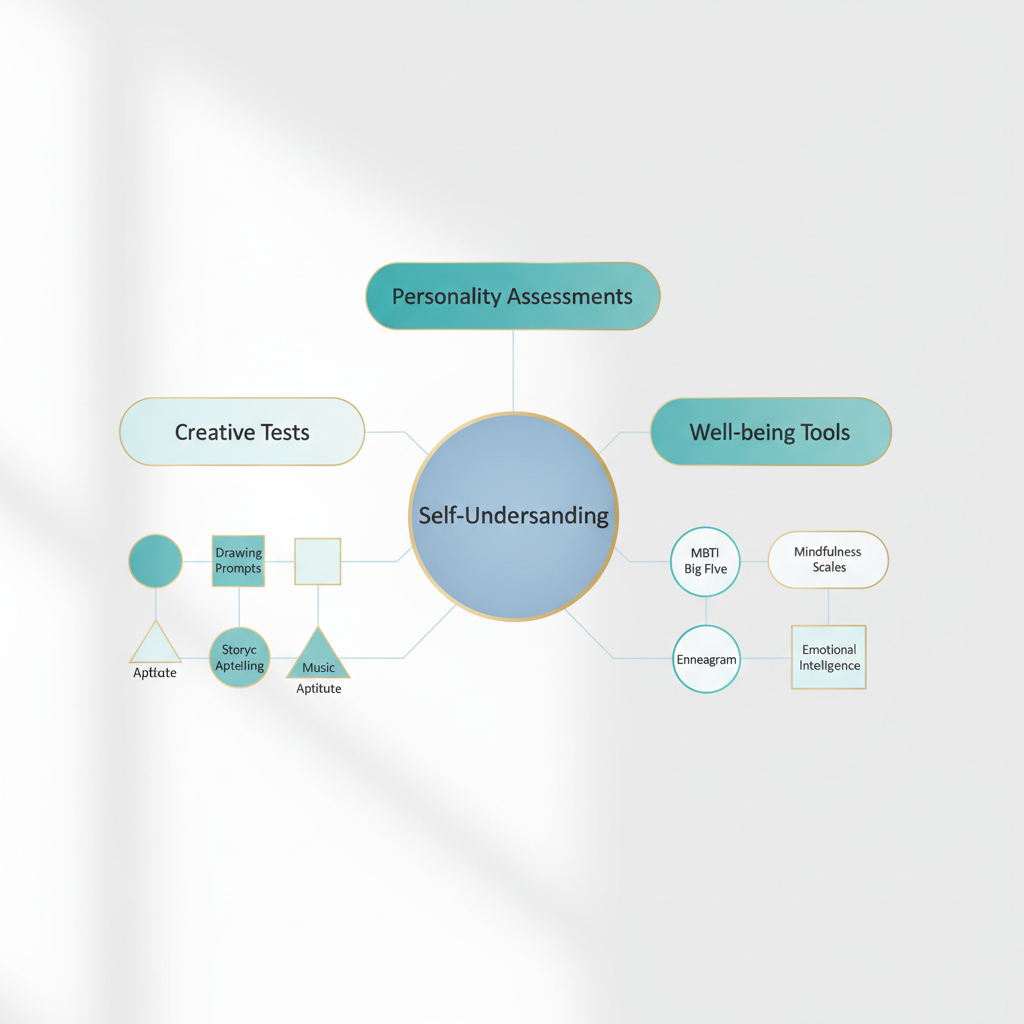
    An infographic depicting a network diagram with a central concept of self-understanding, branching out to different categories of specialized and applied tests, like creativity and personality assessments.
    Minimalist, vector-based infographic: A professional and approachable cognitive network diagram or idea cluster representing specialized and applied tests for self-understanding. Clean geometric shapes, connected by subtle lines, in soft blues, whites, and charcoal, with gold or teal accents. Central node for ‘Self-Understanding,’ branching out to categories like ‘Creative Tests,’ ‘Personality Assessments,’ ‘Well-being Tools.’ Subtle gradients. Open areas for category headers. No humans. Educational, abstract visualization.

    Why These Tests Matter for Personal Growth

    Getting to know yourself is a powerful journey. Specialized tests offer deep insights into who you are. They go beyond simple observations and give you a structured way to explore your traits, preferences, and potential.

    These aren’t just “fun psychology tests for students.” They are tools based on real science. They help you uncover parts of your personality, thinking styles, and emotions. For example, some tests explore how you see the world, while others reveal your creative potential. These insights are key to meaningful personal growth.

    Here’s why these tests are so valuable:

    • Enhanced Self-Awareness: Get a clearer picture of your strengths and areas for improvement, including your unique “creative genius.”
    • Targeted Personal Growth: Use what you learn to focus on specific areas and create a personal plan for improvement.
    • Improved Problem-Solving: Understand your thinking patterns, like divergent thinking, to find new ways to solve challenges.
    • Boosted Confidence: Knowing your abilities empowers you to be your true self with more confidence.
    • Professional Development: Learn about your creative intelligence and work style to guide your career and help you work better with others.
    • Greater Innovation: Pinpoint your creative strengths to make space for breakthrough ideas, both at work and at home.

    The Creative Ability Test, for example, is a key part of this journey. It offers a clear, evidence-based assessment that helps you understand your unique creative potential. It takes you from feeling unsure to having clear insights you can use. It also gives you practical steps to use your strengths well.

    How to Use This Guide for Insight

    Think of this guide as your map. It will help you explore the many different types of specialized tests. We’ll look at everything from visual tests, like the Lüscher Color Test [1], to detailed creativity assessments.

    Our goal is to give you useful insights. As you read, stay curious and think about how each test relates to your own life. This helps turn information into true understanding. We’ll explain complex ideas simply and give you practical tips along the way.

    Consider these points as you explore:

    • Explore Broadly: Look at different kinds of tests, from creative thinking quizzes to deeper psychological analyses.
    • Understand the “Why”: Learn what each test is designed to show you and the science behind it.
    • Focus on Application: Think about how you can use these insights to improve your creativity and your life.
    • Reflect and Connect: Ask yourself how the information connects to your own experiences to deepen your self-awareness.
    • Embrace Your Unique Path: Remember, there’s no single “right” answer in self-discovery. Celebrate your unique mix of traits.

    While this guide covers many topics, remember the Creative Ability Test is your partner for creativity. Our platform has a science-based, 30-question assessment that gives you personal feedback on your creative strengths. We help you change how you see your own creativity, giving you a clear plan to grow and use your potential in the real world.

    • What Is a Psychology Spectrum Test? Learn what a psychology spectrum test is and how it can be used to map your traits. Discover how this approach can reveal new aspects of your personality and creative potential.

    How Do Visual & Projective Tests Reveal Personality?

    The Lüscher Color Test: What Your Color Choices Say

    Visual tests can be powerful tools for self-discovery. They help reveal our hidden thoughts and feelings. The Lüscher Color Test is a great example. It suggests that the colors you prefer can reveal a lot about your personality and current emotional state.

    Developed by Dr. Max Lüscher, this test is more than a simple color quiz. It uses a special set of colored cards. First, you arrange the colors you like most. Then, you rank the ones you dislike. These choices are analyzed using a standard system [2].

    What can your color choices tell you?

    • Emotional Balance: Your selections can point to your mood and how you deal with stress.
    • Motivation and Desires: They may show your hidden needs and what really drives you.
    • Personality Traits: The test can offer clues about the core parts of your character.

    Learning from these insights helps you understand yourself better. It can guide you toward managing your emotions more effectively. For creative people, this self-awareness can clear emotional blocks and improve self-expression. It also helps you connect with your inner world, which can spark new ideas.

    The Cube, Shape, and Forest Tests: Interpreting Symbolic Stories

    Some tests ask you to imagine a scene or an object and then describe it. These creative exercises offer a peek into your mind. They can show how you see yourself, other people, and the world.

    These are not “right or wrong” tests. Instead, they encourage you to look inward. Your descriptions are unique to you. They often represent your hidden thoughts and feelings [3].

    Let’s look at some popular examples:

    • The Cube Test: Imagine a cube. Describe its size, material, and location. This can reflect how you see yourself.
    • The Ladder Test: Imagine a ladder. What does it look like and where does it lead? This may represent your goals and path in life.
    • The Forest Test: Imagine walking through a forest. Who is with you? What do you see? This can reveal things about your relationships and your view on life.
    • Shape Psychology Tests: Choosing a simple shape (like a square, circle, or triangle) can show your communication style and how you prefer to solve problems.

    These symbolic stories show how you think and face challenges. For creative people, these tests are a great way to strengthen imagination and find new perspectives. They help you understand how you think about abstract ideas. This skill is key for solving problems in new ways and coming up with fresh ideas.

    Understanding Kokology and Other psychological games

    Kokology is a fun approach to self-discovery. It’s a popular Japanese game [4]. It asks simple questions about everyday situations. Your answers might seem small, but their interpretations can offer surprising insights into your personality and behavior.

    How does Kokology work?

    • You are given a short, imaginative scenario.
    • You answer a question about what you would do or see.
    • Each answer is then connected to a deeper meaning about your personality.

    For example, you might imagine finding a key. Where did you find it? What does it look like? Your response could show your attitude toward risks or opportunities. Games like this make learning about yourself fun. They take away the pressure you might feel with a formal test.

    Besides Kokology, many other psychological games exist. These can be quick quizzes or thought experiments. They often look at how you make decisions, react to situations, or what you secretly want.

    These fun approaches are a great way to get curious about yourself. They help you think about your creative side and see what sparks your ideas. By playing these “games,” you get simple, easy-to-understand insights. This helps you recognize your creative strengths and use them to grow and think differently in your daily life.

    How Can You Measure Your Creative Potential?

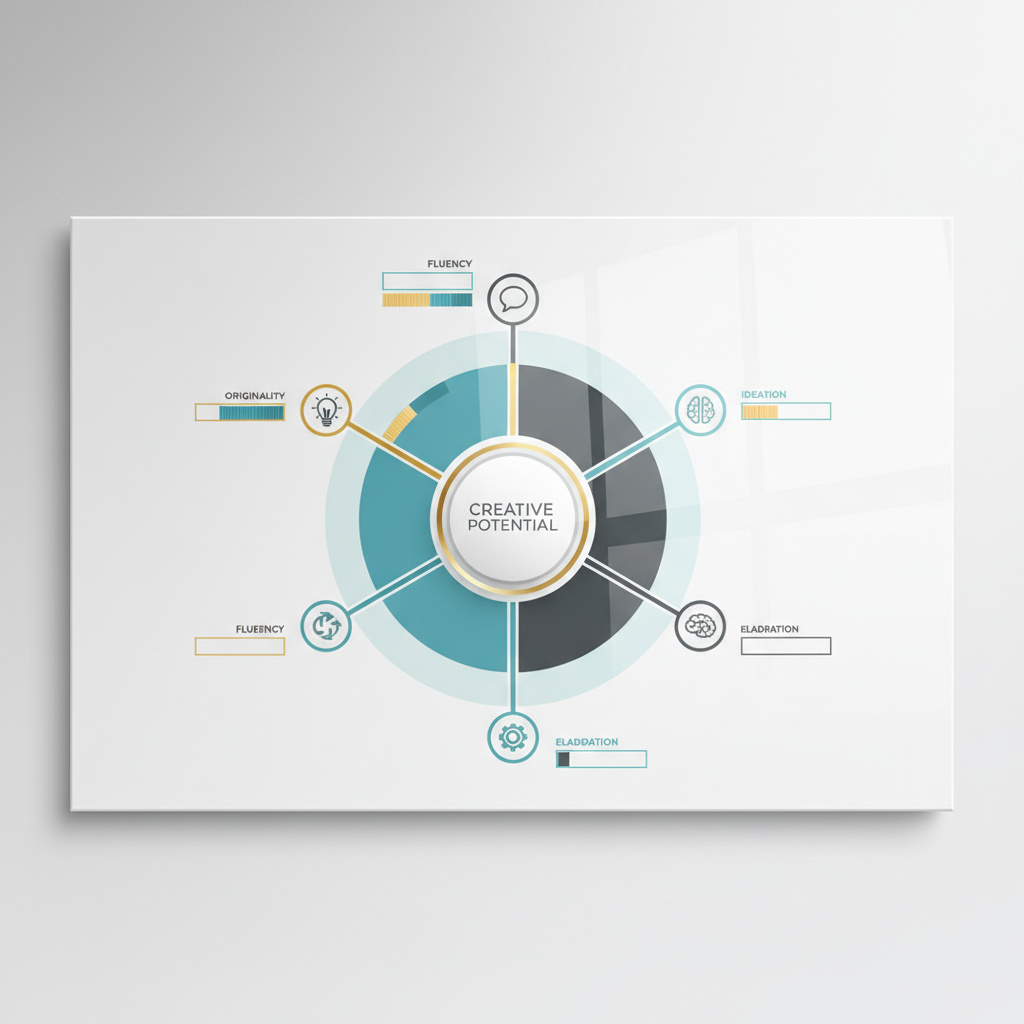
    An abstract infographic showing a radial chart with segments representing different measurable aspects of creative potential, like originality and flexibility, highlighted with accent colors.
    Minimalist, vector-based infographic: A professional and approachable competency graph or radial chart illustrating the measurement of creative potential. Clean geometric shapes in soft blues, whites, and charcoal, with gold or teal accents highlight different creative dimensions like originality, fluency, and flexibility. Subtle gradients. Open areas for short labels. No humans. Educational, abstract visualization.

    Exploring Creative Intelligence and IQ tests

    Many people link intelligence with IQ tests. These tests usually measure convergent thinking, which is your ability to find a single correct answer. But creativity is different.

    Creative intelligence includes a wider range of skills. It involves divergent thinking, problem-solving, and coming up with new ideas. It’s about exploring many possible solutions instead of just one. Standard IQ tests often overlook these important creative skills [5].

    That’s why specialized tests are needed. They help you understand your own creative strengths. These tools look at more than just academic intelligence. They show how you imagine, adapt, and create new things.

    The Adobe Creative Type Quiz and What it Means

    The Adobe Creative Type Quiz is a fun and popular tool that helps people find their creative personality type. This playful quiz might call you a Visionary, Producer, or Thinker.

    Taking this quiz can be a great first step to learning about yourself. It’s a fun way to think about how you like to create and express your ideas. It also helps you better understand your creative habits.

    However, it’s important to know that this quiz is not a scientific test. It offers general insights, not exact, science-backed measurements. For a deeper look at your creative potential, a more structured and scientific approach is better.

    Verbal and Divergent Thinking Tests (like the Brick Test)

    Divergent thinking is a key part of creativity. It’s the ability to come up with many different ideas. This way of thinking is vital for creating new things and solving problems.

    Verbal and divergent thinking tests measure this skill directly. A classic example is the “Brick Test,” where you list as many uses for a brick as you can. The goal is to give a wide variety of original answers. These tests measure a few key parts of creative thinking:

    • Fluency: The total number of ideas you generate.
    • Flexibility: How many different types of ideas you have.
    • Originality: How unique or unusual your ideas are.
    • Elaboration: How much detail you add to each idea.

    These tests give you a good look into your creative process and how you solve problems. Understanding these areas helps you use your natural strengths and shows you where you can grow. These ideas are also the basis for more detailed creativity tests.

    The Creative Ability Test: A Scientific Approach

    The Creative Ability Test is a scientific way to measure your creative potential. Our test goes beyond simple quizzes. It’s a complete assessment based on solid psychological research. This 30-question test is designed to explore multiple sides of your creativity.

    We focus on providing insights backed by evidence to help you understand your unique creative profile. The test looks at key areas like:

    • Cognitive flexibility
    • Problem-solving skills
    • Openness to new experiences
    • Divergent thinking abilities
    • Innovative thinking tendencies

    The result is more than just a score. You get personalized feedback with practical tips that fit your personal style. These insights help you see your creative strengths and find areas for growth. They also guide you on how to use your creativity in the real world [6].

    The Creative Ability Test turns uncertainty into clear self-awareness. It helps you move from inconsistent creativity to steady growth. It shows you how to use your creativity to solve problems and create new things. Discover your unique potential and get personal, practical tips for your own growth and career.

    What Tests Help You Understand Your Mental & Emotional Well-being?

    An Introduction to Mental Health and Psycho Tests

    Getting to know your mental and emotional health is a big part of self-discovery. This can also have a big impact on your creative journey. Mental health tests and psychological tools offer a look into your inner world. They help you find your strengths, see your challenges, and grow as a person.

    These tests are not just for clinical diagnosis. Many are made for self-exploration and awareness. They can help you understand your emotional patterns and ways of thinking. They also help you see how your inner state affects your relationships and creative work.

    When we say “psycho tests” here, we mean different kinds of self-assessment tools. They help you learn about different parts of your mind. They give you a structured way to think about your feelings, thoughts, and actions. This process often shows you areas where you can grow. It also points out strengths you might not have noticed.

    Many people find these tests empowering. They turn vague feelings into clear ideas you can act on [7]. This is like how the Creative Ability Test helps you understand your unique creative strengths. Both types of tests give you a starting point. Then, they offer personal ways to improve.

    In short, these tools are guides. They help you navigate your emotional world. Understanding yourself better can make you a more flexible thinker. It can also help you be more creative and better at solving problems.

    Mental Fitness and Psychological Well-being Assessments

    Mental fitness is more than just not having a mental illness. It means building resilience, emotional intelligence, and a positive mindset. Well-being tests help you measure these important areas. They give you a snapshot of your emotional health and how you cope with stress.

    These tests often look at a few key areas:

    • Resilience: Your ability to bounce back from stress. This is key for getting through creative blocks.
    • Emotional Intelligence (EQ): Understanding and managing your emotions, as well as seeing and influencing the emotions of others. A high EQ leads to better teamwork and more ideas.
    • Stress Management: How well you handle daily stress. Good coping skills prevent burnout and keep your creative energy high.
    • Growth Mindset: Believing your abilities can grow with hard work. This mindset helps you keep learning and trying new creative things.
    • Self-Compassion: Being kind to yourself, especially when things are hard. It helps you take risks without fearing failure.

    Knowing your mental fitness level helps you see where you can improve. For example, if a test shows low resilience, you can practice mindfulness or new ways to solve problems. These simple steps can help you take on tough creative challenges. They help you keep going, no matter what you’re working on. Improving your mental fitness helps your creative work. It allows you to approach new ideas with more confidence and handle surprises better.

    • Psychological Capital Questionnaire (PCQ): Measure your psychological capital, including hope, efficacy, resilience, and optimism. Learn how the PCQ can help you identify your core strengths and unlock your full potential.

    Exploring Happiness, Motivation, and Self-Awareness Tests

    Besides finding challenges, many tests can show you how to be happier and more fulfilled. Tests for happiness, motivation, and self-awareness are a key part of self-discovery. They help you find what truly drives you and makes you happy.

    Happiness Tests: These tests often look at different parts of your well-being. They might measure things like positive feelings, engagement, purpose, and good relationships [8]. Knowing this helps you create a life and find activities that make you happier. Being happier often makes you more open to new experiences, which is a key trait for creative people.

    Motivation Tests: What drives you? Motivation tests find your inner drivers. Do you thrive on challenge, autonomy, mastery, or a sense of purpose? Finding your main motivators can help you make better choices. It helps you pick projects and roles that are a good fit for you. When your work fits you, it’s easier to find your creative flow and stick with your goals.

    Self-Awareness Tests: These tools help you better understand your values, strengths, and personal views. They help you figure out what’s really important to you. Better self-awareness is the foundation for true creative expression. It lets you use your real experiences and ideas in your work. It also gives you a clearer direction in your life and career. For example, if you know you’re curious, you might try a new art form or a new way to solve problems.

    By taking these tests, you learn about your inner world. Instead of guessing how you feel, you get a clear way to understand it. This change helps you use your creative potential more effectively. It helps you face challenges with more insight and strength. In the end, these tests show that self-discovery is a continuous, empowering journey.

    • 7 Psychology-Backed Happiness Tests: Measure your overall life satisfaction and emotional well-being with these psychology-backed happiness tests. Gain valuable insights into what truly brings you joy and fulfillment.
    • Self-Awareness Test (Psychology): Uncover the foundation of personal and creative growth with a psychology-based self-awareness test. Learn to identify your core values, strengths, and hidden potential to better guide your journey.

    Which Tests Explore Your Behaviors and Mindset?

    Understanding Your Attitude, Schemas, and Psychological Flexibility

    Your mindset and behaviors shape your daily life. They affect how you think, feel, and act. Certain tests can help you explore these deeper parts of yourself. Understanding them is key to reaching your full potential.

    What Shapes Your Mindset?

    Your attitude, schemas, and psychological flexibility are powerful forces. They have a big impact on your creativity and problem-solving skills. Let’s look at each one.

    • Attitude: This is your general outlook on life. It’s how you approach situations and people. A positive attitude often makes you more open. It encourages new ideas and creative thinking. On the other hand, a rigid attitude can block innovation.
    • Schemas: These are mental shortcuts. They are patterns our brains use to organize information [9]. Schemas help us understand the world quickly. But they can also lead to fixed ways of thinking, which can block creative solutions. Learning to spot your schemas can help you break free from limiting patterns.
    • Psychological Flexibility: This is your ability to adapt. It means you can adjust your thoughts and actions to fit new situations. People who are flexible tend to be more resilient and better at solving complex problems. This skill is vital for creativity, as it helps you change direction and explore new points of view.

    Why This Matters for Creativity

    Understanding these parts of yourself gives you deep self-awareness. You’ll see how your inner world affects what you create. For example, a growth mindset helps you persevere through creative challenges. By spotting rigid schemas, you can challenge them and open the door to fresh ideas. Improving your psychological flexibility helps you embrace uncertainty and adapt your creative methods when needed.

    For example, our Creative Ability Test looks at your openness to new experiences. This trait is closely tied to psychological flexibility. The test helps you see how willing you are to explore new ideas. Your personalized feedback will then offer tips to help you build a more adaptive and creative mindset.

    • Schema Test Psychology: Explore how your core beliefs and mental models shape your reality and creative thinking. Understanding your schemas can help you break free from limiting patterns and foster innovation.

    Intuition and Common Sense Tests

    Intuition and common sense are key skills for making decisions. They also play a big part in creative problem-solving. While there aren’t always formal “tests” for them, you can still find ways to measure these qualities.

    The Balance of Intuition and Logic

    Intuition is your gut feeling. It’s the ability to understand something right away, without conscious reasoning. Creative breakthroughs often come from these intuitive leaps. A sudden insight can connect unrelated ideas and reveal new possibilities.

    Common sense, on the other hand, is about practical judgment. It means using basic reasoning to make good decisions. It keeps your ideas grounded and makes sure they are realistic. Common sense helps turn creative concepts into workable plans.

    Exploring These Strengths

    Many online quizzes and scenario-based questions can help you explore these areas. They give you puzzles or dilemmas to solve. How you respond shows if you tend to rely on quick instinct or careful thought. These exercises often include:

    • Decision-making scenarios: These ask how you would react to unforeseen challenges.
    • Pattern recognition puzzles: These test your ability to spot trends quickly.
    • Ethical dilemmas: These explore your moral compass and practical judgment.

    Improving both intuition and common sense adds to your creative toolkit. It helps you come up with new ideas and then turn them into practical solutions. Building self-awareness in these areas is a powerful step. It helps you move from feeling uncertain to having clear, actionable insights.

    • Intuition Test Psychology: Discover the psychology behind intuitive intelligence and learn how it impacts your creative process. Explore methods to measure and strengthen your intuition for better decision-making.

    Tests for Leadership, Relationships, and Motivation

    Your mindset and behaviors also affect how you interact with others and what motivates you. Tests in these areas offer useful insights. They can help you use your creativity in group settings and support your personal growth.

    Applying Creativity Beyond Yourself

    Understanding these areas is key to applying your skills in the real world. It helps you lead, work with others, and stay motivated. This takes you beyond general advice to insights that are specific to you.

    • Leadership Tests: These tests identify your leadership style. For example, some leaders are visionaries who inspire new ideas. Others are more practical and focus on getting things done. Creative leaders empower their teams and create environments where new ideas can flourish. Understanding your style helps you build a more creative culture.
    • Relationship Style Tests: These explore how you communicate and prefer to work with others. Creativity often thrives in diverse teams. Knowing your interaction style helps you connect better with people and build stronger partnerships. This improves how the group solves problems and comes up with new ideas.
    • Motivation Assessments: These reveal what truly drives you. Are you motivated by challenges, a desire to become an expert, or the need to make an impact? Motivation that comes from within is a key part of staying creative over the long term [10]. Understanding what motivates you helps you shape your life and work so you can stay enthusiastic about your creative projects.

    Personalized Growth and Professional Development

    These tests give you clear insights into your strengths and show you where you can improve. For example, if you learn you are a leader who influences others, you can use that skill to inspire creative projects. If you find you prefer teamwork, you can look for group projects. Understanding your motivation helps you set creative goals you can actually reach. This turns inconsistent creative work into a structured plan for growth. For example, the Creative Ability Test provides a starting point by helping you understand your core creative strengths. This knowledge then shows you how to lead, relate to others, and motivate yourself to make a greater creative impact.

    • 5 Creative Relationship Psychology Tests: Use psychology-based quizzes to gain deeper insights into your relationships. These creative tests can help you and your partner understand your communication styles and connection better.

    Fun and Applied Tests for Creative Exploration

    • Creative Hobby Quiz: Not sure which creative outlet is right for you? Take our creative hobby quiz to find a new passion that matches your unique personality and creative style.

    What is Test Taking Anxiety and How Can You Manage It?

    Identifying the Signs of Test Anxiety

    Test anxiety is common. It’s more than just feeling nervous before a test. This type of stress can seriously hurt your performance. It is a big problem on tests that measure skills like creativity or problem-solving.

    Knowing the signs is the first step to managing it. Test anxiety shows up in a few different ways. You might notice physical, emotional, or mental signs.

    • Physical Symptoms: Your body reacts to stress. You might notice a racing heart, quick breathing, or sweating. Headaches, an upset stomach, or tight muscles are also common. These feelings can make it hard to focus.
    • Emotional Symptoms: You might feel dread, fear, or even panic. It’s common to feel overwhelmed or helpless. Feeling irritable or unable to relax are also key signs. These emotions can make it hard to think clearly.
    • Cognitive Symptoms: This can really affect your creative thinking. Your mind might go blank, even if you know the material. It’s common to have trouble focusing on questions. You might get stuck on negative thoughts or worry about failing. This makes it harder to think creatively and come up with new ideas. [11]

    When you spot these signs, you can admit you’re feeling anxious. This is the first step to taking action. For example, on a creative thinking test, a blank mind blocks your best ideas. Managing anxiety helps you use all of your creative skills.

    Practical Strategies for a Calm Mindset

    To manage test anxiety, you need to prepare your mind and body. These tips can help you go into any test, including the Creative Ability Test, with more confidence. They help you show what you can really do.

    Before the Assessment

    • Prepare Thoroughly: Know the test format and types of questions. For creativity tests, practice brainstorming and solving open-ended problems. When you know what to expect, you’ll feel less nervous.
    • Simulate the Environment: Take practice tests in a similar setting to the real one. This helps you get used to the time limit and makes the process feel more comfortable.
    • Prioritize Sleep: Get 7-9 hours of good sleep the night before. A rested mind is sharper and handles stress better. Sleep has a big impact on how well you think.
    • Eat Nourishing Meals: Eat healthy food to fuel your brain. Avoid too much caffeine or sugar. Steady energy levels help you focus.
    • Familiarize Yourself with the Platform: If the test is online, like the Creative Ability Test, take a moment to learn the platform. Knowing where to find everything will prevent surprises.

    During the Assessment

    • Practice Deep Breathing: If you feel anxious, take slow, deep breaths. Breathe in through your nose for a count of four. Hold for seven. Breathe out slowly through your mouth for eight. This simple exercise helps your body relax. [12]
    • Practice Mindfulness: Focus on the present moment. Notice what’s around you, your breath, or how your hands feel on the keyboard. This helps turn your focus away from anxious thoughts.
    • Challenge Negative Thoughts: Replace negative thoughts with positive ones. Instead of thinking, “I can’t do this,” tell yourself, “I am prepared, and I will do my best.”
    • Read Instructions Carefully: Take your time to understand each question. Rushing can cause mistakes and make you more anxious.
    • Manage Your Time: Pace yourself during the test. If a question is too hard, skip it and come back later. This keeps you from feeling overwhelmed.

    After the Assessment (for future growth)

    You can grow by learning from your experiences. Look back at how you did without being too hard on yourself. Think about what worked well and what you can do better next time. This helps you build a growth mindset, which is key for developing creativity.

    By using these tips, you can feel less anxious during tests. You can also tap into your creative strengths and unique ways of thinking. The Creative Ability Test is a science-backed way to learn more about yourself. Managing your anxiety helps you get the most out of that journey. This will lead to better insights for your personal and professional growth.

    • How to Overcome Test Taking Anxiety: Learn how to manage stress and calm your mind before an assessment. Our guide offers 10 practical strategies to help you overcome test-taking anxiety and perform your best.

    Discover Your Creative Strengths Today

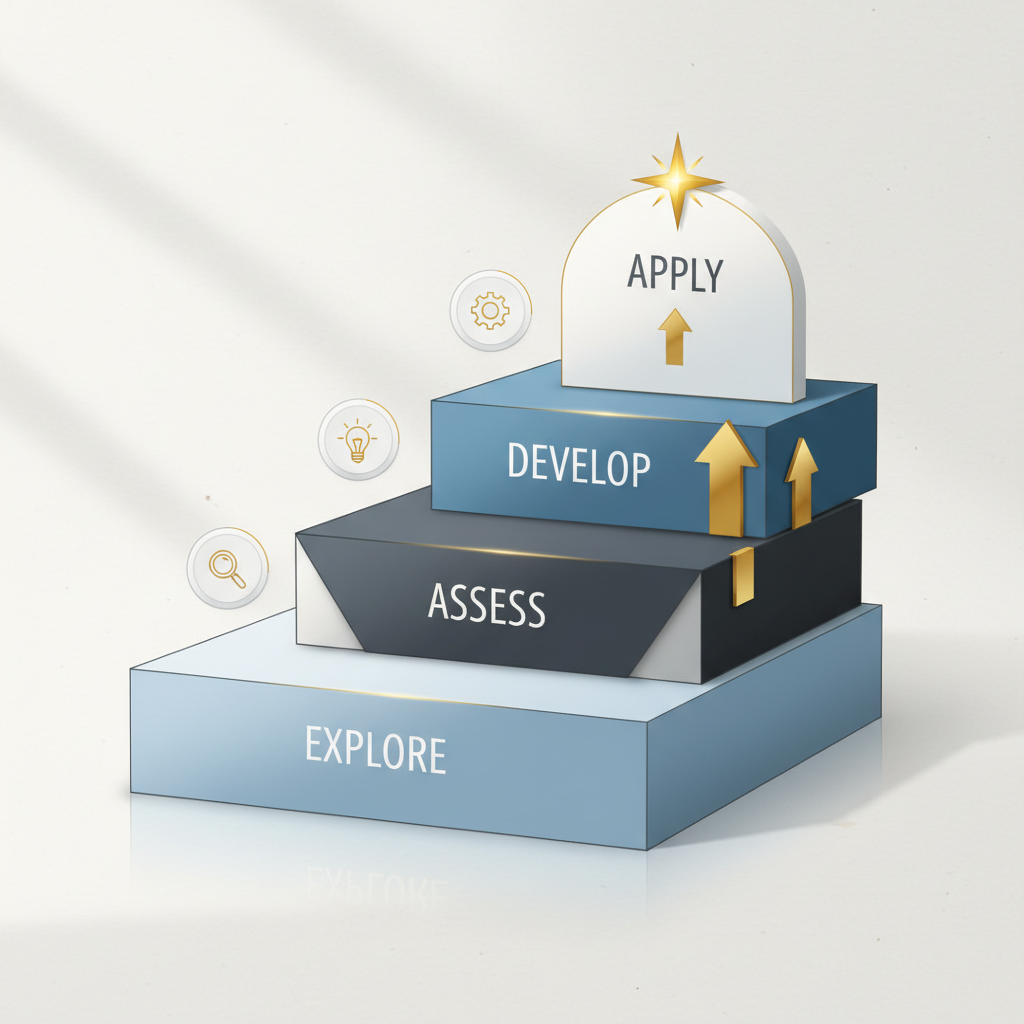
    A layered infographic showing an upward progression of steps or stages for discovering and developing creative strengths, using abstract geometric shapes.
    Minimalist, vector-based infographic: A professional and approachable layered system or milestone progression illustrating the journey to discover and enhance creative strengths. Ascending, clean geometric shapes forming layers or steps, in soft blues, whites, and charcoal, with gold or teal accents indicating progress. Each layer represents a stage such as ‘Explore,’ ‘Assess,’ ‘Develop,’ ‘Apply.’ Subtle gradients. Open areas for short labels or indicators. No humans. Educational, abstract visualization.

    Unlocking your creativity is a powerful journey. It helps you find hidden strengths and think in new ways. When you understand your creative style, it helps you grow as a person and in your career.

    Wondering how to measure your creativity? Many people want practical tips they can use in the real world. The key is moving from being unsure to having clear, useful knowledge about yourself. This change can be empowering.

    The Creative Ability Test shows you the way. It’s a trusted tool based on science. Our 30-question test helps you understand how your creative mind works. We use proven methods to give you practical advice you can actually use.

    Our test looks at your creativity from different angles. It measures how easily you can switch between ideas and how well you come up with many unique thoughts. It also checks your problem-solving skills and your openness to new things. This gives you a complete picture of your creative strengths.

    You’ll get feedback that’s made just for you. It shows you what you’re good at and where you can improve. We give you simple tips to boost your creative thinking. This advice helps you use your creativity every day and solve problems with confidence.

    The Creative Ability Test can be a turning point. It helps you go from feeling stuck to growing steadily. You’ll learn how your creative mind works and how to use it for new ideas. Our goal is to give you personal, practical advice that builds your creative confidence. Research shows that knowing your creative process makes you a better problem-solver [13].

    Ready to find your unique creative strengths? Start your journey today. Take the Creative Ability Test to unlock your full potential and build a more creative future.

    Frequently Asked Questions

    Is the Lüscher color test accurate?

    The Lüscher Color Test is a personality test that uses colors to understand your feelings and traits. In the test, you simply pick colors in the order you prefer. The creator, Max Lüscher, believed your color choices reveal your unconscious thoughts.

    But is it scientifically accurate? Most psychologists do not consider the test to be a valid scientific tool. There is little proof that it works consistently, and results often change. Because of this, it is not used for professional diagnosis. It’s better used as a tool for self-reflection that can spark fun conversations and personal insights. [14]

    In contrast, tests that are backed by science use careful, proven methods. They are built on extensive research to ensure they are reliable and accurate. Our Creative Ability Test, for example, gives you insights based on evidence. It helps you understand your creative strengths by measuring skills like flexible thinking. Our goal is to give you clear feedback that you can use.

    What is a creativity test in psychology?

    A creativity test in psychology measures different parts of your creative skills. These tests aren’t just about artistic talent. Instead, they look at how your mind works. They explore how you come up with new ideas and solve problems in unique ways.

    Psychological creativity tests often measure a few key areas, such as:

    • Divergent Thinking: Your ability to come up with many different and original ideas. For example, listing all the possible uses for a common object.
    • Convergent Thinking: Your skill at finding the single best answer to a problem using logic.
    • Cognitive Flexibility: How easily you can switch between different ways of thinking to solve a problem.
    • Originality: How new or unique your ideas are compared to others.
    • Elaboration: Your ability to take a simple idea and add details to make it better.

    These kinds of tests give you useful information. They help you see your creative strengths and find areas where you can grow. The Creative Ability Test is a complete, 30-question test based on science. It helps you get a deeper understanding of your creative mind. You will receive personal feedback to help you build more creativity into your daily life.

    What are some fun psychology tests for students?

    Many fun psychology tests can get you thinking. They are often used for self-discovery and are more casual than tests a doctor might use. Here are a few popular examples:

    • The Cube Test: In this imagination-based test, you picture a cube in a desert. Its size, location, and what it’s made of can show parts of your personality. You also imagine other items like a ladder and a horse, and each one stands for a different part of your life.
    • Kokology: This is a series of Japanese psychological games that use “what-if” situations. Your choices are thought to show your attitudes about yourself and your relationships. For example, you might be asked to describe a dream scenario.
    • The Forest Test: Here, you imagine walking through a forest. You might encounter animals, a river, or other challenges. How you react can reveal your values and how you handle problems.
    • The Desert Test (similar to The Cube): You picture yourself walking through a desert. The items you bring and what you see can offer clues about your coping skills and priorities.

    These tests are great conversation starters and a fun way to think about yourself. They can be a simple introduction to psychology for students. However, it’s important to remember they are mostly for entertainment. They don’t have the scientific proof or in-depth results that a tool like the Creative Ability Test provides. Our platform focuses on proven methods to give you useful advice for real creative growth.

    How can I test my creative thinking?

    Testing your creative thinking is about understanding how your mind comes up with new ideas and solves problems. Here are a few good ways to check your creative skills:

    • Take a Science-Backed Test:
      • The Creative Ability Test is made for exactly this. Our 30-question test measures different parts of your creativity, like original thinking and problem-solving skills. You’ll get feedback that is tailored to you, along with useful tips to improve. It’s a complete and reliable way to understand your creative strengths.
    • Try Brainstorming Exercises:
      • Try the “Alternative Uses Task.” List as many uses as you can for a common item (like a brick or a paperclip). Try to be original.
      • Do “Unusual Connections.” Pick two unrelated words and find creative ways to connect them.
    • Solve Puzzles with No Single Answer:
      • Try brain teasers or puzzles that require thinking outside the box. They force you to challenge normal ways of thinking.
      • Look for everyday problems and brainstorm multiple, fresh solutions for them.
    • Think About Your Own Process:
      • Pay attention to how you solve problems. When do you feel most creative? What places or situations help you come up with good ideas?
      • Keep an idea journal. Write down new thoughts and notice how you connect ideas that seem unrelated.
    • Ask for Feedback:
      • Share your ideas with friends or coworkers you trust. Ask them what they think. Do they see your solutions as original? Do they think you approach problems in flexible ways?

    Understanding your creativity is a process. It starts with curiosity and leads to real self-knowledge. Our platform gives you personal feedback that helps you go from being creative only some of the time to having a clear plan for growth. Start exploring with the Creative Ability Test today. Find out what you’re capable of and get tips you can actually use.


    Sources

    1. https://www.luscher-color.com/the-test/
    2. https://psycnet.apa.org/record/1971-08144-001
    3. https://www.psychologytoday.com/us/blog/head-games/201202/your-secret-messages-your-unconscious
    4. https://books.google.com/books?id=019BBAAAQBAJ
    5. https://www.apa.org/news/press/releases/2005/03/iq-creativity
    6. https://www.creativityatwork.com/2012/03/02/the-science-of-creativity/
    7. https://www.apa.org/topics/assessment
    8. https://ppc.sas.upenn.edu/
    9. https://www.simplypsychology.org/what-is-a-schema.html
    10. https://hbr.org/2012/12/how-to-kill-creativity
    11. https://adaa.org/understanding-anxiety/test-anxiety
    12. https://www.health.harvard.edu/mind-and-mood/relaxation-techniques-breath-control-helps-quell-errant-stress-response
    13. https://hbr.org/2012/08/creativity-is-a-process-not-a-skill
    14. https://www.psychologytoday.com/us/blog/the-power-attention/201201/what-your-favorite-color-says-about-you