Tag: Creativity Assessment

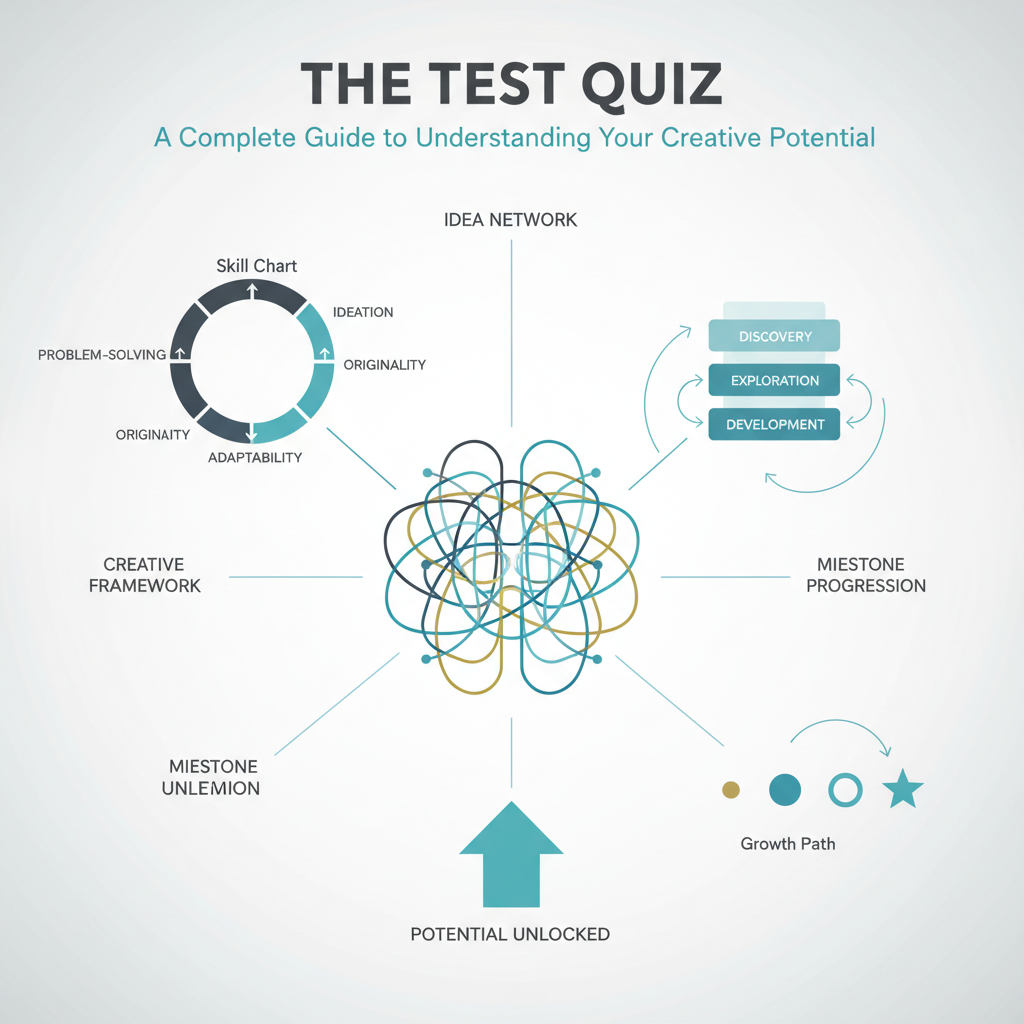
  • The Test Quiz: A Complete Guide to Understanding Your Creative Potential

    The Test Quiz: A Complete Guide to Understanding Your Creative Potential

    A ‘test quiz’ for creativity is an assessment designed to measure your creative potential beyond simple right-or-wrong answers. The Creative Ability Test is a scientifically grounded 30-question quiz that evaluates your cognitive flexibility, problem-solving skills, and divergent thinking to provide actionable insights for personal and professional growth.

    Have you ever considered the power of your own creativity? It’s not just for artists—it’s how we solve problems and see the world in new ways. Knowing your creative potential can lead to personal and professional growth. If you’re ready for a journey of self-discovery, “the test quiz” is your starting point.

    At Creative Ability Test, we believe that understanding your creative strengths and thinking styles opens up new possibilities. Our 30-question test is based on science and gives you more than just a score. We look at key areas like your Cognitive flexibility, ability to brainstorm, and openness to new things. This gives you a clear picture of how you think. It’s more than a quiz—it’s a look into how your creative mind works.

    This guide will help you understand what “the test quiz” measures and what your results mean. Most importantly, we’ll show you how to use this knowledge in your daily life. We explain the science behind the test in simple terms and give you practical tips to boost your creative thinking. You’ll learn how to solve problems better and grow as a person. Get ready to turn your ideas into action.

    What Is ‘The Test Quiz’ for Creativity?
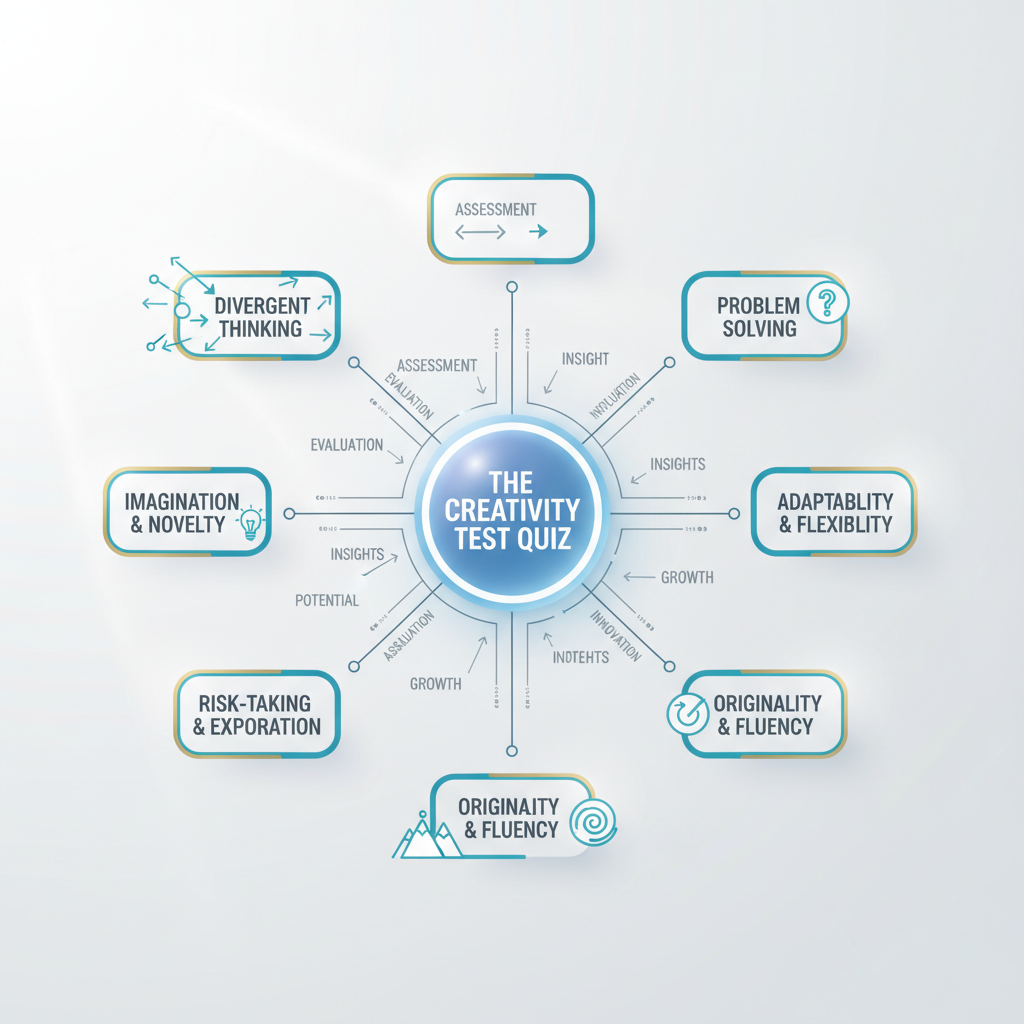
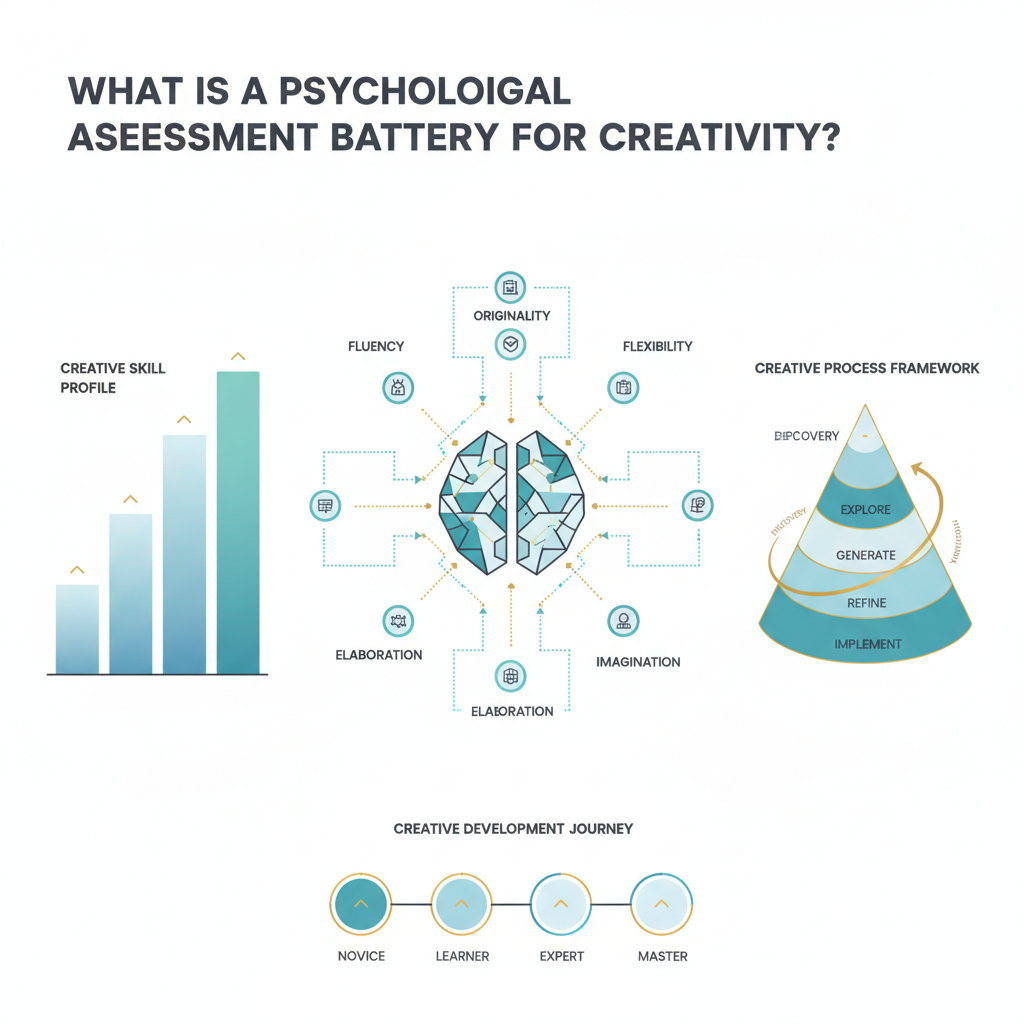
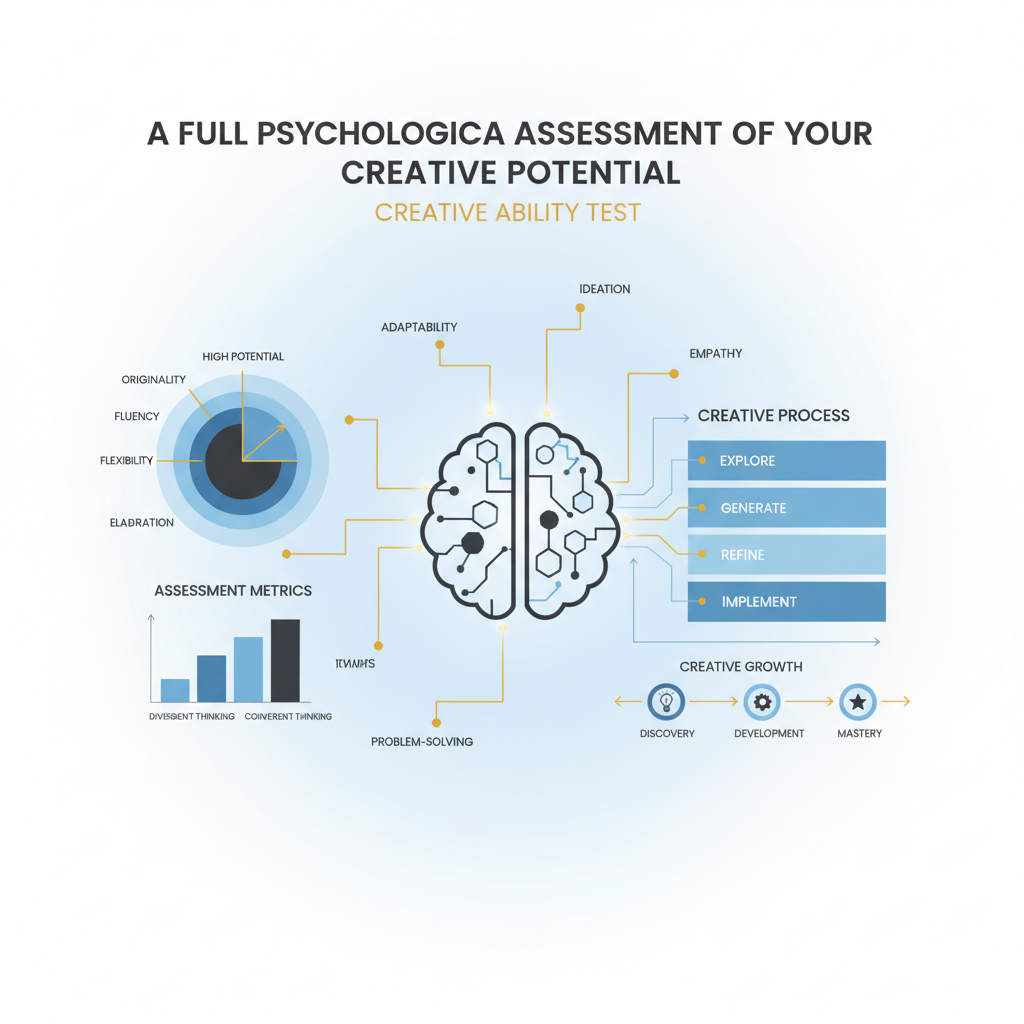
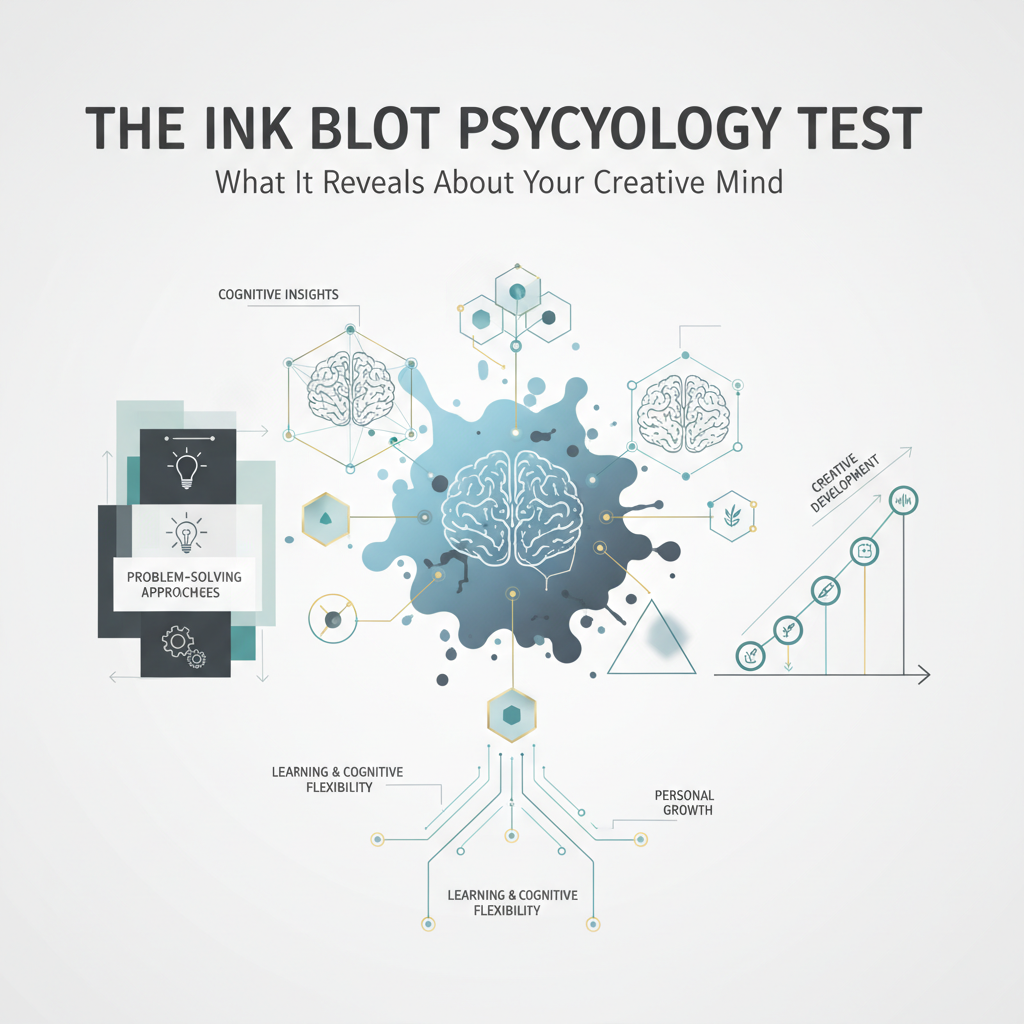
    An abstract infographic illustrating the conceptual structure and purpose of 'The Test Quiz' for creativity as a central network diagram.
    An abstract, educational infographic illustrating ‘The Test Quiz’ for creativity. Visualize a structured assessment chart or a cognitive network diagram with a central core representing the quiz, and radiating geometric shapes or nodes indicating its fundamental components and purpose. Use a minimalist, vector-based style with clean geometric shapes, subtle gradients, and accent highlights. Color palette: soft blues, whites, charcoal, with gold or teal accents. Ensure negative space for short labels. No humans, no cartoons.

    Beyond a Simple Score: What a Real Creativity Test Measures

    Many online quizzes give you a simple “creativity score.” But real creativity is more complex than that. Our platform, Creative Ability Test, goes deeper. We help you take a closer look at your unique creative mind.

    A real creativity assessment looks at you from many angles. It doesn’t just tell you *if* you’re creative—it shows you *how* you’re creative. This involves looking at your different thinking skills and styles.

    We see creativity as a skill you can grow, not a fixed trait. Our test finds your strengths in key areas. This knowledge helps you grow those strengths and use your creative potential.

    Our test looks at important parts of creativity, such as:

    • Divergent Thinking: Your ability to come up with many unique ideas. We look at how you brainstorm and find different solutions.
    • Cognitive Flexibility: How well you can switch your point of view. This shows how easily you adjust to new information or challenges.
    • Problem-Solving Skills: How you handle and solve tricky problems. This includes your ability to find new and creative solutions.
    • Openness to Experience: Your curiosity and willingness to try new things. This shows how open you are to fresh ideas.

    Understanding these parts gives you a full picture of your creativity. It helps you unlock your true potential. You’ll also get practical tips for your personal and professional life.

    The Science Behind Our 30-Question Assessment

    The Creative Ability Test isn’t just a random quiz. Our 30-question test is based on science. It uses proven psychological research and theories about creativity. This makes our test a reliable way to measure your creative skills.

    Our method is backed by evidence. We designed each question to test a specific part of your creativity. Top researchers have approved similar methods [1]. This careful process ensures your results are accurate.

    The 30 questions cover a lot of ground. They look at many different creative behaviors and ways of thinking. This helps us create a detailed profile of your creative strengths and find areas for you to grow.

    Our test is also standardized, so everyone gets the same high-quality evaluation. This means you can trust your personalized feedback. It gives you a strong starting point for learning more about yourself.

    We explain complex psychological concepts in a simple way. This makes the science of creativity easy for anyone to understand. Our goal is to give you clear, useful advice from a source you can trust.

    Why Understanding Your Creative Style Matters

    Knowing your creative style is a powerful tool. It helps you move from being unsure to feeling a confident self-awareness. Your unique way of being creative affects every part of your life.

    First, it helps you grow as a person. When you know how your mind works, you can use your natural strengths. For instance, if you’re good at divergent thinking, you can use it to solve personal problems. You can come up with new solutions for everyday challenges.

    Second, it helps your career. Companies want employees who can create new things and solve problems [2]. Knowing your creative strengths makes you a valuable team member. You can use them in group projects, planning, or to move your career forward. This helps you make a real difference at work.

    Our test gives you useful tips and clear explanations about your creative side. For example, you might learn you’re very open to new experiences. This can encourage you to explore new fields or learn new skills, broadening your world.

    In the end, this knowledge gives you power. It’s like a roadmap for being creative on purpose. You can use your talents to solve real-world problems. This will change how you approach challenges, helping you face them with more confidence and new ideas.

    What Kind of Questions Are in The Test Quiz?

    Exploring Divergent Thinking Challenges

    The Creative Ability Test looks at your divergent thinking. This is your ability to come up with many different ideas from one starting point. Think of it as a more advanced form of brainstorming.

    Our quiz gives you challenges that push you to think outside the box. You will explore many possibilities, not just the obvious ones. This helps us see how well your mind connects different ideas.

    For example, we might ask you to list as many unusual uses as possible for a common object. These questions are not about finding one “right” answer. Instead, they measure how many ideas you have and how unique they are. Research shows that this skill is a key part of creativity [3].

    By taking on these challenges, you will learn about your natural ability for:

    • Idea Fluency: How many ideas you can generate.
    • Originality: How new and unique your ideas are.
    • Flexibility: The different categories your ideas fall into.
    • Elaboration: Your skill in adding details to your ideas.

    Understanding your strengths in divergent thinking helps you find new solutions. It gives you more options when you’re trying to solve a problem.

    Assessing Your Cognitive Flexibility

    Cognitive flexibility is another key part of creativity that we measure. Think of it as mental agility. It’s your ability to switch between different ways of thinking, adapt to new facts, and get past mental blocks.

    Our quiz has questions designed to test this skill. They often ask you to change your perspective. You might need to rethink your first ideas or try a new way to solve a problem.

    For instance, a question might describe a situation where the easy solution fails. You will then be asked to come up with a different plan. This shows how easily you can drop an old idea for a better one. This skill is essential for learning and adapting in a fast-changing world [4].

    By assessing your cognitive flexibility, we learn more about your ability to:

    • Adjust your thinking when you face a challenge.
    • See an issue from more than one point of view.
    • Learn from mistakes and change course.
    • Handle complex problems more easily.

    This assessment helps you understand how you react to new situations and change your ideas under pressure. This skill is valuable for both personal growth and professional success.

    Evaluating Your Openness to New Experiences

    How open you are to new experiences has a big impact on your creativity. This is a core personality trait. It shows your curiosity, imagination, and desire to explore new ideas, concepts, and cultures.

    The Creative Ability Test looks at this trait with questions about your interests. We ask about your taste for adventure, how you feel about unusual ideas, and what you like to learn about.

    We might ask if you enjoy trying new things or if you’re drawn to art and abstract ideas. People who are very open tend to seek out different experiences. This gives them more knowledge and sparks their imagination [5].

    Through this assessment, you will discover:

    • Your level of curiosity about the world.
    • How open you are to new and different ideas.
    • Your comfort level in unfamiliar situations.
    • Your interest in art and imagination.

    Understanding your openness can help you find new learning opportunities. It can encourage you to step out of your comfort zone and find new ways to grow.

    Problem-Solving Scenarios

    Creativity isn’t just about having great ideas; it’s about using them to solve real problems. The Creative Ability Test includes practical problem-solving challenges. These see how you put your creative skills to use.

    We give you realistic situations that don’t have easy answers. You will need to think in new and clever ways. For example, you might be asked to improve a common product or solve a problem for a community. These are hands-on challenges, not just theory.

    These questions show us how you apply your creative skills in practice. They reveal your ability to think ahead and come up with truly new ideas. Good problem-solving requires both creating and carrying out new solutions [6].

    By working through these scenarios, you will learn about:

    • Your ability to spot and define problems in a new light.
    • How you use creative thinking to solve practical issues.
    • Your knack for developing real, innovative solutions.
    • Your skills in imagining improvements and positive change.

    This part of the quiz connects creative thinking with real-world results. It helps you see how your creative skills can make a real difference in your life and work.

    How Do You Interpret Your Quiz Results?

    From a Score to Actionable Insights

    Your results from The Test Quiz are more than just a number. Your score is a starting point, but the real value is in the detailed insights you’ll receive. We turn this data into a personal guide to help you grow your creative skills.

    This helps you understand what your score means in the real world. You’ll learn about your creative mindset and the specific ways you think.

    We give you clear, practical steps to use your creative strengths and build on your growth areas. This helps you improve your skills and grow as a person.

    Understanding Your Personalized Feedback Report

    After the Creative Ability Test, you get a detailed, personal feedback report. This report is your guide to your unique creative style. It looks at creativity from many angles, giving you more than just a basic score.

    Every section is easy to follow. You’ll learn about how you think. For instance, you’ll see how you did with divergent thinking—the skill of coming up with lots of ideas [7]. We also look at your cognitive flexibility, which is how easily you can switch between different ideas or adapt to change.

    Your report turns complex ideas into simple, useful information. It shows how your results connect to real-world skills like problem-solving and innovation. It’s like a blueprint for how your creative mind works.

    Key areas covered in your report include:

    • Your main creative thinking styles.
    • How you approach solving problems.
    • How open you are to new experiences and ideas.
    • Insights into your imagination and original thinking.
    • How well you adapt and think flexibly.

    This report is made just for you. It’s based on proven methods to make sure your results are accurate and helpful.

    Identifying Your Unique Creative Strengths

    Your personal report shows you exactly what your creative strengths are. These are the skills where you naturally shine. Knowing what you’re good at helps build confidence.

    For example, you might be great at coming up with many new ideas quickly. This is a sign of strong divergent thinking. Or maybe you’re skilled at connecting ideas that don’t seem related, showing your ability to think associatively.

    Another strength could be your imagination. You might find it easy to picture complex solutions. These are valuable talents you can use in your personal and professional life.

    Our report helps you see these natural talents. When you know your strengths, you can focus your energy, solve problems more effectively, and use your creativity to innovate.

    Think about how your strengths show up:

    • Are you a natural brainstormer who is always full of ideas?
    • Do you see patterns others miss and come up with unique solutions?
    • Are you quick to change your perspective when facing a new problem?
    • Do you enjoy trying new or different ways of doing things?

    Finding your strengths is the first step to turning self-awareness into a powerful tool for personal growth.

    Pinpointing Areas for Growth

    The Creative Ability Test also shows you areas where you can grow. We don’t see these as weaknesses, but as opportunities to become even more creative. Creativity is a skill you can build with practice [8].

    Your report gives clear advice on how to develop these areas. For instance, if you could improve your cognitive flexibility, the report suggests ways to do that, like trying new problem-solving methods or looking at things from a different point of view.

    In the same way, if you want to strengthen your divergent thinking, you’ll get useful tips. This could mean doing brainstorming exercises or getting in the habit of questioning assumptions. These are real-world strategies you can use right away.

    Focusing on these growth areas helps you develop as a person. It makes your creative skills more consistent and sharpens your ability to solve problems, which boosts your overall capacity for innovation.

    Every growth area is a chance to learn and improve. Our goal is to give you the tools to turn any limitation into a new strength. You always have the power to grow your creative potential.

    How Can You Use Your Results for Personal and Professional Growth?

    Practical Strategies to Boost Your Creative Thinking

    Your Creative Ability Test results are a personal roadmap. They show your specific creative strengths. Now, let’s put these insights into action. You can boost your creative thinking with targeted exercises designed to train your brain.

    Unlock Your Creative Potential Daily

    Understanding your creative style is the first step. For instance, if your results show you’re good at coming up with many different ideas, focus on brainstorming. If you excel at flexible thinking, try new ways to do daily tasks. Here are some proven ways to boost your creativity:

    • Mind Mapping: Start with a central idea and branch out with related thoughts. This technique helps you see connections and make new associations.
    • SCAMPER Method: Use this checklist to generate ideas. It stands for Substitute, Combine, Adapt, Modify (Magnify, Minify), Put to another use, Eliminate, Reverse (Rearrange). This tool helps you look at existing ideas from new angles.
    • Lateral Thinking Puzzles: Try puzzles that need creative solutions. This practice helps you think outside the box and improves your problem-solving skills [9].
    • Change Your Routine: Even small changes can spark new ideas. Take a different route to work or try a new hobby. New experiences build new connections in your brain.
    • Practice Observational Drawing: Pay close attention to the details around you. Drawing helps you see things from new perspectives and trains your brain to notice what others might miss.
    • Embrace “Idea Quotas”: Challenge yourself to come up with a set number of ideas each day. Don’t judge them. More ideas often lead to better ideas.

    These are more than just exercises; they are habits that build your creative muscle. Your feedback from the test shows you the best place to start.

    Using Your Creative Talents in Your Career

    Your creative skills are valuable tools for your career. They can help you advance at work. Employers highly value creative problem-solvers. In fact, creativity is always one of the top skills companies look for [10].

    Use Your Creativity at Work

    Think about how your creative strengths can be used in your job. Are you good at solving problems in new ways? Are you open to new ideas? Here’s how to use your creativity at work:

    • Innovative Problem-Solving: Use a creative approach to workplace challenges. Come up with many possible solutions, then use critical thinking to pick the best one. This leads to better results.
    • Process Improvement: Look for ways things could work better. Use your creative eye to imagine better ways of doing things. Suggest new ideas to make work easier and faster.
    • Team Collaboration and Leadership: Help create a team environment where new ideas are welcome. Encourage open idea sharing. Your insights can inspire your coworkers and help you lead effective brainstorming sessions.
    • Project Development: Offer fresh ideas on new projects. Whether it’s product design or a marketing plan, your creativity can lead to new and better things and make your work stand out.
    • Effective Communication: Present your ideas in interesting ways. Try using storytelling or visuals. This helps your message connect better with your audience.
    • Adaptability to Change: The workplace is always changing. Your flexible thinking helps you adapt quickly. You can learn new tools and methods with ease.

    Your test results give you the words to describe your creative strengths. Use them to explain your value in interviews and performance reviews. This will help you stand out.

    Using Creativity for Everyday Problem-Solving

    Creativity isn’t just for artists or inventors. It’s a key skill for daily life. Knowing your creative profile from the test helps you handle everyday challenges with confidence and a fresh point of view.

    Navigate Daily Life with Creative Solutions

    From planning errands to solving arguments, creativity can make life smoother. It helps turn challenges into chances to learn. Here’s how to use your creative strengths in your daily routine:

    • Household Hacks: Faced with a broken item? Need to organize a cluttered space? Use your problem-solving skills to find unusual fixes or clever storage solutions.
    • Personal Planning: Planning a trip or a busy week requires flexibility. Use your creative thinking to find the best routes or develop better ways to manage your time.
    • Relationship Dynamics: Disagreements happen. Try to understand the other person and communicate creatively. Think of unique ways to solve disagreements that work for everyone.
    • Learning and Hobbies: Help yourself grow by approaching new hobbies with an open mind. Find new ways to learn skills, like using a creative trick to remember new information.
    • Budgeting and Finances: Get creative with your money. Find new ways to save, discover new income streams, or think outside of traditional budgeting methods.
    • Adapting to Unexpected Situations: Life is full of surprises. Your flexible thinking helps you change direction when needed. You can adjust plans quickly and turn challenges into minor bumps in the road.

    The insights from the test give you the confidence to tackle any problem, big or small. You’ll understand yourself better and know what actions to take. Enjoy the journey of growing your creativity.

    Frequently Asked Questions

    What are the questions in the test quiz?

    The Creative Ability Test explores how you come up with new ideas. It’s not a memory or knowledge test. Instead, our 30 questions are made to help you think differently. We focus on measuring different parts of your creative skills.

    You’ll see a few different types of questions. This helps us learn about your creative strengths. For example, we might ask you to:

    • Brainstorm multiple uses for an everyday object. This shows us your divergent thinking, which is the ability to come up with many different ideas from one starting point [11].
    • Solve open-ended problems. These situations need flexible and creative solutions.
    • Respond to visual prompts. How you see things can show how open you are to new ideas.
    • Evaluate different approaches to a challenge. This tests how you adapt your thinking to solve problems.

    Each question is designed to be fun and revealing. They show how you handle challenges and create new ideas. Our goal is to discover your natural creative style, not to trick you.

    How can I find the test quiz with answers?

    Our Creative Ability Test is a personal tool, not a typical quiz with right or wrong answers. Because of this, there is no separate answer key.

    The real “answers” are the personal insights in your detailed report. This report breaks down your unique creative style. It shows your strengths, how you think, and where you can improve.

    You get the most value by answering honestly. This gives you the clearest picture of your creative abilities. Based on your responses, we give you detailed feedback with practical tips to improve your creativity. This will help you use your creative skills in your personal and professional life.

    Is this a game or a scientific assessment?

    The Creative Ability Test is a science-based tool, not just a game or a fun online quiz. We built it using proven ideas from psychology and creativity research.

    Our 30 questions are designed to measure key parts of creativity, such as flexible thinking, divergent thinking, and openness to new ideas. Every part of our test is backed by solid research [12].

    Unlike a game, our goal is to help you grow. We give you more than just a score. You get a full, personal report with clear insights into how you think creatively. It also includes practical ways to build your creative skills.

    We want to give you a clear, useful understanding of your creative skills. This knowledge helps you grow, both personally and professionally. It helps you use your creativity in all parts of your life.


    Sources

    1. https://psycnet.apa.org/record/2012-09414-001
    2. https://hbr.org/2019/11/how-to-foster-creativity-in-your-team
    3. https://www.sciencedirect.com/science/article/abs/pii/S016773221300021X
    4. https://pubmed.ncbi.nlm.nih.gov/30449964/
    5. https://www.psychologytoday.com/us/basics/openness-experience
    6. https://hbr.org/2014/11/the-four-ways-to-approach-a-problem
    7. https://positivepsychology.com/divergent-thinking/
    8. https://hbr.org/2012/03/is-creativity-a-skill-or-a-talent
    9. https://www.sciencedirect.com/science/article/pii/S001002772030245X
    10. https://www.weforum.org/agenda/2023/05/future-of-jobs-2023-skills/
    11. https://psychology.iresearchnet.com/experimental-psychology/cognition/divergent-thinking/
    12. https://www.simplypsychology.org/creativity.html
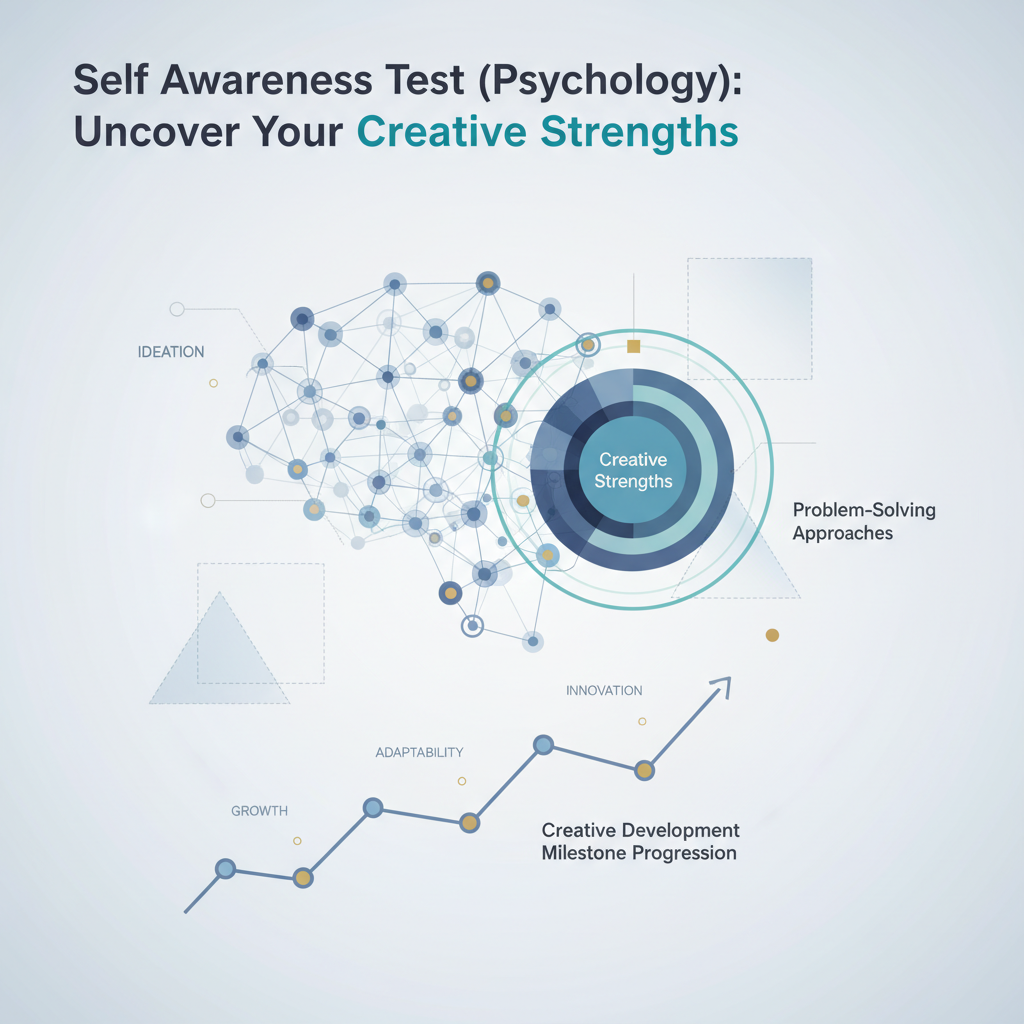
  • Self Awareness Test (Psychology): Uncover Your Creative Strengths

    Self Awareness Test (Psychology): Uncover Your Creative Strengths

    A self-awareness test in psychology is a structured assessment designed to measure an individual’s conscious knowledge of their own character, feelings, and creative thought patterns. It uses scientifically-grounded questions to provide actionable insights into personal strengths and areas for growth, forming a foundation for enhancing creative potential.

    Do you ever wonder how creative you really are? Many people mistakenly believe creativity is a rare gift, but it’s a skill we all possess. It helps us with everything from everyday problem-solving to major new ideas. The first step to unlocking your creativity is understanding yourself. This is where a good self awareness test psychology can make a real difference, showing you your natural talents and how you think.

    Learning about your creative strengths is about more than just finding a talent; it’s about finding a better way to approach life and work. Our method is more than a basic quiz—it’s a science-based awareness test designed to show your personal creative style. This test looks at key areas like your Cognitive flexibility, your ability to brainstorm, and your unique problem-solving methods. By highlighting these areas, we offer practical tips you can use to build on your creative skills in the real world, helping you grow both personally and professionally.

    Are you curious about the science of discovering your creative side? This article will explain what a self-awareness test in psychology is and how it can help you find and strengthen your creative skills. Prepare for a journey of self-discovery with simple explanations, easy-to-understand results, and new confidence in your own unique thinking style.

    What is a Self-Awareness Test in Psychology?

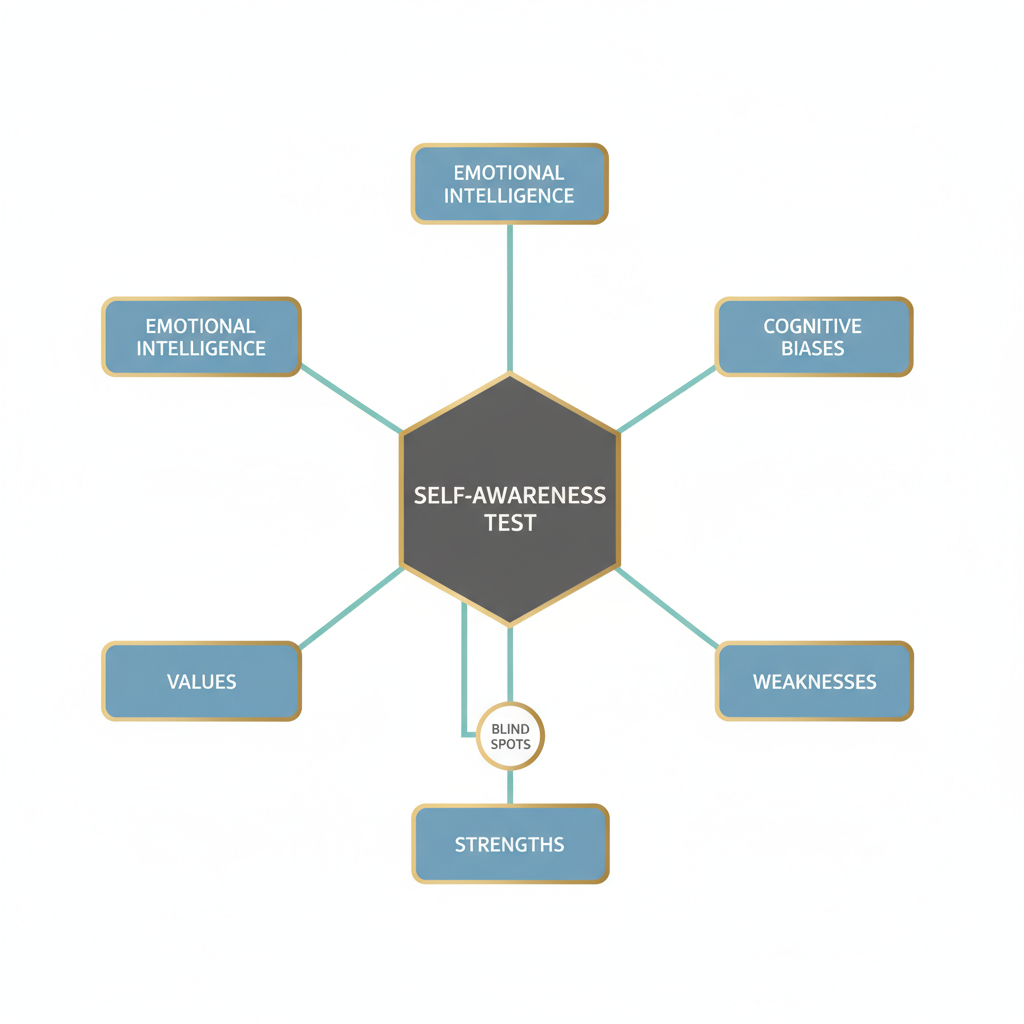
    An abstract infographic illustrating the components of a self-awareness test as interconnected geometric shapes in a cognitive network diagram.
    Infographic, minimalist vector illustration: A central geometric shape labeled ‘Self-Awareness Test’ with multiple branching lines leading to smaller, distinct geometric shapes labeled with key components like ‘Emotional Intelligence’, ‘Cognitive Biases’, ‘Values’, ‘Strengths’, and ‘Weaknesses’. The overall structure resembles a clean cognitive network diagram or a competency map. Soft blues, whites, charcoal, with subtle gold or teal accents. Ample negative space. No people, no photographs, no cartoon elements.

    A self-awareness test is a structured assessment that helps you understand your inner world. It looks at your thoughts, feelings, behaviors, and motivations. By using scientifically proven questions, these tests offer a clear picture of who you are. This insight is a powerful tool for personal growth.

    How Self-Awareness Connects to Creativity

    Self-awareness is key to creativity. When you understand yourself, you can unlock your creative potential. Knowing your strengths lets you use them fully. It is also important to know your unique thinking style. For example, do you like to brainstorm freely or analyze details? Answering this helps you improve your creative process.

    People who are self-aware are often more mentally flexible, meaning they can adapt their thinking with ease. They also tend to be more open to new experiences—a key trait for innovation. Looking inward helps you see things from new angles, which often leads to fresh ideas. By challenging your own assumptions, you learn to think differently and turn your creative potential into real results.

    Think about how artists use their emotional understanding to create expressive work. In the same way, an inventor who knows their usual approach to problems can consciously try new methods. The Creative Ability Test is based on this idea. It helps you become more self-aware, showing you your specific creative strengths and how to use them well.

    The Science Behind Our Assessment

    Our Creative Ability Test is based on solid psychological science. It is not just a random list of questions, but a carefully designed 30-question assessment. It uses proven ideas from the study of creativity and thinking [1]. We also apply ideas from cognitive psychology, including research on different ways of thinking and solving problems.

    The test looks at several key areas. It measures your mental flexibility and your openness to new ideas. We also look at your favorite ways to solve problems. Our method is reliable, which means you will get consistent results. It is also valid, which means it accurately measures what it claims to measure.

    Each question is based on scientific research and designed to reveal your unique creative style. Our goal is to give you accurate, proven insights. Because the test is science-backed, your personal feedback is truly meaningful. You will receive practical tips tailored to your creative strengths. We want to make psychology easy to understand and give you clear guidance for your growth. This turns a simple test into a powerful tool for developing your creativity.

    How Can This Test Reveal Your Creative Potential?

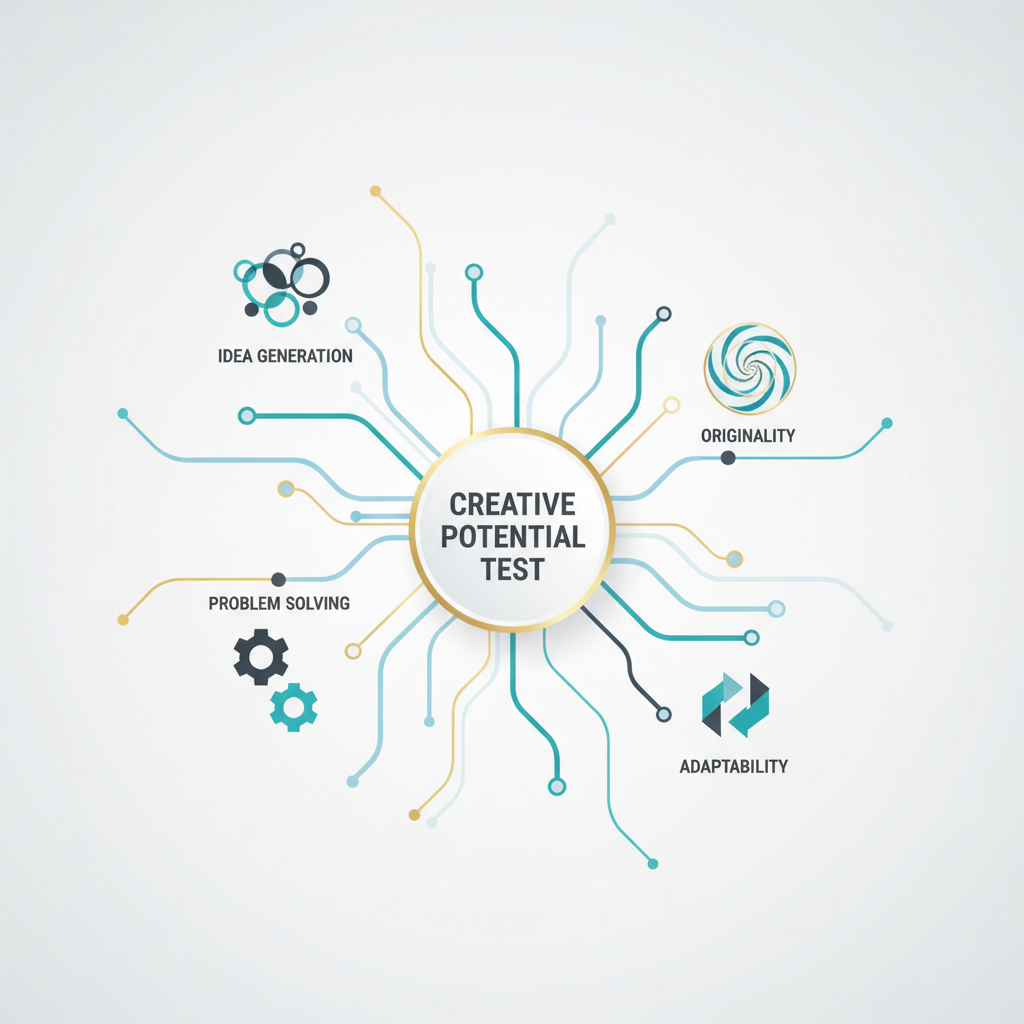
    An infographic showing a branching pathway originating from a creative potential test, diverging into different creative skills like idea generation and problem-solving.
    Infographic, minimalist vector illustration: A dynamic branching pathway originating from a central point labeled ‘Creative Potential Test’. The pathways diverge into distinct abstract representations of creative skills, such as ‘Idea Generation’, ‘Problem Solving’, ‘Originality’, and ‘Adaptability’, each represented by unique geometric icons or segments. The visual should suggest growth and exploration, like a divergent thinking pathway. Soft blues, whites, charcoal, with gold or teal accents highlighting the pathways. Clean, professional style, ample negative space. No people, no photographs, no cartoon elements.

    Identifying Your Unique Thinking Style

    Knowing your thinking style is a powerful first step. It helps unlock your creative side. Our test shows you how your mind works and how you like to create new ideas.

    For example, some people are great at divergent thinking. They can come up with many different ideas easily [2]. Others are better at convergent thinking, which is about choosing the best idea from a list.

    The assessment helps you see if you are more:

    • Intuitive: You trust your gut feelings and sudden ideas.
    • Analytical: You prefer using logic and looking at details.
    • Conceptual: You like to explore big-picture and abstract ideas.
    • Practical: You focus on solutions that work right now.

    Knowing your style helps you use your natural strengths. You can also improve in areas where you’re less comfortable. This personal insight helps guide your creative growth.

    Measuring Your Cognitive Flexibility

    Cognitive flexibility is key to creativity. It’s your brain’s ability to switch between different ideas or tasks. It also helps you adapt to new situations [3]. Our test measures this important skill.

    High cognitive flexibility means you can:

    • See problems from different angles.
    • Change your thinking when you get new information.
    • Create new solutions by connecting unrelated ideas.
    • Get past mental blocks more easily.

    This test shows you how flexible your thinking is. It gives you a clear picture of how well you adapt to change. Improving your cognitive flexibility makes you a better problem-solver. It also helps you be more innovative in all parts of your life.

    Understanding Your Problem-Solving Approach

    Creativity isn’t just about new ideas. It’s also about effectively solving problems. Our test looks at your personal way of solving problems. It shows how you handle challenges from start to finish.

    The test shows your habits during these key parts of problem-solving:

    • Problem Identification: How good are you at spotting issues and opportunities?
    • Ideation: What methods do you use to brainstorm solutions?
    • Evaluation: How do you judge if your ideas are workable and original?
    • Implementation: How do you bring your creative solutions to life?

    For example, some people are comfortable with uncertainty at the start. Others prefer to have a clear plan right away. By knowing your natural style, you can be more effective. You’ll learn to use your strengths in a smarter way. This makes you a more confident and creative problem solver.

    What Will You Learn From Your Test Results?

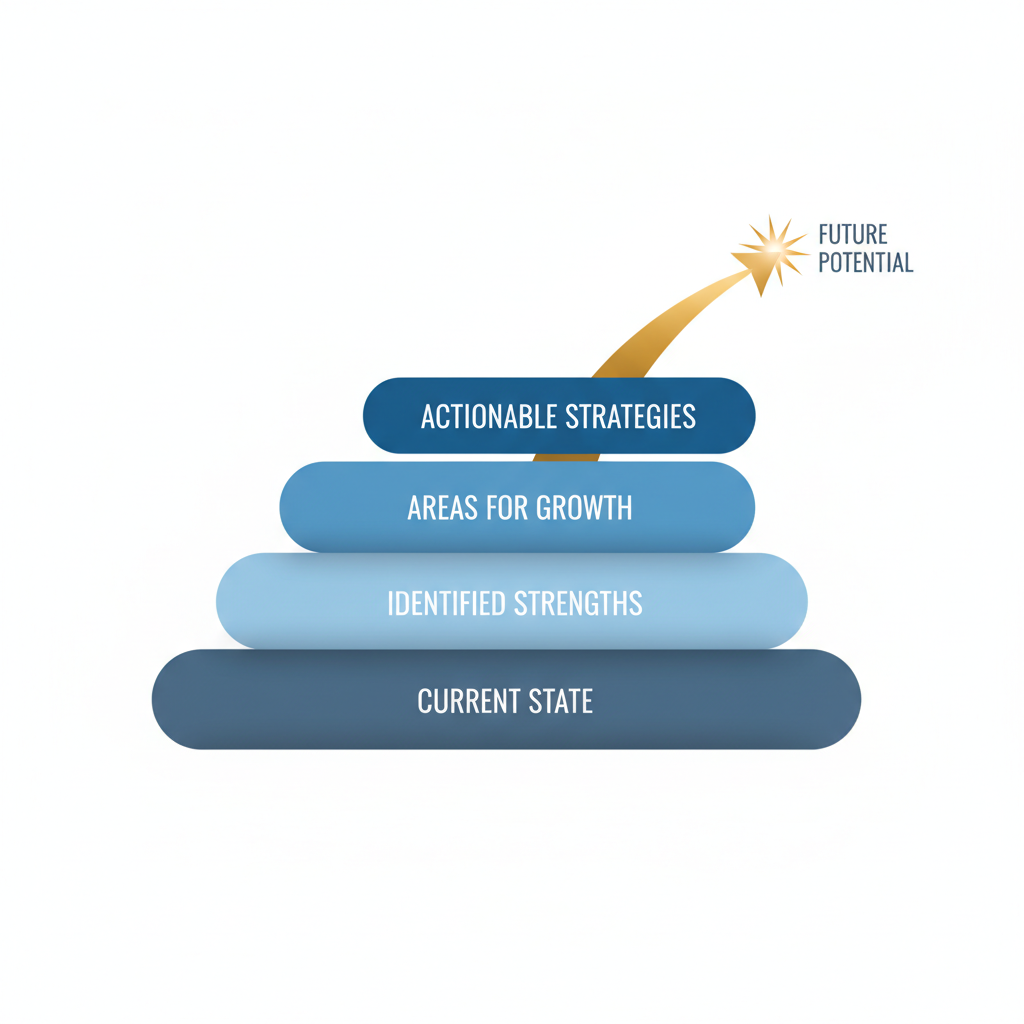
    An abstract infographic showing a layered progression from current state to future potential, highlighting identified strengths, areas for growth, and actionable strategies from test results.
    Infographic, minimalist vector illustration: A stylized competency graph or a layered system indicating personal growth and actionable insights. The base layer represents ‘Current State’, with subsequent ascending layers or segments representing ‘Identified Strengths’, ‘Areas for Growth’, and ‘Actionable Strategies’. Each layer uses subtle geometric shapes or color gradients to signify progression. A highlight element in gold or teal points towards ‘Future Potential’. Soft blues, whites, charcoal. Professional, clean, and educational. Ample negative space. No people, no photographs, no cartoon elements.

    Your Personalized Creative Strengths Profile

    Our assessment is more than a simple “creative or not” label. Instead, you’ll get a detailed report on your unique creative style. This report shows you how you naturally solve problems and come up with new ideas.

    You’ll discover which parts of creativity are your natural strengths. This includes your:

    • Divergent Thinking: Your ability to brainstorm lots of different ideas from one starting point [4]. This is key for exploring all possibilities.
    • Cognitive Flexibility: How you switch between different ways of thinking. This helps you adapt to new information and get past mental blocks.
    • Originality: How unique and new your ideas are. You’ll see how your thoughts differ from the usual solutions.
    • Problem Reframing: Your knack for looking at problems in new ways. This skill can turn tough problems into solvable ones.

    The Creative Ability Test also reveals your main creative thinking styles. Maybe you’re great at imagining new things, or perhaps you excel at creating practical solutions. Knowing your strengths helps you use them better in every part of your life.

    This personal insight builds your confidence. It confirms that your way of being creative is unique and valuable.

    Actionable Strategies for Personal Growth

    Understanding your strengths is just the first step. Your test results also give you practical, personal strategies designed to help you improve your creative skills.

    Every tip is tailored to your unique profile. You’ll learn specific exercises and habits to add to your daily routine. For example, if you want to improve your cognitive flexibility, we might suggest things like:

    • Mind Mapping: A visual way to organize thoughts and find new connections, which helps you generate more ideas [5].
    • “What If” Scenarios: Asking “what if?” to explore new ideas. This simple practice can stretch your imagination.
    • Perspective Shifting: Trying to see a problem from someone else’s point of view. This builds both understanding and empathy.

    You’ll also get advice on how to grow in other areas. This turns areas for improvement into opportunities for growth. Our goal is to give you a clear plan that helps you build a stronger, more flexible creative mind.

    These strategies aren’t just theory; they are made for the real world. They help you on your path to self-improvement and give you the tools to consistently improve your creative thinking.

    Applying Your Insights in Real-World Scenarios

    Your Creative Ability Test results offer more than just self-knowledge. They give you a practical guide for using creativity every day. You’ll learn how to use your unique strengths to get real results.

    Think about your work life. Understanding your creative style can change how you handle projects. For example, if you’re good at divergent thinking, you could lead brainstorming sessions and come up with lots of ideas for your team. Or, if your strength is problem reframing, you can help the team see a challenge in a new light, leading to new solutions [6].

    In your personal life, these insights are just as helpful. Maybe you want to learn a new skill or overcome a challenge. Knowing your creative style helps you pick methods that fit how you naturally think. This makes learning more effective and fun.

    Ultimately, this test gives you personal, practical insights instead of just a general score. This helps you handle any situation with a creative edge. You’ll be ready to innovate, solve tough problems, and grow both personally and professionally.

    Ready to Discover Your Creative Self? Take the Test Now

    Knowing yourself is the first step to unlocking your creative potential. A self-awareness test psychology can show you the way. It helps you find new paths to fresh ideas and personal growth. Are you ready to start exploring?

    Our Creative Ability Test is a special, science-based tool that helps you find your natural creative talents. It gives you more than general advice. You will get a personal plan to help you grow.

    What You’ll Discover

    • Understand Your Creative Mind: Find out your main thinking styles. Learn how you come up with new ideas and connect different thoughts.
    • Identify Your Unique Strengths: Pinpoint what makes you a creative thinker. See how you think outside the box and adapt to new ideas.
    • Get Practical Tips for Growth: Receive useful advice to improve how you create new things and solve problems.
    • Apply Your Skills to Real Life: Learn to use your new self-knowledge at home, in school, or at work.

    This is more than a simple awareness test psychology. It’s a journey into how you think. It helps you build confidence and believe in your ability to grow. Many people have already used their personal results to reach their goals.

    The Creative Ability Test is more than just a test. We give you clear explanations and useful tools. We make complex psychology ideas easy for everyone to understand.

    Begin Your Creative Journey Today

    Stop wondering about your creative potential and start using it. Our 30-question test is quick, helpful, and based on research. You’ll get easy-to-understand results and guidance to help you feel more confident.

    Ready to discover your creative side? Take the test now to find your strengths. Try new ways of thinking and change how you face challenges. Your creative journey starts here!

    Frequently Asked Questions

    What kind of questions are in a psychology self-awareness test?

    Our self-awareness test looks at how you think, feel, and react. It helps uncover your unique creative strengths. There are no right or wrong answers. The questions simply explore your preferences and how you naturally approach things.

    The 30-question test focuses on a few key areas. We explore your:

    • Cognitive Flexibility: How easily you adapt your thinking to new situations. This skill is key for creative problem-solving.
    • Divergent Thinking: Your ability to create many unique ideas from a single prompt. This is a common sign of creativity.
    • Problem-Solving Approach: How you tackle challenges, whether you prefer structured methods or imaginative solutions.
    • Openness to Experience: How willing you are to explore new ideas and experiences. This helps you grow as a person.
    • Emotional Intelligence: How well you understand your own emotions and how they affect your creative process.

    For example, a question might ask how you would react to a sudden change in plans. Or, it might ask how you come up with ideas for a big project. Our goal is to give you deep insights into your creative mind [7]. This helps you understand your potential.

    Is there a free self-awareness test based on psychology?

    Many online quizzes say they are “self-awareness tests,” but not all are based on real science. While some may offer simple insights, they often aren’t deep or personal. These quick quizzes usually don’t give you practical advice.

    At Creative Ability Test, we offer a test based on science. Our 30-question test is developed by experts. It gives you personal feedback and useful tips. This level of detail takes a lot of research and development. That’s why our full test is a paid service. We make sure the insights you get are reliable and truly helpful for your growth. Investing in your self-awareness is investing in your creative future.

    Can this self-awareness test be used by students?

    Yes, our self-awareness test is very helpful for students. It offers unique insights into your creative thinking style. Understanding these strengths can really help you in school. It also prepares you for a successful career.

    Students can use the test results to:

    • Improve Learning: Find out how your creative strengths affect your study habits.
    • Solve Problems Better: Use new ways of thinking for school projects and challenges.
    • Work Better in Groups: Learn your role in group projects and how to contribute well.
    • Choose a Career Path: Find careers that are a good match for your creative skills.
    • Grow as a Person: Build confidence in your unique skills and become more self-aware.

    For example, if you’re good at divergent thinking, it can help you brainstorm ideas for a big paper. Or it could help you find a better way to handle a complex science project. Our platform gives you practical tips designed to help you grow. These insights help you do well in your studies and in your personal life.

    What is a self-awareness assessment questionnaire?

    A self-awareness questionnaire is a set of structured questions. It helps you explore different parts of your inner world. The main goal is to help you understand yourself better. This includes your thoughts, emotions, behaviors, and motivations.

    Our 30-question test does exactly that. It is designed to measure creativity and how you think. By thinking about the questions, you show your natural tendencies. We then analyze your answers using a scientific method. This gives you a clear picture of your creative strengths.

    The questionnaire acts as a mirror. It shows how you usually handle challenges, create ideas, and work with new information. The results give you personal insights. They help you use your unique creative skills in the real world. In the end, it helps you move from being unsure to having a clear, useful understanding of yourself.


    Sources

    1. https://www.apa.org/pubs/journals/features/xap-a0033285
    2. https://psychology.jrank.org/pages/195/Divergent-Thinking.html
    3. https://www.sciencedirect.com/topics/neuroscience/cognitive-flexibility
    4. https://www.sciencedirect.com/topics/neuroscience/divergent-thinking
    5. https://www.tonybuzan.com/glossary/mind-mapping/
    6. https://hbr.org/2014/09/the-creative-process-in-light-of-research
    7. https://www.apa.org/education-career/guide/science-psychology

  • What Is a Psychology Spectrum Test? (And How It Reveals Your Creativity)

    What Is a Psychology Spectrum Test? (And How It Reveals Your Creativity)

    A psychology spectrum test is an assessment designed to measure where an individual’s traits fall along a continuum. These tests can range from clinical tools for diagnosing conditions to self-discovery instruments that map cognitive styles, such as your unique approach to creativity and problem-solving.

    Have you ever wondered how your mind comes up with new ideas or solves tough problems? Many people see creativity as a mysterious gift you’re either born with or not. But the truth is more interesting: creativity isn’t a single talent. It’s a mix of different thinking styles and traits that everyone has. This is the first step to understanding your personal creative landscape. In this article, we’ll explain what a psychology spectrum test is and how it can show you your unique creative potential and approach to new ideas.

    Unlike a generic quiz, a science-based psychology spectrum test is a powerful tool for self-discovery and growth. It helps you move beyond simple labels like “creative” or “not creative” to understand the specific ways your mind works. By measuring traits like cognitive flexibility, openness to new experiences, and divergent thinking, these assessments give you a clear, personalized picture of your strengths. This isn’t just about labels; it’s about getting useful insights that help you grow personally, improve at work, and solve real-world problems with confidence and creativity.

    What Exactly Is a Psychology Spectrum Test?

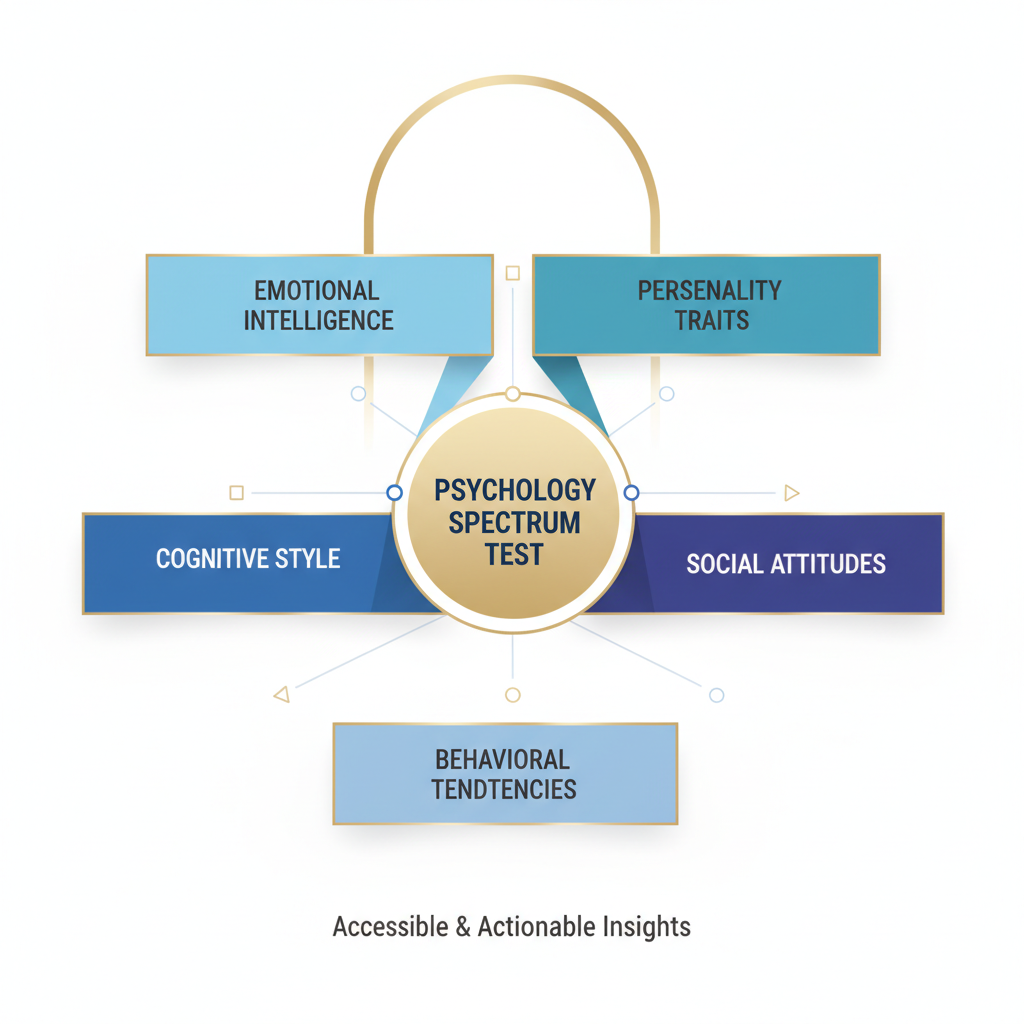
    An infographic showing a central 'Psychology Spectrum Test' node branching into multiple spectrum lines, each representing a psychological dimension, using geometric shapes.
    An abstract, educational infographic illustrating “What Exactly Is a Psychology Spectrum Test?”. Visualize a central node representing “Psychology Spectrum Test” with multiple, distinct, geometrically shaped pathways or ‘spectrum’ bars extending outwards. Each pathway is labeled with a generic psychological dimension. Use a minimalist, vector-based style with soft blues, whites, charcoal, and gold accents. Ensure ample negative space for clarity, embodying a knowledgeable and supportive guide in creativity assessment, making complex ideas accessible and actionable.

    Understanding Psychological Spectrums vs. Categories

    In psychology, it’s helpful to see personal traits on a “spectrum” instead of in rigid “categories.” Categories sort people into fixed groups. For example, some might see people as either “creative” or “not creative.” But this black-and-white view is very limiting.

    A spectrum, on the other hand, shows that most human traits exist on a scale. This means you can have different levels of a trait. Instead of being just one thing or another, you simply have more or less of it. Most psychologists agree that traits like creativity work this way [1].

    For creativity, this way of thinking is empowering. It means that everyone has creative potential. Your creativity isn’t an on/off switch—it’s more like a dial. Our test helps you see where your dial is set for different types of creativity.

    Seeing creativity as a spectrum has several key benefits:

    • Encourages Growth: It shows you can always develop and improve your creative skills.
    • Provides Nuance: You get a better feel for your specific creative strengths and unique ways of thinking.
    • Avoids Labels: It moves beyond simple labels to give you a richer view of your personal creativity.
    • Personalized Insights: It helps identify your unique mix of creative traits, which is key for focused growth.

    Therefore, knowing where you are on the creativity spectrum is powerful. It gives you useful insights about yourself. You can stop wondering about your potential and start understanding how you truly think and innovate.

    The Difference Between Clinical Tests and Self-Discovery Tools

    When you hear “psychology test,” you might think of tests used to diagnose medical conditions. It’s important to know the difference between these and self-discovery tools. Both are useful, but they have very different goals and uses.

    Clinical Psychology Tests are medical tools used for diagnosis. They are given and explained by licensed professionals, like therapists or doctors. These tests help diagnose conditions such as depression, anxiety, or ADHD and are used to create treatment plans. Their main goal is to find and understand mental health challenges.

    Self-Discovery Tools, such as The Creative Ability Test, have a different goal. These tools are made to help you understand your personality, skills, and ways of thinking. They focus on personal growth, strengths, and what you can improve. Our test is based on science and gives you insights into how you create, think flexibly, and solve problems.

    Here’s a clear comparison:

    Feature Clinical Psychology Tests Self-Discovery Tools (e.g., Creative Ability Test)
    Primary Goal Diagnose and treat health conditions. Personal growth, self-awareness, finding strengths.
    Administrator Licensed professionals (therapists, doctors). Usually taken on your own; backed by science.
    Focus Area Problems, disorders, medical issues. Strengths, potential, thinking styles, positive psychology.
    Outcome A medical diagnosis and treatment plan. Personal insights and tips for growth.
    Example Tests for anxiety, depression, etc. Creativity assessments, personality inventories, skill tests.

    The Creative Ability Test is a powerful self-discovery tool, not a medical one. Its goal is to give you knowledge about your unique creativity so you can unlock your potential. It also provides practical tips to improve your creative thinking. By getting clear explanations of your creative traits and thinking styles, you can build confidence and guide your personal growth.

    How Can a Spectrum Test Reveal Your Creative Psychology?

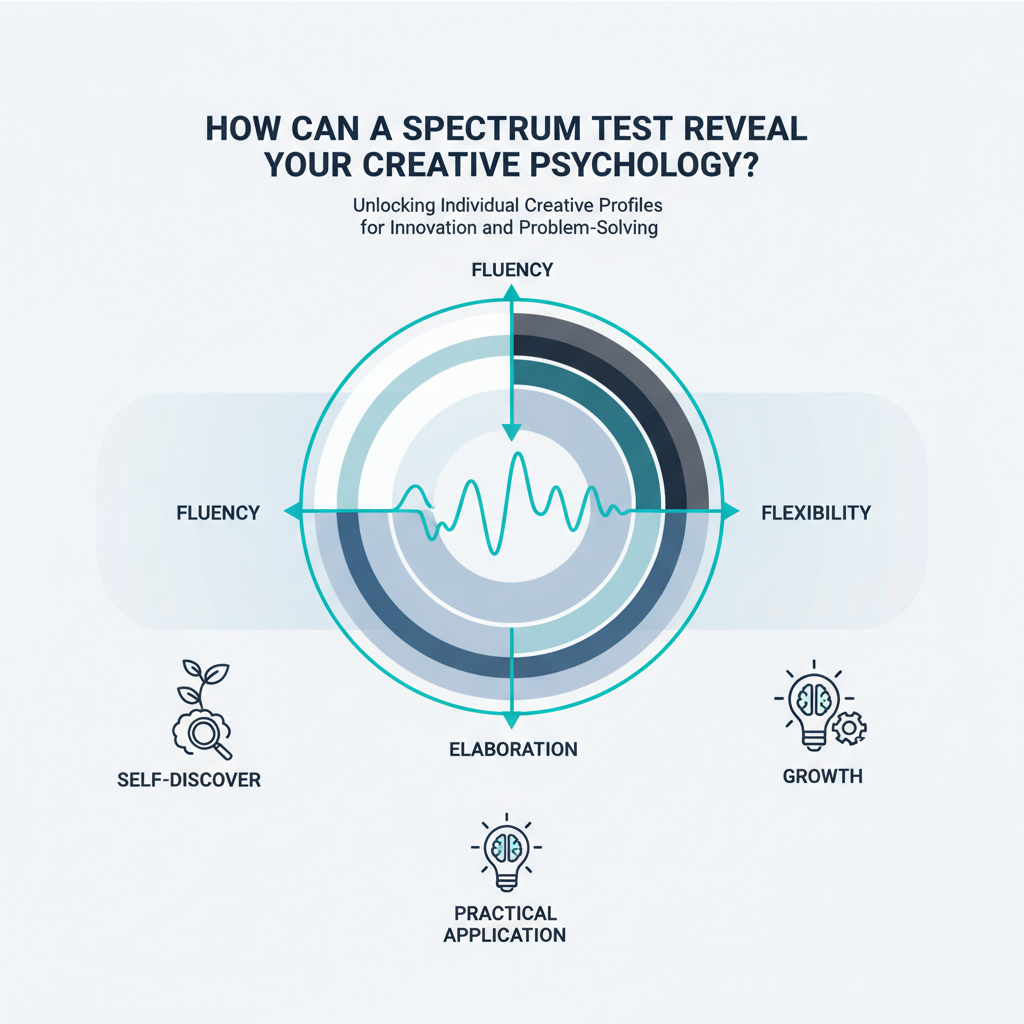
    A radar chart-style infographic illustrating how a spectrum test maps different dimensions of creative psychology, such as fluency and originality, on a competency graph.
    An abstract, educational infographic for “How Can a Spectrum Test Reveal Your Creative Psychology?”. Depict a layered system or a radar chart-like competency graph, showing different dimensions of creativity (e.g., ‘Fluency’, ‘Originality’, ‘Flexibility’, ‘Elaboration’) mapped across a spectrum. Use subtle gradients within soft blues, whites, and charcoal, with teal highlights for emphasis. The design should be clean, vector-based, and professional, demonstrating how a test reveals individual creative profiles, emphasizing growth, self-discovery, and practical application of creative insights.

    Mapping Your Position on the Creative Thinking Spectrum

    Creativity isn’t an “on” or “off” switch. It’s more like a spectrum, and a test can show you where you fall on it.

    Instead of being labeled “creative” or “not creative,” you’ll learn about your specific creative strengths.

    For example, you might find that you lean towards:

    • Divergent Thinking: This is the ability to generate many different ideas. You might be great at brainstorming or exploring a wide range of solutions.
    • Convergent Thinking: This focuses on finding the single best solution by evaluating ideas. You might be skilled at making ideas happen.
    • Balanced Thinking: You might easily switch between exploring new ideas and focusing on the best one, allowing you to be both imaginative and practical.

    Knowing your natural tendencies helps you use your strengths more effectively. Our 30-question assessment shows where you stand in these areas, giving a clear picture of your creative style [2].

    Identifying Your Unique Problem-Solving Style

    Creative problem-solving is not a one-size-fits-all skill. A test can show your unique way of tackling challenges and highlight the methods you prefer.

    Consider how different people approach a new project. One person might start by exploring every possible angle. Another might immediately look for patterns and connections.

    Your test results will show these differences. You might learn that you tend to use:

    • Intuitive-Creative Style: You rely on gut feelings and sudden insights. Solutions might seem to just pop into your head.
    • Systematic-Creative Style: You prefer a structured process with logical steps. New ideas come from careful and organized work.
    • Collaborative-Creative Style: You do your best work when bouncing ideas off others. Working with a group brings out your best ideas.

    Knowing your style is very helpful. It allows you to use your creativity more effectively in real-world situations. You’ll also get practical tips on how to improve your problem-solving skills.

    Measuring Key Creative Traits Like Openness and Flexibility

    Creativity is built on several key psychological traits. A test does more than give you a simple “creativity score”—it measures these core traits.

    Two of the most important traits for creativity are openness and cognitive flexibility [3].

    • Openness to Experience: This trait shows your willingness to explore new ideas, emotions, and different concepts. High openness often means you are imaginative, curious, and appreciate art and beauty.
    • Cognitive Flexibility: This is your ability to switch between different ways of thinking. It allows you to adapt to new information and get past mental blocks.

    In addition, our assessment looks at other important factors. These include curiosity, imagination, and your comfort with uncertainty. These elements are all important parts of your creative potential.

    By understanding your scores for each trait, you get to know yourself better. This helps you focus on specific areas for improvement, so you can use your creativity for better problem-solving and new ideas.

    What Kind of Questions Are on a Psychology Spectrum Test for Creativity?

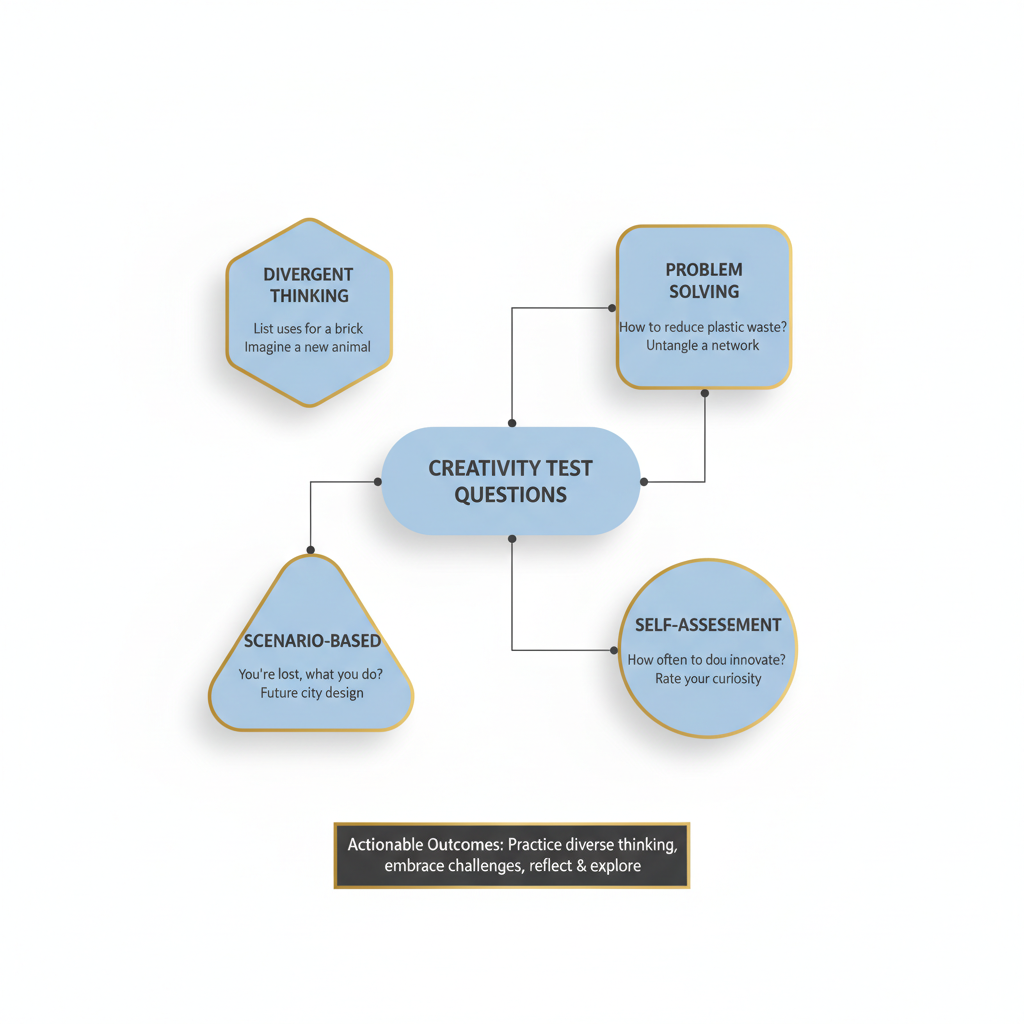
    An infographic designed as a mind map, showing a central node for 'Creativity Test Questions' branching into categories like divergent thinking and problem-solving, using geometric shapes.
    An abstract, educational infographic for “What Kind of Questions Are on a Psychology Spectrum Test for Creativity?”. Illustrate a mind map or an idea cluster, with a central “Creativity Test Questions” node branching into distinct, labeled geometric shapes representing various question categories (e.g., ‘Divergent Thinking’, ‘Problem Solving’, ‘Scenario-Based’, ‘Self-Assessment’). Maintain a clean, vector-based, minimalist aesthetic with soft blues, whites, charcoal, and gold accents, using structured grouping and negative space to enhance readability, providing practical insights and actionable outcomes for improving creative abilities.

    Questions That Look at How You Form Ideas

    A core part of creativity is coming up with new ideas. Our creativity test includes questions designed to look at this process. We want to see how you form new thoughts, concepts, and solutions.

    These questions help us understand your divergent thinking skills. Divergent thinking is how you generate many unique solutions to a single problem [4]. It’s about coming up with a lot of different ideas, not just one “right” answer. The Creative Ability Test looks at a few key parts of this process.

    • Fluency: How many ideas can you come up with in a set time? High fluency shows you can think quickly.
    • Flexibility: How different are your ideas? Do they come from various categories or viewpoints? This shows you can think in different ways.
    • Originality: Are your ideas new and unique? We look for uncommon and fresh connections.
    • Elaboration: Can you build on your first ideas and add more detail? This shows you can think things through.

    For example, a question might ask you to list all the possible uses for an everyday object, like a paperclip. Another might ask you to think of different ways to improve a common experience, such as waiting in line. Your answers show us your natural creative style.

    The Creative Ability Test gives you personal feedback on your idea-generating strengths. It helps you see if you naturally create many ideas, varied ideas, or very original ones. Knowing this helps you improve your brainstorming skills and be more creative.

    Scenarios That Test Your Problem-Solving Approach

    Creativity is not just about having ideas—it’s about using them to solve real-world problems. That’s why a large part of our creativity test uses scenarios. These are designed to test your creative problem-solving skills.

    These questions check your ability to look at challenges from new angles. They show how you can think beyond the usual ways. We want to see how you combine information to create new solutions.

    Consider these types of questions:

    • You might be given a fictional social problem, like how to reduce plastic waste. We would then ask you to suggest a creative solution that could grow to a large scale.
    • Another scenario might be a design challenge. For example, how would you design a shared space where people can have privacy but also feel connected?
    • We also look at how you deal with limits. You may be asked to solve a problem with few resources or within certain rules.

    These scenarios don’t have one right answer. Instead, they show your mental flexibility and your skill in convergent thinking. This is the process of bringing different ideas together to find the best solution.

    The Creative Ability Test helps you find your unique problem-solving style. Are you good at finding the main part of a problem? Are you skilled at looking at problems in new ways? Our personal feedback gives you tips to improve your practical, creative skills. This helps you use creative thinking more effectively in any situation.

    Items That Evaluate Your Openness to New Experiences

    Openness to experience is a key personality trait linked to creativity [5]. A good creativity test will measure this trait. It looks at your willingness to explore new ideas, values, and feelings.

    This trait shows how curious and adventurous you are. It also shows how comfortable you feel when things are unclear or complex. People who are high in openness are often imaginative and open to new ideas. They love to learn and explore.

    Questions that measure openness might ask you to rate how much you agree with statements like these:

    • “I enjoy thinking about abstract ideas.”
    • “I am interested in learning about different cultures.”
    • “I look for chances to try new things.”
    • “I find beauty in different forms of art and expression.”
    • “I am comfortable when there is no clear right or wrong answer.”

    Your answers help us see your basic attitude toward creativity. A high level of openness means you are more likely to explore new or different paths. You will also be more open to new solutions.

    The Creative Ability Test shows you how your level of openness affects your creative potential. We help you understand how to develop this trait. By trying new things, you naturally expand the way you think. This leads to more creativity and personal growth in all parts of your life.

    How Can You Find a Reliable Psychology Spectrum Test Online?

    Why Free Quizzes May Not Tell the Whole Story

    You’ve probably seen lots of “psychology spectrum test” quizzes online. Many promise fast insights into your creativity, but most are just for entertainment. They often lack scientific proof. Their questions can be overly simple, and the results are not backed by research [6].

    These quizzes usually give you generic feedback, not personalized advice. As a result, they don’t explore what really makes you creative. Relying on them can be misleading because they may not reflect your true creative talents. To truly understand yourself, you need a better approach. A reliable test is the best way to see your full potential.

    What to Look for in a Science-Backed Assessment

    Finding a good online creativity test takes a bit of care. A reliable test gives you useful insights into your creative strengths. Here’s what to look for:

    • Based on Real Science: The test should be built on accepted psychological principles and modern research. This ensures it is accurate and trustworthy.
    • Tested for Accuracy: A good test has been thoroughly checked to prove it measures what it says it does (validity). It should also give you consistent results if you take it more than once (reliability) [7].
    • A Complete Picture: Look for a test that covers different parts of creativity, like thinking of new ideas, solving problems, and being open to new things. A 30-question test, for example, can provide a good overview.
    • Clear, Helpful Feedback: Your results should be easy to follow and give you practical advice. Look for personalized tips you can use to improve your creative skills.
    • Honest and Open: Find out who made the test. Trustworthy platforms explain how their test works and share the research behind it.

    A quality test does more than put you in a box. It gives you a deeper understanding of yourself. You can then use this knowledge to grow.

    Take the First Step to Unlock Your Creativity

    Understanding how you create is a powerful step toward personal and professional growth. When you choose a science-backed test, you get clear answers. This turns confusion into useful self-knowledge.

    Our Creative Ability Test offers just that. Our 30-question, science-backed assessment explores your unique creative style. We give you personalized feedback and practical tips to develop your creativity. You will discover your specific strengths and learn how to use them to solve real-world problems and come up with new ideas.

    Start your journey today. Unlock your true creative potential and empower yourself with insights that matter.

    Frequently Asked Questions

    What is the difference between a creativity test and a psychopath test?

    These two tests have very different goals. A creativity test measures your ability to innovate. It looks at how you come up with new ideas, solve problems, and think in new ways.

    Creativity tests look for positive traits. These include skills like divergent thinking, flexible problem-solving, and being open to new things. The goal is to help you understand and grow your creative skills.

    In contrast, a psychopath test looks at certain personality traits. These often include a lack of empathy, a tendency to manipulate others, and antisocial behavior. These tests are clinical tools used by professionals to diagnose serious psychological conditions.

    To put it simply, a creativity test helps you grow. A psychopath test identifies serious mental health issues. The two are completely unrelated.

    Are psychology spectrum tests for adults only?

    Many psychology tests, including creativity tests, are made for adults. The questions are based on adult life and thinking. The feedback is also aimed at helping adults grow in their careers and personal lives.

    However, some creativity tests are adjusted for younger people. These versions are made to be right for their age. They look at things like imaginative play or problem-solving skills that are a good fit for kids and teens.

    The Creative Ability Test is designed for people from all walks of life. It’s great for students, professionals, or anyone who wants to learn about their creativity. It helps a wide range of people improve and grow.

    How accurate are online psychology spectrum tests?

    The accuracy of online psychology tests can differ a lot. It all comes down to the science behind them. Many free online quizzes are just for fun and are not backed by research. They may not give you useful or trustworthy results.

    However, a well-made online psychology test can be very accurate. These tests are based on solid psychological research. They are carefully tested to make sure they work. This ensures they reliably measure what they claim to measure [8].

    Key signs of an accurate online test include:

    • Based on Science: The test is built on proven psychological research.
    • Reliability: The test consistently produces similar results when taken multiple times under similar conditions.
    • Validity: The test accurately measures the skill it’s supposed to, like creative or flexible thinking.
    • Created by Experts: The test is designed by professionals in psychology and testing.
    • Personalized Results: The feedback you get is specific to you, not generic. It gives you clear, helpful advice.

    The Creative Ability Test is an example of a test backed by science. It is designed to give you accurate, personal feedback on your creative skills. While no test can tell you everything, a good one provides a solid starting point for understanding yourself and finding ways to grow. It helps you learn about your own creative style.


    Sources

    1. https://www.apa.org/topics/personality/traits
    2. https://psycnet.apa.org/record/1987-17520-001
    3. https://www.sciencedirect.com/science/article/abs/pii/S016641151630137X
    4. https://psychology.iresearchnet.com/developmental-psychology/cognitive-development/divergent-thinking/
    5. https://bigfivepersonalitytest.com/openness-to-experience/
    6. https://www.apa.org/news/press/releases/2012/03/psychological-tests
    7. https://www.psychologicalscience.org/index.php/news/releases/standards-for-evidence-in-psychological-research.html
    8. https://www.apa.org/topics/testing-assessment/assessments

  • Creative Hobby Quiz: Find the Perfect Hobby for Your Creative Style

    Creative Hobby Quiz: Find the Perfect Hobby for Your Creative Style

    A creative hobby quiz is a tool designed to analyze your personality, thinking styles, and problem-solving skills to recommend hobbies that align with your unique creative strengths. Unlike simple personality quizzes, a scientifically-grounded assessment provides deep insights into how you innovate and create, helping you find a fulfilling hobby that fosters personal growth.

    Have you ever wanted to express yourself, create something new, or solve problems in a fresh way, but weren’t sure where to start? Creativity isn’t just for artists—it’s a key part of being human that helps us innovate, grow, and feel fulfilled. The first step to using your creativity more is understanding your personal style.

    Many people try new hobbies, but they don’t always “click.” This often happens when the activity doesn’t match our natural strengths and thinking styles. What if you could find a hobby that you love and that also sharpens your ability to think in new ways, come up with fresh ideas, and improve your problem-solving skills? A well-made quiz based on science can help you find exactly that.

    This article explains why finding the right creative outlet is so important and how a science-based approach can reveal your unique creative type. You’ll learn how different creative styles match up with certain hobbies, giving you practical tips to choose activities that suit you best. Get ready to move past generic advice and begin a journey of self-discovery to find the perfect hobby that inspires you and helps you grow.

    Why Is Finding the Right Creative Hobby So Important?

    An infographic illustrating the multi-faceted benefits of a creative hobby, shown as an expanding core surrounded by layers representing growth, skill development, and well-being.
    An abstract educational visualization representing the profound impact of finding the right creative hobby. Show a central, expanding core symbolizing personal growth and well-being, surrounded by interconnected, layered rings or segments. Each layer represents a benefit: skill development, stress reduction, self-discovery, and innovation. Use clean geometric shapes, subtle gradients in soft blues, whites, charcoal, with gold or teal accents. Ample negative space. No humans or cartoons. Minimalist, vector-based, professional, and approachable style.

    Beyond Just Passing the Time

    Many people think of creative hobbies as just a way to pass the time. But they are much more than a simple distraction. The right creative hobby can greatly improve your well-being and is a great way to grow as a person.

    Creative activities give your brain a good workout. They help it form new connections, which makes you a more flexible thinker. As a result, your problem-solving skills get stronger. Creative work is also a known way to relieve stress, offering a healthy break from daily pressures [1].

    When you choose a hobby that’s right for you, you can:

    • Lower stress and anxiety.
    • Improve your focus and concentration.
    • Express your emotions and understand yourself better.
    • Sharpen your thinking skills and mental quickness.
    • Feel a sense of purpose and accomplishment.

    These benefits show that you’re doing more than just passing time. You are actively taking care of your mind, which helps you do well in many areas of life.

    Connecting with Your Core Creative Strengths

    The real power of a creative hobby comes from matching it with your innate abilities. To find the right hobby, you need to learn about yourself. This helps you enjoy it more and get the most benefit, allowing you to reach your full creative potential.

    Everyone’s creative strengths are different. For example, you might be a “divergent thinker,” good at coming up with many new ideas. Or you might be more analytical, skilled at organizing and improving concepts. The Creative Ability Test can help you find your specific strengths by giving you personalized feedback on how you think.

    When you match your hobby to your natural creative talents:

    • You’ll feel more engaged and get into a state of “flow.”
    • Learning new skills will feel easier and more satisfying.
    • Your confidence in your creative abilities will grow.
    • You’ll develop a stronger sense of who you are.
    • It becomes a more effective way to support your personal growth.

    This focused method makes your hobby more than just fun. It becomes a powerful tool for improving your unique thinking skills. This leads to meaningful personal growth and lasting satisfaction.

    How Does a Creative Hobby Quiz Work?

    An infographic showing a three-step process for a creative hobby quiz: self-assessment, thinking style analysis, and hobby recommendations, depicted as a clear flow diagram.
    A clean, instructional infographic illustrating the structured process of a creative hobby quiz. Visualize it as a clear, sequential flow diagram or a stepwise progression with interconnected nodes. Each node represents a quiz stage: ‘Input/Self-Assessment’, ‘Analysis/Thinking Style Identification’, and ‘Output/Hobby Recommendations’. Use minimalist vector-based geometric shapes, subtle gradients, and a color palette of soft blues, whites, charcoal, with gold or teal accents for markers. Maintain ample negative space for clarity. No humans or cartoons. Professional and approachable.

    Understanding Your Creative Profile

    Many online quizzes offer quick hobby ideas. Our Creative Ability Test goes much deeper. It helps you understand your unique creative style using a 30-question, science-based test.

    This test measures your creativity in several ways. It explores how your mind naturally solves problems. It also reveals your natural strengths in different creative areas.

    The quiz gives you information about key areas, including:

    • Cognitive Flexibility: Your ability to switch between different ideas easily. People with high cognitive flexibility adapt quickly to new information and surprises [2].
    • Divergent Thinking: Your ability to create many unique solutions to one problem. This is a key part of creative thinking [3].
    • Problem-Solving Skills: How you naturally handle difficult situations. This includes whether you prefer clear rules or more open-ended challenges.
    • Openness to Experience: Your willingness to try new things and explore new ideas. This trait is often linked to creativity.

    By understanding these parts of yourself, you learn more about what you can do. You can stop guessing about your creative talents and get a clear picture of your strengths.

    Matching Your Thinking Style to Activities

    Every creative hobby uses certain cognitive strengths. A painter uses visual skills, while a writer uses language. Our quiz matches your creative profile to hobbies that are a good fit for you.

    It finds your main thinking style. Then, it suggests hobbies you will likely enjoy and be good at. For example, if you are a strong divergent thinker, you might like hobbies that let you explore freely. On the other hand, if you are good at analytical problem-solving, hobbies with clear rules might be perfect.

    Consider these examples:

    • Analytical Problem-Solvers: You might be great at puzzles, coding, or building detailed models. These hobbies use logic and clear goals.
    • Divergent Thinkers: You could enjoy abstract art, coming up with new ideas, or experimental cooking. Your mind loves creating many different possibilities.
    • Hands-On Makers: Building, sculpting, or crafting lets you create something real. You enjoy working with your hands and seeing results quickly.
    • Expressive Storytellers: Writing, playwriting, or filmmaking lets you tell stories. You enjoy sharing feelings and connecting with others.

    This matching process isn’t random. It is based on an understanding of creative psychology. As a result, our recommendations are made just for you. We aim to match your natural talents with hobbies you will find rewarding.

    Moving Beyond Generic Hobby Lists

    Most hobby lists offer the same general ideas. They rarely consider how you think. Recommending painting or knitting to everyone can lead to frustration and giving up.

    Our Creative Hobby Quiz is different. It gives you more than a list; it offers personalized advice. You will understand why a certain hobby fits your creative style. For instance, you will see how an activity uses your natural ability to switch between ideas.

    This approach helps you feel more certain about your creative side. You gain a deeper understanding of your own mind. As a result, you can try new hobbies with more confidence and excitement. It changes how you see creativity, turning simple suggestions into a real plan for growth.

    Our goal is to give you detailed, personal feedback. We want to help you use your creativity in a meaningful way. This supports personal growth, career development, and new ways of thinking. Finding the perfect hobby becomes a journey of self-discovery.

    What Creative Hobbies Align with Different Thinking Styles?

    An infographic visualizing the connection between different thinking styles (e.g., divergent, convergent) and various aligned creative hobbies using a network diagram with central hubs and branching connections.
    An abstract, educational infographic visualizing the alignment between various thinking styles and suitable creative hobbies. Present a cognitive network diagram or an idea cluster. A central hub could represent ‘Thinking Styles,’ branching out into different nodes for ‘Divergent,’ ‘Convergent,’ ‘Analytical,’ ‘Intuitive’ styles. Each style node then connects to smaller clusters or examples of ‘Creative Hobbies’ (e.g., painting, coding, writing, sculpting). Use minimalist vector shapes, interconnected lines with subtle gradients. Color palette: soft blues, whites, charcoal, with gold or teal accents to highlight connections and categories. Ample negative space. No humans or cartoons. Professional and approachable.

    Knowing how you think can unlock your creativity. Your Creative Ability Test results show your main creative strengths. This helps you pick hobbies you’ll truly enjoy. Hobbies that match your thinking style are more rewarding. They also help you grow your skills and support your personal growth.

    Let’s look at creative hobbies for different thinking styles. This guide gives you practical ideas. You can use what you learn about yourself to find a new creative hobby.

    For the Analytical Problem-Solver

    Analytical thinkers love structure and logic. You enjoy breaking down complex problems. You love finding smart, simple solutions. Your creativity often shows up in organized, step-by-step thinking. You are a careful planner who likes to get things right.

    You look for patterns and clear answers. You enjoy challenges that need a good strategy. These hobbies are perfect for your detail-oriented mind.

    • Strategic Board Games or Puzzles: Games like chess, Go, or complex puzzles use your strategic mind. They require you to think ahead. This helps you predict what will happen next [4].
    • Coding and Programming: For analytical minds, writing code is very creative. You design systems and solve problems using logic. You turn ideas into things that work.
    • Architectural Drawing or Model Building: These hobbies mix art with solid design. You have to plan the layout, choose materials, and make sure it’s stable. Every detail matters.
    • Data Visualization or Infographics: Turning data into clear, visual stories is a great creative challenge. It takes both analysis and good design skills. You make complicated information easy to understand.

    The Creative Ability Test shows your strengths in problem-solving and logic. This knowledge helps you. It helps you pick hobbies that are both challenging and fun.

    For the Divergent and Abstract Thinker

    Divergent thinkers are great at coming up with many new ideas. You like to explore lots of possibilities. You make connections between things that seem unrelated. Your mind wanders to find new solutions. Abstract thinking helps you understand big, complex ideas. You see the big picture and are okay with not having all the answers.

    Your creativity is often spontaneous and free-flowing. You like to think outside the box. Try hobbies that let you explore without limits.

    • Abstract Painting or Sculpture: These are perfect for expressing ideas and feelings freely. You can experiment with forms, colors, and textures. There are no limits to your imagination.
    • Improvisational Arts (Music, Theater, Dance): Improv requires you to think fast and come up with ideas on the spot. You create in the moment. This makes your thinking more flexible.
    • Brainstorming and Concept Development: You can turn this into a hobby. You could invent new products, create fictional worlds, or solve big problems. Your strength is coming up with a lot of different ideas [5].
    • Experimental Photography: Go beyond normal photos. Play with light, angles, and unusual subjects. Focus on creating a feeling or idea instead of a perfect picture.

    Our assessment measures your skill for divergent thinking. It also shows how open you are to new things. These results give you clear direction. They help you find hobbies that celebrate your unique ability to think outside the box.

    For the Hands-On Maker and Builder

    Hands-on makers love to create real, physical things. You enjoy turning ideas into something you can touch. You love the process of building and making. Your creativity comes from working with your hands. You feel good when you finish a project. You learn best by doing and enjoy seeing your efforts take shape.

    You are good at putting ideas into action and doing skilled work. These hobbies are a great way to use your constructive energy.

    • Woodworking or Metalworking: In these crafts, you shape materials into useful or beautiful objects. You use tools and learn new skills to build something strong and beautiful.
    • Pottery or Ceramics: Working with clay is a very hands-on hobby. You mold, sculpt, and glaze. Each piece is unique. It reflects your personal touch and skill.
    • Gardening and Landscaping: Gardening is like creating a living piece of art. You design, plant, and care for your garden. It is a hobby that keeps you creative over time.
    • DIY Home Improvement or Restoration: Doing projects around the house lets you use your practical skills. You can change a room and see the results right away.

    The Creative Ability Test assesses your practical and innovative skills. It can show if you have a knack for making things. This helps you find hobbies where you can make real things and always be learning.

    For the Expressive Storyteller

    Expressive storytellers are good at connecting with people. You use stories to share ideas and feelings. Your creativity shines when you build new worlds. You create interesting characters or tell stories about real events. You understand people well and have a natural desire to share what you think and feel.

    You are great at telling stories that people connect with. Choose hobbies that let your unique voice be heard.

    • Creative Writing (Fiction, Poetry, Screenwriting): These are all great ways to tell stories. You use words to create stories, characters, and worlds that pull readers in.
    • Podcasting or Vlogging: These digital formats let you share your voice and opinions. You can create audio or video to tell stories, share facts, or give your opinion to an audience.
    • Documentary Filmmaking or Photography: You can capture real stories and show what it means to be human. This takes a good eye for detail, empathy, and a clear storytelling vision.
    • Performance Art or Spoken Word Poetry: This is a direct and powerful way to tell a story. You use your body and voice to connect deeply with an audience.

    Our comprehensive assessment measures how open you are to new things and how well you understand emotions. These are key skills for any storyteller [6]. The personalized feedback from the Creative Ability Test can help you. It helps you find creative hobbies that amplify your unique voice.

    Ready to Discover Your Perfect Creative Hobby?

    Take the Scientifically-Grounded Creative Ability Test

    Tired of guessing which creative hobby is right for you? Generic online quizzes often give shallow advice. To find a hobby you truly love, you need to understand yourself better.

    The Creative Ability Test is different. It’s not just another hobby quiz. We use a 30-question test based on science to help you understand your creative potential.

    Our test looks at key parts of creativity, like your flexibility, problem-solving skills, and openness to new ideas. For example, learning about your skill in divergent thinking can open up new possibilities [3]. You’ll get a clear picture of your natural creative strengths.

    Our test is based on proven research, giving you a solid starting point for self-discovery. The results you get are accurate and practical. This means you can confidently find hobbies that are a perfect fit for you.

    From Quiz Results to Actionable Insights

    Taking the test is just the first step. The real value comes from your personalized results. Your report is more than just a score—it’s a detailed profile of how you think creatively. It highlights your strengths and shows you where you can grow.

    We turn complex psychological ideas into simple, useful advice. You’ll get practical tips to improve your creative skills, tailored just for you. This helps you use your creativity in everyday life, starting with choosing the right hobby.

    Here are some examples of how your results can point you to the right hobbies:

    • If your report highlights strong divergent thinking: You might excel in activities that use a lot of brainstorming. Think abstract painting, improvisational comedy, or free-form writing.
    • If you show high cognitive flexibility: Hobbies that require you to adapt and solve problems could be perfect. Try coding, garden design, or creative cooking.
    • If your strengths lie in analytical problem-solving: You might enjoy structured creative projects. Examples include intricate model building, complex puzzle design, or musical composition.

    This process turns uncertainty into useful self-knowledge. Our platform guides you in connecting your unique skills to a variety of hobbies. You get a clear path to grow and have fun, ensuring you find a creative passion that’s a perfect match.

    Frequently Asked Questions

    What makes this creative hobby quiz different from others?

    Many online quizzes give you generic hobby ideas. Our creative hobby quiz is different because it’s more than just a simple survey.

    Our quiz is based on the scientific Creative Ability Test. This means it uses proven methods to understand your unique creative style. We focus on real insights, not just entertainment.

    Our approach helps you understand how you think. It measures key parts of your creativity, like how easily you can switch between different ideas (cognitive flexibility) and how many new ideas you can generate (divergent thinking). We look deeper than just your basic preferences.

    Here’s what makes our quiz different:

    • Scientifically Grounded: Our quiz is built on psychological research to accurately assess your creative potential [7].
    • Personalized Insights: You get feedback tailored to your strengths and areas for growth, not just a generic list of hobbies.
    • Focus on Core Creative Strengths: We identify your main thinking style to help you find hobbies that truly fit you.
    • Actionable Strategies: We suggest hobbies and also give you strategies to boost your creative thinking in daily life.
    • Comprehensive Assessment: Our 30-question assessment measures multiple sides of your creativity.
    • Promotes Growth: This quiz is designed for personal growth, helping you move from feeling unsure to having a clear path forward.

    Ultimately, our quiz helps you find hobbies that match who you are. Instead of struggling with creativity, you’ll get clear strategies to help you grow. It’s all about building your confidence and making things you’re proud of.

    What kind of questions are in a hobby quiz?

    Our creative hobby quiz asks questions that make you think. They are designed to explore how your mind works. Instead of asking what hobbies you already like, we focus on how you see and interact with the world.

    The questions look at different parts of your creative thinking and how you solve problems. For example, some questions test how many ideas you can come up with (divergent thinking). Others see how you connect ideas that seem unrelated.

    We look for key creative traits like:

    • Openness to Experience: Are you open to new and different ideas?
    • Curiosity: Do you like exploring new things and asking “why?”
    • Cognitive Flexibility: Can you easily change your mind or see things from a new angle?
    • Problem-Solving Style: Do you prefer clear rules or creative ways to solve problems?
    • Preference for Novelty: Do you enjoy new and unique experiences?

    Every question uses situations you can relate to, making the quiz easy for anyone to take. The goal is to understand how you think creatively. We then give you simple, easy-to-understand results that guide you toward hobbies that are a natural fit for you.

    Is there a creative hobby quiz for adults and teens?

    Yes, absolutely. Our Creative Ability Test and hobby quiz are designed for both adults and teens. Creativity isn’t just for one age group—it’s something everyone has [8].

    Our quiz is useful for everyone. Teens can use their results to do better in school or find new ways to express themselves. Adults can apply their creative strengths at work or find hobbies that make life more enjoyable. It’s great for anyone looking for a new challenge or a path to self-discovery.

    The feedback you get is tailored to you. It’s helpful whether you’re a student, a professional, or just curious about yourself. Our quiz is a great tool for:

    • Personal Growth: Understand and enhance your unique creative strengths.
    • Educational Development: Apply creative thinking to learning and problem-solving.
    • Career Advancement: Boost innovative thinking at work.
    • Stress Reduction: Discover engaging hobbies that promote well-being.
    • Self-Discovery: Uncover hidden talents and passions.

    Anyone who wants to understand and improve their creativity can benefit. Our science-backed quiz gives you practical advice, no matter your age. It’s a great first step on a journey of learning and creative discovery.


    Sources

    1. https://www.who.int/publications/i/item/health-evidence-network-synthesis-report-67
    2. https://www.ncbi.nlm.nih.gov/pmc/articles/PMC8900010/
    3. https://en.wikipedia.org/wiki/Divergent_thinking
    4. https://journals.sagepub.com/doi/abs/10.1177/0956797613476317
    5. https://onlinelibrary.wiley.com/doi/abs/10.1002/acp.2505
    6. https://www.apa.org/pubs/journals/releases/psp-psp0000003.pdf
    7. https://www.apa.org/pubs/journals/features/xge-a0033285
    8. https://www.frontiersin.org/articles/10.3389/fpsyg.2017.02102/full

  • What Is a Psychological Assessment Battery for Creativity?

    What Is a Psychological Assessment Battery for Creativity?

    A psychological assessment battery is a collection of tests used together to gain a comprehensive understanding of an individual’s cognitive and emotional functioning. In the context of creativity, this approach allows for a detailed evaluation of various skills like divergent thinking, problem-solving, and cognitive flexibility, providing a holistic view of one’s creative potential.

    We know that creativity is important for new ideas, personal growth, and solving daily problems. But how do you measure something with so many parts? It’s more than just being artistic or having ideas. To truly understand your creative side, you need more than a single test. This is where a psychological assessment battery for creativity can help by offering a complete view of the strengths that make up your innovative mind.

    Imagine learning not just *if* you are creative, but *how* you are creative. A psychological battery test is not a single quiz. It’s a carefully chosen set of assessments that work together to show your complete creative thinking styles. Using proven questions, it examines skills like your Cognitive flexibility, your ability to generate original ideas (divergent thinking), and your unique ways of solving problems. Our goal at Creative Ability Test is to give you useful advice and personalized strategies to use these strengths in your personal and professional life.

    This article explains what a psychological assessment battery for creativity is, how it’s structured, and the valuable information it provides. By looking at the science behind these evaluations, you’ll learn how to identify your natural creative strengths, understand how you think, and get practical tips to improve your problem-solving skills. This is a chance to turn uncertainty about your creative potential into clear, useful self-awareness.

    What Is a Psychological Assessment Battery?

    A conceptual diagram showing a central hub representing a 'Psychological Assessment Battery' connected to several distinct geometric shapes, illustrating a collection of integrated tests.
    An abstract, educational visualization representing ‘What Is a Psychological Assessment Battery?’. The image features a central hub or core labeled ‘Psychological Assessment Battery’, from which multiple clean, distinct geometric shapes (representing individual tests or modules) are linked. These shapes vary in size and form but are cohesively connected, illustrating a structured collection of assessments. Subtle gradients in soft blues, whites, and charcoal define the shapes, with gold or teal accents highlighting the connections, emphasizing the integrated nature of a battery. Ample negative space ensures clarity. No people, no cartoon elements.

    What Is a Test ‘Battery’ in Psychology?

    In psychology, a “battery” isn’t a power source. It’s a group of different tests. You can think of it like a toolbox filled with special tools for assessment.

    Each test in the battery measures a specific part of a person’s cognitive abilities, personality traits, or behavior. This method helps experts get a fuller, more complete picture than just one test ever could.

    For instance, to assess a complex skill like creativity, a psychologist might use several tests. Each one would look at different thinking styles or ways of solving problems. Together, the results create a detailed picture of a person’s creative style and potential.

    Why a Single Test Isn’t Enough

    Think about trying to understand a whole forest by looking at just one tree. A single psychological test gives you only a small peek into a person’s complex mind. Skills like creativity have many different layers.

    One test might measure a specific skill well, but it will miss other important parts. For example, a test could show you can come up with many ideas. But it might not show how original those ideas are or how easily you can change your thinking.

    Creativity involves many different skills and traits, such as:

    • Divergent thinking: The ability to come up with many different ideas.
    • Cognitive flexibility: The skill of switching between different ways of thinking.
    • Problem-solving skills: Using creative ideas to overcome challenges.
    • Originality: Creating new and unique solutions.
    • Openness to new experiences: A willingness to try new things and think differently.

    Because creativity has so many parts, a full evaluation needs more than one tool. A test battery lets us look at all these different sides. This gives a complete picture of your creative strengths and where you can grow [1].

    That’s why the Creative Ability Test is a science-based, 30-question assessment that works like a specialized battery. Our test measures the many sides of creativity. This gives you personalized and useful insights that show your true creative style.

    How Is a ‘Test Battery’ Used to Measure Creativity?

    Moving Beyond Clinical Use to Personal Growth

    In the past, psychological tests were mainly used in clinical settings. They helped diagnose conditions or understand how the mind works [2]. But that has changed a lot. Today, these powerful tools are widely used for personal growth and self-discovery.

    This change is great for anyone who wants to understand their own creativity. A creativity test isn’t about finding flaws or “diagnosing” a problem. Instead, it’s a helpful guide that shows you your unique creative strengths and ways of thinking.

    Think of it as a journey to understand yourself better. You’ll get a clear picture of how you come up with new ideas. You’ll learn your natural way of solving problems. This knowledge is very empowering.

    • Discover Your Strengths: Find out where your creative genius really shines.
    • Understand Your Process: Learn how you naturally take on new challenges.
    • Foster Growth: Find areas where you can purposefully grow your creative skills.

    This modern approach helps people just like you. It’s not about finding problems. It’s about unlocking your natural potential. It turns uncertainty about your creative skills into self-awareness you can actually use.

    The Creative Ability Test as a Specialized Battery

    Creativity is complex and has many sides. It involves different ways of thinking and parts of your personality [3]. That’s why you can’t measure it with just one simple question. This is where a specialized psychological assessment battery becomes so important.

    The Creative Ability Test is designed for this exact purpose. It’s a complete, specialized creativity test. Our 30-question assessment is backed by science and does more than scratch the surface. It looks deeply into the different parts of your creative mind.

    This whole-picture approach gives you a complete view of your creative potential. We go beyond generic quizzes to offer you personal and practical insights.

    Here’s how our platform functions as your dedicated creativity test:

    • Comprehensive Assessment: Our 30 questions cover a wide range of signs of creativity.
    • Multi-Dimensional Measurement: We look at things like your ability to brainstorm, think flexibly, and stay open to new experiences. This gives you a more detailed understanding.
    • Backed by Science: Our methods are based on proven research into creativity. This ensures you get trustworthy results.
    • Personalized Insights: You get feedback that is specific to you. It points out your unique creative strengths and areas where you can grow.
    • Actionable Strategies: The test gives you practical tips. These help you improve your creative thinking and problem-solving skills in your daily life.

    By taking the Creative Ability Test, you get more than just a score. You unlock a deeper understanding of yourself. You’ll go from having a basic idea of your creativity to using it for personal growth, career development, and new ways of thinking.

    What Key Traits Does a Creativity Assessment Battery Measure?

    A minimalist radar chart visualizing key creative traits like Fluency and Originality, showing a profile across different dimensions of creativity.
    An abstract, educational visualization representing ‘What Key Traits Does a Creativity Assessment Battery Measure?’. The image depicts a modern, vector-based skill assessment chart, like a competency graph or multi-axis radar chart. Each axis or segment represents a distinct creative trait (e.g., Fluency, Originality, Flexibility, Elaboration), indicated by short labels. A central polygon or shape illustrates a ‘score’ or ‘profile’ across these traits, filled with soft blue gradients and outlined with a gold or teal accent. The overall design is clean, professional, and uses charcoal for background elements against white space. No people, no cartoon elements.

    Divergent and Convergent Thinking

    Creativity is often seen as one skill, but it’s more complex. It actually involves two different ways of thinking. A good creativity test measures both divergent and convergent thinking.

    Divergent thinking is your ability to come up with many different ideas. Think of it as brainstorming. You explore a wide range of possibilities without judgment. This skill is key to finding lots of potential solutions. For example, you might list countless uses for a common object like a paperclip.

    Convergent thinking is the opposite. It’s your ability to narrow down those many ideas to find the best one. You pick the most fitting solution. This requires critical thinking and logic. For that paperclip, you might choose the most practical use based on a specific problem.

    You need both for real creative success. Our assessment helps you understand your balance between these two powerful ways of thinking. It shows your strengths in creating and choosing ideas.

    Cognitive Flexibility

    Cognitive flexibility is a key part of creative thinking. It’s about being mentally agile. This trait is the ability to change your point of view and adapt your thinking quickly. It means you can look at problems from different angles.

    Imagine facing a complex challenge. Someone with high cognitive flexibility can easily switch gears. They can change their approach if one idea isn’t working. This helps you get past mental blocks and find new solutions.

    For instance, think about planning a new marketing campaign. A flexible thinker might look at it from the customer’s point of view. Then, they’ll consider it from the sales team’s perspective. After that, they might think like a competitor. Looking at the problem from all sides leads to stronger solutions.

    Our assessment helps you understand how flexible your thinking is. It gives you insight into how well you adapt. Knowing this helps you handle change more effectively.

    Problem-Solving Approaches

    Creativity isn’t just about art. At its core, it’s about solving problems. A good assessment looks at how you face challenges. It examines your unique ways of solving problems creatively.

    This involves several key parts:

    • Identifying the core issue: Seeing beyond surface symptoms.
    • Reframing problems: Viewing challenges in new and innovative ways.
    • Developing novel solutions: Coming up with original answers.
    • Persistence: Staying resilient when facing obstacles.

    Think of a common problem at home, like a cluttered room. A creative problem-solver wouldn’t just tidy up. They might redesign the space. They would create a new system to stay organized. Our platform shows your natural tendencies in these areas. It helps you use your creativity for challenges at home and at work.

    Originality and Idea Generation

    Originality is at the heart of innovation. It’s the ability to come up with truly unique ideas that others don’t usually think of. Idea generation is about how many new ideas you can create. It’s about bringing new thoughts to life.

    Originality means your ideas stand out. They make your work or solutions different. This quality goes beyond the usual answers. For example, instead of just improving a product, an original idea might be a totally new one that solves an unmet need. This is where breakthroughs happen.

    Our assessment measures how original your ideas are. It also checks how good you are at generating ideas in general. Understanding this helps you grow your unique creative spark and share your most innovative thoughts.

    Openness to New Experiences

    Openness to New Experiences is a key personality trait. It’s strongly linked to creative potential [4]. This trait is about your willingness to explore new ideas, concepts, and unusual experiences. It is about curiosity and a desire to learn.

    People who are very open tend to be:

    • Intellectually curious and eager to learn.
    • Aesthetically sensitive and appreciative of art.
    • Adventurous and willing to try new things.
    • Emotionally aware and reflective.

    This trait acts as fuel for creativity. It encourages you to step outside your comfort zone and look for different kinds of inspiration. This expands the way you see the world. For example, someone who is very open might try a new type of food or read about a complex scientific theory. These experiences give them a richer point of view and more material for creative thought.

    Our assessment helps measure how open you are to new things. It links this trait to your overall creative potential. This understanding helps you find new ways to grow and expand your creative horizons.

    What Does a Psychological Battery Test and Evaluation Involve?

    Step 1: The Assessment Experience

    Your creative journey starts with a simple, engaging assessment. This isn’t just one test. Instead, you’ll go through a series of fun activities and questions. Each task helps us understand how you think creatively.

    Our Creative Ability Test, for example, has 30 science-backed questions. Each one is a chance to explore your mind. You’ll solve different kinds of problems and use your imagination. There are no right or wrong answers here. Your honest responses are what count. They show us your natural creative instincts.

    The online format is easy to use. You can complete the test at your own pace in a comfortable setting. This helps you express yourself freely. This first step is all about exploring your creative potential.

    Step 2: Analyzing Your Comprehensive Profile

    After you finish the test, our experts get to work. They carefully analyze your answers. We don’t just add up scores. Instead, we look at how your answers connect. This gives us a complete picture of your creative profile.

    Our team of psychologists and data scientists uses proven models to analyze your results. They look for patterns in your thinking and measure key traits like:

    • Divergent Thinking: How many unique ideas can you generate?
    • Cognitive Flexibility: Can you easily shift perspectives and approaches?
    • Originality: Are your ideas fresh and uncommon?
    • Problem-Solving Approaches: What strategies do you naturally employ?
    • Openness to Experience: How receptive are you to new ideas and concepts?

    This detailed review shows how you naturally create and solve problems. It helps us understand your unique thinking style. Our scientific approach ensures your results are accurate and useful [5]. By combining these measurements, we create a clear picture of your creative strengths and areas for growth.

    Step 3: Receiving Personalized, Actionable Insights

    In the final step, you get your results. We send you a personalized report based on our detailed analysis. It’s more than just scores. The report explains what your results mean in simple, easy-to-understand language. This helps you clearly see your unique creative strengths.

    Your personalized insights will include:

    • Specific Strengths: See where you shine creatively. For example, you may be great at brainstorming or finding unique solutions.
    • Growth Opportunities: Find areas where you can build your creative skills. For instance, you might try practicing new ways to solve problems.
    • Practical Strategies: Get tips and exercises made just for you. They are designed to fit your thinking style and help you become more innovative.
    • Real-World Applications: Learn how to use your creativity every day, at home or at work. You’ll be able to tackle challenges with a fresh point of view.

    This feedback turns confusion into clarity. You’ll go from wondering about your creativity to knowing how to improve it. Our goal is to give you the tools you need. We want you to use your creative strengths to solve problems and create new ideas.

    Can You Give a Psychological Assessment Battery Example?

    A General Clinical Example

    Let’s use a general clinical example to see how a psychological assessment battery works. Imagine someone is having trouble with focus and mood. One test alone can’t fully explain these complex issues.

    That’s why a full clinical battery is used. It combines different tests to get a complete picture. This helps professionals find the root causes of a person’s struggles. [6]

    This type of battery typically includes:

    • Cognitive Ability Tests: These test skills like attention, memory, and how quickly you process information. For example, a Wechsler Adult Intelligence Scale (WAIS) might be used.
    • Personality Inventories: Tools like the Minnesota Multiphasic Personality Inventory (MMPI) look at personality traits and emotional patterns.
    • Symptom Checklists: Questionnaires like the Beck Depression Inventory (BDI) measure how severe certain symptoms are.
    • Behavioral Observations: Clinicians also observe behavior during the assessment process.

    By combining the results from these tools, clinicians get a much clearer picture. This allows them to make an accurate diagnosis and create an effective treatment plan. This varied approach is key to understanding complex human behavior.

    An Example Focused on Creative Potential

    Now, let’s look at a psychological assessment battery designed for creativity. Unlike a clinical one, this type of assessment aims to find your unique creative strengths and potential. It gives you a complete map of your creative mind.

    A strong creativity assessment battery, like the one offered by Creative Ability Test, uses a mix of science-backed questions. These questions look at different parts of creative thinking. This ensures a complete review of your skills. [7]

    This kind of battery might test:

    • Divergent Thinking: This measures your skill at coming up with many unique ideas from one starting point. For instance, you might be asked to list all possible uses for a common object.
    • Convergent Thinking: This tests your ability to find the single best answer to a problem. It uses logic and judgment.
    • Cognitive Flexibility: This looks at how easily you can switch between different ways of thinking. It’s important for handling new challenges.
    • Problem-Solving Approaches: The battery looks at how you solve open-ended problems. It shows your favorite creative methods.
    • Originality and Elaboration: This tests how unique your ideas are and how well you can add details to them.
    • Openness to Experience: This personality trait is closely linked to creativity. It shows how open you are to new ideas and experiences.

    The Creative Ability Test covers these areas in its 30-question assessment. It moves beyond simple “right or wrong” answers. Instead, it captures the details of your creative process. As a result, you receive personalized feedback.

    This feedback goes beyond just scores. It includes practical tips based on your results. You learn how to use your strengths. You also discover practical ways to improve in other areas. This turns creative ideas into real skills. You can then use them in your personal and professional life. [8]

    Ultimately, a creativity assessment gives you more self-awareness. It helps you understand your unique creative potential. This understanding is the first step to improving your innovative thinking and problem-solving skills.

    How Can Understanding Your ‘Creativity Battery’ Help You?

    A layered diagram showing a progression pathway starting from 'Assessment Insights' and leading to benefits like 'Enhanced Self-Awareness' and 'Innovative Problem-Solving'.
    An abstract, educational visualization representing ‘How Can Understanding Your ‘Creativity Battery’ Help You?’. The image displays a layered system or a milestone progression pathway, illustrating growth and application. It starts with a base layer labeled ‘Assessment Insights’ (representing understanding the battery results) and branches upwards through several interconnected, clean geometric shapes or steps. Each subsequent layer or step represents a benefit or application, such as ‘Enhanced Self-Awareness’, ‘Targeted Skill Development’, and ‘Innovative Problem-Solving’. Subtle gradients in soft blues and whites signify progression, with gold or teal accents on arrows or connecting lines. The composition uses ample negative space to denote distinct stages. No people, no cartoon elements.

    Identifying Your Natural Creative Strengths

    Understanding your “Creativity Battery” helps you learn about yourself. It shows you what your unique creative talents are. Think of it as a personalized map of your creative mind. This assessment is more than just a simple label. It points out the specific mental skills you use to come up with new ideas.

    For example, you might be great at brainstorming. This means you can come up with many ideas easily. Or, you could have strong mental flexibility, which helps you switch viewpoints without effort. The Creative Ability Test pinpoints these key strengths. Knowing this builds confidence by showing you where your natural talents are. Recognizing these strengths is the first step to focusing on what you do best. When you understand your creative style, you can feel more fulfilled and perform better [9].

    You will discover:

    • Your main thinking style: Do you come up with ideas quickly, or do you carefully piece them together?
    • Your natural talents: Where does your creativity come to you most easily?
    • Your mental superpowers: Maybe you’re great at connecting different ideas.
    • Your problem-solving style: How do you usually handle tough problems?

    This insight helps you use your natural abilities and apply them in your daily life.

    Finding Opportunities for Growth

    No one is creatively perfect, and everyone has areas where they can grow. Your “Creativity Battery” also highlights these areas. This isn’t about finding weaknesses. Instead, it points out specific ways you can improve. This helps you build your creative skills with a clear purpose.

    Perhaps your results show you could get better at choosing the best idea from a list. Or maybe you could work on making your ideas more unique. The Creative Ability Test gives you practical steps for these areas that are tailored to your profile, not just generic tips. Having a growth mindset is a big help when learning new skills [10]. You’ll get useful tools to broaden your creative abilities. This organized method helps you get past creative blocks and turns challenges into exciting ways to learn.

    Key growth areas often include:

    • Generating more ideas: Learn ways to come up with more new and varied ideas.
    • Becoming more flexible: Do exercises to see things from new angles and get comfortable with uncertainty.
    • Solving problems better: Find strategies for more creative and effective solutions.
    • Being more original: Use methods to think outside the box.

    With personalized guidance, you can build a more well-rounded creative skillset.

    Applying Insights to Real-World Challenges

    The real power of your “Creativity Battery” comes from using what you learn. This isn’t just theory—it’s about getting real results. The insights from the test have direct, real-world benefits. You learn to use your unique creative strengths to handle challenges at home and work more effectively. For example, if you’re good at brainstorming, you can lead a team session to find new solutions. Or, if you have original ideas, you can suggest fresh marketing campaigns.

    This knowledge also helps you see challenges as chances to be creative, so you can move from feeling uncertain to feeling confident in your abilities. This leads to innovative solutions. Creative problem-solving is a key skill for success in today’s work world [11]. We provide clear explanations and simple examples to show you how to tap into your creative potential. You’ll feel more confident facing any situation with a creative outlook, which changes how you solve problems and come up with new ideas.

    Practical applications include:

    • Personal Growth: Finding creative ways to manage stress or pursue hobbies.
    • Professional Development: Innovating at work or excelling in new roles.
    • Problem-Solving: Handling daily challenges with a fresh point of view.
    • Strategic Planning: Developing forward-thinking strategies in any field.

    Ultimately, understanding your creative battery helps you unlock your full potential and guides you toward a more innovative and fulfilling life.

    Frequently Asked Questions

    What is psychological assessment?

    Psychological assessment is a structured way of gathering information about a person. It uses a mix of tools and methods, such as tests, interviews, and observations.

    The main goal is to understand a person’s abilities, strengths, and unique qualities. It offers insights into personality, thought processes, and emotional well-being [2]. This understanding can then be used for personal development or to help solve problems.

    On our platform, we use psychological assessment to focus on your creative potential. We go beyond traditional clinical uses and instead offer a path to self-discovery and growth, helping you identify your unique creative thinking styles.

    What is an example of a test battery in psychology?

    In psychology, a “test battery” is a set of different tests given together to get a complete picture of a person. For instance, a clinical battery might look at thinking skills like memory, attention, and decision-making to help diagnose conditions like ADHD or learning disabilities.

    However, test batteries are used in many other areas, too. The Creative Ability Test is a great example of a battery focused entirely on creativity. Instead of a single test, our battery includes multiple parts, and each one measures a different aspect of your creative mind.

    Our battery examines key areas such as:

    • Divergent Thinking: Your ability to generate many unique ideas.
    • Cognitive Flexibility: How easily you switch between different perspectives.
    • Problem-Solving Approaches: Your natural methods for tackling challenges creatively.
    • Openness to New Experiences: Your willingness to explore novel concepts.

    By combining these assessments, we provide a complete view of your creative strengths. This deeper understanding helps support your personal growth.

    How does a psychological battery test and evaluation work online?

    Taking a psychological test battery online is simple and convenient. Our platform guides you through each step to make the experience smooth and engaging.

    Here’s how the process works with the Creative Ability Test:

    • Step 1: Take the Assessment. You’ll start by answering a series of 30 scientifically-based questions. These questions are designed to explore different sides of your creative thinking. You can complete them at your own pace.
    • Step 2: Get Your Profile Analysis. After you finish, our system analyzes your answers using proven methods. It then creates a detailed profile that highlights your creative strengths and unique thinking styles.
    • Step 3: Receive Actionable Insights. Finally, you get your personalized results in a clear, easy-to-understand report. We explain your creative potential and offer practical strategies to help you improve specific skills. This turns insight into action, helping you grow in a structured way.

    Our online platform makes it easy to measure and understand your creativity. We deliver insights directly to you, encouraging personal development and new ways of thinking.

    What is reliability in psychological testing?

    In psychological testing, reliability means consistency. A reliable test produces the same results over and over again. Think of a scale: if it shows the same weight each time you step on it, it’s reliable. In the same way, a reliable psychological test gives you similar scores if you retake it under the same conditions.

    Reliability is crucial for any assessment because it ensures the results are trustworthy. Without it, test scores would be random or change too much, making them meaningless for understanding your abilities.

    There are different ways to measure reliability:

    • Test-Retest Reliability: This measures consistency over time. If you take the same test twice, your scores should be similar.
    • Internal Consistency: This checks if different items within a single test measure the same concept. All parts should work together smoothly.

    The Creative Ability Test is built on scientific principles, and we make high reliability a priority. This means you can trust your results. Our assessment consistently and accurately measures your creative potential [12]. This gives you the confidence to use our strategies for real-world growth.


    Sources

    1. https://www.apa.org/education-career/guide/tests
    2. https://www.apa.org/education-career/guide/assessment
    3. https://www.journals.uchicago.edu/doi/abs/10.1086/721204
    4. https://www.frontiersin.org/journals/psychology/articles/10.3389/fpsyg.2016.00297/full
    5. https://www.apa.org/monitor/2013/04/assessing-creativity
    6. https://www.apa.org/education-career/guide/assessments
    7. https://psycnet.apa.org/record/2012-00507-001
    8. https://www.psychologytoday.com/us/basics/creativity
    9. https://positivepsychology.com/self-awareness-skills/
    10. https://hbr.org/2014/11/what-having-a-growth-mindset-actually-means
    11. https://www.weforum.org/agenda/2023/05/future-jobs-report-2023-top-skills/
    12. https://www.apa.org/pi/about/publications/caregivers/practice-settings/assessment/reliability-validity

  • Psychology Brain Test: What’s Your Creative Thinking Style?

    Psychology Brain Test: What’s Your Creative Thinking Style?

    A psychology brain test is an assessment designed to measure cognitive functions, thinking styles, and psychological traits. These tests use scientifically-backed questions to provide insights into areas like problem-solving skills, cognitive flexibility, and creative potential, helping you understand how your mind uniquely operates.

    Have you ever wondered how your mind creates new ideas, solves tough problems, or finds surprising connections? Creativity isn’t just for artists—it’s a key skill that helps everyone innovate, grow, and succeed. By understanding your personal creative style, you can unlock your potential, helping you face challenges and grab new opportunities with confidence.

    This article will explain how a science-based psychology brain test can show you your unique creative thinking style. We’ll look at the mental skills that spark innovation, from cognitive flexibility to divergent thinking. By identifying your strengths and how you approach problems, you can get a clear picture of how your creative mind works.

    Get ready to gain useful self-awareness and feel empowered by what you learn. This knowledge goes deeper than what you’d find in a generic quiz. We’ll explain how this type of assessment gives you a clear, fact-based view of your creative process, going beyond surface-level tips. Let’s begin by exploring what a psychology brain test truly reveals about you.

    What Can a Psychology Brain Test Reveal About You?

    An abstract infographic illustrating a central 'You' node branching out into multiple insights, such as Divergent Thinking and Problem-Solving Aptitude, representing self-discovery through a psychology brain test.
    Create an abstract, educational infographic visualizing the concept of self-discovery through a psychology brain test. The visual should feature a central glowing ‘You’ node, from which several clean, vector-based geometric pathways branch outwards. Each pathway leads to a distinct insight cluster, labeled with short, concise text such as ‘Divergent Thinking,’ ‘Problem-Solving Aptitude,’ ‘Innovation Potential,’ and ‘Personalized Strengths.’ Use a color palette of soft blues and whites for the background and core elements, with subtle gold and teal gradients highlighting the pathways and insight clusters. The overall style should be minimalist and professional, with ample negative space. No humans or cartoon elements. Focus on conceptual representation of growth and understanding.

    A psychology test for creativity looks at how your mind works. It’s more than just a general personality quiz. This kind of test scientifically measures how you come up with ideas and solve problems.

    This type of test helps you understand your natural creative strengths. It also shows you how you approach challenges. You can learn about your personal thinking style and see where you can improve.

    What a Creativity Test Reveals

    A good test can show you many interesting things about your creative mind. It makes it clear how you process information and how flexible your thinking is.

    • Your Specific Creative Strengths: Are you best at brainstorming new ideas, innovating, or making existing ideas better? A test can highlight your natural talents.
    • Cognitive Flexibility: See how easily you can change your point of view. This skill is key to handling new situations and finding different solutions [1].
    • Divergent Thinking Abilities: Find out how many unique ideas you can come up with. This shows your power to brainstorm and be original.
    • Convergent Thinking Skills: Check your ability to choose the best idea from a list of options. This is important for turning ideas into real-world solutions.
    • Your Unique Problem-Solving Approach: Learn about your go-to methods for solving hard problems. Do you break them into smaller parts or look for hidden connections?

    Learning these things about yourself can be powerful. Instead of wondering about your creative skills, you gain clear self-awareness. This knowledge is very valuable for both your personal and professional life.

    The Creative Ability Test gives you this deep level of understanding. Our 30-question test is based on science and shows your creative thinking style. You’ll get personal feedback and useful tips to help you build your creative skills for everyday situations.

    How Do Psychology Tests Measure Brain Function?

    A minimalist infographic depicting a stepwise process of how psychology tests measure brain function, from stimuli input through cognitive processing to data analysis and insights.
    Design an abstract, educational infographic illustrating the systematic process of how psychology tests measure brain function. The visual should be a layered system or a stepwise process diagram composed of clean geometric shapes and connecting lines. Start with an input phase, labeled ‘Stimuli Input,’ flowing into a central ‘Cognitive Processing’ section represented by interlinked conceptual modules (e.g., ‘Attention,’ ‘Memory,’ ‘Reasoning’). This then leads to an ‘Assessment Metrics’ phase, culminating in ‘Data Analysis & Insights.’ Use a professional, vector-based, minimalist style with a color palette of charcoal and soft blues for the main structure, accented with teal for directional arrows and key labels. Ensure clear visual hierarchy and ample negative space. No human or cartoon elements. The focus is on a structured, conceptual explanation.

    Understanding how your brain fuels creativity is fascinating. Psychology tests don’t just guess your creative strengths. Instead, they use proven scientific methods. They look at the specific mental processes behind new ideas. This approach helps you get clear, useful insights into your unique skills. These tests also move beyond popular myths and focus on how your brain really works.

    Beyond Left Brain vs. Right Brain Myths

    You’ve probably heard that “left-brain” people are analytical and “right-brain” people are creative. This is a common myth. In reality, modern brain science tells a different story [2]. Creativity isn’t stuck on one side of your brain. Instead, it comes from different brain networks working together. These networks cross both sides of the brain. So, a good psychology test measures how these parts work together. It looks at how different areas team up to create new ideas.

    Our assessment is based on this science. It recognizes that creative thinking involves your whole brain. You will discover how different parts of your mind contribute to your unique creative style. This goes beyond simple labels and offers a more detailed, accurate picture of your potential.

    Assessing Cognitive Flexibility and Adaptability

    A key part of creativity is cognitive flexibility. This is your brain’s ability to switch between different ideas or tasks. It also means changing how you think in new situations [3]. Psychology tests measure this key skill. A flexible mind can easily look at problems in new ways and come up with many different solutions. Think of a designer who can switch from a product’s look to its engineering challenges. That’s cognitive flexibility in action. It’s essential for innovation.

    The Creative Ability Test helps you understand your level of cognitive flexibility. It reveals how easily you can:

    • Shift perspectives when facing a challenge.
    • Generate varied ideas, not just sticking to one approach.
    • Adapt your strategies when initial plans don’t work.
    • Combine new information with what you already know.

    Understanding your cognitive flexibility helps you. You can then work on making this skill stronger. This leads to more innovative problem-solving in all parts of your life.

    Measuring Divergent and Convergent Thinking

    Creative thinking has two main modes: divergent and convergent thinking. Psychology tests effectively measure both. They are equally important for bringing ideas to life.

    • Divergent Thinking: This is the ability to come up with many different ideas from a single starting point. Think of brainstorming, where you explore a wide range of possibilities. The goal is quantity and variety. For example, if asked to list uses for a brick, a divergent thinker might list building, a paperweight, a weapon, a doorstop, or even a tool for cracking nuts.
    • Convergent Thinking: This is the ability to narrow down many options to find the single best solution. It uses logic and judgment. After a brainstorming session, convergent thinking helps you pick the most workable or innovative idea. For instance, after listing many brick uses, convergent thinking would help you pick the most practical one for a specific situation.

    Our 30-question assessment is carefully designed. It evaluates both your divergent and convergent abilities. By understanding your strengths, you can improve your creative process. Maybe you’re great at coming up with ideas but need practice selecting the best one, or vice versa. This insight is incredibly valuable for personal growth and innovation.

    Understanding Your Unique Problem-Solving Approach

    Everyone solves problems differently. Your unique creative style shapes how you handle challenges. Psychology tests can reveal these personal patterns. They help you pinpoint your go-to strategies. This includes how you see problems, process information, and find solutions. For example, some people are highly intuitive and rely on gut feelings. Others are more analytical and prefer structured, logical steps.

    The Creative Ability Test provides personalized feedback. It maps out your specific creative style. You will discover:

    • Whether you tend to be an “idea person” or a “doer.”
    • How you usually approach complex problems.
    • Your natural tendency toward new ideas or practical solutions.
    • Strengths in specific areas like originality, elaboration, or fluency.

    This deep self-awareness can be a game-changer. It moves you from uncertainty about your creative potential to a clear understanding you can act on. You can then use your strengths with purpose and work on areas for growth. This leads to more effective problem-solving and more innovation in your daily life and career.

    What Are the Benefits of a Cognitive Brain Test?

    Enhance Your Creative Problem-Solving Skills

    To be more creative, you first need to understand how your mind works. A brain test can map out your unique thinking style. It shows you how you come up with new ideas and pick the best solutions.

    For example, our test shows if you are strong in divergent thinking. This is the skill of creating many different ideas from one starting point [4]. With this knowledge, you can brainstorm better. You’ll also learn to look at problems from new angles, which is key to finding creative solutions.

    The test also measures your cognitive flexibility. This is your ability to switch between ideas and adapt to new information. When you understand these skills, you can improve how you solve problems. You can then use these skills in any situation, from big work projects to everyday choices.

    • Discover how you generate ideas.
    • Improve your brainstorming skills.
    • Learn to tackle problems from new angles.
    • Strengthen your thinking to adapt more easily.

    Identify Strengths for Personal and Professional Growth

    Knowing your natural creative strengths is a big advantage. Our science-backed brain test helps you understand yourself on a deeper level. It gives you personalized feedback on your unique creative skills and thinking styles.

    For example, you might find you have a talent for connecting ideas that don’t seem related. This is a key part of associative thinking, which is vital for finding new solutions [5]. Or, you might be great at picturing complex ideas or adapting quickly to change.

    When you know your talents, you can use them to your advantage at work. A marketer could use associative thinking to create exciting campaigns. An engineer could use visualization skills to design new products. This knowledge also helps you grow as a person. You can pick hobbies and learning paths that fit your natural creative style. This brings more joy and satisfaction to your life.

    • Understand your creative mind on a deeper level.
    • Receive personal feedback on your unique strengths.
    • Use your talents to advance your career.
    • Find more joy in your creative pursuits.

    Gain Actionable Insights to Boost Innovation

    In our fast-changing world, innovation is more important than ever. A cognitive brain test is more than just a test—it gives you clear, practical tips to help you become more innovative.

    Our results show your unique creative profile and where you can improve. For example, if you often get stuck in old habits, we give you practical strategies to try new approaches. This includes techniques like ‘design thinking’ or ‘lateral thinking’ to spark fresh ideas [6].

    This turns the simple wish to be creative into a real plan for growth. You’ll go from having occasional creative moments to a more focused, effective approach. Our test provides personal strategies to help you build an innovative mindset. With these insights, you can confidently share fresh ideas and drive progress at work and in life.

    • Get clear, practical tips for innovation.
    • Learn strategies to overcome creative blocks.
    • Turn your creative goals into a structured plan.
    • Develop an innovative mindset for lasting progress.

    How Can You Test Your Brain for Creativity?

    An infographic showing branching pathways from a central 'Start Your Creativity Test' node, illustrating different assessment methods like Ideation Challenges and Problem-Solving Scenarios, leading to creative insights.
    Develop an abstract, educational infographic that serves as a guide for testing one’s brain for creativity. The visual should represent ‘divergent thinking pathways’ or a ‘competency map.’ Begin with a central ‘Start Your Creativity Test’ node, from which multiple distinct pathways or branches emerge. Each branch represents a different method or area of creative assessment, clearly labeled with short text like ‘Ideation Challenges,’ ‘Pattern Recognition Tasks,’ ‘Problem-Solving Scenarios,’ and ‘Imaginative Prompts.’ Each pathway culminates in a ‘Creative Insight’ indicator. The style should be vector-based, minimalist, and professional, utilizing soft blues, whites, and charcoal for the core structure, with gold accents highlighting the pathways and insights. Ample negative space should be used for clarity. No humans or cartoon elements. Focus on actionable steps and conceptual assessment methods.

    What to Expect from the Creative Ability Test

    Curious about your creative mind? The Creative Ability Test is a science-based quiz that shows you how you come up with new ideas and solve problems. It’s designed to be insightful and encouraging.

    You’ll answer 30 questions that explore different sides of your creative thinking. We don’t look for “right” or “wrong” answers. Instead, we want to understand how you think. For example, how do you take on a new challenge? What gets your imagination going?

    The test looks at key skills like flexible thinking, idea generation, and problem-solving. Flexible thinking is your ability to see things from different angles. Idea generation helps you come up with many ideas. We also look at your unique way of solving problems and your openness to new things, a trait closely tied to creativity [7].

    The test is clear and easy to follow, with no confusing jargon. By the end, you’ll have a much deeper understanding of your creative potential. Think of it as a journey of self-discovery.

    Interpreting Your Personalized Results

    After you finish the test, you’ll get personalized feedback. It’s not just a score. It’s a detailed report on your creative strengths and areas where you can improve.

    Your results will explain different styles of creative thinking. For example, you might be great at “divergent thinking,” which means you come up with lots of ideas quickly. Or you might be strong in “convergent thinking,” where you’re good at narrowing down ideas to find the best one. We also look at how you connect ideas that don’t seem related.

    We make sure the feedback is easy to understand. We turn complex data into simple insights about what makes your creative mind tick. You’ll learn about your specific mental strengths and your go-to style for solving problems.

    This detailed report is designed to build your confidence and give you a clear path for growth. You’ll see how your creative traits can be a source of strength. Understanding yourself is the first step to turning uncertainty into useful self-awareness.

    Applying Your Insights in Real-World Scenarios

    Knowing your creative style is great, but using that knowledge is what really makes a difference. Your personalized report gives you practical tips to help you use your creative strengths every day.

    Here are some ways to apply your insights:

    • Solve Problems More Creatively: Learn techniques that fit your thinking style. For example, if you come up with ideas easily, lean into brainstorming. Then, use different strategies to pick the best ones.
    • Grow in Your Career: Bring your creative strengths to your job. If you’re a flexible thinker, you can adapt to new projects easily, making you a key innovator on any team.
    • Be More Innovative: Use your unique problem-solving skills to create new solutions. Your report will show you how to turn your ideas into reality. Creative thinking is a top skill many companies are looking for [8].
    • Encourage Personal Growth: Try new ways of thinking in your everyday life. You can learn to face personal challenges with a fresh outlook, leading to more satisfaction and growth.
    • Make Better Decisions: See how your creative style affects your choices. Knowing this helps you make smarter decisions by looking at more options.

    The Creative Ability Test is more than just a quiz—it’s a tool for real-world growth. When you start using these strategies, you’ll see real improvements at home and at work, helping you to innovate and succeed.

    Frequently Asked Questions

    What is a brain type test?

    A “brain type test” is a tool that helps you understand how you think. It looks at how you process information, solve problems, and come up with new ideas. Instead of putting you in a box, it offers a closer look at your personal thinking style.

    At Creative Ability Test, we use science to look at different parts of your creativity. We help you explore your:

    • Cognitive Flexibility: How well you adapt your thinking [9] and see things from new angles.
    • Divergent Thinking: How easily you come up with many different ideas.
    • Convergent Thinking: Your skill at finding the one best answer to a problem.
    • Problem-Solving Approaches: The ways you prefer to solve difficult problems.

    Learning about these areas gives you a clear picture of your creative side. This helps you use your strengths and shows you where you can grow.

    Is there a free psychology brain test?

    Yes, you can find many free psychology brain tests and quizzes online. However, it’s important to know what they are for. Most free options are just for fun and are not backed by science. This means their results might be general or not very accurate.

    For real insights, it’s better to use a test based on scientific research. The Creative Ability Test, for example, is built on proven psychological studies. Our 30-question test gives you:

    • A Complete Picture: We measure many different sides of your creativity.
    • Personal Feedback: You get insights that are specific to you.
    • Useful Tips: We give you practical ways to improve your creative skills.
    • A Research-Based Method: Our test is based on solid science.

    Using a trusted test gives you self-knowledge you can act on. It helps you move from guessing to growing with a clear plan. This allows you to use your creativity well in your life and work.

    How can I test my brain with a quiz?

    Taking a quiz to test your brain is easy, especially with a psychology-based tool like ours. The Creative Ability Test offers a simple way to understand your creative thinking. Here’s how it works:

    • Take the Test: You’ll answer 30 carefully chosen questions. These questions explore how you think, create, and prefer to work.
    • Get Your Personal Results: When you finish, you get a detailed report. It clearly explains your creative strengths and thinking style.
    • Get Useful Tips: Our report gives you practical advice to boost your creative skills. You’ll learn how to use this information to solve problems and be more innovative in your daily life.

    This process changes how you see your own creativity. It helps you unlock your full potential. Start your journey of discovery and growth today.


    Sources

    1. https://blogs.scientificamerican.com/beautiful-minds/the-creative-brain-how-dopamine-flexibility-affect-creativity/
    2. https://www.apa.org/news/press/releases/2013/08/left-right-brain
    3. https://www.frontiersin.org/articles/10.3389/fpsyg.2018.00684/full
    4. https://psychology.iresearchnet.com/experimental-psychology/cognition/divergent-thinking/
    5. https://www.sciencedirect.com/topics/psychology/associative-thinking
    6. https://www.sciencedirect.com/topics/psychology/design-thinking
    7. https://psycnet.apa.org/record/2012-00435-001
    8. https://www.weforum.org/agenda/2023/05/future-of-jobs-2023-top-10-skills/
    9. https://pubmed.ncbi.nlm.nih.gov/24716106/

  • A Full Psychological Assessment of Your Creative Potential | Creative Ability Test

    A Full Psychological Assessment of Your Creative Potential | Creative Ability Test

    A full psychological assessment is a comprehensive process used to evaluate a person’s cognitive abilities, psychological functioning, and behavioral patterns. While traditionally used for clinical diagnosis, a specialized online psychoeducational assessment can focus on specific strengths like creativity, providing actionable insights into your problem-solving skills and innovative potential.

    Have you ever wondered how creative you truly are? Creativity is more than just artistic talent—it’s a key skill for solving problems, innovating, and growing in all parts of your life. It gives you the flexibility to adapt and the ability to approach challenges in your own way. Understanding your creative side can open up new opportunities, but for many, this powerful inner resource is left untapped.

    At Creative Ability Test, we believe knowing your unique creative profile is the first step to using it fully. Our platform offers a detailed approach, similar to a specialized full psychological assessment, designed to map your creative strengths and thinking styles. We look at areas like cognitive flexibility, divergent thinking, and openness to experience to give you a clear picture of how you come up with new ideas.

    This isn’t about diagnosis; it’s about discovery. Our science-based assessment gives you practical insights, helping you move from curiosity to a clear understanding of your creative psychology. You will learn about your strengths, see where you can improve, and get useful strategies to boost your creative thinking in everyday situations. Ready to explore your creative self? Let’s begin.

    What Is a Full Psychological Assessment?

    An abstract infographic illustrating a psychological assessment as a central hub with radiating lines connecting to various assessment domains like cognition, emotion, and creativity.
    Clean, instructional infographic, minimalist, vector-based. Abstract educational visualization representing a ‘Full Psychological Assessment’. Focus on a conceptual visualization of comprehensive evaluation. Use a central hub (representing ‘assessment’) with radiating connections to different domains or aspects being assessed (e.g., cognition, emotion, behavior, creativity). Utilize clean geometric shapes, subtle gradients, and gold or teal accents against soft blues, whites, and charcoal. Maintain ample negative space for implied labels. No text. No humans, no cartoons, no photographs.

    The Goal of a Full Psych Evaluation

    A full psychological assessment is a deep look into a person’s mental and emotional health. Its main goal is usually to understand challenges and find the root causes of problems. This can lead to a diagnosis and a plan for treatment [1]. However, we take a different approach that focuses on creativity.

    Here at Creative Ability Test, our aim is different. We focus on discovery and growth. Instead of looking for problems, our evaluation helps uncover your potential. We help you understand your unique creative strengths, including how you think and solve problems.

    Our main goal is simple: to empower you with self-awareness. This insight helps you grow your creative talents and use them effectively in your life. This process can lead to both personal and professional growth.

    Psychological vs. Psychoeducational Assessments Explained

    People often mix up psychological and psychoeducational assessments, but they have different goals. Understanding the difference is key to seeing how we help unlock your creative potential.

    Psychological Assessments: These are broad evaluations of a person’s mental health. They look at personality traits and emotional well-being. They often focus on areas like anxiety, depression, and other clinical conditions. These assessments use interviews and questionnaires to help diagnose mental health disorders.

    Psychoeducational Assessments: These tests are different. They focus on how you learn and think. They explore how your brain processes information and can also look at academic skills. For adults, this means understanding your mental strengths and finding what might affect your ability to solve problems or come up with new ideas. This type of assessment looks at:

    • Cognitive abilities, like memory and processing speed.
    • Academic achievement in areas like reading or math.
    • How psychological factors influence learning [2].

    At Creative Ability Test, we use ideas from psychoeducational assessments and apply them to creativity. Our online platform measures your cognitive flexibility and divergent thinking, which are key parts of being creative. We do not offer clinical diagnoses. Instead, our assessment gives you a look into your creative mind. This helps you use your unique thinking styles to your advantage.

    Consider this comparison:

    Feature Psychological Assessment Psychoeducational Assessment (as applied by Creative Ability Test)
    Primary Focus Mental health, emotions, and personality to diagnose conditions. How you think and learn to uncover creative potential and support personal growth.
    Key Outcomes Diagnosing conditions, creating treatment plans, and understanding emotional issues. Finding your creative strengths, learning your thinking style, and getting practical tips to boost creativity.
    Targeted Areas Anxiety, depression, behavioral issues, personality disorders. Cognitive flexibility, divergent thinking, problem-solving, openness to experience, innovation skills.
    Goal for User To get clinical support or treatment. To understand yourself better, grow as a person, and use your creativity in everyday life.

    Our approach gives you a clear guide to boosting your creative potential. You get useful information that you can act on right away. These insights are practical, build your confidence, and empower you to think differently and innovate.

    What are the components of a psycho educational evaluation?

    An abstract infographic showing a structured competency map with distinct sections representing various components of a psycho educational evaluation such as cognitive abilities and academic achievement.
    Clean, instructional infographic, minimalist, vector-based. Abstract educational visualization representing the components of a psycho educational evaluation. Visualize this as a structured assessment chart or a competency map. Use a multi-section grid or stacked layers, each clearly delineating a different component (e.g., Cognitive Abilities, Academic Achievement, Executive Functions, Social-Emotional Development). Employ clean geometric shapes, subtle gradients, and gold or teal accents against soft blues, whites, and charcoal. Maintain ample negative space. No text. No humans, no cartoons, no photographs.

    Cognitive and Academic Testing

    An evaluation of your thinking and learning starts by understanding your mental strengths. This includes how you think and process information. We look at key skills that directly impact your creativity.

    For example, cognitive tests measure your working memory and how fast you process information. They also check your reasoning and attention skills. These are key for connecting new ideas and solving problems creatively [3].

    Think about mental flexibility. This is your ability to switch between different ideas or methods. It is a key part of generating many unique ideas. This skill helps you brainstorm better and find new solutions.

    Academic testing also offers helpful information. It looks at basic skills like reading, writing, and math. These are often the tools you use to be creative. For instance, a strong vocabulary makes your storytelling better. Good analytical skills help you solve problems in new ways. Our tests show how these core skills boost your creative potential.

    Understanding these mental foundations helps you use your strengths. It also shows you areas where you can grow. This leads to a stronger creative process.

    Behavioral and Emotional Screening

    Your emotions and behaviors are just as important for creativity as your thinking skills. Our evaluations often include screenings to look at these areas. This helps us see your overall well-being and how you handle creative challenges.

    For instance, screenings might check your attention and focus, which are vital for getting deep into a creative project. We also look at your motivation and persistence. These traits help you push past creative blocks and finish what you start [4].

    Managing your emotions is also important. It helps you handle frustration when tasks get hard. Another key factor is being open to new experiences. This personality trait is closely tied to creativity. It means you are curious about new ideas and willing to try different approaches.

    Understanding these patterns gives you a clearer picture. It helps you see what personal habits help or hurt your creativity. This self-awareness gives you the power to build a mindset that encourages new ideas and growth.

    The Comprehensive Report and Recommendations

    The final step is the full report. This document brings together all the findings. It combines results from your thinking, academic, and emotional screenings to give a complete picture of your unique profile.

    This report is more than just numbers. It gives you personalized insights into your creative strengths and points out areas for growth. For example, it might show that you’re great at brainstorming new ideas. It could also suggest ways to become more mentally flexible.

    Most importantly, the report gives you clear, practical recommendations. These are strategies designed just for you to help unlock your creative potential. You might get specific exercises to boost original thinking or new techniques to improve your problem-solving. This report provides that guidance.

    Our Creative Ability Test works the same way. It helps turn confusion into self-awareness. It guides you from being creative sometimes to having a clear plan for growth. You’ll get personalized, practical tips that help you use your creativity in the real world. This helps you become a more innovative and effective thinker.

    How Can an Assessment Unlock Your Creative Potential?

    An abstract infographic illustrating the process of unlocking creative potential, showing a closed form transforming into an open, expanding shape with branching pathways, symbolizing growth and divergent thinking.
    Clean, instructional infographic, minimalist, vector-based. Abstract educational visualization representing how an assessment unlocks creative potential. Depict a ‘locked’ abstract shape transforming into an ‘unlocked’ or expanding shape, or a branching pathway signifying divergent thinking and growth. Use layered systems showing progression or application of creative skills. Incorporate clean geometric shapes, subtle gradients, and prominent gold or teal accents to symbolize the ‘unlocking’ or ‘growth’ effect, set against soft blues, whites, and charcoal. Maintain ample negative space. No text. No humans, no cartoons, no photographs.

    Shifting Focus from Diagnosis to Discovery

    Many psychological tests focus on identifying challenges or diagnoses. We take a different approach. Our goal shifts from looking for problems to discovering your unique potential.

    Our process focuses on understanding your natural strengths. It helps you explore how your mind creates new ideas and solves problems. We don’t look for what’s “wrong.” Instead, we highlight what makes your creative thinking powerful.

    Think of it as a journey of self-discovery where you learn more about how your mind works. This view empowers you to build on your natural abilities and guides you toward personal growth and innovation.

    When you understand your creativity, you can move past uncertainty and embrace your ability to think differently. This process is about recognizing and celebrating your unique creative gifts.

    Our Online Assessment for Creativity

    Our Creative Ability Test is a specialized online assessment designed for adults. It measures different parts of your creative potential, moving beyond traditional tests that focus on learning or behavioral issues.

    Instead, our test focuses on your mental strengths. It explores how you handle tasks that need imagination and new ideas. This 30-question assessment is based on solid science [5] and proven research in creative psychology.

    The assessment looks at key areas of creativity:

    • Cognitive Flexibility: Your ability to adapt your thinking and switch between different points of view.
    • Divergent Thinking: How well you come up with many ideas or solutions from a single starting point.
    • Problem-Solving Skills: Your personal approach to solving difficult challenges in creative ways.
    • Openness to Experience: Your willingness to explore new and unfamiliar ideas.

    This online assessment is both convenient and insightful. You can learn about your creative mind from anywhere, making it a powerful tool for your growth.

    Understanding Your Unique Creative Profile

    After the assessment, you get a detailed, personal report. This is more than just a score—it’s a full picture of your creative style. The report explains your main ways of thinking and your creative skills.

    For example, you might be strong in “ideational fluency,” which means you come up with lots of ideas fast. Or your strength might be “originality,” meaning you create truly unique concepts. Knowing these specific traits is the first step.

    Your creative profile helps you understand how you solve problems and approach new situations. This awareness is powerful. It lets you use your strengths better at home and at work.

    But you get more than just information. We provide practical tips designed just for you. These strategies help you:

    • Improve your creative thinking every day.
    • Use your creativity to solve specific problems.
    • Bring new ideas to your work.
    • Grow as a person through creative expression.

    Imagine using your strengths to come up with better ideas at work. Or you could use your “imaginative exploration” to start a new hobby. This assessment turns confusion into clarity, helping you understand and grow your creative power [6].

    Take the Creative Ability Test: Your Personalized Assessment

    Who Is This Assessment For?

    Our Creative Ability Test is for anyone who wants to understand how they think. It offers a unique look into your mind and helps you understand your natural problem-solving style.

    This personalized test is ideal for:

    • Students and Learners: Understand your mental strengths. Improve your approach to schoolwork. Find new ways to learn and create.
    • Professionals and Entrepreneurs: Advance your career. Find new solutions at work. Boost your ability to innovate and think strategically.
    • Creative Enthusiasts: Better understand your creative process. Identify your unique creative strengths. Learn how to beat creative blocks.
    • Individuals Seeking Personal Growth: Start a journey of self-discovery. Discover your hidden talents. Become a more flexible and adaptive thinker.

    If you’re curious about your potential, this test is for you. It offers a clear path to self-awareness and teaches you how to make the most of your creative skills.

    How the 30-Question Assessment Works

    The Creative Ability Test is backed by science and uses a short, 30-question format. Each question is designed to explore different parts of your creative thinking. The process is both engaging and insightful.

    Our method is based on proven ideas from cognitive psychology [7]. This ensures your results are accurate and dependable. We look at a few key areas of creativity:

    • Divergent Thinking: This measures your ability to come up with many ideas and find different, original solutions.
    • Cognitive Flexibility: We look at how easily you switch between different ideas and adapt to new information.
    • Problem-Solving Skills: The test shows how you handle difficult tasks and your natural way of getting past challenges.
    • Openness to Experience: This area measures your curiosity and how open you are to new ideas and experiences.

    This test is easy for anyone to take. You don’t need any background in psychology. Just answer each question honestly. Your answers give us a complete picture of your creative side. We turn complex psychology into simple, clear insights.

    Get Your Actionable Insights Today

    Completing the test is just the first step. Our platform gives you personal feedback right away. It’s more than a score—it’s a detailed guide made just for you.

    Your report will show your unique creative strengths and the areas where you can grow. We give you practical tips you can use now to improve your creative thinking every day.

    You will learn to:

    • Understand your main creative style.
    • Be more mentally flexible when things get tough.
    • Apply divergent thinking to solve real-world problems.
    • Create a space that sparks new ideas.
    • Use creative methods to grow personally and professionally.

    This journey helps you move from uncertainty to confident self-awareness. You will get a clear picture of your creative potential. Start changing how you think and create, and discover how powerful your mind truly is.

    Frequently Asked Questions about Psychological Assessments

    Where can I get a psychoeducational evaluation for adults?

    A full psychoeducational evaluation for an adult is a detailed assessment. It is usually performed by a licensed psychologist or neuropsychologist. These evaluations happen in person at a clinic, private practice, or university. They are used to diagnose conditions like learning disabilities, ADHD, or other cognitive challenges [8].

    These tests offer a deep look into your thinking skills, academic abilities, and emotional well-being. Each evaluation is tailored to the individual. The process involves interviews, standard tests, and close observation.

    At Creative Ability Test, we offer a specialized assessment. Our platform focuses on understanding your creative potential. It is not a diagnostic evaluation and does not identify learning disabilities. Instead, our 30-question assessment measures your creative strengths. We help you explore your flexible thinking and problem-solving skills. This gives you practical tips for personal growth and new ideas.

    If you think you might have a learning disability or ADHD, it’s important to get a traditional psychoeducational evaluation. Talk to your healthcare provider. They can refer you to a qualified professional in your area. However, if you want to understand and boost your creative mind, our assessment offers a unique, science-backed approach.

    Is a learning disability test for adults available online?

    Full diagnostic tests for learning disabilities in adults usually must be done in person. A qualified professional needs to conduct these evaluations. This makes sure the results are accurate and understood correctly. Standard tests often require a specific setting and direct interaction. This helps the professional carefully observe your behavior and responses [9].

    While some online screeners exist, they cannot give you a diagnosis. These online tools can offer early insights or suggest you might need a full evaluation. However, they cannot replace a comprehensive assessment by a licensed psychologist. A proper diagnosis is key to getting the right support and accommodations.

    The Creative Ability Test is not a learning disability assessment. Our platform has a different goal. We focus on your creative thinking skills, like brainstorming and solving problems in new ways. Our science-backed assessment helps you find your unique creative style. You get personal insights into how your mind comes up with new ideas.

    We empower you to understand your creative potential. You will learn practical ways to improve your abilities. This approach is about building on your strengths. It helps you grow personally and professionally by using your creativity.

    What’s the difference between a psychological and psychiatric evaluation?

    It’s important to know the difference between psychological and psychiatric evaluations. Both are done by mental health professionals, but they have different goals, focuses, and methods. Here’s a clear comparison:

    Feature Psychological Evaluation Psychiatric Evaluation
    Who Conducts It? Licensed Psychologists (Ph.D., Psy.D.) Psychiatrists (Medical Doctors – M.D. or D.O.)
    Primary Focus Thinking, personality, cognitive skills, emotions, and behavior. Diagnosing and medically treating mental illness, often looking at biological causes.
    Methodology Interviews, standard psychological tests (for personality, IQ, thinking, etc.), and observing behavior. Clinical interviews, medical history review, symptom assessment, sometimes physical exams or lab tests.
    Outcome Goal To understand a person’s psychological profile, diagnose mental health conditions, find cognitive strengths/weaknesses, and plan therapy. To diagnose mental illness, manage medication, and plan overall treatment (which can include therapy referrals).
    Prescribes Medication? Generally no (except in a few states with specific additional training and licensing). Yes, as medical doctors, psychiatrists can prescribe medication.

    The Creative Ability Test is similar to a psychological evaluation in some ways. We study how you think, specifically focusing on the skills used for creativity. Our goal is not a clinical diagnosis. Instead, we aim to reveal your natural creative talents. We give you a deep understanding of your unique thinking styles to help you grow as a person and solve problems in new ways.

    Our platform offers science-backed insights to guide you on your creative journey. You will understand your creative strengths and get practical tips to improve them. This is a path to discovering more about yourself and your abilities.


    Sources

    1. https://www.apa.org/topics/psychotherapy/psychological-assessment
    2. https://www.naspweb.org/resources-and-publications/resources/school-psychology-and-mental-health/school-psychology-basics/psychoeducational-assessments
    3. https://www.apa.org/topics/cognitive-psychology/cognition
    4. https://www.frontiersin.org/articles/10.3389/fpsyg.2018.02613/full
    5. https://www.apa.org/pubs/journals/features/xge-a0033190
    6. https://psycnet.apa.org/record/2012-00507-001
    7. https://www.apa.org/education-career/guide/science-psychology/cognitive
    8. https://www.apa.org/topics/psychological-assessment
    9. https://ldaamerica.org/adults/

  • The Ink Blot Psychology Test: What It Reveals About Your Creative Mind

    The Ink Blot Psychology Test: What It Reveals About Your Creative Mind

    An ink blot psychology test, such as the famous Rorschach test, is a projective assessment used to examine personality characteristics and emotional functioning. It works by asking individuals to interpret ambiguous inkblots, and their responses are analyzed to reveal underlying thought processes, creative tendencies, and problem-solving styles.

    The classic inkblot is a mysterious yet instantly recognizable image. For decades, these abstract patterns have fascinated psychologists and the public by offering a window into the human mind. But beyond revealing personality traits, what if these visual puzzles could also shed light on your creative genius? inkblot tests offer surprising insights into how you perceive, interpret, and create, speaking volumes about your creative potential.

    This article explores the history of inkblot tests, from their origins with Hermann Rorschach to their relevance for understanding creativity today. We’ll examine what these tests truly measure and how they uncover your unique way of seeing the world and thinking differently. We’ll also ask whether you can get real creative insights from a free online inkblot test. Prepare to discover how embracing ambiguity—a key part of these tests—can be a powerful spark for innovation and personal growth, leading to a deeper understanding of your creative mind.

    What Is an Ink Blot Psychology Test?

    Infographic showing a central inkblot with branching pathways labeled 'Perception', 'Interpretation', and 'Projection', illustrating the core components of an ink blot psychology test.
    An infographic illustrating ‘What Is an Ink Blot Psychology Test?’. Minimalist, vector-based design with clean geometric shapes. A central abstract ink blot shape, rendered in charcoal and soft blues, from which multiple abstract thought bubbles or branching pathways emerge. Each pathway leads to a simple, iconic representation of a key concept: ‘Perception’, ‘Interpretation’, and ‘Projection’. Use subtle gradients and gold or teal accents for clarity. Ample negative space. Professional and educational style suitable for ‘The Ink Blot Psychology Test: What It Reveals About Your Creative Mind’. No humans or cartoon elements.

    From Rorschach to Modern Interpretations

    The inkblot psychology test is a famous method for understanding the mind. It uses unclear images to reveal a person’s inner thoughts and feelings. This type of tool is called a “projective test,” because people project their own thoughts onto the vague shapes.

    The test was created by Swiss psychiatrist Hermann Rorschach in the early 1900s [1]. He first used the inkblots to study personality and identify mental health conditions. Rorschach watched how people saw the blots, what details they noticed, and the meanings they gave them.

    Over time, the way inkblot tests were understood changed a lot. Early methods were often based on opinion. Later, psychologists created standard scoring systems to make the results more fair and consistent. For example, the Exner Comprehensive System became a popular way to score the Rorschach test [2].

    Today, inkblot tests are used in many ways. They offer helpful clues about how people see things, think, and feel. While experts debate their use for diagnosis, they remain an interesting tool. Many professionals use them to learn how differently people think and solve problems. This can also include exploring a person’s creative side.

    How a Simple Inkblot Uncovers Complex Insights

    A simple inkblot is surprisingly powerful. It’s like a blank canvas for your mind. When you look at an inkblot, your brain works to find meaning in the shapeless image. This process reveals your personal cognitive style. There are no right or wrong answers. Instead, what you see offers a glimpse into how you view the world.

    This method works by reaching your unconscious mind. Unlike direct questions, inkblots get past your conscious thoughts. This leads to more honest and natural responses. As a result, the insights can be very personal and revealing.

    What specific insights can these tests uncover?

    • Perceptual Flexibility: How well you can see different things in one image. This is a key part of flexible thinking.
    • Cognitive Processing Style: Whether you focus on details or the big picture. This affects how you take on complex tasks.
    • Emotional Responses: How you feel when faced with unclear situations. This can affect your willingness to take creative risks.
    • Problem-Solving Approaches: How your mind makes sense of messy information. This is key for new ideas.
    • Divergent Thinking: Your ability to come up with many different ideas from one starting point. This is a key sign of creativity.

    At Creative Ability Test, we understand the importance of finding hidden potential. Our science-based 30-question assessment offers a clear way to explore your creative strengths. Like an inkblot test, our platform helps you identify your own creative thinking styles. We then give you personal feedback and practical tips. This helps you go from just knowing your potential to actively improving your creative skills for personal and professional growth.

    What does the Rorschach inkblot test measure?

    Assessing Personality and Emotional Functioning

    The Rorschach inkblot test helps understand the deeper parts of your personality. It explores how you see the world and reveals your emotional responses.

    When you describe what you see in a vague inkblot, you reveal your inner thoughts and feelings. This process can show your core personality traits, like your emotional stability and general nature [3].

    Understanding these parts of yourself gives you deep insight into your creativity. Highly creative people often share certain personality traits. Here are some examples:

    • Openness to Experience: This is a key trait for creativity. It’s about being willing to explore new ideas, feelings, and different points of view [4]. Your answers on the Rorschach can suggest how open you are.
    • Emotional Depth: How you react to the inkblot can show the range of your emotions and your ability to understand others. These qualities are important for connecting with your creative work and your audience.
    • Internal vs. External Focus: Do you find meaning mostly in your own feelings, or do you focus more on outside details? This difference can shape your artistic style and how you solve problems.

    By looking at your personality, you can better understand what drives your creativity. It helps explain how your emotions shape your unique artistic vision.

    Identifying underlying thought patterns

    The Rorschach test goes beyond personality to look at your basic ways of thinking. It shows how you organize information and make sense of complex, messy data.

    The test looks at your logical reasoning and how you group what you see. It checks your ability to sort and connect different ideas. This helps identify your natural thinking style.

    These thinking styles are very important for creativity. Your unique thought patterns are the foundation for new ideas. Here’s how:

    • Divergent Thinking: This is a key part of creativity. It’s your ability to come up with many different ideas from one starting point [5]. Seeing many possibilities in one inkblot is a good example of this skill.
    • Cognitive Flexibility: Being able to change your viewpoint is key. It helps you see beyond your first idea. This flexibility is essential for overcoming creative blocks.
    • Associative Thinking: Creative people are good at connecting things that don’t seem related. The Rorschach can show if you naturally make these new connections.
    • Pattern Recognition and Redefinition: You might first see a pattern and then see it in a completely new way. The ability to find and then creatively rethink patterns is a good sign of inventive thought.

    Understanding these thought patterns helps you. It makes it clear how your mind naturally handles challenges. You can use this knowledge to improve your creative problem-solving skills.

    Gauging Problem-Solving Approaches

    The Rorschach test can also show how you prefer to solve problems. When you see a vague inkblot, you have to figure out what it is. This is similar to how you handle problems in real life.

    How you explain the blots says a lot. Do you see the big picture or focus on small details? Do you jump to a conclusion, or do you think about many options first?

    Your answers give clues about your problem-solving style. They also connect to how effective your creativity is:

    • Ambiguity Tolerance: Creative people often do well when things are unclear. They are comfortable when they don’t have all the facts. The Rorschach can show how comfortable you are with uncertainty [6]. This trait is vital for innovation.
    • Big-Picture vs. Detail-Oriented Thinking: Some people see the whole forest, while others focus on the individual trees. Both ways of thinking are valuable for creativity. Big-picture thinkers might be great at creating a broad vision. Detail-oriented people may be skilled at improving and perfecting the work.
    • Strategic Organization: The way you organize your answers can show how well you handle complex information. This skill is key for planning and carrying out creative projects.
    • Resourcefulness: Finding meaning in abstract shapes shows you are resourceful. It shows that you can create solutions even when you have limited or unclear information.

    By understanding your natural approach, you learn more about yourself. You can then work on improving your methods. This helps you become a better and more creative problem-solver in all parts of your life.

    How Do Inkblot Tests Connect to Creativity?

    A mind map infographic illustrating the connection between inkblot tests and creativity, showing how ambiguity tolerance and divergent thinking lead to creative insights.
    An infographic illustrating ‘How Do Inkblot Tests Connect to Creativity?’. A cognitive network diagram or mind map style. A central node labeled ‘Inkblot Test’ (in soft blue/charcoal) connects to intermediate nodes like ‘Ambiguity Tolerance’ and ‘Divergent Thinking’ (with gold/teal accents), which then branch out to ‘Creative Insights’ and ‘Problem Solving’ (in a lighter blue). Connections are represented by clean, geometric lines. Subtle gradients for depth. Minimalist, vector-based, professional, and approachable. No humans or cartoon elements. Ample negative space for labels and hierarchy.

    Uncovering Your Divergent Thinking Skills

    The heart of creativity is often divergent thinking. This is your skill for coming up with many different ideas from a single starting point. An inkblot test is a great way to see this skill in action.

    When you see an unclear inkblot, your mind looks for different meanings. You might see an animal, then a landscape, or even a mythical creature. This is your divergent thinking at work.

    The number and variety of your answers also show how flexible your thinking is. It reveals how easily you can switch viewpoints and make new connections. This skill is key to new ideas in any field.

    Our Creative Ability Test helps you understand your divergent thinking strengths. It gives you personal feedback, helping you use this powerful part of your creativity.

    To enhance your divergent thinking:

    • Practice brainstorming without judgment.
    • Challenge yourself to find ten different uses for everyday objects.
    • Do activities that use your imagination.

    Revealing Your Unique Perceptual Style

    No two people see an inkblot in the exact same way. How you see it is personal. It shows your unique way of seeing things and how your brain puts information together.

    This unique way of seeing is a key part of being creative. It lets you spot patterns and ideas that others might miss. For instance, some people focus on small details. Others see the big picture right away. Both ways of seeing are valuable for creativity.

    Understanding your personal style helps you see your mental strengths. It shows your natural way of solving problems and coming up with ideas. This knowledge helps you use your natural strengths more effectively.

    The Creative Ability Test offers a clear way to understand these unique parts of your mind. It goes beyond standard tests to give you useful tips about your personal creative style. For example, research suggests that unique perceptual styles are linked to higher creativity [7].

    Connecting Ambiguity to Innovation

    Life, like an inkblot, is often unclear. Creative people are good at dealing with this uncertainty. They turn it into a chance for new ideas.

    Inkblot tests challenge you to find meaning in what is undefined. This process makes you more comfortable when things are unclear. It also helps you find structure in things that seem messy. These are key skills for creating something new.

    Being comfortable with unclear situations helps you explore new ground. It helps you find new answers to difficult problems. It also keeps you from getting stuck in old ways of thinking.

    Our platform helps you build this valuable skill. The Creative Ability Test shows how well you handle unclear situations and offers strategies to improve. These tips will help you use uncertainty to spark new ideas in your life and work. Unlock your potential to turn the unknown into your next big idea.

    Does the inkblot test really work?

    The Science Behind Projective Testing

    Projective tests, like the famous inkblot test, offer a glimpse into your subconscious mind. Instead of direct questions, they use vague images. How you interpret these inkblots can reveal your unique ways of thinking.

    Basically, you project your inner thoughts and feelings onto the image. This process can show parts of your personality, how you handle emotions, and your creative style. It offers a window into how you see and understand the world.

    Many psychologists believe these tests help explore what makes each person different. They can highlight unique ways people solve problems and think outside the box. This is key to understanding creative strengths.

    Validity and Reliability in Modern Psychology

    The question of whether the inkblot test “works” is complicated. In modern psychology, tools are carefully checked for validity and reliability. Validity means the test measures what it’s supposed to. Reliability means the results are consistent.

    In the past, inkblot tests were criticized because scoring was too subjective. However, the methods have improved a lot. Standardized scoring systems, like the Exner Comprehensive System, made the tests more scientific and consistent [source: https://www.apa.org/pubs/journals/features/prs-a0033062]. These systems provide clearer guidelines for interpretation.

    While these tests aren’t used for every diagnosis, they do show promise in certain areas. For example, studies suggest they can be useful for assessing personality and certain thought patterns [source: https://www.frontiersin.org/articles/10.3389/fpsyg.2013.00767/full]. When used by a trained professional, they can offer valuable insights.

    For anyone exploring their creativity, these tests can highlight a unique way of thinking. They are less about a final diagnosis and more about understanding your personal approach. They offer a starting point for deeper self-reflection.

    Using It as a Tool for Self-Discovery

    Outside of a clinic, inkblot tests are also powerful tools for self-discovery. They encourage you to explore how you see things. This process can be a big boost for your creative potential.

    Consider these benefits:

    • Understanding How You See Things: How do you handle unclear information? Do you focus on the big picture or the small details? Knowing this can help your creative work.
    • Boosting Original Ideas: Since there’s no “right” answer, you’re free to come up with many different ideas. This practice is the heart of divergent thinking, a key creative skill.
    • Becoming More Mentally Flexible: Looking at abstract shapes helps your mind become more adaptable. You learn to see things from new angles, which is key for new ideas.
    • Sparking Self-Reflection: Your answers can show you hidden biases or unique points of view. Reflecting on these can lead to deep personal growth.
    • Finding Your Creative Strengths: Do you tend to see movement, people, or abstract ideas? These patterns can point to your natural creative talents.

    The Creative Ability Test is built on these same ideas of self-discovery. We offer a 30-question assessment based on science. This test helps you understand your creative strengths, mental flexibility, and problem-solving skills. Our platform gives you personalized feedback and real steps you can take. You can use these insights to boost your creativity, both for personal growth and in your career.

    What is the controversy with the inkblot test?

    Debates Over Scoring and Interpretation

    The famous Rorschach inkblot test causes a lot of debate. A key disagreement is about how to score and understand the results. Unlike tests with clear right or wrong answers, the inkblot test is open-ended. Because of this, there are no “correct” responses. But this flexibility also makes it hard to analyze results consistently.

    Different psychologists might interpret the same response in different ways. This makes it hard for experts to score the test in the same way. As a result, many have questioned how reliable the test’s results are. Critics say the lack of clear rules can lead to different outcomes for the same person [8].

    For anyone looking for clear answers, this uncertainty can be frustrating. Our platform, Creative Ability Test, offers a different path. We use a 30-question test based on science. This method provides a clear and reliable way to measure your creative skills. You get dependable data that leads to useful self-awareness and simple steps for growth.

    The Importance of a Trained Professional

    Giving and understanding the Rorschach inkblot test requires a lot of training. It is not a simple quiz you can take yourself. A deep knowledge of psychology is needed to use it correctly. A trained professional knows the complex scoring rules. They can also read small clues in what people say and do during the test. This expert skill is key to getting useful psychological information from the test.

    Without a qualified expert, the results can be very misleading or just plain wrong. Trying to analyze the inkblots without training often gives a false picture of a person. That’s why a skilled and experienced psychologist is needed for an accurate review. We believe in this same high standard. Creative Ability Test gives you insights based on solid scientific methods. We offer clear, practical steps you can trust, based on proven research, not guesswork.

    Modern Perspectives on Its Use

    Even with the debates, the inkblot test still has a place in psychology today. Its main use is to gather descriptive information. It helps show how a person thinks and sees the world. Professionals use it to form ideas about a person’s inner life. It can also be a starting point for deeper conversations in therapy. It provides a look into how someone deals with unclear information.

    However, its role has changed a lot. Psychologists now use it less for making final diagnoses. Instead, it is used as a tool to explore difficult cases. It is often used alongside, or replaced by, other tests with proven results. To understand your creative mind, newer tools offer a clearer path. Creative Ability Test offers a test based on science. Our platform focuses on parts of creativity that can be measured. You get personal feedback and useful tips. This helps you improve your creative skills with confidence and clarity. We help you go from feeling unsure to having clear insights you can use for personal and professional growth.

    Are There Other Inkblot Tests Besides the Rorschach?

    An Introduction to the Holtzman Inkblot Test (HIT)

    Most people have heard of the Rorschach test, but it’s not the only one. Another important inkblot test is the Holtzman Inkblot Test (HIT).

    Psychologist Wayne H. Holtzman and his team created the HIT in the 1950s. Their goal was to improve upon the Rorschach test [9]. They designed the HIT to be more scientific, which led to more reliable scoring and clearer results.

    The HIT uses many more inkblots than the Rorschach. People look at 45 inkblots instead of just ten. A key rule is that you give only one response per card. This structured method makes the scoring process much clearer.

    When it comes to creativity, the HIT offers a unique view. It can show how consistently you see uncommon shapes. It also shows your skill for finding meaning in vague images. This points to your ability to think flexibly and come up with new ideas, which are key parts of creativity.

    Learning about tests like these gives you a bigger picture of psychological assessment. It helps you see the different ways we can explore the human mind and its creative side.

    Comparing the Rorschach and Holtzman Methods

    Both the Rorschach and Holtzman tests use unclear inkblots. However, they are structured very differently. These differences affect what each test can reveal, particularly about a person’s creativity.

    Here’s a look at their key differences:

    Feature Rorschach Inkblot Test Holtzman Inkblot Test (HIT)
    Number of Cards 10 symmetrical inkblots. 45 inkblots, often varying in color and form.
    Response Style You can give many answers for each card. This allows for more free-flowing and creative thoughts. You can only give one answer for each card. This makes the information collected more focused and consistent.
    Scoring System Scoring is complex and can be interpreted in several ways (like Exner’s system). It looks at what you see, where you see it, and why. Scoring is more straightforward and based on 22 set factors. This makes it easier to analyze with statistics.
    Focus for Creativity Shows how your imagination works on the spot. It highlights how you make sense of unclear images and your unique ideas. Measures steady patterns in how you see things, your originality, and your skill at connecting different details. It checks how consistently you come up with new ideas.
    Research & Reliability Its scientific accuracy is often debated because scoring can be subjective. Designed to be a more scientific measurement. It has more reliable scoring and is more consistent in studies [9].

    Because the tests are built differently, they show different sides of your thinking. The Rorschach can reveal your free-flowing imagination. In contrast, the HIT can identify more consistent creative habits by testing your originality in a structured way.

    Knowing these differences helps you understand how various tests measure creativity. At Creative Ability Test, we use methods backed by science. We want to give you clear, useful insights into your own creative strengths. Our 30-question test is made to give you personal feedback. It can support you on your journey to discover and grow your creative skills.

    How to Approach an Online Inkblot Test for Creative Insights

    A step-by-step infographic showing how to approach an online inkblot test for creative insights, with distinct stages like 'Observe', 'Reflect', and 'Connect'.
    An infographic illustrating ‘How to Approach an Online Inkblot Test for Creative Insights’. A stepwise process diagram with 3-4 distinct milestone steps, presented as clean, layered geometric shapes or a horizontal progression. Each step includes a concise label (e.g., ‘Observe’, ‘Reflect’, ‘Connect’). Use a palette of soft blues, whites, and charcoal, with gold or teal accents highlighting the progression. Professional, minimalist, and vector-based style. Ample negative space around each step for clarity. No humans or cartoon elements.

    Setting the Right Mindset for Exploration

    Taking an online inkblot test is a fun way to discover more about yourself. It’s important to start with the right mindset. Remember, these are not clinical diagnostic tools. Instead, think of them as a unique way to view your own perceptions.

    Be open and curious. There are no “right” or “wrong” answers. Your unique interpretations are what matter most. They show your personal thinking style and creative potential.

    Welcome the ambiguity in the images. When you explore many possibilities, you build mental flexibility. This skill is key for creative problem-solving and innovation. Think of it as a fun exercise to see how your mind makes sense of abstract shapes.

    This curious attitude is your first step. It helps you find your unique ways of thinking. It also prepares you for greater self-awareness. This foundation will help build your overall creativity.

    Focusing on Patterns, Not Right or Wrong Answers

    When you take an inkblot test, focus on exploring, not on getting it right. The goal isn’t to “pass” or “fail.” It’s to see how your mind works. Look for different things within each inkblot.

    Look at the whole image and also its smaller details. What does the entire blot look like? What about specific parts? Try to find several meanings for each image. This practice boosts divergent thinking [10]. Divergent thinking is a key part of creativity that helps you come up with many new ideas.

    As you answer, pay attention to:

    • Form and Shape: What objects, beings, or landscapes do you see?
    • Movement and Interaction: Do you perceive any action, drama, or relationships between elements?
    • Color and Texture: How do colors or perceived textures influence your interpretations?
    • Emotional Response: What feelings or associations do the images evoke within you?

    Your different answers show your unique way of seeing things. They highlight how you process information creatively and make connections others might miss. This self-observation gives you deep insights into your creative strengths.

    Using Results to Spark Creative Growth

    The “results” from an online inkblot test are really just personal insights, not a formal diagnosis. They act as a mirror, helping you reflect. Ask yourself some key questions about what you saw:

    • Did you see many different things, or only a few?
    • Were your interpretations imaginative, or more literal?
    • Did you focus on human forms, animals, nature, or abstract concepts?
    • Did you tend to see the whole image, or break it down into smaller parts?

    Thinking about these questions is powerful. It helps you understand your natural creative habits and your main thinking styles. For example, you might be great at seeing the big picture. Or maybe you’re skilled at coming up with brand-new ideas.

    Use these insights as a starting point. Play to your creative strengths in daily life and at work. You can also spot areas where you want to grow. If you saw only a few things, try exercises that help you think more broadly. If you focused on details, practice seeing the bigger picture. These are simple ways to boost your creativity.

    At Creative Ability Test, we understand this journey. Our science-backed, 30-question test gives you a fuller picture of your creativity. We help you turn self-reflection into real action. Our personal feedback and growth plans help you improve your creative thinking. You can then use these skills with confidence to solve problems and innovate.

    Frequently Asked Questions About the Ink Blot Psychology Test

    What is the Holtzman inkblot test used for?

    The Holtzman Inkblot Test (HIT) is a psychological tool that helps professionals understand personality in a structured way. It also measures how you think and process information. Unlike the Rorschach test, the HIT uses more inkblots, and each one has specific, standard questions. This makes the scoring more objective and helps reduce bias from the person giving the test [11].

    Professionals use the HIT to assess several areas, including:

    • Seeing Details: How well you notice small, specific things. This shows your observation skills.
    • Thinking Style: It shows how you think. For example, if you focus on the big picture or small details.
    • Emotional Responses: The test can show how you react to things emotionally and manage your feelings.
    • Creativity and Imagination: Your unique answers can show your imagination. It reveals if you can find many solutions to a problem or are open to new ideas. This is important for creative problem-solving.

    Understanding your HIT results can give you useful insights. It can help you understand your unique way of seeing the world. This can be valuable for personal growth and building on your creative strengths. For example, knowing how you perceive things can help you be more innovative.

    Can you take an inkblot personality test online for free?

    Many websites offer free online inkblot tests. While they can be fun and spark curiosity about psychology, it’s important to know they are not the same as professional tools. These online tests are not usually scientific and are not as thorough as tests given by a professional.

    Here’s why free online tests have limits:

    • Not Standardized: The inkblots might not be the real ones used by professionals. How they are shown can also change, which affects your results.
    • No Expert Analysis: Real inkblot tests need a trained psychologist to interpret the results with clinical expertise [12]. A computer can’t provide this level of detailed analysis.
    • Generic Feedback: Online quizzes give general feedback that isn’t tailored to you. Real tests focus on your unique personality.
    • Not Scientific: Most free online tests are not based on science. They don’t meet the standards for a valid psychology test.

    To truly understand your creative potential, consider using a test backed by science. The Creative Ability Test offers comprehensive insights. It provides personalized strategies to help you develop your creative strengths. It moves beyond casual quizzes to real self-discovery.

    What kind of visual psychology test is the Rorschach?

    The Rorschach is a well-known visual psychology test, also called the Rorschach Inkblot Test. It is a projective test, which means it is designed to reveal thoughts, feelings, and motivations you might not be aware of. It works by asking you what you see in unclear images, or inkblots [13].

    When you look at a Rorschach inkblot, you are asked: “What might this be?” There is no “right” answer. Instead, your response shows your unique way of seeing things and how you organize information. This process offers a glimpse into your inner world.

    The Rorschach can reveal:

    • Personality Traits: It offers clues about your typical ways of behaving.
    • Emotional Style: It can show how you handle and process your emotions.
    • Ways of Thinking: The test can identify your thinking style, such as whether you focus on the big picture or on details.
    • Creativity: Your ability to see many different things in an unclear image is a key part of the test. This is linked to creativity and shows how imaginative you are.

    Giving and interpreting the Rorschach test requires a lot of training. A skilled professional is needed to get accurate results and help you understand what your unique views of the inkblots mean. This deeper understanding can help you unlock your creativity.


    Sources

    1. https://www.britannica.com/science/Rorschach-Test
    2. https://rorschach.org/resources/
    3. https://www.simplypsychology.org/rorschach-inkblot-test.html
    4. https://www.psychologytoday.com/us/basics/openness-experience
    5. https://www.simplypsychology.org/divergent-thinking.html
    6. https://www.researchgate.net/publication/232491176_Tolerance_for_Ambiguity_and_Creativity
    7. https://psycnet.apa.org/record/2012-09419-001
    8. https://www.apa.org/monitor/2013/05/rorschach
    9. https://psycnet.apa.org/record/1961-00277-001
    10. https://www.apa.org/education-career/guide/science-education/understanding-psychology/divergent-thinking
    11. https://dictionary.apa.org/holtzman-inkblot-technique
    12. https://www.psychologytoday.com/us/blog/head-games/201211/online-psychological-tests-helpful-or-harmful
    13. https://www.simplypsychology.org/rorschach-test.html