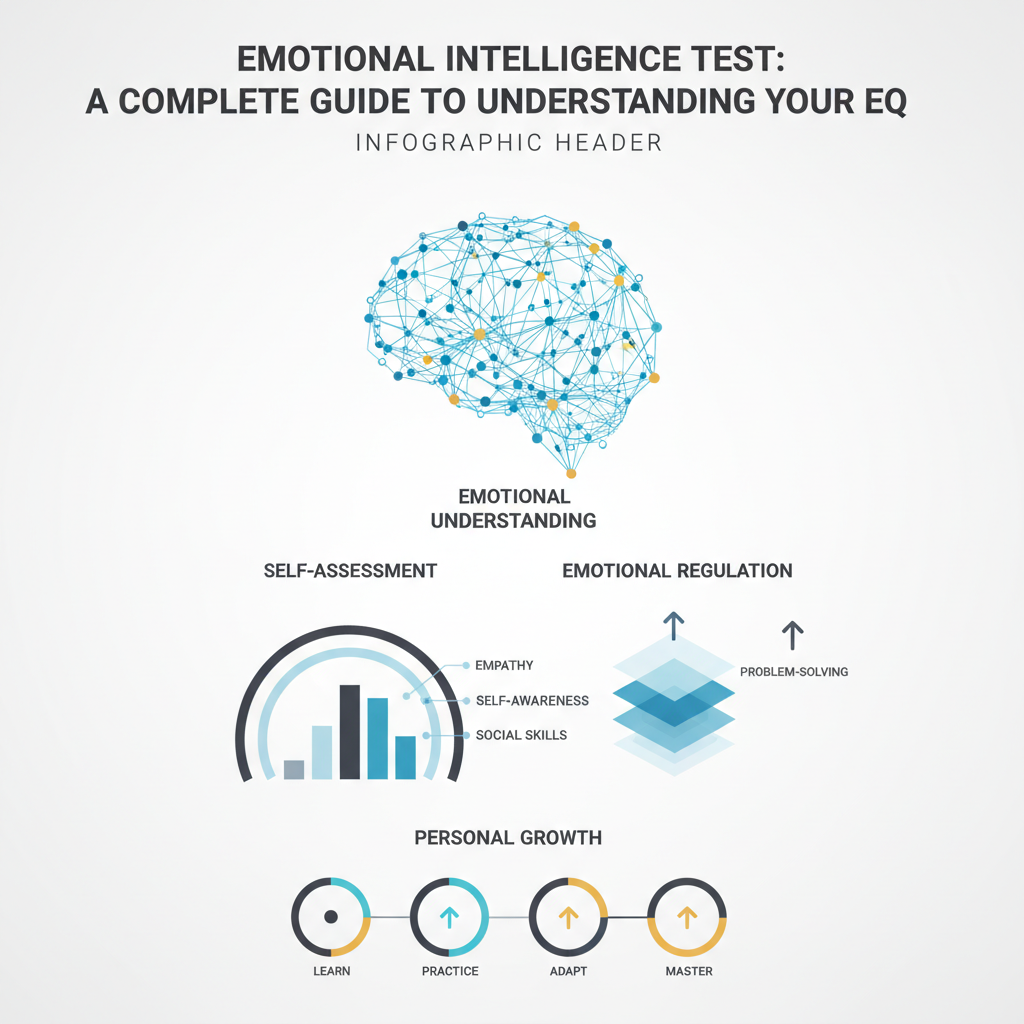
An emotional intelligence test is a psychological assessment designed to measure your ability to perceive, understand, and manage your own emotions and those of others. These tests evaluate key areas like self-awareness, empathy, and social skills to provide a score, often called an EQ (Emotional Quotient), which offers insights into personal and professional effectiveness.
Success isn’t just about what you know. It’s also about understanding yourself and others. This is where Emotional Intelligence (EQ) comes in. Beyond traditional measures of intellect, EQ helps predict personal well-being, effective communication, and creative ideas. It’s the ability to notice, understand, and manage emotions. This skill shapes how you handle challenges, work with others, and connect with the world. Taking an emotional intelligence test can unlock new levels of self-awareness and improve your problem-solving skills.
This guide will teach you how to measure and improve your emotional intelligence. We will explain what makes a good emotional intelligence test, help you find the best free options online, and show you how to understand your results. You’ll get more than just a score. You will also receive practical advice on your thinking style and simple steps for personal and professional growth. This will help you use empathy and self-control in your daily life.
By learning about the science behind emotional intelligence, you’ll see how building these skills can boost your creativity and help you become more resilient and empathetic. Let’s start by defining what emotional intelligence is and why it’s so important for your personal and professional life.
What Is an Emotional Intelligence Test and Why Is It Important?
Defining Emotional Intelligence (EQ)
Emotional Intelligence, or EQ, is the ability to understand and manage emotions—both yours and others’. It’s a key skill for daily life. EQ isn’t about being overly emotional. Instead, it’s about being aware of your feelings and using them in a positive way.
Psychologists see EQ as a group of skills. These skills help us notice, use, understand, and manage emotions. People with a higher EQ tend to have better relationships and make better decisions [1]. It helps you connect with others and handle challenges with care.
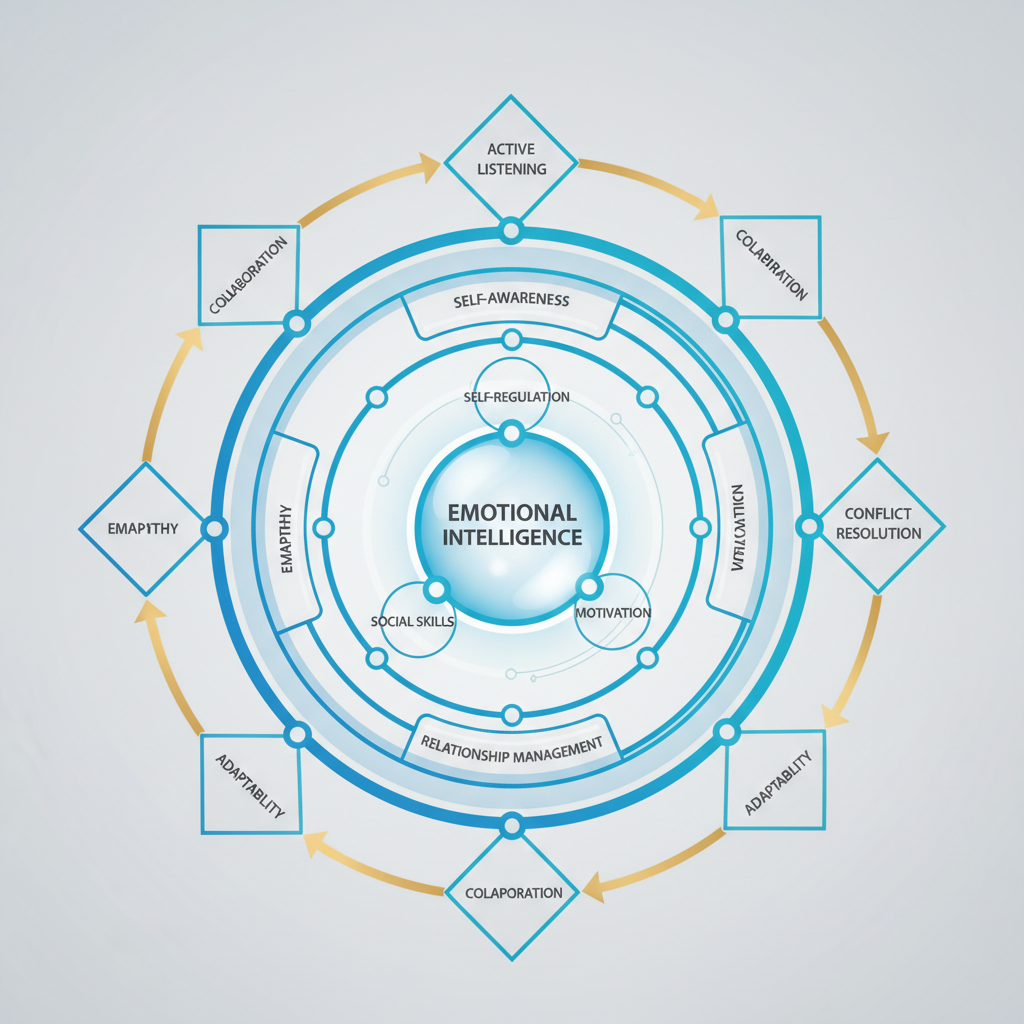
Key parts of emotional intelligence include:
- Self-Awareness: Knowing your own emotions and how they affect you.
- Self-Regulation: Controlling your reactions and handling change well.
- Motivation: Using your feelings to help you reach your goals.
- Empathy: Understanding and sharing the feelings of others.
- Social Skills: Getting along with others and managing relationships.
The Link Between Emotional Intelligence and Creative Potential
At Creative Ability Test, we believe that understanding yourself helps you unlock your full potential, including your creative side. Emotional intelligence is a big part of this. A strong EQ can really improve your creativity and help you explore new ideas with more confidence.
Here’s how EQ supports creative thinking:
- Enhanced Cognitive Flexibility: When you understand your emotions, it’s easier to manage stress and stay open-minded. This makes you more mentally flexible, which is a key part of creative thinking. It helps you come up with many different solutions to a problem [2].
- Improved Problem-Solving: EQ helps you tackle problems with a calm and focused mind. You can see the emotional side of a challenge, which leads to new and better solutions.
- Greater Empathy for User Needs: Understanding others’ feelings is key for design and innovation. Empathy helps you really understand what users or customers need. This leads to creating solutions that are both useful and meaningful.
- Better Collaboration: Creativity often works best when people work together. A high EQ leads to better communication and teamwork. You can handle group projects more easily, which helps different viewpoints combine into great new ideas.
- Resilience to Creative Blocks: Creative work always has its challenges. Controlling your emotions helps you manage frustration and stay motivated. It helps you push past creative blocks and keep moving forward.
When you improve your EQ, you also build the mental skills needed for creativity. This gives you a stronger base for coming up with new ideas and putting them to use.
Benefits of Understanding Your EQ Score
Taking an emotional intelligence test gives you more than just a score. It’s a big step toward understanding yourself and growing as a person. Your EQ score offers insights you can use to improve your creative skills and your life.
Here are the key benefits of knowing your EQ score:
- Personalized Self-Awareness: Get a clear look at your emotional strengths and weaknesses. This awareness is the first step to managing your feelings. It also shows how your emotions affect your creative work.
- Targeted Skill Development: Identify the specific parts of your EQ you want to improve. This lets you focus your efforts. For example, if you want to work on empathy, you can look for ways to build that skill.
- Stronger Relationships: Improve how you interact with others. When you understand emotions better, you communicate more clearly. This builds stronger relationships at home and at work.
- Enhanced Creative Performance: Use what you learn about your EQ in your creative work. You can learn to manage creative stress and think more flexibly. This helps you do your best work more often.
- Better Decision-Making: Make choices that think about how they affect feelings—both for you and for others. This balanced view often leads to better and more successful results.
- Increased Resilience: Build greater emotional strength. You’ll be able to handle stress and tough times more easily. This strength is key for staying creative and innovative.
- Professional Advancement: EQ is an important skill at work. It helps with leadership and teamwork. A high EQ can create new opportunities for your career, especially in creative roles.
Understanding your EQ score turns confusion into useful self-knowledge. It helps you use what you learn to make real changes. This allows you to use your emotions for personal growth and great creative work.
What Are the Different Types of Emotional Intelligence Tests?
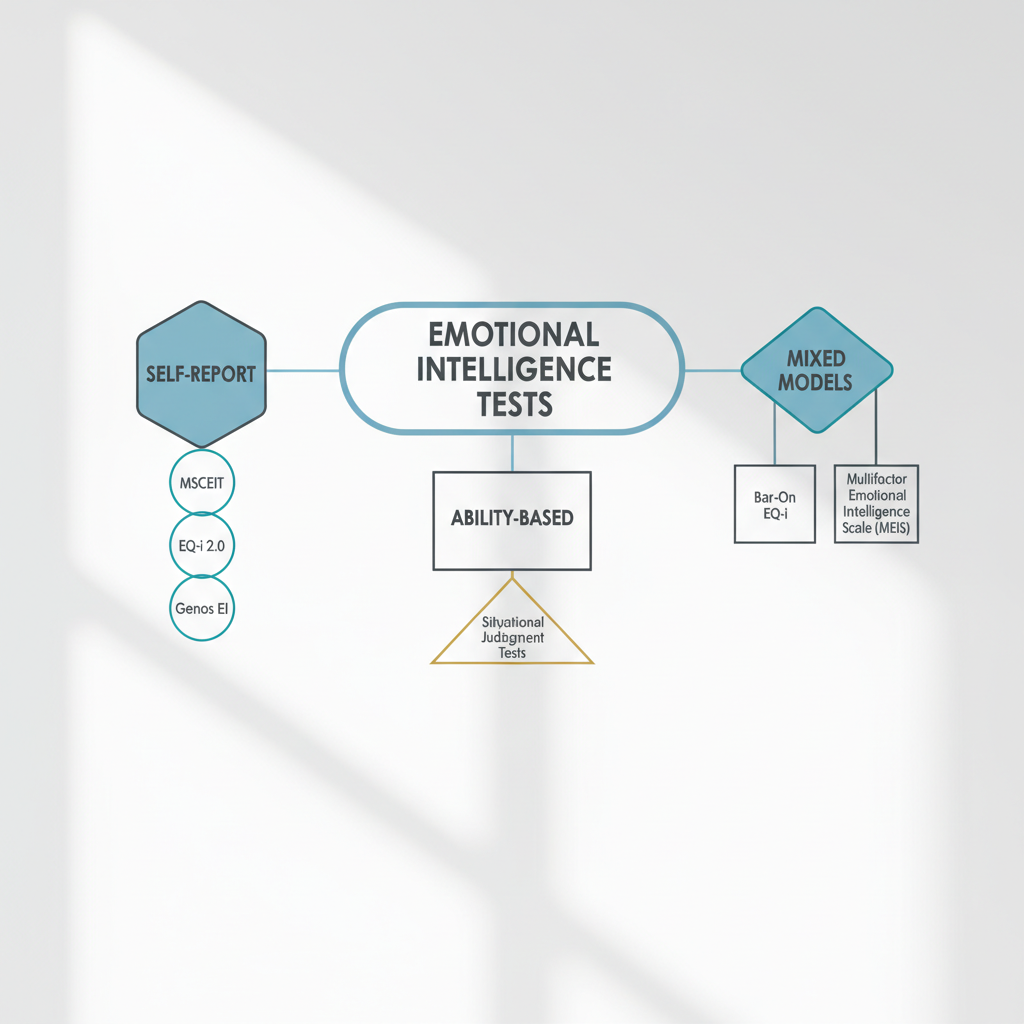
Ability-Based Tests (e.g., MSCEIT)
Ability-based tests measure your actual skill in using emotions. They don’t ask how you feel about your emotional skills. Instead, they test how well you can perform tasks that require emotional intelligence.
Think of it like a cognitive test for emotions. You solve problems that have a “correct” or “best” answer. This objective approach gives a clear picture of your emotional skills. It shows your natural strengths in handling social and emotional challenges. This can have a big impact on your creative problem-solving [3].
The Mayer-Salovey-Caruso Emotional Intelligence Test (MSCEIT) is a prime example, widely used in psychological research. It gives you scenarios and asks you to identify emotions or predict what might happen next. For instance, you might look at faces and pick the emotion they show. This directly tests your ability to perceive emotions.
Learning about your ability-based EQ can give you powerful insights. It shows how you process information and handle challenges—key skills for creative thinking. For example, if you’re good at understanding emotions, you can better figure out what users need. This leads to more empathetic and effective creative solutions.
Trait-Based Tests (Self-Report)
Trait-based tests work differently because they rely on how you see yourself. These tests use questionnaires or surveys where you rate statements about your own emotional habits. For example, a statement might be, “I am aware of my feelings as I experience them,” and you would rate how much you agree.
This approach looks at your understanding of your own emotions. It explores stable personality traits connected to feelings. Although these tests are based on your opinion, they offer good insights into your self-awareness. They show how you see your ability to manage emotions and interact with others. These are important parts of personal growth.
A big benefit of these tests is that they are easy to take. They are often quick, and many are available for free online. However, your answers might be biased by how you want to be seen. Still, they are a great starting point for self-reflection. They get you thinking about your emotional habits. Thinking about yourself in this way is a powerful tool for creativity, as it helps you understand how your inner world shapes your ideas.
For example, if you often rate yourself as high in empathy, you might find this skill helps in your creative group projects. It allows you to better understand different points of view, which makes your final work richer.
Mixed-Model Tests (e.g., Goleman’s Model)
Mixed-model tests combine parts of both ability and trait tests. They offer a more complete picture of your EQ. These models bring together different emotional skills, looking at both your natural abilities and behaviors you’ve learned over time.
Daniel Goleman’s emotional intelligence test model is a leading example. It breaks EQ into several key areas [4]. These include:
- Self-Awareness: Knowing your own emotions, strengths, and weaknesses.
- Self-Regulation: Controlling your impulses and handling change.
- Motivation: Having an inner drive to achieve your goals.
- Empathy: Understanding and sharing the feelings of others.
- Social Skills: Building and managing good relationships.
Tests based on this model often use self-reports and sometimes ratings from others. This combination provides a well-rounded view. The goal is to show how these skills work together in real life, making the results very practical for personal and professional growth.
Learning your EQ from a mixed-model test can be very powerful. It helps you find specific areas where you can improve. For example, if you see a need to work on your social skills, you can look for more group projects. Good social skills are key for team creativity. They help ideas flow freely and create a supportive space. By using these practical insights, you can boost your creative skills and become more effective overall.
How to Choose the Best Emotional Intelligence Test for You
What to Look for in a Free Online Emotional Intelligence Test
Learning about your emotional intelligence (EQ) can help you understand yourself better and face challenges more effectively. Free online emotional intelligence tests are a great place to start. But it’s important to choose a good one, as not all free tests give you useful results.
A good free EQ test can shed light on your emotions. This is key for handling creative projects and teamwork. It helps you manage your own emotions and understand others, which creates a better working environment.
When looking for a free online emotional intelligence test, keep an eye out for these things:
- Clear Explanations: The test should clearly explain what emotional intelligence is and what each part of the test measures. This helps you understand the ideas behind your score.
- Actionable Feedback: A good test gives you more than a score. It should offer practical tips on how to improve. You can use these tips to build your self-control and social skills, which are important for creative teamwork.
- Reputable Source: Look at the website offering the test. Is it connected to psychological research or a university? Some free tests are made by experts and give more reliable results than simple quizzes.
- Focus on Growth: The best tests encourage you to think about yourself and grow as a person. They help you see your strengths and find areas to improve, helping you in your personal and professional life.
- Relevance to Real Life: The questions should be about real-life situations. This makes it easier to understand and use your results. You can see how EQ affects your decisions and creative problem-solving.
Keep in mind that free tests are a good start, but they aren’t as thorough as professional, scientifically-backed tests. Use them to explore your EQ out of curiosity, not as a final measurement.
Understanding Psychometric Test Reliability
When you take a self-assessment test, you want to know you can trust the results. This is where psychometric reliability comes in. Psychometrics is the science of psychological measurement. It makes sure tests give you useful information for learning about yourself.
Reliability means a test gives consistent results. Imagine taking the same test a few times. A reliable test will give you similar scores each time. This consistency means you can trust the results you get.
Here’s why reliability matters for your personal and creative growth:
- Trustworthy Insights: Reliable tests give you an accurate look at your emotional or creative strengths. You can then use this information with confidence to improve yourself.
- Informed Decisions: When you understand your abilities, you can make better decisions about how to grow. This includes learning how to use your EQ in creative work or in a team.
- Tracking Progress: Reliable tests let you track your growth over time. You can see if the steps you’re taking to improve your EQ or creative thinking are working.
Validity is another key idea. It means the test measures what it says it measures. For example, an EQ test should measure emotional intelligence, not just your personality. Both reliability and validity are important for any good test, including those on platforms like Creative Ability Test, to provide useful and proven insights [5].
Our own Creative Ability Test is built on proven scientific methods. It gives you reliable and valid results about your creative potential. We believe that understanding the science behind these tests helps you get the most out of your journey of self-discovery.
Comparing Popular Tests: Mindtools, Truity, and Psychology Today
Many websites offer EQ tests, and each one is a bit different. Trying them can give you new ways to think about your EQ. Here, we compare a few popular options: Mindtools, Truity, and Psychology Today. Knowing what each test focuses on can help you pick the right one for you.
| Test Platform | Primary Focus | Model/Approach | Feedback & Insights | Relevance to Creative Growth |
|---|---|---|---|---|
| Mindtools Emotional Intelligence Test | Career growth and use at work. | Uses Daniel Goleman’s five-part EQ model (self-awareness, self-regulation, motivation, empathy, social skills). | Gives scores for each of the five areas. Offers practical tips for improvement that can help your career. | High EQ leads to better teamwork and leadership in creative projects. Managing emotions helps with creative blocks and stress at work. |
| Truity Emotional Intelligence Test | How personality is linked to emotional skills. | Connects EQ to personality types (like Myers-Briggs). Looks at how your natural tendencies affect your EQ. | Gives detailed reports on emotional traits. Explains your strengths and challenges based on your personality. | Knowing your emotional personality helps you find a creative process that works for you. It shows how you might naturally handle emotions during creative work. |
| Psychology Today Emotional Intelligence Test | Learning about yourself and your emotional habits. | Many different tests are available. Some are based on research, while others are more like simple quizzes. | Usually gives an overall EQ score with short explanations. The results can be a good starting point for thinking about yourself. | Can make you curious about your emotions. Helps you see what triggers might affect your creativity. |
These tests can be helpful, but they differ in how detailed and scientific they are. For instance, tests using Goleman’s model, like the one on Mindtools, are well-known [6]. They can show you where you can improve your self-awareness, which is key for both EQ and creativity.
Choosing the right test depends on your goals. Do you want to grow in your career, understand your personality, or just get a general idea of your EQ? Each test gives you a different way of looking at your emotional skills. In the end, improving your emotional intelligence helps your creative work. It gives you the skills to handle challenges, work well with others, and find new solutions with more strength and insight.
A Step-by-Step Guide to Taking an EQ Test
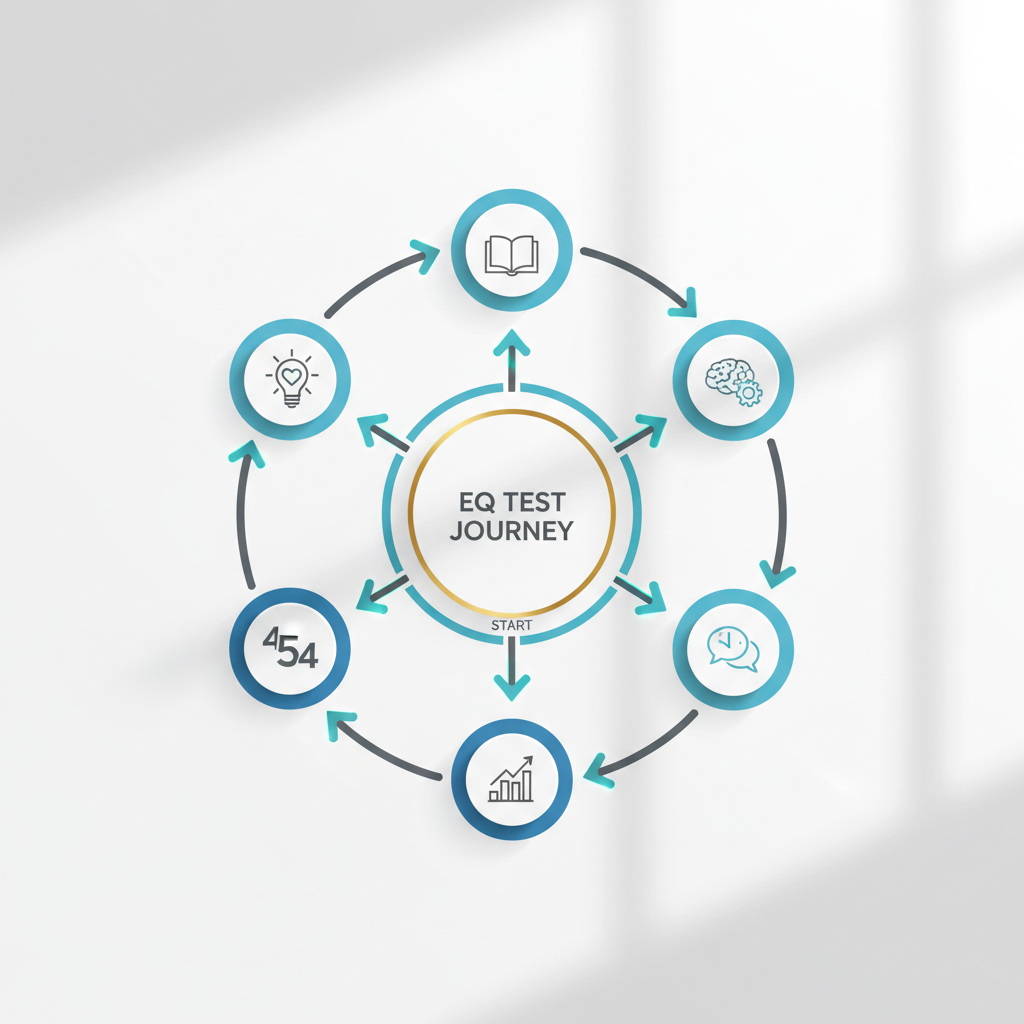
Preparing for the Test
Taking an emotional intelligence test is a great step toward self-awareness. But to get the most accurate and useful results, it helps to prepare. This isn’t about studying—it’s about creating the right environment and mindset.
- Choose Your Moment Wisely: Pick a time when you feel rested and won’t be interrupted. Avoid taking the test if you’re rushed, stressed, or tired. A calm mind helps you reflect more clearly.
- Find a Quiet Space: Get rid of distractions. Turn off notifications, close extra browser tabs, and let others know you need some uninterrupted time. A peaceful setting helps you focus on the questions.
- Understand the “Why”: Think about why you’re taking the test. Do you want to improve your communication, become a better leader, or understand your reactions? Knowing your goals will help you engage more with the assessment. This clarity helps you approach the test with purpose, much like knowing your ‘why’ for a creativity assessment.
- Comfort is Key: Ensure you are physically comfortable. A well-lit space, a comfortable chair, and proper posture can help you concentrate better throughout the test.
Focusing on your EQ test is a lot like focusing on unlocking your creative potential. You get the best results from both when you are fully committed to the process.
Answering Questions Honestly for Accurate Results
To get useful results from any self-assessment, especially an emotional intelligence test, you need to be honest. The goal isn’t to get a “perfect” score, but to truly understand your own emotions. Think of it like drawing a map of your inner world—the more accurate it is, the more helpful it will be.
When you answer, try not to pick the responses you think sound best or make you look good. These tests are designed to find patterns, and your honest answers give the most accurate picture of you. This honesty leads to better feedback and real personal growth. For example, if a question asks how you handle criticism, be truthful. Admitting you feel uncomfortable is more useful than picking the answer you think a “highly emotionally intelligent” person would choose.
In fact, research shows that self-assessments work best when people answer honestly instead of trying to get a certain score [7]. The same is true for understanding your creative strengths. Just like a creativity assessment needs your honest input to find your unique thinking style, an EQ test needs it to show your true emotional skills.
Remember, the test is a tool for your benefit. An honest assessment is the only way to find your strengths and see where you can improve your emotional intelligence. This will help you create a real plan for growth.
What to Expect During the Assessment
When you start an emotional intelligence test, you’ll find a series of questions that look at different parts of your emotional skills. While formats can differ, most online tests have a few things in common.
You will typically see:
- Scenario-Based Questions: You’ll read about a situation and be asked how you would react or what emotions you see. For instance, a question might describe a conflict at work and ask you to pick the best way to respond.
- Self-Report Statements: You will be asked to rate how much you agree or disagree with statements about your feelings and behaviors. Examples might be, “I often notice how I feel” or “I am good at calming myself down.”
- Time Considerations: Some tests are timed to encourage your first, gut reaction. However, many free online emotional intelligence tests have no time limit, so you can think more about your answers.
- Different Kinds of Questions: Besides scenarios and statements, some advanced tests, like the MSCEIT emotional intelligence test, may ask you to identify emotions in pictures of faces or predict how someone might feel in a certain situation.
The goal is to get a full picture of how you process emotions. The most valuable part comes after you finish: your results. You’ll get personalized feedback that breaks down your EQ score into areas like self-awareness, empathy, and social skills. This report is like a roadmap for understanding yourself. Similarly, platforms like Creative Ability Test provide detailed feedback on your creative thinking styles, offering practical tips to improve your skills based on your unique assessment results.
How Do You Interpret Your Emotional Intelligence Test Results?
Understanding Your Overall EQ Score
Your Emotional Intelligence (EQ) test results give you a look into your inner world. The overall score is a quick snapshot of your emotional skills. But remember, this number is just a starting point, not a final label.
Most tests show scores in a range, like average, above average, or excellent. For instance, many EQ tests see a score between 90 and 100 as average. Scores above 110 are often considered high [8].
A higher EQ often links to better creativity and problem-solving skills. People with strong emotional intelligence can usually adapt their thinking more easily. This helps them welcome new ideas and handle creative challenges. By understanding your EQ, you can learn how to better use your creative strengths.
At Creative Ability Test, we believe understanding your score is empowering. It helps you find areas for personal growth and create a plan to improve. This helps you move from simply knowing about yourself to actively making changes.
Breaking Down the Key Components: Self-Awareness, Empathy, and More
An overall EQ score is useful, but it’s even more helpful to understand its separate parts. These parts highlight your specific emotional skills. They also affect your creative thinking and ability to innovate. Let’s look at these core areas:
- Self-Awareness: Your Inner Compass
This is knowing your own emotions, strengths, weaknesses, and goals. It’s about seeing how your feelings affect what you think and do. For creative people, self-awareness is very important. It helps you spot personal biases that might block new ideas. You can also see when your emotions are helping or hurting your creative process. This helps you learn to trust your creative instincts. For example, if you know that feeling frustrated often comes before a breakthrough, you can use that feeling in a positive way.
- Self-Regulation: Mastering Your Emotional Responses
Self-regulation is about managing your emotions and impulses. It means pausing before you act and choosing how to respond. In creative work, this skill is key to not giving up. It helps you work through creative blocks and manage stress during tough challenges. It also lets you judge your own ideas fairly and accept feedback well.
- Motivation: Fueling Your Creative Drive
Motivation is closely linked to emotional intelligence. It’s your drive to succeed, your positive outlook, and your ability to bounce back from setbacks. For creative people, motivation is what drives new ideas. It pushes you to explore new things and stick with hard projects. It’s the spark that turns curiosity into action, even when things are complex or uncertain.
- Empathy: Understanding Others’ Perspectives
Empathy is the ability to understand and share what others are feeling. It’s like stepping into their shoes. This skill is essential for creative work that helps people. When you understand your audience’s needs and problems, you can create solutions that truly work for them. Empathy is the key to human-centered design and working together to solve problems. It helps you guess how people will react and create things that connect with them.
- Social Skills: Navigating Collaborative Creativity
Social skills are your ability to build relationships and work with others. This includes good communication, handling disagreements, and leadership. Creative work is usually a team effort. Good social skills help you explain your ideas clearly, inspire others, and build strong creative teams. They help you negotiate, persuade, and work together to turn an idea into a shared success.
Identifying Your Strengths and Areas for Growth
When you get your results, look past the overall number. A good EQ test report, like those from Psychology Today or Mindtools, will show your scores for each separate part [9]. This breakdown is where you’ll find the most useful information.
Pinpointing Your Creative Strengths:
Focus on the areas where you scored highest. These are your natural emotional skills. Think about how these strengths already help your creative thinking. For example:
- If Self-Awareness is high, you likely understand your creative process well. You know when you do your best work and what inspires you.
- A strong score in Empathy suggests you are good at understanding user needs. This is perfect for designing human-centered solutions.
- High Social Skills mean you’re probably great at brainstorming with others and leading creative projects.
This information helps you play to your strengths. It shows where you are naturally good at using creativity to solve problems. Understanding these strengths also builds confidence, which can encourage you to take on bigger creative challenges.
Identifying Areas for Growth:
Next, look at the parts where your scores are lower. Think of these not as weaknesses, but as chances to grow. It’s important to have a growth mindset. At Creative Ability Test, we believe everyone can improve their skills, including emotional intelligence.
For example:
- If Self-Regulation is an area for growth, you might get easily frustrated during creative blocks. Taking mindful breaks is a practical strategy that can help.
- A lower score in Motivation might mean you struggle to stick with a creative project. Setting smaller, reachable goals can help you build momentum and keep going.
By finding these areas, you get a clear plan instead of feeling unsure. Our platform gives you personalized feedback and strategies to boost your creative thinking, flexible mindset, and problem-solving skills. This helps you turn growth areas into new strengths, helping you grow both personally and professionally.
Practical Strategies to Improve Your Emotional Intelligence
Knowing your Emotional Intelligence (EQ) is a great start. But real growth happens when you use that knowledge. The Creative Ability Test shows you your creative potential and how EQ supports your ability to innovate. When you improve your EQ, you strengthen your creative thinking for both personal and professional growth.
Here are some practical ways to do this. These exercises will build a strong emotional base. This will boost your creative confidence and help you adapt to change.
Exercises to Boost Self-Awareness
Self-awareness is the foundation of emotional intelligence. It’s about knowing your emotions, strengths, weaknesses, and goals. Building this skill gives you clarity. It helps you handle challenges and use your creative strengths.
- Journaling for Insight: Spend a few minutes each day writing about your feelings. Note what caused them and how you reacted. This helps you see patterns and understand yourself better [10].
- Mindfulness Meditation: Practicing mindfulness teaches you to notice your thoughts and feelings without judgment. It helps you stay in the moment and become more aware of your changing emotions.
- Seek Helpful Feedback: Ask trusted friends or coworkers how they see your behavior. Be open to what they say. An outside view can show you things you might miss.
- Know Your Emotional Triggers: Notice what situations, people, or events cause a strong emotional reaction. Knowing your triggers helps you prepare for and manage your responses.
- Body Scan Awareness: Pay attention to how emotions feel in your body. For example, tight shoulders might mean you’re stressed. This mind-body connection helps you understand yourself more deeply.
Building self-awareness is an ongoing process. It helps you make better choices, which supports a more thoughtful and creative approach to your work.
Techniques for Better Self-Regulation
Self-regulation is about managing your emotions and actions in a healthy way. It’s key for staying focused and bouncing back from challenges, especially during tough creative work. Good self-regulation means you are in control of your reactions, not the other way around.
- Take a Mindful Pause: Before you react to a tough situation, take a deep breath and count to ten. This short pause gives you space to think before you act.
- Reframe Negative Thoughts: Question your negative thoughts. Instead of thinking, “I can’t do this,” try, “This is a challenge I can learn from.” This simple shift changes your point of view and helps you stay positive.
- Set Clear Boundaries: Learn to say “no” when you have too much to do. Protecting your time and energy prevents burnout and makes sure you have the energy for your creative work.
- Build Stress-Relief Habits: Add activities like exercise, hobbies, or time in nature to your routine. These are great ways to manage stress and improve your emotional well-being.
- Set and Plan Goals: Break big creative projects into smaller, easier steps. This makes the work feel less overwhelming and gives you a clear path forward, which helps you feel more in control.
Improving your self-regulation makes you mentally stronger. It helps you keep going, leading to more consistent and powerful creative results.
Tips for Enhancing Empathy and Social Skills
Empathy is understanding how others feel. Social skills are about communicating well with people. Both are crucial for teamwork, leadership, and creating things people love. They help you connect with others and have a greater impact.
- Practice Active Listening: When someone is talking, give them your full attention. Listen to understand them, not just to plan your reply. Notice their words and their body language. Repeat back what you heard to make sure you understood.
- Try to See Their Perspective: When someone has a different opinion, try to see things from their point of view. Think about their background and what might be motivating them. This will help you understand them better.
- Observe Body Language: Notice how people communicate without words. Their facial expressions, gestures, and posture can tell you a lot about how they feel. This helps you better read social situations.
- Be Curious Without Judging: Approach conversations with an open mind. Ask questions that can’t be answered with a simple “yes” or “no.” Try to understand someone’s experience without judging it.
- Volunteer or Join a Group: Meeting people from different backgrounds exposes you to new perspectives. This is a natural way to build empathy and make new social connections.
By improving your empathy and social skills, you build stronger relationships and become a better communicator. These skills are essential for working with others and leading creative projects.
Frequently Asked Questions About Emotional Intelligence Tests
How do you measure emotional intelligence in psychology?
In psychology, measuring emotional intelligence (EI) means looking at a person’s ability to understand and manage emotions. This covers their own feelings and the feelings of others. Psychologists use several proven scientific methods to do this. These methods usually fall into two main types.
Ability-based tests are one common type. These tests view EI as a skill, like a mental ability. They give you tasks to solve emotional problems. For example, you might be asked to identify emotions in pictures of faces. Or you might need to pick the best way to handle an emotional situation. The goal is to measure your actual skill with emotions. These tests show how well you reason about feelings, similar to how an IQ test measures thinking skills [11].
Self-report questionnaires are another popular method. With these, you answer questions about your own emotional habits and views. You might rate how much you agree with a statement like, “I am aware of my feelings as they happen.” These tests are easy to take, but they depend on how you see yourself. This means your answers can be shaped by how you want to be, not just how you are.
Understanding your emotional intelligence can boost your creativity. For example, being aware of your emotions can help you spot biases that block new ideas. Empathy helps you understand what users need, leading to better creative solutions. These skills also encourage flexible thinking and improve your ability to solve problems.
What is the Mayer-Salovey-Caruso Emotional Intelligence Test (MSCEIT)?
The Mayer-Salovey-Caruso Emotional Intelligence Test (MSCEIT) is a well-known ability-based test. It’s a highly respected tool in psychology [12]. The MSCEIT measures your emotional intelligence by testing how well you perform tasks that use emotional skills. It doesn’t ask what you think you would do. Instead, it asks you to actually show your skills.
The MSCEIT is based on four key branches of emotional intelligence:
- Perceiving Emotions: This is the ability to recognize emotions in faces, art, and pictures. Think of it as reading the emotional mood.
- Using Emotions to Help Thinking: This branch looks at how emotions can guide your thinking. It tests if you can use feelings to focus on what’s important or to be more creative.
- Understanding Emotions: This skill is about understanding complex feelings and how they change over time. It means knowing what causes emotions and what they might lead to.
- Managing Emotions: This measures how well you can handle your own emotions and help others with theirs. It involves being open to all your feelings and using them in a positive way.
For creative people, the MSCEIT offers helpful information. For instance, being good at perceiving emotions can improve your design work or art. Understanding how emotions help you think can let you use different moods to come up with new ideas. And managing your emotions well helps you bounce back from setbacks, a key skill for any creative project.
What is a good score on an emotional intelligence test?
It’s not always simple to define a “good” score on an emotional intelligence test. Most well-regarded tests, like the MSCEIT, give you a score that is compared to other people’s scores. This means your result is measured against the results of a large group of people who have already taken the test.
Typically, scores are set on a scale where the average is 100, with a standard deviation of 15. This is similar to how IQ tests are scored [13]. In general, this means:
- A score around 100 is considered average emotional intelligence.
- Scores above 115 suggest above-average emotional intelligence.
- Scores below 85 might point to areas for development.
However, just focusing on a number isn’t the main point. The biggest benefit of taking an EI test is the self-awareness you gain. It’s about understanding your personal strengths and the areas where you can grow. This feedback shows you what you’re good at and where you might want to improve.
If you want to be more creative, understanding your EI score can be a big help. It shows you how your emotional skills support your creative work. For example, good emotional management can help you push through creative blocks. High empathy can lead to creative work that people connect with. The goal isn’t just to get a high score. It’s to gain self-awareness you can use to grow and become more innovative.
Is Daniel Goleman’s emotional intelligence test reliable?
Daniel Goleman is famous for making emotional intelligence a popular topic with his influential books. His model breaks down emotional intelligence into five key skills: self-awareness, self-regulation, motivation, empathy, and social skills. These skills are very useful for personal and professional growth, especially in creative work.
In psychology, “reliability” means consistency. A reliable test gives you similar results if you take it multiple times in the same way. It also means all parts of the test measure the same basic skill [14]. Goleman’s ideas are widely accepted and helpful. However, many of the “tests” based on his work are simple self-report quizzes. They often don’t go through the same strict scientific testing as academic tests like the MSCEIT.
This doesn’t mean Goleman’s work or these quizzes aren’t valuable. They are great tools for self-reflection and for becoming more aware of your emotional skills. They can make you curious and help you understand your feelings better. These quizzes are a good starting point for personal growth and for finding areas where you can choose to build up your emotional skills.
For creative people, Goleman’s framework provides a helpful way to see things. Strong self-awareness helps you know what sparks your creativity and what holds you back. Self-regulation helps you manage frustration on difficult projects. Motivation keeps you going. Empathy is key to creating things that connect with people. Social skills are essential for working with others and sharing your ideas. So, while a specific “Goleman test” might not be as scientifically strict, the ideas he teaches are a reliable guide for building both emotional intelligence and creativity.
Sources
- https://www.psychologytoday.com/us/basics/emotional-intelligence
- https://www.apa.org/education-career/guide/science-creativity
- https://hbr.org/2017/04/emotional-intelligence-has-12-elements-which-do-you-need-to-work-on
- https://www.danielgoleman.info/five-components-of-emotional-intelligence/
- https://www.apa.org/pubs/books/4318049
- https://www.mindtools.com/pages/article/newCS_66.htm
- https://psycnet.apa.org/record/2012-07018-001
- https://www.sixseconds.org/emotional-intelligence/eq-scores/
- https://www.psychologytoday.com/us/tests/emotional-intelligence-test
- https://greatergood.berkeley.edu/article/item/how_journaling_can_help_you_in_hard_times
- https://psycnet.apa.org/record/1997-03482-001
- https://psycnet.apa.org/record/2000-05834-000
- https://www.sciencedirect.com/science/article/pii/B9780123737527000305
- https://www.apa.org/topics/assessment/testing-reliability