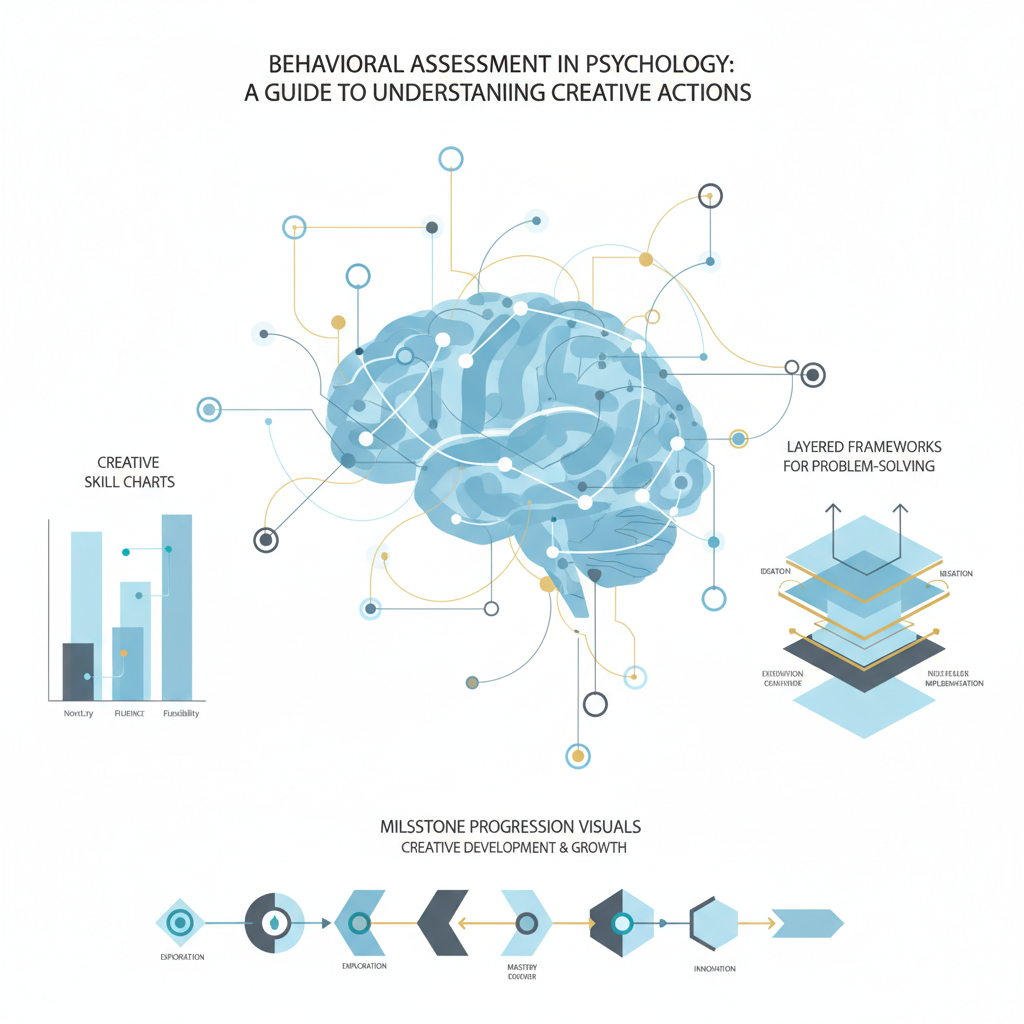
Behavioral assessment in psychology is a method focused on observing, describing, and understanding an individual’s actions in specific contexts. Rather than labeling with internal traits, it analyzes observable behaviors, their environmental triggers, and their consequences to create targeted strategies for growth and change.
Many of us wonder about our creative potential and imagine new ideas. But how often do we look at the *actions* that bring those ideas to life? Creativity isn’t just a vague quality; it’s an active process. It shows up in your behaviors, thinking styles, and how you approach problems. Understanding these actions is the first step to unlocking your potential, both at work and in your personal life. This is where behavioral assessment in psychology comes in. It offers a clear way to view your unique creative journey.
This article will explain behavioral assessment in simple terms. We’ll show you how to observe, measure, and understand the ways creativity shows up in your life. You will learn to identify your creative habits—from how you face a new challenge to how you think under pressure. This can greatly improve your self-awareness. By understanding your creative actions, you can build better habits, enhance your Cognitive Flexibility, and apply new thinking to your personal and professional life. Our goal is to give you clear, practical insights backed by science, helping you turn curiosity into confident action.
Get ready to explore the basics of behavioral assessment. You’ll learn how your specific actions reveal your creative strengths and unique style of solving problems. By understanding these ideas, you’ll be better equipped to understand your own behaviors and develop a more innovative mindset. Let’s begin by defining what behavioral assessment is and how it offers a fresh look at our potential.
What is Behavioral Assessment in Psychology?
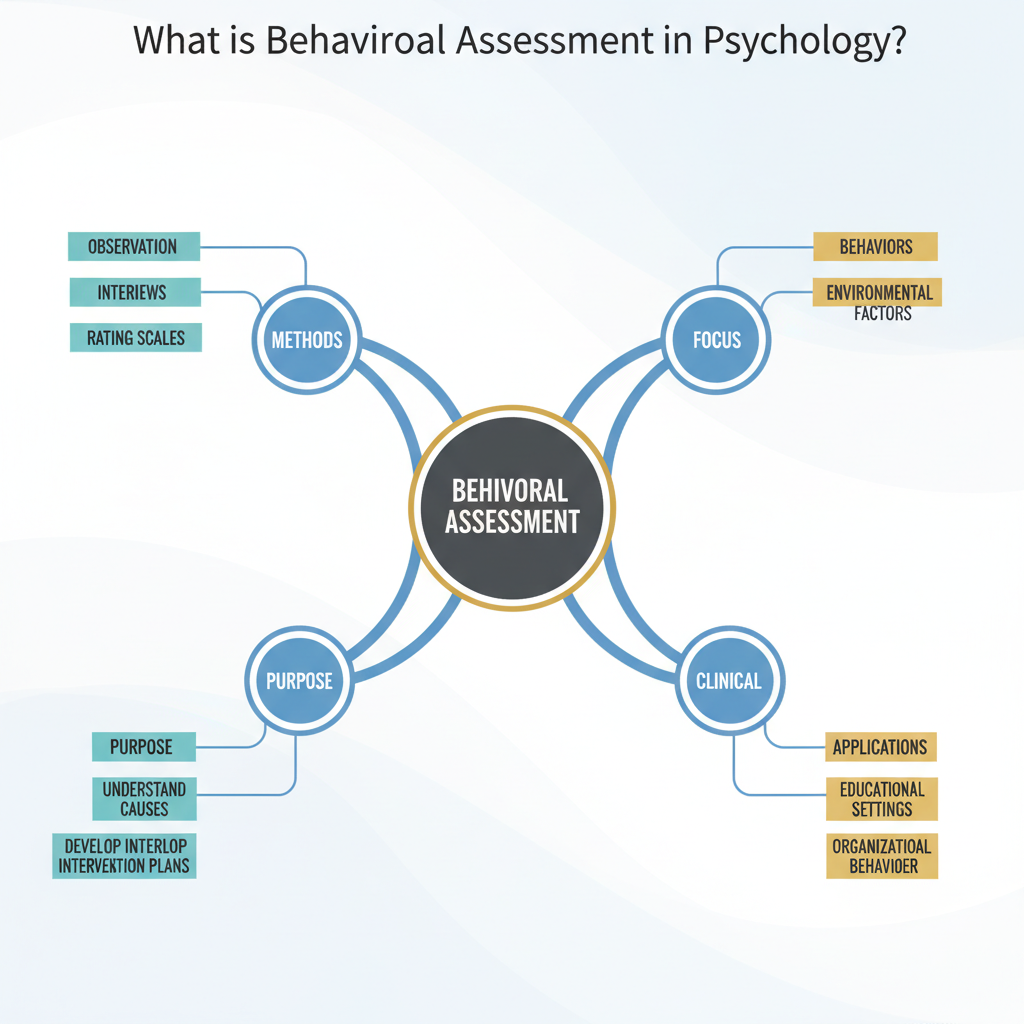
Moving Beyond Traits to Observable Actions
In psychology, behavioral assessment offers a different approach. It shifts the focus from broad personality traits to concrete, observable actions. Think of it this way: instead of asking if you are creative, we look at what you actually *do* when you are being creative.
This means we are interested in specific behaviors. For instance, do you consistently brainstorm many unique ideas? Do you often connect seemingly unrelated concepts? Are you skilled at reframing problems from different angles?
Creativity isn’t just a talent you’re born with. It’s a set of skills and habits you can practice. Behavioral assessment helps us identify these specific actions. Understanding your creative actions is the first step to improving them. This approach lets us measure, track, and improve your creative process directly.
How It Differs from Traditional Assessments
Traditional psychological assessments often measure inner traits or general tendencies. They might use personality questionnaires or broad self-reports. While these are useful, they may not provide a direct path to improvement.
Behavioral assessment, on the other hand, focuses on how you perform specific tasks. It looks at your actions in certain situations. This gives a different kind of insight, especially for understanding and growing your creativity.
Consider these key distinctions:
- Focus: Traditional assessments often focus on *what you are* (e.g., “an open-minded person”). Behavioral assessments focus on *what you do* (e.g., “you explore multiple solutions when facing a challenge”).
- Measurement: Traditional methods use questionnaires to measure a general trait. Behavioral assessments use direct observation, specific tasks, or ask you to track your own actions. For example, researchers have studied observable behaviors in creative problem-solving tasks [1].
- Goal: The goal of traditional tests is often to describe your personality. The goal of behavioral assessment is to understand your actions so you can improve specific behaviors.
- Actionability: Knowing you are “creative” is encouraging. But knowing you use certain thinking techniques to solve problems offers clear steps for growth. This specific feedback is what makes behavioral insights so useful.
The Creative Ability Test uses this behavioral approach. Our science-based, 30-question assessment does more than just tell you if you have creative potential. It gives you detailed feedback on your specific creative thinking styles and problem-solving actions. This personal feedback offers practical strategies to improve those skills, helping you go from understanding to truly enhancing your creativity.
What is the Importance of Behavioral Assessment in Psychology?
Gaining objective insights into Your Actions
To understand your creative potential, you need to look at what you actually do. A behavioral assessment offers objective insights by showing you *how* your creativity appears in real-life situations. This approach goes beyond your own perceptions, giving you a clear, evidence-based view of your creative actions.
This approach also shows your unique thinking styles. For example, do you naturally explore many ideas (divergent thinking)? Or are you better at turning a concept into a working solution (convergent thinking)? Knowing this helps you understand your core strengths, which is a key step for personal growth [2].
Objective insights help you:
- Uncover Hidden Strengths: You might discover creative abilities you never fully recognized.
- Understand Your Process: Learn the specific steps you take when solving problems or generating ideas.
- Measure Progress: Track how your creative behaviors change and improve over time.
- Identify Your Cognitive Flexibility: See how easily you adapt your thinking to new challenges.
Our Creative Ability Test uses this focus on behavior to give you a personalized roadmap. You’ll get clear insights into your creative actions and potential. This helps you move from simply being curious to having true self-awareness.
Identifying Triggers for Creative and Uncreative Habits
Have you noticed that some situations spark your best ideas while others block them? Behavioral assessment helps you find these “triggers.” These are the specific cues, both internal and external, that influence your creative habits.
Understanding your triggers is a powerful tool. It lets you shape your environment and routines to be creative more often. For instance, some people are most productive at a quiet desk in the morning. Others need the energy of a team or a bustling coffee shop.
Key areas to consider for creative triggers include:
- Environmental Cues: Your physical surroundings, lighting, sounds, or even specific tools.
- Time of Day: When are you most alert and mentally flexible?
- Social Interactions: Do you create best alone, in a group, or after specific conversations?
- Task Structure: How the problem is presented, or the freedom you have with it.
- Internal States: Your mood, energy levels, or even what you’ve recently learned.
By identifying these patterns, you can build habits that support your creative thinking. You can also learn to avoid or reduce the factors that cause creative blocks. This knowledge turns inconsistent creativity into a reliable plan for growth.
Creating Actionable Plans for Personal Growth
The goal of a behavioral assessment isn’t just understanding—it’s action. It provides the foundation for creating a personal growth plan that actually works. Once you know your creative strengths, thinking styles, and triggers, you can develop targeted strategies to improve your innovation and problem-solving abilities.
Our platform helps you do more than just find areas for improvement. It guides you in creating concrete steps you can build into your daily life. This is how you turn insights into real progress.
An actionable growth plan might involve:
- Setting Specific Goals: For example, “I will brainstorm 10 new ideas for X project daily.”
- Practicing Divergent Thinking: Engaging in exercises designed to generate a wide range of ideas.
- Modifying Your Environment: Adjusting your workspace to minimize distractions and inspire new thoughts.
- Scheduling Creative Time: Dedicating specific blocks in your day solely to creative exploration.
- Seeking New Experiences: Actively pursuing novelty to broaden your perspectives and challenge your assumptions.
This personalized approach ensures that the strategies you adopt are relevant and effective for you. It turns a general idea of creativity into practical skills for innovation and personal fulfillment. With the Creative Ability Test, you receive not just results, but a practical plan to grow your creative thinking and unlock your full potential.
What are the Most Common Behavioral Assessment Methods?
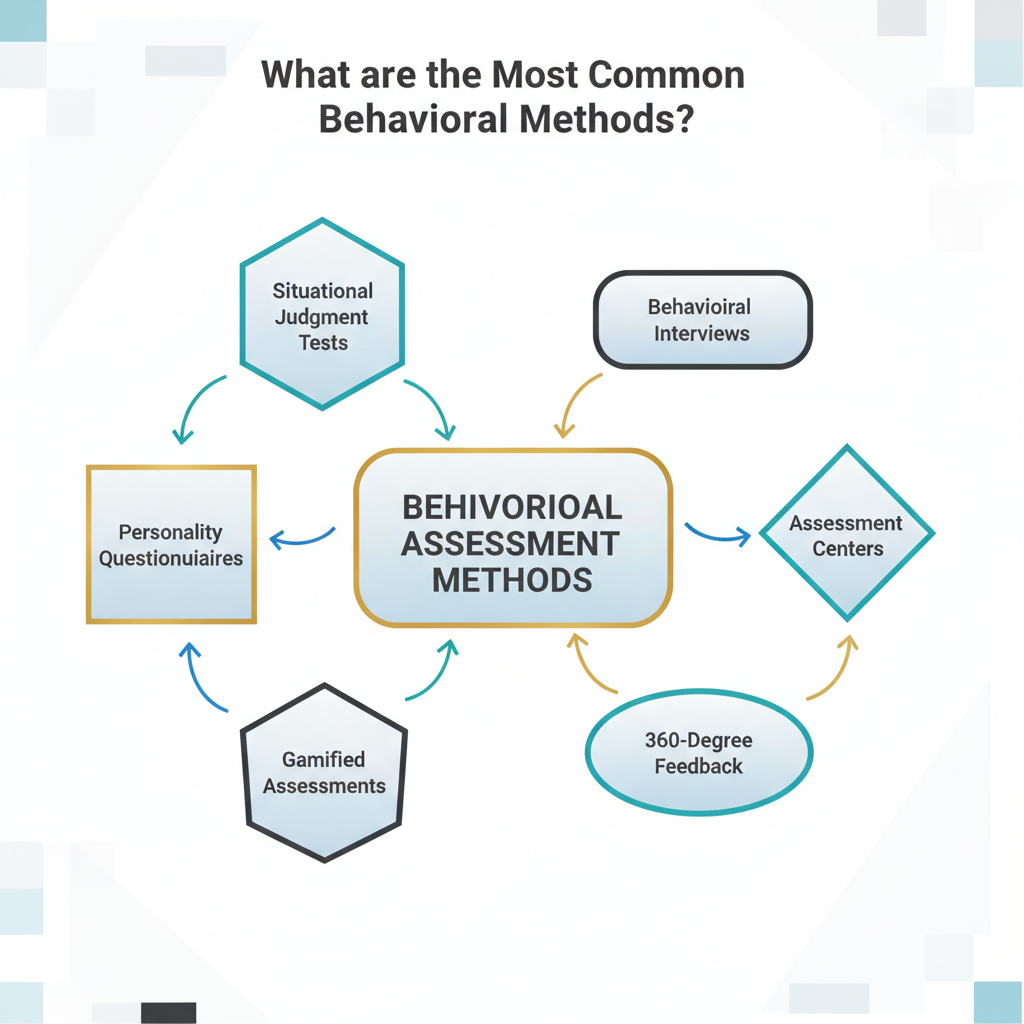
Direct Observation: Watching Creativity in Action
Direct observation is a simple way to understand behavior: you watch and record what someone does. When it comes to creativity, this means watching how a person tackles a problem or comes up with new ideas.
This method gives you insights in real time. For example, a researcher could watch a brainstorming session. They can see who participates, what ideas they share, and how they solve problems. This direct view shows how creativity works in a natural setting.
Benefits of Direct Observation for Creativity:
- Unfiltered Insights: You see creativity happen naturally, not just hear about it later.
- Identifying Triggers: See what sparks or blocks creative flow as it happens.
- Contextual Understanding: Learn how your surroundings affect your creative work.
- Behavioral Patterns: Spot habits in how someone approaches a creative task.
For example, a team leader could watch a design workshop. They might notice that one person always looks at problems from a new angle, while another is great at connecting unrelated ideas. Watching these actions provides useful information about the team’s creative strengths [3].
You can do this for yourself, too. Pay attention to when and where your best ideas come to you. Notice what helps you have your most creative thoughts. This kind of self-observation is a great way to improve your creative process.
Self-Monitoring: Tracking Your Own Creative Process
With self-monitoring, you become your own observer. It means you regularly track your own thoughts, feelings, and actions. For creativity, this involves keeping a log of your creative journey. It’s a powerful tool for personal growth.
Think of it like a journal for your creative mind. You can write down when you feel most inspired or what was happening when you had a breakthrough idea. You can also track moments when you feel blocked and try to figure out why. This record helps you see your own patterns.
How Self-Monitoring Boosts Creative Awareness:
- Pattern Recognition: Discover when you are most creative and what environment works best for you.
- Skill Development: Pinpoint the specific actions that lead to good creative results.
- Mindset Shifts: Become aware of thought patterns that help or hold back your creativity.
- Actionable Data: Gather real information to adjust your creative approach.
Many people use self-monitoring to improve different skills [4]. For creative people, this could be a creativity log. Each day, you could write down ideas, challenges, and solutions. This practice gives you useful information and builds the habit of thinking about *how* you think. Understanding your own creative process is the first step to making it better. Our Creative Ability Test helps you get started on this journey.
Interviews and Rating Scales: Structuring Your Insights
Interviews and rating scales are organized ways to measure creativity. They go beyond simple observation to gather deeper insights. Many scientific tests are built on these methods.
Interviews for Creative Insights:
A structured interview is a guided conversation to learn about someone’s creativity. It might ask about past projects, how you solve problems, or how you react to challenges. For instance, an interviewer might ask: “Tell me about a time you solved a tough problem in a unique way.” Or, “What do you do to get new ideas when you feel stuck?” These questions show how you like to think creatively and adapt to new situations.
- They give you descriptive, story-like answers.
- They help you understand the “why” behind someone’s creative choices.
- They link what a person does with what they think and feel.
Rating Scales for Measuring Creativity:
Rating scales use a consistent set of questions. You rate yourself (or others rate you) on different parts of creativity. For example, a scale might ask how much you agree with statements like “I enjoy solving unclear problems” or “I often connect ideas that seem unrelated.”
- They give you numerical scores that are easy to compare.
- They measure specific traits like brainstorming ability, openness, or creative confidence.
- They provide a reliable way to measure creative strengths.
The Creative Ability Test uses a research-based 30-question assessment, which is an advanced type of rating scale. It gives you personal feedback based on proven ideas from psychology. This allows us to measure different parts of your creativity well, including how you adapt your thinking and solve problems. Such structured tests provide a clear picture of your creative strengths. They also show you where you can grow, helping you create specific plans to improve your creative skills.
What is a Behavioral Assessment in Psychology Example?
Scenario: Assessing Problem-Solving Approaches
Let’s use a real-world example to understand creative behavior. Imagine your team needs to find a new way to improve customer satisfaction for a complex product.
A behavioral assessment observes how people actually handle this task. It goes beyond what they say they can do and looks at their actions and interactions. This lets us see creativity in motion.
Consider a team member named Alex. Faced with this problem, Alex might start sketching diagrams. They might ask a lot of “what if” questions and challenge old ideas. This is a clear example of expansive, creative thinking.
Another person, Sarah, might start by quietly gathering data. Then, she might propose a well-organized, unique solution. This shows a different, but equally valuable, creative style. A behavioral assessment helps us see and understand these different approaches.
This method shows us specific behaviors that point to individual strengths and areas for growth. It gives us clear insights into how people solve problems, moving us from guesswork to real understanding.
Applying the Triple-Response System (Cognitive, Motor, Physiological)
A behavioral assessment gives a complete picture of creativity. It uses the “triple-response system” to look at three connected parts of our behavior: cognitive, motor, and physiological responses.
Let’s apply this to Alex and Sarah’s situation:
- Cognitive Responses: These are your thoughts, which others can’t see. For Alex, this could mean brainstorming quickly, picturing different solutions at once, or connecting ideas that seem unrelated. Sarah’s thoughts might be more analytical. She could be mentally testing different outcomes or building a detailed plan in her head. These internal strategies are key to creative work [5].
- Motor Responses: These are the physical actions others can see. Alex might draw on a whiteboard, move sticky notes around, or use animated hand gestures while talking. Sarah’s actions might be quieter. She might take detailed notes or sketch precise flowcharts to organize her thoughts.
- Physiological Responses: These are your body’s automatic reactions, which you may not even notice. When Alex is in a creative “flow,” they might show signs of deep engagement, like an increased heart rate or a focused gaze. Sarah might become very still and focused. She might also feel a rush of excitement when a difficult idea finally makes sense. These physical signs reflect what’s happening mentally and emotionally during creative work [6].
By looking at all three types of responses, we get a full picture of how people approach creative tasks. This deep understanding helps create personalized advice so everyone can use their unique creative style more effectively.
How Feedback Shapes Future Creative Behavior
The real value of a behavioral assessment is the feedback it provides. It doesn’t just point out your current habits—it gives you insights to help you grow and improve your creative skills for the future.
Think about the feedback we could give Alex and Sarah. Alex is great at coming up with many different ideas. To help, we could suggest they set a time limit for brainstorming. This helps turn lots of ideas into a few great ones.
For Sarah, who is good at creating structured plans, feedback might encourage more experimentation. She could try building quick prototypes or practice sharing rough ideas out loud. This can help her explore more possibilities early on.
This kind of specific, behavior-based feedback is very effective. It turns self-awareness into real-world improvement. People learn how to change less effective habits and strengthen their best creative ones.
The Creative Ability Test is built on these ideas. Our personalized feedback shows you what you’re good at and points out specific behaviors you can improve. This helps you actively build on your potential, leading to better problem-solving and consistent creative growth.
How Can Understanding Behavioral Assessment Enhance Your Creativity?
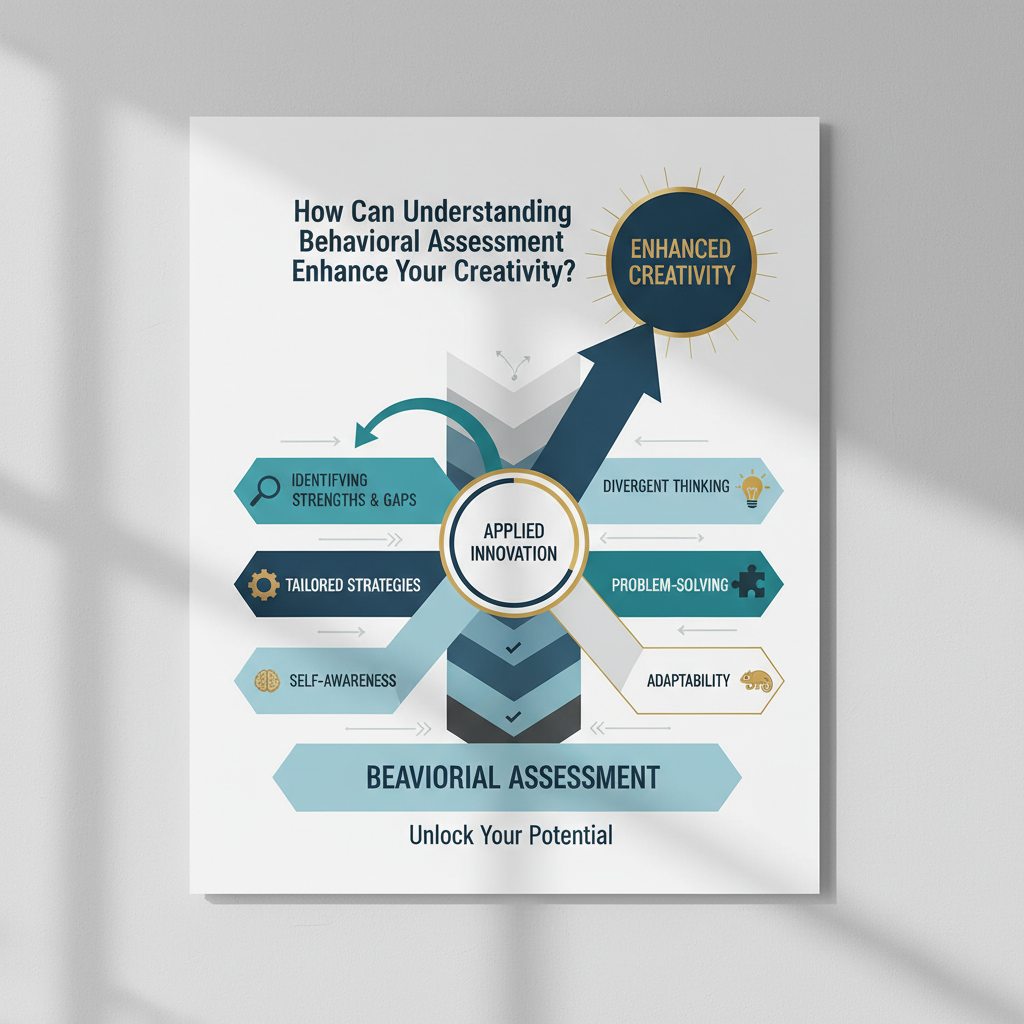
Connecting Your Behaviors to Your Creative Strengths
To understand your creative ability, start by looking at what you do. Our behavioral assessment helps you do just that. It focuses on your actions—things you can actually see—instead of vague personality traits.
By looking at how you handle tasks, solve problems, and play with ideas, you’ll see patterns. These patterns point to your unique creative strengths. For example, do you often question the usual way of doing things? Can you come up with lots of ideas quickly?
Our assessments point out these specific behaviors. They link your daily actions to creative skills, like thinking of many different ideas (divergent thinking) or easily changing your approach (cognitive flexibility). This gives you a clear picture of how your creative mind works. Knowing your strengths builds confidence and gives you a starting point for getting even better.
For example, if you often explore many solutions before picking one, that shows strong divergent thinking. This is a huge creative asset. When you recognize this in yourself, you can use that skill more purposefully.
Our science-based approach helps you find these natural strengths. It gives you personal insights into your creative style and shows you how your actions shape your creative self.
Using Assessment Insights to Build Better Habits
Knowing yourself is the first step to getting better. Our assessment gives you a clear look at your current creative habits. Some habits probably help you, while others might be holding you back without you realizing it.
Once you know this, you can start building better creative routines. You can set up your workspace or schedule to support your thinking style. For example, if you do your best thinking in quiet, make time for it.
Here are practical steps to build better creative habits:
- Identify Triggers: Know what situations or feelings come before your most creative moments. Also, notice what stops your creativity.
- Set Specific Goals: Instead of “be more creative,” aim for “brainstorm 10 new ideas for X project every morning.”
- Practice Deliberately: Do activities that build your creative skills, like mind mapping or journaling.
- Seek Novelty: Try new things and expose yourself to new ideas and viewpoints. This helps you think more flexibly. Research shows that engaging with diverse experiences can significantly boost creativity [7].
- Reflect and Adjust: Regularly review your progress. Adjust your habits as needed based on what works best for you.
Our platform gives you practical steps based on your results. These steps help you turn what you’ve learned into a consistent creative practice. This leads to real growth and personal development.
Applying Behavioral Principles to Innovative Thinking
Innovation isn’t just about natural talent; it’s also about learned habits. The principles of behavior give you a simple framework for thinking in new ways. They help you tackle hard problems one step at a time.
For example, rewarding small wins can make a big difference. When you celebrate a small creative step, you encourage more innovation in the future. This works for you and your team.
Here’s how these ideas can improve innovative thinking:
- Break It Down: Turn big, innovative projects into smaller, easier steps. Celebrate finishing each one. This builds momentum and makes big goals feel less overwhelming.
- Create Cues for Creativity: Set up a specific time or place that signals it’s time to be creative. This could be a weekly “idea hour” or a special corner of your office for brainstorming.
- Find and Fix Weak Links: Look at the series of steps that lead to a good idea. Figure out where the process breaks down for you. Then, you can work on strengthening that part of your routine.
- Learn From Others: Watch people who are great at innovating. What are their habits? How do they solve problems? You can learn a lot by simply observing them.
By using these ideas, you can build a reliable creative process instead of just waiting for inspiration to strike. This approach helps you solve real-world problems with confidence and come up with truly new solutions. Our assessment results will show you where to focus your efforts for the best results. This is how you turn your creative potential into real-world innovation.
Frequently Asked Questions
How is behavioral assessment used in clinical psychology?
In clinical psychology, behavioral assessment helps us understand and change difficult behaviors. Instead of just giving a diagnosis, it looks at what a person actually does.
Clinicians use this method to pinpoint specific behaviors causing distress. They look for triggers that come before these actions and the consequences that follow them [source: https://www.apa.org/pubs/journals/features/amp-a0033104]. This close look helps therapists create treatment plans that work.
For example, if someone has social anxiety, a clinician might observe them in social situations. They would track anxious behaviors like avoiding eye contact or pulling away from conversation. They would also note the thoughts and feelings that go with these actions.
The goal is to gather clear, factual data. This data helps track progress in therapy and makes sure treatments are matched to the person’s specific needs. In the end, this approach helps people build healthier habits and reactions.
What are the key principles of behavioral assessment?
Behavioral assessment is based on a few key ideas. These ideas make it a great tool for understanding why we do things, including creative work.
- Focus on Observable Behavior: This method focuses on actions that can be seen and measured. Instead of guessing about feelings, it looks at what a person actually does.
- Contextual Understanding: Behavior doesn’t happen in a vacuum. It’s always part of a situation. Experts look at the circumstances around an action, including what happens before (antecedents) and what happens after (consequences).
- Individualized Assessment: Every person is different. This type of assessment adapts its methods to fit the individual and their specific problems. It’s not a one-size-fits-all approach.
- Functional Analysis: A key part is figuring out the “why” behind a behavior. What does the person get out of it? This helps create plans for change that work [source: https://www.ncbi.nlm.nih.gov/pmc/articles/PMC3370329/]. For example, a creative block might be caused by a fear of being judged.
- Measurement and Data Collection: Gathering clear facts is essential. This often means tracking how often, how strong, and how long a behavior lasts. This makes it easy to see if things are improving.
- Link to Intervention: What is learned from the assessment directly guides the treatment. There’s a clear link between understanding a behavior and creating a plan to change or improve it. This is also true for boosting creativity.
By understanding these ideas, you can look at your own creative process. You can find patterns that help or hurt your creative flow.
Can behavioral assessment help improve professional skills?
Yes, behavioral assessment is very helpful for improving professional skills. It offers a clear method to find and improve the skills you need for your career to grow.
This method is different from a standard performance review. It focuses on the exact actions that lead to success and shows where you can improve. It’s a great tool for professionals who want to be more innovative.
Here’s how behavioral assessment enhances professional abilities:
- Identifying Strengths and Weaknesses: It helps you recognize your strong suits and areas for improvement. This might include communication styles, leadership approaches, or problem-solving methods.
- Developing Targeted Training: The results help create a personal growth plan just for you. You can focus on learning or changing specific actions. This makes training more focused and useful. For instance, if brainstorming is hard for you, you can practice exercises designed to generate more ideas.
- Enhancing Problem-Solving Approaches: This method shows how you usually handle problems. It points out what works well and what doesn’t. This helps you choose to use more creative and effective ways to solve problems [source: https://hbr.org/2019/07/why-the-best-problem-solvers-actively-seek-different-perspectives].
- Fostering Innovation and Adaptability: By watching how you react to new situations, you can build habits that lead to flexibility and new ideas. This includes trying new things, taking smart risks, and learning from mistakes.
- Improving Team Collaboration: When a team understands each person’s behaviors, everyone can work better together. It helps make roles clear and improves how the team creates things as a group.
Through careful observation and feedback, you can change how you work for the better. You can replace habits that hold you back with actions that lead to new ideas, better work, and personal growth. Our platform helps you use these ideas to unlock your creative potential at work and in life.
Sources
- https://psycnet.apa.org/record/1987-03611-001
- https://psycnet.apa.org/record/2012-07447-001
- https://psycnet.apa.org/record/1987-25166-001
- https://www.sciencedirect.com/science/article/pii/S019188691500355X
- https://psycnet.apa.org/record/2012-07755-001
- https://www.frontiersin.org/articles/10.3389/fnhum.2023.1165184/full
- https://hbr.org/2014/06/how-to-build-a-culture-of-originality