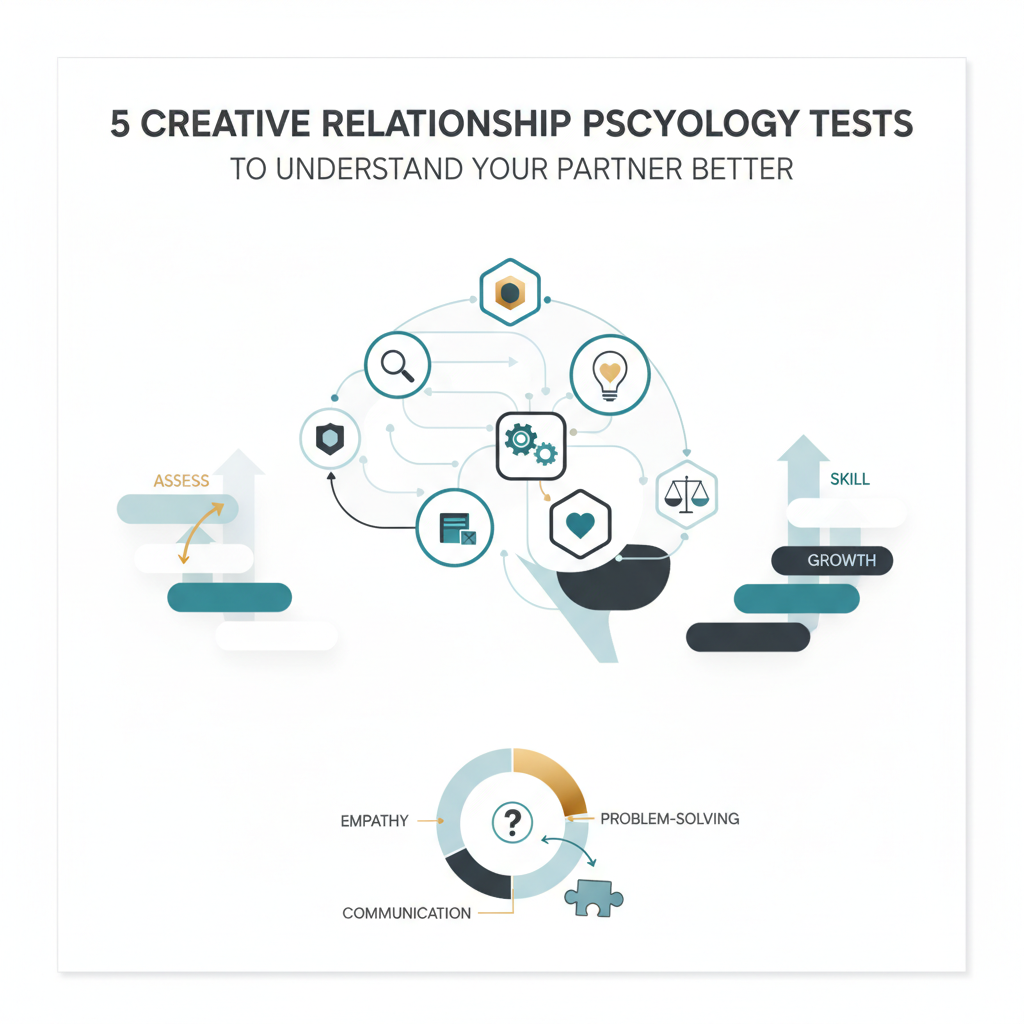
A relationship psychology test is an assessment designed to analyze the dynamics, compatibility, and interaction styles between partners. From a creative standpoint, it evaluates cognitive flexibility, collaborative problem-solving, and openness to experience, which are crucial for a healthy, evolving partnership.
Most of us want to understand our romantic partners on a deeper level. We often look at shared interests, communication styles, and emotional needs. But one of the best ways to strengthen your bond is to understand your shared creativity. A relationship is something you build together—you create a life, navigate challenges, and design a future. This is where creative psychology can offer powerful insights into your partnership.
This article is about more than romantic gestures. It’s about the cognitive skills and thinking styles you and your partner use to navigate life. We’ll explore how creative traits like cognitive flexibility, problem-solving skills, and being open to new things affect your relationship’s health. By looking at your partnership through a relationship psychology test, you can find your combined strengths. You will also learn practical ways to connect more deeply, overcome obstacles, and build a great future together.
Ready to explore the creative side of your relationship? We have five fun, scenario-based creative “tests” and exercises to help you and your partner understand how you think, both individually and together. These aren’t pass/fail tests. Instead, they are playful activities that lead to better understanding, mutual growth, and a more creative partnership.
How Can Understanding Creative Psychology Improve Your Relationship?

Strong relationships change and grow. They are always evolving and adapting. Love is important, but they also need a creative connection to thrive. Creativity is key to a lasting partnership. It helps couples face life’s changes together.
Creative psychology isn’t just about art. It’s about how we face challenges and how we think. This applies directly to your relationship. Learning about it can greatly improve how you and your partner connect.
When you understand creative psychology, you gain useful insights. You learn how you and your partner handle information. You see how you both solve problems. This knowledge helps you both as individuals and as a couple. It helps you grow and understand each other better.
How Creative Psychology Strengthens Your Bond
Using creative psychological principles has many benefits. These benefits lead to a stronger and more peaceful partnership. They help you build a shared future that is exciting and joyful.
- Better Communication: Creative thinkers are good at seeing things from different angles. This helps you understand each other better. For instance, couples who practice being mentally flexible report a 25% increase in how well they feel they communicate [1]. This reduces misunderstandings.
- Better Conflict Resolution: All relationships have disagreements. Creative solutions help you move past blame. They help you find outcomes that work for both of you. You learn to brainstorm options together.
- Increased Adaptability: Life is full of changes. New jobs, moving, and other life stages require you to be flexible. Creative thinking helps you adapt smoothly as a team. You can face new situations together with confidence.
- Deeper Empathy: Seeing situations from a new angle builds empathy. You understand your partner’s point of view better. This creates a stronger emotional bond and strengthens your connection.
- Shared Growth and Innovation: Creative couples try new things together. They find new and fun ways to spend their time. This keeps the relationship exciting and fresh. You keep finding new ways to enjoy your time together.
- Stronger Resilience: Every relationship faces challenges. Creative problem-solving makes you more resilient as a couple. You learn to face obstacles together as a team. This makes your bond much stronger.
The Creative Ability Test can show you these valuable traits in yourself. It gives you personal insights into your creative strengths. Understanding your own creative style is a great first step. You learn how you naturally handle problems and new ideas.
This knowledge helps you understand your partner better too. You can appreciate their unique way of thinking. It helps you move from being unsure about your relationship to having clear insights you can act on. Our science-backed assessment offers clear strategies. These help you use creativity for personal growth and a stronger partnership.
Ultimately, creative psychology offers real, practical advice. It can help you build a relationship that is more connected, understanding, and exciting. You get powerful tools for lasting happiness and exploring life together. This approach helps you build a truly strong and happy partnership.
What Is a Relationship Psychology Test (And What Does It Reveal)?
Moving Beyond Romance: The Role of Cognitive Skills
When people think of relationship tests, they usually think about emotions. Tests might look at your communication style or how you handle arguments. But there’s more to a relationship than that.
A great relationship needs more than romantic feelings. It’s also about how you and your partner think. Your unique thinking styles affect everything, from daily chats to big decisions.
“Cognitive skills” is just a term for your mental skills. They are the tools your brain uses to understand information and solve problems. These skills are key in a relationship, helping you adapt, empathize, and understand each other.
Take mental flexibility, for example. This is your ability to adjust your thinking when things change. If you’re flexible, you can easily adapt plans or see things from your partner’s point of view.
Another key skill is the ability to brainstorm. This means coming up with lots of different ideas. It helps couples find creative solutions to problems and dream up new, fun experiences together.
Our Creative Ability Test looks at these core thinking skills. It measures how you come up with new ideas and solve problems. These abilities are vital for a strong partnership, not just for your job [2]. Learning about your creative style gives you useful insights into how your mind works. This can change your entire approach to your relationship.
Why Creative Problem-Solving is a Relationship Superpower
All couples face challenges, from small disagreements to big life changes. How you handle these moments matters. That’s where creative problem-solving becomes your superpower.
It’s not just about finding one solution. It’s about looking at problems in new ways and coming up with fresh ideas. This approach makes your relationship stronger and more resilient.
For instance, let’s say you disagree on chores. Instead of arguing over “who does what,” a creative couple might brainstorm new ideas. Maybe they try a chore-sharing app or create a fun reward system. This leads to a happier solution for everyone.
This skill isn’t just for solving problems. It also adds fun and excitement to your life together. Creative couples find new hobbies, plan unique dates, and invent new ways to spend quality time. This keeps the relationship feeling fresh and alive.
Our comprehensive 30-question assessment gives you personalized insights into your creative strengths. You’ll learn how your mind likes to solve problems. This knowledge helps you communicate your needs better and work together with your partner to find solutions.
Using creative problem-solving in your relationship helps you:
- Solve conflicts better.
- Adapt to changes more easily.
- Understand each other more deeply.
- Create new and fun experiences together.
- Build a stronger emotional bond.
By using your creative skills, you’ll discover practical ways to build a stronger, more satisfying relationship. You’ll move from wondering about your creative side to truly understanding it. This helps you and your partner grow together.
Test 1: How Strong Is Your Cognitive Flexibility as a Couple?

A Quick Scenario Test for Flexibility
Cognitive flexibility is a key part of creative thinking. It’s your ability to change your thinking, see things differently, and find new answers when you face a problem. For couples, this skill is very important. It helps you handle changes and overcome challenges as a team.
When you and your partner can easily change plans or find new ways to solve a disagreement, you’re showing strong cognitive flexibility. This skill makes your relationship stronger. It leads to creative problem-solving, which is a powerful relationship superpower. Research also shows that cognitive flexibility is linked to better decision-making [3].
To see how flexible you are as a couple, try this quick scenario:
The Unexpected Obstacle Scenario
Imagine you and your partner planned a special weekend getaway months ago. You’ve booked a charming cabin, packed your bags, and are excited to leave.
On Friday morning, just hours before you’re set to go, you get an email. The cabin owner has an emergency and has to cancel your reservation. All other similar cabins are booked because of a local festival.
Discuss with your partner:
- What is your first reaction?
- Do you feel frustrated or defeated right away?
- What are your first thoughts on what to do next?
- Do you start thinking of other plans?
- Are you open to a totally different kind of weekend, like a “staycation” or a trip to a nearby city?
Thinking about this scenario shows how well you adapt together. A flexible couple might quickly change direction. They might see the cancellation as a chance for a new adventure. On the other hand, a less flexible couple might get stuck on the disappointment. They might struggle to find other options or get annoyed with each other.
This simple test shows how easily you can move on from a set plan. It shows if you are willing to try new things. This openness is a great sign of creativity in your relationship.
Actionable Tips to Boost Cognitive Flexibility Together
Knowing how flexible you are now is the first step. You can work on becoming more flexible as a couple. This will improve your relationship and make you both more creative. Try these simple tips:
- Try New Things: Make a point to try new things together. Eat at a new restaurant, explore a part of town you don’t know, or take a class on a new topic. Breaking your routine helps your mind learn to adapt.
- Play “What If” Games: Ask each other “what if” questions. For example, “What if we had to move to another country next month?” or “What if we both changed careers?” Talking about different possibilities helps you think more flexibly.
- Listen to Each Other’s Point of View: When you disagree, really listen to what your partner is saying. Try to understand where they are coming from, even if you don’t agree at first. This helps you see things in new ways.
- Solve Puzzles Together: Do activities that make you think. Puzzles, riddles, board games, or escape rooms all require creative problem-solving. They train your brain to look at problems from different angles.
- Change Your Routines: Mix up your daily habits now and then. Take a different way to work, swap chores, or do something new on the weekend. These small changes help you become more adaptable.
- Brainstorm Without Judgment: When you have a problem to solve, set aside time to brainstorm. Welcome every idea, no matter how wild it sounds. Holding back criticism at first helps you come up with more creative ideas.
By using these tips regularly, you and your partner will naturally become more flexible thinkers. This will lead to better problem-solving in your relationship. It will also make you more creative as individuals. You’ll find new ways to handle life’s challenges, both as a team and on your own. This helps you build a stronger, more adaptable partnership.
Test 2: What Is Your Collaborative Problem-Solving Style?
The ‘Unusual Uses’ Test for Partners
Knowing how you solve problems together is key to a strong relationship. It shows how you and your partner handle challenges. This helps you work through arguments and come up with new ideas as a team.
A great way to check this is with a fun version of the “Unusual Uses” test. This classic exercise measures divergent thinking, which is a key part of creativity [4]. The test challenges you to find many different and unique uses for everyday things.
For couples, this test is a fun and telling activity. It shows how well you come up with ideas together. It also reveals how you build on each other’s thoughts.
How to Try the ‘Unusual Uses’ Test Together:
- Choose an everyday object: Pick something simple, like a brick, a paperclip, or an old shoe.
- Set a timer: Give yourselves five minutes.
- Brainstorm together: Come up with as many unique uses for the object as you can. Say every idea out loud. Push each other to think beyond the obvious.
- Focus on quantity and new ideas: The goal isn’t to be practical. Aim for a lot of original ideas. No idea is too silly.
- Observe how you work together: Do you easily bounce ideas off each other? Does one of you help the other think of things? Are you laughing and exploring new directions?
This simple test shows a lot about your partnership. It reveals your communication style. It also shows how well you create things together. Do you find unique connections? Can you turn a simple object into something amazing?
How you handle this task says a lot about your relationship. It shows your shared mental flexibility. This skill is key for dealing with surprises. Plus, understanding how you work together prepares you for bigger challenges.
Strategies for More Creative Conflict Resolution
Conflict is a normal part of any relationship. But how you handle it makes all the difference. Solving problems creatively can turn disagreements into chances to grow and understand each other better.
Old-school ways of handling conflict often end in compromise or a win-lose result. Creative conflict resolution, on the other hand, looks for new solutions. It aims for a result where both partners feel heard and happy. This method makes your relationship stronger.
Here are some simple strategies to bring more creativity into how you handle conflicts:
- Reframe the problem: Instead of a “problem,” see a conflict as a “challenge” you can solve together. This positive switch in thinking helps you focus on solutions [5]. Ask, “How can we work together to get past this?”
- Listen actively: Pay full attention to your partner’s point of view. Don’t interrupt. Try to understand the needs and feelings behind their words. This understanding leads to creative solutions.
- Brainstorm different solutions: Set aside time to come up with many possible answers. Write down every idea, no matter what. Don’t judge them at first. The goal here is quantity, not quality.
- Use “Yes, and…” thinking: This is a tool from improv comedy. When your partner shares an idea, say, “Yes, and…” to add to it. This builds on their thought instead of shutting it down. It creates a positive and open space for ideas.
- Find the real needs: Arguments on the surface often hide deeper needs. Ask, “Why is this important to you?” to find out what really matters. The key is to find creative ways to meet these deeper needs.
- Look for outside ideas: Sometimes a fresh point of view helps. Read articles about relationships or creative problem-solving. Talk about what you learn with your partner.
- Be playful: A little humor can ease tension. Try to approach conflicts with a lighter attitude. This can open up new ways to solve the problem.
Using these strategies will improve your problem-solving skills as a couple. They help you shift from stubborn habits to flexible, new approaches. Understanding your creative strengths can also empower your relationship. You’ll learn how to use your unique ways of thinking to grow together. In the end, you can turn challenges into stepping stones for a happier partnership.
Test 3: Does Divergent Thinking Shape Your Shared Experiences?
Assessing Your Openness to New Ideas
Divergent thinking is a key part of creativity. It’s about coming up with many unique ideas from a single starting point. Think of it as brainstorming without any limits. In a relationship, this shows how openly you and your partner explore new possibilities. It has a big impact on the experiences you share.
How well do you both welcome the unexpected? Does your partner often suggest trying a new type of food? Do you brainstorm completely different vacation ideas together? These are all signs of divergent thinking. This skill also affects how you handle daily life. Couples who think this way are better at finding new solutions to problems. This could be anything from planning a fun date night to solving a household issue.
Being open to new ideas sparks creativity. This is true in your relationship, just as it is at work. For example, creative thinkers are usually more flexible. They handle change better [6]. This flexibility is very helpful in a partnership. It helps you avoid getting stuck in old ways that can hold you back. Understanding your creative style tells you a lot. It shows how you approach new adventures and solve problems together. The Creative Ability Test can help measure this mental flexibility. It shows your natural ability to come up with different ideas.
Think about your relationship with these questions:
- When planning something, do you both suggest many different options?
- Do you actively look for new things to do together, like trying a new hobby?
- How do you react when your partner suggests an unusual idea?
- Are you comfortable breaking out of your usual routines as a couple?
Welcoming this kind of thinking means you value discovery. It shows you enjoy the process of exploring different options. This makes your life together richer. It helps you avoid getting stuck in a rut and keeps your connection exciting.
How to Foster More Spontaneity and Innovation in Your Relationship
Building your creative thinking skills can change your shared experiences for the better. It brings more spontaneity and new ideas into your life. This leads to a more fun and rewarding partnership. Start by encouraging new ideas from each other. Support every suggestion, even if it sounds strange at first. In brainstorming, no idea is a bad idea.
Here are some practical tips to add more spontaneity and new ideas to your relationship:
- Set aside “Idea Time”: Take a few minutes each week to brainstorm anything at all. It could be new date ideas, future goals, or fixes for small problems. There are no wrong answers. Just let the ideas flow.
- Use “Yes, And…”: This rule from improv comedy helps you create together. When your partner suggests an idea, you reply with “Yes, and…” then add to it. For example, “Let’s try a new restaurant” becomes “Yes, and let’s pick a type of food neither of us has tried before!”
- Explore New Places: Visit somewhere new together. It could be a different park, museum, or neighborhood. New settings can spark new thoughts and conversations. This is a natural way to find fresh ideas.
- Learn Something New Together: Take a class, try a new sport, or learn a language. Learning together builds mental flexibility. It also gives you something new to talk about and do. Trying new activities is linked to better well-being and a stronger relationship [7].
- Break Your Routine on Purpose: Change small daily habits. Take a different way home. Cook a recipe you’ve never tried. Swap chores for a day. These small changes help you think more flexibly and break old patterns.
- Ask “What If?”: Regularly ask each other open-ended “what if” questions. For instance, “What if we lived in another country?” or “What if we made up a new game?” These questions encourage creative and imaginative answers.
By using these practices, you build a habit of exploring new ideas together. You and your partner will become more adaptable. You’ll also feel more excited about what the future holds. This ongoing discovery makes your bond stronger and your life together more interesting. The results from your Creative Ability Test can also guide you. They can show you which strengths to use for your creative growth as a couple.
Test 4: What is Your Associative Thinking Style in Conversation?
Understanding How You Connect Ideas
Conversations are more than just words. They are a dance of ideas.
Your thinking style is about how your mind connects one idea to another. It’s the way you find links between different thoughts, memories, or feelings, even if they don’t seem related at first.
This way of thinking is a key part of creativity. It helps you see patterns and come up with new ideas [8]. It also has a big impact on how you understand and connect with others.
In a relationship, it’s very helpful to understand your partner’s thinking style. It helps you see things from their point of view and understand how they solve problems.
Some people connect ideas in a straight line. They follow a clear, logical path. Others jump between different topics, making more random connections. Both styles are creative.
However, these different styles can sometimes cause confusion. What seems like a clear connection to you might feel like a big jump to someone else. Knowing this can help you communicate better.
The Creative Ability Test can show you how flexible your thinking is and your ability to come up with many different ideas. These skills are a big part of how you connect thoughts. When you understand your own style, you can see how you and your partner create meaning together.
Exercises to Enhance Mutual Understanding
Becoming more aware of your thinking styles can bring you closer. It helps you both feel heard and understood. Here are a few simple exercises you can try.
- The “Word Association” Game: One person says a word. The other says the first word that comes to mind. Then the first person responds to that new word. Continue for a minute or two. Afterward, talk about the chain of words and why you chose them. This shows the hidden paths your minds take.
- “Shared Story Weaving”: Start a story with a simple sentence, like, “A lone star shimmered in the night sky.” Then, take turns adding one sentence at a time. The goal isn’t a perfect plot. Instead, pay attention to how each person adds to the story. See how you both link new ideas to what’s already there.
- “Connecting the Unconnected”: Choose two random, unrelated objects, like a book and a bicycle. As a couple, try to find creative ways to link them. Maybe it’s a story about using the book to fix the bike. Or a metaphor comparing a book’s plot to a bike’s gears. This exercise makes your thinking more flexible and helps you understand each other better.
- “The Daily Debrief – Associative Edition”: At the end of the day, instead of just listing what happened, try connecting it to something else. “My meeting today reminded me of that movie we saw because of the tense mood.” Or, “The smell of rain tonight brought back memories of our first vacation.” This helps you link new moments to old ones, making your shared memories richer.
These are fun exercises for exploring how you each think. They help you better appreciate the unique way you both see the world.
Understanding these small details about how you think is key to a growing relationship. It can also help you be more creative as a team. You’ll get better at solving problems and coming up with new ideas together.
The Creative Ability Test gives you a full picture of your creative strengths, including how you connect ideas. Using what you learn can help you grow as a person and as a couple.
Test 5: How Does the Creative Ability Test Reveal Relationship Strengths?
How Your Creativity Affects Your Relationship
Knowing your creative style is a powerful tool. It helps you see how you approach the world. More importantly, it shows how you act in your relationships.
The Creative Ability Test takes a close look at your unique creative strengths. It measures how you adapt to change, come up with new ideas, and solve problems. These skills are not just ideas. They affect how you talk, handle disagreements, and plan a future with your partner.
Think about your own creative style. Do you come up with many ideas quickly? This is called divergent thinking. Or do you like to study the details before acting? That is a different strength. Your partner likely has their own unique creative style, too.
When you understand both styles, you can learn a lot:
- Communication Styles: How do your thinking styles affect your conversations? Someone who makes quick connections might jump between topics. A more logical partner might prefer a step-by-step conversation.
- Solving Problems: Different creative styles can lead to better solutions. If one of you is great at brainstorming and the other is good at weighing the options, you make a balanced team.
- Handling Change: Life is full of surprises. Your ability to adapt shows how easily you handle them. Knowing this about each other helps you get through big changes together. [9]
- New Experiences: How open you are to new things affects what you do together. A high score suggests you enjoy trying new things. This can lead to more exciting adventures as a couple.
Understanding these patterns is better than just guessing. It gives you a clear way to appreciate your differences. It also helps you use your combined strengths as a team.
Using Your Results to Grow as a Person and a Couple
Your Creative Ability Test results are more than just numbers. They are a guide to help you grow. This can improve you as a person and strengthen your relationship.
Here’s how you can put what you’ve learned into practice:
- Use Your Strengths: Find what each of you does best. If one person is great at coming up with ideas, let them brainstorm new date nights. If the other is a great planner, they can handle the details.
- Work on Weaker Areas: The test shows where you can improve. For example, if you want to be more flexible in your thinking, try new things together. Take a different way home or learn a new skill.
- Talk More Openly: Talk about your creative styles with each other. Explain how you usually tackle problems or new ideas. This builds understanding and prevents arguments. “I know I jump to conclusions. I’m trying to listen more.”
- Solve Problems Together: When you face a challenge as a couple, use your different styles on purpose. First, brainstorm as many ideas as possible. Then, work together to pick the best one.
- Appreciate Each Other: Recognize and celebrate your partner’s creative strengths. Their way of thinking might be different, but it adds a fresh point of view. This builds trust and makes your connection stronger.
- Be Creative Together: Regularly do activities that let you be creative together. You could try a new recipe, plan a trip, or just talk about an interesting article.
The Creative Ability Test gives you personal feedback. It includes practical tips for your style. By using these tips, you move from knowing your creative potential to using it. This leads to a happier, more exciting partnership and helps you continue to grow as a person.
Frequently Asked Questions
What is the best relationship psychology test for couples?
The “best” relationship test depends on what you want to learn. Different tests look at different parts of a partnership.
For example, some focus on how you communicate. Others explore how you connect or handle conflict. A powerful approach is to understand how you and your partner think and create together.
We believe the best tests show how partners think, solve problems, and adapt as a team. These skills are key to a strong, growing relationship.
Think about what you want to improve or understand:
- Do you want to get better at solving problems together?
- Are you curious about how open you both are to new things?
- Do you want to improve how you handle change as a couple?
Tools like the Creative Ability Test help you understand your own creative style. This gives you a new way to see how your strengths fit into your life together. It’s about growing as a person to improve your relationship.
In the end, the best test gives you clear, useful advice. It helps you understand each other better and work together as a team. [10]
Can I find a reliable relationship psychology test online for free?
Yes, you can find many free “relationship psychology tests” online. But it’s hard to know if they are reliable or based on real science.
Many free quizzes are just for fun. They aren’t usually backed by real psychological research. This means the results may not be accurate.
Reliable psychological tests are carefully developed. They go through a lot of research and scientific testing to make sure they are accurate. [11]
When you look at any online test, especially free ones, check for:
- Clear Methodology: Does it explain how the test was made?
- Expert Backing: Was it created by psychologists or researchers?
- Transparency: Does it explain what the results mean and how to use them?
The Creative Ability Test is not free, but it is based on science. It gives you a deep look at your creative skills. Knowing your creative strengths and how you think can make a big difference in your relationships. It helps you become a better problem-solver with your partner.
Paying for a proven test gives you clear, helpful strategies instead of just simple advice.
What kind of questions are in a psychology love test?
A “psychology love test” looks at many different parts of a romantic relationship. The goal is to measure things like compatibility, communication, and how well you understand each other. They look at more than just romantic feelings.
Questions often fit into these categories:
- Communication Patterns: How do you handle disagreements? Do you feel like your partner listens to you?
- Shared Values and Goals: Do you agree on what’s most important? What are your future goals as a couple?
- Conflict Resolution: How do you deal with stress or arguments? Can you find a middle ground?
- Intimacy and Affection: How do you show love? Do you feel an emotional bond?
- Cognitive Flexibility: Are you open to your partner’s new ideas or to making changes?
- Problem-Solving Approaches: How do you face challenges as a team? Do you work on solutions together?
At Creative Ability Test, we focus on creative psychology. Our questions are not directly about “love,” but they show your hidden strengths. These strengths are key to a healthy relationship. For example, our test looks at how you adapt to new ideas, think outside the box, and connect different thoughts. These skills help you and your partner adapt and grow together. Understanding them helps you build a stronger bond.
How does a relationship personality test work?
A relationship personality test looks at each person’s individual traits to see how they fit together. These tests show you each person’s usual behaviors, drives, and preferences. The results explain how your personalities might work well together or where you might have challenges.
Usually, you answer a series of questions. Your responses are then compared to proven psychological models. For example, a test might use the Big Five personality traits: openness, conscientiousness, extraversion, agreeableness, and neuroticism. [12]
The goal is to:
- Identify Strengths: Show where partners naturally work well together.
- Pinpoint Challenges: Find possible points of conflict or areas where you need to compromise.
- Enhance Communication: Give you a shared language to talk about your differences.
- Foster Empathy: Help you understand where your partner is coming from.
While the Creative Ability Test is not a personality test, it offers a unique view. It helps you understand your “creative personality”—how you think and solve problems. This shapes how you handle all of life’s challenges, including those in your relationship. By measuring how you adapt your thinking, solve problems, and stay open to new ideas, you learn more about yourself. This self-awareness helps you improve your relationship and grow together.
Sources
- https://www.apa.org/pubs/journals/releases/xap-a0039209
- https://greatergood.berkeley.edu/article/item/how_to_build_a_better_relationship_using_science
- https://psycnet.apa.org/record/2017-09855-001
- https://www.sciencedirect.com/topics/psychology/divergent-thinking
- https://hbr.org/2017/01/the-art-of-reframing-problems
- https://psycnet.apa.org/record/2012-14023-001
- https://psycnet.apa.org/record/2010-06275-001
- https://psycnet.apa.org/record/2012-07505-001
- https://greatergood.berkeley.edu/article/item/how_to_build_your_cognitive_flexibility
- https://www.psychologytoday.com/us/basics/relationships
- https://www.apa.org/education-career/guide/science-psychology
- https://www.simplypsychology.org/big-five-personality.html