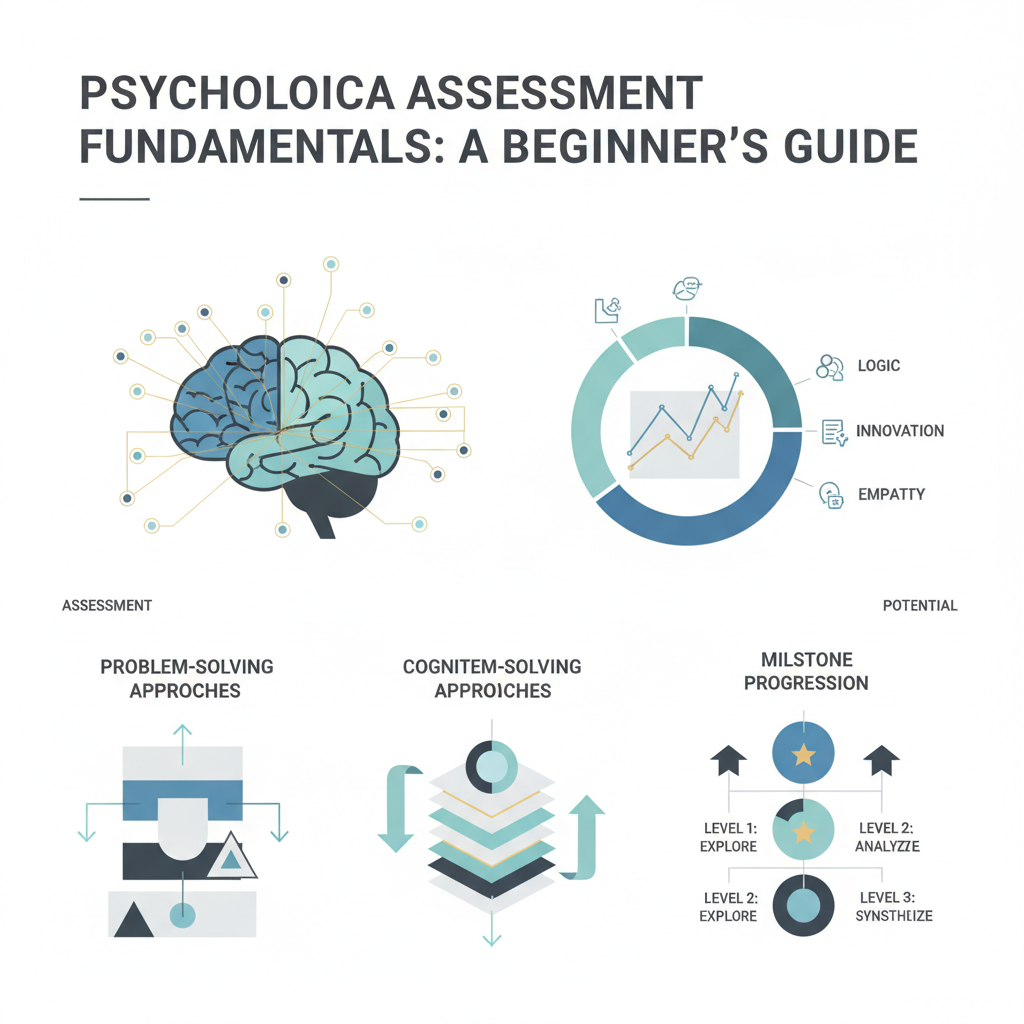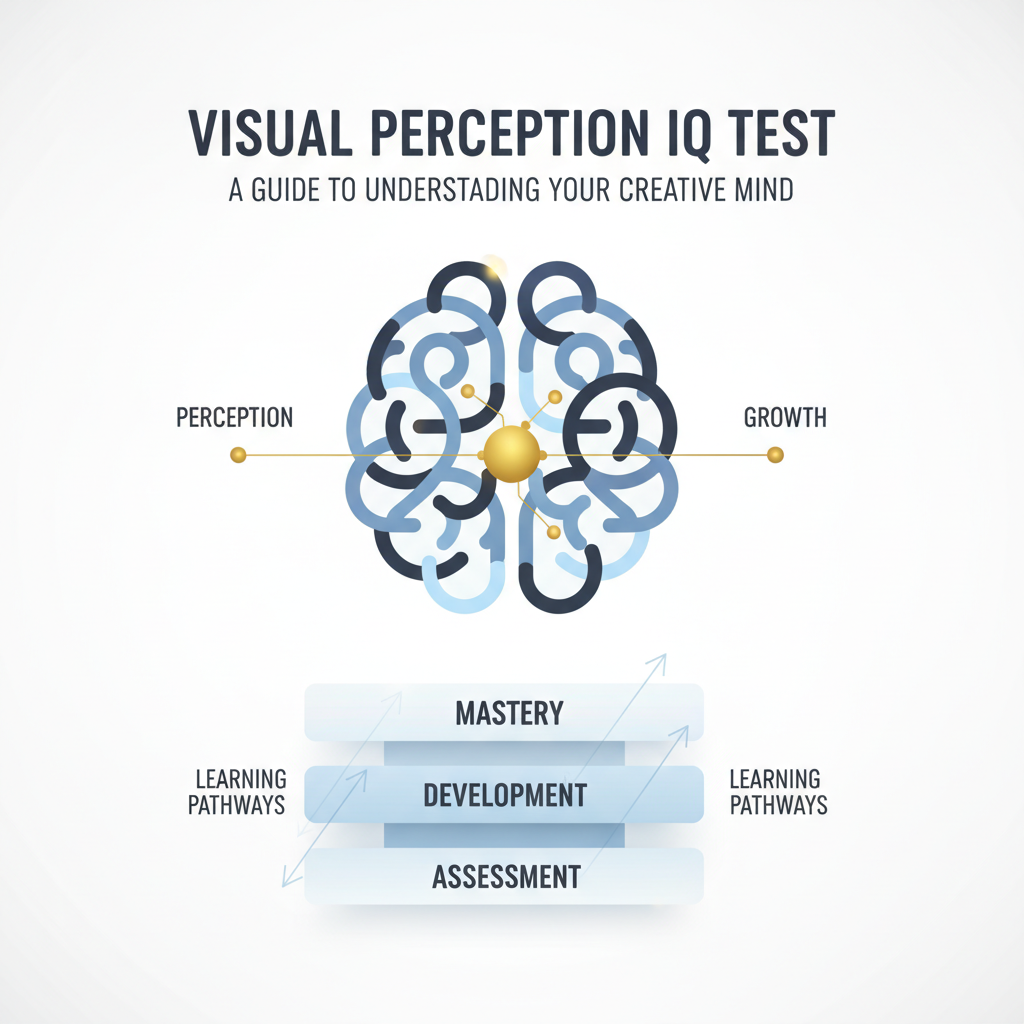
A visual perception IQ test is an assessment designed to measure your ability to interpret, analyze, and make sense of visual information. It evaluates skills like spatial reasoning, pattern recognition, and visual memory, which are crucial components of non-verbal intelligence and creative problem-solving.
Do you notice small details that others miss? Can you easily picture a complex idea in your mind? Our ability to “see” is more than just eyesight—it’s a mental process that shapes how we understand the world and create new things. This is known as visual perception, a skill that plays a bigger role in creativity and problem-solving than you might think.
This article explains what a visual perception IQ test measures and how it connects to your own creative thinking style. We’ll explore how skills like Spatial reasoning and Pattern recognition aren’t just for puzzles; they are essential for flexible thinking and innovative problem-solving. By understanding these parts of your visual perception, you can gain useful insights into your creative strengths and how you process information, helping you grow.
As experts in creativity assessment, we believe that understanding how your mind works is the first step to unlocking your full creative potential. This article, based on scientific principles, will help you understand not just what a visual perception IQ test is, but also how you can use this knowledge to improve your problem-solving and innovation skills. Let’s explore what a Visual Perception IQ Test is and why it’s so much more than just ‘seeing’.
What is a Visual Perception IQ Test?
Why It’s More Than Just ‘Seeing’
A Visual Perception IQ Test measures more than just clear eyesight. It tests how well your brain can understand, organize, and use visual information. Think of it as a way to check your mind’s visual processing power.
This goes beyond basic sight. It involves complex thinking skills. You use these skills to see shapes, patterns, and connections in the world. For example, can you find a hidden image in a picture? Can you picture an object turning in your mind? These are examples of visual perception at work.
Visual perception is also key for creative thinking. It lets you picture new ideas. You can move things around in your mind to create new solutions. It’s a core part of how we see, learn, and interact with the world.
Strong visual perception helps you:
- Quickly understand complex diagrams or instructions.
- Notice small details others might miss.
- Mentally plan routes or arrange objects.
- Picture outcomes before they happen.
- Solve problems by looking at them from different angles.
The Link Between Visual Skills and Overall Intelligence
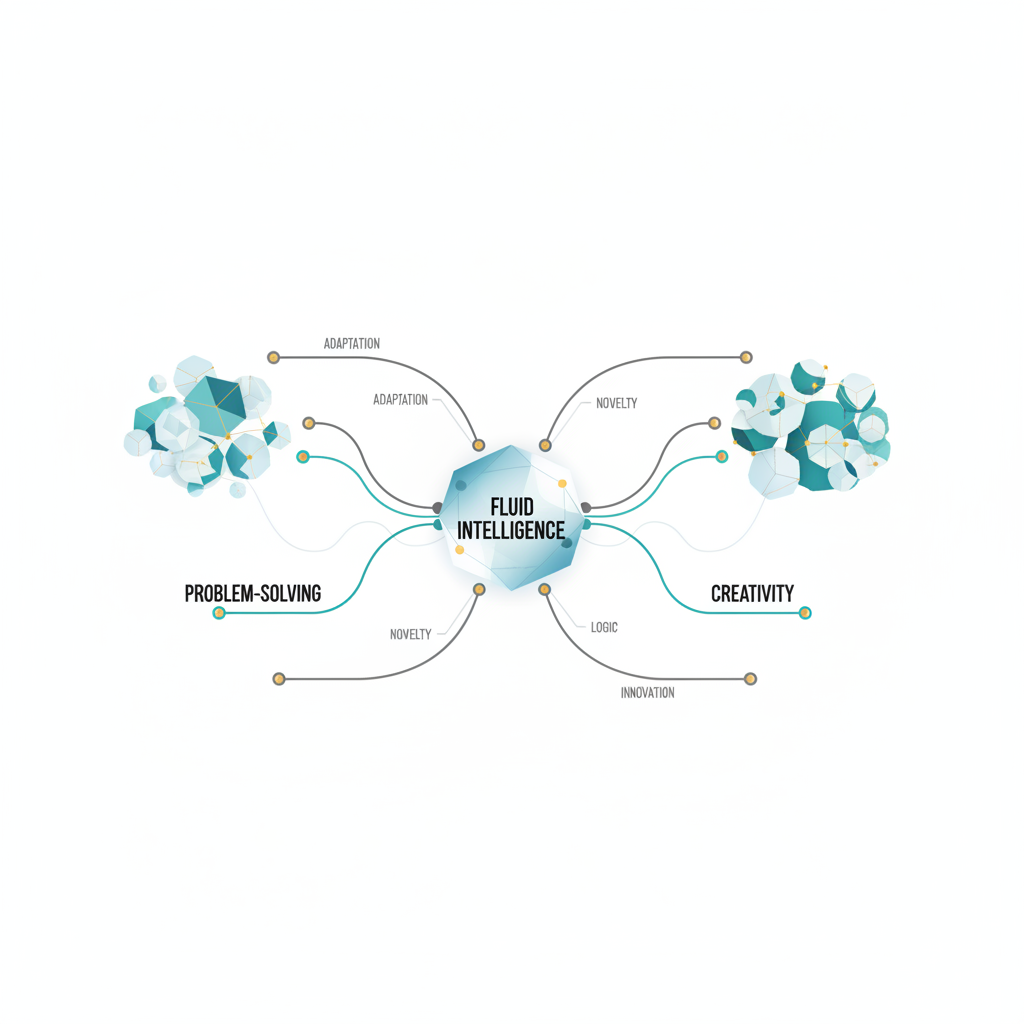
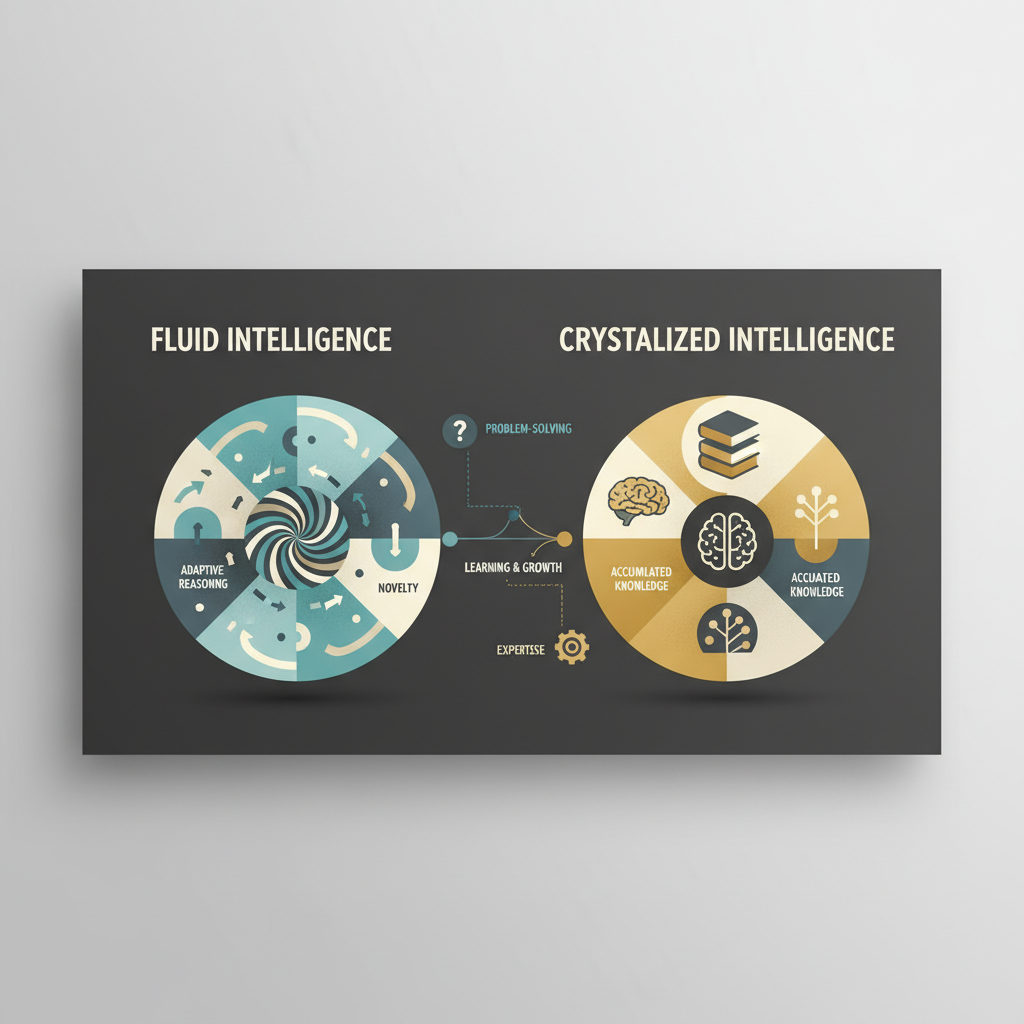
Your visual skills are strongly linked to your overall thinking ability. They are a big part of what psychologists call fluid intelligence. This is your ability to solve new problems and handle new situations [1].
This type of intelligence uses non-verbal reasoning. It lets you think in concepts and find solutions without needing past experience. Strong visual-spatial skills show a powerful ability for logical thinking. They also show that you can understand difficult ideas quickly.
Many jobs and fields of study depend on these visual skills. Engineers, architects, artists, and surgeons all use advanced spatial reasoning every day. They need to picture structures, designs, or complex steps in their minds. Research often shows how important spatial skills are for success in STEM fields [2].
A Visual Perception IQ Test gives you useful information about yourself. It shows how well your mind works with visual information. This mental power is a big part of your problem-solving and creative skills. Knowing your strengths helps you use them. For example, The Creative Ability Test explores how these thinking skills add to your creative style. It helps turn confusion about your potential into useful self-knowledge.
What Key Skills Does a Visual Perception Test Measure?
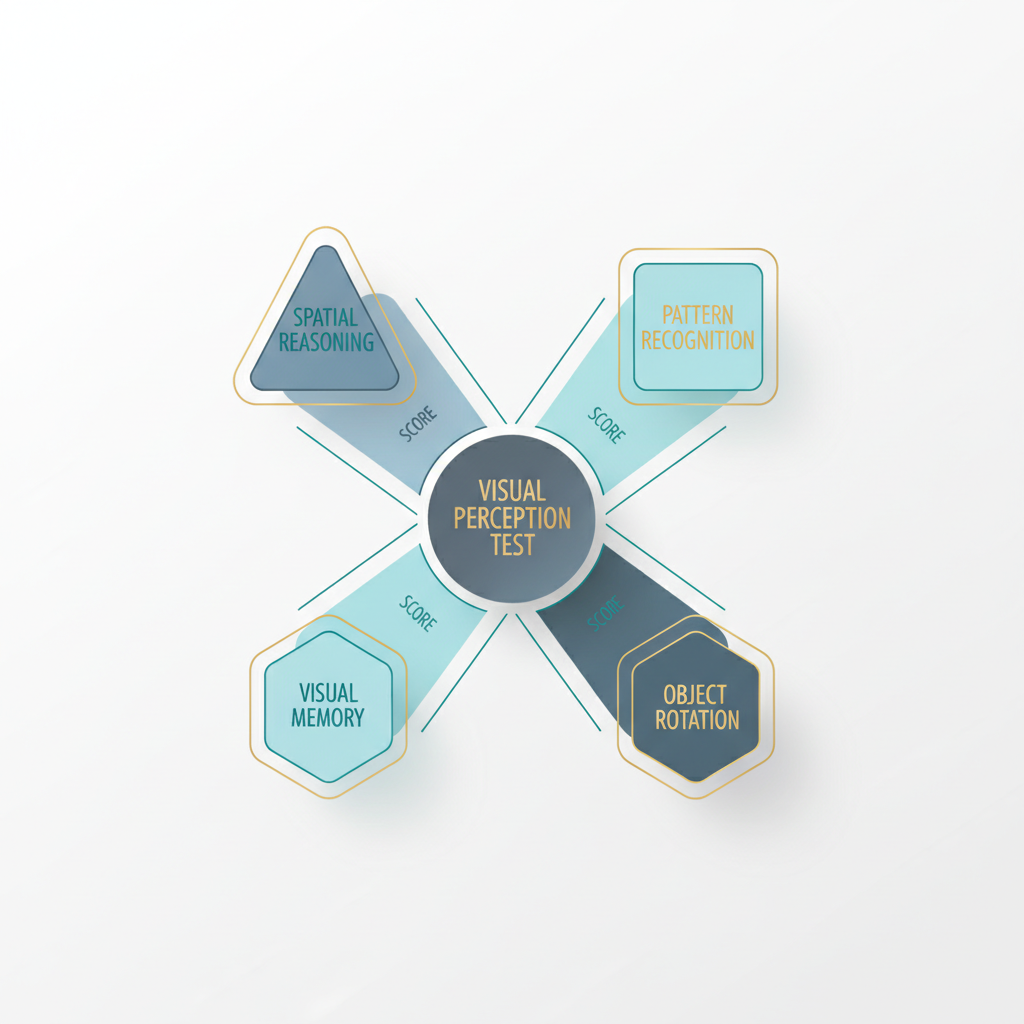
Spatial Reasoning: Mentally Manipulating Shapes
Spatial reasoning is a key mental skill. It lets you understand and move objects in your mind. Imagine turning a 3D puzzle piece to make it fit. That’s spatial reasoning in action.
This skill isn’t just for puzzles. It’s about seeing how different parts fit together. You might imagine building something in your head or plan the layout for a complex machine. It’s about understanding how objects relate to each other in space. [3]
For creative people, strong spatial reasoning is very useful. It helps you:
- Visualize new designs: Imagine new products or works of art.
- Structure complex ideas: Turn scattered thoughts into a clear plan.
- Solve spatial problems: See how parts fit together or how to best use a space.
Building this skill boosts your ability to innovate. It allows you to “see” solutions before they exist. Our tests show you your spatial reasoning strengths. This helps you use them to make creative breakthroughs.
Pattern Recognition: Finding Logic in Visuals
Pattern recognition is your brain’s ability to find connections and order. It means finding structure in what seems like chaos. This skill helps you spot sequences, trends, and repeated themes in what you see. For example, finding a familiar face in a crowd uses pattern recognition.
This is a basic part of problem-solving. It helps you make predictions and see connections. You can find the hidden structures in things. This skill is important in many areas. From science to music, patterns are everywhere. [4]
In creative work, pattern recognition helps you to:
- Identify emerging trends: Spot what’s next in design, art, or technology.
- Uncover hidden insights: See connections others miss in data or observations.
- Develop innovative solutions: Recognize successful patterns from one field and apply them to another.
Our platform helps you understand your pattern recognition skills. This knowledge can change how you solve problems. You will find a clearer path to better solutions.
Visual memory: Recalling What You’ve Seen
Visual memory is your ability to remember what you see. It’s about recalling images, shapes, colors, and how they are arranged. Think about remembering a detailed map or a person’s face. That’s visual memory at work.
This skill is key to learning and making decisions. It affects how you understand new things and use what you already know. Good visual memory helps you build a clearer picture in your mind and supports difficult mental tasks. [5]
For being creative, a strong visual memory is very helpful:
- Build a rich mental library: Keep a large collection of images and ideas in your mind.
- Combine old ideas: Use details you remember to create something new.
- Refine ideas: Remember past versions or feedback to make your work better.
Understanding your visual memory can improve your creative work. Our assessments show you your strengths and give you clear steps to improve.
Figure-ground perception: Isolating Details from a Background
Figure-ground perception is your ability to see an object separately from its background. It lets you focus on one thing without getting distracted. Think of seeing one tree in a dense forest or finding a single word on a busy page. This skill helps you pull out what’s important.
This skill is key for focus and clarity. It helps you decide what to look at first and ignore distractions. It’s also an important part of breaking down problems into smaller pieces. [6]
In creative thinking, figure-ground perception gives you a real edge:
- Identify core problems: Separate the main issue from the noise around it.
- Focus on key details: Find the parts of a design that need the most attention.
- Discover hidden opportunities: See patterns or solutions that blend into the background for others.
Our Creative Ability Test helps you understand how your mind sees things, including your figure-ground perception. This knowledge helps you improve your focus. It also sharpens your skills for new ideas and growth.
How is Visual-Spatial Intelligence Connected to Creativity?
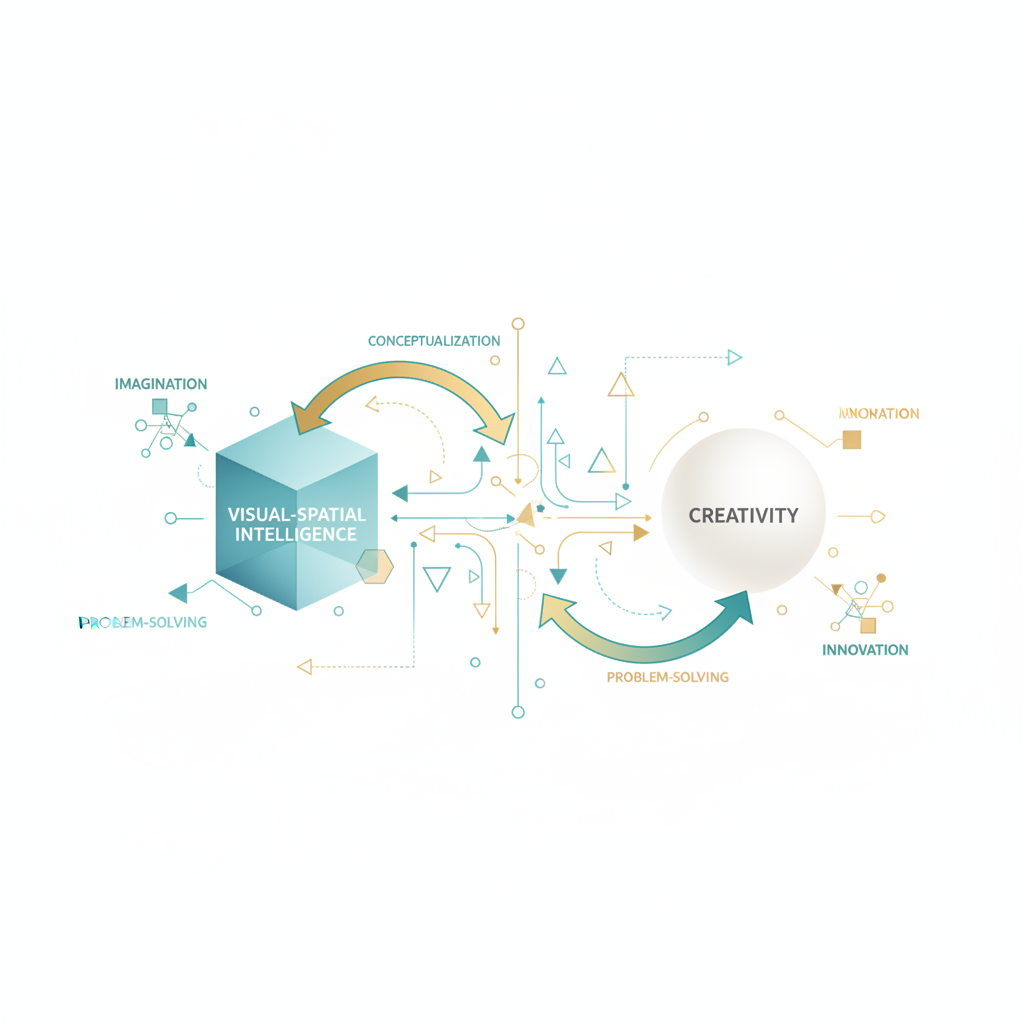
Visual-spatial intelligence is more than just seeing. It’s about understanding and moving objects in your mind. This key mental skill is a foundation for creativity. It helps you turn thoughts into real-world ideas. People with strong visual-spatial skills often succeed in creative fields [7]. They can imagine, design, and create more easily.
This link shows us something important. Your ability to see shapes, patterns, and connections in your mind affects how creative you can be. Let’s look at how.
Visualizing New Solutions
Strong visual-spatial skills help you build and take apart ideas in your mind. You can easily turn objects around in your head. This lets you look at problems from different sides. It’s like having a mental workbench where you can try out different arrangements. This skill is key to finding many different solutions.
This process helps a lot with divergent thinking. Divergent thinking is the skill of creating many different ideas from one starting point. Seeing information in your mind can really help this process, which is an important part of creativity [8]. You might picture a new design for a product or see how a complex system works. This mental flexibility allows you to explore endless options. The Creative Ability Test helps you see how your own visualization skills add to your creative thinking.
Innovative Problem-Solving
To innovate, you often need to see what isn’t there yet. Visual-spatial intelligence helps you do exactly that. You can picture complex systems in your mind and spot hidden patterns. This skill helps you move beyond the usual solutions and find new, creative approaches.
Think about an engineer designing a new bridge. They need to picture its structure and how stable it will be. An artist might see a sculpture inside a raw block of stone. Both use visual-spatial skills to solve difficult problems in a creative way. These skills build mental flexibility, helping you think in less rigid ways. This makes you better at handling unexpected challenges. Our assessment helps you understand this link. You can then use your visual skills for real-world innovation.
Thinking Outside the Box
True innovation comes from thinking beyond the usual limits. Visual-spatial intelligence is your key to “thinking outside the box.” It helps you connect ideas that don’t seem related. You can build completely new situations in your mind, which allows original ideas to form.
This skill is key for major breakthroughs. It helps you break free from old ways of thinking. You can explore big ideas in your mind. You aren’t limited by what’s right in front of you. Instead, you can create new possibilities that others might not see. For example, a visionary urban planner might picture how a city will look decades in the future. This sparks groundbreaking ideas. Our assessment helps you find your natural ability for this kind of broad thinking. It guides you in using these strengths to grow, both personally and professionally.
What Do Visual Perception IQ Test Questions Look Like?
Common Types of Questions and Examples
Visual perception IQ tests test your mind in new ways. They measure how well you see, understand, and use visual details. These questions also show how you think and solve problems creatively. They help us see how you understand the world.
Here are some common types of questions you might see:
-
Spatial Reasoning: Mental Rotation
These questions ask you to mentally move or turn shapes. You will see one shape. Then, you must pick the option that shows the same shape, just rotated or flipped. This skill is key for jobs in design and engineering. It also helps with daily tasks. It shows you can picture different options in your head.
Example: Which of these five options shows the first shape rotated?(Imagine a simple L-shaped block. Options would show it at different angles.)
-
Pattern Recognition: Identifying Sequences and Analogies
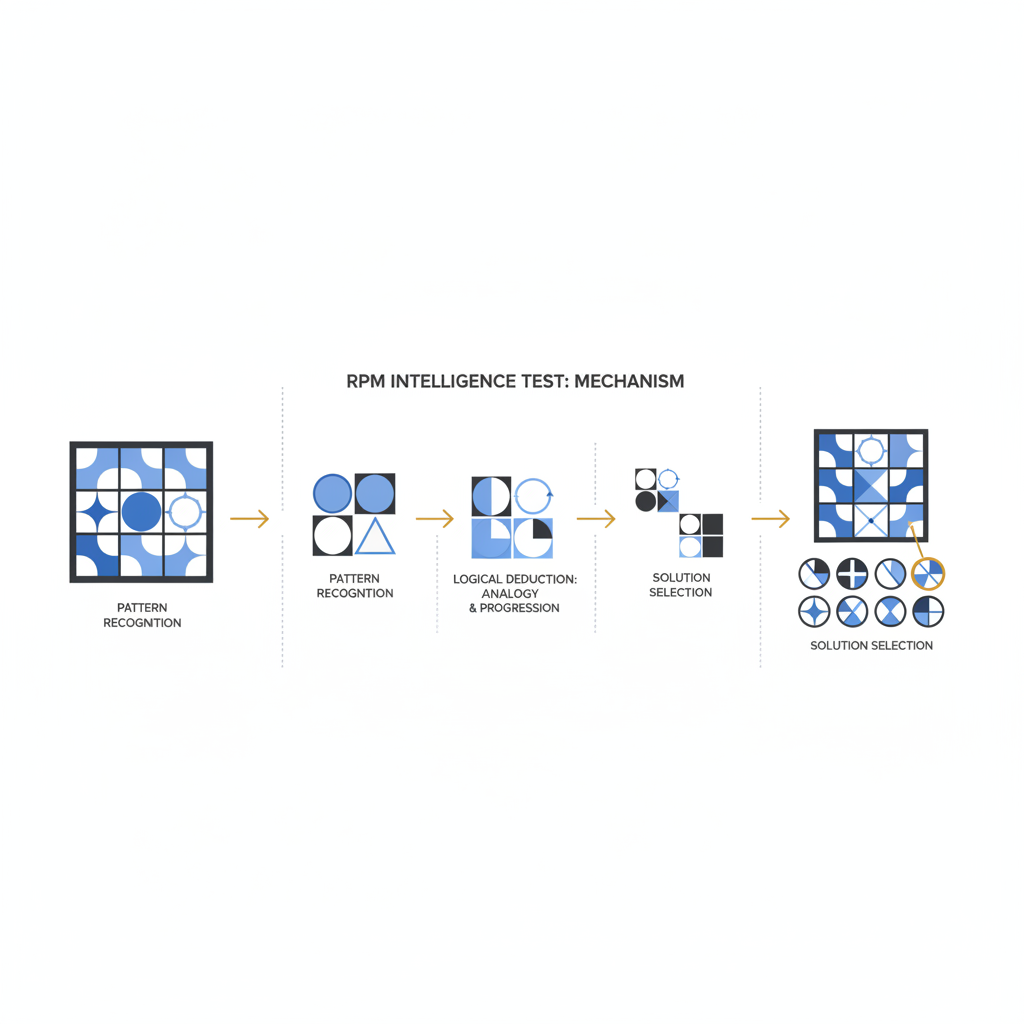
You might see a set of images that follow a rule. Your job is to figure out what image comes next. Or, you could be asked to find a missing piece that completes a visual comparison. For example, “Shape A is to Shape B as Shape C is to what?” These questions test if you can find the logic and links between images. This is a big part of creative thinking. It helps you guess what will happen next. [source: https://www.verywellmind.com/what-is-pattern-recognition-2795325]
Example: Complete the pattern: Circle, Square, Triangle, Circle, Square, ___?
-
Figure-Ground Perception: Isolating Details
In these questions, a busy image has a simple shape hidden inside. You need to spot the main shape (the “figure”) from the background. This tests your focus and your eye for detail. It also shows you can find something simple in a messy picture. This is important for solving problems in new ways. It helps you ignore things that don’t matter.
Example: Find the hidden face within this tree branch drawing.
-
Visual Memory: Recalling Details
While harder to show with just words, some tests check your visual memory. You might look at an image for a short time. Then, you answer questions about details you remember. This measures how well your brain saves and recalls what you see. Good visual memory helps with tough problems. It lets you use what you’ve seen before.
-
3D Visualization and Block Counting
These questions show a stack of blocks or a 3D shape. You might need to count all the blocks, including the ones you can’t see. Or, you might be asked to pick out the same stack from a different angle. This tests if you can build and take apart objects in your mind. It’s a key skill for design and for understanding how things fit in space.
Example: How many blocks are in this stack, assuming no floating blocks?
(Imagine a simple pyramid of blocks with some hidden from the frontal view.)
Tips for Approaching Visual Puzzles
Visual perception questions can feel like a game. But they are great tools for understanding how your mind works. Be curious and open when you try them. These tips can help you do your best and learn more about how you think:
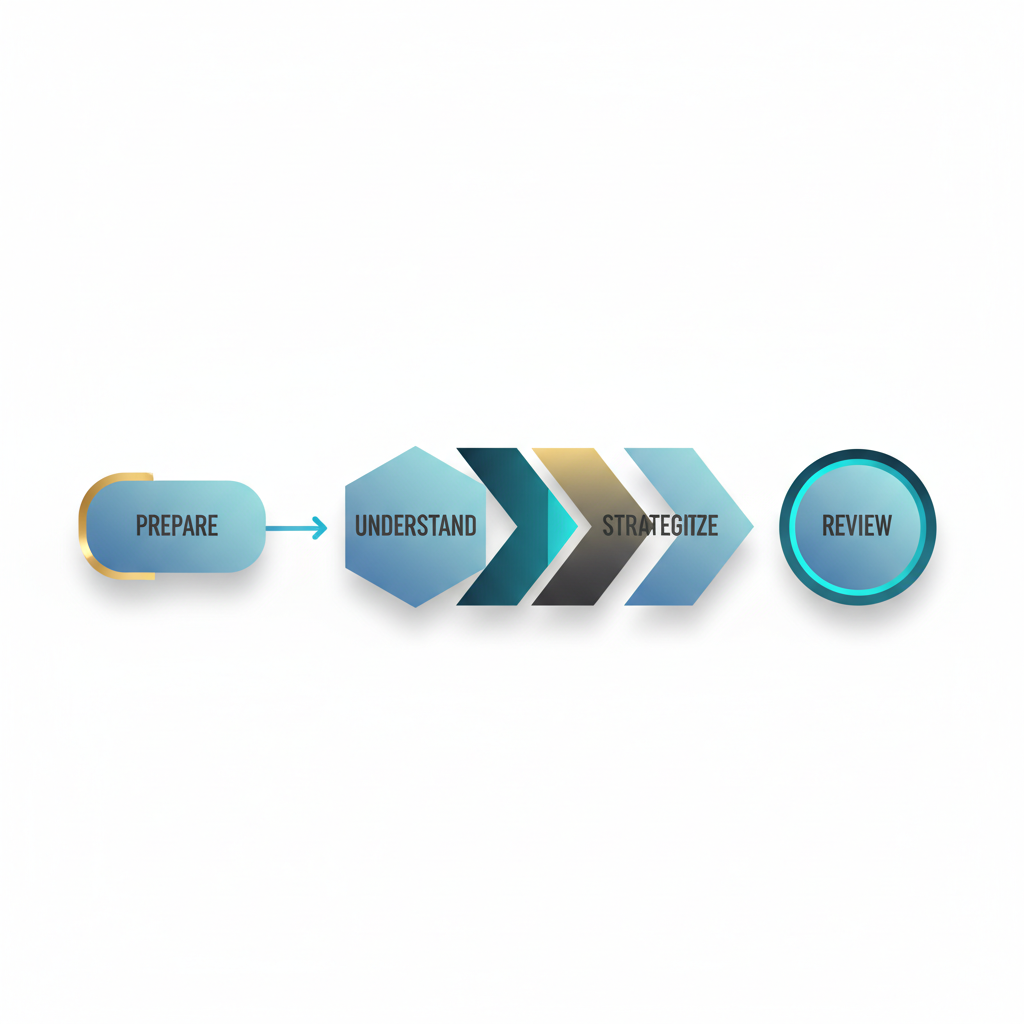
- Break Down the Image: Don’t let a complex image overwhelm you. Look at one part at a time. See the shapes, colors, and lines. This makes the image easier to understand.
- Look for Patterns and Rules: Most visual puzzles have a pattern or rule. Try to find the rule that controls the order or design. Think about flips, turns, or things being added or taken away.
- Mentally Manipulate Shapes: Practice picturing objects moving in your head. Turn them, flip them, or see them from new angles. This uses your skill for seeing things in 3D.
- Take Your Time: If you rush, you might make mistakes. Take a moment to really look at the image. Sometimes, when you pause, the answer becomes clear.
- Consider Different Perspectives: If you don’t see an answer right away, try a new viewpoint. What if the image was upside down? What if the pattern moved in a new way? This helps you think in more flexible ways.
- Focus on Key Details: Not every part of an image is important. Find the most important parts that will help you solve the puzzle. Ignore the details that don’t help.
- Practice Regularly: Like any skill, you get better at visual perception with practice. Doing puzzles, playing games, and paying attention to the world around you can make your skills sharper. Practicing helps you feel more confident.
Using these strategies can help you do better on the tests and better understand your own creative thinking. Seeing how you handle these visual puzzles gives you good clues about how you solve problems and come up with new ideas.
How Can You Enhance Your Visual Perception Skills?
Visual perception is how your brain understands what your eyes see. You can improve this skill with practice. Sharpening it helps you become more creative, solve problems better, and think in new ways.
Like any skill, you get better with regular practice. This section offers simple exercises you can easily fit into your daily routine.
Practical Exercises for Daily Life
You don’t need a lab to boost your visual perception. Simple, everyday activities can help sharpen this important skill. Regular practice trains your brain to handle what you see more quickly and clearly [9].
These exercises improve how well you notice things, understand space, and spot small details. Good visual perception is key to solving problems creatively and thinking in new ways.
- Detailed Observation: Take a few minutes each day to really look at your surroundings. Notice the detailed patterns on a leaf, the way light makes shadows, or the slight differences in colors. This helps you separate objects from their background.
- Mental Manipulation: Look at an object and try to turn it over in your mind. Picture what it looks like from different sides. This builds your spatial reasoning skills. For example, imagine a coffee mug from the top or turned upside down.
- “I Spy” for Adults: Play a grown-up version of “I Spy.” Pick a specific color, shape, or texture around you. Try to find as many examples of it as you can. This makes you better at spotting patterns and focusing your attention.
- Visual Recall Practice: Look at a scene or an object for a few seconds. Then, close your eyes and try to remember as many details as you can. What colors did you see? What was the shape? Where were things placed? This is a great way to improve your visual memory.
- Sketching and Drawing: You don’t have to be an artist. Just sketching an object makes you pay close attention to its size, lines, and how its parts relate to each other. It’s a hands-on way to work with what you see.
By adding these small practices to your day, you’ll see a big difference. You will understand and engage with the world around you better. This sharp new skill helps you think creatively and solve problems—key areas explored by the Creative Ability Test.
Using Puzzles and Games for Training
Puzzles and games are more than just fun. They are great tools for building your visual perception skills and offer a fun way to challenge your brain. Research shows that solving puzzles regularly is good for your mind [10].
These activities are a lot like the challenges on a visual perception IQ test. They also give you a fun way to improve your creative thinking.
- Jigsaw Puzzles: These classic puzzles are great for learning to see a piece separate from the background. You have to tell one piece apart from the larger picture. They also build your spatial skills as you fit shapes together.
- Logic Puzzles (e.g., Sudoku, Kakuro): Even though they use numbers, these puzzles are all about spotting patterns and arranging things in space. They train your brain to find what’s missing in a grid.
- Block-Building Games (e.g., Tetris): Games like Tetris require you to think fast about space. You have to spin and place shapes quickly, which improves how you process moving objects.
- Spot-the-Difference Games: These games are designed to improve your attention to detail. They make you better at quickly finding small differences, which sharpens your observation skills.
- 3D Puzzles and Brain Teasers: A Rubik’s Cube or other 3D puzzles require you to think in three dimensions. They challenge you to picture complex changes in your mind. This is directly linked to creative problem-solving.
- Strategy Board Games: Games like Chess and Go help you plan using what you see. You have to picture your next moves and what might happen because of them. This teaches you to think and plan ahead.
Playing these games is a fun and effective workout for your brain that sharpens your creative mind. The results from your Creative Ability Test can also guide you. They can show you which mental skills these games will help you build the most.
The Role of Mindfulness and Observation
Besides exercises and games, practicing mindfulness can also greatly improve your visual perception. Mindfulness is about being fully in the moment and noticing things without judgment or distraction [11].
When you observe things mindfully, you train your brain to see them as they really are, not just as you expect them to be. This can lead to new ideas and discoveries.
- Present Moment Awareness: Spend a little time each day just looking. Notice the texture of your clothes or the small details of a plant. Try not to name or judge what you see. This practice improves how your brain takes in visual information.
- Active Listening to Your Eyes: Don’t just glance at things. Actively “listen” to what your eyes see. Which colors stand out the most? What is the main thing to look at? What patterns do you notice? This helps you connect more with what you see.
- Challenging Assumptions: We often see what we expect to see. Mindfulness helps you look past your assumptions. Ask yourself if what you “know” about something is true. Try to see it with fresh eyes. This can spark new and creative ideas.
- Reducing Visual Clutter: A busy mind can make it hard to see clearly. Mindfulness helps clear away mental distractions so you can focus better on what’s in front of you. This makes it easier to pick out details from a background.
- Cultivating Beginner’s Mind: Look at everything with curiosity, as if you’re seeing it for the first time. This new viewpoint can help you notice hidden details and connections. It’s a great way to spark creative ideas.
Adding mindfulness to your daily routine is a great all-around way to improve your visual skills and creativity. This idea fits perfectly with the Creative Ability Test, which helps you find and build on your own mental and creative strengths.
Discover Your Strengths with the Creative Ability Test
The ability to understand what you see is a great strength. It’s a key part of many mental skills. But creativity is much more than just what you see. It’s also how you form ideas, create new things, and solve problems.
Learning about your creative mind can unlock your full potential. The Creative Ability Test gives you helpful insights to do just that.
Discover Your Unique Creative Profile
The Creative Ability Test is an accurate, science-based assessment. It goes beyond simple visual puzzles to explore how you think in new ways. This 30-question test looks at different parts of your creative mind.
We believe creativity isn’t just one skill. It’s a mix of different mental processes. Our test measures these key areas:
- Cognitive Flexibility: Your ability to change how you think and switch between different ideas.
- Divergent Thinking: The skill of finding many different solutions to a single problem [12].
- Problem-Solving Skills: How well you handle challenges with fresh and effective ideas.
- Openness to New Experiences: Your readiness to explore new ideas and try different approaches.
By understanding these areas, you get a clear picture of your natural creative strengths. You also see where you have room to grow.
Turn Your Insights Into Growth
A score by itself doesn’t help you grow. That’s why we provide personalized feedback that’s more than just a number. We turn complex ideas into clear, simple steps for you to follow.
Your results are a roadmap just for you. This guide helps you build your creative skills, with practical tips for each area we measure. For example, if you score high in divergent thinking, we’ll suggest ways to use that strength more. If your cognitive flexibility could be better, you’ll get exercises to improve it.
Our goal is to help you move from understanding yourself to improving yourself. We want to help you make creativity a regular part of your life.
Real-World Benefits
Understanding your creative mind has real benefits in your personal and professional life. You can start using what you learn right away.
Here are some of the benefits you can expect:
- Enhanced Self-Awareness: Learn about your natural creative style.
- Boosted Confidence: Trust in your ability to create and share new ideas.
- Improved Problem-Solving: Use new strategies to solve tough problems from a fresh angle.
- Career Advancement: Use creative thinking to grow in your career and bring new ideas to your work.
- Personal Growth: Become more flexible and imaginative in your daily life.
The Creative Ability Test is your guide to exploring your creative potential. It gives you the tools to build a more innovative mindset and encourages you to keep learning about yourself. Start your journey to a more creative and fulfilling future today.
Frequently Asked Questions
What does a high visual perception IQ mean?
A high visual perception IQ means you are good at understanding what you see. You’re great at spotting patterns, seeing how things fit together in a space, and noticing small details. You can easily picture complex ideas in your head.
This is a valuable skill. It helps you see small details and connections that others might miss. It also boosts your creativity in many ways.
People with strong visual skills often show:
- Better Problem-Solving: They can picture objects or situations from different angles to find new solutions.
- Creative Vision: They are good at imagining new designs, ideas, or art.
- Attention to Detail: They can quickly spot mistakes or key details in what they see.
- Strategic Thinking: They are good at planning routes, creating layouts, or organizing information.
Knowing this is a strength helps you use it. It can help you grow in fields like design, architecture, engineering, and strategic planning. Our Creative Ability Test helps you discover these unique mental strengths. It gives you insights to help you grow and be more innovative.
What is a visual-spatial intelligence test?
A visual-spatial intelligence test measures how well you understand, use, and remember what you see and where things are. It tests how well you can move images around in your head. This includes picturing objects from different angles or finding your way in new places.
This type of intelligence is a key part of how you think. It often includes:
- Spatial Reasoning: The ability to change shapes and objects in your mind.
- Pattern Recognition: Finding patterns and connections in what you see.
- Visual Memory: Remembering images, places, and how things are arranged.
Psychologist Howard Gardner named visual-spatial intelligence as one of several types of intelligence [13]. It plays a key role in many creative and professional fields. Think of artists, architects, pilots, or chess players. They all depend on strong visual-spatial skills.
Our test at Creative Ability Test looks at many sides of your creative mind. This includes parts of your visual-spatial intelligence. We help you see how these skills add to your own creative talent.
Can I find a visual perception IQ test online for free?
Yes, many websites offer free “visual perception IQ tests” or quizzes. They can be a fun way to get a quick, casual look at your visual skills. They often have simple puzzles or challenges for you to solve.
However, it’s important to know their limits. Most free online tests are not backed by science. They don’t give a full picture of your thinking skills and usually offer general feedback, not insights tailored to you.
For a truly accurate and helpful result, consider a test that is based on science. The Creative Ability Test is a strong 30-question assessment. It measures many sides of your creativity and flexible thinking. Our platform gives you:
- Science-Based Method: Our tests are built on scientific principles.
- Personalized Feedback: We give you specific insights into your strengths and how you can improve.
- Actionable Tips: You get practical advice to boost your creative thinking.
- In-Depth Analysis: We give you more than just a score, offering a deeper understanding.
Choosing a proven test gives you confidence in the results. It provides useful insights you can use right away for personal and professional growth.
What is a spatial reasoning test?
A spatial reasoning test measures your ability to picture and move 2D and 3D objects in your mind. It checks how well you can see shapes and how they relate to each other. This includes picturing how objects would look if you turned or joined them.
These tests often use different types of questions:
- Mental Rotation: Spotting the same shape from different angles.
- Pattern Completion: Finding a pattern in a series of images and guessing the next one.
- Figure Analysis: Seeing the simple parts that make up a complex shape.
- Map Reading: Understanding directions and how places relate on a map.
Strong spatial reasoning is a key part of innovation. It helps you “see” solutions that are not yet real. It is vital for fields like engineering, product design, and urban planning. It also helps with solving everyday problems.
Our Creative Ability Test has questions that check your spatial reasoning. This helps you understand your unique way of thinking. We want to help you use these strengths well. This helps with both your personal and professional growth.
Sources
- https://www.simplypsychology.org/fluid-and-crystallized-intelligence.html
- https://news.uchicago.edu/story/importance-spatial-reasoning-stem-success
- https://www.simplypsychology.org/spatial-reasoning.html
- https://www.sciencedirect.com/topics/neuroscience/pattern-recognition
- https://www.ncbi.nlm.nih.gov/pmc/articles/PMC8900742/
- https://www.simplypsychology.org/gestalt-psychology.html
- https://www.scientificamerican.com/article/spatial-intelligence-predicts-innovation/
- https://www.tandfonline.com/doi/abs/10.1080/10400419.2017.1352481
- https://www.health.harvard.edu/mind-and-mood/sharpen-your-mind-and-memory
- https://www.ncbi.nlm.nih.gov/pmc/articles/PMC3312015/
- https://www.mindful.org/what-is-mindfulness/
- https://psycnet.apa.org/record/1968-07231-001
- https://howardgardner.com/theories-of-intelligence/