Tag: cognitive flexibility

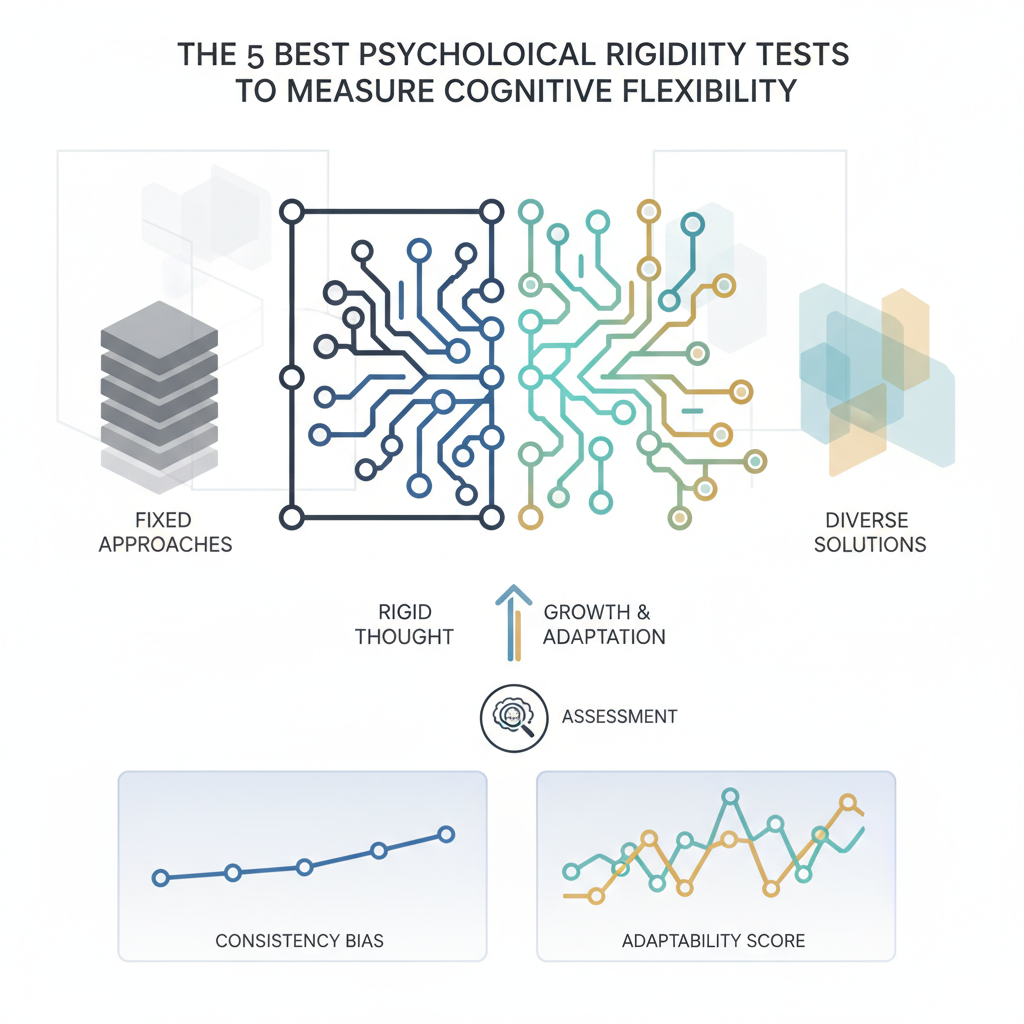
  • The 5 Best Psychological Rigidity Tests to Measure Cognitive Flexibility

    The 5 Best Psychological Rigidity Tests to Measure Cognitive Flexibility

    A psychological rigidity test is an assessment designed to measure a person’s cognitive flexibility and resistance to change. It evaluates how easily an individual can adapt their thinking, consider new perspectives, and move away from familiar patterns or beliefs, which is a key component of creative problem-solving.

    Do you ever get stuck in a certain way of thinking? Maybe you keep trying the same solution for a problem, even when it’s not working. This is often called psychological rigidity, which is a tendency to resist new ideas or methods. For creativity and innovation, these rigid thought patterns can hold you back. The first step to unlocking your potential is to understand your own thinking style and how flexible your mind is.

    In this article, we’ll explore psychological rigidity and its opposite: cognitive flexibility. This is the mental skill that helps you solve problems in new ways. We believe self-awareness is empowering, and tools like psychological rigidity tests can help you better understand how your mind works. This knowledge isn’t just interesting—it provides practical ways to improve how you face challenges, learn, and become more creative.

    Are you ready to see how flexible your mind is? We will explore the best psychological rigidity tests and assessments out there. We’ll explain each one clearly and show you what it can reveal about your thinking. From well-known inventories to in-depth tools like The Creative Ability Test, you’ll find a path to self-discovery that can boost your personal and professional growth.

    What is Psychological Rigidity (and Why Does It Matter for Creativity)?

    Understanding Cognitive Flexibility vs. Rigidity

    Our minds are great at solving problems. But we don’t all approach challenges the same way. This is often due to two different thinking styles: cognitive flexibility and psychological rigidity.

    Psychological rigidity is when you get stuck in your usual ways of thinking. People with high psychological rigidity find it hard to change their point of view. They may struggle with new situations or different ideas. This can block new thinking.

    On the other hand, cognitive flexibility is like a mental superpower. It’s the skill of easily switching how you think about things. Flexible thinkers adapt quickly to change. They can see a problem from many sides and come up with different solutions. This skill is key to handling our complex world.

    To make this clearer, here are the main traits of each:

    • Psychological Rigidity
      • Likes set routines and methods.
      • Resists new or conflicting information.
      • Struggles to find other solutions.
      • Finds it hard to change plans.
      • Often feels comfortable with “how things have always been done.”
    • Cognitive Flexibility
      • Welcomes new ideas and experiences.
      • Easily shifts focus between tasks.
      • Looks at problems from different angles.
      • Adapts quickly to unexpected changes.
      • Seeks out new learning opportunities.

    Here’s an easy way to think about it: A rigid mind is like a train on a single track. It can only follow one path. A flexible mind is like an off-road truck. It can change its route to get around barriers and explore new places. Knowing your own thinking style is the first step to becoming more creative.

    The Link Between Flexible Thinking and Innovation

    So, why is this important for creativity? The link is very strong. Creative ideas don’t come from rigid thinking. They grow when you are open-minded and can adapt.

    Innovation is all about finding new ways to see things. It means connecting ideas that don’t seem related. It also means going beyond the usual solutions. This is where cognitive flexibility really helps.

    • Coming Up with More Ideas: Flexible thinkers are great at brainstorming. They can think of many different options. This opens the door to new and original ideas.
    • Better Problem-Solving: When facing a challenge, a flexible mind doesn’t quit. It tries a new approach. It might even restate the problem. This ability to adapt often leads to big breakthroughs.
    • Welcoming Change: Innovation often shakes things up. Rigid thinking fights change, which stops progress. Flexible thinking welcomes change and sees it as an opportunity. For example, successful business owners are often very flexible. They change their plans as the market changes [source: https://hbr.org/2014/10/the-secret-to-becoming-a-good-decision-maker].
    • Learning and Growing: A flexible mind is always learning. It easily soaks up new information. It connects different pieces of knowledge to create better ideas. This constant growth boosts creativity over time.

    If you want to be more innovative, learn new skills, or just get better at solving daily problems, building cognitive flexibility is key. It helps you move from just understanding a problem to actively creating a solution. The Creative Ability Test can show you your current thinking style. It offers personal tips to help you become more mentally agile. This process can help you unlock your full creative potential.

    The Top 5 Tools to Test Your Psychological Rigidity
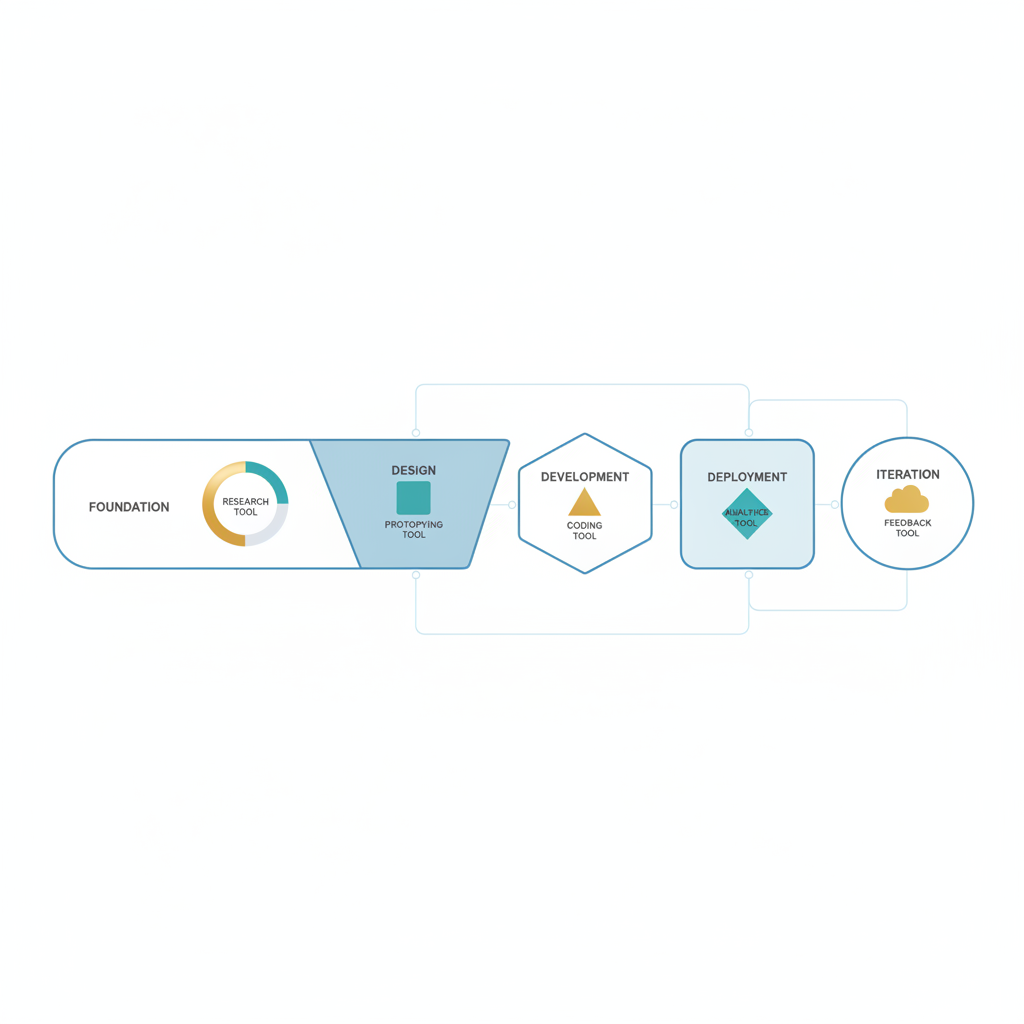
    A minimalist, vector-based competency map with five distinct, geometrically shaped modules, each representing a tool to test psychological rigidity.
    A clean, minimalist, vector-based educational visualization resembling a structured assessment chart or competency map. It displays five distinct, geometrically shaped modules arranged hierarchically or in a clear sequence, each representing one of the ‘Top 5 Tools.’ Each module has space for a short conceptual label or indicator, utilizing soft blues, whites, and charcoal, with gold or teal accents for emphasis on the ‘tool’ sections. The layout emphasizes visual hierarchy and structured grouping, with clear negative space. No humans or photographic elements.

    1. The Creative Ability Test (For Actionable Insights)

    To unlock your creative potential, you need to think flexibly. The Creative Ability Test is a unique, science-based tool that can help. It does more than just give you a score. It provides practical advice about your creative strengths and thinking patterns.

    Our comprehensive 30-question assessment looks at different parts of your creativity. This includes how you come up with new ideas, solve problems, and approach new experiences. You will get personalized feedback that helps you understand your creative style and gives you real steps to improve.

    Many traditional tests just point out where your thinking is rigid. In contrast, the Creative Ability Test helps you move forward. It guides you toward greater self-awareness with clear, practical steps. You will get a clear picture of your creative talents and learn how to use them for personal and professional growth.

    This platform gives you the tools to think more innovatively. It offers a clear path to improving your creative abilities. For example, you might find you are a natural brainstormer, and we will give you tips to get even better. This makes complex ideas about creativity simple and easy to use.

    2. Classic Cognitive Flexibility Inventories

    Besides our test, there are other classic inventories used in psychological research. These tools measure how well you adapt your thinking. They check how easily you can switch between tasks or handle unexpected changes. [1]

    These tests usually present you with specific situations and ask how you would respond. Your answers show patterns in the way you think. For instance, a test might ask you to list many uses for a common object. While useful for research, they often don’t provide the personalized advice for growth that our Creative Ability Test does.

    3. Online Brain Games and Puzzles

    Brain games are a fun way to exercise your mind. Puzzles like Sudoku, crosswords, and logic problems challenge your thinking. If you get stuck on a puzzle, it might show you where your problem-solving approach is a bit rigid. These activities encourage you to look at problems differently and try new solutions. [2]

    While fun, these games are not formal psychological tests. They offer a casual look at your mental flexibility and are great for daily practice. However, to truly understand your creative potential, a structured assessment is more effective. The Creative Ability Test provides this deeper look, with personalized feedback on your strengths and weaknesses.

    4. The Stroop Test

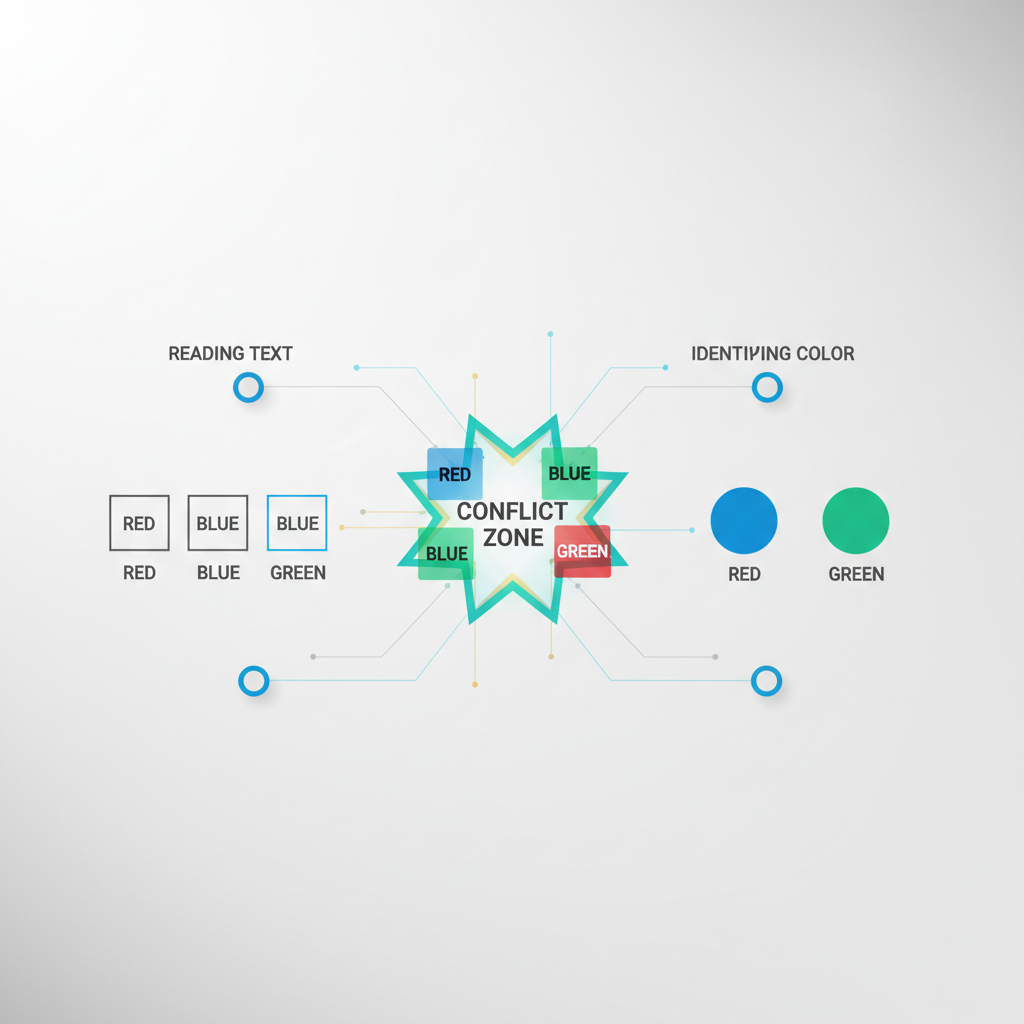
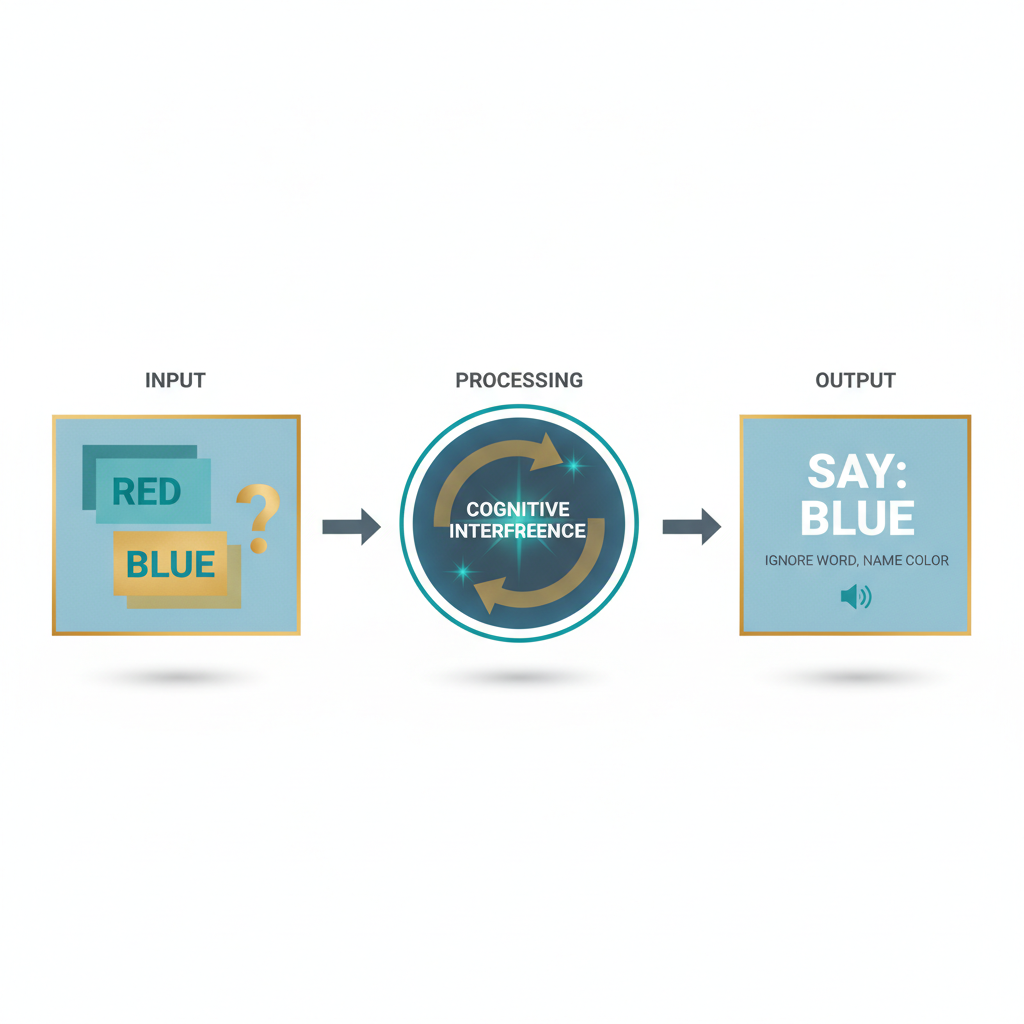
    The Stroop Test is a famous experiment in psychology. It measures how well you can control your impulses and ignore distractions. In the test, you see color words printed in the wrong ink color. For instance, the word “red” might be printed in blue. Your task is to say the color of the ink, not read the word. This creates a mental challenge. [3]

    Finding the Stroop Test difficult may suggest your thinking is less flexible because you have trouble handling conflicting information. The test is a good way to measure your focus and self-control, revealing how well your brain handles interference. However, it only looks at one specific mental skill, not your overall creativity.

    5. Self-Reflection Questionnaires

    Self-reflection is a great place to start. Questionnaires can help you look at your own thinking habits. These informal tools ask how you react to change or how comfortable you are with the unknown. They make you think about your problem-solving style. For example, do you look for many solutions or stick with the first one that comes to mind? Answering these questions can help you become more self-aware.

    These questionnaires are not scientific, and their value depends on your honesty. Still, they are a good first step for noticing patterns in how you think. For a more accurate picture, it is best to use a science-backed tool. The Creative Ability Test provides that scientific foundation and offers a clear path to boosting your creativity.

    What Do Psychological Rigidity Test Questions Look Like?

    Examples of Problem-Solving Scenarios

    Tests for mental flexibility often use unique puzzles. These questions are designed to see how you adapt your thinking. They show if you can move beyond typical solutions and come up with many different ideas.

    Consider a common test: you are given an object and asked to list as many *other* uses for it as possible. This type of question measures divergent thinking, which is a key part of creativity [4]. For example, a question could be: “Imagine a brick. List ten different ways you could use it, besides building.”

    Another approach involves breaking your assumptions. You might see a puzzle that seems to have only one logical answer. However, the real solution often requires you to question the starting rules. For instance, a classic riddle might challenge you to connect nine dots with four straight lines without lifting your pen. This problem tests your mental flexibility and encourages “thinking outside the box.”

    Such questions are not about finding the “right” answer. Instead, they check how willing you are to explore many options. They show how you handle unclear situations. Your Creative Ability Test includes similar puzzles. It helps you understand your natural tendency for flexible problem-solving. This insight can then guide you toward becoming more creative.

    Assessing Your Openness to New Ideas

    Beyond puzzles, tests for mental flexibility also check your openness to new ideas. This trait is crucial for creativity. It shows how comfortable you are with new things and with change. It also shows how open you are to different viewpoints.

    You might find questions that present unusual situations. These questions ask for your immediate reaction or what you would do. For example, “A new technology completely changes how people communicate. Describe your feelings and what you would do first.” Your response shows how willing you are to embrace the unknown and how well you adapt.

    Other questions check your attitude toward unconventional solutions. They might ask you to rate statements like: “I prefer to stick with methods that have worked in the past.” Or, “I enjoy exploring ideas that challenge common beliefs.” Your agreement or disagreement provides insight into your comfort level with new ideas. Research shows that openness to experience is a strong sign of creative achievement [5].

    These types of questions help you recognize your current thinking patterns. They are not about judging you. Instead, they offer a mirror to your mind. Understanding your own openness is key for personal growth. The Creative Ability Test provides personal feedback on this area. It offers strategies to build a more open and flexible mindset, which helps boost your creative potential.

    How Can You Improve Your Cognitive Flexibility?
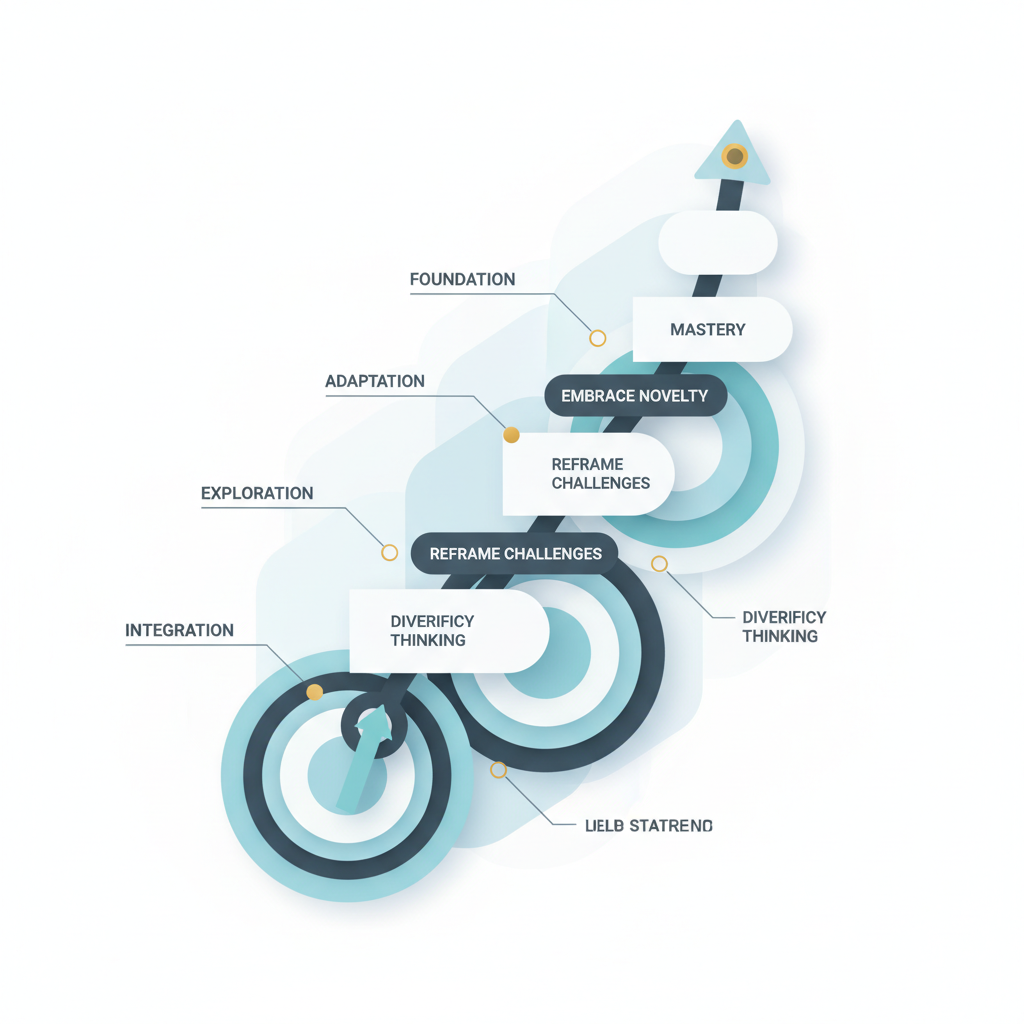
    An abstract, layered diagram using ascending geometric shapes to illustrate a progressive framework for improving cognitive flexibility, with highlighted growth points.
    An abstract, educational visualization depicting a layered system or a milestone progression. This visualization uses ascending and overlapping clean geometric shapes to represent a pathway or steps for improving cognitive flexibility. Each layer or step is distinct but contributes to an overall progression, using a color palette of soft blues, whites, and charcoal, with prominent gold or teal accents highlighting key growth points or actionable strategies. The style is professional, vector-based, with subtle gradients for depth, and designed with ample negative space for conceptual labels. No humans or photographic elements.

    Practical Steps to Break Rigid Thinking Patterns

    Becoming more flexible in your thinking is a journey. It takes conscious effort and regular practice. Think of your brain as a muscle. It gets stronger and more adaptable with the right kind of exercise.

    Here are practical steps to help you think in more flexible and creative ways:

    • Embrace Novelty Daily: Look for new experiences. Try a different route to work. Cook a new recipe for dinner. Read a book from a genre you usually avoid. New experiences challenge your brain’s usual thought patterns and build flexibility.
    • Practice Divergent Thinking: When you face a problem, brainstorm as many solutions as you can. Do not judge your ideas at first. Focus on quantity. This practice helps you think more broadly.
    • Challenge Your Assumptions: Regularly ask yourself “why” and “what if.” Question your core beliefs and consider different points of view. This helps you see situations from new angles.
    • Try Mind-Expanding Activities: Learn a new skill, like playing an instrument or speaking a foreign language. Research shows that learning a second language can greatly improve mental flexibility [6]. These activities build new brain pathways and make you more adaptable.
    • Seek Different Perspectives: Talk with people from different backgrounds. Listen carefully to their ideas and experiences. Understanding their viewpoints can broaden your own thinking and make it less rigid.
    • Play Brain Games and Puzzles: Games like Sudoku, chess, crosswords, and logic puzzles are excellent for your brain. They challenge you to solve problems creatively and train your mind to explore different strategies.
    • Practice Mindfulness and Meditation: Regular mindfulness can greatly improve your attention and control over your emotions [7]. This helps create a calmer, more open mindset, which is key to flexible thinking.
    • Change Your Routine: Even small changes can help. Eat lunch at a different time. Rearrange your desk. Breaking your routine forces your brain to adapt and find new solutions.

    These habits help your brain form new pathways. They make your thinking more adaptable. As a result, your thinking becomes more flexible, responsive, and creative.

    Using Your Test Insights for Personal Growth

    Understanding your own mental flexibility is a great first step. The Creative Ability Test gives you science-backed insights into how you think. It shows your creative strengths and points out areas where your thinking might be rigid.

    Your personal report is a roadmap for growth. It helps you move from being unsure to having clear, practical self-awareness. Here’s how to get the most from your test results:

    • Find Your Specific Rigid Areas: Your test results show you exactly where your thinking might be less flexible. For example, you might be great at coming up with many ideas but find it harder to switch your approach to a problem.
    • Tailor Your Practice: Use this specific feedback to focus your efforts. If your report highlights “fixation” as an area for growth, make a point to challenge your assumptions more often. If “task switching” is difficult, try doing different activities in short bursts.
    • Track Your Progress: Checking in with yourself is key. Notice when you fall back into rigid thinking patterns. Acknowledge and celebrate small wins when you successfully adapt your thinking.
    • Set Achievable Goals: Avoid trying to change everything at once. Select one or two specific areas from your Creative Ability Test results. Focus your practice on these areas for a few weeks to build momentum.
    • Unlock Your Creative Potential: As you practice these strategies, you will see real improvements in your problem-solving skills. You’ll find yourself coming up with more varied and creative ideas. This boosts your overall creative potential and builds a mindset of continuous growth.

    The Creative Ability Test helps you on your creative journey. It turns abstract psychological ideas into practical, personal strategies. This leads to real personal and professional growth. You move from simply understanding creativity to actively using it to innovate in all parts of your life.

    Frequently Asked Questions

    Can I find a psychological rigidity test online for free?

    Yes, you can find free online quizzes that look at psychological rigidity, also known as cognitive flexibility. They offer a quick, informal look at how you think.

    However, it’s important to know their limits. Many free tests are not backed by solid science. They may not give you an accurate or deep look into how your mind works.

    For real self-discovery and practical tips, a science-backed test is best. For example, the Creative Ability Test is thorough and based on evidence. It gives you personalized feedback that’s more than just a score, helping you grow.

    Think about what you want to learn. If you’re looking for real understanding and ways to boost your creativity, a proven test offers far more value.

    What is a cognitive flexibility test online?

    An online cognitive flexibility test measures how well your brain adapts to change. It looks at how easily you switch between different thoughts or tasks. It also shows how you adjust to new situations.

    These tests give you problems that make you change your point of view. You might do tasks where the rules change, or you have to think of many solutions. For example, a test might ask you to list unusual uses for an everyday object. This is a classic way to measure divergent thinking, which is a key part of flexibility [8].

    Our Creative Ability Test, for example, looks at different parts of your creativity, including cognitive flexibility. It helps you understand your own thinking style. The results show your problem-solving strengths and give you personal tips to become more adaptable and creative in your daily life.

    Taking a test like this helps you understand yourself better. It gives you the tools to use your creativity in new and powerful ways.

    Are there specific psychological rigidity tests for adults?

    Yes, many tests for psychological rigidity and cognitive flexibility are made just for adults. They are designed to fit adult ways of thinking and life experiences.

    Adults often take these tests for a few key reasons:

    • Career Growth: Knowing how flexible your thinking is can spark new ideas at work. It also helps you adapt to changes in your field.
    • Personal Growth: Understanding your thought patterns can improve your problem-solving skills. It also makes it easier to handle everyday challenges.
    • Self-Awareness: These tests show you how open you are to new ideas and how you react to change.
    • Boosting Creativity: By finding where your thinking is rigid, you can work on building more flexible and creative habits.

    The Creative Ability Test is designed for adults who want to measure and improve their creativity. It gives you practical steps to apply creative thinking to real-life situations, which helps you become more cognitively flexible.

    Where can I find a psychological rigidity test PDF?

    You can often find psychological rigidity test PDFs in academic journals or clinical psychology databases. They might be part of published research papers or tools used by therapists. These PDFs usually contain standard questions for studies or diagnoses.

    But just finding a PDF has its own problems. It won’t score itself or give you an expert analysis. You often need special training to understand the results.

    For a better experience, an online platform like the Creative Ability Test has clear benefits. Our platform gives you:

    • Instant Scoring: Your answers are checked against scientific data right away.
    • Personal Feedback: You get custom feedback on your strengths and where you can improve.
    • Practical Tips: We give you real steps you can take to improve your flexibility and creativity.
    • Clear Explanations: Your results are explained in simple, easy-to-understand language.

    A PDF can give you a peek, but a complete online test provides the self-awareness and practical advice you need to truly grow.


    Sources

    1. https://psycnet.apa.org/record/2010-18408-001
    2. https://www.ncbi.nlm.nih.gov/pmc/articles/PMC8900010/
    3. https://www.ncbi.nlm.nih.gov/pmc/articles/PMC3969542/
    4. https://www.sciencedirect.com/topics/psychology/divergent-thinking
    5. https://www.ncbi.nlm.nih.gov/pmc/articles/PMC8945763/
    6. https://www.ncbi.nlm.nih.gov/pmc/articles/PMC6647464/
    7. https://www.ncbi.nlm.nih.gov/pmc/articles/PMC7600742/
    8. https://psycnet.apa.org/record/1968-07208-001
  • Psychological Flexibility Test: What It Is & How It Boosts Creativity

    Psychological Flexibility Test: What It Is & How It Boosts Creativity

    A psychological flexibility test is an assessment designed to measure your ability to stay present and open to experiences while moving toward your values. It evaluates how well you can adapt your thoughts and behaviors to meet the demands of a situation, which is a key component of creative problem-solving and innovation.

    Have you ever felt stuck on a challenge or wished you could brainstorm new ideas more easily? We often think of creativity as a rare spark, but it’s really about how we engage with our thoughts and the world. The ability to adapt, change your viewpoint, and stay open when things get tough is more than a life skill—it’s the key to innovative thinking.

    This skill is known as psychological flexibility. A psychological flexibility test isn’t just another assessment; it’s a science-based tool to help you understand your unique thinking style and how well you adapt to new challenges. By measuring your Openness to Experience, your ability to stay present, and your focus on what matters to you, you gain a clear look at the cognitive traits that support creative problem-solving.

    In this article, we’ll explain what psychological flexibility really is and why it’s so helpful for creative work. You’ll discover how this trait can be measured, what your results mean for your creative potential, and practical tips to build a more flexible mind. Get ready to unlock new ideas and grow by understanding this vital skill.

    What Is a Psychological Flexibility Test?

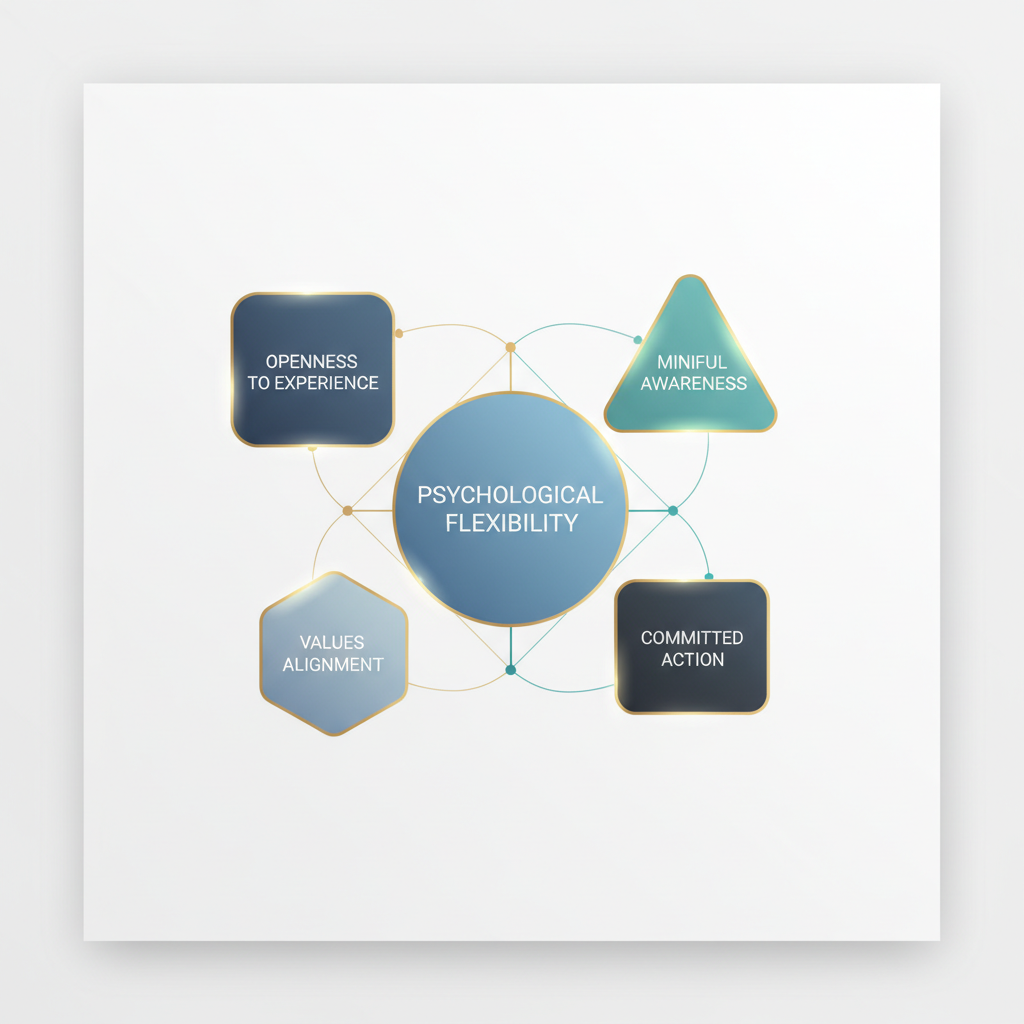
    A conceptual diagram showing psychological flexibility as a central hub with interconnected components like openness, awareness, and valued action, represented by abstract geometric shapes.
    An abstract, educational infographic illustrating the concept of psychological flexibility. Visualize a central conceptual node labeled ‘Psychological Flexibility’ with radiating, interconnected geometric shapes representing core components such as ‘Openness to Experience’, ‘Mindful Awareness’, ‘Values Alignment’, and ‘Committed Action’. Use a minimalist, vector-based style with clean geometric shapes, subtle gradients, and accent highlights. Color palette: soft blues, whites, charcoal, with gold or teal accents. Maintain ample negative space for clarity.

    Why Psychological Flexibility Matters for Creativity

    Creativity is more than just having new ideas. It’s also about acting on them, dealing with challenges, and adapting as you go. That’s where psychological flexibility comes in.

    A flexible mindset helps you welcome new experiences, explore different viewpoints, and change your approach when you face obstacles.

    Consider a designer facing a tight deadline. Or an entrepreneur adapting to market shifts. Their success often depends on their mental agility.

    Psychological flexibility helps your creative process in several ways:

    • Overcoming Blocks: You can step away from rigid thinking to find fresh solutions.
    • Exploring Diverse Ideas: You stay open to new and unusual ideas, which helps you think outside the box.
    • Adapting to Challenges: Setbacks become chances to learn and adjust. Instead of giving up, you find a new way forward.
    • Embracing Experimentation: You are more willing to try new methods. You learn from unexpected outcomes.
    • Cognitive Agility: Your mind can smoothly shift between tasks and concepts. This is vital for complex problem-solving.

    In short, psychological flexibility turns uncertainty into an opportunity for creativity. It helps you move from rigid reactions to innovative solutions.

    The Science Behind Measuring an Adaptable Mindset

    Psychological flexibility is a concept from modern psychology. It comes from a science-backed method called Acceptance and Commitment Therapy (ACT) [1]. This approach looks at how we relate to our inner thoughts and feelings.

    An adaptable mindset has a few key parts. They work together to make your mind more agile:

    • Acceptance: You make room for difficult thoughts and feelings without letting them control you.
    • Cognitive Defusion: You learn to step back from your thoughts. You see them as just thoughts, not absolute truths.
    • Contact with the Present Moment: You stay aware of what’s happening right now. This improves your focus and awareness.
    • Self-as-Context: You see yourself as separate from your thoughts and feelings. You know your experiences don’t define who you are.
    • Values: You clearly identify what truly matters to you. This guides your actions with purpose.
    • Committed Action: You take steps that align with your values, even when it feels hard.

    Measuring psychological flexibility looks at how well these parts work for you. Psychologists use scientifically validated questionnaires to do this. These tools ask how you respond to challenges to see how willing you are to adapt your thoughts and actions.

    At Creative Ability Test, we use this science. Our assessments show you how flexible your thinking is and help you understand your unique style. We connect psychology research with practical tips to help you unlock your full creative potential.

    How Can You Measure Your Psychological Flexibility?

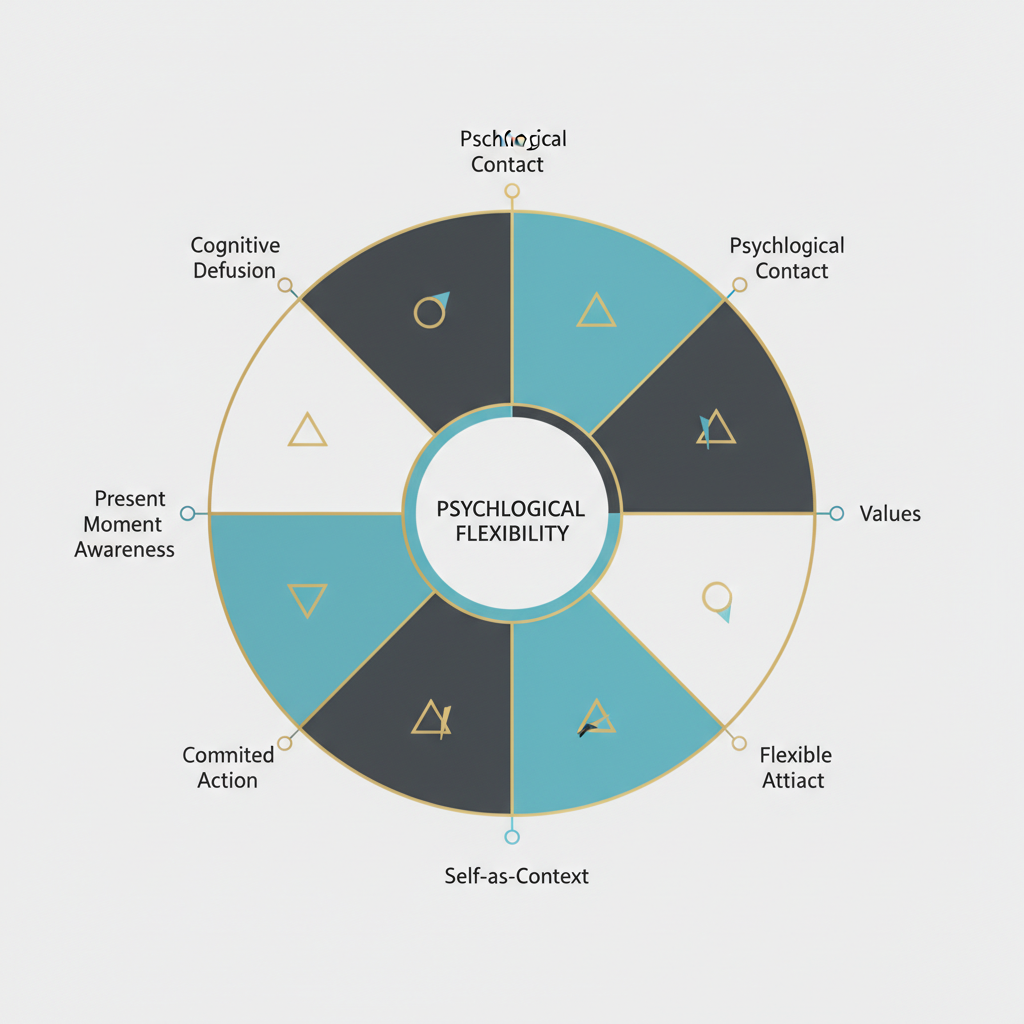
    An abstract assessment chart or competency map with multiple axes or segments, representing different dimensions used to measure psychological flexibility, depicted with clean geometric shapes.
    A clean, instructional infographic depicting a structured assessment chart or competency map for measuring psychological flexibility. The visual should be a multi-dimensional radar chart or a circular diagram with distinct segments, each representing a measurable dimension of psychological flexibility. Use minimalist, vector-based design with crisp lines and geometric shapes. Incorporate subtle gradients or accent highlights in soft blues, whites, charcoal, with gold or teal. Show abstract indicators or markers within the chart to suggest measurement points without specific numbers. Maintain a professional and approachable aesthetic with good use of negative space.

    Common Types of Flexibility Questionnaires (e.g., AAQ-II)

    To be more creative, it helps to understand your psychological flexibility. Special tests can measure this skill. These tests are usually questionnaires where you report on your own thoughts, feelings, and actions.

    A common tool is the Acceptance and Action Questionnaire-II (AAQ-II). It’s a popular way to measure psychological flexibility [2]. This test shows if a person can act on their values, even when facing uncomfortable feelings.

    Other questionnaires exist, too. They often ask about similar things, like how you handle your inner thoughts and feelings. They also check if you are willing to pursue important goals. These tests offer a clear way to measure your mental agility.

    Key Traits Assessed: Openness, Awareness, and Action

    Psychological flexibility is not just one thing. It’s a mix of several key skills. Together, these skills help you think in a flexible and creative way. They help you adapt well to challenges and come up with new ideas.

    Here are the core traits often assessed:

    • Openness to Experience: This is the willingness to feel all of your thoughts and emotions, both good and bad. Creative people often welcome new ideas and feelings. They are not afraid of the unknown. This openness leads to new ways of thinking.
    • Present Moment Awareness: This is about noticing what is happening right now. It means paying attention to your surroundings and your inner thoughts without judgment. Mindfulness is a big part of this. Being present helps you see new opportunities and find fresh solutions to problems.
    • Committed Action: This means taking action based on your values, even when it’s hard. It’s about working toward goals that matter to you. Creative work often requires you to keep going. This trait helps you push through creative blocks and move forward after setbacks.

    These traits are key to unlocking your creative potential. They help you face creative challenges with resilience. This allows you to come up with more innovative solutions.

    Connecting Flexibility to The Creative Ability Test

    The Creative Ability Test offers a complete look at your creative potential. While it is not a direct test of psychological flexibility, it measures related skills that are key for a flexible, creative mind.

    Our 30-question assessment looks at several key areas. These areas are similar to the parts of psychological flexibility:

    • Cognitive Flexibility: This part of the test checks your ability to switch between different ideas or tasks. It also measures how well you can adapt your thinking. This is directly related to being open to new ideas.
    • Openness to New Experiences: This trait measures how curious and open you are to new things. It shows how much you enjoy new situations and information. This is a key part of psychological flexibility and leads to exploration and new ideas.
    • Problem-Solving Skills: Our test looks at how you handle challenges. It checks your ability to come up with many different solutions. This requires you to be aware and take action by staying focused and putting in the effort.

    By understanding these areas, you get useful insights. The Creative Ability Test gives you personalized feedback. It helps you see how your mindset affects your creativity. It also offers practical tips to improve your mental flexibility and help you think in new ways. Our scientific method provides reliable results. This can turn uncertainty into clear self-awareness. You can use these insights to solve real-world problems, helping you grow both personally and professionally.

    What Do Your Psychological Flexibility Results Mean?

    Understanding Your Score

    Your psychological flexibility score is a useful guide. It shows how adaptable your mindset is. This test gives you a clear picture of your current strengths and highlights areas where you can grow.

    A lower score may mean you tend to stick with what you know. This can sometimes make it harder to find new ideas. However, it also means you have a great opportunity to improve.

    On the other hand, a higher score suggests you’re mentally quick. You likely enjoy new experiences and different points of view. This adaptability is a key part of creative thinking. It helps you change direction and explore different solutions. Psychological flexibility is linked to better mental health and well-being [3].

    Remember, this is not a fixed trait. It is a skill you can build over time. Our Creative Ability Test gives you personalized feedback to help you see your unique strengths and potential.

    How Your Score Affects Problem-Solving

    Psychological flexibility is a key part of creative problem-solving. An adaptable person explores many options instead of getting stuck on the first idea. This is essential for finding new solutions.

    Think about a tough problem you’ve faced. A flexible person will think of many different solutions. They look at problems in new ways and stay open to feedback. This helps them get past creative blocks.

    Flexible people are also more comfortable with uncertainty, which is a big part of trying new things. A higher score suggests you are good at divergent thinking—the skill of coming up with many different ideas [4].

    This ability helps you see opportunities where others see roadblocks, making you a great innovator. Our full Creative Ability Test offers more detail on how your flexibility affects the way you solve problems.

    Using Your Results to Grow

    Understanding your score is a great first step toward personal growth and more creativity. Think of your results as a guide to help you improve, not just a number.

    If your score shows room for improvement, that’s great news. It means you have clear steps you can take to boost your creativity. Here are a few ways to use what you’ve learned:

    • Be Mindful: Notice your thoughts and feelings without judgment. This helps you choose how to respond instead of just reacting.
    • Try New Things: Step out of your comfort zone on purpose. This makes you more adaptable.
    • Question Your Beliefs: Ask yourself why you think the way you do. This can lead to fresh ideas.
    • Seek Different Views: Talk to people who think differently than you. This helps you see the bigger picture.

    Taking these steps will build your mental flexibility over time. Our platform offers personal tips and exercises based on your results. As you practice, you’ll notice better decision-making and problem-solving skills.

    Knowing yourself is key to keep growing. It helps you face challenges with confidence and turns your creative potential into real skill. Use our science-based insights to unlock your full creative potential.

    How Can You Improve Your Psychological Flexibility?

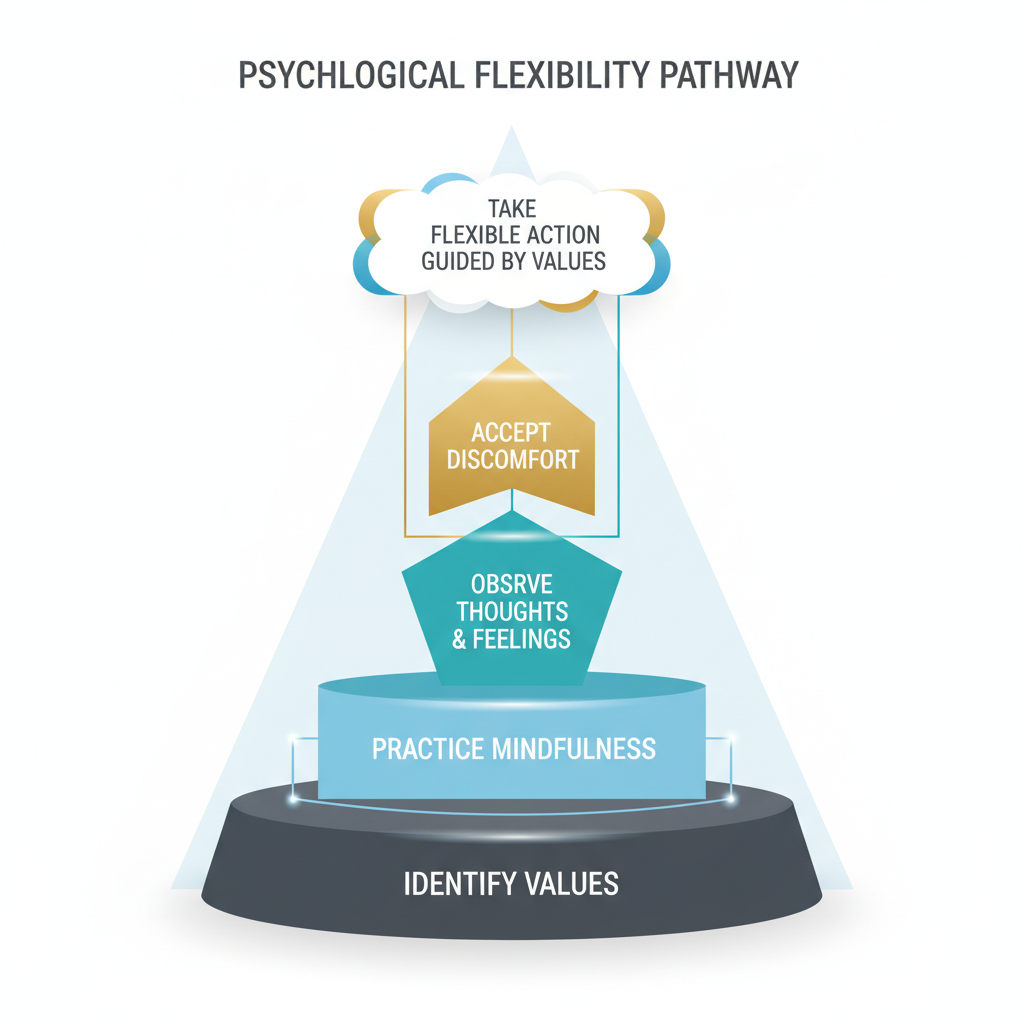
    A multi-layered diagram or step-by-step progression showing strategies and milestones for improving psychological flexibility, using abstract geometric forms.
    An abstract, educational infographic illustrating strategies for improving psychological flexibility. Visualize a layered system showing growth or a stepwise progression of actions and insights. Use a series of ascending or expanding geometric layers or interconnected milestones, with each layer/step representing a different strategy or stage of improvement (e.g., ‘Identify Values’, ‘Practice Mindfulness’, ‘Take Flexible Action’). The style should be minimalist and vector-based, using clean shapes, subtle gradients, and accent highlights in soft blues, whites, charcoal, with gold or teal. Ensure visual hierarchy and ample negative space to convey clarity and a sense of progression.

    Actionable Strategies for a More Agile Mind

    Building an agile mind is a powerful journey. It unlocks new creative potential and helps you handle life’s challenges. The Creative Ability Test supports this growth. Our insights and tools help you build lasting mental flexibility. Here are some ways to develop a more adaptable mindset:

    • Practice Mindful Awareness: Be present in the moment. Notice your thoughts and feelings without judgment. This practice clears your head and makes space for new ideas.
    • Embrace Acceptance: Acknowledge tough emotions or situations. Fighting reality drains your energy. Instead, accept what is and then decide how to move forward. This frees up mental space for creative problem-solving.
    • Clarify Your Values: Know what truly matters to you. Your values act as your compass, guiding your actions. This clarity keeps you motivated, even when you face obstacles.
    • Take Committed Action: Act in line with your values. Start with small, steady steps. Taking action, even when it’s hard, builds momentum. This helps you overcome creative blocks and get unstuck.
    • Challenge Your Thoughts (Defusion): See your thoughts for what they are: just thoughts. They aren’t facts or commands. Step back from negative self-talk. This helps you see things from different angles and opens you up to new ideas.
    • Engage in Self-Compassion: Treat yourself with kindness, especially during setbacks. Self-compassion builds resilience and encourages the kind of risk-taking that creativity needs.

    Practical Exercises to Enhance Creative Thinking

    Mental flexibility is the fuel for creative thinking. It helps you break free from rigid patterns. Here are some exercises to build your mental agility. They will also help you come up with new ideas.

    • “What Else?” Brainstorming: Pick a common object, like a paperclip. List as many other uses for it as you can. Think beyond the obvious. This exercise helps you see objects in new ways and think more broadly.
    • Perspective Shifting: Take a current problem. Try to see it from different viewpoints. How would a child, a CEO, or an artist solve it? This practice helps you find surprising solutions and builds empathy.
    • Mind Mapping: Start with a central idea. Branch out with related words, thoughts, and pictures. Don’t filter yourself. Mind mapping lets your thoughts flow freely, helping you find new connections between ideas.
    • Improvisation Prompts: Use a random prompt generator online (for example, “a talking toaster meets a lost knight”). Spend five minutes brainstorming story ideas. Don’t overthink it. This exercise makes you more comfortable with the unknown and helps you generate ideas quickly.
    • SCAMPER Method: Use the SCAMPER method on an existing product or idea. SCAMPER stands for Substitute, Combine, Adapt, Modify, Put to another use, Eliminate, and Reverse. [5] This step-by-step method sparks flexible thinking and helps you find new ways to improve things.
    • Random Word Association: Pick two words that don’t seem related, like “cloud” and “bicycle.” Try to find a connection between them. This simple exercise trains your brain to make new connections, a key skill for creativity.

    Applying Flexibility in Your Career and Daily Life

    The ability to adapt is key to success. This is true at work and in your personal life. Being mentally flexible means you can handle change well. It helps you find new solutions and do well anywhere. Our Creative Ability Test gives you insights into these key skills. It helps you use them to make a real-world impact.

    • Workplace Innovation: Projects rarely go as planned. Mental flexibility helps you adjust to new needs and face unexpected challenges. Flexible teams are also more innovative [6], which leads to better results.
    • Effective Problem-Solving: Tough problems need flexible thinking. A flexible mindset lets you look at a problem from many angles. You can weigh different options before picking one. This leads to better, more creative solutions.
    • Handling Setbacks and Change: Life is full of surprises. Setbacks happen. Flexibility helps you bounce back faster. You learn from failures instead of letting them stop you. This builds deep resilience.
    • Better Collaboration: Working with others requires you to be adaptable. You need to understand different viewpoints and adjust your style to work well as a team. Flexible people improve group dynamics, creating a more positive and productive environment.
    • Personal Growth and Well-being: Trying new things is key to personal growth. Mental flexibility helps you step out of your comfort zone and learn with curiosity. This leads to constant self-improvement and a more fulfilling life.

    Frequently Asked Questions

    Can I take a psychological flexibility test online?

    Yes, you can take psychological flexibility tests online. Many websites offer these self-assessments. The tests help you see how you handle challenges and new experiences. They also offer insights into how adaptable you are.

    Our Creative Ability Test, for example, looks at cognitive flexibility, which is a key part of psychological flexibility. It helps you understand your openness to new ideas and measures how you solve problems in new ways. Taking a test like this is a great step toward more self-awareness and personal growth.

    • Gain Self-Awareness: Understand your mental agility and adaptability.
    • Identify Strengths: Discover how you naturally respond to change and uncertainty.
    • Boost Creativity: Learn how psychological flexibility supports creative thinking.
    • Personalized Insights: Receive feedback to guide your personal growth.

    What is the AAQ-II psychological flexibility test?

    The AAQ-II is the Acceptance and Action Questionnaire – II. It is a well-known and scientifically proven test. This tool measures psychological inflexibility, a key idea in Acceptance and Commitment Therapy (ACT) [7].

    In short, the test measures how well you accept difficult inner experiences like thoughts, feelings, and sensations. It also looks at your willingness to act on your values, even when it’s uncomfortable. A high score means you have more psychological inflexibility, while a low score suggests you have more flexibility.

    This flexibility is very important for creativity. When you’re flexible, you are more open to new ideas and can push through creative blocks. It helps you try new things and learn from mistakes. Understanding your AAQ-II score offers valuable insights. It shows you where you can build more mental agility for creative thinking.

    What kind of questions are on a psychological flexibility test?

    Psychological flexibility tests like the AAQ-II usually give you a list of statements. You rate each one based on how true it is for you. These questions explore how you deal with your inner experiences and your behavior. They are designed to show patterns in how you react to your thoughts and feelings.

    Common themes explored include:

    • Acceptance of Discomfort: Questions might ask if you try to avoid unpleasant feelings or thoughts. For example, “I try to push away my emotions.”
    • Cognitive Defusion: This refers to your ability to distance yourself from your thoughts. You might see thoughts as just thoughts, not absolute truths. A question could be, “My thoughts often control my actions.”
    • Being Present: Tests check your awareness of the here and now. They assess if you get caught up in past regrets or future worries. For instance, “I am often distracted by my thoughts during activities.”
    • Values-Guided Action: These questions ask about your willingness to work toward goals that matter to you, even when you face challenges or difficult emotions. A sample question might be, “I put my values into action even when it’s hard.”

    These questions help measure how open you are to new experiences and how resilient you are when facing challenges. Both are key qualities for building creativity. In a similar way, our Creative Ability Test explores your cognitive flexibility and openness. It helps you see how these traits shape your unique creative potential.


    Sources

    1. https://www.apa.org/ptsd-guideline/treatments/acceptance-commitment-therapy
    2. https://pubmed.ncbi.nlm.nih.gov/21355030/
    3. https://contextualscience.org/rft_and_act_research
    4. https://www.apa.org/education-career/guide/science-creativity
    5. https://www.creativityatwork.com/2012/05/29/scamper-a-tool-for-generating-new-ideas/
    6. https://hbr.org/2011/04/the-flexible-firm
    7. https://contextualscience.org/acceptance_action_questionnaire_ii_aaq_ii

  • How Are Creativity Tests Made? A Guide to Test Development in Psychological Assessment

    How Are Creativity Tests Made? A Guide to Test Development in Psychological Assessment

    Test development in psychological assessment is the systematic process of creating a valid and reliable tool to measure a psychological trait, like creativity. It involves five key stages: conceptualization, construction, tryout, analysis, and revision. This rigorous process ensures the test accurately provides meaningful and actionable insights into one’s abilities.

    Have you ever wondered what makes a creative mind tick? Or how your own way of thinking helps you solve problems and innovate? Creativity often feels mysterious, but it’s a skill that can be understood, measured, and developed. At Creative Ability Test, we believe unlocking your creative potential begins with self-awareness, based on scientific research.

    But how do you measure something as complex as creativity? This is a key question in the science of psychological assessment. A well-designed creativity test is more than a simple quiz. It is built through a careful process to ensure it is accurate, reliable, and offers useful insights. Understanding this process helps you interpret your results and feel confident in your strategies for personal growth and professional development.

    From the first idea to the final version, every step in building a creativity test is designed to accurately uncover your strengths, thinking styles, and problem-solving abilities. So, why does all this scientific care matter when you want to discover your unique creative potential?

    Why Does Quality Test Development Matter for Assessing Your Creativity?

    Creativity helps us solve problems and innovate. If you want to understand your own creative potential, you need a good way to measure it. But measuring creativity isn’t simple. That’s why high-quality psychological tests are so important. They give you meaningful and reliable insights you can trust.

    Imagine taking a test that doesn’t really capture your strengths. The results would be confusing or even misleading. A poorly designed test gives you inaccurate feedback, which can hold back your self-discovery and growth. This is why the development process is the foundation of any good creativity assessment.

    The Keys to a Reliable Test

    A well-developed creativity test gives you a clear picture of your abilities. It uses scientific methods to measure different parts of your creative mind. This careful process ensures the test truly reflects your skills and gives you consistent results over time. Our tests are built on two key principles:

    • Reliability: Consistency You Can Trust
      A reliable test gives you consistent results. If you took it again, your score would be similar. This shows it dependably measures your creative traits.
    • Validity: Measuring What Truly Matters
      A valid test measures what it claims to measure—in this case, creativity. This includes aspects like divergent thinking or cognitive flexibility. It ensures the questions are actually assessing your creative abilities. Reliability and validity are the cornerstones of psychological testing, making sure assessments are both consistent and accurate [1].

    When a test is both reliable and valid, you get insights you can use for personal and professional growth. It turns uncertainty into clear self-awareness. At Creative Ability Test, we take this careful approach so you can fully trust your results.

    What This Means for Your Creative Journey

    A high-quality test directly impacts your experience by helping you understand your creative strengths and identify areas for growth. This allows us to provide personalized feedback and practical strategies tailored just for you.

    For example, if your test shows a strength in divergent thinking, you can focus on new ways to solve problems. Or, if it suggests you could improve your cognitive flexibility, we’ll offer tips to help you see things from different perspectives. You can only get these kinds of specific insights from a carefully designed test.

    Our commitment to quality test design provides several key benefits:

    • Accurate Self-Awareness: Get a true understanding of your creative potential, moving from general curiosity to deep insight.
    • Useful Growth Strategies: Receive practical tips based on your unique profile to help you improve your creative thinking.
    • Confidence in Your Results: Trust the scientific basis of your assessment so you can apply your strengths effectively.
    • Personalized Development: Identify your specific creative thinking styles and innovation skills to support your growth.

    At Creative Ability Test, we believe in supporting your creativity with proven scientific methods. Our 30-question assessment is carefully designed to deliver detailed insights that guide you toward unlocking your full creative potential.

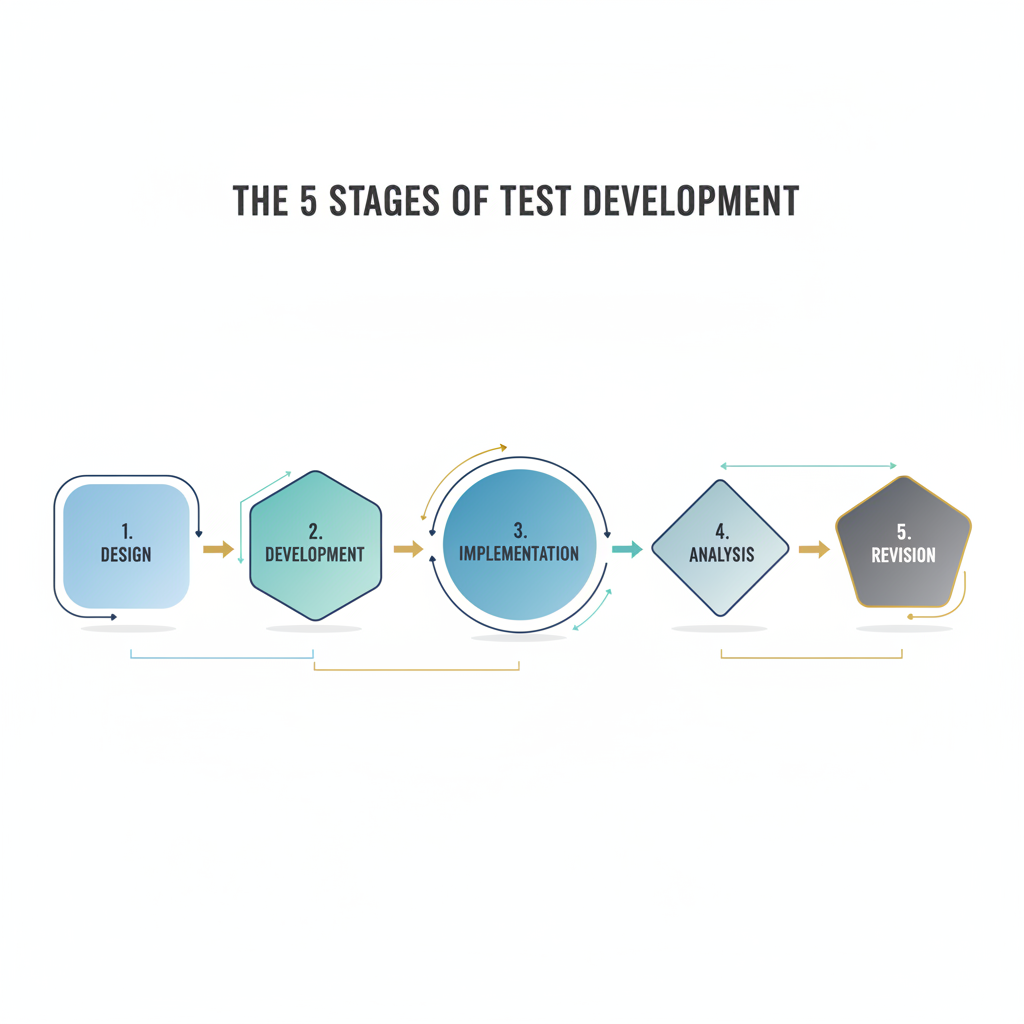
    What are the 5 stages of test development?

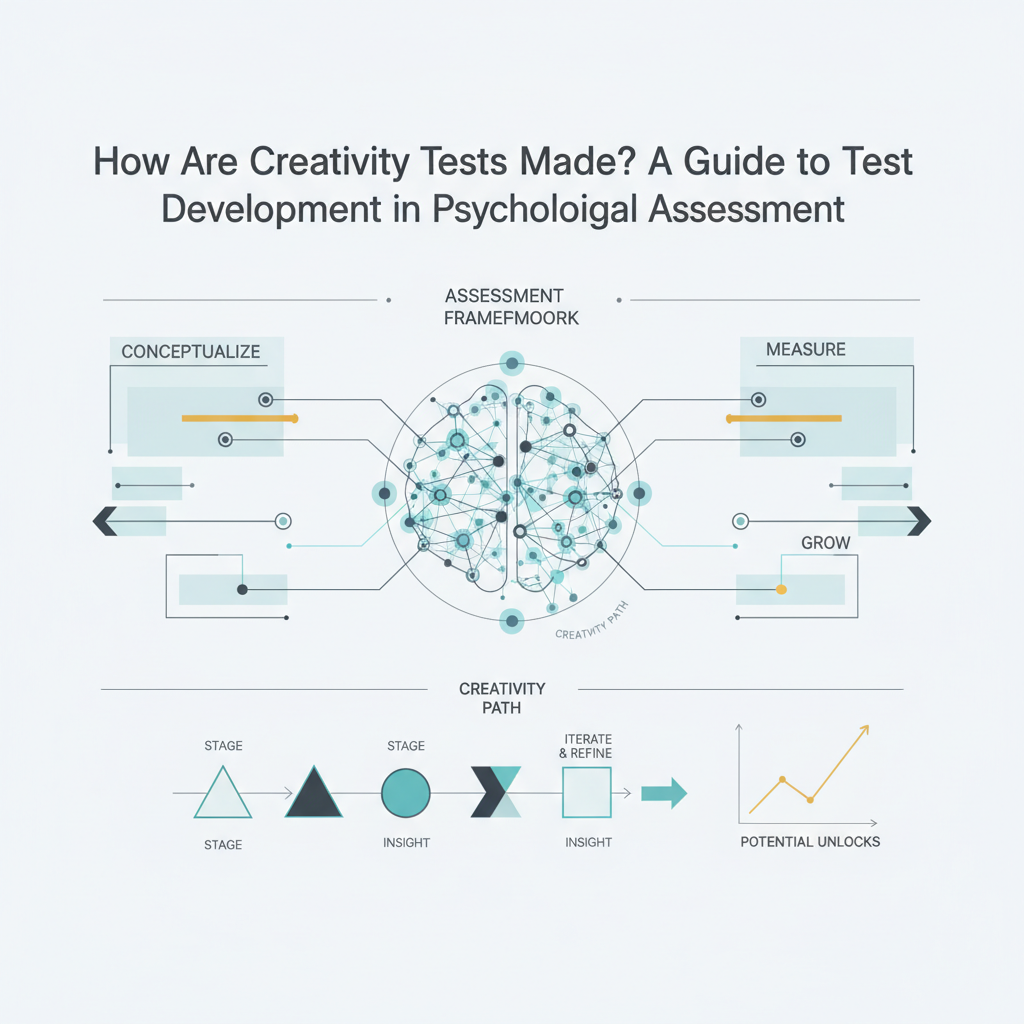
    A clean, sequential infographic illustrating five distinct stages of test development using abstract geometric shapes and subtle color gradients.
    An abstract, educational infographic featuring a clean, minimalist vector-based design. The visual displays five distinct, interconnected geometric shapes arranged sequentially, representing the 5 stages of test development. Each stage is subtly highlighted with a soft gradient or accent color. The color palette includes soft blues, whites, and charcoal, with gold or teal accents for clarity. Negative space is used effectively to separate stages, and simple labels or directional markers can be placed within or beside each shape. No human figures or cartoon elements. The overall style is professional and approachable, suitable for explaining a process.

    Creating a trustworthy test for something as unique as creativity is a careful process. We want to make sure the results you get are accurate and genuinely helpful. At Creative Ability Test, our method uses proven principles from psychological testing. This organized approach ensures the test is scientific and reliable, giving you meaningful insights into your creative potential.

    There are five key stages to creating any high-quality psychological test. Following these steps helps us build a tool that measures what it claims to measure.

    Stage 1: Test Conceptualization – What Are We Trying to Measure?

    The first step is to define the main idea of the test. We start by asking basic questions: What exactly is creativity? Which parts of it should we measure?

    This stage involves a deep dive into the psychology of creativity [2]. We pinpoint key areas like divergent thinking, cognitive flexibility, and problem-solving. This plan becomes the foundation for the entire test. Our goal for the Creative Ability Test is to give you a complete picture of your unique creative strengths.

    • Defining Creativity: We decide which facets of creativity are most relevant. For example, originality, fluency, or elaboration.
    • Identifying the Audience: Our test is designed for a broad audience. This includes students, professionals, and anyone curious about their potential.
    • Setting the Purpose: The test aims to provide actionable insights. These insights help foster personal growth and professional development.

    With a clear plan, every question has a specific job. This makes sure the test gives you a full picture of how your creative mind works.

    Stage 2: Test Construction – How Do We Write Good Questions?

    Once the plan is clear, we start writing the questions. This is where our ideas turn into a real test. Writing good questions is both an art and a science.

    Our experts create questions that are clear, fair, and truly test creative skills. We use different question styles to suit various ways of thinking. For example, some tasks might ask you to come up with many ideas, while others might ask you to find a unique solution to a problem.

    • Item Generation: We create a pool of potential questions. These questions align with the defined creativity dimensions.
    • Response Formats: We choose appropriate ways for you to answer. This might include open-ended responses or multiple-choice scenarios.
    • Scoring Criteria: We develop clear rules for evaluating answers. This ensures fair and consistent measurement of creative output.

    Every one of our 30 questions is designed with care to measure your cognitive flexibility and innovative thinking. This careful process helps build a solid foundation for accurate results.

    Stage 3: Test Tryout – Does the Test Work With Real People?

    After writing the first draft, we move to a critical tryout phase. We give the test to a sample group of people who are similar to our final audience.

    Think of this stage as a beta test. We collect early data and feedback to see how people respond to the questions. Do they understand the instructions? Are any questions too hard or too easy? This feedback helps us improve the overall experience.

    • Pilot Testing: The test is given to a diverse group of individuals.
    • Gathering Qualitative Feedback: We ask participants about their experience. What did they find confusing? What was engaging?
    • Initial Data Collection: We observe response patterns. This gives us a first look at question performance.

    Testing with real people is essential. It makes sure the test is easy to use and works well. Our goal is to make your experience with the Creative Ability Test as smooth and helpful as possible.

    Stage 4: Item Analysis – Which Questions Are the Most Effective?

    Using data from the tryout, we carefully analyze every question. This process uses statistics to see how each one performed.

    We check several things for each question. Does it distinguish between people with higher and lower creative skills? Is it too easy or too difficult? We flag any questions that aren’t working well. This detailed review makes the final test much more accurate.

    • Difficulty Index: We measure how challenging each question is.
    • Discrimination Index: We assess if a question distinguishes between high- and low-scoring individuals.
    • Distractor Analysis: For multiple-choice questions, we check if incorrect options are plausible.

    This scientific step improves the test. It ensures every question plays a useful role in measuring your creative potential and provides you with accurate, personal feedback.

    Stage 5: Test Revision – How Do We Refine the Final Assessment?

    In the final stage, we refine the test based on our analysis. We make adjustments to ensure the test is as clear, valid (measures what it should), and reliable (provides consistent results) as possible.

    We get rid of questions that don’t work and rewrite any confusing instructions. Sometimes, we even create new questions from scratch. This cycle of improvement makes sure the Creative Ability Test is strong and scientifically sound, giving you the most accurate results.

    • Removing/Modifying Items: Poorly performing questions are eliminated or revised.
    • Improving Instructions: We ensure all directions are clear and easy to follow.
    • Establishing Norms: We develop comparison data. This helps contextualize your scores against a broader population.

    This complete revision process is key to delivering a test that is both detailed and perfectly suited for you. It helps you get useful insights and clear steps for personal and professional growth.

    How does test development in psychological assessment work in practice? An example

    Knowing how a creativity test is made gives you a better understanding of your results. You can see the science behind how we measure your creative potential. Let’s look at how this works, using divergent thinking as an example.

    Defining the Goal: Measuring Divergent Thinking

    Every good test starts with a clear goal. For our test, the goal is to measure a specific creative skill called divergent thinking. This is your ability to come up with many unique ideas from a single starting point [3].

    Here’s why measuring divergent thinking is so important:

    • It’s a key part of overall creativity.
    • It shows your ability to think flexibly.
    • It helps you see many different possibilities.
    • It’s vital for problem-solving and new ideas.

    Our goal is to measure this key skill. We want to see how many different ideas you can come up with and how unique they are. This first step makes sure every question has a clear, measurable purpose.

    Writing and Reviewing Questions

    After setting our goal, we start writing the test questions. This step requires a lot of thought and review by experts.

    The process usually includes:

    • Brainstorming Question Types: We think about different kinds of questions to ask. For divergent thinking, we often ask people to list unusual uses for an everyday object or come up with many ideas for a specific situation.
    • Drafting Questions: We write each question carefully to be clear and easy to understand. The questions are designed to be engaging, fair to everyone, and encourage many different creative answers.
    • Expert Review: Psychologists and test-development experts review every question. They check for things like:

      • Is the question clear and easy to understand?
      • Does it really measure divergent thinking?
      • Are there any confusing instructions or biases?
      • Is there a clear way to score the open-ended answers?
    • Pilot Testing: A small group of people takes an early version of the test. Their feedback is extremely helpful. This is how we find and fix any confusing questions or instructions before the test is widely used.

    This careful process makes sure our 30-question Creative Ability Test is accurate and measures your creative strengths well.

    Gathering Data and Refining the Test

    After writing the test, we check if it works in the real world. This means we collect data and use it to make scientific improvements.

    Key steps in this phase include:

    • Large-Scale Data Collection: We give the test to a large, diverse group of people. This group should be similar to the people who will eventually take the test, which gives us a large set of data to work with.
    • Item Analysis: We analyze how well each question performs.

      • Difficulty: Is a question too easy or too hard? For creativity, we want questions that get a wide variety of answers.
      • Discrimination: Does this question help separate high-scoring creative people from low-scoring ones? This tells us the question is a good measure of creativity.
    • Reliability Checks: We check if the test gives consistent results. A reliable test means your scores should be stable and not change randomly [4].
    • Validity Studies: We make sure the test actually measures what it’s supposed to: divergent thinking. We might do this by comparing its results to scores from other well-known creativity tests. This proves the test is accurate.
    • Refinement and Revision: Based on all this data, we revise or remove questions that don’t work well. The test is polished to be as accurate as possible. We repeat this process as needed to ensure the test is high quality.
    • Norming: The final step is to create a baseline for comparison. We do this by comparing your score to the scores of a large group of people. This allows us to give you personalized feedback and show you how your creativity compares to others.

    This thorough, scientific process is what makes the Creative Ability Test so effective. It ensures your results are accurate and give you useful insights. Our science-backed approach helps you understand and grow your creative potential.

    How Can You Trust the Results of a Psychological Test?

    Understanding Reliability: Consistency is Key

    Reliability is a key part of any trustworthy psychological test. In simple terms, it means a test gives you consistent results. Think of a bathroom scale: you expect it to show the same weight each time, as long as your weight hasn’t changed. A reliable creativity test works the same way.

    If your creative abilities stay the same, your score should also stay the same when you retake the test. This consistency helps you trust your results [5]. You can feel confident acting on the insights and strategies we provide.

    We ensure the Creative Ability Test is highly reliable. Psychologists check for reliability in a few key ways:

    • Test-Retest Reliability: This means giving the same test to the same people twice over a period of time. If the scores from both tests are similar, the test is reliable.
    • Internal Consistency: This checks if all the questions in a test are working together to measure the same thing. For instance, all 30 questions in our test are designed to measure different sides of your creativity.

    A reliable assessment lets you accurately track your creative growth. It gives you a dependable starting point for real-world growth strategies. You can trust our personalized feedback, knowing it’s based on a solid, consistent measure of your creative potential.

    Understanding Validity: Does the Test Measure What It Claims?

    While reliability is about consistency, validity is about accuracy. Validity asks a simple question: Does this test truly measure what it claims to? For a creativity test, this means it must actually measure your creative thinking, not something else like memory or general knowledge.

    Imagine a “creativity” test that just asked you to recall historical dates. That test would not be a valid way to measure creativity. The Creative Ability Test, however, is carefully designed to give you true insights into your unique creative strengths [6].

    Psychologists look at several types of validity to ensure a test is meaningful:

    • Content Validity: This checks if the test covers all the important parts of creativity. Our 30-question assessment explores key areas like divergent thinking, cognitive flexibility, and openness to new experiences.
    • Construct Validity: This ensures the test is based on established psychological theories about creativity. Our assessment is built on solid research in the field of creative psychology.
    • Criterion Validity: This checks if test scores can predict creative behavior in the real world. For example, higher scores on our test should connect to more innovative problem-solving in your life.

    Understanding validity means you can trust that your results are really about your creative potential. This empowers you to use these insights for personal growth, professional development, and to boost your innovation skills. Our scientific method ensures that you get valid, useful insights that are easy to understand and apply.

    How This Process Helps You Discover Your Creative Potential

    Creating a reliable psychological test is a detailed process. It ensures that the assessment you take is accurate, fair, and truly helpful. This careful work, from the first idea to the final version, directly benefits you. It helps you clearly understand your own creative potential.

    The steps used to build and test an assessment are crucial. They aren’t just academic exercises. Instead, they help you discover more about yourself. This leads to useful insights for your personal and professional growth.

    Gain Clear Self-Awareness of Your Creative Strengths

    A well-made creativity test acts like a clear mirror, reflecting your specific creative strengths. The careful design of questions ensures this accuracy. You will understand aspects like your cognitive flexibility and divergent thinking. Cognitive flexibility is your ability to switch perspectives. Divergent thinking helps you generate many ideas. [7] It also highlights your unique approaches to solving problems.

    • Discover Your Thinking Style: Are you a “big picture” person who naturally connects different ideas? Or do you excel at improving existing concepts in new ways? A science-backed test helps make this clear.
    • Pinpoint Specific Abilities: You will learn if you are strong in originality, fluency, or elaboration. These are key parts of creative thinking.
    • Understand Your Natural Inclinations: The assessment reveals your natural tendencies, like how open you are to new experiences or how comfortable you are with uncertainty.

    Unlock Practical Strategies for Creative Growth

    The scientific process behind the Creative Ability Test delivers meaningful results. These results are more than just scores; they are translated into practical tips to help you improve your creative skills. For example, if you score high in divergent thinking, you might get tips on how to refine your best ideas. If you need to work on cognitive flexibility, the feedback will offer specific exercises.

    Here is how a strong test development process helps you grow:

    • Personalized Feedback: You receive advice that is tailored to your unique profile, moving beyond generic tips.
    • Targeted Practice: You get specific strategies to strengthen areas that need development, such as learning new brainstorming techniques.
    • Real-World Application: The guidance helps you apply your creativity to everyday challenges, from personal projects to professional tasks.
    • Confidence Building: Understanding your creative potential boosts your self-assurance, encouraging you to take on new challenges.

    Foster Innovation and Problem-Solving Skills

    Understanding the science behind creativity helps you become more innovative and a better problem-solver. The test development process carefully identifies the core parts of creative ability. This allows the Creative Ability Test to measure them well. As a result, you gain a deeper appreciation for how your mind works.

    For example, if the test shows you have strong idea-generation skills, you can use this strength to create solutions at work. If your results point to a need for more cognitive flexibility, you can practice skills that help you approach problems from different angles. These insights help you move from being creative sometimes to having a clear plan for growth. This turns your understanding of creativity into real-world innovation.

    Ultimately, a well-made test like the Creative Ability Test is a tool for self-discovery. It gives you a reliable, science-based map to your creative potential. This helps you use your strengths and develop new creative skills, leading to greater self-awareness and impactful innovation.

    Frequently Asked Questions

    What are the types of test development in psychological assessment?

    Psychological test development is the process of creating tools to measure human traits. There are a few main types. Each one gives a unique look at a person’s skills or personality.

    Knowing these types helps you see the science behind the tests. You can also see how tests like the Creative Ability Test give you personal feedback. Here are the main types:

    • Norm-Referenced Tests: These tests compare your score to a large group of people. For example, if you get a 70 on a creativity test, it might mean you scored higher than 85% of people your age. Our Creative Ability Test gives you this kind of comparison. It helps you see how your creative strengths stack up against others.
    • Criterion-Referenced Tests: These tests measure your skills against a set standard. A driving test is a good example. You either meet the standard and pass, or you don’t. The focus is on what you can do, not how you compare to others.
    • Ipsative Tests: Ipsative tests compare your scores on different parts of the same test. They show your personal pattern of strengths and preferences. For instance, an ipsative creativity test might show if you are better at coming up with ideas or putting them into action. This helps you find your own creative style for personal growth. [8]

    Our platform often combines parts of these different test types. This gives you a full and useful look at your creative potential. We give you data that compares you to others and also paints a clear picture of your personal creative style.

    Can you provide a test development in psychology example?

    Let’s look at how we build a part of the Creative Ability Test. Our goal is to measure divergent thinking. That’s your ability to come up with many unique ideas from one starting point. It’s a key part of creative problem-solving.

    1. Defining the Goal: First, we decide what “divergent thinking” means for our users. We define it by looking at the number of ideas (fluency), the variety of ideas (flexibility), and how unique they are (originality). This makes sure the test measures a useful part of creativity for your personal growth.

    2. Writing and Reviewing Questions: Next, we write the test questions, or prompts. For example, we might ask, “List all the possible uses for a brick.” We create many questions like this. Our experts check them to make sure they are clear and fair. The goal is to encourage many different creative answers.

    3. Developing Scoring Rules: Then, we create clear rules for scoring answers. For the “brick” example, we might count the total number of ideas (fluency). We would also group the ideas into different types (flexibility). We also check how unique the ideas are (originality). This scientific method makes sure the scoring is fair and consistent.

    4. Gathering Data: We have a diverse group of people take the test. This shows us how people really answer the questions. We look for patterns in their responses. This step is key to making the test accurate and relevant.

    5. Analyzing and Refining: After we have the data, we look at each question closely. We ask: “Does this question really measure divergent thinking?” and “Are the scores consistent?” We fix or remove any questions that are confusing or don’t work well. This process of testing and improving makes sure the final test is strong. It gives you trustworthy, useful insights into your creative potential.

    This careful process makes sure your Creative Ability Test results are meaningful. They provide a solid starting point for boosting your creative skills and growing as a person.

    What are the 5 stages of test development?

    Creating a high-quality psychological test, like our Creative Ability Test, is a careful process. It makes sure the results are accurate and useful. The process has five main stages. Each stage builds on the one before it to make sure the test is trustworthy and measures what it’s supposed to. [9]

    1. Stage 1: Test Conceptualization – What Are We Measuring? In this first stage, we define the test’s purpose. We decide which creative skill we want to measure, like mental flexibility or openness to new things. We also think about who will take the test and how they will use the results for personal or professional growth.

    2. Stage 2: Test Construction – How Do We Write Good Questions? This is where we write the actual test questions. We choose the best formats, like multiple-choice or open-ended answers. We write clear questions that are fair to everyone. We also create exact rules for scoring. Our goal is to make sure every question helps measure the creative skill we are focused on.

    3. Stage 3: Test Tryout – Does the Test Work With Real People? In this stage, we create a pilot version of the test. We have a group of people who are like our intended test-takers try it out. This helps us find any confusing questions or other problems. It’s a key step to get early feedback.

    4. Stage 4: Item Analysis – Which Questions Are Most Effective? We study the data from the test tryout. This helps us see how well each question worked. We look at whether a question can tell the difference between people with high and low scores on the skill. We also check for any unfairness. This analysis helps us pick the best questions for the final test.

    5. Stage 5: Test Revision – How Do We Finalize the Test? Based on our analysis, we improve the test. We fix or remove questions that didn’t work well. We might also change the scoring rules. This final step makes sure the test is ready to go. It ensures the Creative Ability Test gives you trustworthy and useful insights into your creative potential.

    By following these scientific steps, we make sure the Creative Ability Test is a tool you can trust. It helps you understand and improve your creative thinking for use in everyday life.


    Sources

    1. https://www.psychologytools.com/articles/what-is-reliability-and-validity-in-psychological-assessment/
    2. https://www.apa.org/education-career/guide/psychology-testing
    3. https://psycnet.apa.org/record/1968-07205-001
    4. https://psycnet.apa.org/record/2012-05537-000
    5. https://www.simplypsychology.org/reliability.html
    6. https://www.simplypsychology.org/validity.html
    7. https://www.apa.org/pubs/journals/releases/xlm-a0038898.pdf
    8. https://dictionary.apa.org/ipsative-assessment
    9. https://pressbooks.library.ryerson.ca/psychtests/chapter/test-development/

  • What is a Performance Test in Psychology? (Examples & Types)

    What is a Performance Test in Psychology? (Examples & Types)

    A performance test in psychology is an assessment where an individual performs a specific task or activity, rather than just answering questions. These tests are designed to evaluate practical skills, problem-solving abilities, and aptitudes like creativity in a hands-on context, revealing how a person applies their knowledge.

    Have you ever wondered how well you handle unexpected problems, come up with new ideas, or adjust your thinking in new situations? While most tests focus on what you *know*, understanding skills like innovative problem-solving, cognitive flexibility, and creative thinking requires a different approach. It’s about measuring your practical skills and how you act when given a real task to complete.

    This is the main goal of a “performance test in psychology.” Instead of just asking questions, these scientifically grounded assessments observe how you complete a task. They watch your actions and strategies to reveal your unique strengths and thinking style. These tests offer valuable information about your ability to brainstorm, your approach to innovation, and your creative potential. In this article, we’ll explain what these tests are and why they’re so important for revealing practical skills. You’ll also learn how they can support your personal growth and help you use your creativity in the real world.

    What is a Performance Test in Psychology?

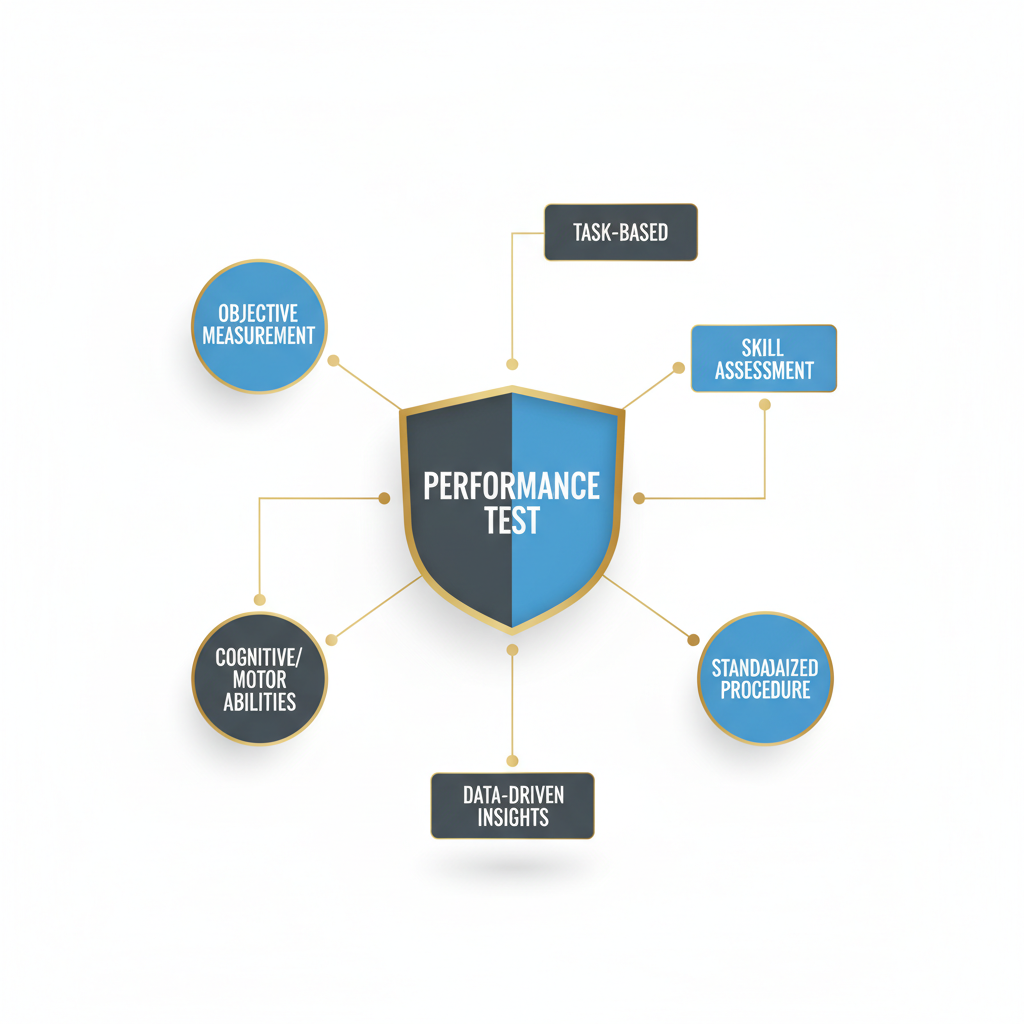
    Infographic visually defining a Performance Test in Psychology through a central concept connected to its key characteristics.
    A minimalist vector infographic defining ‘What is a Performance Test in Psychology?’. Present a central, abstract icon or shape labeled ‘Performance Test’, surrounded by several smaller, connected geometric shapes or nodes. Each node represents a key characteristic, purpose, or component (e.g., ‘Objective Measurement’, ‘Task-Based’, ‘Skill Assessment’). Use clean lines and a structured layout to convey a clear definition. Color palette includes soft blues, charcoal, and white with subtle gold highlights for emphasis. Ensure ample negative space and no human figures or cartoon elements.

    Moving Beyond Questions to Actions

    A performance test is different from a typical quiz. Instead of asking what you know or how you feel, it looks at what you actually do.

    Think of it as a hands-on assessment. This method helps us see your abilities in action. It shows your practical skills and how you use what you know.

    This kind of test is also key to understanding creativity. Creativity isn’t just an idea. It’s about making new things, solving problems, and adapting. Our platform uses this active approach. We help you go from just thinking about creativity to actually understanding and improving it.

    How It Measures What You Can Do, Not Just What You Know

    A performance test measures your skills by watching you complete specific tasks. Psychologists then review your actions and the results [1]. This is very different from traditional multiple-choice questions or self-report surveys.

    Here is how performance tests measure what you can do:

    • Hands-On Challenges: You are given a task to complete, like building a structure, solving a puzzle, or brainstorming ideas.
    • Watching Your Process: Experts observe how you approach the task. They look at your strategies and decision-making process.
    • Reviewing the Outcome: Your final product or solution is reviewed for its quality, originality, and effectiveness.
    • Real-Life Scenarios: These tests often use situations you might face in the real world. This makes the results more useful for everyday challenges.

    For creativity, these tests are especially useful. They don’t just ask if you think you’re creative. Instead, they measure your ability for things like:

    • Divergent Thinking: The ability to come up with many unique ideas from one starting point. This shows your mental flexibility.
    • Cognitive Flexibility: How easily you can shift your thinking between different ideas or methods. This is key for innovation.
    • Problem-Solving Skills: How you handle new situations and find creative solutions to unfamiliar problems.
    • Originality: We directly observe how unique and new your ideas are.

    Our 30-question assessment is a performance test based on these scientific principles. It shows you your unique creative strengths. You will get personalized insights into how you use creativity in real life. This helps you move from uncertainty to actionable self-awareness.

    What is the Importance of Performance Test in Psychology?

    Revealing practical skills and problem-solving

    Performance tests don’t just check what you know. They show what you can do when given a task. This hands-on approach is very useful in psychology. These tests show how well you apply your knowledge in real situations. They assess how you handle real-world challenges and find solutions. It’s about showing your skills, not just remembering facts. This gives a clearer picture of your true abilities.

    Think about how this applies to problem-solving. A performance test might ask you to solve a puzzle or create a strategy. This shows your thinking skills in action. For instance, these tests can measure how quickly you adapt to new information. They also see how efficiently you reach a goal [2].

    At Creative Ability Test, we focus on these practical skills. We help you understand your own way of facing challenges. This leads to clear steps for personal growth and professional development.

    Assessing Creativity and Innovative Thinking

    A powerful feature of performance tests is their ability to measure creativity directly. Creativity is not just about artistic talent. It involves coming up with new and useful ideas to solve problems. These tests offer a unique look at your innovative thinking.

    They often use open-ended tasks. You might be asked to brainstorm uses for an everyday object. Or, you could be challenged to find new solutions to a made-up problem. Such tasks directly measure divergent thinking. This is your ability to create a wide range of ideas [3].

    Performance tests also reveal how comfortable you are with unclear situations. They show how you handle challenges that don’t have a single “right” answer. This skill is vital for new ideas in any field. It highlights your flexible thinking and openness to new experiences.

    Our Creative Ability Test uses a proven scientific method. It uses performance-based questions to uncover your unique creative strengths. You get personalized feedback on your thinking styles. This helps you build on your potential for innovation.

    Understanding your creative abilities offers many benefits:

    • Uncovering Hidden Strengths: Discover creative talents you didn’t know you had.
    • Enhancing Problem-Solving: Learn to create more imaginative and effective solutions.
    • Boosting Innovation: Use creative thinking to develop new ideas at work or in your personal life.
    • Building Adaptability: Get better at handling uncertainty and embracing change.

    Providing Objective Insights into Abilities

    A key benefit of performance tests is that they are objective. They provide feedback based on what you do, not just on your feelings or beliefs. This greatly reduces personal bias.

    When you complete a task, your performance is measured directly. For example, the number of unique ideas you create is real data. This is different from simply being asked if you “think you are creative.” Because of this, performance tests offer a more accurate picture of your true abilities. This is especially true for complex skills like creativity [4].

    This objective feedback is valuable for several reasons:

    • Accurate Self-Awareness: Get a clear, unbiased view of your strengths and areas for growth.
    • Targeted Development: Get personal tips based on real evidence, making it easier to improve.
    • Tracking Progress: Objectively see how your creative skills change over time.
    • Informed Decision-Making: Make better life and career choices that match your true potential.

    At Creative Ability Test, our assessments are designed to do just that. We provide feedback based on evidence to support your journey of self-discovery. Our scientific method ensures you get results you can trust and use. These insights guide you toward real growth and better creative performance.

    How Do Maximum vs. Typical Performance Tests Differ?

    Infographic comparing Maximum Performance and Typical Performance tests side-by-side using abstract icons and labels.
    A minimalist vector infographic comparing ‘Maximum Performance’ and ‘Typical Performance’ tests. Two distinct, balanced sections, each with a primary heading and a cluster of related abstract icons or brief text labels (e.g., ‘Skill Ceiling’ vs. ‘Everyday Behavior’). Use clean geometric shapes, soft blue and charcoal colors with subtle gold accents. Emphasize clarity, structured grouping, and negative space to highlight differences and key attributes. No human figures or cartoon elements.

    Maximum Performance: Measuring Your Best Effort

    To understand your creative potential, we often look at your maximum performance. This measures what you can do at your absolute best. It shows your peak ability when you are motivated and giving your full effort [5].

    For example, imagine being asked to think of as many unique ideas as you can within a time limit. This is a classic test of maximum performance. You push yourself to think in new ways, aiming for both quality and quantity. Your Creative Ability Test has tasks designed to measure this peak creative output.

    Key characteristics of maximum performance tests include:

    • High Stakes: Participants know they are being evaluated and try to get the best possible score.
    • Clear Goals: There is a specific goal, like solving a tough problem or creating many ideas.
    • Focus on Capacity: These tests show your upper limit. They reveal what you can do under the best conditions.
    • Revealing Potential: This type of performance highlights your untapped skills and shows where your creative strengths are.

    Measuring your maximum creative performance gives us valuable insights into your potential for new ideas and innovation. This understanding helps guide you. It shows you how to unlock more of your natural creativity in everyday life.

    Typical Performance: Understanding Your Usual Behavior

    Typical performance, on the other hand, measures what you usually do in everyday life. These tests look at your regular habits and how you naturally approach situations. They don’t measure your best effort. Instead, they focus on how you normally handle tasks and problems [6].

    For example, think about how often you try new things. Or how you usually react to unexpected challenges. These are examples of your typical creative behavior. They show your consistent creative habits. Your Creative Ability Test helps you discover these everyday styles.

    Here’s what defines typical performance tests:

    • Low Stakes: People can be honest about their usual behavior because there is less pressure to perform well.
    • Self-Report Focus: These tests usually use questionnaires where you describe your own actions and feelings.
    • Real-World Relevance: They show how creativity fits into your daily life and reveal your natural problem-solving style.
    • Insights into Application: This helps us see how you use your creative strengths in real life and whether you apply them consistently.

    Both maximum and typical performance give us important information. The Creative Ability Test provides a complete picture by connecting your peak potential with your daily habits. This approach empowers you. It helps you use these insights for personal and professional growth.

    What is a Performance Test in Psychology Example?

    Tests for Cognitive and Problem-Solving Skills (e.g., Block Design)

    Performance tests measure how you think and solve problems. They go beyond simply what you can remember. Instead, they look at your ability to use information and logic to find solutions.

    A classic example is the Block Design task. In this test, you get a set of colored blocks. You then arrange them to match a picture. This task tests your spatial reasoning and your ability to break a big problem into smaller steps. It also measures how quickly you can change your strategy if something isn’t working.

    These tests help us understand how flexible your thinking is. They show your ability to think in new ways. A strong performance shows you can picture solutions in your mind and carry them out well. This skill is key to solving creative problems in everyday life.

    • Spatial Reasoning: How well you understand and work with objects in your mind.
    • Breaking Down Problems: Your skill in turning large problems into smaller parts.
    • Flexible Thinking: Your ability to switch strategies when one isn’t working.
    • Efficient Action: How well you carry out a plan to solve a problem.

    Knowing your strengths helps you grow. It helps you see where your natural problem-solving skills are. Our platform can help you find these thinking patterns and give you tips to improve them.

    Tests for Creative Thinking (e.g., Divergent Thinking Tasks)

    For many, the most exciting performance tests are the ones that focus on creativity. These tests don’t have one “right” answer. Instead, they value originality and a wide range of ideas.

    Divergent thinking tasks are a great example. These tests check your ability to come up with many unique ideas from one starting point [7]. For instance, you might be asked to list all the possible uses for a brick. Your imagination is the only limit.

    These tasks measure several key parts of your creative mind:

    • Fluency: The total number of ideas you can come up with.
    • Flexibility: The variety of categories your ideas fall into.
    • Originality: How new or uncommon your ideas are compared to others.
    • Elaboration: The amount of detail you include in each idea.

    Doing well on these tests shows you are open to new possibilities and have a strong ability to innovate. These are key skills for personal and professional success. Our science-backed test measures these areas and provides personal feedback. This helps you understand and use your creative strengths.

    You can then use what you learn to think more creatively and solve problems in any situation. This helps turn your creative potential into real-world skills.

    Tests for Motor Skills and Coordination

    While less tied to creative thinking, some performance tests also measure motor skills. These tests check your physical skill and coordination. They see how quickly and accurately you can make specific movements, from using your fingers to reacting to a trigger.

    Examples include pegboard tests, where you place pegs into small holes. Other tests might involve following a moving target on a screen. These tests are important in many fields. They help see if someone is ready for a certain job or can help people recover from injuries.

    Such tests give clear information about physical skills and show areas where you can improve. While our platform focuses on creative thinking, these examples show how wide-ranging performance tests are. They prove we can measure many different human skills by seeing them in action.

    How Do Performance Tests Relate to Your Creative Potential?

    Conceptual infographic illustrating how psychological performance tests connect to and reveal an individual's creative potential.
    A minimalist vector infographic visualizing the relationship between ‘Performance Tests’ and ‘Creative Potential.’ Depict a central ‘Creative Potential’ node or concept, surrounded by or connected to several abstract elements representing different ‘Performance Test’ outcomes or insights. Use subtle lines or pathways to illustrate how these tests reveal or contribute to understanding one’s creative abilities. Employ clean, layered geometric shapes, a palette of soft blues, whites, and charcoal, with teal accents to signify connections and growth. Maintain ample negative space for legibility. No human figures or cartoon elements.

    Measuring Your Ability to Generate Unique Ideas

    Creativity starts with new ideas. Performance tests help measure this skill directly. They go beyond theory and look at how you actually generate thoughts. These tests evaluate your ability to produce a wide range of solutions or concepts.

    For example, you might be asked to list many uses for a common object. This simple task shows your divergent thinking skills. Divergent thinking is key to creativity. It’s about exploring many possible solutions. Instead of focusing on one correct answer, you come up with many unique ones [7].

    Our Creative Ability Test uses methods based on science. It assesses how easily and flexibly you generate ideas. This shows you are open to new possibilities. It also highlights your cognitive flexibility, which is your mind’s ability to switch between different concepts. Understanding this helps you see your unique creative strengths.

    Understanding How You Approach and Solve New Problems

    Creativity is more than just having ideas. It’s also about how you use them. Performance tests offer a look into your problem-solving process. They don’t just check the final answer; they observe your method when you face a new challenge.

    When solving new problems, you show several creative skills:

    • Originality: This is about coming up with truly unique and uncommon ideas.
    • Fluency: This is how many useful ideas you can think of quickly.
    • Flexibility: This measures how many different types of ideas you explore.
    • Elaboration: This shows your ability to add rich details to your ideas.

    Our assessment looks at these areas to help you understand your personal thinking style. Do you prefer a structured plan, or are you more spontaneous? Knowing this helps you use your natural strengths. It allows you to solve real-world problems more effectively. This knowledge is key for innovation and personal growth.

    Using Feedback to Help Your Creativity Grow

    Unlocking your creative potential is a journey. Performance tests give you a clear starting point. They offer useful feedback on your unique creative style. This personal information is a powerful tool that turns uncertainty into a clear plan for improvement.

    Here’s how this feedback helps you:

    • Targeted Improvement: If you are good at fluency, you can focus on making your ideas better. If flexibility is an area for growth, you can practice seeing things from different angles.
    • Better Problem-Solving: Understanding your creative style helps you approach challenges differently. You can use your strengths on purpose, which leads to more innovative solutions.
    • Career Growth: Creativity is valued in many jobs. Our feedback gives you practical tips to boost your innovation skills and support your professional goals.
    • Personal Growth: Gaining confidence in your creative skills is powerful. It helps you build a mindset of always improving.

    The Creative Ability Test offers detailed feedback with useful tips based on your results. This guides you to improve your cognitive flexibility and divergent thinking. As a result, you go from just knowing your potential to actively growing it. Start using your creativity in meaningful ways today.

    Frequently Asked Questions

    What are the 4 types of psychological tests?

    Psychological tests are tools that help you understand yourself. They measure how you think, feel, and act. These assessments give you valuable self-awareness and often fall into four main types:

    • Ability/Aptitude Tests: These tests check your potential to learn or do certain tasks. For example, they might measure your thinking skills or creative talent. Our Creative Ability Test helps you find your unique creative strengths.
    • Achievement Tests: These tests measure what you already know. They check your current skills or knowledge in a specific subject, like a final exam for a class.
    • Personality Tests: These explore your typical ways of thinking, feeling, and acting. They can show personality traits like being introverted, organized, or open to new things [source: https://www.apa.org/education-career/guide/science-psychology].
    • Neuropsychological Tests: These tests check how your brain is working, especially after an injury or illness. They look at skills like memory, focus, and problem-solving.

    Knowing these types helps you see how a creative test fits in. It’s a great tool for personal growth.

    What is a typical performance test example?

    A typical performance test shows how you usually act. It’s not about your best effort, but your everyday approach. These tests reveal your natural tendencies and consistent patterns.

    Imagine a test asks you to brainstorm uses for a common object, like a brick. The goal isn’t to find the “best” answer, but to see how your ideas naturally flow. This kind of task shows how you think creatively in a low-pressure setting. It’s different from a “maximum performance” test, which pushes you to get the highest score possible.

    This type of test helps you discover your natural problem-solving style. It gives you a starting point for understanding your creative strengths and offers useful tips on how you create new ideas.

    How does a performance test differ from a verbal test in psychology?

    Performance tests and verbal tests measure abilities in different ways. It’s important to know how they are different.

    • Performance Tests: These tests require you to do a task, not just talk about it. You might solve a puzzle, handle an object, or come up with new ideas. For example, our Creative Ability Test asks you to complete creative tasks. This shows your skills in action and is great for seeing how you apply your creative thinking.
    • Verbal Tests: These tests use words. You answer questions by writing, speaking, or reading. Vocabulary tests and essays are common examples. They measure what you know and how well you can explain it with language.

    The main difference is action versus words. Performance tests show what you can do, while verbal tests show what you know. Both are valuable, but performance tests give a clearer picture of your creative skills in action. They connect ideas to real-world use.

    What is an example of a group test in Psychology?

    A group test in psychology is when many people are tested at the same time. This method is efficient and ensures everyone takes the test under the same conditions. This makes it fair to compare the results.

    A common example is a creativity test given to an entire class. Imagine a teacher gives all students the same design challenge, materials, and time limit. For instance, the task could be to “design a new type of transportation.” Everyone’s work is then graded using the same rules. This is a group test because it measures the creative skills of many people at once [source: https://psycnet.apa.org/record/2012-00507-000].

    These tests are often used in schools or workplaces. They help find patterns or individual strengths in a group. For example, a test could find which students are best at brainstorming many ideas. This information is useful for creating training and development programs.


    Sources

    1. https://www.apa.org/pubs/books/4318090
    2. https://psycnet.apa.org/record/2012-09413-004
    3. https://www.sciencedirect.com/topics/psychology/divergent-thinking
    4. https://www.journals.uchicago.edu/doi/full/10.1086/665988
    5. https://psycnet.apa.org/record/2012-07383-001
    6. https://www.sciencedirect.com/science/article/pii/B9780123743322002573
    7. https://www.apa.org/education-career/guide/divergent-thinking

  • Psychometric Assessment of Personality in Psychology: A Guide to Unlocking Your Creative Potential

    Psychometric Assessment of Personality in Psychology: A Guide to Unlocking Your Creative Potential

    A psychometric assessment of personality in psychology is a standardized, scientific method used to measure an individual’s mental capabilities and behavioral style. These tests are designed to be objective and are used to evaluate traits like openness, cognitive flexibility, and problem-solving skills, providing reliable insights into a person’s character and creative potential.

    Many of us are curious about our own creativity. We might wonder how our way of thinking helps us innovate, solve problems, or express ourselves. What if there was a scientific way to understand how your creative mind works? This article explores psychometric assessment of personality in psychology, showing how these tools offer real insight into who you are and how you create.

    Unlike online quizzes, these tests go deeper. They provide a reliable, evidence-based way to explore the personality traits and thinking styles that drive your creativity. By understanding these parts of yourself—from your mental flexibility to your openness to experience—you can gain practical self-awareness. This knowledge helps you identify your creative strengths, find areas for growth, and build a strategy to boost your innovative thinking in all parts of your life.

    In this guide, we will explain how these assessments work, which key personality traits link to creativity, and how you can use this information to unlock your full potential. Get ready to understand your thinking style better and discover how to nurture your natural ability to innovate and inspire.

    What is a Psychometric Assessment of Personality in Psychology?

    Going Beyond Simple Labels: A Scientific Approach

    Understanding yourself is a powerful journey. A scientific personality assessment can help you explore who you are. It goes beyond simple labels to give you deep, evidence-based insights into your traits and thinking styles. This scientific approach helps you understand the “why” behind your behavior and your true potential.

    Psychometrics is the science behind psychological measurement [1]. When used for personality, it relies on carefully designed tools to objectively measure parts of who you are. The goal is to give you a reliable and accurate picture of your personality. This is key to understanding human potential, including creativity.

    For creativity, Psychometric assessments are very useful. They help spot the personality traits linked to new ideas, like openness and curiosity. These tests look at how you solve problems and think flexibly. They also measure your ability to brainstorm many unique ideas at once.

    The Creative Ability Test is built on this scientific approach. It shows your creative strengths and thinking patterns, helping you understand your natural talent for innovation. It also points out areas where you can improve. We explain complex ideas in a simple way, so you can build confidence and grow your creative skills.

    How Is This Different From a Standard Personality Quiz?

    You’ve probably taken many online personality quizzes that tell you which animal you are or your creative color. While fun, these are very different from a scientific assessment. Knowing the difference is important if you want to truly understand yourself.

    Here’s how a scientific assessment is different from a standard personality quiz:

    • Scientific Foundation: Scientific assessments are based on deep psychological research and theories. They are developed by experts. Standard quizzes are usually just for entertainment and aren’t backed by science.
    • Rigorous Development: Our assessments are thoroughly tested to ensure they are accurate (they measure what they claim to) and reliable (they provide consistent results). Casual quizzes don’t go through this process.
    • standardized questions: Scientific tests use carefully worded questions that are the same for everyone. This allows for fair, unbiased comparisons. Online quizzes often use questions that are unclear or can be interpreted in different ways.
    • Actionable Insights: The results from a scientific assessment give you useful advice. You get clear, personal feedback with steps you can take to grow. Standard quizzes usually offer vague or fun results with no real guidance.
    • Focus on Potential: Our scientific approach highlights your cognitive flexibility and problem-solving skills. It identifies your unique ways of thinking creatively. A typical quiz gives you a simple label but no clear path for personal growth.

    The Creative Ability Test gives you insights backed by science. Our 30-question assessment explores different aspects of your creativity. We provide personal feedback that shows how your personality affects your creative skills. This helps you turn uncertainty into self-awareness and move from inconsistent results to a clear plan for growth. You get more than a score; you get a roadmap for your creative journey.

    How Do These Assessments Measure Personality and Creativity?

    Infographic showing how psychometric assessments measure creativity, represented by interconnected geometric shapes illustrating various creative dimensions and influencing personality traits on a competency map.
    A minimalist, vector-based infographic illustrating ‘How Do These Assessments Measure Personality and Creativity?’. The central concept is a clean, structured competency map. A primary geometric shape (e.g., a hexagon) labeled ‘Creativity Potential’ in a soft blue gradient is at the center. Connected by charcoal lines are several smaller, distinct geometric shapes (e.g., circles, squares) representing key dimensions like ‘Divergent Thinking’, ‘Openness to Experience’, ‘Problem Sensitivity’, and ‘Originality’, each with a subtle teal or gold accent highlight. Around these, a lighter, semi-transparent layer of geometric shapes (e.g., abstract polygons) represents ‘Influencing Personality Traits’, subtly interacting with the creative dimensions. Short, clear labels indicate assessment metrics. The layout maintains ample negative space and visual hierarchy. No people, no cartoons, professional and educational aesthetic.

    What Makes a Creativity Test Accurate?

    To understand how creativity tests work, we need to look at two key ideas: validity and reliability. These principles make sure a test gives you results you can trust. Without them, a test is just guessing.

    Validity asks a simple question: Does this test actually measure creativity? A valid creativity test measures your creative skills, not just something related like your vocabulary. For example, a valid test for “divergent thinking” will accurately show how well you can come up with many different ideas [2].

    Reliability is all about consistency. If you take the same test a few times, will you get similar results? A reliable test gives you a steady score, building your trust in the feedback you receive.

    Our Creative Ability Test is built on this scientific foundation. We’ve designed it to be both valid and reliable, so you can be confident that your results and personalized feedback are accurate.

    Key Personality Traits for Creativity

    Creativity isn’t one single thing. It’s a mix of different personality traits. Our assessment explores these traits to show how your personality can help or hinder your creative side. Research shows a clear link between certain personality traits and creative potential [3].

    Here are some of the key personality traits linked to creativity:

    • Openness to Experience: This is one of the strongest signs of creativity. People high in openness are curious, imaginative, and welcome new ideas. They enjoy exploring unusual concepts and trying new things.
    • Conscientiousness (in moderation): Being organized and disciplined can be helpful, but not to an extreme. A balanced approach helps you follow through on ideas without becoming too rigid to think freely.
    • Extraversion and Introversion: Both personality types can be creative in their own ways. Extraverts often come up with ideas by talking with others. Introverts may find their best ideas through quiet, deep thinking.
    • Emotional Stability: People who are calm and less prone to worry can focus better and push through creative blocks. This steady mindset is important for doing innovative work.

    Knowing where you stand on these traits gives you a starting point. It helps you understand your natural creative tendencies. Our 30-question assessment explores these areas to reveal how your unique personality shapes your creative skills.

    From Personality Insights to Creative Strengths

    Knowing your personality traits is the first step. The real power of our assessment is turning those insights into real-world creative strengths. We don’t just label you. We show you how you create and how you can get even better.

    Your test results are like a personal guide to your creativity. They show your natural ways of thinking and solving problems. This goes beyond guesswork and gives you practical knowledge. For instance, if you score high on openness, you are probably great at thinking in new directions and coming up with a lot of original ideas.

    The Creative Ability Test helps you:

    • Understand Your Creative Thinking Style: Learn if you’re a natural idea generator, a careful planner, or a flexible problem-solver. Every style has its own benefits.
    • Identify Specific Strengths: Discover what you’re best at, whether it’s curiosity, imagination, or the ability to switch between different ideas. You can use these skills at work and in your personal life.
    • Pinpoint Areas for Growth: Everyone has room to improve their creative skills. Our assessment points you toward the best opportunities to grow.
    • Apply Creativity to Real-World Challenges: See how your unique creative profile helps you solve problems, from small daily tasks to big new projects.

    This process turns confusion about your creative skills into clear self-awareness. You’ll understand your strengths and get practical tips for improvement. This helps you use your creativity in every part of your life.

    What Are the Benefits of a Psychometric Approach to Self-Discovery?

    Infographic depicting the benefits of psychometric self-discovery as a layered, expanding diagram, showing progression from initial insights to understanding strengths, growth areas, and unlocking creative potential.
    A minimalist, vector-based infographic illustrating ‘What Are the Benefits of a Psychometric Approach to Self-Discovery?’. The visual represents growth and discovery as a layered, abstract, expanding spiral or concentric rings. The core is a small, charcoal circle labeled ‘Self-Insight’, emanating outwards are larger, clean geometric rings or segments, each representing a benefit: ‘Awareness of Strengths’, ‘Clarified Growth Paths’, ‘Unlocked Potential’, ‘Personalized Creative Strategy’. Each layer uses soft blues and whites with subtle gradients, and key labels or indicators are highlighted with gold or teal accents. The overall aesthetic is professional, approachable, with significant negative space for clarity and an emphasis on expansion and progression. No people, no cartoons.

    What Are the Benefits of a Psychometric Approach to Self-Discovery?

    A journey of self-discovery is life-changing, and a psychometric approach makes that journey even better. It replaces guesswork with a clear, science-backed map of your inner world. This method gives you deep insights into how you think and create, helping you understand your true creative potential.

    Our Creative Ability Test uses this approach to help you find your unique strengths. The practical knowledge you gain can empower you in your personal life and at work.

    Gaining Actionable Self-Awareness

    To grow, you first need to understand yourself. A psychometric assessment gives you this key insight by shining a light on your natural creative abilities. You learn about your mental flexibility and your openness to new experiences, both of which are essential for creativity.

    This is more than just self-reflection; it’s feedback based on data. You get a clear picture of your creative thinking styles, which builds confidence and shows you where you can improve.

    Here’s what you get with actionable self-awareness:

    • Uncovering Hidden Strengths: Find creative talents you didn’t know you had. Many people underestimate their natural ability to be creative [4].
    • Clarifying Your Thinking: Learn if you lean towards divergent thinking (coming up with many ideas) or convergent thinking (narrowing down to the best solution).
    • Understanding Your Motivations: Discover what truly inspires you to be creative. This helps you use your natural drive more effectively.
    • Personalized Feedback: Get specific insights based on your unique results. This feedback helps you understand *why* you think the way you do.

    This deep self-awareness is a powerful tool. It helps turn vague goals into clear plans so you can actively support your creative mind.

    Identifying Your Unique Problem-Solving Style

    Creativity is often about solving problems in new ways. A psychometric test helps you find your natural approach. Everyone has a unique problem-solving style, and learning yours is empowering because it lets you use your strengths effectively.

    Do you love tackling big, new ideas? Or are you better at improving what’s already there? The Creative Ability Test helps you see your patterns. Knowing this is important for your own growth and for working better with a team.

    Knowing your problem-solving style offers several advantages:

    • Optimizing Your Approach: You can pick tasks and projects that match your natural strengths, leading to more success and happiness.
    • Improving Collaboration: Learn how your style fits with others on your team. This helps everyone work together better and come up with new ideas.
    • Adapting to Challenges: When you face a new problem, you’ll know how to adjust your approach and use the best strategy for the situation.
    • Enhancing Innovation: When you know what you bring to the table, you can look for more chances to be creative, whether in small daily tasks or on big projects.

    Knowing your own style also helps you appreciate how others think. You learn to value different points of view, which makes you a more flexible and effective problem-solver.

    Building a Strategy for Personal and Professional Growth

    An assessment is more than just a snapshot of where you are now—it’s a starting point for growth. A psychometric approach gives you practical strategies to improve your creative skills. It helps you move from simply understanding yourself to actively getting better.

    The results from your test act as a personal guide. You can focus on specific areas you want to improve, like thinking more flexibly or getting better at brainstorming new ideas. This clear plan helps you grow faster.

    A clear growth strategy empowers you in many ways:

    • Targeted Skill Development: Get practical tips to build specific creative skills, so you can be sure your effort is well spent.
    • Overcoming Creative Blocks: Figure out what’s causing you to feel stuck and use the right strategies to get past it.
    • Career Advancement: Use creative problem-solving at work to open up new opportunities and feel more satisfied in your job.
    • Personal Enrichment: Bring more creativity into your hobbies and daily life for a richer, more enjoyable experience.
    • Sustained Learning: Build a habit of always improving. The assessment gives you a plan for your ongoing creative journey.

    Ultimately, a psychometric assessment like the Creative Ability Test gives you power. It replaces uncertainty with clear self-awareness and helps you grow in a structured way. You get the tools you need to use your creativity well in all parts of your life.

    How Can You Use Your Assessment Results to Enhance Creativity?

    Infographic illustrating a progressive, multi-step framework for using psychometric assessment results to enhance creativity, showing a pathway from insights to practical application and skill development.
    A minimalist, vector-based infographic illustrating ‘How Can You Use Your Assessment Results to Enhance Creativity?’. The visual is a clean, progressive milestone pathway. It starts with a prominent geometric shape (e.g., a stylized diamond) in soft blue, labeled ‘Assessment Results’. From this central point, a series of interconnected, clean vector arrow-like shapes or chevrons flow horizontally or vertically, each representing a step in enhancing creativity: ‘Understand Strengths’, ‘Address Growth Areas’, ‘Develop New Skills’, ‘Apply to Challenges’. Each step has a subtle gradient fill and is accented with gold or teal highlights. Small, abstract, geometric icons (e.g., a lightbulb for ‘Develop New Skills’) are subtly placed within each step. The overall layout features ample negative space, clear directional flow, and a professional, educational tone. No people, no cartoons.

    Understanding Your Cognitive Flexibility and Openness

    Your Creative Ability Test results give you a deep look into your unique mental strengths. Two key areas it measures are cognitive flexibility and openness to experience. Understanding these traits helps you unlock your creative potential.

    Cognitive flexibility is your brain’s ability to switch easily between different ideas. It’s also about how well you adapt to new situations, change your point of view, and come up with different solutions. If you have high cognitive flexibility, you can explore many options instead of getting stuck on one.

    Openness to experience is a key part of your personality. It shows how willing you are to try new things. It includes being curious and wanting variety. People with high openness enjoy mental challenges and are more open to new ways of thinking. This can greatly boost their creative work [source: https://psycnet.apa.org/record/1997-04022-014].

    Your test results show you where you stand in these areas. For example, a high score in cognitive flexibility means you likely adapt easily and come up with many solutions. A lower score isn’t a weakness—it just shows you an area where you can grow. Think of it as a clear path for improvement. Your results give you a personal starting point to build these important creative skills.

    Practical Tips to Nurture Your Creative Abilities

    Understanding your results is the first step. The real progress begins when you use what you’ve learned. Here are practical tips to boost your creativity. These ideas can help you grow, no matter your current scores.

    • Embrace New Experiences: Actively seek out new situations. Visit a new place or try a different hobby. This broadens your perspective and feeds your openness to experience.
    • Practice Divergent Thinking: Set aside time for brainstorming. Focus on quantity over quality at first. For any problem, generate as many ideas as you can. This strengthens your cognitive flexibility.
    • Challenge Your Assumptions: When you face a problem, question the obvious. Ask “What if…?” or “Why not…?” This helps you break free from your usual way of thinking.
    • Engage in Mindful Observation: Pay closer attention to your surroundings. Notice details you normally miss. This practice sharpens your observation skills and helps you make new connections.
    • Learn Something New Daily: Read articles outside your usual interests. Watch documentaries on different topics. Always learning gives you more ideas to work with.
    • Seek Diverse Perspectives: Talk about ideas with people from different backgrounds. Their unique views can challenge your thinking and lead to new, creative solutions.
    • Allocate “Thinking Time”: Set aside time to let your mind wander without a specific goal. This often leads to unexpected breakthroughs.
    • Experiment and Play: Don’t be afraid to fail. Treat creative projects as experiments. Being playful takes the pressure off and encourages new ideas.

    By adding these tips to your daily routine, you will strengthen your creative mind. You’ll go from knowing your potential to making it a reality. Your journey of personal growth starts now.

    The Creative Ability Test: A Path to Actionable Insights

    The Creative Ability Test is more than just a score—it’s a roadmap for your growth. Our science-backed, 30-question test looks at many sides of your creativity. It gives you a full picture of your unique strengths.

    You get feedback that is tailored to you. It highlights your specific creative talents and points out areas for growth. We turn complex ideas into simple, practical advice. Our goal is to help you on your path of self-discovery.

    The test helps you replace uncertainty with self-awareness. It guides you from feeling creatively inconsistent to growing in a focused way. You’ll learn how to apply your creativity to solve real-world problems and bring new ideas to your personal and professional life.

    By using these personal insights, you can create a clear plan for growth. You will learn to apply creative thinking to any challenge with confidence. The Creative Ability Test is your trusted partner in unlocking and improving your creative potential. Start your journey to continuous improvement and new ways of thinking today.

    Frequently Asked Questions

    What is a psychometric assessment in psychology?

    A psychometric assessment is a scientific way to measure parts of your mind. It fairly measures things like your abilities, personality traits, and creative potential. These tests are carefully made and based on proven ideas in psychology.

    Think of it as a map of your mind. It helps us understand how you think and solve problems. Unlike simple quizzes, these assessments offer results you can trust [5].

    At Creative Ability Test, we use these scientific methods to measure your creative strengths. We check how easily you can think in new ways. We also look at your openness to new experiences. This approach gives you real information to help you understand your creative side.

    What are some psychometric personality test questions and answers?

    Psychometric tests don’t have “right” or “wrong” answers. Instead, they learn about your preferences and how you tend to act. They use different types of questions to build a picture of your personality. For instance, you might see a statement and be asked how much you agree with it.

    Here are common types of statements you might see:

    • Likert Scale Questions: You rate how much you agree with a statement. For example, “I enjoy exploring new ideas, even unusual ones.” Your options might be “Strongly Disagree” to “Strongly Agree.”
    • Situational Judgment Tests: You’re given a situation and asked to choose the best response. This shows your practical problem-solving style.
    • Forced-Choice Questions: You have to choose one statement from a pair. Both options might seem positive. This helps show what you value most.

    Your “answers” don’t create a score. Instead, the pattern of your choices builds a profile. This profile highlights specific traits linked to creativity, such as your:

    • Openness to Experience: Are you curious and open to new things?
    • Cognitive Flexibility: Can you look at things from different angles?
    • Divergent Thinking: Can you come up with many different ideas?

    Our Creative Ability Test reads these patterns to give you clear feedback you can use. This feedback helps you understand your creative mind and shows you where you can grow. This is a journey to learn about yourself, not a pass-or-fail exam.

    What is in a psychometric assessment of personality assignment?

    Taking a test like our Creative Ability Test is more than just answering questions. It’s a guided way to understand yourself better. Think of it as a personal plan to boost your creativity.

    Your assessment includes a few key parts:

    • The Assessment Itself: This is a 30-question, scientifically based test that measures different parts of your creativity.
    • Personalized Feedback: You get a detailed report that explains your unique creative strengths and points out areas for growth.
    • Actionable Strategies: We give you useful tips based on your results to help you develop your creative thinking.
    • Insights into Creative Psychology: You’ll learn more about the science of creativity and how it applies to you.
    • Real-World Application Guidance: We show you how to use what you learn in your daily life, at work, or for personal projects.

    This process helps you move from feeling unsure to having a clear awareness of your skills. It guides you toward focused creative growth. The Creative Ability Test gives you the tools you need to unlock and use your full creative potential.


    Sources

    1. https://www.apa.org/education-career/guide/science-psychological-assessment
    2. https://psycnet.apa.org/record/2012-09419-001
    3. https://journals.sagepub.com/doi/10.1177/1745691617709322
    4. https://hbr.org/2012/03/we-are-all-creative
    5. https://www.apa.org/topics/testing/psychological-assessment

  • Psychology Brain Test: What’s Your Creative Thinking Style?

    Psychology Brain Test: What’s Your Creative Thinking Style?

    A psychology brain test is an assessment designed to measure cognitive functions, thinking styles, and psychological traits. These tests use scientifically-backed questions to provide insights into areas like problem-solving skills, cognitive flexibility, and creative potential, helping you understand how your mind uniquely operates.

    Have you ever wondered how your mind creates new ideas, solves tough problems, or finds surprising connections? Creativity isn’t just for artists—it’s a key skill that helps everyone innovate, grow, and succeed. By understanding your personal creative style, you can unlock your potential, helping you face challenges and grab new opportunities with confidence.

    This article will explain how a science-based psychology brain test can show you your unique creative thinking style. We’ll look at the mental skills that spark innovation, from cognitive flexibility to divergent thinking. By identifying your strengths and how you approach problems, you can get a clear picture of how your creative mind works.

    Get ready to gain useful self-awareness and feel empowered by what you learn. This knowledge goes deeper than what you’d find in a generic quiz. We’ll explain how this type of assessment gives you a clear, fact-based view of your creative process, going beyond surface-level tips. Let’s begin by exploring what a psychology brain test truly reveals about you.

    What Can a Psychology Brain Test Reveal About You?

    An abstract infographic illustrating a central 'You' node branching out into multiple insights, such as Divergent Thinking and Problem-Solving Aptitude, representing self-discovery through a psychology brain test.
    Create an abstract, educational infographic visualizing the concept of self-discovery through a psychology brain test. The visual should feature a central glowing ‘You’ node, from which several clean, vector-based geometric pathways branch outwards. Each pathway leads to a distinct insight cluster, labeled with short, concise text such as ‘Divergent Thinking,’ ‘Problem-Solving Aptitude,’ ‘Innovation Potential,’ and ‘Personalized Strengths.’ Use a color palette of soft blues and whites for the background and core elements, with subtle gold and teal gradients highlighting the pathways and insight clusters. The overall style should be minimalist and professional, with ample negative space. No humans or cartoon elements. Focus on conceptual representation of growth and understanding.

    A psychology test for creativity looks at how your mind works. It’s more than just a general personality quiz. This kind of test scientifically measures how you come up with ideas and solve problems.

    This type of test helps you understand your natural creative strengths. It also shows you how you approach challenges. You can learn about your personal thinking style and see where you can improve.

    What a Creativity Test Reveals

    A good test can show you many interesting things about your creative mind. It makes it clear how you process information and how flexible your thinking is.

    • Your Specific Creative Strengths: Are you best at brainstorming new ideas, innovating, or making existing ideas better? A test can highlight your natural talents.
    • Cognitive Flexibility: See how easily you can change your point of view. This skill is key to handling new situations and finding different solutions [1].
    • Divergent Thinking Abilities: Find out how many unique ideas you can come up with. This shows your power to brainstorm and be original.
    • Convergent Thinking Skills: Check your ability to choose the best idea from a list of options. This is important for turning ideas into real-world solutions.
    • Your Unique Problem-Solving Approach: Learn about your go-to methods for solving hard problems. Do you break them into smaller parts or look for hidden connections?

    Learning these things about yourself can be powerful. Instead of wondering about your creative skills, you gain clear self-awareness. This knowledge is very valuable for both your personal and professional life.

    The Creative Ability Test gives you this deep level of understanding. Our 30-question test is based on science and shows your creative thinking style. You’ll get personal feedback and useful tips to help you build your creative skills for everyday situations.

    How Do Psychology Tests Measure Brain Function?

    A minimalist infographic depicting a stepwise process of how psychology tests measure brain function, from stimuli input through cognitive processing to data analysis and insights.
    Design an abstract, educational infographic illustrating the systematic process of how psychology tests measure brain function. The visual should be a layered system or a stepwise process diagram composed of clean geometric shapes and connecting lines. Start with an input phase, labeled ‘Stimuli Input,’ flowing into a central ‘Cognitive Processing’ section represented by interlinked conceptual modules (e.g., ‘Attention,’ ‘Memory,’ ‘Reasoning’). This then leads to an ‘Assessment Metrics’ phase, culminating in ‘Data Analysis & Insights.’ Use a professional, vector-based, minimalist style with a color palette of charcoal and soft blues for the main structure, accented with teal for directional arrows and key labels. Ensure clear visual hierarchy and ample negative space. No human or cartoon elements. The focus is on a structured, conceptual explanation.

    Understanding how your brain fuels creativity is fascinating. Psychology tests don’t just guess your creative strengths. Instead, they use proven scientific methods. They look at the specific mental processes behind new ideas. This approach helps you get clear, useful insights into your unique skills. These tests also move beyond popular myths and focus on how your brain really works.

    Beyond Left Brain vs. Right Brain Myths

    You’ve probably heard that “left-brain” people are analytical and “right-brain” people are creative. This is a common myth. In reality, modern brain science tells a different story [2]. Creativity isn’t stuck on one side of your brain. Instead, it comes from different brain networks working together. These networks cross both sides of the brain. So, a good psychology test measures how these parts work together. It looks at how different areas team up to create new ideas.

    Our assessment is based on this science. It recognizes that creative thinking involves your whole brain. You will discover how different parts of your mind contribute to your unique creative style. This goes beyond simple labels and offers a more detailed, accurate picture of your potential.

    Assessing Cognitive Flexibility and Adaptability

    A key part of creativity is cognitive flexibility. This is your brain’s ability to switch between different ideas or tasks. It also means changing how you think in new situations [3]. Psychology tests measure this key skill. A flexible mind can easily look at problems in new ways and come up with many different solutions. Think of a designer who can switch from a product’s look to its engineering challenges. That’s cognitive flexibility in action. It’s essential for innovation.

    The Creative Ability Test helps you understand your level of cognitive flexibility. It reveals how easily you can:

    • Shift perspectives when facing a challenge.
    • Generate varied ideas, not just sticking to one approach.
    • Adapt your strategies when initial plans don’t work.
    • Combine new information with what you already know.

    Understanding your cognitive flexibility helps you. You can then work on making this skill stronger. This leads to more innovative problem-solving in all parts of your life.

    Measuring Divergent and Convergent Thinking

    Creative thinking has two main modes: divergent and convergent thinking. Psychology tests effectively measure both. They are equally important for bringing ideas to life.

    • Divergent Thinking: This is the ability to come up with many different ideas from a single starting point. Think of brainstorming, where you explore a wide range of possibilities. The goal is quantity and variety. For example, if asked to list uses for a brick, a divergent thinker might list building, a paperweight, a weapon, a doorstop, or even a tool for cracking nuts.
    • Convergent Thinking: This is the ability to narrow down many options to find the single best solution. It uses logic and judgment. After a brainstorming session, convergent thinking helps you pick the most workable or innovative idea. For instance, after listing many brick uses, convergent thinking would help you pick the most practical one for a specific situation.

    Our 30-question assessment is carefully designed. It evaluates both your divergent and convergent abilities. By understanding your strengths, you can improve your creative process. Maybe you’re great at coming up with ideas but need practice selecting the best one, or vice versa. This insight is incredibly valuable for personal growth and innovation.

    Understanding Your Unique Problem-Solving Approach

    Everyone solves problems differently. Your unique creative style shapes how you handle challenges. Psychology tests can reveal these personal patterns. They help you pinpoint your go-to strategies. This includes how you see problems, process information, and find solutions. For example, some people are highly intuitive and rely on gut feelings. Others are more analytical and prefer structured, logical steps.

    The Creative Ability Test provides personalized feedback. It maps out your specific creative style. You will discover:

    • Whether you tend to be an “idea person” or a “doer.”
    • How you usually approach complex problems.
    • Your natural tendency toward new ideas or practical solutions.
    • Strengths in specific areas like originality, elaboration, or fluency.

    This deep self-awareness can be a game-changer. It moves you from uncertainty about your creative potential to a clear understanding you can act on. You can then use your strengths with purpose and work on areas for growth. This leads to more effective problem-solving and more innovation in your daily life and career.

    What Are the Benefits of a Cognitive Brain Test?

    Enhance Your Creative Problem-Solving Skills

    To be more creative, you first need to understand how your mind works. A brain test can map out your unique thinking style. It shows you how you come up with new ideas and pick the best solutions.

    For example, our test shows if you are strong in divergent thinking. This is the skill of creating many different ideas from one starting point [4]. With this knowledge, you can brainstorm better. You’ll also learn to look at problems from new angles, which is key to finding creative solutions.

    The test also measures your cognitive flexibility. This is your ability to switch between ideas and adapt to new information. When you understand these skills, you can improve how you solve problems. You can then use these skills in any situation, from big work projects to everyday choices.

    • Discover how you generate ideas.
    • Improve your brainstorming skills.
    • Learn to tackle problems from new angles.
    • Strengthen your thinking to adapt more easily.

    Identify Strengths for Personal and Professional Growth

    Knowing your natural creative strengths is a big advantage. Our science-backed brain test helps you understand yourself on a deeper level. It gives you personalized feedback on your unique creative skills and thinking styles.

    For example, you might find you have a talent for connecting ideas that don’t seem related. This is a key part of associative thinking, which is vital for finding new solutions [5]. Or, you might be great at picturing complex ideas or adapting quickly to change.

    When you know your talents, you can use them to your advantage at work. A marketer could use associative thinking to create exciting campaigns. An engineer could use visualization skills to design new products. This knowledge also helps you grow as a person. You can pick hobbies and learning paths that fit your natural creative style. This brings more joy and satisfaction to your life.

    • Understand your creative mind on a deeper level.
    • Receive personal feedback on your unique strengths.
    • Use your talents to advance your career.
    • Find more joy in your creative pursuits.

    Gain Actionable Insights to Boost Innovation

    In our fast-changing world, innovation is more important than ever. A cognitive brain test is more than just a test—it gives you clear, practical tips to help you become more innovative.

    Our results show your unique creative profile and where you can improve. For example, if you often get stuck in old habits, we give you practical strategies to try new approaches. This includes techniques like ‘design thinking’ or ‘lateral thinking’ to spark fresh ideas [6].

    This turns the simple wish to be creative into a real plan for growth. You’ll go from having occasional creative moments to a more focused, effective approach. Our test provides personal strategies to help you build an innovative mindset. With these insights, you can confidently share fresh ideas and drive progress at work and in life.

    • Get clear, practical tips for innovation.
    • Learn strategies to overcome creative blocks.
    • Turn your creative goals into a structured plan.
    • Develop an innovative mindset for lasting progress.

    How Can You Test Your Brain for Creativity?

    An infographic showing branching pathways from a central 'Start Your Creativity Test' node, illustrating different assessment methods like Ideation Challenges and Problem-Solving Scenarios, leading to creative insights.
    Develop an abstract, educational infographic that serves as a guide for testing one’s brain for creativity. The visual should represent ‘divergent thinking pathways’ or a ‘competency map.’ Begin with a central ‘Start Your Creativity Test’ node, from which multiple distinct pathways or branches emerge. Each branch represents a different method or area of creative assessment, clearly labeled with short text like ‘Ideation Challenges,’ ‘Pattern Recognition Tasks,’ ‘Problem-Solving Scenarios,’ and ‘Imaginative Prompts.’ Each pathway culminates in a ‘Creative Insight’ indicator. The style should be vector-based, minimalist, and professional, utilizing soft blues, whites, and charcoal for the core structure, with gold accents highlighting the pathways and insights. Ample negative space should be used for clarity. No humans or cartoon elements. Focus on actionable steps and conceptual assessment methods.

    What to Expect from the Creative Ability Test

    Curious about your creative mind? The Creative Ability Test is a science-based quiz that shows you how you come up with new ideas and solve problems. It’s designed to be insightful and encouraging.

    You’ll answer 30 questions that explore different sides of your creative thinking. We don’t look for “right” or “wrong” answers. Instead, we want to understand how you think. For example, how do you take on a new challenge? What gets your imagination going?

    The test looks at key skills like flexible thinking, idea generation, and problem-solving. Flexible thinking is your ability to see things from different angles. Idea generation helps you come up with many ideas. We also look at your unique way of solving problems and your openness to new things, a trait closely tied to creativity [7].

    The test is clear and easy to follow, with no confusing jargon. By the end, you’ll have a much deeper understanding of your creative potential. Think of it as a journey of self-discovery.

    Interpreting Your Personalized Results

    After you finish the test, you’ll get personalized feedback. It’s not just a score. It’s a detailed report on your creative strengths and areas where you can improve.

    Your results will explain different styles of creative thinking. For example, you might be great at “divergent thinking,” which means you come up with lots of ideas quickly. Or you might be strong in “convergent thinking,” where you’re good at narrowing down ideas to find the best one. We also look at how you connect ideas that don’t seem related.

    We make sure the feedback is easy to understand. We turn complex data into simple insights about what makes your creative mind tick. You’ll learn about your specific mental strengths and your go-to style for solving problems.

    This detailed report is designed to build your confidence and give you a clear path for growth. You’ll see how your creative traits can be a source of strength. Understanding yourself is the first step to turning uncertainty into useful self-awareness.

    Applying Your Insights in Real-World Scenarios

    Knowing your creative style is great, but using that knowledge is what really makes a difference. Your personalized report gives you practical tips to help you use your creative strengths every day.

    Here are some ways to apply your insights:

    • Solve Problems More Creatively: Learn techniques that fit your thinking style. For example, if you come up with ideas easily, lean into brainstorming. Then, use different strategies to pick the best ones.
    • Grow in Your Career: Bring your creative strengths to your job. If you’re a flexible thinker, you can adapt to new projects easily, making you a key innovator on any team.
    • Be More Innovative: Use your unique problem-solving skills to create new solutions. Your report will show you how to turn your ideas into reality. Creative thinking is a top skill many companies are looking for [8].
    • Encourage Personal Growth: Try new ways of thinking in your everyday life. You can learn to face personal challenges with a fresh outlook, leading to more satisfaction and growth.
    • Make Better Decisions: See how your creative style affects your choices. Knowing this helps you make smarter decisions by looking at more options.

    The Creative Ability Test is more than just a quiz—it’s a tool for real-world growth. When you start using these strategies, you’ll see real improvements at home and at work, helping you to innovate and succeed.

    Frequently Asked Questions

    What is a brain type test?

    A “brain type test” is a tool that helps you understand how you think. It looks at how you process information, solve problems, and come up with new ideas. Instead of putting you in a box, it offers a closer look at your personal thinking style.

    At Creative Ability Test, we use science to look at different parts of your creativity. We help you explore your:

    • Cognitive Flexibility: How well you adapt your thinking [9] and see things from new angles.
    • Divergent Thinking: How easily you come up with many different ideas.
    • Convergent Thinking: Your skill at finding the one best answer to a problem.
    • Problem-Solving Approaches: The ways you prefer to solve difficult problems.

    Learning about these areas gives you a clear picture of your creative side. This helps you use your strengths and shows you where you can grow.

    Is there a free psychology brain test?

    Yes, you can find many free psychology brain tests and quizzes online. However, it’s important to know what they are for. Most free options are just for fun and are not backed by science. This means their results might be general or not very accurate.

    For real insights, it’s better to use a test based on scientific research. The Creative Ability Test, for example, is built on proven psychological studies. Our 30-question test gives you:

    • A Complete Picture: We measure many different sides of your creativity.
    • Personal Feedback: You get insights that are specific to you.
    • Useful Tips: We give you practical ways to improve your creative skills.
    • A Research-Based Method: Our test is based on solid science.

    Using a trusted test gives you self-knowledge you can act on. It helps you move from guessing to growing with a clear plan. This allows you to use your creativity well in your life and work.

    How can I test my brain with a quiz?

    Taking a quiz to test your brain is easy, especially with a psychology-based tool like ours. The Creative Ability Test offers a simple way to understand your creative thinking. Here’s how it works:

    • Take the Test: You’ll answer 30 carefully chosen questions. These questions explore how you think, create, and prefer to work.
    • Get Your Personal Results: When you finish, you get a detailed report. It clearly explains your creative strengths and thinking style.
    • Get Useful Tips: Our report gives you practical advice to boost your creative skills. You’ll learn how to use this information to solve problems and be more innovative in your daily life.

    This process changes how you see your own creativity. It helps you unlock your full potential. Start your journey of discovery and growth today.


    Sources

    1. https://blogs.scientificamerican.com/beautiful-minds/the-creative-brain-how-dopamine-flexibility-affect-creativity/
    2. https://www.apa.org/news/press/releases/2013/08/left-right-brain
    3. https://www.frontiersin.org/articles/10.3389/fpsyg.2018.00684/full
    4. https://psychology.iresearchnet.com/experimental-psychology/cognition/divergent-thinking/
    5. https://www.sciencedirect.com/topics/psychology/associative-thinking
    6. https://www.sciencedirect.com/topics/psychology/design-thinking
    7. https://psycnet.apa.org/record/2012-00435-001
    8. https://www.weforum.org/agenda/2023/05/future-of-jobs-2023-top-10-skills/
    9. https://pubmed.ncbi.nlm.nih.gov/24716106/

  • The Stroop Test in Psychology: What It Reveals About Your Creative Mind

    The Stroop Test in Psychology: What It Reveals About Your Creative Mind

    The Stroop test in psychology is a classic experiment demonstrating interference in a person’s reaction time. Participants are shown a word for a color that is printed in a different color’s ink (e.g., the word ‘blue’ printed in red) and must name the ink color, not the word. It is primarily used to measure cognitive functions like selective attention, processing speed, and cognitive flexibility.

    Have you ever felt mentally “stuck,” trying to focus on one task while another thought keeps pulling your attention away? Our minds are constantly balancing information, especially when we’re trying to solve a hard problem or have a creative idea. The “Stroop test in psychology” is a simple experiment that offers a clear look into these cognitive abilities. It’s more than a quick brain teaser; it’s a scientific tool for understanding how your attention, mental control, and creative potential work.

    This article will explain the Stroop effect—what it is, how it works, and what it measures. We’ll explore how this fundamental assessment reveals your mental flexibility, processing speed, and ability to tune out distractions. These skills are key parts of a creative mind. You’ll discover how understanding these areas can improve your problem-solving skills and boost your creative thinking. This gives you practical insights into your own strengths, helping you grow personally and professionally.

    Our goal is to make complex psychological ideas easy to understand and give you useful takeaways. We want you to have a deeper appreciation for how your mind works. Let’s start by looking at what the Stroop Effect is.

    What is the Stroop Effect in Psychology?

    An abstract infographic illustrating the Stroop Effect, showing two conflicting cognitive pathways converging into a central interference zone, representing the challenge in processing conflicting information.
    An abstract, educational infographic visualizing the Stroop Effect in psychology. Depict a cognitive network diagram with two conflicting information pathways, one for reading text and one for identifying color, converging and creating a central ‘interference’ node or ‘conflict zone’. Use clean geometric shapes, subtle gradients, and connecting lines to illustrate the brain’s processing struggle. The style should be minimalist, vector-based, professional, and approachable. Use a color palette of soft blues, whites, and charcoal, with gold or teal accents to highlight the conflict. Ensure ample negative space for potential short labels. No humans, no cartoon elements.

    A Simple Explanation of the Classic Test

    The Stroop Effect is a surprising effect in psychology. It shows what happens when your brain gets mixed signals. At its heart, the test measures your focus and attention.

    Imagine seeing a list of color words. The catch is that the ink color of each word is often different from the word itself.

    • For example, you might see the word “RED” printed in blue ink.
    • Or the word “BLUE” printed in yellow ink.
    • Your job is to say the ink color, not read the word.

    Most people find this task much harder than it sounds. That’s the Stroop Effect. It shows that some brain processes, like reading, are automatic. Understanding this helps us see how our minds work. It also gives us a peek into our mental flexibility, which is a big part of being creative.

    Why Your Brain Gets Confused: The Psychology of Interference

    Your brain gets mixed up during the Stroop test because of something called interference. Our minds work very fast, but some tasks are harder to control than others. For most adults, reading is a skill we’ve practiced so much that it’s become automatic [source: https://www.simplypsychology.org/stroop-effect.html].

    Naming a color, however, takes more deliberate focus. When you see the word “RED” in blue ink, your brain automatically wants to read the word. But the task is to name the color. This creates a conflict in your brain.

    This inner struggle highlights a few key ideas:

    • Automatic vs. Controlled Processing: Automatic tasks are things we do without thinking, like reading. Controlled tasks, like naming the ink color, need our full attention.
    • Selective Attention: The test shows how hard it is to focus on one thing (the ink color) while ignoring a distraction (the word). Your brain struggles to filter out the word.
    • Processing Speed: The hesitation before you name the ink color shows how long it takes your brain to sort out the confusion.

    Struggling with this test isn’t a weakness. It just gives us a peek at how your brain is wired. It shows how your mind juggles competing information. For creative people, understanding this is useful. It can help you manage complex problems without feeling overwhelmed. This knowledge can build your focus and mental flexibility—both essential for creative thinking.

    What does the Stroop test measure?

    Measuring Selective Attention and Focus

    The Stroop test is a great way to see how well you manage your attention. It measures selective attention—your brain’s ability to focus on what matters while ignoring distractions. Think of it as a mental filter.

    During the test, your brain automatically tries to read the word. But your goal is to ignore the word and focus only on the ink color. This mental conflict reveals how well your brain can direct its focus. Good selective attention is key for deep creative work, helping you stay on track by filtering out distracting thoughts as you brainstorm or develop ideas.

    By understanding this skill, you can improve your creative process. For example, you can train yourself to focus better while solving problems. This can lead to more creative solutions and better use of your mental energy [1].

    Assessing Cognitive Flexibility and Task-Switching

    The Stroop test also reveals your cognitive flexibility. This is your brain’s ability to adapt your thinking, switch between different tasks, and see things from new angles. It’s a key part of creative thinking.

    In a Stroop task, your brain has to fight the urge to read the word. Then, it has to switch to the harder task of naming the color. This mental workout is a direct test of your task-switching skills. Strong cognitive flexibility allows you to:

    • Approach problems from multiple angles.
    • Generate diverse ideas without getting stuck.
    • Adapt your plans when new information emerges.

    The Creative Ability Test explores these skills further. It helps you understand how you shift gears in your mind, which is key for finding new perspectives and breakthrough ideas [2].

    Evaluating Your Brain’s Processing Speed

    The Stroop test also measures your brain’s processing speed. This is how quickly your brain can take in, understand, and react to information.

    In the test, a faster processing speed usually means you can answer more quickly, especially when the word and color don’t match. While it doesn’t directly measure creativity, fast processing is a basic skill that supports many creative tasks.

    Think about how quickly you connect ideas or remember information. A quick processing speed frees up mental energy. This gives your brain more room for deep creative thinking and complex problem-solving [3]. By improving your processing speed, you can make your creative process smoother and boost your overall thinking skills.

    The Link Between the Stroop Effect and Creative Problem-Solving

    Understanding the Stroop effect can help you become a better creative problem-solver. The test shows how core brain functions like these affect your ability to be creative.

    Your selective attention, cognitive flexibility, and processing speed are all essential for creativity. For example, strong inhibitory control—the ability to block out distractions—is key. It helps you focus on one part of a problem, which can lead to deeper insights. Likewise, strong cognitive flexibility helps you to:

    • Break free from conventional thinking patterns.
    • Explore unusual associations.
    • Discover novel solutions.

    The Creative Ability Test measures these skills and other parts of creativity. It gives you personalized feedback to help you use your unique mental strengths. This helps you apply your creativity in the real world, from everyday challenges to major new ideas.

    How Does the Stroop Test Work?

    A minimalist infographic illustrating the steps of the Stroop Test, showing conflicting input stimuli, cognitive processing with interference, and the resulting response.
    An abstract, educational infographic visualizing the operational mechanics of the Stroop Test. Create a simplified, stepwise process diagram using clean geometric shapes and directional arrows. Show an ‘Input’ stage with conflicting stimuli (e.g., the word ‘RED’ colored blue), a ‘Processing’ stage where cognitive interference occurs, and an ‘Output’ stage representing the required response (e.g., naming the color ‘blue’ despite the word). Use layered elements and subtle gradients to represent the cognitive layers involved. The style should be minimalist, vector-based, professional, and approachable. Use a color palette of soft blues, whites, and charcoal, with gold or teal accents to emphasize key stages or points of conflict. Maintain visual hierarchy and ample negative space for short labels. No humans, no cartoon elements.

    Congruent vs. Incongruent: A Step-by-Step Example

    The Stroop test is a simple way to see how your brain handles information. It shows the conflict between what you do automatically and what you do on purpose. Understanding how it works can teach you about mental focus and flexibility, which are important skills for creative thinking.

    Here’s how the classic Stroop test typically works:

    1. The Setup: You will see a series of words. Your task is simple: say the color of the ink the word is written in. Try to be as fast and accurate as you can.
    2. The Congruent Condition: Imagine the word “RED” is printed in red ink. This is a congruent trial because the word and the color match. Your brain processes this easily. There’s no conflict, so you can say “Red” right away. This shows how your brain works well when information lines up.
    3. The Incongruent Condition: Now, imagine the word “RED” is printed in blue ink. This is an incongruent trial. Your brain now has a conflict. Your automatic reaction is to read the word “RED,” but your task is to name the ink color, “Blue.”
    4. The Stroop Effect in Action: This conflict slows you down and makes you more likely to make a mistake. Your automatic habit of reading gets in the way of your goal to name the color. Your brain has to work harder to ignore the word. This extra effort uses your selective attention and cognitive control. Most people take longer to name the color in incongruent trials than in congruent ones [4].

    This struggle to ignore an automatic habit and focus on a task is a key part of cognitive control. The ability to direct your attention and manage distractions is very useful for creative problem-solving. It helps you find new ideas instead of getting stuck in old ways of thinking.

    Try a Quick Stroop Effect Game Online

    The best way to understand the Stroop effect is to try it yourself. You can find online versions of the test on many psychology and educational websites. Playing it for a few minutes will give you a real look at how your own brain works.

    When you play a quick Stroop game, pay attention to:

    • Your Reaction Time: Notice how much longer it takes to respond when the word and color don’t match. This shows how strong your automatic reading habit is.
    • Your Error Rate: See if you make more mistakes when the word and color clash. This shows moments where your brain’s control slips a little.
    • Your Mental Effort: Feel the mental “push” it takes to name the ink color instead of reading the word. This is your brain working to ignore the conflicting message.

    Trying the game gives you a clear example of your mental focus and flexibility in action. It’s a small workout for your brain that shows you how it handles competing information. You can use this skill to become more creative. For example, it helps you look at problems in new ways or ignore the usual ideas when you need a fresh solution. You can try a version of the test here [5].

    Are There Different Versions of the Stroop Test?

    The Emotional Stroop Test

    The classic Stroop test uses color words, but some versions add a twist. One is the Emotional Stroop Test. Here, you see words that trigger strong feelings instead of words like “red” or “blue.”

    For example, you might see words like “fear,” “sadness,” “joy,” or “success.” Your task is the same: say the ink color of each word as fast as you can. But the feeling behind the word can slow you down.

    This slowdown is called emotional interference. It happens because our brains naturally pay more attention to emotional words [6]. You get drawn into the word’s meaning, even when you’re trying to focus on its color.

    Understanding this effect can help you be more creative:

    • Manage Emotions: Creative work requires focus. This test shows how easily emotions can distract you. When you learn to manage these feelings, you can concentrate better on creative tasks.
    • Think Flexibly: Strong emotions can make you feel stuck in one way of thinking. When you notice this happening, you can learn to shift your focus. This helps you think more flexibly and move past emotional blocks.
    • Know Yourself: Noticing which words slow you down can show you what you’re sensitive to. This self-awareness is key for personal growth and finding new ways to be creative.

    At Creative Ability Test, we focus on understanding these mental patterns. When you see how emotions affect your focus, you get tools to improve your creative process. This helps you grow steadily and perform your best.

    Numerical and Spatial Variations

    The Stroop test is very flexible. Psychologists have created other versions to study different mental skills. Two examples are the numerical and spatial tests.

    Numerical Stroop Test

    This version uses numbers. Imagine seeing the number ‘3’ shown on the screen several times. Your job is to count how many times it appears. The challenge is that the number’s value (‘three’) can interfere with your count [7].

    For example, if the number ‘3’ appears four times, your brain wants to think “three” even though you need to count “four.” This conflict shows how automatic reading numbers is for us. The test measures how well you can ignore the wrong information.

    This test reveals how flexible your thinking is. Creative work often requires you to look past the obvious and focus on a specific detail. This skill is essential for coming up with new ideas.

    Spatial Stroop Test

    The Spatial Stroop Test uses location and direction. You might see a word like “UP” or “DOWN” on a screen. But the word’s position might not match its meaning. For example, the word “UP” could show up at the bottom of the screen.

    Your task is to say where the word is (top or bottom), not read what it says. Just like the other tests, the word’s meaning can slow you down. This shows how your brain handles confusing signals about location.

    These variations show a lot about your creative thinking:

    • Be More Flexible: These tests challenge your brain to adapt by switching rules. This mental flexibility is key for brainstorming and discovering new possibilities.
    • Solve Problems Better: Learning to ignore these distractions is great practice for problem-solving. It trains your brain to filter out noise and focus on what’s important, helping you find creative solutions.
    • Focus on Details: The tests show how hard it can be to pay attention to one thing and ignore another. Getting better at this skill helps you analyze things more deeply and produce more thoughtful creative work.

    These different Stroop tests show that mental focus has many parts. At Creative Ability Test, our assessments explore these areas. We give you personalized feedback on your mental strengths to help you use your creativity in practical, everyday situations.

    How Can Understanding the Stroop Effect Boost Your Creativity?

    An abstract infographic showing a progression from cognitive flexibility and attentional control, enhanced by understanding the Stroop Effect, to boosted creative thinking, problem-solving, and insight.
    An abstract, educational infographic visualizing how understanding the Stroop Effect can boost creativity. Depict a layered system or a progressive pathway, starting from ‘Cognitive Flexibility’ and ‘Attentional Control’ (represented by foundational geometric shapes) and leading upwards or outwards to ‘Divergent Thinking’, ‘Problem-Solving’, and ‘Creative Insight’ (represented by expanding, interconnected shapes or idea clusters). Use subtle gradients and accent highlights to show growth and connection. The style should be minimalist, vector-based, professional, and approachable. Use a color palette of soft blues, whites, and charcoal, with gold or teal accents to highlight creative outcomes. Incorporate negative space for short labels indicating stages of creative growth. No humans, no cartoon elements.

    Improving Your Focus for Deeper Work

    The Stroop Effect shows how our brains work. Some tasks, like reading, are automatic. But other tasks, like naming a color while ignoring the word itself, require deliberate focus.

    This struggle shows why managing distractions is so important for creative work. Staying focused helps you explore complex ideas without losing your train of thought.

    Deep focus means concentrating on one task without getting distracted. It’s how you come up with truly new solutions and insights. Research shows that being focused can make you more creative [8].

    Here are a few ways to improve your focus for creative work:

    • Minimize Distractions: Create a quiet workspace. Turn off notifications. Avoid multitasking.
    • Practice Single-Tasking: Focus on one creative task at a time. Finish it before starting the next one.
    • Engage in Mindfulness: Short meditation exercises can improve your ability to focus. This helps you stay present.
    • Schedule Focused Blocks: Set aside specific times for uninterrupted creative work. Protect this time from interruptions.

    Understanding how your mind works, including your ability to focus, is a key benefit of the Creative Ability Test. Our test measures your ability to pay attention and offers strategies to improve this vital skill. Better focus leads to stronger creative output and problem-solving.

    Enhancing Cognitive Flexibility for Innovative Thinking

    To beat the Stroop Effect, you need cognitive flexibility. This is your brain’s ability to switch tasks or adapt to new rules. You have to ignore your automatic urge to read the word and instead focus on naming the color.

    This mental flexibility is key to innovation. Creative people are great at looking at problems from different angles. They connect ideas that don’t seem related and try a new approach when the first one doesn’t work.

    Cognitive flexibility helps you see things in new ways. It encourages “divergent thinking”—the skill of coming up with many different ideas. Studies show a strong link between this flexibility and creative problem-solving [9].

    To build your cognitive flexibility and be more innovative, try these tips:

    • Embrace Novelty: Try new activities regularly. Learn a new skill or take up a new hobby. Explore subjects that are new to you.
    • Solve Puzzles and Brain Teasers: Do activities that challenge you to think differently, like riddles or logic games.
    • Challenge Assumptions: When you face a problem, question your first instincts. Look for other ways to see it.
    • Practice Brainstorming: Come up with as many ideas as you can without judging them. Allow for wild or unusual connections.

    The Creative Ability Test measures your cognitive flexibility. Our test gives you a full picture of this key creative skill, and our personalized feedback offers practical tips to improve it. These strategies will help you adapt, innovate, and think outside the box. Unlock your creative potential by understanding how your mind works.

    Frequently Asked Questions

    How is a Stroop test interpreted?

    A Stroop test shows how well your brain handles conflicting information. It measures your cognitive control, which includes your attention and how efficiently you process things.

    When you take a Stroop test, experts look at a few key measurements:

    • Reaction Time: This is how fast you respond. A quicker response means your brain is working efficiently.
    • Accuracy: This is how many answers you get right. A high score shows good focus.
    • The Interference Effect: This is the most important measurement. It compares your reaction time in easy trials (where the word and color match) to your time in hard trials (where they conflict). A big difference in your times suggests a stronger “Stroop effect” [4].

    A smaller interference effect is a good sign. It means you have strong selective attention and cognitive flexibility. In other words, you’re good at focusing on a task and ignoring distractions. These skills are key for creative thinking, exploring new ideas, and solving problems.

    Understanding your results gives you a peek into how your brain works. You can see how you deal with mental conflict. This knowledge can help you improve your focus and adaptability, which are essential for boosting your creativity.

    Can I take a real Stroop test online?

    Yes, you can find many versions of the Stroop test online. They’re a fun way to see the effect for yourself and a great introduction to the concept. But it’s important to know the difference between online tests and clinical ones.

    For an official psychological assessment, you need a standardized test given by a qualified professional [10]. These formal tests guarantee accurate conditions and interpretation, and they are used for clinical diagnosis or research.

    Still, online versions are great for learning more about yourself. They help you understand the concept by seeing it in action. While our Creative Ability Test does not have a Stroop test, our comprehensive 30-question platform measures similar core skills. These include cognitive flexibility, divergent thinking, and problem-solving. We give you personalized insights into your creative strengths and offer clear strategies to help you grow.

    If you take an online Stroop test, try to find one from a trusted source, like a university or a psychology website. They usually explain the results in a simple way. Remember, even a basic online test can spark curiosity about your brain’s amazing abilities.

    What are some real-world Stroop effect examples?

    The Stroop effect happens all around us, not just in a lab. It shows up in our daily lives in small ways. These examples help show how your brain works and why it’s important to avoid mental overload.

    Here are a few common scenarios:

    • Reading Traffic Signs: Imagine a “STOP” sign painted green. Your brain automatically reads the word “STOP” but sees the color green, which usually means “GO.” This conflict slows down your reaction time.
    • Following a Recipe: You’re following a recipe that says to add “white sugar,” but the sugar is in a red container. For a split second, the red color might distract you from the word “sugar,” making you hesitate.
    • Brand Logos and Advertising: Some ads use colors that clash with a brand name to get your attention. This can create a small Stroop effect, making the brand name a little harder to read at first glance.
    • Multitasking in a Noisy Environment: You’re trying to have a conversation in a noisy room. Your brain has to work hard to focus on the voice you want to hear and ignore all the other sounds. This is like the Stroop test, where you have to ignore the word and focus on the color.
    • Using Digital Interfaces: You see a button that says “Submit” but is colored red. Since we usually associate red with “Cancel” or “Stop,” this mismatch can make you pause or even click the wrong thing.

    These examples show that our brains use extra energy to sort through conflicting information. When you notice the Stroop effect in your life, you can change your environment to reduce distractions and improve your focus. This awareness can free up mental space, making it easier to be creative and find new solutions.


    Sources

    1. https://www.ncbi.nlm.nih.gov/pmc/articles/PMC3372274/
    2. https://www.frontiersin.org/articles/10.3389/fpsyg.2014.00451/full
    3. https://www.ncbi.nlm.nih.gov/pmc/articles/PMC2856407/
    4. https://www.simplypsychology.org/stroop-effect.html
    5. https://faculty.washington.edu/chudler/java/words.html
    6. https://pubmed.ncbi.nlm.nih.gov/11794711/
    7. https://psycnet.apa.org/record/2012-07406-001
    8. https://www.scientificamerican.com/article/how-focusing-can-boost-creativity/
    9. https://positivepsychology.com/cognitive-flexibility/
    10. https://www.ncbi.nlm.nih.gov/pmc/articles/PMC8900010/

  • A Guide to the 7 Key Personality Assessment Models

    A Guide to the 7 Key Personality Assessment Models

    Personality assessment models are structured frameworks used in psychology to measure and categorize individual personality traits. Popular models include the Big Five (OCEAN), the Myers-Briggs Type Indicator (MBTI), and the Enneagram, which help individuals understand their behaviors, preferences, and strengths for personal and professional growth.

    Have you ever wondered about the unique patterns in how you think, react, and face challenges? Understanding yourself is the first step to unlocking your full potential, especially your natural creativity. This process is made easier with personality assessment in psychology, which offers proven ways to understand your strengths, preferences, and motivations.

    These tools are much more than simple labels; they are designed for real personal and professional growth. By exploring personality inventories in psychology, you can see how your personality shapes your cognitive flexibility, problem-solving strategies, and your openness to new experiences. Whether it’s a C Jung personality test or a look into a Carl Jung cognitive functions test, these assessments explain different creative traits and thinking styles. They provide useful practical tips for improving creativity and help you build innovative thinking skills for every part of your life.

    This guide will introduce you to seven of the most well-known personality models. We’ll break down their main ideas and show you how each one can help you see your strengths, motivations, and creative potential in a new light. Get ready to turn self-discovery into clear awareness and practical steps for growth.

    What Are Personality Assessment Models and Why Do They Matter?

    An abstract network diagram showing the concept of personality assessment models at its center, with lines connecting to various benefits like self-understanding, career alignment, and personal growth.
    A clean, educational infographic. Central concept: ‘Personality Assessment Models’ represented by a stylized, interconnected network diagram or idea cluster. Surrounding nodes represent ‘Self-Understanding’, ‘Career Alignment’, ‘Team Dynamics’, ‘Personal Growth’. Use minimalist, vector-based geometric shapes with subtle gradients. Color palette: soft blues, whites, charcoal, with gold or teal accents. Ample negative space for clarity. Professional and approachable style, no humans or cartoons.

    Understanding the Science of You

    Have you ever wondered what makes you unique? Personality tests offer a way to understand yourself better. These tools use psychology to map out your patterns of thinking, feeling, and behaving.

    Think of them as a guide to self-discovery. They help you see your main traits, preferences, and motivations. In short, these models give you a clear way to understand yourself.

    Psychologists use many different tests. These include well-known models like the Big Five (OCEAN) and theories from Jungian psychology [1]. These tools help us understand why people act the way they do. Instead of just guessing, they provide insights based on data.

    Exploring these models can help you understand:

    • Your main personality traits.
    • How you interact with the world around you.
    • What motivates your decisions.
    • Your typical response to challenges.
    • Areas where you have natural strengths.

    Understanding your personality is a powerful step toward self-awareness. This knowledge creates a solid base for personal growth.

    How Personality Insights Fuel Creativity and Growth

    Understanding your personality is more than just finding a label. It can spark your creativity and help you grow. When you know how you think, you can find new ways to create and solve problems better.

    For example, if you know you love to explore, you can look for new experiences to boost your divergent thinking skills. And if you know you’re mentally flexible, you can adapt to change and welcome new ideas more easily.

    Here’s how knowing your personality can help:

    • Find Your Creative Strengths: Discover if you’re a natural at brainstorming or better at careful planning. This helps you focus on what you do best.
    • Become More Adaptable: See how your personality affects your ability to look at things differently. This is a key skill for new ideas.
    • Solve Problems Better: Learn your natural way of facing challenges. This helps you find more creative and effective solutions.
    • Support Your Personal Growth: Find out where you have room to grow, like building new habits or changing your mindset.
    • Build Confidence: When you understand your creative skills, you’ll trust your gut and be more willing to take creative risks.

    When you understand your creative side, you can take clear, confident action. Our science-backed Creative Ability Test is designed to help. It offers personal feedback and practical tips for using your creativity every day [2]. This helps you move from being creative once in a while to growing your skills consistently. Your path from basic understanding to real innovation will become much clearer.

    The 7 Most Influential Personality Assessment Models Explained

    The Big Five (OCEAN) Model: The Gold Standard in Psychology

    The Big Five, often remembered by the acronym OCEAN, is a key model in personality psychology. It breaks personality down into five main traits. Researchers trust it because it is scientifically valid and reliable [3]. Many see it as the strongest model available.

    Understanding your Big Five traits can give you deep insights. It shows how you interact with the world and face challenges. This knowledge can directly affect how you create and solve problems.

    • Openness to Experience: This trait measures your imagination, curiosity, and interest in new things. People high in openness often welcome new ideas. They look for different points of view. This helps with creative, out-of-the-box thinking.
    • Conscientiousness: This trait shows how organized, disciplined, and goal-oriented you are. Conscientious people are careful with details and don’t give up easily. These skills are vital for turning creative ideas into real results.
    • Extraversion: Extraversion shows how social, energetic, and assertive you are. Extraverts often get energy from being with others. They might enjoy brainstorming in groups and sharing ideas freely. This can lead to new creative ideas.
    • Agreeableness: This trait measures how cooperative, kind, and understanding you are. Agreeable people work well in teams. They create a good atmosphere for creative teamwork.
    • Neuroticism (Emotional Stability): Neuroticism is about how you handle emotions and stress. Lower neuroticism (which means higher emotional stability) often leads to more resilience. This helps you take creative risks and stick with projects.

    Learning your Big Five profile helps you understand your natural tendencies. You can then use these strengths to improve your creative problem-solving. Our Creative Ability Test provides similar science-backed insights. It helps you understand your own cognitive flexibility and openness to new experiences.

    The Myers-Briggs Type Indicator (MBTI): Understanding Your Preferences

    The Myers-Briggs Type Indicator (MBTI) is a very popular personality test used around the world. It gives you a way to understand your personal preferences [4]. Katharine Cook Briggs and Isabel Myers created it during World War II. They based it on Carl Jung’s theory of psychological types.

    The MBTI helps you find your preferences in four key areas. These preferences combine to make up 16 different personality types.

    • Extraversion (E) or Introversion (I): How you focus your energy. Do you prefer the outer world of people and things, or your inner world of ideas and thoughts?
    • Sensing (S) or Intuition (N): How you take in information. Do you focus on facts and details, or on patterns, possibilities, and what might happen next? Intuition is often linked with creative thinking.
    • Thinking (T) or Feeling (F): How you make decisions. Do you prefer to use logic and facts, or do you consider people’s feelings and values?
    • Judging (J) or Perceiving (P): How you like to live your life. Do you prefer a planned and organized life, or one that is flexible and spontaneous? Perceiving is often linked to being adaptable and open to creative ideas.

    Although scientists debate its validity, the MBTI is still a popular tool for self-discovery. It gives people a common language to talk about their differences. Understanding your MBTI type can show you your favorite ways to think creatively. It can also show you how you might handle new challenges. This self-awareness is a great tool for personal growth and new ideas.

    The Enneagram: Exploring Motivations and Fears

    The Enneagram is a personality system that shows how people can change and grow. It outlines nine connected personality types. Each type has a core motivation, fear, and desire. It looks at the “why” behind what you do [5]. Unlike models that focus on traits, the Enneagram explores your deeper reasons for acting.

    Learning your Enneagram type can be life-changing. It shows you patterns in how you think, feel, and act. This knowledge is key for personal growth and for getting past creative blocks.

    • Type 1 – The Reformer: Ethical and has a strong sense of purpose, but can be too hard on themselves.
    • Type 2 – The Helper: Caring and giving, but can forget to take care of their own needs.
    • Type 3 – The Achiever: Can adapt and is driven to succeed, but can be too focused on their image.
    • Type 4 – The Individualist: Expressive and creative, but may struggle with self-doubt. These types often have many creative strengths.
    • Type 5 – The Investigator: Insightful and innovative, but can be distant from others. Their deep thinking leads to unique solutions.
    • Type 6 – The Loyalist: Committed and responsible, but can be anxious.
    • Type 7 – The Enthusiast: Spontaneous and loves adventure, but may try to avoid dealing with pain. Their love for life can inspire new ideas.
    • Type 8 – The Challenger: Confident and makes decisions easily, but can be confrontational.
    • Type 9 – The Peacemaker: Easy-going and supportive, but can avoid conflict and new challenges.

    The Enneagram helps you observe yourself and grow. By knowing your core motivations, you can break free from unhelpful patterns. You can also use your unique motivations for better creative work. It helps you use your creativity in the real world, turning confusion about yourself into useful self-knowledge.

    Jungian Psychology & Archetypes: The Foundation of Many Tests

    Carl Jung, a famous Swiss psychiatrist, created a field called analytical psychology. His ideas are the foundation for many modern personality theories and tests. He introduced new concepts like the collective unconscious and archetypes [6]. He also studied different ways of thinking, which shaped how we understand personality today.

    Jung’s ideas help us understand the deeper parts of our personality. They show how universal patterns can affect our minds and creative styles.

    • Archetypes: These are universal patterns and images, like The Hero, The Sage, The Innocent, and The Creator. They come from a shared human unconscious. Understanding these patterns can give you insight into your natural roles and creative urges.
    • The Collective Unconscious: This is a pool of shared experiences and knowledge that all humans have. You are born with it; you don’t learn it. This suggests we all share a source for our creative ideas.
    • Cognitive Functions: Jung identified four main ways of thinking:
      • Thinking: Making decisions based on logic and facts.
      • Feeling: Making decisions based on values and how they affect people.
      • Sensing: Noticing information using your five senses.
      • Intuition: Seeing possibilities, patterns, and what might happen next. This is strongly linked to creative ideas and thinking ahead.

    Understanding these Jungian ideas gives you a rich way to think about your personality. It helps you analyze your creative strengths and thinking styles. You can see how hidden patterns might affect your own approach to solving problems and creating new things. This connects to our platform’s goal of understanding the different sides of creativity.

    The DISC Model: A Focus on Workplace Behavior

    The DISC model is a test that focuses on behavior. It helps people understand their own and others’ communication styles. It’s often used at work to help teams and develop leaders [7]. DISC groups behaviors you can see into four main styles: Dominance, Influence, Steadiness, and Conscientiousness.

    Knowing your DISC style, and the styles of your coworkers, can change how you work together. It leads to better communication and teamwork. This directly improves a team’s creativity and problem-solving skills.

    • Dominance (D): People with a high ‘D’ style are direct, decisive, and focused on results. They often take the lead on creative projects and push new ideas forward.
    • Influence (I): High ‘I’ people are enthusiastic, social, and persuasive. They are great at brainstorming, inspiring others, and getting support for new ideas.
    • Steadiness (S): People with a high ‘S’ style are patient, supportive, and dependable. They bring stability to projects and make sure creative work gets finished.
    • Conscientiousness (C): High ‘C’ people are analytical, careful, and focused on details. They make sure work is high-quality, gather information, and improve creative ideas to get the best results.

    The DISC model gives you practical ideas on how different styles can help create a more creative workplace. It shows why having different approaches to problem-solving is so valuable. By understanding these behaviors, you can help your team work better together. This helps create new solutions and allows people to grow professionally through their creative work.

    Strengths-Based Assessments: Highlighting Your Positive Traits

    Strengths-based assessments come from the field of positive psychology. They focus on finding and building on your natural talents. Instead of focusing on your weaknesses, these tools show you what you’re good at. They encourage you to use these strengths to grow personally and professionally [8].

    Popular examples are CliftonStrengths (once called StrengthsFinder) and the VIA Character Strengths survey. They help people see the unique things they have to offer.

    Focusing on your strengths has several key benefits:

    • Builds Confidence: Understanding what you are naturally good at makes you more self-assured. This encourages you to try new creative things.
    • Increases Engagement: When you use your strengths, you are more engaged and motivated. This leads to more consistent creative work.
    • Targets Development: You can use your strengths to improve in other areas. This can help you get past creative blocks or learn new skills.
    • Uses Your Natural Talents: Knowing what you’re naturally good at helps you solve problems more effectively. It lets you handle tasks with more ease and creativity.
    • Guides Personal Growth: These tests give you useful information. They guide you on how to use your unique skills to improve yourself.

    Focusing on your strengths helps you turn confusion about your creativity into useful self-knowledge. It shows you how to use your unique skills to be more creative. This fits perfectly with our platform’s goal of helping you find and grow your creative potential.

    Projective Tests: Uncovering the Unconscious Mind

    Projective tests are a different kind of personality assessment. They show people unclear images or prompts. The idea is that people will share their inner thoughts, feelings, and hidden motives in their answers [9]. They are different from standard questionnaires that ask direct questions.

    These tests are often used by therapists, but they can give a peek into the deeper parts of your personality. They can show hidden things that affect your creativity or cause blocks.

    • Rorschach Inkblot Test: This is the most famous example. You look at a series of inkblots and say what you see. Your answers can show how you see the world, what you’re feeling, and how you think.
    • Thematic Apperception Test (TAT): You are shown a series of emotional but unclear pictures and asked to tell a story about each one. This can show hidden desires, conflicts, or how you relate to others.
    • Sentence Completion Tests: These ask you to finish incomplete sentences. For example, “My biggest fear is…” or “I feel happy when…”

    It is important to know that scientists debate whether these tests are valid and reliable, especially compared to tests like the Big Five. However, they can provide deep, descriptive information. This information can give a more detailed look at how a person sees the world. If you are curious about how your unconscious mind affects your creativity, these tests offer a different way to look at it.

    What tests do psychologists use to assess personality?

    Objective Tests vs. Projective Tests

    Psychologists use different tools to understand personality. These tools fall into two main types: objective tests and projective tests. Each type gives a unique look into who we are and how we think.

    Objective Tests: Measuring with Precision

    Objective tests are the most common way to assess personality. They use clear questions with set answers, like true/false, yes/no, or rating scales. Because the format is consistent, scoring and understanding the results are simple.

    Many objective tests are based on solid science. They give reliable and valid results [10]. This means they consistently measure what they’re supposed to. They are great for spotting specific traits, like those in the Big Five (OCEAN) personality model.

    Objective tests are also very useful for creativity. They can measure traits tied to creative thinking, such as openness to new experiences and flexible thinking. Our Creative Ability Test is an objective test designed to help you scientifically understand your creative strengths.

    Projective Tests: Uncovering Deeper Meanings

    Projective tests work differently. They show you unclear images, like inkblots or vague pictures, and ask what you see. The idea is that your free-form answers reveal hidden thoughts and feelings.

    The Rorschach Inkblot Test is a famous example. Another is the Thematic Apperception Test (TAT). While these tests are interesting, they have drawbacks. Scoring can depend on the expert’s opinion, making it subjective. Their results are often less reliable and valid than objective tests for assessing personality [9].

    While some people enjoy the creative freedom of these tests, objective tests offer more practical, useful insights for understanding and improving your creative skills.

    Self-Report Inventories (Questionnaires)

    Self-report inventories, or questionnaires, are the foundation of objective testing. In these tests, you simply answer questions about your own thoughts, feelings, and actions. Your answers give a direct look into how you view yourself.

    Psychologists often use these questionnaires because they are efficient and easy to use. They can gather lots of information quickly. A well-designed test gives a clear picture of different parts of your personality.

    How They Connect to Creativity

    Questionnaires are especially useful for exploring creativity. They help us look at specific parts of your creative thinking, such as:

    • Openness to Experience: How willing you are to explore new ideas and try new things.
    • Cognitive Flexibility: How easily you can switch between different ways of thinking.
    • Divergent Thinking: Your ability to come up with many different solutions to a problem.
    • Problem-Solving Approaches: The ways you prefer to solve problems.
    • Willingness to Take Risks: How comfortable you are with stepping outside your comfort zone.

    Our 30-question Creative Ability Test is a self-report questionnaire based on science. It measures these key parts of creativity. Answering honestly provides the most accurate results. This information gives you personalized tips to help you grow.

    The Role of Psychometric Assessments in Psychology

    Psychometrics is the science of psychological measurement. It makes sure tests are accurate and meaningful, not just interesting. This science is built on three key ideas:

    • Reliability: A reliable test provides consistent results. If you take it again, your score should be about the same.
    • Validity: A valid test measures what it’s supposed to measure. For instance, a creativity test should actually measure creative thinking, not something else like general intelligence.
    • Standardization: The test is given and scored the same way for everyone. This makes it possible to compare results fairly.

    These principles are very important. They provide unbiased, evidence-based information that helps us understand people’s differences. This information can then guide personal growth.

    Empowering Your Creative Journey

    Scientific tests are key to understanding your creative potential. They turn uncertainty into clear self-awareness you can act on. They help pinpoint your unique creative strengths. For example, you might be great at coming up with new ideas or looking at problems in a new way.

    The Creative Ability Test is built on these solid scientific principles, which guarantees that your results are reliable and valid. Our personalized feedback helps you:

    • Understand your unique creative thinking styles.
    • Pinpoint specific areas for improvement.
    • Get practical tips to boost your creative skills.
    • Use these insights to solve real-world problems.
    • Feel more confident in your creative abilities.

    By using a science-based test, you get a clear roadmap to unlock your full creative potential. It gives you a structured way to keep growing and improving.

    How Can You Use Personality Assessments for Growth?

    A layered infographic showing a progression of steps for personal growth using personality assessments, moving from self-discovery to actionable insights and enhanced creative potential.
    A clean, instructional infographic illustrating ‘Growth through Personality Assessments’. Visualize a layered system or milestone progression, showing steps from ‘Self-Discovery’ to ‘Actionable Insights’ to ‘Enhanced Creativity’ and ‘Achieved Potential’. Use minimalist, vector-based layered geometric shapes, possibly with an upward arrow or ascending path motif. Subtle gradients, soft blues, whites, charcoal, with gold or teal accents. Ample negative space. Professional and approachable, no humans or cartoons.

    Choosing the Right Assessment for Your Goals

    Learning about yourself is a powerful process. Personality tests can help guide you. But choosing the right one is key to making real progress. Let your goals guide your choice. Do you want a clearer career path? Are you hoping to improve relationships? Or maybe you want to unlock your creative side?

    There are many reliable tests to choose from. The Big Five (OCEAN) model, for example, measures broad personality traits. The Enneagram explores core motivations. DISC focuses on observable behaviors. Each test gives you a different way to understand yourself. But they focus on very different things.

    Think about the science behind a test. Look for tools backed by research. These tools give you more reliable results [10]. Our Creative Ability Test, for example, is based on scientific research. It’s designed to help you understand your unique creative strengths.

    To make a good choice, ask yourself:

    • What specific area of my life do I want to explore?
    • Am I looking for broad personality traits or a targeted skill assessment?
    • How will these insights help me achieve my objectives?

    If you want to grow your creative skills, a specialized tool is very helpful. It focuses directly on your mental flexibility, problem-solving skills, and openness. This focused approach gives you practical steps to become more innovative.

    Applying Insights for Professional Development

    Understanding your personality can really help your career. You’ll go from feeling unsure to knowing how to take action. You’ll get a clear picture of your strengths and areas for growth. This knowledge helps you perform better at work. It also improves your teamwork and leadership skills.

    Think about how your personality affects your work style. Someone who is very analytical does well with data-focused jobs. Someone who is very open often does well in creative settings. Your test results give you a roadmap. They highlight where you naturally shine. They also show you where you can improve.

    Here are some practical ways to use what you learn:

    • Strengthen Communication: Adapt your style to better connect with colleagues. Understand different perspectives.
    • Optimize Teamwork: Find your best role within a team. Use your unique strengths.
    • Enhance Leadership: Be a more genuine leader. Understand what motivates your team members.
    • Target Skill Development: Focus on improving areas that support your career goals. For instance, an introverted leader might practice public speaking.
    • Foster Innovation: Use your creative thinking styles to solve complex problems. Introduce fresh ideas.

    The Creative Ability Test gives you personalized feedback. It helps you see your own creative thinking patterns. This means you can use what you learn to be more innovative. You can solve problems at work with fresh creativity. It gives you a clear strategy for professional growth.

    Connecting Personality Traits to Your Creative Potential

    Your personality and your creativity are closely connected. Some personality traits are strongly linked to creativity. For example, “Openness to Experience,” a core Big Five trait, often predicts creative success [11]. This trait reflects curiosity and a willingness to explore new ideas.

    Our Creative Ability Test goes deeper. It looks at different parts of your creativity. This includes mental flexibility and divergent thinking. Mental flexibility is your ability to see things from different angles. Divergent thinking is your ability to come up with many different ideas. Both are signs of a very creative person.

    When you understand how you think creatively, you can unlock your potential. You learn your main thinking styles. Do you like to brainstorm lots of ideas? Or do you prefer to carefully improve on existing ones? Knowing this helps you handle tasks better. It also builds confidence in your natural talents.

    Here’s how knowing your creative traits can help you:

    • Identify Strengths: Recognize your unique creative skills. Focus on what you do best.
    • Overcome Blocks: Understand why you get stuck on certain tasks. Create specific plans to move forward.
    • Cultivate New Approaches: Practice mental flexibility exercises. Find new ways to solve problems.
    • Personalize Growth: Get practical tips that fit your profile. They are designed to improve your creative thinking.
    • Apply to Real-World Challenges: Use your insights for innovation in any field. From art to engineering, creativity is a valuable skill.

    The Creative Ability Test is a complete 30-question assessment. It gives you personalized feedback on your creative strengths. You’ll get a clear picture of your current skills. This knowledge is the first step to improving your creative performance. It helps you move from just knowing about creativity to using it with purpose. Our platform gives you practical tips to keep getting better.

    Frequently Asked Questions

    What are the five types of personality assessment?

    Knowing your personality can help you be more creative. Personality tests show you different sides of yourself. Psychologists group these tests into five main types. Each type can reveal your strengths, how you think, and where you can grow.

    • Self-Report Inventories: These are tests where you answer questions about yourself, often with multiple-choice or a rating scale. The Big Five (OCEAN) is a well-known example. They are great for learning about your known traits, like being open to new experiences, which is tied to creativity [12].
    • Projective Tests: These tests show you unclear images, like inkblots. You then say what you see or create a story about them. The goal is to reveal thoughts you may not be aware of. While not a direct measure of creativity, they can show if you are imaginative or see things differently.
    • Observational Measures: This method involves watching how you act in certain situations. For example, an expert might watch how you solve a new problem or work with a group. This provides a real-world look at your creative skills in action.
    • Performance-Based Tests: For these tests, you do tasks that measure specific skills. For instance, you might be asked to brainstorm as many ideas as possible for a problem. This directly measures your ability to think in new directions, which is a key part of creativity [13].
    • Interviews: A trained expert asks you a series of questions. Some interviews have set questions, while others are more like a natural conversation. They offer a deep, personal look at what drives you and how you solve problems.

    Each type offers a different point of view. Together, they give you a full picture of your personality. This knowledge helps you use your creative strengths.

    What are the three types of personality assessments?

    While some models list five types, a simpler way is to group personality tests into three main kinds. This makes it easier to understand how we measure personality. These types are great for learning about your own creative thinking and how you face challenges.

    • Self-Report Measures (Objective Tests): These are the most common type. You simply answer questions about what you think, feel, and do. The Creative Ability Test is a good example of this type of test, backed by science. It helps you find creative strengths like your ability to adapt your thinking or be open to new things. The results are clear and easy to measure.
    • Projective Measures: These tests try to reveal parts of your personality you aren’t aware of. They use unclear images or ask you to tell stories, which lets you “project” your inner thoughts. While they don’t give a direct creativity score, they can show how you use your imagination.
    • Behavioral Measures: This type looks at what you actually do. Instead of asking how you’d act, it watches you in action. This could be in a real-life situation or a specific task. For example, watching you solve a puzzle shows your problem-solving style. This gives a realistic look at how you use your creativity.

    Each of these types helps you learn more about yourself. Self-report and behavioral tests are especially good for measuring and improving your creative thinking skills.

    What is the most common method of assessing personality?

    The most common way to measure personality is the self-report inventory. This is a questionnaire where you answer questions about yourself. You usually respond to statements on a scale, like from “strongly agree” to “strongly disagree.”

    They are so popular for a few reasons:

    • Ease of Administration: They are easy to give to many people at once, especially online.
    • Standardization: The questions and scoring are the same for everyone. This makes it fair to compare results between people.
    • Objectivity (in scoring): Results are scored with numbers, not opinions. This removes personal bias.
    • Cost-Effectiveness: They usually cost less and take less time than interviews or observation.
    • Direct Insights: They show you how you see yourself. This is key to understanding your own creative side.

    Well-known examples include the Big Five personality test and our own Creative Ability Test. Our 30-question test is a self-report inventory backed by science. It measures key parts of creativity, like flexible thinking, problem-solving, and being open to new things. These insights help you understand your creative strengths so you can find practical ways to grow.

    Self-report tests are used in many areas, from research to personal growth [14]. They give you useful, personalized information about your creative style.

    Ready to Discover Your Creative Potential?

    An abstract infographic illustrating creative potential as a central glowing core with multiple branching pathways and radiating ideas, symbolizing exploration and diverse creative outputs.
    A compelling and encouraging infographic visualizing ‘Discovering Creative Potential’. A central abstract element representing ‘potential’ (e.g., a glowing core or expanding sphere) with multiple branching, divergent pathways or radiating ideas, symbolizing exploration and varied creative outputs. Use minimalist, vector-based geometric shapes with subtle gradients and accent highlights. Color palette: soft blues, whites, charcoal, with prominent gold or teal accents. Generous negative space for impact. Professional and approachable, no humans or cartoons.

    You’ve explored personality tests and seen how powerful they are. These tools offer deep insights into who you are and how you interact with the world.

    But how does this connect to your creativity? The link is stronger than you might think. Your personality traits don’t just influence your creative thinking—they also shape how you solve problems.

    Unlocking Your Unique Creative Code

    Creativity isn’t just for artists. It’s a vital skill for solving problems, generating new ideas, and adapting to change.

    Psychology shows that certain traits encourage creativity. For example, openness to experience is a key ingredient for creative success [15]. This trait means you’re curious, enjoy new and unconventional ideas, and are willing to explore different perspectives.

    Our Creative Ability Test goes deeper than general personality. It focuses on the specific aspects of your creativity to help you understand your unique creative code.

    When you understand your creative strengths and natural thinking style, you gain clarity that you can apply in practical ways.

    The Creative Ability Test helps you uncover these key areas:

    • Cognitive Flexibility: Your ability to switch between different concepts, adapt to new demands, and easily see things from various angles.
    • Divergent Thinking: Your skill for generating many diverse ideas, which is crucial for brainstorming and exploring countless possibilities.
    • Problem-Solving Skills: How you apply innovative solutions and approach challenges with fresh perspectives to tackle them effectively.
    • Openness to New Experiences: The way you embrace novelty, welcome unconventional ideas, and seek out new knowledge and adventures.

    Your Path to Creative Mastery Starts Here

    Our Creative Ability Test uses a science-backed approach. The 30-question assessment provides clear results, giving you a detailed look at your creative strengths and highlighting areas for growth.

    You’ll receive personalized, easy-to-understand feedback that interprets your results and gives you actionable strategies to enhance your creativity.

    Think of it as a roadmap guiding you from creative uncertainty to clear self-awareness. This journey toward structured growth can transform your personal and professional life.

    Here’s what you can expect by taking our test:

    • Comprehensive Insights: Understand the different dimensions of your creativity and gain clarity on your thinking styles.
    • Tailored Strategies: Get practical tips designed to boost your specific creative abilities.
    • Enhanced Problem-Solving: Learn to apply your creativity to real-world challenges and develop innovative solutions.
    • Personal & Professional Growth: Foster a creative mindset that benefits all areas of your life and career.
    • Science-Backed Guidance: Receive reliable information from a platform built on scientifically supported methods.

    Ready to Ignite Your Imagination?

    Curious about your creative potential? Want to unlock new ways of thinking? Our platform is designed to empower individuals, students, and professionals just like you.

    Take the next step. Discover your unique creative strengths today. Begin your journey toward innovative thinking and personal growth.

    The Creative Ability Test empowers you to use your natural creativity and turn your ideas into reality. Your creative adventure awaits.


    Sources

    1. https://www.simplypsychology.org/personality-theories.html
    2. https://creativeabilitytest.com/
    3. https://www.psychologytoday.com/us/basics/big-5-personality
    4. https://www.myersbriggs.org/my-mbti-personality-type/
    5. https://www.enneagraminstitute.com/how-the-enneagram-system-works
    6. https://www.britannica.com/biography/Carl-Jung
    7. https://www.discprofile.com/what-is-disc/
    8. https://www.gallup.com/cliftonstrengths/en/253683/what-is-cliftonstrengths.aspx
    9. https://www.simplypsychology.org/projective-tests.html
    10. https://www.apa.org/education-career/guide/science-psychology
    11. https://www.ncbi.nlm.nih.gov/pmc/articles/PMC3212891/
    12. https://www.simplypsychology.org/personality-tests.html
    13. https://psychology.iresearchnet.com/experimental-psychology/cognition/divergent-thinking/
    14. https://www.apa.org/education-career/guide/personality-assessment
    15. https://www.psychologicalscience.org/observer/openness-to-experience-and-creativity