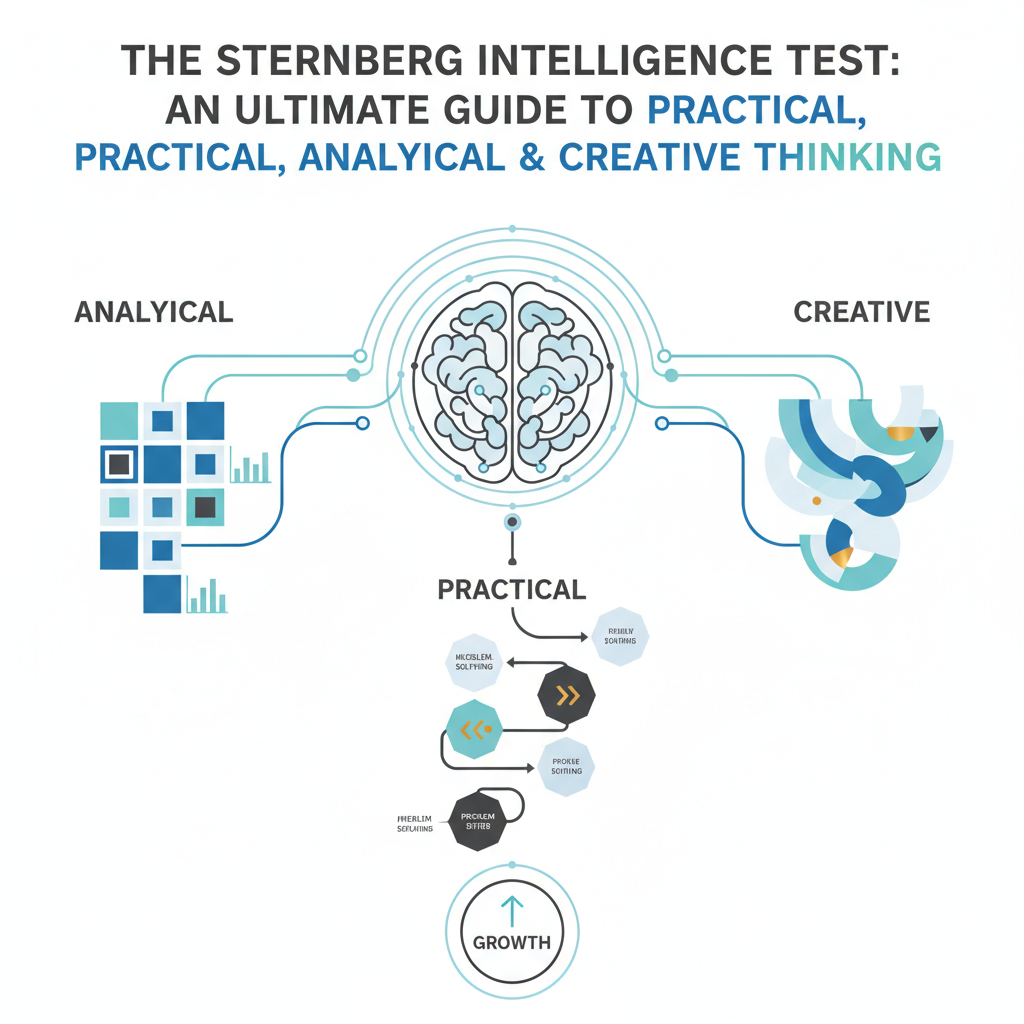
The Sternberg intelligence test, based on the Triarchic Theory of Intelligence, assesses three distinct types of intelligence: analytical, creative, and practical. Unlike traditional IQ tests that focus mainly on academic skills, it provides a broader view of intelligence by evaluating real-world problem-solving and innovative thinking. This approach helps identify a person’s unique cognitive strengths.
Have you ever felt that traditional intelligence tests don’t measure everything you can do? For a long time, being ‘smart’ just meant being good at schoolwork or logic puzzles. But intelligence is much more than that. It’s also about how you create, adapt, and handle real-world challenges. This wider view is the basis of the Sternberg Intelligence Test. It helps us see all our mental strengths and our creative potential.
This article will explain the Sternberg Intelligence Test and its Triarchic Theory of Intelligence. We will look at the three types of intelligence it covers: analytical, creative, and practical. These types are separate but work together. By learning about each one, you’ll better understand your own thinking styles. You’ll see how you break down problems, come up with new ideas, and use what you know in daily life.
Understanding the Sternberg model can help you, whether you want to improve your problem-solving, grow personally, or just learn about your own creativity. We’ll show you how using these different kinds of intelligence can change how you face challenges. You’ll learn new ways to innovate and get tips for strengthening each of these key areas. Get ready to discover more about yourself and see how a good balance of these skills can unlock your creative ability and help you navigate the world with more confidence.
What Is the Sternberg Intelligence Test?
Moving Beyond Traditional IQ
For a long time, IQ tests were the main way to measure intelligence. These tests focused on logic and language skills. But they often missed other important human abilities.
However, real intelligence is much more than that. Creative thinking, for instance, is key for new ideas. Practical skills are needed for everyday life. Traditional IQ scores didn’t show this full picture.
As a result, many experts wanted a wider view. They knew that a deeper understanding of intelligence could help people do better at work and in life. This change led to new theories that gave better insights into our mental strengths.
Understanding these different parts of intelligence helps you see your own unique skills. It supports you as you grow and improve yourself.
Introducing the Triarchic Theory of Intelligence
Because old IQ tests had limits, Dr. Robert J. Sternberg offered a new idea. This well-known psychologist created the Triarchic Theory of Intelligence [1]. His work changed how we think about being smart.
Sternberg’s theory says that intelligence isn’t just one thing. Instead, it is made of three different but connected parts. This gives us a much broader view of what it means to be “smart.”
These three types of intelligence work together to help us succeed in life. They are:
- Analytical Intelligence: This is our skill for analyzing, judging, and comparing information. It helps us solve problems in traditional academic settings.
- Creative Intelligence: This involves coming up with new ideas and dealing with new situations. It is about thinking outside the box.
- Practical intelligence: This is the ability to use knowledge in real-world situations. It helps us adapt to our environment or change it to fit our needs.
This complete theory helps you explore your own thinking styles. It helps you understand your strengths in solving problems and coming up with new ideas. It also shows how these different forms of intelligence lead to overall success and personal growth.
What Are the 3 Types of Sternberg Intelligence?

Analytical Intelligence: The Problem Solver
Analytical intelligence is what many traditional intelligence tests measure. Sometimes called “componential” intelligence, it involves the mental skills you use to analyze, evaluate, and compare information [2]. Think of it as your inner academic.
This intelligence is key for breaking problems down into smaller parts. It helps you understand cause and effect. You use analytical intelligence when you:
- Evaluate arguments and evidence.
- Solve complex logical puzzles.
- Identify patterns and connections.
- Critique ideas or plans.
If you want to be a creative problem-solver, strong analytical skills are essential. They help you see if your new ideas will work and spot any potential problems. This ensures your creative ideas are not only imaginative but also practical and effective.
Creative Intelligence: The Innovator
Creative intelligence is about how you handle new situations. Also known as “experiential” intelligence, it means using what you already know to come up with new ideas and solutions. This is where innovation truly shines.
This type of intelligence is all about imagination and fresh perspectives. It helps you think outside the box. You use creative intelligence when you:
- Invent unique solutions to problems.
- Come up with new ideas.
- Connect different pieces of information in new ways.
- Adapt to new situations quickly.
- Imagine different possibilities.
Our Creative Ability Test is specifically designed to explore and measure this intelligence. It looks at your ability to think flexibly, generate many ideas, and stay open to new things. When you understand your creative intelligence, you can use your unique way of thinking to grow and innovate.
Practical Intelligence: The Real-World Navigator
Practical intelligence is your ability to apply what you know to real-world situations. It’s often called “street smarts” or common sense. This intelligence, also known as “contextual” intelligence, helps you adapt to, shape, or choose new environments.
This practical wisdom helps you put ideas into action. You use practical intelligence daily when you:
- Solve everyday problems effectively.
- Navigate social situations.
- Understand unspoken rules.
- Manage tasks and projects efficiently.
- Apply knowledge to achieve goals.
When you have a brilliant creative idea, practical intelligence helps you turn it into reality. It helps you figure out what will actually work in a real situation. Improving this skill means you can bring your creative solutions to life and handle any challenge that comes up.
How Does the Sternberg Triarchic Abilities Test (STAT) Work?
What to Expect from the Test Questions
The Sternberg Triarchic Abilities Test (STAT) is not just a memory test. It tests your mind in three different ways. This assessment shows your unique mental strengths. It helps you see how you solve different problems.
Each part of the STAT looks at a specific type of intelligence. You will see different kinds of questions. These might include multiple-choice, short-answer, or scenario-based tasks.
- Analytical Questions: These test your critical thinking. You might solve analogies, complete number sequences, or interpret logical statements. The goal is to break down problems and find the one right answer.
- Creative Questions: This part tests your ability to come up with new ideas. You could be asked to invent a unique story. You might also design a new product or suggest different solutions to a common problem. These questions look for original and clever thinking. [3]
- Practical Questions: Here, you use what you know in real-life situations. Imagine you are given a practical problem at work or in daily life. You then choose the most effective solution. These tasks measure your “street smarts” and how well you adapt.
The STAT questions push you to think in flexible ways. They are not always about finding one perfect answer. Instead, they look at how you think and solve problems. This approach gives a fuller picture of what you can do.
Interpreting Your Results for Personal Growth
Receiving your STAT results is an exciting step. It’s more than just a score. It gives you a detailed map of your unique cognitive profile. Understanding this is a powerful tool for learning about yourself and growing.
Your results will show your strengths in all three types of intelligence. For example, you might be great at creative thinking. This means you’re good at coming up with new ideas. Or maybe your practical intelligence is a high point, meaning you’re great at solving everyday problems.
Understanding your creative strengths is especially helpful. The STAT can reveal:
- Divergent Thinking: Your ability to come up with many different ideas from one starting point.
- Originality: How unique and uncommon your ideas tend to be.
- Cognitive Flexibility: How easily you can change your point of view and try new approaches.
- Openness to Experience: How willing you are to explore new ideas and try unusual methods.
How can you use this information? Your profile gives you useful information you can act on. You can use your strongest type of intelligence to your advantage. You can also see which areas you might want to improve. For example, if you are strong in creative intelligence, you could look for jobs that require new ideas. If you want to improve your practical intelligence, you could practice solving real-life problems. [4]
Remember, these results are not fixed labels. They are a starting point for growth. They help you grow your skills more effectively. At Creative Ability Test, we use these insights to help you. We help you turn what you’ve learned into personal strategies. This guidance helps you continue to develop your creative skills. It turns uncertainty into confident self-awareness.
Why Does Sternberg’s Model Matter for Your Creativity?
Connecting Creative Intelligence to Your Potential
Sternberg’s model is a great way to understand your creative skills. It shows that creativity isn’t just a mysterious talent. Instead, it defines Creative Intelligence as a specific skill you can measure.
This type of intelligence is all about creating new ideas. It helps you see problems in new ways and come up with fresh solutions. It also encourages you to question old habits and think with imagination.
Understanding your creative intelligence is key to reaching your full potential. Our Creative Ability Test assessment helps you find your unique creative strengths. You will discover your personal approach to challenges and how you create original thoughts.
As a result, you get a clear look at your:
- Divergent thinking abilities: How many different ideas can you produce?
- Cognitive flexibility: How easily can you switch perspectives?
- Novelty generation: How adept are you at creating something truly new?
- Risk-taking in ideation: Are you comfortable exploring unusual ideas?
These insights are practical, not just theory. They give you a clear path for growth. You learn how to use your natural creative style well in your personal and professional life.
Using a Balanced Approach to Solve Problems
True innovation often needs more than one type of intelligence. Sternberg’s Triarchic Theory shows the power of using a balanced approach. It highlights how combining analytical, creative, and practical skills leads to better problem-solving.
Think about a tough problem you’re facing. You might start by breaking it down with logic. This is where your analytical intelligence shines. You identify the main parts of the problem and any potential roadblocks. For instance, you could analyze market data for a new product idea [5].
However, analysis alone can lead to the usual answers. This is where creative intelligence becomes essential. It lets you brainstorm fresh, unusual solutions. You can think outside the box and imagine possibilities others might miss. Perhaps you see a completely new product feature or a different way to deliver a service.
Finally, practical intelligence turns your ideas into reality. It helps you figure out what is possible and how to make it work. You consider real-world limits, like your budget and timeline, and create a solid plan. This intelligence makes sure your great ideas can succeed in your environment.
By understanding your profile across all three intelligences, you can develop a more well-rounded approach. Our complete 30-question Creative Ability Test assessment provides this valuable insight. It offers personal feedback and clear next steps. These tools help you strengthen any area you choose, making you a more flexible and effective problem-solver.
How Can You Enhance Your Triarchic Intelligences?
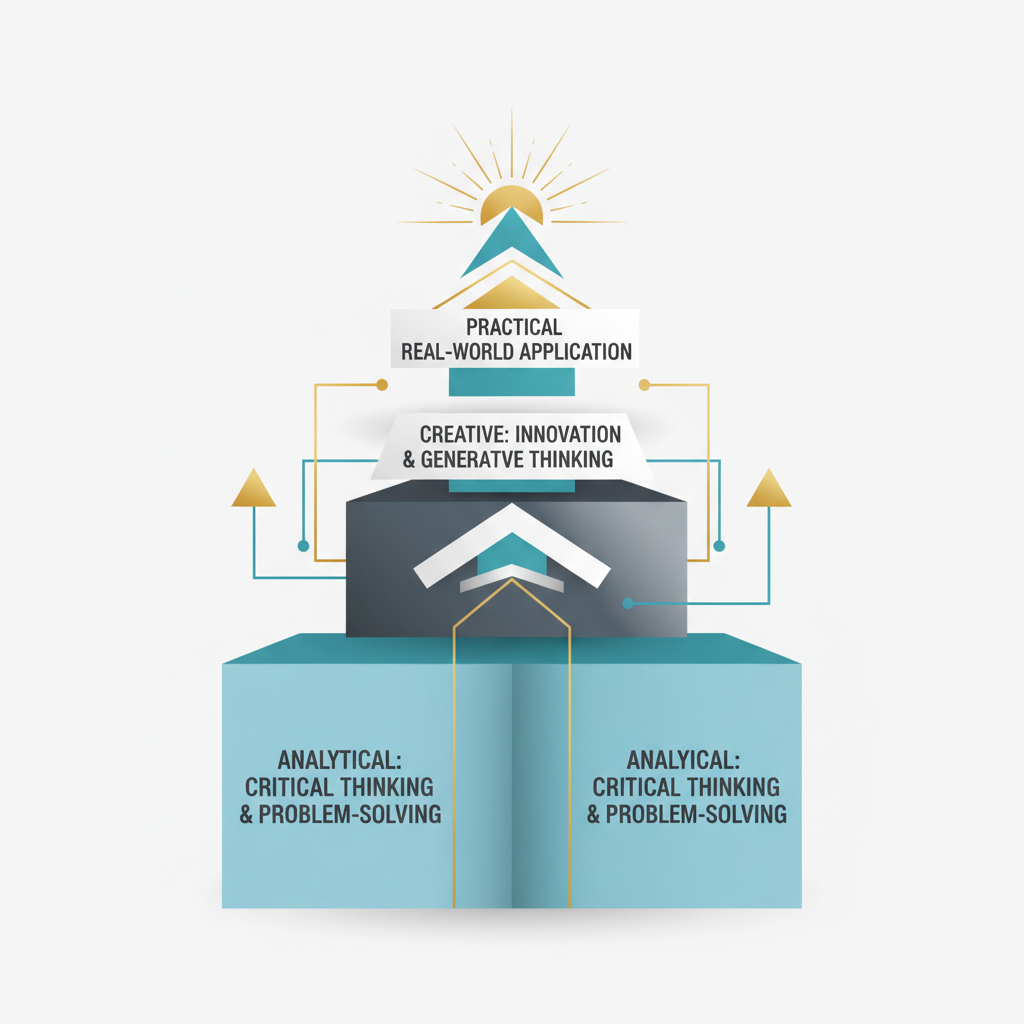
Understanding how you think, whether with a framework like Sternberg’s or a detailed assessment like the Creative Ability Test, is just the first step. The real power comes from actively improving your skills. This includes strengthening your analysis, expanding your creativity, and sharpening your real-world problem-solving. The Creative Ability Test also offers personal feedback and clear steps to build on your unique creative talents.
Practical Tips for Boosting Analytical Skills
Analytical intelligence helps you break down problems, study information, and make good decisions. It involves critical thinking and logic. Here are several effective ways to strengthen these important skills.
- Engage with Logic Puzzles: Regularly solve puzzles like Sudoku, crosswords, or riddles. These activities train your brain to see patterns and find solutions. They also sharpen your mind.
- Practice Critical Reading: When you read, don’t just absorb facts. Question the author’s ideas and look at their evidence. Think about other points of view. This helps you understand things more deeply.
- Break Down Complex Problems: When you face a big challenge, divide it into smaller, manageable parts. Look at each part on its own. This makes big tasks feel less overwhelming.
- Ask “Why” Repeatedly: Don’t stop at the first answer. Keep asking “why” to find the real cause of a problem. This habit helps you understand things on a deeper level.
- Learn Basic Coding: Coding requires you to think in a clear, logical way. It teaches you how to structure instructions and fix errors. This is a great way to practice your analytical skills.
- Reflect on Decisions: After you make a choice, think about what happened. Ask yourself what went well and what you could do better next time. This helps you make better decisions in the future [6].
Strong analytical skills also support your creativity. They help you judge new ideas carefully and improve your innovative solutions. Our platform gives you insights into how your analytical side affects your creative work.
Strategies to Nurture Your Creative Thinking
Creative intelligence is all about coming up with new ideas, thinking outside the box, and using your imagination. It is a key part of innovation and personal growth. The Creative Ability Test is designed to measure and improve these skills. Here are some practical strategies to unlock your creative potential.
- Embrace Divergent Thinking Exercises: Set aside time to brainstorm freely without judging your ideas. For example, try to list all the possible uses for a common object like a brick. This practice helps you generate more ideas [7].
- Explore New Experiences: Step out of your comfort zone. Visit new places, try a new hobby, or learn about different cultures. New experiences give you fresh ideas and help you see things in new ways.
- Practice Mind Mapping: Start with a main idea and draw branches to related words, ideas, and images. This visual tool helps you organize your thoughts and spark new connections.
- Challenge Assumptions: Question the way things are usually done. Ask “What if…?” to explore new possibilities. New ideas often start by challenging old ones.
- Engage in Creative Play: Give yourself free time for fun activities like drawing, writing stories, or making up music. Being playful helps you feel less self-conscious and express yourself more freely.
- Keep an “Idea Journal”: Write down any idea, thought, or question that you have. Even small thoughts can sometimes grow into big ideas later on.
At Creative Ability Test, we understand that creativity is a skill you can grow. Our personalized feedback helps you find your unique creative strengths. We then offer clear steps to build on your specific thinking style. This helps you use your creativity in all parts of your life.
Ways to Improve Your Practical Intelligence
Practical intelligence is your ability to handle real-world situations, solve everyday problems, and deal with people. It is often called “street smarts” or common sense. It connects what you know with what you can actually do.
- Learn from Experience: Think about your past successes and failures. Figure out what worked and what did not in real life. Use these lessons to make better choices next time.
- Observe and Emulate: Pay attention to how other people solve problems or interact well. Learn from their methods and try them yourself. This is a powerful way to learn from real-life examples.
- Seek and Apply Feedback: Ask people for feedback on your work and your decisions. Be open to helpful advice. Use this information to improve how you do things.
- Develop Strong Communication Skills: Clear communication is key to success in the real world. Practice listening carefully and saying what you mean simply. This builds better relationships and prevents misunderstandings.
- Set Realistic Goals: Know your strengths and weaknesses. Set goals you can actually reach with the time and resources you have. This helps you avoid frustration and make steady progress.
- Practice Problem-Solving in Context: Use your analytical and creative skills on the challenges you face every day. Focus on finding solutions that work for your specific situation. This makes your practical skills stronger.
By improving your practical intelligence, you can turn insights from your Creative Ability Test results into real achievements. You will go from just knowing your potential to using it with confidence to solve real-world problems. This leads to both personal and professional growth.
Frequently Asked Questions
What are the Sternberg intelligence types?
Robert Sternberg’s Triarchic Theory of Intelligence offers a new way to think about intelligence. It looks beyond traditional IQ scores and suggests there are three main types of intelligence. These types work together to help us navigate the world and solve problems. Understanding them can reveal how you think and learn best [8].
Here are the three Sternberg intelligence types:
- Analytical Intelligence: This is your skill for academic problem-solving. It’s about analyzing, evaluating, and comparing information. People with strong analytical intelligence are good at logical reasoning and thinking critically. This skill helps you break down big problems into smaller, more manageable parts.
- Creative Intelligence: This type is about coming up with new ideas and thinking in new ways. You use it to find novel solutions to problems. This intelligence helps you handle unfamiliar situations with flexibility. It allows you to create innovative concepts and connect ideas that seem unrelated.
- Practical Intelligence: Often called “street smarts,” this is your ability to adapt to everyday life. It helps you solve real-world problems by applying your knowledge effectively. This intelligence helps you handle social situations and know how to get things done.
Each type is important, and they all contribute to a balanced approach to life. Knowing your strengths in these areas can help you grow as a person and improve your problem-solving skills.
What kind of questions are on the Sternberg Triarchic Abilities Test?
The Sternberg Triarchic Abilities Test (STAT) is designed to measure all three types of intelligence. It uses different kinds of questions, with each format targeting a specific thinking skill. This approach provides a detailed profile of your abilities.
Test questions often include:
- Analytical Questions: These are often multiple-choice questions. You might solve analogies, like “Bird is to nest as human is to ,” or find patterns in a series of numbers. These questions test your ability to use logic, identify relationships, and draw conclusions.
- Creative Questions: These tasks ask you to think outside the box. You might be asked to invent a story, design a new product, or suggest new solutions to a problem. For example, “How many different uses can you think of for a brick?” These questions measure your originality and ability to generate unique ideas.
- Practical Questions: These questions are based on real-world situations. You might read a short story about a social conflict and choose the best way to resolve it. Or, you might be asked to analyze a business problem and suggest a practical solution. They test your ability to apply your knowledge and adapt to everyday challenges.
The STAT shows how you use different thinking styles. This understanding is very useful. It helps you use your unique strengths, which leads to better problem-solving and new ideas.
Can I take the Sternberg Triarchic Abilities Test online?
The original Sternberg Triarchic Abilities Test (STAT) is mainly a tool for research and academic use [9]. Because of this, it’s not easy to find an official online version for personal use. However, the ideas behind Sternberg’s work are still very valuable and shape how we understand intelligence and creativity.
If you’re interested in exploring your creative potential, our platform offers a great alternative. The Creative Ability Test is an assessment based on science that focuses on the “Creative Intelligence” part of Sternberg’s theory. Our 30-question test is designed to help you measure your creative strengths and how flexibly you can think.
When you use the Creative Ability Test, you receive:
- Personalized insights into your creative thinking style.
- Actionable tips to improve your problem-solving skills.
- Guidance on how to bring more innovation into your daily life.
- A clear understanding of how to use your unique abilities.
Our platform focuses on real results. It helps you understand and improve your creative abilities, giving you clear insights you can act on. Discover your creative potential today.
Sources
- https://psychology.cornell.edu/robert-j-sternberg
- https://pressbooks.oer.hawaii.edu/psychology/chapter/theories-of-intelligence/
- https://www.apa.org/pubs/books/supp/sternberg-capstone/chapter-5-stat.pdf
- https://psychology.jrank.org/pages/621/Sternberg-s-Triarchic-Theory-Intelligence.html
- https://www.forbes.com/advisor/business/what-is-market-research/
- https://hbr.org/2012/05/make-better-decisions-learn-to-reflect
- https://psychology.iresearchnet.com/social-psychology/group/brainstorming/
- https://robertjsternberg.com/triarchic-theory-of-intelligence/
- https://psyc.umd.edu/research/laboratory/university-maryland-triarchic-abilities-test-umtat