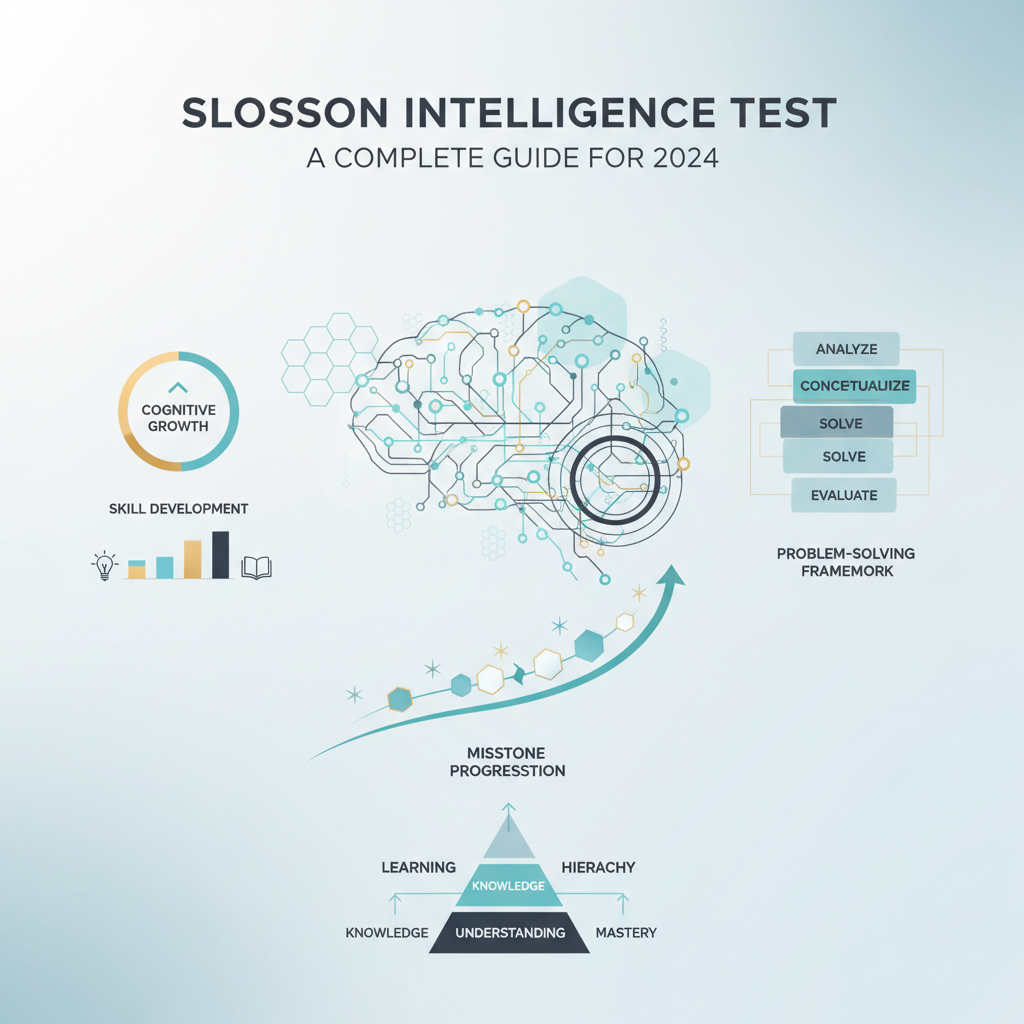
The Slosson Intelligence Test (SIT) is a brief, individually administered screening instrument used to provide a quick estimate of general verbal cognitive ability, often referred to as an ‘IQ’ score. It is primarily used by psychologists, educators, and clinicians to quickly assess an individual’s mental ability and identify those who may need more comprehensive evaluation.
Have you ever wondered about your thinking skills? Understanding how your mind works is a key step toward personal growth and self-awareness. Many tools can measure these skills, and one of the most trusted is the Slosson Intelligence Test (SIT). For decades, this quick but thorough test has provided useful information about a person’s language skills and overall thinking ability.
This guide will explain the Slosson Intelligence Test in detail, including its history, what it measures, how it’s scored, and who uses it. We’ll break down its structure with clear, factual explanations to help you understand this important tool. While the Slosson test offers a helpful snapshot of specific thinking skills, we believe true potential grows when you also understand your creativity and problem-solving abilities.
This guide is for you if you’re curious about standard intelligence tests or want to see how they fit into the larger picture of human abilities. By the end, you’ll clearly understand the Slosson Intelligence Test and its role in measuring thinking skills. Let’s start by looking at what the Slosson test is and why it’s still a useful tool today.
What is the Slosson Intelligence Test (SIT)?
A Quick Look at Its History and Purpose
The Slosson Intelligence Test (SIT) is a short test given to one person at a time. Dr. Richard L. Slosson created it in 1963. Its main goal is to quickly measure a person’s general cognitive ability or intelligence level. This makes it a helpful screening tool.
The SIT was designed to be easy to use. It’s faster and more flexible than other, longer intelligence tests. This makes it useful when a long assessment isn’t practical. It helps find people who may need a more detailed evaluation.
Who Uses the Slosson Intelligence Test?
Professionals in many fields use the Slosson Intelligence Test. They use it when they need a quick and reliable way to measure cognitive skills. These users include:
- Psychologists: They use it for initial screenings or as part of a larger set of tests. This helps them get a quick look at a client’s cognitive skills.
- Educators: Teachers and school psychologists use the SIT to find students who might need special education services. It also helps them understand learning difficulties.
- Special Education Professionals: They use the test to see if a student qualifies for certain programs. It also helps them create Individualized Education Plans (IEPs).
- Counselors: Some counselors use it to help with career or academic planning. It gives them a quick summary of a person’s cognitive strengths.
Because of this, the SIT is a helpful first step. It shows professionals when more specific support or testing is needed.
How the SIT Differs from a creativity assessment
It’s important to know how the SIT is different from a creativity assessment. The SIT mainly measures “convergent thinking.” This involves finding the single best answer to a problem. This type of thinking uses existing knowledge, reason, and standard problem-solving skills.
In contrast, a creativity assessment, like the one offered by Creative Ability Test, focuses on “divergent thinking.” Divergent thinking explores many possible solutions or ideas. It focuses on originality and flexible thinking. So, these two tests measure different but equally important parts of a person’s abilities.
Here are the main differences:
- Focus of Measurement: The SIT measures traditional intelligence, like verbal skills and general knowledge [1]. A creativity assessment explores your ability to come up with new ideas.
- Thinking Style Assessed: The SIT focuses on convergent thinking (finding one correct answer). A creativity assessment focuses on divergent thinking (creating many unique solutions).
- Skills Evaluated: Intelligence tests look at memory, vocabulary, and logic. Creativity tests look at imagination, innovation, and being open to new things.
- Outcomes for Personal Growth: An intelligence score gives you an idea of your thinking speed and academic potential. A creativity assessment gives you practical tips to improve your creative thinking. It helps you become more innovative and solve problems in new ways.
So, while the Slosson test shows certain cognitive strengths, it doesn’t measure your ability to think innovatively or solve problems in unique ways. A creativity assessment fills in that gap. It shows your unique creative potential and helps you use it for personal and professional growth.
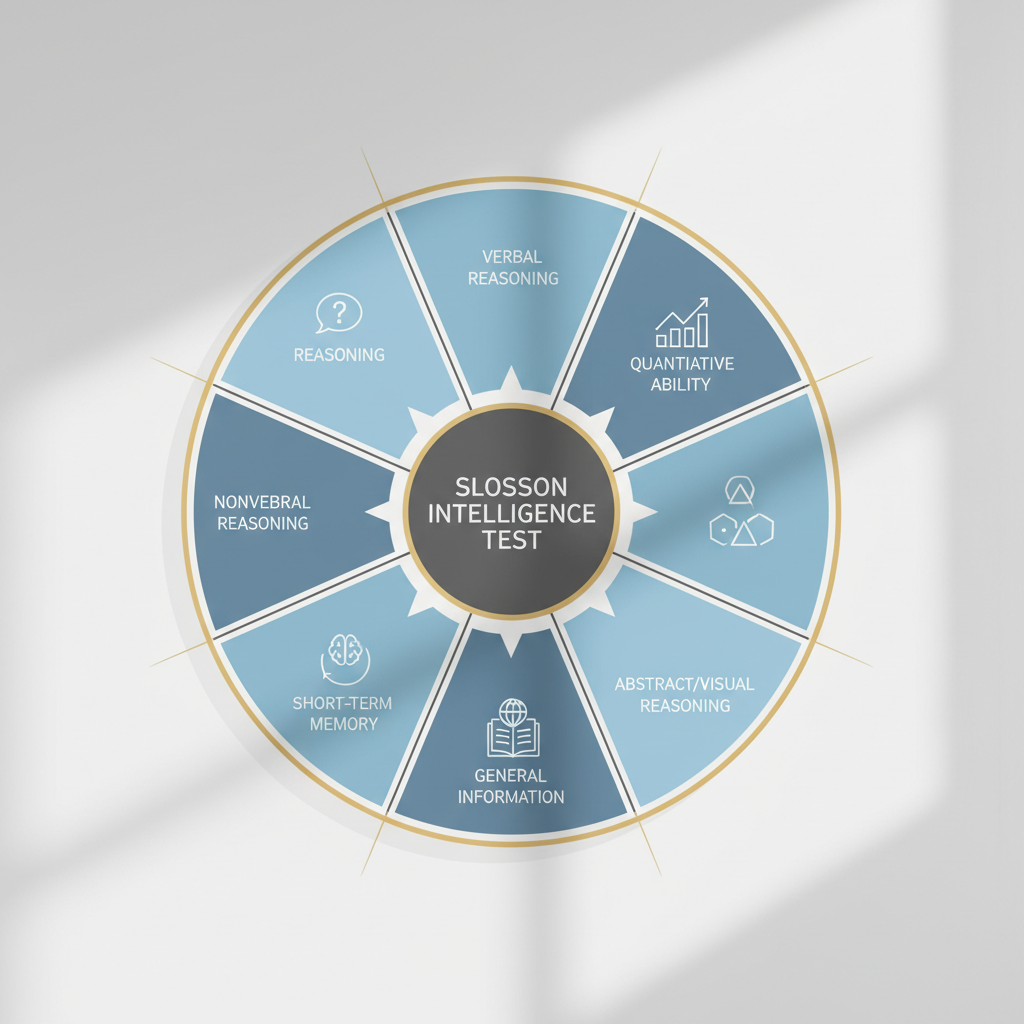
What Key Areas Does the Slosson Test Measure?
Assessing Verbal intelligence and Vocabulary
Verbal intelligence is a key part of the Slosson Intelligence Test. This section looks at how well you understand and use language. It mainly tests your vocabulary. For example, you might be asked to define words that range from easy to hard.
It also measures how well you understand instructions. Good verbal skills are important for doing well in school. They also help you communicate in everyday life. This part of the test shows your ability to learn and share ideas with words. While the Slosson test measures your word recall, creative language skills go deeper. Our Creative Ability Test, for instance, explores how you use language in flexible ways to create new ideas or tell interesting stories.
General Knowledge and Information
This part of the Slosson test measures your general knowledge. It checks what you know about common facts and ideas. The questions cover a wide range of topics. For example, you may see questions about history, science, geography, or current events. The goal is to see how much knowledge you’ve gathered over time.
This reflects what you have learned from your experiences. It also shows how curious you are about the world. A good base of general knowledge is very useful. It gives you the building blocks for more complex thinking. For instance, creative problem-solving often means connecting different pieces of information in new ways. So, knowing a lot can boost your ability to think of new ideas [2].
Understanding Similarities and Differences
This area looks at your reasoning and logic skills. You will be asked to find connections between different ideas or things. For example, you might explain how two things are similar or different. This skill is key for organizing information. It also helps you make conclusions and solve problems. It shows if you can spot patterns and connect ideas.
Because of this, it’s a good measure of your analytical skills. This skill is also closely tied to creativity. Connecting ideas that seem unrelated is a key part of creative thinking. Our Creative Ability Test can help you see how you use these thinking skills. It shows your unique way of solving problems and creating ideas. This includes finding unique patterns or fresh perspectives.
Quantitative Reasoning Skills
The Slosson Intelligence Test also assesses your quantitative reasoning abilities. This section measures your ability to understand and work with numbers. It includes basic math, number patterns, and math problems. These skills are basic to logical thinking. They are also important in many real-life situations. For example, tasks like making a budget or analyzing data depend on these skills.
Quantitative reasoning isn’t just for math and science. Creative people in fields like design or engineering often use these skills to find smart, practical solutions. Knowing your strengths here can help you use logic in creative ways. This can lead to new approaches in many areas. Our platform helps you see how these basic skills support your creativity. We show you how to use them for personal and professional growth.
How Does Slosson Intelligence Test Scoring and Interpretation Work?
Understanding the Basal and Ceiling Levels
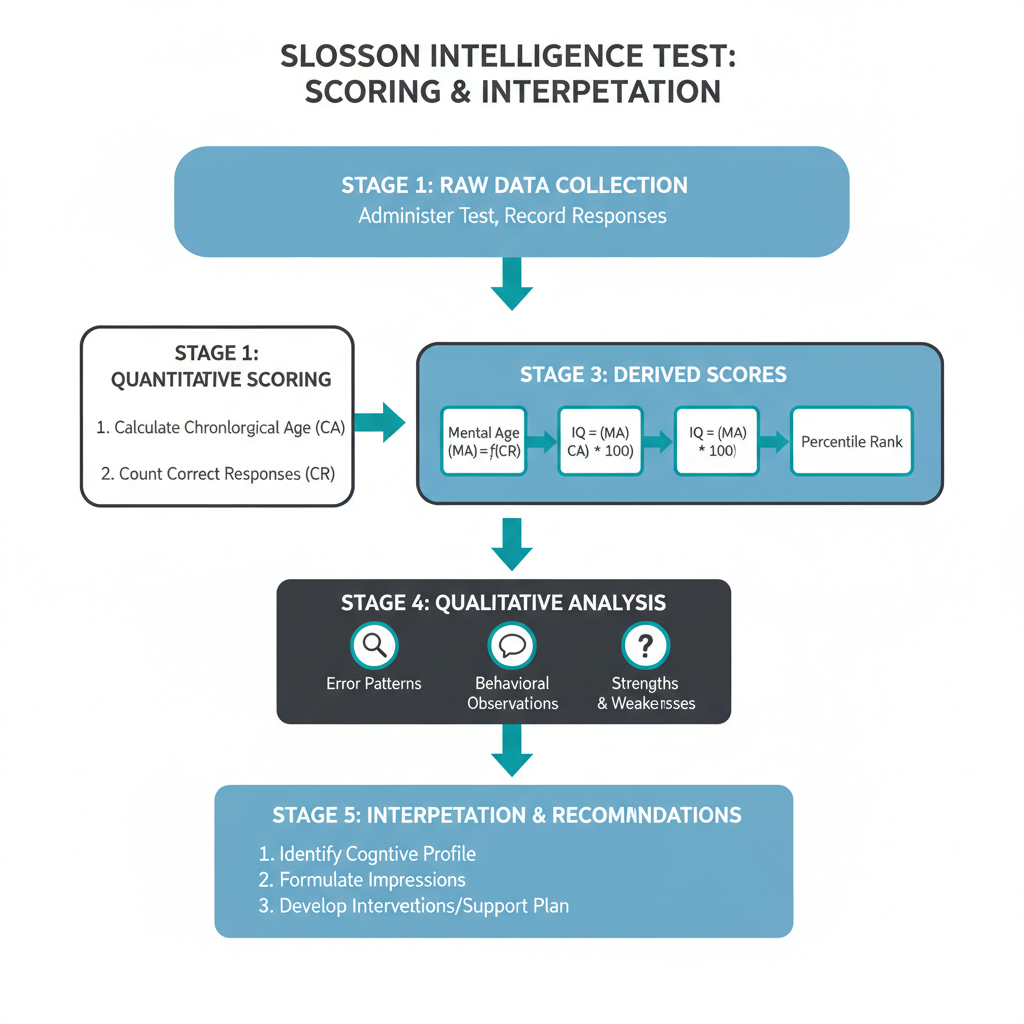
The Slosson Intelligence Test uses an efficient scoring method. It uses “basal” and “ceiling” levels to find your cognitive range without asking every single question.
- Basal Level: This is the point where you answer questions correctly one after another. It establishes your base knowledge and skills. Think of it as finding your comfort zone before the questions get harder.
- Ceiling Level: On the other hand, this is the point where you start getting questions wrong. It helps find the upper limit of your current skills in the areas being tested. This is where the questions become too hard for you.
By finding these two points, the test can focus on the questions that are most relevant to your abilities. This makes the test faster and more personalized.
Calculating the Mental Age and IQ Score
After you answer the questions, the Slosson Intelligence Test turns your raw score into a “Mental Age” (MA). Your Mental Age reflects the average ability of someone at a specific age [3]. For example, if a 7-year-old performs like an average 9-year-old, their Mental Age is 9.
Next, the Mental Age is used to calculate an Intelligence Quotient (IQ) score. In the past, the formula for IQ was simple: (Mental Age / Chronological Age) x 100. Modern tests, like many versions of the Slosson, now use a “deviation IQ” system [4]. This system compares your score to the average score of other people in your age group. The average score for any age group is 100.
This standard method means a score of 100 is average for your age. Scores above or below 100 show how you performed compared to your peers. However, it’s important to remember these scores only measure certain skills, not your total potential.
What is the Slosson Intelligence Test Score Range?
The Slosson Intelligence Test, like most IQ tests, uses a range of scores. The average IQ score for the general population is 100. The distribution of scores follows a bell curve, meaning most people score close to this average.
Here’s a general guide to IQ score ranges, which is often used for various intelligence tests [5]:
- 130 and above: Very Superior Intelligence
- 120-129: Superior Intelligence
- 110-119: High Average Intelligence
- 90-109: Average Intelligence
- 80-89: Low Average Intelligence
- 70-79: Borderline Intellectual Functioning
- Below 70: Extremely Low (Often indicating intellectual disability)
It’s important to know that these ranges are just labels. They give a snapshot of how you did on certain tasks. An IQ score is just one piece of information. It doesn’t show a person’s full abilities, especially skills like creativity or emotional intelligence.
Interpreting Your Results: What the Numbers Mean
An IQ score can offer a look into your specific cognitive strengths. A high score often points to strong verbal skills, general knowledge, and math skills. On the other hand, a lower score might show areas where you could use extra support.
But to understand an IQ score correctly, you need to look at the bigger picture. It’s crucial to remember that:
- Context is Key: An IQ score is most useful when you consider a person’s life, background, and other skills.
- Professional Guidance: A qualified expert, like a psychologist, should always interpret Slosson results. They look at many factors, not just the score.
- Limited Scope: IQ tests mainly measure logic, math, and language skills. They don’t usually test other important human abilities.
While helpful for some things, an IQ score doesn’t show your full potential. It doesn’t measure how well you come up with new ideas, adapt to change, or solve problems in creative ways.
This is where creativity comes in. At Creative Ability Test, we believe true potential is more than just an IQ score. Our 30-question, science-backed test measures key parts of creativity, such as:
- Cognitive Flexibility: Your ability to switch between different concepts and perspectives.
- Divergent Thinking: How effectively you can generate multiple solutions or ideas for a problem.
- Problem-Solving Skills: Your approach to tackling challenges creatively.
- Openness to Experience: Your willingness to explore new ideas and unconventional paths.
By focusing on these areas, we provide personal feedback and clear steps you can take. This helps you move from being unsure about your creative skills to understanding them better. You’ll learn how to use your creativity for personal growth, at work, and in everyday life. Our goal is to help you understand, improve, and use your unique creative strengths.
Where Can You Find Slosson Intelligence Test Questions?
Why Official Test Questions Are Not Publicly Available
You might wonder why it’s hard to find Slosson Intelligence Test questions online. This is for a very important reason. The security of tests like the Slosson is key to making sure they work correctly.
Official test questions are kept secret. This makes sure the test results are accurate and trustworthy. If the questions were public, people could just study the answers. As a result, scores would not show a person’s true abilities [6]. Instead, they would only show how well someone memorized them.
Keeping the test secure is the only way to get a fair and meaningful score. This rule applies to all respected tests, from IQ tests to our own Creative Ability Test. We use a science-backed method to give you real insights into your personal strengths.
Examples of Question Types You Might Encounter
While the real questions are secret, we can look at the *types* of questions on the test. The Slosson Intelligence Test mainly uses questions about language and general knowledge. Knowing this helps you understand what the test measures.
Here are some examples of the kinds of questions you might see:
- Vocabulary Definitions: You might be asked to define words. This tests your language skills. A good vocabulary helps you think and communicate clearly.
- Similarities and Differences: Questions may ask how two things are alike or different. For example, “How are a bird and a plane similar?” This tests your ability to see patterns and make connections. This skill is also important for creative problem-solving.
- General Information: You could be asked facts about history, science, or common knowledge. This measures what you have learned over time. What you already know helps you form new ideas.
- Quantitative Reasoning: Simple math or number pattern questions may be included. These test your basic math skills.
These question types test core thinking skills that are part of intelligence. But real creativity is more than that. Creativity is about flexible thinking and solving problems in new ways. It’s different from just remembering facts or knowing words. Our platform is designed to help you find these deeper creative skills.
Searching for a ‘Slosson Intelligence Test Questions PDF’
Many people search for a “Slosson Intelligence Test Questions PDF” online. It’s important to understand that official test materials are private property. You will not find a real, complete version for free. There is no official Slosson test PDF available to the public.
Be careful of any PDF that claims to be the official test. These unofficial versions are often misleading. They may have old or wrong questions. Using them can give you a false idea of your skills and lead to wrong conclusions about your abilities.
To get real results, the Slosson test must be given by a trained professional. They make sure the test is done correctly and the scores are understood properly. In the same way, a science-backed creativity test can give you trustworthy insights. Our Creative Ability Test is a strong, 30-question assessment designed to help you understand your creative strengths. We give you personal feedback and clear steps you can take. This helps you move from being unsure to feeling confident about your growth.
Is the Slosson Intelligence Test Available Online for Free?
The Difference Between Official Tests and Unofficial Quizzes
Many people wonder if they can take the Slosson Intelligence Test online for free. The simple answer is no. Official intelligence tests, like the Slosson Intelligence Test (SIT), are carefully created tools for professionals. They are not meant to be taken casually online.
Official tests go through a tough validation process. Experts spend years making sure they are reliable and accurate. You need special training to give the test and understand the results correctly [6]. On the other hand, free online “IQ quizzes” are very different. They are usually just for fun.
These informal quizzes are not based on science. They do not have consistent questions or scoring methods. Because of this, their results don’t really tell you much about your thinking skills. Understanding this difference is key if you want a true picture of your abilities.
Risks and Limitations of Free Online IQ Tests
Taking free online IQ tests has some big risks. First, their results are often inaccurate. You might get a score that is misleading. This can make you feel overly confident or worried for no reason. These outcomes do not help you grow.
Also, these quizzes rarely give you personal feedback. They just give you a number, not helpful advice. This means you won’t learn about your unique mental strengths. You also won’t find out where you can improve. For example, they won’t tell you how to get better at solving problems or thinking creatively.
Here are key limits of unofficial online IQ tests:
- Lack of Validity: They don’t truly measure intelligence.
- Unreliable Scores: Your score can change a lot each time you take the same quiz.
- No Diagnostic Value: They can’t spot learning styles or thinking challenges.
- Privacy Concerns: They may collect your personal data without protecting it.
- No Actionable Advice: You get no useful tips on how to improve.
In the end, relying on these quizzes prevents you from really understanding yourself. They give you a vague picture instead of a clear path to reach your potential.
Why Professional Administration is Key for Accuracy
To get a meaningful result from a test like the Slosson, a professional must give it. A trained professional makes sure the test is given the right way. This process reduces the chance of bias. It also ensures everyone takes the test under the same conditions.
A professional does more than just hand you the test. They watch how you act and respond. They follow strict rules for scoring. They also explain the complex results based on your personal background. This deep understanding is vital. It helps you move from being unsure about your skills to knowing how you can improve.
Key reasons a professional is needed:
- Standardized Environment: Ensures everyone has fair and similar testing conditions.
- Expert Observation: A professional can notice important clues in your behavior during the test.
- Accurate Scoring: The scoring rules are complex and need an expert to get them right.
- Contextual Interpretation: Results are explained based on your background, not just as a number.
- Ethical Standards: Protects your privacy and makes sure the test process is fair and honest [7].
- Valid Insights: Only a test given by a professional provides trustworthy information.
This level of care is needed for any test that claims to offer real insights. It helps you understand your thinking patterns, just like a science-based creativity test helps you find your creative strengths.
Beyond IQ: Why Measuring Creativity Gives You a Clearer Picture
The Limits of Traditional Intelligence Scores
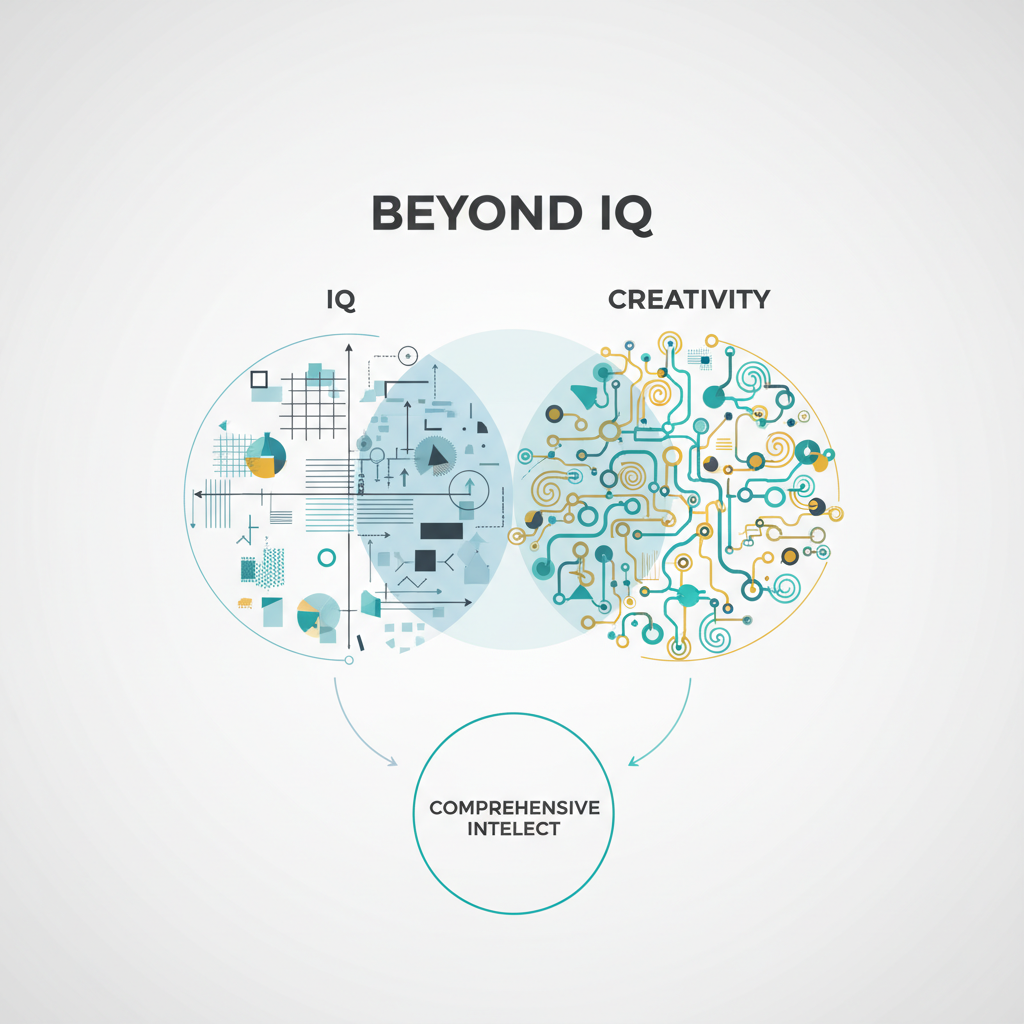
Traditional IQ tests, like the Slosson Intelligence Test (SIT), measure specific thinking skills. They often test verbal reasoning, vocabulary, and general knowledge. While these tests are useful, they don’t tell the whole story about a person’s intelligence.
An IQ score alone gives an incomplete picture of a person’s potential. These tests mainly focus on “convergent thinking,” which means finding the one correct answer to a problem. Life, however, often requires more creative solutions, and many real-world challenges don’t have a single right answer [8].
Furthermore, IQ tests typically overlook several critical human traits:
- Adaptive Thinking: The ability to adjust to new situations.
- Emotional Intelligence: Understanding and managing emotions.
- Practical Wisdom: Applying knowledge to real-life situations.
- Creativity: Generating new and useful ideas.
So, while IQ scores can show certain mental strengths, they miss the full range of our abilities. They often overlook the skills that make us truly innovative and able to adapt.
How Creativity Assessments Reveal Problem-Solving Skills
Creativity is more than just artistic talent—it’s a key thinking skill. It involves imagining new possibilities and finding fresh solutions to problems. Unlike IQ tests, creativity tests explore your unique thinking styles to see how you approach challenges.
These tests measure key parts of creative thinking. They show your ability to innovate and think flexibly. For example, they often explore:
- Divergent Thinking: This is the ability to generate many varied ideas from a single starting point. Think of brainstorming sessions; divergent thinkers excel here.
- Cognitive Flexibility: This skill allows you to shift perspectives and adapt your thinking. It means seeing a problem from multiple angles.
- Elaboration: This is about expanding on initial ideas and adding details. It turns a simple concept into a rich, developed solution.
- Originality: This measures how unique and new your ideas are. It moves beyond conventional thoughts.
Understanding these traits helps you see your strengths and how you naturally come up with new ideas. These skills are important for both personal and professional growth. They are key to success in our fast-changing world [9].
Creativity tests give you practical insights. They show you how to use your unique problem-solving skills. This knowledge helps you solve tough problems and be more innovative in any field.
Discover Your Full Potential with the Creative Ability Test
If you want to look beyond traditional IQ scores, the Creative Ability Test is a great next step. Our test uses a scientific approach to help you measure and understand your creative potential. We go far beyond what a standard IQ test, like the Slosson Intelligence Test, can show you.
Our 30-question test explores how you think creatively. It looks at different sides of your creativity, including your flexible thinking, idea generation, and openness to new things. This gives you a much fuller picture of your unique strengths.
The Creative Ability Test helps you in several ways:
- Personalized Insights: Understand your unique creative strengths and thinking styles.
- Actionable Strategies: Get practical tips to improve your creative and problem-solving skills.
- Self-Awareness: Gain a clear understanding of your creative abilities.
- Growth Mindset: Get a clear plan to keep growing personally and professionally.
- Real-World Application: Learn to use your creativity in your daily life and at work.
We use science to develop our test, but we explain your results in a simple way. You’ll get feedback that is accurate and easy to understand. Our goal is to help you feel more confident and curious about your own abilities. Discover how creative thinking can change the way you approach challenges. Take the Creative Ability Test today and start your journey of self-discovery.
Frequently Asked Questions
What is a good score on the Slosson Intelligence Test?
To understand a “good” score on the Slosson Intelligence Test (SIT), it helps to know how IQ scores work. Like most IQ tests, the SIT sets the average score at 100 with a standard deviation of 15. This means most people will score between 85 and 115.
Here’s a general breakdown:
- Average Range: Scores from 90-109 are considered average [10]. Most people fall within this band.
- Above Average: Scores between 110-119 are often seen as high average.
- Superior: Scores of 120 or higher suggest superior intellectual ability.
However, a single IQ score doesn’t define your full cognitive potential. While the SIT measures certain mental skills, it doesn’t capture everything, like your ability to innovate, adapt, or think creatively. These are key parts of intelligence that creativity assessments like the Creative Ability Test can reveal. Our platform helps you understand your unique creative strengths and thinking styles, offering a more complete picture of your problem-solving abilities and personal growth potential.
How long does the Slosson test take to administer?
The Slosson Intelligence Test is known for being quick. It’s one of the shortest one-on-one intelligence tests available. The SIT usually takes about 10 to 20 minutes to complete [11].
Because it’s short, it is a useful tool for a quick evaluation. It’s often used to get a first impression of a person’s cognitive skills without a long testing session. In contrast, creativity assessments, while also efficient, explore many sides of your creative thinking. They offer deeper insights into how you adapt and solve problems. Our 30-question Creative Ability Test is designed to give you rich, personal feedback that goes beyond just a number.
Who is qualified to administer the Slosson Intelligence Test?
The Slosson Intelligence Test is a professional psychological assessment. Therefore, only people with special training and qualifications should give the test.
Qualified individuals typically include:
- Licensed Psychologists
- School Psychologists
- Educational Diagnosticians
- Other professionals with specialized training in psychological assessment
These experts know the correct way to give the test, score it, and interpret the results. They make sure the test is given in a consistent way every time, which is key to getting accurate and trustworthy results [12]. Proper administration helps explain what the scores really mean for a person’s thinking abilities. For those exploring their creative side, the Creative Ability Test provides a scientific yet easy-to-use online assessment. Our platform delivers personalized insights directly to you, helping you learn about yourself without needing a professional to give the test.
Can I find a PDF of the Slosson Intelligence Test score sheet?
No, you generally cannot find an official PDF of the Slosson Intelligence Test score sheet or questions online. Psychological tests like the SIT are protected materials. They are protected by copyright and kept confidential for several key reasons:
- Test Security: If the test questions or score sheets were public, it would make the test unreliable. People could practice the exact questions, which would make their scores inaccurate.
- Professional Use: These materials are designed for trained professionals only. They include specific rules on how to give the test and understand the results correctly.
- Ethical Guidelines: Professional groups have strict ethical rules about keeping psychological tests secure and using them correctly. Sharing these materials widely would violate these standards.
Therefore, any “Slosson Intelligence Test PDF” you find online is likely unofficial, old, or fake. Such materials will not provide accurate or meaningful results. We believe it is important to use tests that are scientific and trustworthy. While you can’t access official IQ test materials, the Creative Ability Test offers a clear, scientifically proven way to understand your creative potential. Our platform gives you instant, personal feedback to help you get useful tips about your thinking style and how you solve problems.
Sources
- https://www.proquest.com/openview/960579e0a81498b3c8f2b7f6c38b291a/1?pq-origsite=gscholar&cbl=18750&diss=y
- https://journals.sagepub.com/doi/abs/10.1177/0193841X19853966
- https://www.simplypsychology.org/iq-intelligence.html
- https://www.britannica.com/science/intelligence-test
- https://www.healthline.com/health/average-iq
- https://www.apa.org/education-career/guide/science-psychology/psychological-tests
- https://www.psychologicalscience.org/observer/testing-standards
- https://psychology.iresearchnet.com/developmental-psychology/cognitive-development/iq-tests/
- https://hbr.org/2019/04/the-power-of-creative-thinking-in-the-workplace
- https://www.apa.org/topics/intelligence/iq-tests
- https://www.pearsonassessments.com/store/us/en/products/q/questionnaires-and-surveys/general-cognitive/slosson-intelligence-test-r-3rd-ed-/P100000494.html
- https://www.apadivisions.org/division-5/resources/assessment-guidelines/index
Leave a Reply