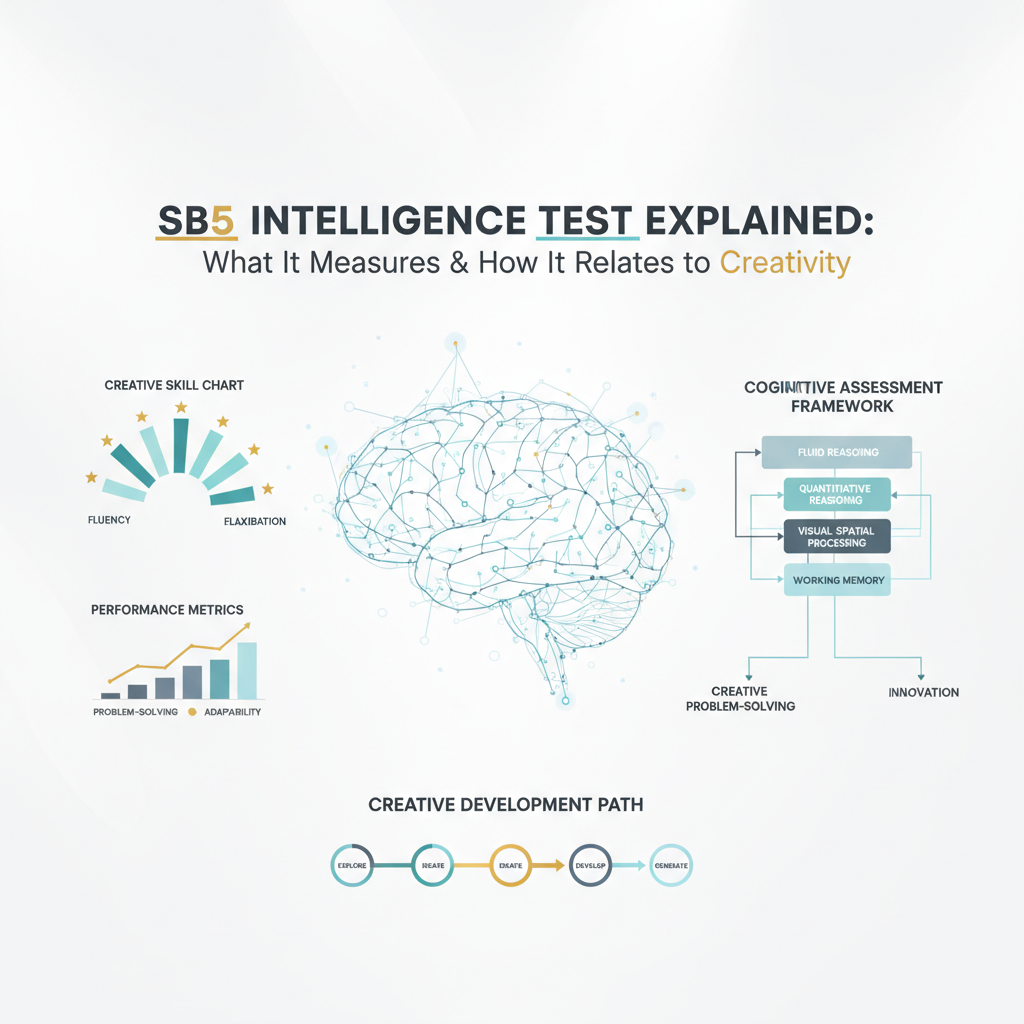
The SB5 Intelligence Test, or Stanford-Binet Intelligence Scales, Fifth Edition, is a professionally administered cognitive assessment used to measure intelligence in individuals from age two through 85+. It evaluates five key cognitive factors: Fluid Reasoning, Knowledge, Quantitative Reasoning, Visual-Spatial Processing, and Working Memory to provide a comprehensive Full Scale IQ score.
Have you ever wondered what shapes your thinking skills or how they connect to your ability to come up with new ideas? The world of psychological assessment offers a look into how our minds work. One of the most respected tools for understanding intellectual potential is the SB5 intelligence test, also known as the Stanford-Binet Fifth Edition. This test goes beyond a simple IQ score to look at the different parts of how you think. Learning what the SB5 measures can be a great first step to understanding yourself better.
While tests like the SB5 measure intelligence, their real power is in connecting those insights to your personal and professional growth. Intelligence provides a strong foundation, but creativity is what turns knowledge into new ideas and solutions. Many people think these two traits are separate, but they are closely linked. How you process information and adapt to new situations plays a big part in fueling your creative potential.
This article will guide you through the SB5 intelligence test. We will explain its structure, what each part reveals, and how to interpret the results. More importantly, we’ll explore the link between the thinking strengths identified by the SB5 and your natural creative abilities. When you understand these connections, you can better appreciate how your own mind works, discover your unique creative strengths, and learn practical ways to improve them for personal growth and daily life.
What is the SB5 Intelligence Test?
Understanding the Stanford-Binet Legacy
The SB5 intelligence test is a key tool in psychological assessment. It’s a respected test that helps us understand mental skills and has a history of over 100 years.
The test began in the early 1900s with the Binet-Simon Scale, created by Alfred Binet and Theodore Simon. Their goal was to find French students who needed extra help in school [1]. This was a major step forward, becoming the first practical intelligence test.
Later, Lewis Terman of Stanford University adapted the test for Americans. He introduced the idea of an “Intelligence Quotient” (IQ), and the test became known as the Stanford-Binet. This version secured its place in the history of psychology.
The current version, the SB5, is the fifth edition. It has been updated many times to stay current and accurate. The test measures a wide range of mental skills, including Fluid reasoning, knowledge, quantitative reasoning, Visual-spatial processing, and Working memory. These skills are the foundation for how we think, learn, and solve problems.
If you want to understand your own thinking style, the SB5 can offer deep insights. It can also highlight your creative potential. Learning about your strengths is a key step toward self-awareness.
Who is the SB5 Designed For?
The SB5 is very flexible. It’s designed for a wide range of ages, from two years old to over 85 [2]. This makes it a useful tool in many different situations.
Educational and clinical psychologists are the main users of the SB5. They use it for detailed cognitive assessments, but its use doesn’t stop there.
Here are some key groups and purposes the SB5 serves:
- Educational Placement: Helps identify gifted children or those who need extra learning support. This makes sure students get the right kind of help.
- Diagnosis of Intellectual Disabilities: Provides key information to help accurately diagnose intellectual disabilities.
- Assessment of Learning Difficulties: Can identify specific mental challenges that may affect school performance.
- Forensic and Clinical Evaluations: Used in different professional settings, including neuropsychological and legal evaluations.
- Research: Researchers use it to study intelligence, how our minds develop, and different psychological conditions.
For you, learning about the SB5 can be enlightening. It provides a clear method to evaluate your thinking patterns. This knowledge can help you understand how your mind influences your creativity. When you know your cognitive strengths, you can use them more effectively to solve problems and create new ideas.
What Are the Five Factors Measured by the SB5?
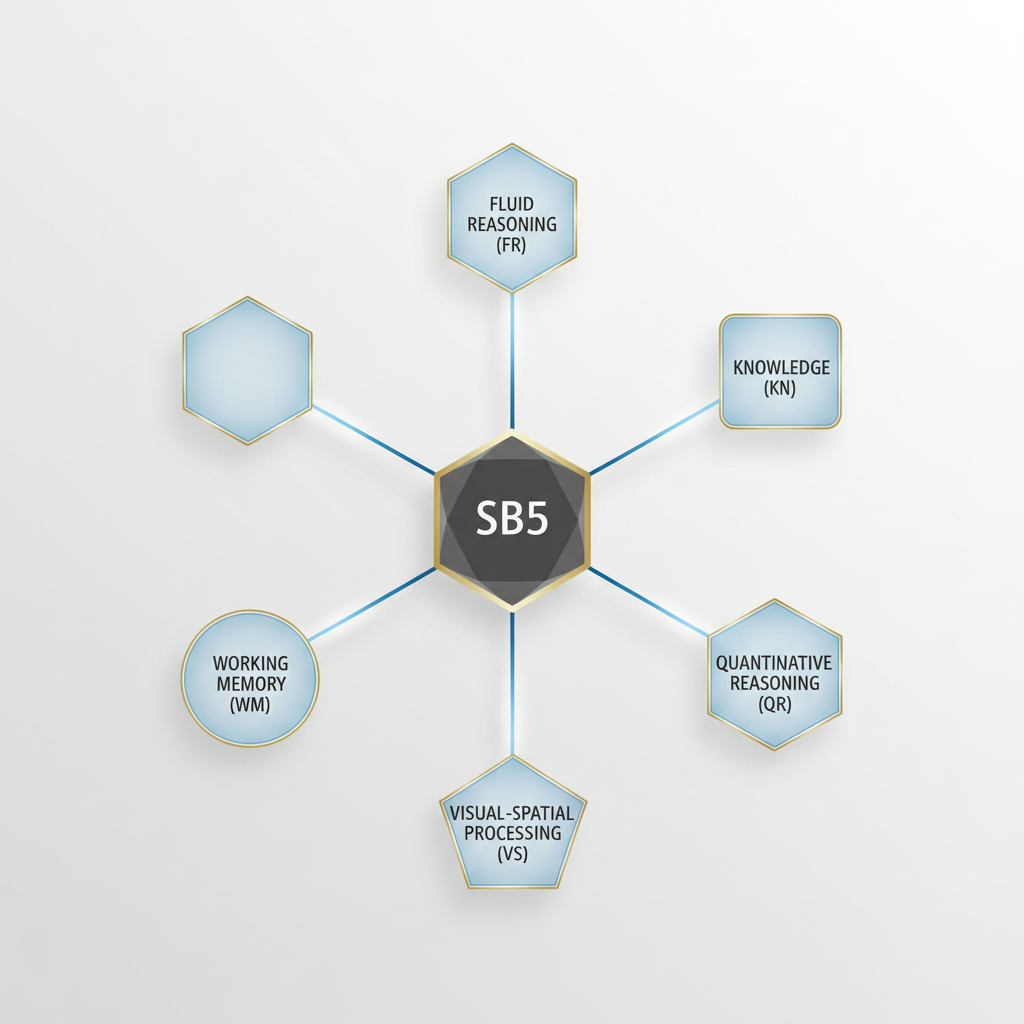
The SB5, or Stanford-Binet test, gives a detailed look at a person’s thinking skills. It doesn’t give just one score. Instead, it measures intelligence in five key areas. These areas show a full picture of how you use information and solve problems.
Learning about these areas can also highlight your creative potential. After all, creativity often uses many different thinking skills. Let’s take a closer look at each one.
Fluid Reasoning
Fluid reasoning is your ability to solve new problems. It means thinking logically when you face something new. This skill helps you understand new ideas fast. You use it to spot patterns and connections without needing past knowledge.
This skill is key for creative thinking. It helps you adapt to new challenges and come up with fresh solutions. People with strong fluid reasoning are often great at brainstorming and thinking outside the box.
For example, if you face a unique design problem, fluid reasoning helps you find a totally new way to solve it. It lets you see possibilities that others might miss.
Knowledge
Knowledge is the information you have learned over time. It includes your general understanding of the world, your vocabulary, and the facts you know. It reflects what you’ve learned in school and through life.
While creativity involves new ideas, it is built on what you already know. Knowledge provides the raw material for new inventions. A wide range of knowledge helps you make more connections, which can lead to fresh ideas.
Think of an artist who studies art history. Their knowledge helps them create a unique style. Likewise, a scientist uses known theories to form new ideas [source: https://www.apa.org/education-career/guide/careers/psychologists/science-research]. Knowledge powers their creative breakthroughs.
Quantitative Reasoning
Quantitative reasoning is your skill with numbers. It’s about solving math problems. This area covers understanding numbers and how they relate to each other. It helps you analyze data and make sense of statistics.
This skill helps bring structure to creativity. Many creative fields, like composing music or designing buildings, use logical analysis. Both require exact calculations and a good sense of space.
For instance, a software developer uses math skills daily. They write clean, effective code, which is a highly creative process that relies on logic.
Visual-Spatial Processing
Visual-spatial processing is about understanding what you see. It’s the ability to spot patterns and see how things fit together in a space. It lets you turn shapes and images around in your mind and picture them from different angles.
This skill is vital for many creative jobs. Artists, designers, and engineers all rely on it to imagine and create things. Strong visual-spatial skills can boost your imagination.
Imagine an architect designing a building. They have to picture how all the pieces will look and fit together. This skill helps them see the final structure in their mind. A sculptor does something similar when seeing a shape inside a raw block of stone.
Working Memory
Working memory is your brain’s ability to hold and use information for a short time. It’s like a mental sticky note. You use it to keep track of several things at once. This skill is a must for complex thinking tasks.
Working memory is also very useful for creativity. It lets you hold different ideas in your head during brainstorming. This helps you connect ideas that might seem unrelated, which leads to better problem-solving. People with strong working memory can often build on their ideas more easily.
Think of a writer creating a story. They keep track of characters, plot points, and dialogue all at once. A musician making up a melody on the spot also uses working memory to remember the tune, chords, and rhythm. Both are using information creatively in the moment.
Understanding these five factors helps you see how broad human intelligence is. Each one plays a part in how we learn, think, and create. Exploring your strengths in these areas can give you a better sense of how your mind works. This can help you grow as a person and become more creative.
How is the SB5 Intelligence Test Administered and Scored?
The Role of a Qualified Professional
Taking the SB5 intelligence test requires special training. You cannot take it at home or online by yourself. A trained and licensed professional must give you the test.
This professional is usually a psychologist or a specialist in psychological testing. They have a lot of training in how to give and understand these tests. Their expertise ensures everyone takes the test under the same controlled conditions. This includes the testing room, the timing, and giving instructions correctly.
This expert’s role is important for several reasons:
- Ensuring Validity: A professional makes sure the test accurately measures what it is supposed to measure.
- Ethical Standards: These experts follow strict ethical rules. They protect your privacy and make sure testing is fair.
- Personalized Interaction: The SB5 is an interactive test. The examiner adjusts the questions based on your answers. This flexible approach requires human skill.
- Objective Observation: The professional also watches your behavior during the test. These observations offer helpful insights that add to your scores.
- Accurate Scoring: Many answers need an expert to score them. A trained professional uses consistent rules to score every test.
In short, the professional guides you through the test. They make sure the results are trustworthy and make sense. This careful process shows why these tests are scientifically respected [3].
Understanding Your Score Report
When you finish the SB5, you will get a detailed score report. This report gives you a clear picture of your thinking skills. It’s much more than a single IQ number. Instead, it shows your scores in several different areas.
Your report will usually show a Full Scale IQ score, which is your overall score. You will also see scores for five key areas:
- Fluid Reasoning: This score shows how well you solve new kinds of problems using logic.
- Knowledge: This measures what you know about the world, including facts and ideas.
- Quantitative Reasoning: This shows your skill with numbers and solving math problems.
- Visual-Spatial Processing: This score reflects your ability to understand visual information, like patterns and shapes you see in your mind.
- Working Memory: This measures your ability to hold information in your mind for a short time to complete a task.
Each of these areas also has scores for verbal and nonverbal skills. This gives an even more detailed look at your abilities. A psychologist will go over the report with you. They can explain what the scores mean for your personal thinking style.
Understanding your scores can teach you a lot about how you think. For example, strong fluid reasoning skills are often linked to creative problem-solving. A high working memory score can also help you come up with new ideas. It allows you to juggle different concepts in your mind at once.
Your SB5 report helps you understand yourself better. It shows you where your mental strengths are. You can use these strengths to build your creative potential. The SB5 measures intelligence, but it can also help you discover more about yourself and grow your creativity.
Beyond IQ: How Does Cognitive Ability Relate to Your Creative Potential?
Intelligence vs. Creativity: What’s the Difference?
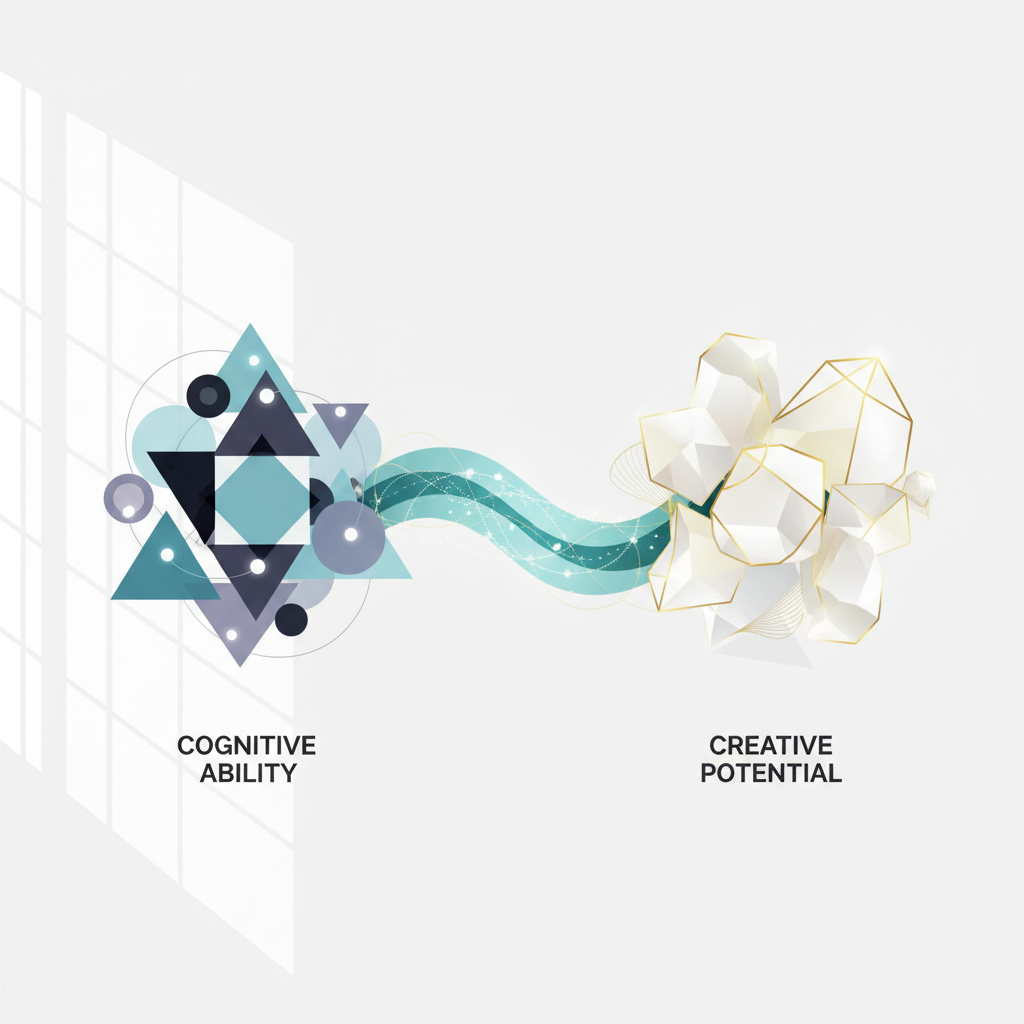
People often wonder: Does a high IQ automatically make you creative? While they are related, intelligence and creativity are two different skills. Think of them as separate tools in your mental toolkit.
Intelligence is what tests like the SB5 measure. It covers skills like logical reasoning, memory, and solving clear-cut problems. It’s often about finding the right answer or using what you already know.
Creativity is different. It’s about coming up with new and useful ideas. This involves “divergent thinking”—exploring many possible solutions. It uses imagination to connect unrelated concepts, helping you adapt and innovate in new ways.
A theory called the threshold hypothesis suggests a link. It says you need a certain level of intelligence to be creative. But once you pass that point (often an IQ around 120), a higher IQ doesn’t guarantee more creativity [4]. This means you can be very intelligent but not very creative, or the other way around. Our Creative Ability Test can help you understand your own unique mix of skills.
How Skills like Fluid Reasoning and Working Memory Fuel Innovation
While IQ tests don’t directly measure creativity, some of the thinking skills they assess are key for new ideas. Skills measured by tests like the SB5 can be powerful tools for innovation.
Take Fluid Reasoning. It’s your ability to solve new problems and think on your feet. It helps you spot patterns and draw conclusions without needing prior experience. This skill is vital for creativity because it helps you:
- Find hidden connections between different ideas.
- Understand complex problems to create new solutions.
- Work through uncertainty while exploring new paths.
Working Memory is another key skill. It’s like your brain’s temporary notepad, where you hold and work with information. For creative tasks, a strong working memory lets you:
- Keep multiple ideas in mind at once.
- Combine different concepts into something new and complete.
- Build on your first thoughts without losing your train of thought.
Other skills measured by the SB5 also play a part. For example, a strong Knowledge base gives you the raw material for new ideas. Visual-Spatial Processing helps you picture new solutions or designs. Together, these thinking skills give you the tools for creative problem-solving.
Discovering Your Creative Strengths
Understanding your thinking skills is a good starting point. But creativity is a complex human trait that goes beyond a single IQ score.
Our Creative Ability Test goes deeper. It helps you explore the different sides of your creativity, like your mental flexibility, how you generate ideas, and your openness to new things. This gives you a much clearer picture of your creative strengths.
The Creative Ability Test provides:
- Personalized insights: Learn about your unique creative strengths and areas for growth.
- Actionable strategies: Get practical tips to boost your creative skills.
- Real-world applications: Learn how to use your creativity at work and in everyday life.
Knowing your specific creative strengths is empowering. It turns uncertainty into clear self-awareness. Start your journey of self-discovery and unlock your full creative potential with our science-backed assessment.
How Can You Measure and Enhance Your Creativity?
Introducing the Creative Ability Test
Standard intelligence tests show how you think, but creativity is a different kind of skill. It goes beyond a simple test score. Many people want a way to measure and grow their own creative talent.
That’s why we created the Creative Ability Test. It’s a platform based on proven science. Our 30-question test looks at creativity from many angles, giving you a deeper understanding than a traditional IQ test.
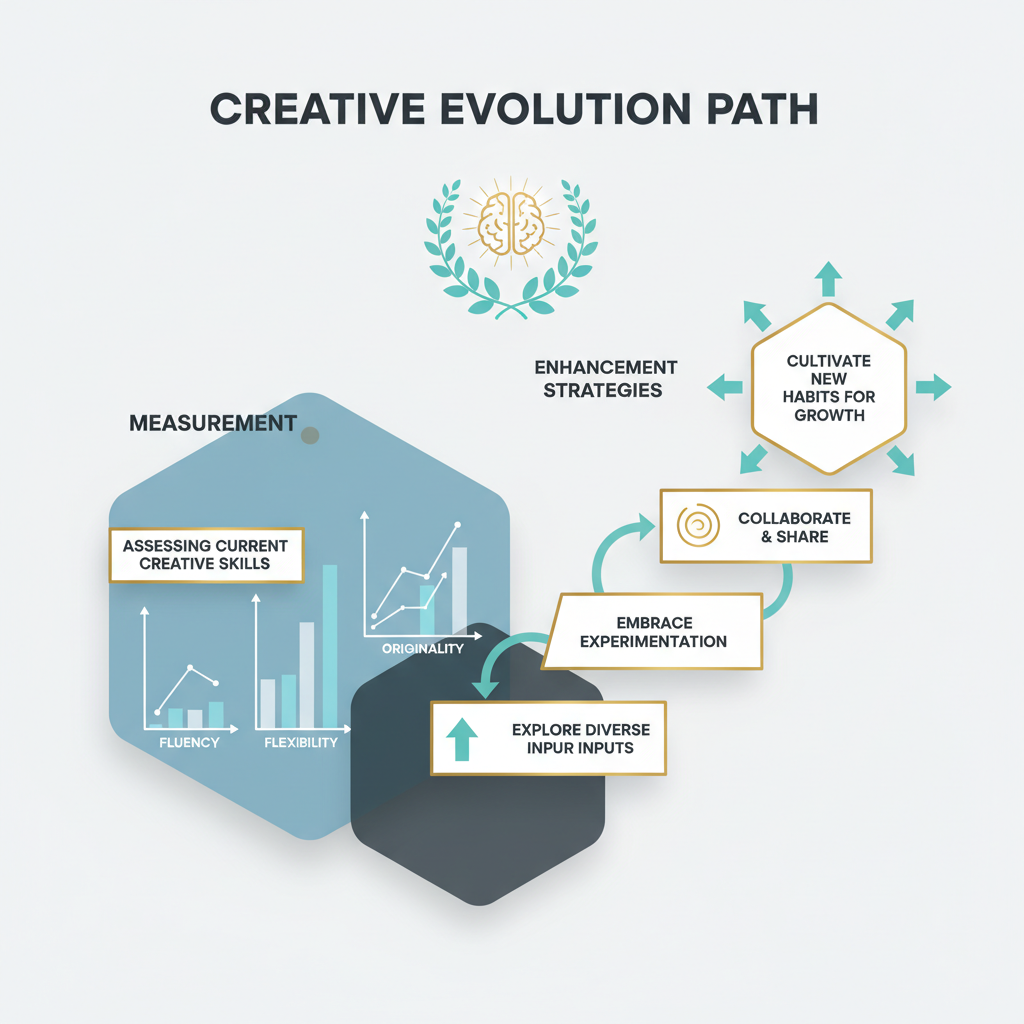
This test shows what makes you a unique problem-solver. We focus on key parts of creative thinking, such as:
- Cognitive Flexibility: Your ability to switch between different concepts or tasks.
- Divergent Thinking: Generating many unique ideas from a single prompt.
- Problem-Solving Skills: Applying creativity to find effective solutions.
- Openness to New Experiences: Your willingness to explore novel ideas and situations.
Our test helps you see creativity as a muscle you can strengthen, not a fixed trait.
From Insight to Action
Knowing your mental strengths is a great first step. Our Creative Ability Test takes it further by turning those insights into real, practical actions. Your personalized feedback will show you what you’re good at and point out areas for growth.
We give you clear, easy-to-understand results and break down complex ideas into simple terms. For example, if you score high in divergent thinking, we’ll suggest how to use that skill in brainstorming. If you need to improve your cognitive flexibility, we offer exercises like challenging your own assumptions [5].
Our goal is to help you grow personally and professionally. We connect your test results to the real world so you can apply your creativity everywhere—from solving problems at work to exploring new hobbies.
This test is more than a score. It’s a roadmap to help you become a more creative and effective thinker.
Start Your Journey of Self-Discovery
Are you ready to unlock your creative potential? Many people feel unsure about their own creativity. Our test helps you move from doubt to confident self-awareness by providing personalized, practical feedback.
Our platform gives you a clear path to creative growth. You’ll discover how your unique thinking style leads to new ideas and learn to apply your creativity to tough challenges. Your journey begins with one simple, thorough assessment.
Take this opportunity to grow and discover new parts of your mind. Start your journey to becoming a more creative thinker today. Our science-based test is designed to be encouraging, helpful, and easy to use for students, professionals, and anyone curious about their own creativity.
Frequently Asked Questions About the SB5
Can you take the SB5 intelligence test online?
No, you cannot take the Stanford-Binet 5 (SB5) intelligence test online. The SB5 is a detailed, one-on-one assessment. It must be given by a trained and certified professional.
The test uses special materials and has strict rules. A trained examiner needs to watch how you respond during the test. This helps make sure the results are accurate [6].
On the other hand, the Creative Ability Test is available online. It’s a convenient, science-backed way to learn about your creative potential from anywhere. You’ll get instant feedback on your thinking style and creative skills.
Where can I find SB5 intelligence test questions or a sample PDF?
The SB5 is a copyrighted test, so its questions are kept private. Because of this, you won’t find official test questions or sample PDFs online.
Keeping the test questions secure is important. This ensures the results are fair and accurate for everyone. If people saw the questions ahead of time, their scores wouldn’t be a true measure of their cognitive skills.
You can, however, learn about the skills the SB5 measures, like fluid reasoning, knowledge, and working memory. While we can’t share SB5 questions, the Creative Ability Test gives you a chance to explore your own creative thinking. Our 30-question test shows you your creative strengths and how you solve problems. You’ll get personal feedback to help you grow your unique skills.
What do SB5 test scores mean?
SB5 test scores offer a detailed look at a person’s cognitive skills. A qualified professional interprets these scores by comparing your results to others in your age group.
Here’s a breakdown of what the scores mean:
- Full Scale IQ (FSIQ): This is an overall score that measures your general cognitive ability.
- Factor Scores: The SB5 also gives scores for five key areas: Fluid Reasoning, Knowledge, Quantitative Reasoning, Visual-Spatial Processing, and Working Memory. These scores show your specific mental strengths and areas where you can improve.
- Subtest Scores: Each factor is broken down into smaller subtests. These scores give you even more specific details about your particular skills.
A high score in one area points to a strong skill in that category. For example, a high score in Fluid Reasoning means you have strong problem-solving skills and can think flexibly when faced with new information.
Understanding your scores helps you identify your specific cognitive strengths, which often support creativity. For instance, a strong working memory helps you juggle many ideas at once. This can lead to more creative and original solutions.
The SB5 measures cognitive intelligence, but the Creative Ability Test focuses on your creative potential. Our test turns complex creative traits into easy-to-understand feedback. You’ll learn practical ways to improve your creative style, flexibility, and innovation. We give you clear steps to help you grow and solve problems in your daily life.
Sources
- https://www.simplypsychology.org/intelligence.html
- https://www.pearsonassessments.com/store/usassessments/en/Store/Professional-Assessments/Cognitive-Ability/Stanford-Binet-Intelligence-Scales%2C-Fifth-Edition/p/100000003.html
- https://www.pearsonassessments.com/store/usg/en/products/d/stanford-binet-intelligence-scales–fifth-edition/P100000492.html
- https://www.sciencedirect.com/topics/social-sciences/threshold-hypothesis
- https://hbr.org/2019/04/the-brain-that-changes-itself-cognitive-flexibility
- https://www.pearsonclinical.com/education/products/100000378/stanford-binet-intelligence-scalesfifth-edition-sb5.html
Leave a Reply