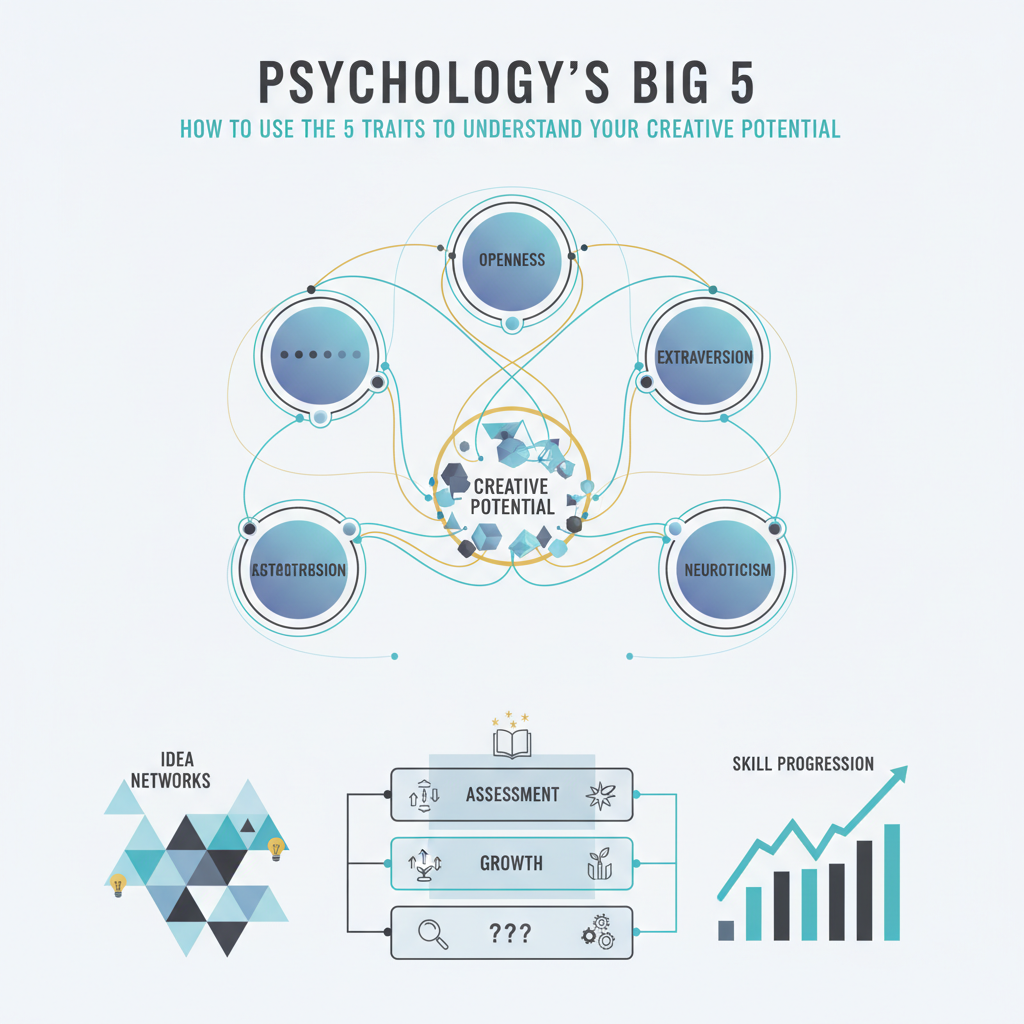
The ‘Big 5’ in psychology is a scientifically validated model describing human personality through five core dimensions: Openness, Conscientiousness, Extraversion, Agreeableness, and Neuroticism (OCEAN). This framework helps explain individual differences in thoughts, feelings, and behaviors, providing crucial insights into one’s creative strengths and problem-solving styles.
Have you ever wondered what makes you creative? Or why some ideas come easily while others are a struggle? Creativity isn’t a mystery—it’s closely tied to your personality. For decades, psychologists have studied this link, and one of the best tools for understanding it is psychology’s Big 5 personality model. This science-backed system shows how your unique traits affect your imagination, how you solve problems, and your ability to come up with new ideas.
Learning about your Big 5 profile can be a great journey of self-discovery. It helps you stop just wondering about your creative potential and start using it. You’ll get useful insights into your thinking style, cognitive flexibility, and how open you are to new things. It’s more than just labels; it’s a practical guide to help you grow and become more creative. When you see how your personality affects your creative process, you can build on your strengths and find new ways to beat creative blocks.
In this article, we’ll explore the Big 5 traits: Openness, Conscientiousness, Extraversion, Agreeableness, and Neuroticism (often called OCEAN). We will explain how each trait affects your creativity, give you clear examples, and show you how a big five psychology test can help you. You’ll gain a better understanding of your creative side and learn how to use this knowledge in your everyday life and work.
What is the Big 5 Model in Psychology?

Want to understand your unique thinking style and creative side? The Big 5 Model in psychology is a great tool for understanding personality. It’s also known as the Big Five personality traits or the OCEAN model. This model helps us make sense of why people are different. It also offers a better look at how you see the world.
So, what is the Big 5? It’s a model of five main areas of human personality. Researchers have seen these same traits in people across different cultures [1]. Think of them as the core parts of who you are. Learning about them can help you understand yourself much better.
This science-backed model is more than just simple labels. It gives you a clear way to look at your natural habits. For example, it can show how you might react to a challenge or come up with new ideas. The Creative Ability Test uses proven methods like this one. That’s how we make sure you get feedback that’s just for you.
The Big 5 model is a great tool for self-improvement. It helps you see your strengths and where you can grow. This is very helpful for boosting creativity and solving problems. When you know your Big 5 profile, you can tap into your natural creative skills. It helps turn confusion about yourself into clear insights you can act on.
The five core traits are often remembered with the acronym OCEAN:
- Openness to Experience: How imaginative, curious, and open you are to new ideas.
- Conscientiousness: Your level of organization, discipline, and focus on goals.
- Extraversion: How outgoing, sociable, and energetic you tend to be.
- Agreeableness: Your tendency to be compassionate, cooperative, and kind.
- Neuroticism: How likely you are to feel negative emotions like anxiety or sadness.
Each of these traits is on a scale, and everyone has a bit of all five. Learning your personal mix gives you a guide for growth. It helps you understand the unique way your mind works creatively. It also shows you practical ways to improve your skills. This understanding is key for anyone who wants to use their creativity in the real world.
How Do the Big 5 Traits Influence Your Creative Potential?
The Link Between Personality and Innovation
To understand your creative potential, you first need to understand yourself. Research shows a link between your personality and your creative style [2]. Creativity is not just one skill. It is a mix of different ways of thinking and acting. Your personality traits shape how you find ideas, solve problems, and make your vision a reality.
Each of the Big 5 traits gives you a different way to be creative. For example, some traits make you great at coming up with new ideas. Others help you perfect those ideas. Some people work best by brainstorming in a group. By understanding your personality, you can find the best way to use your creative skills.
Understanding Your Creative Strengths and Weaknesses
Knowing your Big 5 profile helps you understand yourself better. It shows you what you’re naturally good at. It also shows you areas where you can improve. This is not about putting you in a box. It’s about helping you use your unique thinking style and get past creative blocks.
With this knowledge, you can:
- Find your natural creative style: Learn if you’re best at big-picture ideas, careful planning, or working with a team.
- Use your strengths: Focus on creative tasks that fit your personality.
- Work on your weaknesses: See where your personality might hold you back and find ways to overcome those challenges.
- Create the right environment: Set up your workspace in a way that helps you be creative.
For example, someone who is introverted might do their best creative work alone. But someone who is extraverted may feel more inspired after brainstorming with a group. The Creative Ability Test helps you find these connections. It gives you personalized feedback to turn what you don’t know into useful insights about yourself. You will understand your creative strengths and learn how to use them to solve real problems.
A Step-by-Step Guide to the Five Traits (OCEAN)

Openness to Experience: The Gateway to Imagination
Openness to Experience is about how imaginative, curious, and inventive you are. People high in this trait welcome new ideas. They enjoy abstract concepts and learning new things. It measures your willingness to explore unfamiliar territory.
This trait is a key part of creative thinking. It helps you explore many different possibilities. Openness is the foundation for imagining new solutions and questioning the way things are.
Think of an artist trying new materials or a scientist developing a breakthrough theory. These are great examples of Openness in action. It’s about the drive to seek out new things.
Understanding your level of Openness helps you see your natural drive for discovery. It shows how comfortable you are with uncertainty. This insight can help you embrace new ways of thinking.
To nurture your imagination, try these actions:
- Seek out new experiences and learning opportunities regularly.
- Engage with diverse perspectives and different cultures.
- Practice brainstorming freely, without judging your ideas right away.
- Read widely on subjects outside your usual interests.
- Question assumptions in your daily life and work.
Your Creative Ability Test results will show your level of Openness. This gives you insight into your imagination and how you see the world. It is a strong indicator of your creative potential.
Conscientiousness: The Structure for Creative Output
Conscientiousness is about how organized, disciplined, and focused on goals you are. Highly conscientious people are thorough. They value planning and carrying out tasks in an orderly way.
Creativity can feel spontaneous, but structure is key. Conscientiousness provides the framework to turn great ideas into real results. It gives you the persistence needed for long-term creative projects. Many creative projects require consistent effort and self-discipline [3].
Think of a writer carefully editing their novel or an inventor methodically improving a prototype. They show the power of conscientiousness. This trait helps bring big ideas to life.
This trait helps you understand how you handle tasks. It shows your ability to finish creative projects. Your organized nature helps turn thoughts into actions.
To be more creative and productive through structure:
- Set clear, achievable goals for your creative projects.
- Develop a consistent routine for your creative work.
- Break large tasks into smaller, more manageable steps.
- Follow through on what you promise to do.
- Manage your time well to protect your dedicated creative time.
The Creative Ability Test offers insight into your level of conscientiousness. It shows how your organized habits can support your creativity. This understanding helps you build habits that lead to consistent innovation.
Extraversion: The Energy for Collaboration and Idea-Sharing
Extraversion is about how outgoing, sociable, and energetic you are. Extraverts enjoy social situations and often get energy from interacting with other people.
While you can be creative alone, extraversion helps creativity through teamwork. It encourages you to share ideas openly and get feedback from others. Group brainstorming sessions work best when people contribute lots of energy and diverse ideas.
Think of a musician working with bandmates or an entrepreneur networking to solve a problem. These examples show how extraversion fuels creative exchange. It helps spark new connections and ideas.
Knowing your extraversion level helps you use your social energy for creative tasks. It shows you the best ways to work with others to create new things. It also highlights how you can find inspiration from outside sources.
To use your social energy for creativity:
- Actively participate in creative workshops or group projects.
- Seek out different kinds of feedback on your initial ideas.
- Network with other creative people to build connections.
- Present your work to an audience to get new perspectives.
- Join projects that require teamwork.
Your Creative Ability Test results help you understand how your social style affects your creative process. This shows you how you can best collaborate and share your ideas. It helps you become a more effective communicator.
Agreeableness: The Harmony in Creative Teams
Agreeableness is about how cooperative, kind, and trusting you are. Agreeable people value harmony and getting along with others. They focus on positive relationships.
While it does not create new ideas directly, agreeableness helps build an environment where creativity can thrive. It encourages helpful feedback and reduces conflict in teams. This makes it safe for people to explore ideas openly.
Think about a team member giving supportive feedback or a leader building a positive team culture. These are examples of how agreeableness helps a group be creative. It creates a safe space for new ideas.
Your level of agreeableness affects how you work creatively with others. It shows your ability to be a team player and help people agree on ideas. This trait is key for successful long-term collaboration.
To create a more harmonious creative environment:
- Listen carefully to understand other people’s views.
- Offer constructive, supportive feedback to your peers.
- Work on projects where teamwork is important.
- Try to find common ground before making judgments.
- Actively build a positive and trusting creative environment.
The Creative Ability Test can show how your agreeable nature helps your creative teamwork. It helps you build stronger creative partnerships and makes developing ideas a smoother process.
Neuroticism: The Emotional Fuel and Hurdle for Creativity
Neuroticism is the tendency to experience negative emotions like anxiety, moodiness, and stress. It is about how you cope with emotional challenges.
This trait has a complex relationship with creativity. While it can lead to self-doubt, it can also fuel deep self-reflection and a drive for perfection. Some research suggests that parts of neuroticism are linked to creative potential [4].
Think of an artist who uses deep emotions in their work. Or a writer driven by a feeling that things could be better. These examples show how strong emotions can be channeled into a unique source of creativity.
Understanding your emotional tendencies helps you manage them. This is key for turning intense feelings into creative work. It helps you spot and overcome potential creative blocks.
To manage your emotions for creative success:
- Develop effective ways to manage stress and anxiety.
- Practice being kind to yourself, especially after a creative setback.
- Use self-reflection to give your work a deeper emotional impact.
- Seek supportive feedback to build confidence and perspective.
- Turn inner pressure into a drive to do thoughtful work.
The Creative Ability Test gives you insight into how your emotions affect your creativity. It can help you turn challenges into unique creative strengths. This builds resilience for your creative journey.
How Can You Discover Your Own Big 5 Profile?
Taking a Big 5 Psychology Test
Understanding your personality is a great way to unlock your creative potential. A Big 5 psychology test gives you a clear way to do this. It measures five main parts of your personality.
These tests show your general tendencies and how you usually interact with the world. This includes your thoughts, feelings, and behaviors. Many trusted online platforms offer Big 5 tests that are backed by science [5].
Taking a test like this is usually easy. You answer a series of questions about yourself. Your results then show your scores for each of the five traits. This gives you a good starting point for seeing patterns in how you approach creativity.
How the Creative Ability Test Provides Deeper Insights
While Big 5 tests offer good insights, the Creative Ability Test goes a step further. Our test is designed specifically to show you your creative potential. We turn your broad personality traits into creative strengths you can actually use.
The Creative Ability Test is a 30-question assessment based on science. It measures several key parts of creativity, like how you adapt your thinking and come up with new ideas. It also assesses your problem-solving skills and your openness to new experiences, a trait closely linked to creativity. [6]
Our goal is to give you more than just a score. We provide personalized feedback and practical tips tailored to you. This helps you learn not only what your creative strengths are, but also how to make them even better. We want you to use these insights for personal growth, career development, and new ways of thinking.
Here’s how our platform gives you a richer understanding:
- Focus on Creativity: We show you exactly how your Big 5 traits affect your creative style.
- Detailed Test: Our 30-question test looks at the most important parts of creativity.
- Personalized Tips: You get feedback that is specific to your individual strengths.
- Practical Steps: We give you clear ways to become more creative and innovative.
- Based on Science: Our test is built on solid research about creativity.
- Easy to Understand: We explain complex ideas in a simple and clear way.
Interpreting Your Results for Personal Growth
Getting your results from the Creative Ability Test is exciting. But think of your results not as fixed labels, but as guides. They show your natural tendencies and where you have room to grow.
Start by thinking about your scores. Do they match how you see yourself? For example, a high score in Openness to Experience means you are naturally curious and enjoy new ideas. This is a huge plus for creativity. On the other hand, a lower score might mean you prefer familiar ways of doing things. Knowing this can help you push yourself to try new perspectives and become a more flexible thinker.
The Creative Ability Test helps you turn these scores into real-world actions. We provide clear, easy-to-understand explanations of what each trait means for your creative journey. Our guidance helps you feel more confident, use your strengths, and work on areas where you can improve.
Here are key ways to use your results for personal growth:
- Know Your Strengths: See which of your traits help you be creative. Use them to solve problems and come up with new ideas.
- Find Areas to Grow: See where you might get stuck creatively. Create a plan to work through those challenges.
- Become More Self-Aware: Better understand how you like to think. This helps you manage your work and feelings.
- Set Clear Goals: Use your personalized results to make a plan for improving specific creative skills.
- Build Confidence: Understanding your creative side is empowering and motivates you to keep growing.
Remember, the goal is not to change who you are. It’s about understanding yourself better. This helps you use your unique personality to express yourself creatively and continue to grow, both personally and in your career.
How to Apply Your Big 5 Insights to Boost Creativity

Practical Tips for Each Personality Trait
Understanding your Big 5 personality profile is a great first step. The next is to use these insights to grow your creative potential. Let’s look at how you can use each trait to become more creative.
Openness to Experience: The Explorer’s Path
This trait is closely linked to creative potential [7].
- If you score high: Embrace new things. Seek out different sources of inspiration. For instance, try combining ideas from unrelated fields. Write down your insights. Explore new art forms or ways to solve problems.
- If you score low: Try new experiences on purpose. Challenge your assumptions. Read books in genres you normally avoid. Learn a simple new skill. Travel somewhere unfamiliar. This will broaden your perspective.
Conscientiousness: Structuring Innovation
This trait gives you the discipline needed to bring creative ideas to life.
- If you score high: Use your natural ability to organize. Create a structure for your creative process. Set clear goals and follow through on your ideas. Work carefully to improve your projects. For example, set aside specific times for brainstorming and editing.
- If you score low: Practice small acts of discipline. Create simple routines and use tools to manage your tasks. Break large projects into smaller steps. This helps you stay on track. Focus on one creative task at a time.
Extraversion: The Collaborative Spark
Extraversion can fuel teamwork and the sharing of ideas.
- If you score high: Look for projects where you can work with others. Brainstorm openly and share your ideas freely. Go to networking events. The energy from others can spark new concepts and discussions.
- If you score low: Prepare your thoughts before group meetings. Think about your ideas privately, then share them. Use online communities where you can contribute at your own pace. This allows you to offer thoughtful input.
Agreeableness: Harmonizing Ideas
Agreeableness helps create positive team dynamics and supports helpful feedback.
- If you score high: Act as a guide in creative teams. Help resolve conflicts and build agreement among different viewpoints. Your empathy creates a positive atmosphere where ideas can flourish safely.
- If you score low: Practice giving constructive feedback. Stand up for your ideas respectfully and challenge assumptions in a thoughtful way. Use active listening to ensure your contributions are valued and to avoid conflict.
Neuroticism: Navigating Creative Tension
Neuroticism can be a challenge, but it can also be a unique source of creative energy.
- If you score high: Find healthy ways to cope with stress. Use a journal to process your feelings. See setbacks as chances to learn. Practice mindfulness to manage stress. This will free up mental space for creativity.
- If you score low: Don’t be afraid of discomfort. Seek out challenging problems and understand that tension can lead to innovation. Don’t shy away from uncertainty. This allows you to explore difficult but rewarding creative paths.
The Creative Ability Test gives you personalized feedback. It helps you understand these traits on a deeper level. You get practical tips to help you grow.
Building a Personal Development Plan
To use your Big 5 insights, you need a plan. A personal development plan turns self-awareness into real creative growth. It helps you move from knowing about yourself to taking action.
- Review Your Creative Ability Test Results: Start by looking closely at your Big 5 profile. Understand your unique mix of traits. How do they affect your creative strengths and challenges? Your test results are your starting point.
- Identify Creative Goals: What creative skills do you want to build? Do you want to write more, innovate at work, or get better at solving problems? Decide what creative success looks like for you.
- Leverage Your Strengths: Look at your high-scoring traits. How can they help you reach your goals? For example, high Openness is great for exploring ideas. High Conscientiousness helps you follow through. Use these natural advantages.
- Address Growth Areas: Think about your lower-scoring traits. How might they hold you back? Create a plan to manage these challenges. For instance, if your Agreeableness score is low, you could practice your teamwork skills. The Creative Ability Test offers specific tips.
- Set Actionable Steps: Break your goals into small, clear actions. Use the SMART method (specific, measurable, achievable, relevant, and time-bound). For example, “Spend 30 minutes a day on brainstorming exercises” or “Work on one new group project each month.”
- Monitor and Adjust: Check your progress regularly. Is your plan working? Are you seeing your creative output improve? Be flexible and change your plan as needed. Creative growth is an ongoing journey.
This structured approach, guided by your Creative Ability Test results, leads to personalized growth. It turns personality insights into practical actions. You will learn to apply your creativity to solve real-world problems and innovate.
Frequently Asked Questions
What are the Big 5 personality traits with examples?
The Big 5 is a simple model for understanding personality. It looks at five main traits that shape how we think, feel, and behave. Think of these traits as spectrums—everyone has some amount of each. Learning about them can help you understand your own creativity.
Here are the Big 5 traits, often remembered by the acronym OCEAN, along with examples:
-
Openness to Experience: This trait is about your imagination, curiosity, and how open you are to new things. People high in openness often enjoy new ideas, art, and different experiences. It’s a key part of creative thinking. [5]
- Example: Someone high in openness might learn a new language, explore a complex idea, or try a new painting style. They’re often the first to suggest new ideas in a group.
-
Conscientiousness: This trait covers your organization, discipline, and sense of duty. Highly conscientious people are often organized, careful, and goal-focused. They like having a plan and bring dedication to their creative work.
- Example: A conscientious artist carefully plans their projects and works through each step. A writer with this trait meets deadlines and pays close attention to detail when editing.
-
Extraversion: This trait is about where you get your energy from. Extraverts are energized by being with people. They are often outgoing, talkative, and assertive. They tend to do well in group projects and enjoy sharing their ideas.
- Example: An extraverted designer might enjoy networking at events, feel confident presenting ideas to clients, or lead a lively group brainstorm.
-
Agreeableness: This trait is about how you interact with others. It covers things like cooperation, kindness, and trust. In creative teams, this trait helps with teamwork and giving helpful feedback.
- Example: An agreeable teammate might help solve a disagreement, offer supportive feedback to a coworker, or focus on keeping the team working well together.
-
Neuroticism (Emotional Stability): This trait is about how often you feel negative emotions like worry, sadness, or anger. People with low neuroticism (high emotional stability) are usually calm and emotionally stable. Strong emotions can spark creativity, but managing them is important for long-term work.
- Example: Someone with high emotional stability can handle a creative setback calmly and learn from it. In contrast, someone with high neuroticism might turn their intense feelings into powerful art but may also struggle with self-doubt.
Understanding where you fall on each of these scales can teach you a lot about yourself. It helps you see your natural creative strengths and shows you where you can grow.
What is the best Big 5 test?
The “best” Big 5 test depends on what you need it for. But a good test should always be scientifically validated. This means it has been carefully researched to make sure it’s accurate and reliable. [8]
When looking for a Big 5 test, look for platforms that:
- Are based on solid psychological research.
- Give you clear, easy-to-understand results.
- Offer useful advice, not just scores.
The Creative Ability Test uses ideas from personality psychology, including parts of the Big 5. Our 30-question test is based on science. It helps you see how traits like Openness to Experience affect your creativity. We give you personalized feedback and real steps you can take. This helps you become more confident and self-aware as a creator. Our test focuses on real-world use, helping you build on your unique creative strengths.
What are the Big Five personality types?
It’s important to clear up a common misunderstanding. The Big Five are not “personality types” that you fit into. Instead, they are five broad traits, and each one is a scale. You don’t either have a trait or not—you just have more or less of it.
For example, you aren’t just an “extravert” or an “introvert.” You land somewhere on the extraversion scale. You might be very extraverted, somewhere in the middle, or not very extraverted at all. Everyone has their own unique mix of these traits, and this mix creates your personality. Knowing this helps you understand your own creative style without feeling like you’re stuck in a box. Our platform gives you personal insights based on your unique profile, which helps you see your creative strengths and how you can grow.
What is the OCEAN Big 5 personality test?
An “OCEAN” Big 5 personality test is any test that measures the five main personality traits. The acronym OCEAN is a helpful way to remember them:
- Openness to Experience
- Conscientiousness
- Extraversion
- Agreeableness
- Neuroticism (often looked at as its opposite, Emotional Stability)
Tests that use the OCEAN model give you a full picture of your personality. They show you how these basic traits affect your daily life and your creativity. Knowing your OCEAN profile gives you useful insights about yourself. It helps you create personal strategies for creative thinking and problem-solving. This takes you beyond general self-help to real, focused growth.
Sources
- https://www.apa.org/pubs/books/4317379
- https://hbr.org/2012/12/how-personality-shapes-creativity
- https://psycnet.apa.org/record/2010-02555-001
- https://www.sciencedirect.com/science/article/abs/pii/S019188691500057X
- https://www.simplypsychology.org/big-five-personality.html
- https://hbr.org/2016/09/the-creative-personality
- https://psycnet.apa.org/record/2012-00505-001
- https://www.frontiersin.org/articles/10.3389/fpsyg.2018.00160/full
Leave a Reply