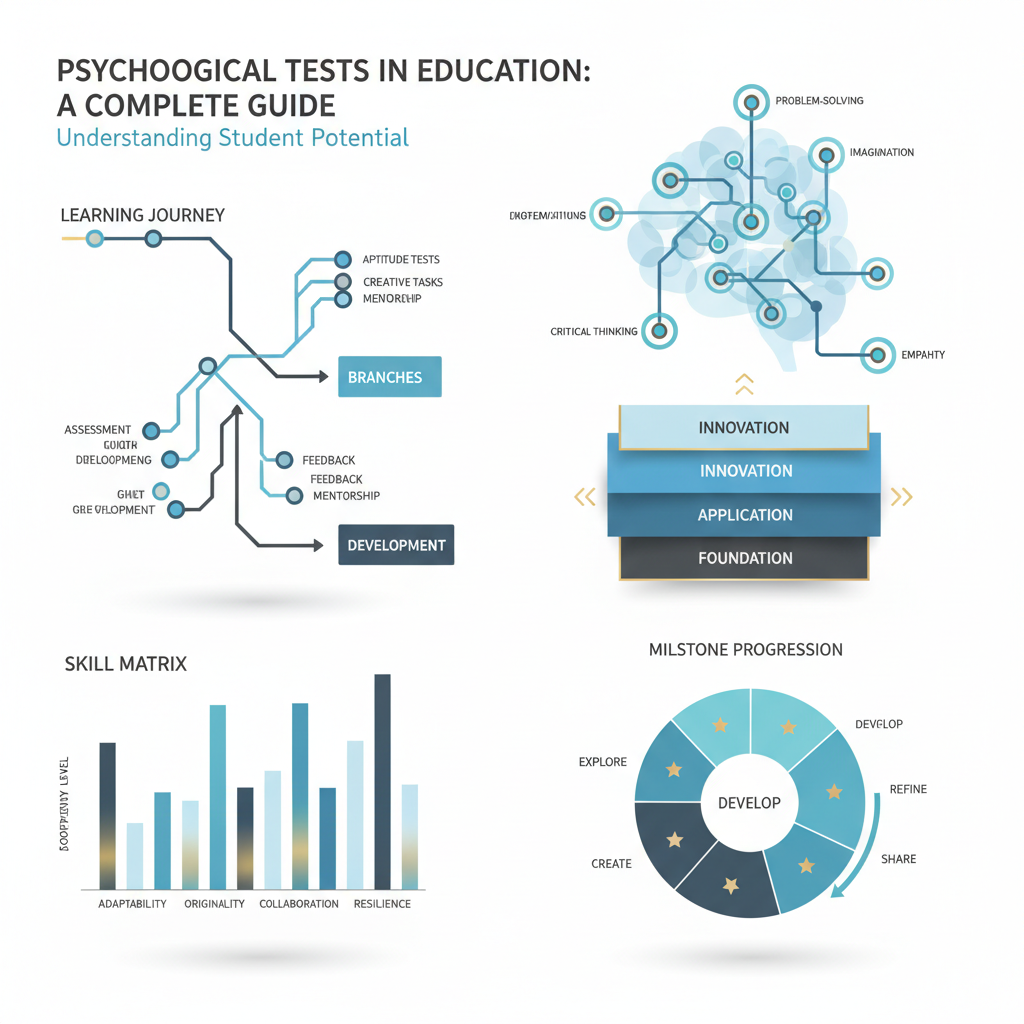
A psychological test in education is a standardized instrument designed to measure a student’s cognitive abilities, personality traits, interests, or other psychological attributes relevant to learning. These assessments provide objective insights that help educators and parents understand a student’s unique profile, identify learning needs, and support their academic and personal growth.
In education, we often focus on grades and test scores. While these numbers are useful, they don’t tell the whole story about a student’s potential, unique way of thinking, or natural creativity. Imagine if we could look deeper to understand how a student learns best, what truly motivates them, and where their hidden talents lie. This is exactly what psychological tests in education are for. They offer a clearer view of a person’s individual abilities.
This article is your guide to the different kinds of psychological tests used in educational settings. We will explore tests for cognitive skills, personality, and creative thinking. These are more than just diagnostic tools; they are science-backed methods for discovering a student’s true potential, guiding their learning, and helping them grow. By explaining these tests in simple terms, we’ll show how they offer useful information for both educators and students.
Knowing your strengths is one thing, but using that information to grow is what truly matters. Whether you’re a student curious about your learning style, a professional looking for creative solutions, or just interested in the psychology of learning, this guide can help. Let’s start with a basic question: what exactly are psychological tests in education, and what are their goals?
What Are Psychological Tests in Education?
The Goal: Moving Beyond Grades and Standardized Scores
Grades and test scores show what a student knows, but they don’t tell the whole story. They often miss the bigger picture of a person’s potential. Psychological tests in education aim to go deeper by uncovering strengths, thinking styles, and unique talents. These insights provide a clearer view of someone’s abilities beyond simple academic performance.
Psychological assessments offer a more complete picture. They help you understand how you learn best and reveal your natural creative potential. This includes measuring skills like flexible thinking, coming up with new ideas, and solving problems. These abilities are essential for success in a changing world.
The main goal is to empower you with self-knowledge. This helps you guide your own learning and support your personal growth. By understanding “how” you think, not just “what” you know, you can unlock new possibilities. This approach encourages a mindset of lifelong learning and innovation.
How Assessments Support Individual Learning and Growth
Psychological assessments are powerful tools for personal growth. They offer personalized insights that show you how you learn and think. Think of them as a map of your mind that helps you find the best ways to learn and develop new skills.
- Uncovering Unique Strengths: Assessments show you what you’re naturally good at. This could be analytical skills, emotional intelligence, or creative thinking. For example, a test might show you have a talent for coming up with new ideas or seeing connections others miss.
- Understanding Learning Styles: Find out how you process information best. Some people are visual learners, while others prefer hands-on experience or logical thinking. Knowing your style helps you study more effectively [1].
- Identifying Growth Areas: Assessments show you which skills you can develop further. This isn’t about weakness—it’s about opportunity. For instance, learning about your mental shortcuts can help you make better decisions.
- Boosting Confidence and Self-Awareness: Understanding your mind builds confidence. You learn to appreciate your unique talents and see how your thinking style affects your relationships. This leads to a stronger sense of who you are.
- Guiding Future Pathways: Test results can point you toward fitting career paths based on your strengths and interests. For creative people, understanding how you generate ideas can open doors to exciting and innovative fields.
- Fostering Personal Development: The insights from these tests give you practical steps for growth. You can learn to think more flexibly, become a better problem-solver, and use your creative skills in daily life.
This process encourages self-reflection and turns uncertainty into clear self-awareness. At Creative Ability Test, our science-backed assessments help you discover your unique creative potential. We provide personalized feedback and practical strategies to boost your creativity for personal and professional growth.
What are the Types of Psychological Test in Education?

Intelligence and Aptitude Tests
These tests measure a student’s learning potential. They assess cognitive abilities, not what a student already knows. In short, they help predict how well a student might do with new tasks or information. For instance, an intelligence test might look at logical reasoning or problem-solving. Aptitude tests, on the other hand, focus on specific skills like understanding words or numbers.
In school, these tests provide helpful information. They can find students who might do well in advanced classes. They also show where a student might need extra help. Knowing these basic strengths is key to creating a personal learning plan. It looks past grades to see a student’s natural thinking skills.
Personality and Interest Inventories
These tools look at a student’s unique personality, likes, and what drives them. Personality inventories check for consistent patterns in how a student acts, thinks, and feels. They help students understand themselves better. For example, some students do best in groups, while others prefer to work alone. Interest inventories find what a student enjoys, such as hobbies, school subjects, or possible careers.
Learning about yourself is powerful. It helps students match their school choices with their natural interests. This way, they can find subjects and activities they truly enjoy, which leads to more engagement and motivation. Understanding one’s personality and interests also helps with career planning. It helps students find fields where they are likely to feel happy and do well. It can also point them toward environments that support their own ways of being creative and solving problems.
Achievement Tests
Achievement tests measure what a student has already learned. They check how well a student knows a subject or skill. Unlike aptitude tests, they focus on the past, not the future. These tests are based on what students are expected to learn in school. Examples include state tests in math, reading, or science. Quizzes and final exams are also achievement tests.
Teachers use achievement tests to check a student’s progress. They help find areas where students may be having trouble, which allows teachers to change how they teach. While these tests are important for tracking school performance, they don’t show a student’s full potential. They give a picture of what a student knows right now but don’t always show new ideas or creative ways of solving problems.
Creativity and Divergent Thinking Assessments
These tests measure a student’s ability to come up with new and useful ideas. They look at different parts of a person’s creative skill. This includes divergent thinking, which means finding many different answers to one problem. They also check for flexible and original thinking. For example, a student might be asked to list all the ways to use a simple object. Their answers would be checked for how many they came up with and how unique they are.
These tests are becoming more important. Creativity is now seen as a key skill for success today [2]. Knowing a student’s creative strengths helps encourage new ideas. It also improves problem-solving skills. These tests show how students handle challenges and think in new ways. The Creative Ability Test is one example of a science-based tool. It gives you personal feedback on your unique creative skills. This helps you understand yourself better and gives you clear steps to take. You will learn ways to think more flexibly and come up with new ideas. This helps you use your creativity in the real world for both personal and professional growth.
Behavioral and Clinical Screenings
These tests look for challenges that could affect a student’s learning or well-being. They focus on emotional, social, or behavioral patterns. Examples include screenings for anxiety, depression, or attention-deficit/hyperactivity disorder (ADHD). They are not used to diagnose a condition. Instead, they show when a student might need to see a professional for more help.
In schools, these screenings are key to supporting the whole student. They help teachers understand what each student needs. Finding issues early means students can get help sooner. This helps create a school environment where every student feels supported. In the end, these screenings make sure students get the help they need to do well in school and in life.
What is the Importance of Psychological Test in Education?
Why Are Psychological Tests Important in Education?
Psychological tests are very important in education. They do more than just measure grades. Instead, they give us a deeper look at how a student thinks. These tests help teachers and students find unique strengths and areas that need improvement. This helps create a more personal learning plan for better results.
It’s important to understand these tests. They help students find their hidden talents. They also help teachers create classrooms where every student can succeed. They show how each student is different, which helps in creating custom teaching methods. This is very helpful for building creativity and problem-solving skills.
Identifying Individual Strengths and Learning Needs
Psychological tests give a clear picture of how a student thinks. They show specific skills. For example, a test might show someone is great with words. Or, it could show they are good with images and space. This information is very useful.
- Find Hidden Talents: These tests can find strengths that regular school tests miss. A student might not do well on standard tests but be very creative.
- Pinpoint Areas for Growth: They also find specific learning challenges. This allows for focused help. For instance, a student who has trouble focusing can get help with specific strategies.
- Create Personal Learning Plans: Teachers can change their teaching methods to fit how each student learns. This makes sure every student gets the support they need.
For example, our Creative Ability Test finds specific creative strengths. It might show you are good at coming up with many ideas or thinking in flexible ways. When you know your strengths, you can use them. You can use them in school and in everyday life. Knowing yourself better helps you grow and do better [3].
Guiding Academic and Career Planning
Choosing a school path and future career can be hard. Psychological tests can make it clearer. They match a student’s natural skills with the right opportunities. This helps reduce doubt and build confidence.
- Choose the Right Subjects: Tests help students pick classes that fit their skills and interests. A student who is good at logic might do well in science, tech, engineering, or math (STEM).
- Explore Career Paths: They offer ideas for future jobs. For example, someone who is good with people might be a great counselor or teacher.
- Find Creative Jobs: Tests like the Creative Ability Test can point to creative careers. If you are good at coming up with new ideas, jobs in design, business, or research could be a great fit.
Knowing your creative skills opens up many options. It helps you see how your way of thinking can be used in different jobs. This way, you can make better choices about your education and career. This can lead to a more satisfying job and a happier life.
Building Self-Awareness and Personal Growth
Psychological tests do more than guide school and career choices—they also help you understand yourself. They help people learn more about who they are. This self-knowledge is key to personal growth.
- Understand Your Thinking Style: You can learn how your mind works and how you solve problems. Do you prefer finding one correct answer, or are you better at exploring many different ideas?
- Build Confidence: Knowing your strengths builds self-esteem. It helps you trust your own skills and encourages you to try new things.
- Encourage Personal Growth: When you know how you think, you can focus on improving yourself. You can work on the skills you want to develop.
Our Creative Ability Test highlights your specific creative traits. You learn about your ability to think flexibly, your openness to new things, and your knack for new ideas. This personal feedback helps you see what makes you uniquely creative. It helps you grow your creative skills for ongoing personal development.
Creating Fair and Inclusive Classrooms
Today’s classrooms aim to include everyone. This means meeting the needs of every single student. Psychological tests are great tools for reaching this goal. They help teachers create classrooms that are fair and work well for everyone.
- Adapt Teaching Methods: Teachers can change how they teach to fit different learning styles. Some students learn best by seeing, while others learn by doing.
- Provide the Right Support: Tests can spot learning disabilities or other special needs. This makes sure students get the help they need to succeed.
- Value All Types of Creativity: When teachers know students’ creative strengths, they can encourage different kinds of innovation. One student may be a great artist, while another is a great storyteller. Both skills are important.
By understanding each student’s profile, teachers can adjust their lessons. This makes learning easier to access and more interesting for everyone. This creates a classroom where every student feels seen and supported. As a result, all students can reach their full potential, including their creative talents. This helps make school a fairer experience for all.
Can You Provide a Psychological Test in Education Example?
Scenario 1: A Cognitive Abilities Test in Action
Psychological tests can provide useful information. For example, a cognitive abilities test shows how a student learns best. These tests measure different mental skills, not just the ability to memorize facts. Instead, they look at reasoning, problem-solving, and how quickly someone processes information.
Consider Alex, a seventh-grader who is struggling with math. A cognitive test might show that he has strong verbal skills but is slower at processing visual information. This is a powerful insight.
With this information, Alex’s teachers and parents can change their approach. They can provide more spoken explanations and use fewer complex diagrams in his homework. This tailored support helps him engage more and understand better. The focus shifts from “what’s wrong” to “how can we best help this student.”
Scenario 2: Using an Interest Inventory for Career Guidance
An interest inventory helps students explore possible careers. It reveals their preferences, passions, and values. This type of test is not about right or wrong answers; it is about self-discovery.
Imagine Maria, a high school student who is unsure about her future. After she takes an interest inventory, the results show a strong interest in helping others and creative problem-solving. The test suggests careers like social work, teaching, or creative entrepreneurship.
This information empowers Maria. She can now research these fields and look for internships or mentors. The inventory acts as a compass, guiding her to careers that match her interests. As a result, she feels more confident about her choices.
Scenario 3: Assessing Creative Potential for Innovation Skills
Understanding creativity is key to future success. It is more than just artistic talent. Creativity includes mental flexibility, coming up with many new ideas (divergent thinking), and finding unique ways to solve problems. A psychological test can measure these important skills.
Let’s look at Ben, a university student who wants a career in technology. He takes a test that measures his creative thinking. The test might look at his ability to brainstorm ideas and connect concepts that seem unrelated.
His results show high scores in originality and being open to new experiences. However, they also show he could improve at developing his initial ideas. This feedback gives him clear steps to take.
Ben can now focus on specific actions:
- Practicing brainstorming techniques.
- Joining design thinking workshops.
- Asking for different viewpoints on his projects.
Developing creative skills directly helps innovation. Companies want employees who can think creatively and solve difficult problems [4]. Finding and supporting creativity gives students a major advantage. It helps them move from just learning ideas to creating real solutions. They learn to use their creativity in real-life situations.
Our Creative Ability Test offers this kind of insight. It provides a science-based look at your unique creative strengths, including skills like cognitive flexibility and openness to experience. You will receive personalized feedback and practical tips to improve your creativity. This test helps turn uncertainty into clear self-awareness. It guides you on a path to grow your creative skills for personal and professional success.
How Can You Apply These Insights for Growth?

Turning Test Results into Actionable Strategies
Psychological tests are like a mirror. They show your unique skills and potential. But getting your results is only the first step. The real value comes from using what you learn to grow, both personally and professionally.
Understanding your creative profile is a key first step. It helps you turn curiosity into action. These tests pinpoint your creative strengths and show you where you can grow.
Understanding Your Creative Thinking Styles
Your results show your different thinking styles. For example, some people are great at divergent thinking, which is all about coming up with many different ideas. Others are better at convergent thinking, which means turning those ideas into real solutions [5]. Both are essential for innovation. Knowing your main style helps you solve problems more effectively.
Think about what you’ve learned. You might find you have a natural talent for originality. Maybe you’re good at adding details to ideas. Or perhaps your strength is cognitive flexibility, which lets you see things from different angles easily.
Practical Steps for Creative Growth
Turning these insights into growth takes a clear plan. Here are practical ways to boost your creative skills:
- Use Your Strengths: Focus on tasks that match your natural creative talents. For example, if you’re good at originality, join brainstorming sessions to come up with new ideas.
- Work on Weaker Areas: Find specific skills you can improve. If cognitive flexibility is an area for growth, try exercises like mind mapping or finding new solutions to daily problems.
- Set Clear, Realistic Goals: Break down your growth plan into small steps. For example, challenge yourself to come up with one new idea a day. Practice creative problem-solving each week.
- Try New Techniques: Do creative exercises regularly. You could try SCAMPER, lateral thinking puzzles, or design thinking challenges. Regular practice helps your brain form new creative habits [6].
- Seek Out New Experiences: Step out of your comfort zone. Learn a new skill, travel somewhere new, or talk to people from different backgrounds. New experiences give you fresh perspectives and spark creativity.
- Reflect and Adjust: Check in on your progress regularly. Ask yourself what’s working and what isn’t. Change your approach as you go. This cycle of learning and adjusting is the key to long-term growth.
By following these steps, you can turn self-awareness into real improvement. You create a clear plan to grow your creative skills.
Discover Your Creative Potential with the Creative Ability Test
The Creative Ability Test offers a unique chance to unlock and understand your natural creativity. This science-based test goes beyond vague ideas about creativity. It gives you clear, personal insights.
Our platform helps you measure and improve your creative strengths. You’ll better understand your cognitive flexibility, problem-solving skills, and openness to new experiences.
A Scientifically Grounded Approach
The Creative Ability Test is a 30-question assessment based on solid psychological research. It accurately measures different parts of your creativity. This ensures your results are reliable and accurate. We give you evidence-based insights into how you think creatively.
Personalized Insights for Every User
Everyone’s creative journey is different. That’s why we offer personalized feedback. Your results show your specific creative strengths and point out areas where you can grow. You get feedback that is tailored to you and easy to understand. We avoid jargon and technical language, making complex ideas easy for anyone to grasp.
Actionable Strategies for Growth
We do more than just give you a test. We give you practical strategies to help your creativity grow. These tips are designed for the real world. They help you use creative thinking in your daily life. These strategies are useful for both personal growth and professional success.
For example, you might get advice on how to improve your divergent thinking. Or you could get tips for improving your innovation skills. This advice helps you use creative solutions to solve problems. It turns knowledge into real skills.
Empowering Your Journey of Self-Discovery
The Creative Ability Test is more than a test. It’s a tool for self-improvement. It helps you move from being unsure to having a clear understanding of yourself. You’ll go from having creative moments to having a clear plan for growth. Our platform helps you use creativity to solve problems and create new things. Discover your full creative potential and start your journey of continuous growth with us.
Frequently Asked Questions
What are the main types of psychological tests used in schools?
School psychological tests provide helpful information about a student’s unique strengths and needs. They look beyond grades to help teachers and parents understand a child better. Here are the main types:
- Cognitive Ability Tests: These tests measure how a student thinks, learns, and solves problems. They look at reasoning skills and how a student processes information. This helps identify academic strengths and areas where a student might need extra support [7].
- Achievement Tests: These tests focus on specific subjects to show what a student has learned. They measure skills in areas like reading, math, or science. This helps track academic progress and find any learning gaps.
- Personality and Interest Inventories: These tools look at a student’s interests, motivations, and personal style. They can help with career planning and help students understand themselves better. This builds self-awareness and supports personal growth.
- Creativity and Divergent Thinking Assessments: These tests measure a student’s ability to think outside the box and solve problems in new ways. They look at different parts of creativity, like fluency and flexibility. For example, the Creative Ability Test helps find a student’s natural creative skills.
- Behavioral and Social-Emotional Screenings: These screenings help find challenges with a student’s emotional health or social skills. They can point out areas needing support, such as anxiety, attention, or social skills.
Understanding these test types helps both students and educators. It provides a complete picture of a student’s abilities, going beyond just grades.
Why are psychological assessments important for students?
Psychological assessments offer many benefits for students beyond just scores. They are powerful tools for personal growth and school success. They also provide a clear plan for personalized support.
Here are the key reasons these assessments are so important:
- Identifying Individual Strengths: Assessments show what a student is good at. This builds confidence and helps them use their natural talents. For example, a creativity test can point out a student’s innovative thinking style.
- Understanding Learning Needs: They find the exact areas where a student might struggle. This allows for specific help and personalized learning plans. Finding these needs early can prevent future problems in school.
- Guiding Academic and Career Planning: By understanding how they think and what they like, students can make better choices about their future. This can mean picking the right classes or exploring career options. It helps them learn more about themselves.
- Building Self-Awareness: Students get to know themselves better. They learn about their personality, how they like to learn, and their creative skills. This knowledge is key for personal growth.
- Supporting Personalized Education: Teachers can change their teaching methods to fit the needs of different students. This makes learning more engaging and effective for everyone.
- Enhancing Creative Potential: Tests like the Creative Ability Test highlight a student’s creative strengths. This helps them learn practical ways to improve their innovation and problem-solving skills, which are important for success in a changing world.
In the end, these assessments help students move from being unsure about their skills to having a clear understanding of them. They turn a student’s potential into a clear plan for growth.
Where can I find resources like a ‘psychological test in education pdf’?
It’s important to find reliable resources for psychological tests in education. This ensures you get information that is based on solid research. When searching, look for these trusted sources:
- Academic and Research Institutions: Many universities share their research from psychology or education departments. They often provide detailed reports or test samples as PDFs. Look for websites from well-known universities.
- Professional Psychological Organizations: Groups like the American Psychological Association (APA) offer many resources. You can often find guidelines, research papers, and educational materials on their websites. [8]
- Government Educational Departments: National or state education departments sometimes share testing information with the public. This can include rules, best practices, and examples of different tests.
- Specialized Assessment Platforms: For certain topics like creativity, platforms like the Creative Ability Test offer detailed information. Our 30-question test measures different parts of creativity. It also provides personalized feedback and tips for growth.
- Educational Psychology Journals: Academic journals publish expert-reviewed articles about how tests are made and used. They can be technical, but they are great sources for detailed information.
Always choose sources that use methods backed by research. Be careful with unofficial websites. By sticking to trusted resources, you will get a clear understanding of these tests and how they are used in schools.
Sources
- https://www.niu.edu/success-tips/learning-styles.shtml
- https://www.weforum.org/agenda/2016/01/the-10-skills-you-need-to-thrive-in-the-fourth-industrial-revolution/
- https://www.apa.org/education-career/guide/psychological-testing-assessment
- https://www.weforum.org/agenda/2023/05/future-of-jobs-2023-top-10-skills/
- https://positivepsychology.com/divergent-convergent-thinking/
- https://hbr.org/2019/04/how-to-train-your-brain-for-creativity
- https://www.apa.org/education-career/guide/tests
- https://www.apa.org
Leave a Reply