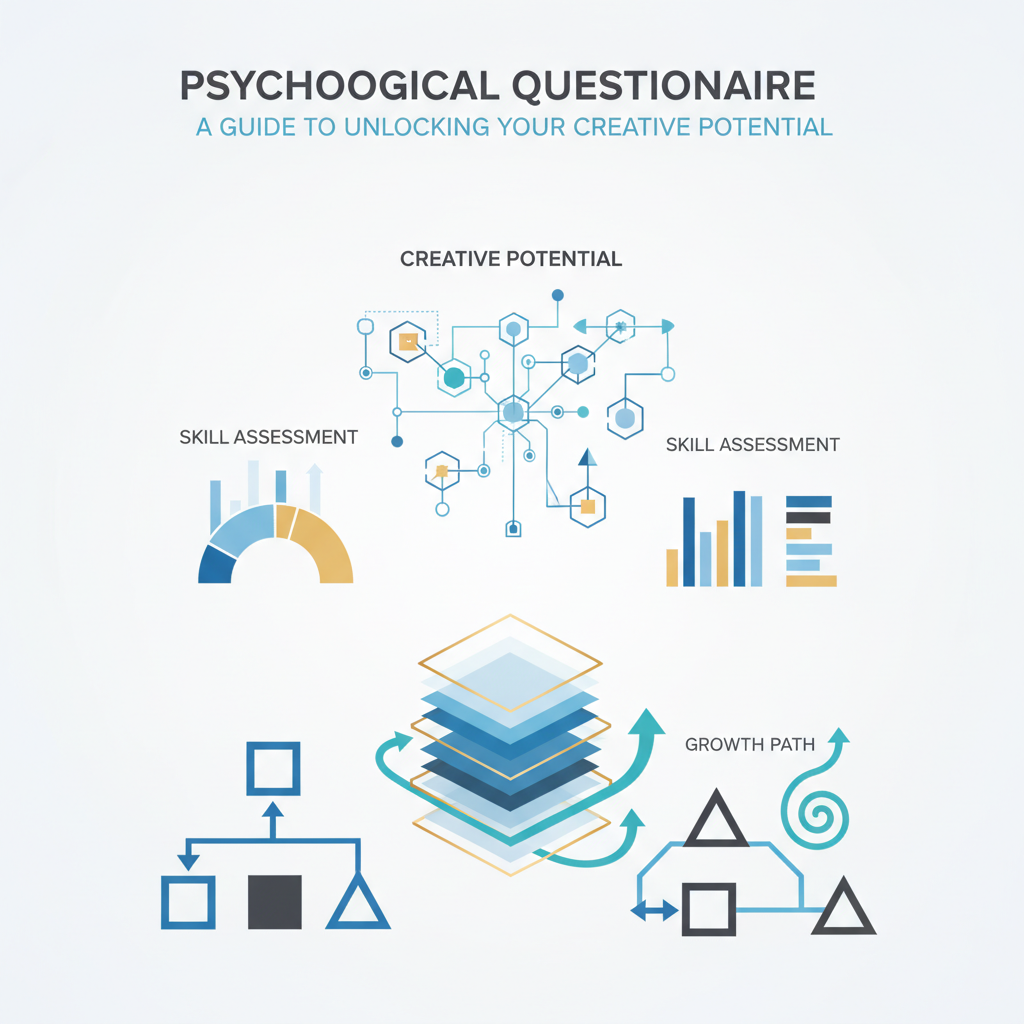
A psychological questionnaire is a scientifically designed tool used to measure an individual’s mental attributes, such as personality traits, cognitive abilities, or creative potential. It consists of a structured set of questions that provide objective, data-driven insights, helping you understand your unique strengths and areas for personal growth.
Do you ever wonder what makes you creative or how you solve problems in your own unique way? Many of us are curious about our creative potential because it helps us grow personally and professionally. Understanding your creative strengths isn’t just guesswork; it’s a journey of self-discovery. This journey often starts with a helpful tool: a psychological questionnaire.
A good questionnaire looks deeper than the surface. It provides a scientific way to examine your cognitive flexibility, problem-solving style, and openness to new ideas. These tests offer clear, useful insights for anyone, whether you’re a student identifying your strengths or a professional trying to innovate. They don’t just put you in a box. Instead, they empower you to use your unique abilities and apply your creativity to real-world situations. The power of psychometric scales in psychology is that they make complex ideas about how we think easy to understand and use.
In this guide, we’ll explain what a psychological questionnaire is and how it helps unlock your creative potential. We will explore how these tools help you understand your thinking style, identify your creative traits, and learn practical ways to improve your skills. Get ready to turn uncertainty into clear self-awareness as we dive into the science of creativity tests.
What Is a Psychological Questionnaire and How Can It Help You Grow?
Moving Beyond Simple Quizzes to Scientific Insight
Many online quizzes offer quick personality insights. But a psychological questionnaire goes much deeper. It’s a carefully designed tool based on scientific evidence. Psychologists create these tools to measure specific parts of your thinking and personality. They are much more than just entertainment.
Instead of casual quizzes, we use proven scientific methods. Our approach focuses on two key ideas: reliability and validity. Reliability means the results are consistent. Validity means the test actually measures what it says it does. This is vital for understanding complex traits like creativity. For example, psychometric assessments are a key part of psychological research around the world [1].
A well-made questionnaire, like our Creative Ability Test, offers real scientific insight. It helps you understand your personal creative profile. With this insight, you can find your strengths and see where you can grow. It turns a vague sense of self into clear awareness you can act on. In the end, it gives you a trusted path to unlock your full potential.
The Goal: Measuring Your Unique Ways of Thinking
The main goal of a psychological questionnaire is self-discovery. It helps you see your own unique ways of thinking and behaving. When it comes to creativity, this includes different thinking styles. We look at how your mind solves problems and comes up with ideas. It’s not about labeling you “creative” or “not creative.” Instead, it’s about understanding your personal creative style.
Our 30-question test gives you a full picture of your creativity by measuring key areas. These include:
- Divergent Thinking: Your ability to come up with many unique ideas from one starting point. It’s like brainstorming.
- Cognitive Flexibility: How easily you switch between different ideas or tasks. This shows how adaptable you are.
- Openness to Experience: This trait shows your curiosity and how willing you are to try new things and explore fresh ideas.
- Problem-Solving Skills: Your ability to find creative solutions to challenges, often by thinking outside the box.
Understanding these traits can be very helpful. For example, a student who learns they are good at divergent thinking can use this to guide their school projects. A professional might find they have strong cognitive flexibility. They can use that skill to handle tough challenges at work. Our test results give you more than scores—they offer personal insights. These insights lead to useful strategies and clear ways to improve your creative thinking. This helps you grow both personally and in your career.
What Are the Different Types of Psychological Questionnaires?
Personality and behavioral inventories
Understanding yourself is a key step to unlocking your creativity. Personality and behavioral tests can help with that. They explore your unique traits and how you usually act in different situations.
These tests look at different parts of your personality. For example, they might show if you are more introverted or extraverted. They can also measure how organized you are or your openness to new things. These traits often shape how you create.
A popular example is the Big Five personality traits (Openness, Conscientiousness, Extraversion, Agreeableness, Neuroticism) [2]. Knowing where you stand on these traits can show if you’re comfortable with taking risks, working with others, or working alone. All of these are important for the creative process.
Through these tests, you can gain:
- Deeper Self-Awareness: Understand your natural preferences and habits.
- Improved Interpersonal Skills: See how your personality affects how you work in a team.
- Personalized Growth Strategies: Get advice that fits your specific personality.
Cognitive and aptitude tests
Cognitive and aptitude tests measure your mental skills. They are made to see how you process information. These tests look at your ability to solve problems, use logic, and remember things.
For instance, they might check your skills with words or numbers. They can also test your sense of space. These skills are very important for creative problem-solving. Good thinking skills are often the foundation for creativity.
When you know your mental strengths, you can use them to be more creative. A good working memory, for example, helps you hold many ideas in your head at once. This makes it easier to combine different thoughts. Our Creative Ability Test, for instance, measures cognitive flexibility. This skill lets you switch between ideas and viewpoints easily, which is key for new thinking.
These tests provide useful information about your:
- Problem-Solving Approaches: Learn how you face problems and come up with answers.
- Learning Styles: Find the best ways for you to learn new information and skills.
- Potential for Development: See where practice can help you improve the most.
Creativity and Innovation Assessments
Creativity and innovation tests are made specifically to measure your creative potential. They explore the unique way you come up with ideas and solve problems. These tests are not just for self-reflection; they use proven scientific methods.
Our Creative Ability Test is a perfect example. It is a full 30-question test that focuses on important parts of creativity, such as:
- Divergent Thinking: Your skill at creating many different ideas from one starting point.
- Cognitive Flexibility: How easily you can change your point of view and adapt to new facts.
- Openness to Experience: Your desire to explore new ideas and try new things.
- Problem-Solving Skills: Your ability to find and creatively solve tricky problems.
These tests give you personal feedback. They help you see your creative strengths and find areas to improve. This changes doubt into clear self-knowledge. You get useful tips to boost your creative thinking every day. This helps you turn what you know into real-world results.
Through our platform, you receive:
- Personalized Creative Profile: A clear picture of your unique creative talents.
- Actionable Growth Strategies: Practical tips to improve your creative abilities daily.
- Confidence-Building Insights: Learn how your way of thinking can spark new ideas.
- Real-World Applications: Guidance on using creativity in your personal and professional life.
Mental Health and Well-being Scales
Mental health and well-being scales check on your emotional state and overall happiness. These questionnaires can help spot issues like stress, anxiety, or depression. They are important tools for both therapists and people looking for support.
While these tests do not measure creativity directly, your mental health has a big effect on it. A calm and focused mind is more open to new ideas and free from self-doubt. So, taking care of your mental health is key to being creative over the long term.
These scales look at things like your mood, sleep habits, or resilience. They give you a quick look at your psychological health. Understanding these areas helps you create a setting where creativity can thrive.
These types of tests offer:
- Insight into Emotional States: Awareness of your current mental health.
- Support for Self-Care: Guidance on how to manage stress and improve your mood.
- Foundation for Creative Expression: A healthy mind is often a more creative one.
How Does a Questionnaire Measure Something as Complex as Creativity?
Understanding Divergent and Convergent Thinking
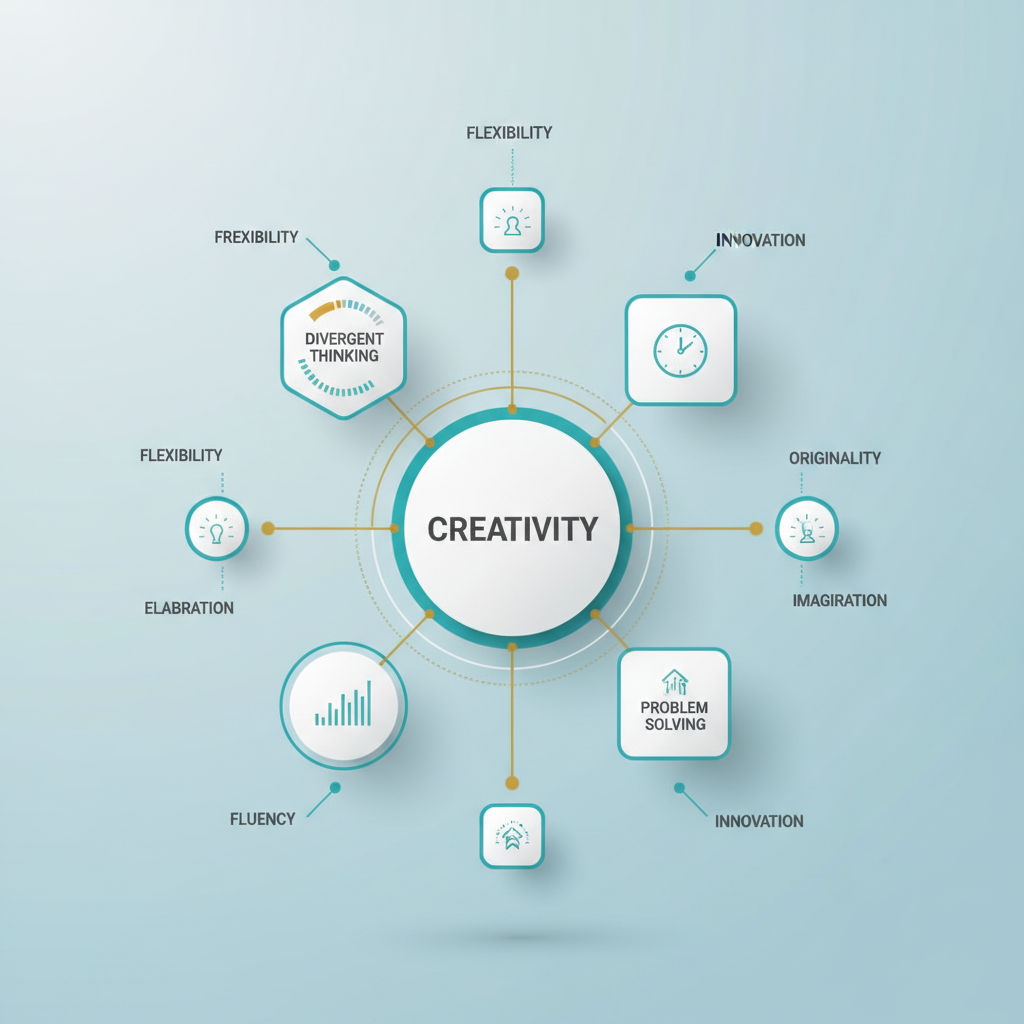
Creativity can feel like a mysterious spark, but it can be broken down into measurable parts. Two key thinking styles for this are divergent and convergent thinking.
Divergent thinking is your ability to generate many different ideas. It’s like brainstorming, where you explore many possibilities without judging them right away. This process helps you innovate and see beyond the obvious. For example, thinking of all the possible uses for a brick is divergent thinking.
On the other hand, convergent thinking is about narrowing down those ideas. You look at your options to find the one best solution. It uses logic to solve problems and helps you choose the best way forward. Both types of thinking are vital for creative success. They work hand-in-hand.
Our Creative Ability Test measures both styles of thinking. It shows your unique mix of generating creative ideas and focused problem-solving. This helps you understand how you approach new challenges.
The Role of Psychometric Scales in Psychology
To measure something complex like creativity, you need a scientific method. That’s where psychological measurement tools come in. Psychometrics is the science of measuring mental traits and abilities [3]. These tools turn abstract ideas, like creativity, into numbers you can measure. This provides reliable insights.
A good psychological test uses carefully crafted questions. These questions are designed to show your creative tendencies. Your answers are then scored based on proven psychological models, which keeps the results objective.
These tools are built on a few key principles:
- Reliability: A reliable test gives you consistent results. If you take it again, your score should be about the same.
- Validity: A valid test measures what it’s supposed to measure. For example, a creativity test should measure your creativity, not just your intelligence.
- Standardization: Everyone gets the same questions and is scored the same way. This allows for fair comparisons between people.
Our 30-question Creative Ability Test is built on these solid scientific principles. It gives you a science-backed assessment, so you can trust your results are accurate and useful for your personal growth.
Assessing Traits like Openness, Flexibility, and Problem-Solving
Creativity isn’t just one skill. It’s a mix of many related traits. Tests help us identify these different parts. They show how each trait adds to your overall creativity.
Here are a few key traits that are often measured:
- Openness to Experience: This trait is about your curiosity, imagination, and interest in art. People high in openness love new ideas and experiences. A test might ask if you’re willing to try new things or explore unfamiliar topics. This is a key part of creative thinking.
- Cognitive Flexibility: This is your ability to switch between different ways of thinking and adapt your approach when things change. Flexible thinkers can get past mental blocks by easily changing their perspective. Our test may give you situations that require you to look at things differently.
- Problem-Solving Skills: Creativity is all about finding unique solutions to problems. It’s more than just finding an answer. It’s about spotting problems, creating new solutions, and checking to see if they work. Our test helps you see your strengths in these areas, so you can turn challenges into opportunities.
Understanding your own creative traits can be empowering. It gives you a clear picture of your unique strengths. With this knowledge, you can use your creativity more effectively in your personal and professional life.
Why Are Psychological Questionnaires Useful for Students?
Psychological tests can really help students. They offer insights that go beyond just grades. These tools help students understand how they think and create.
Think of them as a mirror. You can see your unique thinking style and potential. This self-knowledge is key for school and for planning a career.
Identifying Strengths for Academic and Career Planning
Many students wonder what they’re naturally good at. Tests like the Creative Ability Test can provide clear answers. They pinpoint your unique strengths, especially in creative thinking and problem-solving.
This information is incredibly useful. It helps you choose the right classes and a future career path. When you know your strengths, you can:
- Choose the right classes: Select subjects and majors that match your natural talents.
- Excel in projects: Use your creative skills to shine in essays, presentations, and group work.
- Plan a fulfilling career: Find jobs where your creative talents are in high demand. For example, knowing you’re good at divergent thinking can lead you to fields that need new ideas and innovation [4].
- Understand your learning style: Tailor your study methods to be more effective.
Our science-backed test also gives you personalized feedback. This feedback explains your creative profile and shows you where you naturally shine, giving you a clear advantage.
Enhancing Critical Thinking and Problem-Solving Skills
These tests do more than just identify skills. They also help you improve them. Critical thinking is about analyzing information carefully. Problem-solving is about finding good solutions.
The Creative Ability Test measures key skills like cognitive flexibility and divergent thinking. These skills are the foundation of critical thinking and creative problem-solving. By understanding these parts of your thinking, you can:
- Sharpen your analytical skills: Learn to look at information from different angles.
- Find better solutions: Go beyond the usual answers to discover creative approaches.
- Make better decisions: See how your way of thinking affects the results.
- Face challenges with confidence: Feel more prepared for tough problems at school or in life.
As a result, students learn to think more flexibly. They learn to question assumptions and explore new possibilities. This way of thinking is a huge help in school and beyond.
Building Self-Awareness for Personal Development
To grow as a person, you need self-awareness. Psychological tests help you understand yourself on a deeper level. They show you how you prefer to think, how you react to things, and how you create.
For students, this is about more than just knowing what you’re good at. It’s about understanding the way your creative mind works. This insight can help you:
- Boost your confidence: See your own value and what you can achieve.
- Manage stress: Understand why you react in certain ways and find better ways to cope.
- Improve relationships: Understand yourself and others better.
- Grow as a person: Find areas where you can improve and set goals that matter to you.
In the end, self-awareness gives students power. You can shape your education, find better opportunities, and be true to yourself. Our personalized feedback guides you on this journey, helping you turn self-knowledge into real steps for success in school and in life.
How Can You Find a Reliable Psychological Questionnaire?
Set Your Personal or Professional Goals
To find the right psychological test, start with a clear goal. What do you hope to learn or achieve?
Knowing your goals helps you choose the right test. For example, are you exploring new career paths?
Maybe you want to beat a creative block. Or you might just be curious about how you think. Nailing down your goal is the first crucial step.
Use these questions to help you choose:
- Do you want to find your unique creative strengths?
- Are you looking for ways to improve your problem-solving skills?
- Do you want to understand how flexible thinking affects your work?
- Are you looking for ways to grow as a person and know yourself better?
- Do you need ideas for your career or to help your team innovate?
Your goals act as a compass. They point you to the tests that will help you most.
Look for Tests Backed by Science
Once you know your goals, this next step is key. Make sure the test is backed by science. This means it should be based on real psychological research.
A good test isn’t just a list of questions. It’s a scientific tool that has been carefully developed and tested by experts.
Two key words to look for are ‘validity’ and ‘reliability’.
- Validity: Does the test measure what it says it does? For example, a creativity test should actually measure creativity.
- Reliability: Does the test give you consistent results? If you take it again, your score should be about the same (if you haven’t changed).
Trusted psychological tests are made by psychologists and researchers. They are based on a lot of research and data [5].
Look for websites that clearly explain their methods. They should share the research behind their tests. Being open like this builds trust.
For example, a good creativity test will explain what it measures, like different thinking styles or openness to new ideas. It bases its results on proven theories about creativity. This makes sure the feedback you get is truly useful.
Get Detailed, Useful Feedback
A psychological test is more than just a score. Its real value is in the feedback. Good tests offer detailed advice you can actually use.
Good feedback doesn’t just tell you *what* your results are. It explains *why* they matter and *how* you can use them to grow.
Look for reports that give you more than just numbers. They should offer a full explanation of your results, including your strengths and areas for improvement.
Good feedback often includes:
- Personal Explanations: Simple descriptions of how you think and create.
- Helpful Comparisons: How your results compare to other people.
- Practical Tips: Specific tips and exercises to improve your skills.
- Next Steps: Ideas for how to use your results to meet your goals.
- Real-World Examples: Stories that show how your skills work in everyday life.
This kind of feedback turns confusion into clear self-awareness. It helps you move from just understanding your creativity to using it every day. This helps you keep growing and thinking in new ways.
Discover Your Creative Profile with Our Scientifically-Grounded Test
What to Expect from the 30-Question Creative Ability Test
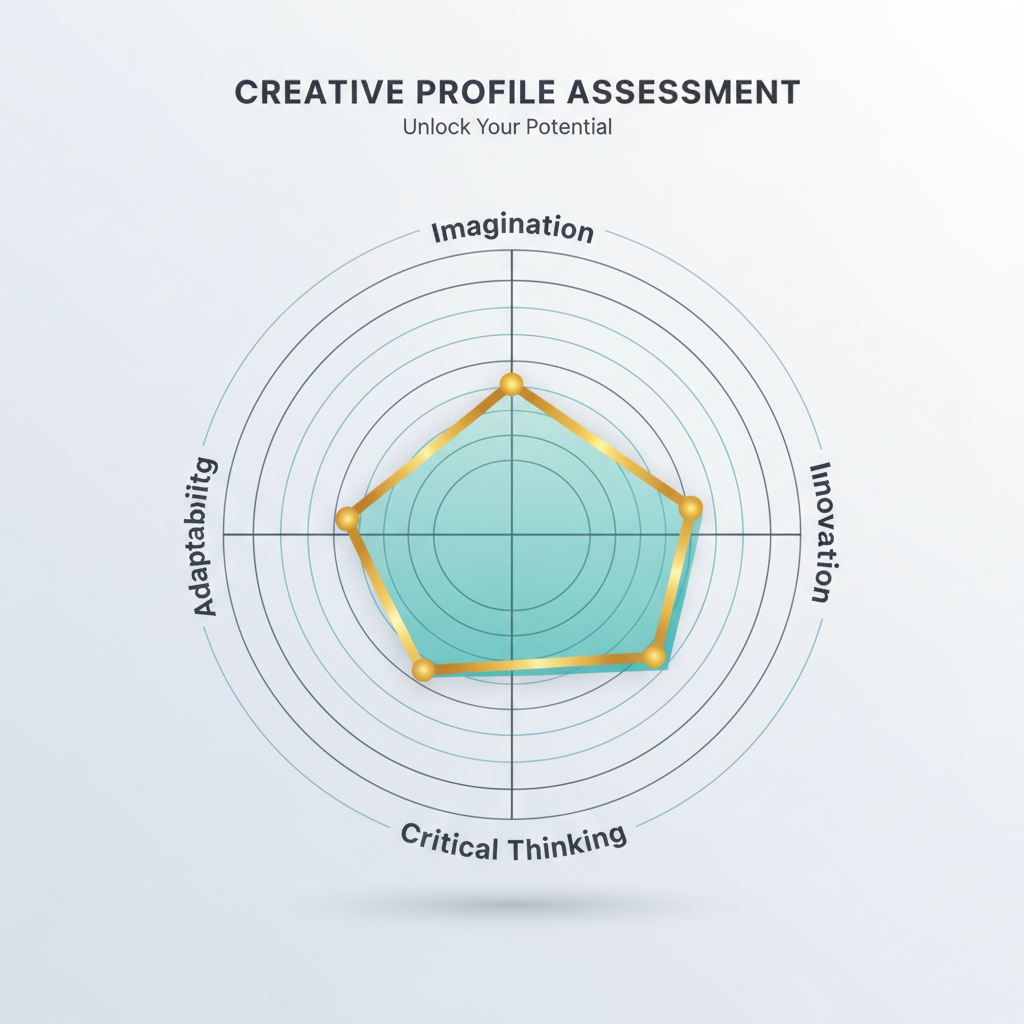
Our Creative Ability Test is more than a simple quiz. It’s a 30-question assessment based on scientific principles. We use it to explore the key parts of your creative mind.
The test is simple and interesting. It looks at your creativity from different angles to give you a complete picture. You’ll learn how you approach new ideas and challenges, and you’ll better understand your unique thinking style.
Here’s what our science-based test measures:
- Divergent Thinking: Your ability to generate many varied ideas from a single starting point. For example, how many uses can you think of for a common brick?
- Cognitive Flexibility: How easily you can shift between different concepts or perspectives. This is a key skill for problem-solving.
- Openness to Experience: Your willingness to engage with new ideas, feelings, and values. This trait strongly links to creativity [6].
- Problem-Solving Skills: Your ability to find creative solutions to tough problems.
- Innovation Potential: Your readiness to try new things and question the way things are normally done.
This test is a journey of self-discovery. It gives you a clear window into your creative profile and is easy for anyone to take, whether you’re a student, a professional, or just curious.
From Results to Action: Turning Insights into Growth
Getting your results is just the start. The real value is in the practical advice you receive. We give you more than just scores—you get a personalized report that’s easy to understand, even if you’re new to this topic.
Your report explains your creative traits in simple terms. For example, if you score high on cognitive flexibility, we’ll show you how to use that skill in brainstorming. We also give you tips to make that strength even better.
Every part of your report includes specific advice. This guidance helps you use what you learn to grow. You’ll get practical tips to be more creative every day and learn how to use your strengths in real situations.
Key benefits of your personalized feedback include:
- Clear Explanations: Understand what each score means for your creative thinking style.
- Personalized Strategies: Get advice that’s just for you. For instance, if you are very analytical, we might suggest brainstorming methods to help you generate more ideas.
- Confidence Building: Identify and value your unique creative strengths. This builds confidence and encourages personal growth.
- Real-World Applications: Learn to use your creative skills at school, work, and in your hobbies.
- Growth Pathways: Find out which areas to focus on for the biggest creative boost. This gives you a clear path for improvement.
The result is a clear roadmap to guide you. It will help you reach your full creative potential and use your creativity confidently to solve problems and innovate.
Start Your Journey to Enhanced Creativity Today
Ready to truly understand your creative mind? Our science-based test offers deep insights. It’s a great tool for personal and professional growth.
Take the first step toward becoming more innovative. Discover your creative profile with our 30-question test. Then, use our practical tips to grow your creativity in all areas of your life.
Join the many people who have changed how they see their own creativity. You’ll unlock new ways to think and solve problems. Start your journey with the Creative Ability Test today and begin using your creativity with purpose.
Frequently Asked Questions
What is an example of a psychological questionnaire?
A psychological questionnaire is a set of structured questions. It is used to gather insights into a person’s mind, behavior, or personality. The goal is to get a clear, measurable understanding of specific traits.
For example, a personality test might ask about your preferences in social settings or how you react to stress. The answers help identify your key personality traits.
Our Creative Ability Test is a great example of a specialized psychological questionnaire. It focuses specifically on creativity. Our 30-question test measures different parts of your creative thinking, like your openness to new ideas and your approach to solving problems. This helps you get a deep understanding of your unique creative profile [7].
Understanding these insights is key for personal growth. It helps you unlock your full creative potential.
What are psychological scales and questionnaires?
Psychological scales and questionnaires are tools for self-discovery that often work together.
- Psychological Questionnaires: These are sets of questions designed to collect specific information about your attitudes, behaviors, or personal traits. For example, a questionnaire might ask about your daily habits or how you feel when facing a challenge.
- Psychological Scales: These are tools used to measure a specific trait, like creativity or anxiety. They turn your answers into a score or rating. This makes it possible to measure complex ideas. The answers from a questionnaire are often scored using a psychological scale to create a scientific interpretation of the results.
Together, these tools offer a reliable way to turn personal experiences into measurable data. This data provides useful insights. Our Creative Ability Test uses carefully designed questions and proven scoring methods. This allows us to accurately measure how you think flexibly and generate new ideas. This scientific approach helps you understand your creative strengths and unique thinking style [8]. As a result, you get clear steps on how to improve your creative skills.
Can I find a free psychological questionnaire?
Yes, you can find many free “psychological questionnaires” online, but it’s important to be careful. The quality and scientific accuracy of these free tests can differ a lot. Many are just for fun and aren’t based on real science.
Here are some points to consider:
- Accuracy and Consistency: Good psychological tests go through a lot of research. This makes sure they actually measure what they claim to measure (accuracy) and provide consistent results over time (consistency) [9]. Free online quizzes rarely meet these scientific standards.
- Depth of Insight: Free quizzes usually give you very basic results. They often don’t include personalized feedback or practical steps for personal growth.
- Personalized Guidance: A quality test like the Creative Ability Test does more than just give you a score. It offers a detailed look at your creative profile. You get insights and tips designed just for you. This helps you build your creative thinking and problem-solving skills.
Investing in a science-backed test is an investment in yourself. It takes you beyond generic quizzes to get personal, practical advice. This helps you build confidence and achieve real growth.
What is a psychological questionnaire for mental health?
A mental health questionnaire is a specific type of assessment. Its main purpose is to screen for, evaluate, or track mental health conditions. These tools are usually used by professionals to help understand a person’s emotional state or thinking processes.
Common examples include questionnaires for:
- Depression: Such as the Patient Health Questionnaire (PHQ-9) [10].
- Anxiety: Like the Generalized Anxiety Disorder (GAD-7) scale.
- Stress levels: Assessing how individuals cope with daily pressures.
- Specific disorders: Such as Post-Traumatic Stress Disorder (PTSD) or Obsessive-Compulsive Disorder (OCD).
It’s very important to know that these are just screening tools. They can’t diagnose a condition on their own. Instead, they help guide a conversation with a qualified professional. A diagnosis can only be made after a full evaluation by a doctor or therapist.
Please note that our Creative Ability Test has a different goal. It focuses on identifying and improving your creative potential, not on mental health. We do not provide mental health assessments or diagnoses. Our goal is to empower you by helping you understand your creative strengths for personal and professional growth. This helps you become a more innovative thinker and problem-solver.
Sources
- https://www.apa.org/education-career/guide/science-psychology
- https://www.simplypsychology.org/big-five-personality.html
- https://www.apa.org/education-career/guide/science-psychology/psychometrics
- https://hbr.org/2019/07/why-creativity-is-the-most-important-skill-in-the-world
- https://www.apa.org/pubs/books/handbook-psychological-assessment
- https://psycnet.apa.org/record/2012-09412-001
- https://www.apa.org/topics/research/methods/psychological-tests
- https://www.frontiersin.org/articles/10.3389/fpsyg.2017.02201/full
- https://psychology.iresearchnet.com/experimental-psychology/psychological-assessment/validity-and-reliability/
- https://www.ncbi.nlm.nih.gov/pmc/articles/PMC1495268/
Leave a Reply