A psychological flexibility test is an assessment designed to measure your ability to stay present and open to experiences while moving toward your values. It evaluates how well you can adapt your thoughts and behaviors to meet the demands of a situation, which is a key component of creative problem-solving and innovation.
Have you ever felt stuck on a challenge or wished you could brainstorm new ideas more easily? We often think of creativity as a rare spark, but it’s really about how we engage with our thoughts and the world. The ability to adapt, change your viewpoint, and stay open when things get tough is more than a life skill—it’s the key to innovative thinking.
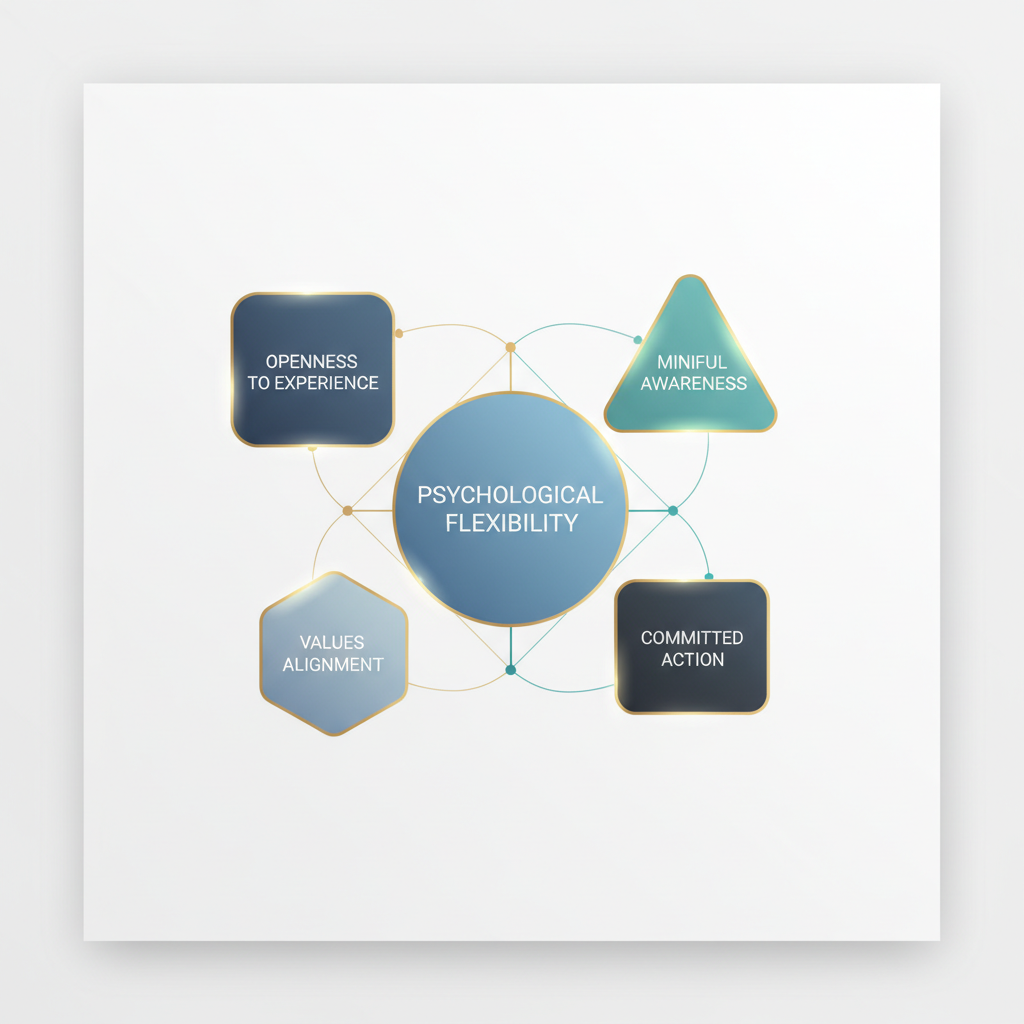
This skill is known as psychological flexibility. A psychological flexibility test isn’t just another assessment; it’s a science-based tool to help you understand your unique thinking style and how well you adapt to new challenges. By measuring your Openness to Experience, your ability to stay present, and your focus on what matters to you, you gain a clear look at the cognitive traits that support creative problem-solving.
In this article, we’ll explain what psychological flexibility really is and why it’s so helpful for creative work. You’ll discover how this trait can be measured, what your results mean for your creative potential, and practical tips to build a more flexible mind. Get ready to unlock new ideas and grow by understanding this vital skill.
What Is a Psychological Flexibility Test?
Why Psychological Flexibility Matters for Creativity
Creativity is more than just having new ideas. It’s also about acting on them, dealing with challenges, and adapting as you go. That’s where psychological flexibility comes in.
A flexible mindset helps you welcome new experiences, explore different viewpoints, and change your approach when you face obstacles.
Consider a designer facing a tight deadline. Or an entrepreneur adapting to market shifts. Their success often depends on their mental agility.
Psychological flexibility helps your creative process in several ways:
- Overcoming Blocks: You can step away from rigid thinking to find fresh solutions.
- Exploring Diverse Ideas: You stay open to new and unusual ideas, which helps you think outside the box.
- Adapting to Challenges: Setbacks become chances to learn and adjust. Instead of giving up, you find a new way forward.
- Embracing Experimentation: You are more willing to try new methods. You learn from unexpected outcomes.
- Cognitive Agility: Your mind can smoothly shift between tasks and concepts. This is vital for complex problem-solving.
In short, psychological flexibility turns uncertainty into an opportunity for creativity. It helps you move from rigid reactions to innovative solutions.
The Science Behind Measuring an Adaptable Mindset
Psychological flexibility is a concept from modern psychology. It comes from a science-backed method called Acceptance and Commitment Therapy (ACT) [1]. This approach looks at how we relate to our inner thoughts and feelings.
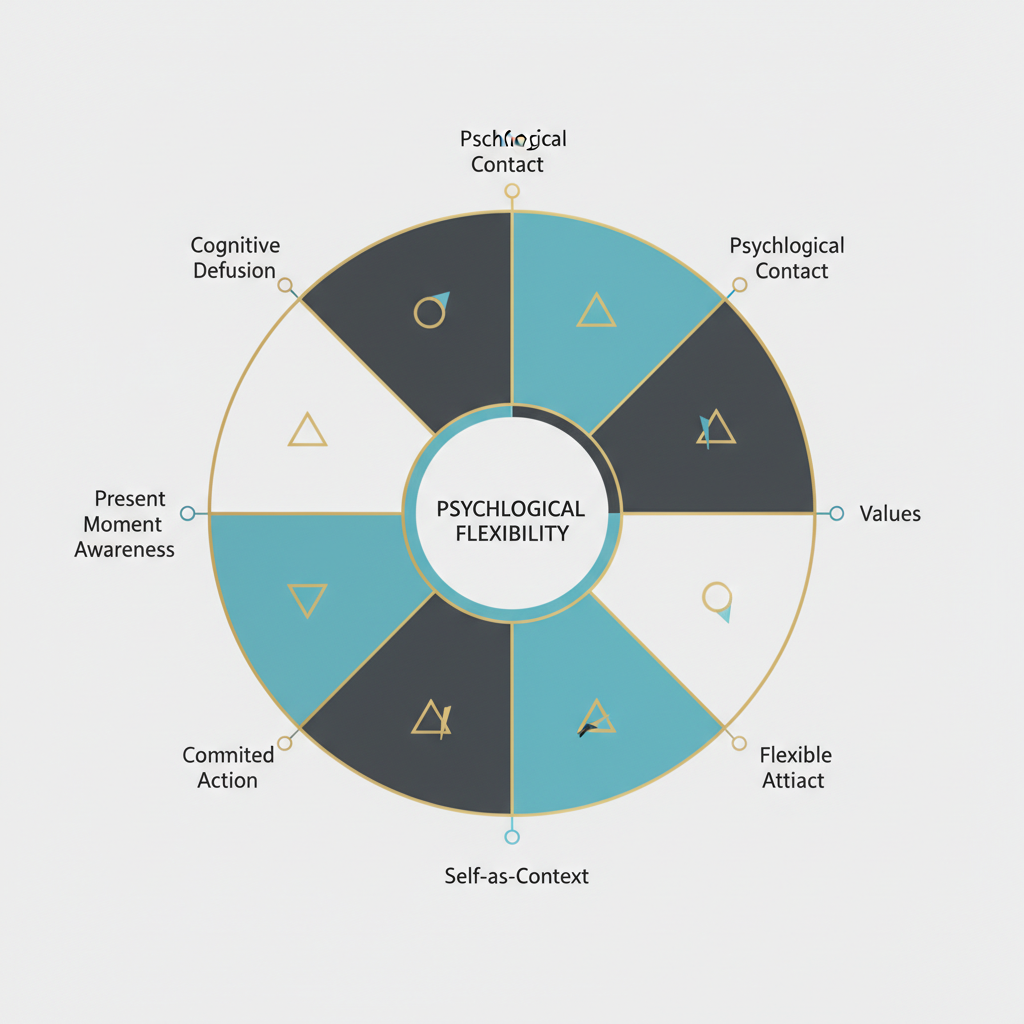
An adaptable mindset has a few key parts. They work together to make your mind more agile:
- Acceptance: You make room for difficult thoughts and feelings without letting them control you.
- Cognitive Defusion: You learn to step back from your thoughts. You see them as just thoughts, not absolute truths.
- Contact with the Present Moment: You stay aware of what’s happening right now. This improves your focus and awareness.
- Self-as-Context: You see yourself as separate from your thoughts and feelings. You know your experiences don’t define who you are.
- Values: You clearly identify what truly matters to you. This guides your actions with purpose.
- Committed Action: You take steps that align with your values, even when it feels hard.
Measuring psychological flexibility looks at how well these parts work for you. Psychologists use scientifically validated questionnaires to do this. These tools ask how you respond to challenges to see how willing you are to adapt your thoughts and actions.
At Creative Ability Test, we use this science. Our assessments show you how flexible your thinking is and help you understand your unique style. We connect psychology research with practical tips to help you unlock your full creative potential.
How Can You Measure Your Psychological Flexibility?
Common Types of Flexibility Questionnaires (e.g., AAQ-II)
To be more creative, it helps to understand your psychological flexibility. Special tests can measure this skill. These tests are usually questionnaires where you report on your own thoughts, feelings, and actions.
A common tool is the Acceptance and Action Questionnaire-II (AAQ-II). It’s a popular way to measure psychological flexibility [2]. This test shows if a person can act on their values, even when facing uncomfortable feelings.
Other questionnaires exist, too. They often ask about similar things, like how you handle your inner thoughts and feelings. They also check if you are willing to pursue important goals. These tests offer a clear way to measure your mental agility.
Key Traits Assessed: Openness, Awareness, and Action
Psychological flexibility is not just one thing. It’s a mix of several key skills. Together, these skills help you think in a flexible and creative way. They help you adapt well to challenges and come up with new ideas.
Here are the core traits often assessed:
- Openness to Experience: This is the willingness to feel all of your thoughts and emotions, both good and bad. Creative people often welcome new ideas and feelings. They are not afraid of the unknown. This openness leads to new ways of thinking.
- Present Moment Awareness: This is about noticing what is happening right now. It means paying attention to your surroundings and your inner thoughts without judgment. Mindfulness is a big part of this. Being present helps you see new opportunities and find fresh solutions to problems.
- Committed Action: This means taking action based on your values, even when it’s hard. It’s about working toward goals that matter to you. Creative work often requires you to keep going. This trait helps you push through creative blocks and move forward after setbacks.
These traits are key to unlocking your creative potential. They help you face creative challenges with resilience. This allows you to come up with more innovative solutions.
Connecting Flexibility to The Creative Ability Test
The Creative Ability Test offers a complete look at your creative potential. While it is not a direct test of psychological flexibility, it measures related skills that are key for a flexible, creative mind.
Our 30-question assessment looks at several key areas. These areas are similar to the parts of psychological flexibility:
- Cognitive Flexibility: This part of the test checks your ability to switch between different ideas or tasks. It also measures how well you can adapt your thinking. This is directly related to being open to new ideas.
- Openness to New Experiences: This trait measures how curious and open you are to new things. It shows how much you enjoy new situations and information. This is a key part of psychological flexibility and leads to exploration and new ideas.
- Problem-Solving Skills: Our test looks at how you handle challenges. It checks your ability to come up with many different solutions. This requires you to be aware and take action by staying focused and putting in the effort.
By understanding these areas, you get useful insights. The Creative Ability Test gives you personalized feedback. It helps you see how your mindset affects your creativity. It also offers practical tips to improve your mental flexibility and help you think in new ways. Our scientific method provides reliable results. This can turn uncertainty into clear self-awareness. You can use these insights to solve real-world problems, helping you grow both personally and professionally.
What Do Your Psychological Flexibility Results Mean?
Understanding Your Score
Your psychological flexibility score is a useful guide. It shows how adaptable your mindset is. This test gives you a clear picture of your current strengths and highlights areas where you can grow.
A lower score may mean you tend to stick with what you know. This can sometimes make it harder to find new ideas. However, it also means you have a great opportunity to improve.
On the other hand, a higher score suggests you’re mentally quick. You likely enjoy new experiences and different points of view. This adaptability is a key part of creative thinking. It helps you change direction and explore different solutions. Psychological flexibility is linked to better mental health and well-being [3].
Remember, this is not a fixed trait. It is a skill you can build over time. Our Creative Ability Test gives you personalized feedback to help you see your unique strengths and potential.
How Your Score Affects Problem-Solving
Psychological flexibility is a key part of creative problem-solving. An adaptable person explores many options instead of getting stuck on the first idea. This is essential for finding new solutions.
Think about a tough problem you’ve faced. A flexible person will think of many different solutions. They look at problems in new ways and stay open to feedback. This helps them get past creative blocks.
Flexible people are also more comfortable with uncertainty, which is a big part of trying new things. A higher score suggests you are good at divergent thinking—the skill of coming up with many different ideas [4].
This ability helps you see opportunities where others see roadblocks, making you a great innovator. Our full Creative Ability Test offers more detail on how your flexibility affects the way you solve problems.
Using Your Results to Grow
Understanding your score is a great first step toward personal growth and more creativity. Think of your results as a guide to help you improve, not just a number.
If your score shows room for improvement, that’s great news. It means you have clear steps you can take to boost your creativity. Here are a few ways to use what you’ve learned:
- Be Mindful: Notice your thoughts and feelings without judgment. This helps you choose how to respond instead of just reacting.
- Try New Things: Step out of your comfort zone on purpose. This makes you more adaptable.
- Question Your Beliefs: Ask yourself why you think the way you do. This can lead to fresh ideas.
- Seek Different Views: Talk to people who think differently than you. This helps you see the bigger picture.
Taking these steps will build your mental flexibility over time. Our platform offers personal tips and exercises based on your results. As you practice, you’ll notice better decision-making and problem-solving skills.
Knowing yourself is key to keep growing. It helps you face challenges with confidence and turns your creative potential into real skill. Use our science-based insights to unlock your full creative potential.
How Can You Improve Your Psychological Flexibility?
Actionable Strategies for a More Agile Mind
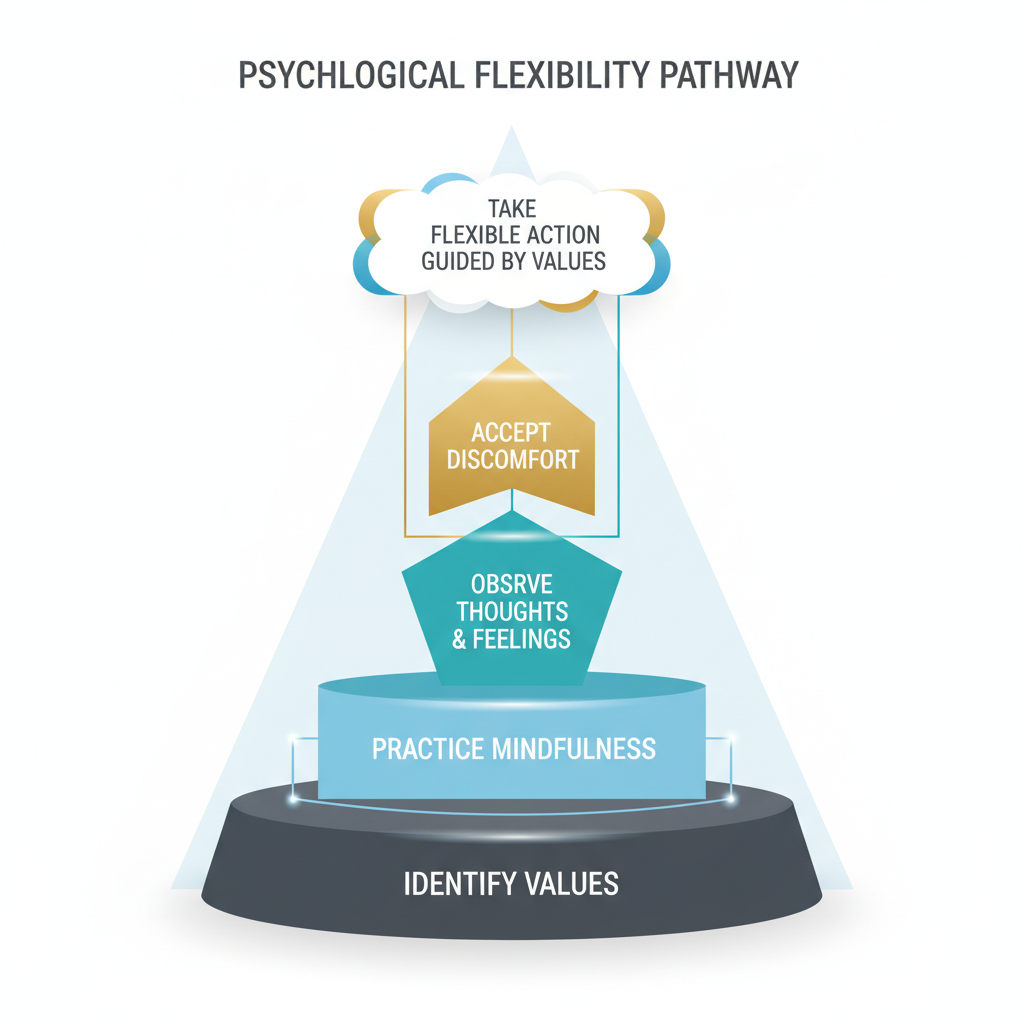
Building an agile mind is a powerful journey. It unlocks new creative potential and helps you handle life’s challenges. The Creative Ability Test supports this growth. Our insights and tools help you build lasting mental flexibility. Here are some ways to develop a more adaptable mindset:
- Practice Mindful Awareness: Be present in the moment. Notice your thoughts and feelings without judgment. This practice clears your head and makes space for new ideas.
- Embrace Acceptance: Acknowledge tough emotions or situations. Fighting reality drains your energy. Instead, accept what is and then decide how to move forward. This frees up mental space for creative problem-solving.
- Clarify Your Values: Know what truly matters to you. Your values act as your compass, guiding your actions. This clarity keeps you motivated, even when you face obstacles.
- Take Committed Action: Act in line with your values. Start with small, steady steps. Taking action, even when it’s hard, builds momentum. This helps you overcome creative blocks and get unstuck.
- Challenge Your Thoughts (Defusion): See your thoughts for what they are: just thoughts. They aren’t facts or commands. Step back from negative self-talk. This helps you see things from different angles and opens you up to new ideas.
- Engage in Self-Compassion: Treat yourself with kindness, especially during setbacks. Self-compassion builds resilience and encourages the kind of risk-taking that creativity needs.
Practical Exercises to Enhance Creative Thinking
Mental flexibility is the fuel for creative thinking. It helps you break free from rigid patterns. Here are some exercises to build your mental agility. They will also help you come up with new ideas.
- “What Else?” Brainstorming: Pick a common object, like a paperclip. List as many other uses for it as you can. Think beyond the obvious. This exercise helps you see objects in new ways and think more broadly.
- Perspective Shifting: Take a current problem. Try to see it from different viewpoints. How would a child, a CEO, or an artist solve it? This practice helps you find surprising solutions and builds empathy.
- Mind Mapping: Start with a central idea. Branch out with related words, thoughts, and pictures. Don’t filter yourself. Mind mapping lets your thoughts flow freely, helping you find new connections between ideas.
- Improvisation Prompts: Use a random prompt generator online (for example, “a talking toaster meets a lost knight”). Spend five minutes brainstorming story ideas. Don’t overthink it. This exercise makes you more comfortable with the unknown and helps you generate ideas quickly.
- SCAMPER Method: Use the SCAMPER method on an existing product or idea. SCAMPER stands for Substitute, Combine, Adapt, Modify, Put to another use, Eliminate, and Reverse. [5] This step-by-step method sparks flexible thinking and helps you find new ways to improve things.
- Random Word Association: Pick two words that don’t seem related, like “cloud” and “bicycle.” Try to find a connection between them. This simple exercise trains your brain to make new connections, a key skill for creativity.
Applying Flexibility in Your Career and Daily Life
The ability to adapt is key to success. This is true at work and in your personal life. Being mentally flexible means you can handle change well. It helps you find new solutions and do well anywhere. Our Creative Ability Test gives you insights into these key skills. It helps you use them to make a real-world impact.
- Workplace Innovation: Projects rarely go as planned. Mental flexibility helps you adjust to new needs and face unexpected challenges. Flexible teams are also more innovative [6], which leads to better results.
- Effective Problem-Solving: Tough problems need flexible thinking. A flexible mindset lets you look at a problem from many angles. You can weigh different options before picking one. This leads to better, more creative solutions.
- Handling Setbacks and Change: Life is full of surprises. Setbacks happen. Flexibility helps you bounce back faster. You learn from failures instead of letting them stop you. This builds deep resilience.
- Better Collaboration: Working with others requires you to be adaptable. You need to understand different viewpoints and adjust your style to work well as a team. Flexible people improve group dynamics, creating a more positive and productive environment.
- Personal Growth and Well-being: Trying new things is key to personal growth. Mental flexibility helps you step out of your comfort zone and learn with curiosity. This leads to constant self-improvement and a more fulfilling life.
Frequently Asked Questions
Can I take a psychological flexibility test online?
Yes, you can take psychological flexibility tests online. Many websites offer these self-assessments. The tests help you see how you handle challenges and new experiences. They also offer insights into how adaptable you are.
Our Creative Ability Test, for example, looks at cognitive flexibility, which is a key part of psychological flexibility. It helps you understand your openness to new ideas and measures how you solve problems in new ways. Taking a test like this is a great step toward more self-awareness and personal growth.
- Gain Self-Awareness: Understand your mental agility and adaptability.
- Identify Strengths: Discover how you naturally respond to change and uncertainty.
- Boost Creativity: Learn how psychological flexibility supports creative thinking.
- Personalized Insights: Receive feedback to guide your personal growth.
What is the AAQ-II psychological flexibility test?
The AAQ-II is the Acceptance and Action Questionnaire – II. It is a well-known and scientifically proven test. This tool measures psychological inflexibility, a key idea in Acceptance and Commitment Therapy (ACT) [7].
In short, the test measures how well you accept difficult inner experiences like thoughts, feelings, and sensations. It also looks at your willingness to act on your values, even when it’s uncomfortable. A high score means you have more psychological inflexibility, while a low score suggests you have more flexibility.
This flexibility is very important for creativity. When you’re flexible, you are more open to new ideas and can push through creative blocks. It helps you try new things and learn from mistakes. Understanding your AAQ-II score offers valuable insights. It shows you where you can build more mental agility for creative thinking.
What kind of questions are on a psychological flexibility test?
Psychological flexibility tests like the AAQ-II usually give you a list of statements. You rate each one based on how true it is for you. These questions explore how you deal with your inner experiences and your behavior. They are designed to show patterns in how you react to your thoughts and feelings.
Common themes explored include:
- Acceptance of Discomfort: Questions might ask if you try to avoid unpleasant feelings or thoughts. For example, “I try to push away my emotions.”
- Cognitive Defusion: This refers to your ability to distance yourself from your thoughts. You might see thoughts as just thoughts, not absolute truths. A question could be, “My thoughts often control my actions.”
- Being Present: Tests check your awareness of the here and now. They assess if you get caught up in past regrets or future worries. For instance, “I am often distracted by my thoughts during activities.”
- Values-Guided Action: These questions ask about your willingness to work toward goals that matter to you, even when you face challenges or difficult emotions. A sample question might be, “I put my values into action even when it’s hard.”
These questions help measure how open you are to new experiences and how resilient you are when facing challenges. Both are key qualities for building creativity. In a similar way, our Creative Ability Test explores your cognitive flexibility and openness. It helps you see how these traits shape your unique creative potential.
Sources
- https://www.apa.org/ptsd-guideline/treatments/acceptance-commitment-therapy
- https://pubmed.ncbi.nlm.nih.gov/21355030/
- https://contextualscience.org/rft_and_act_research
- https://www.apa.org/education-career/guide/science-creativity
- https://www.creativityatwork.com/2012/05/29/scamper-a-tool-for-generating-new-ideas/
- https://hbr.org/2011/04/the-flexible-firm
- https://contextualscience.org/acceptance_action_questionnaire_ii_aaq_ii
Leave a Reply