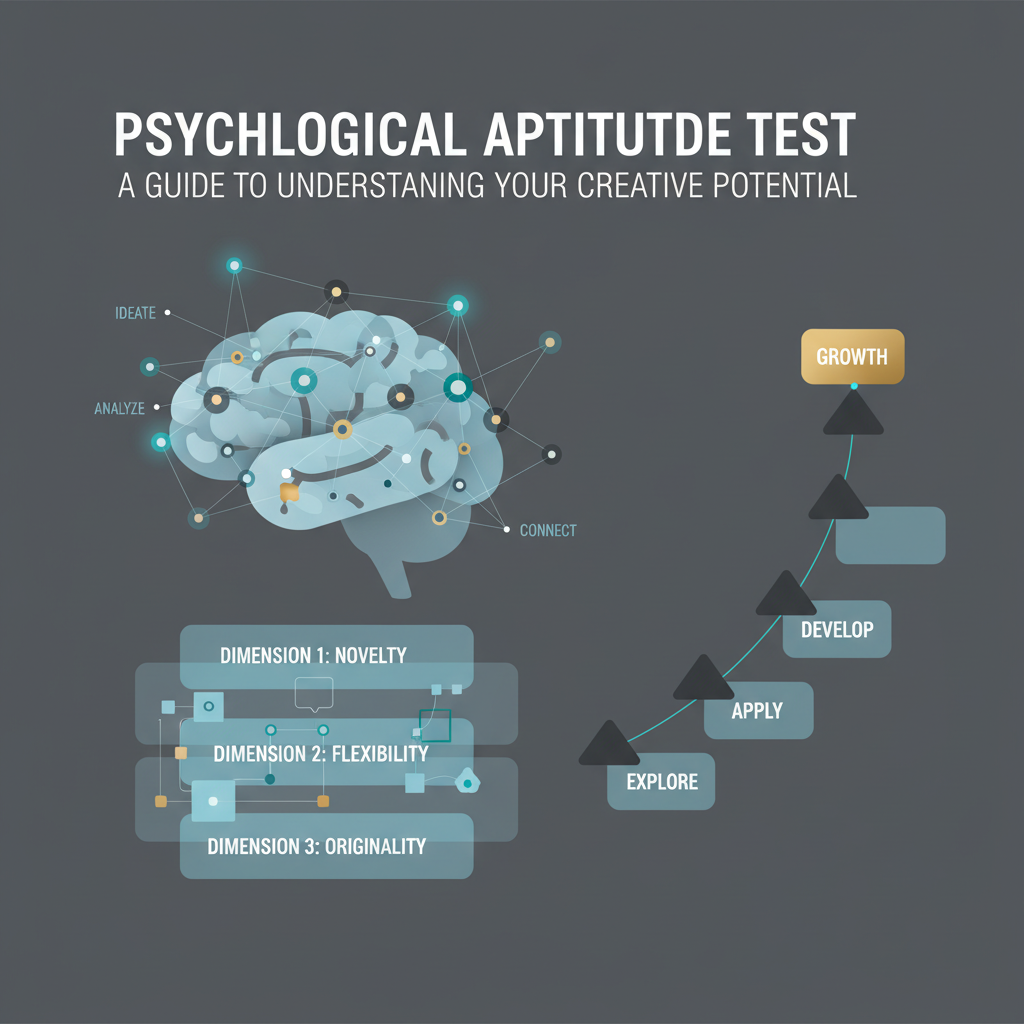
A psychological aptitude test is a standardized assessment designed to measure an individual’s natural talent or potential to learn a specific skill. Unlike an achievement test, which evaluates existing knowledge, an aptitude test predicts your capacity for future success in areas like problem-solving, cognitive flexibility, and creative thinking.
Have you ever wondered about your natural talents? Understanding your innate abilities, or aptitudes, is a key part of self-discovery. A psychological aptitude test can help by giving you a structured way to see and understand your mind’s strengths.
These tests go beyond basic skills. They show you how your mind processes information, solves problems, and comes up with new ideas. If you want to understand how you think creatively, knowing your potential can make a big difference. It’s not just about knowing that you’re creative, but how—your unique thinking style, your openness to new things, and your approach to problems. A creative aptitude test online can reveal these insights and guide your personal and professional growth.
This guide explains psychological aptitude tests—what they are, how they work, and how they compare to other types of assessments. We will cover what creative aptitude tests measure. You will also learn how to use your results to improve your creative thinking and problem-solving skills. Let’s start with a basic question: What is a psychological aptitude test?
What Is a Psychological Aptitude Test?
Aptitude vs. Achievement: Understanding the Key Difference
Understanding yourself starts with clear definitions. In psychology, there is a key difference between aptitude and achievement. Both are important for growth in your life and career.
Aptitude is your natural potential or ability to learn and perform certain tasks. It’s about what you could do with the right training. Think of it as your raw talent or how quickly you can grasp new ideas [1].
Achievement, on the other hand, is what you have already learned or done. It shows your current skills and knowledge in a specific area. School grades and work certifications are common examples of achievement.
The Creative Ability Test focuses on your creative aptitude. We assess your natural potential for imaginative thinking. This means we measure your capacity for new ideas, not just what you have already created. This helps you find your untapped creative strengths and see your future potential.
How Are Aptitude Tests Used in Psychology?
Psychological aptitude tests are powerful tools that offer a deep look into how a person thinks. Psychologists use these tests for several important reasons, such as understanding a person’s thinking style and potential.
- Identifying Strengths and Weaknesses: Tests can show where you naturally do well. They also highlight areas where you could improve with some focus.
- Career Guidance and Educational Planning: Results can point you toward careers and school programs that fit your natural talents. This leads to greater job satisfaction and academic success [2].
- Understanding How You Think: These tests show how you solve problems and make decisions. They reveal your preferred ways of thinking.
- Personal Development and Self-Discovery: Taking an aptitude test can lead to powerful self-awareness. You learn more about your unique mental gifts.
The Creative Ability Test, for example, explores your specific creative talents. It helps you understand your Cognitive Flexibility and ability to think in new ways. This knowledge helps you bring more creativity into every part of your life.
Why Employers Use Aptitude Tests for Interviews
More employers are using aptitude tests in their hiring process. These tests provide a fair way to evaluate candidates beyond their resumes and interviews. This helps companies find people who have strong potential.
Here are the key reasons companies use them:
- Predicting Job Performance: Aptitude tests can accurately predict how well a candidate will do in a role. They measure the core skills needed to succeed [3].
- Seeing Potential Beyond Experience: A candidate might not have direct experience but could have a high aptitude. This shows they can learn and adapt quickly.
- Ensuring a Good Fit: Tests help match people to jobs that suit their natural abilities. This often leads to happier employees who stay with the company longer.
- Fair and Objective Evaluation: Standardized tests reduce the bias that can happen in interviews. They create a consistent way to compare all applicants.
- Finding Innovators: For jobs that require creativity, employers use special creative aptitude tests. These help them find candidates who can drive new ideas.
Knowing your own creative and psychological aptitudes is a big advantage. It lets you confidently highlight your unique strengths. You can show employers how you can bring new ideas and solve problems for their organization.
What are the types of aptitude test?

Cognitive Ability (e.g., Numerical, Verbal)
Aptitude tests often start with cognitive ability assessments. These tests measure your mental skills. They check how you learn, understand, and use information.
Cognitive ability tests are important. They show your potential for learning and solving problems. They also predict job performance well in many roles [4].
Common types include:
- Numerical Reasoning: This tests your ability to work with numbers. You will analyze data, read graphs, and solve math problems.
- Verbal Reasoning: This tests how well you understand and interpret writing. You evaluate arguments and draw logical conclusions from text.
- Logical Reasoning: These tests check if you can spot patterns. You figure out rules and use them in new situations. This often uses abstract shapes or diagrams.
Knowing your cognitive strengths is a good first step. It helps you see how you process information best.
Situational Judgement
Situational judgement tests (SJTs) give you realistic work scenarios. They see how you would handle workplace challenges. These tests check your practical problem-solving skills.
You are usually given a few choices for each situation. Each choice is a different way to act. Your answers show your judgment and how you make decisions.
For example, you might face a conflict with a coworker. Or you might need to prioritize tasks. SJTs show if your approach fits a company’s values and best practices. They highlight how well you handle tricky social and professional situations.
Personality and Behavioral
Personality and behavioral tests explore your personal traits. They show your work style, motivations, and what you prefer. These tests look at the “how” and “why” of what you do.
There are no right or wrong answers in these tests. Instead, they aim to create a profile of your usual behaviors. This includes how you interact with others, manage stress, and handle tasks.
What you learn from these tests is very useful for self-awareness. They help you understand your natural tendencies. This knowledge helps you grow. It also helps you find work environments where you will do well.
For instance, you might find you are very collaborative. Or perhaps you prefer to work alone. This knowledge helps you make better choices for your career and personal growth.
Creative Aptitude Tests: A Focus on Innovation Potential
Creative aptitude tests offer a unique view. They measure your ability to innovate. These tests go beyond normal problem-solving. They look at how you come up with new ideas.
Our Creative Ability Test platform is designed for this. It provides a science-based test. You learn about your own creative potential.
We focus on a few key areas of creativity:
- Divergent Thinking: This is your ability to come up with many ideas. It shows how you find different solutions to one problem.
- Cognitive Flexibility: This measures how easily you can change your point of view. It tests your ability to adapt to new information or changing situations.
- Originality: This checks how unique and new your ideas are. It shows if you can think outside the box.
- Openness to Experience: This explores how open you are to new ideas. It shows your curiosity and if you are willing to try new things.
Understanding these areas helps you find your creative strengths. For example, you might be great at brainstorming. Or you might be good at turning old ideas into new ones.
The Creative Ability Test gives you personal feedback. This feedback makes it easy to understand your results. It gives you useful tips to improve your creative thinking. You learn to use what you find out in the real world. This can mean better problem-solving at work or helping you grow as a person. Our test helps you understand yourself better in a way you can act on. You get personal, practical tips for innovation, not just general ideas.
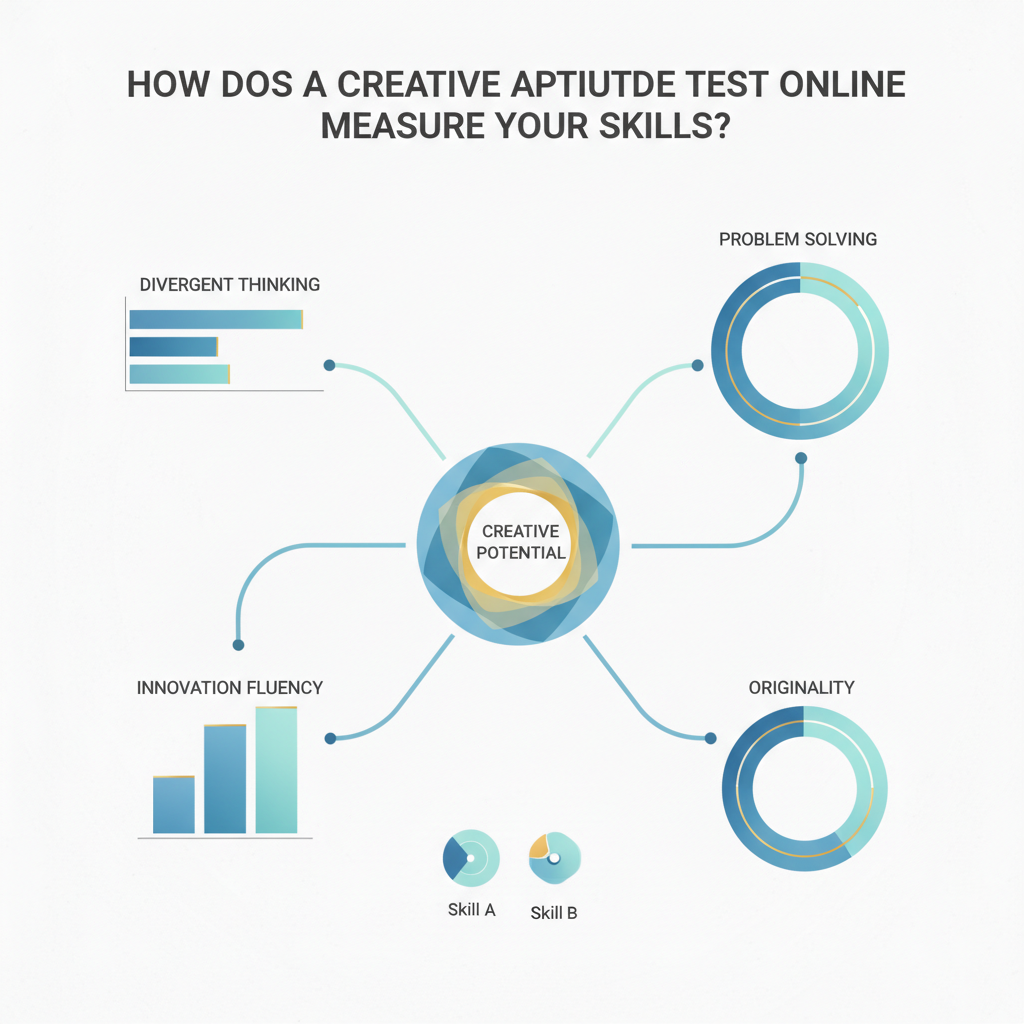
How Does a Creative Aptitude Test Online Measure Your Skills?
Assessing Divergent vs. Convergent Thinking
Understanding how you create and choose ideas is key to your creative potential. Our online creative aptitude test measures two key ways of thinking:
- Divergent Thinking: This is your ability to come up with many different ideas or solutions for a single problem. It’s about brainstorming freely and exploring multiple possibilities to expand your options. For example, if asked to list uses for a paperclip, a divergent thinker might quickly suggest a wide range of ideas, from a lock pick to a fishhook. This type of thinking is essential for innovation [5].
- Convergent Thinking: After you have many ideas, convergent thinking helps you narrow them down. It’s the ability to analyze and evaluate your options to find the single best solution. This way of thinking helps you focus your creative energy. For instance, after listing many paperclip uses, a convergent thinker would pick the most practical one for a specific task. Both thinking styles are needed for effective problem-solving [6].
The Creative Ability Test uses expertly designed questions to measure both of these ways of thinking. This helps you understand your natural tendencies. Do you prefer generating ideas, or are you skilled at choosing the best one? Knowing this helps you strengthen both areas.
Evaluating Cognitive Flexibility and Problem-Solving
Beyond creating and choosing ideas, true creativity means being able to adapt. A creative aptitude test online also looks at your cognitive flexibility and problem-solving skills.
- Cognitive Flexibility: This is your mental agility—the ability to switch between different ideas, adapt to new situations, and adjust your perspective. For example, if one approach to a puzzle isn’t working, cognitive flexibility allows you to drop it and try something completely new. This adaptability is a key trait of highly creative people and helps you overcome mental blocks [7].
- Problem-Solving: Creativity isn’t just for art; it’s a powerful tool for solving real-world challenges. Our test measures how you use creative thinking to tackle complex problems. Do you see challenges as opportunities? Can you create new solutions? This involves looking at situations in a new way and thinking outside the box.
By looking at these areas, the Creative Ability Test gives you deeper insights. You will learn how well you can handle challenges and create fresh solutions. This knowledge is valuable for your personal and professional growth.
Interpreting Your Personalized Creativity Profile
After finishing our science-based 30-question test, you get more than a score. You receive a detailed, personal creativity profile. This report is easy to understand and designed to be encouraging.
Your profile clearly explains your unique creative traits and thinking styles. For example, it might show a strength in “ideational fluency,” which means you’re great at generating lots of ideas quickly. Or, it might point to “originality” as an area for growth and suggest ways to develop more unique ideas.
Here’s what you can expect from your personalized insights:
- Clear Breakdown of Strengths: Discover your greatest creative strengths and natural abilities.
- Areas for Development: Pinpoint specific skills you can improve. We provide practical steps to help.
- Practical Tips: Get advice based on your results, such as how to improve divergent thinking or cognitive flexibility.
- Relatable Examples: See how your creative skills apply to real life, from your career to personal projects.
- Confidence-Building Guidance: Our report helps you trust your creative instincts and feel good about your unique way of solving problems.
This personal profile turns confusion into clear self-awareness. It takes you from guessing about your skills to getting targeted, practical advice. The Creative Ability Test first helps you understand your creative mind, then shows you how to develop it for ongoing growth and innovation.
How Can You Use Your Test Results for Growth?
Identifying Your Innate Creative Strengths
The Creative Ability Test offers a unique chance to discover your natural creative talents. This 30-question, science-based assessment gives you a detailed look at your creative potential.
Understanding your strengths is the first step toward turning uncertainty into self-awareness. When you gain insight into your unique thinking style, you build confidence and can apply your talents more effectively in all areas of life.
Our personalized feedback highlights several key creative skills:
- Divergent Thinking: Your ability to generate many unique ideas. You might excel at brainstorming solutions.
- Cognitive Flexibility: How easily you switch perspectives and adapt to new problems.
- Openness to Experience: A strong curiosity and willingness to explore new concepts and ideas [8].
- Problem-Solving Skills: How effectively you tackle challenges using innovative approaches.
- Originality: Your ability to come up with truly unique and fresh ideas.
You will also see how these traits combine to form your distinct creative profile. This deeper understanding empowers you to make the most of your natural gifts.
Actionable Strategies to Enhance Your Weaknesses
No one is creative in every way. Our Creative Ability Test helps identify your areas for growth, which we call “areas for enhancement.” This encourages a growth mindset, because every creative skill can be developed with practice.
Your personalized report gives you practical, actionable strategies designed to strengthen specific skills. These clear steps help you turn areas for growth into new strengths.
For example, if you want to improve your divergent thinking, try these tips:
- Daily Brainstorming: Spend 10 minutes each day generating as many ideas as you can for a simple problem, without judgment.
- Mind Mapping: Start with a central idea and branch out with related concepts. This technique helps you visualize connections and expand your thinking [9].
- Random Word Association: Pick a random word and try to connect it to your current problem to force new perspectives.
Or, if you want to boost your cognitive flexibility, consider:
- Perspective Shifting: Try to solve a problem from another person’s viewpoint, such as a child, an expert, or even an animal.
- “What If” Scenarios: Ask “what if” questions to explore unexpected outcomes and challenge your assumptions.
- Learn a New Skill: Try an unfamiliar activity, like learning an instrument or a new language, to train your brain to adapt.
These aren’t just theories—they are practical tools to help you build creative consistency. You’ll move from unpredictable results to structured growth. The Creative Ability Test makes this transformation possible.
Applying Creative Insights to Your Career and Personal Life
Your test results are more than just a tool for self-understanding—they can drive innovation and personal growth. Applying these insights at work and in your personal life can lead to real, meaningful change.
In your career, understanding your creative strengths can help you:
- Boost Problem-Solving: Apply your unique creative style to workplace challenges for more innovative solutions.
- Enhance Team Collaboration: Understand how your creative strengths complement those of your colleagues to build stronger teams.
- Drive Innovation: Contribute fresh ideas that can lead projects in new directions. Employers highly value creative thinking [10].
- Advance Your Career: Highlight your unique creative talents in interviews to position yourself for roles that require innovation.
In your personal life, these insights can help you:
- Personal Growth: Use your creative abilities to pursue new hobbies and develop a deeper understanding of yourself.
- Overcome Daily Obstacles: Apply flexible thinking to find new solutions for everyday challenges, from household issues to personal dilemmas.
- Enrich Relationships: Use empathy and creative problem-solving to navigate complex social situations more effectively.
- Foster Well-being: Engage in creative outlets to reduce stress and improve your overall life satisfaction.
The Creative Ability Test is a roadmap that guides you from uncertainty to clear self-awareness. It helps you move beyond a limited view of creativity and start applying it to solve real-world problems. Embrace your creative potential to unlock a future of ongoing growth and fulfillment.
Frequently Asked Questions
What is an aptitude test for a job?
An aptitude test for a job shows your potential to do certain tasks or learn new skills. It looks at your natural talents, not just your learned knowledge. Companies use them to see if you’re a good fit for a job or a team.
These tests help predict how well you might do in a position. They offer information that a resume or interview can’t. This helps companies make smarter hiring choices [source: https://www.shrm.org/resourcesandtools/hr-topics/talent-acquisition/pages/how-to-use-aptitude-tests-in-the-hiring-process.aspx]. For example, a test could check your problem-solving or math skills.
At Creative Ability Test, we focus on your creative aptitude. We look at your ability to come up with new ideas and think in different ways. Knowing this can help your career grow.
What do psychological aptitude test questions look like?
Questions on psychological aptitude tests can be very different. They are made to check various mental skills and ways of thinking. They are not like regular school exams.
You won’t be asked to remember specific facts. Instead, you’ll get tasks that test your natural talents. For example, questions might involve:
- Logical Reasoning: Finding patterns in shapes or numbers. This checks your ability to analyze.
- Verbal Reasoning: Understanding difficult texts or how words relate. This measures your reading comprehension skills.
- Numerical Reasoning: Working with data or solving math problems. This tests how comfortable you are with numbers.
- Situational Judgment: Deciding the best way to handle work situations. This shows how you make decisions.
Creative Ability Test questions are unique. They are designed to find your creative potential. We look at how you create ideas, think flexibly, and find new ways to solve problems. These questions are often open-ended or ask you to use your imagination.
Can you take a creative aptitude test online for free?
Yes, some websites have free “creative aptitude quizzes.” They can be fun and give you a quick look at your creative side. However, they are not usually based on science and don’t go very deep.
Free quizzes usually give general feedback that isn’t tailored to you. They might give you a simple label but won’t offer useful advice. Also, their methods are not usually backed by research.
The Creative Ability Test is a complete assessment based on science. Our 30-question test looks at many sides of your creativity. We offer:
- Personal feedback on your unique creative style.
- Practical tips to build on your creative strengths.
- Feedback based on research to help you grow.
- A better understanding of how you think flexibly and solve problems.
Using a quality test gives you a much deeper understanding of yourself. It helps you move from just being curious to truly knowing yourself and growing.
What is the difference between a general aptitude test and a creativity test in psychology?
General aptitude tests and creativity tests are used for different reasons. They measure different kinds of abilities. Knowing the difference helps you understand your own potential.
| Feature | General Aptitude Test | Creativity Test (Creative Ability Test) |
|---|---|---|
| Primary Focus | Broad mental skills like verbal, math, and logical thinking. | Specific parts of creative thinking, like coming up with many ideas, thinking flexibly, and being original. |
| What It Measures | How fast you think, solve problems, and learn new things [source: https://www.psychologytoday.com/us/blog/the-power-attention/201602/how-aptitude-tests-measure-your-potential]. | Your ability to create new ideas, handle change, solve problems with imagination, and try new things. |
| Typical Questions | Multiple-choice questions about patterns, math, or reading. | Open-ended questions, imaginary situations, and problems that need creative solutions. |
| Key Outcome | A score that shows your overall thinking ability or specific strengths. | A detailed report on your creative style, strengths, and ways to improve. It includes practical tips. |
| Application | Used by companies to guess how well someone will do in a job. | Helps you grow, be more innovative, and solve problems better. It allows you to use your unique talents. |
The Creative Ability Test gives you a clear look at your potential for innovation. It goes beyond a general score. We give you personal feedback to help you understand and grow your creative skills.
Sources
- https://www.apa.org/education-career/guide/aptitude-tests
- https://www.ncbi.nlm.nih.gov/pmc/articles/PMC8900762/
- https://hbr.org/2019/08/the-value-of-personality-tests-in-hiring
- https://psycnet.apa.org/record/2012-07301-001
- https://www.sciencedirect.com/topics/psychology/divergent-thinking
- https://thedecisionlab.com/biases/divergent-and-convergent-thinking
- https://www.pnas.org/doi/10.1073/pnas.1904739116
- https://positivepsychology.com/openness-to-experience/
- https://www.tonybuzan.com/about/mind-mapping/
- https://www.weforum.org/agenda/2023/05/future-of-jobs-2023-top-skills/
Leave a Reply