Category: Specialized and Applied Tests

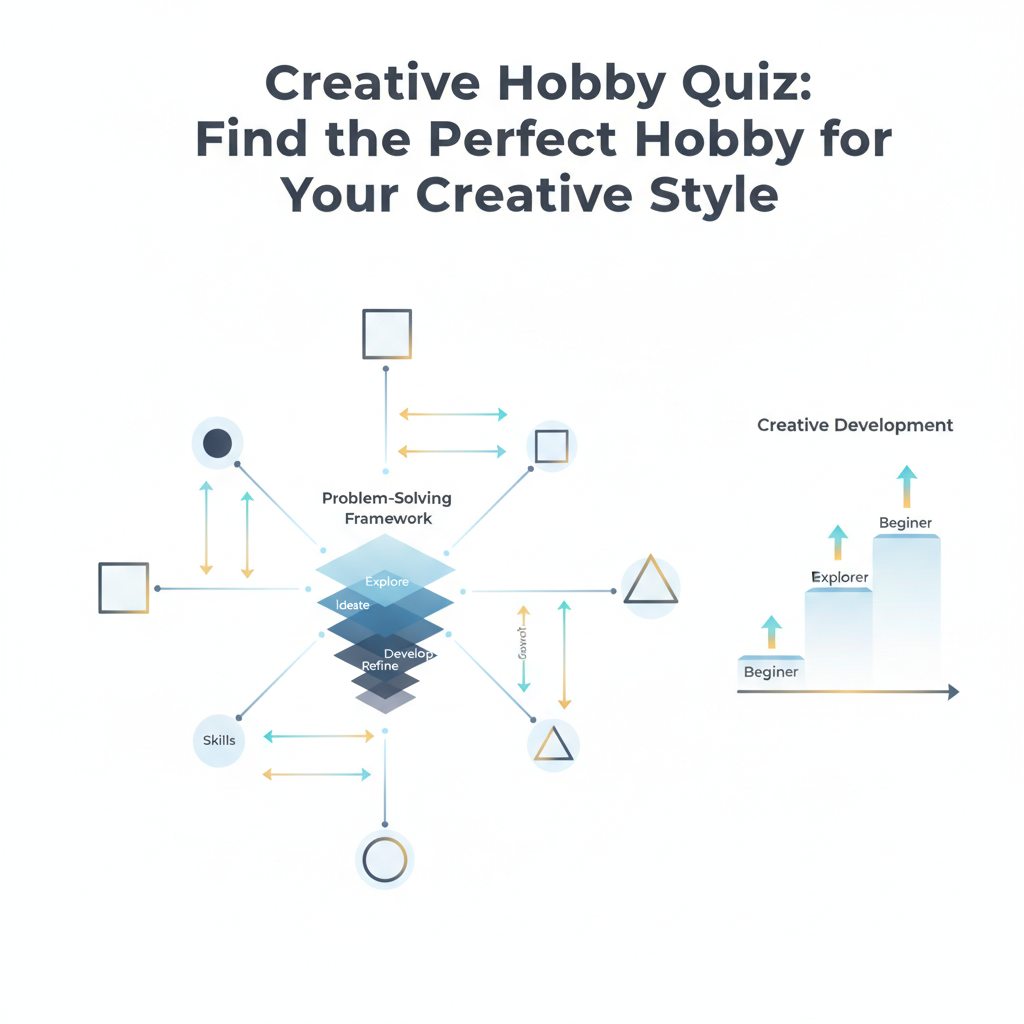
  • Creative Hobby Quiz: Find the Perfect Hobby for Your Creative Style

    Creative Hobby Quiz: Find the Perfect Hobby for Your Creative Style

    A creative hobby quiz is a tool designed to analyze your personality, thinking styles, and problem-solving skills to recommend hobbies that align with your unique creative strengths. Unlike simple personality quizzes, a scientifically-grounded assessment provides deep insights into how you innovate and create, helping you find a fulfilling hobby that fosters personal growth.

    Have you ever wanted to express yourself, create something new, or solve problems in a fresh way, but weren’t sure where to start? Creativity isn’t just for artists—it’s a key part of being human that helps us innovate, grow, and feel fulfilled. The first step to using your creativity more is understanding your personal style.

    Many people try new hobbies, but they don’t always “click.” This often happens when the activity doesn’t match our natural strengths and thinking styles. What if you could find a hobby that you love and that also sharpens your ability to think in new ways, come up with fresh ideas, and improve your problem-solving skills? A well-made quiz based on science can help you find exactly that.

    This article explains why finding the right creative outlet is so important and how a science-based approach can reveal your unique creative type. You’ll learn how different creative styles match up with certain hobbies, giving you practical tips to choose activities that suit you best. Get ready to move past generic advice and begin a journey of self-discovery to find the perfect hobby that inspires you and helps you grow.

    Why Is Finding the Right Creative Hobby So Important?

    An infographic illustrating the multi-faceted benefits of a creative hobby, shown as an expanding core surrounded by layers representing growth, skill development, and well-being.
    An abstract educational visualization representing the profound impact of finding the right creative hobby. Show a central, expanding core symbolizing personal growth and well-being, surrounded by interconnected, layered rings or segments. Each layer represents a benefit: skill development, stress reduction, self-discovery, and innovation. Use clean geometric shapes, subtle gradients in soft blues, whites, charcoal, with gold or teal accents. Ample negative space. No humans or cartoons. Minimalist, vector-based, professional, and approachable style.

    Beyond Just Passing the Time

    Many people think of creative hobbies as just a way to pass the time. But they are much more than a simple distraction. The right creative hobby can greatly improve your well-being and is a great way to grow as a person.

    Creative activities give your brain a good workout. They help it form new connections, which makes you a more flexible thinker. As a result, your problem-solving skills get stronger. Creative work is also a known way to relieve stress, offering a healthy break from daily pressures [1].

    When you choose a hobby that’s right for you, you can:

    • Lower stress and anxiety.
    • Improve your focus and concentration.
    • Express your emotions and understand yourself better.
    • Sharpen your thinking skills and mental quickness.
    • Feel a sense of purpose and accomplishment.

    These benefits show that you’re doing more than just passing time. You are actively taking care of your mind, which helps you do well in many areas of life.

    Connecting with Your Core Creative Strengths

    The real power of a creative hobby comes from matching it with your innate abilities. To find the right hobby, you need to learn about yourself. This helps you enjoy it more and get the most benefit, allowing you to reach your full creative potential.

    Everyone’s creative strengths are different. For example, you might be a “divergent thinker,” good at coming up with many new ideas. Or you might be more analytical, skilled at organizing and improving concepts. The Creative Ability Test can help you find your specific strengths by giving you personalized feedback on how you think.

    When you match your hobby to your natural creative talents:

    • You’ll feel more engaged and get into a state of “flow.”
    • Learning new skills will feel easier and more satisfying.
    • Your confidence in your creative abilities will grow.
    • You’ll develop a stronger sense of who you are.
    • It becomes a more effective way to support your personal growth.

    This focused method makes your hobby more than just fun. It becomes a powerful tool for improving your unique thinking skills. This leads to meaningful personal growth and lasting satisfaction.

    How Does a Creative Hobby Quiz Work?

    An infographic showing a three-step process for a creative hobby quiz: self-assessment, thinking style analysis, and hobby recommendations, depicted as a clear flow diagram.
    A clean, instructional infographic illustrating the structured process of a creative hobby quiz. Visualize it as a clear, sequential flow diagram or a stepwise progression with interconnected nodes. Each node represents a quiz stage: ‘Input/Self-Assessment’, ‘Analysis/Thinking Style Identification’, and ‘Output/Hobby Recommendations’. Use minimalist vector-based geometric shapes, subtle gradients, and a color palette of soft blues, whites, charcoal, with gold or teal accents for markers. Maintain ample negative space for clarity. No humans or cartoons. Professional and approachable.

    Understanding Your Creative Profile

    Many online quizzes offer quick hobby ideas. Our Creative Ability Test goes much deeper. It helps you understand your unique creative style using a 30-question, science-based test.

    This test measures your creativity in several ways. It explores how your mind naturally solves problems. It also reveals your natural strengths in different creative areas.

    The quiz gives you information about key areas, including:

    • Cognitive Flexibility: Your ability to switch between different ideas easily. People with high cognitive flexibility adapt quickly to new information and surprises [2].
    • Divergent Thinking: Your ability to create many unique solutions to one problem. This is a key part of creative thinking [3].
    • Problem-Solving Skills: How you naturally handle difficult situations. This includes whether you prefer clear rules or more open-ended challenges.
    • Openness to Experience: Your willingness to try new things and explore new ideas. This trait is often linked to creativity.

    By understanding these parts of yourself, you learn more about what you can do. You can stop guessing about your creative talents and get a clear picture of your strengths.

    Matching Your Thinking Style to Activities

    Every creative hobby uses certain cognitive strengths. A painter uses visual skills, while a writer uses language. Our quiz matches your creative profile to hobbies that are a good fit for you.

    It finds your main thinking style. Then, it suggests hobbies you will likely enjoy and be good at. For example, if you are a strong divergent thinker, you might like hobbies that let you explore freely. On the other hand, if you are good at analytical problem-solving, hobbies with clear rules might be perfect.

    Consider these examples:

    • Analytical Problem-Solvers: You might be great at puzzles, coding, or building detailed models. These hobbies use logic and clear goals.
    • Divergent Thinkers: You could enjoy abstract art, coming up with new ideas, or experimental cooking. Your mind loves creating many different possibilities.
    • Hands-On Makers: Building, sculpting, or crafting lets you create something real. You enjoy working with your hands and seeing results quickly.
    • Expressive Storytellers: Writing, playwriting, or filmmaking lets you tell stories. You enjoy sharing feelings and connecting with others.

    This matching process isn’t random. It is based on an understanding of creative psychology. As a result, our recommendations are made just for you. We aim to match your natural talents with hobbies you will find rewarding.

    Moving Beyond Generic Hobby Lists

    Most hobby lists offer the same general ideas. They rarely consider how you think. Recommending painting or knitting to everyone can lead to frustration and giving up.

    Our Creative Hobby Quiz is different. It gives you more than a list; it offers personalized advice. You will understand why a certain hobby fits your creative style. For instance, you will see how an activity uses your natural ability to switch between ideas.

    This approach helps you feel more certain about your creative side. You gain a deeper understanding of your own mind. As a result, you can try new hobbies with more confidence and excitement. It changes how you see creativity, turning simple suggestions into a real plan for growth.

    Our goal is to give you detailed, personal feedback. We want to help you use your creativity in a meaningful way. This supports personal growth, career development, and new ways of thinking. Finding the perfect hobby becomes a journey of self-discovery.

    What Creative Hobbies Align with Different Thinking Styles?

    An infographic visualizing the connection between different thinking styles (e.g., divergent, convergent) and various aligned creative hobbies using a network diagram with central hubs and branching connections.
    An abstract, educational infographic visualizing the alignment between various thinking styles and suitable creative hobbies. Present a cognitive network diagram or an idea cluster. A central hub could represent ‘Thinking Styles,’ branching out into different nodes for ‘Divergent,’ ‘Convergent,’ ‘Analytical,’ ‘Intuitive’ styles. Each style node then connects to smaller clusters or examples of ‘Creative Hobbies’ (e.g., painting, coding, writing, sculpting). Use minimalist vector shapes, interconnected lines with subtle gradients. Color palette: soft blues, whites, charcoal, with gold or teal accents to highlight connections and categories. Ample negative space. No humans or cartoons. Professional and approachable.

    Knowing how you think can unlock your creativity. Your Creative Ability Test results show your main creative strengths. This helps you pick hobbies you’ll truly enjoy. Hobbies that match your thinking style are more rewarding. They also help you grow your skills and support your personal growth.

    Let’s look at creative hobbies for different thinking styles. This guide gives you practical ideas. You can use what you learn about yourself to find a new creative hobby.

    For the Analytical Problem-Solver

    Analytical thinkers love structure and logic. You enjoy breaking down complex problems. You love finding smart, simple solutions. Your creativity often shows up in organized, step-by-step thinking. You are a careful planner who likes to get things right.

    You look for patterns and clear answers. You enjoy challenges that need a good strategy. These hobbies are perfect for your detail-oriented mind.

    • Strategic Board Games or Puzzles: Games like chess, Go, or complex puzzles use your strategic mind. They require you to think ahead. This helps you predict what will happen next [4].
    • Coding and Programming: For analytical minds, writing code is very creative. You design systems and solve problems using logic. You turn ideas into things that work.
    • Architectural Drawing or Model Building: These hobbies mix art with solid design. You have to plan the layout, choose materials, and make sure it’s stable. Every detail matters.
    • Data Visualization or Infographics: Turning data into clear, visual stories is a great creative challenge. It takes both analysis and good design skills. You make complicated information easy to understand.

    The Creative Ability Test shows your strengths in problem-solving and logic. This knowledge helps you. It helps you pick hobbies that are both challenging and fun.

    For the Divergent and Abstract Thinker

    Divergent thinkers are great at coming up with many new ideas. You like to explore lots of possibilities. You make connections between things that seem unrelated. Your mind wanders to find new solutions. Abstract thinking helps you understand big, complex ideas. You see the big picture and are okay with not having all the answers.

    Your creativity is often spontaneous and free-flowing. You like to think outside the box. Try hobbies that let you explore without limits.

    • Abstract Painting or Sculpture: These are perfect for expressing ideas and feelings freely. You can experiment with forms, colors, and textures. There are no limits to your imagination.
    • Improvisational Arts (Music, Theater, Dance): Improv requires you to think fast and come up with ideas on the spot. You create in the moment. This makes your thinking more flexible.
    • Brainstorming and Concept Development: You can turn this into a hobby. You could invent new products, create fictional worlds, or solve big problems. Your strength is coming up with a lot of different ideas [5].
    • Experimental Photography: Go beyond normal photos. Play with light, angles, and unusual subjects. Focus on creating a feeling or idea instead of a perfect picture.

    Our assessment measures your skill for divergent thinking. It also shows how open you are to new things. These results give you clear direction. They help you find hobbies that celebrate your unique ability to think outside the box.

    For the Hands-On Maker and Builder

    Hands-on makers love to create real, physical things. You enjoy turning ideas into something you can touch. You love the process of building and making. Your creativity comes from working with your hands. You feel good when you finish a project. You learn best by doing and enjoy seeing your efforts take shape.

    You are good at putting ideas into action and doing skilled work. These hobbies are a great way to use your constructive energy.

    • Woodworking or Metalworking: In these crafts, you shape materials into useful or beautiful objects. You use tools and learn new skills to build something strong and beautiful.
    • Pottery or Ceramics: Working with clay is a very hands-on hobby. You mold, sculpt, and glaze. Each piece is unique. It reflects your personal touch and skill.
    • Gardening and Landscaping: Gardening is like creating a living piece of art. You design, plant, and care for your garden. It is a hobby that keeps you creative over time.
    • DIY Home Improvement or Restoration: Doing projects around the house lets you use your practical skills. You can change a room and see the results right away.

    The Creative Ability Test assesses your practical and innovative skills. It can show if you have a knack for making things. This helps you find hobbies where you can make real things and always be learning.

    For the Expressive Storyteller

    Expressive storytellers are good at connecting with people. You use stories to share ideas and feelings. Your creativity shines when you build new worlds. You create interesting characters or tell stories about real events. You understand people well and have a natural desire to share what you think and feel.

    You are great at telling stories that people connect with. Choose hobbies that let your unique voice be heard.

    • Creative Writing (Fiction, Poetry, Screenwriting): These are all great ways to tell stories. You use words to create stories, characters, and worlds that pull readers in.
    • Podcasting or Vlogging: These digital formats let you share your voice and opinions. You can create audio or video to tell stories, share facts, or give your opinion to an audience.
    • Documentary Filmmaking or Photography: You can capture real stories and show what it means to be human. This takes a good eye for detail, empathy, and a clear storytelling vision.
    • Performance Art or Spoken Word Poetry: This is a direct and powerful way to tell a story. You use your body and voice to connect deeply with an audience.

    Our comprehensive assessment measures how open you are to new things and how well you understand emotions. These are key skills for any storyteller [6]. The personalized feedback from the Creative Ability Test can help you. It helps you find creative hobbies that amplify your unique voice.

    Ready to Discover Your Perfect Creative Hobby?

    Take the Scientifically-Grounded Creative Ability Test

    Tired of guessing which creative hobby is right for you? Generic online quizzes often give shallow advice. To find a hobby you truly love, you need to understand yourself better.

    The Creative Ability Test is different. It’s not just another hobby quiz. We use a 30-question test based on science to help you understand your creative potential.

    Our test looks at key parts of creativity, like your flexibility, problem-solving skills, and openness to new ideas. For example, learning about your skill in divergent thinking can open up new possibilities [3]. You’ll get a clear picture of your natural creative strengths.

    Our test is based on proven research, giving you a solid starting point for self-discovery. The results you get are accurate and practical. This means you can confidently find hobbies that are a perfect fit for you.

    From Quiz Results to Actionable Insights

    Taking the test is just the first step. The real value comes from your personalized results. Your report is more than just a score—it’s a detailed profile of how you think creatively. It highlights your strengths and shows you where you can grow.

    We turn complex psychological ideas into simple, useful advice. You’ll get practical tips to improve your creative skills, tailored just for you. This helps you use your creativity in everyday life, starting with choosing the right hobby.

    Here are some examples of how your results can point you to the right hobbies:

    • If your report highlights strong divergent thinking: You might excel in activities that use a lot of brainstorming. Think abstract painting, improvisational comedy, or free-form writing.
    • If you show high cognitive flexibility: Hobbies that require you to adapt and solve problems could be perfect. Try coding, garden design, or creative cooking.
    • If your strengths lie in analytical problem-solving: You might enjoy structured creative projects. Examples include intricate model building, complex puzzle design, or musical composition.

    This process turns uncertainty into useful self-knowledge. Our platform guides you in connecting your unique skills to a variety of hobbies. You get a clear path to grow and have fun, ensuring you find a creative passion that’s a perfect match.

    Frequently Asked Questions

    What makes this creative hobby quiz different from others?

    Many online quizzes give you generic hobby ideas. Our creative hobby quiz is different because it’s more than just a simple survey.

    Our quiz is based on the scientific Creative Ability Test. This means it uses proven methods to understand your unique creative style. We focus on real insights, not just entertainment.

    Our approach helps you understand how you think. It measures key parts of your creativity, like how easily you can switch between different ideas (cognitive flexibility) and how many new ideas you can generate (divergent thinking). We look deeper than just your basic preferences.

    Here’s what makes our quiz different:

    • Scientifically Grounded: Our quiz is built on psychological research to accurately assess your creative potential [7].
    • Personalized Insights: You get feedback tailored to your strengths and areas for growth, not just a generic list of hobbies.
    • Focus on Core Creative Strengths: We identify your main thinking style to help you find hobbies that truly fit you.
    • Actionable Strategies: We suggest hobbies and also give you strategies to boost your creative thinking in daily life.
    • Comprehensive Assessment: Our 30-question assessment measures multiple sides of your creativity.
    • Promotes Growth: This quiz is designed for personal growth, helping you move from feeling unsure to having a clear path forward.

    Ultimately, our quiz helps you find hobbies that match who you are. Instead of struggling with creativity, you’ll get clear strategies to help you grow. It’s all about building your confidence and making things you’re proud of.

    What kind of questions are in a hobby quiz?

    Our creative hobby quiz asks questions that make you think. They are designed to explore how your mind works. Instead of asking what hobbies you already like, we focus on how you see and interact with the world.

    The questions look at different parts of your creative thinking and how you solve problems. For example, some questions test how many ideas you can come up with (divergent thinking). Others see how you connect ideas that seem unrelated.

    We look for key creative traits like:

    • Openness to Experience: Are you open to new and different ideas?
    • Curiosity: Do you like exploring new things and asking “why?”
    • Cognitive Flexibility: Can you easily change your mind or see things from a new angle?
    • Problem-Solving Style: Do you prefer clear rules or creative ways to solve problems?
    • Preference for Novelty: Do you enjoy new and unique experiences?

    Every question uses situations you can relate to, making the quiz easy for anyone to take. The goal is to understand how you think creatively. We then give you simple, easy-to-understand results that guide you toward hobbies that are a natural fit for you.

    Is there a creative hobby quiz for adults and teens?

    Yes, absolutely. Our Creative Ability Test and hobby quiz are designed for both adults and teens. Creativity isn’t just for one age group—it’s something everyone has [8].

    Our quiz is useful for everyone. Teens can use their results to do better in school or find new ways to express themselves. Adults can apply their creative strengths at work or find hobbies that make life more enjoyable. It’s great for anyone looking for a new challenge or a path to self-discovery.

    The feedback you get is tailored to you. It’s helpful whether you’re a student, a professional, or just curious about yourself. Our quiz is a great tool for:

    • Personal Growth: Understand and enhance your unique creative strengths.
    • Educational Development: Apply creative thinking to learning and problem-solving.
    • Career Advancement: Boost innovative thinking at work.
    • Stress Reduction: Discover engaging hobbies that promote well-being.
    • Self-Discovery: Uncover hidden talents and passions.

    Anyone who wants to understand and improve their creativity can benefit. Our science-backed quiz gives you practical advice, no matter your age. It’s a great first step on a journey of learning and creative discovery.


    Sources

    1. https://www.who.int/publications/i/item/health-evidence-network-synthesis-report-67
    2. https://www.ncbi.nlm.nih.gov/pmc/articles/PMC8900010/
    3. https://en.wikipedia.org/wiki/Divergent_thinking
    4. https://journals.sagepub.com/doi/abs/10.1177/0956797613476317
    5. https://onlinelibrary.wiley.com/doi/abs/10.1002/acp.2505
    6. https://www.apa.org/pubs/journals/releases/psp-psp0000003.pdf
    7. https://www.apa.org/pubs/journals/features/xge-a0033285
    8. https://www.frontiersin.org/articles/10.3389/fpsyg.2017.02102/full
  • Psychological Capital Questionnaire (PCQ): A Guide to Measuring Your Potential

    Psychological Capital Questionnaire (PCQ): A Guide to Measuring Your Potential

    The Psychological Capital Questionnaire (PCQ) is a scientifically validated assessment tool designed to measure an individual’s positive psychological resources. It evaluates four key dimensions: self-efficacy (confidence), hope, resilience, and optimism, which together form a person’s ‘PsyCap’.

    Have you ever wondered what fuels great ideas, helps you solve tough problems, and drives you toward success? It’s often more than just talent; it’s a strong set of inner psychological strengths. These natural abilities are your resources for growth and achievement. They play a key part in shaping your creative confidence, your capacity for innovation, and your overall well-being.

    The Psychological Capital Questionnaire (PCQ) is a scientifically proven tool designed to help you measure and understand these vital strengths. It focuses on four core areas: Hope, self-Efficacy, Resilience, and Optimism (known as “HERO”). By exploring these, you can better understand your unique thinking styles and your approach to challenges. This knowledge helps empower your creative process. Understanding your psychological capital offers a clear path to improve your work and support your personal journey of self-discovery.

    This article is your guide to the Psychological Capital Questionnaire. We will explain what PsyCap is, why it’s so important for unlocking your creative potential, and how to interpret your scores. Most importantly, we’ll give you practical strategies to build each of these strengths. This will help you turn uncertainty into self-awareness and develop more consistent creative habits. Let’s begin by exploring the PCQ and how it can help you innovate and thrive.

    What is the Psychological Capital Questionnaire (PCQ)?

    A diagram illustrating Psychological Capital (PsyCap) as a central concept connected to four key components: Hope, Efficacy, Resilience, and Optimism.
    A minimalist, vector-based infographic illustrating “What is the Psychological Capital Questionnaire (PCQ)?”. Central node labeled “Psychological Capital” with branching pathways leading to four distinct, interconnected geometric shapes. Each shape represents a core component: “Hope”, “Efficacy”, “Resilience”, and “Optimism”, with short labels. Use soft blues, whites, charcoal, with gold or teal accents for clarity and engagement. Maintain ample negative space for legibility. No humans.

    Understanding the Core Concept of PsyCap

    What is Psychological Capital (PsyCap)? Think of it as your inner toolkit for success. It’s more than a good mood; it’s a positive mindset built from strengths you can grow.

    These strengths help you face challenges and reach your goals. PsyCap is a powerful set of mental strengths that help you do more than just get by—they help you thrive. This idea is backed by scientific research [1].

    PsyCap is very important for creative people. It gives you confidence in your ideas and helps you see things in new ways. With strong PsyCap, you can innovate better, believe in your creative skills, and solve problems more easily. The Psychological Capital Questionnaire (PCQ) is a tool used to measure these key strengths.

    The Four Pillars: Hope, Efficacy, Resilience, and Optimism (HERO)

    Psychological Capital is not just one thing. It’s a mix of four different mental strengths. Together, they form the acronym HERO: Hope, Efficacy, Resilience, and Optimism. Each one is powerful on its own, but combined, they build a strong foundation for success. They also have a big impact on your creativity.

    Let’s explore each of these essential components:

    • Hope: This is more than just wishing for the best. It means setting clear goals and believing you can achieve them. It’s also knowing there are many paths to success [2]. For creative work, hope fuels your vision, helps you find new solutions, and keeps you motivated on difficult projects.
    • Self-Efficacy: This is the belief you have in your own skills. It’s the confidence that you can get things done, even when you face challenges [3]. For creativity, this means you trust your ideas and feel able to make them a reality. This makes you more willing to take on big projects.
    • Resilience: This is your ability to bounce back from setbacks. It’s how you recover from hard times or failure [4]. Every creative person faces blocks or criticism. Resilient people learn from these experiences. They adapt and keep going instead of giving up. This skill is key to creative growth.
    • Optimism: This means having a positive outlook and expecting good things to happen. Optimists often see setbacks as temporary problems. They see successes as something they earned [5]. This mindset helps you keep going and find opportunities in challenges. For creative work, optimism encourages you to try new things and stay excited about your projects.

    Why is Psychological Capital Important for Creativity and Growth?

    How Self-Efficacy Fuels Creative Confidence

    Self-efficacy is your belief that you can succeed at a task [6]. This belief is key for any creative work. When you believe you can come up with new ideas, you’re more likely to try.

    This confidence helps you take risks and explore new solutions. With high self-efficacy, you’re less afraid of failure. As a result, you are more willing to think outside the box, experiment, and push boundaries.

    Think of a designer with a challenging new project. If they have strong self-efficacy, they will confidently brainstorm many ideas. They won’t be afraid to suggest something unusual. On the other hand, someone with low self-efficacy might hold back. They may worry their ideas aren’t good enough, which limits their success.

    Here are a few ways to build your self-efficacy:

    • Remember your past creative successes, even small ones.
    • Learn new skills that interest you creatively.
    • Watch others succeed at creative work; this can boost your own belief.

    Our detailed assessment at Creative Ability Test helps you see your unique creative strengths. This insight is a powerful tool based on science. It builds your self-efficacy by showing you where your true potential is. This awareness helps you set and chase bigger creative goals.

    The Role of Optimism in Overcoming Creative Blocks

    Optimism is having a positive outlook on the future [7]. It’s the belief that good things will happen. Creative work often has roadblocks. Ideas might not flow easily, and projects can feel stuck.

    Optimism helps you see these challenges as temporary. You believe that you will find a solution. This positive mindset keeps you engaged and motivated. It also stops you from getting discouraged. An optimistic person will keep trying longer and explore problems from different angles.

    Imagine a musician struggling to compose a new melody. An optimist thinks, “I’ll figure this out soon.” They might take a break, then return with a fresh perspective. They explore new chord progressions. A pessimist, however, might give up quickly. They might think, “I’m just not creative enough today.”

    To be more optimistic in your creative life:

    • Try to turn negative thoughts into helpful ideas.
    • Focus on what could go right instead of past failures.
    • Celebrate small wins and progress on your creative journey.

    When you understand your creative thinking styles from our assessment, you develop a growth mindset. This naturally builds optimism. It helps you see creative challenges as chances to learn and grow, not as roadblocks.

    Using Hope to Drive Innovative Goal-Setting

    Hope is more than a feeling. It’s about having clear goals and believing you can reach them. It includes both your plan to get there (“pathways”) and your motivation to follow that plan (“agency”) [8].

    Hope is key for setting big creative goals. It gives you the long-term motivation to work towards them. You don’t just imagine a great result; you also believe you can make it happen. This powerful mix fuels proactive problem-solving. It pushes you to find new methods and explore new creative areas.

    Think about an entrepreneur trying to launch a new tech product. First, they clearly state their vision. Then, they map out the steps to build it. They get feedback from users and change their plan when they hit problems. Their hope is what drives their hard work and new ideas.

    To use hope in your creative work:

    • Break big creative goals into smaller, manageable steps.
    • Think of a few different ways to reach your goal.
    • Regularly imagine your success and the good your work will do.

    Our personalized insights at Creative Ability Test help you define your creative potential. They guide you in setting meaningful goals. We give you practical ways to handle your creative journey. This helps turn your hope into real progress.

    How Resilience Helps You Learn from Creative Failures

    Resilience is the ability to bounce back from hard times. It means you can adapt well to stress or setbacks [9]. Creativity is not a straight line. It often involves a lot of trial and error.

    Sometimes, creative ideas get rejected or projects don’t work out. A resilient mindset helps you recover quickly. You learn important lessons from these setbacks instead of letting them define you. You use them as stepping stones to improve. This constant learning makes your future creative work much stronger.

    Imagine a chef trying to create a bold new dish. The first few tries might not taste right. A resilient chef sees this as a chance to improve the recipe. They might even use a “failed” part of the dish in a new way. A chef who isn’t resilient might just give up.

    Here’s how to build resilience in your creative life:

    • See challenges and “failures” as chances to learn.
    • Be kind to yourself and remember that setbacks are normal.
    • Find supportive people who can encourage you.

    Our platform at Creative Ability Test focuses on growth and being adaptable. It helps you understand your unique problem-solving skills. This knowledge builds mental toughness. It prepares you for the ups and downs of any creative journey. You learn to embrace every experience.

    What Are the Different Versions of the PCQ?

    Learning about your psychological capital can help you unlock your creativity. Like many proven scientific tests, the Psychological Capital Questionnaire (PCQ) comes in a few different versions.

    These versions are made for different situations. Some give you a detailed look, while others are faster. All of them help you understand your inner strengths: hope, efficacy, resilience, and optimism (HERO).

    The Comprehensive PCQ-24

    The PCQ-24 is the original and most detailed version of the test. It includes 24 specific questions that measure your strengths across the four HERO areas. This questionnaire gives you a complete picture of your inner resources [10].

    When you take the PCQ-24, you answer six questions for each of the four pillars:

    • Hope: Your ability to set goals and find ways to reach them, even when things get tough.
    • Efficacy: Your confidence that you can handle tasks and challenges, especially new or difficult ones.
    • Resilience: Your ability to bounce back from problems, setbacks, or failures.
    • Optimism: Your positive outlook, where you credit yourself for successes and see failures as temporary hurdles.

    This longer format gives you a deeper understanding of your strengths, making it ideal for personal growth or research. If you want to explore your creative mindset and find specific areas to improve, the PCQ-24 offers very helpful information. It helps you see exactly where your creative confidence and problem-solving skills are strongest.

    The Shorter PCQ-12 for Quick Assessments

    When you need a fast but reliable test, the PCQ-12 is a great choice. This version shortens the original to just 12 questions, with three for each HERO area. It gives you a quick overview of your psychological capital [11].

    The PCQ-12 is often used for:

    • Initial check-ins.
    • When you’re short on time.
    • Surveys that need to be brief.
    • Quickly measuring overall well-being.

    Even though it’s shorter, the PCQ-12 gives you useful information about your psychological strengths. It can show you your general creative confidence, your approach to solving problems, and how well you adapt to change. This version is very helpful if you’re curious about your psychological capital and want an easy way to start learning about yourself. It provides a good starting point for understanding how your inner resources shape your creative thinking and growth.

    How Do You Interpret Your PCQ Score?

    An interpretive chart showing PCQ score ranges, categorizing them into levels like
    A clean, minimalist, vector-based infographic demonstrating “How Do You Interpret Your PCQ Score?”. Visualize a structured assessment chart or competency graph with clear, distinct levels or bands representing score ranges (e.g., “Developing,” “Growing,” “Thriving”). Use subtle gradients and accent highlights in gold or teal against soft blues, whites, and charcoal. Include short infographic labels or competency indicators within each level. Emphasize clarity and professional aesthetics. No humans.

    Understanding Your Overall PsyCap Score

    Your Psychological Capital Questionnaire (PCQ) score is more than just a number. It’s a snapshot of the inner resources you have right now. These resources help you handle life’s challenges and play a big part in your creative journey.

    The PCQ measures your overall ‘PsyCap,’ which is a combination of your Hope, Efficacy, Resilience, and Optimism (HERO). Each of these four pillars helps you thrive. They help you succeed in both your personal and professional life.

    At Creative Ability Test, we know that PsyCap is a key part of your creative potential. A higher score usually means you have a strong inner foundation for thinking boldly and solving problems in new ways. It shows you’re well-prepared to chase your creative goals with confidence and persistence.

    Your score helps you understand yourself better. It shows you your inner strengths and also points to areas where you can grow. This knowledge helps you unlock your full creative capacity.

    Identifying Strengths and Growth Areas in the Four Pillars

    The real value of the PCQ is in its detailed breakdown. Instead of just one number, you get a score for each of the four HERO pillars. Looking at these scores helps you see your specific strengths and find areas ready for growth.

    Let’s explore what each pillar score can tell you:

    • Hope: This score shows how well you set clear goals and your belief that you can find ways to reach them. A high score means you’re good at setting goals and finding solutions. This helps move your creative projects forward. For example, you might be someone who always finds a new way to approach a difficult design brief.
    • Self-Efficacy: This score shows your confidence in your ability to succeed at a task. Strong self-efficacy is key to creativity because it encourages you to take risks and try new ideas. This confidence helps you start creative work, whether it’s a complex coding challenge or a new artistic concept.
    • Resilience: This score shows your ability to bounce back from setbacks. Creative work often involves trial and error. A high score means you learn from mistakes, adapt, and keep going. This strength is key when a project hits a roadblock, helping you to not give up easily.
    • Optimism: This score shows your positive outlook and your belief that good things will happen. Optimistic people see challenges as temporary chances to grow. This mindset helps you get past creative blocks and keep trying. It allows you to maintain a positive attitude, even when the work is difficult.

    By looking at these individual scores, you get specific insights about where to focus your energy. Strengthening one pillar can have a ripple effect, improving your overall creativity and well-being.

    For example, if your resilience score is lower, you might get discouraged by criticism. Knowing this, you can plan ways to strengthen that pillar. In the end, this will boost your creative output.

    What a High or Low Score Means for You

    Your PCQ scores are a guide for your personal growth. Remember, there is no “perfect” score. Instead, each score offers helpful insights to guide you on your journey.

    High Scores: Leveraging Your Creative Strengths

    A high overall PCQ score means you have strong psychological capital. You likely have a solid inner foundation that helps you face challenges with confidence and create new things.

    • Confidence in New Ventures: You’re more likely to take on new creative projects and explore fresh ideas without much fear. This can lead to exciting breakthroughs.
    • Effective Problem-Solving: Strong PsyCap helps you stick with tough problems until you find creative solutions. You’re less likely to be stopped by early setbacks.
    • Sustained Creative Drive: You can stay motivated through long projects. Your optimism and resilience help you keep going when you face obstacles.
    • Adaptability: You handle change well and can adjust your creative process when needed. This helps you stay flexible and open to new ideas.

    Use these strengths. Take on ambitious projects, mentor others, and share your creative ideas. Your high PsyCap helps you do great work and also supports your well-being [12].

    Low Scores: Opportunities for Creative Growth

    A lower PCQ score simply means you have plenty of room to grow. It shows you where a little effort can make a big difference. This is not a judgment, but a roadmap for your growth.

    • Developing Creative Confidence: If your self-efficacy score is lower, focus on building your confidence. Start with small creative tasks, celebrate your wins, and slowly take on bigger challenges.
    • Building Persistence: If resilience is low, try to see setbacks as chances to learn. Practice bouncing back from mistakes and remember that breakthroughs often come after many tries.
    • Fostering a Positive Outlook: If your optimism is lower, work on developing a more positive mindset. Focus on what you can control, practice gratitude, and spend time with supportive people.
    • Enhancing Goal-Setting: If your hope score is lower, practice setting clear goals. Break big goals into smaller, manageable steps and think of different ways to achieve them.

    Creative Ability Test is here to help you grow. We offer personal strategies to help you build up each PsyCap pillar and improve your creative skills. For example, if your optimism score is lower, we might suggest mindfulness exercises to help you turn negative thoughts into helpful ideas. This approach helps you turn weaknesses into powerful creative strengths.

    How Can You Use Your Results to Boost Creativity and Well-Being?

    A step-by-step framework illustrating how to use PCQ results to enhance creativity and well-being, moving from understanding scores to applying strategies for growth.
    An abstract, minimalist, vector-based infographic representing “How Can You Use Your Results to Boost Creativity and Well-Being?”. Design a layered framework or a sequence of milestone steps, starting from “Understand Results” and progressing through actionable stages like “Identify Strengths,” “Develop Areas,” and “Apply to Goals.” Use interconnected geometric shapes and pathways to show progression and integration. Incorporate soft blues, whites, charcoal, with gold or teal accents. Maintain clear visual hierarchy and ample negative space. No humans.

    Actionable Steps to Build Each PsyCap Component

    Your Psychological Capital (PsyCap) score is a great starting point. You can use these insights to build your creative skills and improve your well-being. The Creative Ability Test shows your strengths in Hope, Efficacy, Resilience, and Optimism (HERO). Here are practical steps to grow in each area.

    Building Hope: Fueling Your Creative Vision

    Hope is having a clear vision for the future and seeing ways to reach your goals. This is what drives your creative ambitions.

    • Set Clear Creative Goals: Define what you want to create. Break big goals into smaller, more manageable steps.
    • Develop Multiple Pathways: Brainstorm different ways to reach your creative goals. If one path gets blocked, you have other options ready. This is a core part of cognitive flexibility [13].
    • Practice “Agency Thinking”: Remind yourself that you can take action. Focus on your power to start and keep going. When facing a creative challenge, tell yourself, “I can do this.”
    • Visualize Success: Regularly picture yourself successfully finishing a creative project. This builds confidence and keeps you motivated.

    Boosting Efficacy: Strengthening Your Creative Confidence

    Self-efficacy is your belief that you can succeed. It’s key for taking on new creative challenges and solving problems.

    • Seek Mastery Experiences: Take on new creative tasks, starting small and building up. Every success boosts your belief in your skills.
    • Learn from Others: Watch how successful creators work and solve problems. Their experiences can inspire you on your own creative journey.
    • Positive Self-Talk: Challenge negative thoughts about your creative skills. Replace “I can’t” with “I’ll try my best.”
    • Get Constructive Feedback: Share your work with others. See feedback as a chance to grow. It helps you improve your skills and shows your effort is worthwhile.

    Enhancing Resilience: Bouncing Back from Creative Blocks

    Resilience helps you handle setbacks and learn from creative failures. It turns obstacles into opportunities for growth.

    • Reframe Challenges: See creative blocks or failed ideas as chances to learn. Ask yourself: what can I gain from this?
    • Practice Self-Compassion: Be kind to yourself when you make a mistake. The creative process is full of trial and error.
    • Develop Coping Strategies: Learn ways to reduce stress. Take breaks, meditate, or exercise. These actions can help clear your mind for creative thinking [14].
    • Seek Support: Talk to other creators or mentors. Sharing your struggles can bring new energy and encouragement.

    Growing Optimism: Embracing Creative Possibilities

    Optimism is keeping a positive outlook. It helps you find possibilities even when things are tough. This sparks new ideas.

    • Focus on the Positive: Look for the good things in your creative work and celebrate small wins.
    • Challenge Negative Thoughts: When you feel discouraged, ask yourself if your negative thoughts are really true.
    • Practice Gratitude: Make a regular habit of listing things you are grateful for in your creative life. This can shift your perspective.
    • Visualize Positive Outcomes: Picture your creative projects succeeding. This helps you believe it can happen.

    Applying PsyCap Insights to Your Personal and Professional Life

    Your Creative Ability Test results show your creative strengths in detail. You can use these PsyCap insights to reach your full potential in all parts of your life.

    In Your Personal Life: Flourishing and Growth

    A strong PsyCap leads to a better personal life. It helps you handle daily challenges more easily.

    • Boost Well-Being: High PsyCap is linked to greater life satisfaction [15]. This helps you feel more engaged and happy.
    • Improve Relationships: Optimism and resilience help you with relationships. You can handle disagreements in a more positive way.
    • Achieve Personal Goals: Hope and Efficacy give you the drive to learn a new hobby or get your home organized.
    • Boost Personal Creativity: Use your insights to choose creative hobbies that fit your strengths. For example, if you’re good at divergent thinking, try brainstorming new recipes or story ideas.

    For example, if your results show strong resilience, you can manage stress better and bounce back faster from disappointments. If you have high efficacy, you’ll be more likely to sign up for that new drawing class.

    In Your Professional Life: Innovation and Leadership

    Psychological Capital is a huge advantage at work. It has a big impact on your performance and career growth.

    • Drive Innovation: Hope helps you set bold new goals. Optimism helps teams try new ideas without fearing failure.
    • Improve Problem-Solving: Resilient people are better at handling tough business challenges. They learn from mistakes and adjust quickly.
    • Build Leadership Skills: Leaders with high PsyCap inspire confidence and motivate their teams to reach big goals. Their positive outlook is contagious.
    • Adapt to Career Changes: In a fast-changing world, PsyCap helps you take on new roles. It gives you the confidence and optimism to learn new skills.

    Think about a professional with high hope and efficacy. They are more likely to suggest new solutions at work. They believe they can complete complex projects successfully. This directly boosts their professional growth and impact.

    Connecting Psychological Capital to Creative Problem-Solving

    The Creative Ability Test measures how you think and shows your unique problem-solving style. Your PsyCap insights give these abilities a major boost. They create a strong foundation for new ideas and creative solutions.

    Creative problem-solving means working through uncertainty. It requires you to keep going and believe in your own abilities. Each part of PsyCap plays a key role:

    • Hope and Visionary Thinking: Hope helps you imagine new solutions and set big creative goals. You get better at seeing different paths to a breakthrough. This powers divergent thinking, which is about exploring many possibilities [16].
    • Efficacy and Creative Action: Your self-efficacy helps you develop and improve your ideas. It gives you the confidence to get past mental blocks and turn thoughts into real solutions.
    • Resilience and Creative Improvement: The creative process is rarely a straight line. Resilience helps you push through creative blocks. You learn from early mistakes and keep improving your ideas. This leads to stronger, more creative results.
    • Optimism and Trying New Things: A positive outlook encourages you to try new and different methods. It helps you stay positive while brainstorming. Being open like this is key to finding truly new solutions.

    By understanding your PsyCap strengths, you can use them on purpose. Use your strong efficacy to power through tough creative tasks. Use your hope to hold on to your vision for new ideas. The Creative Ability Test gives you personal strategies to turn your psychological capital into real creative success.

    Frequently Asked Questions

    Can I find a Psychological Capital Questionnaire PDF for free?

    Many people look for free versions of the Psychological Capital Questionnaire (PCQ). However, the official PCQ is a paid tool. You need a license to use it.

    This ensures the test is reliable and scientifically sound. Researchers and organizations usually get access from official publishers [17]. This process helps fund ongoing research and improvements.

    While you might find unofficial versions online, they are often not validated. This means their results may not be accurate or reliable. For accurate results, it’s important to use a scientifically proven tool. Our Creative Ability Test is a strong, evidence-based tool for understanding your creative potential. It offers practical insights for personal growth and innovation.

    What is the difference between the PCQ-24 and PCQ-12?

    The Psychological Capital Questionnaire comes in two main lengths. Both the PCQ-24 and PCQ-12 measure the same thing: psychological capital. This includes hope, efficacy, resilience, and optimism (HERO).

    The main difference is how detailed they are. They are designed for different research and practical needs.

    Feature PCQ-24 (Comprehensive Version) PCQ-12 (Shorter Version)
    Number of Items 24 questions 12 questions
    Detail Level Gives a detailed look at each of the four PsyCap parts. It provides a more specific understanding of your HERO strengths. Gives a quick, general overview of your psychological capital. It still covers each part, but with fewer questions.
    Time Commitment Takes a little longer to complete. Quicker to take and finish.
    Ideal Use Good for in-depth research studies. It’s also great for detailed personal or company growth plans. Great for quick check-ins or when you’re short on time. It is also useful for tracking progress over time.
    Validity Both versions are proven to be reliable and valid [18]. They accurately measure psychological capital. Both versions are proven to be reliable and valid. They accurately measure psychological capital.

    The choice between them depends on your specific goals. For example, a longer test might show specific areas to improve your creative confidence. A shorter version can quickly measure your overall well-being, which helps support your flexible and innovative thinking.

    Is there a Psychological Capital Questionnaire for students?

    There isn’t a special “student-only” version of the PCQ, but the standard PCQ-24 and PCQ-12 are very helpful for students. Psychological capital is a universal resource that helps people succeed in all areas of life, including school.

    Students face unique challenges like academic pressure, career decisions, and personal growth. Strong psychological capital can make a big difference.

    Here’s how psychological capital helps students:

    • Better Resilience: It helps students bounce back from setbacks, like a bad grade or a rejection.
    • More Hope: It helps students set clear goals for school and their careers and find ways to reach them, even when things get tough.
    • Stronger Self-Efficacy: It builds confidence in their ability to handle tough subjects and complete complex projects.
    • More Optimism: It helps students stay positive about their future and see challenges as chances to learn and grow.

    Research shows that psychological capital improves student well-being, school performance, and engagement [19]. Understanding your PsyCap can boost your creative problem-solving skills and help you be more innovative. Our Creative Ability Test complements this by helping you directly measure and improve your creative thinking styles. Together, they support your overall personal and professional growth.


    Sources

    1. https://onlinelibrary.wiley.com/doi/abs/10.1002/job.165
    2. https://www.tandfonline.com/doi/abs/10.1207/S15327965PLI1304_01
    3. https://psycnet.apa.org/record/1977-22920-001
    4. https://psycnet.apa.org/record/2001-00994-006
    5. https://psycnet.apa.org/record/1985-24536-001
    6. https://www.simplypsychology.org/self-efficacy.html
    7. https://dictionary.apa.org/optimism
    8. https://positivepsychology.com/hope-theory/
    9. https://www.apa.org/topics/resilience
    10. https://psycnet.apa.org/record/2007-06240-000
    11. https://www.researchgate.net/publication/229007425_The_Measurement_of_Psychological_Capital_PCQ-12_Versus_PCQ-24
    12. https://pubmed.ncbi.nlm.nih.gov/30046522/
    13. https://hbr.org/2016/10/how-to-increase-your-cognitive-flexibility
    14. https://www.apa.org/topics/stress/strategies
    15. https://www.frontiersin.org/articles/10.3389/fpsyg.2021.681121/full
    16. https://www.journals.uchicago.edu/doi/abs/10.1086/381606
    17. https://www.mindgarden.com/139-psychological-capital-questionnaire-pcq
    18. https://journals.sagepub.com/doi/full/10.1177/1069072714561026
    19. https://www.frontiersin.org/articles/10.3389/fpsyg.2020.00971/full

  • 5 Creative Relationship Psychology Tests to Understand Your Partner Better

    5 Creative Relationship Psychology Tests to Understand Your Partner Better

    A relationship psychology test is an assessment designed to analyze the dynamics, compatibility, and interaction styles between partners. From a creative standpoint, it evaluates cognitive flexibility, collaborative problem-solving, and openness to experience, which are crucial for a healthy, evolving partnership.

    Most of us want to understand our romantic partners on a deeper level. We often look at shared interests, communication styles, and emotional needs. But one of the best ways to strengthen your bond is to understand your shared creativity. A relationship is something you build together—you create a life, navigate challenges, and design a future. This is where creative psychology can offer powerful insights into your partnership.

    This article is about more than romantic gestures. It’s about the cognitive skills and thinking styles you and your partner use to navigate life. We’ll explore how creative traits like cognitive flexibility, problem-solving skills, and being open to new things affect your relationship’s health. By looking at your partnership through a relationship psychology test, you can find your combined strengths. You will also learn practical ways to connect more deeply, overcome obstacles, and build a great future together.

    Ready to explore the creative side of your relationship? We have five fun, scenario-based creative “tests” and exercises to help you and your partner understand how you think, both individually and together. These aren’t pass/fail tests. Instead, they are playful activities that lead to better understanding, mutual growth, and a more creative partnership.

    How Can Understanding Creative Psychology Improve Your Relationship?

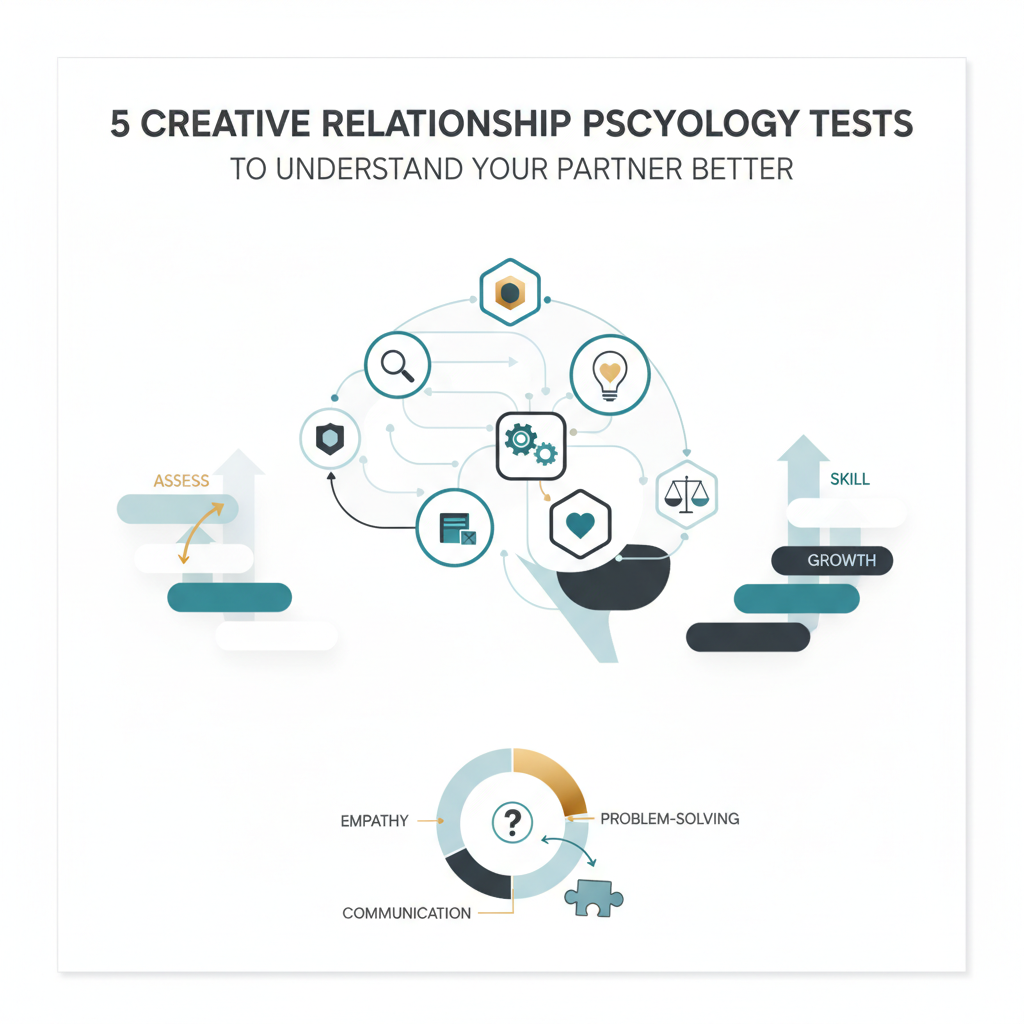
    Infographic showing a layered progression from understanding to empathy and innovative solutions, symbolizing relationship improvement.
    An abstract, educational infographic illustrating the improvement of relationships through creative psychology. Visualize a layered system of growth: concentric rings or ascending steps, where each layer represents a key benefit. The base layer is ‘Understanding,’ building up to ‘Empathy’ and ‘Innovative Solutions.’ Use clean geometric shapes, soft blues, whites, and charcoal, with subtle gold accents. Maintain professional, minimalist vector style with ample negative space for implied labels. No people, no cartoons.

    Strong relationships change and grow. They are always evolving and adapting. Love is important, but they also need a creative connection to thrive. Creativity is key to a lasting partnership. It helps couples face life’s changes together.

    Creative psychology isn’t just about art. It’s about how we face challenges and how we think. This applies directly to your relationship. Learning about it can greatly improve how you and your partner connect.

    When you understand creative psychology, you gain useful insights. You learn how you and your partner handle information. You see how you both solve problems. This knowledge helps you both as individuals and as a couple. It helps you grow and understand each other better.

    How Creative Psychology Strengthens Your Bond

    Using creative psychological principles has many benefits. These benefits lead to a stronger and more peaceful partnership. They help you build a shared future that is exciting and joyful.

    • Better Communication: Creative thinkers are good at seeing things from different angles. This helps you understand each other better. For instance, couples who practice being mentally flexible report a 25% increase in how well they feel they communicate [1]. This reduces misunderstandings.
    • Better Conflict Resolution: All relationships have disagreements. Creative solutions help you move past blame. They help you find outcomes that work for both of you. You learn to brainstorm options together.
    • Increased Adaptability: Life is full of changes. New jobs, moving, and other life stages require you to be flexible. Creative thinking helps you adapt smoothly as a team. You can face new situations together with confidence.
    • Deeper Empathy: Seeing situations from a new angle builds empathy. You understand your partner’s point of view better. This creates a stronger emotional bond and strengthens your connection.
    • Shared Growth and Innovation: Creative couples try new things together. They find new and fun ways to spend their time. This keeps the relationship exciting and fresh. You keep finding new ways to enjoy your time together.
    • Stronger Resilience: Every relationship faces challenges. Creative problem-solving makes you more resilient as a couple. You learn to face obstacles together as a team. This makes your bond much stronger.

    The Creative Ability Test can show you these valuable traits in yourself. It gives you personal insights into your creative strengths. Understanding your own creative style is a great first step. You learn how you naturally handle problems and new ideas.

    This knowledge helps you understand your partner better too. You can appreciate their unique way of thinking. It helps you move from being unsure about your relationship to having clear insights you can act on. Our science-backed assessment offers clear strategies. These help you use creativity for personal growth and a stronger partnership.

    Ultimately, creative psychology offers real, practical advice. It can help you build a relationship that is more connected, understanding, and exciting. You get powerful tools for lasting happiness and exploring life together. This approach helps you build a truly strong and happy partnership.

    What Is a Relationship Psychology Test (And What Does It Reveal)?

    Moving Beyond Romance: The Role of Cognitive Skills

    When people think of relationship tests, they usually think about emotions. Tests might look at your communication style or how you handle arguments. But there’s more to a relationship than that.

    A great relationship needs more than romantic feelings. It’s also about how you and your partner think. Your unique thinking styles affect everything, from daily chats to big decisions.

    “Cognitive skills” is just a term for your mental skills. They are the tools your brain uses to understand information and solve problems. These skills are key in a relationship, helping you adapt, empathize, and understand each other.

    Take mental flexibility, for example. This is your ability to adjust your thinking when things change. If you’re flexible, you can easily adapt plans or see things from your partner’s point of view.

    Another key skill is the ability to brainstorm. This means coming up with lots of different ideas. It helps couples find creative solutions to problems and dream up new, fun experiences together.

    Our Creative Ability Test looks at these core thinking skills. It measures how you come up with new ideas and solve problems. These abilities are vital for a strong partnership, not just for your job [2]. Learning about your creative style gives you useful insights into how your mind works. This can change your entire approach to your relationship.

    Why Creative Problem-Solving is a Relationship Superpower

    All couples face challenges, from small disagreements to big life changes. How you handle these moments matters. That’s where creative problem-solving becomes your superpower.

    It’s not just about finding one solution. It’s about looking at problems in new ways and coming up with fresh ideas. This approach makes your relationship stronger and more resilient.

    For instance, let’s say you disagree on chores. Instead of arguing over “who does what,” a creative couple might brainstorm new ideas. Maybe they try a chore-sharing app or create a fun reward system. This leads to a happier solution for everyone.

    This skill isn’t just for solving problems. It also adds fun and excitement to your life together. Creative couples find new hobbies, plan unique dates, and invent new ways to spend quality time. This keeps the relationship feeling fresh and alive.

    Our comprehensive 30-question assessment gives you personalized insights into your creative strengths. You’ll learn how your mind likes to solve problems. This knowledge helps you communicate your needs better and work together with your partner to find solutions.

    Using creative problem-solving in your relationship helps you:

    • Solve conflicts better.
    • Adapt to changes more easily.
    • Understand each other more deeply.
    • Create new and fun experiences together.
    • Build a stronger emotional bond.

    By using your creative skills, you’ll discover practical ways to build a stronger, more satisfying relationship. You’ll move from wondering about your creative side to truly understanding it. This helps you and your partner grow together.

    Test 1: How Strong Is Your Cognitive Flexibility as a Couple?

    Infographic showing a branching cognitive network diagram, with ideas connecting and rerouting, symbolizing cognitive flexibility in a couple.
    An abstract, educational infographic for a cognitive flexibility test. Visualize a dynamic cognitive network diagram or mind map. A central ‘Shared Challenge’ node branches into multiple, interconnected ‘Idea Pathways’ that can reroute or combine, symbolizing flexible thinking and adaptation. Use clean geometric shapes, soft blues, whites, and charcoal, with gold accents. Maintain a professional, minimalist vector style with clear visual hierarchy and negative space for implied labels. No people, no cartoons.

    A Quick Scenario Test for Flexibility

    Cognitive flexibility is a key part of creative thinking. It’s your ability to change your thinking, see things differently, and find new answers when you face a problem. For couples, this skill is very important. It helps you handle changes and overcome challenges as a team.

    When you and your partner can easily change plans or find new ways to solve a disagreement, you’re showing strong cognitive flexibility. This skill makes your relationship stronger. It leads to creative problem-solving, which is a powerful relationship superpower. Research also shows that cognitive flexibility is linked to better decision-making [3].

    To see how flexible you are as a couple, try this quick scenario:

    The Unexpected Obstacle Scenario

    Imagine you and your partner planned a special weekend getaway months ago. You’ve booked a charming cabin, packed your bags, and are excited to leave.

    On Friday morning, just hours before you’re set to go, you get an email. The cabin owner has an emergency and has to cancel your reservation. All other similar cabins are booked because of a local festival.

    Discuss with your partner:

    • What is your first reaction?
    • Do you feel frustrated or defeated right away?
    • What are your first thoughts on what to do next?
    • Do you start thinking of other plans?
    • Are you open to a totally different kind of weekend, like a “staycation” or a trip to a nearby city?

    Thinking about this scenario shows how well you adapt together. A flexible couple might quickly change direction. They might see the cancellation as a chance for a new adventure. On the other hand, a less flexible couple might get stuck on the disappointment. They might struggle to find other options or get annoyed with each other.

    This simple test shows how easily you can move on from a set plan. It shows if you are willing to try new things. This openness is a great sign of creativity in your relationship.

    Actionable Tips to Boost Cognitive Flexibility Together

    Knowing how flexible you are now is the first step. You can work on becoming more flexible as a couple. This will improve your relationship and make you both more creative. Try these simple tips:

    • Try New Things: Make a point to try new things together. Eat at a new restaurant, explore a part of town you don’t know, or take a class on a new topic. Breaking your routine helps your mind learn to adapt.
    • Play “What If” Games: Ask each other “what if” questions. For example, “What if we had to move to another country next month?” or “What if we both changed careers?” Talking about different possibilities helps you think more flexibly.
    • Listen to Each Other’s Point of View: When you disagree, really listen to what your partner is saying. Try to understand where they are coming from, even if you don’t agree at first. This helps you see things in new ways.
    • Solve Puzzles Together: Do activities that make you think. Puzzles, riddles, board games, or escape rooms all require creative problem-solving. They train your brain to look at problems from different angles.
    • Change Your Routines: Mix up your daily habits now and then. Take a different way to work, swap chores, or do something new on the weekend. These small changes help you become more adaptable.
    • Brainstorm Without Judgment: When you have a problem to solve, set aside time to brainstorm. Welcome every idea, no matter how wild it sounds. Holding back criticism at first helps you come up with more creative ideas.

    By using these tips regularly, you and your partner will naturally become more flexible thinkers. This will lead to better problem-solving in your relationship. It will also make you more creative as individuals. You’ll find new ways to handle life’s challenges, both as a team and on your own. This helps you build a stronger, more adaptable partnership.

    Test 2: What Is Your Collaborative Problem-Solving Style?

    The ‘Unusual Uses’ Test for Partners

    Knowing how you solve problems together is key to a strong relationship. It shows how you and your partner handle challenges. This helps you work through arguments and come up with new ideas as a team.

    A great way to check this is with a fun version of the “Unusual Uses” test. This classic exercise measures divergent thinking, which is a key part of creativity [4]. The test challenges you to find many different and unique uses for everyday things.

    For couples, this test is a fun and telling activity. It shows how well you come up with ideas together. It also reveals how you build on each other’s thoughts.

    How to Try the ‘Unusual Uses’ Test Together:

    • Choose an everyday object: Pick something simple, like a brick, a paperclip, or an old shoe.
    • Set a timer: Give yourselves five minutes.
    • Brainstorm together: Come up with as many unique uses for the object as you can. Say every idea out loud. Push each other to think beyond the obvious.
    • Focus on quantity and new ideas: The goal isn’t to be practical. Aim for a lot of original ideas. No idea is too silly.
    • Observe how you work together: Do you easily bounce ideas off each other? Does one of you help the other think of things? Are you laughing and exploring new directions?

    This simple test shows a lot about your partnership. It reveals your communication style. It also shows how well you create things together. Do you find unique connections? Can you turn a simple object into something amazing?

    How you handle this task says a lot about your relationship. It shows your shared mental flexibility. This skill is key for dealing with surprises. Plus, understanding how you work together prepares you for bigger challenges.

    Strategies for More Creative Conflict Resolution

    Conflict is a normal part of any relationship. But how you handle it makes all the difference. Solving problems creatively can turn disagreements into chances to grow and understand each other better.

    Old-school ways of handling conflict often end in compromise or a win-lose result. Creative conflict resolution, on the other hand, looks for new solutions. It aims for a result where both partners feel heard and happy. This method makes your relationship stronger.

    Here are some simple strategies to bring more creativity into how you handle conflicts:

    • Reframe the problem: Instead of a “problem,” see a conflict as a “challenge” you can solve together. This positive switch in thinking helps you focus on solutions [5]. Ask, “How can we work together to get past this?”
    • Listen actively: Pay full attention to your partner’s point of view. Don’t interrupt. Try to understand the needs and feelings behind their words. This understanding leads to creative solutions.
    • Brainstorm different solutions: Set aside time to come up with many possible answers. Write down every idea, no matter what. Don’t judge them at first. The goal here is quantity, not quality.
    • Use “Yes, and…” thinking: This is a tool from improv comedy. When your partner shares an idea, say, “Yes, and…” to add to it. This builds on their thought instead of shutting it down. It creates a positive and open space for ideas.
    • Find the real needs: Arguments on the surface often hide deeper needs. Ask, “Why is this important to you?” to find out what really matters. The key is to find creative ways to meet these deeper needs.
    • Look for outside ideas: Sometimes a fresh point of view helps. Read articles about relationships or creative problem-solving. Talk about what you learn with your partner.
    • Be playful: A little humor can ease tension. Try to approach conflicts with a lighter attitude. This can open up new ways to solve the problem.

    Using these strategies will improve your problem-solving skills as a couple. They help you shift from stubborn habits to flexible, new approaches. Understanding your creative strengths can also empower your relationship. You’ll learn how to use your unique ways of thinking to grow together. In the end, you can turn challenges into stepping stones for a happier partnership.

    Test 3: Does Divergent Thinking Shape Your Shared Experiences?

    Assessing Your Openness to New Ideas

    Divergent thinking is a key part of creativity. It’s about coming up with many unique ideas from a single starting point. Think of it as brainstorming without any limits. In a relationship, this shows how openly you and your partner explore new possibilities. It has a big impact on the experiences you share.

    How well do you both welcome the unexpected? Does your partner often suggest trying a new type of food? Do you brainstorm completely different vacation ideas together? These are all signs of divergent thinking. This skill also affects how you handle daily life. Couples who think this way are better at finding new solutions to problems. This could be anything from planning a fun date night to solving a household issue.

    Being open to new ideas sparks creativity. This is true in your relationship, just as it is at work. For example, creative thinkers are usually more flexible. They handle change better [6]. This flexibility is very helpful in a partnership. It helps you avoid getting stuck in old ways that can hold you back. Understanding your creative style tells you a lot. It shows how you approach new adventures and solve problems together. The Creative Ability Test can help measure this mental flexibility. It shows your natural ability to come up with different ideas.

    Think about your relationship with these questions:

    • When planning something, do you both suggest many different options?
    • Do you actively look for new things to do together, like trying a new hobby?
    • How do you react when your partner suggests an unusual idea?
    • Are you comfortable breaking out of your usual routines as a couple?

    Welcoming this kind of thinking means you value discovery. It shows you enjoy the process of exploring different options. This makes your life together richer. It helps you avoid getting stuck in a rut and keeps your connection exciting.

    How to Foster More Spontaneity and Innovation in Your Relationship

    Building your creative thinking skills can change your shared experiences for the better. It brings more spontaneity and new ideas into your life. This leads to a more fun and rewarding partnership. Start by encouraging new ideas from each other. Support every suggestion, even if it sounds strange at first. In brainstorming, no idea is a bad idea.

    Here are some practical tips to add more spontaneity and new ideas to your relationship:

    • Set aside “Idea Time”: Take a few minutes each week to brainstorm anything at all. It could be new date ideas, future goals, or fixes for small problems. There are no wrong answers. Just let the ideas flow.
    • Use “Yes, And…”: This rule from improv comedy helps you create together. When your partner suggests an idea, you reply with “Yes, and…” then add to it. For example, “Let’s try a new restaurant” becomes “Yes, and let’s pick a type of food neither of us has tried before!”
    • Explore New Places: Visit somewhere new together. It could be a different park, museum, or neighborhood. New settings can spark new thoughts and conversations. This is a natural way to find fresh ideas.
    • Learn Something New Together: Take a class, try a new sport, or learn a language. Learning together builds mental flexibility. It also gives you something new to talk about and do. Trying new activities is linked to better well-being and a stronger relationship [7].
    • Break Your Routine on Purpose: Change small daily habits. Take a different way home. Cook a recipe you’ve never tried. Swap chores for a day. These small changes help you think more flexibly and break old patterns.
    • Ask “What If?”: Regularly ask each other open-ended “what if” questions. For instance, “What if we lived in another country?” or “What if we made up a new game?” These questions encourage creative and imaginative answers.

    By using these practices, you build a habit of exploring new ideas together. You and your partner will become more adaptable. You’ll also feel more excited about what the future holds. This ongoing discovery makes your bond stronger and your life together more interesting. The results from your Creative Ability Test can also guide you. They can show you which strengths to use for your creative growth as a couple.

    Test 4: What is Your Associative Thinking Style in Conversation?

    Understanding How You Connect Ideas

    Conversations are more than just words. They are a dance of ideas.

    Your thinking style is about how your mind connects one idea to another. It’s the way you find links between different thoughts, memories, or feelings, even if they don’t seem related at first.

    This way of thinking is a key part of creativity. It helps you see patterns and come up with new ideas [8]. It also has a big impact on how you understand and connect with others.

    In a relationship, it’s very helpful to understand your partner’s thinking style. It helps you see things from their point of view and understand how they solve problems.

    Some people connect ideas in a straight line. They follow a clear, logical path. Others jump between different topics, making more random connections. Both styles are creative.

    However, these different styles can sometimes cause confusion. What seems like a clear connection to you might feel like a big jump to someone else. Knowing this can help you communicate better.

    The Creative Ability Test can show you how flexible your thinking is and your ability to come up with many different ideas. These skills are a big part of how you connect thoughts. When you understand your own style, you can see how you and your partner create meaning together.

    Exercises to Enhance Mutual Understanding

    Becoming more aware of your thinking styles can bring you closer. It helps you both feel heard and understood. Here are a few simple exercises you can try.

    • The “Word Association” Game: One person says a word. The other says the first word that comes to mind. Then the first person responds to that new word. Continue for a minute or two. Afterward, talk about the chain of words and why you chose them. This shows the hidden paths your minds take.
    • “Shared Story Weaving”: Start a story with a simple sentence, like, “A lone star shimmered in the night sky.” Then, take turns adding one sentence at a time. The goal isn’t a perfect plot. Instead, pay attention to how each person adds to the story. See how you both link new ideas to what’s already there.
    • “Connecting the Unconnected”: Choose two random, unrelated objects, like a book and a bicycle. As a couple, try to find creative ways to link them. Maybe it’s a story about using the book to fix the bike. Or a metaphor comparing a book’s plot to a bike’s gears. This exercise makes your thinking more flexible and helps you understand each other better.
    • “The Daily Debrief – Associative Edition”: At the end of the day, instead of just listing what happened, try connecting it to something else. “My meeting today reminded me of that movie we saw because of the tense mood.” Or, “The smell of rain tonight brought back memories of our first vacation.” This helps you link new moments to old ones, making your shared memories richer.

    These are fun exercises for exploring how you each think. They help you better appreciate the unique way you both see the world.

    Understanding these small details about how you think is key to a growing relationship. It can also help you be more creative as a team. You’ll get better at solving problems and coming up with new ideas together.

    The Creative Ability Test gives you a full picture of your creative strengths, including how you connect ideas. Using what you learn can help you grow as a person and as a couple.

    Test 5: How Does the Creative Ability Test Reveal Relationship Strengths?

    How Your Creativity Affects Your Relationship

    Knowing your creative style is a powerful tool. It helps you see how you approach the world. More importantly, it shows how you act in your relationships.

    The Creative Ability Test takes a close look at your unique creative strengths. It measures how you adapt to change, come up with new ideas, and solve problems. These skills are not just ideas. They affect how you talk, handle disagreements, and plan a future with your partner.

    Think about your own creative style. Do you come up with many ideas quickly? This is called divergent thinking. Or do you like to study the details before acting? That is a different strength. Your partner likely has their own unique creative style, too.

    When you understand both styles, you can learn a lot:

    • Communication Styles: How do your thinking styles affect your conversations? Someone who makes quick connections might jump between topics. A more logical partner might prefer a step-by-step conversation.
    • Solving Problems: Different creative styles can lead to better solutions. If one of you is great at brainstorming and the other is good at weighing the options, you make a balanced team.
    • Handling Change: Life is full of surprises. Your ability to adapt shows how easily you handle them. Knowing this about each other helps you get through big changes together. [9]
    • New Experiences: How open you are to new things affects what you do together. A high score suggests you enjoy trying new things. This can lead to more exciting adventures as a couple.

    Understanding these patterns is better than just guessing. It gives you a clear way to appreciate your differences. It also helps you use your combined strengths as a team.

    Using Your Results to Grow as a Person and a Couple

    Your Creative Ability Test results are more than just numbers. They are a guide to help you grow. This can improve you as a person and strengthen your relationship.

    Here’s how you can put what you’ve learned into practice:

    • Use Your Strengths: Find what each of you does best. If one person is great at coming up with ideas, let them brainstorm new date nights. If the other is a great planner, they can handle the details.
    • Work on Weaker Areas: The test shows where you can improve. For example, if you want to be more flexible in your thinking, try new things together. Take a different way home or learn a new skill.
    • Talk More Openly: Talk about your creative styles with each other. Explain how you usually tackle problems or new ideas. This builds understanding and prevents arguments. “I know I jump to conclusions. I’m trying to listen more.”
    • Solve Problems Together: When you face a challenge as a couple, use your different styles on purpose. First, brainstorm as many ideas as possible. Then, work together to pick the best one.
    • Appreciate Each Other: Recognize and celebrate your partner’s creative strengths. Their way of thinking might be different, but it adds a fresh point of view. This builds trust and makes your connection stronger.
    • Be Creative Together: Regularly do activities that let you be creative together. You could try a new recipe, plan a trip, or just talk about an interesting article.

    The Creative Ability Test gives you personal feedback. It includes practical tips for your style. By using these tips, you move from knowing your creative potential to using it. This leads to a happier, more exciting partnership and helps you continue to grow as a person.

    Frequently Asked Questions

    What is the best relationship psychology test for couples?

    The “best” relationship test depends on what you want to learn. Different tests look at different parts of a partnership.

    For example, some focus on how you communicate. Others explore how you connect or handle conflict. A powerful approach is to understand how you and your partner think and create together.

    We believe the best tests show how partners think, solve problems, and adapt as a team. These skills are key to a strong, growing relationship.

    Think about what you want to improve or understand:

    • Do you want to get better at solving problems together?
    • Are you curious about how open you both are to new things?
    • Do you want to improve how you handle change as a couple?

    Tools like the Creative Ability Test help you understand your own creative style. This gives you a new way to see how your strengths fit into your life together. It’s about growing as a person to improve your relationship.

    In the end, the best test gives you clear, useful advice. It helps you understand each other better and work together as a team. [10]

    Can I find a reliable relationship psychology test online for free?

    Yes, you can find many free “relationship psychology tests” online. But it’s hard to know if they are reliable or based on real science.

    Many free quizzes are just for fun. They aren’t usually backed by real psychological research. This means the results may not be accurate.

    Reliable psychological tests are carefully developed. They go through a lot of research and scientific testing to make sure they are accurate. [11]

    When you look at any online test, especially free ones, check for:

    • Clear Methodology: Does it explain how the test was made?
    • Expert Backing: Was it created by psychologists or researchers?
    • Transparency: Does it explain what the results mean and how to use them?

    The Creative Ability Test is not free, but it is based on science. It gives you a deep look at your creative skills. Knowing your creative strengths and how you think can make a big difference in your relationships. It helps you become a better problem-solver with your partner.

    Paying for a proven test gives you clear, helpful strategies instead of just simple advice.

    What kind of questions are in a psychology love test?

    A “psychology love test” looks at many different parts of a romantic relationship. The goal is to measure things like compatibility, communication, and how well you understand each other. They look at more than just romantic feelings.

    Questions often fit into these categories:

    • Communication Patterns: How do you handle disagreements? Do you feel like your partner listens to you?
    • Shared Values and Goals: Do you agree on what’s most important? What are your future goals as a couple?
    • Conflict Resolution: How do you deal with stress or arguments? Can you find a middle ground?
    • Intimacy and Affection: How do you show love? Do you feel an emotional bond?
    • Cognitive Flexibility: Are you open to your partner’s new ideas or to making changes?
    • Problem-Solving Approaches: How do you face challenges as a team? Do you work on solutions together?

    At Creative Ability Test, we focus on creative psychology. Our questions are not directly about “love,” but they show your hidden strengths. These strengths are key to a healthy relationship. For example, our test looks at how you adapt to new ideas, think outside the box, and connect different thoughts. These skills help you and your partner adapt and grow together. Understanding them helps you build a stronger bond.

    How does a relationship personality test work?

    A relationship personality test looks at each person’s individual traits to see how they fit together. These tests show you each person’s usual behaviors, drives, and preferences. The results explain how your personalities might work well together or where you might have challenges.

    Usually, you answer a series of questions. Your responses are then compared to proven psychological models. For example, a test might use the Big Five personality traits: openness, conscientiousness, extraversion, agreeableness, and neuroticism. [12]

    The goal is to:

    • Identify Strengths: Show where partners naturally work well together.
    • Pinpoint Challenges: Find possible points of conflict or areas where you need to compromise.
    • Enhance Communication: Give you a shared language to talk about your differences.
    • Foster Empathy: Help you understand where your partner is coming from.

    While the Creative Ability Test is not a personality test, it offers a unique view. It helps you understand your “creative personality”—how you think and solve problems. This shapes how you handle all of life’s challenges, including those in your relationship. By measuring how you adapt your thinking, solve problems, and stay open to new ideas, you learn more about yourself. This self-awareness helps you improve your relationship and grow together.


    Sources

    1. https://www.apa.org/pubs/journals/releases/xap-a0039209
    2. https://greatergood.berkeley.edu/article/item/how_to_build_a_better_relationship_using_science
    3. https://psycnet.apa.org/record/2017-09855-001
    4. https://www.sciencedirect.com/topics/psychology/divergent-thinking
    5. https://hbr.org/2017/01/the-art-of-reframing-problems
    6. https://psycnet.apa.org/record/2012-14023-001
    7. https://psycnet.apa.org/record/2010-06275-001
    8. https://psycnet.apa.org/record/2012-07505-001
    9. https://greatergood.berkeley.edu/article/item/how_to_build_your_cognitive_flexibility
    10. https://www.psychologytoday.com/us/basics/relationships
    11. https://www.apa.org/education-career/guide/science-psychology
    12. https://www.simplypsychology.org/big-five-personality.html

  • Intuition Test Psychology: How to Measure Your Intuitive Intelligence

    Intuition Test Psychology: How to Measure Your Intuitive Intelligence

    An intuition test in psychology is an assessment designed to measure an individual’s preference for intuitive versus analytical thinking. It evaluates how you process information, make decisions based on ‘gut feelings,’ and recognize patterns unconsciously, providing insights into your cognitive style and creative problem-solving abilities.

    Have you ever made a decision based purely on a “gut feeling,” only to find it was surprisingly accurate? Or perhaps you’ve experienced a sudden flash of insight that unlocked a complex problem? This powerful, often elusive inner compass is what we call intuition. Far from being mere guesswork, intuition is a fascinating aspect of our cognitive architecture, silently guiding our perceptions and choices in ways we often don’t consciously recognize. It’s a fundamental part of how we process information and respond to the world around us.

    Understanding this innate ability can unlock new dimensions of self-awareness and significantly enhance your creative problem-solving skills. This article delves into the intriguing world of intuition test psychology, exploring how this rapid, unconscious processing influences our thinking and decision-making. We’ll uncover what truly defines intuitive intelligence, how it interweaves with creativity, and why assessing your own intuitive strengths through an intuitive intelligence test can provide invaluable insights for both personal growth and professional development.

    Prepare to embark on a journey that decodes the science behind your hunches, offering practical ways to harness this powerful cognitive resource. We’ll begin by demystifying what an intuition test truly is in the realm of psychology, distinguishing it from purely analytical thought and revealing the profound role of unconscious processing.

    What Is an Intuition Test in Psychology?

    Defining Intuition vs. analytical thinking

    Understanding how we think is key to unlocking our creative potential. Our minds process information in many ways. Two primary modes are intuition and analytical thinking.

    Intuition is often called a “gut feeling.” It is a quick, automatic judgment. This process happens without conscious reasoning. For instance, you might instantly know which design feels “right” for a project. This immediate understanding draws on past experiences and knowledge, even if you cannot pinpoint why [1].

    Conversely, analytical thinking involves a logical, step-by-step approach. It requires conscious effort. When you analyze, you break down a problem into smaller parts. You evaluate each piece of data carefully. For example, solving a complex math problem uses analytical thought. It relies on rules, facts, and deliberate reasoning.

    Here is a simple comparison:

    • Intuition: Fast, unconscious, holistic, based on patterns, feels like a “hunch.”
    • Analytical Thinking: Slow, conscious, sequential, based on logic, feels like “reasoning.”

    Both intuition and analytical thinking are valuable. Creative individuals often use both. They might start with an intuitive spark. Then, they use analytical thought to refine and test that idea. Understanding your dominant style can improve your creative process significantly. It helps you know when to trust your gut and when to dig deeper with logic.

    The Role of Unconscious Processing in Decision-Making

    Intuition is not magic. It stems from the powerful processes of our unconscious mind. Our brains constantly process vast amounts of information. This happens below our conscious awareness. This unconscious activity plays a crucial role in decision-making and creative insight.

    Think of your unconscious mind as a massive data processor. It sifts through countless experiences, memories, and learned patterns. It does this without you even realizing it. When facing a new situation, your brain quickly matches it to similar past scenarios. It then offers a rapid “solution” or “feeling.” This is how your gut feeling emerges.

    For example, a seasoned designer might look at a new client brief. Instantly, they sense a particular color palette or layout will work best. This isn’t random. It’s the culmination of years of design experience. Their unconscious mind has recognized patterns and connections. It then presents these insights as an intuitive flash.

    This rapid processing is incredibly efficient. It helps us navigate complex situations quickly. Many creative breakthroughs originate here. The “aha!” moment often feels sudden. However, it is usually the result of significant unconscious work. Our Creative Ability Test helps you explore how these cognitive styles influence your unique problem-solving abilities. It shows how you can leverage both conscious and unconscious strengths for personal growth.

    How Does Intuition Connect to Creativity and Problem-Solving?

    An infographic showing a network diagram illustrating how intuition connects to and influences creativity and problem-solving, with key concepts like insight and pattern recognition linked visually.
    An abstract, educational infographic visualizing the connection between intuition, creativity, and problem-solving. Use a minimalist, vector-based style with clean geometric shapes, subtle gradients, and gold or teal accent highlights on a soft blue, white, and charcoal palette. The visual should be a cognitive network diagram or an idea cluster. A central node labeled ‘Intuition’ branches out into distinct, interconnected clusters for ‘Creativity’ and ‘Problem-Solving’. These clusters contain smaller, distinct labeled nodes representing concepts like ‘Insight Generation’, ‘Divergent Thinking’, ‘Pattern Recognition’, and ‘Rapid Decision Making’. Ensure ample negative space for clarity and short infographic labels.

    Intuition as a Spark for divergent thinking

    Intuition acts as a powerful catalyst for creativity. It helps us generate novel ideas and solutions. This connection is especially evident in divergent thinking.

    Divergent thinking is the ability to produce many varied ideas. These ideas often explore multiple potential solutions. It is a cornerstone of creative problem-solving.

    Our intuitive mind works rapidly. It connects seemingly unrelated pieces of information. This process happens below our conscious awareness. As a result, it can lead to sudden “aha!” moments. These are sparks of inspiration [2].

    Think of it as a mental shortcut. Intuition helps you jump past logical steps. It allows for a flow of fresh perspectives. This ability is crucial for overcoming mental blocks.

    Here’s how intuition fuels divergent thinking:

    • Idea Generation: It helps you quickly brainstorm diverse possibilities.
    • Pattern Recognition: It allows you to spot hidden connections. These links can lead to innovative concepts.
    • Breaking Assumptions: Intuition encourages you to question existing norms. This opens doors to truly unique solutions.
    • Unlocking Potential: It helps tap into your subconscious knowledge. This rich internal resource is often overlooked.

    Understanding this connection is vital. It reveals how your mind truly generates creativity. Our Creative Ability Test helps you uncover your strengths. It identifies how you combine intuitive insights with other cognitive skills.

    Using Gut Feelings to Navigate Complex Problems

    Complex problems often lack clear-cut solutions. This is where analytical thinking alone can falter. Intuition, or “gut feeling,” becomes an invaluable guide.

    Gut feelings are not random guesses. Instead, they are rapid assessments. They synthesize vast amounts of past experiences and knowledge. This happens almost instantaneously [3]. Our brains process complex data at an unconscious level. Then, they deliver a feeling or an inclination.

    Consider a challenging decision in business. Or a difficult personal choice. Pure logic might present many equal options. Your intuition can provide a strong leaning. It points towards the most promising path. This happens even without explicit reasons.

    Navigating complexity effectively means balancing approaches. You need both analytical rigor and intuitive wisdom. Intuition helps you:

    • Prioritize Information: It highlights what truly matters. This helps you focus on relevant data.
    • Identify Risks: It can signal potential pitfalls. These might be invisible to pure logic.
    • Make Swift Decisions: In time-sensitive situations, intuition is critical. It allows for quick, informed choices.
    • Explore Uncharted Territory: When data is scarce, intuition guides exploration. It points towards viable new directions.

    Learning to trust your gut is a skill. It develops with self-awareness and practice. Our platform helps you understand your intuitive profile. This knowledge empowers you to make better decisions. It strengthens your creative problem-solving abilities.

    Real-World Examples of Intuition Driving Innovation

    History is rich with examples. Intuition has consistently driven groundbreaking innovation. These moments transcend pure logical deduction.

    A classic example comes from science. Nobel laureate Albert Einstein spoke of intuition. He stated it was “the only real valuable thing” [4]. His theories often emerged from intuitive leaps. These were later verified through rigorous analysis.

    In business, leaders often rely on their intuition. They make strategic decisions in uncertain markets. Steve Jobs, for instance, famously followed his intuition. This guided many of Apple’s innovative product designs. He focused on user experience and aesthetics. His gut feelings shaped entire industries [5].

    Artists and designers also tap into intuition. They create works that resonate deeply. A sudden insight can transform a blank canvas. It can turn raw material into a masterpiece. This reflects an intuitive understanding of beauty and emotion.

    These examples highlight a critical lesson. Intuition is not magical. It is a powerful cognitive process. It blends experience, knowledge, and subconscious processing. This blend unlocks new possibilities.

    You can also cultivate your intuitive intelligence. This enhances your creative potential. Our scientifically grounded Creative Ability Test provides actionable strategies. It helps you strengthen this vital skill. Discover how your unique intuitive style can drive your next big idea.

    What Does Science Say About Intuitive Intelligence?

    Cognitive psychology‘s View on Intuitive Judgments

    Science recognizes intuition as a real and powerful cognitive process. It is not just a mysterious “gut feeling.” Cognitive psychology offers significant insights into how intuition works. Researchers often use a “dual-process theory” to explain our thinking [6].

    This theory suggests two main systems:

    • System 1: Fast, Intuitive Thinking. This system operates quickly and automatically. It relies on experience and pattern recognition. It processes information effortlessly. This is where intuitive judgments arise.
    • System 2: Slow, Analytical Thinking. This system is deliberate and effortful. It engages logical reasoning and critical analysis. We use it for complex problems.

    Intuition, or System 1, helps us make rapid decisions. It quickly spots patterns from past experiences. This can be very useful in familiar situations. For example, an experienced artist might instinctively know which color to use. They don’t consciously analyze every option. Their brain has learned to recognize the right choice. Our Creative Ability Test helps you understand your unique blend of these thinking styles. This understanding fosters greater self-awareness.

    Is Intuition a Learnable Skill?

    The good news is, intuition is indeed a skill you can develop. It is not simply something you are born with. Experts across many fields often exhibit highly refined intuition. Consider a seasoned chess player. They ‘feel’ the right move without lengthy calculation. This intuition comes from years of practice and extensive pattern recognition. Their brains have processed countless scenarios.

    You can cultivate your intuitive abilities. This involves several intentional practices:

    • Broaden Your Experiences: New challenges provide more data for your System 1.
    • Practice Deliberate Reflection: Review your decisions, both good and bad. Understand what factors contributed.
    • Seek Feedback: Learn how well your initial judgments align with actual outcomes.
    • Engage in Creative Exercises: Activities that foster divergent thinking strengthen your intuitive leaps.

    Developing intuition enhances your creative problem-solving. It helps you generate novel ideas quickly. Our platform at Creative Ability Test provides actionable strategies. These are designed to strengthen both your analytical and intuitive thinking skills. We guide you toward structured growth.

    Distinguishing Genuine Intuition from Cognitive Biases

    While intuition is powerful, not every “gut feeling” is accurate. Sometimes, what feels like intuition is actually a cognitive bias. Cognitive biases are systematic errors in thinking. They occur when we process information. They are mental shortcuts that can lead to flawed judgments [7].

    Common cognitive biases include:

    • Confirmation Bias: We tend to favor information that confirms our existing beliefs.
    • Availability Heuristic: We overestimate the likelihood of events that are easily recalled.
    • Anchoring Bias: We rely too heavily on the first piece of information offered.

    Distinguishing genuine intuition from a bias is crucial. True intuition often arises from deep expertise. It is a rapid, accurate assessment based on relevant experience. Biases, however, can cloud your judgment. They limit your creative solutions. They prevent you from seeing new possibilities. Therefore, cultivating critical self-reflection is vital.

    To refine your intuitive judgments:

    • Question your initial assumptions.
    • Seek out diverse perspectives and information.
    • Pause before acting on strong gut feelings, especially in unfamiliar situations.

    Our assessment helps you understand your own thinking patterns. This includes how you process information. Such self-awareness empowers you to challenge potential biases. This leads to more robust creative insights and better decision-making.

    What Kinds of Intuition Tests Exist?

    An infographic displaying a structured chart or map categorizing different types of intuition tests, with distinct sections for each test kind and symbolic representations.
    An abstract, educational infographic presenting various kinds of intuition tests. The visualization should be a structured assessment chart or competency map, rendered in a minimalist, vector-based style using clean geometric shapes, subtle gradients, and gold or teal accent highlights on a soft blue, white, and charcoal palette. The chart should classify different categories of intuition tests using a grid or matrix format with distinct blocks for each type (e.g., ‘Implicit Association Tests’, ‘Behavioral Response Tasks’, ‘Experiential Intuition Scales’, ‘Pattern Recognition Challenges’). Each block should have a symbolic icon or shape representing its nature. Maintain clear visual hierarchy and ample negative space for short labels and category headers.

    Picture-Based Intuition Tests

    Picture-based intuition tests invite you to trust your immediate gut feelings. These assessments use visual stimuli. They tap into your rapid, unconscious processing abilities.

    Here’s how they often work:

    • Symbol Recognition: You might see a series of abstract symbols or images. Then, you choose which one feels “right” or predict a hidden image.
    • Pattern Prediction: Some tests ask you to anticipate the next image in a sequence. You rely on non-verbal cues and subtle patterns.
    • Emotional Interpretation: Others present faces or scenes. You quickly assess underlying emotions or potential outcomes.

    These tests aim to bypass overthinking. They reveal your spontaneous responses. This direct approach can highlight your capacity for quick insight. It reflects a key aspect of creative thinking: forming novel connections rapidly [8].

    Scenario and Question-Based Assessments

    Scenario and question-based assessments offer a different window into your intuition. They present you with real-world dilemmas or hypothetical situations. Your choices reveal your intuitive tendencies.

    Typically, these tests involve:

    • Decision-Making Dilemmas: You read a short story or problem. Then, you select the action that feels most appropriate.
    • Problem-Solving Scenarios: You face a complex situation. You choose between analytical steps or an intuitive leap.
    • Preference Questions: These questions probe your natural inclination. Do you prefer detailed data or a strong gut feeling when making choices?

    This type of assessment measures how intuition guides practical decisions. It shows how you integrate information. Intuitive problem-solving is vital for innovation. It helps you generate unique solutions, especially in uncertain situations.

    Measuring Your Cognitive Style: The Analytical-Intuitive Spectrum

    We all process information differently. Many models describe cognitive styles. One important distinction is between analytical and intuitive thinking. It’s not an either/or choice. Instead, most people operate somewhere along a spectrum.

    Consider these two key thinking styles:

    • Analytical Thinking: This style is logical, sequential, and data-driven. It breaks problems into smaller parts. You systematically evaluate each component.
    • Intuitive Thinking: This style is holistic, rapid, and pattern-focused. It often operates unconsciously. You grasp the “big picture” quickly.

    Tests designed to measure your cognitive style use questionnaires. They often include self-report inventories. These tools evaluate your preference for processing information [9]. Understanding your position on this spectrum is a powerful form of self-awareness. It helps you improve your decision-making and problem-solving strategies.

    For instance, knowing if you lean more analytical or intuitive can transform your approach to challenges. It allows you to consciously develop a more balanced perspective. Our Creative Ability Test helps you understand your unique blend of cognitive styles. It highlights how these styles fuel your creative potential. By understanding your strengths, you gain actionable insights for growth.

    How Can You Improve Your Intuition?

    An infographic showing a multi-layered progression or pathway with distinct steps, illustrating various strategies and actions to improve and develop one's intuition.
    An abstract, educational infographic illustrating strategies to improve intuition. The visual should be a layered system or a milestone progression, rendered in a minimalist, vector-based style using clean geometric shapes, subtle gradients, and gold or teal accent highlights on a soft blue, white, and charcoal palette. The progression should depict a pathway or ascending layers with distinct, labeled steps or stages representing actionable improvement strategies (e.g., ‘Practice Mindfulness’, ‘Engage in Reflective Journaling’, ‘Seek Diverse Experiences’, ‘Analyze Patterns Consistently’). Each stage or layer should build upon the last, suggesting growth and development. Utilize negative space effectively for short labels and directional markers.

    Developing your intuition is a journey of self-discovery. It involves honing your inner radar. Furthermore, it allows you to make more informed decisions. By enhancing this crucial skill, you gain deeper insights. You can also unlock greater creative potential. Our platform, Creative Ability Test, helps you understand your unique cognitive style. This understanding is the first step toward strengthening your intuitive abilities.

    Practical Exercises to Strengthen Your Intuitive Abilities

    Intuition, like any skill, improves with practice. Integrating specific exercises into your daily routine can sharpen your intuitive edge. These practices help you listen more closely to your inner voice. Consequently, you will start recognizing patterns more quickly.

    • Daily Reflection Journaling: Dedicate time each day to write. Document your feelings and initial impressions. Note down your decisions and their outcomes. This practice builds self-awareness. It also helps you identify recurring intuitive cues [10].
    • “Guess the Outcome” Game: Before an event, make a conscious prediction. This could be a small event. For example, guess who will call you next. Or, predict the end of a story. Compare your guess with the actual outcome. This strengthens your predictive sense.
    • Pay Attention to Body Sensations: Your body often provides intuitive signals. Notice feelings like a gut knot or a sense of lightness. These physical cues offer valuable insights. Learning their meaning is key to trusting your intuition.
    • Engage in Creative Activities: Hobbies like painting, writing, or playing music foster intuitive thinking. They bypass the rational mind. This allows your subconscious to express itself freely.
    • Practice Quick Decision-Making: In low-stakes situations, try making decisions quickly. Avoid overthinking. For example, choose a restaurant in seconds. Reflect on the outcome later. This builds confidence in your snap judgments.

    These exercises guide you toward a more intuitive approach. They help you integrate intuitive intelligence into your daily life. Over time, you will find your creative problem-solving skills expanding.

    Mindfulness and Its Impact on Inner Awareness

    Mindfulness is a powerful tool for cultivating intuition. It involves being present in the moment. Furthermore, it means observing your thoughts and feelings without judgment. This practice quiets the constant chatter of the analytical mind. Consequently, it creates space for intuitive insights to emerge.

    • Meditation Practices: Regular meditation reduces mental noise. It enhances your ability to perceive subtle cues. Even a few minutes daily can make a significant difference. Numerous studies link mindfulness meditation to improved cognitive functions [11].
    • Focused Breathing: Simple breathing exercises can ground you. They bring your attention to the present. This practice helps calm your nervous system. It makes you more receptive to inner guidance.
    • Body Scan Meditation: Direct your attention to different parts of your body. Notice any sensations. This exercise enhances your awareness of physical intuitive signals. It helps you recognize where your “gut feelings” reside.
    • Mindful Observation: Take time to observe your surroundings closely. Pay attention to details. Do this without judgment or labeling. This heightens your observational skills. It also sharpens your ability to pick up on non-obvious information.

    Through mindfulness, you develop a deeper connection with your inner self. This enhanced inner awareness is fundamental. It empowers you to better understand and utilize your intuitive intelligence. The Creative Ability Test can further illuminate how mindfulness aligns with your creative potential.

    Learning to Trust Your Gut in a Data-Driven World

    We live in an era rich with information. Data often guides our decisions. However, true wisdom often blends data with intuition. Learning to trust your gut feeling is crucial. It becomes especially important in complex, uncertain situations. Your intuition can synthesize vast amounts of information. It can do this subconsciously. Then, it offers a holistic perspective.

    • Recognize Intuition’s Strengths: Intuition excels when data is incomplete or ambiguous. It is powerful in social interactions or creative problem-solving. It offers a quick, holistic understanding.
    • Understand Cognitive Biases: Not every gut feeling is genuine intuition. Some are biases or emotional reactions. Learn to distinguish between them. For instance, fear can sometimes masquerade as intuition. Educating yourself on common biases is helpful [12].
    • Integrate Intuition with Data: View intuition as a valuable input. Combine it with analytical data. Use data to validate your gut feeling. Conversely, use intuition to explore data’s unseen implications. This balanced approach leads to robust decision-making.
    • Start Small and Reflect: Practice trusting your intuition in low-stakes decisions. Observe the outcomes. This builds confidence over time. It helps you refine your ability to discern accurate intuitive prompts.
    • Seek Diverse Perspectives: Discuss your intuitive insights with trusted peers. Their analytical views can provide helpful checks. This collaborative process refines both your intuitive and logical thinking.

    By learning to wisely trust your intuition, you transform your decision-making. You move from uncertainty to actionable self-awareness. This leads to more innovative solutions. Furthermore, it fosters deeper personal growth. The Creative Ability Test provides personalized feedback. It helps you understand your unique blend of analytical and intuitive strengths. This guides you towards structured growth strategies. Therefore, you can apply your creativity effectively in real-world contexts.

    How Can You Discover Your Own Creative and Intuitive Profile?

    The Creative Ability Test Approach

    Unlocking your creative and intuitive profile begins with self-awareness. The Creative Ability Test offers a scientifically grounded path to this understanding. It is a comprehensive 30-question assessment. This tool helps you explore the unique ways your mind generates ideas and solves problems.

    Our methodology is rooted in established creative psychology. It examines multiple dimensions of your cognitive style. This includes aspects directly linked to intuitive processing. Understanding these areas provides a clearer picture of your creative strengths. It also reveals opportunities for growth.

    The Creative Ability Test specifically measures:

    • Divergent Thinking: This is your ability to generate many varied ideas from a single prompt [13]. It is often a cornerstone of intuitive leaps.
    • Cognitive Flexibility: This reflects how easily you shift perspectives. It shows how you adapt to new information. Flexible thinkers can process intuitive signals more effectively.
    • Problem-Solving Skills: We assess your approach to challenges. This includes your capacity for novel solutions.
    • Openness to Experience: This personality trait correlates with both creativity and intuition. It shows your receptiveness to new ideas and feelings.

    By mapping these traits, the test helps you see connections. You will better understand how your innate creativity influences your intuitive judgments. Furthermore, it highlights how you can consciously nurture both abilities. The aim is to move from general curiosity to specific, actionable self-knowledge.

    Understanding Your Personalized Results for Growth

    Receiving your Creative Ability Test results is just the first step. Our platform delivers personalized feedback. This insight clarifies your unique creative profile. It translates complex psychological data into understandable terms. Therefore, you gain a clear picture of where you excel.

    Your results include detailed explanations of your scores. They highlight your dominant creative thinking styles. Moreover, they point out areas where you can intentionally develop. For instance, if you score high in divergent thinking, you might learn strategies to refine those ideas. Conversely, if cognitive flexibility is lower, we offer exercises to expand your adaptability. This personalized guidance transforms potential into practical skills.

    The benefits of understanding your profile are significant. You move from simply wondering about your potential to actively cultivating it. This journey empowers you with specific strategies:

    • Enhance Your Creative Thinking: Learn tailored techniques to boost idea generation. Discover new ways to approach challenges.
    • Refine Intuitive Insights: Understand how your creative style impacts your gut feelings. Develop a stronger trust in your informed intuition.
    • Improve Problem-Solving: Apply your unique creative strengths to real-world dilemmas. Innovate more effectively in personal and professional contexts.
    • Boost Self-Confidence: Gain validation for your existing strengths. Build confidence in areas you wish to grow [14].

    This comprehensive approach ensures you don’t just measure your creativity. You learn how to apply it. You also gain actionable strategies to foster consistent growth. This process helps you evolve from uncertainty to confident, structured creative and intuitive performance.

    Frequently Asked Questions

    Where can I find an intuition test psychology online?

    You will find many online quizzes and tests claiming to measure intuition. However, their scientific basis varies significantly. For reliable insights, seek assessments from reputable psychological research bodies or academic platforms.

    These tests often focus on your cognitive style. They examine your preference for quick, intuitive judgments. They also assess your reliance on gut feelings versus deliberate analysis.

    At Creative Ability Test, our 30-question assessment measures your creative potential. It provides valuable insights into skills closely related to intuition. These include cognitive flexibility, divergent thinking, and problem-solving approaches. Our personalized feedback empowers you to understand and enhance these vital abilities for self-improvement and innovation.

    What makes an intuition test scientific?

    A truly scientific intuition test relies on rigorous psychological principles. It is not just a collection of interesting questions. Scientific tests are built on established theories of cognition and decision-making.

    Key elements of a scientific test include:

    • Validity: This means the test actually measures what it claims to measure. Does it truly assess intuition, or something else?
    • Reliability: A reliable test yields consistent results over time. If you take it again, your score should be similar.
    • Normative Data: Results are compared against a large, diverse group. This helps interpret your score meaningfully. It shows how your intuition compares to others.
    • Empirical Research: The test design and its scoring methods are supported by research findings. [15]

    Such tests are often developed through extensive research and peer review. They offer objective insights into your cognitive processes. This moves beyond mere anecdotal evidence.

    At Creative Ability Test, our assessment is scientifically grounded. We use evidence-based methodology to explore your creative strengths. This ensures you receive accurate, actionable insights for personal growth.

    How do intuition tests using pictures work?

    Intuition tests using pictures often tap into our unconscious processing. They aim to bypass slower, analytical thought. Instead, they provoke immediate, gut-level responses.

    Here’s how they typically function:

    • Rapid Presentation: Images are often shown very quickly. This leaves little time for conscious deliberation.
    • Ambiguity: Pictures might be abstract, ambiguous, or convey subtle emotional cues. Your brain quickly tries to make sense of them.
    • Pattern Recognition: Intuition excels at recognizing patterns. It identifies connections even when data is incomplete. Picture tests leverage this ability.
    • Emotional and Subliminal Cues: Your brain reacts to colors, shapes, and hidden details. These reactions can be pre-conscious. They guide your immediate judgments. [16]

    Your task might be to choose which picture feels “right.” You might guess what happens next. You could also describe your initial feeling. This method helps reveal your intuitive decision-making style.

    These picture-based assessments highlight your ability to process information implicitly. This is a key component of creative thinking. It helps you form novel connections quickly.

    Is there a free intuitive intelligence test?

    Yes, many websites offer free “intuitive intelligence” tests. These can be engaging and provide a fun way to reflect on your thinking style. However, it is crucial to approach them with a critical eye.

    Most free tests lack the scientific rigor of paid, validated assessments. They might not have been developed through extensive research. They also often lack robust validity and reliability measures.

    These free options often serve as:

    • Entertainment: They offer a quick, interesting self-reflection tool.
    • Introductory Tools: They might spark your curiosity about intuition and cognition.
    • General Guides: They can give a broad, non-scientific idea of your preferences.

    For a truly insightful and actionable understanding of your cognitive strengths, invest in a professionally developed assessment. Our Creative Ability Test provides a comprehensive, scientifically grounded evaluation. It offers personalized feedback and strategies to enhance your creative potential. This investment leads to meaningful self-discovery and growth. You gain clarity on how your mind works to solve problems and innovate.


    Sources

    1. https://greatergood.berkeley.edu/article/item/is_your_gut_always_right
    2. https://hbr.org/2012/12/how-intuition-helps-us-innovate
    3. https://www.psychologytoday.com/us/blog/mind-matters/202107/the-science-gut-feelings-and-intuition
    4. https://www.einstein.org/
    5. https://www.businessinsider.com/steve-jobs-intuition-2016-10
    6. https://www.simplypsychology.org/dual-process-theory.html
    7. https://www.verywellmind.com/what-is-a-cognitive-bias-2794963
    8. https://psycnet.apa.org/record/1987-19097-001
    9. https://journals.sagepub.com/doi/abs/10.1177/0013164402062002008
    10. https://greatergood.berkeley.edu/article/item/five_ways_to_strengthen_your_intuition
    11. https://www.apa.org/topics/mindfulness/meditation
    12. https://www.psychologytoday.com/us/blog/head-games/202202/6-steps-trust-your-intuition-wisely
    13. https://psycnet.apa.org/record/2012-07440-001
    14. https://www.tandfonline.com/doi/abs/10.1080/02673843.2018.1506509
    15. https://www.apa.org/pubs/books/4317134
    16. https://www.frontiersin.org/articles/10.3389/fpsyg.2018.00693/full

  • How to Overcome Test Taking Anxiety: 10 Strategies to Calm Your Mind

    How to Overcome Test Taking Anxiety: 10 Strategies to Calm Your Mind

    Test taking anxiety is a type of performance anxiety characterized by significant stress and fear before, during, or after an assessment. It can manifest through physical symptoms like a rapid heartbeat, cognitive issues like ‘going blank,’ and emotional distress, all of which can hinder performance and creative problem-solving.

    Have you ever felt your mind go blank when it matters most, even after thorough preparation? That knot in your stomach or racing pulse before an important assessment is more than just nerves—it’s a common challenge known as test taking anxiety. This powerful mental block can prevent you from showcasing what you know. It can also limit your cognitive flexibility and hinder your ability to solve problems with creative insight.

    At creative ability test, we know that unlocking your potential requires more than just knowing your strengths; it means overcoming obstacles like anxiety. That’s why this guide offers practical, science-backed strategies to help you manage it. Our goal is to empower you to calm your mind, improve your focus, and fully access your problem-solving and creative thinking skills when they count the most.

    To overcome test taking anxiety, we must first understand its roots. In this article, we will delve into what it is, why it occurs, and how it impacts your cognitive and creative performance. Understanding these fundamentals sets the stage for learning effective techniques that will transform your approach to assessments.

    What is Test Taking Anxiety (And Why Does It Happen)?

    A minimalist, vector-based infographic depicting a cognitive network diagram with 'Test Anxiety' as the central node, branching out to geometric shapes representing its causes and effects.
    Create a clean, minimalist, vector-based infographic. Visualize test-taking anxiety as a central cognitive network or mind map. The central node, labeled ‘Test Anxiety’, branches out to clearly defined geometric shapes representing its causes (e.g., ‘Fear of Failure’, ‘Pressure’, ‘Lack of Preparation’) and distinct shapes illustrating its common effects (e.g., ‘Blanking Out’, ‘Physical Symptoms’, ‘Poor Performance’). Use soft blues, whites, and charcoal for the main elements, with subtle teal accents to highlight key connections or nodes. Incorporate subtle gradients for depth without losing the minimalist feel. Ensure ample negative space for legibility, presenting a professional and educational visual for understanding the concept.

    Understanding the Mind-Body Connection

    Test-taking anxiety is more than just feeling nervous; it’s a specific type of performance anxiety involving significant stress before or during an assessment. This stress can hinder your ability to show what you truly know [1].

    Your mind and body are deeply connected. When your mind perceives something as a threat—like an important test—your body reacts. This can trigger the “fight or flight” response.

    This ancient survival mechanism prepares you for danger by releasing stress hormones like adrenaline and cortisol. While these hormones sharpen your senses and boost your energy, they are not helpful for complex thinking tasks.

    During an episode of test anxiety, these hormones can cause unwanted physical symptoms, such as a racing heart, sweaty palms, or a knot in your stomach. These are natural bodily reactions to perceived stress.

    Understanding this mind-body connection is the first step toward managing your response. It helps you recognize that these reactions are not personal failures, but simply your body responding to stress signals. When you learn to manage these signals, your mind is free to focus on creative problem-solving.

    How Anxiety Impacts Cognitive & Creative Performance

    Anxiety significantly affects how your brain works, interfering with several key cognitive functions that are vital for both traditional tests and creative tasks.

    Here are some ways anxiety can impact your performance:

    • Impaired Memory Retrieval: You might know the answer, but anxiety can block your ability to recall it, creating a mental blank.
    • Reduced Focus and Concentration: Your mind may race or wander, making it difficult to pay attention.
    • Difficulty with Problem-Solving: Anxiety narrows your perspective, so you struggle to see alternative solutions.
    • Decreased Cognitive Flexibility: Anxiety makes it harder to shift between thinking styles—a skill that is crucial for creativity. As a result, you might get stuck on a single approach.
    • Hindered Divergent Thinking: This is the ability to generate many unique ideas. Anxiety restricts this free flow of thought, stifling your creativity.

    Consider a creative challenge like brainstorming new ideas. Anxiety can make your thoughts rigid and limit your ability to connect unrelated concepts, which directly impacts your innovative potential.

    For example, imagine taking a creative ability test. Even if you know many ways to approach a question, anxiety can cause you to freeze and default to the first, most obvious answer. This prevents you from showcasing your full creative range.

    The Creative Ability Test is designed to measure your true potential, but high anxiety can mask your abilities. It obscures your natural strengths in areas like:

    • Cognitive flexibility
    • Problem-solving skills
    • Openness to new experiences
    • Originality in thinking

    Therefore, learning to manage test anxiety is empowering. It clears the path for your genuine creative abilities to shine and helps you accurately assess and enhance your creative thinking style. This ultimately leads to more effective problem-solving in all aspects of life.

    Exam anxiety symptoms

    Physical Symptoms to Watch For

    Test anxiety often appears physically first. Recognizing these signals is a crucial step in managing stress, as it helps you understand how your body reacts under pressure. This awareness is vital for maintaining clear, flexible thinking.

    When facing an exam, your body might trigger a “fight or flight” response. This natural reaction prepares you for perceived threats, but it can hinder focused thinking during a test. Here are some common physical symptoms:

    • Increased Heart Rate: Your heart may pound or race.
    • Shortness of Breath: You might feel like you can’t get enough air.
    • Sweating: Your hands or body may become clammy.
    • Stomach Discomfort: Nausea, butterflies, or even an upset stomach can occur.
    • Headaches: Tension can build, leading to head pain.
    • Muscle Tension: Your shoulders, neck, or jaw might feel tight.
    • Lightheadedness or Dizziness: You may feel faint or unsteady.

    These symptoms can make it difficult to concentrate and access your full creative and analytical abilities. A racing heart, for example, can distract you from complex problem-solving. Understanding this mind-body connection is key to self-awareness, empowering you to take action before anxiety escalates. For example, stress hormones like cortisol can impair memory and concentration during high-stakes situations [2].

    Cognitive and Emotional Signs

    Beyond physical sensations, exam anxiety also impacts your thoughts and feelings. It can cloud your judgment and limit creative thinking. Recognizing these mental and emotional cues is the first step toward regaining control and sharpening your problem-solving skills.

    When anxiety takes hold, your cognitive flexibility can diminish. This makes it harder to think innovatively or consider alternative solutions. Here are the cognitive and emotional signs:

    • “Blanking Out”: Forgetting information you know well.
    • Difficulty Concentrating: Struggling to focus on the questions.
    • Negative Self-Talk: Thoughts like “I’m going to fail” or “I’m not smart enough.”
    • Racing Thoughts: Your mind jumps from one worry to another.
    • Poor Decision-Making: You might rush or make careless errors.
    • Irritability: Feeling easily annoyed or frustrated.
    • Feelings of Dread or Panic: An overwhelming sense of fear or helplessness.
    • Loss of Confidence: Doubting your abilities despite preparation.

    These cognitive barriers directly impact your ability to think creatively, making it harder to brainstorm solutions or see new perspectives. By understanding these internal experiences, you can learn to recognize when anxiety is hijacking your ability to perform at your best.

    Behavioral Changes Caused by Anxiety

    Exam anxiety also influences your actions before and during a test. These behavioral changes can unintentionally sabotage your performance. Becoming aware of these patterns is the first step toward developing effective coping strategies and improving your creative output.

    Anxiety often triggers behaviors that are counterproductive to clear thinking and careful work. For example, rushing through questions can lead to missed details, hindering effective problem-solving. Consider these common behavioral shifts:

    • Avoidance: Procrastinating on studying or skipping practice tests.
    • Fidgeting: Tapping feet, shaking hands, or restless movements.
    • Rushing Through the Test: Answering questions too quickly without proper consideration.
    • Leaving Questions Unanswered: Skipping difficult questions without returning.
    • Over-Focusing on Easy Questions: Spending too much time on simple items to avoid harder ones.
    • Withdrawing: Avoiding interaction with peers or instructors before an exam.
    • Restlessness: Inability to sit still or settle into the task.

    These behaviors stem from a desire to escape anxiety, but they often reduce your chances of success and block creative thinking. By observing these patterns in yourself, you gain insight into your unique response to stress. This self-awareness is the key to replacing unhelpful habits with strategies that foster calm, clear thinking and more consistent performance.

    How to Reduce Stress and Anxiety During Exams: Before, During, and After

    An infographic showing a three-stage, milestone-based process 'Before, During, After' with clear, geometric shapes representing strategies to reduce exam anxiety, highlighted with gold accents.
    Design a professional, vector-based infographic showing a clear, actionable three-stage process for reducing exam anxiety: ‘Before’, ‘During’, and ‘After’. Present this as a layered system or a milestone progression using clean geometric shapes. Each stage should have distinct sub-elements or steps (e.g., ‘Preparation Strategies’, ‘Mindfulness Techniques’, ‘Post-Exam Reflection’). Use soft blues, whites, and charcoal for the overall structure, with prominent gold accents to signify actionable steps and progress. Employ subtle gradients for visual appeal and maintain a high degree of negative space to ensure clarity and focus on the practical guidance.

    Preparation Strategies That Build Confidence

    Reducing exam stress begins long before you enter the test room. Strategic preparation builds a strong foundation of confidence. This confidence helps you think creatively and solve problems effectively, even under pressure.

    • Start Early and Study Consistently: Avoid cramming. Instead, spread your study sessions over several weeks or months. This method helps you grasp concepts more deeply, which leads to long-term retention and reduces last-minute panic.
    • Master Concepts, Don’t Just Memorize: Focus on understanding the “why” behind the information. This approach makes your thinking more flexible, allowing you to apply knowledge to new and unfamiliar problems—a hallmark of strong creative thinking.
    • Practice with Purpose: Regularly work through practice questions and mock exams. This familiarizes you with the test format and types of questions. It also sharpens your ability to think under time constraints. Treat each practice session as an opportunity to refine your problem-solving strategies.
    • Prioritize Sleep: Adequate sleep is non-negotiable for cognitive function. It boosts memory, focus, and overall mental sharpness [3]. Aim for 7-9 hours each night, especially in the week before the exam.
    • Nourish Your Brain: Eat balanced meals and stay hydrated to keep your brain performing at its best. Avoid excessive caffeine or sugary snacks, as they can lead to energy crashes and increase anxiety.
    • Practice Positive Self-Talk: Challenge negative thoughts. When you think “I can’t do this,” replace it with “I am prepared and capable.” This mental reframing strengthens your resilience and belief in your abilities.

    By preparing thoroughly, you are not just studying for an exam; you are actively training your mind to be more agile and creative. This comprehensive approach helps you use your full intellectual potential.

    Mindfulness Techniques for the Day of the Test

    Even with excellent preparation, test day can bring a wave of anxiety. Mindfulness techniques are practical tools for managing these feelings in the moment. They help you stay grounded so you can maintain access to your cognitive strengths.

    • Deep Breathing Exercises: When you feel stressed, your breath often becomes shallow. Practice controlled breathing to activate your body’s natural relaxation response.

    Try the 4-7-8 technique: Inhale slowly through your nose for four seconds. Hold your breath for seven seconds. Then, exhale completely through your mouth for eight seconds. Repeat this a few times to calm your nervous system.

    • Grounding Techniques: If your mind starts racing, engage your senses to anchor yourself in the present moment.

    Focus on five things you can see around you. Notice four things you can feel (like your feet on the floor). Listen for three things you can hear. Acknowledge two things you can smell. Finally, name one positive thought or affirmation. This exercise brings you back to the here and now.

    • Body Scan Practice: Briefly scan your body for tension. Notice any tightness in your shoulders, jaw, or stomach. Without judging, gently try to release it. This simple act can reduce the physical symptoms of anxiety.
    • Refocus Your Attention: If you feel overwhelmed during the exam, gently redirect your focus. Look away from the question for a moment and take a deep breath. Then, return to the task at hand. This simple break prevents your thoughts from spiraling and helps you maintain mental clarity.

    These techniques are not just for exams. They are valuable skills for managing your emotions in all areas of life. Practicing them regularly can boost your overall well-being and creative problem-solving abilities.

    Post-Test Strategies for Healthy Reflection

    The time after an exam is crucial for learning and growth. How you reflect on your performance can impact your future confidence and creative development. Healthy post-test strategies build resilience and a growth mindset.

    • Acknowledge Your Effort: Regardless of the outcome, recognize the hard work you put in. Your dedication shows your commitment, which promotes a positive self-image and supports your continued growth.
    • Review Constructively, Not Critically: When possible, review your test. Focus on understanding mistakes as learning opportunities. Identify areas where you can improve your knowledge or study methods for next time.
    • Practice Self-Compassion: Avoid harsh self-judgment. Remember that one exam does not define your worth or your potential. Be as kind to yourself as you would be to a friend. This is vital for maintaining your motivation and emotional well-being.
    • Move On and Recharge: After a brief review, let the exam go. Dwelling on it will only cause more stress. Instead, switch to activities you enjoy to help you relax and recharge your mental batteries.
    • Integrate Learning for Future Growth: Think about what you learned from the whole experience. Which study strategies worked best? How did you manage anxiety? These insights are invaluable for enhancing your self-awareness. Our Creative Ability Test helps you understand your unique thinking styles. It provides personalized strategies to help you turn these insights into real personal growth.

    By reflecting in a healthy way after a test, you transform potential stress into powerful self-knowledge. This process reduces anxiety for future exams and cultivates the resilient, adaptive mindset that is crucial for creative success.

    What will you do on the exam day to reduce anxiety and apply effective exam taking techniques

    Step 1: Start with a Calming Ritual

    Facing an exam can be daunting, but you can significantly reduce test-taking anxiety by starting your day with a calming ritual. This practice prepares your mind and sets a positive tone for what’s ahead.

    A calm mind is more agile, an essential quality for creative problem-solving and accessing your full cognitive flexibility.

    Consider these simple practices:

    • Mindful Breathing: Before leaving for the exam, practice deep breathing for a few minutes. Inhale slowly through your nose for a count of four, hold your breath for a count of seven, and exhale completely through your mouth for a count of eight. Repeat this pattern several times. This technique calms your nervous system [4].
    • Light Movement: A quick walk or gentle stretches can release physical tension. This movement helps clear your head and signals to your body that you are preparing for action, not reacting to stress.
    • Positive Affirmations: Remind yourself of your preparation and abilities with simple statements like, “I am prepared,” or “I can think clearly.” These affirmations boost confidence and prime your mindset for success.
    • Visualize Success: Spend a moment envisioning yourself calmly completing the test, answering questions effectively, and feeling confident. Visualization is a proven way to improve performance [5].

    These rituals don’t just reduce anxiety; they also enhance your mental readiness, allowing your creative insights to flow more freely during the test.

    Step 2: Scan the Test and Plan Your Approach

    When the exam begins, it’s tempting to dive into the first question. However, taking a moment for a strategic scan can make a significant difference. This approach reduces overwhelm and helps you plan your cognitive effort effectively.

    The ability to strategize is a key aspect of problem-solving that reflects your cognitive flexibility and helps you leverage your unique thinking styles.

    Follow these steps:

    • Read All Instructions Carefully: Understand what is expected, including time limits for sections and any specific grading criteria.
    • Quickly Skim the Entire Test: Get an overview of all questions to see the format—are there essays, multiple-choice, or problem-solving tasks?
    • Estimate Time Allocation: Based on the questions, decide how much time to spend on each section, allocating more time to higher-value or complex questions. Stick to this plan as much as possible.
    • Identify “Easy Wins”: Start with questions you feel confident about. Answering these first builds momentum and increases your confidence, which can significantly reduce early test-taking anxiety.
    • Mark Challenging Questions: Briefly note any questions that seem difficult so you can return to them later. Do not get stuck on them initially.

    This structured approach transforms the unknown into a manageable task. It allows your brain to engage with problems more creatively, especially when facing complex challenges.

    Step 3: Use Grounding Techniques if Panic Sets In

    Even with good preparation, anxiety can surge during an exam. If you feel panic or overwhelming stress, it’s crucial to pause. A grounding technique can quickly bring you back to the present and help you regain mental clarity.

    When anxiety takes over, access to creative thought often diminishes. Grounding re-establishes that connection, allowing your innovative thinking to re-emerge.

    Try these immediate strategies:

    • The 5-4-3-2-1 Technique: Engage your senses with this simple exercise: Acknowledge five things you can see, four things you can feel (e.g., your clothes, the chair), three things you can hear, two things you can smell, and one thing you can taste. This pulls your focus away from anxious thoughts [6].
    • Focus on Your Breath: Take a few slow, deep breaths. Placing a hand on your stomach to feel it rise and fall can anchor you to the physical sensation and activate your calming parasympathetic nervous system.
    • Physical Sensation: Feel your feet on the floor, wiggle your toes, or press your hands against the desk to notice the texture. These small actions connect you to your immediate environment.
    • Mental Break: If possible, close your eyes for a moment. Remind yourself that this feeling will pass and visualize a calm place. This short reset can be incredibly effective.

    These techniques are powerful tools for navigating acute stress. Mastering them enhances your emotional resilience, which is vital for consistent creative performance.

    Step 4: Focus on One Question at a Time

    Once you have a plan, execute it with focused attention. Trying to think about multiple questions at once can overwhelm your working memory and reduce your effectiveness.

    Effective problem-solving requires breaking down complex tasks. Focusing on one problem at a time allows for the deep engagement needed to foster innovative solutions.

    Apply this disciplined approach:

    • Commit to the Current Task: Give the current question your full attention. Avoid glancing ahead or worrying about past answers to improve your concentration.
    • Read Each Question Thoroughly: Read each question thoroughly to ensure you understand exactly what is being asked. Misinterpretation is a common mistake, especially under stress.
    • If Stuck, Move On (Temporarily): If a question truly baffles you, make a note and move on. Don’t let it consume too much time. You can return later with fresh eyes, which helps prevent mental blocks.
    • Reframe Challenges as Puzzles: View each question as an individual puzzle to solve. This mental shift can make the task more appealing and engage your creative problem-solving skills.

    This deliberate, focused method prevents cognitive overload and helps you maintain mental clarity throughout the exam. It also reinforces self-awareness and your capacity for structured growth.

    Connecting Anxiety Management to Your Creative Potential

    An abstract, vector-based infographic illustrating two interconnected pathways, 'Anxiety Management' and 'Creative Potential', showing how managing anxiety can enhance creativity, using clean geometric shapes and accent colors.
    Create an abstract, educational infographic visualizing the connection between anxiety management and creative potential. Depict two distinct yet interconnected conceptual pathways or layered systems. One pathway represents ‘Anxiety Management’ (suggesting calm, focus, clarity) and the other ‘Creative Potential’ (suggesting innovation, divergent thinking, problem-solving). Show these pathways merging or influencing each other at a central ‘connection point’. Use minimalist, vector-based geometric shapes with soft blues, whites, and charcoal, applying vibrant gold or teal accents where the two concepts intertwine or where creative potential flourishes. The design should convey growth and positive influence, with significant negative space for a clean, insightful presentation.

    Using Self-Awareness to Your Advantage

    Managing test-taking anxiety is more than just calming your nerves—it’s a journey of self-discovery. The first step is to understand your unique reactions to stress. This self-awareness helps you unlock your full creative potential by transforming uncertainty into actionable insight.

    The Creative Ability Test can help by revealing your creative strengths, including how you approach challenges. When you understand your creative thinking styles, you can manage anxiety more effectively. You learn to recognize when stress affects your thinking, which allows you to intervene early.

    Think of self-awareness as your creative compass, guiding you toward your most effective strategies. For instance, some people thrive under pressure, while others need complete calm to focus. Identifying your preference empowers you to prepare better and create an optimal environment for thinking and problem-solving.

    Through self-reflection and understanding your creative profile, you gain confidence and learn to move from simply reacting to anxiety to proactively managing it. This shift enhances your cognitive flexibility, allowing you to adapt and innovate even under pressure.

    How a Calm Mind Enhances Problem-Solving Skills

    Anxiety narrows your focus by activating the fight-or-flight response, a primal reaction that can block access to higher-level thinking. In contrast, creative problem-solving requires a broad perspective and the ability to explore many ideas. A calm mind provides the essential mental space for this process.

    When you are calm, your brain works differently, allowing it to access a wider range of possibilities. This mental state boosts divergent thinking—the ability to generate many unique solutions, which is crucial for innovation.

    Studies show a clear link between stress and reduced cognitive performance, as high anxiety can impair working memory and decision-making [7]. As a result, finding creative solutions becomes much harder. Therefore, managing anxiety is a direct way to improve these vital cognitive functions.

    A calm mind also fosters cognitive flexibility, which is the ability to switch between different ideas easily. This skill allows you to view a problem from multiple angles, connect seemingly unrelated concepts, and ultimately arrive at more insightful and effective solutions.

    The Creative Ability Test emphasizes skills like problem-solving and innovation. Learning to calm your mind directly supports these abilities, helping you apply your creativity in real-world contexts. Therefore, anxiety management isn’t just about feeling better—it’s about performing better and unleashing your full creative power.

    Frequently Asked Questions About Test Anxiety

    How to overcome exam anxiety in students?

    Overcoming exam anxiety requires a blend of effective preparation and mindfulness techniques. This combination helps calm your mind, allowing you to access your full creative and problem-solving potential during tests.

    When you manage anxiety, you can think more flexibly. This helps you approach complex questions with greater clarity and discover innovative solutions, a key part of creative thinking.

    Here are actionable steps students can take:

    • Master Your Preparation: Effective studying is your first line of defense.

      • Understand the Material Deeply: Go beyond memorization by focusing on truly grasping concepts. When you understand the material, you can apply it flexibly—a key creative skill.
      • Practice, Practice, Practice: Simulate exam conditions at home with timed practice tests. This reduces surprises and builds your confidence.
      • Organize Your Knowledge: Use tools like mind maps or other visual aids to organize what you’ve learned. These methods can improve memory and creative association.
    • Cultivate a Calm Mindset: Your mental state has a significant impact on your performance.

      • Mindfulness and Breathing: Simple, deep breathing exercises can quickly calm your nervous system. Practicing for even a few minutes a day can make a big difference.
      • Positive Self-Talk: Challenge negative thoughts. Replace “I can’t do this” with “I’ve prepared well, and I will do my best.” This mental shift can boost your resilience [1].
      • Visualize Success: Imagine yourself calmly moving through the exam, answering questions with confidence.
    • Prioritize Well-being: A healthy body supports a sharp mind.

      • Adequate Sleep: Aim for 7-9 hours of quality sleep before an exam, as sleep deprivation hurts focus and memory.
      • Balanced Nutrition: Eat a nutritious meal before the test. Avoid excessive sugar or caffeine, which can increase jitteriness.
      • Regular Exercise: Physical activity is a proven way to reduce stress hormones and improve overall cognitive function.
    • During the Exam Strategies: Use these practical steps in the test environment.

      • Scan and Plan: Take a moment to look over the entire test to plan your time. This simple step can give you a sense of control.
      • Focus on One Question: If a question is too difficult, move on and come back to it later. This maintains your momentum and prevents you from getting stuck.
      • Use Grounding Techniques: If you start to feel panicked, pause and take a few slow, deep breaths. Feel your feet on the floor to re-center your focus.

    By using these strategies, you can transform test-taking from a source of dread into an opportunity to showcase your knowledge and creative problem-solving abilities.

    What are the most common exam anxiety symptoms?

    Exam anxiety can show up in different ways, affecting you physically, emotionally, and mentally. Learning to recognize its symptoms is the first step toward managing them effectively.

    When you understand these signs, you can act early to prevent anxiety from disrupting your creative thinking or blocking access to what you’ve studied. Here are the most common symptoms:

    • Physical Symptoms: These are the body’s direct responses to stress.

      • Racing Heart and Shortness of Breath: Your heart may beat faster, and you might feel like you cannot catch your breath.
      • Sweating and Trembling: You might notice clammy hands or experience uncontrollable shaking.
      • Nausea or Stomach Upset: It’s common to feel sick to your stomach or even experience diarrhea.
      • Headaches or Dizziness: Tension headaches are common, and you might also feel lightheaded.
      • Muscle Tension: Your muscles, especially in your neck and shoulders, may feel tight and sore.
    • Cognitive and Emotional Signs: These symptoms directly interfere with your thinking process.

      • “Blanking Out”: Your mind may go completely blank, causing you to forget information you know well [8].
      • Difficulty Concentrating: It can become hard to focus on the questions as your mind wanders.
      • Negative Self-Talk: You may have persistent thoughts like “I’m going to fail” or “I’m not smart enough.”
      • Fear of Failure: An intense and sometimes paralyzing dread of not performing well.
      • Irritability or Restlessness: You might feel easily agitated or find it hard to sit still.
    • Behavioral Changes: These are visible actions linked to anxiety.

      • Avoidance: You might procrastinate studying or, in some cases, skip the exam altogether.
      • Fidgeting: This includes restless movements like tapping your feet or shaking your legs.
      • Difficulty Starting: You might struggle to begin the test, even if you know the answers.

    These symptoms can make it difficult to think clearly and solve problems creatively. By learning to recognize them, you can apply calming strategies right away to restore your focus and creative potential.

    What is the best medication for test anxiety?

    If you are considering medication for test anxiety, it is crucial to consult a doctor or mental health specialist. Only a qualified professional can provide personalized medical advice.

    While we focus on holistic strategies that empower people to manage anxiety naturally, we recognize that medication can be a helpful tool for some. However, it should always be prescribed and monitored by a healthcare provider.

    Here are important considerations regarding medication for test anxiety:

    • Professional Medical Consultation is Essential:

      • Personalized Assessment: A doctor will evaluate your specific situation, including your medical history and any other health conditions.
      • Diagnosis and Treatment Plan: A professional can diagnose the severity of your anxiety and recommend a suitable treatment plan, which may include medication.
      • Understanding Risks and Benefits: Your doctor will explain the potential side effects and how the medication might interact with other treatments.
    • Common Types of Medication (when prescribed): While we do not recommend specific drugs, some categories are sometimes used under medical supervision.

      • Beta-Blockers: These medications can reduce physical symptoms like a racing heart and trembling, typically without affecting mental clarity [9].
      • Anti-Anxiety Medications: For severe anxiety, a doctor might consider a short-term prescription for other anti-anxiety drugs.
    • Medication as Part of a Comprehensive Plan:

      • Not a Standalone Solution: Medication is usually most effective when combined with other strategies, such as therapy and lifestyle changes.
      • Focus on Root Causes: Therapeutic approaches like cognitive-behavioral therapy (CBT) address the underlying causes of anxiety to foster long-term resilience.
      • Enhancing Cognitive Function: By reducing overwhelming anxiety, medication can help clear mental fog, allowing for better concentration and creative problem-solving.

    Remember, the goal is to manage anxiety effectively so you can focus, think clearly, and apply your unique creative strengths. Always prioritize your health by consulting a professional for medical advice.


    Sources

    1. https://www.apa.org/topics/stress/test-anxiety
    2. https://www.health.harvard.edu/staying-healthy/understanding-the-stress-response
    3. https://www.sleepfoundation.org/sleep-deprivation/test-taking-and-sleep
    4. https://www.health.harvard.edu/stress-management/relaxation-techniques-breath-control-helps-quell-errant-stress-response
    5. https://www.apa.org/news/press/releases/2007/04/psychology-sport
    6. https://www.urmc.rochester.edu/behavioral-health-partners/bhp-blog/archive/2018/february/five-four-three-two-one-coping-technique.aspx
    7. https://www.ncbi.nlm.nih.gov/pmc/articles/PMC8900084/
    8. https://adaa.org/understanding-anxiety/test-anxiety
    9. https://www.nami.org/About-Mental-Illness/Treatments/Mental-Health-Medications/Types-of-Medication/Beta-Blockers

  • 12 Fun Tests to Take to Uncover Your Personality & Creativity

    12 Fun Tests to Take to Uncover Your Personality & Creativity

    Fun tests to take include a wide range of personality assessments, psychology quizzes, and creativity challenges. The best ones, like the Creative Ability Test, are scientifically grounded and provide valuable insights into your unique strengths, cognitive flexibility, and problem-solving skills in an engaging format.

    Have you ever found yourself scrolling through online quizzes, hoping to learn something new about yourself? We all want to understand who we are, how we think, and what makes us special. From quick questionnaires to deeper assessments, these fun tools can help you on your journey of self-discovery.

    This article shares a collection of fun tests designed for both entertainment and personal growth. We’ll explore various Psychology quizzes for fun that can highlight your personality type, measure your creative skills, and reveal more about your flexibility and problem-solving abilities. These aren’t just random tests to take when you’re bored; they are often based on psychological principles and can help you see your strengths and areas for improvement.

    Whether you want to understand your creative thinking, identify your unique talents, or simply see yourself differently, your results can be empowering. So, why are we so drawn to these tests? Let’s look at the psychology behind our love for fun quizzes.

    Why Are We So Drawn to Fun Tests and Quizzes?

    Infographic showing a cognitive network diagram illustrating the psychological reasons people are drawn to fun tests and quizzes, highlighting self-discovery, validation, and entertainment.
    An abstract, educational, minimalist vector infographic. The visual represents a ‘cognitive network diagram’ or ‘idea cluster’ explaining the appeal of fun tests. A central node symbolizes ‘Fun Tests & Quizzes,’ from which interconnected nodes or bubbles radiate. These radiating nodes represent key psychological drivers and benefits, such as ‘Self-Discovery,’ ‘Validation,’ ‘Entertainment,’ ‘Social Connection,’ and ‘Curiosity.’ The connections between these nodes illustrate their interdependencies. Use clean geometric shapes, subtle gradients, and a color palette of soft blues, whites, charcoal, with gold or teal accents. Negative space is used for clear labeling of each concept. No humans, no cartoons. Professional and approachable for students and professionals.

    We’re all curious about ourselves. Fun tests and quizzes give us a peek into how we think. They offer quick insights into our personality and thinking styles. This desire to understand ourselves is a powerful part of who we are.

    The Search for Who We Are

    People love learning about themselves. Tests and quizzes help us understand our inner world. They put a name to our feelings and actions. This helps us see where we fit in.

    • Understanding Personality: We want to know our core traits. Quizzes can confirm what we think about ourselves or show us something new.
    • Exploring Thinking Styles: How do we handle information? What are our habits for solving problems? These questions keep us interested.
    • Seeking Validation: Sometimes, the results just confirm what we already believe. This can be very comforting [1].
    • Growth and Improvement: Many tests also point out areas where we can grow. We’re always looking for ways to improve.

    Unlocking Creative Potential

    We’re also fascinated by our creative side. We wonder how creative we really are. Quizzes can give us clues about our unique creative strengths.

    Tests based on science, like the Creative Ability Test, go deeper. They measure specific mental skills. These skills are tied to creativity and new ideas. This gives you a clear picture of your potential.

    • Divergent Thinking: This is the ability to come up with many ideas. Quizzes can help measure this skill.
    • Cognitive Flexibility: How easily can you switch your point of view? Tests help spot this key creative trait.
    • Problem-Solving Approaches: We learn our natural ways of handling challenges. This can help us use our creativity in real life.
    • Openness to Experience: This personality trait is closely linked to creativity. Many quizzes give a hint about this quality.

    Fun, Growth, and a Good Challenge

    Besides self-discovery, tests and quizzes are just plain fun. They challenge our brains in a pleasant way. This makes learning about yourself both enjoyable and useful.

    Also, good tests give you clear next steps. They do more than just give you a label. You get practical tips to improve your creative skills. This helps you gain confidence and grow as a person.

    • Fun and Novelty: Quizzes are fun and interesting. They offer a nice break from the everyday.
    • Mental Stimulation: They make you think about yourself. This keeps your mind active and sharp.
    • Actionable Insights: The best tests give you more than a score. They offer advice on how to use what you’ve learned.
    • Confidence Building: Knowing your strengths can make you feel more powerful. This boosts your drive to create and try new things.

    In short, we like these tools for many reasons. They tap into our natural curiosity and our desire to grow. Platforms like the Creative Ability Test use this interest. They offer a trusted, science-backed way to understand and boost your creative potential.

    The Best Fun Tests to Take for Insight and Entertainment

    Infographic visualizing a competency map of various creative skill assessment tests, categorizing different dimensions of creativity for insight and entertainment.
    A clean, educational, minimalist vector infographic. The visual depicts an abstract ‘creative skill assessment chart’ or ‘competency map.’ It features a central hub representing ‘Creativity Assessment’ from which multiple radiating or clustered segments emerge, each representing a different type of ‘fun test’ or ‘creative dimension’ (e.g., divergent thinking, problem-solving, personality insights). Each segment uses clean geometric shapes, distinct colors from the palette (soft blues, whites, charcoal, with gold or teal accents), and subtle gradients. The design emphasizes structured grouping and visual hierarchy. Leave negative space for short labels indicating different test categories or creative skills. No humans, no cartoons. Professional and approachable for students and professionals.

    Tests to Uncover Your Personality Type

    Personality tests are a great way to understand yourself better. They show you your core traits and preferences, and many people find them both fun and helpful.

    These tests look at different parts of your personality. For example, a test might show if you’re an introvert or an extrovert. Others might explore how you make decisions or see the world. Learning these things about yourself can be very useful.

    When you know your personality type, you can use it to your advantage. You’ll better understand your strengths and challenges, which can help improve your relationships and guide your career choices. This self-awareness also shapes your creative process and helps you make better decisions for personal growth [2].

    Your personality is also linked to your creativity. It affects how you come up with ideas and work with others. For example, an introvert might do their best creative work alone, while an extrovert might enjoy group brainstorming. Knowing this helps you create the best environment for your own creative work.

    Tests to Measure Your Creative Potential

    Want to know how creative you are? Tests that measure creative potential can give you real answers. They are more than just simple quizzes and can show you how you think outside the box or adapt to new ideas. These skills are key parts of creativity.

    Many of these tests are based on science. They measure different parts of your creative thinking, like how original your ideas are and how many you can come up with. For instance, the Creative Ability Test is a 30-question assessment that carefully reviews your creative strengths and shows you where you can improve [3].

    The results can be a game-changer. Instead of just guessing about your creative skills, you’ll get clear, personal feedback. This includes tips that fit your specific profile, helping you improve your creative thinking and problem-solving. You’ll learn how to use your creativity in everyday life, overcome creative blocks, and grow in a more focused way.

    Taking a test to measure your creativity is a great step. It can change how you view your abilities and give you practical ways to be more innovative. This can help you reach your full creative potential.

    Psychology Quizzes to Explore How You Think

    Psychology quizzes are a fun way to learn about how your mind works. They can show you how you process information, make decisions, and even reveal your hidden biases. Exploring these things can teach you a lot about yourself.

    Many of these quizzes focus on one specific topic. For example, you might find a quiz about your learning style, your emotional intelligence, or common thinking traps. Understanding these areas is a great first step toward self-improvement and can help you handle difficult situations better.

    The way you think is directly tied to your creativity. For example, do you solve problems with logic, or do you rely more on intuition? Knowing your style helps you adapt your approach when needed. This mental flexibility is a common trait in very creative people [4].

    By taking these quizzes, you get useful tips you can actually use. You learn how to make the most of your strengths and work on areas where you might struggle. This helps you tackle creative challenges with a better understanding of how your mind works.

    Random Tests to Take When You’re Bored

    Sometimes you just need a fun distraction, and random quizzes are perfect for that. They’re usually lighthearted and entertaining, with topics ranging from “What type of pizza are you?” to “Which fictional character is your soulmate?”.

    Even though they’re just for fun, these quizzes can be surprisingly thought-provoking. A silly question might reveal a new preference or make you think about yourself in a different way. At the very least, it’s a pleasant way to pass the time.

    Think of these quizzes as a simple way to spark your curiosity about yourself. This kind of casual self-discovery can be fun and might even make you want to try a more serious test later on. It’s no surprise that millions of people take online quizzes every day [5].

    Overall, these quizzes are a great way to unwind with a quick bit of fun. They can be a low-stress first step on a bigger journey of learning more about who you are.

    How Can You Use Quiz Results for Personal Growth?

    Infographic illustrating a multi-step process for using creative quiz results to achieve personal growth, showing how insights lead to action and skill enhancement.
    An educational, minimalist vector infographic. The visual represents a growth pathway or layered system for personal development using quiz results. It features a central abstract icon symbolizing ‘quiz results’ (e.g., a stylized brain or lightbulb with multiple data points), branching into distinct layers or steps that represent ‘Self-Awareness,’ ‘Targeted Practice,’ ‘Skill Enhancement,’ and ‘Application.’ Each layer/step is depicted with clean geometric shapes, subtle gradients, and connecting lines, showing progression and integration. Use a color palette of soft blues, whites, charcoal, with gold or teal accents. Incorporate negative space for potential short labels like ‘Insights,’ ‘Action,’ ‘Growth.’ No humans, no cartoons. Professional and approachable for students and professionals.

    Beyond Entertainment: The Power of Self-Discovery

    Taking fun quizzes is more than just a way to pass the time. These tests offer a look into how you think and feel. They can reveal things about your personality, thought process, and creative talent.

    Using these results can help you grow as a person. It takes you from being curious to having self-awareness you can use. In the end, understanding yourself better is a powerful tool for life.

    Decoding Your Creative Insights

    When you take a science-backed test, like the Creative Ability Test, you get to know your creative side better. These tests look at different parts of creativity, not just one. For example, some measure your ability to generate many ideas. Others check how well you can shift your point of view.

    Your results give you clear explanations of these creative skills and thinking styles. They help you see your specific strengths. They also highlight areas where you can improve. This personal feedback is key to unlocking your full potential [6].

    Actionable Steps for Personal Growth

    Understanding your quiz results is just the first step. The real change happens when you use these insights in your daily life. Here’s how you can use your test results to help you grow:

    • Enhance Self-Awareness: Results show your natural preferences and talents. For example, you might learn you are great at creative problem-solving. Use this knowledge to pick tasks that fit your natural style.
    • Target Skill Development: Find specific creative areas you want to work on. If a test shows you could be more flexible in your thinking, look for exercises that challenge your perspective. For example, try to brainstorm new uses for everyday objects.
    • Improve Problem-Solving: Use your unique creative strengths to solve real-world problems. If you are good at seeing the “big picture,” start with that view when facing a challenge. Then, you can focus on the details. This approach can help you find better solutions.
    • Boost Confidence: Recognize and accept your creative strengths. Seeing your skills confirmed by a test builds confidence. This belief can encourage you to try creative projects you might have avoided before.
    • Guide Career and Hobby Choices: Your creative profile can help you make decisions. If you have a talent for art, think about taking up painting or writing. Knowing your creative strengths at work can also help you choose a job where you will do well.
    • Foster Personal Innovation: Always look for ways to improve. Check in with your creative insights regularly. Ask how you can use them to create new ideas or make things better in your life. Many successful people practice self-reflection [7].

    The Creative Ability Test gives you more than just a score. It offers you personal strategies that fit your unique profile. These tips help you move from simply knowing your creative potential to actively making it stronger. This journey turns doubt into useful self-knowledge, leading to better creative work and personal growth.

    What Are Some Fun Tests to Take with Friends?

    Doing things with friends is more fun, and taking quizzes together is a great example. It turns self-discovery into a group adventure. You’ll see yourself and your friends in a new light. This can lead to great conversations and help you understand how everyone thinks.

    Exploring Together: Fun Tests for Friends

    Next time you get together with friends, try these fun tests. They’re a great way to laugh, learn, and connect.

    • Personality-Style Quizzes: These fun quizzes are all about your likes and personality traits. For example, you could try “Which Type of Creative Innovator Are You?” or “What’s Your Communication Superpower?”. They are a fun way to start talking about what makes each of you unique.
    • Creative Brain Teasers & Challenges: Try playful challenges that get you thinking outside the box. Give everyone a simple problem and ask them to come up with creative solutions. An example is “Find ten new uses for a paperclip.” This shows how differently people can solve problems. You’ll see all kinds of clever and surprising answers.
    • Hypothetical Dilemmas: These tests use “what if” questions or fun puzzles. Everyone talks about what they would choose and why. For example, “Would you rather have unlimited knowledge or unlimited creativity?”. These chats show what’s important to each person and how they make decisions.
    • “Guess the Trait” Games: In this game, one person describes a situation. Everyone else guesses how each friend would react based on what they know about them. It’s a fun way to build empathy and understand each other’s habits.

    The Benefits of Shared Insights

    Doing these activities together has many benefits. It’s more than just entertainment—you also learn a lot about yourselves and each other.

    • Enhanced Empathy: When you understand how your friends think, you feel closer to them. You learn to appreciate different points of view.
    • Improved Communication: Talking about quiz results helps you have open conversations. You get better at sharing your own thoughts and listening to what others have to say.
    • Stimulating Creativity: Solving problems together can spark new ideas. Different points of view can lead to fresh solutions. A study showed that working in a group can make people more creative [8].
    • Self-Discovery: Comparing your answers with your friends’ helps you learn about yourself. You might discover something new about your own personality.
    • Pure Fun: Most importantly, these activities are about having fun. You’ll share a lot of laughs and make great memories, which helps strengthen friendships and lower stress.

    Making the Most of Your Group Testing Session

    To get the most out of your group quiz session, try these simple tips. They’ll help make sure everyone has a great time.

    • Encourage Open Discussion: After each quiz, talk about the results. Ask your friends why they picked their answers. Dig into the thinking behind their creative ideas.
    • Practice Non-Judgment: Remember that everyone thinks in their own way. There’s no “right” or “wrong” way to be creative. Celebrate what makes each person different.
    • Focus on Learning and Growth: Use what you learn to understand each other better. Think about how your different strengths can work well together in life and at work.
    • Keep it Playful: The main goal is to have fun and connect, not to get a serious score. Keep the mood light. Laugh and enjoy any surprises along the way.

    Learning about your own creativity is a rewarding journey. The Creative Ability Test gives you reliable insights into your unique strengths. When you share this experience with friends, it becomes even better. You’ll appreciate how creative your friends are in their own ways. This leads to better conversations and new ideas when you think together.

    Frequently Asked Questions

    What are some fun quizzes to take about yourself?

    Taking quizzes about yourself is a great way to learn something new. They act like a mirror, showing you parts of your personality, how you think, and even your hidden talents. Plus, they can be fun and surprisingly helpful.

    Consider quizzes that look at different parts of you:

    • Personality Type Quizzes: These quizzes help you understand your main personality traits. They show how you connect with the world and other people. For example, learning if you are an introvert or extrovert can explain where you get your energy [9]. Knowing this helps you grow as a person.
    • Cognitive Style Assessments: Find out how you prefer to learn and think. Are you a visual learner? Do you prefer using logic? Understanding this helps you learn better and solve problems more easily.
    • Creativity & Innovation Tests: Our Creative Ability Test is a perfect example. It measures how well you come up with new ideas, solve problems, and stay open to new things. The 30-question quiz gives you personal feedback. This feedback helps you see your creative strengths, and you also get useful tips to improve.
    • Interests and Values Quizzes: These tests help you figure out what drives you. They can point out your passions and what’s most important to you. This is key to making sure your actions match your beliefs.

    Each quiz is a helpful step toward understanding yourself better. Use them to find ways to grow and to celebrate what makes you unique.

    What are fun tests to take when bored?

    When you’re bored, a good test can turn that free time into a chance for self-discovery. Instead of just passing time, you can learn something useful about yourself. This can be both fun and rewarding.

    Here are some great options that are both fun and helpful:

    • Quick Personality Snapshots: Many online quizzes give you a quick look at one of your traits. They might look at how you communicate or make decisions. These are usually entertaining and give you fast, fun results.
    • Creative Thinking Challenges: Challenge your brain with tests that ask you to brainstorm. You might be asked to think of unusual uses for everyday objects. These challenges get your imagination going and are a fun way to practice thinking in new ways. Our Creative Ability Test gives you a closer look at these skills.
    • Problem-Solving Puzzles: Brain teasers and logic games sharpen your thinking skills. They are a great workout for your brain and can show you how you like to solve problems.
    • Emotional Intelligence Quizzes: See how well you understand your emotions and those of others. These quizzes can be very insightful. They can help you improve your relationships and how you manage your feelings. Research shows that high emotional intelligence is linked to success in many areas of life [10].

    These tests are more than just fun. They give you a chance to see what you’re capable of and build confidence. Every result is an opportunity to think about yourself and grow.

    What are good psychology quizzes for fun?

    Psychology quizzes are a great way to look into the human mind. They are made to explore how we think, our personalities, and why we do things. Taking them can be really fun and help you understand yourself better. They help you figure out why you think, feel, and act the way you do.

    Good psychology quizzes help you:

    • Learn about Cognitive Biases: Discover the common mental shortcuts your brain uses. Understanding these can improve your decision-making and help you think more clearly.
    • Explore Thinking Styles: Find out if you are more of a convergent or divergent thinker. Convergent thinking is about finding one correct answer. Divergent thinking is about creating many different ideas. Our test measures these sides of your creative thinking.
    • Understand Emotional Regulation: These quizzes show how you handle your feelings. They can point out your strengths in dealing with stress and show you where you can grow emotionally.
    • Assess Personality Traits: Beyond simple “type” quizzes, science-based tests look at the “Big Five” traits [11]. These are openness, conscientiousness, extraversion, agreeableness, and neuroticism. This gives you a solid way to understand yourself.
    • Take Creative Psychology Assessments: The Creative Ability Test, for example, is based on psychology research. It measures your creative potential in several different areas. You get personal feedback with useful tips for growing your creative skills. It turns big ideas into real-world advice.

    Good psychology quizzes are not just for fun. They can build your confidence. They help you use what you learn to grow personally and at work. They make tricky ideas easy to understand and use.


    Sources

    1. https://www.psychologytoday.com/us/blog/head-games/201402/why-are-we-so-obsessed-personality-quizzes
    2. https://www.psychologytoday.com/us/basics/personality
    3. https://www.apa.org/education-career/guide/science-creativity
    4. https://hbr.org/2015/07/why-some-people-are-more-creative-than-others
    5. https://www.pewresearch.org/journalism/2014/10/23/news-use-across-social-media-platforms/
    6. https://hbr.org/2012/10/how-to-unleash-your-inner-creative
    7. https://www.forbes.com/sites/forbescoachescouncil/2021/04/09/five-ways-to-tap-into-your-innovative-mindset/
    8. https://psycnet.apa.org/record/2012-07527-001
    9. https://www.simplypsychology.org/introvert-extrovert.html
    10. https://www.psychologytoday.com/us/basics/emotional-intelligence
    11. https://www.ncbi.nlm.nih.gov/pmc/articles/PMC8900010/
  • A Guide to Specialized and Applied Tests for Creativity & Self-Discovery

    A Guide to Specialized and Applied Tests for Creativity & Self-Discovery

    Specialized and applied tests are assessments designed to measure specific psychological traits, cognitive abilities, or behavioral patterns. These can range from creativity tests that evaluate divergent thinking to color psychology tests that explore personality, offering structured insights for personal development, professional growth, and self-discovery.

    Do you ever wonder how your mind works? Or how you approach challenges and come up with new ideas? Learning about yourself is a powerful journey that often starts with being curious about your own potential, especially your creative skills. Understanding your creative strengths isn’t just about art. It’s about discovering how you solve problems, your cognitive flexibility, and your ability to innovate in everyday life.

    This guide introduces specialized and applied tests designed to give you these insights. From color psychology tests that reveal personality traits, like the Lüscher color test online, to assessments of your divergent thinking and Creative intelligence, these tools offer more than just scores. They provide a clear path to seeing your natural talents, understanding your thinking styles, and finding practical ways to grow personally and professionally. We believe that knowing your creative ability is the first step toward improving it, turning uncertainty into useful self-awareness.

    What Are Specialized and Applied Tests for Self-Understanding?

    An infographic depicting a network diagram with a central concept of self-understanding, branching out to different categories of specialized and applied tests, like creativity and personality assessments.
    Minimalist, vector-based infographic: A professional and approachable cognitive network diagram or idea cluster representing specialized and applied tests for self-understanding. Clean geometric shapes, connected by subtle lines, in soft blues, whites, and charcoal, with gold or teal accents. Central node for ‘Self-Understanding,’ branching out to categories like ‘Creative Tests,’ ‘Personality Assessments,’ ‘Well-being Tools.’ Subtle gradients. Open areas for category headers. No humans. Educational, abstract visualization.

    Why These Tests Matter for Personal Growth

    Getting to know yourself is a powerful journey. Specialized tests offer deep insights into who you are. They go beyond simple observations and give you a structured way to explore your traits, preferences, and potential.

    These aren’t just “fun psychology tests for students.” They are tools based on real science. They help you uncover parts of your personality, thinking styles, and emotions. For example, some tests explore how you see the world, while others reveal your creative potential. These insights are key to meaningful personal growth.

    Here’s why these tests are so valuable:

    • Enhanced Self-Awareness: Get a clearer picture of your strengths and areas for improvement, including your unique “creative genius.”
    • Targeted Personal Growth: Use what you learn to focus on specific areas and create a personal plan for improvement.
    • Improved Problem-Solving: Understand your thinking patterns, like divergent thinking, to find new ways to solve challenges.
    • Boosted Confidence: Knowing your abilities empowers you to be your true self with more confidence.
    • Professional Development: Learn about your creative intelligence and work style to guide your career and help you work better with others.
    • Greater Innovation: Pinpoint your creative strengths to make space for breakthrough ideas, both at work and at home.

    The Creative Ability Test, for example, is a key part of this journey. It offers a clear, evidence-based assessment that helps you understand your unique creative potential. It takes you from feeling unsure to having clear insights you can use. It also gives you practical steps to use your strengths well.

    How to Use This Guide for Insight

    Think of this guide as your map. It will help you explore the many different types of specialized tests. We’ll look at everything from visual tests, like the Lüscher Color Test [1], to detailed creativity assessments.

    Our goal is to give you useful insights. As you read, stay curious and think about how each test relates to your own life. This helps turn information into true understanding. We’ll explain complex ideas simply and give you practical tips along the way.

    Consider these points as you explore:

    • Explore Broadly: Look at different kinds of tests, from creative thinking quizzes to deeper psychological analyses.
    • Understand the “Why”: Learn what each test is designed to show you and the science behind it.
    • Focus on Application: Think about how you can use these insights to improve your creativity and your life.
    • Reflect and Connect: Ask yourself how the information connects to your own experiences to deepen your self-awareness.
    • Embrace Your Unique Path: Remember, there’s no single “right” answer in self-discovery. Celebrate your unique mix of traits.

    While this guide covers many topics, remember the Creative Ability Test is your partner for creativity. Our platform has a science-based, 30-question assessment that gives you personal feedback on your creative strengths. We help you change how you see your own creativity, giving you a clear plan to grow and use your potential in the real world.

    • What Is a Psychology Spectrum Test? Learn what a psychology spectrum test is and how it can be used to map your traits. Discover how this approach can reveal new aspects of your personality and creative potential.

    How Do Visual & Projective Tests Reveal Personality?

    The Lüscher Color Test: What Your Color Choices Say

    Visual tests can be powerful tools for self-discovery. They help reveal our hidden thoughts and feelings. The Lüscher Color Test is a great example. It suggests that the colors you prefer can reveal a lot about your personality and current emotional state.

    Developed by Dr. Max Lüscher, this test is more than a simple color quiz. It uses a special set of colored cards. First, you arrange the colors you like most. Then, you rank the ones you dislike. These choices are analyzed using a standard system [2].

    What can your color choices tell you?

    • Emotional Balance: Your selections can point to your mood and how you deal with stress.
    • Motivation and Desires: They may show your hidden needs and what really drives you.
    • Personality Traits: The test can offer clues about the core parts of your character.

    Learning from these insights helps you understand yourself better. It can guide you toward managing your emotions more effectively. For creative people, this self-awareness can clear emotional blocks and improve self-expression. It also helps you connect with your inner world, which can spark new ideas.

    The Cube, Shape, and Forest Tests: Interpreting Symbolic Stories

    Some tests ask you to imagine a scene or an object and then describe it. These creative exercises offer a peek into your mind. They can show how you see yourself, other people, and the world.

    These are not “right or wrong” tests. Instead, they encourage you to look inward. Your descriptions are unique to you. They often represent your hidden thoughts and feelings [3].

    Let’s look at some popular examples:

    • The Cube Test: Imagine a cube. Describe its size, material, and location. This can reflect how you see yourself.
    • The Ladder Test: Imagine a ladder. What does it look like and where does it lead? This may represent your goals and path in life.
    • The Forest Test: Imagine walking through a forest. Who is with you? What do you see? This can reveal things about your relationships and your view on life.
    • Shape Psychology Tests: Choosing a simple shape (like a square, circle, or triangle) can show your communication style and how you prefer to solve problems.

    These symbolic stories show how you think and face challenges. For creative people, these tests are a great way to strengthen imagination and find new perspectives. They help you understand how you think about abstract ideas. This skill is key for solving problems in new ways and coming up with fresh ideas.

    Understanding Kokology and Other psychological games

    Kokology is a fun approach to self-discovery. It’s a popular Japanese game [4]. It asks simple questions about everyday situations. Your answers might seem small, but their interpretations can offer surprising insights into your personality and behavior.

    How does Kokology work?

    • You are given a short, imaginative scenario.
    • You answer a question about what you would do or see.
    • Each answer is then connected to a deeper meaning about your personality.

    For example, you might imagine finding a key. Where did you find it? What does it look like? Your response could show your attitude toward risks or opportunities. Games like this make learning about yourself fun. They take away the pressure you might feel with a formal test.

    Besides Kokology, many other psychological games exist. These can be quick quizzes or thought experiments. They often look at how you make decisions, react to situations, or what you secretly want.

    These fun approaches are a great way to get curious about yourself. They help you think about your creative side and see what sparks your ideas. By playing these “games,” you get simple, easy-to-understand insights. This helps you recognize your creative strengths and use them to grow and think differently in your daily life.

    How Can You Measure Your Creative Potential?

    An abstract infographic showing a radial chart with segments representing different measurable aspects of creative potential, like originality and flexibility, highlighted with accent colors.
    Minimalist, vector-based infographic: A professional and approachable competency graph or radial chart illustrating the measurement of creative potential. Clean geometric shapes in soft blues, whites, and charcoal, with gold or teal accents highlight different creative dimensions like originality, fluency, and flexibility. Subtle gradients. Open areas for short labels. No humans. Educational, abstract visualization.

    Exploring Creative Intelligence and IQ tests

    Many people link intelligence with IQ tests. These tests usually measure convergent thinking, which is your ability to find a single correct answer. But creativity is different.

    Creative intelligence includes a wider range of skills. It involves divergent thinking, problem-solving, and coming up with new ideas. It’s about exploring many possible solutions instead of just one. Standard IQ tests often overlook these important creative skills [5].

    That’s why specialized tests are needed. They help you understand your own creative strengths. These tools look at more than just academic intelligence. They show how you imagine, adapt, and create new things.

    The Adobe Creative Type Quiz and What it Means

    The Adobe Creative Type Quiz is a fun and popular tool that helps people find their creative personality type. This playful quiz might call you a Visionary, Producer, or Thinker.

    Taking this quiz can be a great first step to learning about yourself. It’s a fun way to think about how you like to create and express your ideas. It also helps you better understand your creative habits.

    However, it’s important to know that this quiz is not a scientific test. It offers general insights, not exact, science-backed measurements. For a deeper look at your creative potential, a more structured and scientific approach is better.

    Verbal and Divergent Thinking Tests (like the Brick Test)

    Divergent thinking is a key part of creativity. It’s the ability to come up with many different ideas. This way of thinking is vital for creating new things and solving problems.

    Verbal and divergent thinking tests measure this skill directly. A classic example is the “Brick Test,” where you list as many uses for a brick as you can. The goal is to give a wide variety of original answers. These tests measure a few key parts of creative thinking:

    • Fluency: The total number of ideas you generate.
    • Flexibility: How many different types of ideas you have.
    • Originality: How unique or unusual your ideas are.
    • Elaboration: How much detail you add to each idea.

    These tests give you a good look into your creative process and how you solve problems. Understanding these areas helps you use your natural strengths and shows you where you can grow. These ideas are also the basis for more detailed creativity tests.

    The Creative Ability Test: A Scientific Approach

    The Creative Ability Test is a scientific way to measure your creative potential. Our test goes beyond simple quizzes. It’s a complete assessment based on solid psychological research. This 30-question test is designed to explore multiple sides of your creativity.

    We focus on providing insights backed by evidence to help you understand your unique creative profile. The test looks at key areas like:

    • Cognitive flexibility
    • Problem-solving skills
    • Openness to new experiences
    • Divergent thinking abilities
    • Innovative thinking tendencies

    The result is more than just a score. You get personalized feedback with practical tips that fit your personal style. These insights help you see your creative strengths and find areas for growth. They also guide you on how to use your creativity in the real world [6].

    The Creative Ability Test turns uncertainty into clear self-awareness. It helps you move from inconsistent creativity to steady growth. It shows you how to use your creativity to solve problems and create new things. Discover your unique potential and get personal, practical tips for your own growth and career.

    What Tests Help You Understand Your Mental & Emotional Well-being?

    An Introduction to Mental Health and Psycho Tests

    Getting to know your mental and emotional health is a big part of self-discovery. This can also have a big impact on your creative journey. Mental health tests and psychological tools offer a look into your inner world. They help you find your strengths, see your challenges, and grow as a person.

    These tests are not just for clinical diagnosis. Many are made for self-exploration and awareness. They can help you understand your emotional patterns and ways of thinking. They also help you see how your inner state affects your relationships and creative work.

    When we say “psycho tests” here, we mean different kinds of self-assessment tools. They help you learn about different parts of your mind. They give you a structured way to think about your feelings, thoughts, and actions. This process often shows you areas where you can grow. It also points out strengths you might not have noticed.

    Many people find these tests empowering. They turn vague feelings into clear ideas you can act on [7]. This is like how the Creative Ability Test helps you understand your unique creative strengths. Both types of tests give you a starting point. Then, they offer personal ways to improve.

    In short, these tools are guides. They help you navigate your emotional world. Understanding yourself better can make you a more flexible thinker. It can also help you be more creative and better at solving problems.

    Mental Fitness and Psychological Well-being Assessments

    Mental fitness is more than just not having a mental illness. It means building resilience, emotional intelligence, and a positive mindset. Well-being tests help you measure these important areas. They give you a snapshot of your emotional health and how you cope with stress.

    These tests often look at a few key areas:

    • Resilience: Your ability to bounce back from stress. This is key for getting through creative blocks.
    • Emotional Intelligence (EQ): Understanding and managing your emotions, as well as seeing and influencing the emotions of others. A high EQ leads to better teamwork and more ideas.
    • Stress Management: How well you handle daily stress. Good coping skills prevent burnout and keep your creative energy high.
    • Growth Mindset: Believing your abilities can grow with hard work. This mindset helps you keep learning and trying new creative things.
    • Self-Compassion: Being kind to yourself, especially when things are hard. It helps you take risks without fearing failure.

    Knowing your mental fitness level helps you see where you can improve. For example, if a test shows low resilience, you can practice mindfulness or new ways to solve problems. These simple steps can help you take on tough creative challenges. They help you keep going, no matter what you’re working on. Improving your mental fitness helps your creative work. It allows you to approach new ideas with more confidence and handle surprises better.

    • Psychological Capital Questionnaire (PCQ): Measure your psychological capital, including hope, efficacy, resilience, and optimism. Learn how the PCQ can help you identify your core strengths and unlock your full potential.

    Exploring Happiness, Motivation, and Self-Awareness Tests

    Besides finding challenges, many tests can show you how to be happier and more fulfilled. Tests for happiness, motivation, and self-awareness are a key part of self-discovery. They help you find what truly drives you and makes you happy.

    Happiness Tests: These tests often look at different parts of your well-being. They might measure things like positive feelings, engagement, purpose, and good relationships [8]. Knowing this helps you create a life and find activities that make you happier. Being happier often makes you more open to new experiences, which is a key trait for creative people.

    Motivation Tests: What drives you? Motivation tests find your inner drivers. Do you thrive on challenge, autonomy, mastery, or a sense of purpose? Finding your main motivators can help you make better choices. It helps you pick projects and roles that are a good fit for you. When your work fits you, it’s easier to find your creative flow and stick with your goals.

    Self-Awareness Tests: These tools help you better understand your values, strengths, and personal views. They help you figure out what’s really important to you. Better self-awareness is the foundation for true creative expression. It lets you use your real experiences and ideas in your work. It also gives you a clearer direction in your life and career. For example, if you know you’re curious, you might try a new art form or a new way to solve problems.

    By taking these tests, you learn about your inner world. Instead of guessing how you feel, you get a clear way to understand it. This change helps you use your creative potential more effectively. It helps you face challenges with more insight and strength. In the end, these tests show that self-discovery is a continuous, empowering journey.

    • 7 Psychology-Backed Happiness Tests: Measure your overall life satisfaction and emotional well-being with these psychology-backed happiness tests. Gain valuable insights into what truly brings you joy and fulfillment.
    • Self-Awareness Test (Psychology): Uncover the foundation of personal and creative growth with a psychology-based self-awareness test. Learn to identify your core values, strengths, and hidden potential to better guide your journey.

    Which Tests Explore Your Behaviors and Mindset?

    Understanding Your Attitude, Schemas, and Psychological Flexibility

    Your mindset and behaviors shape your daily life. They affect how you think, feel, and act. Certain tests can help you explore these deeper parts of yourself. Understanding them is key to reaching your full potential.

    What Shapes Your Mindset?

    Your attitude, schemas, and psychological flexibility are powerful forces. They have a big impact on your creativity and problem-solving skills. Let’s look at each one.

    • Attitude: This is your general outlook on life. It’s how you approach situations and people. A positive attitude often makes you more open. It encourages new ideas and creative thinking. On the other hand, a rigid attitude can block innovation.
    • Schemas: These are mental shortcuts. They are patterns our brains use to organize information [9]. Schemas help us understand the world quickly. But they can also lead to fixed ways of thinking, which can block creative solutions. Learning to spot your schemas can help you break free from limiting patterns.
    • Psychological Flexibility: This is your ability to adapt. It means you can adjust your thoughts and actions to fit new situations. People who are flexible tend to be more resilient and better at solving complex problems. This skill is vital for creativity, as it helps you change direction and explore new points of view.

    Why This Matters for Creativity

    Understanding these parts of yourself gives you deep self-awareness. You’ll see how your inner world affects what you create. For example, a growth mindset helps you persevere through creative challenges. By spotting rigid schemas, you can challenge them and open the door to fresh ideas. Improving your psychological flexibility helps you embrace uncertainty and adapt your creative methods when needed.

    For example, our Creative Ability Test looks at your openness to new experiences. This trait is closely tied to psychological flexibility. The test helps you see how willing you are to explore new ideas. Your personalized feedback will then offer tips to help you build a more adaptive and creative mindset.

    • Schema Test Psychology: Explore how your core beliefs and mental models shape your reality and creative thinking. Understanding your schemas can help you break free from limiting patterns and foster innovation.

    Intuition and Common Sense Tests

    Intuition and common sense are key skills for making decisions. They also play a big part in creative problem-solving. While there aren’t always formal “tests” for them, you can still find ways to measure these qualities.

    The Balance of Intuition and Logic

    Intuition is your gut feeling. It’s the ability to understand something right away, without conscious reasoning. Creative breakthroughs often come from these intuitive leaps. A sudden insight can connect unrelated ideas and reveal new possibilities.

    Common sense, on the other hand, is about practical judgment. It means using basic reasoning to make good decisions. It keeps your ideas grounded and makes sure they are realistic. Common sense helps turn creative concepts into workable plans.

    Exploring These Strengths

    Many online quizzes and scenario-based questions can help you explore these areas. They give you puzzles or dilemmas to solve. How you respond shows if you tend to rely on quick instinct or careful thought. These exercises often include:

    • Decision-making scenarios: These ask how you would react to unforeseen challenges.
    • Pattern recognition puzzles: These test your ability to spot trends quickly.
    • Ethical dilemmas: These explore your moral compass and practical judgment.

    Improving both intuition and common sense adds to your creative toolkit. It helps you come up with new ideas and then turn them into practical solutions. Building self-awareness in these areas is a powerful step. It helps you move from feeling uncertain to having clear, actionable insights.

    • Intuition Test Psychology: Discover the psychology behind intuitive intelligence and learn how it impacts your creative process. Explore methods to measure and strengthen your intuition for better decision-making.

    Tests for Leadership, Relationships, and Motivation

    Your mindset and behaviors also affect how you interact with others and what motivates you. Tests in these areas offer useful insights. They can help you use your creativity in group settings and support your personal growth.

    Applying Creativity Beyond Yourself

    Understanding these areas is key to applying your skills in the real world. It helps you lead, work with others, and stay motivated. This takes you beyond general advice to insights that are specific to you.

    • Leadership Tests: These tests identify your leadership style. For example, some leaders are visionaries who inspire new ideas. Others are more practical and focus on getting things done. Creative leaders empower their teams and create environments where new ideas can flourish. Understanding your style helps you build a more creative culture.
    • Relationship Style Tests: These explore how you communicate and prefer to work with others. Creativity often thrives in diverse teams. Knowing your interaction style helps you connect better with people and build stronger partnerships. This improves how the group solves problems and comes up with new ideas.
    • Motivation Assessments: These reveal what truly drives you. Are you motivated by challenges, a desire to become an expert, or the need to make an impact? Motivation that comes from within is a key part of staying creative over the long term [10]. Understanding what motivates you helps you shape your life and work so you can stay enthusiastic about your creative projects.

    Personalized Growth and Professional Development

    These tests give you clear insights into your strengths and show you where you can improve. For example, if you learn you are a leader who influences others, you can use that skill to inspire creative projects. If you find you prefer teamwork, you can look for group projects. Understanding your motivation helps you set creative goals you can actually reach. This turns inconsistent creative work into a structured plan for growth. For example, the Creative Ability Test provides a starting point by helping you understand your core creative strengths. This knowledge then shows you how to lead, relate to others, and motivate yourself to make a greater creative impact.

    • 5 Creative Relationship Psychology Tests: Use psychology-based quizzes to gain deeper insights into your relationships. These creative tests can help you and your partner understand your communication styles and connection better.

    Fun and Applied Tests for Creative Exploration

    • Creative Hobby Quiz: Not sure which creative outlet is right for you? Take our creative hobby quiz to find a new passion that matches your unique personality and creative style.

    What is Test Taking Anxiety and How Can You Manage It?

    Identifying the Signs of Test Anxiety

    Test anxiety is common. It’s more than just feeling nervous before a test. This type of stress can seriously hurt your performance. It is a big problem on tests that measure skills like creativity or problem-solving.

    Knowing the signs is the first step to managing it. Test anxiety shows up in a few different ways. You might notice physical, emotional, or mental signs.

    • Physical Symptoms: Your body reacts to stress. You might notice a racing heart, quick breathing, or sweating. Headaches, an upset stomach, or tight muscles are also common. These feelings can make it hard to focus.
    • Emotional Symptoms: You might feel dread, fear, or even panic. It’s common to feel overwhelmed or helpless. Feeling irritable or unable to relax are also key signs. These emotions can make it hard to think clearly.
    • Cognitive Symptoms: This can really affect your creative thinking. Your mind might go blank, even if you know the material. It’s common to have trouble focusing on questions. You might get stuck on negative thoughts or worry about failing. This makes it harder to think creatively and come up with new ideas. [11]

    When you spot these signs, you can admit you’re feeling anxious. This is the first step to taking action. For example, on a creative thinking test, a blank mind blocks your best ideas. Managing anxiety helps you use all of your creative skills.

    Practical Strategies for a Calm Mindset

    To manage test anxiety, you need to prepare your mind and body. These tips can help you go into any test, including the Creative Ability Test, with more confidence. They help you show what you can really do.

    Before the Assessment

    • Prepare Thoroughly: Know the test format and types of questions. For creativity tests, practice brainstorming and solving open-ended problems. When you know what to expect, you’ll feel less nervous.
    • Simulate the Environment: Take practice tests in a similar setting to the real one. This helps you get used to the time limit and makes the process feel more comfortable.
    • Prioritize Sleep: Get 7-9 hours of good sleep the night before. A rested mind is sharper and handles stress better. Sleep has a big impact on how well you think.
    • Eat Nourishing Meals: Eat healthy food to fuel your brain. Avoid too much caffeine or sugar. Steady energy levels help you focus.
    • Familiarize Yourself with the Platform: If the test is online, like the Creative Ability Test, take a moment to learn the platform. Knowing where to find everything will prevent surprises.

    During the Assessment

    • Practice Deep Breathing: If you feel anxious, take slow, deep breaths. Breathe in through your nose for a count of four. Hold for seven. Breathe out slowly through your mouth for eight. This simple exercise helps your body relax. [12]
    • Practice Mindfulness: Focus on the present moment. Notice what’s around you, your breath, or how your hands feel on the keyboard. This helps turn your focus away from anxious thoughts.
    • Challenge Negative Thoughts: Replace negative thoughts with positive ones. Instead of thinking, “I can’t do this,” tell yourself, “I am prepared, and I will do my best.”
    • Read Instructions Carefully: Take your time to understand each question. Rushing can cause mistakes and make you more anxious.
    • Manage Your Time: Pace yourself during the test. If a question is too hard, skip it and come back later. This keeps you from feeling overwhelmed.

    After the Assessment (for future growth)

    You can grow by learning from your experiences. Look back at how you did without being too hard on yourself. Think about what worked well and what you can do better next time. This helps you build a growth mindset, which is key for developing creativity.

    By using these tips, you can feel less anxious during tests. You can also tap into your creative strengths and unique ways of thinking. The Creative Ability Test is a science-backed way to learn more about yourself. Managing your anxiety helps you get the most out of that journey. This will lead to better insights for your personal and professional growth.

    • How to Overcome Test Taking Anxiety: Learn how to manage stress and calm your mind before an assessment. Our guide offers 10 practical strategies to help you overcome test-taking anxiety and perform your best.

    Discover Your Creative Strengths Today

    A layered infographic showing an upward progression of steps or stages for discovering and developing creative strengths, using abstract geometric shapes.
    Minimalist, vector-based infographic: A professional and approachable layered system or milestone progression illustrating the journey to discover and enhance creative strengths. Ascending, clean geometric shapes forming layers or steps, in soft blues, whites, and charcoal, with gold or teal accents indicating progress. Each layer represents a stage such as ‘Explore,’ ‘Assess,’ ‘Develop,’ ‘Apply.’ Subtle gradients. Open areas for short labels or indicators. No humans. Educational, abstract visualization.

    Unlocking your creativity is a powerful journey. It helps you find hidden strengths and think in new ways. When you understand your creative style, it helps you grow as a person and in your career.

    Wondering how to measure your creativity? Many people want practical tips they can use in the real world. The key is moving from being unsure to having clear, useful knowledge about yourself. This change can be empowering.

    The Creative Ability Test shows you the way. It’s a trusted tool based on science. Our 30-question test helps you understand how your creative mind works. We use proven methods to give you practical advice you can actually use.

    Our test looks at your creativity from different angles. It measures how easily you can switch between ideas and how well you come up with many unique thoughts. It also checks your problem-solving skills and your openness to new things. This gives you a complete picture of your creative strengths.

    You’ll get feedback that’s made just for you. It shows you what you’re good at and where you can improve. We give you simple tips to boost your creative thinking. This advice helps you use your creativity every day and solve problems with confidence.

    The Creative Ability Test can be a turning point. It helps you go from feeling stuck to growing steadily. You’ll learn how your creative mind works and how to use it for new ideas. Our goal is to give you personal, practical advice that builds your creative confidence. Research shows that knowing your creative process makes you a better problem-solver [13].

    Ready to find your unique creative strengths? Start your journey today. Take the Creative Ability Test to unlock your full potential and build a more creative future.

    Frequently Asked Questions

    Is the Lüscher color test accurate?

    The Lüscher Color Test is a personality test that uses colors to understand your feelings and traits. In the test, you simply pick colors in the order you prefer. The creator, Max Lüscher, believed your color choices reveal your unconscious thoughts.

    But is it scientifically accurate? Most psychologists do not consider the test to be a valid scientific tool. There is little proof that it works consistently, and results often change. Because of this, it is not used for professional diagnosis. It’s better used as a tool for self-reflection that can spark fun conversations and personal insights. [14]

    In contrast, tests that are backed by science use careful, proven methods. They are built on extensive research to ensure they are reliable and accurate. Our Creative Ability Test, for example, gives you insights based on evidence. It helps you understand your creative strengths by measuring skills like flexible thinking. Our goal is to give you clear feedback that you can use.

    What is a creativity test in psychology?

    A creativity test in psychology measures different parts of your creative skills. These tests aren’t just about artistic talent. Instead, they look at how your mind works. They explore how you come up with new ideas and solve problems in unique ways.

    Psychological creativity tests often measure a few key areas, such as:

    • Divergent Thinking: Your ability to come up with many different and original ideas. For example, listing all the possible uses for a common object.
    • Convergent Thinking: Your skill at finding the single best answer to a problem using logic.
    • Cognitive Flexibility: How easily you can switch between different ways of thinking to solve a problem.
    • Originality: How new or unique your ideas are compared to others.
    • Elaboration: Your ability to take a simple idea and add details to make it better.

    These kinds of tests give you useful information. They help you see your creative strengths and find areas where you can grow. The Creative Ability Test is a complete, 30-question test based on science. It helps you get a deeper understanding of your creative mind. You will receive personal feedback to help you build more creativity into your daily life.

    What are some fun psychology tests for students?

    Many fun psychology tests can get you thinking. They are often used for self-discovery and are more casual than tests a doctor might use. Here are a few popular examples:

    • The Cube Test: In this imagination-based test, you picture a cube in a desert. Its size, location, and what it’s made of can show parts of your personality. You also imagine other items like a ladder and a horse, and each one stands for a different part of your life.
    • Kokology: This is a series of Japanese psychological games that use “what-if” situations. Your choices are thought to show your attitudes about yourself and your relationships. For example, you might be asked to describe a dream scenario.
    • The Forest Test: Here, you imagine walking through a forest. You might encounter animals, a river, or other challenges. How you react can reveal your values and how you handle problems.
    • The Desert Test (similar to The Cube): You picture yourself walking through a desert. The items you bring and what you see can offer clues about your coping skills and priorities.

    These tests are great conversation starters and a fun way to think about yourself. They can be a simple introduction to psychology for students. However, it’s important to remember they are mostly for entertainment. They don’t have the scientific proof or in-depth results that a tool like the Creative Ability Test provides. Our platform focuses on proven methods to give you useful advice for real creative growth.

    How can I test my creative thinking?

    Testing your creative thinking is about understanding how your mind comes up with new ideas and solves problems. Here are a few good ways to check your creative skills:

    • Take a Science-Backed Test:
      • The Creative Ability Test is made for exactly this. Our 30-question test measures different parts of your creativity, like original thinking and problem-solving skills. You’ll get feedback that is tailored to you, along with useful tips to improve. It’s a complete and reliable way to understand your creative strengths.
    • Try Brainstorming Exercises:
      • Try the “Alternative Uses Task.” List as many uses as you can for a common item (like a brick or a paperclip). Try to be original.
      • Do “Unusual Connections.” Pick two unrelated words and find creative ways to connect them.
    • Solve Puzzles with No Single Answer:
      • Try brain teasers or puzzles that require thinking outside the box. They force you to challenge normal ways of thinking.
      • Look for everyday problems and brainstorm multiple, fresh solutions for them.
    • Think About Your Own Process:
      • Pay attention to how you solve problems. When do you feel most creative? What places or situations help you come up with good ideas?
      • Keep an idea journal. Write down new thoughts and notice how you connect ideas that seem unrelated.
    • Ask for Feedback:
      • Share your ideas with friends or coworkers you trust. Ask them what they think. Do they see your solutions as original? Do they think you approach problems in flexible ways?

    Understanding your creativity is a process. It starts with curiosity and leads to real self-knowledge. Our platform gives you personal feedback that helps you go from being creative only some of the time to having a clear plan for growth. Start exploring with the Creative Ability Test today. Find out what you’re capable of and get tips you can actually use.


    Sources

    1. https://www.luscher-color.com/the-test/
    2. https://psycnet.apa.org/record/1971-08144-001
    3. https://www.psychologytoday.com/us/blog/head-games/201202/your-secret-messages-your-unconscious
    4. https://books.google.com/books?id=019BBAAAQBAJ
    5. https://www.apa.org/news/press/releases/2005/03/iq-creativity
    6. https://www.creativityatwork.com/2012/03/02/the-science-of-creativity/
    7. https://www.apa.org/topics/assessment
    8. https://ppc.sas.upenn.edu/
    9. https://www.simplypsychology.org/what-is-a-schema.html
    10. https://hbr.org/2012/12/how-to-kill-creativity
    11. https://adaa.org/understanding-anxiety/test-anxiety
    12. https://www.health.harvard.edu/mind-and-mood/relaxation-techniques-breath-control-helps-quell-errant-stress-response
    13. https://hbr.org/2012/08/creativity-is-a-process-not-a-skill
    14. https://www.psychologytoday.com/us/blog/the-power-attention/201201/what-your-favorite-color-says-about-you