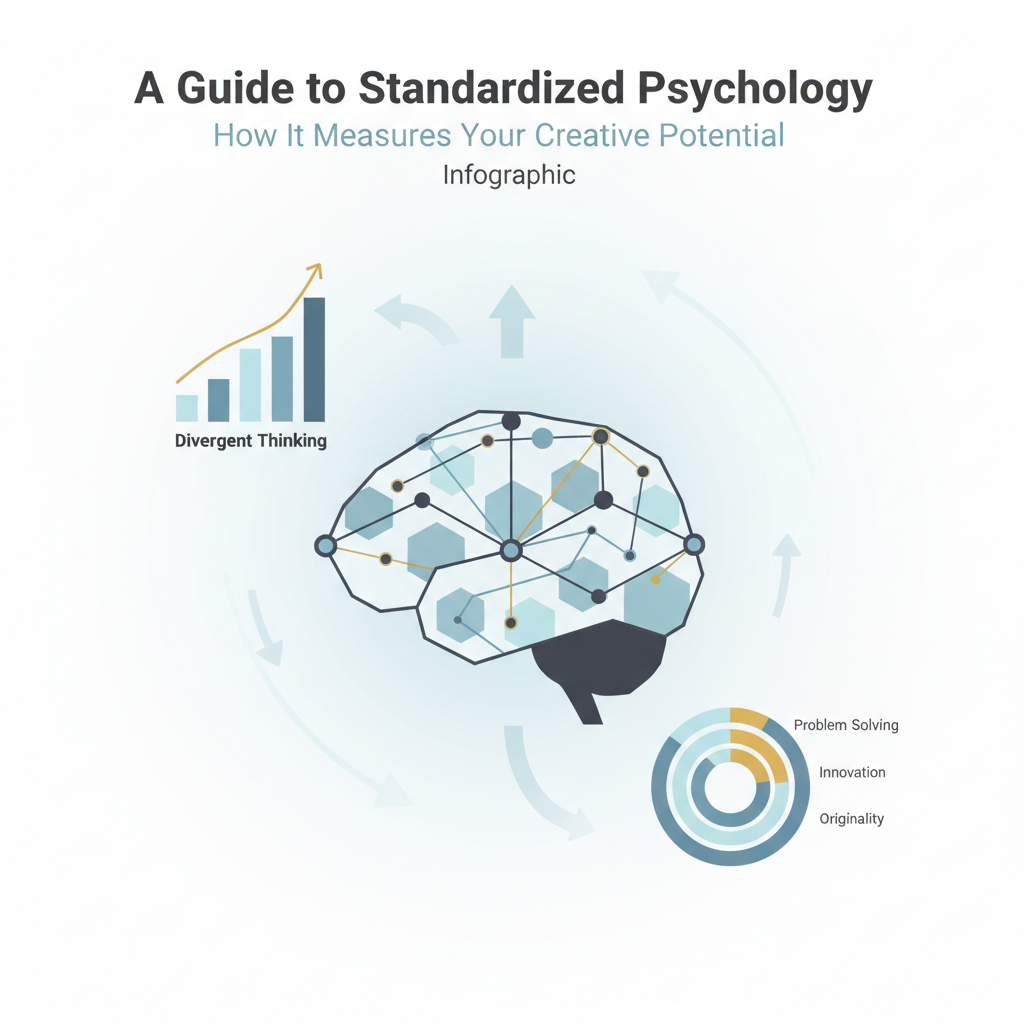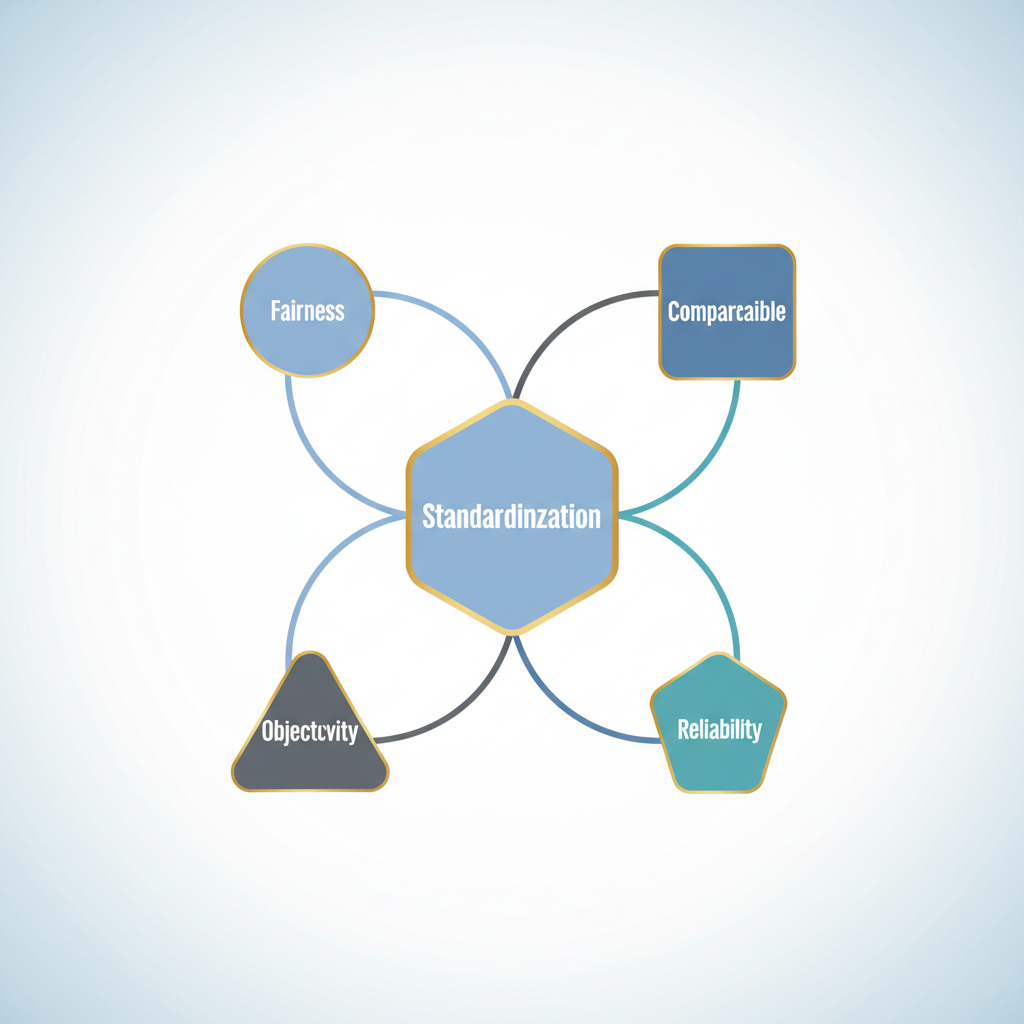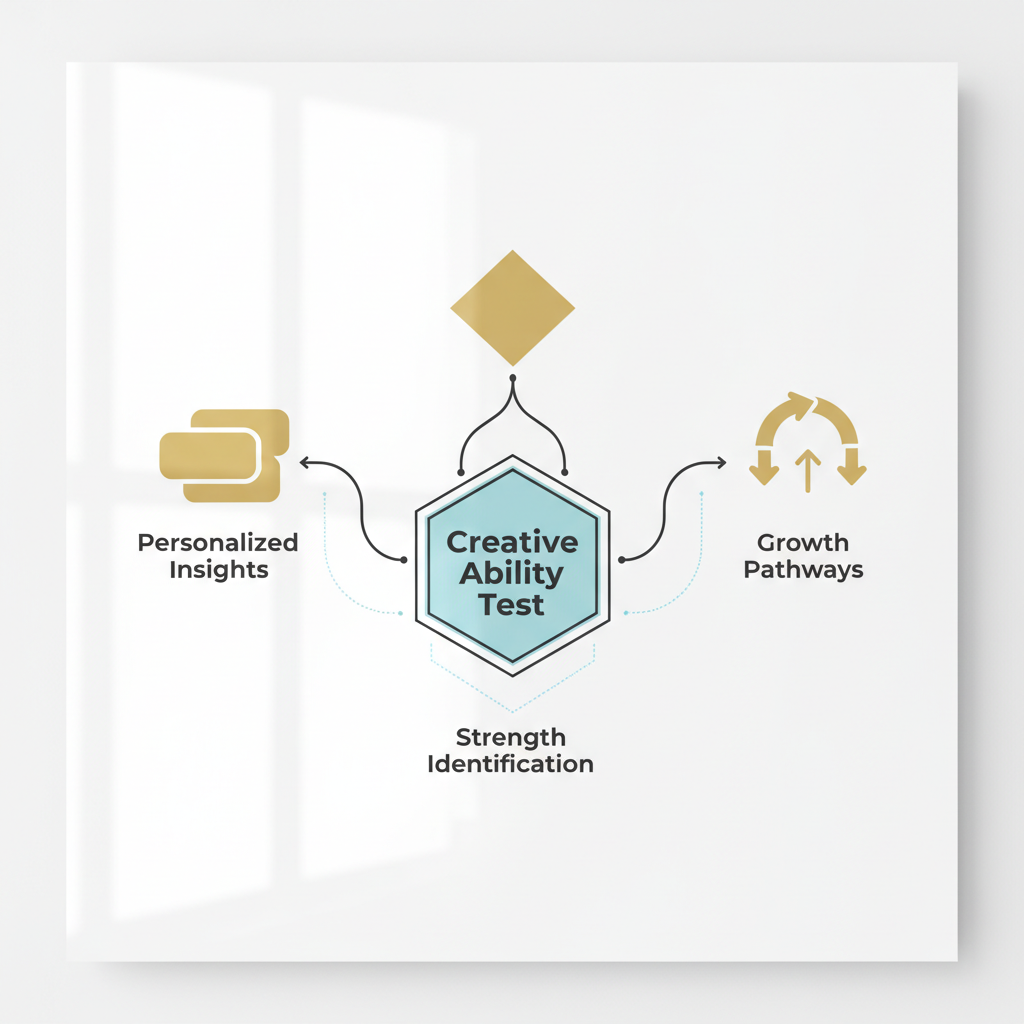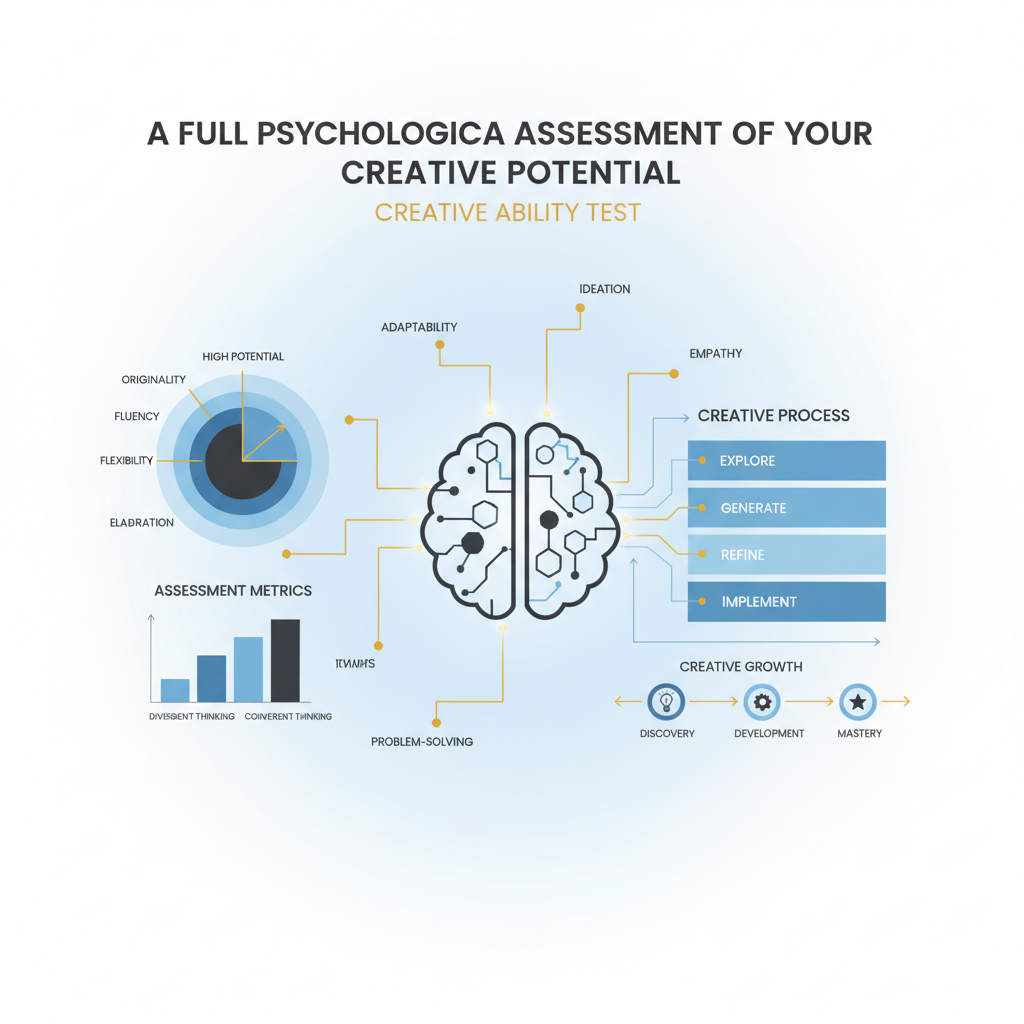
Category: Psychological Assessment Fundamentals

  • Psychodynamic Test: What Can It Reveal About Your Creative Mind?

    Psychodynamic Test: What Can It Reveal About Your Creative Mind?

    A psychodynamic test is a psychological tool designed to explore a person’s unconscious thoughts, feelings, and motivations. By analyzing responses to ambiguous stimuli, it aims to reveal underlying personality patterns and inner conflicts that can influence creative expression and problem-solving.

    Have you ever wondered what makes you creative? We often focus on skills, but the real source of our creativity comes from within. It’s shaped by our personality, experiences, and even our subconscious. Understanding these inner workings is the key to unlocking more consistent and meaningful creative work. This journey of self-discovery shows you not just *what* you create, but *why* you create it, leading you toward new ideas and greater self-awareness.

    Tools like a psychodynamic test can help you explore your inner world and understand your creative mind. It’s about more than just finding your strengths. It’s about learning what motivates you and how you approach problems. When you understand these personal drivers, you can spot creative blocks, use your natural talents more effectively, and turn your experiences into fresh ideas. This helps you grow both personally and professionally.

    In this article, we’ll explain what a psychodynamic test is and how it connects to your creative potential. We’ll show you how understanding yourself can lead to practical insights. This can help you move from feeling unsure about your creativity to having a clear plan for growth. Get ready to explore the link between your mind and your ability to innovate, and see how it can transform your approach to creative work.

    What is a Psychodynamic Test and How Does It Relate to Creativity?

    A cognitive network diagram showing 'Psychodynamic Test' as a central concept, branching out to 'Unconscious Processes', 'Motivation', 'Personality', and 'Creative Expression', all connecting to an overarching 'Creativity' cluster.
    An abstract, educational infographic illustrating the core relationship between psychodynamic tests and creativity. Visualize a central concept node labeled ‘Psychodynamic Test’ connected by subtle, clean lines to multiple surrounding nodes representing ‘Unconscious Processes’, ‘Motivation’, ‘Personality’, and ‘Creative Expression’. These nodes, in turn, subtly link to a larger, more abstract ‘Creativity’ cluster. Use a minimalist, vector-based style with clean geometric shapes. Employ a color palette of soft blues, whites, and charcoal, with gold or teal accents for key connections and labels. Maintain ample negative space for clarity. No humans or cartoon elements. Focus on conceptual representation suitable for an educational context.

    What is a Psychodynamic Test and How Does It Relate to Creativity?

    Uncovering Your Inner World: A Simple Guide

    Have you ever wondered what drives your thoughts and actions? A psychodynamic test can help you explore your inner world. These tests look at thoughts, feelings, and motives you may not be aware of. There are no right or wrong answers. Instead, they offer a look into your unique personality and inner world. Think of it as creating a map of your mind. This process helps you understand why you act the way you do. Psychodynamic ideas started with Sigmund Freud but have changed a lot since his time [source: https://www.apa.org/pubs/books/understanding-psychodynamic-psychotherapy].

    The main idea is simple: Your past experiences and hidden thoughts affect you today. Learning about these hidden influences can help you understand yourself on a deeper level. This self-awareness is a powerful tool. It allows you to see patterns in how you think. It can also show you what fuels your creative ideas or what might be causing a creative block.

    From Self-Understanding to Creative Growth

    Understanding yourself is the first step to personal growth. When you know yourself better, you gain clarity. This clarity can boost your creative potential. For example, if you know how you usually react to things, you can use those feelings in your creative work. Psychodynamic insights can also show you your personal problem-solving style. You start to see how your past shapes the things you create today.

    This deeper self-knowledge helps you find your hidden strengths. It can also show you what challenges you might face. As a result, you can find better ways to overcome creative hurdles. The Creative Ability Test, like psychodynamic ideas, focuses on self-awareness you can actually use. It moves you from feeling unsure about your creativity to having a clear, practical plan. This helps you build a growth strategy that is right for you.

    How Our Inner Drivers Shape Our Creative Expression

    What drives you on the inside can be a powerful source of creativity. This includes your deepest hopes, fears, and life experiences. These all act as raw material for your creative work. For example, a memory from childhood could become a great story. A personal challenge could lead to a new solution. Your unique life is a great source of ideas.

    When you understand these inner drives, you can use them with purpose. You learn to guide them into your creative work. This means you can be creative on purpose, not just by accident. You can develop a more focused approach. Our thoughts and feelings are closely connected to how we create [source: https://www.frontiersin.org/journals/psychology/articles/10.3389/fpsyg.2018.02619/full].

    Consider these ways your inner self can fuel creativity:

    • Emotional Depth: Your feelings make your creative work more real and powerful.
    • Personal Narratives: Your life story gives you a unique point of view for new ideas.
    • Motivation and Purpose: Your core desires can push you to solve tough problems and create art.
    • Unconscious Connections: Your mind makes new connections, often without you realizing it.

    By seeing these connections, you can use your personal history in new ways. This helps you apply your experiences to problem-solving and new ideas. It brings out your unique creative voice. The Creative Ability Test helps you find and use these inner strengths. It turns self-reflection into real steps for boosting your creativity.

    What Are Common Examples of Psychodynamic Tests?

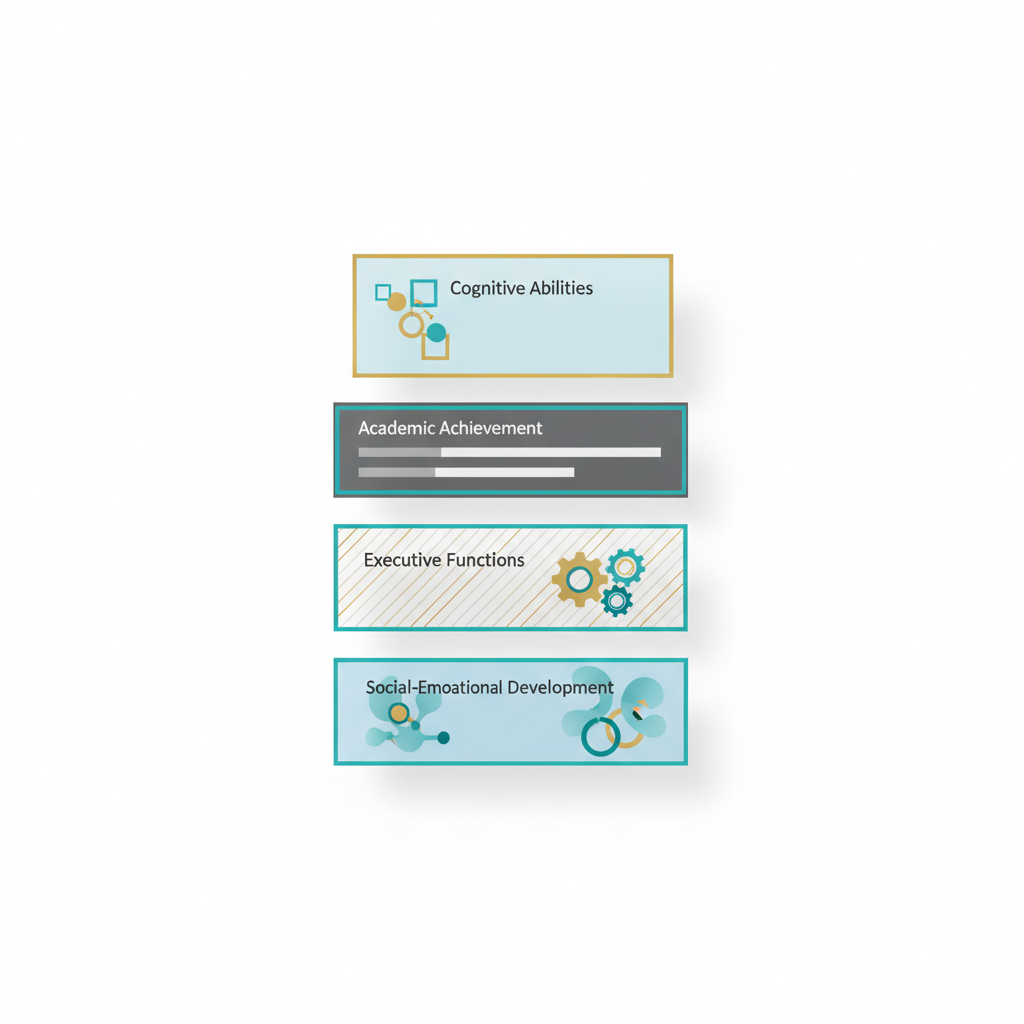
    A structured assessment chart displaying distinct sections for common psychodynamic tests like the Rorschach, TAT, and Sentence Completion Test, each with a symbolic icon.
    An abstract, educational infographic presenting common examples of psychodynamic tests. Create a structured assessment chart or competency map with distinct, clean geometric sections, each representing a different psychodynamic test (e.g., ‘Rorschach Inkblot Test’, ‘Thematic Apperception Test (TAT)’, ‘Sentence Completion Test’). Each section should have a small, symbolic icon or visual element representing its nature (e.g., an abstract inkblot shape, a narrative path). Use a minimalist, vector-based style with clean geometric shapes and subtle gradients. Employ a color palette of soft blues, whites, and charcoal, with gold or teal accents for highlights and clarity. Ensure ample negative space and clear visual hierarchy. No humans or cartoon elements. Focus on conceptual representation suitable for an educational context.

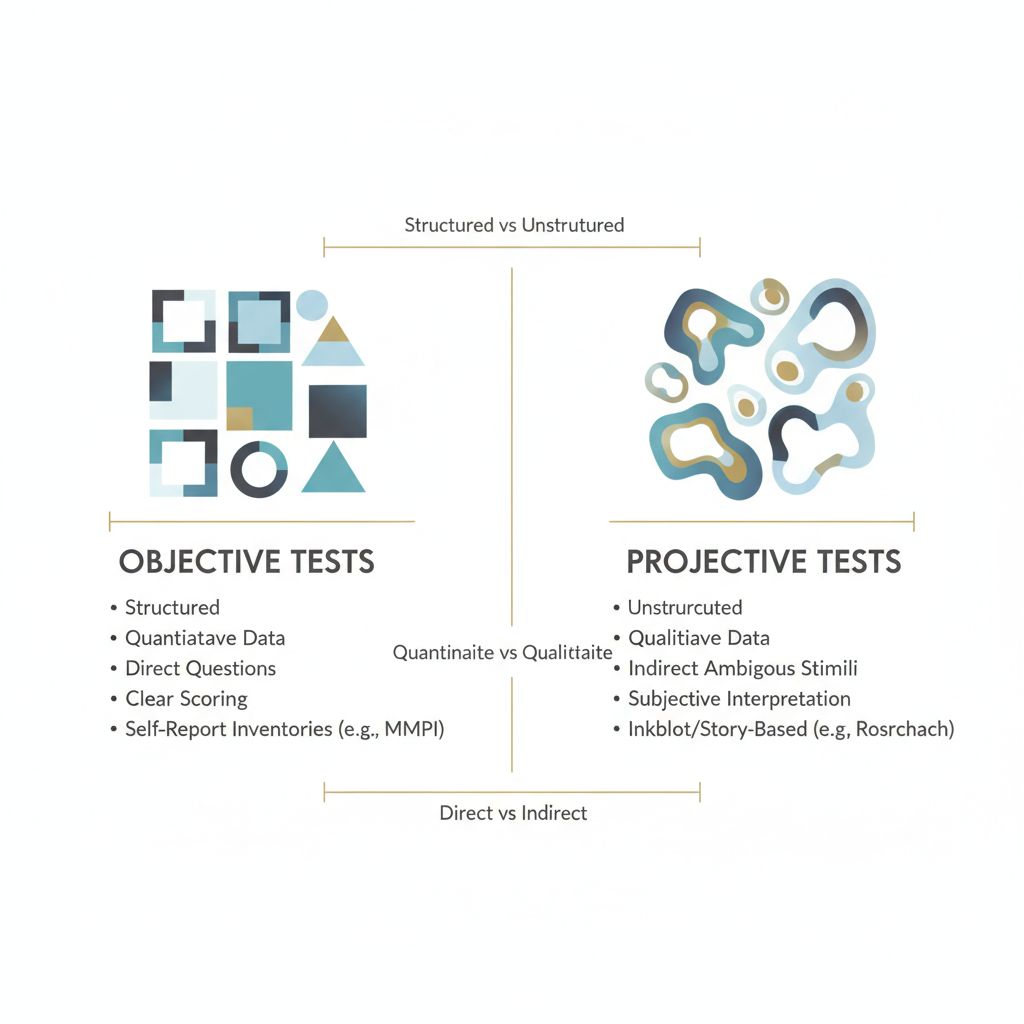
    Projective tests: Interpreting Unclear Images

    Projective tests ask you to explain unclear images or situations. There are no “right” or “wrong” answers. Instead, your unique responses can show your hidden thoughts and feelings [source: https://www.simplypsychology.org/projective-tests.html]. This method helps you explore your inner world. It shows how you see things and what you imagine.

    One famous example is the Rorschach Inkblot Test. You look at a series of inkblots. Then you describe what you see in each image. Your answers offer clues about your personality. They can also show your thinking style.

    How does this relate to creativity? These tests show your ability to find meaning in things that are not clear. This skill is key for creative thinking. It demonstrates:

    • Divergent Thinking: Seeing many possibilities from one image.
    • Originality: Forming unique interpretations.
    • Comfort with Ambiguity: Thriving in situations without clear answers.
    • Pattern Recognition: Finding connections that others might miss.

    Understanding how you handle unclear situations can boost your creativity. While some tests show deep personality traits, our Creative Ability Test focuses on practical creative skills. It shows you how to use your unique thinking style for innovation and problem-solving.

    Sentence Completion Tasks: Finishing the Thought

    Sentence completion tasks are straightforward yet revealing. You receive a list of incomplete sentences. Your job is to finish each one. For example, you might see “My greatest strength is…” or “If I could invent anything, it would be…”

    Your word choices are important. They can show your true attitudes and what drives you. They can also highlight your values and beliefs. These tasks offer a glimpse into how you see the world.

    For creativity, these tasks can shed light on:

    • Problem-Solving Mindset: Do you complete “Challenges are…” with “opportunities” or “obstacles”?
    • Self-Perception: How do you view your capabilities and potential?
    • Motivational Drivers: What truly inspires your efforts?
    • Creative Aspirations: What kinds of ideas excite you?

    These insights help you find beliefs that may be holding you back. They can also point to areas for growth. Understanding your inner thoughts is a powerful tool. It allows you to improve your approach. The Creative Ability Test helps you understand your thinking patterns. This knowledge fuels your personal growth. You gain practical strategies to improve your creative problem-solving skills.

    Thematic Apperception Test (TAT): Telling a Story

    The Thematic Apperception Test (TAT) is all about storytelling. You are shown a series of unclear pictures. Each picture shows people in different situations [source: https://www.verywellmind.com/what-is-the-thematic-apperception-test-2795493]. Your task is to tell a dramatic story for each image. You describe what happened before the scene, what is happening now, and what might happen next. Finally, you explain the characters’ thoughts and feelings.

    This process shows what is going on inside you. It can reveal your main needs and feelings. It also highlights your personal struggles and how you handle them. In short, you put your own story into the picture.

    The TAT is very useful for understanding creativity:

    • Imaginative Power: It directly tests your ability to build stories.
    • Emotional Intelligence: You explore the feelings and motives of characters.
    • Plot Development: You create full stories with a beginning, middle, and end.
    • Perspective-Taking: You make sense of unclear social situations.

    Your unique stories show your natural storytelling ability. This skill is a key part of innovation. It helps you imagine new possibilities and understand complex situations. The Creative Ability Test measures your creative strengths and gives you personalized feedback. This helps you use your natural storytelling and imaginative skills in the real world.

    How Can Psychodynamic Insights Enhance Your Creative Potential?

    A layered growth diagram demonstrating how 'Psychodynamic Insights' form a foundation, leading through 'Self-Awareness' and 'Overcoming Creative Blocks' to ultimately achieve 'Enhanced Creative Potential'.
    An abstract, educational infographic depicting a layered system or milestone progression showing how psychodynamic insights enhance creative potential. Visualize a foundational layer labeled ‘Psychodynamic Insights’ at the base, leading upwards through a series of progressively larger, interconnected layers such as ‘Self-Awareness & Understanding’, ‘Overcoming Creative Blocks’, and culminating in a top layer labeled ‘Enhanced Creative Potential’. Use a minimalist, vector-based style with clean, slightly overlapping geometric shapes to suggest growth and progression. Apply subtle gradients and a color palette of soft blues, whites, and charcoal, with gold or teal accents to highlight the upward movement and key concepts. Maintain ample negative space and structured grouping for clarity. No humans or cartoon elements. Focus on conceptual representation suitable for an educational context.

    How Can a Deeper Look at Your Mind Boost Your Creativity?

    Understanding your mind on a deeper level can unlock your creativity. It gives you a new way to see your creative side. When you explore your inner world, you find powerful tools to reach your full potential. This method goes beyond simple tricks. It connects your personal growth to your ability to create new things.

    Find and Overcome Your Hidden Creative Blocks

    Most creative blocks aren’t on purpose. They often come from deeper patterns you may not be aware of. These can include old fears, self-criticism, or past events. By looking deeper into your mind, you can understand what’s happening inside. This helps you find the real reason you’re getting stuck.

    For instance, a fear of failure might stop you from trying new ideas without you even realizing it. Studies show that hidden fears, like being afraid to fail or be criticized, often show up as creative blocks [1]. Once you understand these inner roadblocks, you can start to break them down. This knowledge turns frustration into effective action. It frees you to express your ideas more naturally and honestly. The Creative Ability Test can pinpoint thinking styles that may cause these blocks and offer ways to become more flexible.

    Understand Your Unique Way of Solving Problems

    Your past experiences and personality greatly affect how you solve problems. Looking at your inner world helps you understand why you work the way you do. Do you face challenges directly? Or do you like to think things through first?

    For example, you might be a very analytical person who likes to break problems into small pieces. Or, you could be more intuitive and wait for a sudden spark of an idea. Our personalities and thinking styles have a big impact on how we handle challenges [2]. Knowing your natural approach is a big advantage. It helps you use your strengths well. You can also learn to change your approach when needed. This leads to better and more creative results. Understanding your own style also helps you work better with others, as you can appreciate different points of view. The Creative Ability Test measures how you think and come up with new ideas, showing your natural problem-solving habits.

    Use Your Life Experiences to Create New Ideas

    Your life is a rich source of creative energy. A deeper self-understanding encourages you to explore your own experiences. This means thinking about your feelings, memories, and personal journey. When you connect these personal insights to your work, you can create truly new things.

    For example, something you loved as a child could lead to a new product. A challenge you overcame could inspire a great marketing campaign. The link between personal experience and creativity is seen in many fields, from art to business [3]. This personal connection makes your work feel real and powerful. When your work is authentic, it connects better with other people. It helps you put true originality into your ideas. Your unique story is the key to your best and most meaningful creative work. The Creative Ability Test offers a look at how open you are to new experiences, which is key for turning your own stories into new solutions.

    How Does the Creative Ability Test Relate to These Ideas?

    Measuring Actionable Creative Traits

    Some tests explore your personality and motivations to understand your inner world. Our Creative Ability Test is different. We focus on measuring specific creative traits you can actually use.

    These traits directly affect how you think creatively. Our 30-question assessment is backed by science and shows you where you shine.

    • Cognitive Flexibility: How easily you can shift perspectives.
    • Divergent Thinking: Your ability to generate many unique ideas.
    • Problem-Solving Skills: How effectively you tackle challenges.
    • Openness to Experience: Your willingness to embrace new ideas and situations.

    While other tests might explain *why* you are a certain way, our test shows *how* you use your creativity. This gives you a practical map of your creative mind, showing you exactly where you can grow.

    Moving Beyond Theory to Practical Application

    Self-awareness is a great start. But our test helps you turn that knowledge into real-world action. It connects the dots between understanding yourself and improving your creativity.

    Our platform doesn’t just show you your creative potential—it gives you practical tools to use it. You get specific strategies to improve your creative thinking. You’ll move from simply knowing about your skills to actively making them better.

    For example, it’s great to know you’re good at brainstorming many ideas. Our test shows you how to use that strength better. It also gives you tips to become more mentally flexible. You learn how to apply your unique creative style to daily challenges.

    This focus on action gives you power. It turns your creative insights into clear steps, helping you bring new ideas to your work and personal life.

    Get Personalized Feedback to Fuel Your Growth

    Our Creative Ability Test is more than just a score—it’s a personalized experience. After the 30-question test, you get a detailed report tailored to your unique results.

    We show you your creative strengths and identify areas where you can grow. You get advice that’s actually for you, not generic tips. Your report is a clear roadmap for boosting your creative skills, based on established creativity research [4].

    With our insights, you will:

    • Gain a deeper understanding of your unique creative style.
    • Receive actionable strategies for personal and professional development.
    • Develop your problem-solving skills with targeted exercises.
    • Unlock your full creative potential through continuous learning.

    You’ll go from feeling uncertain to being confident in your creative abilities. Our platform gives you the tools and structured strategies to be more creative in every part of your life. We help you turn your potential into real-world results.

    Frequently Asked Questions

    What is an example of a psychodynamic test?

    Psychodynamic tests look at your hidden thoughts and feelings. They help show parts of your personality you may not know about. These hidden parts often affect how you act and create.

    A famous example is the Rorschach Inkblot Test. In this test, you look at a series of unclear inkblots. You then say what you see in each one. How you see them can offer clues about your inner world and point of view [5].

    Another example is the Thematic Apperception Test (TAT). This test shows you pictures of people in different situations. You make up a story about the picture: what’s happening, what happened before, and what might happen next. Your stories can show your hidden motivations, wants, and struggles [6].

    These tests are great for exploring things that influence you from deep down. They help you see how your inner drives shape your creative ability.

    Can you take a psychodynamic test online for free?

    You can find many free “psychodynamic-style” quizzes online. But these are usually not real psychodynamic tests. A real test must be given and explained by a trained expert. They are complicated tools.

    Free online quizzes are often not backed by science. They may not give you accurate or helpful results. For real self-discovery, especially about creativity, it’s important to use tests that are based on science.

    Our Creative Ability Test is different. It’s a scientifically proven way to measure your creative potential. This 30-question test looks at traits you can improve. You get personal feedback and tips to grow your creativity. This gives you useful advice for personal and career growth.

    What do psychodynamic test questions look like?

    Psychodynamic tests usually don’t have multiple-choice questions. Instead, they give you unclear images or prompts. Your answers are open-ended and based on what you see. This lets your hidden thoughts and feelings come out.

    For instance, in the Rorschach test, you look at an inkblot and are asked, “What might this be?” Your answer is your own personal view of the image.

    In a Sentence Completion Test, you might get a prompt like, “My biggest fear is…” or “Creativity feels like…” You finish the sentence with the first thing that comes to mind. Your answers show your hidden thoughts and feelings.

    These methods are designed to get past your mental filters. They help uncover deeper patterns in how you think. Understanding these patterns can shed light on how you solve problems and what inspires you to create.

    What is the difference between a psychodynamic test and an archetype test?

    Both tests explore the deeper parts of who you are, but they are based on different ideas and have different goals.

    • Psychodynamic Tests: These tests come from the ideas of thinkers like Freud and Jung. They try to find hidden struggles, urges, and the ways you protect yourself. They show how your personal history affects your personality and actions. The goal is to understand the unique details of your own mind.
    • Archetype Tests: These tests are mostly based on Carl Jung’s idea of archetypes. Archetypes are common patterns or images shared by all people across cultures [7]. An archetype test can help you see which of these patterns, like “The Hero,” “The Innocent,” or “The Explorer,” fits you best.

    In short, psychodynamic tests explore your unique inner world. Archetype tests help you see how you fit into common human patterns. Both can give you useful information about yourself. Our Creative Ability Test, however, gives you specific, practical tips about your creative skills. It measures how you adapt your thinking and solve problems. This helps you actively improve your creative abilities.


    Sources

    1. https://www.apa.org/news/press/releases/2006/08/creativity-stress
    2. https://www.journals.uchicago.edu/doi/abs/10.1086/282717
    3. https://www.smithsonianmag.com/arts-culture/how-personal-experience-drives-artistic-innovation-180979621/
    4. https://psycnet.apa.org/record/1987-20078-001
    5. https://www.simplypsychology.org/rorschach-test.html
    6. https://www.simplypsychology.org/thematic-apperception-test.html
    7. https://www.verywellmind.com/what-are-archetypes-2795404
  • What Is a Psychological Assessment Battery for Creativity?

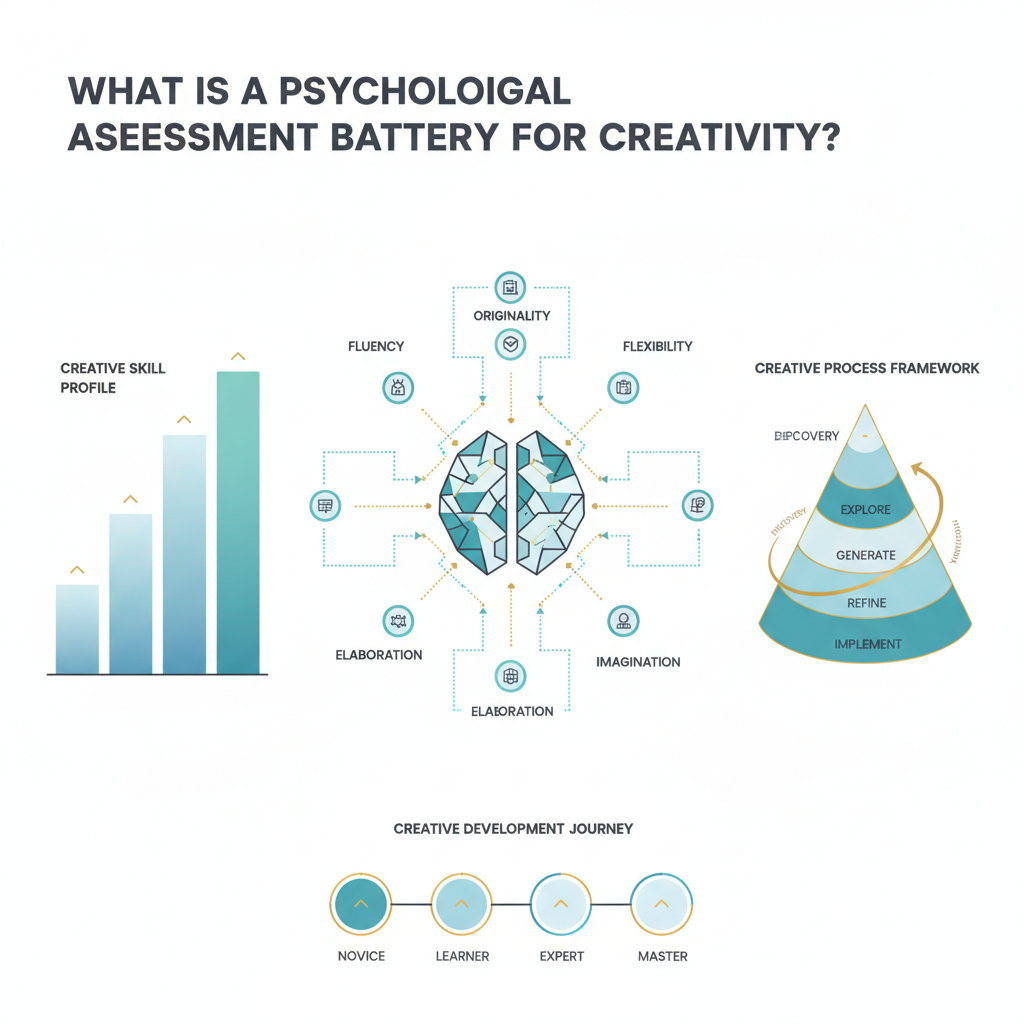
    What Is a Psychological Assessment Battery for Creativity?

    A psychological assessment battery is a collection of tests used together to gain a comprehensive understanding of an individual’s cognitive and emotional functioning. In the context of creativity, this approach allows for a detailed evaluation of various skills like divergent thinking, problem-solving, and cognitive flexibility, providing a holistic view of one’s creative potential.

    We know that creativity is important for new ideas, personal growth, and solving daily problems. But how do you measure something with so many parts? It’s more than just being artistic or having ideas. To truly understand your creative side, you need more than a single test. This is where a psychological assessment battery for creativity can help by offering a complete view of the strengths that make up your innovative mind.

    Imagine learning not just *if* you are creative, but *how* you are creative. A psychological battery test is not a single quiz. It’s a carefully chosen set of assessments that work together to show your complete creative thinking styles. Using proven questions, it examines skills like your Cognitive flexibility, your ability to generate original ideas (divergent thinking), and your unique ways of solving problems. Our goal at Creative Ability Test is to give you useful advice and personalized strategies to use these strengths in your personal and professional life.

    This article explains what a psychological assessment battery for creativity is, how it’s structured, and the valuable information it provides. By looking at the science behind these evaluations, you’ll learn how to identify your natural creative strengths, understand how you think, and get practical tips to improve your problem-solving skills. This is a chance to turn uncertainty about your creative potential into clear, useful self-awareness.

    What Is a Psychological Assessment Battery?

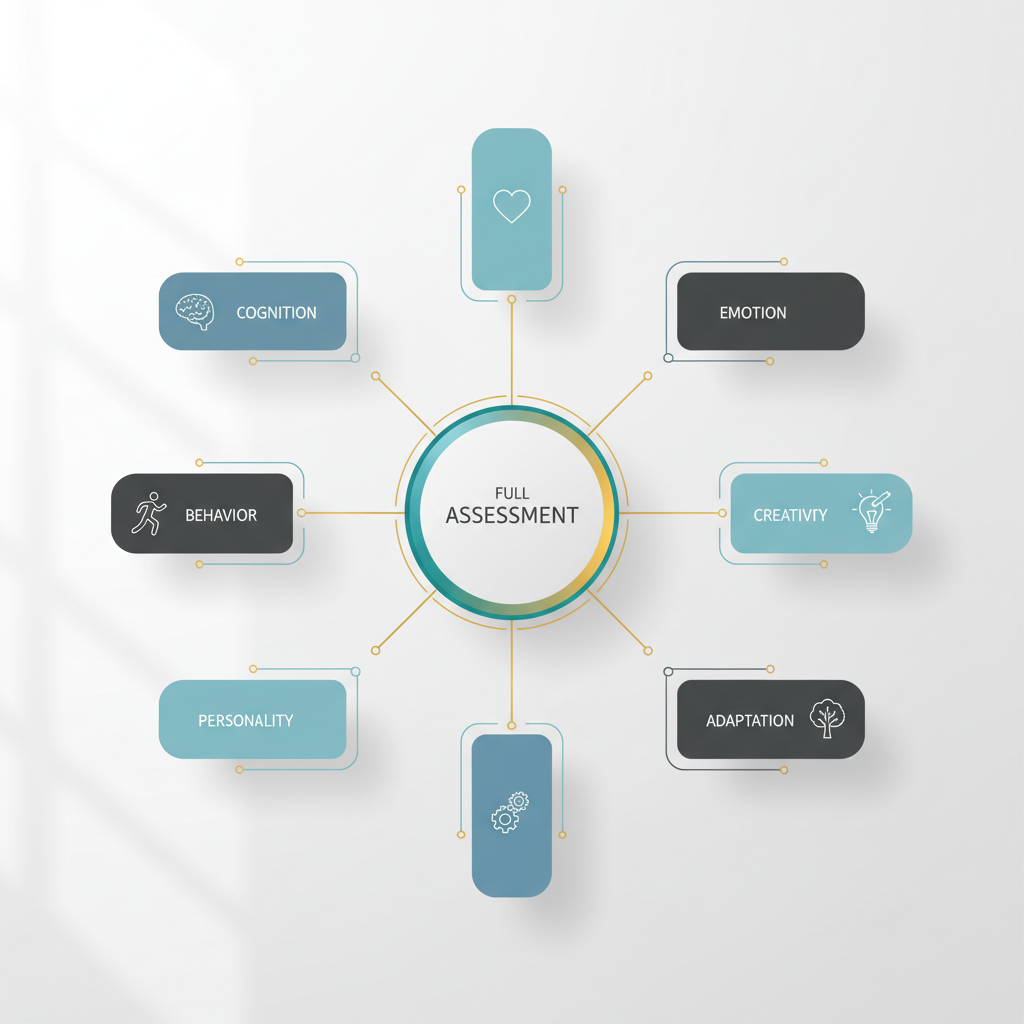
    A conceptual diagram showing a central hub representing a 'Psychological Assessment Battery' connected to several distinct geometric shapes, illustrating a collection of integrated tests.
    An abstract, educational visualization representing ‘What Is a Psychological Assessment Battery?’. The image features a central hub or core labeled ‘Psychological Assessment Battery’, from which multiple clean, distinct geometric shapes (representing individual tests or modules) are linked. These shapes vary in size and form but are cohesively connected, illustrating a structured collection of assessments. Subtle gradients in soft blues, whites, and charcoal define the shapes, with gold or teal accents highlighting the connections, emphasizing the integrated nature of a battery. Ample negative space ensures clarity. No people, no cartoon elements.

    What Is a Test ‘Battery’ in Psychology?

    In psychology, a “battery” isn’t a power source. It’s a group of different tests. You can think of it like a toolbox filled with special tools for assessment.

    Each test in the battery measures a specific part of a person’s cognitive abilities, personality traits, or behavior. This method helps experts get a fuller, more complete picture than just one test ever could.

    For instance, to assess a complex skill like creativity, a psychologist might use several tests. Each one would look at different thinking styles or ways of solving problems. Together, the results create a detailed picture of a person’s creative style and potential.

    Why a Single Test Isn’t Enough

    Think about trying to understand a whole forest by looking at just one tree. A single psychological test gives you only a small peek into a person’s complex mind. Skills like creativity have many different layers.

    One test might measure a specific skill well, but it will miss other important parts. For example, a test could show you can come up with many ideas. But it might not show how original those ideas are or how easily you can change your thinking.

    Creativity involves many different skills and traits, such as:

    • Divergent thinking: The ability to come up with many different ideas.
    • Cognitive flexibility: The skill of switching between different ways of thinking.
    • Problem-solving skills: Using creative ideas to overcome challenges.
    • Originality: Creating new and unique solutions.
    • Openness to new experiences: A willingness to try new things and think differently.

    Because creativity has so many parts, a full evaluation needs more than one tool. A test battery lets us look at all these different sides. This gives a complete picture of your creative strengths and where you can grow [1].

    That’s why the Creative Ability Test is a science-based, 30-question assessment that works like a specialized battery. Our test measures the many sides of creativity. This gives you personalized and useful insights that show your true creative style.

    How Is a ‘Test Battery’ Used to Measure Creativity?

    Moving Beyond Clinical Use to Personal Growth

    In the past, psychological tests were mainly used in clinical settings. They helped diagnose conditions or understand how the mind works [2]. But that has changed a lot. Today, these powerful tools are widely used for personal growth and self-discovery.

    This change is great for anyone who wants to understand their own creativity. A creativity test isn’t about finding flaws or “diagnosing” a problem. Instead, it’s a helpful guide that shows you your unique creative strengths and ways of thinking.

    Think of it as a journey to understand yourself better. You’ll get a clear picture of how you come up with new ideas. You’ll learn your natural way of solving problems. This knowledge is very empowering.

    • Discover Your Strengths: Find out where your creative genius really shines.
    • Understand Your Process: Learn how you naturally take on new challenges.
    • Foster Growth: Find areas where you can purposefully grow your creative skills.

    This modern approach helps people just like you. It’s not about finding problems. It’s about unlocking your natural potential. It turns uncertainty about your creative skills into self-awareness you can actually use.

    The Creative Ability Test as a Specialized Battery

    Creativity is complex and has many sides. It involves different ways of thinking and parts of your personality [3]. That’s why you can’t measure it with just one simple question. This is where a specialized psychological assessment battery becomes so important.

    The Creative Ability Test is designed for this exact purpose. It’s a complete, specialized creativity test. Our 30-question assessment is backed by science and does more than scratch the surface. It looks deeply into the different parts of your creative mind.

    This whole-picture approach gives you a complete view of your creative potential. We go beyond generic quizzes to offer you personal and practical insights.

    Here’s how our platform functions as your dedicated creativity test:

    • Comprehensive Assessment: Our 30 questions cover a wide range of signs of creativity.
    • Multi-Dimensional Measurement: We look at things like your ability to brainstorm, think flexibly, and stay open to new experiences. This gives you a more detailed understanding.
    • Backed by Science: Our methods are based on proven research into creativity. This ensures you get trustworthy results.
    • Personalized Insights: You get feedback that is specific to you. It points out your unique creative strengths and areas where you can grow.
    • Actionable Strategies: The test gives you practical tips. These help you improve your creative thinking and problem-solving skills in your daily life.

    By taking the Creative Ability Test, you get more than just a score. You unlock a deeper understanding of yourself. You’ll go from having a basic idea of your creativity to using it for personal growth, career development, and new ways of thinking.

    What Key Traits Does a Creativity Assessment Battery Measure?

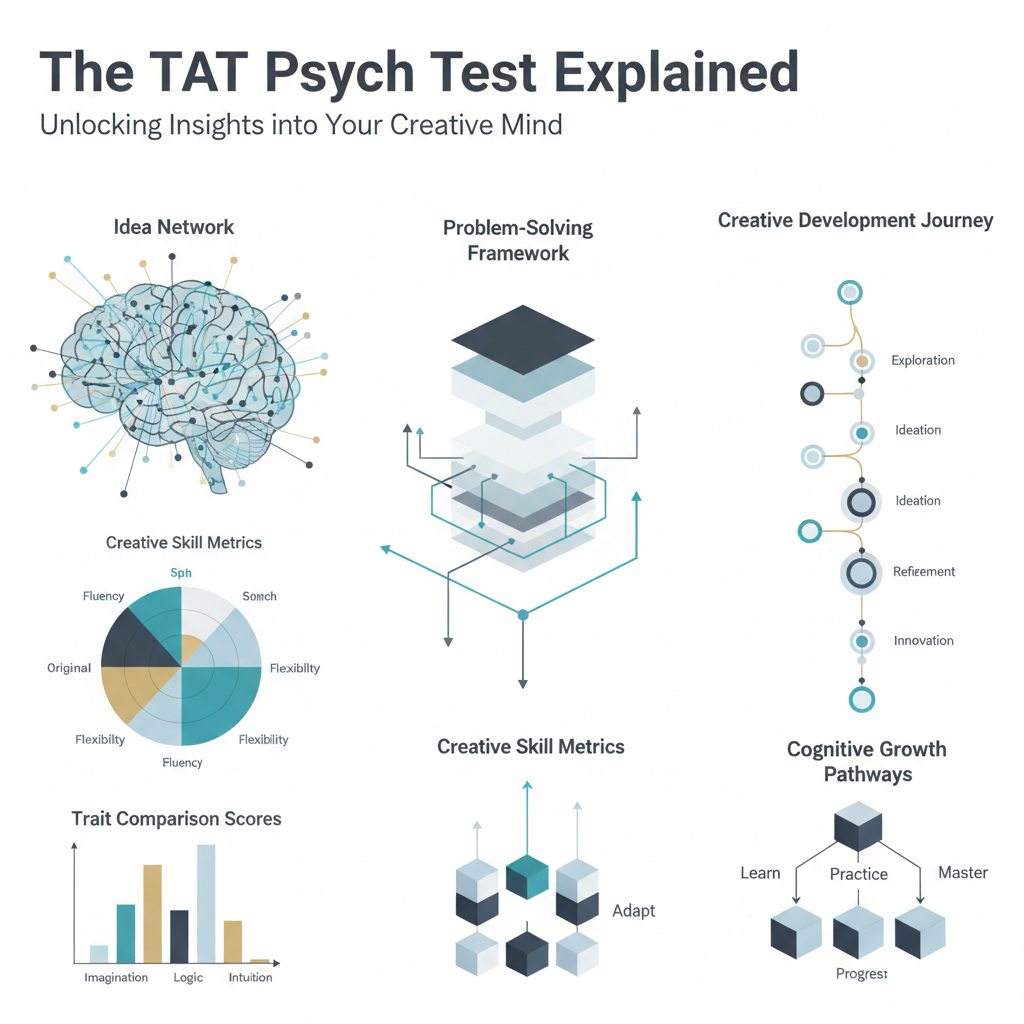
    A minimalist radar chart visualizing key creative traits like Fluency and Originality, showing a profile across different dimensions of creativity.
    An abstract, educational visualization representing ‘What Key Traits Does a Creativity Assessment Battery Measure?’. The image depicts a modern, vector-based skill assessment chart, like a competency graph or multi-axis radar chart. Each axis or segment represents a distinct creative trait (e.g., Fluency, Originality, Flexibility, Elaboration), indicated by short labels. A central polygon or shape illustrates a ‘score’ or ‘profile’ across these traits, filled with soft blue gradients and outlined with a gold or teal accent. The overall design is clean, professional, and uses charcoal for background elements against white space. No people, no cartoon elements.

    Divergent and Convergent Thinking

    Creativity is often seen as one skill, but it’s more complex. It actually involves two different ways of thinking. A good creativity test measures both divergent and convergent thinking.

    Divergent thinking is your ability to come up with many different ideas. Think of it as brainstorming. You explore a wide range of possibilities without judgment. This skill is key to finding lots of potential solutions. For example, you might list countless uses for a common object like a paperclip.

    Convergent thinking is the opposite. It’s your ability to narrow down those many ideas to find the best one. You pick the most fitting solution. This requires critical thinking and logic. For that paperclip, you might choose the most practical use based on a specific problem.

    You need both for real creative success. Our assessment helps you understand your balance between these two powerful ways of thinking. It shows your strengths in creating and choosing ideas.

    Cognitive Flexibility

    Cognitive flexibility is a key part of creative thinking. It’s about being mentally agile. This trait is the ability to change your point of view and adapt your thinking quickly. It means you can look at problems from different angles.

    Imagine facing a complex challenge. Someone with high cognitive flexibility can easily switch gears. They can change their approach if one idea isn’t working. This helps you get past mental blocks and find new solutions.

    For instance, think about planning a new marketing campaign. A flexible thinker might look at it from the customer’s point of view. Then, they’ll consider it from the sales team’s perspective. After that, they might think like a competitor. Looking at the problem from all sides leads to stronger solutions.

    Our assessment helps you understand how flexible your thinking is. It gives you insight into how well you adapt. Knowing this helps you handle change more effectively.

    Problem-Solving Approaches

    Creativity isn’t just about art. At its core, it’s about solving problems. A good assessment looks at how you face challenges. It examines your unique ways of solving problems creatively.

    This involves several key parts:

    • Identifying the core issue: Seeing beyond surface symptoms.
    • Reframing problems: Viewing challenges in new and innovative ways.
    • Developing novel solutions: Coming up with original answers.
    • Persistence: Staying resilient when facing obstacles.

    Think of a common problem at home, like a cluttered room. A creative problem-solver wouldn’t just tidy up. They might redesign the space. They would create a new system to stay organized. Our platform shows your natural tendencies in these areas. It helps you use your creativity for challenges at home and at work.

    Originality and Idea Generation

    Originality is at the heart of innovation. It’s the ability to come up with truly unique ideas that others don’t usually think of. Idea generation is about how many new ideas you can create. It’s about bringing new thoughts to life.

    Originality means your ideas stand out. They make your work or solutions different. This quality goes beyond the usual answers. For example, instead of just improving a product, an original idea might be a totally new one that solves an unmet need. This is where breakthroughs happen.

    Our assessment measures how original your ideas are. It also checks how good you are at generating ideas in general. Understanding this helps you grow your unique creative spark and share your most innovative thoughts.

    Openness to New Experiences

    Openness to New Experiences is a key personality trait. It’s strongly linked to creative potential [4]. This trait is about your willingness to explore new ideas, concepts, and unusual experiences. It is about curiosity and a desire to learn.

    People who are very open tend to be:

    • Intellectually curious and eager to learn.
    • Aesthetically sensitive and appreciative of art.
    • Adventurous and willing to try new things.
    • Emotionally aware and reflective.

    This trait acts as fuel for creativity. It encourages you to step outside your comfort zone and look for different kinds of inspiration. This expands the way you see the world. For example, someone who is very open might try a new type of food or read about a complex scientific theory. These experiences give them a richer point of view and more material for creative thought.

    Our assessment helps measure how open you are to new things. It links this trait to your overall creative potential. This understanding helps you find new ways to grow and expand your creative horizons.

    What Does a Psychological Battery Test and Evaluation Involve?

    Step 1: The Assessment Experience

    Your creative journey starts with a simple, engaging assessment. This isn’t just one test. Instead, you’ll go through a series of fun activities and questions. Each task helps us understand how you think creatively.

    Our Creative Ability Test, for example, has 30 science-backed questions. Each one is a chance to explore your mind. You’ll solve different kinds of problems and use your imagination. There are no right or wrong answers here. Your honest responses are what count. They show us your natural creative instincts.

    The online format is easy to use. You can complete the test at your own pace in a comfortable setting. This helps you express yourself freely. This first step is all about exploring your creative potential.

    Step 2: Analyzing Your Comprehensive Profile

    After you finish the test, our experts get to work. They carefully analyze your answers. We don’t just add up scores. Instead, we look at how your answers connect. This gives us a complete picture of your creative profile.

    Our team of psychologists and data scientists uses proven models to analyze your results. They look for patterns in your thinking and measure key traits like:

    • Divergent Thinking: How many unique ideas can you generate?
    • Cognitive Flexibility: Can you easily shift perspectives and approaches?
    • Originality: Are your ideas fresh and uncommon?
    • Problem-Solving Approaches: What strategies do you naturally employ?
    • Openness to Experience: How receptive are you to new ideas and concepts?

    This detailed review shows how you naturally create and solve problems. It helps us understand your unique thinking style. Our scientific approach ensures your results are accurate and useful [5]. By combining these measurements, we create a clear picture of your creative strengths and areas for growth.

    Step 3: Receiving Personalized, Actionable Insights

    In the final step, you get your results. We send you a personalized report based on our detailed analysis. It’s more than just scores. The report explains what your results mean in simple, easy-to-understand language. This helps you clearly see your unique creative strengths.

    Your personalized insights will include:

    • Specific Strengths: See where you shine creatively. For example, you may be great at brainstorming or finding unique solutions.
    • Growth Opportunities: Find areas where you can build your creative skills. For instance, you might try practicing new ways to solve problems.
    • Practical Strategies: Get tips and exercises made just for you. They are designed to fit your thinking style and help you become more innovative.
    • Real-World Applications: Learn how to use your creativity every day, at home or at work. You’ll be able to tackle challenges with a fresh point of view.

    This feedback turns confusion into clarity. You’ll go from wondering about your creativity to knowing how to improve it. Our goal is to give you the tools you need. We want you to use your creative strengths to solve problems and create new ideas.

    Can You Give a Psychological Assessment Battery Example?

    A General Clinical Example

    Let’s use a general clinical example to see how a psychological assessment battery works. Imagine someone is having trouble with focus and mood. One test alone can’t fully explain these complex issues.

    That’s why a full clinical battery is used. It combines different tests to get a complete picture. This helps professionals find the root causes of a person’s struggles. [6]

    This type of battery typically includes:

    • Cognitive Ability Tests: These test skills like attention, memory, and how quickly you process information. For example, a Wechsler Adult Intelligence Scale (WAIS) might be used.
    • Personality Inventories: Tools like the Minnesota Multiphasic Personality Inventory (MMPI) look at personality traits and emotional patterns.
    • Symptom Checklists: Questionnaires like the Beck Depression Inventory (BDI) measure how severe certain symptoms are.
    • Behavioral Observations: Clinicians also observe behavior during the assessment process.

    By combining the results from these tools, clinicians get a much clearer picture. This allows them to make an accurate diagnosis and create an effective treatment plan. This varied approach is key to understanding complex human behavior.

    An Example Focused on Creative Potential

    Now, let’s look at a psychological assessment battery designed for creativity. Unlike a clinical one, this type of assessment aims to find your unique creative strengths and potential. It gives you a complete map of your creative mind.

    A strong creativity assessment battery, like the one offered by Creative Ability Test, uses a mix of science-backed questions. These questions look at different parts of creative thinking. This ensures a complete review of your skills. [7]

    This kind of battery might test:

    • Divergent Thinking: This measures your skill at coming up with many unique ideas from one starting point. For instance, you might be asked to list all possible uses for a common object.
    • Convergent Thinking: This tests your ability to find the single best answer to a problem. It uses logic and judgment.
    • Cognitive Flexibility: This looks at how easily you can switch between different ways of thinking. It’s important for handling new challenges.
    • Problem-Solving Approaches: The battery looks at how you solve open-ended problems. It shows your favorite creative methods.
    • Originality and Elaboration: This tests how unique your ideas are and how well you can add details to them.
    • Openness to Experience: This personality trait is closely linked to creativity. It shows how open you are to new ideas and experiences.

    The Creative Ability Test covers these areas in its 30-question assessment. It moves beyond simple “right or wrong” answers. Instead, it captures the details of your creative process. As a result, you receive personalized feedback.

    This feedback goes beyond just scores. It includes practical tips based on your results. You learn how to use your strengths. You also discover practical ways to improve in other areas. This turns creative ideas into real skills. You can then use them in your personal and professional life. [8]

    Ultimately, a creativity assessment gives you more self-awareness. It helps you understand your unique creative potential. This understanding is the first step to improving your innovative thinking and problem-solving skills.

    How Can Understanding Your ‘Creativity Battery’ Help You?

    A layered diagram showing a progression pathway starting from 'Assessment Insights' and leading to benefits like 'Enhanced Self-Awareness' and 'Innovative Problem-Solving'.
    An abstract, educational visualization representing ‘How Can Understanding Your ‘Creativity Battery’ Help You?’. The image displays a layered system or a milestone progression pathway, illustrating growth and application. It starts with a base layer labeled ‘Assessment Insights’ (representing understanding the battery results) and branches upwards through several interconnected, clean geometric shapes or steps. Each subsequent layer or step represents a benefit or application, such as ‘Enhanced Self-Awareness’, ‘Targeted Skill Development’, and ‘Innovative Problem-Solving’. Subtle gradients in soft blues and whites signify progression, with gold or teal accents on arrows or connecting lines. The composition uses ample negative space to denote distinct stages. No people, no cartoon elements.

    Identifying Your Natural Creative Strengths

    Understanding your “Creativity Battery” helps you learn about yourself. It shows you what your unique creative talents are. Think of it as a personalized map of your creative mind. This assessment is more than just a simple label. It points out the specific mental skills you use to come up with new ideas.

    For example, you might be great at brainstorming. This means you can come up with many ideas easily. Or, you could have strong mental flexibility, which helps you switch viewpoints without effort. The Creative Ability Test pinpoints these key strengths. Knowing this builds confidence by showing you where your natural talents are. Recognizing these strengths is the first step to focusing on what you do best. When you understand your creative style, you can feel more fulfilled and perform better [9].

    You will discover:

    • Your main thinking style: Do you come up with ideas quickly, or do you carefully piece them together?
    • Your natural talents: Where does your creativity come to you most easily?
    • Your mental superpowers: Maybe you’re great at connecting different ideas.
    • Your problem-solving style: How do you usually handle tough problems?

    This insight helps you use your natural abilities and apply them in your daily life.

    Finding Opportunities for Growth

    No one is creatively perfect, and everyone has areas where they can grow. Your “Creativity Battery” also highlights these areas. This isn’t about finding weaknesses. Instead, it points out specific ways you can improve. This helps you build your creative skills with a clear purpose.

    Perhaps your results show you could get better at choosing the best idea from a list. Or maybe you could work on making your ideas more unique. The Creative Ability Test gives you practical steps for these areas that are tailored to your profile, not just generic tips. Having a growth mindset is a big help when learning new skills [10]. You’ll get useful tools to broaden your creative abilities. This organized method helps you get past creative blocks and turns challenges into exciting ways to learn.

    Key growth areas often include:

    • Generating more ideas: Learn ways to come up with more new and varied ideas.
    • Becoming more flexible: Do exercises to see things from new angles and get comfortable with uncertainty.
    • Solving problems better: Find strategies for more creative and effective solutions.
    • Being more original: Use methods to think outside the box.

    With personalized guidance, you can build a more well-rounded creative skillset.

    Applying Insights to Real-World Challenges

    The real power of your “Creativity Battery” comes from using what you learn. This isn’t just theory—it’s about getting real results. The insights from the test have direct, real-world benefits. You learn to use your unique creative strengths to handle challenges at home and work more effectively. For example, if you’re good at brainstorming, you can lead a team session to find new solutions. Or, if you have original ideas, you can suggest fresh marketing campaigns.

    This knowledge also helps you see challenges as chances to be creative, so you can move from feeling uncertain to feeling confident in your abilities. This leads to innovative solutions. Creative problem-solving is a key skill for success in today’s work world [11]. We provide clear explanations and simple examples to show you how to tap into your creative potential. You’ll feel more confident facing any situation with a creative outlook, which changes how you solve problems and come up with new ideas.

    Practical applications include:

    • Personal Growth: Finding creative ways to manage stress or pursue hobbies.
    • Professional Development: Innovating at work or excelling in new roles.
    • Problem-Solving: Handling daily challenges with a fresh point of view.
    • Strategic Planning: Developing forward-thinking strategies in any field.

    Ultimately, understanding your creative battery helps you unlock your full potential and guides you toward a more innovative and fulfilling life.

    Frequently Asked Questions

    What is psychological assessment?

    Psychological assessment is a structured way of gathering information about a person. It uses a mix of tools and methods, such as tests, interviews, and observations.

    The main goal is to understand a person’s abilities, strengths, and unique qualities. It offers insights into personality, thought processes, and emotional well-being [2]. This understanding can then be used for personal development or to help solve problems.

    On our platform, we use psychological assessment to focus on your creative potential. We go beyond traditional clinical uses and instead offer a path to self-discovery and growth, helping you identify your unique creative thinking styles.

    What is an example of a test battery in psychology?

    In psychology, a “test battery” is a set of different tests given together to get a complete picture of a person. For instance, a clinical battery might look at thinking skills like memory, attention, and decision-making to help diagnose conditions like ADHD or learning disabilities.

    However, test batteries are used in many other areas, too. The Creative Ability Test is a great example of a battery focused entirely on creativity. Instead of a single test, our battery includes multiple parts, and each one measures a different aspect of your creative mind.

    Our battery examines key areas such as:

    • Divergent Thinking: Your ability to generate many unique ideas.
    • Cognitive Flexibility: How easily you switch between different perspectives.
    • Problem-Solving Approaches: Your natural methods for tackling challenges creatively.
    • Openness to New Experiences: Your willingness to explore novel concepts.

    By combining these assessments, we provide a complete view of your creative strengths. This deeper understanding helps support your personal growth.

    How does a psychological battery test and evaluation work online?

    Taking a psychological test battery online is simple and convenient. Our platform guides you through each step to make the experience smooth and engaging.

    Here’s how the process works with the Creative Ability Test:

    • Step 1: Take the Assessment. You’ll start by answering a series of 30 scientifically-based questions. These questions are designed to explore different sides of your creative thinking. You can complete them at your own pace.
    • Step 2: Get Your Profile Analysis. After you finish, our system analyzes your answers using proven methods. It then creates a detailed profile that highlights your creative strengths and unique thinking styles.
    • Step 3: Receive Actionable Insights. Finally, you get your personalized results in a clear, easy-to-understand report. We explain your creative potential and offer practical strategies to help you improve specific skills. This turns insight into action, helping you grow in a structured way.

    Our online platform makes it easy to measure and understand your creativity. We deliver insights directly to you, encouraging personal development and new ways of thinking.

    What is reliability in psychological testing?

    In psychological testing, reliability means consistency. A reliable test produces the same results over and over again. Think of a scale: if it shows the same weight each time you step on it, it’s reliable. In the same way, a reliable psychological test gives you similar scores if you retake it under the same conditions.

    Reliability is crucial for any assessment because it ensures the results are trustworthy. Without it, test scores would be random or change too much, making them meaningless for understanding your abilities.

    There are different ways to measure reliability:

    • Test-Retest Reliability: This measures consistency over time. If you take the same test twice, your scores should be similar.
    • Internal Consistency: This checks if different items within a single test measure the same concept. All parts should work together smoothly.

    The Creative Ability Test is built on scientific principles, and we make high reliability a priority. This means you can trust your results. Our assessment consistently and accurately measures your creative potential [12]. This gives you the confidence to use our strategies for real-world growth.


    Sources

    1. https://www.apa.org/education-career/guide/tests
    2. https://www.apa.org/education-career/guide/assessment
    3. https://www.journals.uchicago.edu/doi/abs/10.1086/721204
    4. https://www.frontiersin.org/journals/psychology/articles/10.3389/fpsyg.2016.00297/full
    5. https://www.apa.org/monitor/2013/04/assessing-creativity
    6. https://www.apa.org/education-career/guide/assessments
    7. https://psycnet.apa.org/record/2012-00507-001
    8. https://www.psychologytoday.com/us/basics/creativity
    9. https://positivepsychology.com/self-awareness-skills/
    10. https://hbr.org/2014/11/what-having-a-growth-mindset-actually-means
    11. https://www.weforum.org/agenda/2023/05/future-jobs-report-2023-top-skills/
    12. https://www.apa.org/pi/about/publications/caregivers/practice-settings/assessment/reliability-validity

  • 10 Popular Psychological Tests and What They Reveal About Your Mind

    10 Popular Psychological Tests and What They Reveal About Your Mind

    Popular psychological tests are standardized assessments designed to measure abstract concepts like personality, intelligence, aptitude, and cognitive abilities. Famous examples include personality inventories like the Myers-Briggs Type Indicator (MBTI), intelligence scales like the Stanford-Binet, and projective tests like the Rorschach Inkblot Test, all used to gain deeper insights into the human mind.

    Have you ever wondered how your mind works? What drives your choices, shapes your personality, or sparks your best ideas? This curiosity is why popular psychological tests have been used for decades. They offer a look into how we think, feel, and what we’re capable of.

    Psychological tests are a structured way to learn more about yourself. They can help you discover your personality traits or measure your cognitive abilities. But these tools can also show your creative strengths, how you think, and your approach to solving problems. Understanding these parts of yourself is key for personal and professional growth.

    In this article, we will look at 10 well-known psychological assessments. We’ll explain their purpose and what they can reveal about you. These science-based tests shed light on everything from your personality to your creative potential, giving you useful insights to better understand and build on your strengths.

    Why Are We So Curious About Psychological Tests?

    From Self-Discovery to Professional Growth

    We are all curious about ourselves. We want to understand what makes us tick. Psychological tests can help us on this journey by giving us a clear look into how our minds work.

    These tests can reveal hidden talents and show us how we think. For example, you might learn you are good at divergent thinking, which means you can come up with many new ideas easily. Knowing this about yourself helps you grow.

    Here’s how these insights can help you:

    • Better Self-Awareness: Understand your strengths, like your creative skills and how you solve problems.
    • Personal Growth: Knowing how you think builds confidence. It helps you make better choices for your future by using your natural talents.
    • Career Growth: Learning about your mental flexibility is a big advantage. It helps you adapt to new challenges and become a better innovator at work.

    Knowing your creative style helps you succeed. For instance, if you are open to new things, you’ll be more willing to embrace change—a key skill for innovation. The Creative Ability Test offers these personal insights. It turns confusion into clear, useful knowledge about yourself.

    Understanding the Science Behind the Questions

    You might wonder how psychological tests work. They are not just for fun. Good tests are based on solid science and are designed to give you information you can trust.

    So, what does that mean?

    • Reliability: A reliable test gives you the same results over and over. Think of a good scale—it shows the same weight every time you step on it.
    • Validity: A valid test measures what it’s supposed to measure. So, a creativity test should actually measure your creativity, not something else [1].

    Experts carefully design these questions using deep research on how people think and act. Specialists build and improve these tests to make sure the questions accurately measure specific skills.

    Our Creative Ability Test meets these high standards. It is a 30-question test based on science. It measures several parts of creativity, including mental flexibility, how you generate new ideas, and your openness to new experiences. Our methods are based on proven creativity research, so you get feedback that is both accurate and helpful. This scientific approach ensures your personalized tips for growth really work. You can trust the insights from your results.

    10 Famous Psychological Tests Explained

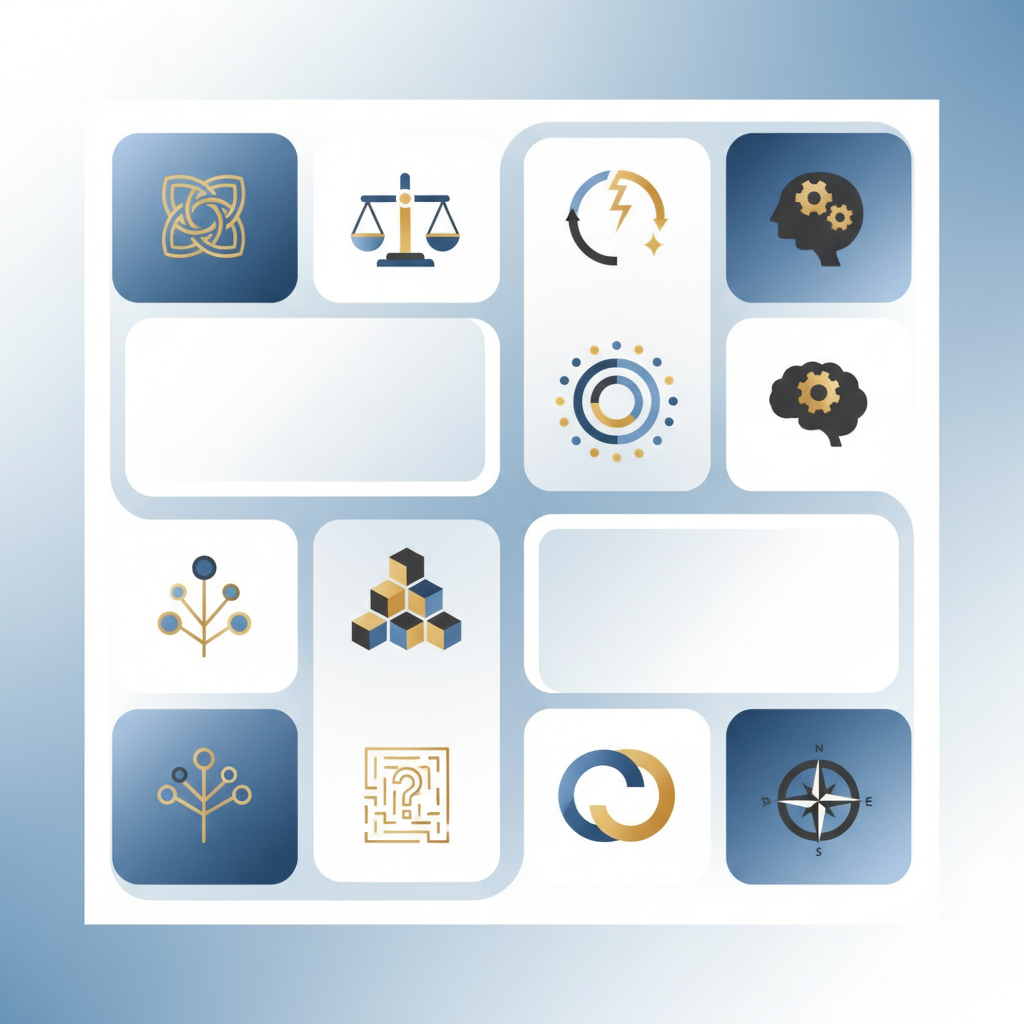
    Infographic presenting a structured grid or chart with ten distinct, minimalist geometric icons. Each icon visually represents one of the ten famous psychological tests, offering a clean, abstract overview of their conceptual focus in a vector art style.
    Produce a minimalist, vector-based infographic structured as a competency chart or a grid overview. The color palette should be soft blues, whites, charcoal, and gold accents. The infographic needs to visually represent ten distinct ‘slots’ or sections, each corresponding to one famous psychological test. Each slot should contain a unique, abstract geometric icon or a small, distinct shape to symbolize the nature or focus of that test, without explicitly naming it. The arrangement should be clean, organized, and professional, using subtle gradients and ample negative space to ensure clarity and easy comprehension, suitable for an educational overview without direct text explanation.

    The Rorschach Inkblot Test

    The Rorschach Inkblot Test is one of the most famous psychological tests. Hermann Rorschach created it in 1921. The test is known for its unique visual approach.

    In this test, you look at ten ambiguous inkblots. Some are black and white, while others have color. Your task is to describe what you see in each one.

    What It Reveals:

    • It helps reveal your personality characteristics.
    • It also looks at your emotional functioning.
    • How you see these shapes can hint at your underlying thought patterns.

    If you’re curious about creative thinking, interpreting abstract forms can be very insightful. This test shows how you find meaning in vague images. This skill is key for creative thinking and solving problems in new ways.

    The Thematic Apperception Test (TAT)

    The Thematic Apperception Test (TAT) asks you to be a storyteller. It was created in the 1930s by Henry Murray and Christiana Morgan. The test uses a set of pictures that are both interesting and unclear.

    For each picture, you create a story. You’ll describe what’s happening, what led to the scene, and what the characters are thinking and feeling. Finally, you explain how the story ends.

    What It Reveals:

    • It helps psychologists understand your hidden needs and motivations.
    • It also reveals how you view the social world.
    • Your stories can show common themes in your thinking.

    Storytelling is a core creative skill. The TAT shows your ability to use imagination and build a story. These skills are key for creating new ideas and sharing them well.

    The Myers-Briggs Type Indicator (MBTI)

    The Myers-Briggs Type Indicator (MBTI) is a popular questionnaire you fill out yourself. Isabel Myers and Katharine Briggs created it based on Carl Jung’s theory of psychological types. The test helps people learn about their own personality preferences.

    It sorts people into one of 16 different personality types. These types are based on your preferences in four areas:

    • Extraversion (E) or Introversion (I): How you focus your energy.
    • Sensing (S) or Intuition (N): How you perceive information.
    • Thinking (T) or Feeling (F): How you make decisions.
    • Judging (J) or Perceiving (P): How you prefer to live your outer life.

    What It Reveals:

    • It offers insight into how you make decisions.
    • It helps you understand how you interact with others.
    • It can show what kind of learning and work environments you prefer.

    Knowing your MBTI type can give you helpful clues about your creative style. For instance, people with a strong “Intuition” preference often show great creative potential [2]. Knowing your type can help you use your natural strengths for creative projects and personal growth.

    The Big Five Personality Traits (OCEAN Model)

    The Big Five, also known as the OCEAN model, is a common framework for personality. It describes personality using five main traits. This model is backed by a lot of research and offers a simple way to talk about personality.

    These five traits are:

    • Openness to Experience: How much you enjoy art, adventure, new ideas, and new experiences.
    • Conscientiousness: How organized, disciplined, and responsible you are.
    • Extraversion: How energetic, positive, and sociable you are.
    • Agreeableness: How compassionate and cooperative you tend to be.
    • Neuroticism (Emotional Stability): How easily you feel negative emotions.

    What It Reveals:

    • It gives a broad overview of your core personality.
    • It helps predict how you might act in different situations.
    • It’s a reliable way to understand why people are different.

    When it comes to creativity, “Openness to Experience” is the most important trait. It is consistently linked to creative thinking and innovation [3]. Becoming more open can boost your creative potential. Our Creative Ability Test helps you explore how your unique traits support your creative journey.

    The Minnesota Multiphasic Personality Inventory (MMPI)

    The Minnesota Multiphasic Personality Inventory (MMPI) is a detailed psychological test. It is mainly used to assess mental health issues, but it also explores personality traits. This test is widely used in clinical settings to help professionals understand a person’s mental health.

    The MMPI is a long questionnaire with hundreds of true/false questions. These questions cover a wide range of topics, including health, attitudes, and unusual experiences.

    What It Reveals:

    • It helps diagnose mental health conditions.
    • It points out specific personality traits.
    • It offers insights into emotional and behavioral patterns.

    While this is not a direct measure of creativity, mental well-being is crucial. A healthy mind helps you think flexibly and solve problems. These skills are essential for being creative. Understanding your mental health can help your creativity grow.

    The Stanford-Binet Intelligence Scale

    The Stanford-Binet Intelligence Scale is one of the oldest intelligence tests, first developed in the early 20th century. This test measures thinking skills in people of all ages and looks at different types of intelligence.

    The test has several parts, or subtests. These tasks measure skills like verbal and math reasoning, as well as visual-spatial skills. It also tests your working memory and problem-solving abilities.

    What It Reveals:

    • It gives you an IQ score, which shows your general thinking ability.
    • It helps find your specific mental strengths and weaknesses.
    • It can be used for educational and developmental planning.

    High intelligence can help with solving complex problems, which is often part of creative work. But creativity is more than just a traditional IQ score. Our Creative Ability Test focuses on the unique aspects of creative potential. This helps you understand how you come up with new ideas.

    The Wechsler Adult Intelligence Scale (WAIS)

    The Wechsler Adult Intelligence Scale (WAIS) is another leading intelligence test. David Wechsler created it specifically for adults. The test measures different parts of a person’s thinking ability.

    The WAIS is broken down into several main scores, including Verbal Comprehension, Perceptual Reasoning, Working Memory, and Processing Speed. Each main score is made up of several subtests that measure different thinking skills.

    What It Reveals:

    • It provides a full-scale IQ score.
    • It offers detailed insight into your thinking strengths and weaknesses.
    • It helps in clinical diagnosis and educational assessments.

    Your thinking abilities are the foundation for creative thought. Creative people often use these mental tools in flexible and unusual ways. The WAIS shows how your mind processes information. Our platform helps you apply these cognitive strengths to creative challenges.

    Projective Tests (e.g., Draw-A-Person)

    Projective tests are a type of psychological test where people respond to unclear prompts or images. These tests are designed to reveal hidden thoughts, feelings, and conflicts. They offer a less structured way to look at personality.

    Examples include the Draw-A-Person Test, where you simply draw a person. Other tests might ask you to complete sentences or tell stories about pictures. The lack of specific instructions allows for free expression.

    What They Reveal:

    • They can highlight unique expressive styles.
    • They offer clues about how a person sees themselves.
    • They may reveal hidden emotions or worries.

    The freedom in these tests taps into your imagination. Your unique interpretations and artistic choices reflect your creative expression. These tests hint at how you see the world from your own unique point of view.

    Tests for Specific Conditions (e.g., Beck Depression Inventory)

    Many psychological tests focus on specific conditions. These tests help find or diagnose different mental health issues. They are key tools in clinical psychology that help guide treatment and support.

    The Beck Depression Inventory (BDI) is a common example that helps measure the severity of depression. Other tests might screen for anxiety, ADHD, or trauma-related symptoms. These are usually questionnaires you fill out yourself.

    What They Reveal:

    • They offer a standard way to measure how severe symptoms are.
    • They help with diagnosing specific mental health disorders.
    • They track how well treatment is working over time.

    Your mental health has a direct impact on your creative potential. Taking care of any mental health issues can free up your mind, which allows for greater focus and flexibility. A healthy mind helps your creative ideas flow better. Putting your mental health first is a big step toward personal growth and more creativity.

    Creativity Assessments (e.g., Torrance Tests of Creative Thinking)

    Creativity assessments are designed to directly measure creative thinking. They move beyond traditional intelligence tests to focus on how you come up with new ideas. They also look at how you solve problems in new ways.

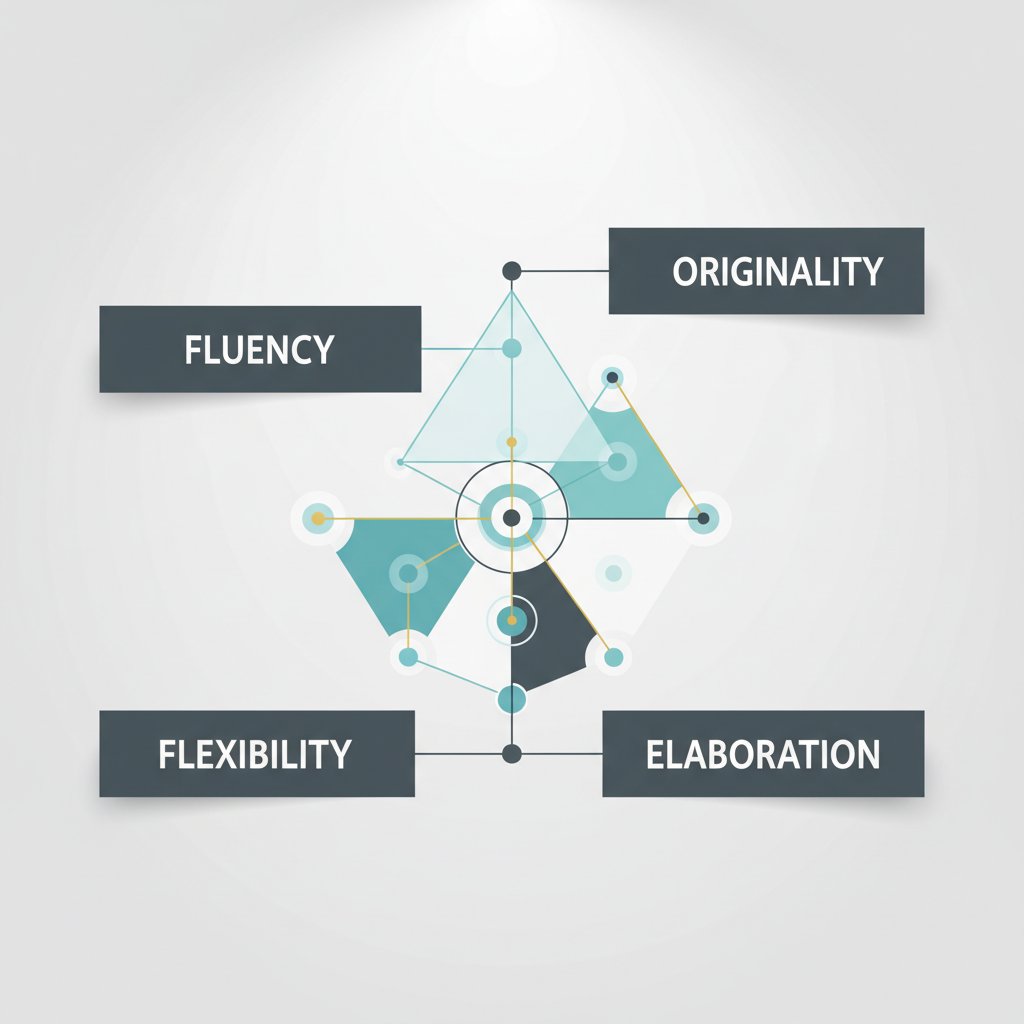
    The Torrance Tests of Creative Thinking (TTCT) are a leading example. Developed by E. Paul Torrance, they use different tasks that often involve divergent thinking. They ask you to come up with many ideas from one starting point.

    What They Reveal:

    • Fluency: How many ideas you can come up with.
    • Originality: How unique your ideas are.
    • Flexibility: How many different types of ideas you have.
    • Elaboration: How detailed your ideas are.

    These tests prove that creativity can be measured scientifically. They show that creativity has many different parts and is a skill that can be understood and developed. Our Creative Ability Test builds on this foundation. It offers a science-based test of your unique creative strengths. You get personal insights and real steps you can take to boost your creative potential.

    How Do General Psychology Tests Relate to Creativity?

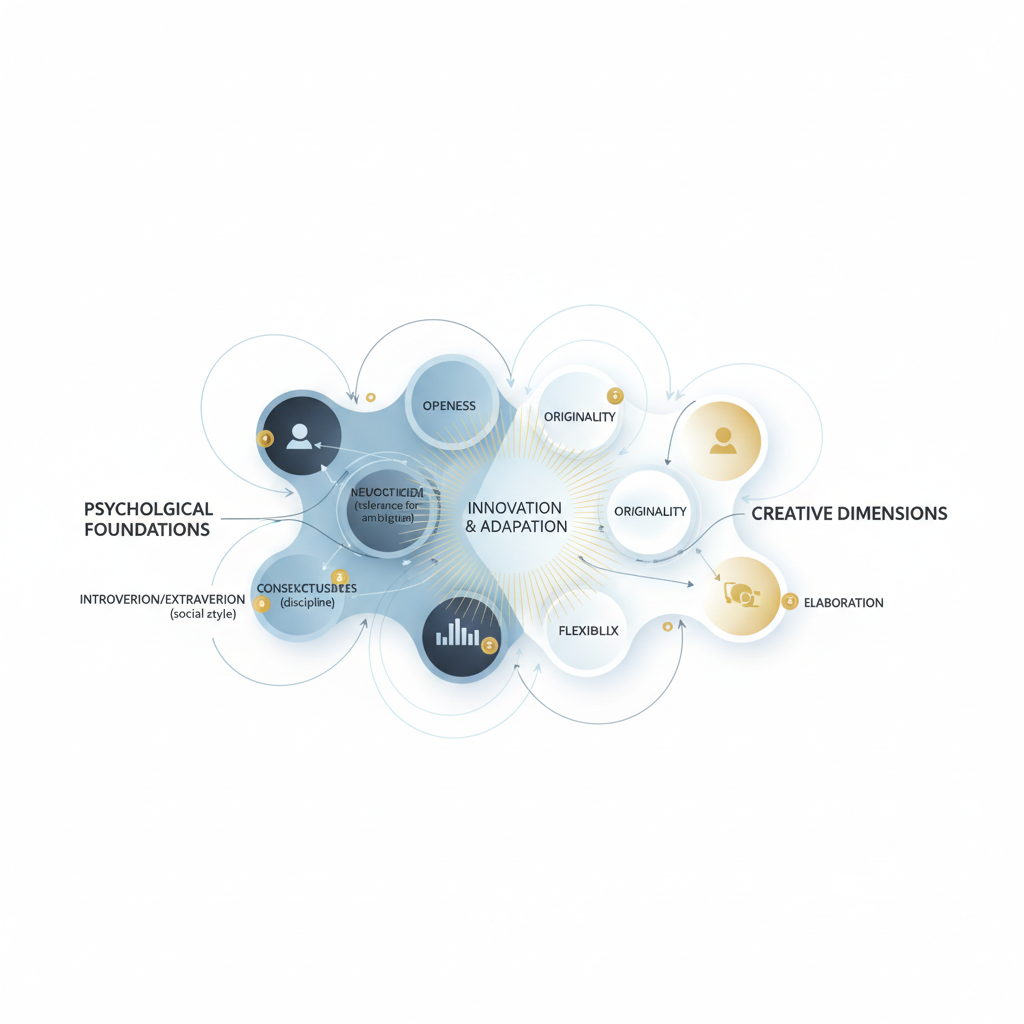
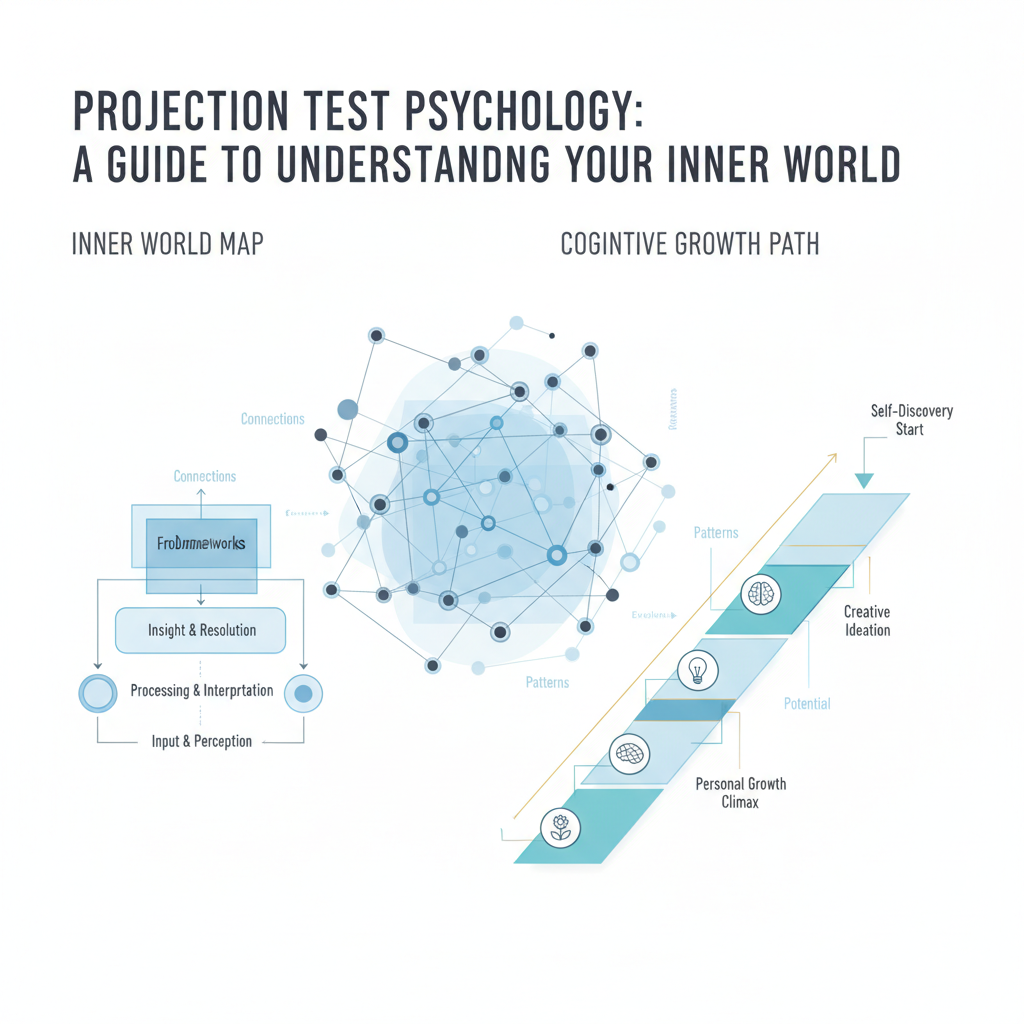
    Infographic showing a network diagram connecting abstract representations of general psychological foundations with creative dimensions, highlighting their interconnectedness and influence through subtle lines and an overlapping central area, in a minimalist vector style.
    Create a minimalist, vector-based infographic with soft blues, whites, charcoal, and gold accents. The infographic should depict a cognitive network diagram or an idea cluster illustrating the relationship between general psychological traits and creativity. Use clean geometric shapes, lines, and subtle gradients. Show a central overlapping area or interconnected nodes. One cluster represents ‘Psychological Foundations’ with abstract shapes, and another represents ‘Creative Dimensions’ also with abstract shapes. Connecting lines or subtle flows indicate their interrelation and influence. The layout should have ample negative space for implied labels or conceptual indicators, maintaining a professional and educational aesthetic suitable for understanding complex ideas.

    Uncovering Thinking Styles and Cognitive Flexibility

    While many popular psychological tests don’t measure creativity directly, they can give you useful hints. These tests show key parts of how you think. Understanding them is the first step to unlocking your creative potential.

    General psychology tests often show your thinking styles. They reveal how you process information and solve problems. Creative thinking depends on certain mental strengths.

    One key strength is cognitive flexibility. This is your ability to switch between different ways of thinking. It helps you see things from many angles. Flexible thinkers can adapt easily to new challenges. This skill is vital for coming up with new ideas.

    Tests can also hint at your divergent thinking skills. This is the ability to come up with many different ideas. For example, some tests show how well you connect ideas. Problem-solving tasks show if you look for creative solutions. This gives you a starting point.

    Key mental traits linked to creativity include:

    • Cognitive Flexibility: Easily switching between different ideas.
    • Problem-Solving Skills: Finding new solutions to problems.
    • Pattern Recognition: Seeing connections others might miss.
    • Idea Generation: Coming up with many different ideas.

    These general tests help you understand your basic mental skills. But a special test, like the Creative Ability Test, goes deeper. It measures how your thinking style leads to creative results. It also gives you personal tips to use your mental strengths for innovation.

    Connecting Personality Traits to Creative Potential

    Your personality plays a big part in your creative journey. Many psychological tests, especially for personality, can show this connection. They reveal natural tendencies that can help or hurt your creativity.

    The “Big Five” personality traits are very helpful. Among them, “Openness to Experience” is a great sign of creativity [4]. People high in openness are often:

    • Curious about the world.
    • Imaginative and artistic.
    • Intellectually adventurous.
    • Willing to try new things.
    • Open to unconventional ideas.

    These traits are the building blocks of creative thinking. They encourage you to explore and create. But other traits help, too. For example, being conscientious helps people finish projects and turn ideas into reality. Introversion can lead to deep, focused thought, while extraversion can help with group brainstorming. Both paths can lead to creativity.

    Knowing this helps you understand yourself better. It shows how your natural tendencies can help you be more creative. For instance, if you are a highly open person, you likely enjoy new experiences. This knowledge can help you.

    However, personality tests give a general picture. The Creative Ability Test builds on this by turning these ideas into useful advice. It helps you use your personal traits to improve your creative problem-solving and grow as a person. Your personality becomes a guide to creating new things.

    Ready to Explore Your Own Creative Potential?

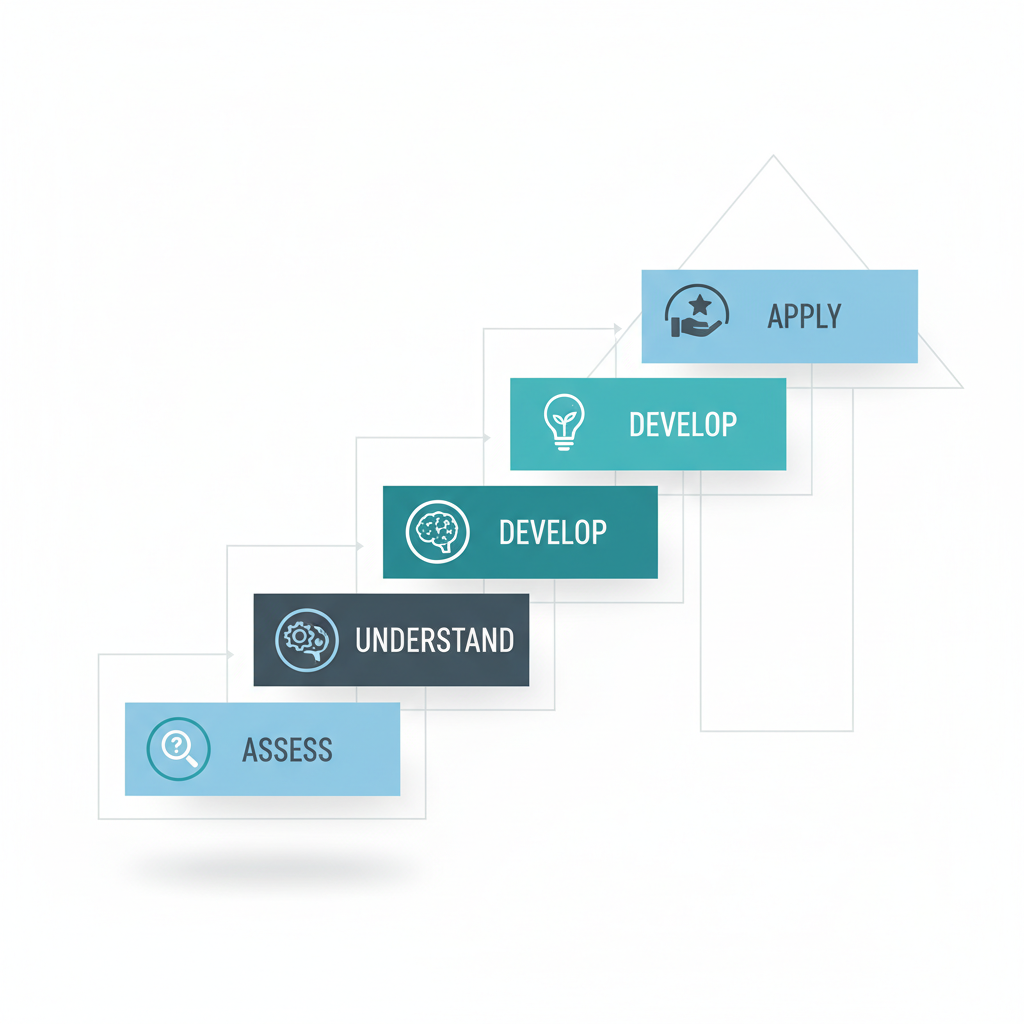
    Infographic illustrating a layered growth framework or a progressive pathway using geometric shapes. Each layer or step has an abstract icon representing stages like 'Assess,' 'Understand,' 'Develop,' and 'Apply,' symbolizing the journey to enhancing creative potential in a minimalist vector style.
    Design a clean, instructional infographic using a minimalist, vector-based style with soft blues, whites, charcoal, and teal accents. The visual should represent a clear progression or a layered framework for exploring and enhancing creative potential. Use a series of ascending or branching geometric shapes, like a staircase or a flow diagram with distinct steps. Each step or layer should have an abstract icon or a unique shape representing stages such as ‘Assess,’ ‘Understand,’ ‘Develop,’ and ‘Apply.’ The overall layout should convey growth and practical application, with clear visual hierarchy and ample negative space to guide the viewer, avoiding any human figures or cartoon elements.

    Introducing the Creative Ability Test

    You may have tried other personality tests. Now, it’s time to discover your creative side. The Creative Ability Test is a clear path to understanding yourself better. It’s a powerful, science-based test made just for you.

    Our test helps you measure, understand, and improve your creative skills. We believe everyone has a creative spark. The first step to using it is to understand it.

    This 30-question test is more than a simple quiz. It looks at the key parts of creativity, like your ability to think in new ways, solve problems, and stay open to new ideas. Our method is based on proven research, so you get reliable and useful advice [5].

    The Creative Ability Test is a personal journey. It helps you go from being unsure about your creative talents to knowing them clearly. This knowledge gives you clear steps for improvement. It’s a great tool for students, professionals, or anyone who wants to think more creatively.

    What Your Results Can Teach You

    Taking the Creative Ability Test gives you more than just a score. It’s like a map of your creative mind. Your personal report will highlight these key areas:

    • Your Creative Strengths: Find out where you shine. Are you great at brainstorming lots of ideas, or are you better at finding one-of-a-kind solutions?
    • Unique Thinking Styles: See how you naturally solve problems. Learn if you use divergent thinking (coming up with many options) or convergent thinking (finding the single best answer).
    • Cognitive Flexibility: Learn how easily you can change your point of view and adapt your thinking. This is key for handling tricky problems and sparking new ideas.
    • Problem-Solving Abilities: Get a clear picture of how you solve problems. You’ll learn to use creative thinking for challenges at work and in your daily life.
    • Openness to Experience: See how open you are to new ideas, experiences, and different ways of doing things. This is a big part of being creative.

    Your results give you practical steps you can take. For example, if you’re good at divergent thinking, you’ll get tips on how to brainstorm better. If you need to work on cognitive flexibility, you’ll get exercises to help you think in new ways.

    This process turns a vague idea of creativity into clear, useful advice just for you. You’ll go from feeling creative only some of the time to having a clear plan to improve. Our goal is to help you use your creative skills with confidence in all parts of your life, helping you grow personally and professionally.

    Frequently Asked Questions

    What are popular psychological tests for students?

    Students often take psychological tests to learn more about themselves, their learning styles, and possible career paths. These tests offer helpful insights for personal growth and success in school.

    Here are some popular types of tests that can help students:

    • Personality Inventories: Tools like the Big Five Personality Traits (often called OCEAN for Openness, Conscientiousness, Extraversion, Agreeableness, Neuroticism) help students understand their main personality traits. For example, being open to new experiences is closely tied to creative thinking and a desire to explore new ideas [6].
    • Career Aptitude Tests: These tests look at a student’s interests and skills to suggest good career options. They can show where a student’s natural talents, like creative problem-solving, could shine.
    • Learning Style Assessments: While the science behind some of these is debated, they aim to help students figure out how they learn best. Knowing your learning style can lead to better study habits and keep you more engaged.
    • Creativity Assessments: For students who want to be more innovative, tests like the Torrance Tests of Creative Thinking measure brainstorming skills. Understanding your creative strengths, like originality, helps you use them in your studies and future job. Our Creative Ability Test gives you specific details on these skills, helping you grow your creative talent.

    These tools give students specific, useful information about themselves. They offer a clear picture of their strengths and areas where they can improve.

    What are the 4 types of psychological tests?

    Psychological tests are grouped into types based on what they measure and how they work. Understanding these types helps to see what they are for and how they can be used.

    Here are four main types of psychological tests:

    • Personality Tests: These measure a person’s typical patterns of thinking, feeling, and acting. Examples include the Myers-Briggs Type Indicator (MBTI) and the Big Five Personality Traits. They help show how a person interacts with the world. Traits like openness to experience are good signs of creative talent.
    • Intelligence/Ability Tests: These are made to measure thinking skills and intellectual potential. The Wechsler Adult Intelligence Scale (WAIS) is a famous example. These tests can show how well someone can think flexibly and solve problems, which are key parts of creativity.
    • Aptitude Tests: These tests predict how well a person might learn a new skill in the future. They measure natural talents for certain tasks. For instance, a test might show a natural strength in language or spatial skills, which can both support creativity.
    • Projective Tests: Unlike tests with clear right or wrong answers, these use vague images, like inkblots (Rorschach Test) or pictures (Thematic Apperception Test). The idea is that people reveal their hidden thoughts and feelings in their answers. While experts often debate how reliable they are, these tests aim to uncover deeper emotions.

    Each type gives you a different way to look at your mind. If you’re interested in creativity, seeing these different tests shows how many parts of your mind work together to make you innovative.

    Are there fun psychological tests to do on friends?

    Absolutely! There are many fun and casual “psychological” quizzes you can do with friends. They are great for starting conversations and helping you think about yourselves in a relaxed way.

    Here are a few ideas for fun, informal activities:

    • Personality Quizzes: Many online quizzes based on pop culture or simple psychology ideas can be a lot of fun. They might tell you “Which Disney character are you?” or “What’s your spirit animal?” These are great icebreakers.
    • “Would You Rather” Scenarios: Giving friends tough choices can show what they value, what’s important to them, and how they solve problems.
    • Quick Creative Challenges: Ask friends to draw something from a simple idea, or brainstorm as many uses for a common object as they can. This gives you a peek at how creative they are on the spot.
    • Simplified “Lie Detector” Games: Asking basic questions and watching reactions can be a fun way to interact. Just remember, these games are only for entertainment.

    While these activities are great for bonding, it’s important to know they aren’t scientific. They don’t offer the reliable, deep insights that come from real, validated assessments. For true self-discovery and real steps to boost your creativity, platforms like Creative Ability Test offer a trusted approach based on science. We help you use your creativity to solve problems and create new things.


    Sources

    1. https://www.apa.org/pubs/glossary/validity
    2. https://www.myersbriggs.org/my-mbti-personality-type/mbti-basics/
    3. https://psycnet.apa.org/record/2013-09415-001
    4. https://psycnet.apa.org/record/2009-08246-003
    5. https://www.frontiersin.org/articles/10.3389/fpsyg.2017.02100/full
    6. https://psycnet.apa.org/record/2012-07302-001
  • Psychological Tests in Education: A Complete Guide to Understanding Student Potential

    Psychological Tests in Education: A Complete Guide to Understanding Student Potential

    A psychological test in education is a standardized instrument designed to measure a student’s cognitive abilities, personality traits, interests, or other psychological attributes relevant to learning. These assessments provide objective insights that help educators and parents understand a student’s unique profile, identify learning needs, and support their academic and personal growth.

    In education, we often focus on grades and test scores. While these numbers are useful, they don’t tell the whole story about a student’s potential, unique way of thinking, or natural creativity. Imagine if we could look deeper to understand how a student learns best, what truly motivates them, and where their hidden talents lie. This is exactly what psychological tests in education are for. They offer a clearer view of a person’s individual abilities.

    This article is your guide to the different kinds of psychological tests used in educational settings. We will explore tests for cognitive skills, personality, and creative thinking. These are more than just diagnostic tools; they are science-backed methods for discovering a student’s true potential, guiding their learning, and helping them grow. By explaining these tests in simple terms, we’ll show how they offer useful information for both educators and students.

    Knowing your strengths is one thing, but using that information to grow is what truly matters. Whether you’re a student curious about your learning style, a professional looking for creative solutions, or just interested in the psychology of learning, this guide can help. Let’s start with a basic question: what exactly are psychological tests in education, and what are their goals?

    What Are Psychological Tests in Education?

    The Goal: Moving Beyond Grades and Standardized Scores

    Grades and test scores show what a student knows, but they don’t tell the whole story. They often miss the bigger picture of a person’s potential. Psychological tests in education aim to go deeper by uncovering strengths, thinking styles, and unique talents. These insights provide a clearer view of someone’s abilities beyond simple academic performance.

    Psychological assessments offer a more complete picture. They help you understand how you learn best and reveal your natural creative potential. This includes measuring skills like flexible thinking, coming up with new ideas, and solving problems. These abilities are essential for success in a changing world.

    The main goal is to empower you with self-knowledge. This helps you guide your own learning and support your personal growth. By understanding “how” you think, not just “what” you know, you can unlock new possibilities. This approach encourages a mindset of lifelong learning and innovation.

    How Assessments Support Individual Learning and Growth

    Psychological assessments are powerful tools for personal growth. They offer personalized insights that show you how you learn and think. Think of them as a map of your mind that helps you find the best ways to learn and develop new skills.

    • Uncovering Unique Strengths: Assessments show you what you’re naturally good at. This could be analytical skills, emotional intelligence, or creative thinking. For example, a test might show you have a talent for coming up with new ideas or seeing connections others miss.
    • Understanding Learning Styles: Find out how you process information best. Some people are visual learners, while others prefer hands-on experience or logical thinking. Knowing your style helps you study more effectively [1].
    • Identifying Growth Areas: Assessments show you which skills you can develop further. This isn’t about weakness—it’s about opportunity. For instance, learning about your mental shortcuts can help you make better decisions.
    • Boosting Confidence and Self-Awareness: Understanding your mind builds confidence. You learn to appreciate your unique talents and see how your thinking style affects your relationships. This leads to a stronger sense of who you are.
    • Guiding Future Pathways: Test results can point you toward fitting career paths based on your strengths and interests. For creative people, understanding how you generate ideas can open doors to exciting and innovative fields.
    • Fostering Personal Development: The insights from these tests give you practical steps for growth. You can learn to think more flexibly, become a better problem-solver, and use your creative skills in daily life.

    This process encourages self-reflection and turns uncertainty into clear self-awareness. At Creative Ability Test, our science-backed assessments help you discover your unique creative potential. We provide personalized feedback and practical strategies to boost your creativity for personal and professional growth.

    What are the Types of Psychological Test in Education?

    A conceptual diagram illustrating various categories and sub-types of psychological tests used in educational settings.
    An abstract, educational visualization of a cognitive network diagram or idea cluster, categorizing different types of psychological tests used in education. The main central node represents ‘Psychological Tests’ branching out into 3-4 primary categories, each further subdividing into 2-3 examples. Use clean, geometric shapes connected by subtle lines, representing connections and hierarchy. The style is minimalist, vector-based, professional, and approachable. Color palette: soft blues, whites, charcoal, with gold or teal accents for clarity. Ensure ample negative space for implied labels. No text on the image, only conceptual representation. No humans, no photographs, no cartoon elements.

    Intelligence and Aptitude Tests

    These tests measure a student’s learning potential. They assess cognitive abilities, not what a student already knows. In short, they help predict how well a student might do with new tasks or information. For instance, an intelligence test might look at logical reasoning or problem-solving. Aptitude tests, on the other hand, focus on specific skills like understanding words or numbers.

    In school, these tests provide helpful information. They can find students who might do well in advanced classes. They also show where a student might need extra help. Knowing these basic strengths is key to creating a personal learning plan. It looks past grades to see a student’s natural thinking skills.

    Personality and Interest Inventories

    These tools look at a student’s unique personality, likes, and what drives them. Personality inventories check for consistent patterns in how a student acts, thinks, and feels. They help students understand themselves better. For example, some students do best in groups, while others prefer to work alone. Interest inventories find what a student enjoys, such as hobbies, school subjects, or possible careers.

    Learning about yourself is powerful. It helps students match their school choices with their natural interests. This way, they can find subjects and activities they truly enjoy, which leads to more engagement and motivation. Understanding one’s personality and interests also helps with career planning. It helps students find fields where they are likely to feel happy and do well. It can also point them toward environments that support their own ways of being creative and solving problems.

    Achievement Tests

    Achievement tests measure what a student has already learned. They check how well a student knows a subject or skill. Unlike aptitude tests, they focus on the past, not the future. These tests are based on what students are expected to learn in school. Examples include state tests in math, reading, or science. Quizzes and final exams are also achievement tests.

    Teachers use achievement tests to check a student’s progress. They help find areas where students may be having trouble, which allows teachers to change how they teach. While these tests are important for tracking school performance, they don’t show a student’s full potential. They give a picture of what a student knows right now but don’t always show new ideas or creative ways of solving problems.

    Creativity and Divergent Thinking Assessments

    These tests measure a student’s ability to come up with new and useful ideas. They look at different parts of a person’s creative skill. This includes divergent thinking, which means finding many different answers to one problem. They also check for flexible and original thinking. For example, a student might be asked to list all the ways to use a simple object. Their answers would be checked for how many they came up with and how unique they are.

    These tests are becoming more important. Creativity is now seen as a key skill for success today [2]. Knowing a student’s creative strengths helps encourage new ideas. It also improves problem-solving skills. These tests show how students handle challenges and think in new ways. The Creative Ability Test is one example of a science-based tool. It gives you personal feedback on your unique creative skills. This helps you understand yourself better and gives you clear steps to take. You will learn ways to think more flexibly and come up with new ideas. This helps you use your creativity in the real world for both personal and professional growth.

    Behavioral and Clinical Screenings

    These tests look for challenges that could affect a student’s learning or well-being. They focus on emotional, social, or behavioral patterns. Examples include screenings for anxiety, depression, or attention-deficit/hyperactivity disorder (ADHD). They are not used to diagnose a condition. Instead, they show when a student might need to see a professional for more help.

    In schools, these screenings are key to supporting the whole student. They help teachers understand what each student needs. Finding issues early means students can get help sooner. This helps create a school environment where every student feels supported. In the end, these screenings make sure students get the help they need to do well in school and in life.

    What is the Importance of Psychological Test in Education?

    Why Are Psychological Tests Important in Education?

    Psychological tests are very important in education. They do more than just measure grades. Instead, they give us a deeper look at how a student thinks. These tests help teachers and students find unique strengths and areas that need improvement. This helps create a more personal learning plan for better results.

    It’s important to understand these tests. They help students find their hidden talents. They also help teachers create classrooms where every student can succeed. They show how each student is different, which helps in creating custom teaching methods. This is very helpful for building creativity and problem-solving skills.

    Identifying Individual Strengths and Learning Needs

    Psychological tests give a clear picture of how a student thinks. They show specific skills. For example, a test might show someone is great with words. Or, it could show they are good with images and space. This information is very useful.

    • Find Hidden Talents: These tests can find strengths that regular school tests miss. A student might not do well on standard tests but be very creative.
    • Pinpoint Areas for Growth: They also find specific learning challenges. This allows for focused help. For instance, a student who has trouble focusing can get help with specific strategies.
    • Create Personal Learning Plans: Teachers can change their teaching methods to fit how each student learns. This makes sure every student gets the support they need.

    For example, our Creative Ability Test finds specific creative strengths. It might show you are good at coming up with many ideas or thinking in flexible ways. When you know your strengths, you can use them. You can use them in school and in everyday life. Knowing yourself better helps you grow and do better [3].

    Guiding Academic and Career Planning

    Choosing a school path and future career can be hard. Psychological tests can make it clearer. They match a student’s natural skills with the right opportunities. This helps reduce doubt and build confidence.

    • Choose the Right Subjects: Tests help students pick classes that fit their skills and interests. A student who is good at logic might do well in science, tech, engineering, or math (STEM).
    • Explore Career Paths: They offer ideas for future jobs. For example, someone who is good with people might be a great counselor or teacher.
    • Find Creative Jobs: Tests like the Creative Ability Test can point to creative careers. If you are good at coming up with new ideas, jobs in design, business, or research could be a great fit.

    Knowing your creative skills opens up many options. It helps you see how your way of thinking can be used in different jobs. This way, you can make better choices about your education and career. This can lead to a more satisfying job and a happier life.

    Building Self-Awareness and Personal Growth

    Psychological tests do more than guide school and career choices—they also help you understand yourself. They help people learn more about who they are. This self-knowledge is key to personal growth.

    • Understand Your Thinking Style: You can learn how your mind works and how you solve problems. Do you prefer finding one correct answer, or are you better at exploring many different ideas?
    • Build Confidence: Knowing your strengths builds self-esteem. It helps you trust your own skills and encourages you to try new things.
    • Encourage Personal Growth: When you know how you think, you can focus on improving yourself. You can work on the skills you want to develop.

    Our Creative Ability Test highlights your specific creative traits. You learn about your ability to think flexibly, your openness to new things, and your knack for new ideas. This personal feedback helps you see what makes you uniquely creative. It helps you grow your creative skills for ongoing personal development.

    Creating Fair and Inclusive Classrooms

    Today’s classrooms aim to include everyone. This means meeting the needs of every single student. Psychological tests are great tools for reaching this goal. They help teachers create classrooms that are fair and work well for everyone.

    • Adapt Teaching Methods: Teachers can change how they teach to fit different learning styles. Some students learn best by seeing, while others learn by doing.
    • Provide the Right Support: Tests can spot learning disabilities or other special needs. This makes sure students get the help they need to succeed.
    • Value All Types of Creativity: When teachers know students’ creative strengths, they can encourage different kinds of innovation. One student may be a great artist, while another is a great storyteller. Both skills are important.

    By understanding each student’s profile, teachers can adjust their lessons. This makes learning easier to access and more interesting for everyone. This creates a classroom where every student feels seen and supported. As a result, all students can reach their full potential, including their creative talents. This helps make school a fairer experience for all.

    Can You Provide a Psychological Test in Education Example?

    Scenario 1: A Cognitive Abilities Test in Action

    Psychological tests can provide useful information. For example, a cognitive abilities test shows how a student learns best. These tests measure different mental skills, not just the ability to memorize facts. Instead, they look at reasoning, problem-solving, and how quickly someone processes information.

    Consider Alex, a seventh-grader who is struggling with math. A cognitive test might show that he has strong verbal skills but is slower at processing visual information. This is a powerful insight.

    With this information, Alex’s teachers and parents can change their approach. They can provide more spoken explanations and use fewer complex diagrams in his homework. This tailored support helps him engage more and understand better. The focus shifts from “what’s wrong” to “how can we best help this student.”

    Scenario 2: Using an Interest Inventory for Career Guidance

    An interest inventory helps students explore possible careers. It reveals their preferences, passions, and values. This type of test is not about right or wrong answers; it is about self-discovery.

    Imagine Maria, a high school student who is unsure about her future. After she takes an interest inventory, the results show a strong interest in helping others and creative problem-solving. The test suggests careers like social work, teaching, or creative entrepreneurship.

    This information empowers Maria. She can now research these fields and look for internships or mentors. The inventory acts as a compass, guiding her to careers that match her interests. As a result, she feels more confident about her choices.

    Scenario 3: Assessing Creative Potential for Innovation Skills

    Understanding creativity is key to future success. It is more than just artistic talent. Creativity includes mental flexibility, coming up with many new ideas (divergent thinking), and finding unique ways to solve problems. A psychological test can measure these important skills.

    Let’s look at Ben, a university student who wants a career in technology. He takes a test that measures his creative thinking. The test might look at his ability to brainstorm ideas and connect concepts that seem unrelated.

    His results show high scores in originality and being open to new experiences. However, they also show he could improve at developing his initial ideas. This feedback gives him clear steps to take.

    Ben can now focus on specific actions:

    • Practicing brainstorming techniques.
    • Joining design thinking workshops.
    • Asking for different viewpoints on his projects.

    Developing creative skills directly helps innovation. Companies want employees who can think creatively and solve difficult problems [4]. Finding and supporting creativity gives students a major advantage. It helps them move from just learning ideas to creating real solutions. They learn to use their creativity in real-life situations.

    Our Creative Ability Test offers this kind of insight. It provides a science-based look at your unique creative strengths, including skills like cognitive flexibility and openness to experience. You will receive personalized feedback and practical tips to improve your creativity. This test helps turn uncertainty into clear self-awareness. It guides you on a path to grow your creative skills for personal and professional success.

    How Can You Apply These Insights for Growth?

    An infographic showing a layered progression for applying psychological test insights to achieve personal growth and enhanced potential.
    An abstract, educational visualization depicting a layered system showing growth and the application of psychological insights for personal and creative development. The image features a series of ascending or expanding geometric layers or steps, starting from a foundational ‘Assessment Insight’ layer, progressing through ‘Understanding Strengths,’ ‘Targeted Development,’ and culminating in an ‘Enhanced Potential’ layer. Each layer is distinct but connected, suggesting progression. The style is minimalist, vector-based, professional, and approachable, using clean geometric shapes with subtle gradients and accent highlights in gold or teal. Dominant colors are soft blues, whites, and charcoal. No text on the image, focusing purely on conceptual visual flow. No humans, no photographs, no cartoon elements.

    Turning Test Results into Actionable Strategies

    Psychological tests are like a mirror. They show your unique skills and potential. But getting your results is only the first step. The real value comes from using what you learn to grow, both personally and professionally.

    Understanding your creative profile is a key first step. It helps you turn curiosity into action. These tests pinpoint your creative strengths and show you where you can grow.

    Understanding Your Creative Thinking Styles

    Your results show your different thinking styles. For example, some people are great at divergent thinking, which is all about coming up with many different ideas. Others are better at convergent thinking, which means turning those ideas into real solutions [5]. Both are essential for innovation. Knowing your main style helps you solve problems more effectively.

    Think about what you’ve learned. You might find you have a natural talent for originality. Maybe you’re good at adding details to ideas. Or perhaps your strength is cognitive flexibility, which lets you see things from different angles easily.

    Practical Steps for Creative Growth

    Turning these insights into growth takes a clear plan. Here are practical ways to boost your creative skills:

    • Use Your Strengths: Focus on tasks that match your natural creative talents. For example, if you’re good at originality, join brainstorming sessions to come up with new ideas.
    • Work on Weaker Areas: Find specific skills you can improve. If cognitive flexibility is an area for growth, try exercises like mind mapping or finding new solutions to daily problems.
    • Set Clear, Realistic Goals: Break down your growth plan into small steps. For example, challenge yourself to come up with one new idea a day. Practice creative problem-solving each week.
    • Try New Techniques: Do creative exercises regularly. You could try SCAMPER, lateral thinking puzzles, or design thinking challenges. Regular practice helps your brain form new creative habits [6].
    • Seek Out New Experiences: Step out of your comfort zone. Learn a new skill, travel somewhere new, or talk to people from different backgrounds. New experiences give you fresh perspectives and spark creativity.
    • Reflect and Adjust: Check in on your progress regularly. Ask yourself what’s working and what isn’t. Change your approach as you go. This cycle of learning and adjusting is the key to long-term growth.

    By following these steps, you can turn self-awareness into real improvement. You create a clear plan to grow your creative skills.

    Discover Your Creative Potential with the Creative Ability Test

    The Creative Ability Test offers a unique chance to unlock and understand your natural creativity. This science-based test goes beyond vague ideas about creativity. It gives you clear, personal insights.

    Our platform helps you measure and improve your creative strengths. You’ll better understand your cognitive flexibility, problem-solving skills, and openness to new experiences.

    A Scientifically Grounded Approach

    The Creative Ability Test is a 30-question assessment based on solid psychological research. It accurately measures different parts of your creativity. This ensures your results are reliable and accurate. We give you evidence-based insights into how you think creatively.

    Personalized Insights for Every User

    Everyone’s creative journey is different. That’s why we offer personalized feedback. Your results show your specific creative strengths and point out areas where you can grow. You get feedback that is tailored to you and easy to understand. We avoid jargon and technical language, making complex ideas easy for anyone to grasp.

    Actionable Strategies for Growth

    We do more than just give you a test. We give you practical strategies to help your creativity grow. These tips are designed for the real world. They help you use creative thinking in your daily life. These strategies are useful for both personal growth and professional success.

    For example, you might get advice on how to improve your divergent thinking. Or you could get tips for improving your innovation skills. This advice helps you use creative solutions to solve problems. It turns knowledge into real skills.

    Empowering Your Journey of Self-Discovery

    The Creative Ability Test is more than a test. It’s a tool for self-improvement. It helps you move from being unsure to having a clear understanding of yourself. You’ll go from having creative moments to having a clear plan for growth. Our platform helps you use creativity to solve problems and create new things. Discover your full creative potential and start your journey of continuous growth with us.

    Frequently Asked Questions

    What are the main types of psychological tests used in schools?

    School psychological tests provide helpful information about a student’s unique strengths and needs. They look beyond grades to help teachers and parents understand a child better. Here are the main types:

    • Cognitive Ability Tests: These tests measure how a student thinks, learns, and solves problems. They look at reasoning skills and how a student processes information. This helps identify academic strengths and areas where a student might need extra support [7].
    • Achievement Tests: These tests focus on specific subjects to show what a student has learned. They measure skills in areas like reading, math, or science. This helps track academic progress and find any learning gaps.
    • Personality and Interest Inventories: These tools look at a student’s interests, motivations, and personal style. They can help with career planning and help students understand themselves better. This builds self-awareness and supports personal growth.
    • Creativity and Divergent Thinking Assessments: These tests measure a student’s ability to think outside the box and solve problems in new ways. They look at different parts of creativity, like fluency and flexibility. For example, the Creative Ability Test helps find a student’s natural creative skills.
    • Behavioral and Social-Emotional Screenings: These screenings help find challenges with a student’s emotional health or social skills. They can point out areas needing support, such as anxiety, attention, or social skills.

    Understanding these test types helps both students and educators. It provides a complete picture of a student’s abilities, going beyond just grades.

    Why are psychological assessments important for students?

    Psychological assessments offer many benefits for students beyond just scores. They are powerful tools for personal growth and school success. They also provide a clear plan for personalized support.

    Here are the key reasons these assessments are so important:

    • Identifying Individual Strengths: Assessments show what a student is good at. This builds confidence and helps them use their natural talents. For example, a creativity test can point out a student’s innovative thinking style.
    • Understanding Learning Needs: They find the exact areas where a student might struggle. This allows for specific help and personalized learning plans. Finding these needs early can prevent future problems in school.
    • Guiding Academic and Career Planning: By understanding how they think and what they like, students can make better choices about their future. This can mean picking the right classes or exploring career options. It helps them learn more about themselves.
    • Building Self-Awareness: Students get to know themselves better. They learn about their personality, how they like to learn, and their creative skills. This knowledge is key for personal growth.
    • Supporting Personalized Education: Teachers can change their teaching methods to fit the needs of different students. This makes learning more engaging and effective for everyone.
    • Enhancing Creative Potential: Tests like the Creative Ability Test highlight a student’s creative strengths. This helps them learn practical ways to improve their innovation and problem-solving skills, which are important for success in a changing world.

    In the end, these assessments help students move from being unsure about their skills to having a clear understanding of them. They turn a student’s potential into a clear plan for growth.

    Where can I find resources like a ‘psychological test in education pdf’?

    It’s important to find reliable resources for psychological tests in education. This ensures you get information that is based on solid research. When searching, look for these trusted sources:

    • Academic and Research Institutions: Many universities share their research from psychology or education departments. They often provide detailed reports or test samples as PDFs. Look for websites from well-known universities.
    • Professional Psychological Organizations: Groups like the American Psychological Association (APA) offer many resources. You can often find guidelines, research papers, and educational materials on their websites. [8]
    • Government Educational Departments: National or state education departments sometimes share testing information with the public. This can include rules, best practices, and examples of different tests.
    • Specialized Assessment Platforms: For certain topics like creativity, platforms like the Creative Ability Test offer detailed information. Our 30-question test measures different parts of creativity. It also provides personalized feedback and tips for growth.
    • Educational Psychology Journals: Academic journals publish expert-reviewed articles about how tests are made and used. They can be technical, but they are great sources for detailed information.

    Always choose sources that use methods backed by research. Be careful with unofficial websites. By sticking to trusted resources, you will get a clear understanding of these tests and how they are used in schools.


    Sources

    1. https://www.niu.edu/success-tips/learning-styles.shtml
    2. https://www.weforum.org/agenda/2016/01/the-10-skills-you-need-to-thrive-in-the-fourth-industrial-revolution/
    3. https://www.apa.org/education-career/guide/psychological-testing-assessment
    4. https://www.weforum.org/agenda/2023/05/future-of-jobs-2023-top-10-skills/
    5. https://positivepsychology.com/divergent-convergent-thinking/
    6. https://hbr.org/2019/04/how-to-train-your-brain-for-creativity
    7. https://www.apa.org/education-career/guide/tests
    8. https://www.apa.org

  • What Is an Objective Psychological Test? (Examples & Key Types)

    What Is an Objective Psychological Test? (Examples & Key Types)

    An objective psychological test is a standardized assessment used to measure an individual’s characteristics, such as personality or creativity, through a series of questions with fixed-response options (e.g., true/false, multiple-choice). Its scoring is free from the scorer’s personal judgment or bias, ensuring results are consistent, reliable, and quantifiable.

    Have you ever wondered how to measure your creative potential or personality? In a world that values new ideas, understanding how you think is more important than ever. This search for answers often leads to psychological assessments, but not all tests are the same. Here at Creative Ability Test, we use a scientific approach to help you gain a deeper understanding of yourself.

    This is where objective psychological tests come in. Unlike tests open to interpretation, an objective psychological test provides a clear, standard way to measure your thinking. It assesses everything from problem-solving skills and cognitive flexibility to creativity and openness to new experiences. These tests offer reliable, consistent data and give you useful insights, helping you identify your creative strengths and areas for growth.

    If you want to learn how these powerful assessment tools can help you build self-awareness and spark innovation, you’re in the right place. This article will explain what an objective psychological test is, cover its key features, and provide examples of how platforms like Creative Ability Test use this method. We’ll also clarify the difference between objective and projective personality tests, so you can better understand and use your results.

    What Is an Objective Psychological Test?

    Defining Objective Measurement in Psychology

    An objective psychological test is a clear, consistent way to measure how your mind works. Think of it as a ruler for your creative potential. It’s a standard method for looking at your traits and abilities. This means your results are not affected by the person giving or scoring the test. Instead, every test is scored using the same key.

    With objective measurement, everyone’s answers are scored the same way. Each response gets a clear, numerical score, which removes personal bias from the results. This makes sure the evaluation is fair for everyone. For example, a question might ask you to pick the best solution from a list. The “best” answer is already decided and isn’t up for debate.

    This method is key to understanding complex skills like creativity. It helps us pinpoint your specific creative strengths and unique ways of thinking. For instance, an objective test can measure your cognitive flexibility, which is how easily you switch between ideas. It can also assess your divergent thinking skills, or your ability to brainstorm many different solutions [1]. Both are key parts of being innovative and solving problems.

    Ultimately, objective tests turn abstract ideas about your mind into clear, useful information. They offer a reliable way to learn more about yourself. You get a clear picture of your abilities, including how you come up with ideas and tackle challenges.

    Why standardized scoring Matters

    Standardized scoring is a key part of any good objective psychological test. It ensures fairness and consistency for everyone who takes it. Imagine if your answers were scored differently from someone else’s. The results wouldn’t be very helpful, would they?

    With standardized scoring, every answer is graded using the same set of rules. This allows for reliable comparisons, so you can see how your results stack up against others. It also helps you track your own growth over time and watch your creative skills develop.

    Our Creative Ability Test is a good example. This 30-question assessment uses standardized scoring to give you accurate and reliable insights. Your personalized feedback is based on a consistent system that applies to everyone. This system is backed by solid research on creativity, so you get practical tips you can use right away.

    The benefits of standardized scoring are clear:

    • Fairness: Every individual’s results are treated equally.
    • Reliability: The test consistently measures what it’s supposed to measure.
    • Comparability: Your scores can be meaningfully compared to a larger group or your own past results.
    • Useful Advice: Clear data leads to personalized tips for growth.

    This consistency helps you understand your unique creative profile. It takes the guesswork out of self-improvement and gives you a clear path forward. You’ll discover specific ways to boost your creative potential, helping you grow both personally and professionally.

    What Are the Key Characteristics of an Objective Test?

    Infographic showing five key characteristics of an objective test: Standardized, Quantifiable, Reliable, Valid, and Objective Scoring, each represented by a geometric shape and icon.
    A clean, educational, vector-based infographic illustrating the key characteristics of an objective psychological test. Represent each characteristic as a distinct, professional geometric shape (e.g., a square or hexagon) with a subtle gradient, arranged around a central concept. Each shape contains a minimalist abstract icon representing a characteristic like ‘Standardized’, ‘Quantifiable’, ‘Reliable’, ‘Valid’, ‘Objective Scoring’. Use a color palette of soft blues, whites, charcoal, with gold or teal accents. Ensure ample negative space and clear visual hierarchy. No humans, no cartoon elements.

    Standardized Administration and Scoring

    What makes an objective test reliable is standardization. This means everyone takes the test under the same conditions, much like in a controlled experiment.

    First, the testing process is always the same. Instructions, time limits, and the testing environment are kept consistent for everyone. This consistency is key to fair results.

    Second, the scoring is standardized. Answers are checked against a set answer key, which removes any personal opinion or bias from the person scoring the test. As a result, the score is completely objective [2].

    This strict process ensures fairness and accuracy. It means your results on an assessment like the Creative Ability Test are dependable. They can also be compared to others’ results, giving you a clear comparison point for your creative potential. This provides a solid foundation for understanding your unique way of thinking.

    Fixed-Response Questions (e.g., Multiple Choice, True/False)

    A key feature of objective tests is their use of fixed-response questions. These questions give you a limited set of answers to choose from. Common types include:

    • Multiple Choice: You pick the best answer from several options.
    • True/False: You decide if a statement is correct.
    • Rating Scales: You show how much you agree with a statement on a scale (e.g., “strongly agree” to “strongly disagree”).

    This format makes scoring fast and simple because there is always a correct or expected answer. For example, to measure flexible thinking, a question might present a problem and ask you to pick the most unusual solution. These clear formats help accurately measure specific creative skills and can pinpoint your strengths in areas like divergent thinking or openness to experience.

    Empirically-Based Measurement

    Objective tests are built on evidence. The term “empirical” means something is based on observation, experimentation, and data. This means every part of the test is backed by scientific research.

    The questions are not random. They are carefully created and improved through detailed studies. Psychologists study how different answers relate to real-world behaviors or known creative skills [3]. This process makes sure the test measures what it claims to measure.

    How your score is understood is also based on data analysis. Because of this scientific foundation, your results from the Creative Ability Test are meaningful. They give you a data-based look at your creative strengths and opportunities for growth. As a result, you get personal feedback based on proven psychological principles. This helps you turn questions about your creativity into clear self-awareness and a plan for growth.

    What Are Examples of Objective Psychological Tests?

    Classic personality inventories (e.g., MMPI, Myers-Briggs)

    Objective psychological tests measure different sides of your personality. They give you a structured look at who you are. They use standard questions with clear answer choices. This makes scoring consistent for everyone.

    A well-known example is the Minnesota Multiphasic Personality Inventory (MMPI) [4]. This popular test helps identify personality traits and mental health challenges. It has hundreds of true/false questions. These questions help create a full picture of how a person thinks and feels. The MMPI provides a reliable assessment based on data.

    Another famous example is the Myers-Briggs Type Indicator (MBTI). This test explores your personal preferences. It sorts people into 16 personality types [5]. You answer a series of multiple-choice questions. Your answers show how you prefer to think, feel, and interact. While it’s a popular tool for self-discovery, experts debate its scientific accuracy. Still, its structured format is a clear example of an objective test.

    These tests offer a basic understanding of how people see the world. They can also hint at a natural tendency for creative thinking. Certain personality traits, like openness to experience, are often linked to higher creativity.

    aptitude and intelligence tests

    Objective tests are also great for measuring specific mental skills, like aptitude and intelligence. These tests measure your ability to learn and solve problems using standard tasks and questions. Also, they usually have clear right-or-wrong answers, which ensures objective scoring.

    Consider general intelligence tests, often called IQ tests [6]. These tests measure various mental skills, such as verbal comprehension, perceptual reasoning, and working memory. Similarly, aptitude tests measure your potential in a specific area. The Scholastic Assessment Test (SAT) is a good example. It measures skills needed for success in school [7].

    These tests are objective because the scoring is based on numbers and is the same for everyone. They provide a standard way to measure your mental strengths. A strong foundation in these areas can be a big help for creative work. For example, strong problem-solving skills are key to finding new solutions. Cognitive flexibility also lets you switch viewpoints easily, which is a key part of creative thinking.

    Modern Assessments: The Creative Ability Test

    New, specialized objective tests are now available. These tools focus on specific areas like creativity, giving you results you can act on. The Creative Ability Test is a top example. It uses an objective method to accurately measure your creative potential.

    Our platform offers a 30-question test based on science. This test uses a fixed-response format, which ensures scoring is consistent and unbiased. The Creative Ability Test carefully measures several key parts of creativity:

    • Cognitive Flexibility: Your ability to adapt your thinking.
    • Divergent Thinking: How well you generate multiple unique ideas.
    • Problem-Solving Skills: Your capacity to find innovative solutions.
    • Openness to New Experiences: Your willingness to explore novel concepts.

    The Creative Ability Test offers more than just scores. It turns uncertainty about your skills into self-knowledge you can use. You get personal feedback on your unique strengths. It also provides clear, practical tips to improve your creative thinking. This includes advice for encouraging new ideas and supporting your personal growth.

    This assessment helps you understand your creative strengths and gives you a roadmap for improvement. It helps you use your creativity in real-life situations. Whether for personal or professional growth, the insights are designed to be practical and helpful. Discovering your creative potential has never been easier or more based in science.

    Objective vs Projective Tests Psychology: What’s the Difference?

    Infographic contrasting objective and projective psychological tests, highlighting differences in structure, scoring, and response style using abstract geometric shapes.
    A minimalist, vector-based infographic illustrating the key differences between Objective and Projective Psychological Tests. The visual is divided into two clear sections: one for ‘Objective Tests’ and one for ‘Projective Tests’. Each section uses distinct but harmonizing abstract geometric shapes and subtle gradients to represent its characteristics (e.g., structured forms for objective, more fluid or open forms for projective). Use comparison markers or lines to highlight contrasting attributes like ‘Structured vs Unstructured’, ‘Quantitative vs Qualitative’, ‘Direct vs Indirect’. Employ a professional color palette of soft blues, whites, charcoal, with gold or teal accents. Maintain ample negative space. No humans, no cartoon elements.

    Understanding Subjective vs. Objective Data

    In psychology, all insights are built on data. To explore your creativity, it’s important to know the difference between subjective and objective data. This difference affects how test results are collected and understood.

    Subjective data is based on personal experience. It includes individual feelings, thoughts, and opinions. This information can change from one person to the next. For example, describing how you “feel” creative is subjective.

    Objective data, on the other hand, is factual and measurable. It is not easily influenced by personal feelings. This kind of data can be verified and counted. For instance, the number of unique ideas you come up with in a timed test is objective data. Objective tests are designed to reduce bias during scoring [8].

    When measuring creativity, objective data gives you clear, useful information. This helps you understand your creative strengths without having to guess.

    Response Format: Restricted vs. Open-Ended

    The type of question you answer changes the kind of data that is collected. This is a major difference between objective and projective tests.

    Restricted-response formats are common in objective tests. These questions give you a limited number of answers to choose from. Common examples include:

    • Multiple-choice questions
    • True/False statements
    • Rating scales (e.g., “strongly agree” to “strongly disagree”)

    This structure leads to consistent answers, which makes scoring simple and fair. The Creative Ability Test uses this format to measure parts of your creative thinking, like cognitive flexibility and problem-solving skills. This clear approach provides dependable results about your potential.

    In contrast, open-ended response formats are used in projective tests. These questions let you answer freely, with no pre-set choices. You might be asked to:

    • Describe what you see in an ambiguous image
    • Create a story from a picture
    • Complete an unfinished sentence

    This format allows for many different personal answers. As a result, the scoring depends on the expert’s training and judgment.

    Scoring and Interpretation

    The way tests are scored also shows how different they are. This affects the feedback you get on your creative skills.

    Objective tests use a standard scoring system. Your answers are compared against a set benchmark. This allows for scoring with numbers. The results are often numbers or categories that are easy to understand and compare. For example, the Creative Ability Test gives you clear scores for different creative skills, like divergent thinking. This makes it easy to see your results and get useful tips for improvement [9].

    Projective tests, on the other hand, are more complex to interpret. A trained expert, like a psychologist, reviews your answers. They look for themes, patterns, and emotional meaning. This process is subjective because it relies on the expert’s judgment. Because of this, two experts might see the same answers differently. The goal is to uncover hidden thoughts or feelings, not to get a simple measurement.

    Examples of Projective Tests

    The Creative Ability Test is an objective test, but it’s helpful to know about projective tests for context. They offer a different way to explore psychology.

    Here are some well-known examples of projective tests:

    • Rorschach Inkblot Test: In this famous test, you look at a series of inkblots and describe what you see [10]. Your answers are then studied to learn about your personality and emotions.
    • Thematic Apperception Test (TAT): In this test, you are shown several pictures and asked to create a story for each one. You describe what’s happening and what the people in the picture are thinking. The stories are then reviewed to understand your motivations and views [11].
    • Sentence Completion Tests: These tests give you the beginning of a sentence, and you finish it with the first thing you think of. For example, “My greatest fear is…” or “I feel happy when…” Your answers can give hints about your feelings, attitudes, and beliefs.

    These tests are useful tools for certain clinical needs. However, because they are subjective, they are not ideal for measuring creativity in a standard way. Objective tests like the Creative Ability Test offer a clearer path. They provide measurable, science-backed results to help you understand and grow your creative potential.

    How Can an Objective Test Reveal Your Creative Potential?

    Measuring Creative Traits with Precision

    You might wonder how a test can measure something as flexible as creativity. The answer is in the questions. Instead of relying on vague self-ratings, our Creative Ability Test pinpoints your specific creative skills.

    These tests use proven methods to explore different parts of your creative mind. We look at how you come up with new ideas and solve problems.

    For example, our 30-question test looks at key areas, such as:

    • Divergent Thinking: Your ability to produce many varied ideas from a single starting point [12].
    • Cognitive Flexibility: How easily you can switch between different concepts or problem-solving strategies.
    • Openness to Experience: Your willingness to explore new ideas, concepts, and unconventional approaches.
    • Problem-Solving Skills: Your unique methods for tackling complex situations creatively.

    By breaking creativity into these measurable parts, we get a clear picture of your skills. The test gives you reliable data to help you understand your unique creative profile, moving beyond guesswork.

    Gaining Actionable Insights into Your Strengths

    Measuring your creative skills is just the first step. The real value comes from what you learn about yourself. Our test provides a clear map of your creative abilities and shows you exactly where your strengths are.

    Imagine knowing your main thinking style. Are you great at brainstorming lots of ideas? Or are you better at improving existing ones? Knowing this is powerful. It lets you use your natural talents more effectively.

    The Creative Ability Test offers personalized feedback that highlights your unique creative strengths. It also explains what these strengths mean for you. For example, a high score in cognitive flexibility means you are likely good at adapting quickly and handling change. Understanding this can boost your confidence.

    You will learn about the specific areas where you shine. This might be in your approach to new ideas or your ability to connect different concepts. These insights are not just descriptions—they are tools for growth. They help you build on your natural talents and turn uncertainty into useful self-awareness.

    Using Your Results for Personal and Professional Growth

    Understanding your creative potential is powerful, but using what you learn leads to real growth. Our test gives you a starting point for your development and offers practical strategies to help you improve.

    For personal growth, your results can inspire you to try new things. You might discover a hidden talent for writing or find a new passion for solving daily problems. Your profile can help you overcome creative blocks, feel more confident exploring hobbies, and find new ways to express yourself.

    In your career, these insights are very useful. Creativity is a top skill employers want [13]. Knowing your creative strengths allows you to:

    • Innovate in Your Role: Apply creative thinking to existing processes or product development.
    • Improve Problem-Solving: Approach workplace challenges with a fresh, imaginative perspective.
    • Lead Creatively: Inspire your team to think outside the box and generate novel solutions.
    • Enhance Career Development: Identify roles where your creative style can truly thrive.

    The Creative Ability Test does more than just measure your skills. It gives you practical strategies based on your unique profile. These steps help you improve your creative thinking and problem-solving skills. We help you move from knowing your potential to actively using it for real-world growth.

    Frequently Asked Questions

    What are the 4 types of psychological tests?

    Psychological tests are useful tools for learning about people’s behavior and abilities. While many specialized tests exist, they generally fall into four main groups:

    • Personality Tests: These tests show your usual ways of thinking, feeling, and acting. They help you learn about your unique traits and how you connect with the world. The Creative Ability Test, for example, looks at personality traits linked to creative thinking.
    • Ability or Aptitude Tests: These tests measure your ability to learn or do specific tasks. They check skills like problem-solving or your way with words and numbers. For creativity, these might include tests that measure brainstorming skills or your potential for new ideas.
    • Intelligence Tests: Designed to measure general thinking skills, these tests look at reasoning, memory, and problem-solving. While not the same as creativity, strong thinking skills often support creative thought.
    • Interest Inventories: These tests help find out what activities and jobs you might enjoy. They can help with career decisions and show you where your creative side could shine.

    Each type of test offers different information. Together, they create a full picture of a person’s psychological profile.

    What is an example of an objective test question?

    An objective test question has a simple, fixed format. This means there is only one correct answer or a few choices to pick from. This setup makes scoring fair and consistent for everyone. The questions are designed to be clear and straightforward.

    Here is an example you might see on a personality or creativity test:

    • Statement: “I enjoy exploring multiple solutions to a single problem.”
    • Response Options:
      • Strongly Disagree
      • Disagree
      • Neutral
      • Agree
      • Strongly Agree

    This kind of question measures traits like flexible thinking, which is a key part of creativity. Your answer is then scored, giving you clear, useful feedback on your creative thinking style.

    How are objective and projective personality tests different?

    Objective and projective tests are two very different ways to assess personality. Knowing how they differ helps you see what makes each one useful.

    Objective tests, like the Creative Ability Test, use clear questions and a set scoring system. In contrast, projective tests use vague images or prompts that are open to interpretation.

    Feature Objective Personality Tests Projective Personality Tests
    Response Format Fixed-choice (e.g., True/False, Multiple Choice, Rating Scales) Open-ended (e.g., interpreting ambiguous images, completing stories)
    Scoring Standardized and clear; answers are easily counted, often by computer Based on interpretation and requires an expert’s judgment
    Interpretation Direct and based on data from large groups of people Indirect; looks for hidden thoughts and feelings
    Examples Creative Ability Test, MMPI, Big Five personality inventories Rorschach Inkblot Test, Thematic Apperception Test (TAT)
    Purpose Measures specific traits and gives you clear, useful feedback Explores deeper thoughts and can uncover hidden issues

    Objective tests are known to be reliable and accurate, which makes them great for self-discovery and planning personal growth [14]. Projective tests are often used by therapists to look into more complex issues.

    What is a benefit of an objective personality test?

    Objective personality tests have many benefits, especially if you want to understand and improve your creativity. They offer a clear, science-based way to learn about yourself and grow.

    Key advantages include:

    • Reliability and Validity: These tests are based on scientific research, so they are dependable and accurate. They consistently measure what they claim to measure, giving you results you can trust.
    • Standardized Scoring: Because the questions and scoring are set, these tests are fair and unbiased. Your results are compared to a large group of people, giving you an accurate picture of where you stand.
    • Actionable Insights: Objective tests give you clear data, not just interpretations. This data leads to useful, personal feedback. For example, the Creative Ability Test can show you your specific creative strengths and where you can improve.
    • Efficiency and Accessibility: These tests are usually quick and easy to take, and many are online. This makes it simple to get fast insights into your abilities.
    • Personalized Growth Strategies: The clear results help you understand your creative strengths. They also offer specific tips on how to build on them. This turns confusion into clear steps for self-improvement.

    Using a science-based objective test gives you a solid starting point for growth. It helps you turn what you learn into real progress.


    Sources

    1. https://psycnet.apa.org/record/2012-07502-001
    2. https://www.psychologytoday.com/us/basics/standardization
    3. https://www.apa.org/education-career/guide/science-psychology
    4. https://www.apa.org/pubs/books/minnesota-multiphasic-personality-inventory-mmpi-2-rf
    5. https://www.myersbriggs.org/my-mbti-personality-type/
    6. https://www.britannica.com/science/intelligence-test
    7. https://www.collegeboard.org/sat
    8. https://dictionary.apa.org/objective-test
    9. https://www.apa.org/topics/testing/psychological-tests
    10. https://www.britannica.com/science/Rorschach-Test
    11. https://www.psychologytoday.com/us/basics/thematic-apperception-test
    12. https://psycnet.apa.org/record/2012-04987-001
    13. https://www.weforum.org/agenda/2023/05/future-of-jobs-2023-top-skills/
    14. https://www.psychologytoday.com/us/basics/psychological-testing

  • Take the Creative Ability Assessment: Understand Your Strengths & Potential

    Take the Creative Ability Assessment: Understand Your Strengths & Potential

    Taking the Creative Ability Test involves answering a 30-question, scientifically-grounded assessment designed to measure your unique creative strengths. Upon completion, you receive a personalized report detailing your cognitive flexibility, problem-solving skills, and actionable strategies for growth.

    Do you ever wonder how creative you really are? Many people think creativity is a rare skill meant only for artists or inventors. But in today’s world, creativity is essential. It helps you innovate, solve problems, and grow in both your work and personal life. Creativity is how you handle new situations, come up with fresh ideas, and connect concepts in surprising ways.

    At Creative Ability Test, we believe that understanding your creative style is the first step to using your full potential. We offer a scientifically grounded assessment that helps explain how you think creatively. By taking our 30-question test, you will get a clear picture of your strengths and find areas for growth. You’ll also learn about the different dimensions of your personal creativity, all based on proven research.

    This article explains what makes the Creative Ability Assessment a unique tool for self-discovery. We will explore why understanding your cognitive flexibility, divergent thinking, and innovative problem-solving skills is so important. You’ll learn how the insights from our reports can help you use your creativity in practical, everyday situations. Get ready to turn uncertainty into clear self-awareness and apply your creative talents to all areas of your life.

    What is the Creative Ability Assessment?

    An abstract infographic showing interconnected nodes and clusters, representing the various components measured in a creative ability assessment.
    Abstract, educational infographic. A minimalist, vector-based cognitive network diagram or idea cluster, depicting the multifaceted nature of a creative ability assessment. Clean geometric shapes, subtle gradients, soft blues, whites, charcoal, with gold or teal accents. Ample negative space for short conceptual labels like “Divergent Thinking”, “Innovation Potential”. No humans, professional and approachable.

    Want to understand your unique creative spark? The Creative Ability Assessment is a science-backed tool designed to help you find your natural creative strengths. This 30-question online test looks at how you think creatively and gives you a clear picture of your potential.

    Our goal is to help you discover more about yourself. We show you how your mind comes up with new ideas and what your specific creative style is. You will also learn how you approach challenges and opportunities. This assessment is a simple path to understanding yourself better.

    The test looks at several parts of creativity. It measures your mental flexibility, which is how easily you switch between different ideas. It also checks your ability to brainstorm many unique solutions to a problem [1]. We also look at your openness to new experiences, as these are key parts of innovative thinking.

    Taking this assessment gives you clarity. You get personal insights into your creative profile, which helps you use your strengths and shows you areas where you can grow. As a result, you can improve your problem-solving skills and be more creative every day, both at work and in life.

    The Creative Ability Test uses proven methods based on research in psychology. This ensures your results are reliable and meaningful. You get practical strategies, not just scores. These tips are tailored to help you build your creative skills for both personal and professional growth.

    Why Should You Take This Assessment?

    Understand Your Unique Creative Profile

    You have a unique way of seeing the world. The Creative Ability Assessment helps you discover it. This isn’t a simple “creative or not” test. Instead, our 30-question assessment explores the different parts of your personal creative style.

    When you take this assessment, you’ll get a clearer picture of:

    • Your natural strengths: Discover where your creative talents are.
    • Your thinking style: Learn if you’re better at coming up with many ideas (divergent thinking) or narrowing them down (convergent thinking).
    • Cognitive flexibility: Find out how easily you can switch viewpoints and adapt to new challenges.
    • Openness to new experiences: See how curiosity fuels your creativity.

    This deeper self-knowledge is powerful. It helps you recognize and value your own unique way of thinking.

    Gain Actionable Insights for Growth

    Getting your results is just the beginning. Our platform offers more than just scores. We provide personalized feedback designed to help you grow your creative skills.

    The insights you receive are:

    • Tailored to you: Based on your results, you get recommendations made just for you.
    • Clear and practical: We break down complex psychological concepts into simple, practical advice.
    • Growth-oriented: You’ll find practical steps to improve your creative thinking in your daily life.
    • Empowering: Learn how to use your strengths and work on areas where you can grow.

    For example, if your results show you’re great at divergent thinking, your report might suggest brainstorming techniques to make that skill even stronger. On the other hand, if you could improve your cognitive flexibility, we might suggest exercises to help you practice changing your viewpoint. These are more than just tips—they are practical steps to help you grow.

    Enhance Problem-Solving Skills

    Creativity is more than just making art. It’s a powerful tool for effective problem-solving. In today’s fast-changing world, the ability to come up with new solutions is a valuable skill.

    Taking this assessment helps you improve your problem-solving skills by:

    • Helping you think in new ways: You’ll learn to approach challenges from different angles.
    • Improving idea generation: Build your ability to use divergent thinking to come up with more solutions.
    • Strengthening your judgment: Understand how to use convergent thinking to pick the best ideas.
    • Boosting adaptability: Your improved cognitive flexibility will help you change your approach when you run into problems.

    In fact, global leaders often call creativity a critical skill for dealing with today’s business challenges [2]. This assessment gives you the mindset and tools to turn challenges into opportunities, whether you’re working on a tough project or a personal problem.

    Boost Your Professional and Personal Development

    Investing in your creativity pays off in big ways. Your career and personal life can improve when you understand and develop your creative skills.

    In your career, this assessment can help you:

    • Advance your career: Creativity is a top skill that employers are looking for [3].
    • Drive innovation: You’ll bring fresh ideas and solutions to your team.
    • Improve your leadership potential: Creative thinkers often inspire others and lead the way to growth.
    • Increase your adaptability: Handle change with confidence and new ideas.

    In your personal life, understanding your creativity helps you to:

    • Express yourself: Find new ways to feel fulfilled and find joy.
    • Build confidence: See your unique value and what you can achieve.
    • Improve daily life: Approach everyday situations in a more imaginative and positive way.

    Unlock your creative potential. Experience personal and professional growth.

    How Does the Assessment Work?

    An abstract infographic illustrating the sequential steps of an assessment process using geometric shapes and arrows.
    Abstract, educational infographic. A minimalist, vector-based stepwise process diagram or a linear milestone progression. Clean geometric shapes and arrows illustrate the flow of the assessment. Soft blues, whites, charcoal, with gold or teal accents. Negative space for short labels such as “Initiate”, “Engage”, “Analyze”, “Discover”. No humans, professional and approachable.

    Step 1: The 30-Question Journey

    Start with our 30-question assessment to discover your creative strengths. This quick online test is engaging and insightful. It is designed to explore your creative style by looking at how you solve problems and come up with new ideas.

    The questions use different scenarios to show your natural creative instincts. Your answers help us see how you think. This short test gives us the information we need to understand your potential to create and grow.

    Step 2: Our Science-Backed Methodology

    Our assessment is based on solid scientific research, not just a simple quiz. It uses proven ideas from cognitive psychology [4] and the latest studies on creativity.

    We measure key creative dimensions like divergent thinking. That’s your ability to come up with many different ideas from one starting point [5]. We also look at your cognitive flexibility, which is how easily you can switch between different ideas or ways of thinking [6].

    Every question is carefully tested to make sure it accurately measures a specific creative skill. This means you get results you can trust. Our science-backed approach helps you discover your full creative potential.

    Step 3: Your Personalized Results Report

    After you finish the assessment, you’ll get a detailed, personal report. It’s more than just a score—it’s your guide to understanding how you think. You’ll see a clear picture of your creative profile and core strengths.

    Your report explains what each creative skill means for you. You’ll learn about your thinking style and how open you are to new things. It also points out specific areas where you have the potential to grow.

    Best of all, your report gives you practical tips to boost your creativity. These are simple exercises and ideas you can use right away for your work projects or personal growth. This report is your roadmap to becoming more creative, turning self-awareness into real results.

    What Creative Traits Does the Assessment Measure?

    An abstract infographic depicting a competency chart or graph, detailing various creative traits measured by an assessment.
    Abstract, educational infographic. A minimalist, vector-based creative skill assessment chart or a competency graph, visually breaking down traits. Clean, structured layout with geometric shapes and subtle gradients. Soft blues, whites, charcoal, with gold or teal accents. Negative space for labels like “Fluency”, “Originality”, “Flexibility”, “Elaboration”. No humans, professional and approachable.

    Divergent & Convergent Thinking

    People often think creativity is just about “having ideas.” But it’s really about two different, important ways of thinking. The Creative Ability Assessment helps you understand your balance of both.

    Divergent thinking means coming up with lots of different ideas. It’s like brainstorming, where you explore many possibilities. This way of thinking helps you move past the usual solutions. The goal is to have many different kinds of ideas.

    Convergent thinking is the opposite. It’s about choosing the best idea from all your options. You narrow down your choices to find the one that works. This process helps you turn a good idea into a great solution.

    Our assessment shows you which style comes more naturally to you. Are you great at creating new ideas? Or are you better at turning those ideas into practical solutions? Knowing your balance is the first step to becoming more creative. You need both skills to truly innovate [7].

    You’ll discover how to use your strengths and improve your weaker style. This will help you solve problems more effectively in any situation.

    Cognitive Flexibility

    Cognitive flexibility is a key part of creative thinking. It’s your ability to change how you think and easily switch perspectives. This skill allows you to look at a problem from many different angles.

    This skill helps you adapt when you get new information. It also lets you switch between different tasks or plans easily. For example, someone with this skill can quickly change their marketing plan based on new customer feedback. They use new data instead of resisting it.

    Our assessment measures your cognitive flexibility. It shows how easily you let go of old ideas and accept new ones. People with high cognitive flexibility are more resilient. They adapt well in fast-changing situations.

    Improving this skill helps you create new things. It makes you a more flexible thinker. We’ll give you practical tips to build this skill. This will help you find creative solutions more often.

    Openness to New Experiences

    Openness to new experiences is an important personality trait for creativity [8]. It’s about being curious and willing to explore new ideas, values, and feelings.

    People who are open to new experiences are often very imaginative. They enjoy trying new things and learning. They aren’t afraid to question how things are done. They also seek out different points of view, which makes them natural innovators.

    Our Creative Ability Assessment measures your level of openness. It shows how comfortable you are with uncertainty and how much you enjoy variety. Knowing this is important for both your personal and professional life.

    Understanding your openness can help you find experiences that spark your creativity. We provide personalized tips to encourage you to try new things and expand your mind. This will help you unlock your natural creative talent.

    Innovative Problem-Solving Approaches

    Creativity is about solving problems. Innovative problem-solving means finding new and effective solutions to challenges. It’s more than just coming up with ideas.

    This skill combines divergent and convergent thinking with cognitive flexibility. It also uses your openness to new ideas. Our assessment looks at how you use these skills together. It shows your unique way of handling difficult problems.

    You’ll get a clear picture of how you like to work. Do you start by exploring many ideas? Or do you prefer to focus on a few and make them better? Knowing this helps you improve your creative process. You’ll be able to innovate more effectively.

    The personalized report from your Creative Ability Test is very useful. It shows your strengths in real-world situations and gives you practical advice. You’ll learn how to use your creative skills to solve everyday problems. This helps you bring new ideas to your work and life. Take the assessment today to discover these valuable insights.

    Ready to Discover Your Creative Potential?

    Do you want to explore your creative side? Maybe you feel you have ideas waiting to come out. The Creative Ability Assessment can help you unlock your potential.

    This science-backed, 30-question test offers deep insights into your mind. It helps you find your unique creative strengths. You will also understand your personal thinking style.

    Start Your Journey of Self-Discovery

    This test is more than just a quiz. It’s a big step in understanding yourself. You’ll get a clear picture of your creative talents. This helps you build on your skills in the best way.

    • Find Your Strengths: See where you are most creative.
    • Know Your Thinking Style: Learn how you solve problems and come up with ideas.
    • Get Actionable Tips: Receive custom advice to boost your creativity every day.
    • Improve Problem-Solving: Use what you learn to solve challenges at home and work.
    • Encourage Personal Growth: Connect more deeply with your creative side.

    Everyone has creative potential. Our test is designed to find yours and give you a starting point for growth. For example, knowing your score for divergent thinking can help you brainstorm better. This skill is important for many jobs [9].

    Ready to Take the Next Step?

    Your journey to more creativity begins now. Don’t let your creative talent go unused. Try our evidence-based test today. It’s a chance to grow and improve in a real way.

    Find out how your mental flexibility can lead to new solutions. See how being open to new things gives you fresh ideas. Take the Creative Ability Assessment and start changing your creative life.

    Frequently Asked Questions

    What is the meaning of this creative assessment?

    This Creative Ability Assessment is your guide to exploring your unique creative potential. Our 30-question assessment is backed by research. It gives you a clear picture of your creative strengths [10].

    The assessment is all about self-discovery. You’ll learn about your unique ways of thinking. It shows how you solve problems and come up with new ideas. It also pinpoints your biggest creative strengths and shows you where you can grow.

    Ultimately, this assessment empowers you. It turns uncertainty into useful self-knowledge. You’ll get practical insights to help you use your creativity in all parts of your life, from personal growth to your career.

    What kind of questions are in the assessment?

    Our assessment has 30 carefully designed questions. They aren’t about facts or trivia. Instead, they encourage you to think in new and flexible ways. The questions explore different sides of your creative mind.

    The questions will ask you to think about different situations. They measure key creative skills, such as:

    • Divergent Thinking: How many uses can you imagine for a common object? This measures your ability to come up with many different ideas [11].
    • Cognitive Flexibility: Can you easily shift your perspective? This explores how easily you adapt to new information.
    • Innovative Problem-Solving: How do you handle new challenges? We look at your favorite ways to find new solutions.
    • Openness to New Experiences: Are you curious about the unfamiliar? This shows how open you are to new ideas and concepts.

    There are no “right” or “wrong” answers. The questions are designed to understand how you really think. They show your natural creative style, which gives you a truly personalized look at your skills.

    Can I see sample answers or a practice test?

    We don’t offer sample answers or a practice test. We do this on purpose to protect the accuracy of your results. Your first, honest answers are key to getting a true picture of your creativity.

    When you see the questions for the first time, your natural creativity comes through. This helps us get an accurate look at your unique thinking style. You don’t need to prepare or study. Just bring your curiosity and an open mind!

    Our goal is to give you an honest look at your creative potential. Answering fresh helps us give you the most valuable, personal feedback. You’ll get tips and strategies made just for you.


    Sources

    1. https://www.apa.org/pubs/books/4317135
    2. https://www.ibm.com/downloads/cas/M7W1XQ0X
    3. https://business.linkedin.com/talent-solutions/resources/talent-blog/most-in-demand-soft-skills
    4. https://www.apa.org/topics/creativity
    5. https://www.psychologytoday.com/us/basics/creativity/divergent-thinking
    6. https://www.simplypsychology.org/cognitive-flexibility.html
    7. https://www.psychologytoday.com/us/basics/creativity
    8. https://www.sciencedirect.com/topics/psychology/openness-to-experience
    9. https://www.forbes.com/sites/forbescoachescouncil/2021/04/27/why-creativity-is-the-most-important-skill-in-the-world/?sh=223b379659b8
    10. https://www.apa.org/education-career/guide/science-creativity
    11. https://www.sciencedirect.com/topics/psychology/divergent-thinking

  • A Guide to Standardized Psychology: How It Measures Your Creative Potential

    A Guide to Standardized Psychology: How It Measures Your Creative Potential

    In psychology, standardization is the process of administering and scoring tests and assessments in a consistent and uniform way for all participants. This ensures that the results are objective and reliable, allowing for fair comparisons between individuals and establishing a clear baseline for measuring traits like creativity.

    Have you ever wanted to measure your imagination or your unique way of solving problems? Creativity is more than just an idea—it’s a key skill for your personal and professional life. While many of us feel creative, it takes more than intuition to understand and use that potential. You need a clear, scientific way to learn about yourself.

    That’s where standardized psychology comes in. At Creative Ability Test, we know that to give you useful insights, our assessment must be fair, consistent, and based on science. Unlocking your creative potential starts with self-awareness. Our test helps you move from uncertainty to clear, practical strategies. With this solid foundation, you can confidently explore your cognitive flexibility, divergent thinking, and openness to new experiences.

    In this guide, we’ll explore standardized psychology and explain why it’s essential for any reliable assessment of creativity. We’ll show you what standardization means and how it allows our creative ability test to provide personalized, trustworthy insights. These insights can empower you to improve your creative skills and become a master at solving problems.

    What is Standardized Psychology and Why Does It Matter?

    An infographic showing 'Standardized Psychology' as a central concept branching out to 'Fairness', 'Comparability', 'Objectivity', and 'Reliability' with geometric shapes and lines.
    An abstract, educational infographic visualizing the core concept of ‘Standardized Psychology’. A central, clean geometric shape labeled ‘Standardization’ radiates outward to connect with other geometric shapes representing ‘Fairness’, ‘Comparability’, ‘Objectivity’, and ‘Reliability’. Each connection is a subtle gradient line. The overall style is minimalist and vector-based, using soft blues, whites, and charcoal, with gold or teal accents for highlights. Ample negative space allows for short labels. No humans or cartoon elements. Professional and approachable aesthetic.

    Defining Standardization in a Simple Way

    What does it mean for something to be “standardized” in psychology? It just means a test is fair and consistent for everyone who takes it. Think of it like a recipe. If everyone follows the same steps and uses the same ingredients, their cakes will turn out nearly the same. Similarly, standardization means everyone takes a test under the same conditions.

    This covers everything from the questions you see to how your answers are scored. It removes any guesswork. This process gives you a reliable way to understand your unique skills.

    When it comes to your creative potential, this means your results are truly about you. They aren’t swayed by outside factors during the test. This helps you trust your results.

    The Goal: Fairness and Consistency

    The main goals of standardization are fairness and consistency. These two things are key for any useful test, especially when measuring complex traits like creativity.

    • Ensuring Fairness: Everyone gets the same instructions and questions. This consistency means no one has an unfair advantage or disadvantage. It allows your creative strengths to shine through.
    • Promoting Consistency: The test setting, rules, and scoring are the same for everyone. This careful method makes sure results can be compared from person to person and stay reliable over time. It ensures that psychological assessments are given, scored, and understood the same way for all participants [1].

    Why does this matter for your creative journey? It ensures your results truly show your natural talents. You can see how you compare to others or track your growth over time. Standardization makes this possible.

    It turns opinions into clear, useful facts. This foundation helps you understand your unique creative thinking styles and gives you solid steps for personal and professional growth.

    How Does Standardization Make a Psychology Test Reliable?

    A good test must be reliable. This means it consistently measures what it’s supposed to measure. For our Creative Ability Test, reliability ensures your results accurately reflect your creative potential. The key to making a test reliable is standardization.

    Standardization means using a strict set of rules for the test. These rules reduce outside influences and make the experience fair for everyone. They also allow for accurate comparisons between people. This way, you get dependable insights into your unique creative strengths.

    Consistent Test Administration

    Imagine taking a test where some people get extra time while others get clearer instructions. That would make the scores unfair, right?

    To be reliable, a test must be given the same way every time. This ensures every test-taker has the same experience. Here’s what that involves:

    • Identical Instructions: Everyone receives the exact same guidelines. This prevents confusion.
    • Standardized Environment: Testing conditions are similar for all to minimize distractions.
    • Fixed Time Limits: Each section has a set time limit, ensuring a level playing field.
    • Uniform Procedures: The process is the same for everyone from start to finish. This prevents accidental bias.

    When measuring creativity, it’s very important to be consistent. This makes sure that score differences come from actual differences in creative thinking, not from different test conditions. It’s why your Creative Ability Test results are accurate and easy to compare [2].

    Uniform Scoring Procedures

    Standardization is also key for scoring. A test isn’t reliable if different scorers give the same answer different points. Uniform scoring rules fix this problem.

    This means we use clear, objective rules to grade every answer. These rules ensure:

    • Objective Criteria: We use clear scoring guides that leave no room for personal opinion.
    • No Scorer Bias: Every answer is judged by the same standards, removing the scorer’s personal views.
    • Measurable Results: Creativity can seem abstract, but it can be measured. Our test looks at specific areas like originality, fluency, and cognitive flexibility.
    • Consistent Scores: The same answer will always get the same score, which makes the test fair and accurate.

    Uniform scoring is essential for the Creative Ability Test. It makes sure our test accurately measures your unique way of thinking. This gives you a reliable score for your creative potential.

    Removing Bias for objective results

    Bias can easily sneak into any test, making the results unfair and unreliable. Standardization helps remove that bias. The goal is to get results that are truly objective.

    When a test removes bias, it is fair to everyone. Here’s what that means:

    • Fairness for Everyone: The test is designed to be fair for people from all backgrounds.
    • Focus on True Ability: Your score shows your creative skills, not outside factors like your culture or test-taking history.
    • Trustworthy Results: With less bias, you can trust your results and feel confident in your personalized feedback.
    • Universal Measures: We measure core creative thinking skills that aren’t tied to specific knowledge or culture [3].

    The Creative Ability Test is built on these principles. Our scientific method provides unbiased results. This gives you a clear and accurate picture of your creative strengths and areas for growth, empowering you to improve your innovation skills and support your personal development.

    What Is a Standardised Procedures Psychology Example?

    Example in a General Cognitive Test

    Imagine taking a test that measures your thinking skills. This might include problem-solving or logical reasoning. For the results to be fair, everyone must take the test under the same conditions.

    This is why standard rules are so important. Test administrators follow strict guidelines, giving the exact same instructions to every test-taker. The time limits are also the same for everyone. The testing environment is kept the same for all participants as well [4].

    Here are the key parts of a standard test:

    • Uniform Instructions: Everyone gets the exact same directions. This makes sure they understand what to do.
    • Consistent Time Limits: Every section has a set time limit. This prevents anyone from having an unfair advantage.
    • Identical Scoring Rules: Answers are graded with the same rules. This removes personal opinion from the scoring.
    • Controlled Environment: Distractions like noise are kept to a minimum. This gives every test-taker an equal chance to focus.

    This careful process makes sure that score differences come from real differences in thinking skills, not from how the test was given.

    How the Creative Ability Test Applies It

    At Creative Ability Test, we use these same strict rules to ensure fair and accurate insights into your creativity. Our 30-question test is designed to measure different parts of your creativity, including flexible thinking, idea generation, and being open to new things.

    We believe it’s powerful to understand your unique way of thinking. Here’s how we use standard rules on our platform:

    • Clear, Consistent Questions: Every user gets the same set of questions. They are designed to bring out your creative side.
    • Objective Scoring System: We use a science-backed system to score your answers. It looks at the originality, number, and detail of your ideas. This makes the scoring fair.
    • Uniform Experience: Our online platform gives everyone the same test experience. The way questions are shown and timed is the same for all users.
    • Research-Backed Framework: Our test is based on solid creativity research. This ensures your results are accurate and trustworthy.

    By using standard rules, we can provide you with truly personal feedback. You gain a clear understanding of your creative strengths. You also discover areas to improve your creative thinking. This helps you go from feeling unsure about your creativity to knowing how to use it.

    Our platform offers more than just a score. It provides practical strategies to help you use your creativity to solve problems and grow as a person. You will learn to use your unique creative skills in the real world.

    Understanding Standardization and Norms in Psychology

    What Are Norms?

    Your creative potential is more than just a test score. That’s why psychological tests use a process called standardization to ensure they are fair and consistent. However, a raw score alone doesn’t tell you the whole story.

    This is where “norms” come in. Norms give your score context and meaning. They are based on the typical scores of a specific group of people who have already taken the test [5]. Think of them as benchmarks or points of reference.

    When you take the Creative Ability Test, we compare your results to the scores of a large, diverse group. This “normative group” has already completed the same test. Their combined scores show what is considered an “average” or “typical” result for different creative skills.

    In short, norms answer a key question: What does my score mean compared to others? They turn a simple number into a useful insight about your abilities.

    How Norms Help You Understand Your Score

    Without norms, your test score is just a number. For example, if you answered 25 questions correctly, what does that mean? Is that score good, average, or exceptional?

    Norms give your score context. They turn your raw score into an easier-to-understand measurement, like a percentile rank. A percentile shows the percentage of people in the comparison group who scored the same as you or lower [6].

    Here are a couple of simple examples:

    • If you score in the 75th percentile for divergent thinking: This means you scored higher than 75% of people in the comparison group. It suggests you have a strong ability to generate many different ideas.
    • If you score in the 50th percentile for cognitive flexibility: This means your ability to switch between thinking styles is about average for the group. It also shows an area with room for growth.

    Norms give you a clear picture of your creative strengths. They show where you excel and where you might want to improve. This process turns simple data into helpful insights about yourself.

    Putting Your Creativity in Context

    Using norms to understand your scores is empowering. It’s more than just a simple comparison—it’s a roadmap for personal growth. Your Creative Ability Test results use norms to show where your unique creative talents stand out.

    For example, a high score in “openness to new experiences” confirms your natural curiosity. This might inspire you to explore new hobbies or take on different projects.

    The personalized feedback on the Creative Ability Test goes even further. It turns these insights into practical tips. You’ll learn how to use your strengths and find ways to grow in other areas. This helps you use your creativity in daily life, from solving problems at work to trying new things on your own [7].

    Ultimately, using tests with clear norms changes how you see yourself. It helps you unlock your full creative potential and guides you toward personal growth and self-discovery.

    How the Creative Ability Test Uses Standardized Psychology for You

    An infographic visualizing how a standardized creative ability test provides personalized insights, identifies strengths, and outlines growth pathways for the individual.
    An abstract, educational infographic representing the application of standardized psychology to creative ability assessment for personal growth. A central icon or geometric shape labeled ‘Creative Ability Test’ feeds into a layered system or branching pathways that lead to ‘Personalized Insights’, ‘Strength Identification’, and ‘Growth Pathways’. Each outcome is represented by distinct, clean geometric shapes or clusters, interconnected to show progression and application. The design is minimalist, vector-based, utilizing soft blues, whites, and charcoal, with gold accents for the positive outcomes. Ample negative space for short, impactful labels. No humans or cartoon elements.

    Our Scientific Approach to Creativity

    The Creative Ability Test is built on proven principles from psychology. This scientific approach ensures your results are accurate and meaningful. Our 30-question assessment is carefully designed to measure the different parts of your creativity.

    We use psychometrics—the science of psychological measurement—to build reliable and valid tests [8]. We focus on key areas of creativity, including:

    • Divergent Thinking: Your ability to generate many unique ideas.
    • Cognitive Flexibility: How easily you can switch between different perspectives.
    • Problem-Solving Skills: Your approach to new and unfamiliar challenges.
    • Openness to Experience: Your receptiveness to new ideas and concepts.

    Every question is rigorously tested to ensure it measures what it’s supposed to. The test is given under consistent conditions, and our scoring is objective. This process removes bias, giving you a fair and reliable snapshot of your creative strengths.

    Personalized Insights You Can Trust

    Our scientific method allows us to provide truly personal insights. To give your score meaning, we compare your results to a large, diverse group of people (known as a normative sample) [9]. This puts your creative abilities into context.

    Instead of just a number, you get a detailed report that explains your unique creative profile. It highlights your strengths and identifies areas for growth. Because our methods are scientifically validated, you can trust this information.

    Understanding your creative style builds confidence. You might discover a talent for brainstorming unique solutions or a knack for connecting unrelated ideas. We present these insights in a beginner-friendly way, making complex traits easy to grasp. This helps you gain actionable self-awareness.

    Turning Your Results into Real Growth

    The Creative Ability Test does more than just measure your skills—it empowers you to grow. Your personalized report is a roadmap from understanding to action. We provide practical strategies tailored to your unique creative profile.

    For example, if you want to improve your cognitive flexibility, we’ll offer exercises to help you see problems from new angles. If divergent thinking is a strength, we’ll suggest ways to use it more effectively at work or in daily life. Here’s what you might explore:

    • Boost Innovation Skills: Apply structured brainstorming techniques.
    • Enhance Problem-Solving: Use creative thinking to overcome obstacles.
    • Foster Personal Growth: Embrace new experiences and learning opportunities.
    • Develop Creative Confidence: Regularly practice and apply your unique creative abilities.

    Our goal is to help you transform. You’ll move from being uncertain about your potential to having clear strategies for growth. By learning to apply your creativity in real-world situations, you can turn your insights into tangible skills and make creativity a part of everything you do.

    Frequently Asked Questions

    What is a standardized psychology test?

    A standardized psychology test is given the same way every time. This means everyone takes the test under the same conditions, with the same instructions, materials, and scoring rules [10].

    The main goal is fairness. By removing potential bias, the test can make sure the results accurately measure what they are supposed to. For creativity, this means your unique potential is measured objectively. It also allows for meaningful comparisons between results.

    The Creative Ability Test uses this approach. Our science-backed assessment provides reliable insights, helping you get a clear understanding of your creative strengths and thinking styles.

    What are some standardized psychology questions?

    Standardized psychology questions are often tasks or scenarios, not just simple multiple-choice items. They are designed to let you show specific ways you think or act.

    For creativity tests, questions might include:

    • Divergent Thinking Tasks: You might be asked to list many different uses for a common object. For example, “What are all the things you can do with a paperclip?” These questions measure your ability to generate many unique ideas.
    • Problem-Solving Scenarios: You could be given an open-ended problem and asked to propose new solutions. This shows how you apply creative thought in practical ways.
    • Imagination Prompts: Some tasks ask you to build a story or imagine a what-if situation. These assess how flexible and imaginative your thinking is.
    • Preference and Experience Questions: You might answer questions about your openness to new experiences, curiosity, and willingness to take risks. These traits are vital for creative potential.

    Our 30-question Creative Ability Test is designed this way. It looks at different aspects of your creative thinking to understand your unique approach to challenges.

    How does standardization relate to reliability in psychology?

    Standardization is key to making a psychology test reliable. Reliability means a test produces similar results over and over again [11]. Think of it like a good measuring tape—you expect it to show the same length every time you measure.

    Here’s how standardization ensures a test is reliable:

    • Consistent Administration: Every test-taker gets the same instructions and environment. This reduces the chance that outside factors will change the results.
    • Uniform Scoring: The scoring rules are clear and objective. This removes personal opinion from the process, so different evaluators would arrive at the same score.
    • Reduced Error: By keeping test conditions the same, standardization cuts down on random errors that could make the results less accurate.

    Ultimately, a reliable test gives you confidence in your scores. For the Creative Ability Test, this means your insights are trustworthy. You can depend on our personalized feedback to support your journey toward growing your creative potential.


    Sources

    1. https://dictionary.apa.org/standardized-test
    2. https://www.apa.org/education-career/guide/test-reliability
    3. https://psycnet.apa.org/doiLanding?doi=10.1037%2Fa0024474
    4. https://www.apa.org/education-career/guide/standardized-tests
    5. https://www.apa.org/pi/about/publications/clps/glossary
    6. https://www.simplypsychology.org/standardization.html
    7. https://hbr.org/2016/11/what-it-takes-to-be-creative
    8. https://www.apa.org/education-career/guide/science-psychology
    9. https://psychology.jrank.org/pages/446/Normative-Data.html
    10. https://www.apa.org/pubs/books/standardization-psychological-tests
    11. https://www.sciencedirect.com/topics/medicine-and-dentistry/reliability-psychology

  • A Full Psychological Assessment of Your Creative Potential | Creative Ability Test

    A Full Psychological Assessment of Your Creative Potential | Creative Ability Test

    A full psychological assessment is a comprehensive process used to evaluate a person’s cognitive abilities, psychological functioning, and behavioral patterns. While traditionally used for clinical diagnosis, a specialized online psychoeducational assessment can focus on specific strengths like creativity, providing actionable insights into your problem-solving skills and innovative potential.

    Have you ever wondered how creative you truly are? Creativity is more than just artistic talent—it’s a key skill for solving problems, innovating, and growing in all parts of your life. It gives you the flexibility to adapt and the ability to approach challenges in your own way. Understanding your creative side can open up new opportunities, but for many, this powerful inner resource is left untapped.

    At Creative Ability Test, we believe knowing your unique creative profile is the first step to using it fully. Our platform offers a detailed approach, similar to a specialized full psychological assessment, designed to map your creative strengths and thinking styles. We look at areas like cognitive flexibility, divergent thinking, and openness to experience to give you a clear picture of how you come up with new ideas.

    This isn’t about diagnosis; it’s about discovery. Our science-based assessment gives you practical insights, helping you move from curiosity to a clear understanding of your creative psychology. You will learn about your strengths, see where you can improve, and get useful strategies to boost your creative thinking in everyday situations. Ready to explore your creative self? Let’s begin.

    What Is a Full Psychological Assessment?

    An abstract infographic illustrating a psychological assessment as a central hub with radiating lines connecting to various assessment domains like cognition, emotion, and creativity.
    Clean, instructional infographic, minimalist, vector-based. Abstract educational visualization representing a ‘Full Psychological Assessment’. Focus on a conceptual visualization of comprehensive evaluation. Use a central hub (representing ‘assessment’) with radiating connections to different domains or aspects being assessed (e.g., cognition, emotion, behavior, creativity). Utilize clean geometric shapes, subtle gradients, and gold or teal accents against soft blues, whites, and charcoal. Maintain ample negative space for implied labels. No text. No humans, no cartoons, no photographs.

    The Goal of a Full Psych Evaluation

    A full psychological assessment is a deep look into a person’s mental and emotional health. Its main goal is usually to understand challenges and find the root causes of problems. This can lead to a diagnosis and a plan for treatment [1]. However, we take a different approach that focuses on creativity.

    Here at Creative Ability Test, our aim is different. We focus on discovery and growth. Instead of looking for problems, our evaluation helps uncover your potential. We help you understand your unique creative strengths, including how you think and solve problems.

    Our main goal is simple: to empower you with self-awareness. This insight helps you grow your creative talents and use them effectively in your life. This process can lead to both personal and professional growth.

    Psychological vs. Psychoeducational Assessments Explained

    People often mix up psychological and psychoeducational assessments, but they have different goals. Understanding the difference is key to seeing how we help unlock your creative potential.

    Psychological Assessments: These are broad evaluations of a person’s mental health. They look at personality traits and emotional well-being. They often focus on areas like anxiety, depression, and other clinical conditions. These assessments use interviews and questionnaires to help diagnose mental health disorders.

    Psychoeducational Assessments: These tests are different. They focus on how you learn and think. They explore how your brain processes information and can also look at academic skills. For adults, this means understanding your mental strengths and finding what might affect your ability to solve problems or come up with new ideas. This type of assessment looks at:

    • Cognitive abilities, like memory and processing speed.
    • Academic achievement in areas like reading or math.
    • How psychological factors influence learning [2].

    At Creative Ability Test, we use ideas from psychoeducational assessments and apply them to creativity. Our online platform measures your cognitive flexibility and divergent thinking, which are key parts of being creative. We do not offer clinical diagnoses. Instead, our assessment gives you a look into your creative mind. This helps you use your unique thinking styles to your advantage.

    Consider this comparison:

    Feature Psychological Assessment Psychoeducational Assessment (as applied by Creative Ability Test)
    Primary Focus Mental health, emotions, and personality to diagnose conditions. How you think and learn to uncover creative potential and support personal growth.
    Key Outcomes Diagnosing conditions, creating treatment plans, and understanding emotional issues. Finding your creative strengths, learning your thinking style, and getting practical tips to boost creativity.
    Targeted Areas Anxiety, depression, behavioral issues, personality disorders. Cognitive flexibility, divergent thinking, problem-solving, openness to experience, innovation skills.
    Goal for User To get clinical support or treatment. To understand yourself better, grow as a person, and use your creativity in everyday life.

    Our approach gives you a clear guide to boosting your creative potential. You get useful information that you can act on right away. These insights are practical, build your confidence, and empower you to think differently and innovate.

    What are the components of a psycho educational evaluation?

    An abstract infographic showing a structured competency map with distinct sections representing various components of a psycho educational evaluation such as cognitive abilities and academic achievement.
    Clean, instructional infographic, minimalist, vector-based. Abstract educational visualization representing the components of a psycho educational evaluation. Visualize this as a structured assessment chart or a competency map. Use a multi-section grid or stacked layers, each clearly delineating a different component (e.g., Cognitive Abilities, Academic Achievement, Executive Functions, Social-Emotional Development). Employ clean geometric shapes, subtle gradients, and gold or teal accents against soft blues, whites, and charcoal. Maintain ample negative space. No text. No humans, no cartoons, no photographs.

    Cognitive and Academic Testing

    An evaluation of your thinking and learning starts by understanding your mental strengths. This includes how you think and process information. We look at key skills that directly impact your creativity.

    For example, cognitive tests measure your working memory and how fast you process information. They also check your reasoning and attention skills. These are key for connecting new ideas and solving problems creatively [3].

    Think about mental flexibility. This is your ability to switch between different ideas or methods. It is a key part of generating many unique ideas. This skill helps you brainstorm better and find new solutions.

    Academic testing also offers helpful information. It looks at basic skills like reading, writing, and math. These are often the tools you use to be creative. For instance, a strong vocabulary makes your storytelling better. Good analytical skills help you solve problems in new ways. Our tests show how these core skills boost your creative potential.

    Understanding these mental foundations helps you use your strengths. It also shows you areas where you can grow. This leads to a stronger creative process.

    Behavioral and Emotional Screening

    Your emotions and behaviors are just as important for creativity as your thinking skills. Our evaluations often include screenings to look at these areas. This helps us see your overall well-being and how you handle creative challenges.

    For instance, screenings might check your attention and focus, which are vital for getting deep into a creative project. We also look at your motivation and persistence. These traits help you push past creative blocks and finish what you start [4].

    Managing your emotions is also important. It helps you handle frustration when tasks get hard. Another key factor is being open to new experiences. This personality trait is closely tied to creativity. It means you are curious about new ideas and willing to try different approaches.

    Understanding these patterns gives you a clearer picture. It helps you see what personal habits help or hurt your creativity. This self-awareness gives you the power to build a mindset that encourages new ideas and growth.

    The Comprehensive Report and Recommendations

    The final step is the full report. This document brings together all the findings. It combines results from your thinking, academic, and emotional screenings to give a complete picture of your unique profile.

    This report is more than just numbers. It gives you personalized insights into your creative strengths and points out areas for growth. For example, it might show that you’re great at brainstorming new ideas. It could also suggest ways to become more mentally flexible.

    Most importantly, the report gives you clear, practical recommendations. These are strategies designed just for you to help unlock your creative potential. You might get specific exercises to boost original thinking or new techniques to improve your problem-solving. This report provides that guidance.

    Our Creative Ability Test works the same way. It helps turn confusion into self-awareness. It guides you from being creative sometimes to having a clear plan for growth. You’ll get personalized, practical tips that help you use your creativity in the real world. This helps you become a more innovative and effective thinker.

    How Can an Assessment Unlock Your Creative Potential?

    An abstract infographic illustrating the process of unlocking creative potential, showing a closed form transforming into an open, expanding shape with branching pathways, symbolizing growth and divergent thinking.
    Clean, instructional infographic, minimalist, vector-based. Abstract educational visualization representing how an assessment unlocks creative potential. Depict a ‘locked’ abstract shape transforming into an ‘unlocked’ or expanding shape, or a branching pathway signifying divergent thinking and growth. Use layered systems showing progression or application of creative skills. Incorporate clean geometric shapes, subtle gradients, and prominent gold or teal accents to symbolize the ‘unlocking’ or ‘growth’ effect, set against soft blues, whites, and charcoal. Maintain ample negative space. No text. No humans, no cartoons, no photographs.

    Shifting Focus from Diagnosis to Discovery

    Many psychological tests focus on identifying challenges or diagnoses. We take a different approach. Our goal shifts from looking for problems to discovering your unique potential.

    Our process focuses on understanding your natural strengths. It helps you explore how your mind creates new ideas and solves problems. We don’t look for what’s “wrong.” Instead, we highlight what makes your creative thinking powerful.

    Think of it as a journey of self-discovery where you learn more about how your mind works. This view empowers you to build on your natural abilities and guides you toward personal growth and innovation.

    When you understand your creativity, you can move past uncertainty and embrace your ability to think differently. This process is about recognizing and celebrating your unique creative gifts.

    Our Online Assessment for Creativity

    Our Creative Ability Test is a specialized online assessment designed for adults. It measures different parts of your creative potential, moving beyond traditional tests that focus on learning or behavioral issues.

    Instead, our test focuses on your mental strengths. It explores how you handle tasks that need imagination and new ideas. This 30-question assessment is based on solid science [5] and proven research in creative psychology.

    The assessment looks at key areas of creativity:

    • Cognitive Flexibility: Your ability to adapt your thinking and switch between different points of view.
    • Divergent Thinking: How well you come up with many ideas or solutions from a single starting point.
    • Problem-Solving Skills: Your personal approach to solving difficult challenges in creative ways.
    • Openness to Experience: Your willingness to explore new and unfamiliar ideas.

    This online assessment is both convenient and insightful. You can learn about your creative mind from anywhere, making it a powerful tool for your growth.

    Understanding Your Unique Creative Profile

    After the assessment, you get a detailed, personal report. This is more than just a score—it’s a full picture of your creative style. The report explains your main ways of thinking and your creative skills.

    For example, you might be strong in “ideational fluency,” which means you come up with lots of ideas fast. Or your strength might be “originality,” meaning you create truly unique concepts. Knowing these specific traits is the first step.

    Your creative profile helps you understand how you solve problems and approach new situations. This awareness is powerful. It lets you use your strengths better at home and at work.

    But you get more than just information. We provide practical tips designed just for you. These strategies help you:

    • Improve your creative thinking every day.
    • Use your creativity to solve specific problems.
    • Bring new ideas to your work.
    • Grow as a person through creative expression.

    Imagine using your strengths to come up with better ideas at work. Or you could use your “imaginative exploration” to start a new hobby. This assessment turns confusion into clarity, helping you understand and grow your creative power [6].

    Take the Creative Ability Test: Your Personalized Assessment

    Who Is This Assessment For?

    Our Creative Ability Test is for anyone who wants to understand how they think. It offers a unique look into your mind and helps you understand your natural problem-solving style.

    This personalized test is ideal for:

    • Students and Learners: Understand your mental strengths. Improve your approach to schoolwork. Find new ways to learn and create.
    • Professionals and Entrepreneurs: Advance your career. Find new solutions at work. Boost your ability to innovate and think strategically.
    • Creative Enthusiasts: Better understand your creative process. Identify your unique creative strengths. Learn how to beat creative blocks.
    • Individuals Seeking Personal Growth: Start a journey of self-discovery. Discover your hidden talents. Become a more flexible and adaptive thinker.

    If you’re curious about your potential, this test is for you. It offers a clear path to self-awareness and teaches you how to make the most of your creative skills.

    How the 30-Question Assessment Works

    The Creative Ability Test is backed by science and uses a short, 30-question format. Each question is designed to explore different parts of your creative thinking. The process is both engaging and insightful.

    Our method is based on proven ideas from cognitive psychology [7]. This ensures your results are accurate and dependable. We look at a few key areas of creativity:

    • Divergent Thinking: This measures your ability to come up with many ideas and find different, original solutions.
    • Cognitive Flexibility: We look at how easily you switch between different ideas and adapt to new information.
    • Problem-Solving Skills: The test shows how you handle difficult tasks and your natural way of getting past challenges.
    • Openness to Experience: This area measures your curiosity and how open you are to new ideas and experiences.

    This test is easy for anyone to take. You don’t need any background in psychology. Just answer each question honestly. Your answers give us a complete picture of your creative side. We turn complex psychology into simple, clear insights.

    Get Your Actionable Insights Today

    Completing the test is just the first step. Our platform gives you personal feedback right away. It’s more than a score—it’s a detailed guide made just for you.

    Your report will show your unique creative strengths and the areas where you can grow. We give you practical tips you can use now to improve your creative thinking every day.

    You will learn to:

    • Understand your main creative style.
    • Be more mentally flexible when things get tough.
    • Apply divergent thinking to solve real-world problems.
    • Create a space that sparks new ideas.
    • Use creative methods to grow personally and professionally.

    This journey helps you move from uncertainty to confident self-awareness. You will get a clear picture of your creative potential. Start changing how you think and create, and discover how powerful your mind truly is.

    Frequently Asked Questions about Psychological Assessments

    Where can I get a psychoeducational evaluation for adults?

    A full psychoeducational evaluation for an adult is a detailed assessment. It is usually performed by a licensed psychologist or neuropsychologist. These evaluations happen in person at a clinic, private practice, or university. They are used to diagnose conditions like learning disabilities, ADHD, or other cognitive challenges [8].

    These tests offer a deep look into your thinking skills, academic abilities, and emotional well-being. Each evaluation is tailored to the individual. The process involves interviews, standard tests, and close observation.

    At Creative Ability Test, we offer a specialized assessment. Our platform focuses on understanding your creative potential. It is not a diagnostic evaluation and does not identify learning disabilities. Instead, our 30-question assessment measures your creative strengths. We help you explore your flexible thinking and problem-solving skills. This gives you practical tips for personal growth and new ideas.

    If you think you might have a learning disability or ADHD, it’s important to get a traditional psychoeducational evaluation. Talk to your healthcare provider. They can refer you to a qualified professional in your area. However, if you want to understand and boost your creative mind, our assessment offers a unique, science-backed approach.

    Is a learning disability test for adults available online?

    Full diagnostic tests for learning disabilities in adults usually must be done in person. A qualified professional needs to conduct these evaluations. This makes sure the results are accurate and understood correctly. Standard tests often require a specific setting and direct interaction. This helps the professional carefully observe your behavior and responses [9].

    While some online screeners exist, they cannot give you a diagnosis. These online tools can offer early insights or suggest you might need a full evaluation. However, they cannot replace a comprehensive assessment by a licensed psychologist. A proper diagnosis is key to getting the right support and accommodations.

    The Creative Ability Test is not a learning disability assessment. Our platform has a different goal. We focus on your creative thinking skills, like brainstorming and solving problems in new ways. Our science-backed assessment helps you find your unique creative style. You get personal insights into how your mind comes up with new ideas.

    We empower you to understand your creative potential. You will learn practical ways to improve your abilities. This approach is about building on your strengths. It helps you grow personally and professionally by using your creativity.

    What’s the difference between a psychological and psychiatric evaluation?

    It’s important to know the difference between psychological and psychiatric evaluations. Both are done by mental health professionals, but they have different goals, focuses, and methods. Here’s a clear comparison:

    Feature Psychological Evaluation Psychiatric Evaluation
    Who Conducts It? Licensed Psychologists (Ph.D., Psy.D.) Psychiatrists (Medical Doctors – M.D. or D.O.)
    Primary Focus Thinking, personality, cognitive skills, emotions, and behavior. Diagnosing and medically treating mental illness, often looking at biological causes.
    Methodology Interviews, standard psychological tests (for personality, IQ, thinking, etc.), and observing behavior. Clinical interviews, medical history review, symptom assessment, sometimes physical exams or lab tests.
    Outcome Goal To understand a person’s psychological profile, diagnose mental health conditions, find cognitive strengths/weaknesses, and plan therapy. To diagnose mental illness, manage medication, and plan overall treatment (which can include therapy referrals).
    Prescribes Medication? Generally no (except in a few states with specific additional training and licensing). Yes, as medical doctors, psychiatrists can prescribe medication.

    The Creative Ability Test is similar to a psychological evaluation in some ways. We study how you think, specifically focusing on the skills used for creativity. Our goal is not a clinical diagnosis. Instead, we aim to reveal your natural creative talents. We give you a deep understanding of your unique thinking styles to help you grow as a person and solve problems in new ways.

    Our platform offers science-backed insights to guide you on your creative journey. You will understand your creative strengths and get practical tips to improve them. This is a path to discovering more about yourself and your abilities.


    Sources

    1. https://www.apa.org/topics/psychotherapy/psychological-assessment
    2. https://www.naspweb.org/resources-and-publications/resources/school-psychology-and-mental-health/school-psychology-basics/psychoeducational-assessments
    3. https://www.apa.org/topics/cognitive-psychology/cognition
    4. https://www.frontiersin.org/articles/10.3389/fpsyg.2018.02613/full
    5. https://www.apa.org/pubs/journals/features/xge-a0033190
    6. https://psycnet.apa.org/record/2012-00507-001
    7. https://www.apa.org/education-career/guide/science-psychology/cognitive
    8. https://www.apa.org/topics/psychological-assessment
    9. https://ldaamerica.org/adults/

  • Projection Test Psychology: A Guide to Understanding Your Inner World

    Projection Test Psychology: A Guide to Understanding Your Inner World

    A projection test in psychology is a type of personality assessment where an individual responds to ambiguous stimuli, like an inkblot, drawing, or incomplete sentence. The fundamental idea is that by interpreting the vague prompt, the person projects their unconscious needs, fears, and values onto it. This allows psychologists to gain qualitative insights into a person’s inner world that might not be revealed through direct questioning.

    What shapes the way you see the world, come up with new ideas, or solve problems? A lot of it comes from your inner world. Your thoughts and feelings guide your actions, often without you even realizing it. This article explores projective psychology, a powerful way to reveal these hidden parts of your personality and unlock your creative potential.

    Unlike a standard quiz with direct questions, a projective personality test uses vague prompts, such as images or unfinished sentences. The goal is to have you “project” your own thoughts and feelings onto them. Your response isn’t random—it’s a reflection of your thinking style, motivations, and creative strengths. Understanding your own projections can lead to greater self-awareness and offer a clearer view of how you tackle challenges.

    This guide explains the core ideas of projective psychology, showing how these interesting methods work and what they reveal. We’ll cover everything from drawing tests to sentence completion examples, making these tools easy to understand. You’ll learn how to use the insights for personal growth, more flexible thinking, and a deeper understanding of your creative self. Let’s start by defining what a projective personality test is.

    What is a Projective Personality Test?

    How Projection Uncovers Hidden Thoughts

    A projective personality test explores your inner world, giving you a look at your thoughts, feelings, and motives. These tests use unclear images or prompts, and you explain what you see in your own way.

    The main idea is “projection.” This is a process where we put our own thoughts and feelings onto unclear situations. For example, when you see a shapeless inkblot, your mind tries to make sense of it. How you fill in the gaps shows your unique ways of thinking and feeling.

    This method helps reveal hidden thoughts and parts of your personality you may not know you have. These can include subconscious desires, fears, and creative ideas. Learning about them can greatly improve your self-awareness and boost your creative problem-solving skills.

    Through projection, we gain insights into:

    • How you solve problems in your own way.
    • The real reasons behind your choices.
    • What might be blocking your creativity and why.
    • Your emotional reactions to various situations.
    • How easily you can adapt your thinking.

    By bringing these things to light, you can find new ways to grow and improve your creative skills. This helps you better understand how your own mind works creatively.

    The Difference Between Projective and objective tests

    Psychological assessments usually come in two main types: projective tests and objective tests. Each has its own advantages and provides different kinds of information about your personality and skills.

    Objective personality tests are structured, with clear questions or statements. You typically respond by choosing from set answers, like true/false, yes/no, or a rating scale. On these tests, you report on yourself to measure specific personality traits. They are designed to be easy to score and understand [1].

    For example, a test on extroversion might ask, “Do you enjoy large social gatherings?” The answers are easy to measure. The Creative Ability Test is an example of an objective test. It scientifically measures different parts of your creativity and gives you personalized feedback you can use.

    Projective personality tests, on the other hand, work differently. They use unclear prompts where there are no right or wrong answers. You can respond however you like. A trained expert is needed to interpret the results by looking for patterns in your answers.

    Think of it like exploring your inner world without a set map. This can reveal deeper parts of your personality that you aren’t aware of. It might show your unique ways of thinking creatively or how you approach new ideas.

    Here is a comparison:

    Feature Projective Tests Objective Tests
    Stimuli Unclear, open-ended Structured, clear questions
    Response Format Free association, storytelling, drawing Multiple choice, true/false, rating scales
    Interpretation Based on expert opinion Based on a set scoring system
    Focus Hidden thoughts and feelings, overall personality Specific traits, known attitudes, measurable skills
    Example Rorschach Inkblot Test, Thematic Apperception Test (TAT) Creative Ability Test, Myers-Briggs Type Indicator (MBTI)

    Both types of tests offer useful information. Objective tests, like the Creative Ability Test, give you clear data you can use to understand and improve your creative strengths. Projective tests can add to this by offering a deeper look into your hidden thought patterns. Together, they give a more complete picture, helping you on your path to self-improvement and creative growth.

    What is the main goal of a projective test?

    Accessing the Unconscious Mind

    Projective tests are a special way to look into your inner world. Their main goal is to get past your conscious thoughts to uncover your unconscious mind. This is where hidden feelings and ideas exist, some that you may not even know you have.

    These tests use vague images or prompts, like an inkblot or an unfinished story. How you interpret them is a projection of your inner self. This process can show hidden patterns and motives that affect how you see the world and what you do.

    For creative people, this process is incredibly useful. Understanding these deeper parts of yourself can help you:

    • Unlock new sources of inspiration.
    • Reveal your natural thinking styles.
    • Help identify hidden creative strengths.
    • Provide insights into personal growth areas.

    By connecting with your unconscious, you gain self-awareness. This new understanding is a powerful tool that helps you work through creative challenges and use your unique talents to the fullest.

    Identifying Underlying Conflicts and Motivations

    Projective tests do more than just access the unconscious; they also find specific things going on inside you. They can identify hidden conflicts, like old issues or internal struggles. For example, a fear of failure often stops people from taking creative risks. [2]

    These tests also show what truly motivates you. Some motives might fuel your best ideas, while others could be holding you back without you realizing it. Understanding these core drivers is key. It helps you face your roadblocks and build on your natural strengths.

    Here is how this can boost your creativity:

    • Overcoming Blocks: Identify mental blocks or anxieties that can prevent new ideas from forming.
    • Boosting Confidence: Recognize positive drives and build on them to grow your creative confidence.
    • Refining Problem-Solving: Understand your personal way of facing challenges to create strategies that work for you.
    • Fostering Innovation: Use insights from your unconscious to come up with new and original ideas.

    This self-knowledge can change your creative process. It helps you think in new ways, turning uncertainty into useful awareness. This leads to major personal and professional growth. You will gain practical insights that help you use your creativity in everyday situations.

    What are the four types of projective techniques?

    An infographic showing a central shape representing
    A minimalist, vector-based infographic illustrating “The Four Types of Projective Techniques.” A central, soft blue geometric shape labeled “Projective Techniques” with a subtle gold accent. Four distinct, charcoal-outlined geometric shapes (e.g., circles, squares, triangles, hexagons) radiate outwards from the center, each representing one type of technique. Each of these four shapes contains a subtle teal accent and a short, clear label identifying the technique (e.g., “Association,” “Construction,” “Completion,” “Expressive”). Use clean lines, ample negative space, and a structured layout to emphasize clarity and categorization. The overall aesthetic should be professional, educational, and approachable, using soft blues, whites, charcoal, and gold/teal accents. No people or cartoons.

    Association Techniques (Inkblots & Words)

    Association techniques are a common creative tool. You are shown something vague, like an inkblot or a word. Your task is to say the first thing that pops into your head. This immediate reaction can reveal your hidden thoughts and feelings.

    The main idea is that when there are no right or wrong answers, your mind fills in the gaps. You create your own meaning from a blank slate.

    Common examples include:

    How this boosts creativity: The connections you make show how you think outside the box, a key part of creativity. When you see how your mind links ideas, you can get better at brainstorming. It shows your ability to find different meanings in things. This skill is essential for solving problems in new ways. Our Creative Ability Test helps you discover your own mental agility.

    Construction Techniques (Story Telling)

    Construction techniques ask you to build something, usually a story. You might look at a vague picture and then tell a full story about what’s going on.

    This exercise pushes you to organize your thoughts into characters, a plot, and an ending. The kind of story you tell reveals a lot about your personality.

    The most famous example is the Thematic Apperception Test (TAT) [source: https://www.apa.org/pubs/books/thematic-apperception-test]. You look at several pictures and create a story for each.

    How this boosts creativity: Storytelling shows your unique style of imagination. It reveals how you see relationships and what drives people. This helps you understand your own way of creating stories and reading social cues. These skills are key to developing strong ideas and building better connections in your work and life.

    Completion Techniques (Finishing Sentences)

    Completion techniques are simple. You are given the start of a sentence, and your task is to finish it. The sentence starters are intentionally open-ended.

    How you finish the sentence can show your true feelings and beliefs. It sheds light on how you think and how you might handle different situations in life.

    The Sentence Completion Test (SCT) is a primary example. It typically includes prompts like “My greatest strength is…” or “I wish I could…” [source: https://www.ncbi.nlm.nih.gov/pmc/articles/PMC4337283/].

    How this boosts creativity: The way you complete sentences shows your way of thinking. It reveals how you see problems and possibilities. Knowing these patterns helps you improve your problem-solving skills and how you express yourself. Our platform helps you explain your creative process, giving you the confidence to share your ideas. This supports your personal and creative growth.

    Expressive Techniques (Drawing & Play)

    Expressive techniques let you create without using words. This can mean drawing, painting, or playing. These activities offer a way to express feelings that are hard to describe verbally.

    What you create is a window into your inner world. Experts look at the shape, subject, and style of your work. This gives them clues about how you see yourself and how you feel.

    Popular expressive techniques include:

    How this boosts creativity: These exercises tap into your visual imagination. They show how you organize what you see and share complex ideas without words. This is vital for design and innovation. Understanding your own visual style can open up new ways to communicate and solve problems. The Creative Ability Test helps you explore this side of yourself and gives you useful tips to improve your creative work.

    Exploring Common Projective Tests

    The Rorschach Inkblot Test

    The Rorschach Inkblot Test is a well-known personality test that helps you explore how you see things. It uses a series of abstract images to offer a glimpse into your thought patterns.

    During the test, you look at ten abstract inkblots. Some are black and white, and others have color. Your task is simple: say what you see in each one. You share the first thoughts that come to mind.

    Psychologists analyze your answers to learn about your inner world, such as your thoughts and feelings. They also see how you view the world around you [3]. For creative people, this test can show:

    • Divergent Thinking: Your ability to come up with many different ideas from a single image.
    • Perceptual Flexibility: How easily you can change your viewpoint and see new things.
    • Unique Insights: The unconventional or original ways you find meaning in unclear images.

    Learning how you interpret these inkblots can reveal your creative strengths. It also shows how you solve problems that don’t have clear answers.

    The Thematic Apperception Test (TAT)

    The Thematic Apperception Test (TAT) explores your natural storytelling skills. It uses pictures to inspire stories, offering a look into your motivations and emotions.

    You are shown a set of unclear pictures, often of people in different situations. For each picture, you are asked to tell a full story. Your story should cover what led to the scene, what is happening now, and what might happen next. You also describe the characters’ thoughts and feelings [4].

    The TAT can reveal your deep-seated needs and driving forces. It can also uncover hidden conflicts or how you relate to others. To boost creativity, the TAT provides insight into:

    • Narrative Construction: Your skill in creating interesting stories and linking ideas together.
    • Empathy and Perspective-Taking: Your ability to understand and describe the feelings of others.
    • Problem-Solving Styles: The way you handle challenges in the stories you create.

    This test shows how you make sense of the world and highlights your imagination. Both are key parts of creative thinking and innovation.

    The Sentence Completion Test (SCT)

    The Sentence Completion Test (SCT) is a simple tool that lets you express your thoughts and feelings directly. Unlike other tests, this method is much less ambiguous.

    You receive a list of incomplete sentences, called “sentence stems.” Your job is to finish each one with the first thought that comes to mind. Examples might be “My greatest fear is…” or “I feel happiest when…”

    Psychologists use this test to identify attitudes, beliefs, and emotions. It can show your personal concerns and goals [5]. To understand your creative side, the SCT can reveal:

    • Cognitive Patterns: Common themes or ways of thinking in your answers.
    • Emotional Openness: Your comfort in sharing feelings, which is often a source of creativity.
    • Problem-Solving Perspectives: How you view challenges and opportunities.

    The SCT offers a look at your inner thoughts and feelings. Understanding this can help you use your strengths to grow and think in new ways.

    The House-Tree-Person (HTP) Test

    The House-Tree-Person (HTP) test is a well-known drawing test. It uses simple drawings to explore how you see yourself. The test helps link your inner feelings to the world around you.

    You are asked to draw a house, a tree, and a person on different pieces of paper. After you finish, you may be asked questions about your drawings, like “Who lives in this house?” or “What kind of tree is this?”

    The HTP test reveals your relationship with your surroundings and other people. Developed by John Buck, it provides rich symbolic information [6]. The different elements often symbolize:

    • The House: Represents your home life and family connections.
    • The Tree: Symbolizes your energy, growth, and connection to the world.
    • The Person: Reflects your self-image and how you interact with others.

    This creative task offers a glimpse into your subconscious mind. It shows your emotional connection to core parts of your life. This awareness can improve your self-understanding and help you solve problems creatively.

    The Draw-A-Person (DAP) Test

    The Draw-A-Person (DAP) test is another common drawing test. It’s a direct way to explore your self-image. The test often reveals how you see yourself and other people.

    For this test, you simply draw a person. You might also be asked to draw someone of the opposite sex. The instructions are kept very simple to encourage free expression. Karen Machover made its use and interpretation popular [7].

    This test helps to understand personality and emotional growth. It is especially useful for learning about a child’s emotional health. For personal growth, the DAP test can show:

    • Self-Perception: How you symbolically show yourself and your body.
    • Body Image: Your inner feelings about your physical self.
    • Social Awareness: How you see and connect with others.

    This type of creative exercise encourages self-reflection. It offers a new way to look at your own identity. This can help you build confidence and grow as a person.

    The Word Association Test (WAT)

    The Word Association Test (WAT) explores the connections in your mind. It looks at your first reaction to certain words. This test can reveal hidden connections and emotional responses.

    During the test, an examiner reads a list of words. After each word, you say the very first word that comes to your mind. The time it takes for you to respond is also often noted [8].

    Carl Jung first developed the WAT to find hidden “complexes,” or emotional patterns. It offers a look into how flexibly you think. To help develop your creativity, the WAT can show:

    • Cognitive Flexibility: Your ability to quickly make different connections between ideas.
    • Divergent Thinking: The variety and originality of your immediate associations.
    • Emotional Connectivity: Which words or ideas carry an emotional charge for you.

    This exercise offers a glimpse into your intuitive thoughts. It helps you see how you come up with ideas. This knowledge is important for improving your creative and problem-solving skills.

    How Can Insights from Projective Psychology Boost Creativity?

    Understanding Your Unique Problem-Solving Style

    Projective psychology offers a unique way of looking at things. It helps us see how we unconsciously react to the world around us. Understanding your internal responses reveals your natural problem-solving style. For example, some people intuitively connect ideas that seem unrelated. Others prefer a more structured, logical approach.

    Your unique style comes from your deep-seated thought patterns. These patterns often emerge when you face unclear situations. Recognizing them helps you use your strengths. It also shows you areas where you might need to try a different approach. This self-knowledge is a powerful creative tool.

    The Creative Ability Test measures different aspects of creativity. It provides insight into your mental flexibility and your ability to think in new ways. This adds to the self-awareness you gain from projective concepts. As a result, you get a clear picture of your creative strengths. You also learn how to use them effectively to solve challenges.

    Overcoming Creative Blocks by Recognizing Patterns

    Creative blocks can be frustrating. They often feel like hitting a wall. However, projective psychology suggests these blocks are not random. They often come from underlying patterns in your thinking. For instance, a fear of judgment might unconsciously stop new ideas. Similarly, habitual ways of thinking can limit possibilities. These internal patterns can prevent breakthroughs.

    By exploring your reactions to complex situations, you can identify these patterns. Perhaps you consistently avoid risk. Or maybe you tend to over-analyze instead of generating different ideas. Recognizing these patterns in your thoughts and actions is the first step. This awareness allows you to consciously challenge them. Then, you can explore new approaches.

    Here are practical ways to address creative blocks:

    • Identify the Trigger: What situations or thoughts usually lead to a block? Try to pinpoint specific moments.
    • Question Assumptions: Challenge your first ideas or solutions. Are you applying old experiences to new problems?
    • Shift Perspective: Try to see the problem from someone else’s point of view. What would a child or an expert do?
    • Embrace Imperfection: Give yourself permission for “bad” ideas. Perfectionism often fuels creative paralysis [9].
    • Take a Break: Sometimes, stepping away lets your unconscious mind work on the problem. New connections often form during rest.

    Understanding these inner workings helps you clear mental hurdles. As a result, your creative ideas can flow more freely.

    Using Self-Awareness for Personal Growth

    Deeper self-awareness is key to personal growth. Projective insights reveal your hidden motivations and the way you see things. This understanding lets you guide your own creative journey. You learn to value your unique perspective. You can also create an environment where creativity can flourish.

    When you understand your inner world, you gain confidence. You recognize your natural talents. This empowers you to take creative risks. You become more open to new experiences and develop more flexible thinking. These are all crucial parts of being more creative.

    The Creative Ability Test gives you personalized feedback. It highlights your creative strengths and areas for development. This practical self-awareness helps you move from simply understanding yourself to actively growing. You receive practical tips to encourage your creative thinking. Ultimately, this leads to continuous personal and professional growth.

    Are projective tests reliable?

    The Debate on Validity and Scoring

    It’s tricky to know if projective tests are truly reliable. For decades, psychologists have debated if these tests are scientific. Reliability means a test gives consistent results. Validity means it measures what it’s supposed to measure [10].

    Many older projective tests struggle with this. For example, scoring is often a matter of opinion. Different experts might see the same answer in very different ways. This creates inconsistent results.

    It’s also hard to standardize these tests. Objective tests have clear right or wrong answers, but projective tests don’t. This makes it tough to collect data in a consistent way. Without clear standards, it’s hard to compare one person’s results to another. That’s why they are rarely used to make a final diagnosis.

    This debate shows why it’s so important to use tests backed by science. Our Creative Ability Test, for example, uses a proven, evidence-based method. It offers consistent and measurable insights into your creative skills. This way, you can be sure you’re getting reliable feedback to help you grow.

    How These Tests Are Used in Modern Psychology

    Even with the debate, projective tests are still used in psychology today. They are often used as extra tools to get a deeper understanding of a person. They can help explore hidden thoughts and feelings [11].

    For example, a therapist might use one to build a connection with a client. The test can help people share feelings they find hard to put into words. It can reveal hidden conflicts or what truly drives a person. This is very helpful in therapy.

    But therapists rarely use these tests alone to make a diagnosis. Instead, they are used with other, more objective tests. They add more detail to a person’s overall evaluation. Think of them as a window into someone’s inner world, helping professionals understand them better.

    For creativity, these tests can hint at unique ways of thinking. They might show a new approach to solving problems. But they don’t give you clear scores or a path to get better. Our Creative Ability Test is different. It gives you real data on your creative strengths and clear steps you can take to improve.

    Connecting Insights to Actionable Growth

    Whether these tests are scientifically reliable or not, any kind of self-reflection can help you grow. Projective tests encourage you to look inward. This process helps you explore your own mind and can reveal hidden parts of your personality or the way you think [12].

    If you’re interested in creativity, even a personal answer can be useful. It might show that you enjoy thinking in abstract ways or have a unique style of solving problems. Thinking about these things helps you understand yourself better. This self-awareness is key to becoming more creative.

    For instance, your answer to a vague image might show you see connections that others don’t. This is a key part of creative thinking. Once you know this about yourself, you can use that skill on purpose to solve new problems. This is how you turn a personal insight into a real-world tool.

    The Creative Ability Test helps you turn insights into action. Our science-backed tests show you exactly where your creative strengths are. Then, we give you personalized tips to help you become a more flexible thinker and a better problem-solver. You’ll go from just knowing your potential to actually growing it.

    Frequently Asked Questions

    What is an example of a projective question?

    A projective question is intentionally vague. It asks you to respond to something that has no single meaning. Your unique answers can reveal your inner thoughts and feelings.

    Consider this classic example: “What might this look like?” This question is often paired with an inkblot. The famous Rorschach Inkblot Test uses this approach [13].

    Another common type asks you to tell a story. For instance, “Tell a story about what is happening in this picture.” This comes from the Thematic Apperception Test (TAT) [14]. Your story can show what motivates you or how you solve problems. You might see your own experiences in the characters or situations.

    These questions avoid asking you things directly. Instead, they tap into your subconscious thoughts. This helps us understand your unique perspective and creative style. For example, how you interpret an abstract image can show your ability to think in new and different ways.

    What are the main characteristics of a projective test?

    Projective tests offer a look into your unique way of thinking. They are different from standard personality tests. These tests are great for exploring creativity and individual thought processes.

    Here are their main characteristics:

    • Vague Prompts: Projective tests use unclear items, like inkblots, unfinished sentences, or pictures. This lack of clear meaning encourages you to interpret them in your own way.
    • Open-Ended Answers: There are no right or wrong answers. You can respond freely and in as much detail as you like. This allows for honest self-expression.
    • Indirect Approach: They do not ask direct questions about your personality. Instead, they learn about you from your interpretations. This helps reveal deeper parts of how you think and feel.
    • Focus on the Subconscious: These tests aim to uncover hidden desires, fears, or motivations. They explore parts of your mind you might not be aware of.
    • Looking at the Big Picture: A trained professional looks at the overall pattern of your responses. They look for themes, symbols, and emotional tones. This provides a full picture of your personality.
    • Revealing How You Think: The way you interpret the vague material can highlight your creative thinking patterns. It shows how flexible your thinking is and how you approach problems.

    Ultimately, these tests help you understand yourself better. They provide insights into your inner world. This understanding can help you grow as a person and be more creative.

    Can you take a free projection test online?

    Yes, you can find many free “projection tests” online. These often include simple versions of classic tests. For example, you might find digital inkblots or drawing prompts. However, you should be careful with these tests.

    Most free online tests are not scientifically proven. They often give very general feedback. This feedback may not be accurate or personal. Also, it takes a lot of training to interpret these tests correctly. A qualified psychologist uses their professional knowledge to analyze the answers. Online quizzes usually can’t offer that kind of deep analysis.

    While online tests can be fun, they rarely give you useful advice for personal growth. They are very different from tests that are based on science. For a deeper look at your creative potential, consider a platform like Creative Ability Test.

    Our platform offers a complete 30-question test. It is designed to measure different sides of your creativity. We give you personal feedback and practical tips. This helps you understand and improve your creative thinking. Our method is based on solid research about creativity. We ensure you get advice you can trust and use. This supports your personal growth, career development, and innovative thinking.


    Sources

    1. https://www.simplypsychology.org/objective-tests.html
    2. https://psycnet.apa.org/record/2012-05452-001
    3. https://www.psychologytoday.com/us/basics/rorschach
    4. https://www.simplypsychology.org/tat.html
    5. https://www.apa.org/pubs/books/4317208
    6. https://www.researchgate.net/publication/232467269_The_House-Tree-Person_Projective_Technique_An_Integrated_Approach
    7. https://www.simplypsychology.org/draw-a-person-test.html
    8. https://www.britannica.com/science/word-association-test
    9. https://www.psychologytoday.com/us/blog/the-power-attention/202102/the-perfectionism-paralysis-creative-blocks
    10. https://www.simplypsychology.org/projective-tests.html
    11. https://www.apa.org/pubs/books/projective-techniques
    12. https://positivepsychology.com/self-reflection-questions/
    13. https://www.simplypsychology.org/rorschach-inkblot-test.html
    14. https://www.verywellmind.com/what-is-the-thematic-apperception-test-2795874

  • The TAT Psych Test Explained: Unlocking Insights into Your Creative Mind

    The TAT Psych Test Explained: Unlocking Insights into Your Creative Mind

    The Thematic Apperception Test (TAT) is a projective psychological test where individuals are shown ambiguous pictures and asked to create stories about them. These narratives are analyzed to reveal a person’s underlying motives, concerns, and their unique way of perceiving the social world, offering insights into personality and thought patterns.

    Have you ever wondered what drives your imagination or how you approach challenges? Understanding how your mind works can reveal your personal strengths, especially your creativity. One historic psychological tool used to explore these thoughts and feelings is the Thematic Apperception Test, often called the tat psych test.

    The TAT in psychology offers a glimpse into how people see the world and tell stories about unclear situations. While it’s often used for personality assessment, the test can also uncover a lot about a person’s creative thinking, problem-solving style, and emotions. In this article, we’ll explain what the TAT is, how it works, and what it might reveal about your own creativity and approach to challenges.

    Join us as we explore the TAT psych test. We’ll then look at how modern, science-based assessments, like those from Creative Ability Test, offer real-world strategies to help you develop and use your creative talents.

    What is the TAT Psych Test?

    An infographic showing the core elements of the Thematic Apperception Test (TAT) as a central node connected to concepts like projective assessment and narrative interpretation.
    An abstract, educational infographic illustrating the core components of the TAT Psych Test. Visualize a central ‘core’ node labeled ‘TAT Test’ connected by minimalist, vector-based lines to several surrounding geometric shapes, each representing a key aspect: ‘Thematic Apperception’, ‘Projective Assessment’, and ‘Narrative Interpretation’. Use soft blues, whites, and charcoal, with gold or teal accents for clarity. Maintain ample negative space for implied labels. The overall style is professional, approachable, with subtle gradients.

    A Beginner’s Guide to the Thematic Apperception Test

    The Thematic Apperception Test, or TAT, is a fascinating tool used in psychology. It provides a unique look into how a person sees the world.

    Psychologists Henry Murray and Christiana Morgan created the TAT in the 1930s at Harvard University [1]. It’s a type of “projective test.” Unlike a multiple-choice quiz, these tests let you respond freely. There are no right or wrong answers.

    During the TAT, you look at a series of pictures that are open to interpretation. These images often show people in different situations. For each picture, your task is to tell a story. You’ll describe what you think led up to the scene, what’s happening now, and what might happen next. You’ll also talk about what the characters are thinking and feeling.

    The process is very engaging. It uses your imagination and storytelling skills. By doing this, the test helps psychologists understand your unique way of seeing things.

    The Goal: Revealing Unconscious Thoughts and Motives

    The main goal of the TAT is to uncover hidden thoughts and feelings. It’s designed to reveal unconscious desires and motivations. These are parts of ourselves that we may not be fully aware of or able to easily express.

    As you tell a story, you project your own experiences onto the pictures. For example, a character’s struggles might show how you deal with challenges. Their hopes could reflect your own goals. This “projection” gives valuable clues about your usual reactions and feelings.

    Understanding these hidden stories about yourself is powerful. It can lead to greater self-awareness. This insight is important for personal growth and creativity. It shows how your inner thoughts affect the way you solve problems and come up with new ideas.

    Also, recognizing these hidden parts of yourself can change the way you think. It can help you solve problems more effectively. You get a clearer view of your creative strengths, including how you see challenges and create new solutions.

    How Does the TAT in Psychology Work?

    A step-by-step infographic illustrating the TAT process, from image presentation and story creation to interpretation and insight generation.
    A clean, instructional infographic depicting the step-by-step process of how the TAT Psych Test works. Use a sequential flow diagram with interconnected geometric shapes, arrows, and subtle gradients. Start with ‘Image Presentation’, leading to ‘Story Creation’, then ‘Interpretation’, and finally ‘Insight Generation’. Incorporate minimalist, vector-based design, soft blues, whites, charcoal, with gold or teal accents. Ensure structured grouping and clear visual hierarchy, with open areas for short conceptual labels.

    The Role of Ambiguous Pictures (TAT Cards)

    The Thematic Apperception Test (TAT) uses a set of special pictures, often called TAT cards. Each card shows a scene that is purposely unclear or ambiguous. For instance, one card might show a young boy staring at a violin. Another could show a man and a woman in a vague situation. This lack of clear detail is a key part of the test.

    The pictures act as a blank canvas for your mind. They don’t have a set story, so they invite you to fill in the gaps. Psychologists believe this vagueness encourages you to project your own inner world onto the images. You use your own experiences, feelings, and ways of thinking. This process reveals your underlying thoughts and creative side. [2]

    In short, the cards do not have a “right” answer. Instead, they encourage a very personal response. This helps show how differently people see things and use their imagination. It also highlights your natural creativity.

    The Art of Storytelling in Psychological Assessment

    When you see a TAT card, you are asked to tell a complete story about it. This is more than just describing what you see. You need to create a whole story, like making up a short story on the spot.

    A good TAT story usually includes a few key parts:

    • What led up to the scene? Explain what happened before the image.
    • What is currently happening? Describe the actions and what people are doing.
    • What are the characters thinking and feeling? Go into their inner thoughts and emotions.
    • What will be the outcome? Give the story an ending.

    This storytelling process reveals a lot. It shows how creative you are with stories. It also shows how you make sense of things with little information. The way you build the plot, characters, and emotions provides useful insights. It helps show how flexible your thinking is and how deep your imagination goes. Seeing your thinking style in action is a key part of the TAT’s value. It offers a glimpse into your unconscious mind.

    What Do Psychologists Look For in Your Stories?

    When analyzing your TAT stories, psychologists look for repeating themes and specific details. They are not judging your storytelling skills. Instead, they are looking at the meaning behind your story. The goal is to understand what drives you, your inner conflicts, and how you deal with challenges. They look at how you organize your ideas and show emotion.

    Key areas of focus include:

    • Common Themes: Do your stories often involve ambition, failure, relationships, or conflict? These patterns can reveal your main concerns.
    • Character Identification: Which character do you relate to the most? This can show how you see yourself or who you want to be.
    • Emotional Tone: Are your stories generally optimistic, pessimistic, anxious, or hopeful? This reflects your overall outlook on life.
    • Narrative Complexity: How complex and detailed are your plots? This suggests your level of cognitive processing and how deep your imagination goes.
    • Problem-Solving Approaches: How do characters solve their problems? This hints at your own ways of handling obstacles.

    For example, someone who often tells stories about overcoming challenges may be very resilient. Someone who frequently tells stories about new ideas might be a very creative thinker. These interpretations help build a picture of your personality and creative potential. They go deeper than what’s on the surface. The TAT aims to uncover deeper parts of how you think and feel, including your unique creative strengths and thinking styles.

    What Can the TAT Reveal About Your Creative Thinking?

    An infographic using a network diagram to show how the TAT reveals aspects of creative thinking, such as divergent thinking, narrative fluency, and emotional expression.
    An abstract, educational infographic visualizing how the TAT can reveal aspects of creative thinking. Design a ‘creative mind’ represented by an interconnected cognitive network diagram or an idea cluster. Different nodes, depicted as clean geometric shapes with subtle gradients, represent ‘Divergent Thinking’, ‘Narrative Fluency’, ‘Emotional Expression’, and ‘Problem-Solving Approaches’. Use soft blues, whites, charcoal, with gold or teal accents to highlight connections and insights. The style is minimalist, vector-based, professional, and approachable, with negative space for conceptual indicators.

    Assessing Narrative Creativity and Imagination

    The Thematic Apperception Test (TAT) asks you to create stories from unclear pictures. This process shows your creativity and imagination. The stories you tell reveal how your mind comes up with ideas and links different thoughts together.

    When you create a story, several parts of your creativity are at work:

    • Originality: Are your stories new and different? Do they go beyond obvious interpretations? Originality shows your ability to think differently.
    • Fluency of Ideas: How easily do you come up with ideas? A story with many details and plot points points to a strong imagination.
    • Flexibility: Can you change viewpoints or add surprising twists? This shows you can think in flexible ways, which is a key part of creativity.
    • Elaboration: Do you add depth with descriptions, feelings, and character growth? Telling a detailed story shows a powerful imagination.

    For instance, a picture of a boy and a violin could inspire different stories. It might be about a future music star, a child feeling pressured by his parents, or even a magical violin that takes him to a new world. Each story shows a different way of thinking. Understanding these styles helps you see your own creative strengths.

    Understanding Your Problem-Solving Approaches

    Besides showing your imagination, the TAT can also reveal how you solve problems. Every good story has a problem and a solution. How your characters handle problems often shows how you deal with challenges in real life.

    Think about these points in your stories:

    • Identifying Challenges: What problems do your characters face? How clearly do you explain them?
    • Solution Generation: Do your characters find normal or new solutions? Creative people often try many different ways to solve a problem.
    • Resourcefulness: Do they use what’s available in clever or unexpected ways? This highlights your ability to think on your feet.
    • Adaptability: Do they change their plans when new problems come up? This shows you can bounce back and adapt, which is important for handling tough situations.

    For example, if a character is trapped, do they plan a careful escape (analytical thinking)? Do they try a lot of different ideas until one works (divergent thinking)? Or do they use a normal object in a new way to solve the problem (innovative thinking)? Looking at these patterns can show you your natural problem-solving style and your ability to come up with new ideas.

    Connecting Emotional Insight to Creative Expression

    Creativity and emotion are often closely linked. The TAT can show how you handle and share emotions in your creative work. The feelings, reasons, and problems you give your characters can show how well you understand emotions.

    This connection is powerful for several reasons:

    • Authentic Expression: Stories with real feelings are more powerful. When you can fill your stories with true emotion, it shows your creative voice is more genuine.
    • Empathy and Perspective-Taking: Creating characters with deep and varied feelings shows you have empathy. This skill is key to seeing things from other points of view, which is a big part of creative problem-solving [3].
    • Emotional Depth: Do your stories explore feelings like hope, sadness, or joy in a detailed way? This shows you can use your own emotional experiences to make your creative work better.
    • Relatability: When your characters’ problems and successes feel real, it’s often because you understand human emotions. This makes the things you create more powerful.

    By looking at the emotions in your TAT stories, you can learn how your feelings power your creativity. This knowledge can help you use your feelings on purpose to create richer, more meaningful work.

    Are There Limitations to the TAT Psych Test?

    Why Interpretation Can Be Subjective

    A main weakness of the Thematic Apperception Test (TAT) is that it’s based on interpretation. When you tell a story about an unclear picture, the meaning isn’t always obvious. As a result, different psychologists might find different meanings in the very same story.

    For example, one psychologist might see your story as a sign of a creative imagination. Another might focus on hidden worries. This difference in opinion makes the TAT less reliable. There is no single, standard way to score the TAT [4].

    This makes it hard to compare results between people, or even for the same person at different times. Because of this, the results can say as much about the psychologist as they do about you. At Creative Ability Test, our goal is to offer clear, consistent, and science-backed insights into your unique creativity.

    Why Context Matters in Testing

    Another key problem with the TAT is context. Your mood, your surroundings, or even the person giving the test can influence your answers. A story told on a stressful day might be very different from one you tell on a relaxed day. Therefore, a single TAT session may not show your full creative ability.

    True creativity has many sides, and it doesn’t always show up in one situation. The TAT also focuses mainly on storytelling. It can miss other important parts of creativity, such as:

    • Thinking flexibly
    • Coming up with many ideas
    • Solving problems in new ways
    • Being open to new experiences

    To get a full picture, a test needs to look at all these areas and be less affected by your mood or surroundings. Our science-backed Creative Ability Test provides a structured way to measure your skills. It gives you a wider, more reliable view of your creative strengths, helping you get clear and useful insights about yourself.

    Beyond the TAT: Modern Ways to Assess Your Creativity

    From Projective Tests to Structured Assessments

    Tests like the Thematic Apperception Test (TAT) can offer deep insights into your unconscious thoughts. But interpreting these tests is often subjective, meaning results can vary. Because of this, modern psychology saw the need for more consistent methods.

    Older tests relied on an expert’s interpretation, which made them less consistent. So, new methods were created. These new tests focus on being objective and reliable.

    Today, structured tests are more common. They ask clear questions to measure specific creative skills, like divergent thinking. They also use standard scoring. This makes the results more reliable and trustworthy [5].

    This change has many benefits. The data is more consistent, and it’s easier to track your progress. As a result, measuring creativity is now more accessible. These tests turn an abstract idea like “potential” into clear, useful insights.

    How the Creative Ability Test Offers Actionable Insights

    The Creative Ability Test is a perfect example of this modern approach. Our platform provides a clear, structured test. We go beyond subjective opinions and give you data-backed insights into how you think creatively.

    Our 30-question test measures key parts of your creativity. This includes skills like cognitive flexibility, problem-solving, and your openness to new things. Our method is based on proven scientific research into creativity [6].

    After the test, you get personalized feedback that’s more than just a score. It shows you your unique creative strengths and points out areas where you can grow. We then give you practical tips to help you improve your creative thinking in real ways.

    Think about how you can use creativity to solve real-world problems. For example, knowing your score for divergent thinking can help you brainstorm better ideas for a project. In the same way, understanding your cognitive flexibility can help you adapt to change. Our insights help you feel more confident and become more innovative.

    The Creative Ability Test helps you understand your creative side. It gives you a clear path for personal and professional growth. Discover what you’re capable of with our trusted, science-backed test.

    Frequently Asked Questions

    What are some Tat psych test questions?

    The Thematic Apperception Test (TAT) doesn’t use questions like a normal quiz. Instead, you are shown unclear pictures, called TAT cards, to spark your imagination.

    A psychologist will show you a card and ask you to tell a story about it. This encourages you to create a complete story. You become the storyteller, making up a narrative from scratch.

    Typical prompts help you build your story:

    • “Tell me what is happening in this picture.”
    • “What led up to this scene?”
    • “What are the characters thinking and feeling?”
    • “What will be the outcome of this situation?”

    These prompts are designed to help you think more freely. They tap into your imagination and your natural ways of thinking. The stories you tell show how you see things, what drives you, and how you creatively solve problems.

    Can you take a Tat psych test online for free?

    You cannot take a real, official TAT psych test online for free. The most important part of the TAT is having a professional interpret your stories. A licensed psychologist or trained clinician is needed to analyze your answers properly. [7]

    Online versions you might find are often simplified and cannot provide accurate psychological insights. These online tests lack the expert evaluation needed for a real assessment. A real TAT is given in a specific way and requires a deep knowledge of psychology.

    However, if you just want to check your creative skills, there are good, science-based online tests. The Creative Ability Test offers a structured way to measure different parts of your creativity. Our 30-question assessment gives you personalized feedback. You get practical tips to improve your creative thinking in everyday life.

    This approach gives you clear information about your strengths and areas for growth. It’s a trusted way to understand and improve your creative skills.

    What is a Tat in psychology example?

    Imagine a TAT card showing a young boy looking at a violin on a table. The image is intentionally unclear and has no obvious story.

    Here are a few ways someone might interpret this picture:

    • Aspirations and Talent: The boy dreams of becoming a musician and is thinking about his future.
    • Burden and Pressure: The violin is a symbol of pressure from his parents to practice.
    • Curiosity and Discovery: The boy just found the violin and is curious about how it sounds.
    • Loss and Remembrance: The violin belonged to someone important, and the boy is feeling sad or nostalgic.

    A psychologist would analyze the themes, feelings, and structure of your stories. They would look for repeated patterns, which can reveal your core needs, what drives you, and how you usually handle challenges. Your unique story also shows your imagination and how you find meaning in unclear situations. This is a key part of creative thinking.


    Sources

    1. https://www.simplypsychology.org/thematic-apperception-test.html
    2. https://www.apa.org/pubs/books/thematic-apperception-test-manual
    3. https://greatergood.berkeley.edu/topic/empathy/definition
    4. https://www.simplypsychology.org/tat.html
    5. https://www.apa.org/monitor/2014/12/testing-testing
    6. https://www.frontiersin.org/articles/10.3389/fpsyg.2016.01236/full
    7. https://www.apa.org/pubs/books/thematic-apperception-test