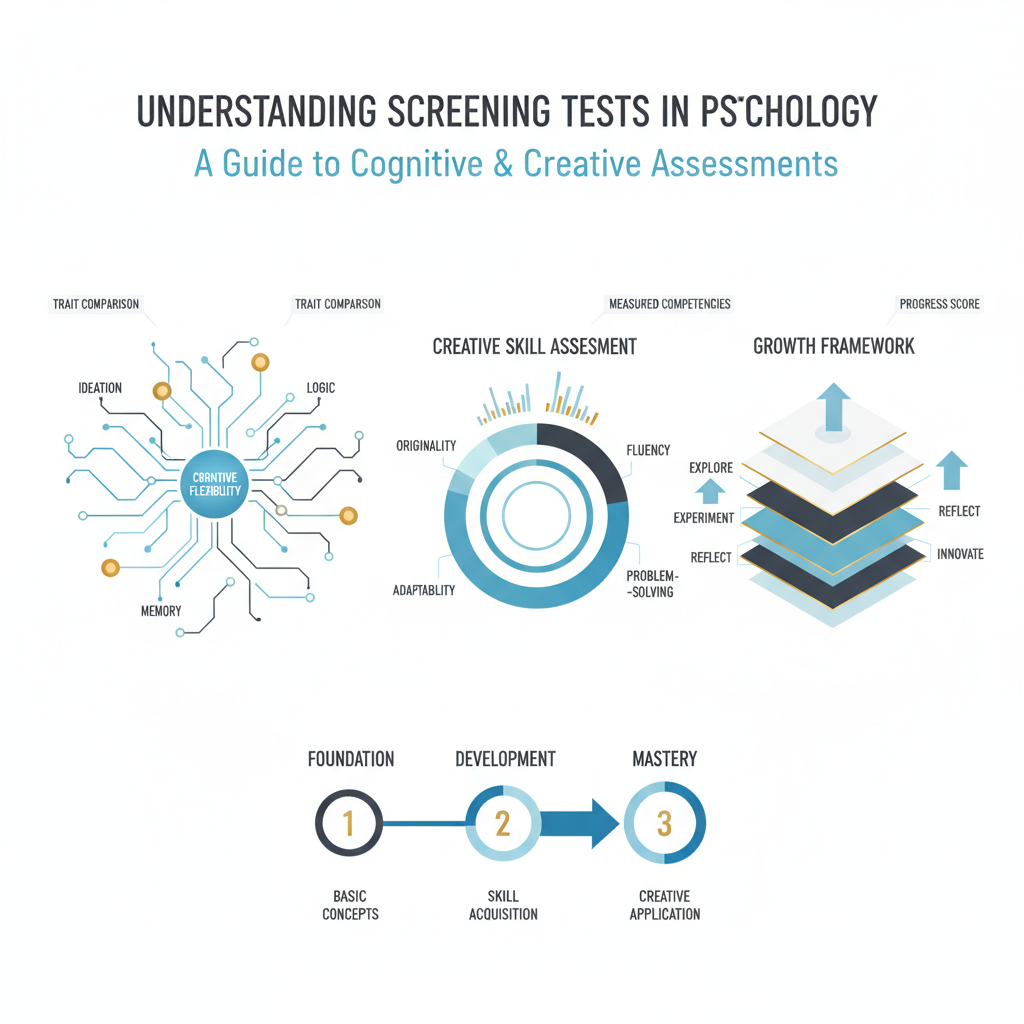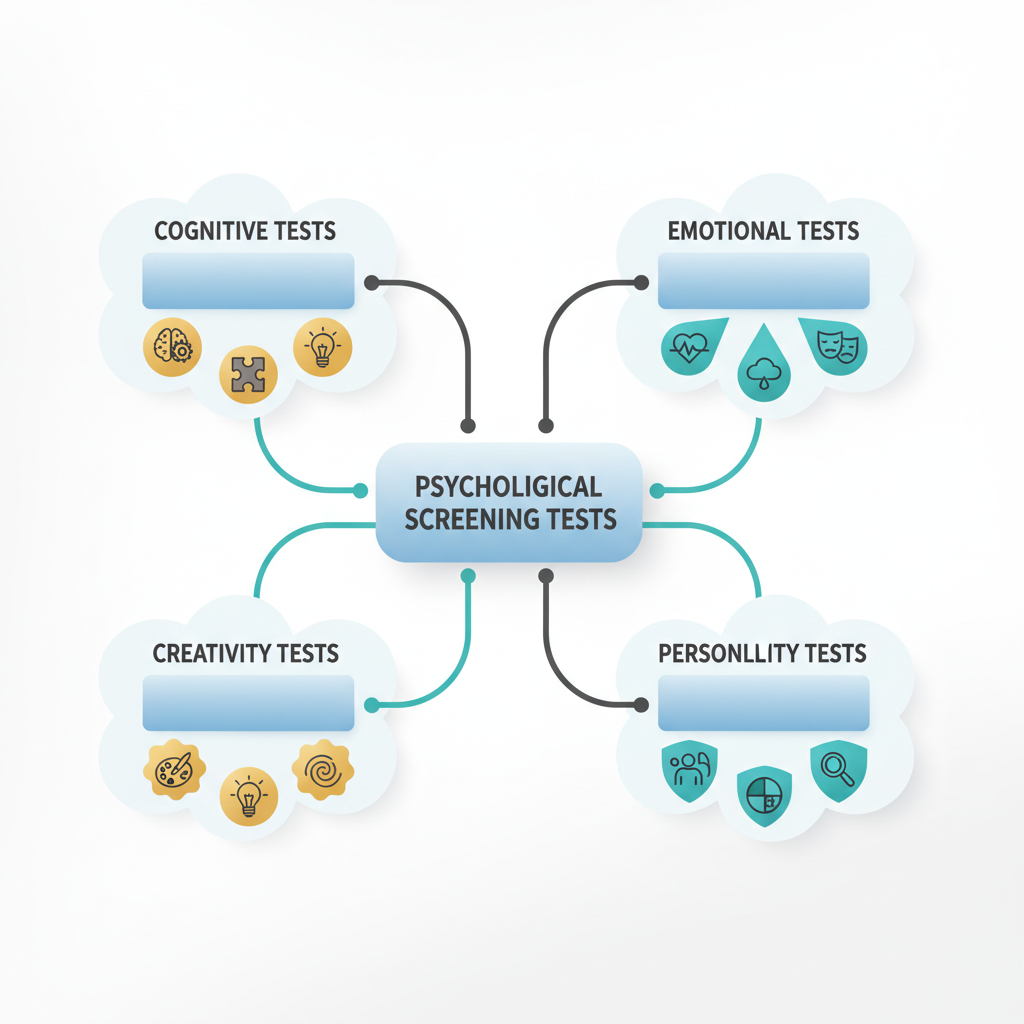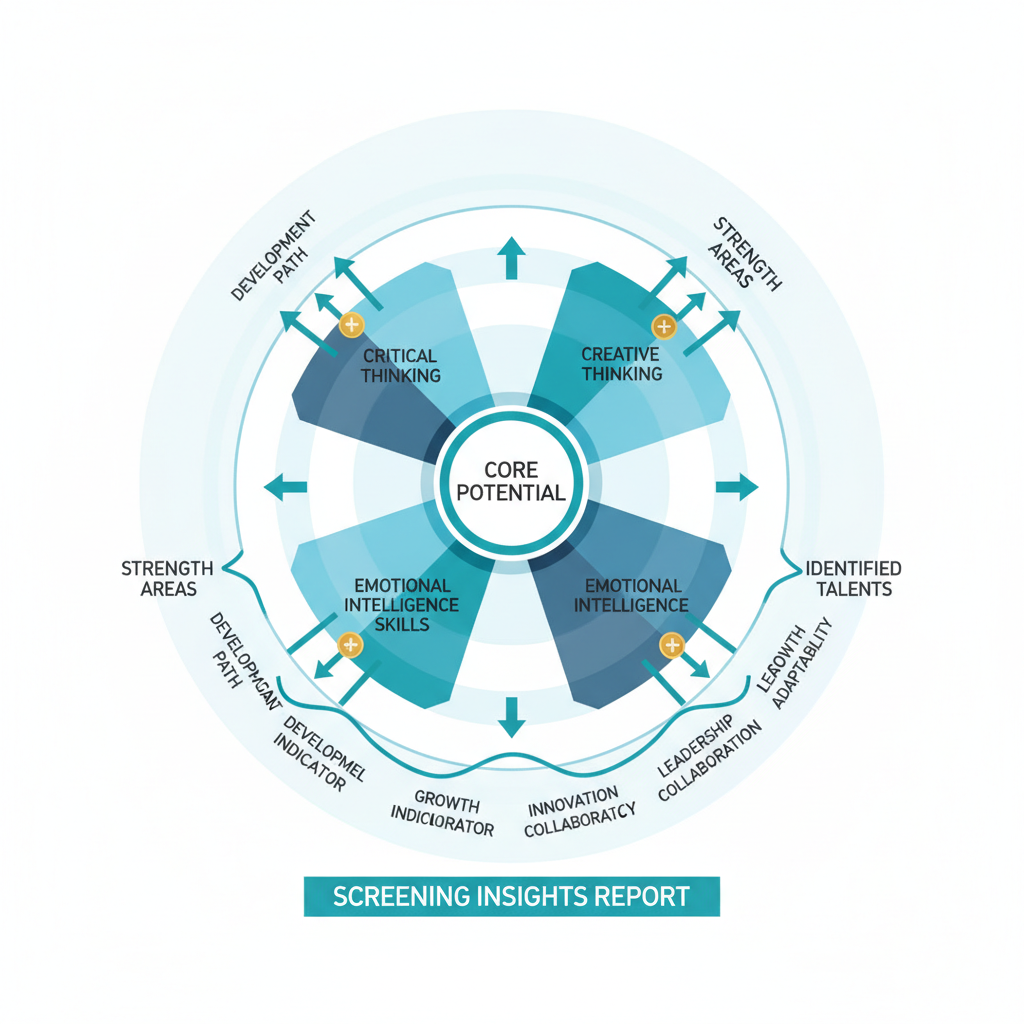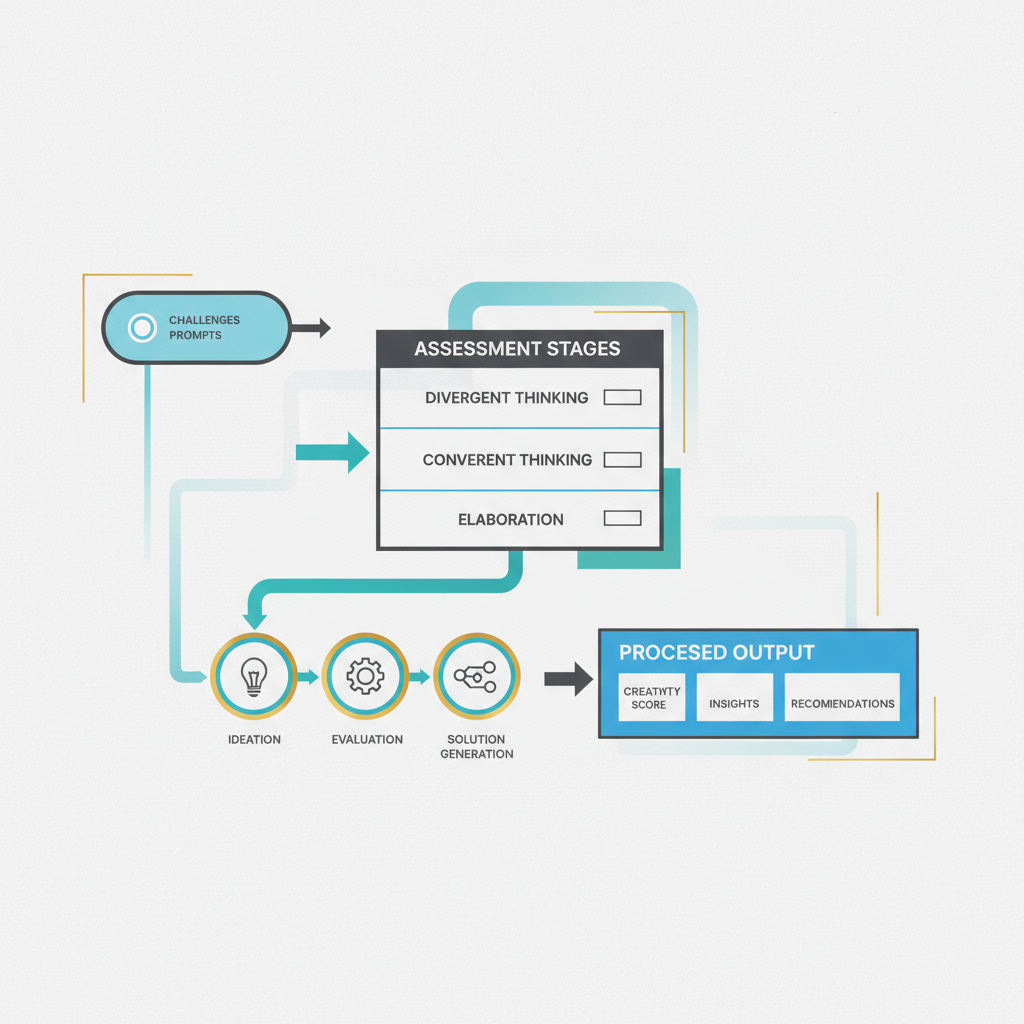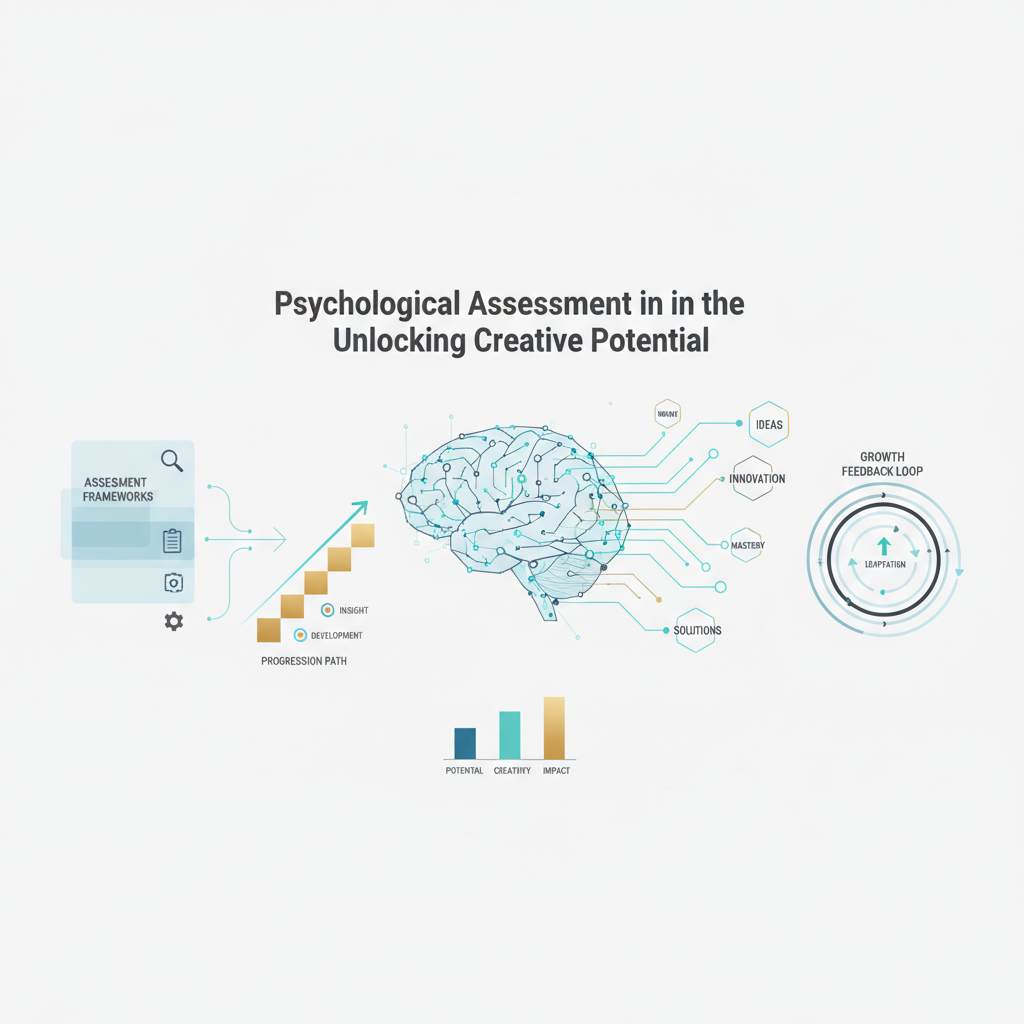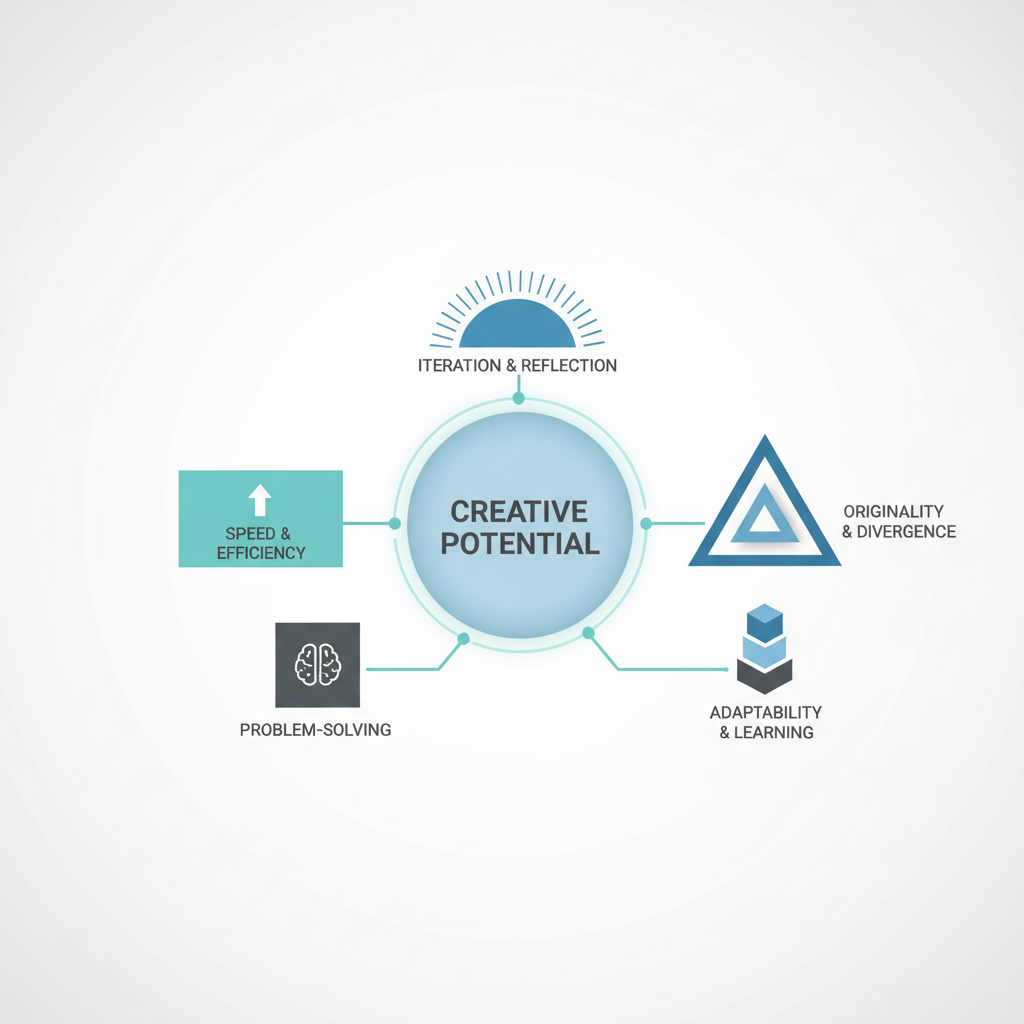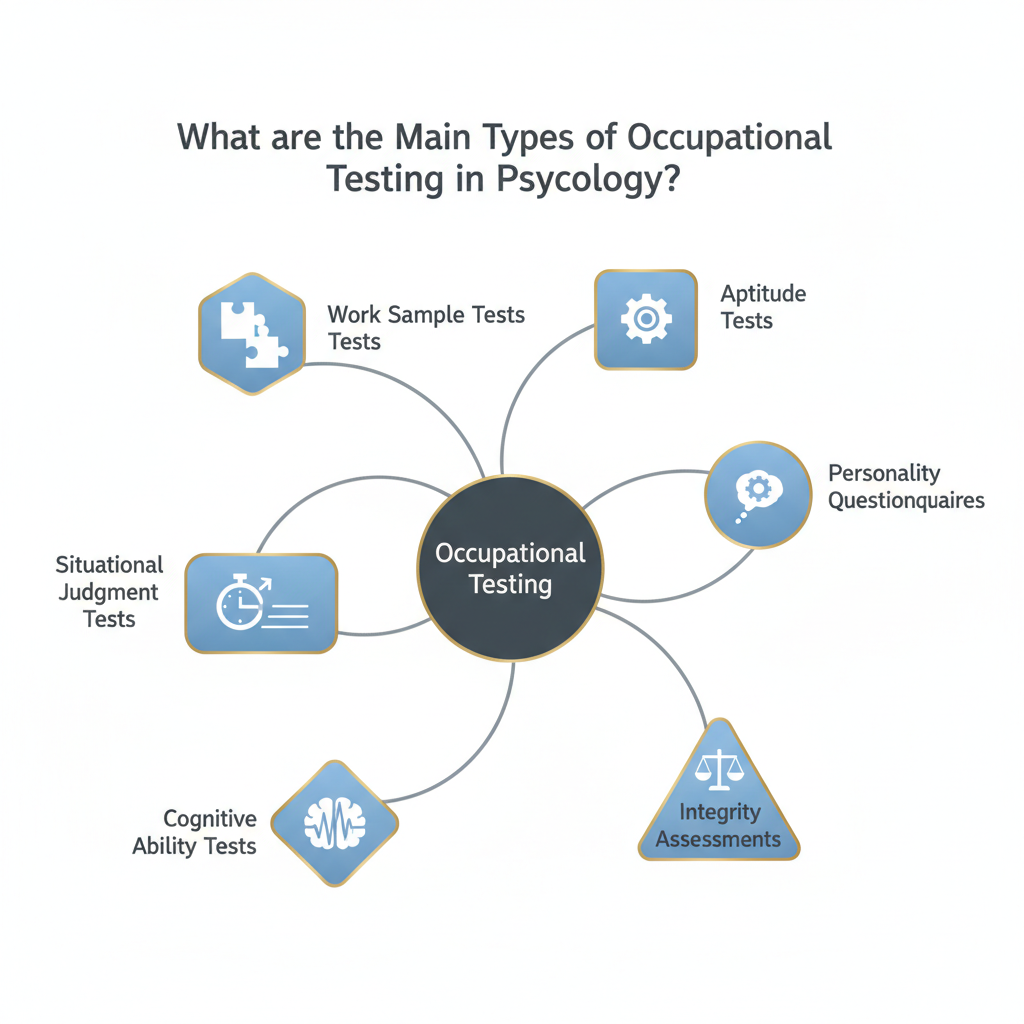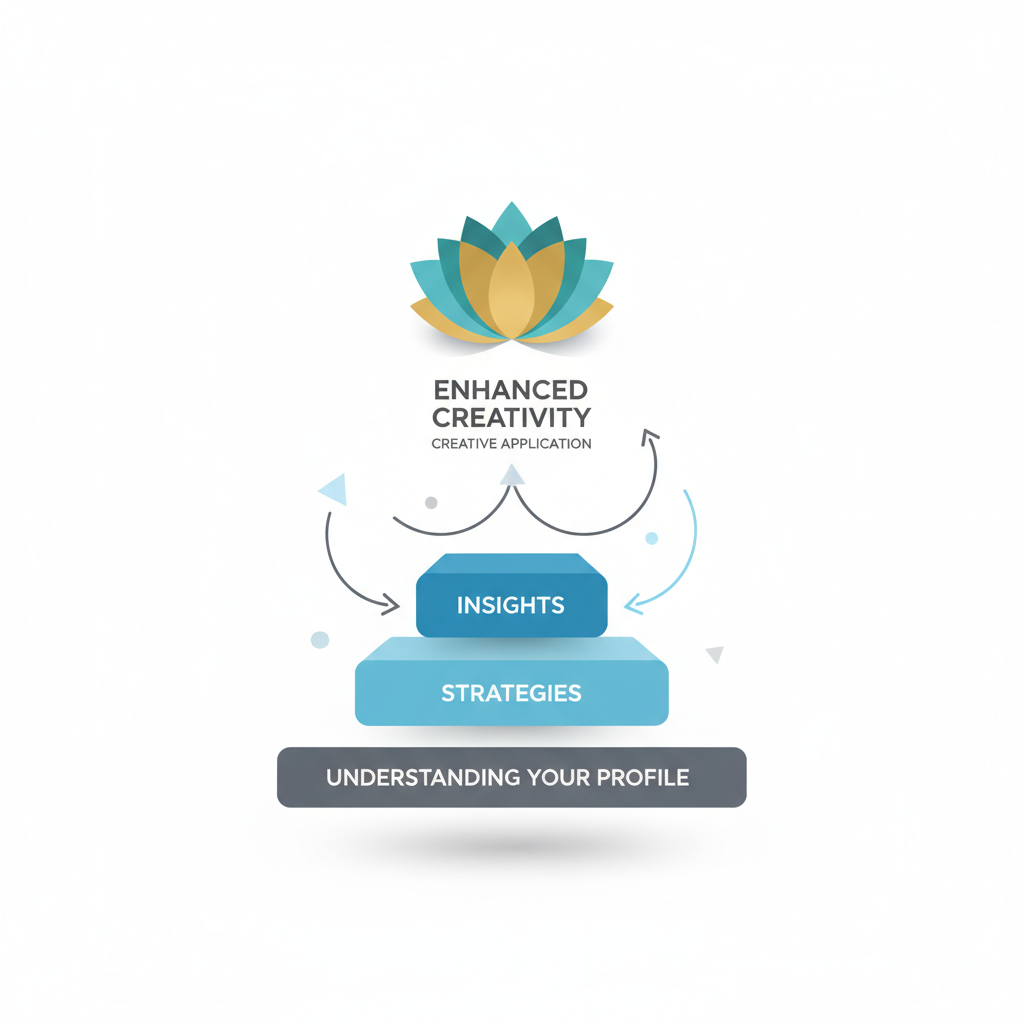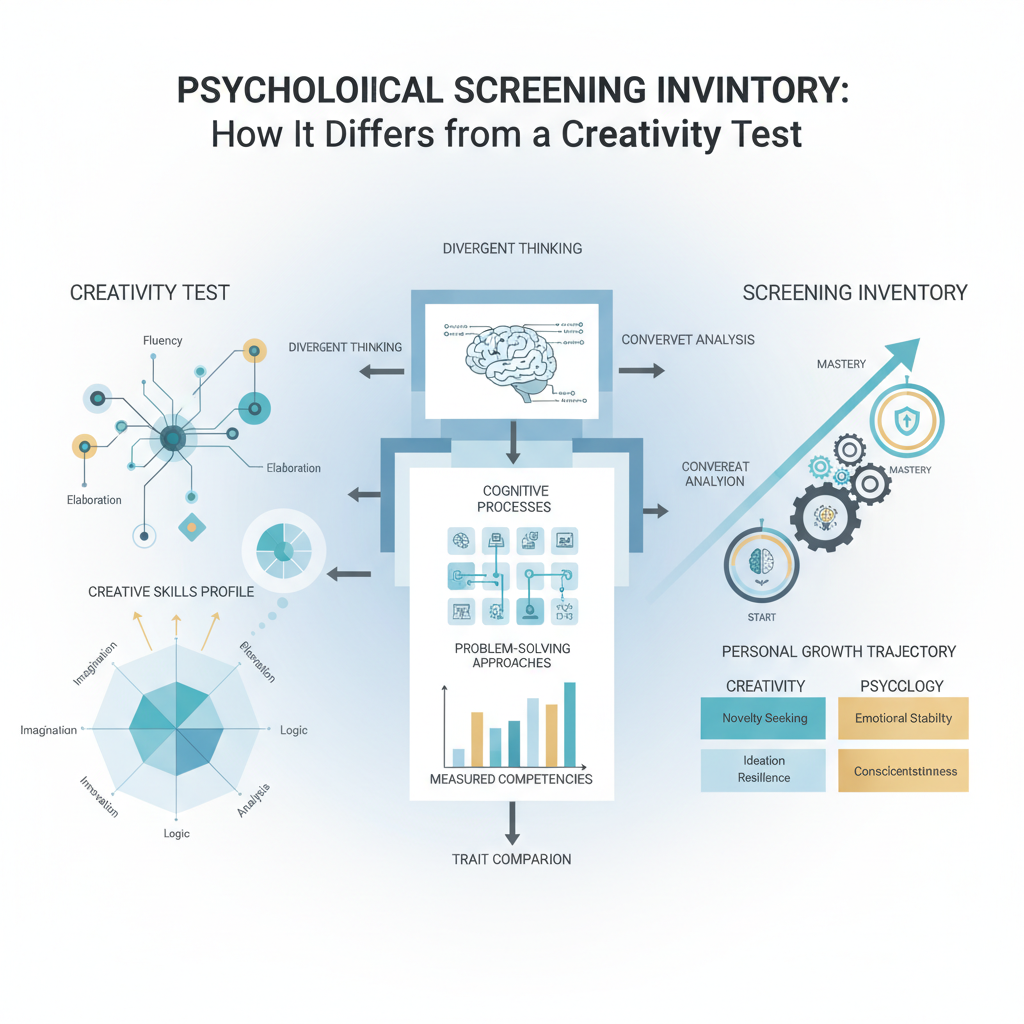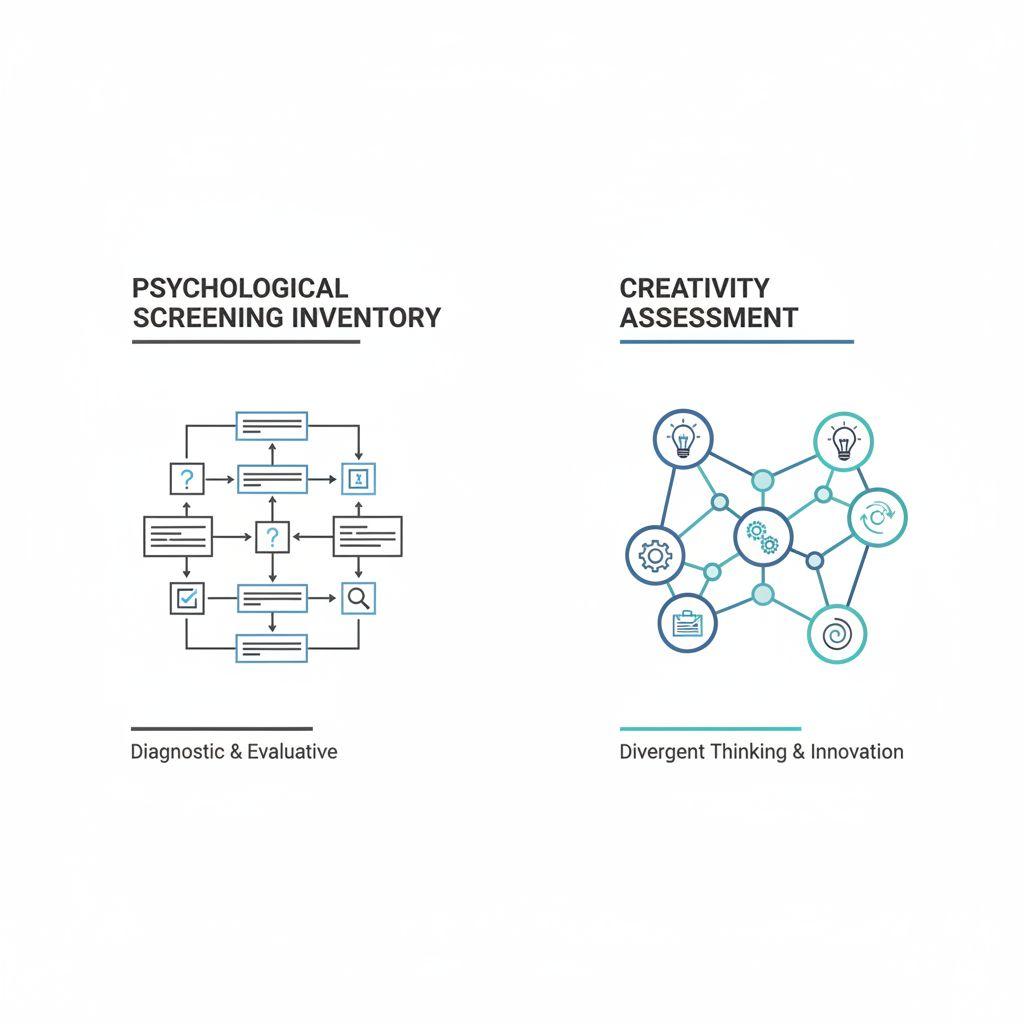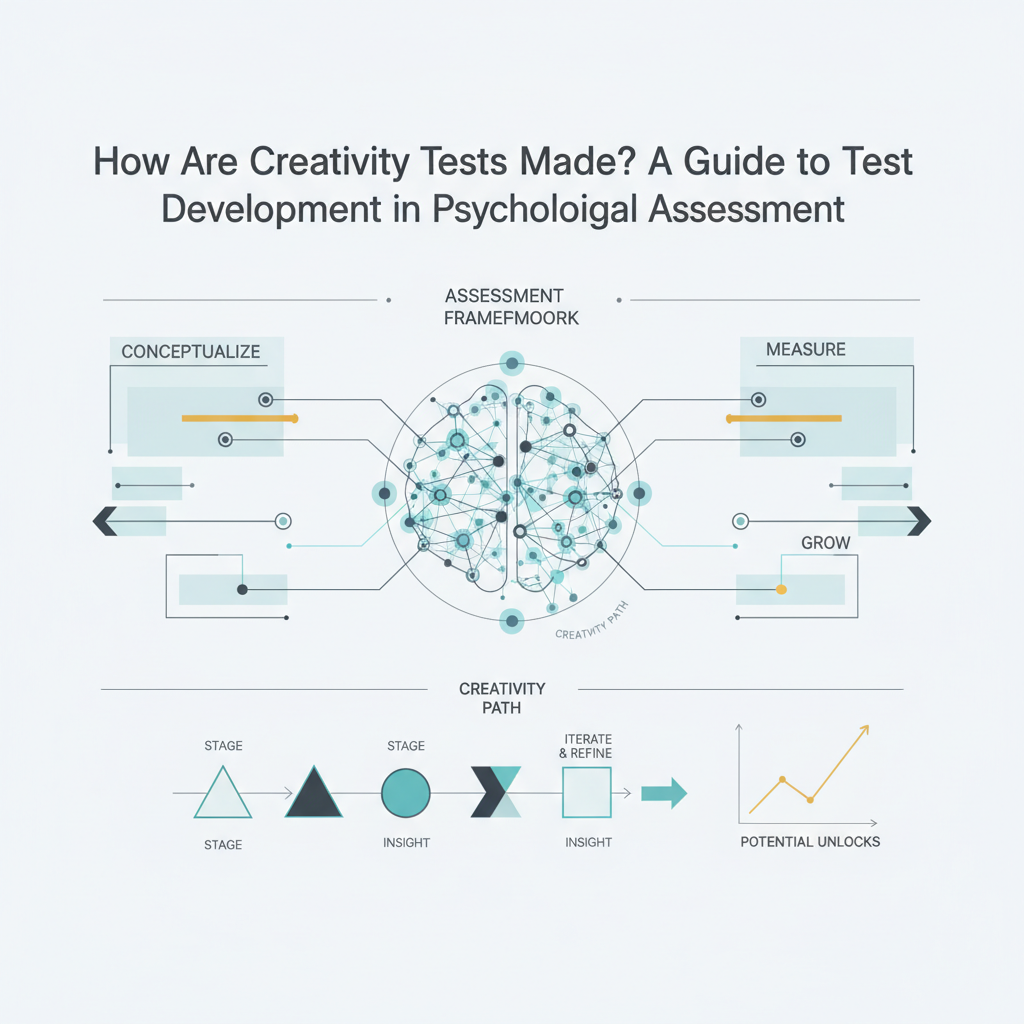
Test development in psychological assessment is the systematic process of creating a valid and reliable tool to measure a psychological trait, like creativity. It involves five key stages: conceptualization, construction, tryout, analysis, and revision. This rigorous process ensures the test accurately provides meaningful and actionable insights into one’s abilities.
Have you ever wondered what makes a creative mind tick? Or how your own way of thinking helps you solve problems and innovate? Creativity often feels mysterious, but it’s a skill that can be understood, measured, and developed. At Creative Ability Test, we believe unlocking your creative potential begins with self-awareness, based on scientific research.
But how do you measure something as complex as creativity? This is a key question in the science of psychological assessment. A well-designed creativity test is more than a simple quiz. It is built through a careful process to ensure it is accurate, reliable, and offers useful insights. Understanding this process helps you interpret your results and feel confident in your strategies for personal growth and professional development.
From the first idea to the final version, every step in building a creativity test is designed to accurately uncover your strengths, thinking styles, and problem-solving abilities. So, why does all this scientific care matter when you want to discover your unique creative potential?
Why Does Quality Test Development Matter for Assessing Your Creativity?
Creativity helps us solve problems and innovate. If you want to understand your own creative potential, you need a good way to measure it. But measuring creativity isn’t simple. That’s why high-quality psychological tests are so important. They give you meaningful and reliable insights you can trust.
Imagine taking a test that doesn’t really capture your strengths. The results would be confusing or even misleading. A poorly designed test gives you inaccurate feedback, which can hold back your self-discovery and growth. This is why the development process is the foundation of any good creativity assessment.
The Keys to a Reliable Test
A well-developed creativity test gives you a clear picture of your abilities. It uses scientific methods to measure different parts of your creative mind. This careful process ensures the test truly reflects your skills and gives you consistent results over time. Our tests are built on two key principles:
- Reliability: Consistency You Can Trust
A reliable test gives you consistent results. If you took it again, your score would be similar. This shows it dependably measures your creative traits. - Validity: Measuring What Truly Matters
A valid test measures what it claims to measure—in this case, creativity. This includes aspects like divergent thinking or cognitive flexibility. It ensures the questions are actually assessing your creative abilities. Reliability and validity are the cornerstones of psychological testing, making sure assessments are both consistent and accurate [1].
When a test is both reliable and valid, you get insights you can use for personal and professional growth. It turns uncertainty into clear self-awareness. At Creative Ability Test, we take this careful approach so you can fully trust your results.
What This Means for Your Creative Journey
A high-quality test directly impacts your experience by helping you understand your creative strengths and identify areas for growth. This allows us to provide personalized feedback and practical strategies tailored just for you.
For example, if your test shows a strength in divergent thinking, you can focus on new ways to solve problems. Or, if it suggests you could improve your cognitive flexibility, we’ll offer tips to help you see things from different perspectives. You can only get these kinds of specific insights from a carefully designed test.
Our commitment to quality test design provides several key benefits:
- Accurate Self-Awareness: Get a true understanding of your creative potential, moving from general curiosity to deep insight.
- Useful Growth Strategies: Receive practical tips based on your unique profile to help you improve your creative thinking.
- Confidence in Your Results: Trust the scientific basis of your assessment so you can apply your strengths effectively.
- Personalized Development: Identify your specific creative thinking styles and innovation skills to support your growth.
At Creative Ability Test, we believe in supporting your creativity with proven scientific methods. Our 30-question assessment is carefully designed to deliver detailed insights that guide you toward unlocking your full creative potential.
What are the 5 stages of test development?
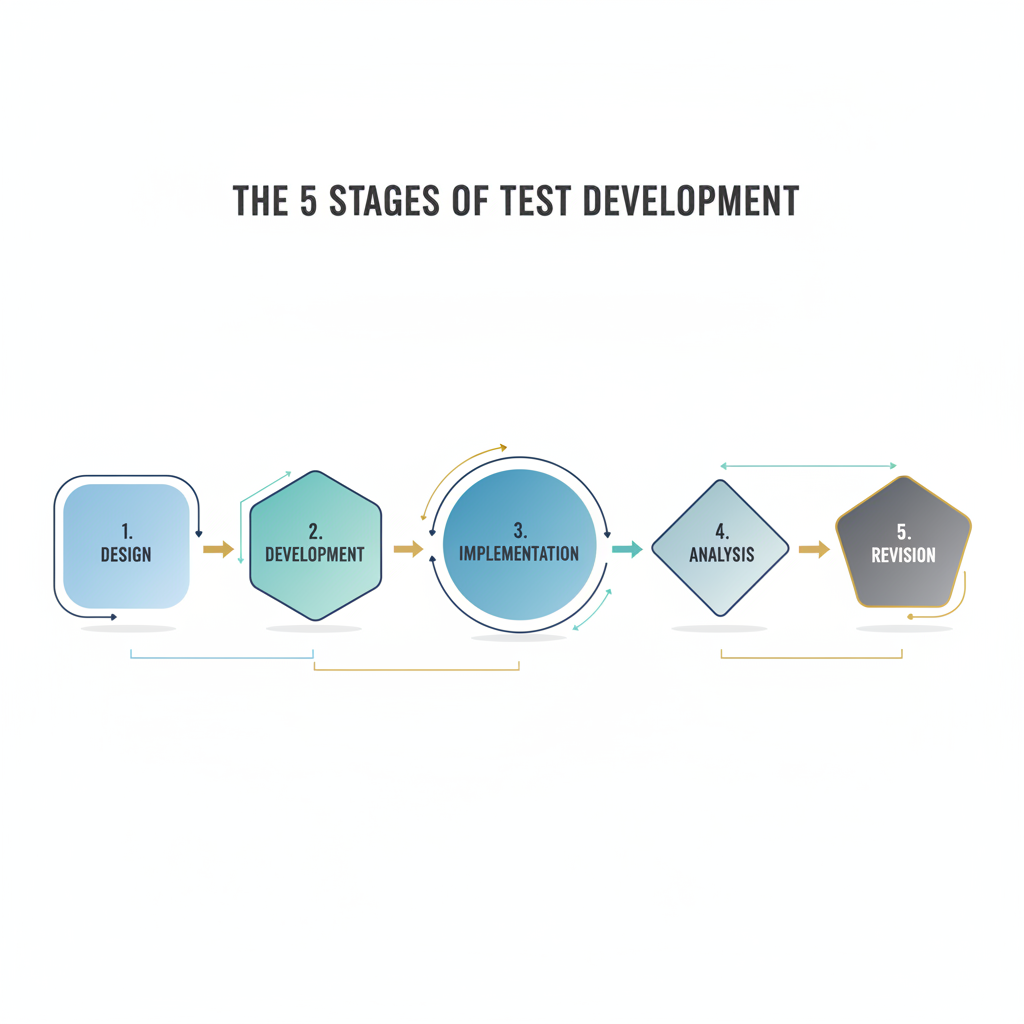
Creating a trustworthy test for something as unique as creativity is a careful process. We want to make sure the results you get are accurate and genuinely helpful. At Creative Ability Test, our method uses proven principles from psychological testing. This organized approach ensures the test is scientific and reliable, giving you meaningful insights into your creative potential.
There are five key stages to creating any high-quality psychological test. Following these steps helps us build a tool that measures what it claims to measure.
Stage 1: Test Conceptualization – What Are We Trying to Measure?
The first step is to define the main idea of the test. We start by asking basic questions: What exactly is creativity? Which parts of it should we measure?
This stage involves a deep dive into the psychology of creativity [2]. We pinpoint key areas like divergent thinking, cognitive flexibility, and problem-solving. This plan becomes the foundation for the entire test. Our goal for the Creative Ability Test is to give you a complete picture of your unique creative strengths.
- Defining Creativity: We decide which facets of creativity are most relevant. For example, originality, fluency, or elaboration.
- Identifying the Audience: Our test is designed for a broad audience. This includes students, professionals, and anyone curious about their potential.
- Setting the Purpose: The test aims to provide actionable insights. These insights help foster personal growth and professional development.
With a clear plan, every question has a specific job. This makes sure the test gives you a full picture of how your creative mind works.
Stage 2: Test Construction – How Do We Write Good Questions?
Once the plan is clear, we start writing the questions. This is where our ideas turn into a real test. Writing good questions is both an art and a science.
Our experts create questions that are clear, fair, and truly test creative skills. We use different question styles to suit various ways of thinking. For example, some tasks might ask you to come up with many ideas, while others might ask you to find a unique solution to a problem.
- Item Generation: We create a pool of potential questions. These questions align with the defined creativity dimensions.
- Response Formats: We choose appropriate ways for you to answer. This might include open-ended responses or multiple-choice scenarios.
- Scoring Criteria: We develop clear rules for evaluating answers. This ensures fair and consistent measurement of creative output.
Every one of our 30 questions is designed with care to measure your cognitive flexibility and innovative thinking. This careful process helps build a solid foundation for accurate results.
Stage 3: Test Tryout – Does the Test Work With Real People?
After writing the first draft, we move to a critical tryout phase. We give the test to a sample group of people who are similar to our final audience.
Think of this stage as a beta test. We collect early data and feedback to see how people respond to the questions. Do they understand the instructions? Are any questions too hard or too easy? This feedback helps us improve the overall experience.
- Pilot Testing: The test is given to a diverse group of individuals.
- Gathering Qualitative Feedback: We ask participants about their experience. What did they find confusing? What was engaging?
- Initial Data Collection: We observe response patterns. This gives us a first look at question performance.
Testing with real people is essential. It makes sure the test is easy to use and works well. Our goal is to make your experience with the Creative Ability Test as smooth and helpful as possible.
Stage 4: Item Analysis – Which Questions Are the Most Effective?
Using data from the tryout, we carefully analyze every question. This process uses statistics to see how each one performed.
We check several things for each question. Does it distinguish between people with higher and lower creative skills? Is it too easy or too difficult? We flag any questions that aren’t working well. This detailed review makes the final test much more accurate.
- Difficulty Index: We measure how challenging each question is.
- Discrimination Index: We assess if a question distinguishes between high- and low-scoring individuals.
- Distractor Analysis: For multiple-choice questions, we check if incorrect options are plausible.
This scientific step improves the test. It ensures every question plays a useful role in measuring your creative potential and provides you with accurate, personal feedback.
Stage 5: Test Revision – How Do We Refine the Final Assessment?
In the final stage, we refine the test based on our analysis. We make adjustments to ensure the test is as clear, valid (measures what it should), and reliable (provides consistent results) as possible.
We get rid of questions that don’t work and rewrite any confusing instructions. Sometimes, we even create new questions from scratch. This cycle of improvement makes sure the Creative Ability Test is strong and scientifically sound, giving you the most accurate results.
- Removing/Modifying Items: Poorly performing questions are eliminated or revised.
- Improving Instructions: We ensure all directions are clear and easy to follow.
- Establishing Norms: We develop comparison data. This helps contextualize your scores against a broader population.
This complete revision process is key to delivering a test that is both detailed and perfectly suited for you. It helps you get useful insights and clear steps for personal and professional growth.
How does test development in psychological assessment work in practice? An example
Knowing how a creativity test is made gives you a better understanding of your results. You can see the science behind how we measure your creative potential. Let’s look at how this works, using divergent thinking as an example.
Defining the Goal: Measuring Divergent Thinking
Every good test starts with a clear goal. For our test, the goal is to measure a specific creative skill called divergent thinking. This is your ability to come up with many unique ideas from a single starting point [3].
Here’s why measuring divergent thinking is so important:
- It’s a key part of overall creativity.
- It shows your ability to think flexibly.
- It helps you see many different possibilities.
- It’s vital for problem-solving and new ideas.
Our goal is to measure this key skill. We want to see how many different ideas you can come up with and how unique they are. This first step makes sure every question has a clear, measurable purpose.
Writing and Reviewing Questions
After setting our goal, we start writing the test questions. This step requires a lot of thought and review by experts.
The process usually includes:
- Brainstorming Question Types: We think about different kinds of questions to ask. For divergent thinking, we often ask people to list unusual uses for an everyday object or come up with many ideas for a specific situation.
- Drafting Questions: We write each question carefully to be clear and easy to understand. The questions are designed to be engaging, fair to everyone, and encourage many different creative answers.
-
Expert Review: Psychologists and test-development experts review every question. They check for things like:
- Is the question clear and easy to understand?
- Does it really measure divergent thinking?
- Are there any confusing instructions or biases?
- Is there a clear way to score the open-ended answers?
- Pilot Testing: A small group of people takes an early version of the test. Their feedback is extremely helpful. This is how we find and fix any confusing questions or instructions before the test is widely used.
This careful process makes sure our 30-question Creative Ability Test is accurate and measures your creative strengths well.
Gathering Data and Refining the Test
After writing the test, we check if it works in the real world. This means we collect data and use it to make scientific improvements.
Key steps in this phase include:
- Large-Scale Data Collection: We give the test to a large, diverse group of people. This group should be similar to the people who will eventually take the test, which gives us a large set of data to work with.
-
Item Analysis: We analyze how well each question performs.
- Difficulty: Is a question too easy or too hard? For creativity, we want questions that get a wide variety of answers.
- Discrimination: Does this question help separate high-scoring creative people from low-scoring ones? This tells us the question is a good measure of creativity.
- Reliability Checks: We check if the test gives consistent results. A reliable test means your scores should be stable and not change randomly [4].
- Validity Studies: We make sure the test actually measures what it’s supposed to: divergent thinking. We might do this by comparing its results to scores from other well-known creativity tests. This proves the test is accurate.
- Refinement and Revision: Based on all this data, we revise or remove questions that don’t work well. The test is polished to be as accurate as possible. We repeat this process as needed to ensure the test is high quality.
- Norming: The final step is to create a baseline for comparison. We do this by comparing your score to the scores of a large group of people. This allows us to give you personalized feedback and show you how your creativity compares to others.
This thorough, scientific process is what makes the Creative Ability Test so effective. It ensures your results are accurate and give you useful insights. Our science-backed approach helps you understand and grow your creative potential.
How Can You Trust the Results of a Psychological Test?
Understanding Reliability: Consistency is Key
Reliability is a key part of any trustworthy psychological test. In simple terms, it means a test gives you consistent results. Think of a bathroom scale: you expect it to show the same weight each time, as long as your weight hasn’t changed. A reliable creativity test works the same way.
If your creative abilities stay the same, your score should also stay the same when you retake the test. This consistency helps you trust your results [5]. You can feel confident acting on the insights and strategies we provide.
We ensure the Creative Ability Test is highly reliable. Psychologists check for reliability in a few key ways:
- Test-Retest Reliability: This means giving the same test to the same people twice over a period of time. If the scores from both tests are similar, the test is reliable.
- Internal Consistency: This checks if all the questions in a test are working together to measure the same thing. For instance, all 30 questions in our test are designed to measure different sides of your creativity.
A reliable assessment lets you accurately track your creative growth. It gives you a dependable starting point for real-world growth strategies. You can trust our personalized feedback, knowing it’s based on a solid, consistent measure of your creative potential.
Understanding Validity: Does the Test Measure What It Claims?
While reliability is about consistency, validity is about accuracy. Validity asks a simple question: Does this test truly measure what it claims to? For a creativity test, this means it must actually measure your creative thinking, not something else like memory or general knowledge.
Imagine a “creativity” test that just asked you to recall historical dates. That test would not be a valid way to measure creativity. The Creative Ability Test, however, is carefully designed to give you true insights into your unique creative strengths [6].
Psychologists look at several types of validity to ensure a test is meaningful:
- Content Validity: This checks if the test covers all the important parts of creativity. Our 30-question assessment explores key areas like divergent thinking, cognitive flexibility, and openness to new experiences.
- Construct Validity: This ensures the test is based on established psychological theories about creativity. Our assessment is built on solid research in the field of creative psychology.
- Criterion Validity: This checks if test scores can predict creative behavior in the real world. For example, higher scores on our test should connect to more innovative problem-solving in your life.
Understanding validity means you can trust that your results are really about your creative potential. This empowers you to use these insights for personal growth, professional development, and to boost your innovation skills. Our scientific method ensures that you get valid, useful insights that are easy to understand and apply.
How This Process Helps You Discover Your Creative Potential
Creating a reliable psychological test is a detailed process. It ensures that the assessment you take is accurate, fair, and truly helpful. This careful work, from the first idea to the final version, directly benefits you. It helps you clearly understand your own creative potential.
The steps used to build and test an assessment are crucial. They aren’t just academic exercises. Instead, they help you discover more about yourself. This leads to useful insights for your personal and professional growth.
Gain Clear Self-Awareness of Your Creative Strengths
A well-made creativity test acts like a clear mirror, reflecting your specific creative strengths. The careful design of questions ensures this accuracy. You will understand aspects like your cognitive flexibility and divergent thinking. Cognitive flexibility is your ability to switch perspectives. Divergent thinking helps you generate many ideas. [7] It also highlights your unique approaches to solving problems.
- Discover Your Thinking Style: Are you a “big picture” person who naturally connects different ideas? Or do you excel at improving existing concepts in new ways? A science-backed test helps make this clear.
- Pinpoint Specific Abilities: You will learn if you are strong in originality, fluency, or elaboration. These are key parts of creative thinking.
- Understand Your Natural Inclinations: The assessment reveals your natural tendencies, like how open you are to new experiences or how comfortable you are with uncertainty.
Unlock Practical Strategies for Creative Growth
The scientific process behind the Creative Ability Test delivers meaningful results. These results are more than just scores; they are translated into practical tips to help you improve your creative skills. For example, if you score high in divergent thinking, you might get tips on how to refine your best ideas. If you need to work on cognitive flexibility, the feedback will offer specific exercises.
Here is how a strong test development process helps you grow:
- Personalized Feedback: You receive advice that is tailored to your unique profile, moving beyond generic tips.
- Targeted Practice: You get specific strategies to strengthen areas that need development, such as learning new brainstorming techniques.
- Real-World Application: The guidance helps you apply your creativity to everyday challenges, from personal projects to professional tasks.
- Confidence Building: Understanding your creative potential boosts your self-assurance, encouraging you to take on new challenges.
Foster Innovation and Problem-Solving Skills
Understanding the science behind creativity helps you become more innovative and a better problem-solver. The test development process carefully identifies the core parts of creative ability. This allows the Creative Ability Test to measure them well. As a result, you gain a deeper appreciation for how your mind works.
For example, if the test shows you have strong idea-generation skills, you can use this strength to create solutions at work. If your results point to a need for more cognitive flexibility, you can practice skills that help you approach problems from different angles. These insights help you move from being creative sometimes to having a clear plan for growth. This turns your understanding of creativity into real-world innovation.
Ultimately, a well-made test like the Creative Ability Test is a tool for self-discovery. It gives you a reliable, science-based map to your creative potential. This helps you use your strengths and develop new creative skills, leading to greater self-awareness and impactful innovation.
Frequently Asked Questions
What are the types of test development in psychological assessment?
Psychological test development is the process of creating tools to measure human traits. There are a few main types. Each one gives a unique look at a person’s skills or personality.
Knowing these types helps you see the science behind the tests. You can also see how tests like the Creative Ability Test give you personal feedback. Here are the main types:
- Norm-Referenced Tests: These tests compare your score to a large group of people. For example, if you get a 70 on a creativity test, it might mean you scored higher than 85% of people your age. Our Creative Ability Test gives you this kind of comparison. It helps you see how your creative strengths stack up against others.
- Criterion-Referenced Tests: These tests measure your skills against a set standard. A driving test is a good example. You either meet the standard and pass, or you don’t. The focus is on what you can do, not how you compare to others.
- Ipsative Tests: Ipsative tests compare your scores on different parts of the same test. They show your personal pattern of strengths and preferences. For instance, an ipsative creativity test might show if you are better at coming up with ideas or putting them into action. This helps you find your own creative style for personal growth. [8]
Our platform often combines parts of these different test types. This gives you a full and useful look at your creative potential. We give you data that compares you to others and also paints a clear picture of your personal creative style.
Can you provide a test development in psychology example?
Let’s look at how we build a part of the Creative Ability Test. Our goal is to measure divergent thinking. That’s your ability to come up with many unique ideas from one starting point. It’s a key part of creative problem-solving.
-
Defining the Goal: First, we decide what “divergent thinking” means for our users. We define it by looking at the number of ideas (fluency), the variety of ideas (flexibility), and how unique they are (originality). This makes sure the test measures a useful part of creativity for your personal growth.
-
Writing and Reviewing Questions: Next, we write the test questions, or prompts. For example, we might ask, “List all the possible uses for a brick.” We create many questions like this. Our experts check them to make sure they are clear and fair. The goal is to encourage many different creative answers.
-
Developing Scoring Rules: Then, we create clear rules for scoring answers. For the “brick” example, we might count the total number of ideas (fluency). We would also group the ideas into different types (flexibility). We also check how unique the ideas are (originality). This scientific method makes sure the scoring is fair and consistent.
-
Gathering Data: We have a diverse group of people take the test. This shows us how people really answer the questions. We look for patterns in their responses. This step is key to making the test accurate and relevant.
-
Analyzing and Refining: After we have the data, we look at each question closely. We ask: “Does this question really measure divergent thinking?” and “Are the scores consistent?” We fix or remove any questions that are confusing or don’t work well. This process of testing and improving makes sure the final test is strong. It gives you trustworthy, useful insights into your creative potential.
This careful process makes sure your Creative Ability Test results are meaningful. They provide a solid starting point for boosting your creative skills and growing as a person.
What are the 5 stages of test development?
Creating a high-quality psychological test, like our Creative Ability Test, is a careful process. It makes sure the results are accurate and useful. The process has five main stages. Each stage builds on the one before it to make sure the test is trustworthy and measures what it’s supposed to. [9]
-
Stage 1: Test Conceptualization – What Are We Measuring? In this first stage, we define the test’s purpose. We decide which creative skill we want to measure, like mental flexibility or openness to new things. We also think about who will take the test and how they will use the results for personal or professional growth.
-
Stage 2: Test Construction – How Do We Write Good Questions? This is where we write the actual test questions. We choose the best formats, like multiple-choice or open-ended answers. We write clear questions that are fair to everyone. We also create exact rules for scoring. Our goal is to make sure every question helps measure the creative skill we are focused on.
-
Stage 3: Test Tryout – Does the Test Work With Real People? In this stage, we create a pilot version of the test. We have a group of people who are like our intended test-takers try it out. This helps us find any confusing questions or other problems. It’s a key step to get early feedback.
-
Stage 4: Item Analysis – Which Questions Are Most Effective? We study the data from the test tryout. This helps us see how well each question worked. We look at whether a question can tell the difference between people with high and low scores on the skill. We also check for any unfairness. This analysis helps us pick the best questions for the final test.
-
Stage 5: Test Revision – How Do We Finalize the Test? Based on our analysis, we improve the test. We fix or remove questions that didn’t work well. We might also change the scoring rules. This final step makes sure the test is ready to go. It ensures the Creative Ability Test gives you trustworthy and useful insights into your creative potential.
By following these scientific steps, we make sure the Creative Ability Test is a tool you can trust. It helps you understand and improve your creative thinking for use in everyday life.
Sources
- https://www.psychologytools.com/articles/what-is-reliability-and-validity-in-psychological-assessment/
- https://www.apa.org/education-career/guide/psychology-testing
- https://psycnet.apa.org/record/1968-07205-001
- https://psycnet.apa.org/record/2012-05537-000
- https://www.simplypsychology.org/reliability.html
- https://www.simplypsychology.org/validity.html
- https://www.apa.org/pubs/journals/releases/xlm-a0038898.pdf
- https://dictionary.apa.org/ipsative-assessment
- https://pressbooks.library.ryerson.ca/psychtests/chapter/test-development/