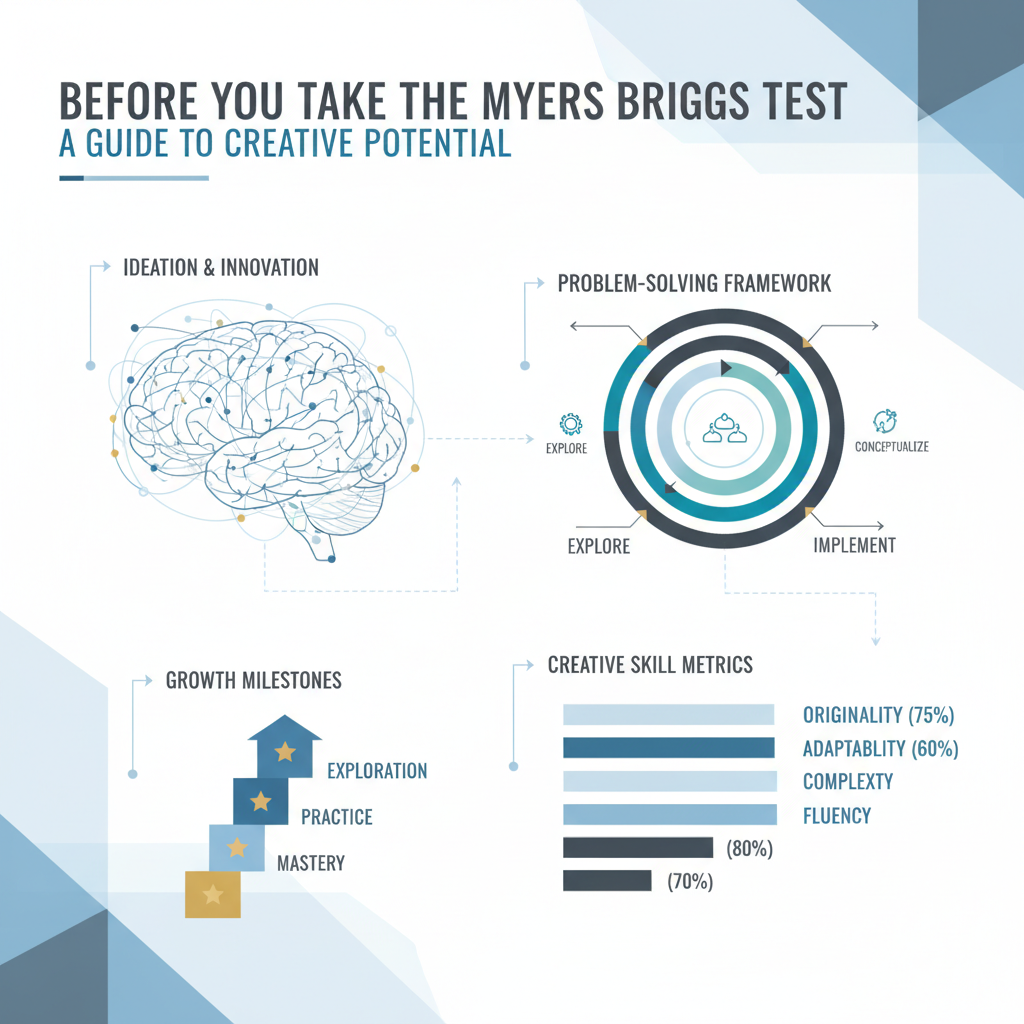
To take the Myers-Briggs Test (MBTI), you can find the official, paid assessment through certified practitioners or online platforms licensed by The Myers-Briggs Company. Many unofficial, free versions, often called ’16 personality tests’, are also widely available online to help you identify your preferences across four psychological dichotomies.
Many of us use tools to understand ourselves better. Maybe you’ve thought about taking a Myers-Briggs test to learn more about your personality. It’s a popular path to self-discovery, and many people take the test out of pure curiosity. But beyond learning if you’re an introvert or an extrovert, have you ever wondered what the MBTI can tell you about your creative side?
The well-known MBTI psychology test helps you understand how you naturally see the world and make decisions. These insights can shed light on your thinking style, which in turn influence how you solve problems and brainstorm. However, your personality type doesn’t directly measure creative skills like innovative thinking or openness to new ideas. Creativity is a complex skill, separate from personality, that can be grown and improved.
This article will show what the Myers-Briggs assessment can tell you about your creative side. We’ll explore how your personality type might shape your approach to new ideas. We’ll also look at the details of the MBTI, point you to where you can take a test online, and most importantly, show you how to use these insights to build on your creative strengths. Get ready to turn a simple self-assessment into real steps that unlock your full creative potential.
What Should You Know Before You Take a Myers Briggs Test?

The Difference Between Personality and Creativity
Many people use the Myers-Briggs Type Indicator (MBTI) test to understand themselves better. It’s a popular way to explore personality. But it’s important to know that personality and creativity are different. They are related, but not the same thing.
Personality is about your usual patterns of thinking, feeling, and acting. For example, it can show if you’re more introverted or extroverted. These traits affect how you interact with the world [1].
Creativity, on the other hand, is a skill. It’s your ability to come up with new and useful ideas. This means thinking in fresh ways and solving problems. Creativity is something you can measure and improve. It includes things like:
- Divergent Thinking: Coming up with many unique solutions.
- Cognitive Flexibility: Shifting your viewpoint easily.
- Originality: Creating brand-new ideas.
- Elaboration: Building on ideas with detail.
Some personality traits can help with creativity, but they don’t measure it. For example, people with an open personality are often creative. But being open doesn’t explain how you create. It doesn’t show your specific creative talents. Our Creative Ability Test focuses on these exact skills. We help you understand and grow them.
How the MBTI Psychology Test Works: A Simple Guide
The Myers-Briggs Type Indicator (MBTI) is a questionnaire you take yourself. It shows your natural preferences in how you think and act. The goal is to help you understand yourself and others.
The test is based on Carl Jung’s idea of psychological types. It places people into one of 16 personality types. Each type is a mix of four different preferences [2].
Here are the four pairs of choices:
- Where you get your energy:
- Extraversion (E): You get energy from being with others and the world around you.
- Introversion (I): You get energy from time alone and your inner world.
- How you get information:
- Sensing (S): You focus on facts and details you can see and touch.
- Intuition (N): You focus on patterns, possibilities, and what might happen.
- How you make decisions:
- Thinking (T): You make decisions using logic and facts.
- Feeling (F): You make decisions based on your values and how they affect people.
- How you like to live your life:
- Judging (J): You like to have a plan and be organized.
- Perceiving (P): You like to be flexible and spontaneous.
Your mix of these preferences creates your four-letter type. For example, an “INTJ” is someone who prefers Introversion, Intuition, Thinking, and Judging. The MBTI tells you about your preferences, not your skills or abilities.
Why Your Personality Type Is Just a Starting Point for Growth
Knowing your personality type is a great way to understand yourself. It shows your natural tendencies and how you like to interact with the world. This is a good first step for personal growth. But your personality type is just the beginning.
It tells you about your tendencies, not your abilities. For example, being an “N” (Intuition) might mean you like new ideas. But it doesn’t measure how good you are at creating truly new solutions. It also doesn’t give you steps to get better at brainstorming. Your personality doesn’t limit your creative potential.
Creativity is a skill you can build. You can develop and improve it, no matter your MBTI type. Real growth happens when you have clear steps to follow. These steps help you use and sharpen your creative skills. You can learn to see things from new angles and get better at solving problems.
Our Creative Ability Test does more than look at personality. We measure your specific creative skills. Our science-backed test shows your unique creative strengths. Then, you get feedback just for you. We give you practical ways to build your creative skills. This helps you move from knowing your preferences to actually improving your work. We give you the tools to use your creativity in the real world.
Where Can I Take a Myers Briggs Test Online?
Understanding Official vs. Unofficial MBTI Tests
Many people look for a Myers-Briggs test online. But it’s good to know the difference between official and unofficial tests. The official Myers-Briggs Type Indicator (MBTI) is a formal psychological assessment. Only certified professionals can give you this test. They help you understand your results. This makes sure you get a deep and accurate picture of your personality [3].
Official tests give you a full report. This report offers details about your natural preferences, like how you take in information and make decisions. However, official MBTI tests are not free. You usually have to pay for the test and the expert’s time to explain your results.
On the other hand, you can find many unofficial MBTI tests online. These are usually free quizzes that sort you into one of the 16 personality types. They often use similar questions and give you a quick idea of your type. However, these free versions are not scientifically proven to be accurate or reliable. They often oversimplify complex ideas about personality. So, while they can be fun, their results may not be correct or very useful.
Learning about your personality is a great first step in self-discovery. It helps you see how you naturally prefer to think, which can affect how you approach creative work. For instance, an introvert might like to create alone, while an extravert might do best in a group brainstorm. But personality tests like the MBTI don’t directly measure your creativity. They don’t test skills like brainstorming or problem-solving. That’s why specialized creativity assessments are so important.
Popular Free Versions and What They Offer
The internet is full of free personality quizzes. Many are based on the Myers-Briggs model and let you “take an MBTI test” for free. They’re popular because they are an easy way to learn about yourself. People enjoy the quick look they get into their own personality.
Here’s what popular free versions typically offer:
- Quick Categorization: You’ll get one of the 16 personality type codes, usually with a short description.
- A Starting Point for Self-Reflection: These tests can make you curious about yourself and get you thinking about your preferences.
- Entertainment Value: They are often fun to take and share with friends or coworkers.
- Basic Personality Overview: You might get a general idea of your personality’s main aspects.
But it’s important to know their limits. These free tests are not backed by deep psychological science. They may not be reliable, meaning your results could change if you take the test again. The feedback is often very general and doesn’t give you the personal, useful advice you’d get from a professional. Most importantly, they don’t measure your creativity. They can’t tell you about your ability to think flexibly or come up with new ideas. Knowing your personality type is a good start, but learning how to boost your creativity is a separate challenge. To actually grow your creative skills, you need a different kind of tool.
What to Look for in a Quality Self-Assessment
When looking for any online test, there are a few signs of quality to watch for. This helps make sure you get useful information, whether you’re exploring personality or creativity. A good test should do more than just tell you about yourself—it should help you improve.
Consider these key elements when choosing a self-assessment:
- Based on Science: Is the test based on real psychological research? Look for tests that are proven to be reliable and accurate [4].
- Clear Explanations: Does it clearly explain what it measures and what your results mean? The language should be easy to follow.
- Useful Advice: Does it give you more than just a label? A good test offers practical tips you can use to grow.
- Personalized Feedback: General results aren’t very helpful. Look for feedback that is based on your specific answers.
- Focus on Growth: A good test should encourage you to develop your skills. It should show you how to build on your strengths and work on your weaknesses.
- A Complete Picture: Does it measure several different areas? For creativity, this would include things like flexible thinking and problem-solving skills.
While personality tests can help you understand yourself, they are just the beginning. To really understand and grow your creative skills, you need a different tool. Our platform was built for exactly that. We offer a science-backed test that measures the key parts of creativity. You’ll get feedback that is tailored to you, along with practical steps to help you build on your unique creative talents.
How Can Understanding Your Type Boost Your Creative Abilities?

Understanding your natural ways of thinking is a great first step. Personality tests like the Myers-Briggs Type Indicator (MBTI) don’t measure creativity directly, but they offer a helpful framework. They help you see your preferred ways of processing information and interacting with the world. This self-awareness can greatly boost your creative potential. You learn to use your strengths and plan your approach to challenges. In the end, this leads to better problem-solving and new ideas.
Connecting Thinking Styles to Creative Problem-Solving
Your thinking style shapes how you face challenges. The MBTI framework shows how people prefer to make decisions. This choice is usually between Thinking (T) or Feeling (F) preferences [2]. Knowing your preference helps you see how you naturally solve problems. It also shows you where you may need to try a different approach.
Thinking types often focus on logic and facts. They look for solutions based on evidence. This can lead to a very organized and efficient way of solving problems. Feeling types, on the other hand, consider values and how decisions affect people. They look for solutions that create harmony and show empathy. Both ways are important for creative work. A balanced view often leads to the best results.
To solve problems creatively, it’s key to understand these styles. This helps you adjust your approach for each problem. It also helps you work well with others. Try these strategies:
- For Thinking Types: Try to think about the human side. Ask how your solutions might affect people’s feelings or relationships. This gives your ideas more depth.
- For Feeling Types: Practice looking at situations with logic instead of emotion. Look for facts and data. This makes your creative solutions more practical.
- Collaborate Wisely: Team up with someone who has the opposite thinking style. This creates a powerful team for brainstorming. Together, you can explore more possibilities.
While the MBTI is a helpful tool, our Creative Ability Test goes deeper. It directly measures how flexibly you think and solve problems. These skills are key for true innovation. You’ll get personal insights into how you handle challenges. Then, you’ll receive practical tips to improve your own creative process.
Using Your Perception Preferences to Generate New Ideas
Your perception preference is about how you take in information. The MBTI identifies Sensing (S) and Intuition (N) as the key ways people do this [2]. These styles greatly influence how you generate new ideas. Both are essential to the creative process. They help you notice different things about the world around you.
Sensing types focus on facts and what’s happening now. They are good at noticing details. This strength helps them improve existing ideas in practical ways. They are great at making current solutions better. Intuitive types, on the other hand, look for patterns and think about the future. They like big-picture ideas. This allows them to dream up completely new concepts and major breakthroughs.
Using both styles helps you find a wider range of ideas. When you go beyond your usual way of thinking, you can create much more. Here are some practical ways to generate more ideas:
- For Sensing Types: Ask “what if?” more often. Look for connections between things that don’t seem related. Try exercises like free association.
- For Intuitive Types: Connect your ideas to the real world. Gather specific facts and details. Think about the practical steps needed to make your vision a reality.
- Diversify Inputs: Look for information that challenges your usual way of thinking. Read different kinds of books, watch closely, and try new experiences.
- Mind Mapping: Use tools like mind maps to link small details with big-picture ideas. This helps bring both perception styles together.
The Creative Ability Test directly measures your ability to brainstorm many different ideas. It also assesses your openness to new experiences. These are key parts of coming up with new ideas. You’ll get specific feedback to help you develop ways to improve your ideation skills. Our platform helps you create more original and powerful ideas.
How Your Energy and Focus Impact Creative Work
How you get your energy and how you focus are key parts of your creative work. The MBTI looks at Extraversion (E) vs. Introversion (I), and Judging (J) vs. Perceiving (P) [2]. Understanding these styles can help you set up the best workspace and process for you. This leads to more consistent and satisfying creative work.
Extraverts get energy from being around others. They often do well in group brainstorming meetings. Introverts, on the other hand, recharge by being alone. They usually prefer quiet time to focus on deep creative work. In the same way, Judging types prefer structure and plans. They like having clear deadlines. Perceiving types prefer to be flexible and spontaneous. They enjoy keeping their options open.
When you know your preferences, you can design a creative process that works for you. You can set up the right conditions to get in your natural flow state. This boosts both your productivity and your new ideas. Try these strategies:
- For Extraverts: Join group brainstorming sessions. Talk about your ideas out loud. Ask for feedback early on.
- For Introverts: Set aside time to work alone without interruptions. Find a quiet, distraction-free space. Think through your ideas before you share them.
- For Judging Types: Set clear goals and small deadlines. Break your creative projects into smaller steps. Plan out your creative time.
- For Perceiving Types: Give yourself time to explore and make changes. Be flexible with your schedule. Keep a few different ideas going at the start.
- Hybrid Approaches: Try mixing planning with free exploration. For example, you could schedule a brainstorming meeting, but then allow free time to develop ideas without a strict plan.
Our Creative Ability Test measures your ability to stay focused and think flexibly. These skills are key to using your energy and focus well for creative tasks. The personalized feedback helps you understand your best work environment. It also gives you tips to stay focused and use your energy in the right way. This helps you consistently do your best creative work.
Ready for Deeper Insights? Go Beyond Personality

What Our Creative Ability Test Measures That Personality Tests Don’t
Personality tests like Myers-Briggs offer valuable insights into your preferences, such as how you see the world and make decisions. However, they focus on “who you are” by describing your behavioral tendencies.
Creativity is different. It’s an active process that involves specific thinking skills. Our Creative Ability Test measures these skills, which personality tests don’t typically cover.
Instead of just looking at preferences, our test identifies your unique creative strengths. It explores how you generate new ideas and approach tough challenges. This scientific approach gives you a clearer picture of your creative potential [5].
Here are key areas our test measures:
- Cognitive Flexibility: Your ability to switch between different ideas and adapt your thinking.
- Divergent Thinking: Your capacity to generate many unique ideas for a single problem.
- Problem-Solving Skills: How you approach challenges and find creative ways to overcome them.
- Openness to Experience: Your willingness to explore new concepts and your comfort with uncertainty.
- Creative Resilience: How you bounce back from setbacks and stay persistent in your creative work.
In short, while personality tests tell you about your type, our test reveals your creative power. It shows you specific ways you can innovate and grow.
Moving From ‘What You Are’ to ‘What You Can Do’
Understanding your personality is a good start, but real growth comes from action. Our Creative Ability Test helps bridge this gap. It shifts the focus from who you are (static traits) to what you can do (active skills).
Our test empowers you by showing you “what you can do” with your unique mind. For example, if you know you have strong divergent thinking skills, you can consciously use them to brainstorm better and find more innovative solutions.
This assessment helps you see your potential and apply it in the real world. Instead of just putting yourself in a box, you’ll gain a clear understanding of your abilities. It’s about discovering your capacity to invent and nurturing your problem-solving skills.
Your results are more than a score—they’re a roadmap. This map shows how to use your creative strengths and identifies areas for development, helping you turn insights into real progress.
Get Actionable Steps to Enhance Your Creative Potential
Knowing your creative profile is just the first step. The real value is in what you do with that knowledge. Our Creative Ability Test is designed to give you clear, practical steps to grow your skills, not just describe them.
After our 30-question assessment, you’ll receive personalized feedback. It will highlight your strengths and point out areas where you can develop further.
You’ll get practical, evidence-based strategies for creative thinking. Because they are designed for real-world use, you can start applying them immediately to encourage continuous improvement.
Here’s what our actionable guidance helps you achieve:
- Specific Exercises: Learn techniques to boost your idea-generation skills, like new ways to brainstorm.
- Mindset Shifts: Develop attitudes that support creativity, like embracing curiosity and managing fear of failure.
- Problem-Solving Frameworks: Discover structured methods for tackling complex issues with creative solutions.
- Integration into Daily Life: Find ways to apply creativity in your daily routine for personal and professional growth.
- Personal Growth Plan: Create a custom strategy to help you unlock your full creative potential.
Our platform is more than a test. It’s a complete experience that guides you from uncertainty to actionable self-awareness. Begin your journey toward creative growth today and discover how to apply your creativity in all aspects of your life.
Frequently Asked Questions
What is the best Myers-Briggs test?
Many people want to find the “best” Myers-Briggs test. The official Myers-Briggs Type Indicator (MBTI) is a paid tool given by trained professionals [3]. This version is designed for settings like career coaching or personal growth.
You can also find many free quizzes online. They are based on the same ideas as the MBTI and can give you a quick look into your personality. However, these free tests are not checked for accuracy like the official one. Because of this, their results may not be reliable or offer deep insights.
When trying to understand yourself, look for tests backed by science. The best tools offer useful tips that help you grow. While a personality test like the MBTI gives you one perspective, understanding your creativity requires a different kind of test. The Creative Ability Test is designed to scientifically measure and improve your creative skills.
Is the MBTI test free?
No, the official Myers-Briggs Type Indicator is not free. It requires a fee that often includes a session with a certified expert who helps you understand your results [6]. The cost covers the research and professional guidance that come with the test.
Many websites offer free quizzes that are similar to the MBTI. They can be a fun and quick way to think about your personality. However, they are not the official test and often lack scientific support. This means the results might not be accurate or give you detailed, personal information.
For true self-discovery, choose an assessment that is backed by science. Investing in a tested tool provides accurate feedback to help you understand your unique strengths. Our Creative Ability Test gives you detailed, personal insights into your creative potential and offers practical strategies to help you grow.
What is MBTI personality?
MBTI stands for Myers-Briggs Type Indicator. It is a questionnaire you fill out about yourself to help show your natural preferences. These preferences reveal how you tend to see the world and make decisions [2]. The MBTI is based on Carl Jung’s theory of psychological types.
The test assigns you a personality “type” based on four pairs of opposites:
- Extraversion (E) or Introversion (I): How you get your energy. Do you feel energized by being with other people or by spending time alone?
- Sensing (S) or Intuition (N): How you take in information. Do you focus on facts and details, or on patterns and possibilities?
- Thinking (T) or Feeling (F): How you make decisions. Do you prefer to use logic and facts, or your values and the impact on people?
- Judging (J) or Perceiving (P): How you like to live your life. Do you prefer to be planned and organized, or flexible and spontaneous?
These preferences combine to create one of 16 different personality types, such as ISTJ or ENFP. The MBTI helps you understand what comes naturally to you and how you communicate. However, it focuses on personality preferences. It does not measure your creative abilities or potential.
Understanding your personality is a great first step. But to truly unlock your creative potential, you need a test designed for that specific purpose. The Creative Ability Test goes beyond personality by measuring key parts of creativity, like your ability to think flexibly and come up with new ideas. This helps you move from understanding “who you are” to discovering “what you can create.”
Leave a Reply