A leadership style test, often featured in publications like Psychology Today, is a self-assessment designed to identify your natural approach to directing, motivating, and managing people. It analyzes your behaviors, communication patterns, and decision-making processes to categorize your style, providing valuable insights into your strengths and areas for development as a leader.
Many leaders ask themselves: What is my leadership style, and how can I motivate my team to do great work? Effective leadership is more than just giving directions. It’s about encouraging new ideas, solving tough problems, and creatively handling challenges. Understanding your leadership style is the first step to unlocking your potential and making a real impact on your team and company.
Your natural creativity and thinking style shape how you lead. Whether you’re motivating a team or planning for the future, your approach reflects your Cognitive flexibility and openness to new ideas. This article explores the connection between psychological insights and leadership. We’ll guide you through different leadership styles and show how your creativity plays a key role. A leadership style test can help you see yourself more clearly, explaining not just what you do, but how your creative mind guides every decision.
What is a Leadership Style Test?
The Psychology Behind Identifying Leadership Traits
A leadership style test is more than a simple quiz. It is a structured assessment designed to show how you naturally guide others. These tests are based on psychological theories and research. They help us understand how people interact, motivate, and make decisions in a group.
Understanding your leadership traits gives you powerful insights. It reveals your natural strengths and areas where you can improve. This self-awareness is key to being a good leader in any professional or personal setting. It allows you to adapt your style to fit different situations and teams.
Psychologists have studied leadership for decades. They examine behavior and personality characteristics to predict leadership effectiveness. They also explore how leaders can inspire new ideas and encourage teamwork. For example, some leaders naturally empower their teams, while others prefer a more direct, hands-on approach.
Our Creative Ability Test, while focused on creativity, is closely tied to these ideas. It explores how your unique thinking style influences your potential as a leader. We examine creative traits like:
- Cognitive flexibility: Your ability to adapt your thinking.
- Divergent thinking: Generating many different solutions to a problem.
- Problem-solving skills: How you approach and solve challenges.
- Openness to experience: Your willingness to try new ideas.
These skills are essential for effective leadership. They shape how you lead and inspire creativity in others.
Why Your Creative Style Influences Your Leadership
Leadership is not just about giving orders or managing tasks. It’s about vision, inspiration, and finding new solutions. Your creative style plays a big part in this. It shapes how you solve problems, act on opportunities, and guide your team.
Think about your creative strengths. Do you enjoy open brainstorming sessions? Or are you more analytical when solving problems? Your preferences affect how you lead. For example, a leader who is good at divergent thinking will encourage their team to explore new and unusual ideas.
Your creative style also affects how you empower your team. A leader who is flexible in their thinking can easily navigate change. They encourage team members to think outside the box. This creates an environment where new ideas can thrive and builds a culture of continuous improvement.
Understanding your creative leadership style offers many benefits:
- Better Problem-Solving: Use creative thinking to solve tough challenges.
- Improved Team Engagement: Create a space where all ideas are welcome.
- Strategic Vision: Use your creative outlook to spot new opportunities.
- Adaptability: Quickly change your approach when things shift.
- Personal Growth: Learn about yourself to become a stronger leader.
Our assessment helps connect these dots. It shows how your creative potential can become real leadership strengths. This knowledge helps you lead with more impact and authenticity. You can then build your own strategies to grow, turning self-awareness into action.
How Do Major Leadership Styles Impact Creativity?
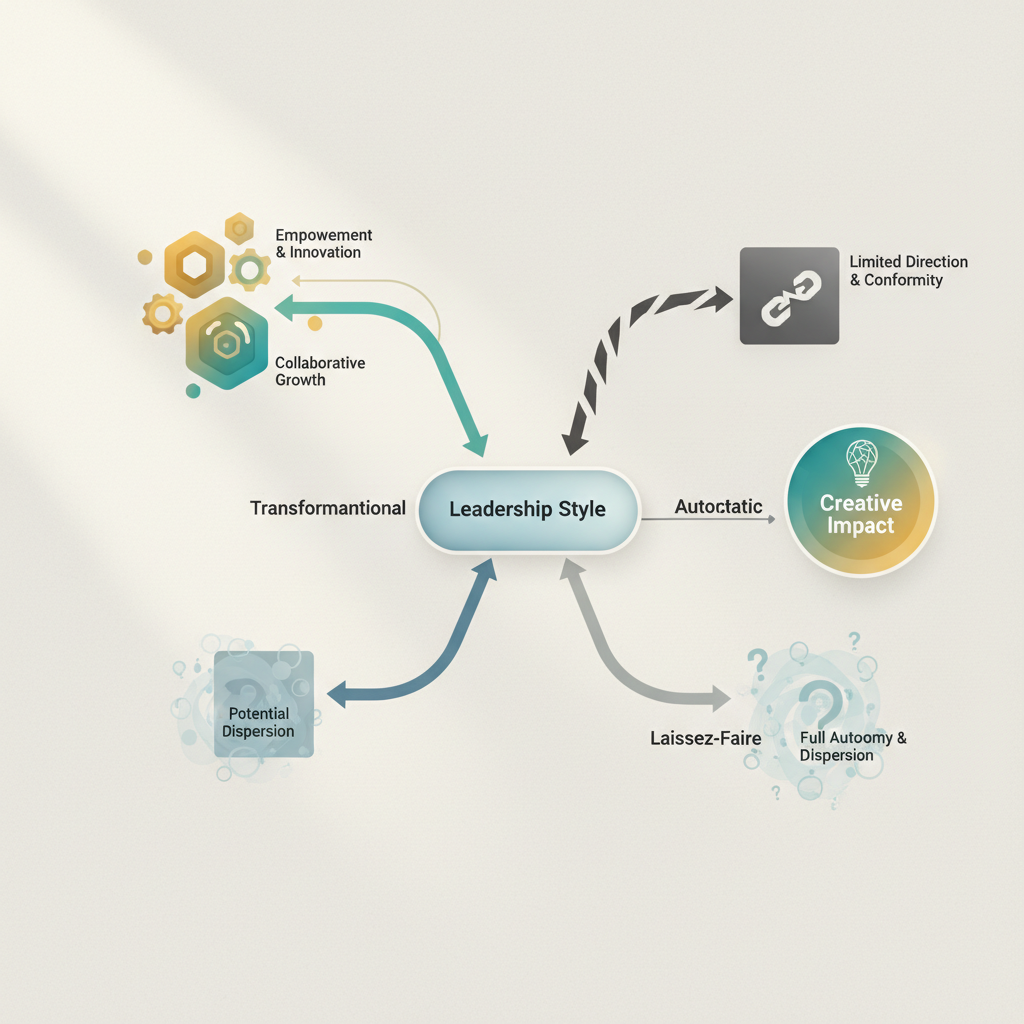
Knowing how leadership styles affect creativity is key for anyone who wants to unlock their full creative potential or encourage new ideas in a team. Your leadership style and creative style influence each other. The Creative Ability Test can show you your strengths and give you a personal look at how you think and solve problems. This knowledge helps you adapt your leadership style to build an environment where new ideas can thrive.
Transformational Leadership: Inspiring Innovation
Transformational leaders are visionaries. They inspire their teams to do amazing things. They paint a clear picture of the future and encourage everyone to work together for a common goal.
This style is great for creativity. Transformational leaders create a safe space for new ideas. Team members feel comfortable taking smart risks because they know their ideas are welcome, even if they challenge the norm.
These leaders are great at getting people to think. They push their teams to question old ideas and think for themselves [1]. This approach helps people explore new solutions.
For example, a transformational leader might tell their design team to “think completely outside the box.” They support big ideas, even if they seem wild at first. This can lead to brand-new products.
To cultivate this style:
- Communicate a clear and inspiring vision.
- Encourage team members to challenge existing processes.
- Provide mentorship and support for personal growth.
- Celebrate innovative thinking and learning from mistakes.
Democratic Leadership: Fostering Collaboration
Democratic leaders include their team in making decisions. They ask for everyone’s opinion. This style is all about talking openly and letting everyone take part.
This approach is a natural fit for creativity because it brings in many different ideas. When you hear from everyone, you are more likely to find a unique solution. It also makes team members feel like they own the project’s success.
Research shows that including employees in decisions makes them happier and better at their jobs, which helps build a creative workplace [2]. When everyone feels heard, it’s easier to share unusual ideas.
Imagine a marketing team creating a new campaign. A democratic leader guides the discussion and makes sure every voice is heard. This teamwork often creates a better, more complete strategy than one person could alone.
To leverage democratic leadership for creativity:
- Actively solicit ideas and feedback from all team members.
- Facilitate open discussion and debate.
- Create opportunities for group problem-solving.
- Ensure everyone feels empowered to contribute.
Servant Leadership: Empowering Creative Potential
Servant leaders focus on what their team needs to grow. Their main goal is to serve their team, helping them improve and do their best work. They always put their people first.
This leadership style builds a very supportive atmosphere. It gives people the freedom to be creative without fear. When leaders remove roadblocks and provide resources, team members feel secure. This freedom is key for exploring and trying new things.
One study found that servant leadership boosts creativity by making employees feel safe and confident [3]. People are more willing to try new things. They feel confident in their abilities.
For example, a leader might notice a team member is interested in a new software tool. The leader invests in training and gives them time to learn. This support helps the employee use their new skills to find creative solutions at work.
To embrace servant leadership for creativity:
- Focus on the individual growth and well-being of your team.
- Provide necessary resources and eliminate roadblocks.
- Listen actively to concerns and aspirations.
- Offer mentorship and coaching to develop skills.
Autocratic Leadership: When Structure Helps (and Hurts) Creativity
Autocratic leaders make decisions on their own. They are in full control and expect the team to follow directions without asking for input. This style has a clear chain of command.
In certain urgent situations, this structure can actually help creativity. If a project needs a specific creative idea done quickly, an autocratic leader gives clear, firm direction. This helps avoid getting stuck overthinking things and makes the next steps clear.
However, this style has major downsides for creativity. It often shuts down independent thinking and risk-taking. Team members may be afraid to share new ideas because they don’t want to question the leader’s orders. This can seriously hurt innovation in the long run.
For example, during a crisis, an autocratic leader can quickly decide on a marketing message. This allows the team to act fast and stay focused. But if the goal is to create a totally new product, this approach can stop different ideas from being shared. This holds back major breakthroughs.
Understanding this balance is key:
- Recognize when clear, immediate direction is essential (e.g., emergencies).
- Be aware that this style can hinder spontaneous idea generation.
- In most creative endeavors, prioritize input and autonomy.
- Use your insights from a leadership style test to know when to adapt your approach.
How Can You Discover Your Dominant Leadership Style?
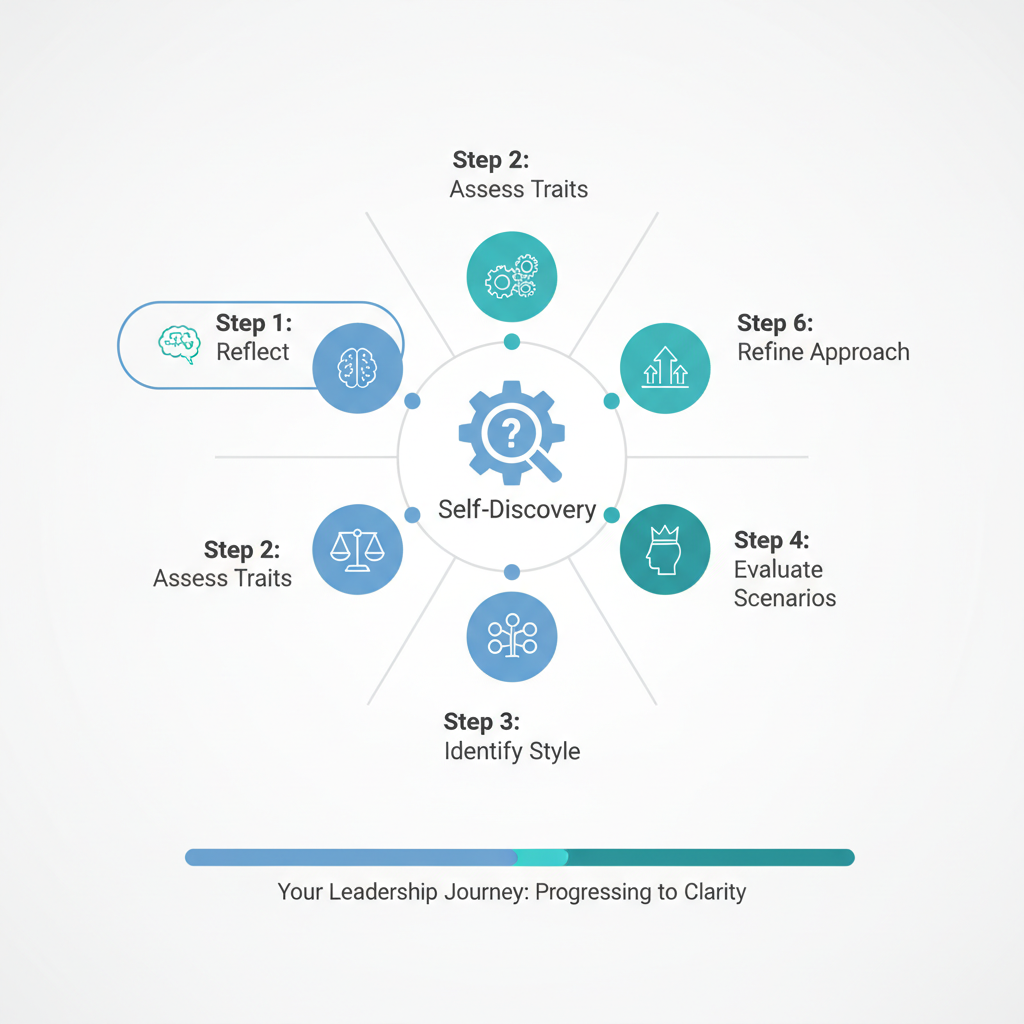
Take Our Free 5-Minute Leadership & Creativity Quiz
Knowing your leadership style is a powerful first step. It shows how you inspire, guide, and work with others. It also highlights how your creativity shapes your approach. Our free 5-minute Leadership & Creativity Quiz is a quick way to learn more. This quiz helps you find your main leadership style and see how you use creativity in your role.
This isn’t just a simple quiz—it’s a tool based on science. It’s a starting point to help you understand yourself better. You’ll learn about your natural tendencies and discover how to encourage new ideas in any situation.
By taking this quiz, you begin a journey to:
- Recognize your core leadership tendencies.
- Understand your creative strengths as a leader.
- Identify areas for personal growth.
- Gain the self-awareness you need to lead more effectively.
Interpreting Your Results for Personal Growth
Getting your quiz results is exciting, but the real value is in understanding them. Your main leadership style isn’t just a label. It’s a starting point for growth. It shows you how you make decisions, solve problems, and communicate with others.
Think about how your style connects to creativity. For example, a “Transformational” leader might naturally encourage out-of-the-box thinking. A “Democratic” leader might be great at brainstorming with a team. Your results point out these connections. They show how your leadership style affects your creative work and your team’s creativity.
See your main style as a strength, and find ways to use its creative advantages. Research shows that self-aware leaders build stronger teams and get better results [4]. Use your results to build this important self-awareness. This clarity will help you use your strengths and improve on your weaknesses.
Remember, growth is a journey. Think of your quiz results as your personal roadmap. They can guide you to unlock your full potential as a creative leader.
Actionable Steps to Enhance Your Leadership Abilities
Understanding your leadership and creative style is the first step. Real change comes from taking action. Here are practical ways to build on your strengths and improve other areas:
- Build on Your Natural Style: If you have a democratic style, ask for more team input. If you’re a transformational leader, focus on sharing a clear, inspiring vision. Lean into what you do best.
- Expand Your Creative Toolkit: Find new creative methods that fit your style. For example, if you like structure, try brainstorming tools like mind mapping or SCAMPER. They can help your team think more creatively. Our Creative Ability Test provides tools for this.
- Practice Flexible Thinking: Regularly question your own assumptions and seek out different viewpoints. This will help you adapt your leadership style to different situations and solve tough problems with more creativity.
- Seek Feedback and Reflect: Ask trusted colleagues for honest feedback about your leadership. Compare what they say with your quiz results. Use this information to reflect and keep improving.
- Lead by Example with Creativity: Be open to new ideas and encourage experimentation. Show resilience when a creative project doesn’t work out. Your team will follow your example.
- Empower Your Team’s Creativity: Give your team creative challenges. Provide the resources they need for new projects. Create a safe space where everyone feels comfortable sharing their ideas, even unusual ones.
Every leader can be a creative leader. When you use these strategies, you turn knowledge into action. You start to actively shape your leadership journey and create an environment where everyone can be creative.
What is a Color Leadership Style Test?
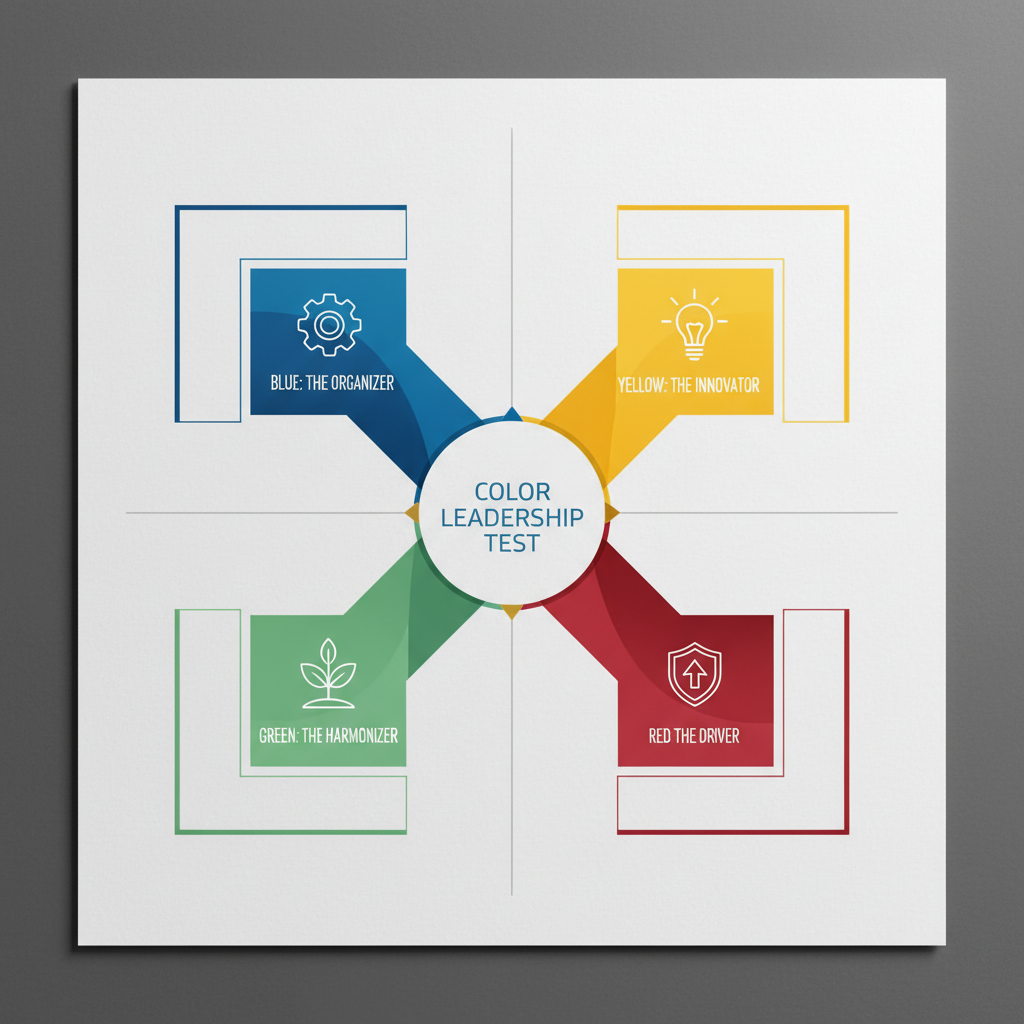
Color Leadership Style Tests are popular tools that group leadership traits into different color profiles. They offer a simple, clear way to understand your natural leadership style. Instead of using complex terms, they use colors to represent different ways of behaving.
For example, one color might stand for a visionary leader who gets things done. Another might represent a leader who is collaborative and people-focused. This simple color system helps you quickly understand your core leadership habits.
How Colors Relate to Creative Leadership
These color profiles are often used for general leadership, but they also reveal a lot about your creative leadership style. The colors show how you handle innovation, solve problems, and work with your team on creative projects. Knowing your “color” helps you use your strengths more effectively.
Here’s how different styles contribute to creative work:
- Red (e.g., Driver/Action-Oriented): Leaders with this color are great at starting new projects. They push for bold ideas and get things done fast. This style is excellent for launching creative projects quickly.
- Yellow (e.g., Socializer/Enthusiast): A yellow leader inspires excitement and teamwork. They create a space where everyone feels comfortable sharing ideas. This is crucial for brainstorming and coming up with new concepts.
- Green (e.g., Supporter/Harmonizer): Green leaders focus on teamwork and personal well-being. They create a safe space for trying new things, which helps build a team’s creative confidence and sense of psychological safety.
- Blue (e.g., Analyzer/Thinker): Blue leaders bring structure and clear thinking to the creative process. They make sure ideas are carefully checked and improved. This is key for turning rough ideas into solid, finished solutions.
Remember, most people are a mix of these colors. But knowing your main colors helps you see your go-to approach for leading creative work. [5]
Benefits of Understanding Your Color Leadership Style
Understanding your color leadership style has several benefits, especially for your creative skills. These tests give you a clear way to see your personal preferences. This provides practical insights into how you naturally lead and contribute to a team.
- Enhanced Self-Awareness: You’ll understand your natural strengths and potential blind spots as a leader. This awareness is the first step to growing as a leader.
- Improved Team Dynamics: When you know your style, you can better appreciate how others work. This helps you build stronger, more creative teams.
- Better Communication: Understanding how you and your team prefer to communicate leads to fewer misunderstandings. This is essential for any creative teamwork.
- Strategic Development: You can learn to adapt your style to fit different situations. This flexibility helps you support creativity effectively, whether your team needs inspiration, organization, or support.
By understanding these styles, you can create an environment where creativity thrives. Once you know your natural habits, you can work on developing new skills on purpose. This helps you create a clear plan to improve your leadership and creative work.
At Creative Ability Test, we focus on providing science-backed insights into your unique cognitive style. While color tests are good for quick reflection, our scientific 30-question assessment gives you a deeper, more personal understanding. It shows your specific strengths in areas like flexible and original thinking. Our detailed approach turns your uncertainty into clear self-awareness you can act on. It guides you from being creative sometimes to growing your skills consistently.
How Does a 16 Personalities Test Relate to Leadership?
The 16 Personalities test is a tool for understanding your natural tendencies. It looks at your preferences in four key areas that shape how you see the world and lead others.
The test places you into one of 16 personality types. Each type gives you a glimpse into how you think and make decisions. By understanding your type, you can build self-awareness and become a more effective leader.
How Your Personality Shapes Your Creative Leadership
Your personality has a big impact on your leadership style, from how you connect with your team to how you encourage new ideas. Here’s a look at how it works:
- How You Gather Information: Do you prefer hard facts (Sensing) or focus on future possibilities (Intuition)? A Sensing leader might use data to find creative answers, while an Intuitive leader may encourage big-picture brainstorming.
- How You Make Decisions: Leaders who rely on logic (Thinking) tend to use objective facts. Those who focus on harmony (Feeling) often seek group agreement. Both can spark creativity, just in different ways.
- Where You Get Your Energy: Extroverted leaders like to brainstorm out loud with their team. Introverted leaders may prefer to think things through alone. Both approaches are great for coming up with new ideas.
- How You Structure Work: Judging types like plans and organization, while Perceiving types prefer flexibility and being spontaneous. This affects how you manage creative projects. For instance, a Judging leader might use structured workshops, while a Perceiving leader could create a more open space for exploration.
Different personality types shine in different leadership roles. For example, an “Advocate” (INFJ) may inspire a team with a strong vision, while a “Commander” (ENTJ) might push for new ideas with clear plans and quick decisions. Both styles can lead to great creative results [6].
Go Beyond Personality to Boost Your Creative Leadership
The 16 Personalities test is great for self-discovery. It tells you about your natural preferences, but that’s just the beginning. To grow as a creative leader, you need to build specific creative skills.
Our platform can help you measure your creative strengths directly. Our 30-question assessment looks at the key parts of creativity, like how you come up with ideas, solve problems, and think flexibly.
Knowing your personality type is a great first step. Our Creative Ability Test takes you further by giving you simple, practical ways to improve. You’ll learn how to use your creativity more effectively as a leader, turning knowledge into real growth. Find out how to unlock your unique creative style today.
Frequently Asked Questions
What is a good free leadership style test?
Many people look for free tests to learn about themselves. A good free test can give you a first look at how you like to lead.
These tests make you think about yourself. They help you understand how you lead and work with others. For example, trusted sites like Psychology Today offer quizzes based on well-known psychology ideas [7]. Many business schools and HR blogs also offer free, simple versions of these tests.
But it’s important to know their limits. Free tests are often not as scientific or detailed as paid ones. They are a great starting point if you are curious. For real, useful insights into your creative leadership skills, our platform offers a special, science-based test.
Knowing your natural creative strengths is key. This helps you find your best leadership style.
What are the 7 main leadership styles?
There are many models, but a few main leadership styles are very common. Each style is different. It affects how teams create new ideas and solve problems [8].
Here are seven common leadership styles:
- Autocratic Leadership: The leader makes decisions alone, with little input from others. This can be effective in a crisis.
- Democratic Leadership: Leaders include team members in making decisions. This encourages teamwork and often boosts creativity.
- Laissez-faire Leadership: Leaders give very little direction, so employees have a lot of freedom. This can work well with highly skilled teams.
- Transformational Leadership: Leaders inspire and motivate their teams to reach shared goals. This style is great for encouraging new ideas and growth.
- Transactional Leadership: Leaders focus on watching over the team, staying organized, and getting work done. They use rewards and punishments.
- Servant Leadership: The leader puts the team’s needs first. They help others grow and succeed.
- Pace-setting Leadership: Leaders set high standards for everyone, including themselves. This can lead to fast results.
Each style has its pros and cons. The best leaders change their approach. They match their style to the situation and their team’s needs. Understanding these styles helps you improve your own creative leadership skills.
Is there a leadership style quiz suitable for students?
Yes, absolutely! Leadership style quizzes are great for students. They offer many benefits early in your school and work life.
Here’s why they are valuable for students:
- Self-Discovery: Students learn about their natural habits. This helps them see how they affect others.
- Better Teamwork: Knowing your style helps with group projects. It leads to better teamwork and helps solve disagreements.
- Ready for a Career: Understanding leadership prepares students for future jobs. It gives them key professional skills.
- Creative Problem-Solving: Identifying your leadership style can help you be more creative. You can find new solutions to school challenges.
Leadership isn’t just for managers. It’s about how you influence, communicate, and encourage others. For students, these quizzes can build confidence and offer ideas for personal growth. They also show you how to use your creative strengths in school and in other activities. Our platform offers science-based insights. It helps students understand their creative skills. This is a key tool for any new leader.
How can I find a leadership style test online?
It’s easy to find a leadership style test online. A quick search will give you many options. Start by using terms like “leadership style quiz,” “free leadership assessment,” or “leadership style test psychology.”
When you search, look for tests that offer:
- Clear Explanations: The test should clearly define each leadership style.
- Useful Feedback: It should give you ideas you can use to grow.
- Credibility: Look for tests from trusted sources, like universities or well-known psychology websites.
- Relevance to Creativity: Consider if the test connects leadership with new ideas.
Be careful with quizzes that are too simple. They may not be based on science. For a deep, science-based look at your creative leadership style, our platform offers detailed tests. We provide personal advice to help you use your creative skills in real leadership situations. Your journey to understanding yourself better starts with choosing the right tools.
Sources
- https://www.verywellmind.com/what-is-intellectual-stimulation-5203710
- https://www.ukessays.com/essays/business/the-effects-of-democratic-leadership-on-employees-job-satisfaction-business-essay.php
- https://www.frontiersin.org/articles/10.3389/fpsyg.2021.688863/full
- https://hbr.org/2018/01/what-self-awareness-really-is-and-how-to-cultivate-it
- https://www.forbes.com/sites/carolinecastrillon/2021/04/24/heres-how-to-discover-your-leadership-style/?sh=2684784a3b83
- https://www.psychologytoday.com/us/blog/prescriptions-life/201804/the-power-understanding-your-personality-type-in-the-workplace
- https://www.psychologytoday.com/us/tests/career/leadership-style-test
- https://online.maryville.edu/blog/seven-common-leadership-styles/
Leave a Reply