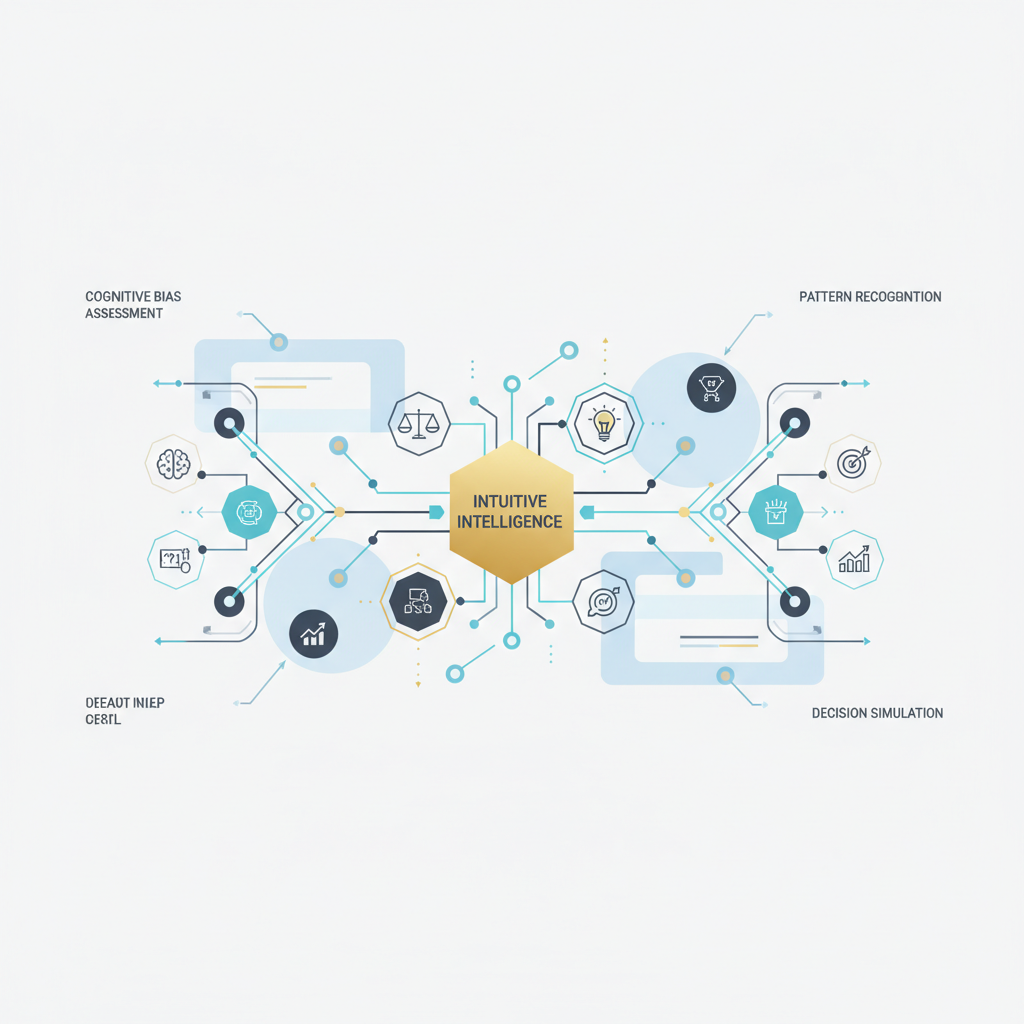
An intuition test in psychology is an assessment designed to measure an individual’s preference for intuitive versus analytical thinking. It evaluates how you process information, make decisions based on ‘gut feelings,’ and recognize patterns unconsciously, providing insights into your cognitive style and creative problem-solving abilities.
Have you ever made a decision based purely on a “gut feeling,” only to find it was surprisingly accurate? Or perhaps you’ve experienced a sudden flash of insight that unlocked a complex problem? This powerful, often elusive inner compass is what we call intuition. Far from being mere guesswork, intuition is a fascinating aspect of our cognitive architecture, silently guiding our perceptions and choices in ways we often don’t consciously recognize. It’s a fundamental part of how we process information and respond to the world around us.
Understanding this innate ability can unlock new dimensions of self-awareness and significantly enhance your creative problem-solving skills. This article delves into the intriguing world of intuition test psychology, exploring how this rapid, unconscious processing influences our thinking and decision-making. We’ll uncover what truly defines intuitive intelligence, how it interweaves with creativity, and why assessing your own intuitive strengths through an intuitive intelligence test can provide invaluable insights for both personal growth and professional development.
Prepare to embark on a journey that decodes the science behind your hunches, offering practical ways to harness this powerful cognitive resource. We’ll begin by demystifying what an intuition test truly is in the realm of psychology, distinguishing it from purely analytical thought and revealing the profound role of unconscious processing.
What Is an Intuition Test in Psychology?
Defining Intuition vs. analytical thinking
Understanding how we think is key to unlocking our creative potential. Our minds process information in many ways. Two primary modes are intuition and analytical thinking.
Intuition is often called a “gut feeling.” It is a quick, automatic judgment. This process happens without conscious reasoning. For instance, you might instantly know which design feels “right” for a project. This immediate understanding draws on past experiences and knowledge, even if you cannot pinpoint why [1].
Conversely, analytical thinking involves a logical, step-by-step approach. It requires conscious effort. When you analyze, you break down a problem into smaller parts. You evaluate each piece of data carefully. For example, solving a complex math problem uses analytical thought. It relies on rules, facts, and deliberate reasoning.
Here is a simple comparison:
- Intuition: Fast, unconscious, holistic, based on patterns, feels like a “hunch.”
- Analytical Thinking: Slow, conscious, sequential, based on logic, feels like “reasoning.”
Both intuition and analytical thinking are valuable. Creative individuals often use both. They might start with an intuitive spark. Then, they use analytical thought to refine and test that idea. Understanding your dominant style can improve your creative process significantly. It helps you know when to trust your gut and when to dig deeper with logic.
The Role of Unconscious Processing in Decision-Making
Intuition is not magic. It stems from the powerful processes of our unconscious mind. Our brains constantly process vast amounts of information. This happens below our conscious awareness. This unconscious activity plays a crucial role in decision-making and creative insight.
Think of your unconscious mind as a massive data processor. It sifts through countless experiences, memories, and learned patterns. It does this without you even realizing it. When facing a new situation, your brain quickly matches it to similar past scenarios. It then offers a rapid “solution” or “feeling.” This is how your gut feeling emerges.
For example, a seasoned designer might look at a new client brief. Instantly, they sense a particular color palette or layout will work best. This isn’t random. It’s the culmination of years of design experience. Their unconscious mind has recognized patterns and connections. It then presents these insights as an intuitive flash.
This rapid processing is incredibly efficient. It helps us navigate complex situations quickly. Many creative breakthroughs originate here. The “aha!” moment often feels sudden. However, it is usually the result of significant unconscious work. Our Creative Ability Test helps you explore how these cognitive styles influence your unique problem-solving abilities. It shows how you can leverage both conscious and unconscious strengths for personal growth.
How Does Intuition Connect to Creativity and Problem-Solving?
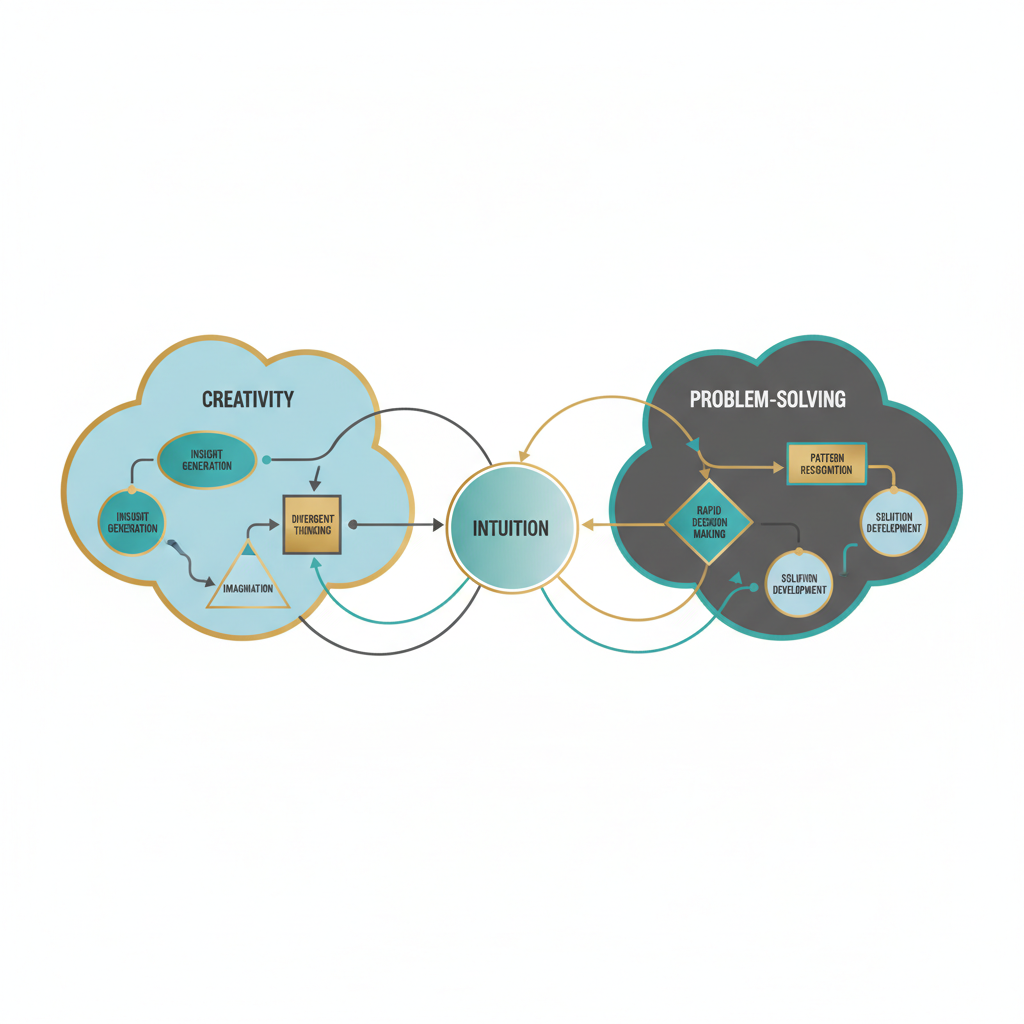
Intuition as a Spark for divergent thinking
Intuition acts as a powerful catalyst for creativity. It helps us generate novel ideas and solutions. This connection is especially evident in divergent thinking.
Divergent thinking is the ability to produce many varied ideas. These ideas often explore multiple potential solutions. It is a cornerstone of creative problem-solving.
Our intuitive mind works rapidly. It connects seemingly unrelated pieces of information. This process happens below our conscious awareness. As a result, it can lead to sudden “aha!” moments. These are sparks of inspiration [2].
Think of it as a mental shortcut. Intuition helps you jump past logical steps. It allows for a flow of fresh perspectives. This ability is crucial for overcoming mental blocks.
Here’s how intuition fuels divergent thinking:
- Idea Generation: It helps you quickly brainstorm diverse possibilities.
- Pattern Recognition: It allows you to spot hidden connections. These links can lead to innovative concepts.
- Breaking Assumptions: Intuition encourages you to question existing norms. This opens doors to truly unique solutions.
- Unlocking Potential: It helps tap into your subconscious knowledge. This rich internal resource is often overlooked.
Understanding this connection is vital. It reveals how your mind truly generates creativity. Our Creative Ability Test helps you uncover your strengths. It identifies how you combine intuitive insights with other cognitive skills.
Using Gut Feelings to Navigate Complex Problems
Complex problems often lack clear-cut solutions. This is where analytical thinking alone can falter. Intuition, or “gut feeling,” becomes an invaluable guide.
Gut feelings are not random guesses. Instead, they are rapid assessments. They synthesize vast amounts of past experiences and knowledge. This happens almost instantaneously [3]. Our brains process complex data at an unconscious level. Then, they deliver a feeling or an inclination.
Consider a challenging decision in business. Or a difficult personal choice. Pure logic might present many equal options. Your intuition can provide a strong leaning. It points towards the most promising path. This happens even without explicit reasons.
Navigating complexity effectively means balancing approaches. You need both analytical rigor and intuitive wisdom. Intuition helps you:
- Prioritize Information: It highlights what truly matters. This helps you focus on relevant data.
- Identify Risks: It can signal potential pitfalls. These might be invisible to pure logic.
- Make Swift Decisions: In time-sensitive situations, intuition is critical. It allows for quick, informed choices.
- Explore Uncharted Territory: When data is scarce, intuition guides exploration. It points towards viable new directions.
Learning to trust your gut is a skill. It develops with self-awareness and practice. Our platform helps you understand your intuitive profile. This knowledge empowers you to make better decisions. It strengthens your creative problem-solving abilities.
Real-World Examples of Intuition Driving Innovation
History is rich with examples. Intuition has consistently driven groundbreaking innovation. These moments transcend pure logical deduction.
A classic example comes from science. Nobel laureate Albert Einstein spoke of intuition. He stated it was “the only real valuable thing” [4]. His theories often emerged from intuitive leaps. These were later verified through rigorous analysis.
In business, leaders often rely on their intuition. They make strategic decisions in uncertain markets. Steve Jobs, for instance, famously followed his intuition. This guided many of Apple’s innovative product designs. He focused on user experience and aesthetics. His gut feelings shaped entire industries [5].
Artists and designers also tap into intuition. They create works that resonate deeply. A sudden insight can transform a blank canvas. It can turn raw material into a masterpiece. This reflects an intuitive understanding of beauty and emotion.
These examples highlight a critical lesson. Intuition is not magical. It is a powerful cognitive process. It blends experience, knowledge, and subconscious processing. This blend unlocks new possibilities.
You can also cultivate your intuitive intelligence. This enhances your creative potential. Our scientifically grounded Creative Ability Test provides actionable strategies. It helps you strengthen this vital skill. Discover how your unique intuitive style can drive your next big idea.
What Does Science Say About Intuitive Intelligence?
Cognitive psychology‘s View on Intuitive Judgments
Science recognizes intuition as a real and powerful cognitive process. It is not just a mysterious “gut feeling.” Cognitive psychology offers significant insights into how intuition works. Researchers often use a “dual-process theory” to explain our thinking [6].
This theory suggests two main systems:
- System 1: Fast, Intuitive Thinking. This system operates quickly and automatically. It relies on experience and pattern recognition. It processes information effortlessly. This is where intuitive judgments arise.
- System 2: Slow, Analytical Thinking. This system is deliberate and effortful. It engages logical reasoning and critical analysis. We use it for complex problems.
Intuition, or System 1, helps us make rapid decisions. It quickly spots patterns from past experiences. This can be very useful in familiar situations. For example, an experienced artist might instinctively know which color to use. They don’t consciously analyze every option. Their brain has learned to recognize the right choice. Our Creative Ability Test helps you understand your unique blend of these thinking styles. This understanding fosters greater self-awareness.
Is Intuition a Learnable Skill?
The good news is, intuition is indeed a skill you can develop. It is not simply something you are born with. Experts across many fields often exhibit highly refined intuition. Consider a seasoned chess player. They ‘feel’ the right move without lengthy calculation. This intuition comes from years of practice and extensive pattern recognition. Their brains have processed countless scenarios.
You can cultivate your intuitive abilities. This involves several intentional practices:
- Broaden Your Experiences: New challenges provide more data for your System 1.
- Practice Deliberate Reflection: Review your decisions, both good and bad. Understand what factors contributed.
- Seek Feedback: Learn how well your initial judgments align with actual outcomes.
- Engage in Creative Exercises: Activities that foster divergent thinking strengthen your intuitive leaps.
Developing intuition enhances your creative problem-solving. It helps you generate novel ideas quickly. Our platform at Creative Ability Test provides actionable strategies. These are designed to strengthen both your analytical and intuitive thinking skills. We guide you toward structured growth.
Distinguishing Genuine Intuition from Cognitive Biases
While intuition is powerful, not every “gut feeling” is accurate. Sometimes, what feels like intuition is actually a cognitive bias. Cognitive biases are systematic errors in thinking. They occur when we process information. They are mental shortcuts that can lead to flawed judgments [7].
Common cognitive biases include:
- Confirmation Bias: We tend to favor information that confirms our existing beliefs.
- Availability Heuristic: We overestimate the likelihood of events that are easily recalled.
- Anchoring Bias: We rely too heavily on the first piece of information offered.
Distinguishing genuine intuition from a bias is crucial. True intuition often arises from deep expertise. It is a rapid, accurate assessment based on relevant experience. Biases, however, can cloud your judgment. They limit your creative solutions. They prevent you from seeing new possibilities. Therefore, cultivating critical self-reflection is vital.
To refine your intuitive judgments:
- Question your initial assumptions.
- Seek out diverse perspectives and information.
- Pause before acting on strong gut feelings, especially in unfamiliar situations.
Our assessment helps you understand your own thinking patterns. This includes how you process information. Such self-awareness empowers you to challenge potential biases. This leads to more robust creative insights and better decision-making.
What Kinds of Intuition Tests Exist?
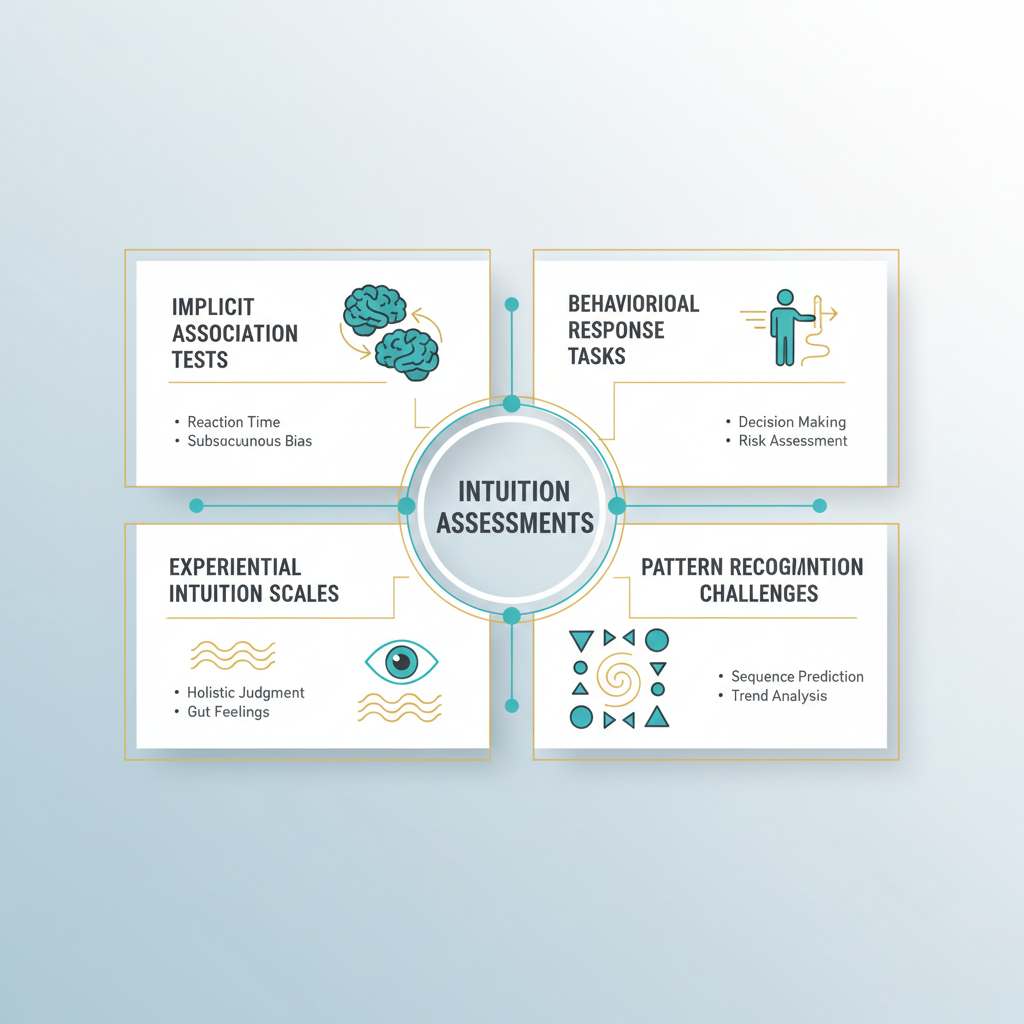
Picture-Based Intuition Tests
Picture-based intuition tests invite you to trust your immediate gut feelings. These assessments use visual stimuli. They tap into your rapid, unconscious processing abilities.
Here’s how they often work:
- Symbol Recognition: You might see a series of abstract symbols or images. Then, you choose which one feels “right” or predict a hidden image.
- Pattern Prediction: Some tests ask you to anticipate the next image in a sequence. You rely on non-verbal cues and subtle patterns.
- Emotional Interpretation: Others present faces or scenes. You quickly assess underlying emotions or potential outcomes.
These tests aim to bypass overthinking. They reveal your spontaneous responses. This direct approach can highlight your capacity for quick insight. It reflects a key aspect of creative thinking: forming novel connections rapidly [8].
Scenario and Question-Based Assessments
Scenario and question-based assessments offer a different window into your intuition. They present you with real-world dilemmas or hypothetical situations. Your choices reveal your intuitive tendencies.
Typically, these tests involve:
- Decision-Making Dilemmas: You read a short story or problem. Then, you select the action that feels most appropriate.
- Problem-Solving Scenarios: You face a complex situation. You choose between analytical steps or an intuitive leap.
- Preference Questions: These questions probe your natural inclination. Do you prefer detailed data or a strong gut feeling when making choices?
This type of assessment measures how intuition guides practical decisions. It shows how you integrate information. Intuitive problem-solving is vital for innovation. It helps you generate unique solutions, especially in uncertain situations.
Measuring Your Cognitive Style: The Analytical-Intuitive Spectrum
We all process information differently. Many models describe cognitive styles. One important distinction is between analytical and intuitive thinking. It’s not an either/or choice. Instead, most people operate somewhere along a spectrum.
Consider these two key thinking styles:
- Analytical Thinking: This style is logical, sequential, and data-driven. It breaks problems into smaller parts. You systematically evaluate each component.
- Intuitive Thinking: This style is holistic, rapid, and pattern-focused. It often operates unconsciously. You grasp the “big picture” quickly.
Tests designed to measure your cognitive style use questionnaires. They often include self-report inventories. These tools evaluate your preference for processing information [9]. Understanding your position on this spectrum is a powerful form of self-awareness. It helps you improve your decision-making and problem-solving strategies.
For instance, knowing if you lean more analytical or intuitive can transform your approach to challenges. It allows you to consciously develop a more balanced perspective. Our Creative Ability Test helps you understand your unique blend of cognitive styles. It highlights how these styles fuel your creative potential. By understanding your strengths, you gain actionable insights for growth.
How Can You Improve Your Intuition?
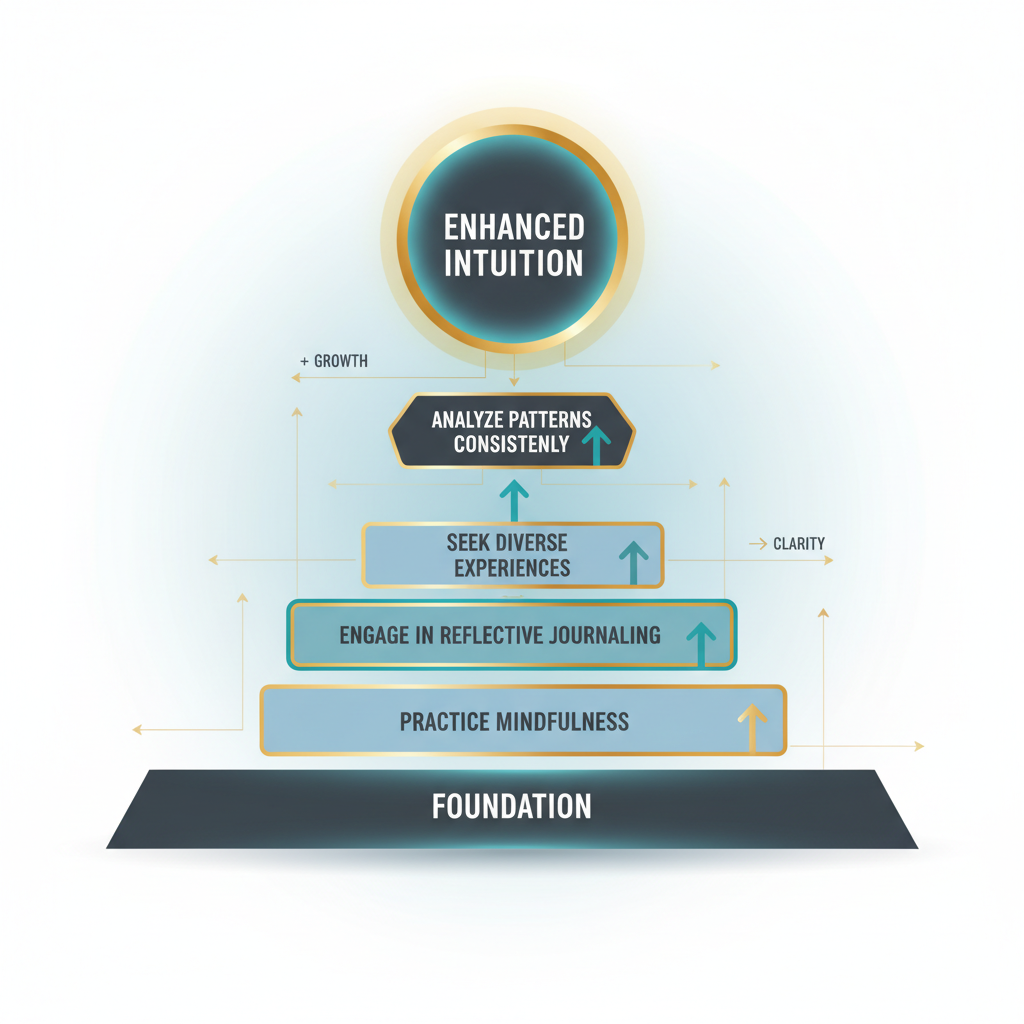
Developing your intuition is a journey of self-discovery. It involves honing your inner radar. Furthermore, it allows you to make more informed decisions. By enhancing this crucial skill, you gain deeper insights. You can also unlock greater creative potential. Our platform, Creative Ability Test, helps you understand your unique cognitive style. This understanding is the first step toward strengthening your intuitive abilities.
Practical Exercises to Strengthen Your Intuitive Abilities
Intuition, like any skill, improves with practice. Integrating specific exercises into your daily routine can sharpen your intuitive edge. These practices help you listen more closely to your inner voice. Consequently, you will start recognizing patterns more quickly.
- Daily Reflection Journaling: Dedicate time each day to write. Document your feelings and initial impressions. Note down your decisions and their outcomes. This practice builds self-awareness. It also helps you identify recurring intuitive cues [10].
- “Guess the Outcome” Game: Before an event, make a conscious prediction. This could be a small event. For example, guess who will call you next. Or, predict the end of a story. Compare your guess with the actual outcome. This strengthens your predictive sense.
- Pay Attention to Body Sensations: Your body often provides intuitive signals. Notice feelings like a gut knot or a sense of lightness. These physical cues offer valuable insights. Learning their meaning is key to trusting your intuition.
- Engage in Creative Activities: Hobbies like painting, writing, or playing music foster intuitive thinking. They bypass the rational mind. This allows your subconscious to express itself freely.
- Practice Quick Decision-Making: In low-stakes situations, try making decisions quickly. Avoid overthinking. For example, choose a restaurant in seconds. Reflect on the outcome later. This builds confidence in your snap judgments.
These exercises guide you toward a more intuitive approach. They help you integrate intuitive intelligence into your daily life. Over time, you will find your creative problem-solving skills expanding.
Mindfulness and Its Impact on Inner Awareness
Mindfulness is a powerful tool for cultivating intuition. It involves being present in the moment. Furthermore, it means observing your thoughts and feelings without judgment. This practice quiets the constant chatter of the analytical mind. Consequently, it creates space for intuitive insights to emerge.
- Meditation Practices: Regular meditation reduces mental noise. It enhances your ability to perceive subtle cues. Even a few minutes daily can make a significant difference. Numerous studies link mindfulness meditation to improved cognitive functions [11].
- Focused Breathing: Simple breathing exercises can ground you. They bring your attention to the present. This practice helps calm your nervous system. It makes you more receptive to inner guidance.
- Body Scan Meditation: Direct your attention to different parts of your body. Notice any sensations. This exercise enhances your awareness of physical intuitive signals. It helps you recognize where your “gut feelings” reside.
- Mindful Observation: Take time to observe your surroundings closely. Pay attention to details. Do this without judgment or labeling. This heightens your observational skills. It also sharpens your ability to pick up on non-obvious information.
Through mindfulness, you develop a deeper connection with your inner self. This enhanced inner awareness is fundamental. It empowers you to better understand and utilize your intuitive intelligence. The Creative Ability Test can further illuminate how mindfulness aligns with your creative potential.
Learning to Trust Your Gut in a Data-Driven World
We live in an era rich with information. Data often guides our decisions. However, true wisdom often blends data with intuition. Learning to trust your gut feeling is crucial. It becomes especially important in complex, uncertain situations. Your intuition can synthesize vast amounts of information. It can do this subconsciously. Then, it offers a holistic perspective.
- Recognize Intuition’s Strengths: Intuition excels when data is incomplete or ambiguous. It is powerful in social interactions or creative problem-solving. It offers a quick, holistic understanding.
- Understand Cognitive Biases: Not every gut feeling is genuine intuition. Some are biases or emotional reactions. Learn to distinguish between them. For instance, fear can sometimes masquerade as intuition. Educating yourself on common biases is helpful [12].
- Integrate Intuition with Data: View intuition as a valuable input. Combine it with analytical data. Use data to validate your gut feeling. Conversely, use intuition to explore data’s unseen implications. This balanced approach leads to robust decision-making.
- Start Small and Reflect: Practice trusting your intuition in low-stakes decisions. Observe the outcomes. This builds confidence over time. It helps you refine your ability to discern accurate intuitive prompts.
- Seek Diverse Perspectives: Discuss your intuitive insights with trusted peers. Their analytical views can provide helpful checks. This collaborative process refines both your intuitive and logical thinking.
By learning to wisely trust your intuition, you transform your decision-making. You move from uncertainty to actionable self-awareness. This leads to more innovative solutions. Furthermore, it fosters deeper personal growth. The Creative Ability Test provides personalized feedback. It helps you understand your unique blend of analytical and intuitive strengths. This guides you towards structured growth strategies. Therefore, you can apply your creativity effectively in real-world contexts.
How Can You Discover Your Own Creative and Intuitive Profile?
The Creative Ability Test Approach
Unlocking your creative and intuitive profile begins with self-awareness. The Creative Ability Test offers a scientifically grounded path to this understanding. It is a comprehensive 30-question assessment. This tool helps you explore the unique ways your mind generates ideas and solves problems.
Our methodology is rooted in established creative psychology. It examines multiple dimensions of your cognitive style. This includes aspects directly linked to intuitive processing. Understanding these areas provides a clearer picture of your creative strengths. It also reveals opportunities for growth.
The Creative Ability Test specifically measures:
- Divergent Thinking: This is your ability to generate many varied ideas from a single prompt [13]. It is often a cornerstone of intuitive leaps.
- Cognitive Flexibility: This reflects how easily you shift perspectives. It shows how you adapt to new information. Flexible thinkers can process intuitive signals more effectively.
- Problem-Solving Skills: We assess your approach to challenges. This includes your capacity for novel solutions.
- Openness to Experience: This personality trait correlates with both creativity and intuition. It shows your receptiveness to new ideas and feelings.
By mapping these traits, the test helps you see connections. You will better understand how your innate creativity influences your intuitive judgments. Furthermore, it highlights how you can consciously nurture both abilities. The aim is to move from general curiosity to specific, actionable self-knowledge.
Understanding Your Personalized Results for Growth
Receiving your Creative Ability Test results is just the first step. Our platform delivers personalized feedback. This insight clarifies your unique creative profile. It translates complex psychological data into understandable terms. Therefore, you gain a clear picture of where you excel.
Your results include detailed explanations of your scores. They highlight your dominant creative thinking styles. Moreover, they point out areas where you can intentionally develop. For instance, if you score high in divergent thinking, you might learn strategies to refine those ideas. Conversely, if cognitive flexibility is lower, we offer exercises to expand your adaptability. This personalized guidance transforms potential into practical skills.
The benefits of understanding your profile are significant. You move from simply wondering about your potential to actively cultivating it. This journey empowers you with specific strategies:
- Enhance Your Creative Thinking: Learn tailored techniques to boost idea generation. Discover new ways to approach challenges.
- Refine Intuitive Insights: Understand how your creative style impacts your gut feelings. Develop a stronger trust in your informed intuition.
- Improve Problem-Solving: Apply your unique creative strengths to real-world dilemmas. Innovate more effectively in personal and professional contexts.
- Boost Self-Confidence: Gain validation for your existing strengths. Build confidence in areas you wish to grow [14].
This comprehensive approach ensures you don’t just measure your creativity. You learn how to apply it. You also gain actionable strategies to foster consistent growth. This process helps you evolve from uncertainty to confident, structured creative and intuitive performance.
Frequently Asked Questions
Where can I find an intuition test psychology online?
You will find many online quizzes and tests claiming to measure intuition. However, their scientific basis varies significantly. For reliable insights, seek assessments from reputable psychological research bodies or academic platforms.
These tests often focus on your cognitive style. They examine your preference for quick, intuitive judgments. They also assess your reliance on gut feelings versus deliberate analysis.
At Creative Ability Test, our 30-question assessment measures your creative potential. It provides valuable insights into skills closely related to intuition. These include cognitive flexibility, divergent thinking, and problem-solving approaches. Our personalized feedback empowers you to understand and enhance these vital abilities for self-improvement and innovation.
What makes an intuition test scientific?
A truly scientific intuition test relies on rigorous psychological principles. It is not just a collection of interesting questions. Scientific tests are built on established theories of cognition and decision-making.
Key elements of a scientific test include:
- Validity: This means the test actually measures what it claims to measure. Does it truly assess intuition, or something else?
- Reliability: A reliable test yields consistent results over time. If you take it again, your score should be similar.
- Normative Data: Results are compared against a large, diverse group. This helps interpret your score meaningfully. It shows how your intuition compares to others.
- Empirical Research: The test design and its scoring methods are supported by research findings. [15]
Such tests are often developed through extensive research and peer review. They offer objective insights into your cognitive processes. This moves beyond mere anecdotal evidence.
At Creative Ability Test, our assessment is scientifically grounded. We use evidence-based methodology to explore your creative strengths. This ensures you receive accurate, actionable insights for personal growth.
How do intuition tests using pictures work?
Intuition tests using pictures often tap into our unconscious processing. They aim to bypass slower, analytical thought. Instead, they provoke immediate, gut-level responses.
Here’s how they typically function:
- Rapid Presentation: Images are often shown very quickly. This leaves little time for conscious deliberation.
- Ambiguity: Pictures might be abstract, ambiguous, or convey subtle emotional cues. Your brain quickly tries to make sense of them.
- Pattern Recognition: Intuition excels at recognizing patterns. It identifies connections even when data is incomplete. Picture tests leverage this ability.
- Emotional and Subliminal Cues: Your brain reacts to colors, shapes, and hidden details. These reactions can be pre-conscious. They guide your immediate judgments. [16]
Your task might be to choose which picture feels “right.” You might guess what happens next. You could also describe your initial feeling. This method helps reveal your intuitive decision-making style.
These picture-based assessments highlight your ability to process information implicitly. This is a key component of creative thinking. It helps you form novel connections quickly.
Is there a free intuitive intelligence test?
Yes, many websites offer free “intuitive intelligence” tests. These can be engaging and provide a fun way to reflect on your thinking style. However, it is crucial to approach them with a critical eye.
Most free tests lack the scientific rigor of paid, validated assessments. They might not have been developed through extensive research. They also often lack robust validity and reliability measures.
These free options often serve as:
- Entertainment: They offer a quick, interesting self-reflection tool.
- Introductory Tools: They might spark your curiosity about intuition and cognition.
- General Guides: They can give a broad, non-scientific idea of your preferences.
For a truly insightful and actionable understanding of your cognitive strengths, invest in a professionally developed assessment. Our Creative Ability Test provides a comprehensive, scientifically grounded evaluation. It offers personalized feedback and strategies to enhance your creative potential. This investment leads to meaningful self-discovery and growth. You gain clarity on how your mind works to solve problems and innovate.
Sources
- https://greatergood.berkeley.edu/article/item/is_your_gut_always_right
- https://hbr.org/2012/12/how-intuition-helps-us-innovate
- https://www.psychologytoday.com/us/blog/mind-matters/202107/the-science-gut-feelings-and-intuition
- https://www.einstein.org/
- https://www.businessinsider.com/steve-jobs-intuition-2016-10
- https://www.simplypsychology.org/dual-process-theory.html
- https://www.verywellmind.com/what-is-a-cognitive-bias-2794963
- https://psycnet.apa.org/record/1987-19097-001
- https://journals.sagepub.com/doi/abs/10.1177/0013164402062002008
- https://greatergood.berkeley.edu/article/item/five_ways_to_strengthen_your_intuition
- https://www.apa.org/topics/mindfulness/meditation
- https://www.psychologytoday.com/us/blog/head-games/202202/6-steps-trust-your-intuition-wisely
- https://psycnet.apa.org/record/2012-07440-001
- https://www.tandfonline.com/doi/abs/10.1080/02673843.2018.1506509
- https://www.apa.org/pubs/books/4317134
- https://www.frontiersin.org/articles/10.3389/fpsyg.2018.00693/full
Leave a Reply